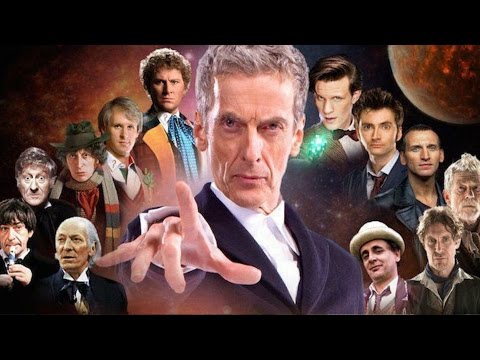
What I love and hate about each Doctors era.

Everyone has an idea about how their favourite Doctor is. My three faves are Jon Pertwee, Tom Baker and Matt Smith in that order, whilst the rest I would rank equally.

Still I often wonder how many people actually prefer the era of a Doctor to the actual Doctor. After all there is only so much an actor can do with a shoddy script. It surely can be no coincidence that Colin Baker, who was handed some of the shoddiest scripts and was the Doctor at a time when its reputation was beginning to dip, is sadly one of the least popular Doctors. Tom Baker and David Tennant meanwhile, both of whom came at a time when the scripts were of a higher quality, and when the show was one of Britian’s most popular series, are among the two most popular Doctors.

Harsh critics of Colin would say the show was only so unpopular because of Colin’s Doctor,  but I don’t think that’s fair. When handed material that was worthy of him in the Big Finish Audios he was every bit as popular as any other Doctor. He was even voted the best Audio Doctor of them all!

Whilst is not to do down the actors who have played the Doctors contributions. Ultimately an actor can only do what they can with a script, or indeed a set of scripts, and in this article I will be taking a look at each Doctors era and what I disliked and liked about each one.

I will be looking at each Doctor’s era in ways that aren’t anything to do with them. The types of stories they were given and the supporting characters, companions, villains they were associated with. I will be assessing what I felt worked and didn’t in each Doctors time, and why I felt certain era’s have been more popular than others, again in a way that has nothing to do with each Doctor.

First Doctors Era

Things I like

  • Greatest variety in settings of any Doctors era: Many other Doctors stories tend to take place on earth. Some like 10 and 3 take place largely in the time it was being broadcast or near enough. Others meanwhile will still take place largely on earth even if its not the same time or location. Look at the 7th Doctors era for instance. His entire last season takes place on earth, even though the stories are mostly set in different time periods, (with two stories still taking place in the 1980’s.) The First Doctors era however has a huge variety in settings. We visit so many alien worlds, space stations and even in the stories that are set on earth, there is a much greater variety in time periods. There are only two stories that are set largely on then modern earth in the entire era. In this respect I feel the first Doctors era really used the potential of Doctor Who’s premise, of a character who can visit any planet at any point in its history, better than any other era.
  • Historical stories: The historical stories were sadly never that popular among the viewers and were phased out at the start of Troughton’s era, with Troughton only having one historical story. I think this was a shame as the historical stories could be very interesting and stopped the show from falling into a formulaic monster of the week type of series. Some of the very best most intelligent Doctor Who stories ever made are actually Historical such as “Marco Polo” and “The Crusades”.
  • The Companions: The first Doctor did have some forgettable companions such as Dodo, but still the companions of his that were great were among the best the show ever had. Barbara in particular in my opinion was the greatest companion in the entire history of the series.
  • The Daleks: “The Chase” aside the Daleks are depicted always depicted as cunning, menacing and dangerous like they should be. Though they are used frequently, this is not as big a problem in the Hartnell era, as the creatures were still fresh. Each story, even “The Chase” brings something new to their characters and mythology, with “The Chase” establishing their ability to time travel and also their feud with the Doctor.
  • Stories that are more personal and less grand: This is a problem I have with the new series. Virtually every story has to be the fate of the earth, multiple worlds, the universe or every universe at stake. Obviously Who now and again should have stories that deal with a large threat and there are plenty in Hartnell’s time. “The Dalek Invasion of Earth” see’s the Doctor save humanity from the Daleks, whilst “The War Machines” and “The Ark” see him save humanity from WOTAN and the Monoids. “The Daleks Masterplan” meanwhile see’s him save the entire universe from the Daleks time destructor. However unlike the new series, many stories are small in scale. The historical stories for instance simply revolve around the Doctor and his companions being in trouble as do other stories like “The Celestial Toymaker”. Even the Dalek stories are not all “the fate of the universe”. Look at “The Chase” for instance. The Daleks are only after the Doctor and friends. To me this gave the stories a greater variety and also it made them seem less ridiculous. After all it does seem a bit far fetched even for Doctor Who, that the Doctor always lands in exactly the right place when a monster is about to eradicate every planet in the universe. You don’t run into that problem in the Hartnell era.

Things I don’t like 

  • Leading actors leaving the show at random: This in all fairness is a problem with 60’s Who overall, but I think its worse in the Hartnell era. Often a leading character including even the Doctor himself will not appear in multiple episodes of a serial, because the actor playing them will be off on holiday. Stories that are affected quite badly by this include both “The Keys of Marinus” and “The Time Meddler” .
  • Too ambitious: Some Hartnell era stories suffer from trying to do much. In all fairness a lot of Classic era stories suffer from this, but I think Hartnell’s sadly is the most affected, probably because they didn’t quite know their limitations yet. One only has to take a look at “The Web Planet” a serial which is actually a good idea, an excellent idea even, but is far too ambitious a story on Who’s budget and sadly the results are quite frankly laughable.

The Second Doctors Era

Things I like

  • Enemies and Monster: This is the era the Doctor really gets a rogue’s gallery. In Hartnell’s time his only main enemies were the Daleks. There were attempts to give him other major foes like the Mechanoids, the Zarbi and WOTAN, but none of these characters caught on. The Meddling Monk meanwhile was more of a nuisance than a major foe and the Cybermen, though introduced in Hartnell’s time appeared only in his final story. Troughton’s era however was able to move away from the Daleks and allow other monsters a chance to shine. The Cybermen, the Ice Warriors and the Yeti all flourished in Troughton’s era.
  • The Daleks: I think the monsters may have been at their best in this era. Its hard to say. “Genesis of the Daleks” is their best story, but the Troughton era is certainly a high point for them as David Whitaker reinvents them like never before and adds a lot to their relationship with the Doctor and their characters overall.
  • The Cybermen: This is certainly when they were at their best. In this era they are portrayed as genuinely emotionless creatures, almost like cybernetic zombies. The Second Doctor also has arguably the best Cyberman stories as well “The Tomb of the Cybermen” and “The Invasion”.
  • The Companions:  The Second Doctor had consistently good companions Ben and Polly (whom he had inherited from William Hartnell), Victoria and Zoe and of course Jamie, one of the all time greatest companions of all. He was also the first Doctor to meet the Brigadier.

Things I don’t like

  • Too many base under siege stories: There were definitely too many of these types of stories in the Troughton era, of a monster just attacking a base. It sadly made his era seem much more formulaic than the Hartnell era overall.
  • Too many stories set on earth: Again unlike Hartnells era, there were fewer stories set on alien worlds in Troughton’s time. Almost all of season 5 is set on earth for instance, though there is  greater variety among the periods on earth at least, its still more formulaic in terms of its settings than Hartnell’s era was.

The Third Doctors Era

Things I like

  • The Supporting Characters: The Third Doctors era is really the first time they tried to give the Doctor a “gang” or a “family”, the UNIT family. This would be replicated in future era’s and spin off material, with Jago and Litefoot, the Children of Time, The Paternoster Gang, and even to a smaller extent Kate Lethbridge Stewart and Osgood.  Though UNIT was technically introduced in the Second Doctors era, it was really in 3’s time that they came into their own. UNIT would be much more fleshed out in the Pertwee era and we got to see how they function much more clearly. Such was their success that even with the introduction of other popular supporting characters, we still always sooner or later return to UNIT.
  • The Master: This was when the character was at his best in my opinion. Delgado’s charming, sly and dignified character is worlds away from the buffonary of Missy and is one of Who’s all time greatest rogues.
  • More action packed stories: Whilst I did enjoy the more low key stories of Hartnell’s era, I also loved the greater sense of adventure in Pertwee’s time too. Pertwee’s era is really the only time you can buy the Doctor always being there at the right time, as he is now working for an organisation whose job is too track down alien threats. Certainly there is more action and excitement in a lot of Pertwee era adventures , more car chases, hordes of aliens marching down the streets being shot at by UNIT troops. The overall excitement is much greater.
  • The companions: Pertwee had only 3 companions, but they were among the best in the shows history, Jo Grant, Sarah Jane and Liz Shaw. Also the fact that there was only one companion with the Doctor I think allowed him to develop a closer bond with them somewhat, than when there were lots of companions.
  • The Brigadier: Even though this technically could be grouped under UNIT and companions, I think that the Brig deserves a special mention. He is at his best here. We are taken much deeper into his character and even see some darker sides to him in Pertwee’s time. In The Silurians we see him slaughter an entire base full of the creatures, whilst in “Inferno” we see an evil alternate version of him The Brigade Leader. I would actually rank the Brigade Leader as Nick Courtney’s greatest ever performance. Though the Brig would always remain a true Who icon, the Pertwee era was when he was at his best.
  • More morally grey stories: Now from its very beginnings Who was not afraid to tackle serious issues like genocide and race hatred and body horror. Still I feel it was in the Pertwee era where we started to get stories where the villains weren’t always just bad guys, and things weren’t just simple black and white. 60’s who was, no pun intended, very black and white in terms of morality. The Daleks, the Cybermen, the Yeti and the Ice Warriors are all just evil. In Pertwee’s time we have villains like the Silurians and races like the Draconians who are exactly like us, capable of being both cruel and kind. Then there are also examples of good people doing bad things like The Brigadier destroying the Silurians and Mike Yates betraying everyone in “Invasion of the Dinosaurs”. Pertwee’s era definitely had more complex stories than his predecessors.

Things I don’t like

  • Overuse of the Master: Even though Delgado is the best Master in my opinion, they do still definitely overuse him far too often.
  • Too many earthbound stories: Obviously this is the biggest problem with Pertwee’s era, the fact that there are too many stories set on earth. Though they did work around this problem quite well, it still limited the types of story Pertwee’s Doctor could have. All are basically invasion earth stories with the occasional journey to another world. Gone certainly is the variety of Hartnells era.
  • Its somewhat dated: I think being set on contemporary earth more than other era’s has caused the Pertwee era to look and feel somewhat more dated than many others, though not to the same extent as the new series.

The Fourth Doctors Era
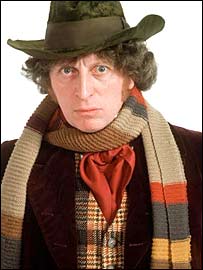
Things I like

  • Far more terrifying stories: Though Who could always be scary, it was definitely during this time when Holmes and Hinchcliff were in control that the stories started getting darker. Many villains who had been in the show for years were a lot more scary in the early Baker era. The Daleks for instance are far more frightening in “Genesis of the Daleks” than they had been in the Pertwee era. In the Pertwee era they were almost stock villains, but Genesis really takes us into their hatred for other life forms more than ever before and returns them to their roots as powerful allegories for the Nazi’s. Similarly the deformed Master is far grittier and nastier than Delgado’s charming, gentlemanly villain. Though Delgado is still my favourite, the deformed Master scared me much, much more growing up. That image of his face on the grandfather clock haunted me throughout my childhood. Even the Sontarans are a lot scarier here as well. “The Sontaran Experiment” shows a much nastier side of the creatures than their previous appearance in the Pertwee era. Linx was a somewhat likable, charming villain where as Styre is brutal, gestapo officer type of character in comparison.
  • Stronger roles for women: Now I don’t think Doctor Who was ever really sexist. Indeed as I have pointed out Barbara Wright the very first female companion in the series is really an unsung hero. However I think that it was really during Tom’s time that we had the strongest female companions overall. All of the female companions in Tom’s time are strong and capable. There is Sarah Jane a strong willed investigative Journalist who later proved capable of holding her own series, Leela a badass warrior who knifed Sontarans, Romana a time lady who was in some ways even more intelligent than the Doctor, and Nyssa a genuis mathematician. All of the female characters during 4’s time were very memorable and well fleshed out characters.
  • Greater variety of settings: After the Hartnell era, Tom Bakers time definitely see’s the greatest amount of visits to alien planets and other periods. Some seasons see no visits to contemporary earth at all, which was very refreshing after the Pertwee era.
  • Its not reliant on old enemies: The 4th Doctors era proves that Doctor Who does not need to have old enemies constantly return to support it. It was one of the most successful among both the general pubic and the viewers, yet it also had very few of the Doctors old enemies returning. The Master appears 3 times in 7 years, the Daleks twice and the Cybermen once!
  • It revealed more about the Time Lords: Some have seen this as a bad thing, preferring the Time Lords to remain mysterious, but I liked finding out more about the time lords. It was interesting to see another more corrupt side to their society, and I like the fact that during the Baker era we were introduced to more time lord characters like Morbius, Rassilon, Borusa and Romana the first female Time Lord character. It made a refreshing change from it always being the Master

Things I didn’t like

  • Too much humour: This is a problem with later Baker stories. I am no opposed to their being any humour in Doctor Who, but it should never be overwhelming like it was in season 17. Whilst earlier Baker stories may have made certain villains scarier, later ones made them seem like bumbling clowns in comparison. Again it never reached the depths of New Who’s portrayal of villains like Missy, but still look at how the Sontaans are portrayed in “The Invasion of Time” and the Daleks in “Destiny of the Daleks”.

The Fifth Doctors Era

Things I liked

  • More tension: This was a bit of a problem in later stories during the Baker era, that the Doctor was too powerful. In Davison’s time the Doctor however was more fallable and even lost a companion for the first time in decades.
  • Stronger story arcs: The Davison era was not the first to try story arcs, but personally I felt it did it better than other era’s of the Classic Who. The Black Guardian trilogy are among my favourite stories in Classic Who’s history.
  • More serious science fiction stories: I think after the more farcical later Baker stories, the Davison era saw Who’s credibility as a serious science fiction series return.
  • Stronger continuity: Now this might sound like a contradiction from what I said I liked about the Baker era, that it wasn’t reliant on past enemies as much, but its not. I don’t mind old enemies and friends returning now and again just not all the time. The Davison era did rely on many things from the past a bit too much at times like the Master, and also its worth noting that in Mawdryn Undead it is responsible for the biggest continuity blip of all time. Still the Davison era for me managed to create a greater cohesion among the different era’s of Doctor who than any before.

Things I didn’t like

  • Overuse of the Master: Anthony Ainley was an excellent Master, but sadly he was overused and often forced to appear in stories that reduced the Master to an almost pantomime villain.
  • Too many companions: The Fifth Doctors era suffers from there being too many companions in his first season.
  • Poor special effects: This might sound odd considering classic Who’s effects were often quite poor, but I think the Davison era is the worst offender. I think its because much like the Hartnell era it was too ambitious and tried to do things like giant snakes and underwater monsters that looked simply dreadful on screen. Possibly in an effort to compete with Star Wars?

The Sixth Doctors Era
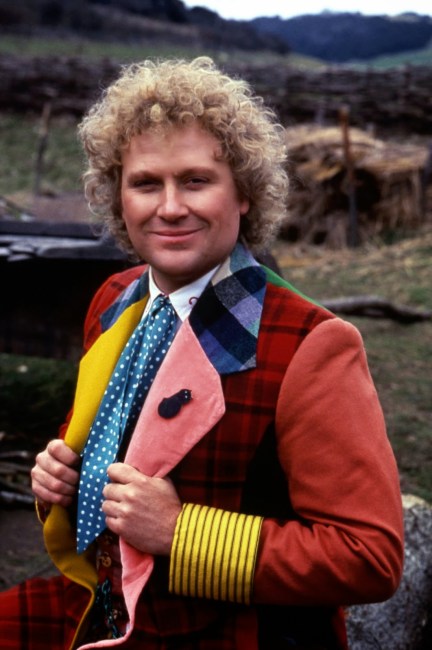
Things I liked

  • Darker and bolder stories: Some people see this as a fault, but I don’t. I think the 6th Doctors era represents a time when Doctor Who in spite of its faults was beginning to branch out and do more daring things that it never would have dreamed of doing in the past. Revelation of the Daleks for instance deals with cannibalasim and even implied necorphillia.
  • The Rani: The Rani is one of my favourite villains. She was a truly memorable character who served as a brilliant contrast to both the Doctor and the Master.
  • Bleaker solutions to stories: During the 6th Doctors era there were often no easy answers and things often did not have as happy an ending as in other doctors era’s.
  • Nicola Bryant: I feel the need to make a distinction here between Bryant and Peri. Bryant is one of my favourite actresses in Who history and she played brilliantly off of Colin’s Doctor. Sadly however the writing let her down hugely.

Things I didn’t like

  • Overload of continuity references: Again like I said before nods to the past are fine if they are done in moderation, where as they went overboard with them in Colin’s time.
  • “Trial of a Timelord”. Now I actually don’t dislike “Trial of a Timelord” as a story, but I think the fact that it takes up so much of Colin’s time is bad as anyone who doesn’t like his story will be put off one year’s worth of stories, which considering he only has two is a bad thing.

The Seventh Doctors Era

Things I liked

  • Story arcs: I felt that the story arc of Ace being manipulated by Fenric was brilliantly done and also very influential on the new series.
  • Ace: Definitely one of the all time greatest companions of either the revival or the original series of Doctor Who.
  • Mixture of fantasy and science fiction: One of Who’s greatest strengths I feel was the way it blended science fiction and fantasy concepts. However sadly in its later years I think it got away from that somewhat and became more of a straight forward sci fi show. McCoy’s era however blended the sci fi and the fantasy again to great effect. Fenric and “Battlefield” feature Demons, Vampires and ideas from Norse mythology, “The Greatest Show in the Galaxy” features werewolves and Gods, whilst even “Survival” features a more fantastical idea of a planet possessing people and appealing to their darker urges and being shaped by their characters.

Things I didn’t like

  • The earlier McCoy era stories are a bit too comical: Indeed sadly almost all of season 24 feels like a cheap pantomime.

The Ninth Doctor’s Era

Things I liked

  • The Daleks: Skaro’s finest were at their best since the 1960’s in this bloggers opinion. Davies really brought them back with a bang and made them a legitimate threat again after years of being overshadowed by Davros. RTD’s Daleks were unstoppable monsters, one of whom could slaughter hundreds of people. They had destroyed the Doctors home planet and things were therefore more personal between them and the Doctor than they had ever been before.
  • Companions: 9 had only a few companions, but fortunately they were among the best, Adam aside. Rose Tyler and Captain Jack Harkness, who later got his own series. Though some classic fans (including yours truly) may have felt Rose overshadowed the Doctor, I don’t think there is any denying that Rose is at the very least one of the most iconic characters in Doctor Who’s long history.

Things I didn’t like

  • Too many stories set on modern day earth: Not since the Pertwee era has the doctor been confined to one period on one planet for so long. Just as with Pertwee’s time this limited the types of stories Eccleston’s Doctor could go on.
  • Too much humour:  This was an even bigger problem than in the later Tom Baker years. Some stories in Eccleston’s era felt like a farce with farting aliens, burping wheeley bins, pop music in the year five billion and worst of all the Anne Droid, oh god the Anne Droid!

The Tenth Doctors Era

Things I liked

  • Daleks: Again the Tennant years I felt really beefed the Daleks up as the Doctors main enemies. They were behind every nasty thing that happened to 10 such as losing Rose and Donna and the Meta Crisis. They also thrashed his other enemies like the Cybermen, the Pyrovale’s and even the Master who flees to the end of the universe to escape them. Also look at Sarah Jane, Captain Jack, Martha and Rose’s reactions to them in “The Stolen Earth”. Its hard to imagine any other villain conjuring up as much fear in that moment. Also in “The Stolen Earth” they present the biggest danger in the entire history of Doctor Who at that point, they threaten every universe. The Daleks have literally never been more powerful than in the Tenth Doctors era.
  • Companions: I think its fair to say that the Tenth Doctor has the most iconic set of companions since the Fourth Doctor. Rose, Martha and Donna Noble all wonderful characters and probably the most popular of the new series companions too. Then of course he also had past favourites like Captain Jack and Sarah Jane Smith too.
  • The Children of Time: Okay this might seem like I’m repeating myself again as technically they are his companions. Still I think its important to mention that the Children of Time were really the first attempt in the show itself to give the Doctor another “family” or “gang” of supporting characters since UNIT in the 1970’s. Jago and Litefoot had never appeared again after their first appearance in the show itself only in spin off material. The Children of Time therefore I feel were a very good attempt at trying to recapture some of the UNIT magic, but without copying it and they have proven to be very popular as well.
  • Darker stories: I don’t think Davies gets credit for being one of Who’s darkest writers. Not a single season finale in the Tenth Doctors era has a happy ending. In season 2 he loses the woman he loves, in season 3 he discovers that one member of his kind has survived, which should be a happy occassion for him. Unfortunately its his worst enemy who tortures him for a year and nearly kills him. He then the following year not only loses his best friend, but is forced to wipe her memory. Finally after all he goes through he is killed by something so simple as not being able to open a door, and worse it is because of another close friend, someone whom he had even looked on as a father! Ten’s run of stories though full of fun and adventure is also a very dark and bleak time for our favourite time lord.

Things I didn’t like

  • Pop culture references: Sadly the Tenth Doctors era is already probably the most dated. Russell T Davies stuffed it full of pop culture references. Though the ninth Doctors era does have the single worst reference in the Anne Droid, sadly they are more frequent in 10’s time and compromise his era quite badly.
  • Too many earthbound stories: Much like 9 and 3, 10 suffers from too many stories set on modern day earth. Though of the 3 of them he does at least have the most stories on far away planets. His last series in particular has a nice variety of alien worlds and different time periods, but still he does suffer from too man stories on the Powell estate or in Martha’s and Donna’s house’s.

The Eleventh Doctors Era

Things I liked

  • The fairy tale feel of the show: I felt Moffat took Who back to its roots here and blended not only the fantasy elements with science fiction, but also more surrealist aspects too. Doctor Who at its very core is a surrealist series, an idea about a man travelling through time and space in a police box. Moffat for three years gave us stories that were genuinely crazy and more offbeat than ever before, but yet still managed to make sense.
  • More focus on Time Travel stories: Steven Moffat I think its fair to say made use of the fact that Doctor Who is a series about time travel. 11’s era featured more stories about paradoxes and the doctor meeting people out of sync with his own time line. Apart from a few stories such as “Day of the Daleks” ironically I don’t think Who had ever used the time travel aspect quite so prominently as before. It had only really been used as a plot device to get the Doctor somewhere for an adventure that would focus on something else, where as more of 11’s stories tended to focus on time travel itself.
  • Seeing the Doctors many enemies meet: Moffat did more stories where we would see the Doctors many enemies encounter one another. I really enjoyed this as it almost felt to good to be true. Its like when you are a child and you think wouldn’t it be cool if all the badguys met, but you know it would never work, yet Moffat somehow was able to make it work in stories like “The Pandorica Opens/ The Big Bang”.  Moffat wasn’t the first to have the Doctors enemies meet. The Master encountered the Daleks as far back as the third Doctors era, whilst in the Tenth Doctors era the Daleks and the Cybermen memorably clashed with one another. However Moffat brought them together in much more unusual and creative ways. For instance he had a Sontaran and a Silurian team up and help the Doctor battle the Great Intelligence, he had races that you would never have expected to see together like the Daleks and the Silurians share the screen. I felt having the villains all meet each other helped to create a feeling of a larger shared universe that Who had never really had before.
  • The Paternoster Gang: I found all of their stories to be very enjoyable and they marked yet another “family” for the Doctor, however unlike UNIT or the Children of Time this family was set in the distant past which allowed them to do different kinds of stories rather than just the usual invasion earth that UNIT and the Children of Time were often involved in.
  • The Ponds: Personally I loved Amy and Rory, with Rory being among the strongest male companions in the entire history of Doctor Who. Their relationship was very well developed and moving and the journey they went on with the Doctor was one of the most interesting.

What I didn’t like

  • Too many attempts to retcon the past: This sadly is a trait of Moffat’s that’s only gotten worse as time has gone on. Moffat over the course of the 11th Doctors era, wiped the entire Russell T Davies era from canon, inserted an unseen Doctor, made the meta crisis count as a regeneration, retconned Clara into being the hero of every story from every doctors reign and made her the person who informed him of which TARDIS to steal, as well as making the Doctor no longer responsible for destroying Gallifrey. Whilst I haven’t minded all of these changes (such as making the Doctor save Galifrey) Moffat’s constant need to rewrite the past has made 11’s time more controversial and polarising among the fandom than it needed to be.
  • Overuse of the villains: Whilst I do like the fact that Moffat has brought a lot of the villains together and allowed many of them a chance to meet, at the same time he has also overused many of the Doctors enemies. Take for instance the Cybermen who popped up quite a lot in 11’s time, but really only had one story where they were presented as a genuine menace “Nightmare in Silver”. Other times it feels like they have just been brought back for the sake of it like “A Good Man Goes to War” where they are completely undermined or “Closing Time” where they could be replaced by any monster. Sometimes Moffat it seemed did go a bit too far in using the monsters again and again. What was even more annoying was the way in spite of all these monster appearances we didn’t get a single 11/Master story either.

As you can see I think there are good and bad things in every Doctors era. Interestingly enough the era’s I have ranked among the highest are the era’s of my three favourite Doctors, Jon Pertwee, Tom Baker and Matt Smith. However the era I have ranked the highest is Tom Baker’s who is not my overall favourite which would be Jon Pertwee. Still I stand by my point that ranking the Doctors era and ranking a Doctor should not always be the same thing.

The Master vs The Daleks


The Master and the Daleks are the Doctors two most iconic enemies.

When they first appeared in 1963, the Daleks helped launch Doctor Who’s popularity into the stratosphere. They quickly became his most recurring and dangerous enemies, and though there were attempts to give the Doctor other recurring enemies, Cybermen, the Yeti and Ice Warriors; none of them quite caught on as much as the Daleks.

Finally however in 1971 all that changed when the Master, an evil Time Lord was introduced. The Master was what you would call a “classical nemesis” for the Doctor. He was his equal in every way, a “moriarty” figure, his dark twin, and was therefore able to present a different kind of challenge to the Time Lord than any of the monsters.

Since then fans have debated just who the Doctors true arch enemy is the Daleks or the Master. It hasn’t helped that the Doctor himself has referred to them as both on many occasions.

In “The Day of the Daleks” the third Doctor calls the Daleks his oldest and bitterest enemies, whilst in “The Deadly Assassin” the 4th Doctor refers to the Master as his old arch enemy. In “Survival” he also refers to him as his oldest and deadliest enemy, whilst in “Victory of the Daleks” Amy Pond refers to the Daleks as the Doctors arch enemies which the 11th Doctor agrees with.

So which one is the Doctors true nemesis? Well that’s what we’ll be looking at in this article by assessing who has had more battles with the Doctor and looking at who has inflicted more pain on him.

1/ Who Is The Most Recurring

In the Classic Who the Master appeared in more stories than the Daleks despite the Daleks appearing first. The Daleks appeared in 19 stories, whilst the Master appeared in 21. In Classic Who the Master is technically the main villain. However in New Who the Daleks have obviously appeared the most in 18 episodes overall with the Master having only appeared in 11 episodes to date. Thanks to New Who Skaro’s finest have taken the lead for the most amount of appearances overall. Also if one where to take spin off material into account, comic strips, books and audio stories the Daleks have appeared far more times in all of those mediums too. So the Daleks definitely win this round.

Daleks 1/ The Master 0

2/ Who Has Caused The Doctor The Most Grief

A good way to tell who a heroes arch enemy is is to look at who has inflicted the most pain on the hero.

Well first lets take a look at what the Master has done to the dear old Doc over the years shall we

  • In “The Keeper of Traken he murders the father and the stepmother of the Doctors new companion Nyssa. Worse he uses his corpse as his new body which serves as a constant painful reminder of the doctors failure to save him and by extension. The entire world of Traken itself.
  •  In “Logopolis” The Master makes a serious bid for arch foe status. First of all he murders Teegan Jovanka, the Doctors new companions Aunt and only living relative. He then destroys the entire home planet of Nyssa, before finally killing the 4th Doctor. As if that wasn’t enough in the next story, he captured and tortured Adric another companion of the Doctor, and forced him to betray his friends. Certainly if looking at who is the arch enemy of individual Doctors, then the Master is unquestionably the 5th Doctors ultimate enemy having been responsible for his predecessors death and his friends worst pain.
  • The Master also caused the 7th Doctors death. He forced him to land in the area where he was shot which ultimately lead to his death on the operating table. I don’t know if this was deliberate, but either way the Master was still responsible for his death none the less.
  • The Master did a lot of awful shit to the Tenth Doctor. First of all he stole his TARDIS and used it as a machine to help him decimate mankind killing billions (though this was undone eventually.) He also aged him into an old man, tortured him physically and mentally for a whole year, tortured Captain Jack Harkness to death over and over again for a whole year and tortured his companion Martha’s family for a whole year, before dying just to spite the Doctor in order to condemn him to being the last of the Time Lords once again.
  • Once again he was technically responsible for the death of the Tenth Doctor as had it not been for his actions Wilf would never have been trapped in the radiation chamber. Also he was the one who buggered the radiation chamber so much 10 needed to sacrifice his life to save him so that’s 3 Doctors the Master has been responsible for the death of.
  • The Master or rather Missy brutally murdered the Doctors no 1 fan Osgood just when she was all set to join 12 as a companion.
  • Finally with her last act Missy tormented the Doctor by giving him false hope that Gallifrey had been returned.

 Pretty horrible stuff, but can the Daleks top it? Well lets see shall we

  • The Daleks are responsible for the deaths of the Doctors two companions Sara Kingdom and Katirina, the first and Adric aside only two of the Doctors companions to die during the classic era. Though the Daleks do not kill them directly, it is because of their actions that they perish and it is even a Dalek weapon the Time Destructor that causes Sara’s death.
  • The Daleks kill the father of the 2nd Doctors latest companion Victoria.
  • The Daleks take the lead in the new Who when they destroy the Doctors home planet. It is later revealed that they forced him to burn his home planet and slaughter billions of innocent men, women and children. However this was later undone by the 50th anniversary. Still whilst the Doctor is no longer responsible for the death of Gallifrey. His home planet is still lost because of the Daleks, though its doubtless that one day he will find a way to restore it. Overall the Doctor has still been put through a lot of grief in the process. Indeed whole incarnations lives were ruined by the mistaken belief they had destroyed their home planet.
  • The Daleks caused the death of the 8th Doctor. They shot the ship he was in down, though it was the 8th Doctors refusal to leave that really killed him, either way it was the Daleks fault.
  • They caused the death of the war Doctor too as technically they were the ones who wore him down.
  • They caused the death of the 9th Doctor as had it not been for their actions then Rose would never have become Bad Wolf.
  • They killed Captain Jack, though he did return afterwards he was force to become a cursed immortal.
  • They caused him to lose Rose Tyler. If it had not been for them ripping the barriers between realities down the Cybermen would never have been able to invade, also Rose was lost in another universe trying to stop their invasion anyway.
  • The Doctor lost another regeneration when the Daleks shot him and he gave it up for the Meta Crisis.
  • The Daleks killed Harriet Jones a former ally of the Doctor whom he had had a falling out with, causing him more angst.
  • They cost him Donna Noble. Had it not been for their invasion then Donna would never have had to go through the Meta Crisis and the Tenth Doctor would never have had to wipe her mind of all of their travels together.
  • The Daleks caused the death of the 11th Doctor. Though they didn’t kill him they wore him down and forced him to remain on Trenzalore for centuries leading to his death.

Its hard to weigh up who has inflicted more misery on the Doctor. On the one hand the Daleks are responsible for the deaths of more Doctors, but on the other the Master is the only one to actually kill a Doctor directly.

On the one hand the Daleks are responsible for the Time War, on the other hand the Master destroyed Nyssa’s home planet. I am afraid I am going to have call this a draw. As far as arch enemies go the Daleks and the Master both have a pretty good track record for making the heroes life a complete misery.

Daleks 1/ The Master 0

Who Has Caused The Most Destruction To The Universe

Well this one surprisingly I am going to have to give to the Master. The Daleks have destroyed millions of worlds and in “Journey’s End” they come close to destroying every single universe which is a far bigger threat than the Master has ever posed. However they were ultimately stopped before they could do it. (Obviously.) In “Logopolis” however the Master destroys “Logopolis” that was literally holding the universe together and as a result trillions of worlds were destroyed including Traken. Whole galaxies were erased in the blink of an eye. The Universe was in fact practically reduced to half its size.

Daleks 1/ The Master 1

Next round will be the tie breaker who will be the Doctors number 1 enemy.

Who Is The Most Powerful

The Daleks and the Master have had many encounters over the years and have actually fought many times. We can determine who is the strongest by looking at who has won more often.

  • In “Frontier in Space” the two are shown to be working together. They don’t fight though its obvious that they have plans to betray one another with the Master even commenting “We’ll see who rules the universe when this is done! Do not fail the Daleks indeed you stupid tin boxes”. However sadly any fight the Delgado Master and the Daleks had is not shown. The next time we see the Master he is in quite a bad shape, maybe it was the Daleks who did it to him? At the very least the Master appeared to hold all the sway in this alliance. Though the Daleks believed they were in control, the Master clearly had the power being even able to convince the Daleks not to kill the Doctor because the Master wanted to make him suffer more. Ultimately however I don’t think we can give this to the Master as a victory or the Daleks either.
  • In “Doctor Who 1996 Movie” the Daleks exterminate the Master by destroying his body completely and utterly. His essence however survives as a strange Snake monster that manages to possess a human. However since the human body is unable to hold his essence and since he isn’t able to acquire another body and dies. This is definitely a victory for the Daleks. If you don’t include spin off material then the Master died after the 96 movie for good until the Time War.
  • In the Time War the two fought again with the Master having even been resurrected from the dead with the sole purpose of fighting them. However the Master fled to the very end of the universe; a place no time lord have ever dared go before. On top of that he also turned himself into a human being, and risked dying as one in order to avoid fighting them, giving the Daleks another victory.
  • Finally whilst this isn’t technically a Dalek Master battle in “The Stolen Earth” a handful of Daleks destroy the Valiant, the main weapon of the Master from the previous year.

As you can see the Daleks are clearly was more powerful than the Master. It makes sense really. Look at Rose, Martha, Captain Jack and Sarah Jane’s reaction to the Daleks arriving in “The Stolen Earth”. Its hard to imagine the Master inspiring as much fear in those characters. Indeed Martha laughed in the Masters face, also Martha was willing to walk the earth for a year to stop the Master, whilst when it was the Daleks she thought things were to bad and she tried to destroy the earth instead! The Daleks are clearly far more powerful than the Master in any of his or her incarnations.

Result

Daleks are the winners by 2-1

Makes sense to me the Daleks have always been his most iconic enemies. Still one should never underestimate the Master. I think the previous comparison I made of the Daleks being like the Joker and the Master being like Ra’s Al Ghul is apt. The Daleks and the Joker are the most iconic and oldest enemies whilst Ghul and the Master are the two who came later who were more of a classical nemesis to the hero. Still as good a rival as Ghul or the Master may be, the Daleks and the Joker will always be the Doctor and Batman’s most iconic adversaries.

Similarities Between Doctor Who and Lost in Space


Doctor Who and Lost in Space are series that blur the line between science fiction and fantasy. Whilst Lost in Space was definitely more humorous (its really the first major sci fi comedy on television.) There are still many great similarities between the two series, due to their blending of surrealism and classic boys own adventures style sci fi.


1/ The Premise


The initial premise for Doctor Who was somewhat similar to Lost in Space. During its first two years Doctor Who really revolved around Ian and Barbara, two humans who had been basically kidnapped by the Doctor and were lost in space effectively from their earth.

A large theme of the first two series involved Ian and Barbara’s longing for earth.  Obviously Lost in Space’s premise revolves around the main characters being well, lost in space and being desperate to get home.

Both the TARDIS and the Jupiter 2 are broken down ships in comparison to say the Star ship enterprise. Our main characters are constantly struggling to try and fly them properly in order to get back to earth. This I feel ties into the surrealist nature of both shows quite well, as unlike say Star Trek where we have a really sleek ship that takes them wherever they want to go.

In both Lost in Space and Doctor Who the main characters are merely roaming endlessly and have no more idea where they are going to end up each week as much as the audience. Obviously over time Doctor Who’s premise changed as he was able to pilot the TARDIS properly, but initially its premise was similar to Lost in Space as both revolved around travellers wanting to get back to earth.


2/ Both have ships that are bigger on the inside


In a very early episode of Lost in Space called “Invaders from the 5th Dimension” the Jupiter 2 encounter a hostile race of aliens whose spaceship is a tiny little craft on the outside, but on the inside it is absolutely huge, with the aliens stating that the inside is in a different dimension to the outside. With Doctor Who, well does it need said which ship is exactly the same? Doctor Who came before Lost in Space in case you are wondering, however Doctor Who was not shown in America during the 1960’s, so the creators of Lost in Space most likely would not have seen it.

I think again both ideas demonstrate a mix of sci fi and fantasy unlike say Star Trek. The idea of a ship being bigger on the inside than the outside is verging on magic, with many having even compared the TARDIS to a magic carpet, or the wardrobe to Narnia. However both are still presented in a way that is more akin to science fiction as both are explained away through semi scientific means.


3/ Both have characters that regenerate


Whenever he is mortally wounded the Doctor has the ability to regenerate and take on a new form. It is this process that has allowed the show to last for so long. Whenever an actor playing the role decides to leave the doctor simply regenerates and takes on a new form. In an episode of Lost in Space’s third season we are introduced to the character of Creech, an alien criminal who is said to have the power to regenerate when he dies, similar to the time lords ability to regenerate. Sadly this power whilst talked about is not shown as Creech is killed at the end by desintigration. This episode was produced after Patrick Troughton had taken over from William Hartnell, but before the process was fully explained as being a natural process the doctors people went through in order to cheat death, or even called regeneration.

Lost in Space therefore sort of had the idea first. Once again both ideas demonstrate a weird mix of science fiction and fantasy as the idea of regeneration is essentially the same as reincarnation. However once again both are presented in a way that is more science fiction, with both being described as simply a natural process rather than the work of magic.


4/ Both feature episodes about a villain who is an amalgam of the heroes darker side


The Doctor Who story Trial of a Time Lord revolves around the Valeyard a being who is created from the Doctors darker impulses between his penultimate and final forms. The Valeyard attempts to steal the Doctors body in order to prolong his own life. In the Lost in Space episode The Space Creature the team encounter a monster who is created from Will Robinsons darker impulses and desires who is made flesh and hopes to steal his body in order to prolong his life.  Both villains offer us a deep insight into the main heroes minds and again play on both science fiction and fantasy tropes with the idea of a dark doppleganger being a staple of both genres.


5/ Uncle Angus looks like an Axon

The last similarity is the most superficial, but still take a look at this monster from Lost in Space called Uncle Angus

Then take a look at this monster from Doctor Who called an Axon

Kind of the same aren’t they? Though the concepts behind them are totally different with the Axons being space parasites and Angus being a Scottish ghost cursed to remain in a horrible form forever at the bottom of a swamp. We never find out what it was Angus did to be cursed so horribly, but as Will Robinson said it must have been pretty fucking horrible to be turned into an Axon forever.


An Analysis of The Character of The Doctor

The Doctor is one of the most unusual leading characters on television. An alien who travels in time and space in a police box is an interesting idea already, but its really his ability to regenerate that makes him stand out more than anything else.

The Doctor can change in every single way, not just his face, but his entire personality and way of doing things

At first glance there is no similarity between any of the Doctors, but when you look at it more closely you can see that all of the different Doctors are all linked by a number of subtle, yet defining traits.

They all do follow on from each other in some ways. The Doctors character is also shaped as much by what happens to him, as it is by regeneration.

For instance the Third Doctor had a more rebellious streak to him after being forced to remain on earth by the time lords, whilst 9, 10 and even 11 were all more emotional and at times unstable due to the Time War.

I personally think you can group all of the Doctors into 4 different categories, with each category representing a defining trait of his personality.

There are the darker Doctors, the fun eccentric Doctors, the dashing hero Doctors and finally the more vulnerable Doctor.

This is not to say that any actor who has played the Doctors performance has been derivative of any other. Personally I think all of them have been excellent, though my 3 favourites are definitely Jon Pertwee, Tom Baker and William Hartnell. Still I do think by and large you can group certain Doctors together as being more of a type than others, and that’s what I am going to be doing here in my analysis of the Doctors character.

The Darker Doctors/ 1st Doctor, 6th Doctor, 9th Doctor


These Doctors all represent the darker side of the Doctors personality that has been brought to the fore. These Doctors all have a real anger and ruthless streak about them.

All other Doctors can be ruthless like 10 killing the leader of the Sycrocrax, 7 destroying the Daleks and Skaro, but these Doctors will happily dispatch all or most of their enemies in nasty and gruesome ways.

Examples include the first Doctor trying to bludgeon a caveman to death whilst he is wounded and unconscious in “An Unearthly Child”. 6 casually tossing two men into an acid bath in “Vengeance on Varos”, and 9 burning Lady Cassandra to death in “The End of the World”.

These Doctors also are far more arrogant than the others. Peri once commented to 6 that by the time he had finished congratulating himself, they’ll probably all be dead. 1’s arrogance meanwhile always got him into trouble, such as in the first Dalek story when he does literally spend too long congratulating himself (on something that didn’t even work), and as a result he and Susan are captured. 9 meanwhile refuses to listen to Rose in “The Unquiet Dead” and as a result not only does this cost a young woman her life, but very nearly causes humanity to be wiped out too.

These Doctors have a somewhat more strained relationship with their companions as a result. Examples include 1 electrocuting Ian and Barbara, and poisoning them at one point, and 6 strangling Peri.

Even 9 and Rose have a some what more strained relationship at times than 10 and Rose ever did.

At the same time however these Doctors also have arguably much closer relationships to their companions too, as their companions are the ones who hold them back and ultimately make them better people. Ian literally stops 1 from murdering the caveman, whilst Rose also stops 9 from gunning the confused and helpless Metaltron down in cold blood.

All of these Doctors also go through the same development too where they start out alien, grumpy, even downright unpleasant and callous in some ways, but the influence of their human companions makes them a better person. By the end of 1’s time he has changed considerably.

Gone is the callous wanderer who was happy to let the Thals wander into the Daleks trap (that was all his fault to start with) and in his place is the hero from “The Daleks Masterplan, who is willing to give his life to save his companions and the earth from their plans.

Similarly by the end of the 9th Doctors brief tenure, he had become a more merciful character who gives the Slitheen a second chance, and who proves he is no longer capable of slaughtering innocents in order to stop the Daleks like he seemingly did in the Time War.

The 6th Doctor was also to have gone down a similar development, sadly however “Trial of a Time Lord” as well as Colin’s abrupt and unprofessional sacking from the role (on account of a certain vindictive shit) ruined these plans. Still if you listen to the Big Finish Audios you can see how Colin would have finished his Doctors story arc, with the 6th Doctor much like the 1st, and the 9th, thanks to the influence of Evelyn and Peri becoming a much happier, friendlier and likable character than the arrogant blowhard we saw in the first few stories.

All of these Doctors are darker, not simply because the Doctor changes when he regenerates, but more because of the circumstances around them which help bring their darker side to the fore.

The 1st Doctor is on the run from his people. He has broken their laws, he knows if they catch him the punishment will be severe for he and for Susan. He is also exploring a universe he knows nothing about, that is dangerous and hostile and he is also scared that his grand daughter is slowly slipping away from him.

Unlike the Doctor, Susan wants to find one place she can feel at home. This is obvious even from the start of an Unearthly Child where she grows attached to Coal Hill School a bit too much. The first Doctor is shaped by this into a more frightened, angry character who is actually scared of everything around him, but covers it up with his unbelievable arrogance.

With Ian and Barbara’s help he becomes much braver however and eventually lets Susan go and becomes the hero we all know.

6 meanwhile is darker because of the traumatic regeneration from 5. 5’s death was worse than any other Doctors before him. He wasn’t even sure if he was going to regenerate commenting as he lay, dying in agony “it feels different this time”.  It is even hinted that 5’s regeneration to 6 didn’t go right and thus 6’s mind was completely unstable to begin with. 9 meanwhile had more reason than any other as he had incorrectly believed that he had slaughtered billions of people in the time war. He was obviously still traumatised by this atrocity and it took Rose’s help for him to get through it.

All of these Doctors form much closer attachments to their companions by the end of their time.. Shades of these Doctors can be found in all of the others. Every Doctor can have a ruthless streak, and every Doctor can be arrogant, but in this type of Doctor those characteristics are dominant.

The Fun, Eccentric Doctor/ 2nd Doctor, 4th Doctor, 7th Doctor, 11th Doctor


These Doctors represent the more fun loving, cool, funny side of the character. This is what I think the Doctor is naturally like. All of the other types are caused by specific events, but this is kind of the Doctors default position. Naturally the Doctor is very eccentric, even on Gallifrey and he is also somewhat childish too.

He is someone who hates being told what to do and just wants to have fun. That’s really the reason he left Gallifrey in the first place. He left because he wanted to live every day, like he was on holiday, just cruising the universe, hanging out with all the best people throughout history, and having fun with his friends like Amy Pond, Rose Tyler and Martha Jones, rather than get a dreary, low paying 9-5 job on Gallifrey.

I’d say these are the Doctors that the pubic most thinks of when thinking of the character. The funny, clown like, childish alien with weird clothes like a bow tie and a long scarf. All of these Doctors emerge at happy points in the Doctors life.

2 emerges when the Doctor feels more content. He has now found a planet, Earth that he has a fondness for. He has also now faced the worst the universe has to offer. He knows Susan has gone off and found somewhere she belongs, and he feels confident that the time lords will not find him as he has been on the run so long. Indeed had it not been for his need to summon them in “The War Games” they probably never would have found him.

4 meanwhile comes at probably the happiest point in his life. The Doctor is now finally free to roam the galaxy as he wishes. The time lords have given him free permission to do so forever, so he is completely free from their shackles. On top of that he also has a family of people, metaphorically speaking of course on earth, The Brigadier, Sarah Jane, Benton.

7 also emerges in a more stable period of his life when the Doctor has shaken off all of the issues he had from his sixth incarnation.

11 meanwhile similarly had more distance from the time war than his immediate predecessors. 9 had just come from it and was still horrified, 10 meanwhile was still trying to figure out what his place was in a post time lord universe. 11 however knew it and could put the war behind him. Therefore he was a much happier person. 11 also discovered that he had saved Gallifrey later in his life too.

However whilst these Doctors are definitely much happier characters they can also be more sneaky and manipulative at the same time. They can often use their seemingly bumbling, clownish exterior to mask their true motives. 2 and 7 did this all of the time, but 11 and 4 were also more than capable too such as in “City of Death”.  These Doctors also could be ruthless if need be.

They weren’t like 1, 6 and 9 whose first option was often to kill, but still if provoked then yes they could be every bit as ruthless. 4 poisons Professor Solon when he refuses to halt his experiments to revive Morbius, the worst villain the Time Lord race has ever produced. 11 condemns Solomon the trader to death, when he feels he has gone too far, 2 effectively wipes out the Daleks in Evil of the Daleks, whilst 7 also attempts to exterminate the Daleks and murder Davros in Remembrance.

In these moments you can see how Doctors like 1, 6 and 9 would emerge. 2, 4, 7 and 11 have that side to them as well, they just keep it in check.

The More Sensitive, Vulnerable and Fallable Doctor/ 5th Doctor, 8th Doctor


These Doctors I feel represent the Doctors compassion and empathy more than other types. They are Doctors who feel a need to save everybody. All of the other Doctors can be callous at certain times such as 4’s reaction to Lawrence Scarman being tortured to death by his own possessed brother in “Pyramids of Mars”. 5 and 8 however  would never have that reaction.

8 famously in “The Night of the Doctor” refuses to abandon a complete stranger who despises him to die and ends up losing his life as a result. Ironically because these Doctors care however that makes them somewhat more fallable to the events surrounding them.

They tend to fail more than other Doctors, with 5 being the first to lose a companion since 1. I think its partly down to the failures that they suffer that they end up becoming more conflicted characters who in contrast to the somewhat bombastic and egotistical other Doctors are constantly doubting their actions and decisions.

The Dashing, Heroic, Charismatic, Human Doctor/ 3rd Doctor, 10th Doctor


These Doctors are the two who set out to be heroes. All the other Doctors merely have a strong sense of justice and morality and stumble their way into situations.

3 and 10 are far more virtuous than other Doctors and will often spare even their vilest enemies such as Dalek Caan. 10 even goes to the extent of sparing the man who seemingly murdered his daughter. (Though even then they are still not above murdering their enemies if they have too such as 10 killing the leader of the Sycrocrax, and 3 trying to murder the Master in The Mind of Evil.)

Both set out to be heroes because of the unusual situations they find themselves in. 3 is exiled to earth and for the first time he see’s how vulnerable earth is. Before he has always just flitted in and out of the planet, but now he has been forced to live there and can see the danger it is in; not just from aliens, but also even from humanity itself who very nearly destroy the planet in “Inferno”.

The Third Doctor therefore feels it is his duty whilst he is exiled there to protect the earth, and set an example to the humans around him, hence why he might go out of his way to be merciful to even the worst villains he encounters.

Similarly 10 finds that he is the last of the Time Lords. 9 was still too horrified to take that in, but 10 who has managed to bury some of the trauma can, and he now see’s it as his job to carry on their legacy and protect all of time and space. More than any other Doctor 10 has the weight of all of time on his weary shoulders, and much like 3 he feels he needs to be a hero rather than merely a traveller with a strong moral sense, and also like 3 he feels he needs to set an example to all those around him.

Both 10 and 3 are also somewhat more human than other Doctors. Despite 3’s flamboyant dress sense, he and 10 are probably the least eccentric Doctors.

Both are very honest trustworthy heroes (this was why 3 was always my favourite as a kid as I always felt safest with him, and I don’t doubt many people felt the same way about 10 growing up)

Both I feel are more human because they spend more time on earth than the other Doctors do. 3 is exiled there and 10 came to see earth as a replacement for Gallifrey in some ways.

Whilst 3 and 10 may in some ways be the most heroic and likable at the same time they both also come to believe their own image of themselves and just like 1, 6 and 9 their arrogance can lead to their downfall.

3 often tries to reason with every enemy he comes into contact with regardless of how evil they may be. He assumes that he can still get through to them. 10 similarly often tries this as seen with Dalek Caan, which allows the Dalek to escape and leads to more chaos when Caan saves Davros. 10’s arrogance also goes to his head in “The Waters of Mars” when he believes that rather than simply uphold the Time Lords laws he can defy them and declares himself “Time Lord Victorious!”.

Now as for the current Doctor 12 I am not sure where exactly to group him quite yet. It is early days remember in his era and to be honest I don’t really like to say what type of Doctor someone is until after their era is done and I can watch their full development. Still I’d say that 12 is perhaps more of a darker Doctor which would make sense after all that 11 went through on Trenzalore. 12 has already proven to me more ruthless than 11 ever was, however I also feel there may be shades of the more heroic and dashing Doctor in this incarnation as well. Only time will tell, but those are definitely the two I’d say 12 follows.

As for the War Doctor well he is the only one I would say doesn’t follow any model, but that’s because he was meant to be an anamoly in the Doctors life. War was created to be a warrior, someone who would kill without mercy or compassion to fight in the war, thus he was not like the Doctor at all, even physically he looked different with his more dishevelled and unshaven look.

However I quite liked the fact that through the War Doctor, we saw what a hero the Doctor truly was as even when he was created to be ruthless, he still could not bring himself to slaughter the innocents on Gallifrey. In the end he did what he would always do and found another way out. One that completely eluded everyone else, even the other time lords, that cheats and breaks all the rules.

I know a lot of people weren’t happy with the War Doctor and I can understand why. They wanted to see Paul McGann again, and they felt it messed with the numbering system, and finally they felt it also undid the idea of the doctor destroying his own people.

Personally however I loved the War Doctor. I felt he summed up why we all love the character of the Doctor, by showing us that ultimately though he does have a dark side, he can never be truly corrupted. Even by the Sisterhood of Karn’s magic.

He will always remain the same man underneath and always do the right thing. He will never be someone who slaughters innocents on Gallifrey, or anywhere else for the greater good. He will always find a way out.
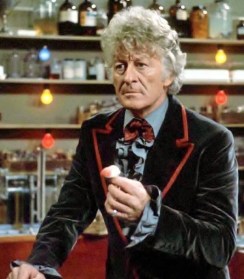
The fact that its not just the War Doctor but all of them that join in, and save Gallifrey including the then future 12th Doctor reinforces all the Doctors would have reacted the same way in this situation. Much like Captain Kirk, the Doctor does not believe in a no win scenario.

Its important to always remember that the many different Doctors are the same character underneath. Even if you don’t agree with my analysis in particular I still think it is important to remember that all of the different Doctors are merely different aspects of the same character, rather than 13 different characters.