Doctor Who is the worlds most popular science fiction series. It is currently seen in over 50 countries around the world by close to 90 million people. It is a beloved national institution and an international hit.
However this wasn’t always the case. Throughout pretty much all of the 90’s, apart from one telemovie Doctor Who was seen as a dead brand. It still had a dedicated fanbase of course and it made millions of new fans around the world through video releases (myself being one of them) but needless to say its reputation had dipped considerably among the general public throughout the 90’s.
So then how did this happen that a show which lets not forget had been absolutely massive in the 60’s, 70’s and yes even the early 80’s, and would go on to be again in the 21st century, become such a standing joke?
The answer is quite simple really. It was the BBC.
Now I know that might sound like a lame excuse coming from a Doctor Who fan, but its true.
Obviously Who did have its fair share of troubles in the 1980’s. JNT the producer of the series, though starting out with interesting ideas, stayed on for too long as did Eric Saward the shows script editor. Both men soon became tired with the show and their lack of enthusiasm is very obvious in many of the shoddy scripts they churned out. Both men also resorted to cheap gimmicks in an effort to keep the show in the papers, including announcing that the TARDIS was going to change its shape from a police box and injecting what many saw as inappropriate levels of violence into the series.
Still Who could have easily survived these little problems, which the BBC often made worse anyway. For instance John Nathan Turner actually wanted to leave a lot earlier, but was told if he did then the show would be cancelled. So even if you do believe that JNT is the man who killed Doctor Who, then you still have the BBC to thank for him being there a full 9 years.
In my opinion JNT was the man who saved Doctor Who at the cost of his career as had he left it would have finished. Due to his dedication to the show we got the entire 7th Doctors era.
The biggest problems the show faced in the 1980’s stemmed entirely from the BBC as I will show you in this article. I remember Paul Cornell once said that one of the great appeals of the Sylvester McCoy era is that it is a very bullied era of Doctor Who. It contains some of the greatest stories the series has ever produced even to this day, yet it faced so many obstacles and problems from the BBC that its a wonder it ever not only managed to rise above them, but also produce gems like “The Curse of Fenric” and “Rememberance of the Daleks”. Two stories which had a massive influence on the highly successful revival.
I of course 100 percent agree with Paul Cornell here, but I’d say it applies to pretty much the whole of 80’s Who or at least from the end of the Davison era on.
There are just as many good stories and bad stories in the 80’s as there are in any other decade of the show’s history. But sadly I find that in documentaries and retrospective’s of Who in the 80’s will often focus on just the shoddy stories from that decade. Almost in an effort to justify the cancellation of the programme in 1989.
We will see a clip of the Myrka, but not the Dalek flying up the stairs in Rememberance. We will see a clip of the Kandy Man, but not of the Cyber army emerging in Earthshock.
I could make any era of Doctor Who seem rubbish that way. I could claim that the Tenth Doctors era was when it was at its absolute lowest and show a clip of the Abzorbaloff and not show the Weeping Angels from Blink.
Sadly as a result of this it just becomes received wisdom that Doctor Who got crap in the 80’s probably among people who never even watched it.
However fortunately it is becoming more and more apparent to people nowadays, with the recent global popularity of the new series, that ironically takes a lot of influence from late 80’s Who in particular. That it was really down to the BBC’s smear campaign in the late 80’s that Who vanished from our screens for almost 20 years, save one tv movie.
These are I feel the main 6 ways that Who was shabbily treated by the Beeb during the mid to late 80’s.
6/ They Killed Its Following Abroad
As you can see Doctor Who had a huge global following in the 1980’s. In fact ironically the 80’s was when it was at its most popular on a global scale. At the peak of its popularity in the 80’s the show was seen in over 80 countries around the world by over 100 million people!
That’s an even greater figure than today.
However despite this the BBC rather than exploit its global appeal instead did the reverse. During the McCoy era they raised the prices of stories to a ridiculous extent where no one could possibly afford them and thus not surprisingly sales of the series plummeted making it appear that no one wanted the show any more when the opposite was true. People did still want the show they just couldn’t afford the prices the BBC had deliberately raised it too.
A letter from an American fan in 1989 the year Who got cancelled.
Compare that with how heavily they promote the show nowadays and you can see why its popularity abroad sunk in the late 80’s, early 90’s.
5/They Allowed Vocal Fans To Slate It On Air
There is an interview that you can watch on “The Time and the Rani” DVD on a morning chat show where McCoy, Turner and Langford are supposed to be promoting their new series, but instead are practically having to defend it. The interviewer is reading out the harshest criticisms from die hard fans about the new series and nothing positive about it.
Now obviously everyone has a right to have their opinions heard. I myself have not been happy with some of the latest choices made in Doctor Who, so it would be hypocritical of me to say that the fans who disliked the 80’s stories were not true fans.
However imagine if say a morning show that was supposed to promote the next series of Doctor Who only read out my many criticisms of say the Cyber Brig and acted as though they were the only reactions people were having to the character.
That would be a biased and unfair representation and would probably damage the shows reputation and that’s exactly what they did with McCoy’s first season.
Fact is fans always have criticisms of some kind of Doctor Who. Even during the Hinchcliff era, now seen as the golden age of Doctor Who fans at the time were royally pissed at Bob Holmes the shows script editor for changing so much of established canon.
Watch this fan review of “The Deadly Assassin” from 1976. Remember that “The Deadly Assassin” is now considered to be one of the greatest ever stories and was a big ratings success when it first aired.
Now the BBC could have aired Jan Vincent Rudski’s criticisms of the show on national television like they did for the fan’s criticisms of McCoy’s stories and made it appear that everyone hates the way the show is being handled, when mainstream audiences where still loving it.
Doctor Who’s fans attack it on air, contributing to its declining reputation and status.
That’s the point even though it is us fanatics that kept the show afloat during its wilderness years, the vast majority of people who watch Doctor Who are just casual viewers. They’ll just enjoy it if its good tv, they wont have all of these grievances that we have like Time Lords only have 13 lives, the Master and the Doctor do not have that kind of relationship etc, etc. That’s why normally the BBC wont care about fan grievances. They don’t even take them seriously.
However during the McCoy era they actually let all of these fan grievances air on television to slander the show.
I am no fan of McCoy’s first season, but the audience appreciation score was as high as it ever had been. Look at the AI for “Genesis of the Daleks” and you will see that it is as actually lower than that for “Time and the Rani”!
Similarly the audience appreciation scores for Trial of a Time Lord were higher than any previous season of Doctor Who.
Thus regardless of what the fans thought, mainstream audiences still accepted McCoy and his first season and even Colin’s last season, but for the first and only time the BBC put more stock in the fans opinion than mainstream audiences, because for once they wanted to use their opinions to ruin the show’s reputation.
4/ They Gave It No Advertising
Doctor Who like any show needs to be promoted. Now throughout the 60’s and the 70’s and the 00’s the show was very heavily promoted. Among other things it was regularly featured on the cover of the radio times.
During the 1980’s it was featured on the cover of the radio times once. Once in the entire decade for the 20th anniversary.
That’s it for the 80’s.
Here are some of the radio times covers for the new Who.
And there’s plenty more where that came from not just from the new era, but from the 60’s and the 70’s.
The 80’s had one cover however.
It wasn’t just in terms of Radio Times covers. Who’s advertising all around was miniscule during the 80’s, in fact Sylvester McCoy at one point even said that he found out the new series was on from a friend of his.
3/ They Put It On An 18 Month Hiatus
In 1985 Doctor Who was taken off of the air for 18 months by Michael Grade. Grade had wanted to cancel it outright, but was forced to put it on a hiatus instead. Grade’s reasons for doing so were purely down to his dislike for the series. They were completely unprofessional.
Doctor Who’s ratings were nowhere near low enough to justify cancellation or even being put on a hiatus during Colin Baker’s first season. They were on average about 7 million which is perfectly fine. Not outstanding like they were during the heyday of Dalekmania, but certainly not low by any stretch of the imagination. Also once again the audience appreciation scores were still very high too.
Ironically it would have been much more justifiable to axe Doctor Who during Patrick Troughton’s last season, when viewing figures at one point dropped to 3 million. 3 million is a poor record during any period of the shows history, but during the 1960’s when there are only two channels and the show is in a good slot and the BBC are promoting it, is a very poor result, and like I said if the BBC had wanted to cancel it then, then it would have been perfectly justifiable.
Also sales overseas had dropped to just 7 countries during Troughtons era, whilst in Colins they were approaching 80 countries!
Even during Tom Bakers final season viewing figures plummeted to 4 million far lower than they had been during Colin’s first season.
Colin’s first season does not represent a low point in popularity for the series at all. It was simply not one of the all time high points like during the Dalekmania period.
Grade however still used this an excuse to put the show on hiatus for 18 months.
Naturally the fact that it was being taken off the air for supposedly low ratings, and then being brought back over a year later with no advertising obviously saw its viewers drop.
Interestingly enough the audience appreciation for “Trial of a Time Lord” was high, but hardly any one one saw it because of how it was messed about and the vast majority of people probably didn’t even know it was back on anyway.
That’s an old, old trick for getting rid of a show you don’t like. Its almost a cliche. Pull the show for a while and say its on hiatus and chances are its finished for good as it will struggle to find an audience again when it comes back after the long hiatus, and sadly that among other things contributed to the death of Who in the 80’s.
2/ They Fired Its Leading Man
Colin Baker was fired from the role of the Doctor in the mid 80’s. Now Doctor Who is obviously a show that can survive its leading man leaving more than any other. Still its never a good idea to fire the lead from any show.
It further dented the show’s reputation and also left John Nathan Turner with the difficult task of finding a replacement on very short notice. Obviously McCoy was an excellent Doctor, still as you will see when you watch the documentary on the “Time and the Rani” DVD the problems of finding a new Doctor on such short notice, had a negative effect on season 24, as the season had to be rushed.
The way he was fired was also somewhat unprofessional too. Colin had been contracted to do three seasons, but he had only really done one and a half and thus hadn’t really fulfilled his full contract when they dismissed him.
Colin said of the sacking.
“When the time came for the option on my contract to be taken up by the BBC, which was the end of October, he (John Nathan-Turner) rang up and said, ‘I don’t even know if we’re doing the programme. They haven’t even told me if I’m producing it next year, so I can’t take up the option at the moment.’ So the option lapsed. Then, at the beginning of November, he rang me up and said, ‘Look, I’ve got a bit of bad news. The programme is going ahead but Michael Grade has instructed me to replace the Doctor. I was quite surprised by this! You know that sort of blood-draining- from-your-veins kind of feeling? John said he had told them that he thought it was a dreadful mistake and he wanted me to play the Doctor, but they were adamant. ‘Grade says three years is quite enough. He’s said nothing derogatory about your performance, he thinks you are fine, but he thinks a new Doctor will give the programme a boost. I have pointed out that you have not done three years, and that you have done only one and a half seasons, but he remains adamant that that is long enough and it’s time for a change.’ So there was nothing much I could do about it. It goes against what I was asked to do, when I started the show, by David Reid – Powell’s (Jonathan Powell’s) predecessor. He asked me if I was prepared to commit myself to the programme for four years. Having said yes in 1983 to four years of 26 episodes a year, I actually did one year of 26 episodes (or the equivalent), nothing at all the next year, and just fourteen episodes the next. Then I was unceremoniously bundled out. So I felt fairly aggrieved.“
1/ They Put It Up Against Coronation Street
During the McCoy era they put the show up against Coronation Street the most popular tv show in Britain at that point. Not surprisingly this coupled with the shows lack of advertising and the hiatus, public slandering, lack of sales abroad, due to the BBC raising the prices of its stories to ridiculous levels, and the sacking of its leading man caused the already diminishing viewing figures to plummet resulting in the final death of the show.
It should be noted that Doctor Who still performed better than a lot of other series did opposite Coronation Street, the death slot for any show.
Still its viewing figures had finally plummeted to become low enough to warrant cancellation, though even then the show was never officially cancelled, but simply put on yet another hiatus.
Conclusion
With this in mind its no wonder Doctor Who died a painful death in the late 80’s.
The quality of the show really didn’t matter at all at this point as the Beeb had the knives out for the series throughout pretty much most of the decade.
Of course as to why the BBC wanted to kill of such a big series is anyone’s guess. I think it most likely stemmed from their dislike of science fiction in general.
Its not secret that the heads of the BBC during the 80’s, not just Michael Grade hated science fiction. Paul Jackson apparently even told the creators of Red Dwarf to play down the science fiction aspects of the series when pitching it as the heads of the BBC hated science fiction. This was close to the time when Doctor Who was cancelled.
Fortunately as any Whovian knows the original Doctor Who despite the BBC’s best efforts did still manage to finish with a dignified end, with classic stories like The Curse of Fenric and Rememberance of the Daleks. Though we still had some hard times ahead during the 90’s
(Okay this is another spoof article. Over the years there have been a number of ideas for spin off series, from both fans and even the writers of the series that sadly or perhaps fortunately never got past the planning stage. In this article I am going to pretend we are in an alternate universe where all of these ideas got made and there were dozens of spin off’s from Doctor Who as opposed to only 4. Like I said depending on how you look at it it might be a good thing that none of these shows ever got made, but I still think some of these might have been quite cool.)
10/ The Daleks
In 1966 Terry Nation, the creator of the Daleks took the famous pepper pots out of the show that had spawned them to star in their own series.
“The Daleks” which was broadcast from 1967-1969 was a joint production between NBC in America and the BBC in the United Kingdom. The series was marketed as the “anti Star Trek” and revolved around a group of mercenaries from the planet Desperus led by commander Rebecca Tarrant. The mercenaries were promised their freedom if they helped to repel the Dalek empire.
Many commented that the series was kind of like a “dirty dozen” in space.
Though it’s somewhat more shady characters was intended to contrast it with “Star Trek” which had just begun to broadcast before it, it did still take its cues from “Star Trek” to some extent with the character of Mark Seven an android being very heavily modelled on Mr Spock.
Over the course of the series a romantic relationship between Mark Seven and Tarrant was teased, but never realized.
Though Tarrant was intended to be the lead of the series, the most popular character by far was the scheming self server Kerr Vabor, who stole the show not only from Tarrant but arguably the Daleks themselves.
The show never featured the character of the Doctor at all, but it followed on from the end of “The Evil of the Daleks” and featured the Daleks returning after having believed to have been exterminated years earlier in a civil war.
It also featured several humanized Daleks too who had survived the civil war and became popular recurring characters helping the team from time to time.
The series was script edited by future Doctor Who writer Robert Holmes. Holmes apparently hated the Daleks, but nevertheless agreed to take the position as script editor because he found the human characters to be very interesting and also because as he later joked “he needed the work”.
Still despite this Bob Holmes found it difficult to write for the Daleks and he and Nation in order to overcompensate for this created a pair of scheming traitors who were working with the Daleks.
David Whitaker another writer from Doctor Who also wrote regularly for the series. He even reused a lot of the material he had written for the TV Century 21 comic.
One story written by Whitaker titled “Daleks: Genesis of Evil!” which again was adapted from the TV Century 21 comic showed the origin of the Daleks and featured Zolfian and Yarvelling as their creators. This story would later be contradicted however by “Genesis of the Daleks” in 1975, leading most fans to consider this series not canonical to the rest of Doctor Who. However there have been attempts to fit both origins for the Daleks into established canon.
The series was originally to have starred Sara Kingdom from “The Daleks Master Plan” and her brother David Kingdom, with Jean Marsh reprising her role, however Marsh proved unavailable and so the character of Tarrant was created instead.
The show proved popular running for three years before being cancelled. Many have praised its darker tone and stories and willingness to kill of its main characters. Many also praised it for reversing the stereotypical gender roles with the character of Tarrant being described as a strong, non sexualized, fantastic role model for young women of the 1960’s.
However there has been some criticism at the way Robert Holmes wrote the Daleks, with many believing he wrote them to be too emotional compared to their appearances in “Doctor Who”.
Others have also accused the show of racism as well. The character of Mark Seven was played by an African American actor and though at the time many praised the show for giving a black actor such a strong leading role (in comparison to Star Trek which mostly pushed its single black character Uhura into the back ground.) However still many saw it as racist that he was playing a non human character and others also saw the fact that his interest with Tarrant who was played by a white actress was portrayed as a forbidden love. Due to the fact that he was an android, as a metaphor for interracial relationships being wrong. Others however have said that this was not the intention at all and have even argued that their relationship being portrayed as forbidden love was a clever metaphor for prejudices against interracial relationships instead.
9/ The Curse of the Laird of the McCrimmon
“The Curse of the Laird of the McCrimmon” was the second spin off from Doctor Who and followed Jamie’s adventures after the events of the War Games. The first episode of the series saw The Great Intelligence and the Yeti arrive on earth. With the Great Intelligence having unknown to the Doctor managed to have absorbed his knowledge of time travel at the end of “The Web of Fear”. After battling with the Yeti and managing to defeat them, Jamie began to regain some of his memories of travelling with the Doctor and his missing memories and desire to regain all of them formed part of a story arc throughout the series. The show was more adult and grimmer in tone, featuring spooky, atmospheric ghost stories in the foggy Highlands of Scotland. Though it never ventured into total fantasy territory, with the ghosts and other supernatural creatures always being given rational explanations in the end.
Actress Caroline Munro was cast as Jamie’s love interest, however she was later revealed to be a pawn of the Great Intelligence. The Great Intelligence was the main villain of the series.
The final episode of the series saw Jon Pertwee guest star as the Doctor. The Doctor had arrived to pick up Jamie as his companion again now that his exile had been lifted he wanted to travel with Jamie and Zoe again. Jamie would regain all of his memories and he and the Third Doctor were able to finally defeat the Great Intelligence once and for all. The third Doctor would then take Jamie on as his companion again with the two of them also intending to pick up Zoe next and resume their travels together.
The intention was that Jamie would reappear in Doctor Who as a regular again after this as would Zoe. However sadly both Frazer Hines and Wendy Padbury were busy with other commitments, with Hines having just been cast in “Emmerdale Farm”. Thus neither were able to return to the show and when the Doctor next appeared in “The Time Warrior” he was alone with no mention of either Jamie or Zoe.
As a result of this most fans do not consider the series to canonical to Doctor Who. There have been attempts to fit it in however in spin off material and there was even a Big Finish series produced featuring the Third Doctor and Jamie which is set between the end of the series and The Time Warrior.
The series was very popular when it first aired and remains so to this day. It is the third longest running Doctor Who spin off having ran for 4 years.
8/ Linx and Irongron, Time Warriors.
This series was a sequel to the 1974 classic “The Time Warrior”. Originally Bob Holmes had been lined up to script edit the series, but he was unable to due to just having accepted the position as script editor of Doctor Who itself!
Thus Chris Boucher, Holmes’s friend was chosen as script editor instead, though Holmes would still write extensively for the series.
The premise for the show saw both Linx and Irongron somehow survive their fates at the end of “The Time Warrior”. Now with no way off of the earth Linx is forced into an alliance with Irongron to survive on this strange new world. The two characters were very much portrayed as villain antagonists, though often they were able to get around this by portraying the people they fought, which included everything from corrupt and insane monarchs, witch finders, aliens and bandits as being worse than they were.
Peter Cushing starred as the main villain of the series, a brutal and evil witchfinder who in his first appearance attempted to burn Linx to death for being a sorcerer. Cushing’s character would pursue the two time warriors throughout the remainder of the series.
The final episode of the show saw Linx become the saviour of his adopted planet when he and Irongron fought off a Rutan invasion of earth.
The show was really really a replacement for “The Curse of the Laird of the McCrimmon” being another historical spin off from Doctor Who.
Though not quite as popular as other Who spin off’s the show still received great acclaim for its witty dialogue and black humour.
7/ Leela The Warrior Princess
“Leela The Warrior Princess” was Doctor Who’s longest running and most successful spin off. The series saw Leela leave Gallifrey after it is invaded by a hostile race of aliens and her time lord lover is killed and K9 is destroyed. Leela leaves with Susan who has been captured by the time lords from Earth and put on trial for interfering in the affairs of other life forms just like her Grandfather was.
Susan has outlived David whom she was never able to have children with on the earth, and thus is happy to explore the universe with Leela.
Susan served as the brains of the operation and piloted their stolen type 20 TARDIS whilst Leela was obviously the muscle.
The two would often clash, with Susan being even more disapproving of Leela’s violent methods than her grandfather had been. Still despite this the two were shown to have a very close bond with one another and the show pushed the boundaries by strongly implying that there was a romantic relationship between the two.
The duo’s archenemy was another renegade time lady called “The Controller” who was originally played by Sian Phillips, before her character regenerated after which she was played Eleanor Brom.
Though the Controller proved popular many villains from Doctor Who still appeared in the show too. Among them included The Master. The Master in this series was portrayed by Vincent Price and was still shown to be in his emaciated form.
This series also saw a guest appearance from the Doctor himself, becoming the first spin off to do so, in a story which saw the Master capture Susan and brainwash her into attacking the Doctor and Romana 1.
“Leela The Warrior Princess” ran for 8 seasons before being cancelled. Though many look on the show as being somewhat camp and silly, the character of Leela remains a very prominent feminist icon to this day.
6/ Jago and Litefoot
Jago and Litefoot was a short lived Who spin off that focused on the two characters from the Doctor Who story “The Talons of Wieng Chiang”. The series was produced by Phillip Hinchcliff. Though it got strong reviews its ratings were low so it was axed after just two years.
The Doctor appeared in this series in a three part story which saw him face the deformed Master in the sewers of old London, with the deformed Master once again being played by Vincent Price.
5/ Gallifrey
This was the only spin off series produced during the shows wilderness years. The series starred Lalla Ward as Romana and featured her attempts at preventing a war between the Daleks and Gallifrey. The series proved to be popular, though the BBC were worried that it would be too niche to attract an audience, it nevertheless helped to reinvigorate interest in Doctor Who among the general public and there are many who believe had it not been for the success of this series then Doctor Who would not have been able to return to our screens in 2005.
Though Gallifrey’s story was never resolved on screen it would later be continued in the revival of Doctor Who itself when we saw that Romana’s attempts to prevent a war had failed and the Daleks had apparently destroyed Gallifrey in the “Time War.
4/ Rose Tyler Earth Defence
This spin off did not take the form of a regular series, but rather 3 holiday specials. Its premise saw Rose Tyler defend the parrallel world from all kinds of threats along with the help of Mickey Smith and Jackie Tyler. There was much criticism of the specials, with many believing that Russell T Davies had gone too far in giving Rose her own show and that it diminished the tragic ending of Doomsday by allowing the audience to still see Rose all of the time when the Doctor couldn’t. Some fans joked however that Rose had already got her own show when she was in Doctor Who. Nevertheless the specials were ratings success’s, but after Rose’s appearances in Doctor Who series 4 it was decided to end the series.
3/ Martha and Mickey
“Martha and Mickey” originally called “Smith and Jones” is the shortest lived Doctor Who spin off. Though it was popular it only lasted 1 series before finishing. This was due to stars Freema Agyeman and Noel Clarke’s busy schedule’s. There have been plans for work on the series to resume, but sadly that doesn’t seem likely.
The first season of the show saw both Martha and Mickey battle Sontaran commander Stral played by Christopher Ryan who had been responsible for the Sontaran invasion seen briefly in “The End of Time”. The show also featured a guest appearance by Liz Sladen in one of her final appearances before her tragic passing. The 11th Doctor and Amy Pond also made a guest appearance too.
Sadly however it appears the show has finished, though fans still remain hopeful that it might one day return.
2/ River Song, The Time Travellers Wife
“River Song, The Time Travellers Wife” only ran for two series. Steven Moffat who credited the series, but did not produce it due to his commitments to Doctor Who has said the show was only intended to run for 2 years and tie up Rivers story.
The series saw River in her later years as an archeologist and has been described as a “space Tomb Raider”.
The Silence and Madame Kovarian were the main villains of the series. They attempted to murder River Song in an effort to try and erase knowledge of them from the universe.
The final episode of the series featured a guest appearance by Matt Smith and saw 11 and River go on the final holiday that River described in her first appearance in Doctor Who.
Though the show was well recieved there were still many who accused Moffat of sexism, pointing out that the title of the show referenced the fact that River was the Doctors wife. They argued it did not help River stand out as a character in her own right arguing that it would be like if Angel had been called “Buffy’s boyfriend”.
Moffat however dismissed these claims stating that the title was simply a reference to the book that had inspired the character of River Song in the first place.
1/ The Paternoster Gang
The latest Doctor Who spin off that is still going on as of the writing of this article. “The Paternoster Gang” was created by Steven Moffat, but overseen by Mark Gatiss. The show follows the immensely popular three characters from Doctor Who batlling aliens and villains in 19th century England.
Many have compared it to the previous Who spin off Jago and Litefoot” due to its Victorian Setting.
The series has incorporated some aspects and characters from Sherlock Holmes stories, with it having already been established that Vastra’s adventures inspired Holmes’s stories.
The first season saw Vastra battle a Sea Devil who planned to wipe out humanity who went by the alias of “Moriarty” played by Sarah Parish.
Though the show has proven to be very popular, it has also recieved much criticism too. Many have accused Gatiss and Moffat of being unoriginal by producing yet another series based on Sherlock Holmes, whilst others have also accused Moffat of replacing RTD’s spin off series with his own in an effort to destroy Davies’s Who franchise and replace it with his own. Even though the ending of Torchwood and the Sarah Jane Adventures has nothing to do with Moffat.
The series will be entering its second year in 2015 where it is believed that Missy will appear and form an alliance with “Moriarty”.
The final Hartnell era Dalek story. The Daleks Masterplan is a 12 episode epic and really marked the absolute height of Dalekmania in the United Kingdom. Spanning 3 months, it was somewhat darker and bleaker than previous Dalek stories.
Plot
The Doctor, Katarina and an injured Steven land on the planet Kembel. The Doctor ventures out to explore the planet in the hopes of finding help for Steven. Meanwhile the rescue mission that is sent to find Marc Cory is wiped out by Daleks and Vaarga plants except for the team leader Bret Vyon.
Bret soon finds the Doctor and tries to force him to take him back to his ship, hoping to use it to escape back to earth, the Doctor however knocks Bret out and ties him up in the TARDIS. The Doctor then ventures out into the jungle again and soon discovers that the Daleks are on Kembel.
Bret meanwhile is able to help Steven by giving Katarina a pill in his pocket which heals Steven’s flesh wound. Bret warns Steven and Katarina of the Daleks and not knowing how to pilot the TARDIS convinces them to leave it telling them that it isn’t safe in there (unaware that the TARDIS is indestructable). The three meet up with the Doctor who tells them that they should have stayed in the TARDIS . However sadly they are unable to return as the Daleks find the TARDIS first.
Now knowing their mortal enemy is on Kembel the Daleks burn the jungle to the ground to smoke him out. The foursome are able to escape however and make their way to the Daleks city.
They discover that Mavic Chen is working with the Daleks. Mavic Chen is the guardian of the earth solar system, the heart of the earth empire. Despite wielding considerable power, Chen still yearns for more and is betraying his own kind to the Daleks.
The Doctor is able to knock out one of the delegates Zephon and goes in disguise as him whilst Vyon, Steven and Katarina head to Chen’s ship and take it over.
The Doctor attends the Daleks meeting with their allies including Chen and discovers what it is the Daleks are planning on Kembel.
The Daleks are hoping to create a new super weapon called the Time Destructor. The Time Destructor is capable of ageing entire worlds to nothing but dust and will allow the Daleks to destroy the earth empire and billions of other worlds across the entire universe.
The Daleks however are only able to build the weapon with the help of all of their various allies, with Chen supplying them with the most vital component, the tarranium core. The core can only be found in earth’s solar system and it has taken decades to get the small amount Chen has. Without the core the Time Destructor is useless, thus Chen is the real linchpin in the entire plan.
Zephon meanwhile soon awakens and sounds the alarm. As the delegates and the Daleks panic the Doctor is able to swipe the Tarranium core and make his way back to Chens ship, moments before Bret Vyon was about to leave.
The Daleks exterminate Zephon for allowing this to happen as well as his arrogance. Unable to shoot Chen’s ship down without damaging the Tarranium, the Daleks instead attack its engine’s causing it to crash on a nearby planet called Desperus where the worst convicts and criminals of the earth empire are left to rot.
They then send a squad of Daleks to find and retrieve it, but the Doctor is able to repair the ship before they arrive, causing the black Dalek to exterminate them for their failure. After the Doctor, Bret, Steven and Katarina escape back into space Katarina is soon jumped by Kirksen a criminal from Desperus who stowed away on board the ship.
Kirksen threatens to kill Katarina unless they take him back to Kembel. Kirksen does not wish to go back to Desperus or Earth as he is wanted back there, but wishes to go back to Kembel instead, being unaware of the danger of the Daleks.
Katarina in order to prevent them from having to go back to Kembel opens the airlock her and Kirksen are both trapped in, causing them both to be sucked out into space.
The Doctor, Bret and Steven manage to make their way back to earth, but once they get there they discover Chen has got there first and has framed them as traitors. Bret is killed by another Special Space Security agent Sara Kingdom. The Doctor and Steven are pursued by Kingdom into an experimental teleportation room where all three are accidentally teleported to a far away alien planet populated by invisible alien creatures.
There the Doctor and Steven are able to convince Sara that they are not traitors and Sara is overwhelmed with guilt at having murdered Bret not only because he is innocent, but because he was her brother!
The Daleks soon track them down and take them prisoner. However before they can take them back to Kembel the Daleks are attacked by the invisible inhabitants of the planet. The Doctor, Steven and Sara manage to escape in the Daleks own spaceship. They head back to Kembel and make their way to the TARDIS, though along the way they create a fake Tarranium Core which they hand over to the Daleks, barely managing to escape extermination.
The Doctor, Steven and Sara go on to travel for a long while together having many adventures including one at Christmas in the 1960’s where the Doctor is arrested for trying to get into the TARDIS.
The three soon end up in the set of an old silent film, before going off on other adventures The Daleks however quickly realize that the core is a fake when they use one of their delegates Trantis as a test subject.
The Daleks dispatch another time machine to follow the Doctor throughout time and space. The Doctor meanwhile is also being pursued by another old enemy the Meddling Monk a renegade time lord whom he had faced in the past.
After foiling the Monks attempts at revenge all 3 time machine’s end up in ancient Egypt. Here the Daleks who are aided by Mavic Chen manage to capture The Meddling Monk, Steven and Sara.
They threaten to kill them unless the Doctor hands over the real core. Out of options the Doctor is forced to hand the core over to the Daleks. The Doctor however is able to steal the directional UNIT from the Monks TARDIS which allows the Doctor, Steven and Sara to pursue the Daleks back to Kembel.
Here the Daleks imprison their allies including Chen, but Steven and Sara however free them and tell them all to unite against the Daleks.
Chen however still believes he can reason with the Daleks and captures Steven and Sara and takes them to the Dalek base beneath Kemble where their army and the time destructor are ready to begin their war across the rest of the universe.
The Daleks refuse Chen’s offer of an alliance and exterminate him. Whilst they are busy killing Chen the Doctor who has snuck into their base steals the Time Destructor. Realizing that the Daleks let Chen run out of the room before exterminating him means that the Daleks can’t risk firing on the time destructor, the Doctor uses it as a shield to allow himself and Steven and Sara escape. The Doctor then tells them to get back to the TARDIS. Whilst Steven agree’s, Sara sadly stays behind thinking she can help the Doctor and when the Doctor uses the time destructor on the surface of the planet Sara is aged to death along with the Daleks. The Doctor only survives long enough to get back into the TARDIS due to his time lord life span.
The time destructor goes on to destroy the entire surface of Kembel and all of the Daleks and Vaarga’s, before burning itself out.
With the Time Destructor destroyed and the vast army of Daleks dead, the universe is saved, but at a terrible cost, the deaths of Katarina, Bret and Sara.
Quotes
Dalek Supreme/ No power in the universe can stop the Daleks!
Dalek Supreme: You make your incompetence sound like an achievement
The Doctor/ [yelling at Steven] These are Daleks! Now you listen to me, young man, I am in charge of this situation…
Bret Vyon/ Sir! Will you shut up? At least that’s stopped you arguing.
The Doctor/ Well, upon my soul.
Bret Vyon/ Now look here, I don’t care what happens to you, but I’ve got to warn Earth!
The Doctor/ Yes, and you will have to do far more than that! If the Daleks are doing something drastic, then we have to stop the Daleks! Now will you shut up!!! sir? Hmm?
Review
At 12 episodes long, The Daleks Masterplan is the single longest story in the shows 50 plus year history (unless you count Trial of a Time Lord as one rather than three stories). Naturally as a result of this its probably a bit too much to watch in one sitting.
Still make no mistake this is a classic adventure. Its got so much going on in it that despite its incredible length, there was never a moment I felt bored (apart from the novelty Christmas episode which really is as bad as its reputation. Comedy I don’t think was ever Terry Nation’s strong point.) Still for the most part both Terry Nation and Dennis Spooner fill the story with so much excitement and action that it actually managed to hold my attention throughout its 5 and a half hour run.
It takes us through so many different and exotic locations across all of time and space, from the jungle’s of Kembel, to the desolate prison planet Desperarus, to the Pyramids of Egypt and its also laced with plenty of shocking and tragic moments. This story marked the first time that a companion actually died in the series.
Both Katarina and Sara who also technically counts as a companion die horrible, violent and arguably in Katarina and certainly in Sara’s case pointless deaths.
Whilst this would not seem like a big deal nowadays where main characters always die horribly, in 1960’s television it would have been unheard of. Especially in a family show.
Terry Nation would of course repeat the idea of main characters being killed off suddenly and pointlessly in his later series “Blake’s 7”.
Terry Nation was always pushing the boundaries and “The Daleks Master Plan” is definitely one of his darkest stories.
The Daleks themselves are brilliant here. After their mishandling in their last full length story “The Chase” Nation really makes them seem like a force to be reckoned with by not only having arguably two companions die, but also other supporting characters too such as Bret Vyon.
Also for the first time we get to see what one of their super weapons can actually do when the Time Destructor is set off on Kembel. The fact that it is the Doctor that sets off this weapon that we are told can destroy time itself is also a nice touch.
Nation also adds a more manipulative and sneaky snide to the Daleks characters, showing how they are able to fool corrupt human beings such as Chen as well as other life forms into helping them.
Though Nation would not take us quite into the manipulative side of the Daleks as much as Whitaker later would, he does still succeed at showing the Daleks as more restrained villains than the hysterical kill machines of previous stories.
Nation had shown us glimpses of the Daleks more manipulative side in “Mission to the Unknown”, but here he really takes it to a whole new level through the character of Mavic Chen.
Mavic Chen marks the beginning of a trend in classic era stories of devious human or humanoid characters who believe they can reason with or trust or even manipulate the Daleks for their own reasons. Other characters like this include Bragen in “The Power of the Daleks”, Maxtible in “The Evil of the Daleks”, The Controller in “Day of the Daleks”, Galloway in “Death to the Daleks”, Lytton in “Resurrection of the Daleks” and Mr Radcliff in “Rememberance of the Daleks”. Even Davros to some extent fills this role in most of his appearances, especially in “Genesis of the Daleks” his debut. Sadly the new series hasn’t continued with this trend. The only new who story that has is “Daleks in Manhatten/Evolution of the Daleks” which featured the scheming Mr Diagoras as the Chen type of character.
Mavic Chen is definitely one of the shows most memorable villains. Its brilliant watching his own lust for power gradually push him over the edge. By the end of the serial he actually thinks he is above the Daleks and its hilarious when he finally snaps after realizing he will never control them, and actually deludes himself into thinking he is their master. I love watching him give orders to the Daleks who are almost bemused at first, before they finally have enough and just exterminate him.
Kevin Stoney is absolutely excellent as Chen. He really brings the character to life and its not hard to see why they brought the actor back to play the similarly treacherous Tobais Vaughan many years later.
All of the performances in this story are excellent. Jean Marsh is great as Sara Kingdom, though sadly she isn’t given much to do after her initial few episodes. Nicholas Courtney makes a very strong debut as Bret Vyon. Again much like with Kevin Stoney its not hard to see why they asked him back as he is every inch the perfect hero here. Dashing, handsome, likable and charismatic. He had to land a leading role sooner or later in his career. Peter Butterworth also gives a good performance as the Monk too. He brings much needed humor to the story. Unlike the humor of “The Chase” or “The Feast of Steven” the Monks humor does not turn the show into a parody, but still helps to eleviate the darker tones overall of the story from becoming too overbearing.
William Hartnell and Peter Purves are on top form as usual too. We can see just how far the Doctor’s come from the first Dalek story where he was a self serving coward, happy to leave the Thals and even Barbara in the clutches of the monsters just to save his own neck. Here he is unquestionably the hero just like he is in later incarnations.
His companions are two steps behind him throughout it and he is the one who single handedly destroys the Daleks at the end. Even in “The Dalek Invasion of Earth” the Doctor was still not quite the central heroic figure he is here.
The scene where the Doctor tells Bret to leave him if he is not back soon and Bret tells him he is very brave, to which the Doctor responds that he is only doing what needs to be done is worlds away from the character in the first Dalek story who was happy to let the Thals wander into a trap, or even the character in “The Keys of Marinus” another early Nation story where the Doctor had to be forced into helping someone. Here he not only risks his life and thinks nothing of it, but he also actively seeks out the danger at the end of the story when he steals the directional unit from the Monks TARDIS.
This just goes to show how well developed and interesting a character the first Doctor was.
One of the greatest things about this story that modern audiences sadly are unable to enjoy is Douglas Camfield’s excellent direction. As of the writing of this article only 3 episodes of this 12 part epic exist. Douglas Camfield has always been my favourite Doctor Who director and even in these three episodes we get glimpses of his extraordinary talent, such as in the scene where we see the sunlight focus in on a Dalek dome. Its just such a shame that modern audiences will most likely never get to see how he tackled the big scenes like Kembels destruction and Sara’s death.
Overall whilst it might be a bit too long, The Daleks Master plan is still an all time classic for me and the perfect final Dalek story for Hartnell’s Doctor.
Final Rating
5 out 5 stars
Notes and Trivia
This was originally intended to be the final appearance of the Daleks in Doctor Who.
Terry Nation later stated that he regretted making the story so long, as he felt that 3 months of anything would be too much for people. Despite this however viewing figures remained strong throughout its run.
This is the first Dalek story not written entirely by Terry Nation. He wrote episodes 1-5 and episode 7, whilst Dennis Spooner wrote episode 6 and episodes 8-12.
Episode 7 is the first ever Christmas episode of Doctor Who. It was also the only Christmas episode of the original series run. It is also finally the only Doctor Who episode to be lost forever as it was never sold abroad having been made as a throwaway episode.
The famous scene where William Hartnell says to the audience “and a merry Christmas to all of you at home” was not ad libbed, but was the custom of BBC series at that time for the cast to wish the audience Merry Christmas. This marks the only time a character breaks the fourth wall in Doctor Who’s long history.
This is Ian Levine’s favourite Doctor Who story. Levine is a noted Doctor Who fan who discovered many 60’s episodes and saved others from destruction including the first Dalek story.
The first Dalek story to be missing from the archives. Mission to the Unknown is also the only adventure not to feature the Doctor. Instead it revolves around the Space Security Service agents battling the Daleks. Terry Nation apparently intended this episode to be a set up for a Daleks spin off series that was sadly never made. Still I think this episode offers a fascinating insight into what might have been.
Plot
The Daleks are forging an alliance with many other races for unknown reasons on the planet Kembel. The Special Space Security Service sends in its agent Marc Cory to investigate after spotting a Dalek ship near Kembel. Unfortunately Cory’s team are soon attacked by the Daleks new servants the Varga Plants. The Varga’s infect Cory’s team causing them to mutate into Varga’s themselves, and Cory is forced to kill them. The Daleks are also able to destroy Cory’s spaceship leaving him stranded on Kembel. Though Cory tries to send a message back to earth warning them of what the Daleks are planning, the Daleks are able to find and exterminate him before he can do so. The story ends with the Daleks and their allies plotting to conquer the galaxy and reduce its planets to dust. The first planet they plan to destroy is earth!
Quotes
Malpha/ Now all is ready. We at this table pledge our allegiance to the Dalek cause. Our armies will reduce the galaxies to ashes. Their people to dust. And Earth we will conquer first. Victory! Victory!
Gordon Lowery/ It’s the biggest rocket ship I’ve ever seen. It’s like nothing we’ve got.
Marc Cory/ It’s from an outer galaxy.
Gordon Lowery But what’s it doing in a God-forsaken planet like this?
Marc Cory/ I don’t know. But, I’ll tell you this. There’s something very big going on here, and if the Daleks are involved you can bet your life our whole galaxy is in danger.
Review
The shortest story of the original Doctor Who series. “Mission to the Unknown” or “Dalek Cutaway” as it is also known is just one episode long. At 25 minutes it is in fact the shortest story not counting children in need specials in the entire history of Doctor Who.
As you can expect its not the most nuanced or deep story. Its really more of a trailer for the much, much longer “The Daleks Masterplan”.
However despite this “Mission to the Unknown” is still a cracking story. It’s just a fun, action packed adventure full of terrifying monsters, great thrills and tons of excitement.
The Varga’s are very memorable monsters and continue a tradition in Terry Nation 60’s Dalek stories where the monsters have a servant race of monsters, such as the lake creatures in the first Dalek story and the Slyther and Robomen in the The Dalek Invasion of Earth.
The Varga’s combine the best qualities of all the previous examples. Like the Slyther and the lake mutants they are absolutely disgusting to look at, large, physically imposing, and eats their victims too. However at the same time much like the Robomen they have the power to turn people into members of its own kind which evokes the fate worse than death aspect of the Robomen.
The Daleks are also in top form here too. Terry Nation makes up for treating them like doofuses in “The Chase” by not only showing them as scheming, crafty creatures who are clearly from the beginning manipulating their allies, but he also actually has them win at the end.
Of course as this story is continued in “The Daleks Masterplan” we know they don’t win for real. Still if you were to watch this on its own it would appear that way, and its still quite a bleak story, with Cory and his team not at any point having the better of the Daleks, and suffering violent and painful deaths.
The Daleks many allies are very memorable and colorful creatures too. Though sadly there is only one picture of them that survives, you can still see even from this that they were a very strange and varied group of creatures.
Overall this is not the greatest Dalek story, but its still great fun none the less.
Final Rating
5 stars (may not be the best, but for what it sets out to do its perfect.)
Trivia
The Doctor, Steven Taylor and Vicki do not appear, but they are still credited.
This is producer Verity Lambert’s last story.
The Special Space Security Service that Nation invented for this story were to have originally appeared in Terry Nations Dalek spin off series.
This story is sadly missing from the archives, however not only does its sound track still survive, but it was animated by Ian Levine. This animated version is available on Youtube.
The Chase is probably in all fairness one of the least popular Dalek stories in the entire history of Doctor Who. Often lambasted for its more comedic elements, The Chase is nevertheless one of the most important stories in the history of the show as it really helps to expand on the characters of the Daleks.
Plot
The Daleks plot revenge against the Doctor for foiling their invasion of earth. They create a time machine, bigger on the inside than the outside that can travel to any planet at any point in its history. This machine which they call the “DARDIS” is able to track the TARDIS throughout all of time and space wherever it goes.
The Daleks first pursue the Doctor, Ian, Barbara and Vicki to the planet Aridius where the Daleks force the native life forms, many of whom they slaughter, the Aridians to help them try and capture The Doctor and friends. The Doctor Ian, Barbara and Vicki manage to escape however, but the Daleks follow them.
The first place they escape to is the Empire State building which the Doctor quickly leaves so as to avoid innocent people being hurt in the crossfire.
The next place they arrive at is the Mary Celeste where the Daleks cause all of the passengers to flee the boat and thus become responsible for the famous mystery.
The Daleks and the Doctor next arrive in a seemingly haunted house where they battle Dracula, Frankenstein and a Ghost lady. It later turns out that this is merely an amusement park with the Dracula, Frankenstein and Ghost simply being life size robot replica’s.
Unfortunately in his haste the Doctor accidentally leaves Vicki behind. Vicki manages to stow away on board the Daleks time machine however where she discovers their plan to build a life size replica of the Doctor whose job is to infiltrate and kill the team.
The two time machines next land on the planet Mechanus, a jungle planet which is seemingly uninhabited except for by hostile vegetation.
The Daleks robot very nearly infiltrates the team, but fortunately Vicki is able to warn them in time and the Doctor is able to destroy it.
The Daleks however soon corner the four time travellers in a cave, but they are rescued at the last moment by a mysterious robot, a Mechanoid.
The Mechanoid takes The Doctor, Ian, Barbara and Vicki to its city above the jungle where it locks them in a cell with a young astronaut named Steven Taylor.
Steven explains that humanity built several cities on many different worlds with service robots, the Mechanoids, but unfortunately before anyone could inhabit these colonies earth became involved in an interplanetary war.
The Mechanoids were programmed to obey only a select group of colonists who never arrived due to the war. Anyone who isn’t one of the colonists they imprison.
The Daleks soon make their way into the city and declare war on the Mechanoids for in their minds harboring the time travellers.
The Daleks and the Mechanoids who are armed with flame throwers battle it out.
Whilst the they are fighting the Doctor, Steven, Ian, Vicki and Barbara escape into the jungle below, though the Doctor leaves a bomb first, which completely destroys the city eliminating both the Daleks and the Mechanoids. The Doctor then uses the Daleks time machine to get Ian and Barbara home to their own time after which on the Doctors instructions they destroy the machine. The Doctor and Vicki using the time space visualizer are able to make sure that they are able to get home safely.
Though the Doctor is saddened to see them go he is happy that they made it home and departs with Vicki and Steven, whom he is unaware has stowed away on board the TARDIS, having assumed that he perished earlier.
Quotes
Dalek/ To defy Daleks is death.
Dalek/ Advance and Attack, Attack and Destroy, Destroy and Rejoice!
Barbara/ We’re not idiots! We want to go home!
Ian/ Yes! Home! I want to sit in a pub and drink a pint of beer again! I want to walk in a park, and watch a cricket match. And above all, I want to belong somewhere, and do something! Instead of this aimless drifting around in space!
The Doctor/ AIMLESS?! I tried for two years to get you both home!
Ian/ Well you haven’t been successful, have you?
Review
The Chase is sadly in all fairness probably the worst Dalek story not just of the Hartnell era, but of the entire 1960s.
Its hard to know where to begin listing the faults with this adventure. To start with this marks one of the only times they tried to inject humour into the Daleks, which is something that should never be attempted.
The Daleks are at their best when they are taken seriously. I don’t think its a good idea to ever inject overt humour into something like Doctor Who. Doctor Who is a very over the top, larger than life idea, and I think in order for it to work it needs to be taken seriously. If you draw attention to how silly it is then it all just falls apart and seems like a parody of Doctor Who rather than Doctor Who.
Sadly that’s what The Chase feels like.
We have Daleks stumbling over their words, behaving like morons, and worst of all getting beaten up by fun fair robots. Episode 4 of the Chase is one of the worst single episodes of Doctor Who ever made. It completely undermines the Daleks credibility as villains.
I mean really how the hell are fun fair robots able to beat them up? One wonders why we never used those robots one of whom ripped a Dalek in half during the Dalek invasion of earth?
The Chase is also very shoddily made too. There are many glaring mistakes throughout it too. For instance there is one scene where an old Dalek prop has been left behind and is visible in the background whilst Ian and The Doctor are talking. The Daleks at that point have not meant to have arrived! Then there is also the scene where Barbara misses her cues when she is supposed to stumble into a trap.
Worst of all however is the way the Doctor’s double is handled. Its one thing to have a scene where there are two versions of the same character side by side and for it to look a bit naff, such as in “Star Trek” where there are the two versions of Captain Kirk, and we can see the line down the screen. In The Chase however for some reason when we see the Doctors double on his own you can still tell its a fake. Why they didn’t use Hartnell for these scenes I don’t know, but they dub his voice over the robot double and it looks terrible.
Still despite its many shortcomings The Chase still manages to not only entertain, but actually be a very important story overall in the history of Doctor Who.
That’s the great thing about the 60s Dalek stories, because the monsters are so fresh at this point, then every story brings something new to them.
The Chase to start with introduces the idea of the Daleks and the Doctor actually having a feud with one another. Prior to this the Daleks had no idea who the Doctor was. Indeed the Daleks were just monsters that the Doctor ran into from time to time.
Here however we see the Daleks now actually know who he is and take the fight to him. This marks a total shift in their interactions with one another and really paves the way for later stories that focus on their feud with one another such as “Dalek”.
At the same time this story also introduces the idea of the Daleks having the ability to time travel as well. This again will go onto become a very important plot point in later stories and in the new series as well.
Ironically even though this story does undermine their menace somewhat at the same time it also unquestionably makes them the Doctors main enemies, as it shows how they unlike the other monsters he has fought know who he is and can even beat him at his own game.
The Daleks time machine works far more efficiently than the Doctors and in quite a nice irony, its the Daleks time machine that manages to do what the Doctor failed to do many times and get Ian and Barbara home.
Finally this story also introduces the idea of the Daleks having rivals, The Mechanoids. Now Terry Nation who wrote this story had originally intended for The Mechanoids to be another huge success like the Daleks. Sadly however they never really caught on and indeed The Chase marks their only appearance to date in televised Doctor Who (though they have gone on to appear in numerous pieces of spin off material and made a tiny cameo in “Dalek” in Henry Van Statten’s fault.)
Its not hard to see why they didn’t catch on as their design, though unique was very cumbersome and would have been even more difficult to use than the Daleks. Still the idea of giving the Daleks other mechanical foes who could be a match for them is a truly inspired idea and one which would again pop up in future Dalek stories such as with the Movellans.
Thus whilst the Chase may have its flaws, its simply too important a story in the development of the Daleks to completely flat out dismiss.
Another highlight of the Chase is Ian and Barbara’s departure. Now their goodbye is not quite as moving as Susan’s, but its still very sad nonetheless to see them go and William Hartnell once again is on top form. He is able to show a softer, more affectionate side to his version of the Doctor in the way he doesn’t want Ian and Barbara to leave.
We don’t believe for a second the Doctor’s warnings about using the Dalek time machine being too dangerous. We all know that he just simply doesn’t want Ian and Barbara to leave as he has grown too attached to them, but he is too proud to admit it. In the end though he does the right thing, and its only after they go that he admits how he feels when he says quietly “I shall miss them”. Its nice to see how far the Doctor’s relationship with Ian and Barbara has come since the first story where the Doctor was almost happy to leave Barbara to die!
The departure of Ian and Barbara also I think marks another turning point in the shows history as it see’s the Doctor unquestionably become the main character. Prior to this the Doctor had obviously been the title character, but the show was really more of an ensemble piece with Ian and Barbara if anything taking on the more heroic roles in certain stories.
Overall whilst the Chase has not aged well its still an enjoyable romp nonetheless and a very important story in the history of the characters of both the Daleks and the Doctor himself.
Final Rating
3 and a half stars
Trivia
Originally this story was to have featured the Daleks pursuing the Doctor to ancient Egypt. Though this idea was abandoned it would later be revisited in Terry Nations next Dalek script “The Daleks Masterplan”
The Daleks time machine is called the “DARDIS”, though it is never referred to as such on screen.
The Beatles were originally to have appeared in this story. The band were fans of Doctor Who and were to have originally appeared in a sequence that would depict them as old men. Their manager Brian Epstein vetoed this however. Considering the fates that were to befall both John Lennon and George Harrison this was for the best. A clip of the Beatles performing “Ticket to Ride” still appears in the episode and is ironically the only surviving footage from that performance.
This was the third Dalek story in Doctor Who, but it was the fourth appearance of the monsters as they had previously made a cameo in “The Space Museum” the preceding story.
After the massive success of the first Dalek story requests for the monsters return flooded the BBC and so naturally they were brought back, not just one, but two encore appearances in season 2.
The Dalek Invasion of Earth not only upped the scales from the first Dalek story, but also brought the monsters into everyday surroundings, marking the first ever invasion earth story in Doctor Who’s long history.
Plot
The TARDIS takes the Doctor, Ian, Barbara and Susan to Earth in the 22nd Century. They discover London in ruins with a strange sign that says “It is forbidden to dump dead bodies in the river”.
They soon spot a flying saucer flying over London, but before they can investigate Barbara and Susan are captured by a group of strange men who tell them its not safe on the streets of London. The Doctor and Ian meanwhile are ambushed by mysterious foot soldiers before being cornered by a Dalek that emerges from the Thames.
They discover much to their horror that the Daleks have not only invaded but conquered the earth. The Daleks take the Doctor and Ian back to their saucer where they learn from a fellow prisoner how the Daleks invaded the earth, as do Barbara and Susan from the rebels.
The Daleks apparently invaded the earth by launching plague missiles hidden in asteroids. The resulting plague killed billions and split the earth up later allowing a full Dalek invasion force to conquer the planet easily. They destroyed entire continents of people and enslaved the few unlucky survivors. Most were hearded into work camps, whilst a few were experimented on and transformed into slaves of the Daleks, the Robomen.
The Daleks transform people into Robomen by wiping their minds and cutting pieces of their brains out and replacing them with metallic components.
The rebels who are led by a wheelchaired man named Dortmun launch an attack on the Dalek saucer, but unfortunately Dortmun’s weaponry is of no use and the rebels are massacred. Nevertheless they are able to save the Doctor from being robotized.
The Doctor escapes into the sewers with Susan and a man named David who Susan begins to develop feelings for.
Barbara meanwhile escapes with a young woman named Jenny and Dortmun through the Dalek occupied London. Dortmun believing he is holding them back sacrifices himself to the Daleks. Barbara and Jenny are later captured by the Daleks when a Dalek collaborator sells them out. Ian meanwhile having stowed away on board the Dalek saucer makes his way to the main Dalek camps.
Ian later after making his way past the Dalek’s mutant, flesh eating pet the Slither is able to make his way to the Dalek base where he discovers their plan. The Daleks wish to remove the magnetic core of the earth and replace it with a giant motor effectively allowing them to turn the planet into a giant spaceship.
Barbara is able to escape the Dalek camps by tricking the Daleks, telling them she knows of a planned rebellion against them and uses Dortmun’s old plans as proof. After being taken to meet the black Dalek she finds out that the Daleks control all of the Robomen through only one device. Though she attempts to take control of it, the Daleks stop her, but The Doctor soon rescues her and together they use the device to give the Robomen new orders to turn on the Daleks leading to a worldwide rebellion. The Doctor also with Susan and David’s help shuts off the Daleks power leaving them trapped in their machines. Finally Ian also blocks their bomb which they intended to drop down a shaft into the earth’s crust higher up the shaft, resulting in it destroying the Daleks main base instead.
With Earth now freed the Doctor heads off to allow humanity to rebuild, but Susan decides to stay behind having fallen in love with David.
Quotes
Dalek Supreme/ Rebels of London! This is our last warning! Our final offer! Show yourselves in the open streets. You will be fed and watered, but work is needed from you. The Daleks offer you life! Rebel against us and the Daleks shall destroy London completely. Rebels of London, come out of your hiding places. The Daleks offer you life!
David/ They dare to tamper with the forces of creation.
The Doctor/ Yes they dare and we have got to dare to stop them.
The Doctor/ During all the years I’ve been taking care of you, you in return have been taking care of me. You are still my grandchild and always will be. But now, you’re a woman too. I want you to belong somewhere, to have roots of your own. With David you will be able to find those roots and live normally like any woman should do. Believe me, my dear, your future lies with David and not with a silly old buffer like me. One day, I shall come back. Yes, I shall come back. Until then, there must be no regrets, no tears, no anxieties. Just go forward in all your beliefs and prove to me that I am not mistaken in mine. Goodbye, Susan. Goodbye, my dear.
Review
The Dalek Invasion of Earth is not as strong as the first Dalek story in my opinion.
Its purely let down by the production values. Normally of course Classic Doctor Who of all things is something that you can’t let be spoiled by its production values, however The Dalek Invasion of Earth I think is a special case. Its meant to be a big, extravagant story, full of action and excitement and sadly it just doesn’t deliver as the action sequences are restricted by the budget.
It also feels more padded in places than the first Dalek story too, even with its shorter length. The direction is also somewhat more inconsistent than the first story as well.
The action sequences are quite sloppy and underwhelming. I don’t think action sequences were ever Richard Martin’s strong point to be honest.
That said the sequences of Barbara, Jenny and Dortmun fleeing through the Dalek infested streets of London are very well shot. Not only do the Daleks seem large and imposing, but its a genius idea having them march down so many familiar London landmarks as it really gets across the idea that these monsters have completely conquered humanity.
I think Richard Martin’s strength as a director was always in the more atmospheric, low key moments.
Arguably the scene that suffers the most from the poor budget is the Slythers attack. I think the Slyther was a truly terrifying idea, and its presence is built up effectively. Also Ashton’s death is probably one of the most horrible in all of 60’s Who as he is dragged away by the creature and eaten alive!
Sadly however the Slyther in contrast to the mutants from the first Dalek story is just too crummy looking.
Despite these short comings however I still would rate this story as a classic nonetheless.
To begin with the Daleks are on top form here. Terry Nation really does his best to make them seem not only powerful but utterly pitiless too.
In their first story whilst they were menacing, its true that they were greatly limited by not being able to leave the city. Here however we get to see them hunt down people in the streets, feed them to giant mutants, torture and brutalize them in their camps and perform horrific experiments on them.
The Robomen are a truly chilling concept. They play on the old idea of being turned into a monster, body horror, as well as a man being transformed into a machine a good few years before the more famous Cybermen would.
I always remember being scared of this story more than many other Dalek adventures because here it wasn’t just a simple case of the Daleks would zap me. The Daleks capture people, strap them to tables, and cut out bits of their brain, before turning them into living dead men, who would then violently kill themselves a few weeks later!
The parallels with the Nazi’s are strong in this story too with the Daleks marching down familiar London landmarks waving their sucker cups in the Nazi salute evoking the fear many had during the war of a full scale German invasion.
Whilst the message of the previous Dalek story was to make a stand against people who hate you just for who you simply are, this story is more about never giving up even after all seems lost.
As a result this story tends to draw on later periods of the Second World War, such as the Nazi occupation of France with the Dalek resistance fighters having clearly been based on Le Resistance.
This adventure is somewhat darker, and more pessimistic than the first Dalek serial. The first Dalek story saw all of the Thals unite to fight the Daleks, but here we see many humans such as Ashton who are only in it for themselves, others who simply give up, and even some who work with the Daleks and betray their fellow humans, such as the mother and daughter who sell Barbara and Jennie out to the Daleks. These people can be seen as metaphors for real life Nazi collaborators like Quisling.
Many have criticised the idea of the Daleks turning the earth into a spaceship, but personally I don’t mind that plan. I admit it is a bit far fetched, but I think it ties quite nicely into the idea of the Daleks trying to mess around with nature that we saw in the first story.
However the most important thing about this story is how the Doctor is handled. Here I think we see the beginning of the character we come to know and love in the later years. The hero who never gives up and always finds a way round even the most impossible problems.
This marks the first story where we see the Doctor actually save the earth. Unlike the first Dalek story he actually takes an active role in stopping the Daleks and risks his own life many times to save others.
I think its fair to say that this could very well be Hartnells best performance as the Doctor. The finale scene where he says goodbye to Susan is definitely one of the most beautiful and poignant moments in Who history.
Once again Terry Nation also makes sure that all of the other regulars get plenty to do in this story as well. Susan and David’s romance is well handled. Unlike Leela’s romance with a time lord that comes out of nowhere, here they build it up quite nicely and the two have great chemistry with one another.
Barbara meanwhile gets many of her best moments here too such as when she smashes the Daleks in with a truck. On top of that she able to escape the Dalek camps herself and figure out their main weakness and come up with the plan that stops their invasion!
I’d say along with The Keys of Marinus (another Terry Nation story) this is probably Barbara’s best story in Classic Who
Overall whilst it may not be my favourite Dalek story and it may not have aged as well as some other examples of 60s Who, its still a classic none the less.
Final Rating
4 and a half stars
Legacy
The Dalek Invasion of Earth marked the first time we saw aliens invade the earth in Doctor Who and therefore served as something of a template for many future invasion earth stories across both old and new who.
The idea of monsters marching down familiar London landmarks as seen in this story with the Daleks marching down Westminster Bridge would be something many more 60s stories would later use, such as the Invasion with the Cybermen marching down St Paul’s, The Web of Fear and the Yetis in the London Underground.
Elements of this story would also resurface in many subsequent Dalek adventures too. Day of the Daleks features an alternate version of the events of this story where the Daleks invasion of earth was never repelled, whilst the 2008 adventure The Stolen Earth/Journey’s End was inspired by this adventure and even featured a similar plot of the Daleks moving the earth through space.
Notes
This was story editor David Whitaker’s last adventure as story editor, though he would continue to write for the series until Jon Pertwee’s first season. He wrote the famous “one day I shall come back” speech at the end of the story not Nation.
This story served as an influence on Futurama the game where the villain Mum turns the earth into a space ship to conquer the universe.
Having originally written a tale of the Indian mutiny for the show, Nation still had the country on his mind when writing this story. The mutiny is mentioned in “Flashpoint” and the original script had a fourteen-year-old Indian girl named Saida (played by Pamela Franklin) stow away aboard the TARDIS. Saida eventually became Jenny and the importance of the role decreased.
This story was inspired by the Dan Dare comic “The Reign of the Robots”. The Reign of the Robots sees Dan and his companions return to earth after a 10 year absence only to discover that his archenemy the Mekon has conquered the earth in his absence and enslaved humanity. The Mekon rules the human race with his robot servants that he controls with a speaker in his chair. At the end of the story Dan and his friends are able to take control of the speaker and give the robots new orders to turn on each other, bringing about the end of their invasion.
The first Dalek story. Its no exaggeration to say that without this serial Doctor Who probably would not have lasted more than 13 weeks, never mind 50 plus years. A massive success and cultural phenomenon when it first aired. The Daleks still holds up 5 decades on as one of of the greatest sci fi stories of all time.
Plot
The TARDIS takes the Doctor, Ian, Barbara and Susan to a seemingly dead planet. They discover both a petrified jungle (as well as the remains of petrified animals) and an apparently abandoned city. The Doctor wishes to explore the city, but the other three time travellers want to leave. Later that night as they hear a tapping on the TARDIS door (with Susan having spotted something moving in the distance earlier.) Susan, Ian and Barbara become scared and demand to leave right away, but the Doctor, still desperate to explore, pretends that something has gone wrong with the TARDIS.
He claims the fluid link’s top has come undone and that the mercury has poured out. The Doctor tells his companions that the only chance they have of finding any mercury to replace it is in the city.
The foursome explore the city the next morning, but they quickly become separated and Barbara is taken by mysterious and hostile metallic creatures.
The Doctor, Susan and Ian meanwhile discover a giga counter that reveals the air of this planet is polluted with radiation. With all of them having been poisoned by the radiation, the Doctor reveals his bluff to a furious Ian and Susan. The Doctor is all set to leave Barbara, but Ian forces him to stay by stealing the fluid link.
The Doctor, Ian and Susan are captured by the same mysterious metallic creatures who took Barbara. The Doctor is then questioned by the creatures who reveal that they are called the Daleks and that they were originally humanoids.
The Daleks also shared their world with another race of humanoids called the Thals. Both species waged a nuclear war with each other which eventually destroyed the surface of their planet (Skaro.) Both species where horribly mutated as a result of the war, and the Daleks now house themselves inside robotic shells as a form of protection from the polluted air.
The Thals meanwhile managed to create a drug that allowed them to survive the polluted air. The Doctor realizes that the box that was left outside the TARDIS earlier is a sample of the Thals anti radiation drugs. He makes a deal with the Daleks that one of them will go outside the city and retrieve it. The Doctor promises that they will split the drug with the Daleks. The Daleks who want the drug so that they can leave their machines agree. Of course they really have no intention of allowing their prisoners to have any of it.
The Daleks are unable to leave their own city, as their machines that keep them alive are powered by the metal floors of the city.
Susan is sent outside, as being the youngest she is the least affected (Ian was also shot by a Dalek whilst trying to escape earlier, which left his legs temporarily paralysed.) Outside in the jungle Susan retrieves the box, but is cornered by a Thal. She discovers that the Thals mutation cycle has come full circle and that they have evolved back into their original forms, blonde haired humanoids.
The Thals have become pacifists as well and want to make peace with the Daleks, however they still don’t entirely trust their aged old adversaries, and so they give Susan a second supply of anti radiation drugs. The Thals had left the first supply earlier specifically for the Doctor and his friends.
When Susan reaches the city the Daleks discover the second supply, but allow her to keep it because they want to use her to help set a trap for the Thals; after having discovered that she made contact with them.
The Daleks get Susan to write a note to the Thals, saying that the Daleks want to make peace with them and that they are to collect food from their city tomorrow. However the Daleks actually intend to exterminate the Thals as soon as they enter the city.
The Doctor and his friends are able to escape by killing the Dalek guarding them, by pulling it over a cloak, separating it from the metal floors. The Doctor is once again happy to leave the Thals to their fate, but Ian remains behind and warns the Thals, though not before the Daleks manage to kill the leader of Thals in cold blood.
The rest of the Thals escape to the jungle. They foolishly believe that they can make peace with the Daleks, but Ian warns the Thals that the Daleks will not rest until they have destroyed their entire race, as the Daleks fundamentally hate the Thals, simply for being different.
After failing to convince the Thals to stand up for themselves the Doctor and his companions prepare to leave, but ironically the Doctor discovers that the Daleks took the fluid link from Ian whilst they were in the city.
The Thals agree to help the Doctor and his friends retrieve their fluid link after some persuasion from Ian
Meanwhile the Daleks discover that the anti radiation drugs are like a poison to them. The Daleks have in fact evolved to become dependant on radiation and the reason they can’t survive outside of their metal casings, is because there isn’t enough radiation in the air to sustain them.
The Daleks decide to explode another neutron bomb that will pollute the air, not only to the extent that they will be able to survive on their own, but also to the point where the Thals will not be able to survive, even with their anti radiation drugs.
The Thals meanwhile split off into two groups to attack the Dalek city. One side led by Ian and Barbara attack the back of the city making their way past the lake of mutations and through a treacherous cave system, where several of Thals are killed along the way. The other team led by The Doctor and Susan meanwhile attack from the front, though the Daleks are able to capture the Doctor and Susan. Eventually all of the Thals launch an all out attack on the city.
The Daleks have the upper hand at first, but the Thals are able to get the better of the metal monsters by knocking out the power source to their machines. With their power source shut off the Daleks die and their bomb does not go off. Having retrieved their fluid link the Doctor and friends soon set off for new adventures leaving the Thals to rebuild their world.
Hopefully that’s the last The Doctor will see of those metal bastards.
Quotes
Dalek / We do not have to change to suit the environment, we will change the environment to suit us.
Dalek / The only interest we have in the Thals is their total extermination.
The Doctor/ You wanted advice you said. I never give it. Never. But I might just say this to you. Always search for truth. My truth is in the stars and yours is here.
Alydon/ There is no indignity in being afraid to die, but there is a terrible shame in being afraid to live.
Alydon/ If only I knew why the Daleks hated us. If I knew that, I, I could alter our approach to them, perhaps. Ian/ Your leader, Temmosus. Alydon/ Yes? Ian/ Well, he appealed very sensibly to them. Any reasonable human beings would have responded to him. The Daleks didn’t. They obviously think and act and feel in an entirely different way. They just aren’t human. Ganatus/ Yes, but why destroy without any apparent thought or reason? That’s what I don’t understand. Ian/ Oh, there’s a reason. Explanation might be better. It’s stupid and ridiculous, but it’s the only one that fits. Alydon/ What? Ian/ A dislike for the unlike. Alydon/ I don’t follow you. Ian/ They’re afraid of you because you’re different from them. So whatever you do, it doesn’t matter. Dyoni/ What would you have us do? Fight against them? Ian/ I didn’t say that. But you must teach them to respect you. Show them some strength.
Review
The first Dalek story was a truly groundbreaking piece of television when it was first broadcast in 1963 that still holds up, by and large, to modern audiences.
On the surface its a fun, rip roaring, boys own adventure, filled with evil robots, a journey through a perilous cave system, lake monsters; and even a a bit of romance between Barbara and one of the Thals.
Underneath however its a very deep story that tackles issues such as race hatred, xenophobia, the threat of nuclear power, and standing up for yourself.
The Daleks were very clearly based on the Nazi’s. They are consumed with race hatred for the Thals (who in quite a nice touch are all portrayed as Aryans, the Nazi’s idea of the perfect human being). At one point in the story the Daleks even perform the Nazi salute!
The Doctor and friends meanwhile serve as quite a good parallel for Winston Churchill’s role in the Second World War. In both cases we have a fascist xenophobic society that is a threat, but both Britain and the Thals refuse to do anything about it due to the memories of a previous conflict. In Britain’s case it was the first world war, whilst in the Thals case it was a global conflict with the Daleks. Both conflicts were pointless and have caused both sides to never even consider the possibility of war again. However now ironically a war is the only choice they have. The enemy they are facing is beyond reason as it has a “dislike for the unlike” and therefore cannot possibly be appeased.
The Doctor and his friends meanwhile much like Winston Churchill have to convince the war weary society to abandon their policy of appeasement against the enemy and fight them.
The story does not glorify war however. It shows many of the Thals die horrible, pointless deaths, and it even manages to make us show some sympathy for the Daleks too in the final moment where the Thals stare round bitterly at the dead Daleks and comment. “If only there had been another way”.
Whilst the Daleks primarily serve as a metaphor for the Nazis, I feel they can also be seen as representing many of histories other greatest monsters. Perhaps unintentionally.
I have compared the beliefs of the Daleks in this story to those of General Chivington’s many times in the past and I still say there are valid comparisons. The Daleks don’t even look on the Thals as their enemies in this story. The Daleks much like how Chivington looked on the Native American’s he slaughtered during the Sand Creek Massacre, view the Thals as nothing more than pests to be stamped out.
“It was also reported that following the massacre, some members of Congress had confronted Chivington and the Governor, before members of the public at the Denver Opera House. At one point it was asked whether it would be better to civilize or exterminate the Indians. In a letter from one of the senators to a friend, he wrote that “there suddenly arose such a shout as is never heard unless upon some battlefield—a shout almost loud enough to raise the roof of the opera house—’EXTERMINATE THEM! EXTERMINATE THEM!”
You can see how the Daleks are every bit as similar to monsters like Chivington as they are to the Nazis. I always thought it would have been brilliant if they had done a historical story set during the time of the Sand Creek massacre and had the Doctor witness this event. Viewers ironically would probably think the producers were making it up when everybody started chanting like Daleks, but it would be completely true.
The Daleks also plays on contemporary cold war fears too. The barren, dead irradiated world of the Daleks not only represents what our world could have become had the cold war led to a third world war; but the Daleks planning to poison the air of Skaro just to eradicate the Thals is comparable to the British’s use of agent orange to destroy the crops, bushes and trees of communist insurgents in Malaya during the Malayan Emergency and later the American’s attempts to bomb Vietnam “back to the stone age” during the Vietnam war. In all three cases we have people who are willing to destroy their enemies entire environment in order to make sure that there is no chance they can survive afterwards.
In much the same way as Skaro’s environment was still polluted centuries after the war, then certain areas of Vietnam are still polluted after the Vietnam war 4 decades on.
I think the reason The Daleks works just as well as a metaphor for the likes of Chivington is because Nation whilst drawing inspiration from the Nazis and World War 2, ultimately made the Daleks into more than just a metaphor for Nazis. The Daleks in this story (as well as many others penned by Nation) represent race hatred and man’s inhumanity to man in general. This has in turn also allowed this story to remain relevant in the decades since. For today’s audiences the Daleks can be seen to represent ISIS for instance just as much as the Nazis.
When you look at this article which explains why ISIS wants to destroy the west, its not too dissimilar to Ian’s explanation to the Thals as to why the Daleks hate them.
Whilst Terry Nation wrote a fantastic story, credit must also go to Raymond Cusick who designed both the Daleks and their city.
The Dalek design is really a work of art. It works on just so many levels. On the one hand its the only genuinely alien looking creature in almost all of sci fi. There is absolutely nothing even remotely human about it. It has no legs, no arms, no face. Its also not like anything else we can really relate to either. Its not just a giant reptile, insect or animal of any kind. Its really not like anything on earth.
At the same time there is a certain attractive aspect to the Daleks design. Its so striking and unusual that you can’t help but be drawn to it.
It cannot be denied that there is a certain ridiculous aspect to the Dalek design too, with their sink plunger arms, egg whisk guns etc. Still I think that actually works in their favour.
The thing about the Daleks is that they are meant to be pathetic creatures, essentially a crippled race who despise others like the Thals because they are scared of them. A Thal can kill a Dalek by pushing it over a rug! With this in mind you can see why they would be scared even with all of their technology that the Thals could kill them. Of course its a brilliant example of a self fulfilling prophecy, as if the Daleks hadn’t been so desperate to destroy the Thals, then the Thals would never have harmed them.
The designs for the jungles of Skaro and the Daleks city are also spectacular. The jungles are suitably dark and gloomy and the creatures that inhabit them are utterly repulsive. We only get fleeting glimpses of these mutations, but it gives you an idea of the horrors that lurking in these petrified woods, and you really feel Susan’s terror when she is forced to go through them alone.
The city’s design meanwhile much like the Daleks themselves is attractive in some respects the way its so futuristic and advanced looking. It evokes the classic Metropolis look from the outside, yet on the inside its actually quite claustrophobic and smothering. Everything looks so cramped and barren and sterile, and there are all of these tiny little corridors that almost look like never ending caves, where the Daleks can emerge from at any moment.
Finally the voices of the Daleks are also superb in this story too. David Graham and Peter Hawkins, two of the most acclaimed voice actors from the 60’s, voice the Daleks in this adventure (and would go on to for the rest of the 60’s). The two actors from the start don’t just make them sound like robots, but add a real hysterical quality to the monsters, giving the impression right away that there is something trapped in there, almost like a disembodied spirit wanting to get out.
Its not just the Daleks however that make this story so great. It also features a very important development in the character of the Doctor too. At the start of the adventure the Doctor could not be a more unsympathetic character. He tricks his friends into exploring the city (risking all of their lives in the process), and he is also shown to be prepared to leave the Thals and even Barbara to die just to save his own life.
However by the end of the story the Doctor is shown to take a more moral stance against the Daleks. We even see him at one point be willing to give up the TARDIS to the Daleks to spare the Thals.
I often thought it was this battle against the Daleks that helped change the Doctor. Up until now the Doctor had never bothered to interfere in the affairs of other life forms. The battle between the Daleks and the Thals at first might seem no different to the fight between the two cavemen tribes in the preceding story to the Doctor. Its just more primitives squabbling, but he soon comes to see that the Daleks are actually willing wipe out an entire race just for existing. This finally makes the time lord realize that there are times he needs to get involved, and really begins to shape the hero we know and love from the later stories.
The Doctors companions Ian, Barbara and Susan are always all used very well here. I think Terry Nation was always able to find something for all of the companions to do unlike a lot of other writers for the show. Indeed often the Doctor would be limited to only having 1 companion because most writers struggled to think of anything to do with more than two main characters.
Ian gets many strong moments from standing up to the Doctor when he discovers his deception, to forcing the Doctor to face the consequences of his actions and save Barbara, to arguably the characters defining moment when he manages to convince the Thals to fight against the Daleks.
At the same time Barbara isn’t wasted either. She’s shown to be every bit as strong as Ian or any of the men around her are as she ventures through the treacherous caves and battles Daleks head on. It does annoy me when people go on about how the female companions in Classic Who always just being useless screaming damsels. Barbara the first ever female companion alone disproves this cliche in this adventure.
Susan meanwhile sadly was often a more useless companion. There was certainly potential for her to be interesting, but it was often squandered. In this story however we get to see a more courageous side to Susan, when she has to venture out into the hostile jungles of Skaro on her own. I like the way we see her scared, but she ultimately manages to overcome her fear and do the right thing. She is also the one who is able to make contact with the Thals first, and therefore plays one of the key roles in the story too.
I don’t mind the fact that the Doctor doesn’t play as heroic a role in this story compared to Ian, Barbara and even Susan. Unlike with the later Doctors the character is not meant to be a hero here. He is meant to be a more morally grey, almost villainous character. He is still by far and away the smartest member of the team, its just that at first he is only in it for himself.
The Daleks is also very well directed too. Not many fans have time for Richard Martin, who directed some of the episodes of this story, but I think the Daleks is his best work on the series. One of my favourite moments is when the Daleks slowly advance on the Thal leader as he is trying to plead with them.
This scene always creeped me out as a child. Richard Martin makes use of the fact that the Daleks are almost able to blend in with their surroundings, to make it appear as though they are emerging from nowhere.
I also loved the effect when the Dalek blasts the wall too. The production values all around for this story are brilliant, with the sequence involving the mutant pulling the Thal into the lake holding up even by today’s standards.
Of course this is not to say that the first Dalek story is perfect. It definitely drags a bit after the Doctor and his companions escape the city. Originally this story was to have been just 6 episodes, but it was extended at the last minute to 7 and it definitely shows in the final product.
Still other than this there really is very little to fault with this adventure, and I’d not only rate it as one of the best Doctor Who stories from the 60’s, but one of the best stories in Doctor Who’s long history.
Final Rating
5 stars
Legacy
The Daleks is arguably one of the most influential pieces of British television ever made. It was this story that really made Doctor Who a national phenomenon. Prior to this, though the reaction to the first serial, “An Unearthly Child” had been mostly positive, it had not been a big ratings success. By the end of this serial however Doctor Who was pulling in viewers of over 10 million.
The main reason for this was the Daleks themselves who were an instant hit with viewers (particularly children.) They were unlike anything seen on tv before or since. Totally inhuman monsters with no redeeming features whatsoever, instantly imitable, and with a striking and totally unique look.
For the next few years Britain would be gripped in what has become known as Dalekmania.
Not only would the monsters be brought back to Doctor Who 6 times over the next three years ( including in a 12 episode serial, The Daleks Masterplan.) There were also Dalek toys, comic books, water pistols, films, and even a song released to cash in on their fame.
Examples of Dalekmania.
Dalekmania was more than just a fad. It not only ensured Doctor Who’s success for decades to come, but it also helped to make science fiction mainstream in the United Kingdom for the first time.
Prior to Doctor Who there were a few successful mainstream Science Fiction series such as Quatermass and the comic book series Dan Dare. Neither of these had quite the reach that Doctor Who did during Dalekmania.
Dan Dare’s sales for instance at the absolute height of its popularity were over 3 million. For a comic book this was absolutely exceptional (and dwarfed those of any of its rivals, including even Batman, Superman and Wonder Woman.) However thanks to the Daleks, Doctor Who was seen by almost 5 times as many people through the 60s.
At one point in the United Kingdom the Daleks actually exceeded the Beatles in terms of popularity.
“They were so hot at that time, you couldn’t avoid The Beatles. I remember with great pride that the commercial channel was running the Beatles when they were really at their peak, at the same time as a ‘Doctor Who’ episode with the Daleks, and ‘Doctor Who’ got the ratings. I was pretty pleased with that.”
-Terry Nation creator of the Daleks.
Naturally as a result of this Sci Fi was no longer seen as niche in the United Kingdom and for the next 20 years there would be many more mainstream Science Fiction series.
These included the various Gerry Anderson series such as Thunderbirds and Sting Ray, as well as Moonbase 3, Doomwatch, Adam Adamant Lives, The Prisoner, Space 1999, Blake’s 7, UFO and The Survivors.
People like to act as though its only in the last 10 or so years that Science Fiction has become mainstream, but that is certainly not the case. Throughout the 60s, 70s and even 80s many of the most popular television series in the United Kingdom were genre shows. Though its true that this did come to an end in the 90s (thanks in no small part to the then heads of the BBC’s dislike for genre series.)
Still the 60s- 80s definitely represents a golden age for sci fi and fantasy in the United Kingdom and it was definitely Doctor Who that kick started it all off, with the Daleks in turn being what led to Doctor Who’s massive success in the first place.
In addition to its important place in Doctor Who history, The Daleks would also later be remade as a film, set outside of the tv series continuity titled “Doctor Who and the Daleks” starring Peter Cushing as Doctor Who, a human scientist who had built a time machine in his back yard.
The movie proved to be tremendously successful, so much so that a sequel was made Daleks Invasion Earth 2150 AD.
Elements of this story would also be reused in the third Doctor story Planet of the Daleks as well.
Finally scenes from this story including the Doctors first historic meeting with the Daleks would later be remade for the 2013 drama An Adventure in Time and Space.
Influences
The Daleks as we have seen drew from real life historical events with the monsters being based on the Nazis.
However in terms of creative influences there are really two major sources. HG Wells The Time Machine and Dan Dare.
Wells Time Machine revolves around two splinter groups of humanity. The Morlocks, deformed, but more advanced humanoids, and peaceful, beautiful, but placid Eloi. The Daleks similarly revolves around one more advanced, but withered race persecuting a more physically beautiful, but weak race.
Other than the following the same very basic premise, there are not that many similarities between the two stories. The Daleks and the Thals are not after all from the same race like the Morloks and the Eloi. Furthermore I feel The Time Machine is more about class struggles and society, where as the Daleks explores race hatred instead.
Of the two them I’d say Dan Dare is the bigger influence. I think people tend to over look the massive influence Dan Dare had on Doctor Who in comparison to other things like H.G Wells, because Dan Dare is sadly completely overlooked today. Also Dan Dare being a comic book is somewhat looked down on too.
The first Dan Dare story Voyage to Venus sees Dan and his friends encounter two races on the planet Venus.The evil, cold and logical Treens, and the blonde haired, peaceful and beautiful Therons.
The Treens are commanded by The Mekon, and live in a cold sterile city, surrounded by a lake of hideous monsters.
Many centuries ago the Therons interfered in the development of the Treens in an effort to help them which instead results in the Treens becoming more powerful to the point where they conquered the earth and destroyed Atlantis.
The Therons vowed to never interfere in the affairs of other life forms again, and at first refuse to help Dan fight against the Treens until Dan shames them into doing so.
As you can see there are a lot of strong similarities between the two stories, and furthermore both also tackle the same themes of race hatred, fascism and standing up for yourself too.
The Treens much like the Daleks were based on the Nazis, but much like the Daleks they can also be used as a metaphor for other evil men throughout history. Voyage to Venus for instance has often been seen as a metaphor for the Apartheid regime in South Africa as much as it is for the Nazis, with the Treens living in a society that is segregated from the brown skinned Therons, whilst also at the same time keeping a race of similar life forms, the Atlantines as their slaves.
The Treens were really the Daleks predecessors in British popular culture. A race of utterly pitiless xenophobes who managed to capture the very worst aspects of humanity in general. Its worth noting that their leader, The Mekon even inspired the creator of the Daleks, Davros in both personality and appearance.
In many ways the Daleks and Davros really replaced the Mekon and the Treens in popular culture.
Trivia
Originally Ridley Scott the director of “Alien” who worked on this story was to have designed the Daleks.
Ironically Sydney Newman the creator of Doctor Who hated the Daleks. He wanted there to be no bug eyed monsters in Doctor Who. The only reason the story was made was on the insistence of then producer Verity Lambert and story editor David Whitaker.
This story was saved from being wiped by Ian Levine in the late 70’s. Levine said that if he had arrived at the BBC just a few hours later he would have been too late to save this adventure.
Originally this story was to have revealed that the war between the Daleks and the Thals had been started by a third alien race who would have shown up at the end and taken responsibility for the conflict, before bringing peace between the two races. Though this idea was abandoned, it would later be revisited in the Doctor Who Unbound story “Masters of War” set in an alternate universe where the third Doctor is played by David Warner. This story sees the Doctor discover that a race known as the Quatch started the war between the Kaleds and the Thals. However unlike the unnamed aliens in Nations original draft, the Quatch are anything but friendly, and try to conquer both the Daleks and the Thals with Davros’ help.
It is not clear when this story is set. It is stated by the first Doctor in “The Dalek Invasion of Earth” that this story took place a million years into the future. However this is contradicted in “Planet of the Daleks”, when we discover the Thals refer to the events of this story as a legend, with “Planet of the Daleks” being set only a few hundred years in the future.
Originally I didn’t intend to do an article on how Eric Saward tackled the Daleks. I felt there were only really 4 writers who brought anything new to the Daleks on television, Terry Nation, David Whitaker, Russell T Davies and Steven Moffat, as well as one writer who brought something new to them on audio, Nicholas Briggs.
However having watched every Dalek story again recently, I now think that Saward also brought his own unique take on the villains too.
Saward by his own admission didn’t much care for the Daleks. He said he found them to be boring and dull. If given the choice, he said he would much rather not have written for them.
In his stories he often pushed the Daleks to the side in favour of Davros and other characters such as Lytton. That’s not to say that his stories were bad. “Revelation of the Daleks” is a classic story whilst “Resurrection of the Daleks” in my opinion is an underrated minor classic.
However I never thought much of how the Daleks themselves were handled in them. I enjoyed Revelation because it was a dark, intriguing story overall and Terry Molloy gave a truly captivating performance as Davros. The Daleks however I felt were nothing more than just grunts in the story.
However having given Saward’s Dalek stories a second look I now think that Saward not only brought more to them than I previously thought, but that his take on the Daleks was also quite influential on the new series too.
Saward generally tended to write the Daleks as being more down on their luck and desperate creatures.
We never see Saward’s Daleks launch big invasions of planets like earth, Spirodon or wage war on other life forms. In Sawards two stories their empire has been virtually destroyed by the Movellans and indeed their species has been virtually wiped out too. They are in no position to threaten anyone. They even need Lytton’s help to re capture Davros from a small earth ship, something which Davros himself comments on bitterly.
They spend far more time fighting among themselves than conquering other planets.
It was quite a bold and daring thing to do, to make what had always been the Doctors most frightening enemies into weaker creatures, but I think it fleshed them out quite well.
It added a new dimension to their characters seeing them now merely struggle just to survive.
That’s not to say that Saward removed all of their menace by making them so vulnerable. As the Tenth Doctor himself said, when the Daleks are vulnerable they’re even more dangerous. In Saward’s stories we saw the Daleks sink to new lows in order to rebuild their fallen empire. His first Dalek story “Resurrection of the Daleks” has one of the highest body counts of any Doctor Who story. It apparently has a higher body count than “The Terminator” and “Die Hard” combined.
The idea of the Daleks being vulnerable also hark back to the very first Dalek story, where we saw the monsters desperately try and find a way to live outside of their casings. However Saward would explore it in more depth than in the first Dalek story, showing us how they were still not only trying to merely survive, but still conquer and destroy even in their most desperate times.
The idea of the Daleks being more desperate would also be revisited in the Davies era when the creatures were once again just like in Saward’s time nearing extinction, though RTD portrayed them as being more like long lost gods, where as with Saward they were more like former Nazi war criminals in hiding after the war.
Another idea that Saward would use that would pop up in the new series was the idea of Daleks turning people into human beings. This is explored in Saward’s “Revelation of the Daleks” where we see Davros transform people into Daleks. Its a truly horrifying moment when we see a man halfway between being a Dalek and a human being. This scene makes use of a favourite trope of Saward’s, body horror. The idea of being transformed into a monster was also a lot stronger theme throughout the 6th Doctors era as well such as in “Vengeance on Varos” when Peri is transformed into mutation, or in “The Two Doctors” where the 2nd Doctor is transformed into an “Androgum”, or in “Attack of the Cyberman” where we see the gruesome Cyber conversion process in considerably more detail.
I actually think that Saward wrote the Daleks as being more like the Cybermen in some respects. Throughout the 60’s the Cybermen had also been the desperate race who were struggling to survive, and whose power base had been completely destroyed. Obviously the idea of body horror and becoming a monster were strong themes, if not the main themes throughout Cybermen stories too.
Saward however managed to bring these themes into the Daleks as well and they have since been used by other writers to great effect, with the idea of human beings being turned into Daleks being featured in “The Parting of the Ways” with the Emperor Daleks new human army, and obviously in “Asylum of the Daleks” with the Oswin Dalek.
Personally I think Saward handled the idea of human beings becoming Daleks better than other writers, as he actually showed us someone who was half way between being a human and Dalek, not just physically, but emotionally too.
Stengos screams about Dalek supremacy, whilst at the same time still shows a love for his daughter. We can actually see his humanity slowly slip away.
This is not to say that there were no problems with Saward’s Dalek stories. He did push them to the side in favour of Davros, and he also unlike a lot of other writers, didn’t really give them any notable interactions with the Doctor either.
Still I think Saward is quite underrated and overlooked as a Dalek writer.. Even though he did not particularly like them, he nevertheless came up with many interesting ideas for the Daleks that other writers would use to great effect too. Its also worth mentioning that despite his disdain for the Daleks, he does still consider Revelation of the Daleks to be his best story.
Best Dalek Moment/ Arthur Stengos becomes a Dalek/ Revelation of the Daleks
Like I said before this is one of the most horrifying moments in Doctor Who history. Its a truly disgusting idea and the effects are very realistic too. This is probably the most effective moment during Saward’s entire time as script editor alongside Lytton’s transformation into a Cyberman.
Worst Dalek Moment/ Dalek gets estroyed by concentrated blast of pure Rock N Roll/ Revelation of the Daleks
I don’t know what he was thinking with this moment. To be honest I don’t know what he was thinking with the character of the DJ overall. This moment makes the Daleks look like doofuses as they just wander in and get zapped. The only redeeming feature is that the annoying DJ gets exterminated eventually.
Whenever a celebrity dies, most decent people will think that it is a tragedy. Even if they weren’t fans of the particular actor, singer or writer they will still see the death of a human being as tragic. That is the normal reaction to someone’s death.
However sadly as we all know a death in the limelight can often bring out the worst in people. It can cause people to become more judgemental and harsh than they would normally be and do things that to be blunt, make them look like complete and utter cretins.
Below are what I believe to be the worst 3 types of reactions I have seen online to the deaths of celebrities. Please remember this the next time a celebrity passes on. Obviously if you put yourself in the limelight then you can expect to be judged more harshly than someone who is not, but the following examples are just people being dicks for whatever reasons.
3/ The Parasites
These people will sell stories about a celeb after their passing, claiming to be their long lost son, best friend etc, and are sometimes happy to talk mere hours after the celeb they were supposedly so close to has died. Obviously sometimes a celebrity will have skeletons in their closet, or the person in question will have been their friend, but I think its safe to say that a lot of these people are often just parasites looking to get a quick buck. Sometimes even if they did genuinely know that person they will still milk it for all its worth.
2/ The Hypocrites
Probably the most famous awful reaction people have to a celebrities death is when those who slated the dead celebrity when they were alive, suddenly start acting like their biggest fans.
Among the most notorious examples include NME magazine who regularly slated Amy Winehouse, even nominating her for villain of the year twice opposite the likes of George W Bush and Osama Bin Laden. They also voted her worst dressed woman of the year twice.
After Amy died however, they were among the first to come pouring in with their sycophantic tributes. They went on to vote her the 5th greatest icon a year later, one place above Jimi Hendrix! They also went on to vote Rehab as the second greatest song ever made too.
Eminem meanwhile is yet another example of this gross type of hypocrisy, not only with Amy Winehouse whom he ridiculed when she was alive, yet praised after her death, but with Michael Jackson too. As you can see in the above picture Eminem slated Jackson and made jokes about him being a pedophille. After his death however he praised him as a misunderstood genius.
Someone should ask Eminem what he actually thought about Michael Jackson. Was he a misunderstood genius Eminem was happy to slander as a child molestor because it was trendy to bash him? Or was MJ a revolting pervert whose perversion Eminem was happy to overlook when it became trendy to praise him? Either way Slim Shady doesn’t come off to well.
Then of course there are the papers who have literally become a by word for this type of hypocrisy with their reactions to everyone from Princess Diana to Whitney Houston’s deaths.
These people I think are much worse than just hypocrites. They actually profit on the persons misery when they are alive. They kick this person when they’re down, follow them everywhere they go and take unflattering pictures of them and plaster them everywhere for people to see and laugh at. “Look how fat she is, ha he’s going bald”.
They profit from making these people’s pain worse, but then when that person dies and it becomes to trendy to say you like them again they praise them; perform at tribute concerts to them, give interviews about how influential they are, sell tribute issues about them, and profit from that.
They’re not only parasites and hypocrites, but sheep too who always manage to find a way to twist something to benefit them.
However having said that I feel that there are people who blow this type of reaction out of all proportion and act like everyone who grieves for, or even says they like the deceased celebrity is one of these people.
Indeed many people act like these celebrities were never popular when they were alive. The three most popular examples of this Whitney Houston, Amy Winehouse and Michael Jackson were all massively successful when alive.
Also discovering an artist after they died or even because of their passing is not the same thing either.
Its important to point out who the actual hypocrites are, rather than just accuse everyone who likes a deceased artist of being a hypocrite.
1/ The Grief Police
These are the people who disgust me the most when a celebrity passes on, those who go around telling people which persons death to be upset over.
I guarantee you whenever any celebrity dies you will see this message from someone either in your facebook timeline, your twitter feed, or even just in the comments section in a yahoo article.
“Oh come on everyone why are you getting upset over this one person you didn’t even know dying. A solider was killed today do you care. There are millions of people who are dying of starvation everyday and you don’t care about them”.
It always annoys me the way these comments are usually the highest rated, or everyone feels intimidated by them.
First of all anyone who makes a comment like that doesn’t give a damn about the poor starving children, or the soldiers who are regularly killed in pointless conflicts. If they did they would be out doing something about it rather than ranting like a sad git on a tribute page to a celebrity. Ironically Amy Winehouse (who sadly recieved this kind of treatment in particular) did more to help people through her many philanthropic activities than these people have ever done.
People who leave these comments about how they care about all the little people rather than celebrities who die only say that to try and make themselves look smarter.
It is perfectly okay to feel upset over a celebrity you liked dying. Obviously within limits, but still I am not ashamed to say that I felt really devastated when Amy Winehouse, whose music really touched me deeply passed on.
Fact is these people who claim to care about all the little people are full of shit as there is someone who dies every few minutes. Unless they are constantly crying over everyone who dies every few minutes then they are just like us. They recognize every death is tragic, but are obviously more affected by those whom they have a connection with in some way, and chances are they wouldn’t be saying this if it was their favourite celebrity who died.
Its such a flawed logic they have anyway. Apparently because there are horrible things happening to other people, you can’t be upset over someone else’s death? Where does it end? Are we going go to someone’s funeral and tell their loved ones to stop crying as there are hundreds of people dying of starvation today and that’s a worse tragedy than the one person they like dying?
They are grief police going round telling people not to feel bad about whomever they deem unworthy of sympathy’s death.
They attack the recently deceased on their tribute pages and try and turn grief into some kind of competition. Pitting all of the “little people” who die against the celebs to see which is more tragic and that’s why I find them disgusting.
Now fair enough you might want to argue that a celebrities death should not get more exposure than another important world even. That’s fine, but that’s not the same thing. These people I am referring to will, especially if the celebrity in question was an addict make out that the celebrity is undeserving of attention, or sympathy and that anyone who feels bad about their deaths is a moron or a sheep.
Its often worse when there is another tragedy side by side.
The classic example of this was when Amy Winehouse died and there was a tragedy in Norway on the same day, where Anders Breivik slaughtered close to 100 people. There were endless remarks like this.
“1 junkie against 90 people in Norway I know what is the true tragedy”
“its disgusting that they haven’t mentioned anything about Norway since that junkie died”
“RIP to those people who died in Norway. Their deaths are real tragedies unlike that fucking Junkie whom I have no sympathy for as she brought it on herself.”
I cannot begin to describe how much these grief police sickened me that day.
Again are the two tragedies in competition with one another? Big deal an Amy Winehouse fan might be more upset about her dying.
If someone’s friend died that day would you tell them not to feel as bad about that, as its one person dying compared to the hundred in Norway.
Again if you want to say there should be more coverage given to the Norway tragedy as its a bigger event, fair enough, but as I said it went further and nastier than that. The hatred that Amy Winehouse got that day was staggering, all because she apparently stole sympathy from the Norway victims by dying? WHAT A BITCH!!!!
Once again the funny thing is the grief police didn’t care one bit about the victims in Norway anyway. The Grief Police who were so upset about the victims in Norway, showed far more hatred towards Amy Winehouse than to Anders Breivik, the man who actually carried out that atrocity.
Ask yourself this, never mind who got more sympathy, who got more hatred that day? The young 27 year old woman who never did anyone any harm, who was, as you can see in the links I posted above a generous, charitable woman, who brought joy to millions, this blogger included with her music and whose only apparent crime was dying on that same day? Or the mass murdering lunatic who actually carried out that act of unspeakable horror and was even proud of the atrocity he committed!
Anyone who is reading this and who made those vile comments about Amy Winehouse do not for five seconds tell you actually cared about those people in Norway. If you did then the monster above would have been the object of your hatred, not the kind, caring woman above.
Oh I am sure these people would say they did hate Breivik more, but again ask yourself this who was the one they left all of the hateful comments to that day?
Who was the one whose life they wrote was meaningless? Who was the one they told the most disgusting jokes about? Who was the one they said they were glad had died?
That would be the woman above.
The idea that anyone could look at those two people and have more hatred towards Amy is sick, and its ironic that the people who did have that reaction are the ones who went about lecturing other people on morality.
Conclusion
As we can see there are sadly many revolting ways ordinary people can react whenever a celebrity passes on, which are motivated by many things from opportunism to just plain hypocrisy.
Ultimately however at the end of the day there’s no excuse for having more hatred towards Amy Winehouse for being an addict than towards a mass murdering sadist like Breivik.
For years I wasn’t too happy with how Steven Moffat tackled Skaro’s finest. After Davies had built them up into the ultimate Doctor Who villain, it felt a little bit underwhelming seeing them just go back to being ordinary alien conquerors again in the Moffat era.
However having looked at the 11th Doctors Dalek stories again I not only think they hold up a lot better than before, but I can also see that Moffat actually did manage to come up with a fairly new and interesting take on the Daleks.
I would still rank Moffat as the weakest of the main 4 Dalek writers on television however. In all fairness though he has actually only written one Dalek story by himself so far.
Still despite this he did develop their characters somewhat, and also managed I think to take a deeper look at their relationship with the Doctor than anyone else before him.
I don’t blame Moffat any more for making the Daleks less powerful than Davies did.
Like I said at first for obvious reasons it did seem like they were now lesser foes in Moffat’s era. They went from catapulting planets through time and space, to needing the Doctors help to take care of a few insane Daleks. They went from being the main villains of whole seasons like seasons 1, 2 and 4 of the Davies era, to not being the main focus of most of the stories they appeared in during 11’s era, such as “The Pandorica Opens/ The Big Bang” and “The Time of the Doctor”.
However when you actually look at the position Moffat was in he needed to make the Daleks less powerful if they were to ever appear in the series again.
Davies’s Daleks had come to a natural end. Throughout his era he had only shown us glimpses of the Daleks power. Even in stories like “The Parting of the Ways” and “Doomsday” we only see an army of Daleks which cannot even begin to represent the full power of a Dalek Empire. However in “Journey’s End” we finally saw what a full empire could do. It took the full force of Russell T Davies’s entire Doctor Who universe to stop them, all of his main Doctor Who cast, Torchwood and the Sarah Jane Adventures.
Now that we had seen what a full empire could do, we couldn’t exactly go back to having Dalek stories that hinted at what a full empire could do.
Added to that making the Daleks so powerful did somewhat limit the types of stories they could appear in. Every story had to be the fate of the entire universe or multiple universes. Notice how all but two Dalek stories in the Davies era are the season finale’s. That’s because Davies era Daleks are such huge and powerful characters they kind of have to be in the biggest story around. That in itself becomes a problem as people who love the Daleks like me, only get the one type of story where millions of Daleks attack the earth and the Doctor has to make a big sacrifice to stop them, whilst people who can’t stand the Daleks have to see them in every season finale.
As much as I love the Davies era Dalek stories and how he wrote them overall, it is true that they were getting a bit samey by the end of his tenure.
For instance 9’s plan to use the Delta Wave to destroy the Daleks that will also sacrifice the earth at the same time, is very similar to Martha’s plan to use the Osterhagen key to destroy the earth in order to foil their plan in “Journey’s End”.
Rose getting god like powers to defeat them in “The Parting of the Ways” is similar to Donna getting the Doctors power to stop them in “Journey’s End”. Both occasions feature a companion getting a power that allows them to thrash and humble the Daleks. There is even a bit where the Dalek unafraid and ignorant of how powerful Rose has become zaps her only for Rose to block it with her new powers, that is replicated in “Journey’s End when a Dalek tries to zap Donna only for her to shut its power off.
The power in both instances is something that the Doctor has to deal with every day, but a human being is unable to cope with it.
“I can see everything. All that is, all that was, all that ever could be.
“That’s what I see. All the time. And doesn’t it drive you mad?
“She took my mind into her head. But that’s a Timelord consciousness. All that knowledge, it was killing her.”
Both Donna and Rose even get twinkly golden eyes.
Also both “Doomsday” and “Journey’s End” feature tragic departures of companions who do go on to still live normal and happy lives, but unfortunately the Doctor is unable to see them ever again. Both “Doomsday” and “Journey’s End” also revolve around multiple universes being threatened too.
Davies’ Daleks were really beginning to run their course as effective as they may have been in the beginning.
Restoring the Daleks to just being normal space conquerors again rather than long lost gods opened up the potential to do more with the Daleks. Now they could be featured in more low key stories like “Asylum of the Daleks” which is just a problem with Daleks on a far away planet, rather than the fate of all of creation itself.
Not every Dalek story in the classic era had to involve the fate of the entire universe. Many were actually quite low key like “The Daleks”, “Power of the Daleks”, “Death to the Daleks”, “Revelation of the Daleks” and “Resurrection of the Daleks”. Power in particular is very low key. It simply involves a few Daleks on a far flung earth colony.
Of course as to why Moffat era Daleks were so much less powerful than Davies’s Daleks in universe I have no idea. My head canon was that the Progenitor Daleks were weaker because they were created from the old Dalek empire before the Time War, during the events of the classic era. Even though they were purer they were more primitive. I quite like the idea that the last of the RTD era Daleks could have given the Paradigm Daleks all of their advanced technology like the reality bomb, but they lost it all in their desire to remain pure.
Finally another problem with Davies era Daleks is that because they were meant to be a near extinct race, every story had to feature yet another group of Daleks who somehow survived the war that had supposedly killed them all. I was beginning to wonder if any Daleks had actually died in the Time War so many of them had survived!
With “Victory of the Daleks” Moffat and Mark Gatiss (who actually wrote the story) both ensured that the next time we saw the Daleks we didn’t need to spend ten minutes explaining why they had survived.
I think having the Daleks escape at the end of “Victory of the Daleks” also got round making them a threat after “Journey’s End” quite nicely too. It would always be difficult to make them seem menacing after “Journey’s End” as it showed them threatening every universe. Where do you go from there? Anything is going to seem like a come down after that. Also in “Journey’s End” they actually managed to kill a recurring character, Harriet Jones, and it took the combined might of the main cast of three different series to stop them.
“Victory of the Daleks” however gets round that by having the Daleks win for the first time in the revival against the Doctor. The Daleks completely win in that story. They manipulate the Doctor and trick him into creating the new Dalek race, and they manage to escape. Though the Doctor prevents them from destroying the earth, that was of secondary importance to them. Their main plan this time actually worked. They played on both the Doctors hatred of them and his compassion. No matter how hard he tried to stop them, they always had another little trick up their metaphorical sleeves. When he tried exposing their true identities to the humans, it turned out that was what they wanted. When he threatened them, thinking they were powerless, they were able to manipulate the human beings into almost killing one another. When he thought he had finally beaten them he discovered that they had placed a bomb in Bracewell.
At no point in that entire story does the Doctor have the better of them. Its a great way of making them still seem powerful after “Journey’s End” and at the same time having the Daleks escape, so we don’t need to have any more last of the Daleks stories. It kills two birds with one stone.
The idea of the Daleks winning against the Doctor would be revisited again somewhat in the Moffat penned “Asylum of the Daleks” where the Daleks manage to capture the Doctor (not believing he died at lake Silenco unlike the Silence) and force him to destroy the asylum. It is only with the aid of Clara that the Doctor is able to escape and though he is able to wipe their memory of him, the Daleks main plan which is to use the Doctor to destroy the asylum is undoubtedly a success.
Even in “The Pandorica Opens/The Big Bang” they do actually manage to trap the Doctor who is only saved because all of reality crumbles. On top of that they manage to shoot the Doctor too.
Even in “The Time of the Doctor” whilst their invasion force is destroyed they still cause the death of the 11th Doctor.
Overall Moffat’s Daleks have a much better track record than any other for actually beating the Doctor.
I think Moffat took a leaf out of David Whitaker’s Daleks and made his much more manipulative and cunning.
His Daleks despite being less powerful than Davies win because they are much craftier and use their wits against him rather than sheer power.
Even their cameo in “The Wedding of River Song” showed how they were somewhat more crafty than the Doctor, as they were shown to have knowledge of the Silence before anyone else including even the Doctor himself.
Again this was another good way to get round these Daleks being less powerful than the ones in Davies’s era, make them smarter.
I feel that you can recognise quite a lot of Moffat’s usual tropes in how he wrote for the Daleks, though that is true of all the major Dalek writers to some extent. For instance Russell T Davies’ Daleks embodied the theme that ran through all of his stories of characters being terrified of deathm, and doing their best to try and avoid it.
Still you can learn a lot about Moffat era Who just by looking at either of the Dalek stories he wrote, or even just the Dalek stories produced in his era.
Moffat often has the Daleks not just simply kill their enemies, but inflict much worse fates on their victims.
This is a recurring trope of Moffat’s. His monsters never just simply kill people. The Weeping Angels zap people back into the past and make them live out the rest of their lives there. Whilst some see that as preferable to just getting zapped, in some ways it could be seen as worse.
Imagine getting transported to a horrible period in earth’s history like the middle ages. Even if it wasn’t a horrible period it would still be worse to be forced to live out the rest of your life in a completely unfamiliar period in human history, permanently separated from the people you love, none of whom would ever know what happened to you.
Then there is the horrible fate they try to inflict on Rory Williams in “Angels Take Manhatten”. Locked in a tiny little room, kept alive for decades without any human company. I’d take getting shot by a Dalek and it all being over in a second over that any day.
Then there are also the gas mask zombies in Moffat’s first ever Doctor Who story. Again they don’t just simply kill you, they slowly and painfully transform you into a living corpse who will go on to infect others.
Even outside of Who in “Sherlock” Moriarty doesn’t just simply want to kill Sherlock Holmes. He wants to completely ruin him, destroy his entire reputation and legacy, even to his closest friends.
Then of course there was the latest finale which revealed that after we die our minds still remain aware trapped in our bodies experiencing the pain of being cremated, or eaten by worms as our bodies slowly rot.
The idea of death not being the end and your torment going on and on is an idea that clearly fascinates Moffat, and is one he has used to terrific effect throughout a lot of his work.
I must admit though I did think he went a little too far in “Dark Water”, but still by and large Moffat has been able to create very effective, horrifying scenario’s that make us long for monsters that just used to shoot us instead.
Now getting back to the point Moffat’s Daleks similarly never just zap you. This was something that angered a lot of fans as at first it appeared that the Daleks in Moffat’s time never killed anyone. They actually kill just two people on screen in 3 seasons.
However what the Moffat era Daleks actually do to you is actually more horrific.
In Moffat’s era the Daleks turn people into their puppets. The Dalek puppets are absolutely horrific. They kill you, then revive your corpse and use it as a servant, and what’s worse is that they can bring you back to life for a few minutes at a time.
In “Asylum of the Daleks” they bring the woman they actually use to capture the Doctor back to life for a few moments. As the Doctor himself tells her she is a trap and she doesn’t even know it. She still thinks her daughter is alive in the Dalek camps. Her daughter most likely died years, even decades ago, but she still thinks there is a chance for her daughter. Then however when she is told the horrifying truth, she has a few seconds to realise and regain her memories, before she dies and becomes their servant yet again.
She will die over and over and over for decades more to come. Each time she will realise just before she dies the horrible cycle she is trapped in, only to forget it when she is brought back the next time, and then realise it again just before she dies yet again.
Like I said before I’d rather they just shoot me.
The Dalek puppets embody other a few other prominent Moffat tropes. The idea of a persons corpse being revived and used by an enemy in some way is an old Moffat trope that has been featured in a number of his stories, including when the Vashta Nerada revive the astronauts corpses after devouring their flesh, or when the Weeping Angels use Bob’s consciousness to communicate with the Doctor.
Also the body horror aspect is another favourite trope of Moffats. Again gas masks bursting out from under people’s faces, the Vashta Nerada eating people’s faces off, and even Amy’s hand turning to stone are all classic examples of the body horror aspect in Moffat’s Who.
Then there is the fate the Daleks inflict on Tasha Lem. They break their way into the Papal Mainframe and capture Tasha. They need information from her. They could have just extracted the information from her mind (which they later do after she has died,) but first they decide to torture her to death many times ,and then revive her corpse so that they can torture her to death again.
“She would have died before telling you”
“I did several times, I died screaming your name”
They decided to torture her instead for no reason other than sadistic cruelty.
This adds a whole new dimension to the Daleks. Before though they were evil, they never actually enjoyed inflicting pain on their victims. It was hinted at in “Destiny of the Daleks” that they enjoyed persecuting humanoids, but by and large they were not sadists. They killed only because they felt they had to. They were seemingly incapable of taking pleasure in it.
Moffat era Daleks however enjoy extending their victims pain for as long as they possibly can. Just imagine being at the mercy of a Moffat era Dalek. Its a truly frightening thought. Even if you killed yourself to avoid capture, they could just bring you back to life like they did to Tasha Lem. There would be no escape from their cruelty even in death.
One of the most horrible fates they inflict on their victims however is in “Asylum of the Daleks” where they transform Oswin into a Dalek. This transformation is even more horrible than being turned into a Cyberman. She is turned into a freak who is rejected by both Daleks and humans alike. She wont be able to live as a human, but she wont be able to live even among Daleks either as she is too human and therefore impure. Instead they keep her locked up in the Asylum, in solitary confinement with the knowledge of what she has become, which she eventually blocks out because it is too horrifying.
At the very least when you are turned into a Cyberman they accept you, you become part of their race. In their own way they believe they are helping you, by removing your emotions which they see as a weakness and source of pain.
With the Daleks however they remove your humanity, but still reject you as you are still not truly one of them. They’ll lock you up in their asylum, all alone, and leave you there until they need to make use of your intelligence.
Terry Nation’s Daleks may have been the most alien, David Whitaker’s may have been the most cunning, Russell T Davies’s may have been the most powerful, but Steven Moffat’s were definitely the most sadistic.
I quite liked the idea that initially the Daleks were incapable of taking pleasure in the chaos they caused. They couldn’t feel anything but hatred, therefore they could not take pleasure in anything. However now after all of these years they have learned other emotions, but they are still linked to hate. They can now feel pleasure and joy, but it is in causing pain to those they despise. They also now in the Moffat era have a concept of beauty too, but again it is linked to their hate. They think hatred itself is beautiful and even consider it offensive to destroy hatred.
In this respect Moffat era Daleks were by far the most frightening. There was a sickness that had developed in them that had nothing to do with Davros altering their minds.
Another trope of Moffat’s that is present in the way he writes the Daleks is his obsession with showing us the impact the Doctor has had on those around him.
There are a few Steven Moffat penned episodes that end with the Doctor being able to make enemies literally retreat at the mere mention of his name his reputation has become so great.
Amy Ponds story arc in series 5 meanwhile revolves about the effect the Doctor has had on her life and how she has become somewhat obsessed with her “raggedy man”.
Series 6’s story arc is all about the effect the Doctor has on other life forms both good and positive, with the Silence striking out in fear of him.
Even the latest story arc about Clara and how she is becoming more like the Doctor is obviously once again about the effect the Doctor is having on her.
In “Asylum of the Daleks” we are taken deep into the relationship between the Doctor and his greatest enemies.
We see how the Doctor has actually made them stronger, ironically in his many battles between them. Davros removed all emotions from them except hatred, but the Doctor taught them how to fear.
A lot of people said it was out of character for the Daleks to show fear, but I don’t think so.
The Daleks have been shown to fear the Doctor for many years. A very important plot point of “Day of the Daleks” is the Daleks fear of the Doctor. The character of the controller serves the Daleks because he believes that there is no way anyone can stop them. Thus he serves them as he thinks that way he can make things easier for the people they have enslaved. He thinks that the human rebels who fight the Daleks are simply making things worse by angering them in a futile battle which they will inevitably lose. However when he see’s how the Daleks react just to the Doctors name, it is the first time he has seen the monsters genuinely terrified and it is for this reason that he later allows the Doctor to go and is exterminated as a result for his treachery.
Unlike with the rebels the controller genuinely believes that the Doctor can stop the Daleks.
The idea of the Daleks being scared of the Doctor has its roots way back in the Classic era and so I don’t think its out of character at all for them to show fear in the Moffat era.
In “Asylum of the Daleks” it is said that The Daleks fear of the Doctor caused them to up their game, it kept them on their toes, metaphorically speaking of course as Daleks don’t have toes.
A prime example of this is in “The Chase” the third Dalek story. Here the monsters actually discover the secret of time travel solely with the purpose of hunting the Doctor down. Had it not been for their feud with the Doctor they may never have even believed in time travel. The fact that they, from the very beginning were facing an enemy who could tamper with their history, even wipe them from existence obviously caused them to advance much more quickly than if they had been facing the Thals, who were mere farmers or even the human race itself.
It also hinted in Moffat’s stories that not only did the Doctor teach the Daleks to fear which became a useful tool for them to survive, but he also taught them how to hate in a different way. It was through him that the Daleks learned to take pleasure in their victims suffering. It was through him after all that their hatred became more personal. Prior to their dealings with the Doctor they had always hated whole species and life forms, but there was never a single figure they despised. They grew to despise the Doctor in a totally different way to Davros’s conditioning. They wanted to make him pay for all the defeats he had inflicted on him.
At the same time however Moffat’s stories also show us how the Daleks have affected the Doctor too. Just as the Doctor taught the Daleks fear, the Daleks have taught the Doctor hatred.
Davies was the first to show us that the Doctor hated the Daleks. Moffat meanwhile continued that idea and showed us how the Daleks were able to manipulate that hatred for their own good. In “Victory of the Daleks” it is ironically the Doctors hatred for the Daleks that allows them to survive ironically. In “Asylum of the Daleks” they are able to use his hatred of them to destroy their Asylum.
The 11th Doctors interactions with the Daleks where arguably among the most tense. A lot of people have said they don’t think the 11th Doctor was as well suited to the Daleks as other Doctors such as “Who Addicts Reviews”. However I disagree, I think his interactions with them where very memorable. There was one scene in “Victory of the Daleks” in particular where the 11th Doctor reacted with violence towards a Dalek, striking it with a wrench that I think perfectly demonstrated the Doctors hatred for the Daleks.
I remember even “Who Addicts Reviews” had to admit that this scene was brilliant, because 11 was the last Doctor they would have expected to react this way. 11’s intense hatred for the Daleks was slightly more unexpected than 9’s. 9 was a darker Doctor so naturally his interactions with the monsters would be darker where as 11 really is the last Doctor you would expect to take pleasure in destroying another life form, as seen in “The Wedding of River Song”.
The relationship between the Doctor and the Daleks is a hateful, poisonous relationship so it makes sense that the Daleks, creatures of hate would get stronger as a result of it, whilst the Doctor a good man would be almost destroyed by it.
At the end of “Asylum of the Daleks” we see the Doctor finally break this hateful cycle when he has Oswin erase him from the Daleks memory.
It was a shame that Moffat never really followed this story up, having the Daleks simply gain information from Tasha Lem in their next appearance about the Doctor.
I think it could have been interesting to show us how the Daleks had become weaker and even stagnated without that fear of the Doctor, which had helped drive them forward almost as much as their hatred for other life forms.
Moffat much like Russell T Davies also went to great lengths to show how the Daleks were the Doctors archenemies too, albeit in a different way to Davies.
With Davies he had the Daleks right in our face all of the time and made them behind everything major that happened to the Doctor, as well as showing their superiority to his other foes by having them thrash enemies like the Cybermen and the Master.
Moffat on the other hand was somewhat more subtle. He still made them a major presence in the Doctors life, yet he was able to push them into the background too, which was the right thing to do. The Daleks had been used so frequently and so prominently in Davies time, that we could not possibly have still had them be used the same way in the 11th Doctors time.
Moffat in complete contrast to Davies had the Daleks appear alongside other enemies of the Doctor as nothing special at first. In “The Pandorica Opens/ The Big Bang” and “The Time of the Doctor” they don’t seem to be more powerful or dangerous than any of the others. Not like they were in Davies’s time. However we see what makes them stand out is because they hate him the most. In “The Big Bang” all of his other enemies are wiped from existence, except for the Daleks. Even when all of reality itself has been virtually erased, the Daleks still pursue the time lord.
Similarly in “The Time of the Doctor” they outlast all of his other enemies old and new. Cybermen, Weeping Angels, Sontarans, Silurians, Ice Warriors and Zygons.
The Daleks beat them all not because they are the most powerful, just because they hate him the most. Whilst all of the others flee and eventually give up, the Daleks hatred is too great and they remain until the bitter end.
“The Time of the Doctor” also reveals that the Daleks were responsible for all of the major story arcs in 11’s time too. Throughout 11’s era we were lead to believe that other enemies had in many ways replaced the Daleks. The Weeping Angels for instance had been responsible for the greatest tragedy in 11’s life, whilst the Silence had been his most persistent foes.
In “Time of the Doctor” however we saw that it was the Daleks that caused the siege at Trenzalore, which in turn caused the Silence to go back in time and try to murder the Doctor in order to prevent it. It is also because of their actions, that the Silence try to kill 11, River Song is created, and the Tardis explodes.
It is also the Daleks who in the original timeline killed the Doctor on Trenzalore which allowed the Great Intelligence to enter his timeline. No Daleks, no Great Intelligence messing with the Doctor, no Clara.
It was also the Daleks that caused the Doctors to send Gallifrey into the other universe which begun the siege in the first place.
Finally in addition to this it was also the Daleks who remained there until the very end, and wore the 11th Doctor down, effectively killing him.
Whilst stories like “The Big Bang” and “The Time of the Doctor” may not be Dalek stories per se, I still feel that they do a great job of showing us why the Daleks are his arch enemies.
“The Day of the Doctor” is another story that isn’t really a Dalek story, but still does a good job of showing how they were his greatest enemies. It features the Doctors defining moment. We see the Doctor having seemingly sunk so low he is now prepared to slaughter billions of innocent people to stop the Daleks. He has even changed himself into a warrior to do so. However we soon see that the Doctor would never be capable of doing that. No matter what the situation the Doctor will always find a way to defeat the villains, and it will always be in a completely unpredictable way that eludes everyone else, even his fellow time lords.
That’s why we love the Doctor, he is someone who doesn’t play by the rules, who is a total maverick and who always manages to come through in the end.
The fact however that its the Daleks however that all of the Doctors have to unite to defeat is perfect as it shows how they as his greatest enemies help to define who he really is underneath all of his different faces better than any other villain could.
Overall whilst Moffat may not have done as much with the Daleks as Nation, Whitaker and Davies. By and large I still think he was able to provide a very interesting and fresh take on them, by making them far more sadistic and needlesly cruel than ever before, as well as providing some truly fascinating insights into their relationship with the Doctor.
Always remember that if you want to write a Dalek story in the style of Terry Nation write them as allegories for the Nazi’s, and the threat of nuclear power. Also always write them as totally inhuman and alien, and make them physically weak too. Show the great irony of these creatures who consider all other races inferior yet are very frail, and even quite delicate themselves. Show them as large armies. Make it seem like it doesn’t matter if you kill one, there will always be another 500 behind it. Also make it fast paced with plenty of action
If you want to write a Dalek story in the style of David Whitaker, make the Daleks cunning, and manipulative against a more manipulative Doctor, make them more powerful, and do stories where the Daleks are infected with humanity in some way. Also show us how much damage one Dalek can do. Make it much more slower paced too and really build up the human characters they interact with and manipulate. Show the Daleks manipulate a whole host of different people, not just evil villains.
If you want to do a Dalek story in the style of Russell T Davies, write them as incredibly powerful creatures, the most powerful enemies in the entire Whoniverse, yet portray them as nearing extinction and the stuff of legend. Show how they are trying to rebuild their fallen empire and portray them despite their power as mere shells of their former selves. Also make the body count huge. Also make the Daleks responsible for some horrible tragedy in the Doctors life.
Finally if you want to write a Moffat style Dalek story, make the Daleks take pleasure in hurting people and don’t have them just shoot people. Have them inflict really nasty and gruesome fates on people that will make the viewers wish they did shoot their victims again. Also show the Daleks as being slightly more sly and maybe even have them winning against the Time Lord in some way if not completely.
I have often thought that in Dalek society it goes a little something like this. Nations Daleks are the leaders, as they are the most inhuman and ruthless and thus seen as an inspiration to the other Daleks, what they should be. Whitaker’s Daleks who are the most cunning and best understand humanity are the strategists. Davies’s Daleks who are the most powerful are the soldiers, whilst Moffats are the ones in charge of the death camps. The real sadists of Dalek society.
Best Dalek Moment/ “I Am Not Dalek I Am Human”/ Asylum Of The Daleks
A truly chilling moment, and a great twist that I did not see coming. Clara’s fate is genuinely horrifying and the acting from Matt Smith, Jenna Coleman and Nicholas Briggs is top notch. Watching Clara in her Dalek form mumble pitifully ” I am human” is both disturbing and heartbreaking. This is a perfect example of how the fates Moffat’s Daleks victims inflict on their enemies are often far worse.
Worst Dalek Moment/ The New Dalek Pardigm Emerges/ Victory Of The Daleks
Okay I know he didn’t write this bit, but still he did approve of the new Dalek design. The new design isn’t actually that bad, its just the colours are too bright, which makes the monsters seem almost cuddly. Its a shame as the scene itself the way its written is very good, but the execution is just terrible and for many this is the moment the Daleks ceased to be scary.


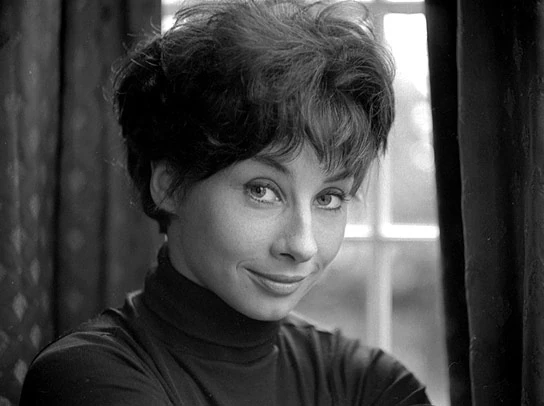


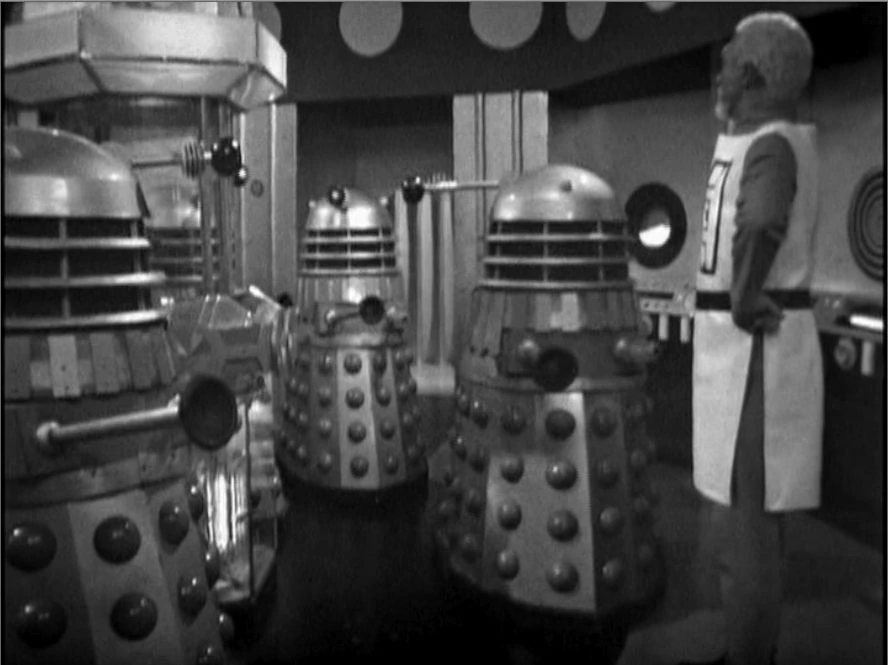


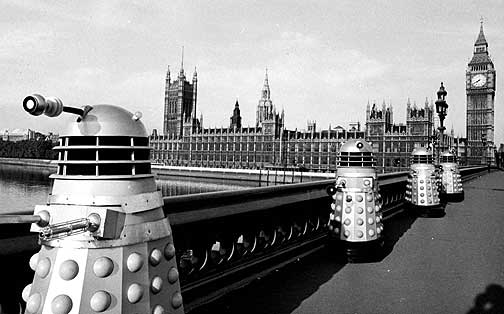


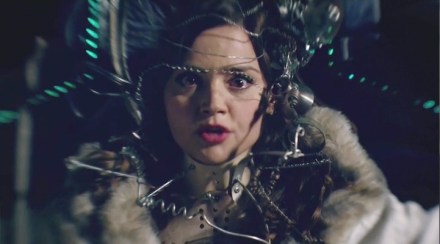


 burrunjorsramblesandbabbles