The Brides of Dracula Review

Hammer’s second instalment in their Dracula series, despite its title did not actually feature the King of the Vampires at all. Instead it followed Cushing’s Van Helsing battling another Vampire, Baron Meinster.

Though it is somewhat overlooked compared to the sequels starring Christopher Lee, I actually feel that in some ways it was one of the best Hammer Vampire films.

It was released in 1960.

Synopsis

Transylvania, land of dark forests, dread mountains and black unfathomable lakes. Still the home of magic and devilry as the Nineteenth century draws to a close. Dracula, monarch of all Vampires is dead, but his disciples live on to spread the cult and corrupt the world

A young French school teacher named Marianne Danielle arrives in Transylvania to take up a position. On route however she is abandoned by her coach driver. She decides to accept the offer of Baroness Meinster to spend the night at her castle despite being warned by the locals not too.

Whilst there she discovers that the Baroness keeps her son locked up in chains below. Taking pity on him, Marianne releases the Baron, but unfortunately it turns out that he is a Vampire.

He was turned many years ago and his mother simply did not have the heart to stake him, so she had him imprisoned to prevent him from hurting anyone.

Upon being freed, the Baron brutally murders his own mother and drinks her blood. After finding the Baronesses drained corpse with puncture marks on her neck, Marianne flees in terror from the castle and eventually is found by Van Helsing.

She does not understand what he means when he asks her about Vampirism, being unfamiliar with the legends, nor does she remember what happened the previous night.

Van Helsing escorts her to the school where she is to be employed, where he discovers a funeral in progress.

Van Helsing has his suspicions that the murdered girl was the victim of a Vampire and begs her father not bury her yet until he can be sure. He doesn’t listen however and that night she does rise as a Vampire and is able to escape thanks to Greta, Baroness Meinster’s former servant who has now serves her son. Van Helsing now suspecting the Baroness arrives back at her castle.

There he discovers her now risen as a Vampire and her son. After a brief fight the Baron is able to escape, whilst the Baroness remains behind. She is full of self loathing and guilt, not only at what she has become, but at what she allowed her son to become. She says she wishes she had slain him years ago and that now more people will die because of her. Van Helsing puts her out of her misery the next morning by staking her whilst she sleeps during the day.

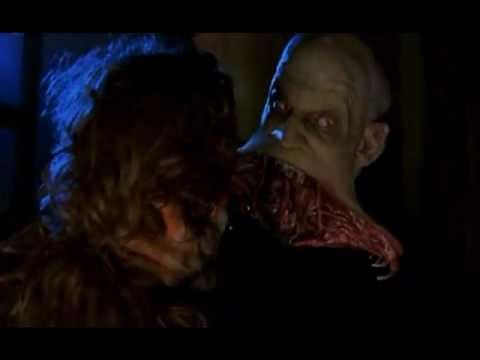
The Baron meanwhile arrives at the school where he is able to seduce Marianne and convince her to marry him. Planning to make her a part of his new Vampire clan, he also bites her friend Gina and turns her into a Vampire. 

The next night Gina rises and tries to kill Marianne who is rescued by Van Helsing in time. Van Helsing tells Marianne that both Gina and the Baron are Vampires and if not stopped they will kill everyone in this school. She tells Van Helsing the whereabouts of the Baron which Gina had let slip to Marianne earlier on. Van Helsing arrives at the old mill.

There he arrives with a cross which repels the Baron and his Vampire brides. Greta however the Baroness’s former servant, now hypnotized by the baron battles Van Helsing. In the fight they both fall from a high point and Greta is killed. Unfortunately Van Helsings cross falls out of reach and as he struggles to get it back the Baron attacks him with a chain. He knocks Van Helsing out and bites him. He then goes to find Marianne, hoping to complete her initiation.

When Van Helsing comes to he sticks a piece of red hot metal into the wound which cauterise it before the infection can spread. He then sprinkles holy water on it to purify it.

The Baron returns with Marianne in tow. Just as he is about to bite her Van Helsing throws holy water in his face which burns it like acid. Whilst he is in pain the Baron kicks over a brazier of hot coals which cause the wind mill to go up in flames. The Baron’s two Vampire brides are killed in the flames, whilst the Baron flees. Van Helsing manages to kill him by pulling the sails of the windmill into the shape of a cross which’s shadow falls on the Baron. The holy power of the cross kills him instantly and Marianne is freed from his hypnotic control.

Review

The Brides of Dracula is an interesting sequel to Horror of Dracula mainly because it doesn’t feature the count at all.

Hammers Frankenstein series stood out from the original Universal series by having the focus be placed on the Professor instead of the monster. In the Universal sequels each film would revolve around the monster usually falling into the care of another scientist, whilst in the Hammer sequels the reverse was true and each film would see the professor create a new monster.

You can see that in this film they were going down a similar route of having the focus of the sequels be on the Professor, in this case Van Helsing who would face a different Vampire king every time.

Sadly however for whatever reason Hammer abandoned this direction and instead placed the focus back on Dracula again. I think this was a mistake as I think this film shows that actually there was more potential in a Van Helsing film series.

Sadly though I do enjoy the later Christopher Lee sequels I feel they don’t really bring much to the Dracula story. Except for Dracula Prince of Darkness which introduces the idea of Vampires being brought back from the grave in a blood ritual. Other than that until the modern day films sadly to me, most of the Hammer Dracula’s with Lee are just the same story over and over again.

Dracula gets brought back, he kills a sexy red head and tries to kill a sexy blonde and then gets killed by a guy named Paul, usually after getting advice from some old guy, usually a priest who knows about Vampires.

Added to that though he is always menacing, Christopher Lee is often sadly wasted in a lot of these sequels. He gets very little screen time, often isn’t brought back until half way through and then just stands at the back staring at young women with his big red eyes.

This sequel meanwhile to start with makes far better use of Peter Cushing. Unlike Lee as Dracula, he isn’t pushed to the side, gets plenty of screen time and the movie really makes use of what was great about his Van Helsing from the previous films, the physical aspect of the character.

This film gives Cushing plenty of great dynamic moments like having him swing through the air like Errol Flynn, pull a burning windmill into the shape of a cross and battle Baron Meinster a crazy chain wielding Vampire. We also get to see how strong his will and determination is when dealing with the Vampires as well such as the famous scene where he cauterizes his own neck wound by ramming a piece of burning hot steal straight into it.

At the same time however I feel this movie is able to flesh out Van Helsing’s character more than the previous film as we see a more caring side to the character when dealing with Baroness Meinster. In the previous movie he was utterly ruthless in dispatching Vampires. Even when they screamed for mercy he’d still just coldly hammer the stakes into their hearts or burn them in the sun.

In this film however when dealing with the Baroness he is more sympathetic to her problems and even offers to help her. You get the impression that he feels that he is genuinely releasing the people who have become Vampires from their state of perpetual torment, rather than just simply killing them to help their victims.

Aside from Van Helsing’s portrayal, this film also explores a very interesting idea that there are many different types of Vampires.

In the previous movie Van Helsing explicitly said that Vampires could not change shape, however in this movie the Baron and his bloodsucking minions regularly turn into bats.

Van Helsing explains that there are many different types of Vampires and that in the events of the previous movie he simply hadn’t encountered any shapeshifting Vampires yet.

This idea of there being many different types of Vampires would be explored in other Hammer films such as Captain Kronos Vampire Hunter which states that there are more species of Vampire than there are bird of prey and The Legend of the 7 Golden Vampires which shows that each country has its own Vampires that are all different to each other.

Many other non Hammer Vampire pieces of fiction would explore this idea too, including the Horror comic American Vampire, Marvel Comics, as well as the Blade film series, Buffy the Vampire Slayer both the tv series and its comic book sequel, Charmed, the Anno Dracula series which was written by Kim Newman a fan of the hammer films, and the Fright Night remake in 2011 starring David Tennant.

I have always found this to be a fascinating idea as it opens up so many exciting story possibilities. It allows you to incorporate many different Vampire myths. You can have the traditional Vampires, the Hopping Vampires, the Jiang Shi, the Indian Vampires, the Vetala, or the Nelapsi a super race of Vampires that regular Vampires fear and that are said to be so powerful that nothing can kill them, or the Draugrs, Nordic sea Vampires that rise from the oceans at night and drag their victims kicking and screaming back to the oceans depths.

There are a whole wealth of fascinating Vampiric creatures from various myths and legends that could have been incorporated into the Hammer film series. There are also other interesting ideas I feel you can explore too. For instance presumably there are other Vampires out there the equal of Dracula. Dracula is the monarch only of his breed of Vampire, so presumably there are other king or queen Vampires out there. Its kind of like in Supernatural when we see the Alpha Monsters who are the first of their kind, presumably there are other Alpha Vampires out there. How do these Alpha Vampires regard each other? Are their rivalries between them. I’d imagine all other Vampires being terrified of the Nelapsi at least.

Sadly however this movie only really scratches the surface of this idea and in the Dracula sequels all we get is just Dracula coming back and dying again.

Really as much as I love Christopher Lee’s Dracula there was clearly more potential in Cushing’s Van Helsing as a leading character at this point. A series with Van Helsing as the lead could have had him travel from town to town battling the many different types of Vampires and other creatures. It would have been like Supernatural about 5 decades earlier, but with Cushing’s Van Helsing. We could have also found out more about Van Helsing’s past, why he became a Vampire hunter and how his knowledge of the Vampire has grown over the years.

Its just such a shame that they didn’t continue their Van Helsing series. I’m not saying that I wouldn’t have wanted Lee’s Dracula to return at a later date. Indeed that would have made it all the more special if he had been gone for a while, but still I really do think Van Helsing had far more potential as a leading character.

Some reviewers over the years have criticised this movie as they feel that Baron Meinster played by David Peel isn’t as strong an enemy as Christopher Lee’s Dracula.

Whilst there is no denying that Lee was a far more memorable villain I think that Peel does a good job with Meinster none the less. Meinster is a very different type of Vampire to Dracula in more ways than one.

He is more sneering, arrogant and less animilastic and somewhat more cowardly too. He generally sends his minions to fight Van Helsing, flees when Van Helsing attacks him and remains more restrained throughout the film.

In many ways he could be seen as the opposite to Lee’s Dracula, but I liked that as it meant it wasn’t just the same story again. The Baron gave Cushing more of sneaky, sly adversary, one who could actually get people to trust, even love him, who could hide behind his minions and even outwit the good doctor. Whilst Lee’s Dracula was more vicious, and more of a towering force of evil. Peel’s Vampire  is a more crafty villain.

Baroness Meinster I also find to be more interesting than Dracula’s bride from the first movie. She is a conflicted character who genuinely feels guilt over the horrors her son has committed but can’t bring herself to end his life and pays the price for it. Her death at Van Helsing’s hands is very moving.

Terrance Fisher returns as the director and once again brings a real dream like quality to the look of the film. There are some truly wonderful shots such as the final burning windmill and also some explicit scenes of violence too such as Meinster’s face being burned by holy water. I always found that bit particularly gruesome when I was young.

Overall whilst I wouldn’t rate this as quite the classic Horror of Dracula is. Its still a brilliant sequel none the less and definitely one of the stronger entries in the series.

Baron Meinster’s Vampires

The Baron is said to come from an entirely separate race of Vampires to Dracula. These Vampires have the ability to change into bats, something which Dracula and his kind could not do. They also have far greater hypnotic powers than Dracula’s kind too.

Despite this however they do not appear to possess super human strength. Dracula’s Vampires were shown to be far more powerful than even experienced Vampire killers. Van Helsing was unable to hold his own against Lee’s Dracula who effortlessly overpowered him and tossed him across the room, whilst in the next sequel it takes 5 monks to restrain Helen, one of Vampires Dracula brides.

With Meinster however, when he and Van Helsing were shown to fight, Van Helsing could match him and even best him no problem.

They also possess the same weaknesses as Dracula’s Vampires such as holy items, and can be killed by a stake through the heart, and direct sunlight.

It is not known if they can be brought back from the grave like Dracula’s Vampires.

Notes and Trivia

  • This film inspired Jesus Franco, director of the cult classic The Awful Doctor Orlloff to become a director. There is also a character from Vampire Hunter D named Baron Meinster as tribute to this film.
  • Christopher Lee was asked to reprise his role as Dracula for this film but turned it down as he did not want to be typecast as the Count.
  • Peter Cushing apparently changed the ending of this film. Originally Van Helsing was to have summoned Bats to destroy Meinster, but Cushing rejected this as he felt it was too mystical for Van Helsing. This ending would later be utilised for Hammers next Vampire movie Kiss of the Vampire.
  • Originally Kiss of the Vampire was to be a sequel to this film, and Van Helsing was to have appeared. Sadly however Cushing was unavailable and so a new Vampire hunter was created.
  • David Peel who played the Baron retired from acting after this film was released and became a sculptor. This was his only leading role.
  • Not only does Dracula not appear but the Vampires in this film have nothing to do with him. Thus the title The Brides of Dracula is completely inappropriate.

Horror of Dracula Review

The first in the Hammer Dracula series. Its no exaggeration to say that this movie along with The Curse of Frankenstein released the previous year helped to revive and reshape the entire horror genre itself on the silver screen.

Almost 60 years on whilst it may no longer seem quite as shocking and terrifying as it once was, it still does hold up as a well made, imaginative and engaging horror flick, and it features what are definitely among the greatest versions of Dracula and Van Helsing played by Christopher Lee and Peter Cushing.

Synopsis

Towards the end of the 19th Century the town of Klausenberg is ruled by Dracula, king of all Vampires with an iron fist. Dracula has ruled over the town for close to 100 years. Though there were many attempts to slay the Demon, all failed and now the people are so terrified of the monster they dare not strike back at him. Every couple of nights Dracula ventures into the town and murders a young woman. Some of them he turns into Vampires, but even then they are still poorly treated by him and often discarded after a short period of time.

Jonathan Harker soon arrives at Castle Dracula. Harker is a student of Van Helsing, one of the worlds leading experts on Vampires. The study of Vampires is obscure and poorly researched and thus most people though having heard stories of the monsters are unsure of which myths are true. Van Helsing meanwhile has devoted his life to studying them and has discovered many things in his research that has eluded others throughout the years.  He plans to murder Dracula and finally free Klausenberg from his rule.

Unfortunately however the young and eager Harker decides to go ahead. Greatly under estimating Dracula, Harker poses as a hapless Librarian in order to trick the Count. The Count sees through his disguise and locks him in his room. Harker manages to escape, but is soon tricked by Dracula’s latest Vampire bride who bites him. Before she can finish him off however Dracula emerges. Fresh from the kill, Dracula knocks Harker out effortlessly and drags his bride away forcefully as the sun is about to emerge and they must retreat to their coffins soon.

When Harker comes too hours later he realises he has been bitten and frantically searches for Dracula. He has one day to stake Dracula’s bride, the Vampire who bit him or else he shall become a Vampire himself. Harker searches through the dark, maze like catacomb’s of Dracula’s castle for hours until he finds the two sleeping Vampires.

With mere minutes to go before the sun goes down he stakes the Vampire that bit him and is freed from the curse. Unfortunately as he moves to stake Dracula, he sees to his horror that he is too late. Its now night and the Vampire has awoken, and corners a terrified Harker in his crypt.

Some time later Van Helsing finally arrives in Klausenberg. Once he makes his way into Dracula’s now deserted castle, he finds his old friend Harker who is now a Vampire. Van Helsing stakes his friend and decides to visit his fiance Lucy to let her know what happened to him.

Unfortunately Lucy is ill. Van Helsing soon discovers that Lucy is in fact being visited by Dracula. Dracula is planning to make Lucy into his new Vampire bride to replace the one that Harker killed. He is doing this to make an example of Harker in order to make sure that no one will ever dare cross him again. Not only has he made Harker the very thing he hates the most, but he also intends to do the same to all of his loved ones.

Despite Van Helsing’s best efforts to find him, Dracula manages to kill Lucy who returns as a Vampire. Lucy then tries to murder both her brother Arthur and her niece but Van Helsing stops her using a cross. He then later manages to stake her.

Dracula decides to make Nina, Arthur’s wife his next victim. Unfortunately despite Van Helsing and Arthur remaining outside the house on guard, Dracula manages to sneak his way in and bites Mina.

As Mina begins to turn into a Vampire Van Helsing discovers how Dracula was able to sneak his way in. Apparently Dracula kept his coffin in the cellar of Arthur and Nina’s house. With Dracula realising that Van Helsing is on to him, he slips away taking Nina with him.

Van Helsing and Arthur follow the Vampire who retreats to his castle. There Dracula attempts to torture Mina by burying her alive. Before he can finish, Van Helsing intervenes. With the sun about to rise Dracula decides to flee and retreats back to his coffin. Unfortunately for him Van Helsing follows him to it.

Dracula decides to fight Van Helsing, even with the sun rising. He grabs the Vampire hunter by the throat and effortlessly over powers him. Pinning him to the ground, Dracula knocks him out, but as he prepares to bite his throat, Van Helsing comes to and catches Dracula off guard. Dracula corners Van Helsing. Smiling with sadistic delight as he believes that Van Helsing is defenceless. 

Fortunately however Van Helsing noticing the sun has now risen outside darts across the table and pulls the curtains down, causing sunlight to flood the room. Caught in the suns rays Dracula begins to literally crumble into nothing but a pile of ash. As the Vampire king frantically crawls along the floor, Van Helsing quickly grabs two candle sticks and uses them to create a make shift cross forcing Dracula back into the sunlight.

The Vampire expires and crumbles into nothing but a pile of dust.

After Dracula dies, Nina is freed from the curse of Vampirism and turns back into a human, whilst Van Helsing stands over the remains of Dracula, nothing but his cloak, his ring and a pile of ash which is blown away by the wind.

Review

Horror of Dracula is not the most faithful adaptation of Stokers novel. So many of the most essential and iconic moments from the novel such as Dracula’s journey to London, are omitted. Indeed the character of Renfield himself is left out of this film entirely.

The character of Dracula in this film could be seen as the polar opposite to the version from the novel in some respects too. The Dracula from the novel was an old man who got younger the more blood he drank, he also had mystical and shape shifting powers, he did not ever seduce his victims and he is also planning to spread the cult of Vampirism across the entire world.

In this film Dracula has no shapeshifting powers, he relies solely on his brute strength, he is young and alluring from the start, he seduces his victims and far from planning to spread the cult of Vampirism around the world, he is desperate to hold on to his power base in a small little remote village.

Thus as a faithful adaptation of Stokers novel it certainly doesn’t succeed, but fortunately not only does it hold up as a film in its own right, but I feel it is able to add a lot to the story of Dracula too.

To start with Lee’s Dracula is a truly memorable villain. Whilst he may not be as otherworldly and unnerving as Lugosi, or as Machiavellian as the Dracula from the novel, Lee’s Dracula is far more savage.

His Dracula is a hissing, animalistic monster that you can imagine literally ripping his victims apart with his bare teeth. Lugosi’s Dracula tried to hypnotize Van Helsing, whilst Stokers Dracula goes into a big verbose speech of having commanded armies before Van Helsing was even born. Lees Dracula in contrast throws a candle stick at Van Helsing’s head, throws him across the room, chokes him, smashes his head off the floor and tries to rip his throat out with his teeth! The image of Lee’s Dracula with his massive long fangs dripping with bright red blood is by far a more striking and terrifying image than that of any other Dracula.

At the same time however there is also a certain sexual element to this version of Dracula who outright seduces his victims. Even the act of being bitten by a Vampire is presented as a twisted, masochistic sensation for the victim.

What’s interesting though is the way that Lee’s Dracula is not presented as an even remotely romantic character. In fact I’d say he is the least romantic version of the character I have ever seen. The Lugosi version and even the novel version are more romantic in the sense that they want to make their victims their brides for all eternity. Whilst Dracula may beat his wives in the novel he does tell them that he loves them dearly.

Lee’s Dracula however does not care about his wives at all. He beats and disregards them as soon as he is bored with them and he never expresses any kind of affection for them. Though he seeks revenge against Harker for murdering his bride its not out of affection for her.  Its more of a kind of “How dare you kill MY bride” and its also to make an example of Harker. Unlike in other versions where Dracula pursues Mina and Lucy because he loves them, he does so in this film only out of revenge.

He doesn’t want to make Mina his beloved forever like Lugosi did. He wants to make her and those who love her suffer by turning her into a Vampire. When that doesn’t work he tries to torture her to death by burying her alive!

Thus whilst Lee may have cemented the image of Dracula and indeed Vampires in general as sex gods his Dracula is anything but a romantic character and the sexual aspect is presented as predatory with Dracula deriving a twisted, sexual pleasure from hurting the women he preys on.

Lee only has a couple of lines of dialogue at the start of the film that are nothing more than simple pleasantries to Harker. For the rest of the movie he simply hisses.

Personally I liked this as I feel far from limiting Lee it gave him a chance to make the role his own. The Stoker Dracula sees himself as above the rest of humanity due to his status as a Vampire, whilst Lugosi relished his immortality. Lee however relishes in causing violence. Its not just a question of he is willing to kill to survive, he loves hurting people. This Dracula has no humanity at all and so when the charming exterior he uses to lure his victims in drops, he is just a complete animal.

I feel that Lee was also able to inject some subtle little moments of villainy into his performance. I always loved the evil little smile he does when he corners Van Helsing and Jonathan Harker. That always gave you an idea of how twisted he was that he was absolutely relishing in his enemies helplessness. One can only imagine what vile thoughts are going through his head in that moment.

Other than Christopher Lee the other big stand out performance in this film is of course Peter Cushing as Van Helsing.

Cushing’s Van Helsing is similar to Lee’s Dracula in a lot of ways. He is a much younger version of the character like Lee’s Dracula, and he is also like Lee a much more vicious and darker character.

Much like Dracula, Van Helsing is someone who thrives on death to an extent, in that he has no life beyond hunting Vampires. He travels from town to town destroying them and is utterly ruthless when he dispatches them in quite gruesome ways, like burning their flesh with a cross, stabbing them through the heart, or burning them in the sunlight.

Much like Dracula, Van Helsing can appear quite charming and gentlemanly on the surface, but at the same time when he is around the Vampires, Cushing adds a real intensity to the character. He is a man with a will made of iron. He is not even remotely fazed by any of the horrors around him, he always keeps his cool, whilst the likes of Holmwood can’t stand to look in horror at what is happening.

To be honest I much prefer the Van Helsing in this to the original novel. In the novel he is just an eccentric professor but in this he is a far more interesting character and a much better match for Dracula too.

The final fight between Dracula and Van Helsing is a spectacular sequence and really sums up the more physical aspect both Lee and Cushing brought to their characters and also of how much more in your face and explicit the Hammer movies were to their Universal counterparts. In the Universal Dracula, Van Helsing stakes him quietly off screen. In this Van Helsing burns him to death in the sun light and we see Dracula’s face slowly crumble into nothing.

Everything about this film is more bright and explicit and though it might seem quite tame by today’s standards, I think the film’s visuals still look quite beautiful.

Terrance Fisher’s direction gives it an almost dream like fairy tale quality. Fisher certainly doesn’t go for a dark gloomy approach. Dracula’s castle for instance isn’t crumbling in the middle of nowhere. Its big shiny and beautiful.

I think this movie holds up better as a fantasy film rather than an outright horror movie and therefore I think Fisher’s direction actually suits the tone of the movie more.

I feel that Fisher successfully makes the world of the Holmwood’s seem quite innocent and peaceful which contrasts wonderfully with the terror of Dracula.

Overall there is very little to fault with this movie. Its sets, direction acting and even the music are all excellent. If there is one thing I that I don’t like about it then perhaps the Holmwood family are a bit dull. I normally quite like Michael Gough, but the character of Arthur is a bit of a wet fish.

Overall though I’d say this film is deserving of its reputation as a classic and I’d give it 5 stars.

Legacy and Influence

This film along with The Curse of Frankenstein released one year earlier helped to completely revive the horror genre which had become dormant during the 50s.

Both films were massive successes around the world and actually it could be argued that not only did they lead to horror movies becoming mainstream again, but also British movies in general coming to dominate the market as well.

The movie also helped to change how Vampires were portrayed in popular culture.

Prior to this Vampires had been more specteral creatures in films. Lugosi’s Dracula was more of a hypnotic, eerie otherworldly character who creeped about in the shadows like a ghost, overpowering his enemies with his hypnotic stare. He didn’t have fangs, he didn’t toss his enemies around with his brute strength and though Lugosi did have an alluring presence and even became something of a sex symbol for his role. His Dracula still did not actively seduce his victims.

Lee’s Dracula had massive fangs, marking the first time a Vampire ever had fangs in a movie, and super strength. Though Dracula did have super strength in the novel, this wasn’t really an aspect of Vampires in movies pre the 1958 Dracula. Nobody thought of Vampires as being super powered really up until the Hammer movies. Of course since then Vampires have just been getting more and more powerful to the point where they can now leap through the air like a super hero.

When you look at the old Lugosi movies where Dracula would put a woman under his thrall and then modern pieces of Vampire fiction like Blade where Vampires knock people hundreds of feet through the air its quite funny to see how much Vampires have changed over the years.

I think that about sums it up.

The Hammer movies can be seen to bridge the gap between the turbo charged Vampires and the old hypnotic Lugosi Vampires.

Of course at the same time Lee’s Dracula was more overtly sexual too which finally cemented the idea of Vampires being seductive in popular culture.

The image of Dracula in modern day popular culture can be seen to be a composite of Lugosi’s equally fantastic portrayal from the 1931 film and Lee’s from this movie.

The image we tend to have of Dracula is of someone with a long black and red flowing cape, a thick Hungarian accent, a black widows peak and also of a somewhat unnerving, yet oddly pleasant and charming individual. This all comes from Lugosi. However at the same time we also tend to think of Dracula having a towering stature, blood shot red eyes, massive fangs dripping with blood and also having a tremendous physical presence and also seducing his victims too. This comes entirely from the Dracula in this movie.

Peter Cushing’s Van Helsing meanwhile had arguably an even bigger impact. Whilst the modern day Dracula can be seen as a composite of Lee and Lugosi, Van Helsing is entirely Peter Cushing.

The Van Helsing in the novels was not really a Vampire hunter. He was someone who had knowledge of them simply due to the fact that he had read about Vampires as they were among his many interests. He did not devote his entire existence to destroying them however and he isn’t even the one to kill Dracula.

Though Van Helsing does destroy Dracula in the 1931 film he is still not the supreme Vampire hunter we would later come to know him as.

This film was the first to establish Van Helsing as someone who devoted his entire existence to hunting Vampires and also as a someone who was a physical match for Dracula.

When you look at the fight between Dracula and Van Helsing at the end of this film you could never imagine Edward Van Sloan and Bela Lugosi having a confrontation like that.

Thanks to Cushing Van Helsing has come to be seen as the ultimate Vampire hunter and Dracula’s eternal nemesis.

In many ways it was Cushing’s Van Helsing that made the Vampire hunter a major character in cinema history.  Again prior to Horror of Dracula the Vampire hunter surprisingly hadn’t really been a character in the horror movie staple like the Frankenstein’s monster, Dracula, the Wolfman, the Mummy, or the mad professor.

Edward Van Sloan’s Van Helsing though effective had never really become a major character. Though he did appear in the sequel he wasn’t even second in the cast for ether film and in other Vampire movies the Vampires were killed generally by the same people who killed other monsters, bland leading men or mobs of angry villagers.

Certainly the Vampire killer wasn’t the role the big star would be after.

This movie changed all of that. Cushing was the big star (more so than Lee at this point) and Van Helsing was the character who all the focus was on.

From this point on the Vampire hunter became a classic horror movie character too and whole films, television series and novels would even revolve around the Vampire killer rather than the Vampire.

Cushing’s Van Helsing can be seen to be the daddy of all Vampire hunters. He’s Rupert Giles, the charming, somewhat stuffy old English expert on Vampires who is also a badass with a steely determination to destroy the undead. He’s also in his own way Blade, the Winchester Brothers and Mr Vampire, the person who travels from town to town destroying Vampires and monsters, who never settles down anywhere, who doesn’t have a normal life, who isn’t always trusted or liked by the people he helps. Indeed some might even blame him for the strange goings on in the town.

Not surprisingly due to this films success Cushing and Lee would become more closely associated with the roles of Dracula and Van Helsing than any other character they played.

They would go on to reprise their roles in many sequels though only two more together. Over the years both men’s names have become as associated with Vampires and Vampire hunters almost as much as the characters of Dracula and Van Helsing themselves.

In total 8 sequels would be produced for Horror of Dracula, these are Brides of Dracula, Dracula Prince of Darkness, Dracula Has Risen from the Grave, Taste the Blood of Dracula, Scars of Dracula, Dracula AD 1972, The Satanic Rites of Dracula, and The Legend of the 7 Golden Vampires.

Notes and Trivia

  • Christopher Lee apparently wasn’t happy with his performance in this and other Dracula films, as he being a fan of Stokers novel he wanted to make it more like the original novel.
  • The final scene in this film where only Dracula’s ring remains as the dust is blown away may have inspired a similar scene at the end of Flash Gordon.


My Top 10 Underrated Movie Monsters

Everyone loves monsters. The likes of King Kong, Godzilla, and the Xenomorph are all as iconic as any human film star.

Sadly however just as with regular actors, there are also monsters who are somewhat overlooked. Are these creatures genuinely less scary and memorable or do they just not have as good a publicist?

In this article I am going to be taking a look at 10 relatively obscure monsters that I feel are criminally underrated. In my opinion these monsters deserve to be seen as classic characters. Whilst not all of the movies they were in were classics, the monsters themselves were at least above average.

Let me know what you think of my choices below and also tell me what your top 10 underrated monsters are.

10/ Storage 24 Monster

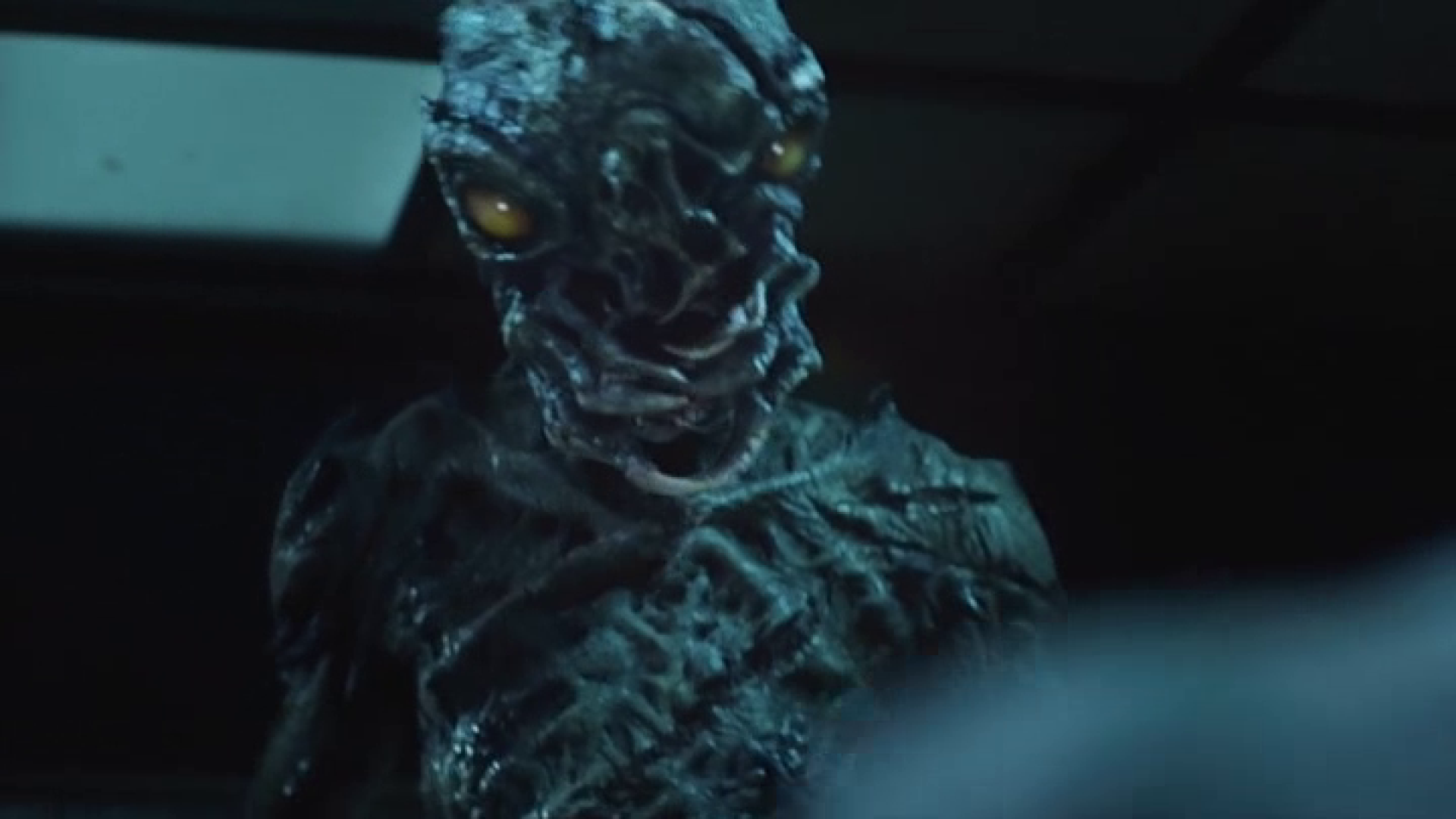
This underrated Brit horror flick directed, written by and also starring Noel Clarke (Mickey from Doctor Who.) Featured a very memorable and terrifying alien monstrosity.

In terms of character the monster was somewhat basic. Its ship just lands on the earth and it runs around killing things, though there is a fabulous twist at the end. (If you don’t want the movie spoiled look away now.) Throughout the film we are led to believe that this is the only member of its kind, as our characters are cut off from the rest of the world in an old warehouse being pursued by the beast.

At the end however when the survivors escape, we discover that actually it was part of a full scale invasion force who have decimated all of London (if not the world) whilst our heroes were battling just one.

Still what really elevates this monster for me is its design. Like all great monster designs, it’s both ghastly, but oddly somewhat pleasing too. It also looks slight and fast, yet very powerful at the same time.

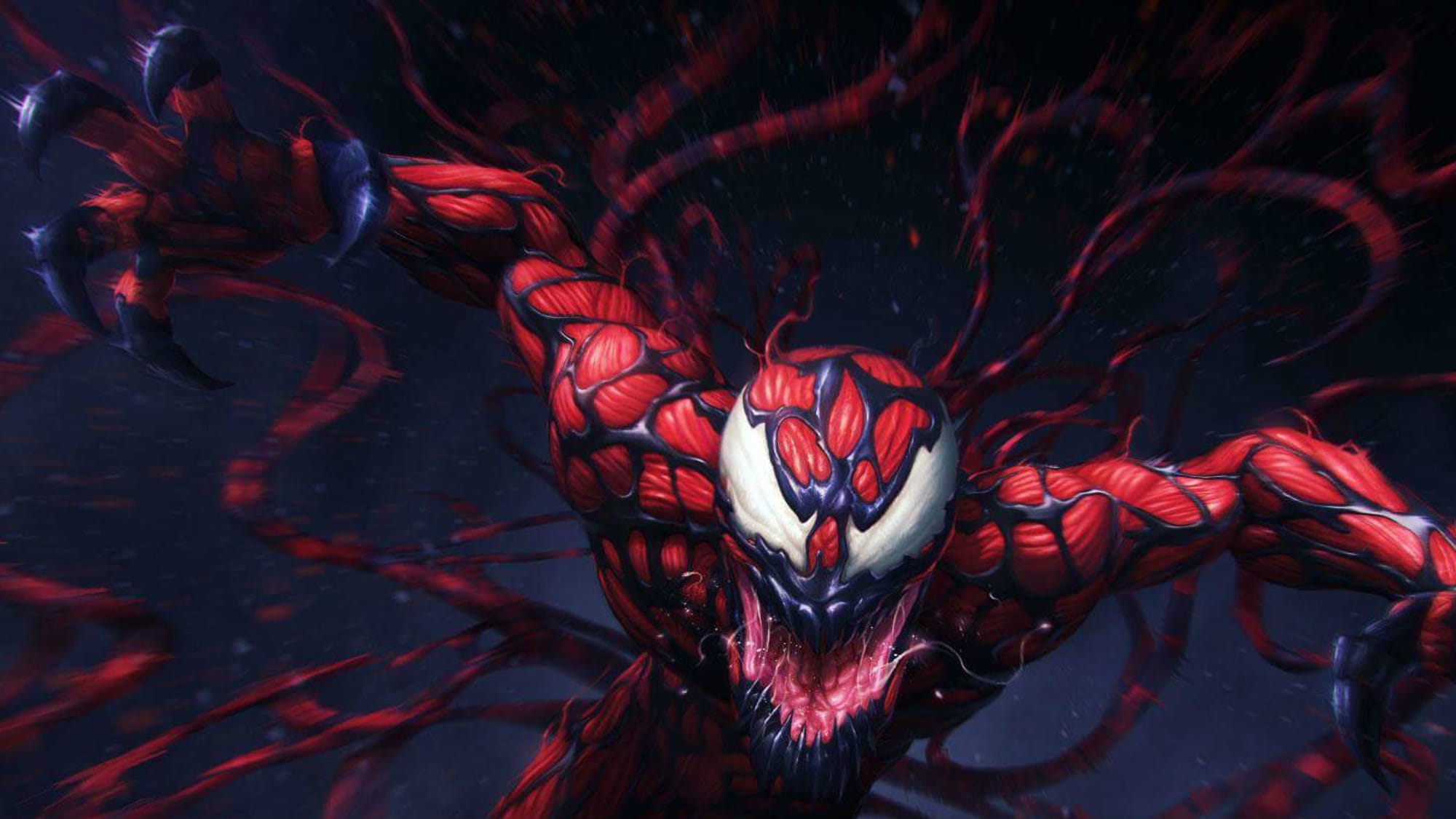
According to Noel Clarke he based this monsters design on Venom and Carnage, the Spider-Man villains. You can see certain elements of the villains look in the beast, namely its big long claws and massive big eyes.

Image result for carnage

Image result for storage 24 alien

Overall Storage 24 may not be an all time classic, but I’d say its at least an above average Brit horror flick, and it certainly benefits from having a very unusual and frightening monster.

9/ Prince of Darkness

The main villain from the John Carpenter flick of the same name. The Prince of Darkness, also known as Satan, is the son of an ancient evil called the Anti God. Before the Anti God was banished into another universe, it left behind its son, a disemboided form of liquid. The creature would later be sealed in a can.

There the creature would remain for over 1000 years until it is accidentally freed by a group of archeologists. The Demon then begins possessing several people in an effort to free its father from the other universe.

The Prince was a horrifying villain. It could take over its victims so easily and was able to turn ordinary house hold objects into something horrifying. (In this case a mirror into a portal to another world. I couldn’t go near a mirror after this for a long while.)

The thing that scared me the most about this film however was what happened to the main heroine, Catherine Danforth. Catherine sacrifices herself by pushing the Prince through the portal it hand intended to summon the Anti God through. Unfortunately Catherine is trapped on the other side after the portal is destroyed with both the Prince and its “father” who will undoubtedly take out their frustrations on poor Catherine forever!

Another cool thing about the monster in this film, is that one of the people it possess is Alice Cooper who kills a man with a bike!

8/ Titanosaurus (Terror of Mechagodzilla)

Terror of Mechagodzilla is definitely one of my favourite Godzilla movies and Titanosaurus I always felt was a rather interesting monster. On the surface he looks like just another big Dinosaur, but he always seemed more frightening because he was somewhat more vicious than some of the Big G’s other enemies. We saw him do things like kick Godzilla when he was down on the ground, go out of his way to trample small children to death and his roar almost sounded like an evil laugh!

I also think Titanosaurus benefited from the fact that the film he was in had a much better story, as well as a darker, more serious tone.

Whilst other Godzilla enemies like Spiga and Ebirah were generally portrayed in a silly, if still fun way. Titanosaurus was treated more seriously. You only have to watch his first confrontation with Godzilla to see how. It is a superbly directed scene that really makes you feel like you are watching two powerful, immense beasts clashing rather than just two blokes in rubber suits.

Overall I’d rank Titanosaurus as being the best villain from the original Godzilla series after King Ghidorah and Mecha Godzilla. I like Rodan, Anguirus and Mothra better as allies of Godzilla than as his enemies.

Sadly Titanosaurus has never appeared in any subsequent films. I personally think he is due a come back and would love to see him in the up coming sequel to 2014’s Godzilla flick. If its based on Destroy All Monsters, he could easily be one of the monsters on Monster Island.

7/ Valek

Another John Carpenter creation, Valek is the first Vampire, who plans to find a way for his kind to walk in the sun light so that they can overrun the world.

I always felt that John Carpenters Vampires was one of the best Vampire films. The Vampires were genuinely savage monsters that literally rip their victims apart, and hiss like animals.

They are also incredibly difficult to kill which is refreshing as often I find that Vampires are undermined somewhat in films and television series. I think it stems from a combination of Vampires having more weaknesses than other monsters, and also the fact that as they more often than not are the main villains in television series like Buffy. They have to be made easier to kill for practicality’s sake.

Still it does sadly undermine their menace somewhat in the Hammer movies when we see Vampires getting killed by a shower!

Vampires can’t take baths in the Hammer movies. Lets hope they don’t sweat or else they must stink!

In things like Buffy and Angel meanwhile I think we see too many examples of ordinary untrained people being able to kill vampires. For instance in Angel season 3 we have the character of Justine who becomes a scourge of the Vampire world, yet who hasn’t had any training. She is just an ordinary woman whose sister is killed by Vampires. To me that kind of undermined the slayer if anyone can kill Vampires easily.

In this film however Vampire slaying is a very difficult task. To start with Vampires only have two weaknesses. Being staked and sunlight. Also it takes team of people armed with machine guns, shotguns and stakes to take down just one Vampire.

Valek meanwhile being the king of the Vampires is virtually unkillable. He single handedly slaughters an entire team of Vampire hunters without breaking a sweat. He is slices them in half with his finger nails, tears their heads off and even gets quite creative, such as when he forces a priest to shoot himself in the head with his own shot gun!

Valek to me is what a Vampire king should be. A savage, unrelenting monster that doesn’t have time to mop and ponder what his immortal existence means. He is too busy ripping people apart! He’s a monster so terrifying that even the main hero, Jack Crow, a professional Vampire killer is terrified at the sight of him.

Thomas Ian Griffith who played him I think did an excellent job as the villain. He had a real dark charisma and a sneering arrogance that fitted the character. You do get the impression that Valek for the past 600 years has never met anyone who has even come close to threatening him, hence why he simply laughs at Jack Crow’s attempts to harm him.

6/ Centaur (Golden Voyage of Sinbad)

The Centaur I always felt was one of Ray Harryhausen’s greatest monsters.

I liked the way it was a mish mash of different mythological creatures. It was also a cyclops as well as a Centaur and there were also elements of King Kong in the Centaur’s portrayal too. It is shown to be worshipped by a tribe of natives on a remote island who sacrifice young women to it. The beast ends up falling in love with its latest sacrifice however played by Caroline Monro who is a member of a group of travelers on the island. The natives even summon the Centaur in a similar fashion to Kong as well.

Finally similar to how Kong battles with the Dinosaurs that inhabit his island, the Centaur also fights with other monsters on his island too such as the Griffin.

Poor Griffin. He should have one this fight, but the Centaur had help from the 4th Doctor himself Tom Baker!

I think its a shame that this creature is so overlooked. Harryhausen did great work here not only terms of its great design, but as always I feel he was able to inject a lot of character into the beast. Even just little moments like when it first see’s Caroline Munro and there is a certain confused look on its face, where its not sure how to react to her, or when it screams in fear at seeing the Griffin. Harryhausen never just made his monsters snarling beasts.

5/ Reapers

These monsters from Blade 2 are a race of super Vampires that feed on both humans and regular Vampires alike. They are as single minded as animals and have three way leech like jaws that paralyse their victims.

The Reapers are such a basic, but fantastic idea. What do Vampires fear? What keeps monsters awake at night? They are almost like an inversion of many traditional Vampire stories. Normally in Vampire films being bitten by a Vampire is portrayed as a pleasurable experience in a twisted way. With the Reapers however its an excruciating, agonizing experience, and also when you become a Reaper you don’t become a sexy immortal like in most Vampire stories. You become a hideous, deformed monster that lives in a state of perpetual agony.

The Reapers were most likely an influence on the Turok Han in Buffy the Vampire Slayer. The Turok Han appeared one year after the Reapers. They were similarly portrayed as a race of super Vampires who were as single minded as animals. They were stronger, fiercer and more ferocious than regular Vamps. They even looked like the Reapers too. They were bald, had white skin big claws and also similarly had strong chests which made it very difficult, though not impossible to stake them.

The only difference between the Turok Han and the Reapers was that the Turok Han did not feed on regular Vampires, though Giles still does refer to them as the Vampires that Vampires fear.

Of the two of them I much prefer the Reapers. They seemed far more dangerous. I loved the Turok Han in its first appearance as it was a savage, unbeatable monster that tortured Spike and nearly killed Buffy.

Sadly however as we all know in the finale we not only had Spike, Buffy, Faith and the Slayers destroying them left right and centre, but even ordinary humans like Dawn, Anya and Xander!

The Reapers are consistently dangerous and thus they were simply a more effective take on the idea.

4/ Q The Winged Serpent

Not the best monster movie ever made, but I still felt that quite an interesting idea of a Dragon in modern day, also it was very well animated too and I absolutely loved its design. There are a lot of great little homages to old classic monster movies in Q’s attacks on the city as well.

Q’s real name is actually Quezocatl, the name of an ancient god of the skies.

3/ The Reptile

The main monster from an underrated Hammer flick. This monster was played by Jacqueline Pearce who later found fame playing the evil Servalan in Blake’s 7. This character was somewhat more sympathetic (though that wouldn’t be hard) who ends up becoming the Reptile through magic in order to escape her abusive father.

I think this monster was very effective due to both the excellent make up and also Jacqueline Pearce’s performance as both the beast and its human counterpart. It was quite an unusual take on the old idea of a human turning into an animal.

2/Ymir

The Ymir is another Ray Harryhausen creation. It is the main antagonist from 20 Million Miles to Earth, a Venusian creature that grows rapidly when exposed to earth’s atmosphere. Like many of Harryhausen’s creations it is a sympathetic creature that goes mad the more it is attacked by the people around it. One famous scene sees a farmer who upon spotting the beast, stabs a pitchfork right into its back.

Once again there are shades of King Kong throughout the Ymir’s story. It even meets its end when it scales a famous building, in this case the colosseum, and is shot down from the top of it.

I’ve always liked the Ymir not only because again much like the Centaur I feel it had a lot of personality, but I also always liked its design too. It was almost like a reptillian version of King Kong with its scaly skin and long tail, but general ape like features and stance.

1/ Hopping Vampires

Hopping Vampires or the Jiang Shi originated in Chinese mythology, entirely independently from Western myths about Vampires.

They were re animated corpses who generally tended to feed on the souls of their victims, though some myths had them drink the blood of their victims too. These creatures only ever moved by hopping up and down on both feet.

They later would naturally go on to be associated with Western stories about Vampires and occasionally Zombies too, but they actually started out as their own monster.

The creatures had been the subject of a few works over the years such as the Hammer film The Legend of the 7 Golden Vampires which featured Dracula working alongside 7 Jiang Shi.

Still it was only in 1985 that they really reached a mainstream audience in the Mr Vampire film series. These films starred Lam Ching Ying as Mr Vampire, a Taoist Priest who hunted Vampires, Demons, Ghosts and a whole variety of strange monsters. The Jiang Shi however or the Hopping Vampires as Western audiences came to know them as were usually the main villains.

These guys were always my favourite Vampires growing up as they were total monsters. They had rotting, green faces, they never spoke, only roared and they ripped people apart. They were virtually indestructable too. They were more like the Terminator, the way they’d just smash their way through anything and couldn’t be slowed down by bullets, swords, even rocket launchers!

Only the most powerful magic’s could harm or destroy them. They could be stopped by putting a piece of yellow paper with a spell written on it on their foreheads. This would not kill a Jiang Shi however but simply freeze it in its tracks. If you took the paper off they it would wake up again instantly. This leads to a rather funny moment in the first film where a character places the paper on a Vampires head as it is about to strike him, only to give out a deep sigh of relief which blows the paper off the Vampire’s head!

The fights in the Mr Vampire movies were always spectacular. Lam Ching Ying was after all a student of Bruce Lee himself.

All of the Mr Vampire films are highly recommended. The character of Mr Vampire also appeared in other films such as The Dead and the Deadly and Spooky Encounters though these do not feature Vampires other than a brief cameo in Spooky Encounters, and instead saw him battle coakroach filled Zombies, Wizards, evil snake men, ghosts, Demons from hell and Mummies!

Lam Ching Ying as Mr Vampire. Mr Vampire was the characters nickname because he hunted Vampires. His real name was Kau. This character not only appeared in his own film series, but also in other Chinese horror flicks like the Dead and the Deadly. Later entries in the Mr Vampire film series such as Mr Vampire 2 and Magic Cop featured his descendants.

I’d say that the first two Mr Vampire films are my favourite entries in the series. I’m not sure which is the best out of those two. The first film has a better story, whilst the second film is in places somewhat derivative of ET, with its friendly little Vampire boy who gets adopted by a family. Still in terms of action Mr Vampire 2 really can’t be topped. There are just so many, creative, surreal and over the top  fights and moments like the Vampires hopping on top of cars.

Also recommended is Vampire vs Vampire a film which features Lam Ching Ying fighting a western style Vampire with the help of a tame Jiang Shi. Think of it as being the reverse of The 7 Golden Vampires, which featured our greatest Vampire killer Peter Cushing battling Chinese Vampires, whilst this film features the Chinese’s greatest Vampire killer slaying a European Vampire.

The Mr Vampire films were massive in China, but sadly over here in the UK and in America they were never popular. Though they were shown on television and given a release on video, and they certainly have a following. Ultimately they’ve never really broken into the mainstream like other martial arts film stars such as Bruce Lee and Jackie Chan.

Bruce Lee obviously launched the whole Martial Arts film genre and after his untimely death there were many attempts to find the new Bruce Lee, but none of them were successful as there could never be a new Bruce Lee. Jackie Chan however was successful because he offered us something different to Bruce Lee. He wasn’t an ultimate fighter, instead his style was more slapstick and incredible stunts. Lam Ching Ying meanwhile I think similarly managed to offer up something different to Bruce Lee by merging the Martial Arts and the horror genres like never before.

Sadly however in the west he remains to this day 20 or so years after his untimely death from cancer completely obscure.

I suppose these monsters are not underrated in China, but since I live in the UK then over here they are, so they had make number 1 on my list. I’d rate the Jiang Shi as among the greatest horror monsters ever made.

Thanks for reading.