The Daleks are the Doctors most iconic enemies. It could be argued that the image of a Dalek is far more iconic than that of any incarnation of the Doctor himself.
Not surprisingly over the years many have wondered if the monsters could actually have a life outside of the show that spawned them.
Back in the 1960’s Terry Nation the creator of the Daleks tried to get a Dalek spin off series made. At one point even tried to sell the series to America. This was why the creatures vanished from Doctor Who for 5 years from 1966 to 1972.
Sadly Nation’s attempts to launch the creatures in their own series was ultimately a failure.
I raised a million dollars to privately make a picture. A spokesman for the BBC said they would become co-partners in the venture. I wrote the script.I came here to ABC, who expressed considerable interest in it. This is not to say they were making a commitment, but they were very interested. I went back and I started in to east and get a director and a designer. The designer started working, I booked the studio, and then my finance man went to conclude things with the BBC, and the man who had committed BBC for the other million bucks had no authority so to do, and suddenly my fifty percent backer was gone!
The BBC actually didn’t have that – or the man that I had been dealing with did not have the power to do that. Whether he realized it or not I don’t know, but I then had to cancel the studio. It cost me personally a lot of money to pull that operation out. And I had a studio that was standing by, and I was going to be shooting in a weeks time – that’s how close we got when we lost the money – and I was not about to put up my own money, because its traditional that you never finance your own things.
-Terry Nation on why the Dalek spin off series was never made.
As you can see we came very close to having a Dalek spin off show. The series would have seen the SSS an organisation introduced in Nation’s Doctor Who story Mission to the Unknown battle the Daleks. The SSS were essentially MI5 in space.
Mission to the Unknown and The Daleks Masterplan were meant to set up Nation’s Dalek series. Not only did they introduce the SSS, but also Sara Kingdom played by Jean Marsh who despite dying at the end of The Daleks Masterplan would have been the main character in the Daleks spin off series.
Among the other main characters in the series would have been David Kingdom her brother and Mark Seven a humanoid android been based on the Mr Spock character from Star Trek.
Whilst Nation’s show was never made, many decades later the Daleks would get their own series when Nicholas Briggs the voice of the Daleks in the revival produced the Dalek Empire spin off audio series. David Tennant who played the Tenth Doctor actually appeared in this series as one of the main characters prior to landing the role of the Doctor. Noel Clarke who played Mickey Smith also appeared in the series too.
Apparently whilst working on this series Nicholas Briggs told his friend Tennant that he should audition for the role of the 10th Doctor unaware that he had already got it!
In addition to this Briggs would also later produce the unfinished script for the pilot episode of Nation’s Dalek series, with Jean Marsh who played Sara in The Daleks Masterplan even reprising her role as Sara Kingdom.
As you can see from the examples I have given the monsters have already through Nicholas Briggs Dalek Empire series proven strong enough to carry their own series. So its not such an outlandish idea it can in the right hands of course be done. Personally I think now is the best time to make a series all about the monsters and hopefully after reading you may agree with me.
1/ It Would Help Expand Doctor Who’s Profile
During the late 00’s Doctor Who was more than just a popular series it was a massive franchise. There was always something DW related on during the year and for all age groups too. In 2008 for instance you had Torchwood on in the winter for adults, Doctor Who across the spring and summer for the whole family, and finally the Sarah Jane Adventures in the Autumn just for children. All three of these series during this time were very popular too.
Sadly the Doctor Who franchise came to an end in the early 10’s due to a number of real life behind the scenes tragedies. Elizabeth Sladen who played Sarah Jane passed away in 2011, whilst Russell T Davies’s partner Andrew Smith was diagnosed with brain cancer, forcing Davies to return from America, which consequently brought an end to Torchwood.
Since then the Doctor Who universe’s output has naturally decreased to just one series, until recently when it was announced that a new spin off titled Class set within Coal Hill School would be produced.
I think a Dalek spin off in addition to Class could help restore Who to the position it was in during the late 00’s, as a full franchise which would obviously be a good thing all around.
Two spin off series I think would really boost its profile as these two shows could help draw new audiences to the show, as they both would be brand new and people who may not have wanted to watch Doctor Who could become more interested in it after becoming fans of the spin off.
2/ It Could Allow The Daleks To Be Much More Menacing
Now as Class is going to be aimed at a teenage audience then I think that the Dalek spin off should be aimed at a more adult audience like Torchwood was.
This I think would allow the writers to do things with the Daleks that they couldn’t really do in Doctor Who.
Doctor Who is not a kids show. It is aimed at a family audience, however whilst it is not exclusively for children, at the same time it is something that children obviously do watch and thus it can’t be too violent or scary.
Giving us a Dalek spin off series that was aimed mostly at adults could allow the Daleks to do far more horrible things than in Doctor Who. We could really show them as space Nazi’s like never before which I think could help to restore a lot of their menace.
We could really see the gory details of the Dalek death camps in a way that we never could in Doctor Who for instance. We could see piles of the Daleks victims corpses just left to rot that would evoke similar terrifying images from the second world war of the Nazi’s victims in the concentration camps.
3/ It Could Help Fill In A Lot Of The Gaps In Dalek History
There are a few unanswered questions about the Daleks in the revival. Like for instance what happened to the paradigm? How did Davros survive the destruction of the crucible?
A spin off series could give us the answers to these questions. We could get an episode that revealed that after the destruction of the crucible Davros managed to create another race of Daleks that destroyed the paradigm, and we could even have the main characters be forced to form a reluctant alliance with the paradigm Daleks to destroy Davros’s new race. This series could even serve as something of a prequel to The Magician’s Apprentice as we could see Davros get injured by the Paradigm Daleks.
4/ There Are A Wealth Of Fascinating Characters That Could Appear
There are so many Dalek related and Dalek characters that could pop up in this series or be the main characters.
Looking at Dalek characters we have the Cult of Skaro, Dalek Sec, Dalek Caan, Dalek Thay and Dalek Jaast. Now I know what you are thinking that they all died so we can’t have them back. Well we could always go back to before they died. Maybe even show an origin story for them that could be quite interesting. Or we could perhaps have clones of them appear. Maybe Davros sent a squad of Daleks to retrieve their corpses from the black archive. That’s where I reckon they ended up and he produced clones of them. I think that the Cult would be good antagonists for the main characters in the series as they are Daleks but you could give them more of a personality as we saw already with Sec’s cutting remarks to the Cybermen.
At the same time we could also have the Dalek Time Controller, a very popular Dalek character from the Big Finish Dark Eyes series appear as a recurring antagonist.
Dalek Zeg is another Dalek character that could be interesting. He came from the Dalek Chronicles comic book series and was a Dalek who had become mutated after an accident in a lab. His mutation made him virtually indestructable and he sought to take control of the Daleks from the Emperor himself. I think it would be interesting to have a Dalek who was a complete rogue, wasn’t aligned to any other Daleks just simply looking out for himself and was perhaps a bit unstable. Think of what Nicholas Briggs could do with that Daleks voice!
Dalek X the Dalek that loves to torture people would be a great Dalek to feature in the series. I’d love to see an episode that revolved around his death camps.
You could also bring the Emperor who hasn’t been featured on tv since The Parting of the Ways 10 years ago back as well.
On the other side of the spectrum we could have some more benevolent Dalek characters too.
We could have the Oswin Dalek appear in the series. Again even though she apparently died, we could always have it that she survived somehow. Maybe she found another teleportation device and teleported up to the ship or to a nearby planet. I think a Dalek that was once human would be an interesting idea. We’d see a character that still had human emotions and feelings but was trapped in a cold metal cage as a freak forever. We could also explore more of her past before she became a Dalek too.
I would also like to see Rusty in this series too. Rusty would be a different type of good guy Dalek to Oswin as he would be one full of rage and hatred for the Daleks. If he met Oswin he would even try and kill her.
There are plenty of human characters that could be interesting too. Journey Blue would be an interesting character to have in the series. Journey Blue would have to be the lead character. Absolam Daak meanwhile a character from the expanded universe would also be an excellent character to appear in the series as well. He and Journey would be quite a good two to put together as he is lowlife, criminal who kills Daleks for fun, whilst she is a very serious, dedicated and honourable soldier.
At the same time we could have plenty of Whoniverse characters who have not been associated with the Daleks. For instance Psi and Saibra. Those two characters who appeared in Time Heist last year proved to be very popular. So much so that many people have called for them to be the next companions. Personally I’d rather see them as regulars in the Dalek series. According to Time Heist they come from round about the same time as Absolam Daak as he appeared among the list of greatest criminals in that episode.
You could also have guest appearances from Jack and even River Song too as they are after all time travellers.
I’d also like to see Mark Seven appear in the series. It would be nice to finally realise Nation’s somewhat odd creation and through him we could find out more about the SSS who I felt were a somewhat interesting creation.
Then of course finally there is Davros who could appear too. Its always a good thing to have Julian Bleach reprise his role as Davros.
Conclusion
As you can see there is a lot of mileage in a Dalek spin off series. I hope that the BBC decides to make this the second spin off for Moffat era Who after Class or third if we ever get that Paternoster Gang spin off.
As the Doctors most recurring enemies the Dalek have encountered more of his companions and friends than any other villain.
In this article I am going to run through which companions have actually had the pleasure of meeting Skaro’s finest face to face throughout the television series run.
Ian, Barbara and Susan
The Doctors original companions encountered the pepperpots 3 times each. Ian and Barbara met them in The Daleks, The Dalek Invasion of Earth, and The Chase. Susan had left by the time of The Chase but she got to encounter them again (lucky her!) in The Five Doctors.
Vicki
She encountered them just once in The Chase.
Steven Taylor
He encountered them 2 times in The Chase and The Daleks Masterplan.
Katarina
She encountered them just once in The Daleks Masterplan that led to her death.
Sara Kingdom
She encountered them in her only story The Daleks Masterplan.
Ben and Polly
They encountered them only once in The Power of the Daleks.
Jamie
He encountered them just once in The Evil of the Daleks. Frazer Hines who played Jamie said he was always desperate to work with the Daleks, but sadly his character only got one story with them.
Victoria
She met them in The Evil of the Daleks where they also killed her father..
Jo Grant
She encountered them 3 times, Day of the Daleks, Frontier in Space and Planet of the Daleks.
Brigadier Alistair Gordon Lethbridge Stewart, Sergent Benton, Captain Mike Yates
All of the UNIT regulars encountered the monsters in Day of the Daleks.
Sarah Jane Smith
She encountered them in Death to the Daleks, Genesis of the Daleks and The Stolen Earth/Journey’s End.
Harry Sullivan
He encountered them in Genesis of the Daleks.
Romana
She encountered them in Destiny of the Daleks.
Tegan Jovanka
She encountered them in Resurrection of the Daleks.
Turlough
He encountered them in Resurrection of the Daleks.
Peri Brown
She encountered them in Revelation of the Daleks.
Ace
She encountered them in Remembrance of the Daleks.
Rose Tyler
Counting individual episodes as individual stories then Rose encountered the Daleks more often than any other companion in the show’s 50 plus history. She encountered them in Dalek, Bad Wolf/The Parting of the Ways, Army of Ghosts/Doomsday and The Stolen Earth/Journey’s End. 7 stories in total.
Captain Jack Harkness
Captain Jack met the Daleks on 4 occasions. Bad Wolf/The Parting of the Ways and The Stolen Earth/Journey’s End.
Martha Jones
She met them in Daleks in Manhatten/Evolution of the Daleks and The Stolen Earth Journey’s End.
Donna Noble
She encountered them in The Stolen Earth/Journey’s End.
Mickey Smith
He encountered them in Army of Ghosts/Doomsday and The Stolen Earth/Journey’s End.
Jackie Tyler
She encountered them in Army of Ghosts/Doomsday The Stolen Earth/Journey’s End.
Pete Tyler
He encountered them in Army of Ghosts/Doomsday.
Harriet Jones
She encountered them in The Stolen Earth which ended in her death.
Wilfred Mott
He met them in The Stolen Earth/Journey’s End.
Sylvia Noble
She met them in The Stolen Earth/Journey’s End.
Francine Jones
She met them in The Stolen Earth Journey’s End.
Amy Pond
She met them in Victory of the Daleks, The Pandorica Opens/The Big Bang and Asylum of the Daleks.
Rory Williams
He met them in The Pandorica Opens/The Big Bang and Asylum of the Daleks.
Clara Oswald
She met them in The Day of the Doctor, The Time of the Doctor, Into the Dalek and The Magicians Apprentice/The Witch is Familiar. A splinter of her also met them in Asylum of the Daleks.
Kate Lethbridge Stewart and Osgood
They both encountered the Daleks in The Day of the Doctor.
Off screen encounters
All companions who live in modern day, Jo Grant, Osgood, Kate, Ian and Barbara, Ben and Polly, Martha’s family, Clara, the Ponds, Teegan, Ace and the UNIT family will all have encountered the Daleks offscreen during the events of The Stolen Earth/Journey’s End as the monsters invade the earth and completely occupy it. They may also have encountered them in Army of Ghosts/Doomsday as well.
The likes of Susan and Romana meanwhile will have encountered them off screen during the time war too.
Companions who never met the Daleks
Those who never had the pleasure of meeting the most evil creatures in the universe are Dodo, Zoe, Liz Shaw, Leela, Nyssa, Adric, Mel, K9, mark 1, 2 and 3, The Paternoster Gang and Danny Pink.
Out of that lot the only ones who have definitely never met them are Adric and The Paternoster Gang.
Zoe, Leela, Mel and Nyssa all encountered them many times in the Big Finish audio stories, which according to The Night of the Doctor are canon. Leela also would have met them in the time war offscreen as she was shown to live on Gallifrey alongside K9 mark 1 who also presumably would have met them during the war. Dodo depending on which ending you follow from her would have met them off screen during the events of The Stolen Earth/Journey’s End as would Liz Shaw and Danny Pink.
Adric however has so far never encountered them in an Audio adventure whilst the Paternoster Gang similarly have had no encounter with them in any piece of spin off material. Also unlike say Liz or Danny they would not have been alive during the Daleks stealing the earth either.
It is possible that they may have had another encounter with them at some point as in The Snowmen the Doctor casually mentions the Daleks to them as though they are already familiar with them. Though perhaps he has just told them about them in the past. Strax who comes from the future may also have encountered them at some point too, but until we have any conformation of that I am going to list The Paternoster Gang as one of only two supporting characters and companions to never encounter Skaro’s finest.
One time companions like Astrid and Jackson Lake never encountered the Daleks either, whilst Adeliade another one time companion did as a child and Lady Christina though not encountering them onscreen would have still met them during the events of the earth being stolen.
Ultimately however I don’t really consider these characters companions in the same way as the others on this list hence why I didn’t mention them.
Now Russell T Davies is probably a name that is familiar to most Doctor Who fans. He is after all the man who brought the show back after a 16 year hiatus and restored it to its rightful position as one of Britain’s most popular television series.
He made many big contributions to the franchise during his 4 years as showrunner. He cast both the a=Ninth and the Tenth Doctor actors Christopher Eccelston and David Tennant, and he also created the characters of Rose Tyler, Martha Jones, Donna Noble and Captain Jack Harkness as well as the two Doctor Who spin off series “Torchwood” and “The Sarah Jane Adventures”.
Despite this however he is nevertheless somewhat of a polarising figure. Many revere him as the man who saved Doctor Who from the wilderness. Others meanwhile regard him as the man who destroyed Doctor Who due to the massive changes he made to his revival of the series, such as making the Doctor a more romantic figure.
Still despite this it cannot be denied that Russell has had an immense influence on franchise as a whole.
Personally I think that one of Russell’s biggest contributions was the way he handled the Daleks.
Now again as I said in the last article, part of what I think made Russell such an excellent writer for the Daleks was the fact that he loved them so much. Just like David Whitaker before him, Russell believed the Daleks to be not only the greatest of all the Doctors enemies, but of all science fiction monsters.
Russell really beefed the Daleks up to being the Doctors arch enemies as well his most dangerous enemies more so than any other writer. He also gave them a much greater influence in the programme itself than they had ever had before, and made their feud with the Doctor much more personal.
I think when you look at Doctor Who in the 80’s you can see that the Daleks role in the show becomes less and less. They are pushed to the background and really become the least prominent of all of the Doctors main enemies.
I think this was due to the fact that neither John Nathan Turner the producer of Who during the 80’s or Eric Saward the script editor for Who during much of the decade particularly liked the monsters.
Saward said he found them to be boring and weak and if given the choice would much rather have not written for them.
Turner meanwhile I don’t think so much disliked the Daleks, but rather having to deal with Terry Nation who always insisted that Turner change certain aspects of his Dalek scripts to his liking.
Apparently things got so bad between Nation and Turner at one point that Turner didn’t send the final scripts of “Rememberance of the Daleks” to him which greatly angered Nation.
Thus as a result of this throughout the 80’s the Daleks really don’t do much when compared with other villains.
The Master kills an incarnation of the Doctor, murders his companions father and her step mother, destroys her home planet and murders his other companion Teegan’s Aunt (who is her only living relative). The Cybemen meanwhile kill a companion, whilst even the Rani manages to murder an incarnation of the Doctor. The Black Guardian meanwhile is the main antagonist of the shows 20th season at least and plays an important role in shaping Turlough’s character.
The Daleks however like I said don’t really do much at all in that decade. The don’t kill any companions, they don’t kill any incarnations of the Doctor, they are not the main villains of a season. On top of that they are not even the main focus in any of their stories as Davros generally takes centre stage such as most notably “Revelation of the Daleks”. Thus they are really the least of the Doctors many enemies.
In addition to this they aren’t even the most powerful of the Doctors enemies during this time. Indeed their empire has been destroyed by the Movellans and they spend more time fighting with one another and squabbling than they do invading and conquering other worlds.
Of course that’s not to say that the 80’s Dalek stories are poor. Far from it, I would rate all 3 of them as classics. However I would still rank the 80’s as the low point of the Daleks careers.
In order for a foe to be the heroes arch enemy they need to have something about them that makes them stand out from the rest. It can be anything. They can be the villain who causes the hero the most grief, they can be the villain who is the most powerful, the most recurring, or even the one who represents the heroes dark side more than the others.
The Daleks fell short on every one of these requirements during the 80’s and to a lesser extent even during the 70’s too.
Though the 70’s does contain the single greatest Dalek story “Genesis of the Daleks” by and large the Daleks again don’t really do much to the Doctor or his friends to warrant being called his arch enemies. I think the problem was during the 70’s the makers of “Doctor Who” felt that the Daleks fame and past history was enough for them to seem like the Doctors main enemies but sadly that wasn’t true.
In order for the monsters to truly stand out they need to be made to stand out.
Russell T Davies I felt understood that. If he was going to make the Daleks matter to the new generation and make them stand out from the rest of the Doctors colourful rogue’s gallery; then he was going to need to make them stand out and not just rely on their past fame and glories.
Russell to start with really worked hard to make the Daleks feud with the Doctor more personal than any other writer before him.
He made the Daleks responsible for every horrible thing that happened to the Time Lord.
In Russell T Davies’s era the Daleks destroy the Doctors entire race. That alone puts them ahead of all of his other enemies old and new, but they also cause other tragedies in his life.
They cause the death of the 9th Doctor in “The Parting of the Ways” (marking the first time they actually cause the death of an incarnation in over 40 years), separate him from Rose Tyler in “Doomsday”, and cause him to lose Donna in “The Stolen Earth/Journey’s End”.
Also its worth mentioning that the Daleks killed Harriet Jones a former close ally of the Doctor (which marks the first time they killed off any major character of any kind either regular or recurring.)
They also killed Captain Jack, and though he returned it was as a cursed immortal.
Finally the Daleks also cost the Doctor another regeneration technically in “The Stolen Earth”.
So yes the Daleks were behind every bad thing that happened to The Doctor throughout the entirety of the Davies era.
All of the most heartbreaking moments that people who grew up with the Davies era remember affecting them the most are all caused by the Daleks. 9’s goodbye to Rose, that’s because of the Daleks, 10 standing on the beach with a tearful Rose and being cut off before he can tell her he loves her back, that’s because of the Daleks. Donna tearfully begging the Doctor to let her stay as he places his hands on either side of her head and wipes her memory? Yep, that’s because of the Daleks!
The Daleks probably made more Whovians ball their eyes out during the 00’s than Michael Grade did during the late 80’s.
What was even more horrible about these tragedies the Daleks inflicted on the Doctor however was often the fact that they would force him to actually do them himself.
For instance they forced him to kill his own people in the Time War. They also forced him to wipe Donna’s memory in “Journey’s End” too. Also even in “Doomsday” it was the Doctor who actually opened the rip between realities and activated the device that pulled Rose into the other universe too.
Thus not only does the Doctor carry around an unbelievable amount of pain because of his dealings with the Daleks, but guilt too.
He has the knowledge of exactly how many billions of children he burned on Gallifrey and the images of Rose crying alone, trapped in another universe and of Donna begging to stay with him in his mind forever because of the Daleks.
The fact that they had been responsible for so many departing cast members in such heartbreaking ways for the viewers would also have no doubt helped to make the Daleks seem more terrifying to viewers.
Unlike other monsters the Daleks during Davies time would have actually seemed like they were capable of doing horrible things to the main characters.
There were only two main characters who did not depart because of the Daleks during Davies entire time. Martha Jones and the Tenth Doctor. Thus I’d imagine that whenever they appeared it would be frightening for the simple reason that you would know that a main character, possibly even the Doctor himself would leave under very tragic circumstances.
The fact that the Daleks had been the architects behind the Doctor and his friends, Jack, Donna and Rose’s suffering not only made them a greater threat, but also allowed Davies to show a darker side to the Doctors character at the same time.
It was during Davies era that the Doctor for the first time actually hated the Daleks. Indeed this marked the first time the Doctor had ever hated any of his many enemies. The Doctor had of course been willing to kill his enemies before including The Daleks, Davros, the Cybermen and even the Master, but he never hated any of them.
The Doctor only killed the Daleks before if he needed to.
In “The Evil of the Daleks” he only destroys them out of self preservation. In Genesis he memorably gives up an opportunity to destroy them as he believes it is the right thing to do in every respect. Morally he does not believe he has the right to exterminate a race from existence, and practically he thinks that some things might actually be better with the Daleks. Many worlds who may have destroyed one another in wars, including earth and Draconia instead become allies due to their mutual hatred of the Daleks.
By the time he reaches his Seventh incarnation however he now feels the Daleks must be destroyed. They are on the brink of gaining the same level of power as the time lords through the hand of Omega. Thus if they are not stopped they will decimate all of creation.
The Seventh Doctor therefore makes a very logical and again practical decision to destroy the Daleks. It is not because he hates them. He looks at it in a very cold, logical way and even wonders if he has done the right thing at the end.
“Doctor we did good didn’t we?”
“Perhaps time will tell, it always does.”
During Davies time however the dynamic completely changed between the Daleks and the Doctor.
The Ninth Doctor because of what happened in the Time War despised them. In “Dalek” he tries to murder the Metaltron when it is mutated, confused and helpless. Its hard to imagine any previous Doctor in this moment.
Here unlike in “Remembrance of the Daleks” the Doctor is not looking at things practically. He is motivated purely by hatred. In the season finale “Bad Wolf/The Parting of the Ways” the Ninth Doctor tells the Daleks that he is going to foil the Dalek invasion of earth, rescue Rose and then destroy them.
Unlike the 7th Doctor who destroyed them purely out of practicality, 9 makes it clear that he is going to destroy them after he has stopped them. Even if they surrender he is still going to wipe them from the face of the universe and we actually see the Daleks panic in response to this. In this moment the Doctors hatred is greater even than the Daleks.
Many have praised the ninth Doctor’s interactions with his greatest enemies. I would say the Ninth Doctors interactions with the Daleks were definitely the most interesting and dramatic after the Second Doctors.
Of course its worth noting that the Ninth Doctors first Dalek story “Dalek” was actually written by Robert Shearman. However a large part of what makes the Doctors interactions with the Daleks so tense and memorable is the time war back story which was invented by Russell T Davies.
The Doctor and the Daleks confrontations had certainly never been more tense than they had been during the Ninth Doctors era.
Davies also aside from making the Daleks the Doctors most personal enemies also made them his most powerful and dangerous.
The Daleks had never actually been the Doctors most powerful enemies. Indeed Terry Nation had often deliberately made them weak physically, whilst David Whitaker did make them all powerful war machines, Davies however made them practically gods.
I always felt the Daleks in Davies era were comparable to the Old Ones from “Buffy the Vampire Slayer” and the works of HP Lovecraft, though considering Davies’s love for Buffy I think it is the more likely influence.
The old ones in both Lovecraft’s work where they originated and in Buffy are ancient Demons who were once the masters of creation. They were more powerful and more evil than we could possibly imagine.
However fortunately for us they were banished from our reality years ago. In Lovecrafts work many of them were imprisoned in the earth, but the point is they were gone and the universe could breathe a sigh of relief.
However in both Buffy and Lovecrafts works there is the threat of what if they return? If they do then all hope is lost. Nothing can possibly stand against them and so we have to prevent that from happening above all else.
All we are ever shown is glimpses of the old ones power throughout Buffy’s run. We maybe seen one emerge from the hellmouth for a few minutes, see Ilyria on the spin off show Angel who possess immense power and strength that is virtually limitless.
The Daleks in the Davies era I think are very similar.
They too are ancient creatures who were once the most powerful and dangerous force in the universe. Much like the Old Ones they were more powerful and evil than we could imagine, but they too vanished from our reality in the time war.
Just like the Old Ones they passed into myth and legend. Even Captain Jack with all the incredible things he has seen and done is unable to believe the time war actually happened. Paterson Joseph’s character at the same time also finds it hard to believe that they could actually still exist.
However a few of them have survived and are now trying to rebuild their fallen empire and race and if they do then its all over. Nothing can stand against a full Dalek empire. The last time even the Time Lords were unable to defeat them and had to sacrifice themselves to stop the Daleks. Now however nothing could stop them and they would rip apart all of creation itself.
This is seen in “The Parting of the Ways” where the ninth Doctor at one point is seemingly prepared to sacrifice the earth to stop them pointing out that if he allows this fleet of Daleks to rebuild then the whole universe is in danger.
Like the old ones we are only given glimpses of the Daleks power throughout most of the Davies era.
In “Dalek” we only see one of them.
In “Bad Wolf/ The Parting of the Ways” we only see an invasion fleet. Granted its a fleet of half a million, but its still not representative of a full Dalek Empire. A full Dalek Empire consists of whole planets of Daleks and millions of fleets of billions of Daleks. This single fleet of half a million Dalek does not even begin to represent the full might of a Dalek empire.
Similarly in “Army of Ghosts/Doomsday” we only see 4 of them and even the army that is glimpsed at the end also cannot even begin to represent the full might of a Dalek empire.
This of course provided a totally new take on the Daleks. Before even at their most powerful the Daleks were merely intergalactic conquerors. In the Davies era however they were like long lost gods.
They had almost supernatural powers, including being able to bring themselves back to life through the touch of a time traveller, catapult planets through time and space like Tennis balls and reduce whole stars to nothing. They also fought in wars that were beyond our comprehension, wars that even people like Jack believed had to have been myths.
I often wondered if Davies turning the Daleks into long lost gods whom people believed were a thing from the past was perhaps a clever meta reference to the fact that in real life the Daleks had been away from our television screens for so long, and many saw them as being a thing from the past.
We finally do get to see what a full Dalek Empire can do in “The Stolen Earth/Journey’s End”. Now this was risky of Davies after the way he had built them up for the past four years, but I don’t think it disappointed.
To start with having the Daleks as the main villains of a story like “The Stolen Earth/Journey’s End” demonstrates how powerful they are. “The Stolen Earth/Journey’s End” is really like the “Crisis on Infinite Earth’s” of Doctor Who. Its the big crossover story that brings everyone together for a big battle.
The main cast of Torchwood, The Sarah Jane Adventures and Doctor Who are all here. For all of these types of stories you need to have a villain that is too powerful for one hero to defeat like the Anti Monitor. As great a villain as he is there is no way that the Joker whom Batman defeats on his own regularly could be the main villain of a story like this. Why would Batman need help to defeat a villain he beats on his own all the time?
As a result of this you will often need to invent a villain for this type of story rather than use any of the heroes involved’s enemies. Russell however was able to use the Daleks the most recurring enemies of one of the heroes involved because of how he built them up over his tenure.
The fact that he never showed us what a full Dalek empire could do meant that he could use them for this type of story as this story featured a full Dalek empire. This way not only was Russell able to use the Daleks in this story, but at the same time he was also able to show just by their inclusion how powerful a full Dalek empire was.
The Doctor is able to take on the Weeping Angels, The Cybermen, The Master, The Sontarans all by himself, Torchwood are able to take on Durac, Cybermen and all kinds of monsters by themselves, Sarah Jane and her gang can take on the Slitheen and the Sontarans by themselves. However a full Dalek empire is too big a threat for any of them to take on by themselves. They all need to unite to have any chance of stopping it. The Doctor can just about stop a rag tag group of Daleks by himself like the ones in “The Parting of the Ways”. However a full empire is too much for even he to take on by himself.
The Daleks also pose a greater threat than any other villain in either Doctor Who, Torchwood or The Sarah Jane Adventures in “Journey’s End”. They threaten to destroy every single universe. In comparison the Masters plan from “The Last of the Time Lords” seems like nothing!
Many fans have complained that the Daleks where too easy to defeat in “The Stolen Earth/Journey’s End”. I do agree to an extent.
Russell’s convenient kill all Daleks switch is quite frankly ridiculous. Why did the Daleks create a device that could kill all of them in the first place? And why did they stick it where they keep their most dangerous prisoners? And why did they construct it so that it is only operable by humanoid hands? The Daleks have only sink plungers remember.
Its a very lazy and stupid way to defeat the Daleks, and sadly does somewhat ruin “Journey’s End” .
Still at the same time it must be said it does take a huge amount to stop the Daleks in “Journey’s End” and the cost is immense.
It takes the combined might of three Doctors, 7 companions, UNIT, Mr Smith, Torchwood, K9 and Harriet Jones to stop them and even at that they still suffer heavy casualties.
The Doctor loses a regeneration, UNIT HQ is destroyed, Harriet Jones dies and Donna loses her memory. And that’s before we get into the millions of people who are killed by the Dalek in their invasion!
Even then I might add they only lose because 1 of the Daleks, Dalek Caan was a traitor who betrayed the rest of his kind and manipulated all of time itself against them!
The cost to stop the Daleks is always big in every Davies Dalek story in fact.
In “The Parting of the Ways” the ninth Doctor loses his life, virtually the entire population of earth which numbers close to 98 billion at that point are slaughtered as are the thousands of innocent people on board the game station and Captain Jack himself.
In “Doomsday”, Torchwood is destroyed, millions of innocent people are killed and Rose is left stranded in an alternate universe.
Even in low key Davies Dalek stories like “Dalek” and “Daleks in Manhatten/Evolution of the Daleks” still have a huge body count even when just dealing with a few Daleks or even just one.
You only have to look at how other characters react to the arrival of the Daleks in Davies stories to see how much more powerful they are compared to other villains.
In “Dalek” the Ninth Doctor who is normally a man without fear screams hysterically when he see’s one Dalek.
We have never seen him react that way before. He was cockey when facing an army of Autons or hordes of Slitheen unarmed, but the sight of one Dalek is enough to reduce him to a hysterical mess.
Similarly in “Doomsday” when Rose see’s just four Daleks emerge she is genuinely scared.
Prior to this she showed no fear when she believed it was the Cybermen, leader of the Cybermen in fact that was emerging. She was actually more focused on chatting to Mickey. However as soon as she see’s its just four Daleks she panics. I also liked how Jackie Tyler knew who the Daleks were because Rose had told her about them. Jackie didn’t know of the Cybermen, but clearly the Daleks had made a bigger impression on Rose.
Sarah Jane, Captain Jack, Martha Jones and Rose Tyler’s reactions to the Daleks arriving in “The Stolen Earth” meanwhile really shows you how much more dangerous they are more than anything. All of these characters have been through so much yet they all break down in tears upon hearing the word “Exterminate”.
Sarah Jane has faced Sontarans, Cybermen, Slitheen, Sutekh the Destroyer, Morbius and giant Robots.
Martha Jones has faced evil aliens that kill people and steal their bodies, the Weeping Angels and The Master. She has wandered the earth for a whole year battling evil monsters from the future.
Rose has fought Cybermen, Sycrocrax, stopped an entire Auton invasion by herself and even told the Devil to go fuck himself.
Captain Jack surely is someone who it is impossible to frighten. This is a man with a pet Pterosaur that eats Cybermen. He also has faced the Grim Reaper himself and has been killed in every conceivable way.
He has been tortured to death, stabbed through the heart, shot, starved to death, impaled, dropped 50 stories onto concrete, beaten to death, been killed over and over by The Master, one of the worst sadists in the entire universe, and been buried alive for thousands of years.
Imagine what he went through when he was buried alive. He would be trapped in a box and would die of suffocation again and again, and he would also die of starvation and dehydration at the same time. On top of that he would be covered in his own shit and piss in that box too.
Oh and on top of all that Jack can’t die, well he can die but he never stays dead. Even if you blow him up!
Yet even HE along with all of the others is shit scared when he hears the Daleks have shown up in “The Stolen Earth”.
No other villain could possibly stir up that much fear in our main heroes.
As if all of that wasn’t enough Russell also has the Daleks thrash the Doctors other major enemies too.
In Classic Who the Daleks got thrashed by other enemies. “The Space Museum” shows a Dalek sit among the Moroks hall of greatest triumphs, whilst both the Movellans and the Mechanoids thrashed them too.
In Davies era however nobody lays a fucking finger on the pepperpots.
4 of them kill hundreds of Cybermen, they wipe out the entire Nestene’s home planet off screen, they force the Master to flee to the end of the universe in fear of them and transform himself into a human being to escape them. Think about it the Master was so scared of the Daleks that he not only fled to the end of the universe a place no one had gone to before but he actually turned himself into a member of a race he hated and had been prepared to wipe out over a feud with the Doctor!
On top of that they also destroy the Valiant his main weapon effortlessly the following year.
They also wipe out the home planets of the Gelth, steal the worlds of the Pyrovales and the Adipose and Abzorbaloff’s people. Finally they also keep Davros and the holy Jagrafess as their servants.
Aside from being his most personal and powerful foes the Daleks also were the enemies who in some ways represented his dark side the most.
Both the Doctor and the Daleks during 9’s era in some ways can be seen to mirror one another. They are both survivors of a war where they lost everything. Not just their worlds, but everything they believed in.
The Doctor believed that he could be a good man, a man who makes people better. Unfortunately however when push came to shove he had to (seemingly) burn billions of innocents in order to stop the greatest evil he had ever faced.
He thus cannot believe that he is a good man any more. In a war between the Daleks and the Time Lords, a war with monsters like Davros, Rassilon and the Master the man who makes people better ended up having the most amount of innocent blood on his hands. Thus the Doctor we meet at the start of series 1 of the revival is a mere shell of his former self. He is angry, ruthless, even quite inept such as in “The Unquiet Dead”. Even the way he dresses is more stripped back. A sign he isn’t the same man he once was.
The Daleks meanwhile have lost everything too. They once believed that they were going to be the rulers of the universe, but now their race has died. There are only a few of them lived, forced to live in the shadows and even hyberdize with human beings, lesser creatures to survive. How can that be when they are supposed to be the Masters?
Thus as much as they hate one another the Daleks and the Doctor can even somewhat relate to one another. When the Ninth Doctor tells the Metaltron that everything you were and believed in is gone he is almost talking to himself.
The difference between them however is that the Doctor is eventually able to put this behind him and become his former self again, thanks to the influence of Rose.
Its in Dalek where we see this come full circle as Rose stands between the Doctor and the Dalek, trying to help both of them. Whilst she is able to get through to the Doctor, sadly she cannot get through to the Dalek.
Thus the Doctor from this point on becomes a better man. He becomes more merciful as seen in “Boom Town” and truly becomes the hero he once was as seen in the “The Empty Child/The Doctor Dances” where in contrast to “The Unquiet dead” where he caused the problem in “The Empty Child/The Doctor Dances” he saves absolutely everybody!
The Daleks however are unable to move on as all they ever had was their hatred to begin with and thus they degenerate further in caricatures of their former selves as seen in “The Parting of the Ways” where we see the half human Daleks.
Finally Davies also gave the Daleks much greater prominence in the show than ever before. The Daleks are not only the main villains for three of Russell’s 4 years as showrunner, but they are also responsible for most of the major events in all 4 series.
In series 1 they are responsible for the Time War story arc. The Nestenes and the Gelth invading the earth because their home planets have been destroyed, the Doctor being haunted by the memory of what happened, the Reapers showing up because the time lords are gone. The events of “Rose”, “The Unquiet Dead” and “Father’s Day” only happen because of the Daleks.
They are also responsible for the story arc revolving around the earth’s future being changed. They are also responsible for the Bad Wolf story arc too, as Rose only sends those words back in time as a warning to herself.
Finally it also through the final battle with them that we see how far the main characters lives have come too. We see how the Doctor is no longer prepared to murder innocents to stop the Daleks when he declares that he would rather be a coward than a killer any day. We also see how Jack has gone from being a coward to a hero who faces the Daleks down when all hope is lost. Finally we also see how Rose has become a hero in hero own right when she doesn’t give up and manages to stop the Daleks.
In series 2 it is the Daleks who create the rip between realities that allows the Doctor and Rose and Mickey to enter the Cybermen’s reality and the Cybermen to later enter ours.
In series 3 even though they are not the main villains they are still responsible for the main story arc. The Master was after all resurrected from death by the time lords to fight against the Daleks and he fled to the end of the universe to escape them. Thus no Daleks, no Master in “Utopia”.
Finally in series 4 they are once again the main villains and everything happens because of them.
Ten and Donna meeting, Rose being able to enter our reality, the planets disappearing and races like the Pyrovale’s invading earth because the Daleks have stolen their world and the prophecy surrounding the Doctor Donna too etc.
Finally in the Specials the Daleks continue to influence the show as it is because of them that Rassilon and the rest of the Time Lords become corrupted.
The Daleks even influence Torchwood the spin off as without them Jack would never have been an immortal and without them destroying Torchwood 1, Ianto Jones would never have gone to work for Torchwood 3.
Whilst the Daleks of the 80’s could not possibly be seen as the Doctor’s archenemies, Russell’s Daleks fulfilled every requirement.
They were his most personal enemies, his most powerful, the villains who represented his dark side the most, and the villains who had the most influence in his era.
Russell’s Daleks were the ultimate Doctor Who monster and the ultimate archenemy.
However at the same time what was rather interesting about Davies’s Daleks was the way they were so pathetic despite their power. His Daleks were creatures who like I said had lost everything.
They were on the brink of death, living in the sewers, desperate to survive and even at times being forced to merge with lesser creatures, going against everything they ever believed in in the process. It was such a wonderful irony that even with their power they still couldn’t survive.
Davies Daleks like many of his villains were afraid of death. The theme of death and being afraid of death is strong throughout the Davies era. Many of his villains such as Lady Cassandra, Rassilon and John Lumic are people who are terrified of dying and do all they can to avoid it not caring who they harm in the process, just as long as they get to extend their life a bit longer.
The Daleks can be seen as the epitome of this in the Davies era. They are an entire race whose time has clearly come, but fight it, even when they are forced to give up everything they have ever believed in and are forced to live skulking in the shadows they still cling to life above all else.
Overall I would rank Davies as the third best writer of the Daleks on television.
He was really the first writer to really do anything new with them since the 60’s and whilst I still prefer Terry Nation and David Whitakers Daleks overall I have to give Russell credit for making the most badass Daleks of them all.
Best Dalek Moment/ The Daleks Announce Themselves/ The Stolen Earth
This is possibly my favourite Dalek moment of all time after the Daleks turning on Davros in Genesis. As I said before seeing these characters who have faced the worst the universe has to offer and have been through so much torment literally break down at the thought of facing the Daleks truly establishes them as the ultimate Who villain better than anything else.
Worst Dalek Moment/ Dalek Anne-Droid Fight/ The Parting of the Ways
What a shame such a stupid moment belongs in an otherwise cracking Dalek story. Still this is a low point for Skaro’s finest, fighting with and losing to Anne Robinson, though it is good when the last one blows her head off.
Quotes
On bringing the Daleks back.
“I had about four or five of these toys when I was a kid. I still collect them now – it’s my weakness. I have one from every era, I love them. When I took over the show, I was absolutely determined to restore them to their former glory. People said they’d had their day and we should come up with new monsters, but I knew they would work – and I was right!”
David Whitaker was one of the most influential writers in Doctor Who’s long and varied history. He was the shows first script editor, then called story editor, and was in fact partially responsible for the creation of the series itself.
Whitaker would also go on to write many stories both during and after his time as script editor on the show. Among those he wrote included “The Edge of Destruction” which introduced the idea of the TARDIS being alive. This would become an important feature and plot point in many subsequent stories, including Neil Gaiman’s “The Doctors Wife” and the first season finale of the New Who “The Parting of the Ways”.
The idea of the TARDIS being alive also helped to shape the dynamic of the show itself in some ways. It helped add a somewhat more fantastical aspect to the Doctors character that his ship was in many ways almost as much a character itself. The TARDIS is really like the Doctors horse or trusty steed. Its not like the USS Enterprise that can be destroyed and another can take its place, such as in the film series. The TARDIS can never truly be replaced as it is unique.
This was just one of many important elements that Whitaker brought to the show, yet sadly he continues to be somewhat overlooked. Still among hardcore fans at least he is revered. In 2003 he was voted the third greatest Doctor Who writer of all time. One place above Terry Nation himself!
However among general fandom he is sadly a somewhat obscure figure which is a real shame as in some ways he is as important a figure as Verity Lambert herself. I must admit I was annoyed that he wasn’t mentioned in the otherwise excellent “An Adventure in Space and Time”. I understand that they couldn’t have included everybody, but they could have at least name dropped someone as important as Whitaker and for that matter Raymond Cusick the designer of the Daleks.
Whilst Whitaker made many contributions to both the shows success and its lore, arguably his greatest where the ones he made to the Daleks.
Whitaker loved the Daleks. He even once mentioned that he considered them to be on the level of Jules Verne. I think that what made him such a great Dalek writer was the fact that he had such enthusiasm for them, much like Russell T Davies and of course Nicholas Briggs.
I think in order to be a really great writer for a character you need to have a real enthusiasm for them. Eric Saward for instance disliked the Daleks and thus whilst his stories for them were good, unlike Whitaker he didn’t really do anything with the Daleks themselves and simply either pushed them to the background or wrote them as grunts.
Whitaker contributed to the Daleks success from the very beginning. He was the one who actually commissioned Terry Nation to write the first Dalek story and he alongside Verity Lambert championed the story against Sydney Newman, the creator of Doctor Who, who initially didn’t want to do it.
Whitaker also made important rewrites on the first and second Dalek serials that he served as script editor on too. For instance he was the one who actually wrote the famous “One day I shall come back yes I shall come back” speech that the first Doctor delivers to Susan before leaving her.
In addition to this he also wrote a large number of spin off material involving the Daleks. The famous tv Century 21 comics featuring only the Daleks and not the Doctor were all written by Whitaker. They were credited to Nation as the magazine wanted to use Nation who was a big name at that point to sell it, however Whitaker was the ghost writer on the comics.
Whitaker also wrote the first ever Doctor Who stage play “The Curse of the Daleks” alongside Nation, though again the bulk of it was written by Whitaker. Like the 21st Century comics this did not feature the Doctor.
Whitaker also wrote the novelisation of the first Dalek story titled “Doctor Who in an exciting Adventure with the Daleks”. He also even contributed to the script of the second Cushing Dalek film “Daleks Invasion Earth 2150AD”
However it would not be until the Second Doctors era that he would finally get a chance to write for Skaro’s finest on tv in “The Power of the Daleks” a story that is sadly completely missing from the archives except for a few clips, but is still often regarded as one of the all time greatest ever Doctor Who stories.
Its no exaggeration to say that Whitaker completely and utterly reinvented the Daleks in just two stories “The Power of the Daleks and “The Evil of the Daleks”.
The Daleks in these two stories are nothing like the Daleks that Nation wrote. Indeed I’d say that they were in some ways the complete opposite in almost every respect from Nations Daleks.
With this in mind its not hard to see why Nation disliked Whitakers take on the Daleks so much as they were so different to what he had intended for them to be. Whitakers Daleks in some ways were more effective and in some ways less effective than Nations.
Whilst I overall do prefer Nation’s take on the monsters I do think that it was good that Whitaker brought something new to their characters. That’s the only way that a character can remain fresh is if they are reinvented from time to time.
However having said that obviously you can’t change a character too much as then what is the point? If the character is completely different to the point where they are unrecognisable then you might as well invent a new character. Whitaker still kept up the Daleks defining trait, their xenophobia as well as their ruthlessness, allowing them to still be believable as being the same villains.
Nation as we saw in the last article enjoyed making the Daleks weak physically. His Daleks were the perfect allegory for men like Herman Goerring or even today Nick Griffin, pathetic, weak little men who ironically despised others because they viewed them as weak. Whitaker however was really the first to make the Daleks virtually unstoppable.
Where as Nations Daleks needed help from their Robomen to rule a Dalek ravaged earth, and were incapable of launching an attack on Earth by force and instead had to use chemical warfare. Whitakers Daleks in comparison were so dangerous that the Second Doctor stated that one of them would be powerful enough to destroy an entire earth colony by itself !
This is a huge shift in the way the Daleks are portrayed. They go from being weak, frail creatures who are at their most terrifying when in larger numbers to being a villain who now works best when there are only a few or even one of them. “The Power of the Daleks” only features two working Daleks throughout most of it, but they are every bit as terrifying as Nations army of Daleks in “The Daleks Masterplan”.
Aside from making them more powerful Whitaker also made the Daleks more manipulative and sly than Nation ever did. Nation generally tended to focus on their inhumanity more than anything else, but it was Whitaker who really focused on their cunning. That’s not to say that Nations Daleks couldn’t be crafty. They could in stories such as “the Daleks Masterplan”, but it wasn’t to the same extent as Whitaker.
Whitakers Daleks were always manipulating people. They were able to trick the colonists of Vulcan into thinking they were docile, harmless even helpful creatures. In “The Curse of the Daleks” meanwhile we also see them manipulate the main villain of the piece who believes that he has them under his control. The Daleks allow him to think that they are his loyal servants until they are able to harness their own power source. Finally “The Evil of the Daleks” is practically nothing but a game of manipulation between the Doctor and the Daleks from start to finish.
Whitakers more manipulative Daleks were the perfect match for Troughton’s more manipulative Doctor. There are a number of fascinating parallels that can be drawn between the Second Doctor and his mortal enemies.
Both of them to start with do not look menacing. The design of the Daleks whilst unique obviously, is not menacing. Its small, cumbersome and even quite cute. However Whitaker takes advantage of that, by having the Daleks use this to their advantage. They use the fact that they do not look threatening like say the Cybermen to lure people such as the colonists of Vulcan into a false sense of security. Only the Doctor who knows what they are really like doesn’t underestimate them, and thus none of their usual tricks that fool other people work on the Doctor.
At the same time the Second Doctor also looks harmless too. He wears clothes that are too big for him, his hair is scruffy and unwashed, he panics and screams at the first sign of trouble. Of all the Doctors he seems the most ineffective and bumbling on the surface, but underneath he is arguably one of the most cunning, and uses his bumbling facade to throw his enemies off. Most of the Second Doctors enemies greatly underestimate him and think him a fool. The Daleks however who again know him as well as he knows them, know how dangerous he truly is and thus none of the Doctors usual tricks that fool his other enemies such as the Cybermen work on the Daleks.
This not only creates a rather interesting similarity between the Doctor and the Daleks, but also allows the Daleks to stand out among the Doctors many enemies at that point as the most dangerous. When he goes up against them he knows he can’t use his usual tactics, he will have to go that extra mile.
We see this more clearly in “The Evil of the Daleks” which as I said is essentially just the Daleks and the Doctor playing games with one another, whilst using everybody else, including even the Doctors companion Jamie as pieces on a chess board against one another.
We also saw the second Doctor get more genuinely scared as opposed to the act he normally puts on in Evil when many of his tricks fail to work. Personally I found the Second Doctors interactions with the Daleks to be the most interesting of any Doctors.
Aside from bringing a more manipulative streak to the Daleks, Whitaker also made them more human as well. Nation had made the monsters completely alien as we explored in the last article. Whitaker however brought more human qualities to them. For instance in the tv Century 21 comics he gave a Dalek a name “Zeg”. Zeg also had an individual personality too. He wanted to take control of the Dalek empire away from the Emperor. This marked the first time a Dalek was shown to have any individual desires of its own, prior to this they had all been working towards a single goal with no individuality whatsoever.
Whitaker also had the Daleks possess a greater level of understanding of human beings as well. Nation always portrayed them as being totally unable to understand humanity in any way shape or form because they were so different. That was often how he showed how alien they truly were. Whitakers Daleks however were once again the complete opposite. They knew everything about us, every strength and every weakness of humanity they could exploit for their own ends. The Daleks in Nations time had been able to manipulate Mavic Chen, but that was only because he thought like them, was ruthless, callous etc. Whitakers Daleks however were able to manipulate anyone. They played on Bragen in “Power of the Daleks” lust for power, but they also played on Lesterson a good compassionate man’s desire to help those around him. In “The Evil of the Daleks” they also play on Waterfields love for his daughter. They need both Waterfield and Maxtible help. They understand that for a good man like Waterfield who would never help them willingly the only way they can gain his help is to threaten his daughter. Maxtible on the other hand who is greedy and corrupt they know they can bribe with promises of alchemy.
Nations Daleks could never have manipulated someone like Lesterson. They would not have understood his compassion or desire to help others. They also would not have understood or have been able to exploit Waterfield’s love for his daughter. Nations Daleks in “The Dalek Invasion of Earth” didn’t even know what children were. They referred to them as our descendants. Contrast that with the Daleks in “The Power of the Daleks” who state “we understand the human mind”. They are a far cry away from Nations Daleks who can’t even comprehend pity.
Finally Whitaker also often did stories that saw the Daleks actually become infected with humanity. There was a strip in the TV Century 21 comic that saw a Dalek become mutated and develop feelings of compassion and even affection. This Dalek that is dubbed “The One in a Million Dalek” proceeds to decorate itself in flowers which it finds beautiful, before being exterminated by its fellow Daleks for being an abomination. Whitaker would revisit this idea in “The Evil of the Daleks” with the humanized Daleks “Alpha, Beta and Omega”.
Whitakers attempts to add humanity to the Daleks did ruin Nations attempts to make them completely alien, which had been a large part of not only what had made the Daleks scary, but also unique. However at the same time it also allowed the opportunity to tell new types of stories with them. It allowed them to be menacing in a new way. Here they were an enemy who could play on our weaknesses like greed, cowardice, etc, but also our strengths too like our desire to help one another and even our love for our children, all for their own sinister plans. Finally by bringing humanity to the Daleks Whitaker also allowed showed us the Daleks turning on one another. The humanised Daleks who weren’t pure Daleks. We had seen the Daleks slaughter and kill other life forms for being different, but to show them now turn on members of their own kind for not being pure Daleks was a true master stroke.
Despite only writing two Dalek stories on television I think that Whitaker’s Daleks have actually been more influential than any of Nation’s on subsequent Dalek stories and writers, particularly those by Big Finish and in the New Series.
That’s not to say that Nation’s influence has vanished from the Daleks. He invented their hatred for other life forms which has become their defining characteristic, also there are many Dalek stories that are in the style of Terry Nation too. “Rememberance of the Daleks” is very much a Terry Nation style Dalek story.
The Daleks in it are utterly inhuman, they are also not completely indestructable and generally tend to travel in large numbers. There are also parallels with the Nazi’s in this story, with the Daleks even working with a Nazi collaborator. Added to that the story is very fast paced and full of lots of action like Nations stories.
“The Stolen Earth/Journey’s End” is also very much a Nation story. Again we have parallels with the Nazi’s to the extent of the Daleks speaking German! The Daleks are also presented as totally inhuman creatures and are shown as an army, plus again it is also very fast paced and full of action.
A story like Dalek however is very much a David Whitaker style Dalek story. It revolves around the damage that one Dalek can do, it features a Dalek manipulating people, its much more slower paced and it also revolves around the idea of a Dalek becoming infected with humanity. All of the Daleks we have seen in the new series who have become infected with humanity or have seen the light, The Metaltron, Dalek Sec, Dalek Caan and Rusty can all be traced back to Whitakers “One in a Million Dalek”.
Indeed many whole stories from the revival borrow huge elements from Whitaker’s two stories.
“Dalek” is very Whitakerish. It has one Dalek that is low on power that everyone underestimates except for the Doctor who tries to warn everyone how dangerous it truly is. There is even a scene in both stories where we see the 9th and the 2nd Doctor try to warn the ignorant humans that one Dalek is capable of destroying an entire planet. “Dalek” also deals with the idea of a Dalek gaining human emotions too like “The Evil of the Daleks”
“Bad Wolf/ The Parting of the Way’s” see’s the Daleks led by an emperor the leader of the Daleks that Whitaker created for them in the tv Century 21 comics and “The Evil of the Daleks”.
“Army of Ghosts/Doomsday features four Daleks with names an idea first dreamt up by David Whitaker, Dalek Zeg.
“Daleks in Manhatten/ Evolution of the Daleks” is almost a remake of “The Evil of the Daleks”. Both stories are Dalek stories set in the past where the Daleks who are now desperate to survive try and integrate human qualities into themselves in order to become stronger. However both plans are abandoned as they fear that doing so will make them less Dalek and not pure, so instead they attempt to inject Dalek qualities into human beings and even turn several human beings into Daleks. Both stories also apparently see the Daleks be completely destroyed by their plans as their servants defy them and exterminate them.
“The Stolen Earth/ Journey’s End” also though primarily a Nation style Dalek story does also have certain Whitakeresque elements in it too. Dalek Caan follows on from Whitakers One in a Million Dalek and the three humanized Daleks formula. A good Dalek that turns on its fellow Daleks because of how evil they are.
“Victory of the Daleks” is basically a remake of “The Power of the Daleks”. Both stories revolve around Daleks who pretend to be servants of human beings whilst the Doctor tries to warn everybody about how evil they really are.
“Asylum of the Daleks” also features a Dalek that turns against the rest of its kind. Though Oswin is slightly different to the One in a Million Dalek in that she was a human turned into a Dalek who rediscovers her humanity.
“Into the Dalek” meanwhile again features another one in a million Dalek in the shape of Rusty who turns on his kind and even becomes an ally of the Doctor.
Its also worth noting that Whitaker was even the first to come up with the idea of the Time War. Seriously he was. In the original draft for Power of the Daleks it was revealed that the Doctors people had been destroyed in a war with the Daleks and that he was the last surviving member of his kind. Ultimately this idea was rejected from Whitaker’s final script much to his annoyance, but Russell T Davies would later resurrect the idea for the new series in the story “Dalek” which as I have pointed out already bears a number of similarities to Whitaker’s two Dalek stories already.
Finally Whitaker was also the first writer to try and draw a parallel between the Doctor and the Daleks. The new series does this all of the time in stories like “Dalek” and most recently “Into the Dalek”. Whitaker was the first to really do this in both “The Power of the Daleks” and “The Evil of the Daleks” by casting both the Doctor and the Daleks as more manipulative characters who use everyone else around them for their own plans. He showed us a darker side of the Doctor this way as he showed us how the Doctor was prepared to risk the lives of even his companions in order to commit genocide against the Daleks.
Whilst I do think some of the writers of the new series namely Russell T Davies and Steven Moffat came up with their own take on the Daleks, I still think they all take a lot from Whitakers two Dalek stories which considering of the two of them only episode 2 of “The Evil of the Daleks” still exists, is pretty incredible.
The New series Daleks are definitely by and large more David Whitaker’s Daleks than Terry Nations Daleks. Sadly however Whitaker cannot appreciate the depth of his influence on the current generation of Who writers as he passed away from Cancer at the age of just 51 in 1980. Just before his death he was all set to novelise his second Dalek story “The Evil of the Daleks”.
Whitaker never got a chance to write for the Daleks again after Evil. Though he did write many more stories right up until the Third Doctors era, including one for the Cybermen “The Wheel in Space” I don’t think he ever quite matched his two Dalek masterpieces. With “The Power of the Daleks” and “The Evil of the Daleks” Whitaker achieved something truly remarkable. He managed to completely reinvent an iconic character and consequently have a greater influence in terms of how they would be portrayed than anyone else for the next 50 years.
I would still rank Nation as my favourite Dalek writer however. I think a lot of people tend to write the Daleks more like Whitaker because his take on the creatures is a lot more easy to write. To start with his Daleks are more human and thus more relatable. Its quite hard to right a villain that is completely alien like Nations Daleks. The fact that Whitaker’s Daleks can imitate human behaviour and even have names and individual personalities obviously makes them more easy to relate to. Finally I think due to how powerful they are Whitaker’s Daleks are the obvious choice to go for when reintroducing the characters to modern audiences. Nations Daleks I actually find to be the most unnerving because of how alien they are, but Whitaker’s who are more powerful are going to be a more kind of obvious scary, Nation’s are more subtle.
Still whilst I prefer Nation’s Daleks I would still rank David Whitaker as one of the greatest Dalek writers, second greatest in fact after Nation and I will always appreciate him for being able to completely reinvent them and not just emulate Nation’s style. I would also rank “The Power of the Daleks” as the second greatest Dalek story ever made.
Best Dalek Moment/ “I Am Your Servant/ The Power of the Daleks
One of the most chilling moments in Doctor Who history. This scene perfectly demonstrates how perfectly matched the Daleks were against the Second Doctor as we see the Daleks manage to manipulate everyone here by pretending to be docile whilst the Doctor in a panic desperately tries to warn everyone, only for the Dalek to screech over him “I AM YOUR SERVANT”. It shows how the two are able to trick everyone else but not each other as both instantly despite the Daleks benevolent act and the Doctors regenerated form, recognize one another and how dangerous the other is. Its also the perfect Whitaker Dalek moment as it demonstrates just how sly and machiavellian they are too.
Worst Dalek Moment/ “Dizzy Daleks”/ The Evil of the Daleks
This isn’t as bad as Nation’s worst Dalek moment. Its not that bad to be honest, but its the worst moment from Whitakers Dalek stories. Seeing some humanized Daleks spin round going “dizzy Daleks, dizzy Daleks” is not quite as menacing as “I am your servant”.
Quotes
On the problems involved with getting the first Dalek story made and what he thought of it.
“Ironically, Terry Nation didn’t want to write for us, considering it rather demeaning that he’d even been asked. However, in the end, something – I think the collapse of another job – persuaded him to go ahead and do something for the show. That turned out to be ‘The Daleks’, and with it came two things, first a row and then audiences of an incredible number. The row came when it was thought that the Daleks would drag the show down to being puerile rubbish. One of our prime intentions was to keep an educational slant to it, and Daleks were felt not to be in the right mould at all. Actually, that Dalek story was educational in a subtle way – it showed the dangers of war, pacifism and racial hatred. It contained many admirable and idealistic truths in it, and it was also a jolly good adventure story.”
On the success of the Daleks
“We were allowed to go ahead with ‘The Daleks’ simply because none of the other scripts had been finished. When it was shown, not very long after being recorded, we were, and I don’t mean this to sound smug, proved quite right. Terry Nation then came up with another story for us and he has been writing on and off for the programme ever since – rather like me! One interesting thing was that we weren’t actually intending to bring the Daleks back. I felt very strongly that we should try constantly for new ideas and treat new unexplored ground. As it turned out, their popularity ensured, in fact rather blackmailed us, into commissioning a sequel.”
His opinion of the Daleks
“The Daleks were a smashing invention, and I took to them at once. I would say they’re worthy of Jules Verne.”
On “The Evil of the Daleks” and it being the last intended Dalek story.
“The Evil of the Daleks had a lot to it, and it included a theme I’m very fond of – the lure of alchemy. It was as good opportunity to write an atmosphere story, and I had some pleasing characters to work with. It still suffered from re-writes, however, and although it was intended to be the final Dalek story, as Terry wanted to launch them in America, I didn’t really think they’d be gone for good.”
Join me tomorrow when I will be looking at Russell T Davies’s take on the Daleks.
Terry Nation is without doubt one of the most influential and important figures in not just the history of Doctor Who, but also in televisual science fiction and indeed British television itself. He not only created the Daleks, but he also wrote for many other iconic series such as The Avengers, The Saint and The Persuaders and created two iconic cult series The Survivors and Blake’s 7. Over the years his work has influenced such high profile figures as Stephen Fry, Joseph Michael Straczinski and even Dennis Potter!
Despite this however among Whovians at least he remains a somewhat divisive figure. Whilst many still revere him, (there was even recently an attempt to have a blue plaque placed outside his former house.) There are others who regard him as a hack who leeched off of the work of other people such as Raymond Cusick who actually came up with the iconic design of the Daleks not Nation. It is certainly true that Raymond Cusick was for decades criminally overlooked for his crucial role in the series success. Had it not been for Cusick then the Daleks, and by extension Doctor Who itself may not have become the massive successes that they were. Many argue that Cusick is the true creator of the Daleks and that all Nation really came up with was the name Dalek.
Whilst I do agree obviously that Cusick’s role should never be overlooked again, I don’t think it is right to entirely dismiss Nations contributions either. I think that Nation and Cusick should probably be referred to as the Co-creators of the Daleks.
The Daleks could not have been what they were without either man’s contributions. The Daleks would not exist at all, had it not been for Nation writing that first Dalek script, but in addition to this Nation established their characters and entire mythology as well.
Terry Nation wrote more Dalek stories than anyone else on television. Seven and a half over the course of seventeen years. Whilst it is true that he did have a tendency to reuse certain ideas and story lines, such as most notably in Planet of the Daleks, which was essentially a remake of the first Dalek story. He nevertheless still managed to reinvent the Daleks again and again, and keep them fresh. He wrote for them in a truly unique way which I personally found to be much more effective than subsequent writers.
Terry Nations Daleks were truly alien and inhuman monsters, not just the way they looked, but acted as well.
Most aliens in science fiction not only look human, but they act it too.
Take for instance the Klingons in the Star Trek franchise. They look like us and they also have their own art, literature, code of honour, religion, creation myths, opera’s even their own booze. They have a full culture we can relate to. It is a more barbaric culture yes, but it is still a society that is basically exactly the same as ours except that it is more brutal and warlike. The same applies for the Romulans, the Ferenghi, the Predators and within Doctor Who itself the Sontarans and the Ice Warriors who both also have their own code of honour and even the Time Lords. Their societies may be portrayed as corrupt and decadent, but they are all still relatable to ours. Indeed many of the problems the society of the time lords go through are comparable to the problems that we have faced throughout our history, just simply on a grander scale.
Other alien races meanwhile are simply either animals such as the famous Xenomorph, acting on instinct to kill and feed and protect their race. Or they are machine like creatures operating on pure logic, such as the Cybermen or the Borg. We can compare the majority of alien races in some way or another to something that we are familiar with whether that is an animal or a machine or even ourselves.
Terry Nation’s Daleks however do not behave in any way we can understand or relate too. They do not have a culture like the Klingons. There is no Dalek art, literature, poetry, philosophy, creation myths, religions or even laws. They are all faceless drones with no individual personalities of their own working towards a single cause. We never see a Nation Dalek that disagrees with the rest of its kind and repents its evil actions, but at the same time we never see a Nation Dalek that is even more fanatical than the rest of its kind. There is never a Nation Dalek that has its own personal agenda or lust for power and plans to overthrow the Dalek leaders. They all behave in exactly the same way from the lowliest drone to the Supreme Dalek.
Yet despite this however you could not compare them to the Cybermen as they are not simply emotionless machine’s operating on logic either. They are living breathing creatures who are actually driven by their emotions. They have an irrational fear and hatred of other life forms, and that is what drives them to kill and conquer. Their voices unlike the Cybermen’s are full of strong emotions such as anger, hatred and even fear.
They are also obviously not simply animals acting on instinct either. They are highly intelligent emotional creatures, yet they do not behave in any way that we can really understand.
This coupled with their completely inhuman appearance really makes them the only genuinely alien race in virtually all of science fiction.
Terry Nation often enjoyed highlighting just how alien the Daleks were in his stories. Sometimes it was in little ways such as when the Daleks refer to our children as the descendants in the Dalek Invasion of Earth, showing us how the creatures cannot even begin to understand what children are. Or in The Mutants when they refer to Susan’s laugh as a “noise”.
However on other occasions it plays an important role in the story such as in Genesis ofthe Daleks where we see the monsters lack a concept of pity. Once again we see how the Daleks are not simply like the Sontarans or the Klingons, who know what pity is, but consider it a weakness, or even the Cybermen who have removed it, but still know what it is.
The Daleks cannot comprehend pity at all even with their advanced intelligence. Their brains are simply not wired that way. Trying to get a Nation Dalek to understand pity is like trying to get a cat to understand astrophysics. That final scene in Genesis where even Davros, a man guilty of wiping out his own people begs the monsters to show mercy to his loyal Kaled scientists, and they fail to understand what he means perfectly shows not only how alien they are, but how malevolent too.
Even the most twisted members of other races are capable of showing some compassion. The Ice Warrior commander Skaldak in The Cold War spares humanity, The Master sacrifices himself to save the Doctor in the The End of Time, even Davros manages to show mercy to those who have remained loyal to him. The Daleks however simply can’t because they literally don’t know the meaning of the word.
However at the same time whilst Terry Nation enjoyed making the Daleks as alien as possible, he also quite cleverly used them as a metaphor for the very worst of humanity.
Nation based the Daleks very much on the Nazi’s. He often wasn’t subtle in the comparisons he drew between the Daleks and the Third Reich with the Daleks even performing the Nazi salute in both The Mutants and The Dalek Invasion of Earth. Of course this wasn’t a bad thing. If anything it actually made them more effective. Viewers in 1964 so soon after the war could easily see that the images of Daleks gliding through familiar London landmarks in The Dalek Invasion were meant to evoke the widespread fear during the war of a Nazi occupation of Britain.
The fact that the monsters were a gruesome reminder of a real life horror made them all the more terrifying as villains. Indeed this often gave his Dalek adventures a somewhat greater edge and even depth to them than many other Doctor Who stories. Examples of parallels between Nations Dalek stories and the Second World War can be found primarily in The Mutants, The Dalek Invasion of Earth and The Genesis of the Daleks.
In The Mutants Nation creates a similar situation to the years leading up to World War Two. The Thals are in the same position as Britain was in before the outbreak of war, in that they are facing a powerful and dangerous enemy, but they do not wish to act due to the memory of a previous conflict. In Britain’s case the First World War, in the Thals their war against the Daleks that destroyed Skaro.
Both Britain and the Thals try a peaceful solution instead and try and appease their enemy, as they both feel that another large scale conflict is simply not an option.
Sadly however when dealing with an enemy like the Nazi’s or the Daleks the only option is to fight them. The Daleks and the Nazi’s cannot be reasoned with because they both hate their enemies simply for who they are. They fail to recognise other people’s right to exist and thus you cannot appease them, and try or try make concessions. You have to stand up to them. However still despite this no one wants too in both cases due to the memories of a previous conflict that was genuinely pointless and unjustified.
Gradually however the Thals come to learn that they need to fight against the Daleks just as Britain eventually learned after the policy of appeasement failed completely and utterly, that Hitler needed to be stopped. In this respect the Doctor and his companions who try and convince the Thals to fight the Daleks from the beginning, and eventually lead them to victory, can be seen as a metaphor for Winston Churchill’s role in the war.
Both recognise that this new enemy needs to be stopped from the beginning and has to convince everyone around them who cannot see the justification for another war to fight back before it is too late.
The first Dalek story does not glorify war at all. We see many innocent people killed pointlessly not even in the conflict against the Daleks, but just simply getting to the city, and we are not meant to celebrate the death of the Daleks either.
The leader of the Thals even comments bitterly after the Daleks apparent extinction. “If only there had been some other way”.
Ultimately the story shows us that sometimes war can be justified, that sometimes there are enemies who need to be stopped, namely those who would despise others simply for who they are, and it uses a similar situation to the Second World War with the Daleks standing in for the Nazi’s to get the point across.
The Dalek Invasion of Earth meanwhile serves as more of a metaphor for what life was like under Nazi occupation with the story not only playing on the fears of a German invasion of Britain during the war, but also serving as an allergy for countries that were actually invaded such as Holland and France.
We see how people who are forced to live under such a society react in different ways with the Dalek resistance fighters representing “La Resistance” and the women who hands Barbara and Jenny over to the Daleks representing Quisling and the other willing Nazi collaborators.
Genesis of the Daleks meanwhile shows us how if given enough power one man such as Adolf Hitler can corrupt and ultimately destroy an entire society. In this case it is Davros who succeeds much like Hitler not so much due to his own cunning, but also due to his enemies’ failure to act quickly enough to stop him. The Kaled government and even the Kaled scientists in the bunker all underestimate just how far Davros is willing to go and they all pay a price for it.
Whilst Nation’s Daleks were primarily a metaphor for the Nazis, they could also be seen to represent other examples of man’s inhumanity to man as well.
Their disregard for the Thals right to exist in The Mutants is comparable just as much to General Chivington’s attitude towards the Native Americans as it is for Nazi’s attitude towards the Jews.
One disturbingly close parallel between the Daleks and Chivington occurred in 1864 when Chivington was confronted at the Denver public Opera House by members of Congress, after he had just carried out the Sand Creek Massacre, where over two hundred people, men, women, children and infants were slaughtered.
Chivington was asked by the members of Congress in front of a public audience if it was better to either try and civilise or simply exterminate the Native Americans and the Congressmen were greeted instantly to cries of “exterminate them” by both Chivington and even by the members of the public.
“There suddenly arose such a shout as is never heard unless upon some battlefield a shout almost loud enough to raise the roof of the Opera House ‘EXTERMINATE THEM! EXTERMINATE THEM! EXTERMINATE THEM!’”.
Now I am not saying that the Daleks were directly based upon Chivington and the Sand Creek massacre. Maybe they were though I have never read anything to suggest that and I think that Nation did intend for them to primarily to be based on the Nazis.
Still the way that Nation wrote them they could just as easily be seen as representing Chivington’s disgusting beliefs too, or indeed any example of race hatred throughout human history. As alien as they were, Nations Daleks in many ways represented the darker side of humanity overall.
The fact that we could actually draw parallels between the actions of Nations Daleks and real men from history such as General Chivington or Herman Goerring which made them far more terrifying than the Doctors other enemies.
Nation I feel also used the Daleks to comment on man’s destructive effect on nature too. The Daleks tampering with nature is a strong theme that runs throughout many of Nations Dalek stories, and indeed the Daleks themselves are a product of their humanoid ancestors disregard for the environment.
In their first story the Daleks plan to not only destroy the Thals with a radiation bomb, but to create a world where no Thals could possibly exist afterwards. By literally polluting the air they will make sure that the thals can never grow any food and their water supplies will be poisoned.
This is somewhat reminiscent of the much earlier attempts by the British in the 1950’s and the later attempts by the Americans during the Vietnam War (after the first Dalek story had been written, but it is comparable nonetheless) to use Agent Orange to destroy their enemies crops and bushes.
Much like the Daleks, the British and the American forces wished to poison their enemies’ environment to make sure they could not live there afterwards, even if they had survived their initial attacks.
The Daleks reflected the attitude of many people throughout the entire cold war who felt that they had the right to unleash devastating new weapons that sinned against nature itself such as Curtis LeMay who once said of Vietnam “we’re going to bomb them back to the stone age”.
The dead planet of the Daleks in The Mutants can be seen to represent what our world could have become had the cold war led to a Third World War. A barren, irradiated wasteland whose people, the few that had survived that is, had degenerated into primitives and mutations.
Bare in mind that the first Dalek story was also written not long after the Cuban Missile crisis when possibility of a third world war seemed very real.
Whilst the first Dalek story does draw strong parallels with the Second World War, it can also be seen to draw on fears surrounding the cold war and the threat of a nuclear holocaust that were present at the time Nation wrote it just as much.
The Second Dalek story The Dalek Invasion of Earth meanwhile continues the idea of the Daleks tampering with nature by having the monsters attempt to remove the magnetic core of the earth and “tamper with the forces of creation” itself.
In The Planet of theDaleks we see the Daleks create a plague so dangerous that it will destroy even them if it is unleashed before they have a chance to immunise themselves, whilst in Death to the Daleks we see how the Daleks attempt to control a natural resource, the parrinium the only known cure to a space plague.
Nations Daleks always feel they have the right to control, tamper with or even destroy natural resources.
When they say in their first appearance “We do not need to change to suit the environment we will change the environment to suit us” we can see how in their arrogance they feel that their planet and indeed all planets are theirs to do whatever they want with; regardless of how devastating it would be to other life forms or nature itself.
Nations Daleks were not only a gruesome reminder of what had come before, but they also represented what we could become, if we continued to persecute others for being different, and have such a cavalier attitude to poisoning the environment. A stagnated, dead society devoid of any individuality or humanity living in a cold, dead world we destroyed in our arrogance.
Terry Nations Dalek stories were often very dark overall. Even more so than other writers. Nation’s Dalek stories didn’t just simply have a high body count, they also weren’t afraid to touch on issues like racism, genocide and the threat of an atomic war.
Nation was indeed arguably one of the darkest writers in the history of the series. He often enjoyed much like Robert Holmes in pushing the boundaries of what was acceptable.
Mission to the Unknown saw all of the main characters die gruesome deaths, The Daleks Masterplan saw two of the Doctors companions die violently (though Sara died in an episode written by Dennis Spooner) and in Keys of Marinus, one of only two non Dalek stories he wrote, a villain named Vasor actually attempts to rape the Doctors companion Barbara.
Even today never mind in 1964 when the story aired, such a scene where one of the Doctors companions is sexually assaulted would most certainly provoke extreme outrage.
Think of how many complaints there were about that scene in Dinosaurs on aSpaceship when Solomon the Trader stated that he was going to enjoy “breaking” Nefertiti’s spirit.
Even outside of Doctor Who Nations work pushed the boundaries. Blake’s 7 was famous for its controversial content such as being really the first science fiction and fantasy series, long before the works of Joss Whedon or George R Martin, to regularly kill off its main characters. The first episode of Blake’s 7 also sees the main character Roj Blake framed by his enemies for molesting children!
Nation often revelled in the controversy that some of his stories caused once commenting in an interview on Whickers World that he loved the fact that parents would be sending the BBC letters about the Daleks complaining about how could they put these horrible things on television, whilst children would be sending them letters at the same time saying please don’t stop.
With this in mind it is not surprising that Nations Dalek stories had a much darker edge to them than most other Doctor Who adventures. There was no subject from body horror, to race hatred, to genocide, to rape, to pedophilia that Nation was afraid to tackle throughout his long career.
Whilst Nations Daleks did have their roots in history and even real life events they also drew from literary sources as well, particularly the works of HG Wells. In many ways Nations Daleks are an amalgam of the Morlocks from The Time Machine and the Martians from War of the Worlds.
Much like the Morlocks in their first story which Nation had intended to be set in the future the Daleks are weak, frail creatures who are more technologically advanced than their peaceful humanoid neighbours, the Thals/Eloi whom they persecute with both the Thals and the Eloi refusing to fight back albeit for different reasons. However like the Martians from Wells War of the Worlds they are also octopus like mutants housed in robot like armour who come from a dead planet and seek to conquer the earth.
Of course this is not to say Nation’s Daleks are derivative of Well’s work at all. Like all writers he drew from many sources both fictional and real to create something new.
Arguably the biggest similarity between the Morlocks and the Martians and Nations Daleks was how weak they were.
All three monsters relied on their brains and technology and had virtually no physical power of their own. Unlike many later writers Nation did not write the Daleks as being physically unstoppable.
Nation actually always portrayed them as being frail and extremely vulnerable. In their first story the monsters can’t even leave their city, and they are extremely slow moving and can be killed just by being knocked over. In The Dalek Invasion of Earth they are shown to not even be powerful enough to rule over a devastated earth without the aid of their human servants the robomen. They also do not conquer the earth through force either.
If it were the Daleks during the Russell T Davies era, a mere one of them would have been enough to conquer the earth, but Nations Daleks instead have to use more sneaky, underhand methods. They have to launch plague missiles to kill off most of humanity before they can invade, as there is no way they can take the earth through force alone. In The Daleks Masterplan we see a Dalek get killed by Egyptians wielding rocks and spears. In Death to the Daleks we see how vulnerable they are without weapons with one Dalek being unable to hold off a group of primitive Exillons on its own.
This does not make Nations Daleks any less frightening however, as whilst Nation often made them weak physically he made them terrifying in other ways such as through their inhumanity, ruthlessness and cunning.
Nation also often got round the fact that the Daleks were so weak by having lots of them. He never went for the Dalek approach of only having one or a few Daleks being a threat. Instead he would portray them more as a line of endless storm troopers. If you killed one of them, then there would always be another one nearby.
The idea of the Daleks being incredibly weak was also quite a nice irony as well considering how they believed themselves to be the Master race.
The Daleks themselves were in actual fact, truly pathetic, fragile, vulnerable creatures who often needed the aid of supposed lesser beings such as the Robomen, Varga’s and Spirodons to conquer planets, or even just to do the simplest things in Nations stories.
They certainly were not anyone’s idea of the perfect race physically either. They were repulsive, slimy little mutants hidden inside cumbersome, ridiculous looking robots.
In this respect the Daleks once again serve as a good metaphor for weak, pathetic, repulsive, useless little men like Klaus Barbie, Herman Goerring, and even today Nick Griffin who ironically despise others as they view them as inferior.
Davros can also be seen as an example of this too. He is a weak, cowardly, weasly person who can’t survive on his own without people to help him, yet he believes that only the strong deserve to survive. Nation used the design of the Daleks to his advantage in this way as he used the fact their design was not particularly threatening looking to further reinforce the great irony of these weak, ridiculous looking creatures viewing other races as inferior.
The fact that Nations Daleks were so vulnerable also served as quite a good explanation as to why they hated other life forms as they were scared of them. They are creatures who in their first appearance can be killed by being pulled over a rug so it makes sense that they would be afraid of even the Thals.
This served as their motivation for many years until Terry Nation reinvented them in Genesis of the Daleks. In that story Nation showed us how they had been created simply to hate by Davros.
Whilst Genesis did provide some continuity problems with the first Dalek story it actually at the same time provided an explanation for the Daleks behaviour. It explained why we had never seen a Dalek that had behaved differently, as they were all conditioned to behave in exactly the same way.
It also showed us how nothing like the Daleks could evolve or happen naturally. They could only be created to be the way they are. In a way it almost makes you feel sorry for them.
They started out as humanoid creatures who had the ability to tell the difference between right and wrong, and who could actually interact with the world around them, but now because of Davros, they are all monsters who actually have no choice in what they do and spend their lives locked in a cold metal cage.
In a later story Destiny of the Daleks we see how the Daleks take a particular pleasure in persecuting humanoids, with Romana speculating it is because they were once humanoids themselves.
This adds yet another reason dimension to their characters that they hate us because we are a reminder of what they once were. We are a reminder to them that they were once “lesser creatures”, yet at the same time we are also perhaps a reminder of what they have lost. The ability to think for themselves, to interact with the world around them, even just to enjoy their lives and feel something other than hatred, and thus they hate us for that as they are perhaps, deep down, somewhat jealous of the fact that we still get to experience all of these things that Davros took away from them.
Nation was always finding new ways to reinvent the Daleks. He initially portrayed them as creatures who hated the rest of the universe because they were seemingly scared of it, and then in Genesis reinvented them as monsters who had been created to feel nothing but hatred, and then later portrayed them as being perhaps somewhat jealous of us due to the fact that they had once been like us.
He also always managed to do something new with the Daleks in virtually every story he wrote.
In their first story he shows us the Daleks on their home planet, in their second he shows us their invasion of the earth and brings them into familiar everyday surroundings, which in turn sets the template for all subsequent invasion earth stories that bring monsters into everyday surroundings such as the Yeti in the London Underground, the Cybermen in front of St Paul’s Cathedral, Daleks flying outside Canary Wharf and a Racnoss above the Thames.
The Chase meanwhile creates the Doctor/Dalek feud. Up until that point the Daleks were merely monsters the Doctor ran into, but the Chase establishes that they know who he is and even take the fight to him. It also establishes their ability to travel through time as well.
In The Daleks Masterplan we see how the monsters are able to manipulate people for their own purposes such as Mavic Chen and don’t just always simply invade. They can be subtle tacticians too.
Planet of the Daleks is probably Nations weakest work and is really the only story where he does not bring anything new to them. As most critics point out it is simply a rehash of their first appearance, however in his following three Dalek stories he would still manage to do something new with them.
In Death to the Daleks he showed us how the Daleks cope when they are vulnerable.
In Genesis he showed us where the monster had come from and even answered some questions about their behaviour, whilst in Destiny he showed us how ironically even the Daleks feel that there are some areas where they can improve, such as their reliance on logic.
Though he has often been accused of recycling his own ideas I think it is fair to say that Planet of the Daleks aside Nation always sought to do something new with the monsters, and managed to not only change their characters somewhat over the years, but also bring them into new environments and situations in every one of his stories.
Of course in the years since his passing in 1996 the Daleks characters have continued to change to the point where the monsters nowadays in some ways unrecognisable from the ones Nation created way back in 1963 in many ways.
Modern Daleks are virtually completely indestructible, a far cry from Nations Daleks who were beaten up with sticks and stones, and they are also somewhat more human. In the new series we have seen Daleks with their own parliament, their own concept of beauty, their own myths and legends, such as those surrounding the Doctor, whom they refer to as “the oncoming storm”, their own cults, and even their own religion (with the Emperor of the Daleks calling himself the “God of Daleks” and the destruction of earth his heaven.)
We have even seen Daleks gain actual proper human emotions and repent their evil actions and turn against other members of their kind such as Dalek Sec and Dalek Caan.
No writer has portrayed the monsters as being truly alien like Nation did. Of course this is not to say that other writers, both before and after Nation’s passing have not brought a lot to the Daleks, or that Nations influence on and characterisation of Skaro’s finest has completely vanished.
Whilst the Daleks have changed greatly over the years one characteristic that has remained constant and that has really linked all of the different interpretations together is their hatred of other life forms, which is a characteristic that Nation gave them.
Nation also created virtually their entire mythology too, their home planet of Skaro, their creation, their creator Davros, their ability to time travel, their feud with the Doctor, even their feud with the Time Lords has its roots in Genesis of the Daleks, which marks the first time the Time Lords consider the Daleks a potential threat to them enough to break all the laws of time and erase them from history if need be, something which they have never been prepared to do to their other enemies. Thus Terry Nations influence is still very visible on the Daleks even after all these years.
Whilst I have enjoyed other writers such as David Whitaker, Nicholas Briggs, Russell T Davies and Steven Moffat’s interpretations of the Daleks, Terry Nations is still the most effective for me. I think he was right when he said that he understood his creations better than anybody else.
He understood that what made the Daleks not only frightening, but truly unique was their inhumanity. They were the only truly alien race in all of science fiction. They weren’t just alien in the sense that they had funny names or strange customs or weird table manners like most aliens do. They didn’t have any customs, table manners or names because they didn’t have anything that we could relate too. I also found the themes of race hatred to be far more powerful in Nations Dalek stories than in other writers.
Terry Nation really did push the boundaries and the likes of The Mutants and Genesis ofthe Daleks are among the darkest and most ground breaking Doctor Who stories of all time. Whilst I do definitely enjoy and appreciate other writers versions of the Daleks, I still don’t think anyone has ever captured their menace quite as well as Terry Nation did. I also feel that Nation to this day has still written the greatest Dalek story of all time, Genesis of the Daleks and thus he is without doubt my favourite Dalek writer.
Best Dalek Moment/ The Daleks Turn on Davros/ Genesis of the Daleks
This is not only Terry’s best Dalek moment, but the best Dalek moment in the entire history of the show for me. This moment demonstrates not only how alien, but also how truly malevolent they are too. Here we see that Davros has removed all concepts of pity and remorse from them as he believed such emotions were weaknesses.
Only now does he realise his mistake. All creatures, even the most despicable and wretched can and have to experience pity of some kind. Even Davros himself ironically discovers that he has compassion to those who have remained loyal to him. The Daleks don’t however. They can’t even for practical reasons spare scientists who could aid them they are so lacking in mercy.
Thus they are more evil than even Davros. Nothing like the Daleks, a creature so lacking in even the smallest compassion has ever existed before, and when Davros realises what a true Monster he has unleashed, and how all of his sacrifices have been for nothing; it is a classic Frankenstein moment.
Worst Dalek Moment/ Daleks Get Beat Up By Fun Fair Robots/ The Chase
Terry’s worst Dalek moment from one of his worst Dalek stories. I do find The Chase to be a fun romp, but still it sadly undermines the monsters menace quite a bit, and whilst there are many poor moments from the story, such as the Dalek forgetting his words, the Dalek crashing over the balcony of the Mary Celeste etc, the worst is definitely the Daleks getting beaten up by fun fair robots.
Its hard to describe how stupid this part of the story is. The idea of Dalek weaponry not working on attractions designed to scare kids is ridiculous.
Also the idea that these attractions can then rip a Dalek in half is even more ridiculous! One wonders why we didn’t ever use these robots in the many Dalek invasions of earth?
The Daleks of course reach an all time low when they run away from these robots chanting “embark, embark, embark, embark”. It reminds me of “run away, run away” from Monty Python and the Holy Grail.
Quotes
On the popularity of the Daleks in the 1960’s.
“After the Daleks, I was for a short time the most famous writer on television. The press interviewed me, there was mail arriving in great van loads. There was stuff coming to my house that said ‘Dalek Man – London’, and I was getting lots of them. Almost all the kids wanted a Dalek, and nobody was quick enough. The BBC, not being the great commercial operator, wasn’t ready, so there was no merchandising, there were no plastic Daleks, there were no buttons, there were no anything. My God, was that to change! Within the year, there were Dalek everythings.”
On Raymond Cusick’s contribution to the Daleks
“Raymond Cusick made a tremendous contribution, and I would love to be glib enough to put it into percentage terms, but you can’t do that. You start with something that’s a writer’s dream, that he’s put down in words, and amended, and added to in conversations. Something starts there. Cusick didn’t get anything, to my understanding. I think they may have given him a hundred pound bonus, but he was a salaried employee, and I think he knew the nature of his work, and it was what he did every week. The copyrights resided with the BBC and myself, and there were lovely legal words to cover these things, so that before they could merchandise anything, they had to have my agreement. I was very lucky. The salt cellar part is the legend: that gave Raymond Cusick the idea for the shape. He was restricted by budget, obviously – it wasn’t a big budget show we were doing. But yes, he made a tremendous contribution. Whatever the Daleks are or were, his contribution was vast.”
On The Dalek Invasion of Earth
“You’ll recall that we killed the Daleks, so we had to use the logic that this was trillions of years into the future, and we could now go back in history and find out whatever they did. We had seen them in that city, and they could only travel in that city, so the next generation of Daleks had to have something attached to them. I thought if the menace could be brought to modern-day Earth, it would really make the Daleks supreme in the minds of the public; actually bringing them in so we could see them crossing London Bridge, we could see them coming out of the Thames, that was the idea.
“You don’t kill off Carole Ann Ford! Didn’t she marry, or meet someone? That was ‘happily ever after’ and off we go again.”
On Dalekmania vs Beatlemania
“They were so hot at that time, you couldn’t avoid The Beatles. I remember with great pride that the commercial channel was running the Beatles when they were really at their peak, at the same time as a ‘Doctor Who’ episode with the Daleks, and ‘Doctor Who’ got the ratings. I was pretty pleased with that.”
On David Whitakers interpretation of the Daleks.
“I didn’t like ‘Power of the Daleks’, and I responded very badly to them. The Daleks were something that I understood better than anybody else. It appeared that they were simple robots, and all you’d have them do was say ‘Exterminate’ and you’d have it made. They were very much more complex in the way they should be presented. I didn’t like David’s episodes, where he had them being very sweet, and very polite; that seemed totally alien to me. This is not to say that they were not good episodes; this is just my personal opinion.
Join me tomorrow when I will be looking at David Whitakers take on the Daleks and how it differed greatly to Nations.
Doctor Who has sadly in the last 3 or so years begun to pander to third wave feminists, like many other forms of popular entertainment. This in my opinion has been to the detriment of not only the show’s quality overall, but its success too.
Now I have tried to be positive with Doctor Who as it is my favourite show. I do not hate Moffat era Who in general. I praised the 11th Doctors era. Even after series 8, I still tried to look at things in a fair and balanced way and wrote an article defending Moffat called “Has Steven Moffat Ruined Doctor Who” that looked at all the great things he has done for the show. Ultimately however I feel this problem of feminist pandering has gotten too big and so I have to comment on it.
Doctor Who’s History with Feminism
Feminism in general is not a problem for Doctor Who. I have no problems with First Wave or Second Wave feminism. They were genuinely worthy movements that did actually accomplish a lot for female suffrage.
Many people who would have identified with first and second wave feminism worked on Classic Who and even helped to create it.
Verity Lambert, the shows first producer was a feminist. She not only helped create the show itself, but she cast William Hartnell the first Doctor and championed the first ever Dalek story when the creator of the series Sydney Newman didn’t want to do it.
Terry Nation meanwhile who created the Daleks was also if not a feminist had very feminist leanings. He included strong roles for women in all of his Doctor Who stories, he planned to produce a Dalek spin off series that would have starred a woman, he did later produce the first ever British genre series to star a woman, Survivors in the 70’s. He later said that he was proud to have struck a blow for woman’s lib this way.
In his later series Blake’s 7 he created one of the most famous female characters of all time, the villainous Servalan.
Feminism in general is not bad for the show. Third wave feminism however has proven to be a cancer for it.
Third wave feminism has often been criticised for being too upper middle class, focusing on first world problems in the west, instead of the still rampant sexism in the middle east, victimizing women and promoting strong anti men feeling among young women too.
Many old school feminists such as Christina Hoff Sommers and Ayan Hirsi Ali have criticised aspects of third wave feminism. If you have time you should look at Christina Hoff Sommers video series “the factual feminist” which provides some very interesting critiques of third wave feminism.
Sadly whilst many feminists consider third wave feminism a joke, I feel that it has had a very negative influence on many aspects of our culture, particularly the entertainment industry.
Doctor Who has been one of many forms of entertainment to fall victim to third wave feminism along with Comic Books and Video Games.
Doctor Who however I feel began to pander to third wave feminists to some extent from the start of its revival in 2005. It’s obviously gotten much worse in the Steven Moffat era, but sadly I think there was always a bit of a feminist agenda in the new series.
Russell T Davies who brought the show back and served as its producer from 2005-09, I feel was something of a social justice warrior. For those of you who don’t know what that term means; Social Justice Warrior or SJW is an ironic term for someone who sees sexism and racism all over the place but does nothing to combat genuine prejudice.
SJW’s in a nutshell.
Now I don’t think Russell T Davies is one of the worst examples of a social justice warrior, but he has had a history of saying ridiculous things. For instance, he once blasted rival ITV science fiction series Primeval for having an all white cast, stating that its lack of ethnicity was “shameful”.
Maybe the producers of Primeval didn’t care about the ethnicity of their actors and cast them solely because they thought they were the best actors for the role? Remember that white people do still make up the overwhelming majority of people in the United Kingdom.
2 percent of the population are black so its not surprising that we are going to see more tv series with white people as the leads. Yes I am happy to see things like Blade that do give black people strong roles but at the same time I am not going to call the makers of a British series that has an all white cast racist either. Again I think that the fact that Russell T Davies did shows he is the type who is desperate to see racism everywhere.
The original Doctor Who series was often slated for being sexist, particularly during the wilderness years in the 90’s. Really I think this accusation stemmed simply from hack journalists who attacked Doctor Who because it was an easy target, an old, cheap, sci fi show, and the fact that it simply had a male lead.
I’m not saying that there wasn’t some sexism in Old Who, but by and large it was a show that was decades ahead of its time in its portrayal of women.
It had a string of incredibly strong, interesting and brave female characters throughout its entire run.
There was Barbara a middle aged, non sexualized strong woman who saved the day many times, Vicki a genius from the future, Sara Kingdom a Dalek resistance fighter, Zoe another genius and competent hand to hand combatant, and Liz yet another genius scientist.
Jo Grant has often been seen as a sexist character because she was less intelligent, but that was simply for practical reasons. The producers felt that a genius scientist like Liz would have no need to ask the Doctor what was going on, as she would have figured it out herself. Part of the role of the companion is to ask the Doctor questions so he can explain what is going on to the viewers.
Still Jo was depicted as brave and resourceful. Particularly in stories such as The Three Doctors, Frontier in Space and Planet of the Daleks.
Sarah meanwhile was a very strong character who later proved capable of holding her own series which lasted for 5 years, whist Leela who came after Sarah was a tough warrior woman who enjoyed killing things. Leela’s replacement Romana was actually shown to be the Doctors superior in terms of technical knowledge. She had less experience than him and the two balanced each other out quite well. At the end of her time in the series she leaves for adventures of her own in E-Space and K9 the Doctors pet joins her instead of him.
We also have Teegan, a gobby Australian and Nyssa another scientist and finally Ace a badass weapons expert who blows up Daleks, beats them up with baseball bats and kills Cybermen with sling shots!
Yes there were some damsels in distress in Classic Who, but there were plenty of cowardly, weak male characters too.
Adric wasn’t exactly Bruce Lee? Turlough similarly was at times a miserable coward who in Warriors of the Deep is happy to leave the Doctor to die, whilst Teegan is desperate to still try and save him.
Then there is Harry Sullivan who though brave is a total buffoon and the butt of many jokes throughout his brief time on the show.
If anything I think that Classic Who had the perfect balance of strong male and female characters. It wasn’t a case of the men were all perfect, dashing, men’s men and the women were all screaming damsels. At the same time however it wasn’t just a case of the men were all mangina’s and bumbling idiots compared to the always wise and wonderful women.
You have a healthy mix of strong and brave men and women, and plenty of normal men and women, and plenty of scared and weak men and women throughout the series. You also have plenty of non sexualized male and female characters with Barbara and the Brig being non sexualized and obviously Jamie and Leela being the sexualized examples.
I’ve noticed however that people only tend to pick out the negative female examples. They’ll bring up Leela as proof the show sexualized all of its female leads, but not Jamie. They’ll bring up Victoria a scared female character as proof that all women were weak in the show, whilst ignoring the likes of Barbara and again weak male characters like Adric and Turlough.
Personally I don’t think there was anything sexist about weaker female characters like Victoria anyway. After all how would you expect a pampered, teenage, rich Victorian girl to react when she is menaced by a monster from outer space? It would be silly if she instantly Xena’d the monster. Similarly how would you expect a skinny, nerdy guy like Adric to react when being menaced by a monster?
Leela meanwhile who is a warrior does kick the monsters ass. She knifes Sontarans to death, Romana and the Rani meanwhile who are time lords are in some ways smarter than the Doctor and the Master. It’s not a question of men are always stronger and smarter than women in Classic Who. Men and women who are from backgrounds where they will naturally be stronger, like Leela who is a warrior, and the Brig who is a soldier are as strong as each other, whilst men and women who come from backgrounds where they won’t be great fighters like Victoria and Adric aren’t.
Sadly despite this the show was often attacked for being sexist simply because it had man as the leading character. Take a look at this article here which states that Doctor Who is structurally sexist simply for having a male hero and a female sidekick.
I find that television series with male leads can’t escape being called sexist by SJW’s. If its a male lead with a female sidekick then its sexist, but if its two male leads like Supernatural then its still sexist because there are no roles for women in it.
It is also true that third wave feminists not only have an anti men sentiment, but they also actively want any sub culture or any form of entertainment that men might enjoy more than women to become feminized or die completely.
The fact is there are certain interests that men and women may be more drawn too more than the other sex. There are differences between men and women. It doesn’t mean we aren’t equal, but the differences do exist and certain activities may appeal to certain genders more. It doesn’t mean that either men or women are excluded from one, though over time the industries may cater more towards a certain demographic that they know is more likely to buy their product.
Video Games for example, whilst I am not saying there are no women who like them, there are definitely more male gamers. Meanwhile there are more women interested in fashion than men and the fashion industry is more female dominated as a result. Ironically there is a wage gap between male and female models but no-one ever wants to talk about that.
Yet third wave feminists will often complain if there is anything that men might like more as being a horrible little boys club and do all they can to change it. Here’s Paul Cornell, an outspoken feminist’s attempt to try and get more women to be interested in comic books using his 50/50 policy wherein he will demand that every comic book panel be made up of half men and women.
The most famous example of third wave feminism’s attack on a male sub culture is the feminists like Anita Sarkeesian’s war on video games. You should watch this excellent video Christina Hoff Sommers did on the feminist war on games and how people like Anita Sarkeesian essentially just want video game culture to die and sadly are succeeding.
Now I actually don’t think sci fi is something that only men are interested in. Doctor Who in particular at one point in the mid 80’s even had a larger female fanbase in the USA (where its audience was bigger, 9 million viewers vs 7 million in the UK, plus the American Doctor Who fan club was seen as the largest in the world).
Still it was often seen by hack journalists (many of whom never watched it) as being something that only little boys would like simply again because it had a male hero. As a result it endured the same fate as video games of having feminists wanting it to be more female oriented. Like many prominent figures in the video game industry, the people behind Doctor Who started listening to them (or were already that way inclined like RTD) and the result in some ways was a disaster.
When Doctor Who came back Russell T Davies was adamant that the revival wasn’t going to be sexist like the original. He insisted that the female companion would be every bit as strong as the Doctor.
Take a look at this video with Christopher Eccelston where he talks about getting rid of the sexism from Old Doctor Who. Funny how he also admitted he never watched Doctor Who so again this is someone just going on received wisdom that Old Who must have been sexist because it starred a male hero.
The result of this was the Doctor being completely emasculated during the RTD era.
He saves the day in just two stories in Christopher Eccelston’s series and he saves the day in less than half of his stories in the David Tennant era. Most of the time its his companions or guest characters that save the day. In 4 season finale’s produced during the RTD era, the Doctor saves the day in just 1.
That’s bad for any work of fiction to have the main hero constantly get saved by their companion. Imagine if Robin solved every one of Batman’s cases. You’d not only start to think “why isn’t this thing called Robin” but you’d also think that the main character was incompetent and weak too.
Its not just that the Doctor fails to save the day however he is completely humiliated and even insulted by his female companions regularly. In the first episode, whilst the Doctor stands at the side completely helpless, Rose swings down and kicks the Auton into the Nestene Consciousness, which destroys the Auton invasion. She later tells the Doctor that he was useless compared to her and he meekly agrees.
In The Unquiet Dead the Doctor causes the problem which Rose warns him against. In the season 1 finale meanwhile, Rose turns herself into a goddess and blasts all the Daleks to dust.
Despite his big macho “I’M GONNA WIPE EVERY SINGLE DALEK OUT OF THE SKY!” the Doctor actually doesn’t kill a single Dalek in that episode. In fact the 9th Doctor is the only Doctor barring the 8th (who never met them on tv), never to kill a Dalek on screen.
In season 3 meanwhile they make out that that the Doctor without Rose there to help him is insane as seen when he drowns the Racnoss. It’s in series 4 however that the Doctor suffers the worst humiliation of his entire career.
Donna Noble his female companion gains his powers and abilities and uses them better than he does. Worse better than two versions of him. The whole point of the story is that the Doctor would not have been able to stop the Daleks and Davros, so Dalek Caan a renegade Dalek manipulates events in order for Donna to gain his powers and use them in a much better way than he could.
Donna outright tells the Doctor that he has been useless all of these years, and that she can do things he would never have done and she’s shown to be right! Two Doctors trail behind her like losers.
See what I mean. That’s the biggest insult you can make towards a hero that they are only a hero because of their powers.
Most people will do a story that shows us why they are a hero because of who they are instead.
Take a look at Buffy the Vampire Slayer. It has two characters who have the same powers and abilities as Buffy, Kendra and Faith but both misuse their power.
In Smallville we similarly see episodes where Clark Kent’s powers are transmitted into other people and they abuse them. One episode even sees them transferred into Lana Lang, a character that has been accused of being a creators pet by fans of the show, and even then she is still shown to abuse Clark’s powers to the point where she goes mad, and has to have them removed.
Thus Clark much like Buffy is shown to be a hero because of who he is. Powers don’t completely make a hero. Having the discipline and inner strength to use them properly does.
Sadly however in the Doctors case it turns out he is only a hero because of his powers, his time lord intelligence. Take a random woman off the street and stick his powers in her and she will do a better job. She’ll be able to thrash villains he’s struggled with like the Daleks for centuries in a heart beat, she’ll think of things he never could, he’ll stand there and take being told by her that he’s been useless. Remember when Hartnell and Pertwee and Baker, either of the Bakers would get pissed when anyone said anything bad about the TARDIS?
Look at Tennant and Eccelston in comparison meekly being told they are useless.
However even worse than the Doctor being told he was a pussy and acting like a pussy, was the way the show became more of a soap opera.
Russell T Davies said that his greatest goal was to get women to like Doctor Who. Of course again the great irony of this was that women did like Doctor Who, but still he decided to make it more like a soap opera, and so he cut down on some of the sci fi elements. Many episodes revolved more around Rose’s private life and were set on the Powell estate.
Watch the Doctor Who confidential episode for Love and Monsters, where Russell T Davies and other members of the production team boast about how now they have got women liking it by putting a greater focus on Rose instead of the Doctor.
Now suppose it was true that the only way women could like Doctor Who was if it were a soap opera, then why bother changing the show to be something its not just to win them round?
There are plenty of series and forms of entertainment that are aimed at one gender more; video games, fashion aimed tv series such as America’s Next Top Model and Sex and the City, heavy metal music, soap opera’s such as Coronations Street, and sports. All of these forms of entertainment are massively popular. Again is anyone going to say “we need to get young men who like sci fi interested in Sex and the City that will broaden our demographic. Lets have a story where Carrie is abducted by aliens!”
If we need to change Doctor Who so much to the point where the show is unrecognisable just to win people who didn’t like it the first time round, what is ultimately the point of bringing it back?
The changes RTD made to the series weren’t so great that it didn’t seem like Doctor Who at all, but I don’t think it can be denied that the revival did feel like more a sequel to the original or even a reboot at times rather than actually the same show.
Like the romantic Doctor for instance. The character of the Doctor was much more sensitive and romantic than his classic era predecessor in an effort to make him more appealing to the female audience. One of the Doctors defining characteristics was his asexuality. That ran right the way through from Hartnell to McCoy.
Now you might be thinking well the RTD era was one of the most popular so feminism didn’t exactly kill Doctor Who.
Still I think that whilst it was successful initially the format it established ultimately had a bad long term affect on the show.
To start with making the Doctor romantic I feel made it harder for audiences to accept another actor who wasn’t romantic in the role.
Peter Capaldi has been nowhere near as successful as David Tennant or Matt Smith in the role. This is not based on my opinion. I think he is an excellent Doctor, and I am not saying that people hate him, but I think that he just hasn’t connected with audiences as well.
After all he has been the only actor from the revival not to be nominated for a National Television Award, an award that is decided by the British public. The other three actors all won at least one NTA.
I think its simply down to the fact that he is a much older, grumpier, old school type of Doctor that the young audience can’t really relate to him in the same way. Young fangirls view David Tennant and Matt Smith as boyfriend Doctors.
I’m not saying that Peter Capaldi is bad looking or anything, but his characterisation of the Doctor obviously isn’t romantic. Meanwhile young fanboys in some ways I think liked to imagine that they were the Doctor. After all the Doctor was a geeky, skinny, brainy guy who still got the girl in the RTD era. Despite being an alien he was a slightly more accessible hero than say Rocky or the Terminator.
I’m not blaming the modern fans for thinking that way. Its to be expected. For them the Doctor has always been a romantic, more human and relatable hero. But that’s the point RTD should have when he brought the Doctor back, actually tried to make him like the Doctor.
He should have written him as the crazy old Uncle, Doc Brown from Back to the Future type of character that he is supposed to be. Had he done that then people would be completely accepting of Capaldi now.
At the same time its not like you would have had to jettison Tennant or Smith. The Doctor can still be the crazy old uncle figure and be played by a young man, provided he can do an old man in a young man’s body. Both Tennant and Smith were despite their youth ironically among the best at capturing the Doctors great age, so they could both still be the asexual, older Doctor just fine.
One could argue that they were at their best when they were written more like the older Doctors anyway such as during series 4 when Tennant had a completely platonic relationship with his companion. Or in series 5 when Smith was a completely asexual, professorial Doctor. Ironically those were certainly the two actors most popular series in terms of ratings, and critical and fan acclaim. Series 2 when Tennant was in love with Rose and series 7 when Matt was lusting after Clara meanwhile are both generally regarded as weaker series by fans at least.
The classic era model of the Doctor does allow him to be old and young, where as sadly the RTD era model really only allows him to be young and romantic, which is why whilst Capaldi isn’t by any stretch reviled. I don’t think that he is quite as accepted as the two who came before him.
At the same time the companion is also limited by the format RTD established.
To start with as he went for the soap opera audience then the companion always has to be from modern day earth so that we can see their everyday life. The soap opera audience is not going to want a companion like Leela who comes from a jungle planet, or a companion like Jamie who comes from the Scottish Highlands over 300 years ago.
Take a look at this quote from Sue Perryman most famous for being part of the blog “An Adventure with the Wife in Space”. She is exactly the type of woman that RTD was aiming New Who at IE someone who didn’t like Science Fiction. Sue not surprisingly vastly prefers New Who to the Old and says its because
I think it appealed to me more than it did Neil because it was grounded in reality. Neil wanted more spaceships and alien planets, whereas I was happy with the stories set on council estates. I could relate to the characters and situations a lot more.
When you aim the show at people like her, not that there is anything wrong with people like her of course, but still when that is your target audience then you are naturally more limited in terms of companions. All you can have is just ordinary 21st century women. No Leela’s, Romana’s, Jamie’s, even the likes of Liz who are genius scientists that work for a secret organisation designed to track down aliens.
Sadly RTD evidently felt that most women viewers were like Sue, which is why he made the show the way he did.
Also as he did make the companion such a prominent figure in the show, to the point where each series was their story rather than the Doctors. Then it made it hard to have a companion who was just an ordinary person.
The modern audience has again come to expect the companion as the main character rather than just the Watson which they should be. Also when you have each companion be the most important person in the universe, then a normal companion is obviously going to seem rather unspectacular by comparison. As the Master himself points out in The Last of the Time Lords “Years ago Doctor you had companions who could absorb the time vortex”
Thus each companion in New Who has essentially the same story arc.
There’s something odd about Rose, the way Bad Wolf keeps popping up everywhere and it turns out its because she will become a goddess, and blast a fleet of insane Daleks and save the universe.
Meanwhile there is something odd about Donna, the way she keeps meeting the Doctor, and the way everyone keeps telling her there is something on her back. It turns out its because she is the chosen one who saves every universe from Daleks after getting super powers.
Amy Pond meanwhile similarly there is something odd about her, with the crack in her bedroom wall, which later gives her powers which she uses to to save the entire universe at the end of the series.
Finally Clara similarly has a mystery about her, the way multiple versions of her keep popping up, that is revealed to be, because she is the most important person in the universe who saves the Doctor from the Great Intelligence.
Each companion has to be the most important person in order to compete with the last companion who was the most important person and worse each one has to be more important. Rose just blasts a group of Daleks, Donna has to destroy a whole Dalek empire and save EVERY universe. Oh dear how can we top that? I know Amy remembers him into existence. How are we going to top that? Clara is retconned into being the hero of every story ever made!
The companions aren’t so much characters anymore just ways of being more important than the last.
On top of that because Davies felt that he would have to make the relationship between the Doctor and his companion romantic in order to win round the female audience, then every companion’s relationship with the Doctor has to be romantic in New Who.
All of the companions in New Who have at least kissed the Doctor and all the female companions bar Donna have had feelings for him, whilst at least 4 have been in love with him.
Also the Doctor has to be dependent on every female companion to the point where he will go insane without them too. RTD established this format with characters like Rose, Martha and Donna all of whom are said to have held the Doctor back from being a monster.
This coupled with the often romantic ties his companions have to him means that they can never just leave the Doctor normally like in Classic Who, where companions like Nyssa and Jo leave the Doctor because they simply move on with their lives.
In New Who they all have to be ripped screaming from him and the Doctor has to have a complete mental breakdown if they leave him, and thus all of the companion departures, bar Martha are somewhat similar.
Rose and the Ponds are sent somewhere where the Doctor will never be able to see them again by an old enemy. They both go on to live happy lives but the Doctor will never see them again and afterwards the Doctor falls into a deep depression.
Donna and Clara meanwhile either the Doctor or his companion, has to have their memory wiped of all their adventures together in order to save one of them’s life.
Finally on top of that both Clara and Donna end up becoming another version of the Doctor, who is better than the Doctor too.
The RTD format as you can see in hindsight wasn’t the best formula to reintroduce the show with.
It has restricted it greatly to the point where the Doctor can’t really be anything but a romantic hero and the companion can’t be anything but the chosen one who is more important than anyone else in every universe; until next year when another most important woman comes along. She also has to have some romantic attachment to the Doctor, even if that’s just her wanting to bang him.
She also has to be the only thing preventing him from going insane, she has to be feisty, sassy, from 21st century London, we have to see her home life, her family, place of work, her boyfriend often has to be a jealous, clingy guy who is upset that she likes the Doctor more (Mickey, Rory, Danny) and she often has to be better at everything than the Doctor.
Viewers won’t accept anything different to that formula RTD established as its too deeply rooted now. Hence why Capaldi’s Doctor became a cuddly hipster in series 9. In series 8 he was a much darker, harder, alien character but again viewers weren’t as keen because young women are used to the Doctor being a lovable, geeky cute character, whilst men view him almost as being like Leonard Hoffstatter, the geeky guy who gets the girl they can relate too. So Capaldi had to be more tailored to fit the RTD template in series 9.
Thus the show is in a bad place where on the one hand if it tries to break out of a deeply rooted pattern then viewers will be unhappy because it isn’t Doctor Who to them whilst on the other people are getting bored of the pattern. It is stagnated but can’t escape the stagnation.
I do honestly think if RTD had made the show more like Classic Who then it would be in a better place now. Classic Who’s formula endured for close to 30 years because it was more basic. The Doctor is just a weird, asexual scientist, his companion is just his friend. You can vary that a lot more easily, than if the companion has to be the most important person who ever lived, and the Doctor has to be in love with her etc.
All of these restrictions came about from RTD’s feminist and SJW tendencies. Making the companion the most important person in the universe, because having the Doctor be the most important person in his own show is apparently sexist. Placing a greater emphasis on the soap opera elements and making the Doctor into a romantic sap, because we can’t have Doctor Who be a little boys club.
People like to paint a picture that before RTD came along Doctor Who was completely dead and no one was interested in bringing it back. Its true that the show was certainly no longer as popular as it had once been as it was no longer on the air.
Still its wasn’t quite the uphill struggle that RTD made out.
In 2002 just a few years before the new series came along the British public was asked which old British series they want to return and Doctor Who topped the poll with an overwhelming majority. It beat out the likes of Blackadder, Fawlty Towers and Dad’s Army.
See here.
Pretty incredible when you consider that the last series of Doctor Who in 1989 at one point got a mere 3 million viewers, whilst the last series of Blackadder in 1989 got 15 million viewers.
Added to that all of the Doctor Who videos that were released in the 90’s were big sellers. Many of them were in the top 10 video charts. Even docu’s like the Pertwee years. Its worth noting that Doctor Who was also released in its entirety on video too. The same was not true for many other cult series. Lost in Space was never released on video, Blake’s 7 was given a limited release unlike Doctor Who which was constantly being released until the advent of DVD (where it continued to be released with again many DVD’s such as Remembrance of the Daleks being best sellers).
Also anything Doctor Who related was always a big ratings hit. The charity skit Dimensions in Time released in 1993 pulled in over 13 million viewers. The tv movie in 1996 also pulled in over 9 million in the UK. Its also worth mentioning that until the 2007 Christmas special the first episode of series 4, Rose the first episode of New Who was the one with the highest viewing figures.
Remember that the RTD era series that was the most popular among fans and critics was series 4, which was the most like the classic era. It had far more stories set on other worlds, and a completely platonic relationship between the Doctor and his companion. Its true the finale the Stolen Earth/ Journey’s End had the Doctor get undermined, and involves a big cheesy love story between Rose and the Doctor, and it was the most successful episode of that year in the viewers. However that was down more to a publicity stunt.
At the end of the first part of that story the Doctor is wounded and begins to regenerate. It cuts off before we see what happens next. There were no preview tapes and so therefore audiences were genuinely unsure if Tennant was going to leave the series. So it naturally pulled in higher viewers than normal. In hindsight whilst I in spite of those faults actually like the story, its not exactly highly thought of.
I think had they had a more asexual Doctors, and normal companions, and stories set on far away planets or in the past more, it would have been at least a very popular show, and it would be in a better place now as the younger generation would be able to accept a Doctor like Capaldi. There would also be a greater variation of companions too.
Having said all of that I don’t think that the Davies era’s mistakes killed the show. I think that yes he did make it difficult for the show to break free from his template, but I think it could have had Moffat his successor not gone even further down the feminist pandering route.
I don’t hate the Davies era at all. There is a lot I love about it and the feminist pandering didn’t get quite as out of control like it would later in Moffat’s time.
Its more of a minor annoyance in RTD’s time but still its important to mention the feminist pandering in the Davies era, as it was during his time that the SJW’s first began to get their claws around the show. Some of the mistakes he made in pandering to them like the all important female companion, set a bad precedent for future seasons. Still ultimately it would be in his successors time when third wave feminism really began to harm the show.
Steven Moffat Era
Steven Moffat’s attitude to producing Doctor Who for the last 3 years.
When Steven Moffat first took over Doctor Who in 2010 things in my opinion initially improved.
I don’t think he was a social justice warrior like RTD. I think he was probably like most people a decent, tolerant person and his first couple of series were of a very high quality overall. Among the greatest in the shows history.
Sadly however the SJW’s and third wave feminists trashed Moffat. I am not saying that every one who disliked the Moffat era was like this. Hell I had many problems with him too, but still there was a definite wave of feminist attacks against Moffat’s work that got a little too personal. Its one thing to trash a guys work, but to slander him as someone who promotes rape in his scripts goes beyond that.
Moffat was called everything from a sexist to a racist to homophobic. He was even accused of promoting hatred against the mentally ill for the story Asylum of the Daleks, which had the Doctor blow up an insane asylum of Daleks.
Here are examples of the third wave feminist smear campaign against Steven Moffat. They include everything from harmless quotes taken out of context, to people saying that the posters for series 8 of Doctor Who were sexist, because Peter Capaldi looked forward and Jenna Coleman looked to the side.
And there is plenty more where that came from. Some fans I’ve talked to will often just dismiss the STFU Moffat people as crazies online, but they aren’t. They are a large movement and they include many mainstream British papers. One of the sources above was from the Guardian one of the most popular British newspapers.
There was also a group of University students in 2013 who published a book that called Doctor Who “thunderingly racist and sexist”. See here.
Now you might think that Steven Moffat didn’t care about all this but evidently he did. There are many interviews where he complains about being called sexist. At one point he even refers to the criticisms as slander.
Take a look at this quote.
I think its one thing to criticise a programme and another to invent motives out of amateur psychology for the writer and then accuse him of having those feelings. I think that was beyond the pale and strayed from criticism to a defamation. I’m certainly not a sexist, a misogynist. It was wrong.
Also if you have the time take a look at these various interviews where he mentions how much the sexist accusations upset him.
Added to that here are interviews from the cast of Moffat era Who and the BBC themselves trying to refute the claims, showing that the STFU Moffat type of fans are not just seen as internet trolls by the makers of the show. If anything I’d argue that their criticisms are listened to the most, probably because they are political in nature and because they are more personal.
After all its one thing for an old school Doctor Who fan to say Moffat’s work is rubbish, or even to call him a hack, but accusations of sexism and racism can be more harmful to both Moffat and the show’s reputation. Particularly if they become received wisdom (like what happened with the original series)
Added to that the BBC prides itself on being very politically correct and progressive. Take a look at this article which states that the organisation plans to have at least 50 percent of its staff and stars be women by 2020
Thus Steven Moffat and the team behind the series in general began to pander to these critics. From about 2013 on we see the show begin to cater to the SJW’s more and more.
You might be asking well were the accusations of sexism against Moffat true. Well personally I don’t think they were. The only problem I have ever had with Moffat’s female characters is that I feel that sometimes he relies on the femme fatale trope. I don’t think that makes him a sexist by any stretch of the imagination, but I personally am not that keen on the femme fatale trope. Then again I am not that keen on in love villains in general to be honest, so I am a little biased. I just find them to be a bit boring as to me a villain should be more than just a clingy ex.
Anyway other than that no I found all of the Steven Moffat is sexist accusations to be hollow and contradictory.
I think they stemmed firstly from the fact that Steven Moffat initially did not specifically pander to the SJW’s like Russell T Davies did.
He did not make the show revolve entirely around the companion in the early Matt Smith stories. He put the Doctor at the focus of the series, he set more stories away on other planets, and other time periods rather than on council estates and in modern London all the damn time.
Matt Smith’s Doctor in contrast to Eccelston’s Doctor, only didn’t save the day in two episodes of his first season. He also saved the day in the season finale too.
That’s not to say Amy Pond and Rory Williams were pushed to the background. The show did have a soap opera element in the 11th Doctors era but it didn’t get in the way of the science fiction. Moff rather cleverly wove the sci fi into the soap opera elements such as in the season finale, when he had Rory have to stand outside the box to protect Amy for 1000 years. That’s obviously a love story, but its still also a fairy tale, fantasy story too.
Moff ironically initially managed to find the perfect balance for the series. Enough sci fi, enough romance between the companions, not the Doctor who was a completely asexual, professorial, crazy old uncle character in Matt Smith’s first series (which is why he is my favourite New Who Doctor in that series.)
The SJW’s however complained that not enough focus was put on the companions home life and that by travelling with the Doctor, the female companions entire life was revolving around the Doctor, unlike Davies’s female companions, which was sexist.
The thing is the sidekick’s life does usually tend to revolve around the hero. That’s why they are called you know sidekicks and not main protagonists. Davies’ version of Doctor Who was really not the norm in terms of the sidekicks relationship with the hero.
Many of Moffat’s critics also often used the Bechdel test against him, but personally I find it hard to take the Bechdel test seriously. The Bechdel Test measures how sexist something is by looking at how often women talk about something other than a male character, and obviously the more they talk about something other than men the better.
Now I am not saying that its okay to always have female characters talk about nothing but men, but the Bechdel test is just too flawed a way of measuring it. It fails to take so many other factors into account, such as the fact that the female characters may be the sidekicks in a show starring a male lead like Doctor Who, or that the female characters may be facing a male villain like Xena against Ares.
Alien does not pass the test as technically the monster in Alien is male (the female of the species is the Queen seen in the sequels) Lesbian porn meanwhile does as hey the women in lesbian porn probably most of the time won’t be talking about men. Granted they probably won’t be doing much talking anyway, but still according to the Bechdel test Hot Bitches 3 is very feminist, whilst Alien which features one of the greatest heroines of all time isn’t. I don’t think Moffat need worry with this in mind.
A lot of the feminist hate against Moffat stemmed from the fact that he is a white heterosexual man. I’m only saying that because its often brought up in articles smearing him as proof of why he can’t write women and minorities, and also because I have found that a lot of their criticisms against him are just as applicable to RTD who was a homosexual, yet only was he never subject to the same kind of hate. He was often praised by the SJW’s for his progressive stories.
The thing is all of RTD’s female companions with the exception of Donna are in love with the Doctor too. Even then whilst Donna isn’t romantically attached to him, she does think that her entire life until she met him was worthless. Wilfred even says “she was better with you”.
One could argue that Amy Pond who only travels with the Doctor part time as opposed to Rose, who wants to give up ever seeing her mum again so she can be with him, is more independent of the Doctor.
Also the constant claims that Moffat promotes sexual assault are hypocritical too. They are based on two scenes where the 11th Doctor grabs another character and kisses them. One is Rory Williams, the other Jenny Flint. Both moments were simply meant as comedic scenes that highlight the Doctors lack of social skills. I’m not keen on them, but really its an old comedy trick to have someone kiss someone else when they have had an idea in a moment of excitement like this moment from Blackadder.
Baldrick you’ve got it!
(smooches Baldrick)
Well if I’ve got it you have too sir.
Still the SJW’s often claimed that those scenes promoted sexual assault against women, as they would encourage the young boys who watched the show, and looked up to the Doctor, to emulate his behaviour and force themselves on girls they liked.
The thing is that RTD had many scenes where characters forced a kiss on someone else.
Captain Jack to Rose and the 9th Doctor in The Parting of the Ways, Rose to the Doctor in New Earth, The Doctor to Mickey in Doomsday and in The End of Time a woman sticks her hand up the Doctors arse whilst coming on to him.
So yes I think there was a double standard against Moffat, pretty much based on the fact that he was a heterosexual white man who are always viewed by SJW’s and third wave feminists as privileged shit lords.
Sadly however as we have seen both he and the rest of the production team took their criticisms to heart, and began to tailor the show to fit the SJW’s needs in a number of ways.
The Clara Oswald Show
Now I do not dislike the character of Clara. I have always liked Jenna Coleman as an actress and I adored her and Matt’s chemistry in series 7. Even though I dislike the idea of a romance between the Doctor and his companion, Matt and Jenna were so good together that I actually did ship 11 and Clara for a bit.
Still sadly Clara came to undermine the Doctor to a much greater extent than even any of the RTD era companions. Again this was all an attempt on Moffat’s part to please his feminist critics from about 2013 onward, when the feminist smear campaign against him really got out of hand.
The character of Clara differs from Amy in that Amy was just an ordinary companion. Okay yes she did have the powers from the crack in her bedroom wall, but they were often just used as a plot device to get her and the Doctor out of a sticky situation, such as in the season 6 finale.
With Clara however it feels like Steven Moffat is desperate for her to be the most important person in the entire history of the show. Some have said this is because he loves the character of Clara, but to be honest I don’t think he likes her as much as he did Amy.
With Amy I felt he could relate to her a bit as she was a Scots person who was living in England and felt like she didn’t fit in. With Clara I feel he just saw her as another companion at least initially, but as the feminists complained that in comparison to the wonderful RTD, his companions were just sidekicks, he decided to beef up Clara’s role too much.
Its ridiculous how much Clara undermines the Doctor and it made Clara into a very unpopular companion which was a shame as I think Jenna could have been one of the greatest without the feminist baggage.
In her first series Clara is retconed into being the hero of every Doctor Who story ever made. In the story The Name of the Doctor, the Great Intelligence hurls himself into the Doctors timeline and rewrites every victory he has ever had to be a defeat. He says.
It will destroy you. I can rewrite your every living moment. I can turn every one of your victories into defeats. Poison every friendship. Deliver pain to your every breath.
Clara however then throws herself into the Doctors timeline and rewrites everything back to how it was. Thus she is now officially the hero of every Doctor Who story ever made.
Some fans have argued that Clara didn’t change anything, that all of the classic era stories are back the way they were, as she beat the Great Intelligence from behind the scenes.
Even if that were true then it doesn’t matter as Clara is still the hero of every story. In Pyramids of Mars whilst it may be happening off screen without the Doctors knowledge, the Great Intelligence is still trying to kill him, and if it were not for Clara then he would have succeeded.
On top of that it is revealed that it was also Clara that told the Doctor what TARDIS to steal. In the story The Doctors Wife it was said that the TARDIS, which is sentient often took the Doctor where he needed to be, rather than where he wanted. This explained why he always happens to land at the right moment.
Thus had it not been for Clara telling him which TARDIS to steal, then he may never have even gone on half the adventures he did in the first place.
In the 50th Anniversary meanwhile Clara managed to convince the Doctor to undo the ending of the time war where he killed his own people. Whilst again some might argue that he would never have done it anyway, in the latest Zygon two parter, the Doctor openly admitted that it was Clara who talked him out of it when he spoke with the Zygon Bonnie.
DOCTOR: Because I’ve been where you have. There was another box. I was going to press another button. I was going to wipe out all of my own kind, man, woman and child. I was so sure I was right.
Bonnie: What happened?
DOCTOR: The same thing that happened to you. I let Clara Oswald get inside my head. Trust me. She doesn’t leave.
In Matt Smith’s final story The Time of the Doctor meanwhile, Clara once again saves the day. The Doctor is on his last life and trapped on Trenzalore with the Daleks closing in on him. He is by a small portal to the universe where he teleported his own people the time lords to safety.
In 900 years by the portal he doesn’t think to ask them for help. Then when he is an old man and near death he goes to face the Daleks, and its Clara who has the bright idea to ask the time lords for some more regenerations. They instantly oblige which allows the Doctor to destroy the Daleks.
In series 8, Peter Capaldi’s first year as the Doctor, Clara continued to undermine the time lord.
To start with many of the stories that year focus on Clara, and are even set within her place of work too. Its back to how it was with Rose again except this time its even worse.
The Caretaker keeps the sci fi to its barest minimum. There is literally a Robot Wars style Robot tossed in at the end of the episode and that’s that. The rest of the story is more like a weird cross between Grange Hill and Mork and Mindy.
In the Forest of the Night meanwhile also revolves entirely around a group of children that she has to look after, whilst episodes like Listen, Into the Dalek and Deep Breath all have massive chunks of them set in her school.
On top of this there are more episodes that try and beef Clara’s role up in the series mythology to ridiculous proportions.
Kill the Moon, long regarded as one of the weakest Doctor Who stories ever made has Clara be responsible for the human race’s survival until the end of time.
It is revealed that the Moon is in fact an egg housing a giant Dragon like creature. As it is about to hatch, the Moon itself will be destroyed, and thus in order to save the Moon, a group of human astronauts decide to kill the Dragon before it can be born. They decide however at the last minute to vote on it and ask the population of earth to decide on the Dragons fate. The entire planet votes to kill it, but Clara at the last second decides to spare the Dragon and it turns out to be the right thing to do.
Not only does the Dragon hatching not destroy humanity as was feared, as the broken pieces of moon disintegrate, and the creature itself is harmless, but it lays a second moon (bigger than its entire body) in seconds. More importantly the sight of the space Dragon inspires humanity who were on the verge of giving up on space travel to continue to explore space, which ultimately leads to them surviving as a species until the end of the universe itself.
Thus Clara more than anyone else by saving the Dragon, when the entire population of earth wanted it dead, is responsible for humanity outlasting all the other species in the universe.
This was a long running story arc in Doctor Who’s history stretching back to the 4th Doctors era, that human beings always outlast other races. It also played a huge role in the 10th Doctors era in the three parter, Utopia, The Sound of Drums and The Last of the Time Lords. In the past it was always said to be because of the indomitable will of humanity that they persevered, but now it turns out to be because of this single action of Clara’s. Thus another part of the shows mythology can be traced to her.
Yep turns out it wasn’t our long history of great Art and Scientific achievement that inspired us to survive. It was all because Clara saved a Space Dragon.
In the episode Listen, it is revealed that it was Clara that inspired the Doctor to become the hero he was when she visited him as a boy. She gave him advice that helped him conquer his fear.
In the finale of the series Clara even took the Doctor’s place in the opening credits and was billed first instead of him.
On top of that throughout the 8th series Clara would regularly demean the Doctor and emasculate him. She slaps him across the face in two episodes and threatens to hit him so hard that he would regenerate in another.
The 9th series of Doctor Who was a bit better than the 8th, but the story arc of that series once again, not only had to have Clara undermine the Doctor, but also be inserted into the mythology of the series.
The story arc for series 9 revealed that the Doctor had fled Gallifrey because of a prophecy about a Hybrid said to be half Dalek and half Time Lord, that would destroy both races and eventually all of time and space itself.
Since the War Games in 1969, it had been thought that the reason the Doctor left Gallifrey was simply because he was bored. He wanted to see the universe, and time lords where forbidden to leave their home and interfere in the affairs of other planets. So the Doctor stole a TARDIS and went exploring.
It was a perfectly simple explanation and fitted the Doctors character perfectly. The Doctor is a scientist who is eager to discover new things and is also someone who doesn’t want tied down to one place. He’s really just an intergalactic drifter.
Changing it after 50 years that now he was fleeing from a prophecy just makes no sense. Not only does it change a fundamental part of his character, that he is the rebel who defied his own people (the most powerful race in the universe’s) rules and that he loves to explore. It doesn’t make sense that he left because he was scared of a prophecy that he didn’t even mention, never mind do anything about for 50 years?
It is later revealed in a twist that the Hybrid Prophecy referred to the Doctor and Clara. A time lord and a human being, who love each other so much that they would be willing to destroy all of reality for one another. We see this in the finale when the Doctor is willing to risk all of time and space itself to save Clara.
At the end of the season 9 finale Hellbent, Clara is made completely indestructible and she flies off in her own TARDIS. Once again we see the Doctor being undermined as now Clara can do anything he can. She can fly the TARDIS and she is unkillable. In a sticky situation who would you rather show up? The Doctor who can be killed or the completely unbeatable Clara? Added to that Clara’s companion Ashildir is an immortal who has lived to the end of the universe itself and has knowledge of everything, whilst the Doctors companions are just ordinary 21st century humans (most of the time).
I can’t honestly think of a supporting character who undermined the hero to the same extent. Scrappy Doo, Wesley Crusher. Clara is in a category of her own as just about every aspect of his life has been decided by her.
Naturally many Doctor Who fans hated these developments. We liked the character of the Doctor because he was adventurous, brave, and a hero that could look after himself. Now all of that has been reduced as had it not been for Clara, he would never have overcome his fear, he would never have picked the right TARDIS, he would never have even survived past “An Unearthly Child”!
At the same time mainstream viewers were put off, as in order to beef up Clara’s role, Moffat had to constantly revel in the shows mythology. One negative review of series 9 stated that you’d need a PHD in Doctor Who to watch the series. The only problem was the fans who got all of these continuity references, didn’t want to watch it because it kept changing the shows established lore and taking away everything that made the Doctor heroic and admirable, by saying that it now only happened because of Clara.
Also I personally think that the quality of the stories declined as the sci fi again became an after thought in favour of bigging Clara up.
Like look at Kill the Moon. The sci fi element is a poorly thought out idea that’s only real purpose is so that Clara can become the most important person in the history of mankind. In The Caretaker the Sci Fi element is a bland robot whose sole purpose is to get the Doctor into Clara’s school so that we can see a day in the life of Clara.
Worst of all though is in the season 9 finale. Here we have the return of Gallifrey which is a huge deal in the show’s mythology. Its been gone since the classic era and from the Doctors point of view he has not been home for over 1000 years.
Added to that there were so many unanswered questions about Gallifrey such as what happened after the Master faced Rassilon down in the climax of The End of Time when they both ended up there. Did Rassilon punish the Master? Why did the Master regenerate? How did he escape? How did Rassilon return from the dead in the first place and why did he go evil? Has Rassilon been deposed? Will the Doctor have to stop him from carrying out the final sanction again? How did Gallifrey escape from the pocket dimension the Doctor sent it too? Will he have to rescue it? The time lords said that they would be trapped and alone if the doctor sent them to another universe and they only barely agreed to it because they had no other choice. How did they struggle in that other universe? Did many of them die? Also how will the Daleks react when their greatest enemies return? Will the time war start a new? What about the Doctors loved ones like Susan? What became of them in the time war? Is Romana still on Gallifrey? What role did she play in the war?
Virtually none of these questions are answered and Rassilon, the most powerful of all time lords is dealt with in two minutes. The Doctor being home again for the first time in 1000 years is completely sidetracked, so that the Doctor can resurrect Clara, and the whole episode can then focus on how special Clara is again.
On top of that as the focus has been put on Clara’s school many boring and very unpopular characters have been introduced via Clara. These include the schoolgirl Courtney and Danny Pink, Clara’s boyfriend, who had very little character development and 0 chemistry with Jenna Coleman.
Its no surprise that the viewing figures have fallen every year since Clara was introduced to the point where they have reached record lows in season 9. I don’t think its entirely down to her to be fair. There are other factors, but certainly one of the biggest complaints about the show from fans and casual viewers alike is how much Clara is taking it over. Ultimately I think that has come about solely to appease the feminists who complained that it was sexist for the show to focus on the Doctor, the main character, simply because he was a man.
I think its interesting when you look at these reviews from fans of the most recent season finale Hellbent. Here are two from Mr Tardis and Who Addicts Reviews which are both absolutely scathing.
Meanwhile here is an overwhelmingly positive review from Whovian Feminism, who as her name would suggest wishes Doctor Who to be a more feminist friendly series. She LOVES Missy the female Master, has argued passionately for a female Doctor and has often criticised what she feels are entitled male Doctor Who fans.
I think that demonstrates the audience the new Who team are after better than anything else. I might add that Whovian Feminism’s review was posted on Rachel Talalay, the director of the series 8 and series 9 finale’s blog.
Mr Tardis and Who Addict Reviews are sci fi and fantasy fans. Mr Tardis is a Star Trek fan, loves comic book heroes (particularly Spider-Man) and is a devoted fan of the films of Sam Raimi and Tim Burton. He naturally thought Hellbent was shit. Whovian Feminism meanwhile is a third wave feminist, and like all third wave feminists she can’t like something unless its about feminism, so she thought it was great.
That’s the thing about third wave feminists they have to make everything about them. Doctor Who is not a feminist series. Its a fantasy series first and foremost that is supposed to tell imaginative and exciting sci fi stories.
Verity Lambert a feminist herself didn’t make the show about feminism. That’s not to say she didn’t include strong characters like Barbara, but still unlike third wave feminists she could enjoy the concept without having to change it to fit her own ideology.
Replacing Male Characters with Women
Missy the shows jump the shark, nay its jump the whale, jump the Megalodon, jump the Predator X moment.
Since the 1980’s one question has hung over the shows head like the sword of Damocles. Will the Doctor ever regenerate into a woman?
The idea was first proposed as a joke by Tom Baker during interview when he quipped (having already known that it was Peter Davison that would succeed him) good luck to the next Doctor whoever he or she may be.
Since then whenever any actor playing the role has left the series people have asked whether the next Doctor will be a woman or not?
Ultimately it was only from the early 2010’s on that feminists really began to push for a female Doctor. By 2013 it got so extreme that many people were angry that Peter Capaldi had been cast as the Doctor.
Here is a quote from Paul Cornell, a former Doctor Who writer and outspoken feminist on Peter Capaldi’s casting.
“I think he’s a great choice!” Cornell enthuses, “I would’ve preferred a woman though… I got really annoyed at lots of my friends in the Doctor Who fandom, I’d no idea they’d react so conservatively and negatively to [the idea of a female Doctor]. They seemed to think it was okay to say an awful lot of shit”
I’ve often wondered why Paul Cornell if he is so desperate for female representation doesn’t give up his own job as a writer for DC comics and insist a woman take his place? Well he is the one that is going around saying that he would rather women take other people’s jobs like Peter Capaldi’s? Lets see him put his money where his mouth is and give up his own job so a woman. (Who in his eyes could never get that job through her own merits because of the patriarchy.) Can get a chance?
Naturally Moffat began to pander to these people once again. He turned the Master another time lord into a woman, he has included constant references to the Doctor possibly changing gender, and has had other time lords changing gender when they regenerate.
Now the idea of a female Doctor is a truly terrible concept in my opinion. So many people I feel are only in favour of it because they feel that women are somehow being deprived by not being allowed to play the Doctor, hence why so many people who have never even seen the show are desperate for a female Doctor. Kay Adams for instance, a Scottish television presenter who openly admitted that she had never seen a single episode of Doctor Who, said her blood was boiling at the thought of people saying they didn’t want a female Doctor.
Of course its ridiculous to act as though women are being deprived of something by not being allowed to play the Doctor. By that logic then men are being deprived of not being allowed to audition for the role of Xena in that upcoming remake of that series.
The other reasons I hear for it are always so weak. The most common reason in my experience is “because it will be something different and all change in Doctor Who is good, as the show is all about change”.
The show is not contrary to popular belief all about change. It has a very flexible format that can allow it to change if it needs too, but its also all about tradition too. Hence why the TARDIS is still a blue box, hence why the Daleks, Cybermen, UNIT, The Master, Davros, and the Sontarans all appear with every or at least multiple Doctors, hence why we also still don’t know the Doctors name!
Still yes things like regeneration do allow you to change the format somewhat but that doesn’t mean that any change is okay. By that logic then Colin Baker choking Nicola Bryant in the Twin Dilemma was marvellous. Hey it was a change, so was his awful costume and the 7th Doctor acting like a clown during his first series.
A change has to have some justification. If any change can happen in the show then why not have the Daleks all become peace loving hippies, the Doctor change the TARDIS to looking like a chair, the Doctor tell us his name is Bob and the Cybermen start crying at sad movies.
People often use the fact that a lot changed during the first 4 Doctors era’s, but they miss the point that during those 4 era’s the show was still establishing itself.
In the Hartnell era we don’t know anything about the Doctor. Where he came from, his people, why he left, even the name of his home planet.
Thus the first four Doctors era’s simply filled all of these details in. By the end of Tom’s time we know why he left Gallifrey, how many times he can regenerate. After that its really the next generation of writers jobs to try and build on what has come before rather than say “actually no it went like this instead”.
That’s not to say that there weren’t a few contradictions in the old series but its to expected in a show that lasted 26 years. Sometimes a complete change can be great like Genesis of the Daleks, but again I can justify why Genesis was great without just saying “its different”.
Ultimately however people who want a female Doctor I find just simply say that it would be great because its a change which is not enough.
The other reasons I hear are often either attacks against the people who don’t want it as sexist, such as Paul Cornell’s infamous statement on twitter “anyone who doesn’t like their favourite character changing gender is exactly the type of person who would turn on their own family member for changing gender“.
Or they are that it will finally give women a chance to play the hero which is complete bullshit. Okay there might not be quite as many female heroes as male heroes but come on here we are past the point where a female hero particularly in a sci fi and fantasy series is a big deal.
You know what Gabby (the blonde in the video) is right. Its annoying the way women always have to imagine themselves as the sidekick. It boils my blood to think of women always being the meek, frightened damsel in distress in cult series. Sci Fi and Fantasy are such a disgusting little boys only club. All of its male fans heads would explode if they ever saw something with a woman as the lead. Their tiny patriarchal minds couldn’t cope with a female character who was strong clearly based on the history of the genre.
Such a shame that women are always such shrinking violets in sci fi and fantasy.
That’s what’s hilarious about these supposed feminists who repeat this myth about no strong roles for women like that. All they do is show how little interest they actually have in both popular sci fi and fantasy (despite claiming to be just as big a fan if not more so of the genre’s than any “entitled fanboy”) and more importantly in female heroes in general.
I hate accusing anyone of being a false fan, but the simple fact of the matter is there are dozens of wonderful female led action film and tv series out there. Alien film series, Xena, Buffy, Wonder Woman tv series, The Bionic Woman, The Bride with White Hair film series, The Dead and the Deadly, The Heroic Trio film series, A Chinese Ghost Story film and tv series series, Underworld film series, Terminator,Terminator 2, Terminator 3, The Sarah Connor Chronicles, Earth 2, Star Trek Voyager, Once Upon A Time, The Survivors (both the original and the remake) Charmed, Relic Hunter, Charlies Angels, film and television series, Cleopatra 2525, Tru Calling, Dollhouse, Ghost Whisperer, Nikita, Dark Angel, Alias, Jessica Jones, and many more.
Thus how can you honestly say (given that many of these series such as Xena, Charmed and Buffy are among the most famous and successful genre series ever made). That you have a real interest in female heroes, and sci fi and fantasy and then say there are virtually no heroic roles for women in the genre.
I might add as well that in many male led sci fi and fantasy series women still have the strongest roles.
Look at Red Dwarf. The main protagonist is a man Dave Lister, but the most intelligent, competent and able character is a woman, Kristine Kochanski. She regularly saves him and he spends the whole series chasing after her and being rejected, even punched in the face at one point!
In Futurama, Fry is the main character, but Leela is the one who is the strongest and most capable member of the crew.
In The Avengers series (not to be confused with the Marvel Comic Book series) the main character is John Steed but all of the female supporting characters from Cathy Gale to Mrs Emma Peel to Purdi, are all strong independent characters.
In Blake’s 7 another male led series the most intelligent and powerful character is a woman, Servalan. Servalan constantly outsmarts magnificent bastard Avon at every step of the way and consequently is the only character, despite being the most evil villain in the series, who definitely doesn’t die.
As we have explored there were also plenty of strong roles for women in Classic Doctor Who as well as Star Trek and Babylon 5, even Lost in Spce. Penny Robinson is every bit as brave and resourceful as Will. The only character in the show who is a complete pansy, that faints at the sight of a monster and runs away screaming and leaves his friends to die is a male character. Doctor Zachary Smith.
Thus with all of this in mind there is no reason to turn the Doctor into a woman just to simply give a woman a strong or leading role in science fiction. Really we have reached a point where female heroes are no longer a big ground breaking thing, and frankly anyone who still thinks they are is the one who is living in the 40’s.
Still I wonder what Gabby’s reaction would be if we had a female Doctor who was constantly saved by her male sidekick. Well that’s been the set up for the past few years in reverse and Gabby is unhappy with it.
So then lets have a female Doctor only save the day in 2 stories out of 13 like Eccelston, in 1 out of four series finale’s, lets do a story where she gets stuffed in a bird cage and then freed by Martin. Lets do a story where Donald gets the she Doctors powers and uses them better than her and tells her she is useless. Lets do one where Jamie Pond remembers him back into existence. Lets do one where Clarence is retconned into being the hero of every story of hers and takes her place in the opening credits.
Oh and on top of that lets have it that the she Doctors goes insane without a strong man like Rory,(who she never shuts up about), Martin and Clarence (who also slaps her across the face) to help her.
I used to think that you couldn’t have a female Doctor for this reason and Peter Davison who played the fifth Doctor expressed a similar opinion that a vulnerable dependent female Doctor wouldn’t work, but now I don’t think that is a reason against a female Doctor. I don’t like a male Doctor being so dependent on his companion, though I am still opposed to a female Doctor for other reasons.
Now you might be asking even if there is no need for a female Doctor what’s the problem with having one? Just audition the role to men and women and cast whoever is the best for the part right?
Well sorry but it doesn’t work that way. A man is always going to be the best for the role not because men are better than women, but because the character of the Doctor is a man.
There are differences between men and women. Its a denial of reality to say that there is not. It does not make you a sexist to acknowledge those differences. Its sexist to say that one gender is better because of those differences, but that’s not what I am saying.
Here’s a rather interesting video on the differences between men and women by Blair White a trans woman. PS its not transphobic to acknowledge the differences between men and women either. Trans people believe they exist more than anyone else hence why they change.
Next time someone says “well time lords change hair colour, height and weight so why not gender” point out this video to them. Gender is clearly a much bigger thing to change than any of those. Technically we all change our weight, height, hair colour and age as time goes on but very few of us change our gender because you have to really want to. Its not just a casual thing. Trans people like Blair White don’t decide on a spur the moment to change sex.
Now you might argue that with time lords this doesn’t matter as they are after all aliens so why can’t they be gender fluid.
Well based on what we have seen that clearly isn’t the case. Yes okay Steven Moffat started to make it canon from 2011 on, by dropping hints that time lords could change gender when they regenerate to pander to people like Whovian Feminism, but prior to that it was never even mentioned for 48 years!
We had seen dozens of time lords regenerate over the years, and not once did they ever even talk about the possibility that they might gender flip.
The Doctor has regenerated 12 times, the Master if you include spin off material 15 times and he also stole the body of two men. If time lords are really gender neutral why did the Master go for Tremas’s body when his daughter Nyssa was there and Nyssa was A/ younger and B/ had a closer connection to the Doctor and C/ would have been a better disguise?
Also on top of that time lords like Rassilon, The Master, Morbius and Azmahel have all burned out regeneration cycles as the one gender. If you includie spin off material we have also seen Romana regenerate 3 times, Borusa regenerate 3 times, River regenerate 2 times and K’Napo regenerate once too.
Are we really meant to believe that all of these regenerations were just flukes and that there was a 50/50 chance that they could have all been the opposite gender?
Also look at their attitudes to regeneration in the previous stories. In The War Games when the Time Lords offer the Doctor several options for his third face they are all men. If time lords are gender fluid then shouldn’t one of them have been a woman?
Also when the third Doctor was regenerating K’Napo says to Sarah “he will become a new man” again if there was a 50/50 chance he would become a woman wouldn’t it have been a new person?
Also when Romana was regenerating she chose several different faces before settling on one for her second face. Once again if she were gender fluid wouldn’t one of the faces she chose have been a man?
Also even little character traits like Susan calling the Doctor grandfather and the Masters rampant sexism don’t make sense if Time Lords have no gender. Wouldn’t Susan have called him grandparent? How could the Master possibly be a sexist in a society which had no gender identity? It would be pretty stupid of him to go on about how inferior women are to men when there was a 50/50 chance he could be a woman.
Just because Time Lords are shapeshifters does not mean they have no gender. Does the character of Mystique from the X-Men have no gender? Do the Martians in DC Comics have no gender?
Its unbelievable arrogance of Moffat to come along in 2011 after 48 years and add something this big to the lore that literally changes every time lord character and then say that its always been a part of it. Thanks to this change technically Susan could regenerate into Brian Blessed.
Aside from the fact that gender flipping time lords goes against time lord lore from Classic and even RTD era Who it also just doesn’t mesh with the Doctor’s character.
The Doctor contrary to popular belief can not turn into anyone. Again it baffles me that so many fans can say this. If you think the Doctor can be absolutely anyone then basically you have said that you don’t think the Doctor exists as a character. You think that he is a title that is passed on to 13 different characters who have nothing in common with each other at all except the name Doctor.
I don’t think that is the case at all and I hate to say this, but I think a lot of the time when fans say that there should be no similarity’s between the Doctor, they say it more out of fear of being labelled a crusty old Classic Who nerd who doesn’t like change.
Sadly there has always been something of a self loathing streak among Doctor Who fans. To be fair there has always been a self loathing streak among nerds in general, which is why SJW’s have been able to lock their talons around the sci fi genre.
When feminists call sci fi sexist, nerds are more likely to roll over and take it. They are afraid if they stand up for themselves and defend their geeky interests, they will look like sad gits whose whole life revolves around Star Trek or Doctor Who.
Added to that geeky interests such as sci fi tv programmes and video games are often seen as childish and sadly many nerds will often be embarrassed to say they like them. Even with the recent outbreak of trendy geeky culture, if you’re a hardcore nerd you are still seen as a sad manchild. Take a look at Sheldon Cooper in The Big Bang Theory who takes his passion for sci fi and fantasy the most seriously. He is portrayed as a crazy weirdo.
Thus sci fi fans will only be too happy to distance themselves from their love of the genre and never stick up for it if its under attack.
I think this is why third wave feminists go for Sci Fi and Fantasy above all else, because its an easy target. Notice how they don’t go after genre’s where women are genuinely under represented like Westerns or Crime thrillers or even Spy and Espionage stories. Sci Fi and Fantasy is the easiest one to to bully. Who is going to stand up for it? Not even its fans who will be guilted by third wave feminists and SJW’s into feeling that their genre is a little boys club, and so they are only too happy for feminists to walk all over it.
Many nerds are such self loathers that they will actively bully other nerds, labelling them sexists, racists, homophobes, virgins, perverts if they try and stick up for their genre against feminists. These nerds are comparable to the your friend at school who starts to bully you in order to keep in with the other bully’s.
The definition of a self loathing fanboy who strawmans his fellow nerds.
Sadly even among sci fi fans Whovians still manage to stand out as self loathers. I don’t know why this is, but go online and you will see whole articles from Doctor Who fans about other Doctor Who fans being idiots, sad gits and frightened of change.
Look at this quote from Jon Blum a writer of Doctor Who Novels about why we should have a female Doctor
“Sudden realization in the shower: the part of the War Doctor should have gone to Helen Mirren.
Advantages? Singlehandedly settles the “could he be a woman” debate — not only can he, he already has, so suck it. Plays completely against type for what people think a woman Doctor would be. And introduces it in possibly the safest way possible for the more risk-averse folks in the BBC — in a story which is guaranteed to be huge, with return appearances by Tennant and Piper already on the board, with a big star name, but without having to even run the risk of committing to several years of letting a lady lead the series. (Yet.)
Plus? Fanboy heads asplodey, left right and centre.”
Imagine actually listing that it would annoy fans as a reason to bring about such a huge change in the shows dynamic.
But then sadly that’s typical behaviour among Doctor Who fans to hate anyone who doesn’t think that every single change is automatically brilliant. Of course its silly to think that every change will be bad, but that’s the point you need to take each change on a case by case basis.
A Female Doctor based on its own merits doesn’t work, hence why the pro Female Doctor camp have to try and appeal to the self loathing aspect of Doctor Who and Sci Fi fans “if you turn against this you are a sad git who can’t stand change, you’re the type who would have hated Tom Baker because he was a young actor” or “you are a sexist who can’t stand a women as the leading hero“.
There is an obvious pattern to the Doctors. They all have certain similarities that help link the different versions of the Doctor together as merely different aspects of the same character rather than just 13 different characters who share the same name.
Its a hard balance to find. Trying to get an actor who will have a big enough personality that they will bring something new to the role, yet at the same time not be so different that they will be utterly unbelievable as the same man.
It requires time and effort rather than just lazily saying “oh he can be anyone lets get Sue Perkins.” There is nothing wrong with a character having limits. Limits help to define a character more anything else.
Sherlock Holmes is defined by his limits, the fact that he is an asexual, arrogant detective. Batman similarly is defined by his limits which are, that he is motivated by the murder of his parents, the fact that he has no powers, the fact that he lives in Gotham City, the fact that he fights certain villains and colourful criminals etc.
You can do many things within these limits. Adam West is a comedy character, Michael Keaton, was a Gothic, almost fairy tale style hero, Christian Bale was a more down to earth, gritty, crime fighter. The point is however as different as all of those versions are, they still follow all of those limits, and therefore still feel like Batman.
Thus the Doctor similarly is defined regardless of what incarnation he is in by a number of limitations and things that we know the Doctor would never do.
The character of the Doctor is always mysterious. We have never found out his name in 50 plus years. Okay we have found out a little be more about his past than when he first appeared as William Hartnell, but still we don’t really know that much about him. We know nothing of his upbringing, his education (other than that he went to school with the Master) we know nothing about his family. What about his children? If he has a grand daughter surely he had a child, what became of them? Are they dead? Is that why Susan was travelling with him? Did he have a wife?
None of these questions have been answered and they most likely never will be as the air of mystery that surrounds the Doctors character is as defining an aspect of his character as Batman’s lack of super powers or tragic origin is his.
Similarly the Doctor is always more of a Holmesian hero who uses his mind to solve his problems. He’s not like say James Bond who has a gun holster on him and whips out a pistol at the first option, or Angel who has a massive weapons cabinet in his hotel filled with knives, axes, stakes, swords and even later shotguns.
The Doctor will use guns and weapons if need be. He’s not like Batman who never kills (in most versions at least), but he’s not someone whose way out of every situation is just to zap the badguy. He does tend to fall into the Sherlock Holmes type of hero more, IE, more cerebral, analytical.
He also is always someone who wants to explore the universe too. He hates just settling down somewhere and wants to see everything. We see this in Hartnell’s Doctor who leaves Susan when he realises that she wants to settle down somewhere, Troughton’s and Pertwee’s Doctor’s who hate the thought of being exiled to earth, Tom’s Doctor who hates having to go on mission’s for the time lords or the Brigadier, even Matt’s Doctor who can’t stand hanging around Amy and Rory’s flat for a week.
Sometimes his curiosity will put himself and others around him in danger such as in the first Dalek story, The Caves of Androzani and even Utopia.
In all instances he lands in somewhere that is clearly dangerous, but his own desire to explore an unknown planet ends badly for him.
Even physically as I have pointed out before the Doctor usually has to be somewhat Byronesque and more old fashioned looking.
He normally has long or big hair, a clean shaven face and wears flamboyant, Edwardian/Victorian era clothing, usually frock coats, scarfs and big hats.
See here
Tom Baker himself even said in an interview collected in the 1976 docu Whose Doctor Who (which is included on the DVD release of The Talons of Weng Chiang) that the Doctor was the most limiting role he has ever played. He said there were so many things he couldn’t do as the character because if he did then he wouldn’t seem like the Doctor anymore.
Jon Pertwee also said that the Doctor must always remain asexual, as that was an important part of his character.
Peter Davison, Colin Baker, Sylvester McCoy all tried to keep their predecessors performances in mind and even watched them before starting to see what the Doctors overall personality was.
Robert Holmes, the shows most popular and prolific writer was also adamant about making sure all of the Doctors were still the same person, as was Terrance Dicks, the shows longest running scrip editor who said the single most important thing was not to change his character too much.
I wrote the Fifth Doctor in much the same way as I did his predecessors. After all the Doctor is always the same character. His body changes, his manners and idiosyncrasies alter, but at the bottom he remains the same person.
–Bob Holmes
It must have been at a change over time for the Doctor, and he’d (Bob Holmes) been asked to do a story next season, but he wasn’t absolutely certain who the Doctor was going to be. And I said “isn’t that tough”, and Bob said. “Not really, the Doctors always the Doctor.” And that of course is perfectly true.
-Terrance Dicks
John Nathan Turner, the shows longest running producer was also adamant about keeping up key aspects of the Doctors character, such as his asexuality, and even his long hair! He even forced all three of his leading men to grow their hair out long.
With this in mind then its obvious that the Doctor can not be absolutely anyone. You couldn’t cast a big muscle bound actor like Sylvester Stallone who would play the character as a big gun toting action hero like Rambo. He would look out of place in every respect.
Now you might be thinking that a female Doctor could embody these characteristics that I have described, the Doctors love for travelling, the mystery around his origins and yes she could, but ultimately I think that another key part of the Doctors character that runs throughout all of his incarnations is his gender.
Really the Doctors gender has become a core part of his personality by default, simply because he has been a man for the past 50 years. To say the he is genderless is a lie.
All of his relationships have been from a male perspective. He was a grandfather to Susan, he was a grandfatherly, fatherly figure to most of his other female companions in Classic Who, he had a brotherly relationship with Jamie, a brothers in arms relationship with The Brigadier (though they also clashed as two alpha males at certain points). He has been a loving boyfriend to characters like Rose and a husband to River Song.
On top of that we identify with him as a man. Young boys look up to him as a role model, the image we have of the Doctor in our heads is of a British gentlemanly hero like Sherlock Holmes (which is probably why most people wouldn’t want an American Doctor either. Funny how you can say that you want him to remain British and not American without being shouted down as an anti American racist?)
To suddenly turn him into a woman would seem jarring after 50 years, feel forced and look out of place, as much as if we had him reveal his true name or decide to stop travelling.
Look at this scene from the Docu Drama An Adventure in Space and Time where William Hartnell the first actor to play the Doctor, who is played here by David Bradley looks across from the TARDIS console and sees Matt Smith’s Doctor. This was of course meant to show how he knew that his character would endure for 50 years.
Now imagine if it were a woman looking back at William Hartnell like Emma Watson who has been touted as a potential female Doctor. It wouldn’t seem like the same character at all. The change would just be too drastic. Physically it would be too extreme a change alone, but as we have been over any type of relationships she would have with other characters, would be different to the first 13 as they would now be from a female perspective. A female Doctor would actually be more drastic as it would mean that the Doctor was never male.
He was just a genderless being that could have either been a man or a woman and all of his male incarnations were just flukes. Apparently there was a 50/50 chance of the Second Doctor turning into either Patrick Troughton or Beyonce.
To me that wrecks the Doctor as a character as now he isn’t a character, he is just a title as, he can literally be anyone.
We can see this with Missy, the female version of the Master. To anyone who is being honest Missy was not even remotely believable as The Master.
Much like the Doctor, the Master’s character has a template that he must always follow or else he isn’t a character, he too is a title.
The Master’s template is as follows.
He must always want to conquer the universe. That is the Master’s basic motivation. He wants to take over planets like the earth as he believes that under his rule he can make them a better place. In some ways he sees his evil as being for a greater good, though at the same time he is a petty, hateful, bitter little man who is easily corruptable.
He is also a miserable pathetic coward who is willing to sacrifice billions of innocent lives to save his own too.
He is a highly manipulative character. He is always is able to twist people’s minds, prey on their weaknesses and strengths to his own advantage.
The Master in contrast to the Doctor will often be in a position of power as he will often have a forged alias and have lied, and greased and manipulated his way to the top of any society he is in. He will also often use this position to frame the Doctor or have him arrested.
He also despises the Doctor too. Initially he views the Doctor as a potential ally due to their friendship and also because the Doctor is another renegade time lord like him. The more the Doctor bests him the more he grows to despise him to the point where he is utterly consumed by his hatred for the Doctor. In the Deadly Assassin he remarks whilst in his burnt, emaciated body that his hatred of the Doctor is the only thing that keeps him alive in spite of the unimaginable agony he is in.
In fact there are only two things that can overcome the Masters overwhelming cowardice and fear of death, his burning hatred of the Doctor and his desire to rule the universe. In Survival the Master is happy to die in his final showdown with the Doctor if it means he can get him. . In the 96 movie when the Master is dangling over an abyss he refuses the Doctors offer of help and spits back in his face NEVER!
In Logopolis he gambles with the fate of the entire universe and thus his own life when he with holds the only thing that can save it unless its people bow down before him.In the Time Monster he tells the third Doctor that he is perfectly willing to risk his own life and all of time and space in order to rule the universe.
Finally the Master also physically generally tends to have shorter dark hair, dress in darker more toned down clothing and have thick facial hair.
The Master must always follow this template. If you don’t follow this template then you are not writing the character of the Master.
All of the original Masters followed this template as different as they were.
Roger Delgado the original Master followed this template, but he was more suave, and in control than those who came after. The Burned Master meanwhile followed this template as well, but he was bitter, hateful and vicious. Ainley followed it too, but he was more flamboyantly evil, dandyish and more of a lovable rogue. Roberts was more animalistic and savage, but he still followed the template.
John Simm’s Master has often been slated by classic era fans for being too wild and crazy but personally I didn’t mind that as he still followed the basic template for the character.
Simm’s Master sought to gain control of the entire universe like the others. His plan in Last of the Time Lords is to create a new time lord empire that in The Master’s twisted mind will create a new universal order, whilst in the End of Time he turns all of humanity into clones of himself in order to have an army that can sweep across the universe (he also later attempts to do the same to the time lords)
The Simm Master was manipulative too. He seduced Lucy Saxon, he tricked Martha’s family, he managed to get the entire United Kingdom to vote him in as Prime Minister, he tricked Joshua Naismith. He also established himself in a position of power as the Prime Minister and used this position to frame the Doctor as a terrorist.
He also hated the Doctor with a vengeance too. He held him prisoner and tortured him for an entire year.
Also much like the other Master’s whilst he was a miserable cringing coward who was afraid of death, he was still willing to die just to spite the Doctor as seen at the end of The Last of the Time Lords, when he willingly kills himself just to hurt the Doctor by making him the last of his kind once again. Also in The End of Time he risks freeing the Time Lords, the Daleks and all the other horrors of the time war in order to gain control of them.
Finally even physically he resembled the other Masters in that he too dressed in dark sharp suits and had a more normal, toned down appearance.
Thus I think Simm’s Master fit in perfectly with the other Masters. The fact that he was more of a hysterical maniac than Delgado or Ainley didn’t bother me at all. Simm and Davies managed to work that change to within the template of the character, and it made sense in a way as the Master at that point after everything that had happened to him would be more insane. Also it was always hinted that he was underneath his steely exterior a vicious psychopath.
Whilst he claimed that he never killed unless he had too and that once he ruled planets like the earth he would make them a better place there were many occasions in stories like The Sea Devils and The Deadly Assassin where he killed people for no reason other than seemingly his own sadistic cruelty. Thus to me the Simm Master was merely this side of the Master brought to the fore by a combination of the time war and possibly his own regeneration.
Missy meanwhile does not fit in with the template in any way. In fact she contradicts it.
To start with she is in love with the Doctor. So many fans deny that she was meant to be in love with him. Fans will often say “she was just messing with him when she kissed him”.
Well even if that were true that would still be crap. Basically the Master and the Doctor are now like Bugs Bunny and Elmer Fudd when Bugs Bunny dresses up as a woman and seduces Elmer Fudd. Gee remember when they were more like Holmes and Moriarty in Pertwee’s time or even Batman and the Joker in Simm’s time.
Now they are literally this.
The Master’s way of messing with the Doctor used to be things like, framing him for the murder of the president of the time lords, stirring up a war between his two favourite races the Sea Devils and humanity, luring him to a dying planet of cheetah people, framing him as a terrorist. Now its regenerating into a woman and forcing a kiss on him to make him sexually confused!
I’d say that’s a come down for a once great villain.
Still its not true anyway, Missy was not simply messing with the Doctor. She was meant to have at least some romantic feelings for him, and you can tell this just by what she says and does.
To start with she calls him her boyfriend when he isn’t around to other characters like the Half face man who has no idea who they are. If she is just messing with him why would she say that when he isn’t around?
Also he later kisses her and she smiles as he does it, and kisses him back. If she was just kissing him to mess with him then why did she let him kiss her and enjoy it?
She tells the Doctor not long after French kissing him that her hearts are maintained by him. She even mentions being jealous of Clara and just about everything she says to him throughout Death in Heaven is a flirtation of some kind “its our Paris”, “show a bad girl how its done”.
On top of that her entire plan that covered all of season 8 was to win him back as a “Friend”.
Now its true that in her next appearance she denies having any romantic feelings for him, but its presented very much in a the lady does protest too much kind of a way and later she says that traps are her way flirting. Who is it she always lays traps for? Then there is the fact that she blushes when he plays Pretty woman in her direction, and the fact that she goes out of her way to save him from the Daleks.
Still not convinced? Michelle Gomez who played Missy says in this very interview that it was hell for Missy having to pull back from snogging the Doctor, as she wanted to fuck him there and then in front of Clara.
So in the show Missy kisses the Doctor 5 times (more times on screen than Rose and as many as River), she almost outright says she loves him, her plan is to win him back and the actress who played her and the person who wrote the episodes she was in both say that she was in love with him. Yet some fans still deny that there was ANY romantic aspect to 12 and Missy’s relationship. I guess though that just goes to show that they view it as being crap like me, but where as I say that its shit, they literally deny reality.
Some fans have argued that there was always a gay aspect to the Doctor and the Master’s relationship but this is as big a denial of reality as saying that there was no romantic aspect to Missy and 12’s relationship.
Originally it was intended for the Master and the Doctor to be brothers. Jon Pertwee conforms as much on an interview included on the Planet of the Spiders DVD as does Barry Letts. Thus Pertwee and Delgado always played it as such and it was planned in Delgado’s last adventure as the Master, called The Final Game to reveal that the two time lords were brothers.
Sadly Roger Delgado was killed in a car accident before this could happen. Still whilst it was never canonized that they were brothers, its obvious that Delgado and Pertwee who still intended them to be brothers, didn’t play them as secret gay lovers. Unless you think they intended the main hero in a family show to want to shag his brother?
In the Burned Master’s time the character was depicted as a burned zombie so again unless you think they wanted the Doctor to be a necrophilliac, I think its safe to say that there wasn’t any sexual tension between the Doctor and the Master.
In Ainley’s time there was once again no sexual tension. In fact JNT the producer of the show during the time Anthony Ainley played the character said that he considered them to be brothers, and came close to revealing it in Planet of Fire but ultimately decided to leave it open.
During John Simm’s time Russell T Davies to be fair did add a gay subtext to the Doctor and the Master’s relationship but even then it was only a subtext. The Simm Master didn’t actually want to shag the Doctor. If he wanted to he could have done as he held him prisoner for a whole year.
Thus Missy being in love with him, no matter how hard you try and rewrite the past to add a gay subtext between Pertwee and Delgado, jars with the previous Doctor/Master dynamics.
Some fans have even tried to say that the Master’s sexuality changed when he regenerated into a woman. To me this is possibly the most ridiculous explanation. The idea that time lords sexualities change when they regenerate turns it into a parody.
So then the 9th Doctor was in love with Rose, but suppose he had regenerated into a woman instead of David Tennant and then had fallen in love with Mickey but then a few years down the line he had regenerated back into a man and fell in love with Rose again.
Its a silly idea, but even worse is the idea that the Master can go from hating the Doctor to the point where his hatred for him keeps him alive, when he has no skin, to wanting to jump his bones because he has now become a woman.
It is similar to an actual parody of the show written by Moffat in 1999 called The Curse of Fatal Death. In this story the Master first of all gets Dalek spheres grafted onto his chest which look like tits. There are subsequently many jokes about his breasts and new girly nature. At the end of the story the Doctor actually regenerates into a woman and the Master falls in love with her and the lady Doctor suddenly finds him a great deal more attractive than she remembered before.
Its funny that Moffat has now done both things in the actual show. Things that he himself viewed as a joke in the 90’s!
“They’re not breasts okay. They’re Dalek bumps. They are also incredibly firm.”
Doctor Who is now a parody of a parody of itself.
No matter what way you try and explain Missy’s interactions with the Doctor they are silly. Either she is Bugs Bunny, either the Master has now gone from a sociopath with a burning hatred for the Doctor, to his jealous ex lover, or the Master is now literally the Curse of Fatal Death Master made canon.
Also Missy’s motivation is at odds with the previous male Masters too.
As we have been over the Master’s entire motivation is to rule over the entire universe at any cost. Missy meanwhile in her first appearance actually gives up an army of nearly indestructible Cybermen in order to win back the Doctor, telling him that she doesn’t need an army.
Can you imagine ANY of the previous Masters giving up the perfect army to be with the Doctor? John Simm who risked bringing the full fury of the time lords AND the Daleks on his head in the hopes of gaining control of them both? The Burned Master who declared that he will become the master of all matter? Anthony Ainley who gambled with the fate of the entire universe itself in Logopolis by withholding the only thing that could save it? Roger Delgado who was perfectly willing to risk the destruction of all of time and space in the chance that he might rule it?
No, none of these characters would ever have done that and furthermore the fact that Missy does is not only literally the polar opposite of every Master from Delgado to Simm, but its also a huge come down for the character. He used to be someone who tried to change the entire history of the universe to his liking even in Simm’s time. Now his goal is to win his boyfriend back?
Furthermore as Missy literally hands over her Cyber army to the Doctor as a present, with no fail safe, she is beaten by a no thanks.
She has an army that could conquer billions of worlds, that the Doctor would have no way of beating. Think of what Delgado or Simm would have done with that army. Hell look at what Simm did with his army of Toclafane, and the struggle the Tenth Doctor had to go through, which included an entire year of physical and mental torture, to stop him.
With Missy it was literally “sorry I don’t want your Cyber army” and that was that. She was easier to beat than The Curse of Fatal Death Master.
How can anyone not view that as being a come down for the Master? From a criminal mastermind to an oversexed Mary Poppins.
The whole romantic aspect of the Doctor and the Master’s relationship was only possible because of the Masters sex change. As the Doctor and the Master, have never really been established as homosexual or even bisexual, it would have looked more out of character to have had John Simm shove the Doctor against a wall and French kiss him.
Also Peter Capaldi and Michelle Gomez had a strong sexual chemistry with one another, which again wouldn’t have been there if it had been a man like John Simm as the Master.
To be fair Steven Moffat didn’t have to have Missy be in love with the Doctor because she was a woman, but it was far more likely to happen because of her gender change and that’s the thing, because gender is such a huge part of our personality, when you change gender there are all sorts of differences that can happen as a result, that you might not have taken into account.
Another example of this with Missy is the fact that the physical aspect of the Doctor and the Master’s relationship is gone. No not THAT physical aspect which never existed until Missy, but the Doctor and the Master would often fight with each other in brutal physical fights. It was kind of a Holmes/Moriarty type of relationship where you had two men who were normally very gentlemanly, calm and respectful towards each other, but who deep down despised each other so much that they would just explode with rage and try and kill each other.
See here
This has now gone from the Doctor and the Master’s relationship. Obviously the Doctor can’t beat the crap out of the Master, now that the Master is a woman.
Imagine if Peter Capaldi slugged Michelle Gomez across the jaw and sent her crashing down an entire flight of stairs. Imagine if Peter Capaldi kicked Michelle Gomez in the ribs and sent her crashing head first through some chairs.
There’s no way viewers would accept that. I am not saying that you can never have women villains fighting male heroes, but it needs to be in a more adult show like Angel or Buffy.
Doctor Who is not a children’s show, but it is a family show. It has to find the right balance of being mature and intelligent enough to be interesting to adults, but not too dark for the little kids watching.
Thus having the Doctor a hero to little boys and a role model, beat the absolute shit out of a woman is probably something that parents would object too.
The Doctor is therefore undermined since he can no longer fight his archenemy. There is a scene from Death in Heaven Missy’s first appearance, where she murders Osgood a cute young friend of the Doctor.
Missy kills Osgood just to hurt the Doctor (though it is also strongly hinted that she is jealous as the Doctor had just asked Osgood to join him). The Doctor later finds Osgood’s remains and Missy taunts him and laughs at him . The Doctor in response does? NOTHING!
If it were a male Master the Doctor could have at least shoved him against a wall by the throat and threatened to kill him. But because the Master is a woman the Doctor can’t lay a finger on her which makes him look like a pansy. A villain can literally murder his innocent, cute, defenceless, little friend in cold blood, right in front of him and he won’t even get a little bit angry at her.
In fact worse, he kisses her later in the episode!
Compare that to this scene from a Batman animated movie called Batman Beyond Return of the Joker. Here the Joker similarly captures Batman’s little friend Robin and tortures him. He then plays footage of his torture to Batman whilst taunting him and Batman explodes with rage, and beats the Joker almost to death declaring at one point “I’LL BREAK YOU IN TWO!”
Batman comes across a lot better I think its safe to say. You hurt his little friend he will at least knock your teeth out and smash you through a window. The Doctor will do bugger all and give you a big sloppy wet kiss later.
Of course once again this only happened because of the Master’s sex change. If the Joker had been a woman then Batman would not have been able to smash her across the jaw and send her crashing through a window, as that Batman film was aimed at a family audience.
Some have argued that the Doctor always spared the Master, but again when you watch Classic Who back you can see this isn’t the case.
To be fair in Delgado’s proposed last story it was going to be revealed that the two had trouble killing each other because they were brothers, but since this was never revealed in the finished show itself, then it doesn’t really matter.
In the actual show the Doctor tries to kill the Master in his second appearance The Mind of Evil. In fact he goes out of his way to kill the Master, even when The Master agrees to flee, as he thinks he doesn’t have the right to let him go into the universe and hurt other people.
In the Deadly Assassin the fourth Doctor kicks the Master into a bottomless pit and says that the Master is the one person in the entire universe that he would wish death on. In Castrovalva he leaves the Master to die in his own death trap and says he hopes he is gone for good. In The Five Doctors he leaves him to die on two separate occasions.
First Jon Pertwee leaves him in the Death Zone (even when Sarah pleads to help him) whilst Peter Davison steals his only method of escape from the Cybermen and jokes to the time lords “well if he survived I’ll say sorry”.
In Planet of Fire, the Doctor burns the Master to death! In Trial of a Time Lord the Doctor tells the time lords who are not only known to execute people, but actually erase them from existence, to do whatever they want with the Master and only makes a case for Glitz.
In Survival he comes close to smashing his head in with a rock and only relents because if he does then the Cheetah virus will take him over.
In the Tennant era it is true that the Doctor was more reluctant to kill the Master and personally I despised this take on their relationship as it did greatly undermine the Doctor as a hero. However even then there was more of a reason behind it, as the Doctor and the Master were the last two time lords left in existence. The Doctor does not want to be alone again, and therefore it is more understandable that he might not be so desperate to kill him.
With Missy however the Doctor knows that Gallifrey survived the war. This coupled with the fact that the 12th Doctor is supposed to be a more callous, kick up the arse, harder Doctor who wants to make up for the mistakes of the past, means that if anything he should be harder on the Master.
Instead 12 is the easiest on her. He actually borderline colludes in her crimes, such as keeping the knowledge of her survival a secret from Clara and UNIT.
The reason for that is all to do with her gender change. He can’t attack her physically when she does horrible things in front of him, and he, it is strongly implied has romantic feelings for her too (why else would he kiss her, particularly when its said that the 12th Doctor doesn’t like physical contact with anyone). Thus he gives her a free pass for things like killing Osgood.
Thus the Doctor and the Master are completely undermined this way. The Master is undermined as before he always managed to escape the Doctor when the Doctor did genuinely try and kill him, whilst now? The Doctor lets him go because he likes him or rather her. At the end of Death in Heaven, though it appears he is going to shoot her, he later says he knows she would have survived to Clara, and he didn’t tell Clara!
The thing about the Master is that he needs to have some kind of victory over the Doctor. He obviously can’t succeed in ruling the universe, but he can succeed in escaping the Doctors plan to kill him. Whilst he may never win against the Doctor, the Doctor will never win against him either as he will always go free and kill more people.
Sadly that aspect has now been taken away by the Doctor becoming a complete pussy, who snogs the Master after she kills his friends, whilst the Doctors morality has been undermined as now he lets mass murderers go, and he doesn’t even have the excuse of her being the last of his kind this time. Hell even then Tennant was prepared to kill Simm in the End of Time and wasn’t happy for him to go free at the end of The Last of the Time Lords.
With this in mind then can anyone say that Missy fits in perfectly with the other Masters? So many people actually say she channels Roger Delgado the first actor to play the Master, which is sheer insanity!
Missy as we have seen is the opposite to all of her male predecessors. They wanted supreme power, Missy gives it up to be with the Doctor who she is in love with, whilst the previous Masters despised him and wanted to kill him! On top of that even physically Missy dresses in bright red colours. She’s a sexy Mary Poppins!
Yeah she is really like Delgado. I have despite my dislike for Missy from the start tried to make her fit in with the previous male versions of the Master when I have written about the character but I can’t.
She just stands out like a sore thumb and in the worst way possible as she demeans him. She either rewrites it so that the Master has always been gay for the Doctor and in love with him which turns the character into a joke. When you watch the Deadly Assassin and see the Master go on about, how much he hates the Doctor, and its his hatred for the Doctor that gives him strength, you laugh. Now you think “yeah sure you HATE him”
Or she makes it that the Master could have at any point in Old Who have turned into a woman, who would have found her male archenemy a lot more attractive than she remembered before and tried to fuck him instead.
With this in mind, it doesn’t give me high hopes for a female Doctor. Missy was clearly a dummy run for a female Doctor, and it just conformed all my worst fears about how badly a female incarnation of a male time lord would stand out.
Michelle Gomez who played the female Master is a very good actress. Initially I thought her performance was terrible, but then I realised that actually it was the entire character that was terrible. The actress really didn’t matter.
Still Gomez is a really good actress normally and its a shame that she was cast as the Master as she would have been excellent as The Rani, a female time lord adversary of the Doctors from the classic era.
The Rani was played by Kate O’Mara who even looks a little bit like Gomez. The two also have a similar, dry, cutting, sarcastic sense of humour and delivery too, plus even the costume they gave Missy is more how the Rani would dress too.
Its sheer madness that they had an actress that would be as perfect for The Rani as Gomez and they cast her as the Master. It would have been like if Tim Burton had cast Michelle Pfieffer as the Joker instead of Catwoman.
Lets do a little role play here. Imagine you are the casting director for Doctor Who and you are told that you need to cast the Master and the Rani. Now you are sent the CV’s of two very talented actors. Charles Dance and Michelle Gomez.
Here’s the Master and the Rani.
Now try and match the right actor to the right role. It really isn’t hard.
Is there anyone out there who if they actually wanted to portray those characters properly would even for 5 seconds consider casting Gomez as the Master over Dance and instead of as the Rani?
There are plenty of other men who could have been great as the Master. Robert Carlyle would have been an excellent Master opposite Capaldi’s Doctor. Both older, known for playing mad, bad and dangerous to know characters, both are Scottish etc. Carlyle would have brought a darker edge to the character than any previous actor. Simon Templeman meanwhile would have been a perfect charming, arrogant, suave Master, whilst Jason Watkins would also have been a suitably creepy Master too.
I am sure at least one of those actors would have been available. Carlyle and Templeman are both Doctor Who fans, whilst Watkins has already been in Doctor Who.
Sadly none of them were considered because they were men
NO ONE can say why Michelle Gomez should have been cast as the Master other than “well its something new so that’s automatically better” or abuse of people who don”t like her casting like in this article here which actually breaks the privacy and anti bullying rules on Outpost Gallifrey.
Look at the comments below the article. I think that shows you how the Social Justice Warriors get their own way. They bully people with all the usual insults like virgin, sexist, homophobic, transphobic, they outright lie, they do things that are unacceptable but think that its justified because they have right on their side. Yet none of them can supply a reason as to why Michelle Gomez is a good choice for the Master.
I think this better than anything else how feminism has crippled the show. Nowadays in Doctor Who, people are not cast because they are right for the role, but just for Moff to virtue signal.
Michelle Gomez is cast as the Master rather than as the Rani a role she would have been perfect for so that Moffat can say “LOOK LOOK EVERYONE I CAST A WOMAN AS THE MASTER! SEE I AM NOT SEXIST!”
I might like to add that there have been plenty of examples of male characters turning into women in other sci fi shows that I,nor anyone else has had a problem with.
In Smallville, the Superman villain Brainiac technically goes from being played by a man to being played by a woman. In Smallville, Brainiac is an android created by the Kryptonians to serve them, but he goes rogue when the renegade Zod reprogrames him. When Brainiac shows up in series 5 and 7 he assumes the form of a man, played by James Marsters. However at the end of series 7 Clark Kent destroys Brainiac, but we later discover that he survived by implanting a tiny piece of his mind into Chloe Sullivan, Clark Kent’s childhood friend.
In Series 8 Brainiac completely takes control of Chloe and goes on the rampage across Metropolis. Thus for these episodes, Brainiac is played by Allison Mack.
The funny thing with this gender change is, no one even noticed!
You might think that’s a contradiction to my earlier points but its not. The reason that it works in Brainiac’s case is because it makes sense with his character.
Brainiac is established as being a genderless character unlike the Doctor or the Master. He is a machine creature with no true gender. His James Marsters form wasn’t his true form, he simply assumed it to blend in with humanity, and manipulate Clark and later Lex.
James never played him as a male character either. He always played Brainiac as a completely emotionless creature. Furthermore Brainiac was established as being capable of changing into any form, man or woman he wanted. He had already taken the form of Kara Kent in Season 7 to manipulate Lex. Finally he was also established as being a body snatcher too as he already tried to take over Kara Kent in season 7.
So with this in mind, yes there is no reason that Brainiac couldn’t have changed into a female form. Again there had to be a proper reason for it to happen in the show itself, and there was, as his original form had been destroyed and he needed a new body.
Thus with Brainiac the change over was completely smooth and worked fine. Granted the writers of Smallville didn’t do anything stupid, like have the female Brainiac suddenly notice what a big hunk Tom Welling was, but still even without that it worked better than it would with the Doctor and the Master as Brainiac was a genuinely gender neutral role.
So Paul Cornell you can drop the “anyone who doesn’t like a female Master or Doctor is transphobic”. Nobody had any problems with the female Brainiac. Hell I actually really like that story arc and I think Allison Mack did an excellent job as Brainiac.
If it makes sense with that character, and if there is a good reason for it to happen within the story, then fine.
There are many other examples of characters changing gender in the sci fi and fantasy series such as the Demons and Angels in Supernatural who possess both male and female bodies, and even in Doctor Who itself, the ancient alien Eldrad which changes from a female to male form.
Again in both cases it makes sense within the story. The Demons are established as being gender neutral, as they are basically big black clouds of smoke who have forgotten who they were in life, and have no desire other than to maim and mangle. Granted some of them still do have gendered names, but ultimately they are at least more flexible than the time lords have been shown to be. In Eldrads case there was once again a proper reason within the story.
Ironically no one has any problems, even with a character changing from a man to a woman, never mind just with a strong female hero, or villain as people like Whovian Feminism claim.
As long as it doesn’t jar with what came before then its fine, but sadly in the case of the Doctor and the Master, as they are clearly NOT gender neutral characters like Brainiac then it does feel out of place and evidently a lot of people share that opinion, hence why the idea of a female Doctor or Master has always been met with such resistance, whilst the female Brainiac passed unnoticed.
“We need to have a female Doctor and Master, and anyone who is opposed to it clearly hates transexuals (rather than you because they might think its a bad idea, and because Missy was terribly written) They clearly could never accept a male character turning into a woman, because of inbuilt conservatism and bigotry.”
SURPRISE MOTHERFUCKER!
Another example of Moffat replacing male roles with female characters is the new UNIT family who are all women. The two regulars Kate and Osgood are women and in the Zygon two parter all of the generals and commanders in UNIT are women.
UNIT is a military organisation designed to track down alien threats and throughout its history its naturally been more male dominated, as there are more men in the military than women.
A military that is made up of 95 percent women like UNIT in Moffat era Who is completely unrealistic.
Now personally I don’t actually mind the new all female UNIT on its own. I LOVE Osgood. UNIT’s leading scientist. The actress who plays her, Ingrid Oliver is easily one of the UK’s best (and most underrated) actresses right now.
I also don’t care that its unrealistic to have so many women in the military. Doctor Who is unrealistic anyway and in these types of things men and women regularly perform feats that no one could anyway.
So no I don’t HATE the new female UNIT, its just the principle of the thing I hate. This idea that all of the male roles in the series have to be replaced with women.
The Brigadier and Benton roles are replaced by women, the Master has been replaced by a woman, and possibly by 2018 the Doctor could be a woman. And the companion will still be a woman and so there will be no male roles left in the show at all.
It will be feminized from top to bottom. Now tell me is that fair?
For this upcoming remake of Xena the Warrior Princess are we going to have to recast ALL the roles with men? Xena, Gabrielle, Callisto and the Amazons all played by big burly men?
Furthermore in Buffy the Vampire Slayer all of the Slayers, the one person gifted with the strength and skill to hunt the Vampires in every generation are always women. There is no reason why they have to all be women, as unlike the Doctor and the Master, the Slayer is not one character, but a title. Yet they are always women, and the reason they actually give on at least two occasions in Buffy are “cause girls are better”. Granted its total tongue in cheek (I don’t think there was anything sexist against men in Buffy at all.) But again why do I feel there is a bit of a double stand here from feminist fans? Its okay to have all the Slayers be women because? But its not okay to have all the different versions of a male character remain male?
I wouldn’t want any Slayers to be men by the way. I’d also HATE it if in the remake of Xena, Callisto was played by a man and rewritten as someone whose plan was to stick his head between Xena’s tits and jiggle it about a bit.
Somehow I don’t think the feminists would be bullying anyone who rightfully said that was a shit version of Callisto that made a mockery of her character. And that wouldn’t even be as bad as Missy. At least the sex crazed male Callisto with a thing for Xena’s breasts wouldn’t actually be connected to the original version played by Hudson Leick. Sadly Missy IS actually meant to be Roger Delgado!
Again no one can say why Doctor Who needs to be feminizsd? Simply because people like Whovian Feminism can’t stand a show that has male leads? Its funny how those of us who don’t want a female Doctor always have to say “I’m not a sexist but I don’t want a female Doctor because”. Actually the people who should explain why their point of view is not sexist, are the people like Whovian Feminism, who evidently have a problem with male characters like The Doctor and The Master staying men.
I have no problems with Xena and Callisto staying women in the remake of Xena. I’m not going to write an article like “The disappointing femaleness of Xena the Warrior Princess” Think of how sexist that would look”if only Xena starred a man think of how much better it would be”.
These things like Doctor Who and Xena are what they are. Yes any new version of them can’t be completely the same, but they do still have to recognisable as the same character and trying to rewrite so many of the main characters in Doctor Who to be women after so long feels forced and out of place, and in the case of the Master and the Doctor in my opinion it would wreck their characters.
Anti Men Jokes
In addition to emasculating the central male character of the Doctor and replacing almost every male role in the show bar the Doctor with women (which will probably happen in 2018 if Capaldi decides to leave with Moffat.) Moff has also stuck in many anti men jokes throughout the series.
In the season 9 finale the time lord character known as The General regenerates from a white man into a black woman, and the first thing she says is.
“Back to normal am I? Only time I’ve been a man that last body. Dear lord how do you cope with all that ego”
Now this joke did not offend me. I find it tedious and boring, but what really annoyed me was Whovian Feminism’s response to this line.
She actually tried to justify it by saying that as the general had just seen two egotistical men Rassilon and the Doctor, then it wasn’t sexist for her to assume that all men are egotists.
What a load of bullshit. I’d love to see her defend a moment where a male character describes all women as stuck up bitches and refers to being a man as normal, simply because he had met two women who were a bit full of themselves? Her head would explode with manufactured offence if such a thing ever happened.
This is a woman who said she was personally offended when Steven Moffat made a joke about the Doctor only being played by a woman, when the Queen is played by a man.
Feminists get offended over literally NOTHING. Steven Moffat, saying the Doctor would fall in love with a beautiful, classy woman, and posters, yet men are just meant to suck it up when there are jokes about them being inferior within the show itself!
Whilst I am not offended at the joke unlike with the feminists complaints, I can understand someone else finding it a bit off putting to suggest that all men are egotists.
The leading cause of death for young men in Britain is suicide.
There are many other anti men jokes throughout series 9 such as Clara’s comments about toxic masculinity and Missy referring to her gender change as an upgrade.
The latest Doctor Who Spin off Class has similarly been full of nasty, spiteful SJW themed jokes against white men and white people in general, who SJW’s believe are the only people on earth it is still acceptable to be racist too.
The black female character in Class, named Tanya Adeola in a couple of episodes makes remarks about white privilege, and how she is fed up with everything always going right for white people, and how white people always get their happy endings. These are racist remarks, plain and simple. Replace white with black and the SJW’s would go insane at a white person coming out with something like that.
Personally I also don’t think having black characters always go on about white people in a spiteful way is exactly a positive representation of black people either. Again would we view a male character who always whined about how women have it so easy, women live off of men’s hard work as being a sympathetic or likable character?
That said I wouldn’t mind some of the jokes about men if it weren’t for the sentiment behind them and the brazen double standard from the Doctor Who production team.
On top of the lead character being emasculated because he is a man, male roles being replaced almost entirely with women (by 2018 Davros could very well be the only male role left in the series.) We also have to endure constant jokes about men all being pigs, egotists, and characters constantly saying its better to be a woman, all the while Rachel Talalay has to apologise to Whovian Feminism, on Steven Moffat’s behalf for his supposedly sexist remarks about the Queen? All of this has naturally created a very unpleasant anti men sentiment around the show which has driven away many young men from the series.
I am sure Whovian Feminism and her ilk will pat themselves on the back for driving away all of the supposedly sexist Doctor Who fans, Take a look at this video from a feminist and Doctor Who fan called Claudia Boleyn calling basically everyone who doesn’t like Missy a sexist.
Now Claudia is actually a very nice person. I know her very, very, very fleetingly through twitter, but she is dead wrong here.
I do think there is perhaps a certain sense of misplaced guilt among the feminist fans who want a female Doctor. I’m not saying this si definite, or that it reflects on any of these people personally. Claudia Boleyn really is one of the nicest and most intelligent people I have ever come across on the internet.
Still perhaps there may be a certain sense of guilt among these strident female Doctor advocates that they prefer Doctor Who, a show about a male character over any starring a female character.
It is quite odd the way almost all of the most hardcore female Doctor advocates have zero interest in any series starring a female hero. Claudia Boleyn tells people who don’t like Missy that they need to get used to shows starring women, yet the majority of shows Claudia talks about on her youtube series star men. Doctor Who, Supernatural, Torchwood, Class, Merlin, and Sherlock.
Look at STFU Moffat.Com, the two shows they review the most are Doctor Who and Sherlock. Whovian Feminism has devoted her blog to looking at feminist themes in Doctor Who, why? Why pick a show that isn’t about feminism if you want to look at feminist themes in a show? Doctor Who is not sexist, but at the same time it isn’t about feminism, and it stars a male hero? Why not look at a show like Xena or Buffy that focuses on a female empowerment instead? Even Gabby, the woman in the video arguing for a female Doctor. Her whole thing is that she is a cute nerd girl, but again its only male led series she watches by and large.
The simple reason is because these people do prefer Doctor Who as show to any of the classic female led series like Xena or Buffy. Now obviously that is fine, but again I don’t believe they think its fine that they prefer a male led series. In fact I’d argue that they actually feel guilty for that.
Thus they want Doctor Who to become a feminist series to ease their guilt. Furthermore they want the whole show to be rewritten so that the Doctor was never a male character, but a non binary character instead. That way they will never have been guilty of, in their minds, internalised misogyny.
You might think that’s an absurd thing to believe, but consider this video from Sargon of Akkad. Here he looks at the male feminist Steve Shives and his extreme feminist wife who calls him a sexist because he prefers Angel, a male led series, over Buffy, a female led series. She also says he is a sexist because he has more men in his music collection than women.
As you can see being considered a sexist because you prefer a show that stars a man is actually something that feminists think!
Thus with this in mind I think its fair to say that many, I’m not saying all, but many of the most strident female Doctor supporters feel the same way as Mrs Shives, and actually believed that they are being sexist by preferring a show about a cis, white, straight male character like the Doctor to any starring a woman.
The Effect This Has Had on Doctor Who’s Popularity
Doctor Who’s viewers have gone down every year since 2013. Now in all fairness I am sure some of this can be attributed to franchise fatigue, but still lets not forget than in 2013 Doctor Who was more popular than it had ever been before. There was a lot of good will towards the show from the general public, and the critics and the entertainment industry.
Its also worth noting that viewers for live tv are down in general nowadays due to things like I Player but still even with that Doctor Who’s viewers are down overall.
They have dropped by over 2 million between series 8 (the series the real feminist pandering began) and series 9.
Here are some articles on the shows declining viewers. Remember that one of the sources is from the BBC itself.
Doctor Who is shown in the United Kingdom after a show called Strictly Come Dancing. Now Strictly still pulls in over 11 million viewers, which is a brilliant lead in for Doctor Who. In spite of this Doctor Who’s viewers fell to 3 million at various points throughout series 9, meaning that close to 8 million people switched off after Strictly Come Dancing. Spin that any way you want, but that’s a show in decline. I might add that some of those 8 million who left returned for the show that was on afterwards, Casualty.
One episode featuring Missy, The Witch’s Familiar got the lowest viewing figures for any episode of New Who and among the lowest for any episode in the show’s 50 plus year history.
In addition to the falling ratings, the shows A I score is down. One episode of series 9 saw it drop to the lowest ever figure for the revival.
It also has been snubbed by almost every major award ceremony. As I already mentioned Peter Capaldi is so far the only Doctor to not even be nominated for a National Television Award.
Here it is meanwhile winning a BAFTA in 2006 for best Drama.
Face facts Rachel its not, not getting awards because its sci fi, but because its shit.
Finally in 2016 it was announced that Doctor Who would be taken off the air for an entire year. The official reason was very weak. They don’t want it to compete with the Olympics and that they want two big events spread out over two years. Moffat’s last season next year, and the Olympics this year.
Thing is they don’t need to put it opposite the Olympics. Doctor Who has never been on at the same time as the Olympics anyway? Also Steven Moffat’s last series isn’t until next year anyway. So why can he not do one this year. It will still be a big event next year when he leaves?
Simple, because the BBC are scared that if he does do another series this year, that’s similar to series 8 and series 9, the shows viewers will be down at 1 million by the time he leaves in 2017.
Furthermore the new Doctor Who spin off Class has been a dismal failure in the ratings too.
Clearly they are giving Doctor Who a rest in order to give people a chance to miss it. Then they will hype the 2017 series as being the end of an era, to see them through the end of Moff’s contract before Chibnall can take over. After which they clearly hope it can improve.
Thing is whilst I do think Moff has run completely out of ideas, the basic problem is that the show is pandering to PC culture. Its no coincidence that the two lowest rated episodes of series 9 were the two featuring Missy. The fans have also made it clear that they despised Clara too, and many of them stopped watching because of her. Now think why was Clara so universally reviled? Was it perhaps because she ended up taking over every inch of the shows history from Hartnell to the time war?
Unless the show stops trying to please the tiny, Whovian Feminism demographic its dead. To be honest I’d rather it was cancelled than ended up destroying itself anymore in a futile attempt to please people, who will always find a way to be offended. Its the same as SJW friendly 2016 version of Ghostbusters that was similarly a huge flop.
The comic book industry has also begun to pander to feminists and SJW’s. Thor, Wolverine and Iron Man have all been replaced by female versions (who have all battled strawman anti feminists too.)
Much like Doctor Who, the comic book industry has experienced record lows in popularity since it started pandering to this audience. See here
Even more incredible when you consider the record breaking popularity of the Marvel films, both the X-Men film series and the MCU. Yet even with that, the SJW friendly version of Marvel is still chasing readers away!
Again though please don’t think that SJW friendly is the same as having non white, non male heroes as one of those articles seems to suggest.
Dozens of genre tv and film series starring now white’s and non males, again such as Xena, Alien and Buffy, were all massive global hits! Big difference between a female led story like Alien and and SJW movie like Ghostbusters 2016.
In my opinion Doctor Who needs to do the following things to survive.
1/ Delete the idea of a female Doctor from canon. Write the likes of The General and The Corsair off as time lords, who willingly changed gender through some kind of operation. The female Doctor debate is killing the show. The majority of viewers don’t want a female Doctor and truth be told they are scared at the prospect. Look at this article which shows that the majority of people against it ironically are women! Most People Against A Female Doctor Are Women
Thus it has no value. It polarises the fandom, turns away mainstream viewers and has overshadowed Peter Capaldi’s time in the role, as all anyone ever asks him in interviews is will his successor be a woman.
2/ No more Anti Men crap. Or if you still want to have anti men jokes then stick in as many anti women jokes. Either its all okay or none of its okay. Stop favouring one tiny section of the audience, the feminist fans by apologising to them for making a joke about the Doctor being played by a woman, when the Queen is played by a man, whilst insulting the male audience.
3/ Missy needs to be wiped from the Master’s chronology.
That’s easier said than done, but I have thought of a way to write her out that might work.
Sadly this way would have to write out the John Simm Master too. I liked the Simm Master, I felt he worked fine with the other Masters, but I am willing to wipe him from The Master’s time line in order to get rid of Missy.
My idea is this. During the Time War the time lords started to bring back many of their worst criminals to fight the Daleks. The only one they did not bring back was the Master, who died during the events of the 1996 movie. He was the most evil and twisted renegade and so even during the darkest days of the war he was off limits.
A group of insane, degenerate time lords however began to worship the Master during the war. They come to believe that he was right. If the time Lords had followed his way of life, and conquered all other races then they would not be in this position now.
These time lords come to refer to themselves as The Masters. They include the Simm Master and Missy. These time lords are dedicated to fulfilling his vision of bringing about a new universal time lord empire. Some even try and claim that they are the Master himself reborn (such as Simm’s Master)
This would actually explain some of the discrepancies between the Simm Master and the originals. The Simm Master is said to have been driven mad by a constant drum beat in his head, which he first heard as a child. Only problem is this makes no sense as The Master never mentioned the drumming in his head in the classic era. Also Tennant’s attitude towards the Simm Master is very different to the classic era Doctors attitude towards the Master.
Not only is he more merciful but at various points, he tells the Master that he doesn’t really want to do this. What could make him think that?
In this explanation however Simm was not really the Master. He was a friend of the Doctors who became a renegade and who later joined the Masters and was so insane he believed he was the Master (explaining why we heard Delgado’s voice in the fob watch as he was so insane he actually believed he was the Master).
Missy meanwhile can be the Doctors former lover from his youth who later went insane during the time war. This would also explain why the 12th Doctor similarly seems surprised when she kills Osgood and asks her “why are you doing this?” That makes no sense if Missy is the Master, since the Master has been doing things like that for thousands of years.
Thus Missy and Simm would be nothing but imitators. You would reveal this in an episode that would see the return of the REAL Master played by Charles Dance. We would discover that the Masters managed to find a way to bring the original Master back to life. The original Master would then have betrayed the time lords by giving the Daleks the secrets they needed to breach their defences (as seen in Day of the Doctor) Whilst the Daleks and the time lords were trying to destroy each other the Master tried to steal the moment in the hopes of using it to destroy both of them and rule the universe.
The Doctor however managed to swipe it before he could.
After the war the real Master who kept a low profile (with no one apart from the Daleks, not even the time lords or the Doctor being aware he was brought back whilst the Daleks meanwhile believed he died) The real Master searched for the Moment in the hopes of using its power to rule the universe.
Once he finds it the real Master summons all of the Masters, his followers who will be his army. He intends to use the Moment to destroy the Daleks, the time lords and rule the entire universe with his followers the Masters being his new order of time lords. The moment however is able to resist his control being sentient, and summons the Doctor for help.
Here we would see Missy and the Simm Master among those the original Master summons as his army. We could even have Simm return or someone else play the role if Simm were reluctant.
At the end of the story we could have Missy or the Simm Master sacrifice themselves to stop the real Master. Depending on who wants to leave the series at that point. If not Missy could become the original Masters partner in crime.
This story would be perfect in my opinion as it would remove Missy from the Master’s chronology, bring the original Master back who would be played by an actor who was right for the role and we wouldn’t even need to lose Gomez from the show if we didn’t want to.
Only if Doctor Who does these three things can it survive. As long as it still panders to the SJW’s then its slow and painful decline will continue.
This song by Chris Ray Gun demonstrates how feminism destroyed both the New Atheist Movement and the Video Game industry. Though Doctor Who is not mentioned, its pretty much exactly the same way they destroyed it too.
This is exactly what happened to Doctor Who. Feminist, puritanical bullies slated the show and its fans and makers as sexists, and sadly the people at the top, pandered to them and in doing so drove it into the ground.
Think on Chris Chibnall. Do you really want to make the same mistakes as Steven Moffat in pandering to these whiny cry babies who will never be satisfied?
Thanks for reading, here are some other videos by disgruntled fans that voice similar complaints about the show’s feminist pandering.
I regret to announce that the Dalek website I started last year will soon be terminated. I will move all of the articles I wrote there over to this site instead. The reason I am finishing it is simply because I don’t have enough love for Doctor Who any more.
Its sad but its true. I am not saying that I won’t watch it anymore. Obviously I will, and who knows I may fall back in love with it at some point, but for now I just don’t have the passion for it I once had.
I also think I have a problem with starting series, on this blog and then getting side tracked and never finishing them.
From now on I am only going to review things I like here rather than start series I never finish, and focus on my own stories on my Vampire blog.
Don’t expect to see any new Doctor Who articles for a while, though I will obviously post all of the old Dalek articles here in the meantime.
This is the story of a time long ago. A time of myth and legend. When the ancient Gods were petty and cruel. And they plagued mankind with suffering. Only one man dared to challenge their power. Hercules! Hercules possessed a strength the likes of which the world had never seen, a strength surpassed only by the power of his heart. He journeyed the earth, battling the minions of his wicked stepmother Hera. The all powerful Queen of the Gods. But wherever there was evil. Wherever an innocent would suffer. There would be Hercules!
One of the most overlooked, yet one of the most influential of all 90s genre series, Hercules was pure escapism in its finest form. It started out as more of a straight forward fantasy series, but over time it began to branch out to include more surrealist and even humorous elements.
The show focused on the adventures of Hercules played by Kevin Sorbo and his sidekick Iolaus played by Michael Hurst, though there were many key changes from the myths. In the original legends Hercules was a far more morally grey character who actually did murder his wife and children (albeit after having been driven mad by Hera), whilst in this version he is straight down the middle good guy whose wife and children are killed by Hera herself in the first episode. Also in the original stories he and Iolaus were in fact lovers, whilst here they are just good friends. Finally in the original Greek myths Hercules was known as Heracles, with Hercules being the name of his Roman counterpart.
Still despite the deviations from the source material the show managed to incorporate many of the most famous legends from Greek Mythology and in the later years from various other mythologies around the world such as Norse, Persian, Celtic and even Arthurian legends.
Though Hercules was later overshadowed by its much darker spin off Xena, it still made a significant impact and also retains a loyal and devoted following to this day.
Overview
Hercules is the son of a mortal woman named Alcmene and Zeus the king of the gods. Though Hercules’s relationship with his mother is very close, his father throughout most of his life remains a distant, shadowy figure.
It is later revealed however that this is not because he doesn’t love Hercules. In fact ironically as Zeus later says to Ares, Hercules is his favourite son, or at least the child he is the most proud of, as Hercules earns the love of humanity in every way except fear, unlike the rest of the Gods. Zeus however was never able to take an active role in Hercules’ life due to his duties as the King of the Gods. Though at some point prior to the events of the first film Hercules and the Amazon Women, Hercules and his father clearly reconcile and are on positive terms with each other, though it is not to last.
Hercules is gifted with the near limitless strength of a God and uses this to battle evil around Greece alongside his childhood friend Iolaus. Hercules soon becomes Greece’s most celebrated hero. From the start however he is plagued by two Olympian Gods, Hera his step mother and Ares, the God of War, his half brother.
Hera despises Hercules because she reminds him of Zeus’s constant affairs with mortals, whilst Ares loathes Hercules not only because they are natural enemies, Ares being a war God, and Hercules being a champion of the people, but also because Ares is jealous that Hercules was always Zeus’s favourite.
Hera and Ares, Hercules’ two archenemies.
Neither Hera nor Ares can kill Hercules directly however as Zeus has a law where no God can murder another, which extends even to Demi Gods like Hercules. Thus both often have to work through their minions to harm Hercules and those closest to him, in Ares case his warlords and assassins as well as his two underlings, Strife and Discord, in Hera’s monsters such as the Hydra and the Cyclops.
At some point during his adventures Hercules falls in love with a mortal woman named Deianira and has children with her. Sadly their happiness is short lived as Hera murders them all whilst Hercules is out travelling.
Hercules blames his father Zeus for failing to protect those closest to him and severs all contact with Zeus from this point on.
Hercules and Iolaus continue to battle Hera and her minions around Greece. Not all of the Greek Gods are Hercules’s enemies. Aphroditie and her son Cupid both remain his friends. Hercules also occasionally travels with Autolycus the king of thieves and the hustler Salmoneius too, though Iolaus is by far his most frequent companion.
Along the way Hercules is able to actually help some of the enemies he faces.
Echidna the mother of all monsters was forced to give up her children to Hera who turned them into evil, destructive beasts. Hercules however is able to not only free her from Hera’s control but also reunite her with her husband, the kind, but somewhat dimwitted giant, Typhon.
Hercules is also able to redeem Nemesis the Gods assassin and later saves her son Evander from Ares. Evander is also Ares child and he intends to raise this Demi God as a weapon against Hercules and the rest of humanity, but Hercules foils his plan.
Hercules is also able to convince Xena, a cruel warlord and Ares’ favourite warrior (it is later revealed in the spin off Xena Warrior Princess that Ares is madly in love with her) to see the error of her ways and fight for good, which only deepens the feud between Hercules and his half brother.
Hercules later finds love again with the last of the Golden Hind, Serena. The Golden Hind are a race of Centaur like creatures whose blood is poison to the Gods. Naturally Zeus had their kind wiped out to prevent anyone from using their blood as a weapon against the Gods. Ares however spares the last of them in the hopes of using her against Zeus at a later point.
Hercules however ends up falling in love with her, and Ares only agrees to release Serena from his care if Hercules gives up his strength. With no other choice, Hercules agrees and he and Serena later marry after they both become human.
Unfortunately Ares later with the aid of his evil underling Strife murders Serena in her sleep and frames Hercules for it. Hercules however with help from both Zeus and Xena is able to prove his innocence and thus restore his super strength, as Ares broke his deal by murdering Serena. Sadly however Zeus is unable to bring Serena back from the dead. Hercules thanks Zeus for saving him but tells him nothing has changed between them as he still failed to help save someone he loved.
Hercules later through the use of an ancient magical device called the Chronus Stone is able to travel backwards in time and change history, freeing Serena from Ares control much earlier and thus saving her life. Sadly however this also erases all of Hercules and Serena’s time together, with Serena having no memory of Hercules at all in the revised timeline and now being married with children.
Iolaus later ends up accidentally travelling into an alternate universe when Zeus begins to mysteriously die, which creates a rip between realities. The Ialous from that universe who is a cowardly jester also ends up in our reality at the same time.
In this backwards universe, Hercules is an evil tyrant called the Sovereign, whilst Ares is the sensitive God of Love. Iolaus discovers that whenever someone dies in one world they die in the other. This is why Zeus is dying in our world as the Sovereign is poisoning Zeus with the Hinds blood in order to take his place as King of the Gods. Back in our world Hercules is able to trick Ares into creating another rip between realities. Ares had been content to let Zeus die so that he could take over.
Ioalus escapes through the new tear between universes, but the Sovereign follows him through it. After a confrontation with our Hercules, the Sovereign is left trapped along with the Hinds blood, between universes whilst Hercules, Iolaus and Ialous 2 escape into their own respective universes,with Ialous 2 having been inspired to fight against the Sovereign’s tyrannical regime back home by Hercules.
Ares later teams up with Xena’s archenemy Callisto to destroy Hercules.
Callisto was originally an innocent young girl from the village of Cirra, which Xena’s army accidentally whilst raiding it burned to the ground. Xena even in her darkest days, never resorted to murdering children, but in this instance the fire got out of control and killed most of the people in the village including Callisto’s mother, father and little sister.
This drove Callisto insane and she devoted herself to getting revenge on Xena, though she also went on to become a vicious, murdering warlord in her own right, slaughtering hundreds of innocent men, women and children. Callisto became a goddess when she consumed some Ambrosia, the food of the Gods.
Armed with her new powers and abilities, Callisto proposes a plan to Ares that will not only allow him to destroy Hercules, but eliminate the other Gods too. The two villains open the portal between universes and free the Sovereign who they allow to rampage across Greece. The real Hercules and the Sovereign soon clash and whilst they are fighting, Ares and Callisto send them both into the nothingness between universes after stealing the hinds blood from the Sovereign.
Callisto demands that Ares give her the hinds blood, but her refuses and the two clash with Ares thrashing Callisto relatively easily.
Little does Ares know however, Callisto is working alongside Hope, the daughter of Dahak, an ancient evil, stronger and more powerful than the Gods themselves. Dahak was sealed away from the rest of creation many thousands of years ago by the titans. The battle left them so weak that it allowed the Olympians to imprison them and take over.
Hope plans to release Dahak back into the world so that he can bring eternal torment to it and so she grants Callisto much greater power which allows her to turn the tables on Ares and steal the Hinds blood from him. Callisto then smears it on a dagger, creating a weapon that can kill Gods and uses it on Strife, killing him.
She then with Hope’s help travels backwards in time to erase Hercules from history by murdering his mother when she was pregnant with him, with the hinds blood dagger preventing any other Gods from following her. Still Ares sends Iolaus after her. Sadly Iolaus is unable to save Alcmene and Callisto kills her, erasing Hercules from existence.
Callisto then tries to change history by preventing her family from being killed by Xena, but in the process she ends up causing their deaths.
When Iolaus arrives in the present he finds history completely changed. Without Hercules, Xena was never redeemed and now she has conquered most of the known world along with Ares.
Iolaus manages to find another way to travel in time however thanks to the Chronus stone. This time he is able to save Alcmene and trick Callisto, setting history on the right course.
When Iolaus returns to the present he is confronted by a vengeful Callisto who tries to murder him for foiling her plans. Fortunately Hercules is able to escape from the nothingness between universes (whilst still having left the Sovereign trapped)
Hercules manages to defeat Callisto and throw her through the portal before it closes and before the Sovereign can escape, leaving them both trapped.
Hercules then disposes of the hinds blood dagger (though it resurfaces in Xena, where ironically Xena uses it to destroy Callisto after she escapes). Though Callisto has been defeated, Hercules tells Iolaus that the evil that really orchestrated this scheme, Dahak is still out there and needs to be dealt with.
After Alcemene passes away Zeus offers Hercules a chance to become a full God. Hercules is unsure as he has many enemies on Olympus such as Ares, Discord and Hera but he eventually accepts. Unfortunately Hera forces Zeus to give up his godhood by trapping Alcmene’s spirit in the underworld. She then sends Ares to kill Zeus whilst he is vulnerable which Ares happily agrees to, but Hercules manages to save his father.
Hercules later defeats Hera once and for all in a showdown on Mount Olympus where he manages to knock his step mother into Tartarus where the Titans are imprisoned. With Hera gone, Zeus’s godhood is restored and he and Hercules who returns to being half mortal, part on better terms.
Unfortunately a greater threat soon emerges in Sumeria, Dahak. Hercules is tricked into accidentally freeing the ancient God of death into our world by a king named Gilgamesh. Though Hercules, Iolaus and Iolaus’s lover a former pirate named Nebula are seemingly able to stop Dahak just before he enters our world, Gilgamesh kills Iolaus with a dagger through the heart, which he intended for Nebula.
Hercules is devastated by his friends death and so he heads for Europe. Settling in Ireland, there he battles with the evil Demigoddess named Morrigan, but eventually he is able much like with Xena to make her see the error of her ways and the two not only go on to take on other enemies such as Julius Cesaer, but also even begin a relationship.
Hercules soon discovers that Dahak was not stopped from entering our world. Dahak begins to slaughter Gods all over the world, including in Norway where he works with Loki to try and kick off Ragnarok. Though Hercules manages to foil this scheme, he is unable to prevent Dahak from exterminating many of the Druids Gods. Furthermore he discovers much to his horror that Dahak has possessed the corpse of his friend Iolaus.
Dahak plans to force Hercules to kill him whilst he is in Iolaus’s body. As Iolaus’s soul is still trapped there, Hercules will be killing an innocent man. The contradiction of a hero like Hercules killing someone innocent will finally restore Dahak to full strength and allow him to rule the world forever.
All of the Greek Gods flee Dahak in fear to the nothingness between universes, leaving Ares behind, as Ares earlier on Xena had formed a brief alliance with Dahak for his own benefit when it looked as though Dahak would win, before Xena foiled that attempt to break into our reality.
Dahak the ultimate embodiment of evil.
Dahak attempts to kill Ares in order to make himself more powerful, and Nebula and Morrgan are with regret forced to protect him, though Ares double crosses them and tries to murder Dahak himself to gain his power, he is swiftly overpowered by Dahak however who nearly kills the lesser God. Fortunately Hercules is able to extract Dahak from Iolaus and together the two of them manage to cast him back into the darkness forever, after which Iolaus’ spirit finally moves on.
Ares later attempts to take advantage of the situation, by killing all of the Gods whilst they are weak in the nothingness between universes, and rule the earth forever as its only God.
In the nothingness between universes Ares murders the Sovereign. It is revealed that if someone dies in the nothingness between universes then their counterpart will not die either, which is how Iolaus 2 who was in the nothingness between realities survived when our Iolaus died.
Hercules manages to defeat Ares once again and save all of the Gods who return home. Hercules takes Iolaus 2 back to our universe where he becomes his new sidekick. The two go on many adventures together battling enemies such as Discord. Eventually Iolaus 2 leaves Hercules when he falls in love with a beautiful Mermaid and goes to live with her under the ocean, though not before thanking Hercules first for being the best friend her ever had.
Hercules is later reunited with the real Iolaus who travels from Heaven into our reality to warn Hercules of a great danger which is revealed to be the Archangel Michael who plans to bring about the appocalypse. Hercules and Iolaus are forced to team up with Ares in order to stop Michael. During the battle Hercules sacrifices himself to save humanity and Michael impressed with his sacrifice decides to give humanity another chance and both Hercules and Iolaus are resurrected.
Later Hera is freed from Tartarus though she has no memory of who she is. Unfortunately when she does remember she turns her wrath on Zeus and Hercules, whilst Ares meanwhile frees two of the Titans. Hercules manages to defeat them, whilst Hera later is able incredibly enough able to reconcile with both Zeus and Hercules and forsakes her old feud with her step son, much to Ares’s disgust.
It is established in the modern day Hercules episodes that Hercules was rendered immortal by his God blood and lived until the 21st century where he became known as the actor Kevin Sorbo! His rivalry with Ares still continues however, with Ares in modern day among other things trying to get the tv show, Hercules the Legendary Journey’s which Hercules stars in taken off the air!
Characters
Hercules/ Kevin Sorbo
I think Kevin Sorbo is quite underrated among contemporary reviews of the show. Even though he was the star, he tended to play the straight man to the more flamboyant characters around him such as Autolaycus or Ares or Callisto. As a result of this I think people tend to overlook how he really held the whole show together and focus on the more flashy characters which is a shame.
Had Hercules been a completely over the top character like Ares or Aphrodite then I think the show could have been in danger of descending into a total parody. The fact that Hercules was always a serious character allowed it remain grounded in some kind of reality regardless of how surreal and downright silly it could get, and at the same time allowed it to do darker more serious stories too.
Kevin’s version of Hercules was much more of a straight forward hero than the original Heracles was, but I think that worked in favour of the show. This version of the character’s exploits was obviously much lighter and more of a super hero style romp as opposed to the original, darker, bleaker myths.
Sometimes the fact that Hercules was such a perfect guy could be used for comedy, such as in season 5 where we see he can play the electric guitar (about 1000 or so years before it was invented) better than Hendrix! There is also a running gag about Hercules being right about the shape of Earth too.
The fact that Hercules was meant to be so perfect could have backfired as it could have made him very annoying to the viewers. However I think Kevin was able to bring a real laid back, modesty to the role that always made him seem likable and even somewhat relatable too.
Kevin also at the same time had enough charisma to make it believable that Hercules was capable of doing all of these great, impossible things. He found the right balance of creating a hero who seemed like the most powerful person on earth, yet also in other ways, an honest,nice decent guy.
It was an all around brilliant performance and really in many ways Kevin Sorbo’s Hercules I think always stood out as being quite an unusual hero for the times as back in the 90s there were so few heroes who were genuinely good guys.
Many of the most popular heroes from round about that time like Xena and Angel tended to be more violent, tortured, anti heroes with dark pasts..Nowadays characters like that are often actually referred to as 90s anti heroes. Even if they weren’t full blown anti heroes however 90s heroes were still often flawed in some other way, or constantly doubting themselves, wanting to quite, bemoaning about not having a normal life like Buffy or the Charmed ones.
Hercules was really a throwback to a more, old fashioned, dashing, selfless, type of a hero, and in this respect he was very refreshing.
Iolaus/ Michael Hurst
A somewhat more complicated and tragic character than Hercules. Iolaus was generally a loyal friend to Hercules but a few episodes did see him suffer somewhat from being in Hercules’s shadow all the time such as the Warrior Princess when Xena very nearly turned him against Hercules.
Iolaus was someone who in any other time would be one of the most renowned heroes, but sadly because he worked alongside the son of Zeus himself then he would always be second fiddle.
Still despite this he and Hercules relationship was so close that he was always able to overcome this and be there for his friend when he needed him. Hercules and Iolaus’s friendship was definitely one of the best things about the series. It was kind of straight forward in a way, two similar guys, who loved brawling with bad guys, saving beautiful women etc, but underneath there was a real sense of brotherly love between the two characters which really shone through in the more serious moments.
I’d rank Iolaus as being one of the best sidekicks in any series. Normally the sidekick is I think the hardest character to get right. On the one hand nobody really likes a useless sidekick whose sole job is just to get captured, but at the same time, absolutely nobody likes a sidekick who completely undermines the main hero of the show and makes them look weak (I’m looking at you Clara Oswald and Wesley Crusher.)
Iolaus was the right balance of being a vital asset to Hercules, and being a strong enough character to actually carry episodes on his own when need be (such as during series 4 when Kevin Sorbo was ill) but he never completely undermined the main hero either and always remained perfectly likable.
Michael Hurst was consistently excellent in the role and indeed he was often stretched as an actor more than many other members of the cast, such as when Iolaus was possessed by the evil and twisted Dahak or when he was replaced by his cowardly and bumbling counterpart from another universe.
Ares/ Kevin Tod Smith
By far and away my favourite character in the series. Ares was the character that you always as a child hoped would show up, much like Mark Hamill’s Joker in Batman the Animated Series. With both characters you always knew that even if wasn’t that great an episode, their presence alone would elevate it.
Ares was the perfect onscreen villain. He was charismatic, sexy, at times menacing, at other times hilarious. Like all truly great villains he was someone that you never tired of seeing and also someone that you liked regardless of how bad he was.
Ares really takes over as Hercules’ archenemy from season 3 onward. It was definitely the right thing to do as though Hera was an interesting character in the myths, on Hercules she never actually appeared in person apart from in two episodes. Most of the time would just be a pair of two eyes in the sky! Ares who was played by an actual actor obviously gave Hercules a chance to play off of another character properly.
Ares was a very different character on this show than he was on the spin off Xena which he also appeared on regularly. In some ways he was a much darker character and in some ways a much more comical one on Hercules.
On the one hand on Xena he would always hold back a bit, as he was in love with her, also his desperate infatuation with her could even make him seem somewhat sympathetic too such as in Coming Home.
On Hercules however, because he had nothing but hatred for the main hero then he got a chance to be more of an out and out villain in stories such as the Hind Blood trilogy, Two Men and A Baby and Armageddon Now parts 1 and 2.
However at the same time he was also somewhat more immature on Hercules too, as a large part of his hatred for Hercules stemmed from jealousy over the fact that both Zeus and Xena, the woman he loved, preferred Hercules. At certain times Ares could feel like more of a petty character which allowed them to exploit the comedic potential of the character too.
In this respect Ares was similar to Spike from the Buffy and Angel franchise who similarly was a more conflicted, romantic character on the show starring a female hero Buffy, but was more of a petty, jealous, at times comical character on Angel the show starring a male character.
What’s interesting however is the way that Ares hatred of Hercules was actually more important to him than his love for Xena. In God Fearing Child, an episode of Xena that aired after Hercules finished, Ares basically trades Xena’s life for a chance to kill Hercules.
Zeus wants to kill Xena because her unborn baby is said to bring about the end of the Greek Gods. Hercules has sworn to protect Xena and so Zeus asks Ares to distract him whilst he deals with Xena himself.
Ares at first is appalled and even admits to Zeus that he is in love with Xena (which is the first time he ever does) but still agrees to it as long as Zeus agrees to lift the ban on killing Gods and allow him to actually murder Hercules (Ares says that they both have something to lose). Zeus with regret ultimately agrees and so therefore Ares would have seemingly been happy to lose Xena in exchange for killing Hercules!
I think in order to truly appreciate what an excellent character Ares was you have to see him in action on both Xena and Hercules (much like with Spike), but still on Hercules alone he was by far and away the most charismatic and fun of Hercules’s colourful enemies.
Aphrodite/ Alexandra Tydings
Another character who frequently crossed over between both Hercules and Xena, though unlike Ares she was pretty much the same on both series.
Initially Aphrodite began as a darker, more selfish and callous character, but they made her more humorous and lighter as time went on which was for the best. Aphrodite was essentially a modern day valley girl with super powers which lent itself to comedy much more, and Tydings was always able to make the character seem likable, regardless of how many of schemes went wrong, as she never felt mean spirited.
The episodes with Aphrodite would often provide comic relief to the show, but I don’t think they ever went too far like the awful Widow Twanky episodes. She was always a funny and charming character and the fact that she was one of the few Gods that Hercules had a positive relationship with, and above all else seemed to care for her worshippers helped to make the show seem less black and white “good humans vs bad Gods”.
Autolycus/ Bruce Campbell
One of Hercules’ most recurring characters, Autolycus much like Ares was somewhat different on Hercules than he was on Xena. On Xena he tended to be a more dashing, sexy, rogue. He risked his life to bring Xena back from the dead, and even withstood being tortured by the psychotic Velasca to protect Xena and Gabrielle. Xena also had a very positive opinion of him, viewing him as a good, brave man underneath his bravado
On Hercules however he was more of a cowardly, bumbling character, akin to Doctor Smith from Lost in Space, whilst Hercules and Iolaus generally though having some affection for him, tended to view him as more of a greedy self server.
I suppose you could rationalise it that when the heroes he was travelling with were two beautiful women like Xena and Gabrielle he acted a lot more brave to impress them, but when he was around Hercules and Iolaus he was just being himself.
Autolycus obviously did not have the same powerful dynamic with Hercules that Iolaus did, but still he and Hercules did play off of each other rather well, as Autolycus was obviously more of a reluctant do gooder and so there would generally tend to be more conflict between Autolycus and Hercules.
Autolycus much like Aphrodite was more of a comedy character. Bruce Campbell is an excellent comedy actor overall and there were elements of his most famous creation Ash in Autolycus. At one point Autolycus even sings the same “little goody two shoes” song to a double of himself that the bad Ash sings in Army of Darkness to the good version.
Overall a great character who not surprisingly played a large role on both shows.
Salmoneus/ Robert Trebor
Hercules’s second main sidekick after Iolaus in the earlier series, Salmoneus was not an out and out comedy character like say Aphrodite, but he was definitely lighter than Iolaus. Salmoneus was different to Iolaus in that he often held Hercules in more awe, though he was not above manipulating Hercules for his own purposes.
Its not hard to see why Iolaus took over from Salmoneus as he was better from a practical point of view, as Salmoneus was never really able to defend himself. However still Salmoneus was still a good foil for Hercules and Robert Trebor often played him with such gusto that it was hard not to get caught up in his often disasterous get rich quick schemes.
Discord/ Meighan Desmond
One of Hercules’s main enemies, Discord was in many ways Harlequin to Ares’s Joker in that she was his lackey who he mistreated (sometimes even with physical abuse), yet was still always desperate to impress him. However at certain times Discord would be pushed too far and even managed to turn the tables on Ares, such as when she nearly murders his infant child after he manipulates her, which is definitely one of the darkest moments in the series.
Discord however was more than just a sidekick of Ares, as she proved to be capable of carrying episodes on her own. She was less of a serious villain than Ares or Dahak or Hera, with her schemes often ending with her being humiliated in some way, such as being beaten up by Aphrodite the Goddess of love or even turned into a chicken!
Still she was a great enemy for Hercules as she helped to flesh his rogues gallery out from just being Hera and Ares, and her episodes always tended to be more zany and surreal.
Jason/ Jeffrey Thomas
The main character from Jason and the Argonauts, Hercules’s old friend and later step father, much like Hercules himself, this version of the character was presented in a lot more sympathetic way than his mythical counterpart.
Jason was not one of my favourite characters. As a supporting character he was perfectly likable and he did allow them to use elements from the Argonauts myth too. However ultimately I don’t think he was quite as funny or as dramatic as some of the other supporting characters and so whilst I didn’t dislike him or anything, sadly I felt he blended into the back ground more.
Morrigan/ Tamara Gorski
Hercules’ main love interest in season 5, in many ways Morrigan was just kind of Xena mark 2. Another evil, sexy badgirl who Hercules manages to redeem and who then goes on a quest for redemption. It seems no one can make evil babes go good like Hercules, Xena, Nemesis and Morrigan, all mass murderers who ended up becoming heroes thanks to old Herc. Though its seems Callisto was immune to his charms!
Still despite the similarities to Xena’s story line I did enjoy the Morrigan story. It allowed the show to branch out and explore other myths and legends. I also did enjoy her and Hercules’s chemistry too and had the show continued then I could have seen her becoming yet another occasional sidekick for Hercules like Salmoneus.
Tamara Gorski was excellent in the role, giving the character a real firey, uncontrollable temper, though her Irish accent wasn’t the strongest. I’d rate it above Kendra’s in Buffy’s (which isn’t saying much) but below James Marsters as Spike.
Nebula/ Gina Torres
A pirate turned princess and Iolaus’s main love interest in season 5, Nebula was a brilliant character, played by a woman who has earned a special place in many cult series fan’s hearts due to her roles in series such as Xena, Angel, Hannibal and Firefly.
This character can be seen as a precursor to her role as Zoe in Firefly. Both are hard as nails, sarcastic, self serving, criminals with a heart of gold. We also see a more vulnerable side to the both of them through not only their relationship with a much softer male character (with both Nebula and Zoe being the dominant one in their relationships too) but also in their lover’s tragic deaths too. Iolaus and Walsh are even both impaled!
Really just think of Nebula as being an ancient version of Zoe. I think its a shame that they never bothered with Nebula after the Dahak story arc, save an appearance from an evil alternate version of her, which did give Gina Torres a chance to ham it up brilliantly as the mad villain, but still I would have loved to have seen her and Iolaus reconcile after his resurrection.
It is mentioned in the modern day Hercules episodes that Iolaus lived to over 100 years old and had a family. Since its never said who he married, I’d like to think that he eventually did reunite with Nebula and they married and had kids.
Callisto/ Hudson Leick
Callisto was obviously more of a Xena character than a Hercules one. She was after all Xena’s greatest ever adversary. Still she did make a few prominent appearances on Hercules too and can be considered one of his most dangerous enemies as well.
Callisto worked quite well with Hercules because in many ways she actually had more in common with him than she did with Xena. Both Hercules and Callisto’s families were murdered in cold blood, in fact both died in the same way, being burned to death. However whilst Hercules was able to remain the same good person he had always been, Callisto let it consume her and became a worse monster than the one who took her family.
With Hercules, Callisto actually lost the moral high ground she had against Xena, as here was someone who had endured exactly the same loss, in exactly the same way that she had, yet remained a pillar of virtue.
I also felt that the manic, giggling, twisted insanity of Callisto was quite a good contrast on screen to Hercules’s honest, straight laced, and compassionate personality.
When Callisto became a Goddess I actually think she worked better on Hercules. Obviously overall Callisto works better on Xena due to her history and relationship with the Warrior Princess. However when she became a Goddess it became a little bit silly that Xena could still beat her.
On Hercules however this of course was not a problem, and she actually was still able to be a legitimate threat against him.
Callisto’s last appearance was to have been on Hercules in the episode Be Devilled which would have revealed that her sister had survived Xena burning her village, and Callisto would have partially redeemed herself by preventing her from going down the same path she did. I think this would have actually been a superior end to her character than the ending they gave her on Xena, but sadly the producers decided against it and we got the Angel Callisto story arc instead.
Xena Warrior Princess/ Lucy Lawless
Obviously one of the greatest television characters of all time. Xena was an absolute tour de force, an original, interesting character played by an absolutely sensational actress.
Whilst Xena really came into her own on her own series, its important to remember that she started on this show. The three episodes that introduce her character are among the best in the shows history, and even on these early appearance you can tell the potential she has, as she undergoes quite an interesting development across those three episodes, from a scheming femme fatale to a conflicted, remorseful warrior to a hero in her own right.
Xena would make a few guest appearances after she got her own series, and Hercules would also pop up on her show too.
Hercules and Xena had an interesting relationship. It was comparable to the much later Buffy and Angel relationship, but with the gender roles reversed. Both revolve around a hero that is a more virtuous character who redeems the darker, anti hero who then leaves to atone for their sins.
They are also, romantic connotations aside similar to Batman and Superman. Hercules obviously fulfils the Superman role, of the super powered, but more honest, straight forward, and more beloved hero who fights monsters, Gods and supernatural threats, whilst Xena fulfils the Batman role of the human, but much darker, more ruthless hero with no powers who relies on their skills and faces more twisted human adversaries such as Callisto and the Joker.
Whilst Xena was definitely too big a character to just play a supporting role on Hercules, her and Hercules were always still interesting together and it was on this show that she started.
Top 10 Episodes
10/ Yes Virginia There is a Hercules
Its odd to have a clip show as one of the top ten, but this makes the cut as its one of the more surreal, funnier episodes.
This episode is set in modern day and revolves around the crew of Hercules (who are all played by regular actors in the show such as Kevin Tod Smith, Gina Torres, Michael Hurst) trying to find a way to continue the show after Kevin Sorbo goes missing. At the end Sorbo shows up and it is revealed in a surprise twist that he is in fact the real Hercules who was off dealing with one of Ares’s evil schemes.
This is the best of all the modern day Hercules and Xena episodes in my opinion. It doesn’t tend to focus on the fans as meta episodes often do such as in Supernatural. Instead its really just an excuse for the main cast to have some fun and mess around as different, in some cases such as Michael Hurst, considerably less glamorous characters.
They all have their moments but the real stand outs are Hudson Leick, Kevin Tod Smith and Bruce Campbell. Leick and Smith play two writers who hate each other as much as Callisto and Ares do and have an over the top fight scene, whilst Campbell plays a grotesque parody of Rob Tapert, the producer of Hercules and co-creator of Xena who is despised by everyone around him, in fact some of his staff even try and kill him!
I like this episode because it also gives actors who didn’t normally have a chance to interact such as Bruce Campbell and Hudson Leick a chance to interact as well.
9/ Love on the Rocks
Probably the best comedy episode for me. This episode sees Discord in an attempt to freeze the oceans gives a beautiful Mermaid princess named Nautica legs. If Nautica is away from the ocean for too long then the oceans will freeze.
The plan goes awry when Iolaus 2 falls in love with Nautica. Whilst this is one of the sillier episodes, I always found it enjoyable. The comedic and surrealist aspects it has to be remembered where a part of what made Hercules unique.
There are so many laugh out loud moments, but what makes it really stand out is Discords main henchman Brutus who is easily the most ridiculous villain in the entire series. We’re talking about a guy who is defeated because he trips over his own shoe laces! My favourite moment is when he fails to catch Nautica and Discord scolds him for not being able to outrun a girl who has had legs for one day and Brutus tells her that she really hurt his feelings by saying that!
I also enjoyed Nautica and Ioalus 2’s relationship as it was sweet in a way, that these two characters who never really felt they belonged in the places they came from (an undersea kingdom and alternate universe) finally find each other. Whilst they are forced to part company at the end of this episode it does work out later in the series.
8/ Two Men and A Baby
A brilliant Ares episode, this is arguably Ares at his finest as we see just how low he is willing to sink, both in corrupting his own son, and in being willing to murder the mother of his child!
Discord also gets a chance to be a chance to be a much darker villain here when she nearly murders Ares infant child in cold blood. Its a great twist the way that Ares’s men are more scared of provoking Discord, showing how greatly he has underestimated her. I also love the way that at no point, even when Discord is threatening his son does Ares show any affection for him. He simply views him as a weapon throughout. Ironically Hercules shows more fatherly love for Ares’s own child.
There are also plenty of brilliant Ares and Hercules confrontations in this episode including their final fight scene. An all around great episode.
7/ Web of Desire
Nebula’s first appearance, Gina Torres makes an incredibly strong debut, establishing Nebula as someone who can give both Hercules and Iolaus a run for their money.
The monster for this episode Arachne a spider woman who slowly picks the main characters off one by one is also one of the most effective. She is both tragic yet horrifying in the way she murders the men slowly and painfully. Though the effects for her are a bit ropey, the tense atmosphere generated by the script as well as the strong performances from Gina Torres, Kevin Sorbo and Michael Hurst help to make the episode one of the darkest and most effective.
6/ Descent
Following Iolaus’s death Hercules and Nebula venture to the underworld to try and bring him back. This episode is one of the few times where we see a darker side to Hercules as his obsession with bringing his friend back leads to many innocent people being killed.
There are many frightening moments such as when Hercules and Nebula are cornered by ravenous Zombies. It also ends on a bleak note with all of Hercules’ sacrifices having been for nothing as Iolaus remains dead (though of course he would be back later but still).
5/ Armageddon Now Parts 1 and 2
The best crossover story on either show, this episode is full of brilliant shocks and twists from Strife’s violent death, to the scene where Callisto ends up murdering her own family, to Xena in the revised timeline crucyifing Gabrielle.
By far and away my favourite moment is when Iolaus rescues Callisto as a child after her adult counterpart leaves her to die, and Iolaus tells her its okay to cry, to which the young Callisto responds that she is never going to cry! You can already see the beginning of the monster that little girl will become right there.
Any episode that features the Sovereign, Callisto and Ares is bound to be a classic. The Sovereign I feel is fleshed out a bit more here as he is more of a broken man having been trapped in the nothingness between realities for so long.
We also see how he did genuinely love his wife and children as much as our Hercules did as it was their death’s that ultimately drove him mad, and ironically it was because of our Hercules and his feud with Hera, as when they died, the Sovereign’s family died too. Ultimately however our Hercules rightly takes no responsibility for the Sovereign turning out the way he did, as they both endured the same loss, yet he never became a monster.
In this respect the Sovereign’s descent into darkness serves as quite a nice parallel to Callisto’s.
4/ A Rock and A Hard Place
A more low key episode, this story sees a man convicted of murder who denies it trapped under a boulder which is slowly killing him. Hercules tries to get him to confess throughout the episode. There are no giant monsters, larger than life supervillains like Ares or Hera, its a more personal story which helps it to stand out as being fairly unique in the series.
3/ The Gauntlet
The best of the original Warrior Princess trilogy that introduced Xena, this episode fleshes her character out a bit more and begins her long journey of redemption. Its brilliant the way Xena is set up as being a formidable foe for Hercules but ends up switching sides against a new enemy Darphus, not because he is powerful, but far more wretched than she is, with Xena enduring torture at Draphus’s hands in order to protect a baby.
Whilst all of the Warrior Princess Trilogy are excellent episodes if I had to pick one then it would be this.
2/ Once a Hero
A classic action packed story that serves a sequel to the original Golden fleece myth, there are also some excellent homages to the classic Ray Harryhausen adaptation including a Skeleton fight which is the definite highlight of the episode, and one of the highlights of the series.
1/ Redemption
The final episode of the Dahak story arc. This to me is easily the best episode of the series. My favourite moment is when we saw how Dahak manipulated Iolaus in Tartarus by assuming Hercules’s form and playing on Iolaus’s hatred for the Gods such as Hera. Kevin Sorbo is excellent in these scenes as he makes Dahak just as likable and charming as Hercules himself. In one scene he manages to make Iolaus murder an innocent man, first by giving him power to save him as he is falling from a bridge, and then revealing to him that the man will go on to murder a small family of people, including a child in a few hours time. Iolaus in order to save them, lets the man fall to his death and therefore kills an innocent man as he hadn’t done anything yet. Its a brilliant scene that really shows how Dahak is able to break Iolaus through his twisted mind games.
Review
Hercules like many classic cult series definitely got better as it went on. Often the first series are the weakest, as the show hasn’t quite found its feet yet.
However where Hercules was different, was that I don’t think it ever trailed off. Once it found its feet I think it remained consistently strong right the way through. There were duff episodes sure such as the awful Widow Twanky episodes that begun with the dire Men in Pink, but still overall I think Hercules never really dipped in quality from its second season on. That’s not to say that its first season was bad. There are some obvious highlights such as the Warrior Princess Trilogy, but generally speaking the first series is a bit more unsure of itself.
The first 5 telemovies that predated the series (and which feature Anthony Quinn in one of his last roles as Zeus) also sadly do not hold up in my opinion. A lot of the monsters in the 5 films such as the Hydra and the Sea Serpent which swallows Hercules are admittedly better than most of the monsters in the series would be, but overall whilst the films are not without merit, they really are not up to the quality of the later series.
What made Hercules such a classic was that in many ways it had arguably the most varied format after Doctor Who itself. The surrealist fantastical setting of the show allowed it do stories that were completely ridiculous one week, and dark and frightening the next. It also allowed it to incorporate elements from so many different mythologies and legends and from history too.
The show was never really set in any one period and indeed the show became famous for its many historical inaccuracies.
How many television series can you say have had Julius Cesaer, Thor, Zeus, Vlad the Impaler, Merlin and the Archangel Michael? How many series one week can do a story about a woman driven insane by the murder of her family and then have the main protagonist get turned into a pig the next! How many feature ancient Gods, Vampires, time travel, the sinking of Atlantis, Medieval Dragons, Alternate Universes, Living Skeletons, Pirates and Mermaids?
With Hercules you never really knew what to expect from one episode to the next and that is what made it such an exciting series, again much like Doctor Who it could be anything. Whilst some may knock the camp humour of the show, that was a key part of what made the show more varied.
Though that’s not to say that there weren’t some episodes that were too silly, but overall I think the show was always able to balance out its darker and sillier moments brilliantly which is what made such a unique blend of fantasy, humour and sometimes even horror.
Legacy and Influence
Hercules the Legendary Journey’s lasted for 6 seasons, though its last season was cut short due to Kevin Sorbo pulling out at the last minute. At the height of its popularity Hercules was the most popular show in the world topping, even Baywatch.
Hercules led to two spin off series, Young Hercules which only lasted one series and Xena the Warrior Princess which lasted for 6 years and also at their height of its fame was the most popular show in the world.
Both Xena and Hercules would have a major impact on Buffy and Angel (by Joss Whedon’s own admission) and also inspire a whole wave of similar fantasy historical series such as The Adventures of Sinbad, Conan the Adventurer, The New Adventures of Robin Hood, Beast Master, Merlin, and Tarzan The Epic Adventures.
Reruns of Hercules can currently be seen on the horror channel.














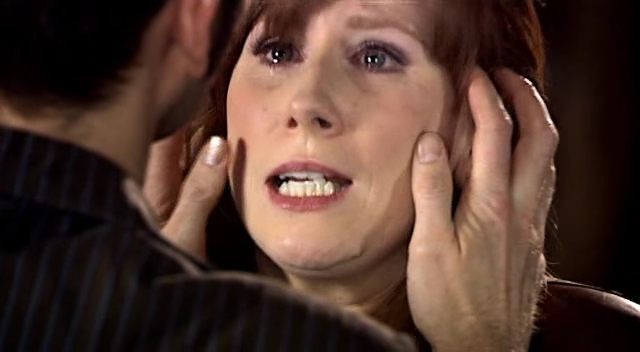


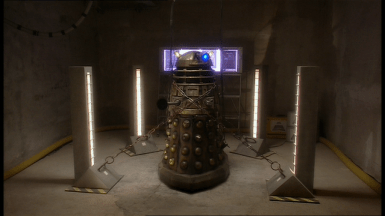


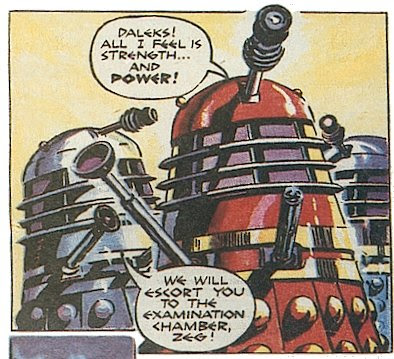


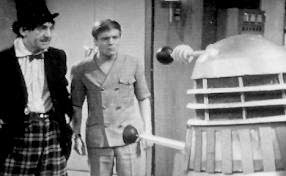


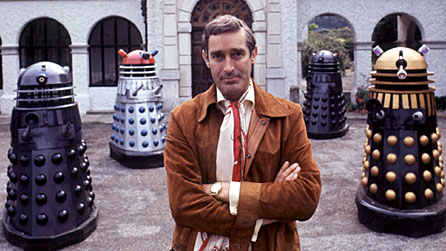


_-_Alien.jpg)






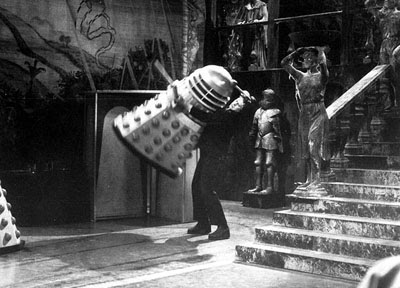














 burrunjorsramblesandbabbles