Now I have mentioned this in a few previous posts including my Top 10 Contemporary Underrated Actors article, but I have decided to devote an entire article to it here, as I feel that Ingrid is such a good choice for the role of one of Marvels leading heroine’s that I really should put her case forward properly.
The character of the She Hulk for those of you who don’t know is the cousin of Doctor Bruce Banner aka the Incredible Hulk. She is named Jennifer Walters and she is also a lawyer too.
Jennifer is initially a somewhat mousy, meek, shy bookish character, but that changes when she is wounded by a crime boss and her cousin Dr Banner gives her a blood transfusion which saves her life, but as his blood is radioactive it also causes her to become a large green brute like her cousin.
As the She Hulk, Jennifer is not nearly as strong as the regular Hulk, but she is far more intelligent and is actually even able to hold onto her old personality in her Hulk form.
Over the years She Hulk has had many series revolve around her, though she has also been a member of both The Fantastic Four and The Avengers. She has also appeared in many animated series over the years and has been voiced by actresses such as Lisa Zane, Cree Summer and Eliza Dushku. There have been a number of attempts to produce a live action version of the character that have come to nothing sadly. Originally she was going to appear in the third Hulk telemovie based on the 1970’s series starring Bill Bixby and Lou Ferrigno, but sadly these plans were abandoned. There were also plans in the early 90’s for a television series on ABC and a film to be directed by Larry Cohen, starring Brigitte Nielson as the She Hulk, with Nielson even appearing in publicity shots as the character.
However again these plans sadly came to nothing. Now however with Marvel’s popularity having reached new heights with the Marvel Cinematic Universe, I’d say the chances of She Hulk appearing on the big screen are greater than ever. I’d say at the very least we will see She Hulk in a future Avengers movie, if not in a film of her own.
Though the character of She Hulk was initially nothing more than just a cheap, female knockoff of a male character. Ultimately she has managed to carve out her own identity and become a respected icon in her own right, with many even seeing her as potentially being Marvels leading female super heroine, including Peter David a former She Hulk author who said of the character.
“She-Hulk has the potential to be our Wonder Woman. A powerful female with a strong moral center and a determination to do what’s right. She’s also a unique combination of brains and brawn. The ideal She Hulk story is one that plays on both aspects of her make up, the intelligence, combined with her strength.”
So with this in mind yes its very likely that we will see the She Hulk introduced to the Marvel Cinematic Universe some time soon and I can think of no one better for the role than Ingrid Oliver.
Now Ingrid for those of you who might be unfamiliar with her work is an English actress and comedienne who is best known for her double act Watson and Oliver and her performance in Doctor Who as nerdy, cosplay loving, asthmatic Doctor fan girl Osgood.
Now at first glance Osgood might seem like a weird choice for the She Hulk, but hear me out on this one. In my opinion She Hulk is one of the most difficult characters to cast.
You need to get someone who can capture both the timid shyness and meekness of Jennifer, but the confidence, strength and aggression of She Hulk too. You essentially need someone who is a nerd and a tomboy at the same time.
Its kind of like casting Superman, you need someone who can be a big geek as Clark Kent, but also a big strapping hero for Supes.
A lot of the choices I have seen for She Hulk by fans online are often only right for Jennifer or for She Hulk, but not for both. Brigitte Nielson for instance would have made a great She Hulk, but would not have been believable as the mousy Walters. Similarly other picks like Angie Harmon and Lucy Lawless I feel might not be quite as believable as the shy and retiring Jennifer as well. Then obviously there are the actresses who would look too small and timid to be the She Hulk. However Ingrid I can definitely see doing both. To start with as her role as Osgood shows she could definitely play the more mousy and nerdy Jennifer. Some versions of Jennifer look like a cartoon version of Osgood already.
As you can see Ingrid certainly would make a good Jennifer, however she would also make a great She Hulk. Ingrid as I have said many times before is a very versatile actress. There really is no type of role she can’t play. One of my favorite performances of hers is in the British comedy Peep Show where she plays a character called Natalie who is the polar opposite to Osgood. Natalie is a butch, tomboy whom everyone thinks is a Lesbian. Later however we see this isn’t the case when she forces herself on one of the main characters named Mark, played by David Mitchell and she effectively rapes him. Though it is played for laughs the episode addresses a very serious issue of how female on male rape can often be seen in a less serious way as Mark refuses to acknowledge that he was raped when he clearly was.
Quite different to Osgood I trust you’ll agree.
Ingrid as you can see could easily play a more aggressive character and she has a good build for the She Hulk she is naturally quite broad shouldered and quite tall too. If she beefed herself up a bit she would look every inch the She Hulk.
You can see what I mean about how she does have the right look for she Hulk too. I think Ingrid would really capture the vulnerability of Jennifer and the cockiness and humour of She Hulk better than anyone else, and I really hope that somebody at Marvel casts her in the role.
Last week we took a look at Xena’s archenemy Callisto. This week we will be taking a look at Azazel, the main antagonist from the first two seasons of Supernatural.
Now Azazel was based loosely on the character of the same name from the Bible, though other than his name he bears very little similarity with the character.
Azazel or Yellow eyes as he is more commonly known has only to date appeared in a handful of episodes of the series. Still despite this he has ultimately gone down as one of the shows most popular and iconic villains and has also had arguably the biggest impact of any villain in the show.
He is certainly my favorite villain from the series and in this article I will explain why I feel he worked the best out of Supernatural’s impressive rogues gallery, as well as giving a complete over view of the character.
Character Overview
Azazel first appears properly in the final episode of season 1 “Devils Trap”, where he is played by Jeffrey Dean Morgan whilst possessing John Winchester.
Prior to this however Azazel had appeared in fleeting cameos throughout season 1. He nevertheless had played a very important role in the two main characters, Sam and Dean Winchesters back stories.
His presence is first felt in the Pilot episode where we see that he murdered Mary Winchester, John’s wife and Sam and Dean’s mother by pinning her to the ceiling, slicing her stomach open and burning her alive.
This caused John Winchester to discover about the Supernatural and he spent the rest of his life tracking down the thing that killed his wife, whilst also training his two sons to become Hunters too.
At the end of the Pilot, Azazel murders Jesse, Sam Winchesters fiance the same way by pinning her to the ceiling, slicing her open and burning her to death. It is later revealed however that it was in fact one of Azazel’s minions that actually killed Jess.
At this point nothing is known about the creature that killed the Winchester boys mother and Jesse, but both Sam (who was ready to forsake his life as a hunter) and Dean soon take the road in order to track it down and kill it.
It soon becomes apparent that it was a Demon of some sort, with powers far beyond those of other Demons.
The two brothers later discover that the Demon has killed many more women in exactly the same fashion it murdered Mary and Jesse, and that it is also infecting many of the women it murders children in some way, giving them strange powers, with Sam himself having been affected this way.
The two boys eventually meet up and battle a group of Vampires who have stolen a special gun called The Colt that can kill anything supernatural. With John hoping to use it against the Demon. After testing it out on the leader of the Vampires, John and his two sons go to confront Azazel and though they are able to stop him from murdering another young woman and infecting her child. Azazel escapes and his two minions capture John. Though Sam and Dean later manage to rescue John, they discover that the Demon has in fact possessed their own father and finally come face to face with the monster that murdered their mother.
The writers had spent an entire season building Azazel up as the ultimate monster, showing us the impact its had on the Winchester family, the lengths they will have to go to destroy it and how vicious it is.
Thus when he finally gets to appear properly on screen, and not just as a shadowy figure in the background, they really pull out all the stops and show us how he is able to pin Sam and Dean against the wall and completely overpower them using his mind with virtually no effort. Jeffrey Dean Morgan is also on top form here, making Azazel seem powerful, and relentlessly cruel as he takes pleasure in reminding the boys of how he killed their loved ones. I also loved it when we discovered that two of the Demons Sam and Dean slew earlier where in fact Azazel’s children. It was such a nice twist that they had now destroyed his family in their quest fro revenge. Though I also liked the way Azazel didn’t actually seem to care about either one of his kids, it was more just a “how dare you destroy MY kids” type of a thing as he merely used their deaths as a way to taunt Sam and Dean.
“How would you like it if I killed your family. Oh that’s right (smiles) I forgot I did“.
This could very well be Morgans best performance in the series as we see him brilliantly switch from Yellow Eyes almost laughing as he sadistically tortures a helpless Dean, to John crying and begging Azazel to stop and give him back his body.
Most disturbing of all though is the way that Morgan plays Azazel as almost taking a sexual pleasure whilst torturing Sam and Dean in the body of their father!
Though Azazel does almost torture Dean to death, John is able to regain control of his body before the monster can finish the job. Though John begs Sam to shoot him before the Demon can escape him and end it now, ultimately Sam cannot and Yellow Eyes manages to flee.
At the end of season 1 he then sends a Demon lackey to attack them on the road. Season 1 ends with a cliffhanger as Sam, Dean and John are all badly wounded and at the mercy of a Demon.
In the season 2 premier “In My Time of Dying” we discover that Sam and John survived, but Dean still weak after Azazel’s torture of him is now mortally wounded. Knowing his son is going to die John summons Azazel and makes a deal with him.
He will trade him the Colt the only thing that can kill him in exchange for Deans life. Azazel agrees, but only on the condition that John give up not only his life, but his soul to Azazel. John with no other choice agrees, and thus whilst Dean is saved (with Azazel even possessing the Reaper that has come to take Deans soul away, played by Lindsey McKeaon who also briefly plays Azazel) John dies soon after and his soul is taken to hell by Azazel where he endures torture.
In this episode Azazel is played by Frederic Lehne. Now Lehne has gone on to be the actor most associated with the role and its not hard to see why. Morgan was good as Yellow Eyes, but it would be hard to find a villain more unnerving than Lehne as the Demon.
Much like Morgan, Lehne adds a somewhat Jack Nicholson quality to the characters mannerisms and speech. Still Lehne plays him in a much more sinister and manipulative fashion as we see the villain enjoy getting under the skin of John in their brief confrontation.
Originally Lehne was only supposed to play the villain in this one episode, but the producers were so impressed with his performance that they asked him back for Azazels next appearance in the two part season 2 finale, “All Hell Breaks Loose”.
In this story Azazel whisks all of the children he has been infecting with his blood away (including Sam) to a remote area and forces them to fight to the death to determine who is the strongest.
Azazel favours Sam and even appears to him in a dream to give him advice. This moment showed a new twisted side to Azazel that he favoured Sam the most out of all of his Special Children simply because he was the kindest. If Azazel could twist his mind and bring him down to his level then he feels he would have truly won. Ultimately when another one of the Special Children named Jake wins and murders Sam, Azazel is almost disappointed and later is ecstatic when Dean brings Sam back through another deal with a Demon like his father did for him. Most horrifying of all is when Sam murders Jake in cold blood even when Jake begs him for mercy and Azazel cheers him on, almost showing a kind of fatherly love.
Ultimately Azazel is hoist by his own petard as he uses the Colt to open the Devils Gate, a portal to Hell. Azazel’s plan was apparently to free an army of Demons and then have one of his special Children lead them to overrun the earth. However unfortunately for Azazel John Winchesters soul also escapes from hell (after having endured a hundred years worth of torture, with time moving a lot faster in Hell) and attacks Azazel allowing Dean enough time to grab the Colt and use it to shoot Azazel right in the heart killing the Demon once and for all.
We also discovered earlier in this story how Azazel infected Sam and the other special children, by pouring his blood into their mouths when they were infants and we also see that he apparently knew Mary Winchester before he killed her, but the details of this are not known about until much later.
It wouldn’t be until after Azazel’s death that we learned his actual name. Throughout his time on the show he was always referred to as “The Yellow Eyed Demon”, “Yellow Eyes” or even just simply “The Demon”.
Post Death Appearances
Though Azazel had been finally destroyed, this would not be the last we would see of him.
In the season 4 episode “In the Beginning” Dean Winchester is sent backwards in time to the 1970’s. Here he meets his mum and dad when they were younger and discovers that his mother was in fact a hunter. Together Dean, Mary and Samuel, Dean’s grandfather soon battle Azazel who is revealed to be making deals with people. Dean tries to find the Colt, hoping he can use it to kill Azazel now and thus change time.
However unfortunately Azazel soon possess Samuel Campbell and overpowers Dean. Azazel tells Dean that he is making deals with people so that he can enter their house in ten years for some unspecified purpose. With Dean knowing its so that he can infect their children with his blood and make them into his special children. Azazel also lets it be known to Dean that his endgame is much bigger than simply having one of his Special Children command his “bargain basement” Demon army. Dean gloats to Azazel that he will one day kill him, and Azazel enraged over this murders Samuel and and later goes on to kill John. He does so so that he can make a deal with Mary to enter her house in ten years in exchange for John’s life, which explains how Mary knows him when she spots him years later standing over Sam’s crib. With no other choice Mary agrees to the deal and Azazel escapes before Dean can shoot him with the Colt.
Azazel goes on to appear in the 4th season finale “Lucifer Rising” where we see him posses a priest and slaughter several nuns in order to contact his “father” Lucifer.
Finally Azazel goes on to appear once more as a hallucination in the first episode of season 6 “Exile on Main St”. Here Frederic Lehne reprises his role as the Demon.
Azazels Legacy on The Series
Azazel’s endgame was ultimately revealed to be releasing Satan himself. Satan had been imprisoned many thousands of years ago, and the only thing that could free him was breaking 66 of the seals that were binding him to his prison. Azazel created the special children not lead his Demon army but to kill Lilith the first Demon Lucifer had created. Lilith’s death was the final seal that had to be broken in order to release Lucifer from his prison. The final special child who killed Lilith and set Lucifer free would also at the same time serve as Lucifers host and allow him to reach his full power and ultimately overrun the earth.
At the same time Azazel also needed to break the first seal too. The first seal could only be broken when a righteous man was sent to hell and tortured other souls in there. Azazel had originally hoped it would be John Winchester. Every day when John was tortured by the Demon Alistair he was given the option to have his torture stopped as long as he tortured others, which would break the first seal. John however refused for over 100 years and eventually escaped. However when Dean’s soul is taken to hell after he makes a deal to ensure Sam’s resurrection, Dean cracked after 30 years and ended up torturing other souls before being freed from hell, which broke the first seal.
Thus Azazel’s actions ultimately allowed Satan to get free.
Azazel’s impact on the show therefore is felt many years after his death. For years no one not the Winchesters, not even the viewers were exactly sure what his end game was.
However in quite a nice twist it is later revealed that Lucifer wants to simply rule the earth and that he hates Demons just as much if not more so than human beings, having only created Demons as a means to an end. Lucifer intends to wipe them out as soon as he has gained control of the earth.
Thus whilst Azazel may have been a master manipulator he himself was being tricked by his own father and had his plan worked it would have meant the end of his kind.
Lucifer hates Demons so much that he later allows Sam to torture the Demons that helped Azazel manipulate his entire life. One can only imagine what Sam would have done to Azazel had he lived to that point. In this respect Azazel was rather lucky that Dean killed him many years earlier.
Why I Prefer Azazel To Supernatural’s Other Main Villains
Now I think that Supernatural has one of the best rogues galleries of any series. I have enjoyed all of its main villains to some extent, but I still feel than none of them have been quite as effective as Azazel for a number of reasons.
To start with I don’t feel any of them had quite the same personal connection with the Winchester boys as Azazel did.
Azazel had murdered their mother, and later Sam’s fiance. Their whole reason for being hunters in the first place was to destroy Azazel, thus naturally his encounters with them seemed more tense for me at least. You really wanted the Winchesters to get him and make him pay. It wasn’t just like later villains who were the big bad of the year or two years.
Also Azazel I don’t think was quite as overused as some of the later villains have been. He only appeared in a handful of episodes. Unlike Dick Roman, Crowley or Lucifer who popped up fairly regularly, Azazel was used sparingly which meant his effectiveness wasn’t limited in my opinion.
Finally I also feel that Azazels plan was the most interesting. You genuinely didn’t know what he was planning for 5 years, three of which were after his death, but surprisingly for such a long story arc it all fitted together rather well and made perfect sense.
However having said all of that I am glad that they killed off Azazel after two years. As good as he was, they couldn’t have dragged out the Winchesters hunting him down for 2 years plot, so whilst I still feel that he was the most effective main villain of the series I also think they finished his story at about the right time.
Now this might seem like a bit of bizarre claim. When I say that Futurama inspired Doctor Who I am talking about the revival, and even then I am really only talking about the Russell T Davies era. I think a lot of the humor in Davies’ time owes something to Futurama. This is not to say that Davies humor was not unique, but I think Futurama, which Davies is a self confessed fan of helped to shape a lot of the comedy in those early Davies stories.
At the same time however it is worth noting that the original Doctor Who series was a big influence on Futurama too. Futurama has even paid homage to Doctor Who (as you can see above) many times. In this article we will be examining the relationship between both genre classics and ultimately what they owe one another.
Futurama’s Influence on Doctor Who
Futurama’s influence on Who can only really be found in the Davies era.
When Russell T Davies took over the show in 2005 he started to inject a lot more overt comedy into the show than ever before.
He had stories with burping wheely bins, farting aliens, women being turned into slabs of concrete, cursing aliens, game shows thousands of years in the future and modern day pop music being looked on as classical music in the future.
Many longstanding Who fans criticized Russell harshly for this with some critics accusing Russell of making the show into a parody of itself.
I myself tend to lean towards this way of thinking. Whilst I do love the Davies era overall, the humor in it is a bit too much for me at times. I don’t think overt comedy ever works in Doctor Who because it is such a larger than life idea.
The idea of a man travelling through time and space is a pretty wild concept, so in order to stop it from seeming like something like Futurama it has to be taken as seriously as possible.
This was also why I had a problem with Douglas Adams tenure as script editor and Adams himself later acknowledged that he regretted the level of comedy that was being injected into the series during his time.
Due to the fact that Futurama was one of the most prominent sci fi comedies of all time it would make sense that Davies would look to it for influence.
I think Russell actually took inspiration from Futurama more than other sci fi comedy classics like Red Dwarf and The Hitchhikers Guide to the Galaxy.
The stories of Davies’ run that are most like Futurama to me are the three year five billion episodes. “The End of the World”, “New Earth” and “Gridlock”. The future that we see in those episodes is actually very similar to the one from Futurama.
Both are more comical with the advances in technology being presented more as witty jokes. Other science fiction stories often present advances in technology as warnings such as in Terminator with Skynet or in Classic Who itself with the Cybermen or they present them as being inspirational like the original Star Trek series.
Both the year five billion Doctor Who stories and Futurama however instead present them as jokes and don’t even attempt to ground them in any kind of scientific plausibility. Though the Cybermen are complete fiction they are not quite as out there as someone making the speed of light go faster, casually reshaping the continents, or bringing the dead back to life and keeping their heads in jars and feeding them fish food.
Both also attempt to present the future as essentially being the same as today in terms of a lot of attitudes and problems. Even with all of the advancements in technology, Zapp Brannigan still has the same sexist attitudes of misogynists today as do other characters throughout the series such as Fnog and Professor Farnsworth, whilst Thomas Kincade Brannigan still has old fashioned attitudes towards a homosexual couple in “Gridlock”. Thomas Kincade’s surname is most likely an homage to the Futurama character too.
One Futurama comic book “Who’s dying to be a Gazzilionaire ” even features a futuristic version of a modern game show now controlled by aliens with the losers being disintegrated just like in “Bad Wolf”.
Both Futurama and the last year five billion story of Davies era are set in a future version of New York, which in both cases is called New, New York.
There are a number of similar jokes from Futurama littered throughout the year five billion stories. These include the idea of modern day pop music being thought of as classical music in the future, and also the idea of human waste being recycled as food. In both cases we have someone from the present, Martha Jones and Philip J Fry learn this whilst eating a sandwich much to their horror.
Even visually Davies year five billion looks like the future from Futurama, full of hover cars, animal people and heads in jars.
The idea of animal people is a common trope in science fiction but both Doctor Who and Futurama present it in an absurdly comical way, even dressing their animal people from the future in contemporary clothing to almost highlight how ridiculous they look.
The Futurama parallels don’t stop with the year five billion stories however.
The Doctor Who 2007 Christmas special “Voyage of the Damned” revolves around the idea of the Titanic in Space which is exactly the same premise as the earlier Futurama episode “A Flight to Remember”.
Both stories essentially remake James Cameron’s blockbuster in space, having the main characters in both instances become involved in a tragic love story with someone on board the vessel who doesn’t survive the catastrophe.
Whilst I would never say that Futurama was one of Doctor Who’s main influences, overall I think its fair to say that a lot of the humour in Davies’ time comes from Futurama and certainly the year five billion in Doctor Who is essentially like a live action version of the future in Futurama.
Doctor Who’s Influence on Futurama
Matt Groening the creator of Futurama is a huge Doctor Who fan. He has included a number of references to it in his other classic series The Simpsons.
Groening’s favourite Doctor is the 4th Doctor played by Tom Baker has appeared a number of times in both Futurama and the Simpsons.
However Who’s impact on Futurama goes bigger than a few references. The character of Leela from Futurama is both named after and largely based on Leela from Doctor Who. Neil Gaiman has conformed that Doctor Who’s Leela inspired Futurama’s.
Both Leela’s are strong, amazonian type of women who completely reverse the idea of the female characters in science fiction being weak and are actually far more powerful and violent than any of the male characters they come into contact with.
A Futurama comic titled “Doctor What” is a complete parody of Doctor Who. It features parodies of the TARDIS, Daleks and K9.
Panels from Doctor What issue of Futurama.
Its quite funny in a way that Doctor Who inspired Futurama and then Futurama inspired Doctor Who. It shows how Doctor Who is unique in terms of the fact that it practically does go on forever. It can inspire something, but then because it will go on long after that has finished, the next version of Doctor Who after that can ironically take a certain amount of inspiration from it.
Now this comparison is a bit more vague. British Horror is quite a vague term. The period of British horror movies that I am really referring to is what many see as a golden age of the genre, the 50’s-70’s which saw Hammer studios emerge and really dominate the market just like Universal had done in the 30’s and 40’s and also where the likes of Christopher Lee, Peter Cushing and American actor Vincent Price (who appeared in many classic British horror movies) took over as the leading actors of the genre.
The period of Doctor Who that really draws on “British Horror” the most is the Hinchcliff, Holmes era, which is in turn often seen as a golden age of Doctor Who.
There are also many other strong connections between the golden age of Doctor Who and classic British horror movies which we will explore in this article.
Examples of British Horror Movies Influence on Doctor Who
Many Doctor Who stories have their roots in old Hammer movies.
The first such example was the third Doctor story “The Daemons”. It took inspiration from many hammer films such as “The Devil Rides Out” and “The Witches” in terms of its setting and also its subject matter, Witches, black magic, devil worship and satanic cults in small isolated communities.
However it would really be during the Holmes, Hinchcliff era that Doctor Who began to draw on Horror movies in particular. Indeed horror movies really replaced the spy espionage genre from the Third Doctors era as Doctor Who’s main influence for the beginning of the Fourth Doctors era.
The Holmes and Hinchcliff era is often noted for its gothic and darker tone. Both Holmes and Hinchcliff were big horror movie fans, so its not surprising that elements and tropes from classic horror stories crept their way into their stories.
The Brain of Morbius is the most obvious example of this. The Brain of Morbius as many have pointed out is essentially “Frankenstein in Space”. Whilst there have been many versions of Frankenstein on film and television and stage. Its definitely the Hammer version that The Brain of Morbius takes the most from.
This can be seen in the way its stand in for Professor Frankenstein, Professor Solon played by Philip Madoc is portrayed.as a ruthless, determined character who is willing to murder for the success of his experiments. This is closer to Peter Cushing’s performance from the Hammer movies than any other version of the character.
In the original novel professor Frankenstein was a more sympathetic character and in the original Universal movie starring Boris Karloff where Henry Frankenstein was played by Colin Clive he was even somewhat of a heroic character who genuinely felt guilt for his monsters heinous actions. Peter Cushing’s Professor Frankenstein meanwhile is the villain of the piece. He is willing to murder innocent people including even a pregnant woman who is bearing his child for the sake of his experiments, Much like Solon there is no line he will not cross.
Solon is thus essentially Peter Cushing’s Victor Frankenstein in space.
Another similarity between the Hammer Frankenstein films and Brain of Morbius is that Morbius focuses more on the professor than the monster. The monster doesn’t appear properly until the final episode. This was a trait of the hammer Frankenstein film series which helped them stand out from the original Universal Frankenstein films that had focused largely on the monster instead.
Philip Hinchcliff had in fact originally hoped to cast Peter Cushing in the role of Professor Solon which would have literally made him Hammer’s Frankenstein in space. Cushing was very interested in appearing, but sadly he was busy and thus Madoc was cast instead. Even though Cushing is one of my fave actors I don’t honestly see how anyone could have done a better job than Madoc in the role of Solon, still its quite a fun what if for fans to ponder over.
Pyramids of Mars was also closely inspired by a number of Hammer Mummy films too, with Robert Holmes having cited them as inspiration when writing the story.
The Talons of Weng Chiang meanwhile also borrows many aspects from Hammer horror movies, such as its Victorian Gothic setting and its main villain who is a deformed and bitter genius, both staples of many Hammer horrors. Talons has been compared with the old Hammer horror classics by many critics. Lawrence Mills and Tatt Wood described the story as “Doctor Who does Victorian Hammer horror” though they also stated, “in all honesty no single Hammer film is as accomplished as this.” Overall I think that the Hammer movie that Talons draws the most from would be Hammers version of The Phantom of the Opera starring Herbert Lom, with Magnus Creel in some ways being a stand in for Lom’s Phantom.
The Deadly Assassin also meanwhile draws very heavily from old British horror movies too. Once again there is Hammers version of The Phantom of the Opera rather obvious influence, with the Master now being a deformed, vengeful and scarred sociopath rather than the charming and elegant villain from the Pertwee era.
The deformed Master or the crispy Master as fandom has come to refer to him as has shades of many similar deformed, bitter, hateful villains from British horror movies. His flamboyant and over the top nature make him somewhat similar to Dr Phibes a character played by Vincent Price in two British horror movies. His cowardly desire to live above all else is also similar to the character of Dr Georges Bonnet from the Hammer film The Man Who Could Cheat Death. Bonnet who is played by Anton Differing (who later guest starred in Doctor Who in the story Silver Nemesis) murders young women in order to get their parathyroid glands to use in his experiments to remain young forever. At the end of the movie when his experiments fail he ends up as deformed freak. Bonnet is also somewhat similar to Magnus Creel the main antagonist from Talons who similarly murders young women to keep himself alive.
Many of the Hinchcliff/Holmes era stories borrowed elements from horror movies even when their stories weren’t directly inspired by them. Mad scientists, haunted houses, spooky gothic castles, were during the Hinchcliff Holmes era as much a staple of Doctor Who as they were of British horror movies themselves.
Doctor Who’s Connection With Classic British Horror Movies
The Doctor being tortured by Count Dooku. How’s that for a crossover.
Many actors from Doctor Who appeared in Hammer Horror movies. Indeed I could probably make a whole seperate article that was just a list of Hammer actors who have appeared in Doctor Who.
Instead I will just list the most prominent connections.
Patirck Troughton who played the Second Doctor appeared in a number of Hammer Horror films. His most prominent role was as Dracula’s servant Klove in the movie The Scars of Dracula. Troughton apparently considered this to be one of his favorite roles and even had a picture of him being tortured by Christopher Lee’s Dracula hung on his bathroom wall! He also joked that his character Klove actually enjoyed being whipped by Dracula and referred to him as “Kinky Klove”.
Also just as Doctor Who borrowed some elements from Hammer Horror so did some later Hammer movies take inspiration from Doctor Who.
The Hammer movie The Satanic Rites of Dracula is essentially a Third Doctor story. It features Peter Cushing as Doctor Van Helsing who is an eccentric, maverick professor (that also serves as a special advisor on the paranormal to the government) battle his archenemy Dracula played Christopher Lee who is a psychopath that dresses in black, has hypnotic powers and seeks to destroy the world. Van Helsing is also assisted by a young dashing, Mike Yates, Benton stand in, and his young and brainy female assistant played by a young Joanna Lumley.
Christopher Lee at one point even says “I am the Master”
Christopher Lee as The Master battles Doctor Van Helsing.
The Satanic Rites of Dracula was actually written by Don Houghton who wrote two Doctor Who stories Inferno and The Mind of Evil.
The largest connection between Hammer and Doctor Who however is the fact that Peter Cushing played the Doctor in two films “Doctor Who and the Daleks” and “Daleks Invasion Earth 2150AD”. These films are set outside of main Who canon, with Cushings character being an eccentric human scientist who has Who as his surname.
The films were almost made canon in a way by Steven Moffat for the 50th anniversary. Moffat intended to have scene where a poster for the movies would be seen briefly, supporting the fan theory that the Cushing movies within the Doctor Who universe were made by either Ian or Barbara based on their adventures and starring Peter Cushing.
Peter Cushing was not a fan of Doctor Who, but he did respect the series immensly. He was in fact one of their choices for the second Doctor, but turned it down as he didn’t want to get tied down to one series, though he later mentioned that he regretted this decision.
Here are some quotes from Cushing about Doctor Who.
On the way it changed his image as a horror movie villain.
“I had played Winston Smith in ‘1984’ on television, and the next thing I played ‘Doctor Who’. I was doing it in the cinema while Bill Hartnell was doing it on TV! That’s the way it goes. It was no surprise to me to learn that the first ‘Doctor Who’ film was in the top twenty box office hits of 1965, despite the panning the critics gave us. That’s why they made the sequel and why they spent twice as much money on it. Those films are among my favourites because they brought me popularity with younger children. They’d say their parents didn’t want to meet me in a dark alley but ‘Doctor Who’ changed that. After all, he is one of the most heroic and successful parts an actor can play. That’s one of the main reasons the series had such a long run on TV. I am very grateful for having been part of such a success story.”
Here’s a full interview he took during Tom Bakers era where he discusses how he was almost the Second Doctor, his almost landing a role in The Brain of Morbius and whether or not he considered the films canon to the tv series.
Q: What do you remember of the two ‘Dr. Who’ movies you made?
A: They were very enjoyable. A little frustrating, though, because they were not quite what we planned.
Q: What do you mean by that?
A: I think I speak for everyone involved when I say that we intended to make them a little darker. But they turned out well, very good entertainments and a hit with the children.
Q: How close did you come to making a third?
A: Very close. I thought we would, and possibly a fourth. Sadly it didn’t come to pass.
Q: Were you a fan of the TV series?
A: I thought it was very good. Very well made. But I didn’t watch TV then, and I don’t much now.
Q: The character you played in those two films was very different from the character on the TV show. Were those films a complete remake?
A: Well I’ll tell you something I thought once. I just said I didn’t watch TV, but one of the few episodes of the ‘Dr. Who’ series that I saw was one that involved a kind of mystical clown (‘The Celestial Toymaker’? – ed.), and I realised that perhaps he kidnapped Dr Who and wiped his memory and made him relive some of his earlier adventures. When Bill Hartnell turned into Patrick Troughton, and changed his appearance, that idea seemed more likely. I think that’s what happened, so I think those films we did fit perfectly well into the TV series. That would not have been the case had I taken the role in the TV series.
Q: Were you ever asked?
A: Twice, as it happens. When Bill Hartnell was forced to quit, I was asked if I would be interested in taking the lead in the new series. I turned it down, which I now regret a little. It would have been fun. But at the time, you know, I considered myself a serious film actor and stepping into a television series seemed like a step backwards. I don’t know how serious the producers were about hiring me. But perhaps if I’d said yes, they would have been pleased and you would have had me fighting Daleks and Cybermen week in, week out. But I’m glad I didn’t in some ways, because Patrick was so wonderful.
Q: You said you were asked back twice.
A: Yes, another time was quite recently, with Tom Baker’s Dr. Who. I don’t know the part, but they wanted me and I was interested by scheduling conflicts scuppered it. But perhaps in the future I’ll be able to take a part. I’d be very keen on that.
Peter Cushing as I’m sure most film enthusiasts will know was one of horrors greatest stars having appeared in many Hammer horror films including most notably their Dracula and Frankenstein film series where he played Professor Victor Frankenstein and Professor Van Helsing.
A different Doctor Who kills Count Dooku.
Overall as you can see there are quite a few connections between Doctor Who and old classic British horror movies. Though classic British Horror films like Dr Phibes and the Hammer films only really inspired one era of Doctor Who, the fact that is was such a prominent era. One that is still seen even today as the golden age of the shows history means that their influence on the programme I think should always be mentioned.
In this article we will only be looking at the revival as the original Doctor Who series finished 7 years before Xena started. It was also about as different a show as can be imagined to Xena anyway.
Russell T Davies has regularly cited Xena along with other American sci fi and fantasy series such as Charmed, Smallville and Buffy the Vampire Slayer and its spin off Angel as being among his greatest influences for his take on Doctor Who.
Russell wanted the revival of Doctor Who to be as popular as possible right away, hence why he kept direct references to the original series to a minimum so as not to alienate new viewers, included references to popular culture, and modelled the show overall very much on American genre series which had come to completely dominate the market in Doctor Who’s almost twenty year absence from our screens.
Doctor Who during Davies’ time came to embody all of the tropes of late 90s, early 00s American genre series. We had the Doctor become more of a pop culture obsessed, angsty, tragic hero, we had the good guys talking in “Buffy speak” including even the Doctor himself “Wibbly Wobbly, Timey Wimey” and the bad guys talking in big grandiose, pompous, flowery speeches “I reached into the dirt and created new life I AM THE GOD OF DALEK KIND.” We had story arcs, big bads, the heroes one true love they never stop going on or angsting about even when they are not there (Rose, Buffy or Angel, Lana, Gabrielle) we had the person who loves the hero, but the hero doesn’t love back and who angsts about that for a while before becoming their best friend who arguably does the most for them, even more than their one true love (Martha Jones, Chloe Sullivan, Xander Harris) and we had the crazed villain whom the hero feels a certain sense of guilt over and tries to help rather than outright kill (the Master, Callisto, Faith, Lex Luthor).
Of all of these American series Buffy and Angel unquestionably had the biggest impact on New Who. Indeed Buffy’s influence on Who would extend even into the Steven Moffat era, with many having drawn comparisons between the Silence and the Gentleman from Buffy.
However still one should not underestimate Xena’s influence on the revived series and in this article I am going to examine the similarities between both series.
Xena’s Influence on Doctor Who
The strongest comparison between both shows are the similarities between the central characters of the Doctor and Xena.
The Doctor during Davies’s time was an angst ridden character who had done horrible things to innocent people in the past. He had killed billions of innocent men, women and children in the time war and was now in some ways trying to atone for this atrocity, though there were moments where he very nearly gave into his dark side again such as in his dealings with the Daleks.
However the Doctor is able to hold his dark side back with the aid of a young blonde woman named Rose who starts out travelling with him because she is bored of her life at home. The two develop a close relationship and eventually fall in love though their love is not usually outright stated apart from a few crucial moments.
There are moments where the two have huge fights, such as when Rose gets shocked at his ruthless actions, or when she lies to and betrays the Doctor for the sake of her family in “Fathers Day”.
Xena meanwhile is similarly an angst ridden character who has done horrible things in her past. She slaughtered hundreds of innocent people in her wars and and is now seeking redemption for her past sins. There are moments however where she very nearly gives into her dark urges. However she soon meets a young blonde woman Gabrielle who travels with her because she is bored of life back home with her family. The two develop a close relationship and fall in love though their love is usually only hinted at.
There are moments when they come to blows. Gabrielle is appalled at some of Xena’s more ruthless actions such as in “The Debt” where Xena plans to commit an act of cold blooded murder. At the same time Gabrielle’s betrays Xena and her trust in order to protect her family, her daughter Hope.
Now it is true that the Doctor and Rose did owe something to Buffy and Angel and the Ninth Doctor definitely owed a lot to Angel too. Ultimately however I find Xena and Gabrielle to have been the bigger influence on their relationship.
The Doctor and Rose and Xena and Gabrielle are both about how two people can make the other person better in a relationship. Xena and the Doctor are made better people by Rose and Gabrielle who hold back their darker sides, whilst Rose and Gabrielle are made better people by Xena and the Doctor, as it is Xena and the Doctor who rescue them from their life of mediocrity and allow them to reach their full potential.
Buffy and Angel do not have this same kind of dynamic. Whilst Buffy does put Angel on the path to redemption to some extent, she also is the one who lets his dark side out. Also Neither Buffy or Angel where living boring or dull lives either like Gabrielle and Rose.
Another example of Xena’s influence on Davies’ Who was in the character of The Master who bore many similarities to Callisto Xena’s archfoe.
The Master as a character debuted many decades before Callisto, but the classic series version of the Master was a very different character from the version we saw in Russell T Davies’ era.
He was a cold, manipulative, sly, cunning genius who enjoyed manipulating people. He was a megalomaniac, but not a complete psychopath. He usually other than a few instances did not kill at random. Only if he felt he had to (which was often a lot) or for revenge. He and the Doctor did respect one another, but there was certainly no gay subtext involved. Indeed the idea was always that they were brothers anyway.
The two Time Lords hated one another and tried to kill each other all of the time.
However the Master in the Russell T Davies era was a complete and total lunatic. He killed people for no reason other than his own amusement, he was a manic character overall and the Doctor now looked on him with pity and rather than try and kill him like the Third Doctor, he tried to help him. There is also a very strong gay subtext between the two characters, with the brother angle having been completely written out by Russell T Davies.
The Davies era Master played by John Simm was inspired by many characters. In my review of him I wrote that he was really a pastiche of crazy, psychotic villains such as the Joker, Hannibal Lecter, John Hurts Calligula from I Claudius and yes Callisto too.
Callisto and Xena have the same type of dynamic as The Doctor and the Master. Xena refuses to kill Callisto for years as she feels sorry for her and tries to help her, even when many people including Xena’s friends want her to finish Callisto. Even when Xena does finally kill her in “Return of Callisto” she doesn’t actually as she still can’t bring herself to, so she simply does not save her. The Doctor meanwhile as we know doesn’t kill the Master in Davies time even when the people around him including his friends such as Jack and Martha want him to.
Both Xena and the Doctor don’t want to kill Callisto and The Master as it would make their guilt over their past sins worse. The Doctor seemingly killed all of his kind, but now one of them has survived and he wants to help him. If he can only just convince the Master to change his ways then it will ease some of the guilt over the rest of his people’s deaths. If he does kill the Master then he will be just finishing what he started in the Time War. Similarly Xena cannot kill Callisto as she murdered her family and drove her insane as a result. Thus if she kills Callisto now she too will be merely finishing the evil act she committed years ago when she murdered her family.
Despite being their bitterest enemies both Callisto and The Master have an emotional hold over the Doctor and Xena unlike any other.
The Master and Callisto also were both driven insane by an horrific tragedy that happened many years ago when they were children. In the Masters case he was driven mad when forced to stare into the untempered schism. Since that day he heard a constant drum beat in his head that pushed him over the edge and turned him into a monster. In Callisto’s case it was watching her family burn to death.
In both cases we are left to wonder what would have happened had it not been for this one tragic event in their childhood. What would The Master and Callisto have been? Would the Master have been like the Doctor a heroic renegade Time Lord? Would Callisto have been sweet and innocent like Gabrielle? At the end of their story arcs we do see that there is some good in them after all, as Callisto becomes an Angel and ultimately saves Xena and Gabrielle’s souls whilst The Master at the end of Davies’ time sacrifices himself to save The Doctor.
Both The Master and Callisto even utter the line “You Made Me” to the people whom they blame for sending them down their dark path. In Callisto’s case to Xena who burned her family, in The Masters to Rassilon who implanted the drumming in his head.
Finally both Callisto and the Master also have the same twisted sexual obsession with the main hero. Both flirt with the main hero, blow kisses at them and even demonstrate a degree of sexual sadism with the main hero, with both the Master and Callisto even strapping their mortal foes in bondage gear at one point.
The finale example of Xena’s influence on the Doctor Who franchise can be seen in the character of Captain Jack Harkness. Captain Jack much like Xena herself was a somewhat darker character who was redeemed by the main hero from another series. In Jacks case the Doctor’s influence turned him from a coward to a hero, whilst in Xena’s, Hercules had turned her from being a brutal warlord to a hero. Both Xena and Jack also had romantic feelings for said hero too.
Ultimately both go on to star in their own much darker spin off series where their dark past is explored in more detail. Xena and Jack are also both LGBT icons too who embark on same sex relationships and heterosexual relationships on their own series, though their most prominent are homosexual relationships, Jack with Ianto, Xena with Gabrielle. Jack’s relationship with his brother John Grey is also similar to Xena’s with Callisto too. John Grey was left at the mercy of aliens by Jack when they were young. The aliens subsequently tortured Grey for decades driving him completely insane. Grey returns at the end of season 2 of Torchwood and blames Jack for ruining his life and seeks revenge on him. Just as with Xena and Callisto Jack can’t kill Grey as he feels guilt for how he has turned out.
Whilst Jack had other influences such as the vampire Angel, ultimately I think Xena was also a main influence on Jack too.
I am not the only one to notice the similarities between Jack and Xena. Polina Skibinskaya a writer for AfterEllen.com noted the characters both having a dark past that still haunted them. She also referred to Jack and Xena as a “queer basher’s” worst nightmare as both are “weapon wielding, ass kicking” superheroes in contrast to the normally effeminate homosexual characters on television.
Creators of Xena’s Opinion of Doctor Who
Fortunately unlike Nigel Kneale the makers of Xena were big Doctor Who fans, including the shows creator Rob Tapert. One episode of Xena even paid homage to the classic series of Doctor Who, “Between the Lines”. This episode sees Xena sent through time and the effect for it is based on the opening credits for Doctor Who during the Tom Baker era.
Many have also drawn a comparison between Xena and Leela the 4th Doctors companion. Though I have never read that Leela was an inspiration on Xena however.
Lucy Lawless who played Xena is herself a life long Doctor Who fan. Apparently she grew up with the show. New Zealand was always one of the places that the show was most popular outside of the UK. Her son is also a big Doctor Who fan and she even got him Matt Smith’s (see picture above) autograph.
Join me tomorrow when I will be looking at how British Horror movies influenced the adventures of the Time Lord.
Doctor Who and Sherlock Holmes fandoms have seen quite a lot of over lap in recent years thanks to one man, Steven Moffat.
Steven Moffat who was already one of the most popular Doctor Who writers took over as showrunner in 2010. During his time the show was restored to its former status as a global sensation. At the same time Moffat has also produced a modern day version of Sherlock Holmes. Called simply “Sherlock”. “Sherlock” has proven to be a massive success critically and commercially around the world.
Indeed both Doctor Who and Sherlock are arguably among the two most popular British scripted television series around the world right now.
However the two franchises have been quite closely linked with one another for many years prior, and long before the days of “Wholock” there were a number of comparisons that were drawn between the characters of the Doctor and Sherlock Holmes. Even the makers of Doctor Who including Barry Letts and Robert Holmes often compared the Time Lord to the Great Detective. In this article we will be looking at the many similarities between the two British icons as we examine Sherlock Holmes’s influence on Doctor Who overall.
Sherlock Holmes Influence on Doctor Who
The character of the Doctor was always very similar to Sherlock Holmes in some ways. The two were old fashioned, somewhat gentlemanly heroes who were very British. Even though the Doctor is an alien he still fits that mould.
Both are also heroes who use their mind to solve their problems and both the Doctor and Holmes are also somewhat difficult to live with. They are arrogant, have no social skills and can be quite rude and even condescending to their friends.
The Doctors relationship with his companions was often comparable to Holmes with Watson. Both Watson and the Doctors companions look on the Doctor and Holmes in awe due to their intellect, but also in some ways cut them down to size and keep them on their toes too.
Both the Doctor and Holmes are also asexual too. In contrast to heroes like James T Kirk and James Bond or even supposedly loner heroes like Batman who still always have to have a love interest of some kind, Catwoman, Vicki Vale, Poison Ivy etc, the Doctor and Holmes (at least the Doctor during the classic era) have no romantic relationships at all.
Whilst these parallels between the two characters could always be found way back to the Hartnell era, it was really during Jon Pertwee’s time when Sherlock Holmes began to have a strong influence on Doctor.
The Doctors new archenemy introduced in the Pertwee era, The Master, was based entirely on Professor Moriarty, Holmes nemesis.
Barry Letts the producer of the show during the Pertwee era said that what the Doctor really needed was a Moriarty, a rival who was his equal in every respect. Letts said that he himself felt the Doctor was essentially the same type of character as Sherlock Holmes, and that the Brigadier, a regular at that point was his Watson.
You can see how Delgado’s Master is very much modelled on Moriarty in every respect, from his status as the heroes dark twin and mastermind behind his lesser enemies to Delgado’s calm, restrained and charming performance.
Other actors and writers would continue with the Moriarty angel on the Masters character. The Doctor and the Masters confrontation in “Logopolis” the 4th Doctors last story was very closely inspired by Holmes and Moriarty’s final confrontation above the Reichenbach falls in “The Finale Problem”.
Just like Holmes and Moriarty, The 4th Doctor and the Master battle atop a high place which ends with one of them falling to their apparent deaths. It should also be noted that this was the final appearance of the 4th Doctor whilst “The Final Problem” was intended to be the final appearance of Sherlock Holmes. Both final battles see the hero grappling with their arch foe above a huge drop, and though both apparently fall to their deaths, they ultimately manage to survive. In the Doctors case however the 4th Doctor does actually die, but the character overall survives.
Another prominent example of Sherlock Holmes influence on Doctor Who can be seen in the 4th Doctor story “The Talons of Weng Chiang” which draws on many Holmes stories overall and even goes to the extent of dressing the Doctor in a Sherlock Holmes outfit.
Robert Holmes who wrote the adventure strangely enough was not a fan of Sherlock Holmes, but said he found the setting of the stories in Victorian London interesting which is why he gave Talons a similar setting.
“I’m not a fan of Sherlock Holmes, although I’ve read all the books, but I am a fan of that fictitious Victorian period, with fog, gas lamps, hansom crabs and music halls… We look back on it and say that’s what it was like, but of course it wasn’t. People were slaving in dark, satanic mills and starving in London gutters.”
– Robert Holmes on his interest in Victorian London
It is ironic that Robert Holmes the author from the classic Who that drew the most obvious comparisons between the Doctor and the great Detective didn’t even like Sherlock Holmes at all!
When Steven Moffat took over Doctor Who as its showrunner not surprisingly the comparisons as well as the tributes and nods to Sherlock Holmes became a lot stronger than ever before.
“The Wedding of River Song” much like “Logopolis” draws very heavily on “The Final Problem” in fact arguably even more so. “The Wedding of River Song” sees the Doctor face his greatest challenge yet. His impending death that is a fixed point from which there is no escape, that has been orchestrated by an old enemy. The Doctor much like Holmes in the final problem must face his death for the good of everyone else. Lake Silenco is the Doctors Reichenbach Falls.
However the Doctor much like Sherlock Holmes is able to escape this certain death and allows everyone even those closest to him to continue to believe he did actually die for a long while afterwards
Another story that would have drawn on “The Final Problem” was the much earlier “Trial of a Time Lord” from the classic era, which would have seen the 6th Doctor and his adversary the Valeyard fall whilst fighting with one another into a deep pit from which there was seemingly no escape. This would have served as the ending to that particular season, with the next season seeing the Doctor somehow come back from the abyss just like Sherlock Holmes did. Ultimately this ending was scrapped by producer John Nathan Turner
The characters of Madame Vastra and her wife Jenny Flint created by Steven Moffat, are two crime fighters from 19th century London and in the 2012 Christmas special “The Snowmen” they were revealed to have been the inspiration to Sir Arthur Conan for Sherlock Holmes. Vastra who is a Silurian would even be referred to as “the female Sherlock Holmes from the dawn of time”.
The 11th Doctor would also much like the 4th Doctor dress in a Sherlock Holmes outfit in this same episode.
However whilst Steven Moffat has taken some inspiration from Sherlock Holmes for his Doctor Who work he has interestingly enough said that he feels the Doctor and Sherlock Holmes are actually polar opposites.
Moffat has referred to “Sherlock” as a dark foil to his take on Doctor Who. He has said that the Doctor is a virtually omnipotent being who needs his human friends to keep him down to earth, whilst Sherlock Holmes is an ordinary human who wants to prove he is better than everybody else and shuns close relationships with people. Moffat said “The Doctor is an Angel who wants to be human. Sherlock is a human who wants to be a god”.
Still despite this I don’t think it can be denied that there are certainly a number of strong comparisons that can be made between the two characters and that Sherlock Holmes has had quite a large influence on Doctor Who over the years.
I say, this is like something by that novelist chap, Mister Wells.
Now Wells impact on Doctor Who is rather obvious. One of Wells most famous works “The Time Machine” helped inspire the very concept of the series itself. However Wells influence on the series runs a little deeper than the fact that Doctor Who simply revolves around time travel, a science fiction trope that Wells perfected and defined with his classic novel.
Many stories and prominent characters and concepts in Doctor Who have been lifted from Wells novels and the franchise has even paid tribute to him a number of times.
Doctor Who is not unique in taking inspiration from Wells. Wells truly is one of the founding fathers of science fiction and his influence can be seen in many prominent genre stories across many different mediums.
However as Doctor Who is probably the most prominent piece of time travel fiction other than Wells iconic novel itself, then I think Doctor Who will perhaps always be more associated with Wells than other works.
Examples of Wells Influence on Doctor Who
The whole concept of Doctor Who about an eccentric scientist travelling though time obviously owes a lot to Wells classic novel “The Time Machine.” However stories in particular which draw on Wells work include the first two Dalek stories “The Daleks” and “The Dalek Invasion of Earth”. Terry Nation the author of both stories cited Wells as one of his favourite authors.
“The Daleks” bares many similarities to “The Time Machine”. Both stories are set in the future. Though its not made clear in the narrative that the Daleks takes place in the future, Nation intended it to be as revealed in the next Dalek story, “The Dalek Invasion of Earth”. Both stories also see a society splinter into two factions. One peaceful, but ultimately useless, beautiful humanoids, the other frail, but technologically and intellectually superior creatures.
The Daleks are essentially the Morlocks (Morlocks, Darlecks, Daleks) whilst the Thals are the Eloi and the Doctor and friends are substitutes for Wells time traveller who tries to convince the peaceful, but placid humanoids to stand up to their oppressors.
Of course whilst there are similarities between both stories, it would be wrong to say the Daleks is derivative of “The Time Machine” The Daleks used the same basic idea of two societies, one peaceful but stagnated being persecuted by the other more advanced but weaker physically and added the race hatred aspect to it.
The story is able to make its Morlocks, The Daleks serve as a brilliant metaphor not just for race hatred and the Nazi regime in particular, but man’s inhumanity to man in general, as well as man’s destructive effect on the environment and the threat and consequences of nuclear power. “The Daleks” takes on a whole new life to “The Time Machine” and serves as a powerful story in its own right.
The comparisons between the Daleks and the Morlocks and the Thals and the Eloi get even stronger when you take Nations short story “We Are The Daleks” into account.
This story which Nation wrote for the Radio Times marked the first time Nation attempted to give an actual origin for the Daleks. It revealed that the Daleks were in fact human beings from a point in the future and the humans who would become the Dalek’s evolution was accelerated, which turned them into the Daleks on the planet Ameron by a race known as the Halldon.
As the Daleks were once human beings so logically therefore were the Thals, as Ameron it is implied would one day become known as Skaro with the Thals being the humans whose evolution was not accelerated.
The Thals and the Daleks therefore much like both the Eloi and the Morlocks were actually our descendants too.
“The Dalek Invasion of Earth” meanwhile draws on “The War of the Worlds” The Daleks are comparable to Wells other most famous creations The Martian Invaders.
The Martians are octopus like creatures who house themselves in near indestructable robotic casings exactly like the Daleks. Like the Daleks they also come from a dead planet. Both the Daleks and the Martians manage to conquer the earth too and both stories show us the earth under these cruel invaders rule.
The film version of “The Daleks Invasion of Earth” titled “Daleks Invasion Earth 2150AD” meanwhile sees the Daleks just like the Martians get destroyed by a natural force on the earth, a force that does not affect human beings. In the Martians case it is bacteria that poisons them whilst in the Daleks it is the magnetic power of the earths core that pulls them into it and destroys them.
Both cases show the planet itself destroying the invaders rather than humanity.
Whilst they may have taken on their own life ultimately, in many ways the Daleks in their earliest appearances can really be seen as an amalgam of Wells two most famous creations. The Morlocks and the Martians.
One thing in particular that “The Dalek Invasion of Earth” and many other Doctor Who invasion earth stories do, that comes from H.G. Wells “War of the Worlds” is show the alien oppressors marching in front of familiar earth landmarks to demonstrate how the alien menace has triumphed over us as it has now claimed an iconic symbol of humanity for its own.
The chances of anything coming from Mars, Skaro, Planet 14 and Raxacoricofallapatorius are a million to one, but still they come.
Whilst the Daleks are essentially the Martians and the Morlocks combined, Davros can also be seen as something of a Doctor Moreau figure. Whilst Davros obviously draws on a number of sources both literary and real life, there are aspects of Moreau in Davros, and Davros’s failed experiments in Genesis are comparable to the monsters Moreau creates too.
Another story to draw on Wells influence specifically is the three part Season 3 finale. “Utopia, The Sound of Drums and The Last of the Time Lords”.
The future the Tenth Doctor, Martha Jones and Captain Jack visit is very like the future in the Time Machine. Here humanity has split into two sides, one degenerate and one peaceful like the Morloks and the Eloi. However in quite a good twist the degenerate side are the more primitive. The Toclafane meanwhile much like the Daleks could also be seen as an amalgam of the Martians and the Morlocks. Like the Morlocks they are our degenerate deescendants, but like the Martians they are also withered creatures who are housed in mechanical shells and the Toclafane’s subject of humanity is comparable to the Martians.
Wells influence runs right throughout Doctor Who, but definitely the strongest examples are on some of the most prominent icons and characters of the series such as The Daleks, The TARDIS and even the main character the Doctor himself.
Nods and Tributes to Wells in Doctor Who
In “Frontier in Space” The Master is shown to be reading Wells novel “War of the Worlds”. The plot of this adventure sees the Master try and provoke a war between two planets Earth and Draconia.
In “Pyramids of Mars” Lawrence Scarman comments that the Doctors TARDIS is like something from H.G. Wells.
In the story “Timelash” H.G. Wells actually appears as a character.played by David Chandler. This story reveals that his stories were inspired by an adventure with the Doctor where he travels to an alien world, witnesses a battle between two planets, the Doctor seemingly turning himself invisible, encounters alien monsters called Morlocks and helps the Doctor defeat a scientist called the Borad who has been performing experiments, one of which turned him into a freakish monster. Sadly “Timelash” was panned, and in all honesty it is quite frankly awful. However in some ways I see Timelash as ironically being quite influential. Its basic formula of having the Doctor encounter a figure from history who helps him defeat a monster, with his adventure with the Doctor going on to inspire his own famous work.. Yes ironically “The Unquiet Dead”, “The Shakespear Code”, “The Unicorn and the Wasp” and “Vincent and the Doctor” are all essentially the same idea as “Timelash”. Maybe “Timelash” isn’t so bad after all?
The Tenth Doctor encounters H.G. Wells in a comic strip “The Time Machination” where he helps him battle the renegade time traveller Jonathan Smith and Torchwood. This story also sees Wells encounter the 4th Doctor and Leela at the end of the story too, though he does not make himself known to them.
The Second Doctor encounters Wells in the Big Finish Audio The Piltdown Men.
The Doctor meets that guy that ripped off all of his adventures.
In this series I am going to take a look at the various tv shows, film series and pieces of literature that have inspired Doctor Who.
Throughout its long history Doctor Who has taken from many different sources and like everything else it has meshed them together to create something new and unique.
We will start with Quatermass. Now for those of you who aren’t familiar with it, Quatermass was a science fiction franchise created by the late great Nigel Kneale. It ran for four television serials The Quatermass Experiment, Quatermass 2, Quatermass And The Pit and Quatermass. There was also a 2005 remake and three films released by Hammer Studios based upon the first three serials.
The franchise revolved around the Holmseian scientist Bernard Quatermass who was the head of the organisation British Rocket Group. Quatermass faced a variety of strange alien foes and the series themselves dealt with a variety of social themes with Quatermass and the Pit serving as a metaphor for the Nottingham race riots of 1958.
The character of Quatermass was intended to serve as a contrast to the main characters in contemporary American series at that time. Nigel Kneale wanted Quatermass to be more human and relatable and also rely on his intellect to defeat whatever threat he came across rather than lethal force.
“I wanted to write some strong characters, but I didn’t want them to be like those horrible people in those awful American science fiction films, chewing gum and stating the obvious. Not that I wanted to do something terribly ‘British’, but I didn’t like all the flag-waving you got in those films. I tried to get real human interest in the stories, and some good humour.”
-Nigel Kneale on what he wanted with the character of Quatermass.
Now its no secret that Quatermass was a big influence on Doctor Who. Many fans over the years have commented on and written about the similarities between both series including Mark Gatiss, a lifelong Doctor Who and Quatermass fan who has also written and acted in both franchises.
I think Quatermass’s influence Who has perhaps been a bit overstated however. For instance I don’t think that the overall premise of Doctor Who really owes anything to Quatermass.
Indeed Doctor Who’s premise in some ways was the complete opposite to Quatermass.
Doctor Who was about a character who could go anywhere to any point in history. The character of the Doctor is also an unpredictable alien and in many ways an anti establishment character. He has defied the society of the time lords, and he lives by his own rules and often challenges authority everywhere he goes.
Quatermass meanwhile is entirely earth bound and revolves around a man who is a very human character and who is very much a member of the establishment, though he is a bit of a maverick, he is nothing like the Doctor who is essentially a bum.
The Doctor was also a failure back on Gallifrey. He even failed his exams at the Time Lord Academy.
Quatermass however is very much a respected academic figure. He is anything but a failure in his own society.
Thus yes in some ways Doctor Who could actually be seen as the polar opposite of Quatermass.
However it just goes to show how broad the concept of Doctor Who is that it is able to incorporate elements of Quatermass something which at first glance seems like it couldn’t be more different to it.
This is really because Doctor Who in actual fact has no fixed concept. It can be Quatermass one week, Star Wars the next, even a fantasy series like Buffy the Vampire Slayer too.
I don’t think there was any Quatermass in the Hartnell era at all. Though the Doctor was always somewhat comparable to Quatermass despite the many different aspects of their personalities as both were always very much Holmseian, British, gentlemanly heroes who use their intellect rather than force and they both generally seek a peaceful solution to most problems.
Both contrasted with the more action oriented heroes of science fiction who carry weapons and use their fists to solve problems and always have to have a love interest of some sort like the much earlier Flash Gordon.
However I think its really during the Troughton era that the Quatermass influence begins to creep its way in and it has really lasted in some form or another even to this day in Doctor Who.
I think that’s probably why Quatermass is more associated with Doctor Who than any other series. Its not so much that Doctor Who’s premise was inspired by Quatermass or even that the character of the Doctor was inspired by the character of Quatermass. Just simply that Who has continued to take little bits and pieces from Quatermass throughout the decades.
Specific Examples of Quatermass’s Influence on Doctor Who
The first Doctor Who story that I feel really tried to evoke a Quatermass feel was the Patrick Troughton story “The Web of Fear”. “The Web of Fear” features an alien menace lurking in the London Underground just like “The Quatermass Experiment” and over the years a number of reviewers have commented on the similarities between them including the official BBC website.
“The Invasion” an 8 part Cyberman story also bares some similarities to Quatermass 2. The Doctor himself takes on a somewhat Quatermass style role as the eccentric professor working with a British organisation to counteract an alien threat. UNIT owed a rather large amount to The British Rocket Group, the organisation that Quatermass worked for. The idea of aliens brain washing high profile leaders for their own plans in “The Invasion” was also inspired by “Quatermass 2” as well.
However whilst these Troughton era stories do share some similarities with Quatermass it would really be during the Jon Pertwee era that Quatermass’s influence on Doctor Who would be at its greatest.
Producer Derrek Sherwin mentioned that he and the rest of the production team decided to set Doctor Who largely on earth to try and capture the feel of the Quatermass serials.
During the Third Doctors era the character of the Doctor essentially becomes Quatermass. Though he still remains the same lovable eccentric alien, Pertwee’s time also sees him go from being a bohemian wanderer to a maverick scientist like Quatermass, working for a British organisation.
Jon Pertwee’s Doctor in contrast to Hartnell’s is very much a member of the establishment like Quatermass is. Verity Lambert the original producer of Doctor Who, who in many ways helped to create the show itself actually said that she disliked Pertwee’s performance as the Doctor as she felt he was too establishment.
However don’t think that this means that Pertwee’s Doctor did not still have a rebellious streak to him. Indeed ironically many of Pertwee’s stories ironically had more of a left wing slant to them than either of his predecessors. Jon Pertwee’s Doctor and Bernard Quatermass were both the classic type of British hero who is a member of the establishment, but ultimately hates it and grows tired of all its nonsense.
Many third Doctor stories where specifically inspired by old Quatermass stories. “Spearhead from Space” the third Doctors first story draws from Quatermass 2 much like “The Invasion” only more so.
Quatermass 2 and Spearhead from Space both involve an alien entity falling to the earth in the middle of a meteroite shower. Said alien menace in both cases then goes on to take over a factory before it goes on to take over governmental institutions.
The Daemons a beloved third Doctor story also owes a huge debt to “Quatermass And The Pit” .
Both stories revolve around aliens shaping mankind’s history and being responsible for early myths about demons, devils and horned creatures. Both even have similar settings too.
It could be argued that pretty much all of the UNIT era stories owe a big debt to Quatermass not just in the third Doctors era but right the way through even to the recent “Dark Water/Death in Heaven”.
They are all essentially following the Quatermass format. The Doctor is the Quatermass figure the eccentric, expert, British gentlemanly hero who uses his mind and tries to find a peaceful solution working alongside a British organisation, UNIT/ The British Rocket Group to contain alien threats.
In addition to this the alien threats in the UNIT stories often have similar schemes and methods of attack to the aliens in the Quatermass serials.
The aliens in a lot of UNIT stories have found some way to take control of people in the government just like the aliens in Quatermass 2. Examples of this include the Cybermen in “The Invasion”, the Autons from “Spearhead in Space”, Boss in “The Green Death”, the Zygons in “The Terror of the Zygons”, and the Slitheen in 10 downing Street in the revival.
The aliens in many UNIT stories may also be a menace that infects people that may have been created by an experiment that goes wrong exactly like the villain from “The Quatermass Experiment” . The Primords are an example of this having been created from a green slim that is unleashed from Professor Stahlmans Inferno project that turns people into savage, animalistic creatures. The Krynoids from “The Seeds of Doom” who infect scientists and turn them into hideous monsters are also an example of this and even the maggots who spread a lethal plague in “The Green Death” follow this template too. The Quatermass Experiment and every one of these Doctor Who stories all feature scenes of extreme body horror. The Krynoids bursting out from under people’s skin, the Maggots plague turning people bright green or the alternate Benton slowly and painfully transforming into a Primord.
Finally the villains in UNIT stories will also often be ancient aliens who were responsible for some prominent myth from earths past too, just like the Martians in Quatermass and the Pit. Examples of this include Azal from the Daemons who like the Martians is responsible for the ancient myths regarding Demons and Devils. Then there is the Zygons, whose pet the Skarasen is the source of the legend of the Loch Ness Monster. Morgaine in the 7th Doctor story “Battlefield” is the inspiration behind the character of Morganna from Arthurian legends, whilst her son Mordred is the inspiration for the character of the same name from Arthurian legends too. Missy meanwhile in the latest UNIT adventure was also revealed to have been responsible for every myth about the afterlife through her nethersphere.
All of these UNIT stories explore the same basic theme of “Quatermass and the Pit”. What if the ancient myths were inspired by an alien? Demons, the Loch Ness Monster, Arthurian Legends, even heaven itself. Now the idea of myths being based on some ancient alien visitation is not exclusive to Quatermass. in all fairness, its an old sci fi trope.
However the way it is presented in the UNIT stories is very much in the style of Quatermass and the Pit. Often these UNIT stories have a similar setting in rural Britain and again the both UNIT and the Doctor serve as surrogates for the British Rocket Group and Quatermass himself.
Its not just the UNIT stories that have been inspired by Quatermass however. “Image of the Fendahl” also draws on Quatermass and the Pit quite heavily too, featuring similar ideas about race memory and aliens creating mankind. The Tenth Doctor story “The Lazarus Experiment’s” ending meanwhile is virtually a remake of the ending of the first Quatermass serial.
The Eleventh Doctor story “Hide” is also very heavily inspired by Quatermass and the works of Nigel Kneal such as “The Stone Tape” in general. Apparently it was the intention of the writer of the story Neil Cross to actually have Quatermass himself appear in the final scene of the story. Sadly however they were unable to get the rights to the character and this scene was cut from the script.
Its no surprise that Quatermass has had such a long lasting influence on Doctor Who as so many of Who’s writers and producers are huge fans of Quatermass and have regularly praised it.
Derrek Sherwin, Barry Letts and Terrance Dicks all cited Quatermass as a huge influence on the Third Doctors era. Sherwin in particular said that the influence of Quatermass moved Doctor Who towards realism and away from “wobbly jellies in outer space”.
Robert Holmes was also a fan of Quatermass as was Ben Aaronovitch and Andrew Cartmel both of whom included references to Quatermass in Rememberance of Daleks. Aaronovitch even called his second story “Battlefield”, “Nigel Kneale light”.
Among the new series writers Russell T Davies has cited Quatermass and the works of Nigel Kneale as a big influence on his career, whilst Mark Gatiss is a huge fan of Kneale’s stating that he considers Kneale to easily be the equal of the likes of Dennis Potter, David Mercer, Alan Bleasdale and Alan Bennet.
Does Bernard Quatermass exist in the Doctor Who universe?
Throughout Who’s long history there have been a number of references to the character of Bernard Quatermass that seem to hint he is a real person in the Doctor Who universe. These include the following
In “Remembrance of the Daleks” set in 1963, round about the time of the original Quatermass serials, Bernard Quatermass is directly referenced as a real person. Military scientific advisor Dr Rachel Jensen says she wishes Bernard was here. Alison her colleague says in response “British Rocket Group’s Got its own problems”. Whilst it is not made clear that this is the Bernard Quatermass, Andrew Cartmel says that this was the intention to imply that Doctor Who and Quatermass take place in the same canon. This scene at the very least shows that British Rocket Group exists in the Whoniverse.
In the 1997 Doctor Who novel “The Dying Days” we see an elderly character who is referred to as Professor and Bernard and at one point he is introduced mid sentence as “ermass”. This story is set in 1997 and therefore is over 30 years after the events of Remembrance of the Daleks. The author of this story Lance Parkin has stated that this was intended to be Quatermass.
The Tenth Doctors first story “The Christmas Invasion” actually features the British Rocket Group. However the organisation was only identifiable by a logo that was not clearly seen on screen. The tie in website created by the BBC however conformed that they were the British Rocket Group.
The 2008 Novel “Beautiful Chaos” the Doctor and Quatermass are established as being friends as the Doctor mentions having been invited by Bernard and Paula (Quatermass’s daughter) to the Royal Planetary Society.
Finally in “Planet of the Dead” Bernard is used as a unit of measurement. It is later said that this is in reference to Quatermass, but whether it is as a fictional character or as a real person it is not made clear. Given the fact that Rocket Group does exist in the Whoniverse and Bernard has been referenced in “Remembrance of the Daleks” as working for it, the latter seems more likely.
As you can see whilst there have been references to Quatermass throughout Doctor Who there has sadly never been a full blown crossover between the two sci fi greats, though there were plans to in the 2013 episode “Hide”. With a new Quatermass series currently in development it is possible that we may one day see a crossover between Doctor Who and the series that inspired it so greatly.
Another sort of crossover between Doctor Who and Quatermass was in the 2005 remake of “The Quatermass Experiment”. David Tennant appeared in this production as the character of Briscoe. It was during the making of this version of Quatermass that Tennant discovered he had been cast as the Tenth Doctor. Jason Felyming who played Quatermass apparently changed one of his lines as in joke to this simply referring to Tennant’s character as Doctor rather than Doctor Briscoe.
Nigel Kneale’s Opinion of Doctor Who
Sadly whilst just about everyone involved in Doctor Who evidently loved Quatermass, Nigel Kneale the creator of Quatermass utterly loathed Doctor Who in every respect. He considered it a terrible idea and also felt it stole his ideas. He flat out refused to write for it despite being asked many times and regularly slated it. Here are some quotes that demonstrate his feelings towards Doctor Who.
“It sounded like a terrible idea and I still think it was. The fact that its lasted a long time and has a steady audience doesn’t mean much. So has Crossroads and that’s a stinker. I was approached by Sydney Newman, who was then running BBC drama, and it was his idea. It struck me as a producers idea and not a writers idea and I think there’s a difference. I think what offended me about it was that it was clearly to be put out as a Children’s hour story, and I didn’t write Children’s hour stories. It was to go out about five or six o’clock and the tinies could watch– and I’d find that very inhibiting because I didn’t want to bomb tinies with insinuations of doom and terror. In fact, that’s what they got doing. And the tinies were bombed and I found this horrible. I had small children of my own at the time and I found Doctor Who thoroughly offensive in that respect. And you get people saying “Oh yes, I was frightened. I hid behind the armchair when I saw the so-and-so . . .”. That doesn’t make it right to implant nightmares in the minds of little children. I think its a bad thing to do, and I wouldn’t do it.”
“I think a number of things turned up in Doctor Who that have been pinched out of my stories. I know switched on one day and was horrified to see practically an entire episode of one mine stuck straight into Doctor Who.”
I must admit that I was a bit disappointed in Nigel Kneale. It seemed very closed minded of him not to acknowledge at least that Doctor Who is a fabulous idea for a science fiction series. Fair enough he may have felt it wasn’t that well realised, but how could such a great science fiction writer honestly think that a show about a man who could visit any planet at any point in its history was a terrible idea?
The potential is virtually limitless. Far from being something that is not a writer’s idea, its the best idea of all time for a writer. Ironically its a writers dream as it allows them to do anything, but its always been a producers nightmare as because the writer is given virtually no limits then the producer with their limited budget often finds it difficult to bring their ideas to life.
I think Kneale’s dislike from Doctor Who probably more stemmed from his belief that Doctor Who stole his ideas rather than because he felt it was a genuinely terrible idea as he never really explained why he felt it was such a terrible idea. Its fair enough that Kneale felt the show took a lot from his work, but it must be remembered that Kneale also like anyone else also lifted ideas from his predecessors too.
Its a shame that Kneale couldn’t see that Who whilst taking inspiration from his work (among other things) nevertheless carved out its own identity.
I often wondered what it would have been like had Kneale actually written for Doctor Who. It would have been brilliant, but sadly he always disliked Doctor Who. Ironically however many people have discovered Quatermass through Doctor Who. I myself am in my early 20’s. I was born decades after the original Quatermass serials finished and it was only through my love of the classic who that my parents introduced me to on video that I discovered Quatermass after reading all of these reviews that compared some of my fave stories to old Quatermass serials.
Thus whilst Doctor Who obviously benefited from Quatermass that has been a constant well of ideas for it, Quatermass has at the same time benefited from Doctor Who that has helped to keep its legacy alive.
Join me tomorrow when I will look at HG Wells influence on Doctor Who.
Callisto is the archenemy of Xena the Warrior Princess. She was created by writer RJ Stewart and originally was only intended to be in a single two part story.
Her popularity however would ensure that she would recur throughout most of the series run, and even make crossover appearances in the sister show, Hercules the Legandary Journey’s.
Callisto really served as a classical nemesis to Xena. She was in many ways her dark twin. Someone who had been corrupted by her past into being evil like Xena herself had once been, but unlike Xena was seemingly beyond redemption. She also possessed all of Xena’s many skills, and was a perfect match for the Warrior Princess in every respect.
Though the character sadly never really entered into popular culture the way certain other villains have, such as Faith Lehane, The Daleks or Khan. She is still nevertheless a favourite of many sci fi and fantasy fans around the world and remains in my opinion one of the best realised examples of the archenemy trope.
Character History/ Introduction
Callisto first appears in the season 1 episode “The Greater Good” in a tiny voiceless cameo where she shoots Xena with a poison dart. The remainder of the episode sees Xena out of action due to the poison, whilst Gabrielle has to take on a vicious warlord by herself.
In the following episode titled “Callisto” the character makes her first full appearance. In her first scene she is shown to murder a helpless child whose throat she casually slices open, whilst he is looking for his parents amidst the murder and mayhem her army is causing.
She then spares an old woman, not out of kindness but just to let people know what she did here. She then tells the old woman that her name is Xena the Warrior Princess.
Xena later finds out what is going on from the boy Callisto murders father, who initially attacks Xena believing her to be the murderer of his child. She tracks Callisto down in the middle of slaughtering a village where Callisto reveals who she really is to Xena. Callisto comes from a village called Cira that Xena’s army burned to the ground when Xena was a ruthless warlord. Xena had attempted to merely conquer the village, but she caused a fire that got out of control. Almost all of the villagers died, including Callisto’s entire family,.
Callisto who was one of the few survivors was driven completely insane and vowed revenge on Xena. After Xena changed her ways and sought redemption, Callisto’s hatred only increased. Feeling sick at the idea of Xena, the woman who torched her family being celebrated as a hero. Callisto poisoned Xena with a dart, not to kill her, but just to put her out of action for a short while so she could begin slaughtering and burning villages under the name of Xena.
A young Callisto watches her family burn slowly to death.
Xena later defeats Callisto. Callisto proves to be a formidable fighter who is even able to catch the shakram, something that Gabrielle is only able to do after 6 years of training from Xena herself.
However where she is ultimately inferior to Xena is that she lets her psychotic rage often get the better of her, whilst Xena is always able to remain control and calm in any situation.
Xena finds that she is unable to kill Callisto out of guilt for what she did years ago and puts her in prison. Callisto however quickly escapes and captures Gabrielle. Using her to lure Xena into a final showdown, Xena defeats Callisto once again. Callisto at one point even attempts to kill herself but Xena saves her much to Callisto’s anger.
Callisto is once again sent to prison, and though Xena feels it was the right thing to do, Callisto assures her that it wasn’t not only for her sake, but for all of the other innocent people she will kill too when she escapes again.
This episode is I’d say the best ever episode of Xena Warrior Princess. This was really the episode that I think made the show. Prior to this Xena had really just been an inferior, female version of Hercules with Xena’s past as a vicious warlord barely even mentioned apart from in a few episodes.
However this was where the show really stamped out its own identity. This episode reminded us that Xena had once been a blood thirsty warlord who had killed innocent people and was now getting away with it.
Regardless of the good things she does now, her past will always catch up with her in some way or another.
I think this episode got Xena’s darkside down right. A lot of later episodes would go too far in making Xena evil. Portraying her as a monster who tortures and kills hundreds of innocent people for no reason other than sadistic cruelty. I never liked that take on “Evil Xena” as I felt it stretched the credibility of the character too far.
Its hard to believe someone like the “Evil Xena” from the later episodes who does things like tie teenage girls up, cut them over a pool of water and allow crabs to cut their limbs off could ever repent her actions.
At this point “Evil Xena” is portrayed as someone who became a warlord simply because she was born into a violent and brutal time. She was obviously ruthless, but not sadistic. She still possessed a code of honour, never murdered children and always did her best to keep civilian casualties to a minimum. This is seen by the fact that she did not mean to burn Callisto’s family to death. She merely attempted to loot the village, but it was one of her men who accidentally caused a fire that burned the village to the ground.
You can imagine that even during her darker days Xena would have been haunted by this event.
This episode also established that Xena was a lot darker and somewhat more nuanced than Hercules too. Callisto is a very tragic and sympathetic character. Despite this she is also arguably the most evil and wretched villain in either Hercules or Xena at this point.
The first thing she does is cut the throat of a young, helpless boy. Yet despite this we feel sorry for her. That’s pretty strong writing (and also acting from Hudson Leick who is excellent in the role) to get us to feel sorry for a character that murders children and enjoys it!
How many characters can you honestly say that about?
Even though Callisto is a total monster. She is the character that in any other work of fiction we would root for and hope triumphed over the person who wronged her. The situation between Xena and Callisto is similar to that between Uma Thurman’s The Bride and Vivica A Fox’s character at the start of Kill Bill Volume 1.
In both occasions we have someone who has done something horrible to someone else, but who now regrets it and seeks redemption and is even having a nice life. Vivica Fox’s character tortured and nearly killed, along with several other assassins, Uma Thurman’s character and robbed her of her chance to raise her child. Now however Fox’s character has a family and is genuinely sorry for what she has done.
However that changes nothing for the Bride. She much like Callisto finds no solace in her tormentors redemption, but unlike with Callisto we are supposed to root for The Bride.
The Bride is the main protagonist despite being in exactly the same situation as Callisto.
Callisto offers a fresh take on this type of character, as in Callisto’s case it is the main hero who is the one who wronged someone. Thus we can’t quite root for Callisto the same way as we would for the Bride even though we really want to.
Its a wonderful new take on the hero, archenemy trope in general. There had been many examples of the villain feeling guilt or even a sense of responsibility for the villains actions. Batman made the Joker by accidentally knocking him into a vat of chemicals, whilst even Superman feels guilt in some interpretations over having not done enough to help his friend Lex Luthor.
However I don’t think it had ever really been like this before where the hero had done something so terrible to the villain. Something that like I said in any other version would actually be the heroes main motivation against their worst enemy. It helped to make Callisto and Xena more than just another cliched hero and archenemy feud.
Incidentally Quentin Tarrrantino who directed Kill Bill is a huge fan of Xena and even cited Callisto as one of his main influences on The Bride.
Its very rare to have the hero be unable to justify themselves to the villain. When Callisto tells Xena she made her she is 100 percent right.
Why should Xena be allowed to go free? Justice doesn’t work where you get to decide how you have paid your debts. Xena thinks she is paying them by walking the countryside with her sidekick who thinks the world of her becoming a celebrated hero and doing good things to ease her conscience. Understandably the people she wronged and the people whose families she butchered are not going to see that as her paying her dues.
Callisto also presents a terrible dilemma for Xena as well as a gruesome reminder of her past.
Xena knows, even though it was an accident that she is still responsible for Callisto’s actions. Does she of all people really have the right to end her life? She will just be finishing the job she started decades ago, yet if she doesn’t more innocent people will be slaughtered.
Both Xena’s ruthlessness and her compassion ironically will cause more innocent deaths.
Still whilst the audience is invited to feel sorrow for Callisto, the episode suggests that perhaps Callisto’s dark nature does not stem entirely from Xena’s actions.
In this same episode we are introduced to the character of “Joxer the Mighty” played by Ted Raimi. Joxer is a hopeless wanna be warrior who thinks that he wants to join Callisto’s army, but when given the chance to actually murder a defenceless Gabrielle. He refuses and would rather die than take another life.
Callisto meanwhile murders children without batting an eye lid. This shows that some people are more capable of it, even if it is just because of the tragic circumstances in their lives.
Callisto is more capable of murder and senseless cruelty than Xena even when she was at her worst was. Xena much like Callisto was driven down a dark path due to the loss of a loved one. In her case her beloved brother who much like Callisto’s sister was murdered in a pointless conflict, but she never stooped so low as to intentionally murder children. This was seen even in Xena’s appearances on Hercules where she spared an infants life and was forced to run the gauntlet by her own men as a result.
Overall I would give this episode 5 out of 5 stars. There isn’t really anything I can fault about it in any way shape or form. Not only is the writing and acting top notch, but the direction is also perfect too, particularly in the final fight between Xena and Callisto on the ladder, which is one of the most thrilling fight scenes in the entire series.
Originally it was intended to make this story a two parter, but ultimately Callisto’s second appearance was pushed forward until the next season.
Return of Callisto and Return From the Grave
Callisto’s next appearance simply titled “The Return of Callisto” was also written by her creator RJ Stewart.
The premise sees Callisto escape from the prison Xena left her in. She frees the rest of her army from prison (after making her captor squeal like a pig in pain, literally). Callisto goes on a massive rampage, slaughtering many more innocent people, including Gabrielle’s new husband Perdicus. Gabrielle consumed with grief tries to murder Callisto when she sleeps, but finds she cannot and ends up waking Callisto up. Callisto captures her and uses her to capture Xena. With both of them at her mercy Callisto prepares to torture them both to death, but they are freed (inadvertently) by Joxer.
Though Joxer is no match for Callisto, his bumbling attempt at a rescue allows Xena to get free. She pursues Callisto and the two after another intense battle fall into quick sand. Xena escapes by throwing her chakram onto the hill beside them and throws a rope around it, which she uses to pull herself to safety. She just leaves Callisto to sink into the sand however. Callisto begs Xena to save her (despite her suicidal tendencies earlier) but Xena responds with a cold stare, and Callisto sinks screaming under the quick sand where she dies of suffocation.
Return of Callisto is an absolute classic episode of Xena that really helps to move the story between Xena and her sworn enemy on brilliantly. Once again we see how Callisto’s darkness is not entirely down to Xena.
Gabrielle suffers a similar loss but ultimately is unable to kill even Callisto herself. I like the way that Callisto even admits she is jealous of Gabrielle just before she attempts to burn her to death, because Gabrielle gets to leave the earth so pure and innocent.
There are also another couple of interesting insights into Callisto’s character such as when we discover that one of her most loyal men has fallen in love with her, but Callisto is so dead to emotion that she not only can’t experience love herself, but even warns her henchman that if he is in love with her she will have to kill him.
Really the only thing that drags this episode down is Gabrielle’s love interest Perdicus.
Perdicus is such a boring, sappy character and he and Gabrielle are a revolting schmoopie couple too. I was waiting for Callisto to gut him like a fish to be honest.
Gabrielle and Perdicus.
Its an old trope having the archenemy kill a friend of the hero to make them seem menacing and it normally works, but here I guess Perdicus was just so boring nobody cared sadly.
Oh no Perdicus has been killed off. Said no one ever, anywhere, at any point.
The best part of Return of Callisto is its final scene which sees Callisto suffer the first of her many deaths.
This moment really stuck in my head when I first watched it as a young boy in the 90’s. It was so shocking watching Xena just let a pleading Callisto sink to her death.
I have always said its more shocking to have the hero do something horrible to the villain, but this wasn’t even like Superman promising Darkseid that he was going to be a smear on his fist.
What was even more disturbing about this scene was the way that Xena ‘s reaction to it is so cold.
Xena is not killing Callisto out of rage and anger. She is doing it for purely practical reasons. She realises that Callisto is beyond redemption. Xena has tried to get through to her better side, and given her chance after chance, but its now obvious that Callisto does not want to change. Or even if she does who knows how many innocent people she will have killed before then.
Does Xena have a right to risk so many more innocent people’s lives just in the off chance that Callisto decides to change like she did?
No she doesn’t, so for purely practical reasons Callisto has to die.
Thus she shuts off all of her emotions. Her anger, her compassion, her guilt. She just stares at the terrified and pleading Callisto with no expression whatsoever. Lucy Lawless’s underplaying of the scene is just perfect.
Once again this scene demonstrates how the Xena/Callisto feud is not just a simple case of black and white, good vs evil like Batman and the Joker.
Xena’s actions here are utterly deplorable. Not only is it ruthless and cold but also complete moral cowardice too. She knows Callisto has to die, but she can’t bring herself to actually murder her out of guilt for what she did to her family. So she just doesn’t save her. That way Callisto’s blood wont technically be on her hands.
Its disturbing to think that in many ways Xena is delighted when Callisto falls into the quicksand. She can’t believe her luck. Here this evil, relentless enemy of hers who will keep slaughtering innocent people just to spite her, and who she knows she wont ever have the moral courage to kill has fallen into quick sand and is going to die in a way where she wont have to actually kill her.
All her problems have been fixed by this sheer dumb luck. In addition to repressing her guilt and sorrow over Callisto when she watches Callisto die. Xena is probably repressing her joy and relief at this horrible situation finally coming to an end.
It would have actually been more humane of Xena just to simply stab Callisto when she was trapped in the quick sand and finish her off quickly. Instead she lets Callisto sink underneath it, where Callisto much like the rest of her family will die a slow and lingering death.
However at the same time can we really blame Xena. Yes it was cowardly and ruthless, but if she had pulled Callisto out of the quicksand and stuck her in a prison then she would most certainly have escaped and burned more villagers and killed more innocent people, possibly hundreds more before being put in prison and escaping yet again to cause more death.
Xena just does what we wish every hero would do. Think of how many people Batman could have saved if he had done this to the Joker. There’d probably be less graveyards in Gotham!
So whilst Xena’s actions may have seemed dirty and underhanded, ultimately what was she to have done? The situation with Callisto was horrible and there were no easy ways out of it.
Its also quite a nice touch to see Callisto actually terrified of dying. In her previous appearance she tried to commit suicide many times. When angry villagers toss a torch into the prison she is being kept in she doesn’t even attempt to flee from the flames and just stands there barely reacting before Xena saves her.
Similarly at the end of her first episode after losing her battle with Xena, she throws herself to her death and screams out in fury when Xena catches her.
Here however when it becomes apparent that Xena isn’t going to save Callisto this time. We see genuine, outright hysteria as she sinks lower and lower. This goes to show that there was a dark side to Xena that even Callisto didn’t know about.
Ironically she of all people who had suffered the most due to Xena’s darker nature, had in fact underestimated how ruthless Xena actually could be. .
Callisto’s undignified and pitiful end.
Originally the intention was for Xena to save Callisto in this sequence and this alternate scene was even filmed, but fortunately it was decided at the last minute to have Xena just let her die.
I am so glad they made the right decision. It just would have been so much worse if Xena had spared Callisto. It not only wouldn’t have seemed right for their relationship, but it also would have made this episode just a total remake of the first Callisto episode if they had done that.
Callisto gets out and does shady things and Xena saves her and puts her in prison at the end and Callisto vows she is going to get her.
That type of story is okay for comic books, but in a tv show where you have limited time I think you have to move the story on and that’s what this episode did. It raised the Xena and Callisto feud to a whole new level by having Xena wrong her once again.
The original ending. In an alternate universe Xena spares her nemesis from her grizzly fate.
Of course just because Callisto was dead did not mean that we wouldn’t see her again. Oh no far from it.
The character would return later that same season in fact in the episode “Intimate Stranger”
In this episode Callisto’s spirit is able to attack Xena in her dreams. Constantly tormenting her and playing on her guilt over having murdered her.
It is revealed that Callisto is being aided by Ares the God of War who is able to switch Callisto and Xena’s minds allowing Callisto to live in Xena’s body whilst Xena takes Callisto’s place. In Xena’s body, Callisto begins a relationship with Ares, but ultimately he discovers that she is just using him and he leaves her.
Xena meanwhile is given one day to bring Callisto’s soul back to Hades or else she will take her place there forever. Callisto very nearly burns Xena’s village to the ground, but Xena with the aid of Joxer and Gabrielle is able to knock Callisto out. Whilst Callisto dreams Xena has the ghosts of her victims confront her.
With Callisto’s own mother being among them saying that even though she still loves her daughter, she must face her own sins. Callisto for the first time is overwhelmed by the guilt of what she has done as her victims souls confront her. Xena is able to subsequently defeat her and take her place on earth albeit whilst still in Callisto’s body.
“Intimate Stranger” is an old idea of the villain switching bodies with the hero, but that still doesn’t stop this episode from being yet another classic. To start with Lucy Lawless and Hudson Leick clearly relish the opportunity to play something different from their usual roles.
Lawless is delightfully over the top as Callisto. I think she doesn’t get the credit she deserves as one of the greatest hams of all time. I mean we are talking William Shatner, Tom Baker level of being a ham. No performance better demonstrates that than her turn as Callisto.
Lucy Lawless hamming it up even more than usual (if that was possible!)
However Hudson Leick I think is really the one who steals the show. Though that is often the case in stories where the hero and villain switch bodies. The actor who normally plays the hero looks like they have more fun, but the actor who normally plays the villain really gets a chance to show off their serious side more.
Just like “The Return of Callisto” the best moment is the final confrontation. Here in a great twist its Callisto’s own mother, someone who Xena killed, that helps Xena defeat her.
Callisto’s own mother is horrified at what her daughter has become and wants her to stop, but the only way she can get that is too make her face the responsibility for her own heinous actions.
It is true that Xena wronged her, but she did not need to do any of the horrible things she has done. As Xena points out to her, how many of her victims had families just like hers that she torched? What has become of the man whose son she cut down in cold blood in her first appearance? Ultimately she cannot blame Xena for this. She made her own choices and she must pay for them and that’s why even her own mother, herself a victim of Xena forces her to face those she has wronged.
It also shows us how despite what she says Callisto is not so entirely dead to emotion. She cannot bare to look at the men, women and children she butchered in her crusade even for a second. All the guilt that she has spent ages repressing comes flooding out and its enough to practically destroy her.
This episode also starts the Ares/Callisto relationship which would lead to some interesting stories across both Xena and Hercules.
Overall “Callisto, “The Return of Callisto” and “Intimate Stranger” together serve as an excellent trilogy. They develop the Xena/Callisto relationship over all three episodes perfectly. In the first episode Xena is so guilty over what she did to Callisto that not only can she not kill her, but she actively stops other people from killing her and even stops Callisto from committing suicide.
However by her second appearance Xena realises that Callisto will never change and has to die to save others. She still can’t bring herself to kill her however and lucks out when Callisto falls into the quick sand and she wont have to kill her.
The final story sees Xena face the consequences of her cowardly actions in leaving Callisto to die and admit that what she did was just as bad as cold blooded murder anyway. Still ultimately it also finally sees Callisto face the truth about herself as well.
Callisto is responsible for what she became. This has been hinted throughout the first two Callisto episodes where we see other people endure tragedies yet not go down the same path as she did.
First of all there is the man whose son Callisto murders in the first episode who tries to murder her, but after his actions very nearly cause Gabrielle’s death he realises the horror of what he has done, and what he is in danger of becoming and forgets his feud with Callisto.
Gabrielle herself loses her husband, but ultimately finds she is unable to take another life even Callisto’s.
Even Xena fits this pattern to some extent as she lost her brother and unlike Gabrielle she did go down a dark path, but even she never went as far as Callisto did and was ultimately able to pull herself back from the brink.
Callisto however became a monster and killed hundreds of innocent men, women and children. At the end of the day she is responsible for those crimes, not Xena, and unlike Xena who was never as bad as she was; she was given chance after chance to stop but she refused.
In many ways Xena and Callisto’s relationship is like that of a child who is abused by their parents and spends the rest of their life making mistakes and blaming everything they do on that.
Hudson Leick would play Xena who was still trapped in Callisto’s body for one more episode before Ares switched them back, but we wont be looking at that episode as its not really a Callisto episode.
The only reason that Xena and Callisto didn’t switch back immediately was because Lucy Lawless had injured herself and thus Hudson had to fill in for her for one episode.
Appearance on Hercules
Callisto would next appear on Xena’s sister show Hercules. This followed on directly from her last appearance in Xena. Callisto makes a deal with Hera to be released back onto earth to kill Hercules. Callisto is more than happy to not only because she will be given new life, but also because she wants to make Hercules, the man who redeemed Xena and saved her soul pay.
Callisto is given one day of life to kill Hercules. Not trusting Hera due her past alliance with Ares, she decides to trick Hercules into giving her immortality. She poisons his family and says that the only cure for the poison is magic apples, which can be found in the Labyrinth. If a dying person eats them they will be cured, but if a healthy person eats them they will become immortal.
Hercules is forced to help Callisto make her way past the numerous traps, puzzles and threats in the Labyrinth to get to the apples.
Callisto naturally turns on Hercules once they reach the apples and devours one of them gaining her immortality. However Hercules is still able to defeat her and both scar her and leave her trapped in the maze of the Labyrinth and use the apples to save his family.
Callisto was the first major Xena villain to cross over into Hercules. After this Ares would appear and go on to become a major villain in Hercules.
Surprise is overall a great episode. Hudson Leick and Kevin Sorbo who plays Hercules have quite a good chemistry with one another. Sorbo generally tends to underplay the character of Hercules which on screen contrasts quite well opposite Leicks hysterical over the top performance as Callisto.
Its obvious that the character of Callisto lacks the same dynamic with Hercules that she had with Xena. It like having Superman fight The Joker. Yeah that’s fun, but its not the same as Batman and the Joker together.
Still this story does mark a change in Callisto’s character as this shows her becoming an immortal. From this point on the character of Callisto would never just be an ordinary human being ever again.
Further Battles with Xena and Hercules and Second Death
Callisto would next pop up on Xena in another season 2 episode “A Necessary Evil”.
This story followed on from “Surprise” as we saw Callisto still trapped in the Labyrinth doing nothing but killing rats all of which she names Hercules.
Callisto is ultimately freed by Xena of all people who needs her help.
An enemy of Gabrielle’s, an Amazon named Velasca has managed to steal Ambrosia and used it to become a goddess. Velasca now plans to destroy Gabrielle and pursues her across all of Athens.
Realizing that she is no match for a goddess, Xena seeks Callisto who is an immortals help. Xena promises Callisto the Ambrosia allowing her to become a goddess if she helps her take down Velasca. Callisto agrees, but soon not surprisingly turns on Xena and tries to make an alliance with Velasca. Velasca is wary of trusting Callisto, but Callisto assures her that they can be allies, even friends, due to Velasca’s hatred of Gabrielle and her hatred of Xena. Xena however ruins their fledgling friendship by making it appear that Callisto is trying to trick her.
Xena later lures Velasca to a bridge above a large pit of lava. There Callisto is able to steal Velasca’s ambrosia and become a goddess. Whilst Velasca and Callisto are fighting Xena cuts the ropes on the bridge sending both villains plummeting to the lava below, where they are trapped seemingly forever, whilst still fighting with one another.
Overall this is another brilliant episode. Its not hard to see why they kept bringing Callisto back as every single episode she was in had been an absolute classic at this point.
Hudson Leick as always is excellent here. Even just little bits like when she winks at a grieving Gabrielle are wonderful moments of villany and dark humour.
Callisto and Velasca played by Melinda Clarke play brilliantly off of one another too.
They are both such different villains. On the one hand Callisto is a more sympathetic character than Velasca, who in contrast to Callisto had a happy upbringing and eventually murdered her own adopted mother Melosa to try and gain power.
At the same time though whilst Callisto might be more sympathetic, she is actually far more evil and destructive than Velasca. Velasca is just a spoiled brat who wanted to rule the Amazons. Callisto is a damaged, unhinged sociopath who has suffered unimaginable loss and pain. She has even died and come back.
Velasca is completely out of her league when she goes up against Callisto. The final moment where Callisto becomes a god and we actually see Velasca recoil in sheer terror at just the sight of the goddess Callisto is brilliant. Velasca has never shown fear before as she is so arrogant she believes herself to be superior to everyone around her, even Xena herself, but the sight of Callisto’s mad face staring back at her is enough to penetrate even her arrogance.
My only problem with this story is that it turns Callisto into a goddess which no longer makes her a good match for Xena.
Xena is a Batman type of hero. She is an ordinary human being who uses both her skills as a fighter and her overall intelligence to fight villains. Now Batman and Xena both work when fighting villains who are ordinary human beings. Like look at Batman’s rogues gallery. The vast majority of them lack super powers. Similarly Xena’s rogues gallery lack super powers too for the most part. Callisto, Draco and Cesar are all ordinary human beings.
Ares is a god, but he does not want to kill Xena. He merely wants her back, so he wont kill her. Instead Xena vs Ares is more her trying to overcome his constant mind games, dirty tricks, and manipulations into making her go evil again.
With Callisto as a goddess however its different. She is not an ordinary human being any more, she could kill Xena with the flick of her hand, and unlike Ares she really, really, really wants too.
So when Callisto still loses to Xena also not only makes Xena too powerful, but also ruins Callisto’s menace too. As a goddess she often just gets buried under rocks by Xena.
Callisto’s next appearance after “A Necessary Evil” was in season 3, in the episode “Maternal Instincts”.
In this episode Callisto is freed from the Lava by Hope, Gabrielle’s demonic daughter. Earlier in season 3 Gabrielle was raped by the ancient Demon god Dahak and gave birth to his daughter. Though Hope was a creature of pure evil, Gabrielle found she could not murder her and lied to Xena that she had.
Gabrielle placed Hope in a basket and allowed her to float down a river to safety, Hope has since grown from a baby into a child (with her demonic nature allowing her to grow at an alarming rate) Hope frees Callisto, but not Velasca. Velasca presumably remains trapped, though it is possible that Callisto killed her.
Whatever the case Callisto and Hope go after Xena’s son Solon who is eventually murdered by Hope. Though Xena is able to defeat Callisto and trap her in a mine. Things are tense to say the least between Xena and Gabrielle.
Now “Maternal Instincts” is one of my all time favourite ever episodes of Xena. I think it is a tv classic. Solon’s death is an excellent twist. It brings a whole new dynamic to Xena’s relationship with Callisto and Gabrielle.
How simple it would have been to have had Callisto, Xena’s ultimate enemy kill Solon, but having it be Hope, just makes it all the more horrifying and I applaud the writers of the show for being that brave.
Things really are never quite the same between the Warrior Princess and the battling bard ever again. I feel that this incident both drives them apart, but later brings them closer together as Xena ultimately forgives her, and Gabrielle later forgives Xena who in the next episode very nearly tortures Gabrielle to death in revenge. If they can get over that, then they can get over anything.
Both Lucy Lawless and Renee O’Conner’s acting in that scene where they realise what Hope has done is among the best in the entire series. Its hard to say what is more effective Xena’s anguish or Gabrielle’s horrible feelings of regret, knowing that she has caused the death of her best friends son and also the realisation that her daughter is an utter monster after all.
Callisto’s almost orgasmic reaction to Xena’s anguish is deeply disturbing too.
I also love Callisto’s confrontation with Xena in the village after Solon has been murdered. Here Callisto comments on how despite her initial joy, Solon’s death brings her no happiness. She thought it would. After she lost her family her hatred was all that kept her going, but now that she has inflicted the worst pain she ever possibly could on Xena, making her lose her child, she has nothing left.
Worse as she is now a goddess she can’t ever die. She’ll have to live as an empty shell for all eternity.
Once again even though Callisto has taken part in the death of an innocent child. (She may not actually killed Solon, but she still helped Hope do it). You still can’t help but pity her that she is just so damaged and broken she can’t experience anything any more.
Sadly however Callisto’s status as a goddess does limit her effectiveness at the end of the story. Her final fight with Xena at the end is just lame. Callisto barely puts up a fight. She was seemingly a lot stronger when she was a human. It also undermines the menace of Velasca too. Why the hell did Xena need immortal Callisto if she could just beat up a god no problem.
Though I suppose you could say it was because of Callisto’s lack of enthusiasm for anything that she didn’t fight back.
Callisto would appear in the next episode. The musical episode of Xena the Warrior Princess “The Bitter Suite”. However its only in hallucinations or as an apparition in the musical land of Illusia.
Callisto’s next proper appearance was in the Hercules two parter “Armageddon Now”. This two parter was another classic (it seems at this point they couldn’t give Callisto a bad episode if they tried). Ironically goddess Callisto works better in Hercules than she does in Xena, as goddess Callisto is able to actually fight with Hercules and still seem like a genuine threat due to his super strength.
“Armageddon Now” sees Callisto freed from the mine Xena trapped her in by Hope. After realising how evil she was, Gabrielle poisoned her own daughter, and burned her corpse. Hope’s spirit however is able to reform parts of her charred corpse into a new zombie like body. In this form, Hope frees Callisto who is reluctant to keep working for her until Hope offers her a chance to rid her of her pain, provided she wipes Hercules from the history of the earth.
Callisto soon goes to Ares. Ares who is tired of having his and his underlings plans constantly thwarted by Hercules agrees to work with Callisto to get rid of him once and for all. Ares and Callisto using their combined god abilities, free the evil alternate reality version of Hercules trapped in the nothingness between realities. The two also take the Hinds blood, the only thing that can kill a god from him. When the real Hercules shows up and fights his evil twin, Ares and Callisto open the portal to the nothingness between worlds and send both Hercules there.
Callisto demands Ares give the Hinds blood to her. Ares not trusting her fights with Callisto for it. Callisto proves to be no match for Ares and gets thrashed by him pretty badly. However Callisto is soon given help from Hope who injects the power of her father Dahak into Callisto. Armed with this extra energy Callisto soundly defeats Ares and steals the Hinds blood from him. She then smears it on a dagger and stabs Strife, Ares underling to death.
Now armed with the Hinds blood Callisto is safe to travel back in time with Hope’s help. All gods can travel backwards in time and that was why Callisto needed the Hinds blood as no god can stop her as she has the means to destroy them just like she did Strife, whom she merely tested it out on.
Callisto goes back to try and murder Hercules before he was born by killing his mother whilst she was pregnant with him. Iolus is sent back by Ares to stop her, but he fails and Callisto murders Hercules’s mother and erases him from history.
Callisto then travels back to when Xena originally raided her home village and save her family from Xena’s army. This was part of the deal she had with Hope that she would agree to kill Hercules as long as she got to save her family from certain death. Though Callisto as a goddess had the power to time travel anyway she did not know how to use it properly having been born a mortal without hopes help. Unfortunately for Callisto in trying to stop Xena’s army from burning them, she ends up killing her family by mistake, just making her pain even worse.
Ioalus meanwhile travels back to the present only to find it a very different place without Hercules. Without Hercules’s influence Xena was never redeemed and is a ruthless emperor having conquered most of the known world. She is also utterly devoted to Ares and has Gabrielle who is head of a resistance movement against her tortured and then crucified before a horrified Ioalus. Ioalus is later able to find another way to travel backwards in time and manages to save Hercules’s mother from Callisto setting the timeline on its correct course. Both Ioalous and Callisto arrive back in the present now as it was. Callisto attempts to kill Ioalus, but Hercules manages to escape from the nothingness between worlds and after a battle with Callisto, is able to throw her through the portal, leaving her trapped between dimensions.
“Armageddon Now” is a classic Hercules episode. Though it is riddled with plot holes. For instance if Callisto had managed to change her own history by sparing her family then she would never have become evil and never have gone back and changed her history. Also as Gabrielle is killed in the revised timeline by Xena then Hope herself would never have been born either.
Still despite this overall this is a pretty strong story. Like I said earlier Callisto actually seems like a force to be reckoned with again in her battles with Hercules.
Having her murder her own family by mistake in the aborted timeline is also a truly magnificent irony.
I think Callisto as a goddess could have been in more Hercules episodes. This was the first time she was better suited for Hercules rather than Xena and its a shame they didn’t take advantage of it more. Callisto, a renegade god who wasn’t part of Olympus could have been a brilliant idea to explore on Hercules. I would have loved to have seen more episodes that pitted her and Ares together. Their fight on “Armageddon Now” is a definite highlight. Compared to the almost fun brawls between Hercules and Ares we are more used to seeing, this is just so brutal, vicious and nasty.
Sadly Callisto would not appear on Hercules after this story. Though she did make a cameo in the next episode “Yes Virgina the is a Hercules” where she is comically shown to be playing rock scissor papers with Ares. Hudson Leick also played a parody of Liz Friedman a writer of the series in this episode as well another episode of series 5. Sadly however this proved to be Callisto’s last battle with Hercules.
Callisto’s next appearance was in the Xena season 3 two part finale “Sacrifice”. Sadly however this two parter for me is one of only two weak Callisto episodes. I suppose they had to give her a poor story sooner or later.
“Sacrifice” sees Callisto escape from the portal between worlds simply using her own godlike powers. She returns to our reality and begins working alongside Hope yet again with her reason being that she wants to die, and believes only Hope can give her the oblivion she desires. Callisto seeks eternal nothingness. No afterlife, no memories just nothing. Hope is finally able to repair her burned and damaged body and assumes the form of her mother.
Hope is ultimately planning to allow her father Dahak to enter the world to ravage it. With that being her plan all along. Ares ultimately joins forces with Dahak, which in turn causes Callisto to switch and work with Xena with the promise once again being that Xena will kill her once this is all over. Armed with the hinds blood dagger that Callisto herself created Xena tries to murder Hope, but it is Gabrielle who pushes her into a pit of lava and seemingly falls in with her. Callisto laughs at Gabrielle’s death and remarks that this has finally given her a reason to live again. Xena however overcome with grief and rage at having lost everything, stabs Callisto in the stomach with the Hinds blood. Killing her a second time. Xena states coldly to Callisto “No more living for you” as Callisto falls to the floor dead.
My main beef with this story isn’t really with how Callisto is portrayed. More Ares. I don’t like the way he switches sides and joins Dahak virtually without an explanation. Its so out of character for Ares to be happy being someone else’s lackey, or to betray Xena the woman he loves and whom he later gives up his godhood for, at the drop of a hat.
Still I do like how Callisto is written in this story by and large. Unlike Ares, Callisto’s motivation for working with Hope and later even Xena makes sense. Her desire for permanent oblivion after all of the pain she has endured is rather moving, and ties in with the previous stories where she viewed her godhood as a curse.
Sadly however as a goddess Callisto is at her most useless. She must get buried under rocks about 7 times in total throughout the story. I can definitely see why they killed her off as a goddess after this episode. The character works best as a normal human.
Her death is a brilliant moment too. After having failed to work up the courage to kill her for so long, Xena finally does it in a moment of despair. Also the fact that she does it when Callisto has finally after a life time of misery found a desire to live again, is such a cruel irony and yet another time that Xena has wronged her.
Callisto would not reappear for an entire year after “Sacrifice”.
Damnation and Redemption
Callisto next appeared in the story “The Ides of March” where she is shown to have been sent to hell this time. She is given a chance by Satan himself to live again by bringing Xena’s soul to him by taking her off of the path of redemption. Callisto can not hurt Xena or interfere directly, instead she must manipulate her.
Though Callisto who appears to Xena as a demonic spirit tries to manipulate the Warrior Princess, ultimately her plan fails and Callisto soon loses her temper and throws he shakram into Xena’s back breaking it. A crippled Xena and Gabrielle are soon captured, tortured and crucified. Though Callisto is robbed of her chance at life she takes solace in having finally achieved her revenge, as Xena and Gabrielle die in agony on the cross.
“The Ides of March” is yet another all time classic. Here the character is given a brand new motivation. She agrees to help Satan get Xena’s soul, not so much because she wants to live again, but just because she can’t stand the idea of Xena’s soul going to heaven.
Once again the viewer can have some sympathy for Callisto who is enduring eternal torment in hell having to watch as Xena the woman who wronged her so many times ascends to Heaven. Just the thought of it is enough to drive Callisto insane with rage and despair. I also liked how Callisto’s vision of hell wasn’t just the usual fire and brimstone but rather apparitions of Xena and Gabrielle laughing at her and then vanishing before she can strike them.
Callisto would go on to reappear in the first episode of season 5 “Fallen Angel”. In this story Callisto has now become a Demon and attacks Xena and Gabrielle’s souls as they are ascending to heaven. She manages to drag Gabrielle’s soul to hell where she tortures her and very nearly transforms her into a demon.
Unfortunately for Callisto. Xena leads a squad of Angels to hell and battles the demons. Though they are able to defeat Callisto Xena takes pity on Callisto who vows that she will spend eternity seeking revenge on her. Xena ultimately sacrifices herself and sends her angelic life force into Callisto’s soul. This purifies her and not only causes her to become an Angel but also forget her evil past and become what she would have originally become had Xena not burned her family. It is revealed that without Xena’s influence Callisto would have been a sweet natured, kind, loving and compassionate figure after all.
Xena meanwhile takes Callisto’s place in hell as a demon and leads the rest of Hell’s forces to overrun heaven leading to an all out war. It is ultimately the newly redeemed Callisto that is able to save the day by helping Xena’s friend Eli bring both Xena and Gabrielle back to live. With Xena now restored as a human the forces of hell lose their leader and are driven back. As her reward for saving heaven Callisto is reunited with her family one last time.
“Fallen Angel” is another classic episode, but it does suffer from some flaws. On the one hand it is a very exciting and dramatic story, and it probably contains one of the best performances from Hudson Leick in the entire series. Hudson as always is fabulous as the evil, now demonic Callisto, however she proves to be just as good as the sweet natured, heroic version of Callisto at the same time.
There also many moving moments throughout the episode such as Gabrielle forgiving Callisto for murdering Perdicus and Callisto finally being reunited with her parents actually made me tear up the first time I saw it.
Sadly however I don’t think this episode really resolves the Callisto storyline quite as well as I had hoped. It completely contradicts the original Callisto trilogy by making out that Callisto is evil only because of what Xena did to her. The whole point was that whilst Xena certainly let that side out, ultimately it was clearly always there. That’s why Callisto became a monster, whilst Gabrielle and the man whose son Callisto murdered and even Xena herself ultimately didn’t.
Here however Xena is shown to be 100 percent responsible and we find out that without Xena burning her family she would have been a sweet, wimpy goody two shoes. Also its a bit much after everything we have seen Callisto do that in the end all that happened was Xena shot a big bright white light into Callisto and she became good.
I actually think that the ending they had for Callisto on Hercules would have been better. Callisto was to have originally appeared in the first episode of season 6 of Hercules called “Be Deviled”. Here her demonic soul would have escaped from hell and tried to save her sister. It would have been revealed that her sister had actually survived Xena burning her village after all, and now her sister was being driven by the same hatred she had into becoming a monster. However ultimately Callisto would have prevented her from going down this path and making the same mistakes she did.
I am so annoyed that they didn’t use this story. This would have been so much a better ending to Callisto’s character. It would have tied into the original story arc so much better by having Callisto actually achieve her redemption on her own. Rather than just have Xena pull the switch on her back from evil to good.
Also having her return to hell to willingly face her punishment too would have been a fitting end that would have tied into “Intimate Stranger”. They fact that they ditched this story and went with the angelic Callisto is in my opinion as big a mistake as if they had had Xena pull Callisto out of the quicksand in “The Return of Callisto”.
Sadly it would get even worse for the character in her next and final appearance “Seeds of Faith”. This story was a truly dismal end to Callisto’s character. She basically does nothing but float around going on about how fabulous everything is. Ares is in the story, but he and Callisto have no scenes together which is annoying. I also don’t really like the idea of Callisto becoming Xena’s daughter as it basically wrote off any chance to see the villain ever again.
Of course Callisto being Xena’s daughter would lead to Eve the reincarnated Callisto, who was in many ways the scrappy of Xena, though a large part of that was probably because she killed Joxer. I guess Callisto finally got Joxer after all.
Still I am not going to look at Eve as most people do not consider her to be the same character as Callisto and truth be told she isn’t.
For us to end on that note is a little sad, still even with the unsatisfactory resolution to her arc, I would still rank Callisto as one of the greatest villains of all time. She is easily one of the best written and acted villains in tv history.
I think its such a shame that she is so overlooked. I think Callisto deserves to be seen as one of the great archenemies that everybody knows like Professor Moriarty, The Joker, and Lex Luthor. I think in her own way she is every bit as strong as any one of those characters. Up until the end Xena and Callisto have the perfect villain/hero feud.
Xena the Warrior Princess is overall very overlooked nowadays. You virtually never see it referenced any more which is such a shame. It is still very influential on other programmes. You’d be hard pushed to find another show from that era that has had as big an impact save Buffy. Sadly however it tends to be looked down on by mainstream critics.
I only hope this changes and in time when people mention the great hero and villain feuds, Callisto/Xena is mentioned alongside Batman/Joker, Superman/Luthor, The Doctor/The Master and Harry Potter/ Lord Voldemort as Xena/Callisto can certainly hold its own with any of them.
Comparisons with other Characters
Callisto was very clearly influenced by the Joker, Batman’s archnemesis.
It makes sense as Xena in many ways could be seen as a female Batman. Xena is Batman to Hercules’s Superman. Hercules and Superman are the all powerful and perfect heroes who are beloved and trusted by everyone. They tend to fight all powerful beings like Ares and Darkseid.
Xena and Batman however are the darker heroes who are more human. They have no powers and have to rely on their wits and intellect and own remarkable physical prowess to save the day. They are also not always trusted by everyone around them either due to their darker nature. Also where as Superman and Hercules are very honest, likable and trustworthy, Xena and Batman are very quiet, reserved even somewhat humourless and dour on the surface. Both Batman and Xena tend to fight evil human beings, crooks, mobsters and warlords.
Also finally Ares could be seen as Xena’s version of Catwoman, but with the gender roles reversed. He is the villain that tempts the hero and is in love with them at the same time too.
Thus what Xena who was for all intents and purposes a female Batman really needed was a Joker. She had her Catwoman with Ares, now she needed a nemesis who truly hated her and was completely and utterly unpredictable. A villain whose more jovial and gleefully evil personality would contrast with the stoic silence of the main hero.
Callisto fulfilled this role perfectly. She was Joker to Xena’s Batman. They have the same type of interactions with one another with Callisto often having a big evil grin on her face and making sick jokes and laughing her head off, whilst Xena often always had a serious look on her face and was very dour and humourless in the face of her more flamboyant enemy.
The comparisons between Callisto/Xena and Joker/Batman run deeper than that. Batman as well know made the Joker. In most versions the Joker is pushed into a vat of chemicals which scars his face, turning his skin chalk white, his hair bright green and deforming his mouth into a hideous grin. This drives the Joker mad and leads to his life time of villany. Similarly it was Xena who made Callisto. She burned Callisto’s family causing her to go insane.
Both the Joker and Callisto have regularly said the exact same words “You made me” to Xena and Batman and that’s what makes the Joker and Callisto such effective villains for those heroes. They literally could not exist without Batman or Xena, and they and the misery they cause are constant reminders of both Xena and Batmans failures.
I think Callisto is really the classic example of a modern day nemesis who is created more in the mould of the Joker. When you look at earlier works of fiction a heroes archenemy was often created in the mould of Professor Moriarty.
However I think that Callisto being one of the first villains who was created in this mould other than the Joker himself, was also among the most influential.
For instance I think that the Master in the new Doctor Who was inspired to some extent by Callisto among other things.
The Joker was clearly the biggest influence on the Master in the new who, but one shouldn’t still discount Callisto’s influence. Russell T Davies the showrunner of the new Doctor Who series from 2005-09 is a huge fan of Xena and has cited it as a big influence on his career. He has cited the character of Xena a lesbian icon as being a big influence on creating his own gay icon Captain Jack Harkness.
Many have also drawn comparisons between Xena and Harkness as both are bisexual characters who reverse the negative stereotype of LGBT characters being weak and effeminate. Both star in much darker spin offs from more established series. Both also have dark pasts as well, with Jack even being at one point pursued by someone he wronged in his past. His very own brother whom he left to suffer at the hands of aliens and who is driven completely insane as a result. There are shades of Callisto and Xena in Jack and his brother John Gray with John Gray wanting to tear Jacks life apart and feeling he made him into the monster he is by abandoning him to endure decades of torture at the hands of vicious aliens.
The Master during Davies’s time had some similarities to Callisto. Like Callisto he was someone who had been scarred as a child and driven completely insane by it. We find out in Davies’s time that as a child the Master had been forced to stare into the untempered schism a hole in the fabric of time and space itself. All time lords were forced to do this at a young age. It was an initiation ceremony and most of them were inspired after staring into it, whilst some ran away (such as the Doctor) but in the Masters case it drove him mad. From that point he first looked into it he heard a constant drumming in his head that tormented him and made him into the homicidal lunatic he is now.
Like Callisto we are left to wonder what the Master could have been had it not been for this tragic event. However just like with Callisto it is also hinted that perhaps the Master was always destined for this many times too and the drumming just let the real him out.
The Master and Callisto as children in the moments that haunted them for the rest of their lives. In both cases we as viewers are left to wonder if it was really these two moments that made them, or if the monster was always there lurking under the surface of even those two sweet innocent children and would have always found a way to emerge sooner or later?
In John Simm’s final performance as the Master we see how it was actually the time lord Rassilon who planted the signal in his head that was the source of the drumming that drove him mad. When he confronts Rassilon the Master even repeats both the Joker and Callisto’s famous line “You made me”.
Finally the Doctor and the Master’s relationship has shades of Xena and Callisto. Though the Doctor did not make Callisto, he still feels protective of the Master and even refuses to kill him. In some ways the Doctors refusal to do so is out of guilt not out of having made the Master, but at having killed his own people. With the Master being the only other member of his kind left the Doctor hopes that perhaps by saving the Master he can redeem himself of his past sins. Thus much like with Xena and Callisto, its guilt that prevents the hero from killing their worst enemy.
Finally Callisto also bares a similarity to two villains from the Buffyverse.
Some have drawn comparisons between Faith, Buffy’s nemesis and Callisto.
I must admit I have not seen the similarities between these characters quite as much. There are some such as the episode where Buffy and and Faith switch bodies that has shades of “Intimate Stranger” and the way that Buffy once again feels a certain sense of guilt and responsibility for how Faith turned out. Plus Buffy and Faith’s interactions with each other are all somewhat similar to Callisto/Xena. Right down to the sexual innuendo, villain blaming the hero for their mistakes and heroes sense of guilt over the villains descent into darkness.
However it is Daniel Holtz, Angels archenemy from the spin off series that I feel is most like Callisto. Holtz much like Callisto’s family was killed by the protaganist of the series, the Vampire Angel when he was evil. Like Callisto he gets no solace in Angels redemption and still seeks to make him suffer. Like Callisto, Holtz even goes after the main heroes son and uses someone very close to the hero to do that in Angels case, Wesley Wyndam Price.
Just as Xena tried to torture Gabrielle to death; Angel tries to murder Wesley for betraying him to Holtz.
Angel was in many ways just a male Xena. Angel just like Xena began as the love interest of a more straight forward hero before getting his own show. Angel just like Xena had once been the most evil person of all time. Xena had once been the destroyer of nations whilst Angel before being cursed with a human soul was the scourge of Europe.
Angel has to deal with someone who tries and lures him back to the dark side just like Xena. An old lover the vampire Darla. Darla fulfills a similar role to Ares in Xena. Both are in love with the main hero and want to see the main hero return to their former evil ways, so that they can resume their relationship with them, and because they believe they are not living up to their full potential by being a whiney do gooder.
Angel has his Hercules with Buffy, the noble hero who had redeemed him, and he had his Ares with Darla the old flame fro his past who tried to take him off the path of redemption. What he needed was a Callisto, a villain who he had actually wronged and thus was a reminder of his dark past in a different way. Holtz ultimately fulfilled that role. He was a male Callisto as much as Callisto herself was a female Joker.
Joss Whedon has regularly cited Xena as a big influence on both Buffy and Angel and fans have drawn a number of comparisons between many characters on both series.
As you can see Callisto not only drew very heavily from the Joker but also was in some ways influential on a number of villains who came after her too..
Frasier originally began as a spin off from Cheers, but it was able to carve its own identity very quickly and ended up running just as long as its predecessor. 11 seasons in total, it is also now regarded as one of the greatest sitcoms of all time.
Frasier is probably my favourite comedy series. It really succeeded on all counts. Great, clever story lines, sophisticated humour, likable, well fleshed out and interesting characters and terrific performances.
Just like I did for Cheers I will be giving an overview of the series as well as reviewing each of the main characters and looking at th top 10 greatest episodes (in my opinion).
Overview
The character of Dr Frasier Crane originally began on Cheers. He was introduced in the shows third season as Diane Chambers new love interest and a rival to Sam Malone. Ironically he was intended to be a very unlikable character that would eventually be dumped by Diane after only a few episodes. Kelsey Grammer who played him however managed to win over audiences with his performance.
He always managed to get a laugh, even when given the flattest lines. The writers apparently at one point would deliberately give Grammer bad lines to see if he could get a rise from the audience and he always managed too. This can be seen in the season 4 episode“The Triangle” where Frasier after chewing Sam and Diane out gets a massive and unexpected round of applause from the audience simply because of Grammars delivery.
The characters popularity as well as the rapport Grammar struck up with Ted Danson caused the writers of Cheers to keep Frasier on even after Diane did eventually leave him in the final episode of season 3. He became a popular recurring character throughout season 4, and eventually a main cast member in season 5. He would remain a regular until the shows end, and was the centre of many major story lines including his marriage to Lilith played by Bebe Newirth as well as the birth of their son, Liliths affair, his subsequent suicide attempt, his brief romantic relationship with Rebecca Howe and his eventual reconciliation with Lilith.
In addition to this during his time on Cheers the character of Frasier along with Lilith appeared in a crossover episode of the sitcom Wings as did many other characters from Cheers.
Partway through filming Cheers season 9 Kelsey Grammer apparently approached the producers of Cheers and talked about doing another series with them once Cheers had finished.
Grammer said that he felt Cheers would be coming to an end soon and it only lasted two more series.
The new show Grammar was going to star in after Cheers had finished would have seen Grammar play an eccentric, crippled billionaire who tries to run his empire from his bedroom whilst being taken care of by his physical therapist who would have been Hispanic, with there being an extreme culture clash between Grammars character and his physical therapist.
Ultimately after this idea was rejected it was decided to instead spin the character of Frasier Crane off from Cheers into his own show.
Grammer said that initially he did not want to keep playing Frasier, but was won over by the quality of the pilots script.
Frasier’s own series which was simply titled Frasier is set many months after the end of Cheers.
At some point Frasier and Lilith who were shown to reconcile at the end of Cheers, finally break up for good and Lilith is granted custody of their son Frederick. Frasier soon finds his life in Boston difficult. Patients are hard to come by after his public suicide attempt, and he begins to find even his nightly visits to Cheers now rather dull and boring.
He decides to move back to his home town of Seatle, where he gets a job as a radio psychiatrist on KACL.
Though he gets off to a ropey start, he soon becomes one of the most popular radio personalities in the city. He also strikes up a friendship with his producer Roz Doyle played by Peri Gilpin, and buys a lavish new apartment in the Elliot Bay towers. Finally he also reconciles with his younger brother Niles Crane played by David Hyde Pearce who is also a psychiatrist. Though Niles and Frasier are very close with one another they are also fiercely competitive too.
Just as Frasier is beginning to enjoy his new life in Seattle he has to take care of his father Martin Crane played by John Mahoney.
Martin Crane was a policeman. He had to retire when he was shot in the hip whilst stopping a robbery in a convenience store.
With his wife Hester Crane having passed away many years earlier, Martin now lives on his own. He walks with a cane after the shooting and is a difficult, miserable, grumpy, bad tempered man. His relationship with his sons was never close even when they were children. Frasier and Niles who both had very similar personalities had a taste for the finer things like wine and Opera, whilst Martin instead had a much greater interest in sports.
Martin due to his disability finds that he is unable to live own and therefore has to actually move in with Frasier despite their awkward relationship with one another.
Things do not go smoothly for Martin and Frasier. Both are cold and even downright hostile to one another (Martin more so than Frasier). Frasier also does not like Martin’s pet dog Eddie either who keeps annoying him by staring at him. Frasier also can’t stand his fathers ugly recliner either.
Things get so bad between them after only a few weeks that Frasier considers moving Martin into a retirement home, but on Niles suggestion he hires a physical therapist named Daphne Moon played by Jane Leeves who ends up coming to live with the two of them. After a heated argument with Martin however Frasier suggests that Martin and Daphne move into their own house, but Martin refuses saying that he believes that he and Frasier can develop a much closer relationship with one another and so he continues to live with his son.
Niles meanwhile who is married to a rich, anorexic and selfish woman named Maris ends up falling in love with Daphne Moon. Though he does not act upon it and instead simply becomes a close friend of Daphne’s. Frasier and Martin meanwhile both notice Niles attraction to Daphne.
Things are tense between all three Crane men for the first year, and many attempts made by all 3 of them to try and bond with one another go disastrously wrong such as their attempts to eat at a favourite steak house of Martins which results in Frasier and Niles being rude to the waitresses and angering Martin to the point where he leaves in disgust. Then there is also Frasier and Martins attempt at going on a holiday in a Winabago together where they have to bring along Niles and Daphne together as buffers, and they end up dragging Daphne over the border to Canada which nearly results in her being deported back to England. Niles is also nearly caught video taping Daphne whilst she sleeps. Frasier and Niles attempts at writing a book together also goes horribly wrong and results in the two men coming to blows.
One event that brings Martin and Frasier closer together however is when Frasier discovers that one of his parents had an affair. At first Frasier and Niles believe it to be Martin and Martin tells them it was him. Frasier later discovers that it was Hester however and that Martin only lied to protect her memory. Frasier then reveals to Martin that Lilith cheated on him as well with Dr Pascal and this helps bring the two of them much closer together.
Roz and Daphne also develop a very close relationship too and eventually become the best of friends. Roz also develops a friendship with Martin too, but her relationship with Niles is bad as Niles forgets who she is for a whole year and then when he finally does remember who she is he begins making fun of her sex life.
Frasiers love life meanwhile is bad. Though he is involved with many women he is often unable to make the relationship last. At one point his ex wife Lilith visits Seattle thinking that he wants to get back together with her after she discovers an old note written many months ago before their divorce in their old Boston flat where Frasier confesses his love for her. The two have a night of passion with one another after which they soon realise that they cannot get back together, but decide to remain friends.
Frasier soon settles into his new life comfortably and by the start of the second season he is much happier, more content person having re established relationships with all of his family as well as having made new friends and having forged a new and highly successful career.
His father Martin also becomes a much happier and more friendlier character too, thanks in part not just to Frasier, but his physical therapist Daphne Moon whom Martin becomes very close with.
Things don’t go entirely easy for Frasier however. He suffers a number of very public humiliations. He ends up getting into a fight with a critic who slates him publicly, he ends up offending the population of Seattle many times when he says a young woman would be better off leaving and then unknowingly calls the population of the city whiny twits on air and then tells a racist joke at an award ceremony, that also unknown to Frasier mocks a recent tragic event.
He also is frequently pranked by Bob Bulldog Briscoe a co worker at KACL who among other things makes Frasier sing three little maids in a high pitched squeaky voice. Roz often has to deal with Bulldogs lecherous advances too.
Lilith also gets married and though Frasier is jealous he nevertheless wishes her well in her new life.
At the start of season 3 Frasier begins a romance with his new boss at KACL Kate Costas. Initially he and Kate dislike one another hugely. However after a huge fight with one another they end up having sex. Unfortunately this results in yet another public humiliation when Frasier and Kate end up having sex in his booth which subsequently ends up on the air.
Though this nearly costs Frasier his job he still attempts to pursue a relationship with Kate, but the two decide to break it of after Kate leaves KACL and the two discover that they have nothing in common with one another.
Maris and Niles relationship meanwhile comes to an end when Niles with a little prodding from Frasier and Martin has enough of her selfish behaviour.
Niles and Maris spend a long time trying to reconcile, and though they come close eventually Maris ends up having an affair with their marriage counsellor Dr Shenkman ironically finally bringing an end to their marriage.
Martin meanwhile begins dating a woman named Sherry who though kind and considerate, Frasier and Niles nevertheless still dislike due to her loud and bombastic nature.
This leads to an argument between the Crane boys and their father, but eventually Frasier points out the hypocrisy of Martin being angry at them for not taking to Sherry, considering he always made their wives, Lilith and Maris feel unwelcome.
Martin acknowledges this and apologises, with the three of them agreeing to be more civil to one another’s partners from now on.
Though Sherry and Martin are very happy together eventually the two break up due to the fact that Sherry doesn’t want to get married.
Roz also becomes pregnant after a one night stand and gives birth to a baby girl named Alice.
Frasier meanwhile after chickening out and leaving Daphne at a rally decides to make a stand over a non issue at his work which results in him getting fired by his new boss the sweet natured Kenny.
Feeling guilty at having fired him Kenny tries to get Frasier his job back, and though he succeeds, Kenny is himself is fired.
Frasier then tries to recruit all of KACL’s talent including Bulldog to help him get Kenny’s job back but in doing so he gets all of them including himself fired.
Frasier soon goes through a long period of unemployment and depression whilst Niles meanwhile is also bled dry by Maris who after being dumped by Shenkman tries to get back with Niles only for Niles to angrily reject her. Maris in an attempt to get back at Niles drags their divorce out for months resulting in Niles having to leave his house and live in a small flat.
Things become more complicated for the Crane boys when Lilith’s new husband comes out as gay and leaves her. Lilith depressed returns to Seattle hoping to seduce Frasier but instead she and Niles end up in bed together. Though this causes a strain in all three’s relationship they are all ultimately able to overcome it.
Roz soon puts Niles up with a friend of hers named Donny Douglas. Donny proves to be an excellent lawyer and helps Niles win his lawsuit against Maris. However unfortunately Donny falls in love with Daphne and begins a relationship with her.
Frasier meanwhile is later given his old job back as are all of his old colleagues. Though his career soon returns to normal his love life still remains bad and he continues to wreck every promising relationship he has with a woman.
Roz and Bulldog meanwhile have an affair which comes to an end when Bulldog dumps her, though she had intended to dump him first. After Bulldog is fired from his job at KACL he ends up as Alice’s babysitter where he reveals that he is in fact in love with Roz and that was why he broke up with her because he was scared. Roz who does not feel the same way lets him down gently.
Donny and Daphne soon become engaged, whilst Niles heartbroken at having missed his chance with Daphne soon begins dating Maris’s former plastic surgeon Mel. Mel is like Maris, controlling, bossy, vain, selfish and bullies Niles, but Niles nevertheless ends up marrying her.
Frasier however accidentally lets it slip to Daphne that Niles is in love with her and Daphne soon develops feelings for Niles. Eventually Daphne lets it be known with help from Frasier how she feels about Niles and Niles and Daphne run away together mere days after Niles marries Mel and on Daphne and Donny’s wedding day. Donny is humiliated and tries to sue both Daphne and Frasier when he finds out that Frasier had a hand in bringing them together.
Ultimately however Donny soon drops the lawsuit whilst Mel meanwhile promises Niles a quick divorce as long as he agrees to humiliate himself. Eventually however when Niles lets it be clear he loves Daphne in public and Mel’s story is blown with a friend of Mel’s making sure that they are both divorced as quickly as possible.
Niles and Daphne later decide to move in together but unfortunately things are complicated when Daphne’s mother moves to Seattle after Daphne’s father leaves her. She ends up living with Niles and Daphne and is a rude, cruel and obnoxious woman, but nevertheless her and Daphne do start to become closer as time goes on.
Frasier also begins a petty feud with his upstairs neighbour Kam Winston. Though Kam gets the better of Frasier in virtually every one of their confrontations the two do eventually bury the hatchet, with Martin even beginning a relationship with Kam’s mother briefly.
Roz meanwhile begins a relationship with a garbage man named Roger and the two soon fall in love, with Roger also developing a close relationship with Alice. Ultimately however their relationship ends and a depressed Roz later ends up sleeping with Frasier. The two however decide not to pursue a relationship and remain friends.
Niles later brings Daphne’s father to Seattle in an attempt to bring Daphne’s parents back together. Though it ends badly Daphne’s father later convinces Daphne to get married to Niles right away.
Lilith later returns to Seattle hoping to have another child with Frasier. Though Frasier does briefly consider it he ultimately decides against it, though he and Lilith part on good terms. Niles also suffers a heart attack and very nearly dies, but he is fortunately able to recover.
Frasier later begins a relationship with a nasty woman named Julia at KACL whom Roz despises which leads to a slight strain in his and Roz’s relationship, but Frasier later ends up leaving Julia after she is rude to his entire family.
Daphne soon becomes pregnant with Niles child, whilst Daphne’s mother moves out, but still lives in Seattle, and Martin also enters into a relationship with Frasiers former babysitter Ronnie, whilst Frasier also returns to private practice, whilst keeping up his job at KACL.
Maris meanwhile murders her new and violent lover, however she is able to escape from prison and flees to a far away island.
Ronnie and Martin soon become engaged and eventually get married, with Martin moving out of Frasiers house, but not before thanking him for all he has done for him over the past 10 years. Roz is also made the new head of KACL after Kenny leaves to pursue his dream of becoming a radio star.
With all of his friends moving on to new chapters in their lives Frasier decides to move city once again. Having got a new job on television with the help of his dodgy agent Bebe Frasier leaves Seattle parting company with all of his friends and family on excellent terms, with all of them thanking him for the positive impact he has made in their lives.
Though we are lead to believe that Frasier left Seattle to take a new job on television the end of the series actually reveals that he has instead flown to Chicago to be with a woman named Charlotte, originally his matchmaker who he had fallen in love with, but who had to leave to resume her old job in Chicago. Whether or not they resumed their relationship is never revealed.
Frasier ran for an impressive 11 years, as long as Cheers itself did. It was consistently popular in terms of viewing figures and critical acclaim throughout its 11 year run. Kelsey Grammer’s character in The Simpsons, Sideshow Bob would be modelled somewhat on Frasier and there would be a number of references to Frasier in Sideshow Bob’s many appearances, most notably in the episode “Brother from Another Series” which featured David Hyde Pearce as Bob equally villainous brother Cecil. One scene even makes a reference to Maris. Another Episode features John Mahoney as Sideshow Bob and Cecil’s father. This episode “Funeral for a Fiend” was released 3 years after Frasier had finished and thus was a Frasier reunion in some ways.
Finally Kelsey Grammer would reprise his most famous role one more time in a Doctor Pepper advert in 2008. This advert sees Frasier back in his job as a radio shrink on KACL. If it is canon then it can be assumed his relationship with Charlotte didn’t work out. Or maybe it did, and they both decided to move back to Seattle.
Either way Frasier is back on KACL and he gets a phone call from Lilith with Bebe Newirth also reprising her role before he hangs up angrily. Here it is.
To this day Frasier remains one of the most popular sitcoms of all time and has certainly stood the test of time as much as its predecessor Cheers has.
Best Seasons
Now I found this to be a bit more difficult than deciding what the best seasons of Cheers were as I honestly love every single season of Frasier. However I would still agree with the general consensus that Frasier was definitely better in its earlier seasons.
I think the 11 seasons of Frasier generally tend to blend into one another more than the 11 seasons of Cheers. Cheers can be divided into two era’s the Diane years and the Rebecca years. Frasier however even though there are big changes in the shows dynamic such as Niles and Daphne getting together there isn’t quite such a clear distinction between two periods of the shows history.
Still looking back on it, I would say that the best period in the shows history for me would be series 2-6 with series 2 being the best series overall. Obviously it represents a time when the show was still fresh and full of ideas, however unlike season 1 they have also really established what the show is more clearly.
I do love season 1, but it can feel a bit uneasy watching it at times. It feels like Frasier, but its not quite there yet. Niles is a bit too much of a snob to the point where he can seem a bit unpleasant. Roz and Daphne have no interaction or relationship, and Martin is a miserable, bad tempered character.
I remember when I was young and I saw the later series first Martin was my favourite character because he seemed like such a nice, sweet, jolly old man with a great sense of humour. So as you can imagine when I later saw the early season 1 episodes where he is such a sour puss it was quite a shock.
However I actually really do like that about the character, how his life changes for the better in ways he could not have imagined. To begin with it seems like such a horrible situation he and Frasier are in. Martin can’t live on his own, he has a bad relationship with both of his children, and now he has to live with one of them, and both Frasier and Martin could not be more miserable about it.
Both had these big plans. Frasier imagined himself as a swinging bachelor living in his fancy new flat, Martin hoped to retire and play golf with Hester. However its nice to see how both men are able to make the best of it and end up having an unbelievably happy life together. So much better than if they hadn’t ended up living together.
Think how much worse Frasier’s life would have been if Martin hadn’t been living with him? Think how much worse Martin’s life would have been? He would have never met Ronnie, his relationship with his sons would never have become so close and he would have been most likely on his own. Niles also would still be in an abusive relationship with Maris, and would never have met Daphne either.
Its wonderful watching Martin go from this bitter old man who feels his life is over to a happy, kind, sweet character who eventually ends up getting married again!
However whilst it is an interesting story it sometimes can feel a bit odd watching Martin and the other characters in their early years, and the relationship between Martin and Frasier can sometimes get a bit too tense such as in the third episode of the series 1 “Dinner at Eight”.
However by season 2 the show has already found its identity. Martin is closer to the Martin we know from later years. Roz and Daphne’s friendship has begun and they have toned down Niles somewhat.
Series 2 contains some of the shows best episodes and is probably its most consistent series overall.
Series 3 is a good strong series. For the first time it introduces a recurring character who serves as a love interest for Frasier, Kate Costas. Most of Frasier’s romantic partners were just cardboard cut out characters who had little or no personality and really served no purpose other than to get Frasier into an embarrassing situation..
Kate was a great match for Frasier. Much like Lilith she was a strong, dominant woman who could really put Frasier in his place. Mercedes Ruehl also had great chemistry with Kelsey Grammer too, she was probably the actress who played off of him as a girlfriend the best after Bebe Neuwirth. I don’t think they ever matched the Frasier/Lilith chemistry in Frasier with any of his many girlfriends, but Kate was definitely the one who I think came closest.
Series 3 also tried to shake things up a bit by having Niles and Maris become separated.
Season 4 meanwhile has always been a favourite of mine. It is probably the most consistent series in terms of quality after series 2.
Series 5 I think not only also a very strong series overall but it has probably the best finale for me. I just love watching Frasier get everybody fired through his own arrogance and flat out stupidity.
Series 6 though having many great episodes is really where I think the golden age of Frasier begins to end. Niles and Daphne’s romance begins to take over the show a bit too much. I have never liked Niles and Daphne’s romance. Much like Sam and Diane I found it to be tedious and completely unbelievable.
Really I defy anyone to find a more ridiculous couple than Niles and Daphne. They have nothing in common with one another yet they never have virtually any arguments with one another either. At least Sam and Diane’s incompatibility was addressed as a major plot point. Niles and Daphne’s never was except for one episode “Daphne Returns” where they had one fight and that was that.
From then on there are many Niles/Daphne episodes and the introduction of Daphne’s family as recurring characters is also a turn for the worst in my opinion. However I didn’t mind Daphne’s mother quite as much in series 10.
Still don’t think this means that I feel there are any bad seasons of Frasier. There is still a lot to be enjoyed in the later years.
One of the real sadly under utilised highlights of the later seasons is definitely Cam Winston, Frasiers nemesis. Kam was essentially the Frasier equivilant of Gary from Cheers, but it didn’t matter as like Gary he was loads of fun and just the way Kelsey Grammer would shout hysterically “CAM WINSTON!” was in itself comedy gold.
The finale series of Frasier I’d say is close to being the weakest. There are some truly outstanding episodes such as “The Doctor is Out” which features a very memorable guest performance from Patrick Stewart. However I don’t like the direction this year takes overall. I am not that big a fan of Ronnie, Martins main love interest. She was okay, but I would have preferred Martin to have ended up with Cam Winston’s mother. Not only did she have better chemistry with Martin, but it would have been a wonderful twist if they had gotten married and Frasier and Cam ended up as step brothers!
The ending of the series itself also left me a bit flat too. I liked how they resolved Niles and Daphne’s storyline. Even though I am not a fan of Niles and Daphne I think it was nice after all the hell Niles went through with Maris and Mel that he finally ended up with the woman he loved and a nice family. Similarly I did like the way Martin finally found love again too and I also liked the way we really saw what a positive impact Frasier had had on his friends and family’s lives and how him leaving Boston wasn’t just a good thing for him.
However I sadly don’t think the finale did a good job of rounding Frasier himself’s storyline up. It basically ends on a cliff hanger and also I don’t really like Charlotte either. I fail to see what makes Charlotte so special that he wont just mess things up with her the way he has done with every woman he has been involved with for the past 10 years.
I think in order to really hammer home the idea of Frasier having finally found the one then they would have had to had her be in the entire last season as a main character rather than just thrown in at the last minute.
A lot of fans over the years have suggested that it would have been better to have had him and Roz finally get together. I must admit I have mixed feelings about this. They definitely could not have had them get together in the series itself. However they could have had them get together in the last episode. If done right it could have been very moving seeing these two people who have both been so unlucky in love and been through so much together falling in love.
I will admit ending Frasier’s storyline was probably a very difficult thing to do. They had made him for the past 11 years someone who could not hold down a relationship for longer than three weeks. To suddenly have him find the one and not mess things up now would seem ridiculous.
Thus you are only left with 3 options.
Have him and Roz get together which would be very difficult thing to do and if done wrong could make them both just seem like they were settling after all of their failed relationships.
Have him get back together with Lilith which would seem very unlikely after 10 years of them both going on about how bad their relationship was.
Have him suddenly find the one after 11 years of destroying every relationship with every woman he has been involved with, many of whom were completely perfect for him.
With this in mind having him appear in a promising relationship that we are just left to assume this time he might make work is probably the only thing they could have done.
I remember I once imagined a truly awful ending for Frasier just for fun. I had Niles and Daphne breaking up and Daphne telling Niles he was never going to see his son again, Martin and Ronnie splitting up, and Frasier getting back with Lilith, not because they loved each other, just because they are desperate. Frasier then goes back to Boston and the final shot sees him walk back into Cheers where he tells Sam Malone that the last 11 years were a complete waste of time.
That truly would have been the worst ending to any tv show ever made ever!
Overall I would rank the seasons of Frasier like this
1/ 2nd season
2/ 4th season
3/ 5th season
4/ 3rd season
5/ 6th season
6/ 7th season
7/ 1st season
8/ 8th season
9/ 9th season
10/ 10th season
11/ 11th season
I don’t think Frasier had a single bad season, though obviously some were better than others. I think it remained consistent throughout its entire run and was still producing classic episodes right to the end.
Top 10 episodes
10/ Love Bites Dog
Now Bulldog episodes were always favourites of mine. I think in much thee same way as John Hill episodes of Cheers really gave Ted Danson a chance to do some of his best comedic acting, then Bulldog episodes of Frasier really gave Kelsey Grammer an opportunity to up his performance too.
This can be seen in the last part of the episode where in order to get Bulldogs spirits up Frasier has to pretend to be a regular guy. Frasier trying to be all macho and callng Bulldogs ex a bitch and screaming about dumping his next girlfriend someone hotter “because we’re guys and THAT’S WHY GUYS DO!” is one of Kelsey’s best ever performances and it gets even better when he tries to do it to Niles only for Niles to slap and bring him back to normal after which he minces off into the distance.
That was one of the great things about Kelsey’s performance as Frasier is the way he could be so masculine when he shouted and screamed yet so effeminate at other times such as when he was with Niles. He was the first meterosexual
9/ Travels With Martin
One of my fave season 1 episodes, this episode offers us quite a funny insight into the Crane family history where we see how awful their holidays where due to their different interests. Its also funny watching the four of them, Niles, Frasier, Daphne and Martin try and escape from the difficult situation they land themselves in.
John Mahoney has in fact cited this as his favourite episode as he says he likes the way Martin goes back to treating Niles and Frasier like children even at one point shouting at a driver “Hey watch it I got my kids in the car”.
8/ The 1000th Show
I always loved this episode. To me this episode demonstrates Frasiers extreme ego better than any other, not only through the Frasier Crane day rally that he sets up but also through the way he doesn’t walk down a particular street because he is afraid he will be mobbed by fans like The Beatles, or when he tries on every pair of shoes in the shoe shop. Its also one of Niles finest hours as we see the depth of his petty jealousy too. I think one of David Hyde Pearce’s best moments as a physical comedian is in this episode when he thinks a man tried to assault him with a fish. That bit never fails to crack me up.
7/ Bad Dog
Another great Bulldog episode. This is probably the episode that casts Bulldog in the most unsympathetic light in the entire series. Normally Bulldog is a bit jerk, but a lot of the time he is shown to have a heart of gold. However here he is a miserable cringing coward who actually uses a pregnant woman as a shield.
My favourite thing about this episode is the way Frasier goes to all of these big Shakespearian schemes where brings in everyone from Bulldog’s mother to his number 1 fan to brake Bulldog and in the end its Martin who gets him with something so simple “Hey Bulldog there’s a guy there with a gun.”
Its a classic example of how Frasier and Martin see things so completely differently and also how Martins more simplistic approach is more effective.
6/ The Show Where Lilith Shows Up
The first of many Lilith and Cheers crossover episodes. This is the best in my opinion. Lilith’s introduction alone is a classic where she humiliates Frasier on the air. I love the way Frasier is so humiliated he actually tries to fire Roz who orchestrated Lilith being on his show. When you think of the times and ways Roz has humiliated Frasier the fact that it was this one that provoked him into firing her shows how much Lilith was able to get under his skin.
Lilith fits into Frasiers world perfectly, as well as she fits into Cheers. Her interactions with all of the main cast are great. Her intimidating both Martin and Eddie, Daphne getting a psychic headache in her presence, Niles beef with her over her sniggering at Maris’s wedding vows and her and Roz teaming up to mercilessly tease Frasier. If there’s two people who can really put him in his place then its these two.
Overall a great episode, and its not hard to see why they would bring Lilith back almost once every year, sometimes more often.
The character of Lilith really became the big link between both Cheers and Frasier as she was the only character other than Frasier himself to become a prominent character in both.
5/ The Matchmaker
This episode demonstrates what Frasier does the best absurd farces where the main characters get completely the wrong impression. I love the way Roz has the chance to tell Tom the station manager who thinks he and Frasier are going out the truth, but she decides not to because Frasier is his usual arrogant, condescending self. I always loved those moments where Frasier is about to walk into absolute disaster and Roz could easily stop him and is about to but because he is so arrogant and conceited Roz just lets him go to hell his own way and gets a good chuckle out of it.
Tom proves to be a incredibly likable character. Its great the way he takes the truth in such a cool way. Even though its a farce, for once it doesn’t blow up in Frasier’s face.
There are so many great moments in this episode, from Roz calling Niles a little titmouse, Martins reaction to finding out Tom is here for Frasier and Tom’s reaction to Maris being a woman.
All around an excellent episode.
4/ The Two Mrs Crane’s
Another great farce episode, though this one doesn’t end so well for Frasier. Where as with Tom it was just a simple misunderstanding with Clive they deliberately lie. Unfortunately all of their little lies backfire on them when they start to use them to to take digs at each other. My favourite is when Niles says that Frasier is impotent.
I also love the way that Martin is the only one who is able to keep up his lie, despite Frasier telling him that he wouldn’t be smart enough to do so.
Clive’s finale words about Martin being a sweet old astronaut are just pure brilliance.
3/ The Doctor is Out
This episode is just pure class from start to finish. Patrick Stewarts performance really helps to elevate it, but there are plenty of other classic moments such as Frasier dancing in the gay bar with his kinky little shorts or him yelling at Gil “SHUT UP YOU BIG QUEEN!” Its something you’d never expect Frasier of all people to say!
2/ Radio Wars
Now it could be argued that this is just a remake of an earlier season 3 episode where Bulldog keeps pranking Frasier all of the time. One prank where Carlos and the Chicken make Frasier sing “I’m in the mood for love” is even similar to Bulldogs prank where he makes him sing “Three little maids”. Still I don’t care this is one of my favourite episodes. My favorite bit is at the end where Frasier tries to get revenge on them, yet he is so clueless, despite being a supposed expert in human behaviour he doesn’t realise the brilliant weakness he has exploited in Carlos and the Chicken and continues to try and make his long winded and stupid speech to them.
1/ Ham Radio
Often hailed as the best episode of Frasier ever made by many this is certainly my favourite episode. This was in fact the first episode of Frasier I ever saw on an old best of Frasier video that my sister had got for Christmas.
I just love everything about this episode from Frasier driving the actor to quite with his egomania to Roz saying “mupple mubbeber” after being at the dentist when she is supposed to be playing a woman with an exotic accent.
However I think its Gil that steals the show. I always loved Gils character. Him, Bulldog and Kenny I think really added a lot to the show.
I love when he tries to include his cheesy speech about his boyhood in Surrey that Frasier cut. That one line made me a Frasier fan for life “Romping with my school chums in the fens and spinneys”.
Characters
Frasier Crane
Frasier Crane is definitely one of televisions greatest characters. He is really an absolute tour de force. The character of Frasier above all else is portrayed as intensely likable. He is at his heart a good man who genuinely wants to help people and who does despite his somewhat bumbling nature make his friends and families lives much better.
He takes care of his invalid father for over a decade, he helps both Niles and Daphne get together, he offers constant and vital support to Roz when her child is born. Thus regardless of his many faults and there are many you always still root for Frasier.
Of course at the same time this does not mean you don’t take immense enjoyment in watching his many public humiliations. The great thing about Frasier’s many failures is that they are almost all self inflicted. Frasier is almost Shakespearian in his downfall. He never listens to anyone and often treats those around him like Martin and Roz like children, even once exclaiming that when he is wrong the world makes a little less sense.
Thus its always funny watching his own arrogance and ego completely destroy him.
The only times it can get a little bit annoying are to do with his love life. It can be frustrating watching Frasier break up with so many perfect women for him for the stupidest reasons like when he dumps Claire who could not be more of a match for him in season 9.
Still overall I would rate Frasier as one of my all time favourite characters in anything.
Niles Crane
So many people I have spoken to have said that Niles is their favorite character and its not hard to see why. Whilst I’d say it is still unquestionably Grammers series I think its also fair to say that David Hyde Pearce was as good a find for this series as Kelsey Grammer was for Cheers.
Pearce was a better foil for Grammer than anyone in either Cheers or Frasier even Lilith. They play off of each other in so many great ways. There are great moments of hilarity such as their endless and petty fighting, but there are also a number of touching moments where we see the depth of how much they really do care for one another.
Niles offered quite an interesting parallel to Frasier. In many ways he was quite similar to the Frasier we were first introduced to at the start of Cheers. David Hyde Pearce even described Niles as the Frasier who never went to Boston.
Thus we saw how Frasier who had obviously benefited from his experiences at Cheers was able to in some ways bring Niles down to earth, but at the same time we were also able to see how Niles managed to drag Frasier bag into his old habits and make him the snob he had been before he went to Cheers.
Martin Crane
Growing up Martin Crane was always my favourite character growing up. I think Martin is arguably the most well developed character over the course of the series. When we first see him he could not be a more difficult character. He does nothing but put his son down and moan about his lot in life. However gradually over the course of the first two years we see Martin grow into a much happier character and his relationship with his son improve greatly.
By season 3 its hard to imagine Martin and Frasier ever having had a bad relationship. Despite their different personalities they are always there for each other when it counts. One of my favorite moments is in “Frasier Grinch” when Martin buys Frasier the outlaw lazer robo geek he hadn’t bought Freddie for Christmas.
I also loved the last episode of series three where we see unseen flashbacks to just before the start of the series where Martin can barely even talk to either of his sons, then at the end of the episode we cut back to the present and Martin enters the apartment chatting casually to Niles with a big smile on his face. Its wonderful to see how far he has come in both his relationship with his sons and his general attitude to life in only three years.
Martin’s story is overall a very uplifting one. We see a man go from being a crippled widowed invalid who can barely speak to his sons, to a happy, loving father who eventually marries again.
Daphne Moon
Daphne Moon is a character I have mixed feelings for. I don’t dislike her, but I feel she is a character who only works with certain other characters. Her and Martin are always a great pairing with Daphne being like the daughter Martin never had. Her and Roz are also a great double act too particularly when they are whining about Frasier. One of my fave moments is when Roz says in order to get rid of Frasier she tells him he has lost weight and he ends up checking his arse in the reflection of the fending machine, whilst Daphne tells him he has gained weight and he skips dinner and sulks in his bedroom and Daphne has the whole evening to herself.
However whilst Daphne works well with these characters sadly she is awful with Niles as her and Niles are totally unbelievable couple. This is isn’t a problem in earlier series but in the later years after her and Niles get together they are almost always paired together and whilst Niles still gets plenty of good moments with Frasier, Daphne sadly I feel gets to interact less with Martin and Roz and Frasier all of whom she ironically plays off of better than her own husband.
Roz Doyle
I was completely in love with Roz growing up, and even today I’d still say Roz is the perfect woman in every way, gorgeous, intelligent and witty.
Its wonderful the way she can cut Frasier down to size at any moment. Though he doesn’t know it because he is so arrogant he is completely at the mercy of Roz’s acid tongue.
Sadly Roz was often the most wasted character. Indeed there are many episodes where her total screen time amounts to probably no more than two or three minutes.
Still Roz I think still served a vital role in the series as it was really through her that I think we were able to see other memorable characters at KACL such as Kenny, Bulldog, Noel and Gil. She was Frasiers link to KACL.
She was also Frasiers only friend who wasn’t a member of or in some way connected to his family and thus I think really enabled the show to be more than just another family sitcom.
Other Series That Are Set In The Same Universe As Frasier
Obviously Frasier takes place in the same canon as Cheers being a spin off from that series. However what a lot of people don’t know is that Frasier also takes place in the same universe as many other classic 90’s American sitcoms.
Before Frasier got his own series. Back when he was a character on Cheers he and Lilith appeared in an episode of Wings.
The characters of Daphne Moon and Niles Crane also appeared in an episode of the short lived 90’s sitcom Caroline and the City in the episode Caroline and the Bad Back. Chandler Bing also appeared in an episode of this series too.
Through Caroline and the City both Frasier and Friends are set in the same universe. Friends also had a crossover with another series Mad About You. The character of Ursula Buffay, Phoebe’s twin sister was a recurring character on both Mad About You and Friends. Seinfeld in turn also had a crossover with Mad About You, as Cosmo Kramer appeared in an episode of Mad About You.
hrough Mad About You Friends and Seinfeld are set in the same canon which means that Seinfeld and Mad About You are set in the same canon as Frasier and Caroline in the City too.
Pretty cool eh? Sadly however Cheers also had a crossover with St Elsewhere. Since the events of St Elsewhere where revealed to be a dream this means that Cheers and Frasier and Caroline in the City and Friends and Seinfeld and Mad About You are all just a dream too. I guess you can’t take these crossovers too seriously. Apart from Frasier and Cheers obviously.


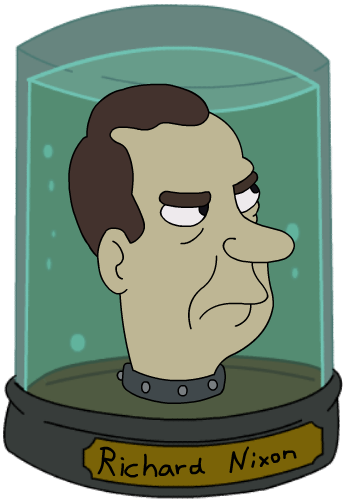
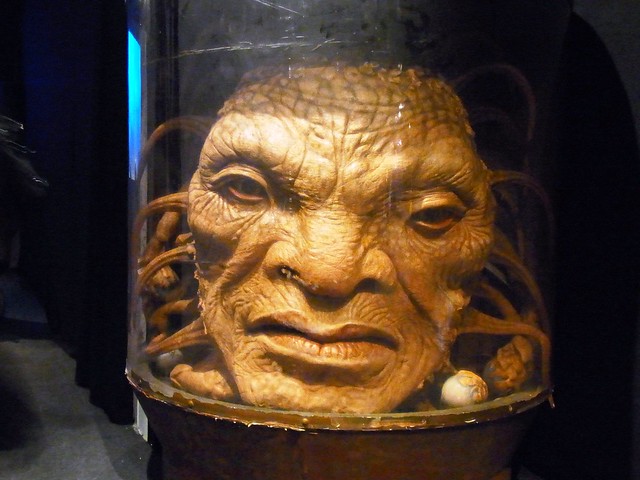

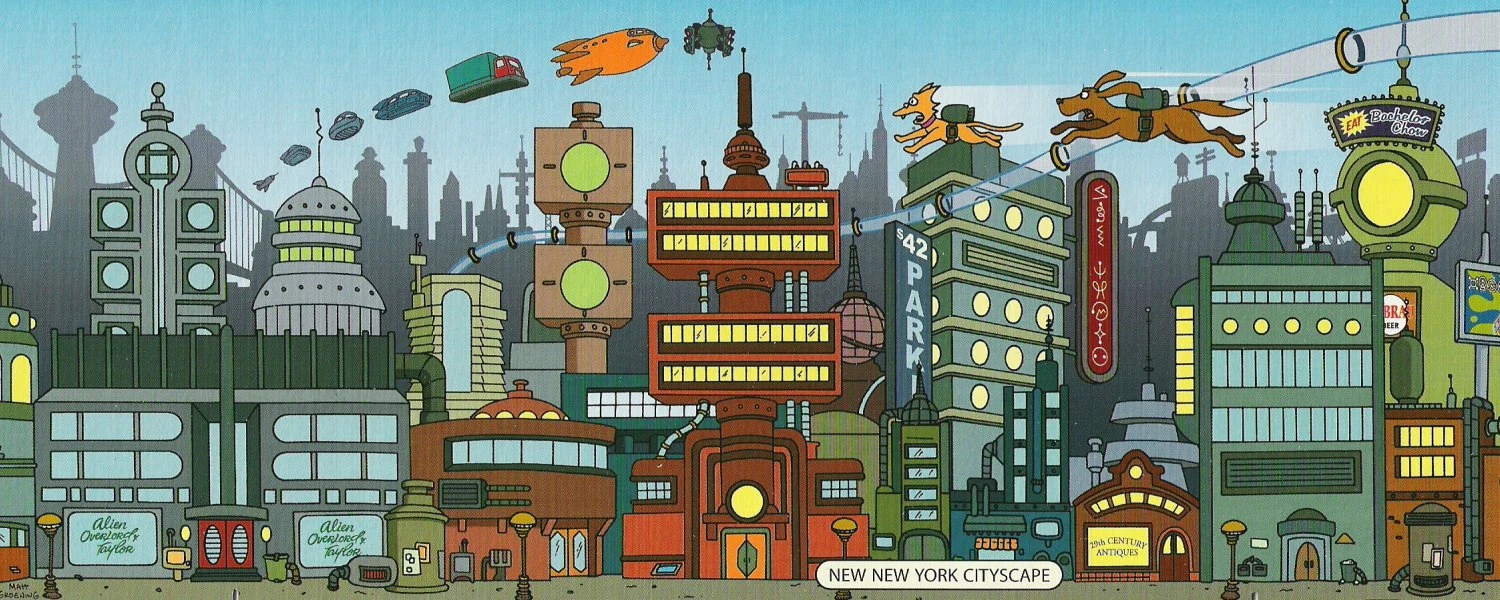


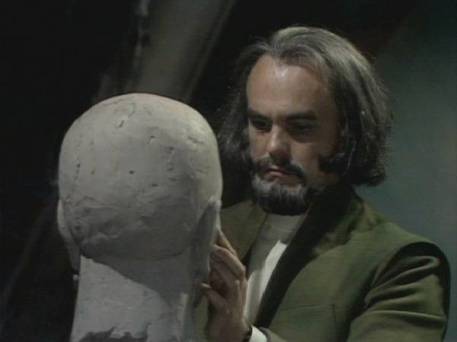


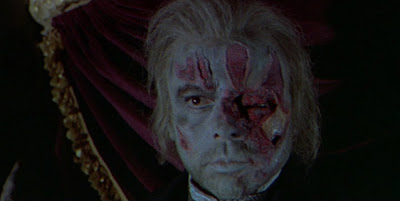


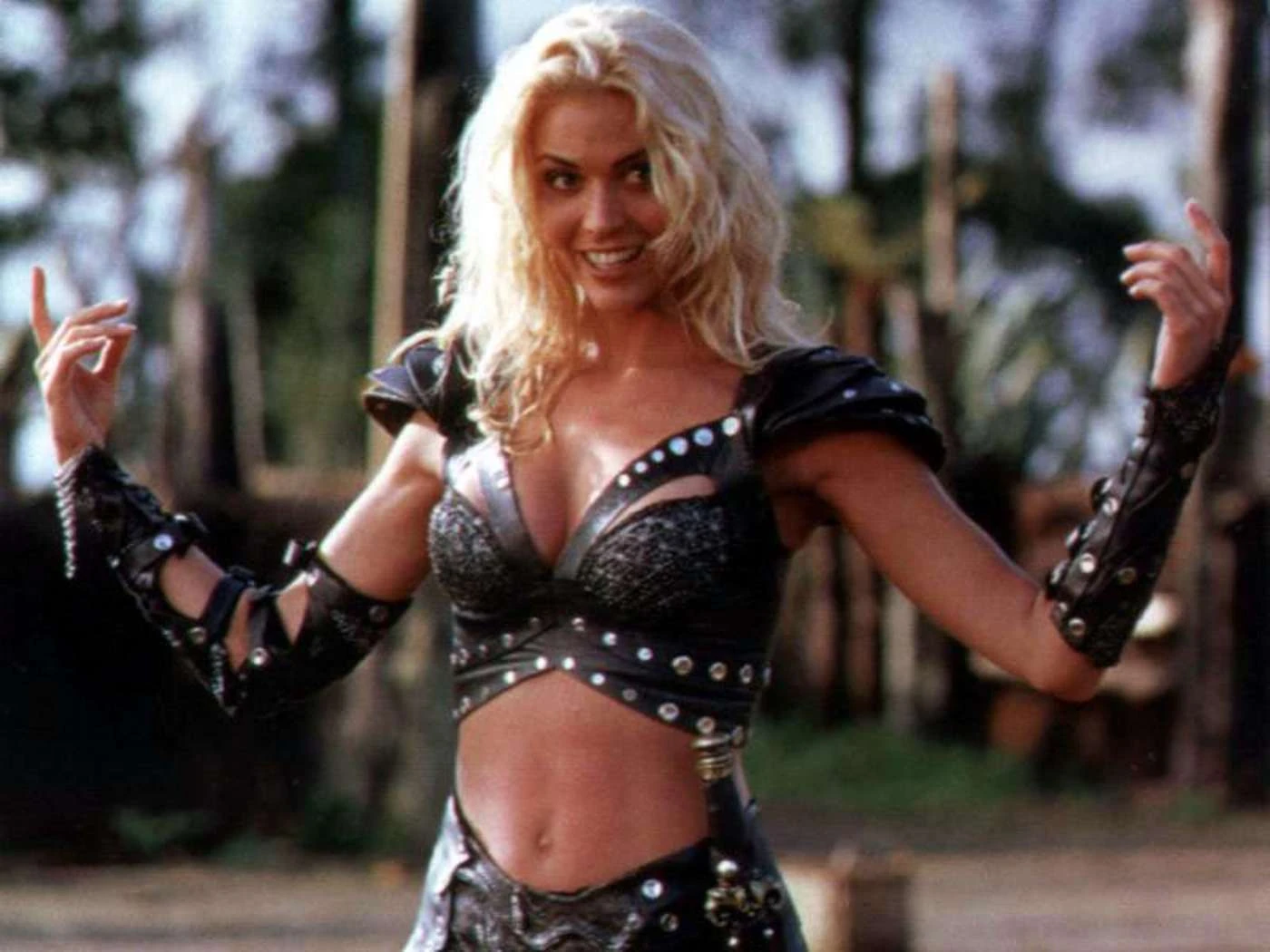


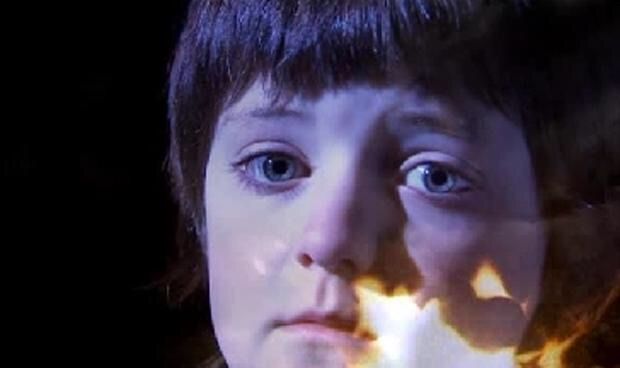



 You can see how Delgado’s Master is very much modelled on Moriarty in every respect, from his status as the heroes dark twin and mastermind behind his lesser enemies to Delgado’s calm, restrained and charming performance.


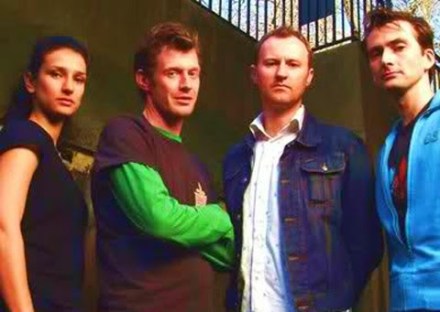


 All of these UNIT stories explore the same basic theme of “Quatermass and the Pit”. What if the ancient myths were inspired by an alien? Demons, the Loch Ness Monster, Arthurian Legends, even heaven itself. Now the idea of myths being based on some ancient alien visitation is not exclusive to Quatermass. in all fairness, its an old sci fi trope.


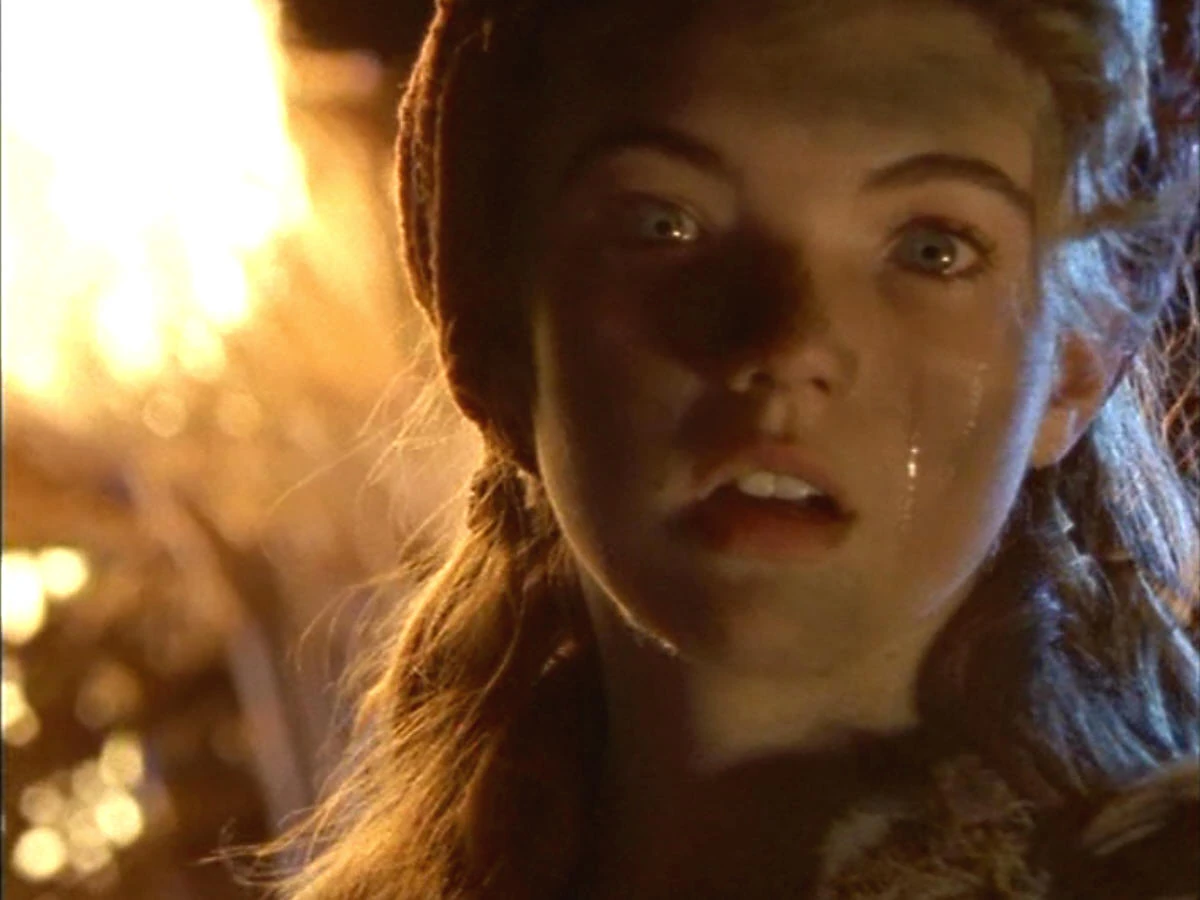


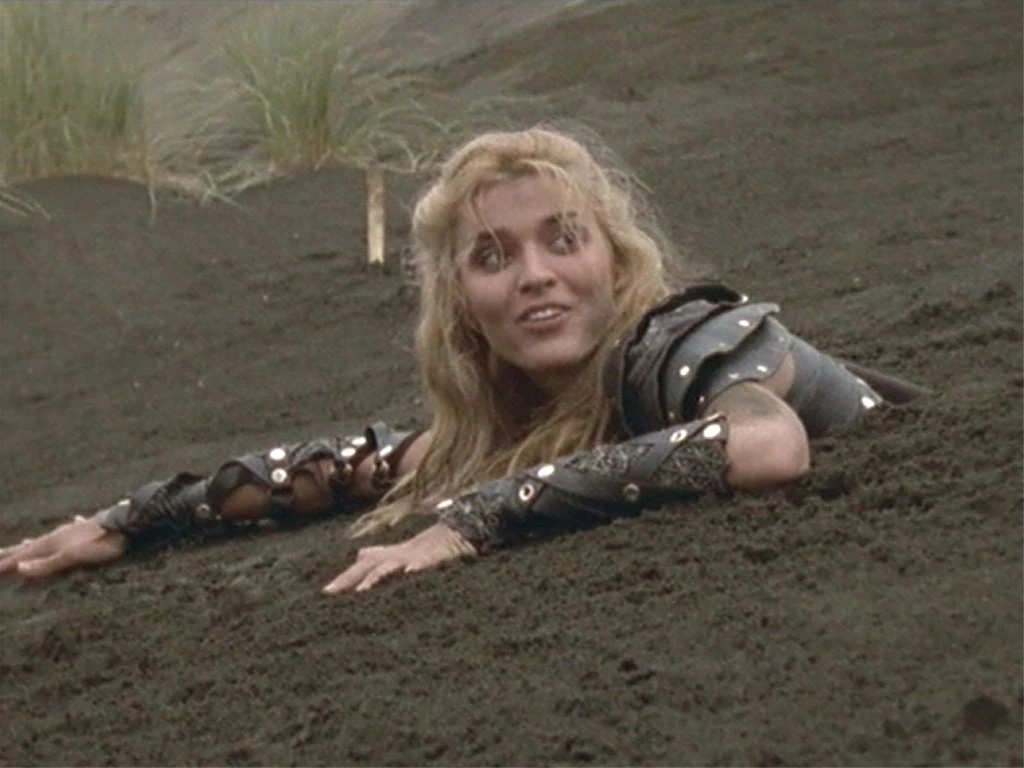


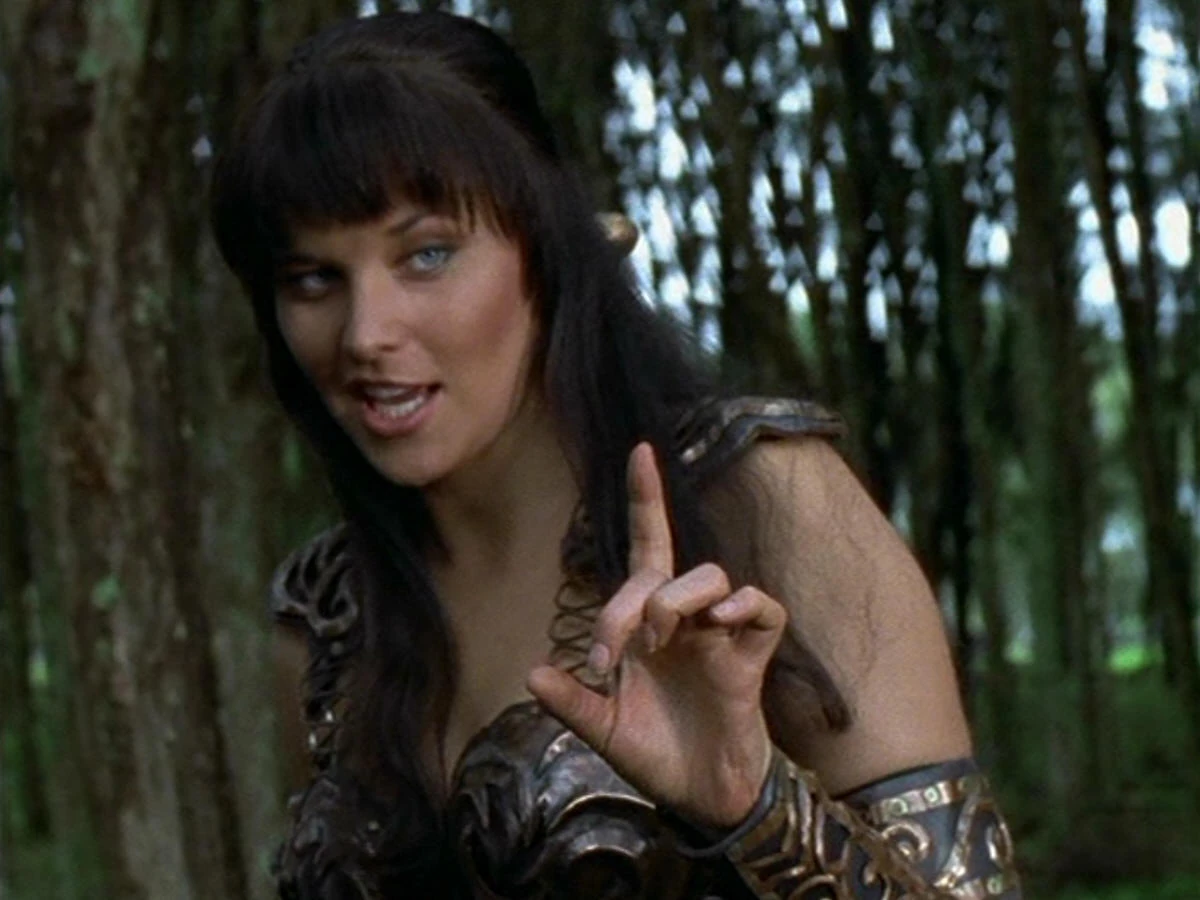

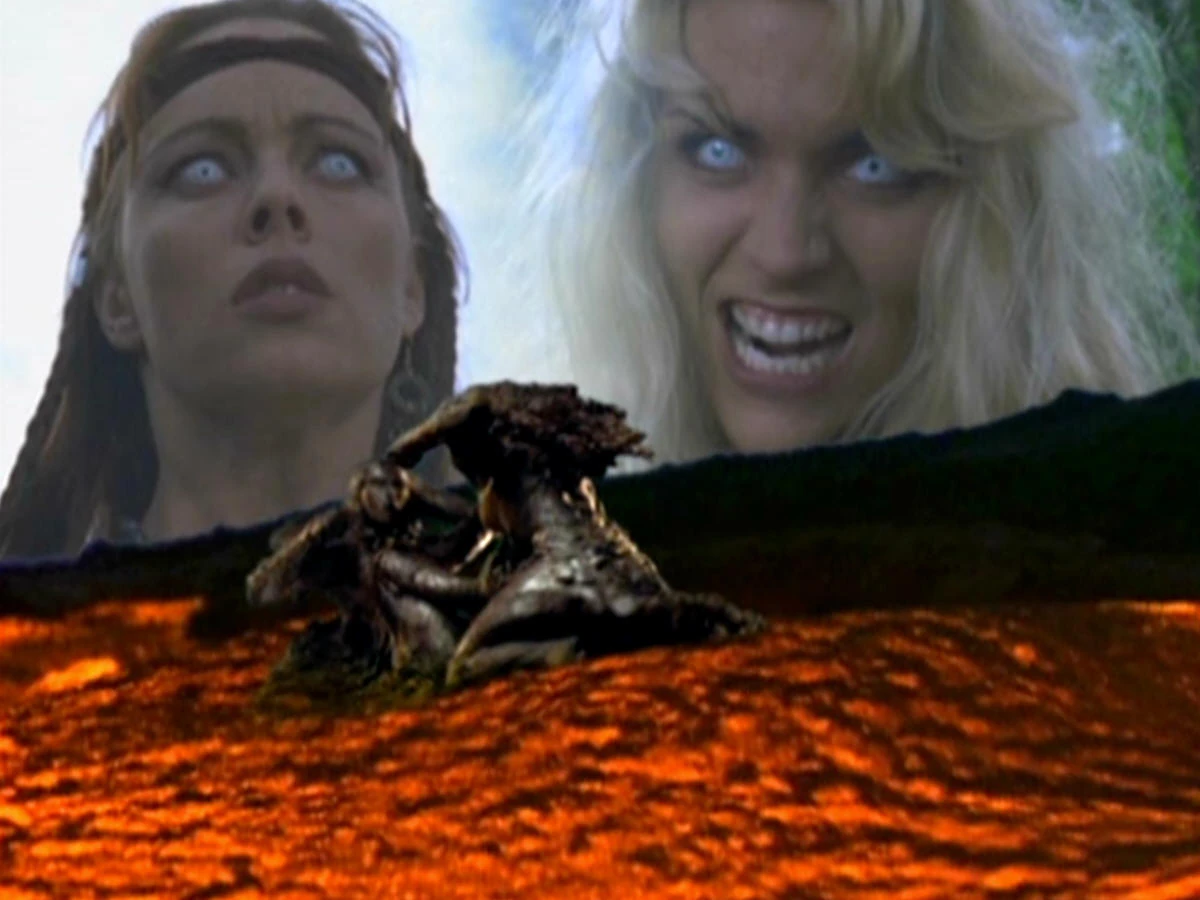


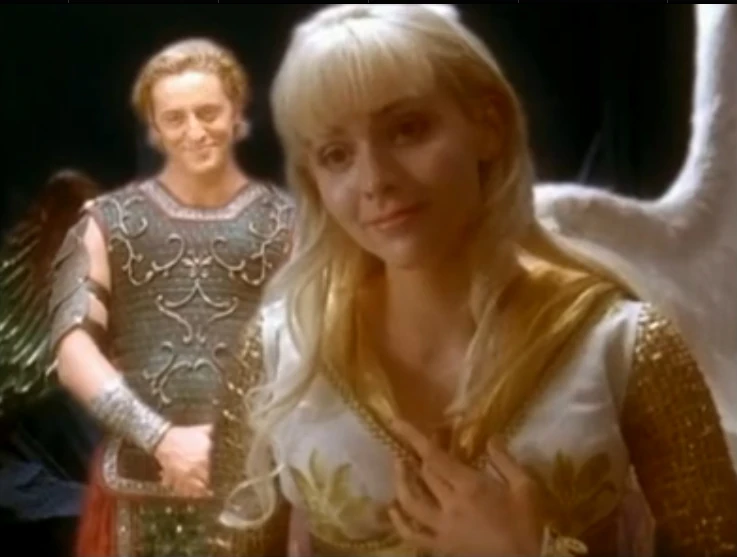








 burrunjorsramblesandbabbles