
The role of the Doctor in Doctor Who has to date been played by 13 actors.
All of them have brought something new to the role and made it their own whilst at the same time managing to successfully keep up the illusion that this is still the same character we have been following for the last 50 years.
Now some Doctors era’s have been more popular than others. Indeed some Doctors like the 8th Doctor haven’t really had an era at all! However every actor who has played the role has been successful as every actor in my opinion at least has contributed greatly to the show and the characters longevity and enduring appeal.
In this article I will be examining how each actor made the role their own and what it was exactly each actor contributed to the role.
The First Doctor William Hartnell

The original Doctor. It goes without saying that if it were not for William Hartnell none of us would be here discussing the good Doctor after 50 years.
However Hartnell did more than merely get the show off to a good start. Through his performance he laid down the foundations of the character that all of his successors would follow.
It can frustrate me a little bit when people say that the Doctor can be anyone. The Doctor whilst obviously different in each of his many incarnations is still nevertheless in my opinion merely a different version of William Hartnells character each time he regenerates.
You might not agree with this but look at it this way the basic core elements of the Doctors character are all completely established in Hartnell’s interpretation.
The mystery surrounding the character is established in Hartnell’s time. We never knew the Doctors real name during Hartnell’s tenure and 49 years after he left the role we still don’t know the Doctors name and indeed the mystery surrounding who he is is still strong enough to be the focus of a story arc running through several seasons of the Matt Smith era.
Similarly The Doctors somewhat selfish and childlike nature and desire to explore, and never be tied down to one time and one place for any amount of time is established in Hartnells time. We see this run throughout all subsequent Doctors from Troughton telling Victoria that he loves what they are doing as no one else in the entire universe can do what they are doing, to Pertwee’s rebellious streak during his exile, to Tom’s Doctor moaning like a petulant child about having to do missions for the time lords or run errands for the Brigadier, to Matt Smith’s Doctor being unable to stay at Amy and Rory’s for a single day without painting the fence or nipping off to battle Zygons in another time and place.
The Doctors strong moral code was also established during Hartnell’s time too. Though Hartnell’s Doctor did start out as a somewhat shadier character it didn’t take him long to mellow out and become the hero we know and love from the later years of the show.
Hartnell’s Doctor in his later years is someone who never kills unless he has no choice or it is in self defense and always seeks a peaceful alternative first. He tells the Drahvins this when they try to threaten him in “Galaxy 4” into murdering the Rills for them. You could easily imagine David Tennant’s Doctor or Jon Pertwee’s Doctor telling the Drahvins that he will not murder the Rills for them and that just because the Rills are different it does not mean they have any less right to exist than they do.
Hartnell’s Doctor also establishes the Doctor as being more of a Holmsian hero that uses his mind to solve his problems rather than weapons. That’s not to say that Hartnell’s Doctor never picks up a weapon if he has to, such as in The Chase when he uses a bomb to destroy the warring Daleks and Mechanoids.
Still Hartnell’s Doctor isn’t a James Bond type of hero he doesn’t have a gun on him all the time, he doesn’t have a weapons cabinet stored in the TARDIS somewhere. This applies to all subsequent Doctors as well. Whilst again all Doctors including even the 10th Doctor who loathes firearms more than any other will pick up a weapon if they have to. 10 uses one in his very last story The End of Time (and proves surprisingly to be an excellent marksman!) Still all of the Doctors are more cerebral heroes just like Hartnell.
At the same time whilst Hartnell established the Doctors strong moral code, he also established a number of his less sympathetic qualities.
Hartnells Doctor is quite a ruthless character. Though not wanting to kill he is shown to be more than willing to which is true of all of his successors too. In The Daleks Masterplan he sacrifices the entire planet of Kembel in order to save the universe from the Daleks something we could imagine many of his successors like the 7th Doctor in particular doing.
Hartnell’s Doctor is unbelievably arrogant and quite condescending to those around him even his own companions. We can see this reflected in all of the subsequent Doctors. They are all arrogant to a degree. The Second Doctor never lets his companions in on what his plans are, the Third Doctor regularly makes the Brigadier feel like a pompous military idiot, the Fourth Doctor can often be quite short and blunt with the tiresome humans around him. Even the Fifth Doctor though certainly softer than his predecessors was not above simply dismissing his companions suggestions or becoming visibly frustrated with those around him such as in Warriors of the Deep.
Hartnell’s Doctors relationship with his companions is reflected in his successors relationships with their companions too. Hartnell really captures the loneliness of the character. During his era we see how the Doctor’s companions including even his own grand daughter ultimately all outgrow him. Its almost like Peter and Wendy, the Doctor who never ages loves his carefree life of just travelling the universe, doing what he wants to do and having fun. Unfortunately all of his companions eventually want to grow up, they want to belong somewhere, they fall in love, they want to go home, have responsibilities and have families of their own and the Doctor is left devastated by it all. m.
Again we see this reflected in subsequent Doctors and companions such as 2 and Victoria, 3 and Jo Grant and several times in the new series. The 10th Doctor and Rose is actually, romantic undertones aside not too unlike the first Doctor and Ian and Barbara as again we see Peter and Wendy parallels with the human companion who was whisked away by this immortal, foolhardy adventurer return to their ordinary life, something the immortal hero who just journey’s on can never have, but also doesn’t want to either as they’d find it boring.
Finally even in terms of his appearance the other Doctors follow on from Hartnell. Hartnells Doctor has very long hair, a clean shaven face and more old fashioned, Victorian, Edwardian era clothing as well as a hat.
This is true of virtually all of the Doctors that come after’s appearance. 2,3,4,5,6,7,8 and 11 all have long, flowing hair, whilst 10 and 12’s is big and thick. War and 9 who are meant to stand out are the only two who do not have the big mad Doctor hair, whilst no Doctor again except for War has any kind of facial hair, all but 9 have more old fashioned clothing and finally 2, 3, 4, 5, 7 and 11 all have hats as a part of their costume.
Thus as you can see Hartnell truly does lay down the foundations of the character. All the Doctors that come after follow his template. There isn’t one Doctor that breaks the Hartnell template and say has the Doctor carry a weapon with him everywhere he goes or reveal his true name to us.
It does annoy me when I see people say the Doctor can be anything as I think you sell short what it was Hartnell actually accomplished with his version of the Doctor and how much of his performance can still be found in his successors 50 plus years on. To simply say that Hartnell merely gave the show a strong start, (and he did as his era marked one of the series most popular periods.) Still does not do his true contributions justice in my opinion.
Whilst all the Doctors follow the Hartnell template the versions that he was most influential on were definitely the 6th and the 9th Doctors both of whom followed a similar story arc of starting out as darker, even more unlikable characters, but mellowed out and were ultimately tempered by their companions throughout their era.
Whilst Sydney Newman may have originated the character of the Doctor, I’d say that it was Hartnell who really created what the character was supposed to be.
The Second Doctor Patrick Troughton
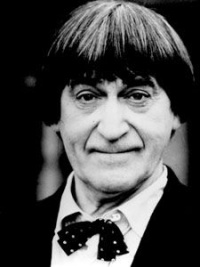
William Hartnell definitely in my opinion created the character of the Doctor. Patrick Troughton on the other hand was really the one who showed us how regeneration should be handled.
As the 6th Doctor actor Colin Baker said Pat had the most difficult job to do. If he hadn’t been brilliant then the show would have finished after two Doctors and most likely due to large amount of episodes that were wiped would have been forgotten about.
Troughton however ensured the characters longevity by being both different, yet the same to Hartnell.
On the one hand his portrayal was as different as could be imagined on the surface from Hartnell. Where as Hartnell was grumpy and awkward, Troughton was warm, friendly, fun and sweet. Where as Hartnell was very commanding, dignified and seemed in control, Troughton was hysterical, over the top, frantic and seemed liked an idiot. Troughton was really the one who brought a more vulnerable side to the Doctor. As his co-star Frazer Hines once said of him you could actually believe his Doctor could die unlike Hartnell.
At the same time however Troughton’s Doctor had more ironically of a sinister edge to him than Hartnell did. Whilst Hartnell might have been more cantankerous and grumpy on the surface at least you knew where you stood with him. With Troughton however he had a more manipulative and cunning side and was not above twisting the minds of his enemies and even his companions if need be.
Still whilst Troughton played the Doctor in a completely different way to his predecessor on the surface, he never went too far in changing his core character.
Troughton followed the template Hartnell had laid down with his performance. His Doctor didn’t tell us his real name or everything about himself, nor did he suddenly carry a gun with him everywhere, or behave in a way that we could never imagine Hartnell behaving in a million ways.
Thus Troughton really established in what ways the Doctor could be different and in what ways he must remain the same. He laid the foundations for how regeneration should always be portrayed.
With this in mind its no surprise that Troughton is often cited by many actors who have played the role as being their favourite Doctor. Jon Pertwee, Peter Davison, Colin Baker, Sylvester McCoy, Christopher Eccelston, Matt Smith, even First Doctor substitute actor Richard Hurndall have all said he was their favourite Doctor.
You can see elements of his performance the 5th, 7th and 11th Doctors in particular. Peter Davisons Doctor much like Troughtons is a very vulnerable Doctor that people don’t take seriously though in Troughton’s case its dues to his more clown like antics in Davison’s its due to his youthful appearance.
Troughton’s humour and sense of whimsy as well as his more manipulative side are all reflected rather obviously in Sylvester McCoy and Matt Smith’s portrayals of the Doctor.
The Third Doctor Jon Pertwee

Jon Pertwee’s role in ensuring Doctor Who’s success for decades to come I think is often overlooked. You have to remember that when Jon Pertwee took over the show’s popularity was at an all time low. Indeed the show was facing the axe and many felt that it could not survive in the new decade. Pertwee however and Barry Letts and Terrence Dicks the shows script editor and producer, not only managed to turn it around but ironically they helped it achieve a far greater level of popularity than ever before.
Whilst there were many reasons for this, not least of all the switch to colour, I think a lot of credit has to go to Pertwee’s performance.
Pertwee made the Doctor a more accessible hero than either Troughton or Hartnell which was vital in a time when people probably weren’t sure if they could still watch an old show from the 60’s.
Pertwee instantly won them over as his Doctor though less mysterious and edgy than either the First or the Second Doctor was much more of a conventional leading man and therefore probably a lot easier for people to take to right away.
His Doctor was someone you knew you could trust. He wasn’t sneaky and manipulative like Troughton nor was he grumpy and cold like Hartnell. He was straight down the middle, trust worthy and dashing.
He was also more of a central heroic figure than either of his two predecessors. Hartnell in many of his stories actually played a more passive role to his companions whilst the Second Doctor though the hero was often only able to beat his enemies through manipulation.
Pertwee was definitely the first actor to bring a real physical edge to the character. As Steven Moffat himself would later say all of the Doctors after Pertwee have to have a somewhat physical edge to them too. Even Sylvester McCoy’s Doctor is shown to be able to knock a man down with just his finger.
Ironically despite being one of the oldest actors to play the role I actually think Pertwee in some ways helped pave the way for younger actors in the part because he did make the role into more of a conventional hero. You can see how Tennant’s similarly dashing, more human Doctor would evolve from Pertwee’s Doctor.
The Fourth Doctor Tom Baker

The most iconic Doctor of them all. Tom Baker is by far and away the most larger than life Doctor and that’s saying a lot.
His gigantic all encompassing personality allowed him to dominate the role for 7 years, longer than any other actor either before or after.
Tom really made the character into a global icon. Though the series did have a following in many countries around the world pre Tom Baker, it was really during Tom’s time that it finally caught on in places such as America.
Even to this day whenever you see a parody of the Doctor on American tv its still Tom Baker whose image they use.
His distinctive scarf, curly hair and toothy grin gave the Doctor an iconic image that everyone would recognise whether they had seen series or not. Thus thanks to him the Doctor could become a character like Sherlock Holmes or James Bond an instantly recognisable piece of popular culture.
I think its also fair to say that Tom was by far and away the most alien of all the Doctors. This of course made him contrast wonderfully with his immediate predecessor Jon Pertwee who had been the most human of the original 7.
Tom’s Doctor really seemed like he was from another world. He would react to the most mundane, meaningless little things to us with child like enthusiasm, yet at the same time could actually be quite cold when it came to things that were important to us.
It felt like his emotions weren’t tuned to things the same way that ours were. He still had emotions, but they just didn’t work the same way that ours did.
Tom’s Doctor is to this day what many people still think of as the Doctor. Traces of his alien nature and wacky sense of humour can be found in all of his successors in the role including even in some of the more serious Doctors such as Christopher Eccelston.
The Fifth Doctor Peter Davison


Now Peter Davison I’d say had probably the hardest job after ironically his favourite Doctor Patrick Troughton. Tom had played the part for 7 years and had been the first Doctor in many other markets around the world such as in the United States.
Still Peter rose to the challenge and ensured the shows success for the next decade.
Davison helped bring the character back down after Tom Bakers larger than life portrayal. Whilst Tom’s Doctor had obviously been wonderful, it is true he had begun to seem too invincible by the end of his tenure. A lot of tension had gone out of the series, but Davison like Troughton before him was able to bring a certain vulnerability to the role that helped make the Doctor seem like a more fallable character once again. This in turn allowed for new and exciting twists such as Adric’s shocking death to happen.
Davison also perhaps most importantly paved the way for younger actors in the role. At the time of his casting there were probably very few people who would have believed a man in his 20’s could have played Hartnell’s character. However again Davison rose to the challenge and proved to be superb at portraying an old man trapped in a young man’s body.
As a result of this other younger actors such as Paul McGann, David Tennant and Matt Smith would be given a chance to play the Doctor to great acclaim. Indeed ironically recently there was a lot of uproar over an older man Peter Capaldi being cast in the role because people had become so used to younger Doctors.
Thus Davison was truly a trail blazer in this respect and its somewhat fitting that David Tennant (who is also Davison’s son in law) himself would acknowledge this in character as the 10th Doctor in Time Crash.

You were my Doctor
The Sixth Doctor Colin Baker

Poor Colin was the unluckiest actor in the role of the Doctor. Colin was pretty much fucked from when he was first cast. It was a dark time for the world’s longest running science fiction series. It was still as popular as ever with the general public and its popularity on a global scale was sky rocketing to unprecedented levels, but unfortunately from behind the scenes the heads of the BBC, Jonathan Powell and Michael Grade in particular had the knives out for it.
They would do everything in their power to finish it and sadly for a long while Colin was made the fall guy for the shows untimely decline in the late 80’s. Fortunately nowadays many people realize that not only was it not his fault, but Colin actually if anything helped keep the show afloat during those dark days.
Colin’s enthusiasm for the character of the Doctor was unmatched. Having been a fan of the show since its inception, Colin knew the character of the Doctor inside out and had lots of wonderful ideas for his Doctor that would take the character in an exciting new direction, whilst at the same time also returning him to his roots too.
Colin had envisioned his Doctor as being a darker more unpredictable character like the First Doctor. One who at first the viewers would be unsure of, but who gradually as time went on would be revealed to be a much softer character.
Sadly however the writing as well as some poor decisions made by the producer John Nathan Turner botched some of Colin’s ideas. These included having the 6th Doctor physically assault his companion Peri and of course the notorious costume Turner made him wear. Colin had originally wanted to dress his Doctor in a black costume to reflect his darker nature.
Despite the poor writing and decisions he was saddled with, being pushed to the side in many of his stories as a result of then script editor Eric Saward’s lack of enthusiasm for the character of the Doctor, and the fact that he was only given two years due to his high profile sacking by Michael Grade in another attempt to finish the show. Colin’s Doctor has proven to be every bit as influential and enduring as any of his predecessors and successors.
Just as Davison reminded us that the Doctor could be a fallable character Colin reminded us that the Doctor could be a darker character. I think from about Pertwee’s time on the Doctor becomes a somewhat cuddly figure in popular culture. Pertwee’s Doctor is very much a straight forward good guy. Tom’s Doctor meanwhile though at times quite cold, is still a very lovable character. Davison’s Doctor who followed was of course a sweet, sensitive and dashing young hero.
Colin however reminded us that the Doctor is the man who tried to murder a caveman in cold blood in the jungle, who abducted Ian and Barbara who destroyed Kembel, who lied to, manipulated and risked the life of Jamie in Evil of the Daleks. He wasn’t always someone that could be trusted. He didn’t always look at things the same way we did, as he was after all an alien and he could be ruthless if he needed to be for the greater good.
Just as all the Doctors who come after Pertwee have a physical edge to them then all the Doctors who come after Colin have a much darker edge to them too.
Sylvester McCoy’s Doctor is a very dark interpretation of the character and I think that Doctor could have only really followed Colin. It would have been too jarring to see the Doctor go from the sensitive, tragic hero unable to shoot Davros in 5’s era to the ruthless master of time who condemns Davros to die telling him “goodbye Davros it hasn’t been pleasant” in 7’s era. 6 coming in between the two acts as a great buffer showing the Doctor become more willing to embrace his darkside after the horrors he has witnessed.
Similarly the 9th Doctor follows a similar arc to 6. Like 6 he starts out as a grumpy, darker, more ruthless character who isn’t afraid to kill his enemies. Is 9 burning Cassandra death that unlike 6 dropping his enemies into acid. 9 however much like 6 becomes a softer character as time goes on.
10 and 11 have their fair share of darker moments such as drowning the Racnoss, leaving Soloman the trader to die. These are all moments we could imagine Colin’s Doctor doing. Similarly I could easily imagine 11 smothering Shockeye to death with cyanide as well. Why not is it any different to his attacking a Dalek with a wrench or casually ripping a Dalek open in The Wedding of River Song?
Finally the 12th Doctor in particular owes a lot to the 6th. 12 just like 6 is an older, grumpier, darker more ruthless character who follows a younger, more likable on the surface Doctor. Clara and 12’s relationship is also similar to 6 and Peri’s.
In both cases we have a companion who travels with a young Doctor who is their hero and their friend, but who then quickly into their friendship vanishes and is replaced by a grumpy old git who at first they are not sure they like, but who they eventually come to develop a much deeper respect for and friendship with as they have come to appreciate this Doctor warts and all and no longer have an idealised version of their friend.
Colin left a big impact on the character in his brief tenure. He proved that even when the show was being mishandled, the character of the Doctor was interesting enough that it could still be completely reinvented in such a fascinating way. A lesser actor would have most likely not bothered given the way the show was being mistreated by those in charge and who would have blamed him?
However Colin with his limitless enthusiasm and love for the character still gave us one of the most influential versions of the character yet seen.
He has also continued to support the show, proving to be an excellent ambassador for it and has given us many more wonderful stories involving his Doctor through his splendid work with Big Finish.
We were very lucky to have an actor as devoted to the role as Colin during what was such a dark period for the show. Whilst it was sad for him as he had to play the role during the worst possible period for an actor to play the part. It was good for us that even in that period there was still something as interesting and enjoyable as his Doctor.

The most underrated Doctor whether you like it or not!
The Seventh Doctor Sylvester McCoy

The final Doctor of the classic era, McCoy had inherited the show at a point when it was pretty much a dead man walking. The BBC’s smear campaign had been successful and it was now only a matter of time before the show would finish.
No one involved in the making of the show could have saved it at that point. Not John Nathan Turner, not Andrew Cartmel and certainly not the actor playing the Doctor. The BBC had made up their minds and that was that.
All those involved in the making of the show could do was make sure that it would finish on a dignified note and fortunately in most people’s eyes they succeeded.
Sylvester McCoy brought the mystery back to the character of the Doctor. For the first time in decades McCoy actually made us ask the question “Doctor Who?”.
He reminded people that we actually know very little about Britain’s favourite alien. This idea was later expanded on in the new series during the 11th Doctors era.
What McCoy’s Doctor did that was truly exceptional however was that he completely shook up the Doctors status among the Time Lords. Since the Third Doctors era the Doctor had always been portrayed as a loser among the Time Lords.
Even the Master was meant to be of a higher status than he was. The Time Lords were still shown to be dependent on him due to his superior knowledge of the universe, having explored more of it than they did and he was offered the position of president. Still generally speaking the Doctor was presented as a lowly time lord.
With the McCoy Doctor however the show hinted that he was more than just another time lord. He was perhaps one of the creators of their society.
The idea of the Doctor being more than just another time lord is again something that we see reflected in the revival with the Doctor now being the last of his kind.
Though many mainstream critics slated the McCoy era when the revival started, pointing out how crap Doctor Who had been before it was axed and how the new one was superior in every way the revival Doctors actually were not unlike 7.
Mysterious characters who were more than just another time lord travelling with feisty cockney teenagers, that description fits 7 completely as well as the new Doctors.
Through his innovative and subtle performance McCoy proved that even after 26 years, even when the show was facing certain doom the character of the Doctor could still be reinvented by a talented actor.
For that we should all be very grateful to McCoy. Whilst it may have been received wisdom that Doctor Who was crap when it finished for years when people actually went back and looked at the 7th Doctor and his era they saw how wrong that assertion was.
The 7th Doctor would be voted the fans favorite Doctor in 1993 being one of only two Doctors to unseat perernial favorite Tom Baker, whilst for the 40th anniversary poll two of his stories made the top ten, giving him more stories in the top ten than any other Doctor after the 4th Doctor.
The Eighth Doctor Paul McGann

Probably the unluckiest Doctor after poor Colin. McGann was only given one film on television to play the role. Whilst he never had to deal with Michael Grade he is actually on screen the most wasted Doctor of them all.
Still even with that McGann managed to leave his mark on the character. McGann was the first actor to really make the Doctor into a more romantic character. Whilst this move was understandbly a controversial one (though its not entirely without precedent) it still nevertheless cannot be denied opened up new and for many people exciting possibilities with the character.
Though I am not its biggest fan the Doctor Rose storyline is undeniably one of the most iconic in Who history and it would not have been possible without McGann who properly established the Doctor as being capable of being a romantic character.
McGann’s greatest contribution however has been through his work with Big Finish. Once again we as Doctor Who fans were lucky to have an actor who was so devoted to the role of the Doctor as McGann. Through his work with Big Finish McGann has ensured that the Eighth Doctor has not been a wasted incarnation after all.
Though on television his output has been small on Audio McGann is actually the most prolific Doctor and we have seen his character develop from the romantic, Byronesque character of the 96 movie to the vengeful embittered character from the recent Dark Eyes series.
It would have been very understandable of McGann to walk away after the 96 movie. Like both Colin and McCoy he was at one point given the blame for why his Doctor had not been as successful. Fortunately however just like Colin he stuck by the character and has through his work with Big Finish given us one of the most well developed, interesting and ironically now one of the most popular Doctors of all time.
McGann also along with Peter, Colin and Sylvester helped to keep the show alive through their Big Finish work in the wilderness years too. Their audio adventures ensured that there were always new performed Doctor Who stories for us fans to enjoy and McGann’s work in particular allowed us to feel like we were entering into a new Doctors era as here was a Doctor that we had seen very little of on television who story was unfolding before our ears for the first time.
After his most recent appearance in The Night of The Doctor which finally gave his Doctor a proper send off fans have been demanding further appearances from McGann.
Whilst it sadly doesn’t look likely for the foreseeable future at the very least we still have his marvellous work with Big finish to enjoy.
The War Doctor John Hurt

Now I wasn’t sure on whether or not to include him here as though he is technically the Doctor, he never had an era, but since the Eighth Doctor never really had an era either I have decided to include him.
Now personally I liked the whole War Doctor idea. For me it was a wonderful exploration of what it is that makes the Doctor such a special and unique character.
The Doctor changes, but he never really changes. As I have explored there are certain aspects of his personality that must always remain the same. However the War Doctor poses the question what if he did actually change? What if there was something so horrible like the Time War that was actually able to cause the Doctor to abandon everything he had ever believed in and become a totally different man?
When we first see the War Doctor he couldn’t be less like the Doctor. He is a man who is seemingly willing to butcher billions of innocent men, women and children, he carries a weapon with him everywhere he goes and uses it as a first resort and even physically he doesn’t resemble the Doctor. He has short hair, a thick beard and mustache and scruffy more modern clothes.
However at the end of the story when he ultimately does the right thing and manages to find a way to save Gallifrey without spilling a drop of innocent blood proving he is the same man after all.
A lot of fans felt this was a cop out after having built the War Doctor up as the dark Doctor, but to me that was the whole point. We were meant to see how there could never be a truly dark Doctor.
At the end of the day nothing could change the Doctor not the horrors of the Time War not the Sisterhood of Karn’s magic to be capable of abandoning his principles and murdering the innocent. At the end of the day regardless of how different he may seem as a result of regeneration or everything that has happened to him or the sisterhood of Karn’s magic, the Doctor is still that same hero underneath from the Hartnell era. The hero who thinks outside the box, who is utterly unpredictable, who manages to think up ideas that sound crazy buts somehow work and who never gives up. This is further reinforced by the fact that all of the Doctors help him save Gallifrey showing that all of them would do the right thing as they are all the same man.
I ask you what better analysis of a character like the Doctor a man who changes yet remains the same could you hope for on the shows 50th anniversary.
Whilst the War Doctor was very well written I think the character only worked because of John Hurts performance. Hurt was able to inject the character with a very strong air of mystery and danger as well as unbelievable regret.
The first time you watch the Day of the Doctor you do genuinely believe that he might actually destroy Gallifrey. At the same time however he doesn’t go too far in making the War Doctor seem dark. He still keeps up the Doctors gentlemanly qualities when he is around Clara and there is still a certain twinkle in the War Doctors eye even in his darkest moments that gives the viewer hope and ultimately makes it believable when he does the right thing at the end.
Whilst I understand that a lot of people were upset not to see more McGann, personally I loved the War Doctor and felt John Hurt did a superb job with his characterisation.
The Ninth Doctor Christopher Eccelston

The first Doctor of the revival, Eccelston had a very hard job. He had to remind people why the character of the Doctor had been so enchanting and introduce the character to a new generation of viewers.
Fortunately it can be agreed that he succeeded on both counts.
He combined the best qualities of many previous Doctors. Tom Baker’s quirky sense of humour, Colin’s grumpiness, Troughton’s sense of adventure, Pertwee’s physicality, McCoy’s mystery, Hartnell’s irrasciability, McGann’s romantic side and even Davisons vulnerability.
At the same time he gave the character a much harder edge and grittier quality than any of his predecessors. His Doctor was a no nonsense character with a much more stripped down appearance. Eccelston took the character seriously and it worked. It reminded people that the Doctor who had become seen as a figure of fun was a complicated, at times actually quite dark and very interesting character.
Eccelston also captured the Doctors rage against his archenemies the Daleks more effectively than many other incarnations. Eccelston really sold the idea that these were the monsters that not only struck fear into the time lords heart more than any other but repulsed him too. Thus he not only helped show the new audience that the character of the Doctor was to be taken seriously, but that the Daleks were too.
Though he sadly only played the role for one year he helped to introduce the character of the Doctor to a new generation and completely reinvented him for the 21st century.
The Tenth Doctor David Tennant

One of the most popular Doctors of all time, Tennant actually had a very difficult job when he took over the role from Christopher Eccelston 10 years ago.
Though the revived sci fi series had been a huge hit, losing its leading man after one year, even for a show like Doctor Who could have been disasterous.
Indeed if the new Doctor had not worked out it would have been easy to just dismiss the success of the Eccelston series as just a nostalgic flash in the pan.
Fortunately Tennant proved that the new Who could survive Eccelston and took the show into a new golden age.
Tennant much like Pertwee in the 70’s made the character of the Doctor very accessible to mainstream viewers. His Doctor was easy to like. He was charming, sweet, brave, sexy, charismatic, romantic and very human too.
However at the same time Tennant was able to flesh his Doctor out over the course of his 4 year tenure. He showed us many sides to the time lord some that weren’t always pleasant such as his rampant hypocrisy, vengefulness and his unbelievable arrogance.
During Tennant’s era Doctor Who was restored to the position of being a national institution again something which it hadn’t really been since the 70s and a large part of that was due to Tennant who made the Doctor into a hero that everyone could root for.
The Eleventh Doctor Matt Smith

After Tennant left though Doctor Who had reached unbelievable heights of popularity many people were unsure if the series could survive the departure of the much loved Tennant. Fortunately Matt not only proved to be hugely popular in the Uk but he helped the show take off around the globe for the second time.
Smith’s Doctor in many ways was Tom Baker to Tennant’s Pertwee. He was the more offbeat, alien Doctor that came after the dashing, straight forward more human Doctor. Smith I think was the best at capturing the Doctors more alien qualities after Tom Baker.
Where Smith really excelled however was ironically despite being the youngest actor to play the role in conveying the Doctors age. When Smith talked of his long life and all the things he had done I actually bought it more than when many older actors in the role did.
He was able to capture the Doctors great wisdom, and weariness beautifully such as in the scene with Stormageeddon. A little moment like this is enough to really show you what is at the heart of the of the character of the Doctor, someone who has seen and done so much, yet still feels that there is more they could do as they just can’t rest or settle down at any point.
I also feel that Smith managed to portray the Doctor as a more of a sweet doddering old man at other times too such as in his interactions with the Ponds.
Smith’s Doctor is probably the most iconic on a global scale after Tom Baker. Certainly in America Smith’s Doctor will be the most famous after Baker. The Bowtie is also probably the most recognizable piece of clothing of any Doctor after Bakers long scarf.
The current global popularity of the series is in a large part down to Smith.
The Twelfth Doctor Peter Capaldi
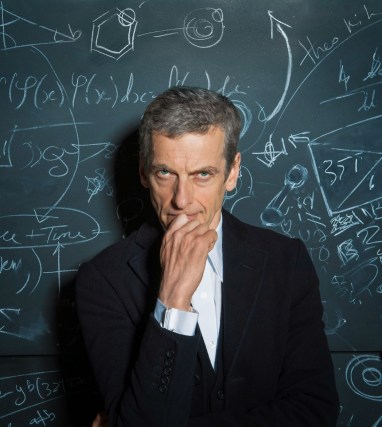
Okay so its early in his era and I haven’t been that fond of his era you may have noticed. Still I have found the Twelfth Doctor to be a truly excellent incarnation of the Time Lord so far.
Both Capaldi’s performance and Moffat’s characterisation have complimented each other wonderfully and Capaldi has silenced all of his critics who claimed he was too old for the part.
Its ironic in a way that nowadays people would wonder whether or not an older actor could play the role. In this respect Peter Capaldi could be seen as a reverse Peter Davison.
Just as in the 80’s no one was sure if a young man could succeed in the role in the 21st century after two young dashing Doctors contemporary audiences wondered if an old fashioned, grumpier, older Doctor could work, but Capaldi has proven to be just as popular as either Tennant or Smith and will no doubt go down as one of the fan favourite Doctors.
Thus just as Davison blazed a trail for younger actors so no doubt will Capaldi until it will get to the point where in another ten years people will be wondering if a younger actor once again can play the role of the Doctor.






 burrunjorsramblesandbabbles