A short look at actors who are also professional singers and have released singles and even albums. This will not be looking at singers who became actors like the late David Bowie or Madonna but rather people who are mostly actors but may have had a small music career on the side.
Lucy Lawless
Best known for her sensational role as Xena the Warrior Princess, Lucy Lawless has also had a career as a singer too and has performed to sell out audiences around the world, though I’d imagine having starred in one of the most successful cult series of all time can’t hurt her sales.
She actually did a bit of singing in Xena. Often whenever anybody would die such as Gabrielle’s husband or Solon her son she’d often sing at their funeral. In one episode however she actually sang Sisters are doing it for themselves. Seriously!
She does have a gorgeous voice. A true renaissance woman who’s as charismatic and engaging an actress as she is a singer.
Tim Curry
One of my favourite actors. We’ve always known Tim was an excellent singer since he first burst onto the screen in the Rocky Horror Picture show in fishnet tights singing about being a sweet transvestite and making Susan Sarandon and the audience shiver with antici………..pation.
However what a lot of people don’t know is that he actually did release a number of albums in the 70’s and the 80’s and singles too. None of them were successful commercially however.
He later joked when he released a compilation album that he couldn’t call it Tim Curry’s greatest hits as there were none.
He did have a great rock voice but I never really got into his music that much. He will always be one of my favourite actors, with Clue being one of my favourite films, but for some reason I just never bothered to track his music down.
I do love this performance however. This was taken recently after his stroke. Sadly as he is still in a wheelchair 4 years after his stroke it doesn’t seem likely that he will ever walk again. Still his speech has clearly improved as when you look at the footage of him just before this being interviewed at the Tony’s his voice was very slow and deliberate but here he is able to sing beautifully.
Lets hope his recovery continues.
Hugh Laurie
Of all the actors on this list Hugh Laurie has actually had probably the most success as a singer. His two albums Let Them Talk and Didn’t Rain have both been top 5 hits and were critically acclaimed.
Like Tim Curry he also wrote a lot of his own material. He is quite a talented blue’s singer though I don’t think his voice is particularly distinctive however like say Lucy Lawless or Katey Sagal whose voices I would instantly recognise but he is a very talented musician all around.
Bill Murray
Most people like a bit of Bill Murray but what a lot of people don’t know is that he actually is not a bad singer.
He recently did a Christmas musical called A Very Murray Christmas. It sadly wasn’t that great, but I did enjoy his duets with Miley Cyrus.
It was an odd musical collaboration to say they least, but I liked it as I felt he had quite a good crooner voice which was quite a good contrast with her more modern pop voice. It reminded me a bit of Tony Bennett and Lady Gaga’s duets.
Katey Sagal
Katey Sagal has one of the sexiest voices of anyone. She has such a strong, sensual, rich speaking and singing voice.
If you’re a fan of her work as an actress then you’ll have probably heard her sing already as she sings in just about everything I have ever seen her in Married With Children, Futurama, Sons of Anarchy and 9 Simple Rules.
She has however released 4 albums Moon over Brooklyn, Well, Room, and Covered.
I can totally see why Fry liked Leela so much.
Sir Christopher Lee
A true horror icon, Lee’s deep baritone voice and commanding presence made him a natural on stage.
Like Katey Sagal he did sing a few times as an actor including even in the Wicker Man, though his most outrageous performance was in The Return of Captain Invincible when he sang a song about how fabulous it was to get drunk (in a bid to make the hero Captain Invincible who was a recovering alcoholic fall off the wagon)
Such a display of extravagance that would make Tim Curry proud!
Lee would later release two heavy metal albums near the end of his life with the last being released when he was 91. He became the oldest person to have a single in the Billboard 200 stealing the distinction from Tony Bennett who had previously held the title with his duet with Amy Winehouse.
William Shatner
I wasn’t sure on whether or not to include him hear as technically he never sings! His spoken word delivery of classics like Rocket Man and Lucy in the Sky with Diamonds have become legendary though perhaps for all the wrong reasons.
Still I must admit I did enjoy his cover of Common People. Though to be fair he had another person sing about half of it. Still I do think his hammy delivery of the song’s lyrics do add a bit to it.
Funny to think that he hung in there for 50 years and finally did a good one.
I’d also like to give an honorary mention to Kelsey Grammer. He has a marvellous singing voice and much like Katey Sagal he too will often sing in everything he is in from the Simpsons to Frasier, but sadly and surprisingly he has never actually had a singing career. I’d definitely by an album by Sideshow bob but since he has never released a single or an album then I couldn’t include him here.
Star Trek and Dan Dare are two very similar franchises from different sides of the Atlantic.
Both essentially revolve around the same basic premise of a future that is a perfect utopia where all races and minorities live together in peace and the both also explore many of the same themes too such as journeying into the unknown and making contact with hostile alien races.
In this article I am going to run through all of the similarities between both franchises. In many ways Dan Dare really is the British Star Trek or since Dan Dare came first then Star Trek is the American Dan Dare.
I am not saying that Star Trek was inspired by Dan Dare. Its possible but I would doubt it as Dan Dare to this day has never been popular in America, in fact I’m not sure its even been published in America and I don’t think Gene Roddenberry was an anglophile so I’d very much doubt that Dan Dare inspired Star Trek.
I think both were really products of the era’s they came from. The first couple of decades after the war where an unsure, frightening time where no one was sure if we would even survive and not be plunged into an atomic third world war, yet at the same time there was also a sense of hopefulness that we would actually create a better world and there were many great achievements made during the first few decades after the war that would benefit future generations such as the establishment of the NHS in 1948, the civil rights movement in America in the 60’s, the legalisation of homosexuality in the UK in 1967, the second wave feminist movement which began in the early 60’s in America as well as huge advancements in technology such as the first man on the moon in 1968.
Dan Dare and Star Trek simply reflected both the hopefulness and pervading sense of fear from that time with the perfect future of Dan and Kirk’s world’s being what we hoped we would create through our social justice movements and new advances in technology, yet at the same time humanities hostile interactions with races like the Treens and the Klingons which could have at any moment erupt into a full blown intergalactic war which would have wiped humanity off the face of the universe reflected the cold war paranoia of the times too.
I have written about the similarities between Dan Dare and Star Trek briefly before but here I am going to go into a much greater detail as I think there a number of interesting parallels between the two great franchises.
Main Character/ Dan Dare/ James T Kirk
In some ways Dan and Kirk seem like polar opposites. Dan is very much the stiff upper lip, keeping his cool in a crisis type of hero whilst James T Kirk is often a very emotional, over the top, even at times downright hysterical hero.
Also Dan is practically asexual whilst Kirk is famously a ladies man who teaches many an alien woman “how to love”.
Still despite this there are some similarities between the two main characters.
Both are heroes from another time stuck straight in the space age. Dan is very much a world war 2 fighter pilot transported into the future (a later revival actually attempted to retcon it that Dan was literally a WW2 fighter pilot who fell through a portal in time into the late 20th century. )
Kirk meanwhile was very much based on Horatio Hornblower as was his successor Captain Jean Luc Picard.
Whilst Dan and Kirk were advertised as being the heroes of the future there were very much old fashioned types of heroes at their core with Kirk really being the classic swash buckling, dashing captain and Dan being a classic war hero.
Both also were presented as being an odd combination of a being a very much by the book type of hero and a maverick who played by his own rules.
Dan and Kirk are men who are devoted to Spacefleet and the Federation respectively, yet at the same time because they know the rules so well they can bend them and find little loop holes in them if they need to. They never just simply break the rules and ignore all the consequences. They are much smarter than that. Also as they are the people who are out in the deep recesses of space constantly finding and encountering new things then they are naturally more open minded and foolhardy than those in charge at the same time.
Their methods were somewhat similar too in that both preferred to resolve their differences in peaceful ways and even showed mercy to their most vicious enemies. In one episode of the original series Captain Kirk forgives and provides aid to a hostile race of aliens from the Andromeda galaxy. These aliens had taken over Kirks ship and brutally killed members of his crew, yet at the end of the story he still offers them aid simply to help their species go on. Dan meanwhile memorably shows mercy to the Treens in Voyage to Venus when he and the earth men finally defeat them and they don’t even take the food supplies they need back to earth by force and simply ask the Treens for it.
Despite this however if need be Dan and Kirk will use force, even lethal force if they have to and they are both very much action heroes at their core.
Both Dan and Captain Kirk have been accused of being imperialistic heroes too despite the fact that both series were very progressive in some ways. Spacefleet in Dan Dare and the Federation in Star Trek though supposed to represent all of humanity (and other races) in the future both it has been argued simply represent Britain and America and Dan and Kirk who often travel the universe convincing other races to follow humanity’s way of life have been accused of simply being advocates of the British and American way of life being superior. They never force their way of life on others, but that is often the message at the end that the aliens they encounter should be more like them and thus some have seen both Dan Dare and Star Trek as being somewhat imperialistic works.
Personally I don’t agree with this criticism myself. Remember that often the races that Kirk and Dare encounter are savage war like monsters who wish to destroy other races, planets, even whole galaxies. Yes its very much a good humans vs bad aliens, but then again so is a lot of sci fi. War of the Worlds, Mars Attacks, even Doctor Who though the Doctor is an alien most stories will still involve humanity having to defend itself from alien monsters such as the Cybermen and the Daleks.
Its nice when we do get a bit of variety and see aliens who aren’t just the evil invaders but still I personally don’t think the makers were intending it to be a case of Britain and America are better than everywhere else. Very few of the aliens in Dan Dare and Star Trek are meant to represent actual other human cultures, most of them are just monsters. In fact in Dan Dare only the Treens are meant to represent another actual human culture, Nazi Germany and I definitely don’t see anything wrong with saying our culture is superior to theirs and I am sure nor would most people.
Still it is true that Dan Dare and Star Trek despite their best intentions to present us with a vision of the future where everyone was treated equally did still present us with very British and American visions of the future, but again that can be seen as simply being a product of the times they came from. Dan and Captain Kirk are still very much almost stereotypes of the perfect British and perfect American heroes.
Kirk and Dan are fairly similar characters as you can see with the real key differences between them being cultural and also the fact that both arguably reflect their creators personalities. Frank Hampson who created Dan Dare was a devout Christian with Dan having originally been conceived as a vicar. Thus there was never even the tiniest bit of romance between Dan and his female companion Professor Peabody. Gene Roddenberry meanwhile was a notorious womanizer. He was having an affair with both Nichelle Nichols who played Uhura and Majel Barret who played Nurse Chapel during the making of Star Trek. Thus its not surprising that Captain Kirk as a result was much more promiscuous.
Still despite these differences both Kirk and Dare were similar types of heroes, a big square jawed, dashing, more old fashioned patriotic hero stuck straight in a futuristic environment.
The Future
One of the key aspects of Dan Dare and Star Trek was that both presented us with future’s where things had worked out for us in every way.
The technology to start with had obviously improved. In both visions of the future we now have big, gorgeous, brightly coloured spaceships that can take us from London to Venus in a matter of minutes, we have colonies on other planets and we have also managed to find a cure for many forms of disease too.
Society overall had also improved greatly too. All countries live together in peace and harmony, racism, sexism and prejudice in general is gone and there are no wars.
Added to that humanity has also made contact with highly advanced alien creatures and established a friendly relationship with them.
Both series stood out as a result of this for many reasons but chief among them was fact that in most forms of science fiction the future was presented as extremely negative. Either we had been conquered by aliens, or eaten by mutants, or destroyed in a nuclear war or the machines had overthrown us, or we had become monsters ourselves, both figuratively and literally.
Thomas More’s 1516 novel Utopia had presented us with a perfect society, but it was Dan Dare and Star Trek that really brought the idea into the modern day space age.
Some reviewers have criticised both series for being too upbeat and lacking the cynicism of other sci fi series such as Blake’s 7.
Still at the same time it cannot be denied that both Dan Dare and Star Trek have had arguably a bigger impact on society than many other sci fi franchises because of the positive version of the future they have presented. They both inspired astronauts, scientists and even architects to try and create the future that they showed us.
Leonard Nimoy said in one of the last interviews before his death that he feels that the reason Star Trek was so popular and still is was because it was one of the few science fiction series to give us hope for the future and I would agree. I think that it and Dan Dare really did perhaps in some small way help to reassure people from many different backgrounds that things were getting better as after all here were two very popular pieces of mainstream entertainment that were going out of their way to feature stronger roles for minorities and depict everyone living together. In the 50’s in the United Kingdom when many of the most popular forms of entertainment were racist such as the Black and White Minstrel Show then Dan Dare must have seemed like a shining light in the darkness which leads on to my next point
Social Equality
Both Dan Dare and Star Trek became renowned for promoting diversity and equal rights. They regularly gave strong roles for non white characters in a time when such a thing was not common.
In the first Dan Dare story Voyage to Venus a black man leads the final attack on the Mekon’s base. He is shown to be Dan’s superior and is depicted as a brave, charismatic, charming man who is liked and respected by all his men including Dan who he jokes around with.
Remember in 1950 when this story was released racism was still prevalent in the United Kingdom and would be for the next 15 years. Towards the end of the 50’s there were the Nottingham race riots and posters that featured racist slogans.
Thus Dan Dare that featured black men as captain, pilots and world leaders truly was decades at head of its time.
One story called The Phantom Fleet was very much in favour of immigration. The story began its run in April 1958 just before the Nottingham race riots and ran right the way through them. It also came just 4 years before the Commonwealth Immigrants Act in 1962 which restricted the entry of black immigrants into the United Kingdom.
The Phantom Fleet saw a group of aliens called the cosmobes flee to our planet out of fear from a race of hostile monsters. The creatures who are aquatic wish to live in the worlds oceans but there is a debate about whether we should let them in among the worlds leaders and in a further subtle nod towards the then current immigration crisis the leaders who are in favour of letting the aliens in are all dark skinned.
Of course it turns out to be the right thing to let the Cosmobes in as they not only end up helping to save us from the monsters but end up benefiting our society and planet too.
The plight of the Cosmobes was obviously a metaphor for the then current influx of immigrants into the United Kingdom from the Caribbean and the resultant tensions in our society. It obviously made the case for immigration by not only presenting it as the decent thing to do to help the Cosmobes in their time of need, but it also showed earth society improving as a result of allowing the Cosmobes in.
The story also featured both white and black men among Dan’s team with Dan at one point describing them as the finest team he has ever assembled.
Remember this story which had black and white men working together, saving each others lives, even just sitting and chatting and joking with each other and also revolved around our heroes letting outsiders in and being all the better for it, would be being released in shops right in the middle of massive riots in the middle of the streets over racial tensions.
Thus it was fairly bold to say the least.
Dan’s crew was made up of people from different ethnic backgrounds. Among his team included Lex O’Mailey who was Irish.
At that point there was also plenty of anti Irish sentiment in the UK too with there being plenty of signs saying No Irish, No Blacks across the United Kingdom.
Once again Dan Dare which featured its main character working with black and Irish men would have helped in some small way to curb these racist attitudes as Dan Dare was at the height of its success the most popular comic in Britain reaching sales of over 3 million.
The first issue of Dan Dare also saw him working alongside both the Chinese and the Russians. Again during the 50’s its hard to imagine many works of fiction portray these two communist nations as anything other than non sympathetic. Just take a look at the Ian Flemying Bond Novels from the 50’s.
Star Trek meanwhile which came 16 years later (Star Trek ironically started one year before Dan Dare finished) would similarly give stronger roles for racial minorities.
Among the crew of the USS Enterprise included Checkov a Russian, Hikaru Sulu a Japanese man and Uhura a black woman as well as Montgomery Scott a Scotsman. The show marked one of the first times there was a black woman on television who wasn’t simply a servant. As the communications officer she played a vital role in the show.
Nichelle Nichols apparently wanted to leave the show after its first season, but she was talked out of it by Martin Luther King who told her that her role in the show was very important!
He said to her
“You are our image of where we’re going, you’re 300 years from now, and that means that’s where we are and it takes place now. Keep doing what you’re doing, you are our inspiration. For the first time we are seen as we should be. You don’t have a black role you have an equal role”
Uhura would later have the first interracial kiss in an American scripted television series.
Though its true that Dan Dare and Star Trek were still of their times in some ways, ultimately they broke down barriers for roles for minorities in their respective mediums.
Feminism
Dan Dare and Star Trek also had strong feminist themes too. Ultimately the two main characters were still very much big macho, man’s man’s heroes, and there are examples of vintage 50’s and 60’s sexism in them, but still both series did try and give stronger roles for women.
Dan Dare had Professor Peabody who was a genius scientist. Peabody more often than not played a key role in the stories she was in. Dan had nothing but the utmost respect for her, in fact often he and the others were completely dependent on her advice and her inventions.
Frank Hampson said that he felt he struck a blow for women’s lib with the inclusion of Peabody in the cast.
Star Trek the Original Series on the other hand I always felt had weaker female characters. Even Uhura didn’t really have that much of a character, Janice Rand vanished after just a few episodes and Nurse Chapel was a complete wet fish.
Still whilst these characters may not have been as strong as Peabody, they did all still represent stronger roles for women as they were all women in positions of power, and all still shown to be strong, intelligent and resourceful characters at the end of the day.
Also in all fairness to Star Trek originally Gene Roddenberry had intended for a female character named Number 1 to be the second in command of the ship. Number 1 was a cold, logical and highly intelligent character exactly like Mr Spock who was still in the pilot but was a very different emotional character.
Ultimately the character of Number 1 was jettisoned because test audiences didn’t warm to her so her cold and logical personality was transplanted to Spock for the series.
Obviously that was the right decision as Spock was a much stronger character, but still it does go to show that Gene Roddenberry did try to create a different type of role for women on television as a a cold logical scientist. Number One would have been like Peabody the brains of the operation, but ultimately it was not to be.
Archenemy/ Khan/The Mekon
Though Khan has only appeared in 3 stories, one episode of the television series and two films Star Trek 2 Wrath of Khan and Star Trek Into Darkness. He is still regarded as Captain Kirk’s archenemy. The Mekon meanwhile was the most famous of Dan Dare’s enemies having appeared time and time again throughout all iterations of Dan Dare over the decades.
Khan and the Mekon are actually fairly similar villains. At a first glance they couldn’t seem more different.
Khan is the augmented superman who has 5 times an ordinary humans strength whilst the Mekon is a frail weak creature that can barely move without its flying chair.
Still they both are the same basic idea. They are both creatures that have been genetically engineered to be superior to other members of their kind so that they can lead them. In the Mekons case his intelligence was greatly enhanced hence his enlarged cranium whilst in Khan’s both his physical strength and intelligence were increased.
Both were not the only one of these genetically engineered tyrants but they both became the most notorious. They were both also ruthless tyrants who were served by other genetically engineered so called supermen who believed that they are superior to all other life forms in the universe.
Khan and the Mekon were the perfect enemies for Kirk, Dan and indeed the whole of the Federation and Spacefleet as they were the darker side of scientific achievement.
The Federation and Spacefleet represented our desire to get into space and see what was out there.
The Mekon and Khan meanwhile represented Eugenics, not only because they themselves had been experimented on and altered to fit a warped idea of perfection, but also because they despised others for supposedly being inferior. The horrors of the Nazi Eugenics were still fresh in people’s minds and so the Mekon and Khan reflected that. Spacefleet and the Federation where what we wanted in terms of all races living together and technology being used for things like building advanced spaceships, curing diseases whilst the Mekon and Khan were a terror from the past that abused science in an effort to create the perfect being and a philosophy that said that one race was superior to all the others.
Main Aliens/ Treens/Klingons
The signature aliens from both franchises were both meant to represent another nation. In the Treens case Nazi Germany, in the Klingons case Soviet Russia.
The Treens consider all other life forms in the universe to be inferior to them, a belief which is obviously similar to the Nazi’s belief of racial superiority.
The Mekon meanwhile is obviously a fuhrer figure to the Treens. In their first story the Mekon rules over half of Venus and the Treens are shown to rule over a race of humans called the Atlantines who are rounded up and kept in concentration camps around. The Mekon also performs horrific experiments on them and the captured members of Dan’s team such as Digby and at one point is shown to try and kill them using a gas chamber.
All of this evokes the then recent horrors of the Second World War. At the end of Voyage to Venus the Mekon is overthrown and he and his most loyal Treens go on the run for the rest of the series. The hunt for the Mekon and his most loyal Treens throughout the remainder of Dan Dare can be seen to mirror the hunt for Nazi war criminals such as Joseph Mengele after the Second World War.
The Klingons meanwhile are obviously the USSR and several episodes of Star Trek play on the cold war paranoia with Kirk and the Klingon commanders despite their open hostilities to one another doing all they can to avoid a full scale intergalactic conflict which they believe would completely destroy both of their civilisations. The final film to feature the original Star Trek cast was described by Leonard Nimoy as “what if the wall came down in space” and had very strong references to the then current tensions between Russia and America with the Klingon leader who wants to establish peace between the Federation and humanity being based on Gorbachev.
The Klingons and the Treens though larger than life aliens represented very real concerns for both the British and the United States in the 50’s and the 60’s. The fear of a war to truly end all wars and also the prospect of Nazi war criminals being free and roaming around Europe and it used them to give its villains a greater edge. In Britain we also hadn’t really gotten over World War 2 at that point either. Its memory still lingered in the minds of people and thus the Treens much like the later Daleks and Davros from Doctor Who who were the successors to the Treens and the Mekon in British popular culture really were the perfect monsters as to children they were just scary villains but to adults they were a grim reminder of the past.
Heroes closest ally/ Sondar and Spock
Sondar and Spock are quite comparable characters. Sondar was a member of the Treens who eventually after experiencing emotions realised how twisted their beliefs were and helped Dan defeat the Mekon, and eventually became a trusted member of Dan’s team.
Spock meanwhile was a half Vulcan/ half human and the science officer of the Enterprise and the best friend of James T Kirk.
Both characters helped to highlight how not only were all the people’s of the earth living together but we had now reached a stage where we were living with other species too. It was a multi cultural and multi species version of the future.
Sondar and Spock’s alien nature’s and inability to understand human culture and customs are often used for some moments of comic effect in both series too. Both Sondar and Spock whilst cold and logical aliens also did have more human qualities with Sondar being the only Treen who experienced emotions and Spock similarly due to his human heritage was one of the few Vulcans who ever expressed human emotions too.
Revivals
There have been many sequels and spin offs of the original Dan Dare and Star Trek.
Ironically Star Trek has had greater success than Dan Dare, though both have been revived including the Star Trek film series 5 times each.
The original Dan Dare was a massive success that ran for 17 years 1950-1967 whilst Star Trek the original series was a flop that lasted only 3 years.
Still the sequels to Star Trek have definitely been more successful not just commercially but in terms of remaining true to the spirit of the original.
The first sequel to both came about in the late 70’s. 2000AD revived Dan Dare in 1977 and Star Trek the Motion Picture arrived in 1979. Star Trek the Motion Picture featured the original cast and though it wasn’t the strongest of the Star Trek films it did its job in bringing a much wider audience to the series and paved the way for the much, much better sequel Star Trek 2 Wrath of Khan which is in my opinion one of the greatest films ever made.
So much of what we think of as Star Trek comes from the films whether that’s William Shatner’s classic KHAAAAAAAAAANNNNNNNNNNNNNNNN!!!!!!!!!! or Spock’s moving death scene, or Kirk kicking the evil General Kruge into a huge pit of Lava declaring “I HAVE HAD ENOUGH OF YOU!” the films added a huge amount to Star Trek’s legacy.
The second Dan Dare series meanwhile was very different to the original. Its premise saw Dan be disfigured in an accident whilst stopping the Mekon after which he was placed in suspended animation until medical science could reach a point where it could help him.
200 years on he is revived and given reconstructive surgery which makes him look completely different. By this point space fleet has become the Federation and it is a much more corrupt organisation. The Mekon meanwhile is still alive and having been banished from our solar system many years ago is a much more desperate and crazed villain than before.
The series was blasted by fans of the original Dan Dare as it really was Dan Dare in name only. Other than the Mekon none of the original cast returned and the series was much more violent and considerably darker than its predecessor with Dan himself being reimagined more as an anti hero than the stiff upper lip decent chap he was in the original series.
Despite the grilling it got from old school Dan Dare fans the series was still successful and ran for a few years.
In the 80’s Dan Dare and Star Trek would receive two more revivals. The Eagle, the comic that had ran the original Dan Dare strips was relaunched and it once again featured Dan as its flagship character. This version of Dan was said to be the grandson of the original who once again battled the Mekon who returned after a long absence to try an conquer humanity. This version lasted for over 10 years almost as long as the original and was very successful throughout most of its run, but by the early 90’s its sales had declined and it was eventually cancelled.
Star Trek meanwhile returned to television in 1987 with Star Trek the Next Generation. Much like the second Dan Dare this was set many years after the original, 77 to be precise and it featured a totally new cast of characters. Whilst it got off to a slow start it eventually became a massive success and ran for over twice as long as the original.
In the 90’s Star Trek would flourish with two more series Star Trek Deep Space Nine and Star Trek Voyager both of which ran for 7 years each, whilst Dan Dare after the revamped eagle finished was revived for a brief miniseries by Grant Morrison simply called Dare.
In the 21st Century both’s popularity began to die down. There was another Star Trek series titled Enterprise that came to an end in 2005, and the beginning of a new film trilogy in 2009. Dan Dare meanwhile was revived first in a short lived animated series at the start of the 21st century and then in a miniseries in 2007 and 08 which marked the last mainstream Dan Dare series to date. There has been a comic called Spaceship Away which though only having a small circulation has been ongoing since 2003.
There are plans for 2 new revivals of Dan Dare and Star Trek in the near future. Not only will there be another Star Trek film released this year in time for its 50th anniversary but there are also plans for a new Star Trek television series for the first time in over 10 years.
Dan Dare meanwhile will be revived this year in a new audio series which will feature adaptations of the old 50’s stories.
As you can see Star Trek has had the greater success in revivals in terms of not only commercial success but also in terms of what they have brought to the Trek mythology. There are so many iconic moments, characters like Jean Luc Picard, monsters and aliens like the Borg and the Cardassians that came about in the later series.
The sequels to Dan Dare though I loved all of them (except for Grant Morrisons version that was absolutely dreadful) never really entered into popular culture the same way as the original. Whilst a lot of what we think of as Star Trek comes from the films and television series as well as the original classic series, virtually all of what Dan Dare is remembered for in British popular culture is from the original Frank Hampson, 50’s and 60’s series.
I think the reason the revivals of Star Trek have been more successful is because they remained true to the message of the original of things getting better in the future. Whilst the Federation went through its fair share of troubles in the sequel series it was still the same benevolent force that it was in the 60’s series, the Enterprise is still piloted by an interracial and multicultural crew. If anything the future in the sequel series is even better than the one in TOS. The Klingons and humanity are now allies and in the sequel series women are shown to be able to be the captains of star ships. Sadly in the last ever episode of TOS (which I also consider to be one of the weakest episodes) it was revealed that women weren’t allowed to pilot starships which kind of ruined the whole idea of this being a perfect utopia. Fortunately Star Trek Voyager which featured a female lead, Captain Janeaway rectified this.
The sequels to Dan Dare meanwhile always tried to make Dan Dare darker and edgier and would often try and show the world Dan came from as being corrupt under the surface which I think was all wrong.
The whole point of Dan Dare much like Star Trek was that it did present us with a positive version of the future. Ironically that’s why it was so no pun intended daring, because it did to things like have Dan take orders from a black man in what was a thoroughly racist time in the UK.
Little kids would see signs that forbade black men from entering the premises, posters about not wanting a niger for a neighbour and then read comic books where Dan Dare their hero and role model was taking orders from a black man and joking around with him and looking up to him.
Sadly however I think a lot of the writers of the revivals simply didn’t get Dan Dare and if anything looked on the original as a dated piece of British imperialistic propaganda.
Thus they tried to eliminate the optimism of it.
Grant Morrison said that he felt the original series only worked if it was taken ironically and that he hated 50’s optimism and and ideals that Britain was better than the rest of the world. He even joked that Dan Dare was a fascist.
Thus his version had all of Dan and his main characters either be portrayed as unsympathetically as possible or suffer horrible fates with Peabody hanging herself and Dare himself getting raped!
The next Dan Dare revival needs to embrace the optimism of the original rather than reject it. It needs to much like the later Star Treks if anything improve on the originals optimistic vision of the future. Have LGBT people be among Dan’s crew, which obviously they couldn’t do in the 50’s, really show us a world where everyone is an equal. I think particularly in the current climate such a comic book, tv series or even audio series would appeal to people more than just another dark space opera.
Legacy
Both Dan Dare and Star Trek have left a huge impact on popular culture.
They have influenced many other forms of fiction and real life scientists and astronauts.
Stephen Hawking has said that Dan Dare was what got him interested in cosmology in the first place and that he would not have become a scientist had it not been for its influence.
Many pieces of architecture around the United Kingdom have been inspired by the early Dan Dare adventures
Many astronauts meanwhile have been inspired by Star Trek. Doctor Mae Jemison the first black woman to fly aboard the space shuttle cited the character of Uhura as her main inspiration.
Neil Armstrong himself also cited Star Trek as an inspiration and was a devoted fan of the series.
Many pieces of technology have even been inspired by Star Trek too.
Dan Dare has also been referenced in various pieces of music too by artists such as David Bowie, Pink Floyd and Elton John. Both David Bowie and Elton John cited Dan Dare as their favourite childhood hero.
Dan Dare also had a massive influence on science fiction on British television. Doctor Who was very heavily inspired by Dan Dare. Most famously the Mekon was an inspiration in terms of character and design on Davros the mad creator of the Daleks whilst the Treens were also an inspiration on the Daleks, the Cybermen and the Sontarans the three main monster races in Doctor Who. It also inspired Thunderbirds and many of the late Gerry Andersons series.
Star Trek meanwhile has influenced almost every single space opera in some way or another with the likes of Babylon 5 and Blake’s 7 in particular both owing a huge debt to the original Star Trek series.
Star Trek and Dan Dare as you can see were both somewhat similar franchises. Both presented us with a positive vision of the future, both took old or modern day fears such as the Nazi’s and the Cold War and placed them in the future, both also featured somewhat more old fashioned leading heroes and both struck a blow for civil rights and feminism in many ways too though their positive versions of the future.
The similarities between them are ultimately however purely coincidental due to Dan Dare’s limited life outside of the United Kingdom.
Though one small funny connection between them exists in William Shatners version of Rocket Man. Rocket Man by Elton John was partly inspired by Dan Dare. Elton John wrote another song about Dan Dare simply called Dan Dare Pilot of the Future, but Rocket Man was also partly inspired by him too.
Thus technically Captain Kirk sung a song about Dan Dare
This late Cretaceous herbivore is easily one of the most famous Dinosaurs of all time. Recognised for its truly spectacular appearance that’s almost like a cross between a Dragon and Griffin. Triceratops was also one of the last Dinosaurs to die out. It lived alongside the famous Tyrannosaurus Rex that fossil evidence shows would have preyed upon it.
The image of the cruel king of the Dinosaurs facing down this magnificent beast is one that has long fascinated people for decades.
Overview
Triceratops was roughly about 29 feet long, close to ten feet tall, and could weigh in at over 12 tons.
Its skull was among the largest of any land animal, with the largest skull on record being 8 feet long almost a third of the animals whole body.
It lived from 68-65 million years ago.
It was the largest of a group of plant eating Dinosaurs called the Ceratopsians all of which had similar big frills around their heads. Many of them also had horns too with Triceratops meaning “three horned face”.
There has been much debate about how the animal used its spectacular frill. Many experts have argued that it used it in defence against Tyrannosaurus Rex, whilst others have said that it was used to attract a mate or even just to help the animal cool down in the heat.
There is evidence for Triceratops using its horns to protect itself from a Tyrannosaurus Rex showing that even if they weren’t solely for that purpose then they were still an adequate form of defence.
One Triceratops specimen has several bite marks made by a Tyrannosaurus Rex on its frill and horns which have all healed showing that the Triceratops was attacked whilst it was alive and that it somehow overcame its attacker.
As to how Triceratops would have beaten off the Tyrannosaurus well there are many ways it could have done this. It could have been on its own when the Rex attacked but the rest of its herd may have then come to its aid. There has been some evidence for Triceratops’s living in herds. Or perhaps it managed to get a lucky shot in and gore the Tyrannosaurus to death.
Triceratops could not charge head first like a Rhino as it is often depicted doing in popular culture. The front of its skull was incredibly weak and if it charged head first like a Rhino then its beak would have shattered. This was seen in the documentary The Truth About Killer Dinosaurs in 2005 when a reconstructed Triceratops head’s beak smashed to bits when being made to charge at an object at full force. The animal could run at 12 miles per hour.
Thus Triceratops would have swung its head from side to side more like a wild boar when fighting than charging head first at the Tyrannosaurus. This would have meant that it would have had to have gotten near to the T-Rex in order use its horns which would still have been dangerous as even in a head on collision Tyrannosaurus would have a good chance of killing the Triceratops. The Triceratops that survived its attack with the T-Rex still had one if its horns broken in half by the Tyrannosaurus.
T-Rex’s were known to regularly prey on Triceratops’s as there have been many bite marks from T-Rex’s found on Triceratops bones. Despite being heavily defended they would have been easy meat for the Rex’s simply because they would have been easy to ambush.
That massive frill on their head blocked off all vision from behind and this coupled with their poor hearing and low intelligence (even by Dinosaur standards) would have allowed a Tyrannosaurus that could already run over twice as fast as Triceratops (T-Rex’s top speed was 25 miles per hour) to sneak up on it and quickly strike. All it would have needed would have been one good bite and the Triceratops would have been down.
Still as seen with this specimen that lived to tell the tale Triceratops was still capable of holding its own against the Tyrant Lizard King and may have even provided it saw it coming have perhaps been able to turn the tables on it now and again.
Whilst Triceratops’s are generally thought to have been herbivores there are some paleontologists who believe they may have been omnivores. This is based on the fact that their beaks were razor sharp and would have been capable of crushing bone just as easily as plants. Triceratops had a very powerful bite force greater than many famous carnivorous Dinosaurs. Thus it may have supplemented its diet with the odd mammal or small Dinosaur. It would have been like a Dinosaur version of an Enteledont a big ugly stupid, violent creature just wandering around eating whatever it wanted to basically.
Other than Tyrannosaurus, Triceratops had no real predators with its thick hide and massive size rendering it immune to attacks from most Dromeosaurs though infants may have fallen prey to smaller Raptors provided they could be isolated from the rest of the herd.
Triceratops vs Torosaurus
There has been some debate recently that the large Ceratopsian Dinosaur Torosaurus was in fact merely a mature form of Triceratops. If so this would make Torosaurus no longer valid as a species of Dinosaur much like Brontosaurus and Apatosaurus. This would also led credence to the idea that Triceratops did not use its frill to defend itself against Tyrannosaurus Rex as Torosaurus had massive holes in its frill which would have made it a poor form of defence.
However this has been disputed by many paelontologists who cite key morphological differences between the two species and argue that the similarities between the two beasts are common among many different Cetaropsians.
Until more specimens are found of both animals that would verify it one way or the other it can only be assumed at present that they are two different Dinosaur species.
British sitcoms generally speaking are often quite short, both in terms of episodes and seasons, tend to explore quite dark and cynical humour and most of the time feature main characters who are unsympathetic and even downright grotesque.
Its really what sets our comedies apart from American comedies. American sitcoms are almost the complete opposite to ours. They are often longer, more up beat, feel good and feature characters who are more relatable, human and all around likable like in Frasier or Scrubs.
I am not saying this makes our sitcoms better than American comedies. I think you need both, as the American sitcoms can provide us with more grounded every day humour, whilst at the same time the cynicism of British comedies can sometimes serve as a brilliant alternative, to the overt sentimentality of most American sitcoms
After watching that bit in The Big Bang Theory, you really need to watch something like The Young Ones before you’re sick into your own scorn!
In this article I am going to run through my favourite, disgusting, nasty characters from British Sitcoms. Now remember these characters are just my favourites so this isn’t meant to speak for other people. These will also not be in any order, as I found I simply couldn’t decide who was my all time favourite.
I will not be including Father Ted as it is an Irish Sitcom. Whilst it was made by Channel 4, as it was all Irish writers, actors and was made and set in Ireland, I consider it to be more of an Irish Sitcom. Bernard Black is also an Irish character but Black Books is more of a British sitcom all around so I feel its fair to include him. Ted however is really an Irish sitcom, financed by the Brits and thus whilst I do consider it to be one of the greatest sitcoms ever made, I will not be looking at any of its characters in this particular list.
Tony Hancock/ Hancocks Half Hour
Tony Hancock’ fictionalized version of himself that he played for close to 10 years is one of Britain’s most enduring comedy characters.
In many ways he is the blue print for so many who came after. He is the classic little ordinary, complete nothing, bog standard guy, who thinks he is so much smarter than everyone else around him. He’ll often go into big rants and prattle on for ages about the most tedious things that he thinks are really important.
Along with the late Sid James who also played a fictionalised version of himself, Hancock also really created the double act on British television in sitcoms. There are shades of Tony and Sid in Rik and Ade, and even later double acts like Noel Fielding and Julian Barrat.
There is a more pompous, deluded one (in this case Tony) who thinks he is a genius, whilst the other (Sid) is able to interact with normal people more often, though ironically at times he is actually the worse friend of the two of them.
He will often betray the other, or manipulate him for his own ends. Both are complete losers ultimately, who fail at everything, and both regularly mistreat each other, but one is slightly less pathetic and more aware of his surroundings, and slightly more two faced than the other.
We see this replicated in different ways in Richie and Eddie and Vince and Howard, as well as many other double acts in classic British sitcoms over the years.
Tony Hancock’s character also served incredibly enough as a precursor to some prominent American sitcoms too. Most episodes of Hancocks half hour would often just revolve around him and Sid doing the most boring, menial tasks, like trying to pass the evening without tv, being stuck in a lift, or even just giving blood!
The type of comedy his character employed was the very opposite of the over the top farcical comedy, which befitted the fact that Hancock was meant to be an unremarkable man, with a normal life, yet he yearned for, and more importantly thought he deserved more.
Many decades later Seinfeld one of the most popular American sitcoms would employ a similar style of having episodes focus on ordinary, mundane, every day things like the three main characters being made to wait at a Chinese restaurant. Seinfeld was often billed as the show about nothing, which was true of Hancocks Half Hour almost 50 years earlier. Seinfeld however I’d say was arguably closer to British sitcoms overall as its main characters were also far more unsympathetic than those you’d normally find in American series.
Its incredible when you look at Hancock’s Half Hour nowadays and see how so many of the jokes about then modern life in the 50’s are still just as applicable today. One episode features Tony’s television not working for the evening, and him being unable to cope, whilst another sees him become obsessed with his nose to the point where he has plastic surgery to try and change it. Nowadays in the 2010’s you could still do episodes revolving around people being too obsessed with their appearances or being too addicted to television and electronic equipment in general such as video games, mobile phones that they couldn’t cope for one evening without them.
The series overall was a true comedy classic and Hancock’s character was a tour de force of fantastic acting from Hancock himself and fabulous material supplied by Ray Galton and Alan Simpson, two of the finest comedy writers Britain has ever produced.
Sadly however whilst the series was popular it would be Hancock’s own personal problems and erratic behaviour that would bring about its end.
Hancock was in real life a deeply insecure and paranoid man who suffered from a variety of mental health problems such as depression and alcoholism. He became jealous of Sid James, fearing that he was getting too popular and had him dismissed from the show.
Whilst Sid James character was a fantastic foil to Hancock, in actual fact Tony’s creation proved to be capable of carrying the show all on his own, and many of the most celebrated episodes came from the period such as the Bowmans and the Blood Donor.
Sadly however Tony Hancock eventually jettisoned Galton and Simpson themselves, and this coupled with his failed attempts to break America and his increasing alcohol problems, eventually led to his career and mental health declining. In 1968 he killed himself at the age of just 44.
Decades on from his tragic death, Hancocks legacy still lives on to the point where in many ways his obnoxious yet lovable parody of himself is really the premiere British Sitcom character.
Bernard Black/Black Books
Created and played by Dylan Moran, this thoroughly unpleasant character was in many ways as much a caricature of Moran’s own personality as Hancock’s was. He wasn’t called Dylan, but basically he was at least an exaggeration of Dylan Moran’s stand up persona, as the grumpy Irish man, who loves drink and fags and hates all aspects of modern life.
The great thing about Bernard was that he was just an asshole through and through. It wasn’t as though society had made him the way he was, he was just a lazy, mean spirited, selfish bastard. I love it when Fran bigs him up to one of his girlfriends, saying that he is a genius and he later says
She thinks I am reclusive genius, and she’s going to be very upset when she finds out I”m a reclusive wanker!
In the last episode of the series they seemingly provide an explanation as to why he is so awful, when we find out that prior to the series his fiance died. However in a brilliant twist it turns out that actually he was just as awful when he was with her, and that in fact his fiance faked her death to escape him.
Despite his loathsome personality Bernard does have two very close and devoted friends, Fran and Manny, though as typical with British sitcoms its more implied that they only hang around with him, not because they like him, but just because they have nowhere else to go.
Still Bernard and Manny have quite a fascinating relationship with each other. In some ways Bernard is abusive to Manny played by Bill Bailey, whilst in others he is actually very laid back and forgiving of him.
He does things like screen his messages, destroy his personal belongings such as his CD player, a photograph of him on holiday (which Manny describes as one of the few times he has ever been happy in his entire life before Bernard rips it in two) and demeans everything he does, even though Manny does all of the work in the shop. He is also physically abusive to Manny too. He burns him, hits him across the face, in one episode he even staples his hand to a pile of books!
He’ll also explode with rage at the most unimportant things, things that no one else would even notice such as when Manny says lets party and Bernard screams in his face “DON’T YOU DARE USE THE WORD PARTY AS A VERB IN THIS SHOP!”
At the same time however Bernard is also incredibly lenient on Manny for things that would annoy most normal people.
In an episode of season 1 Manny’s stupidity results in Bernard being locked out of his own home for an entire night in the freezing cold rain. In the morning when Bernard comes back in and Manny tries to apologise, he shrugs his shoulders and says calmly “Oh forget about it” and that’s that.
In another episode Manny’s stupidity causes, he and Bernard to drink wine that is worth over 700000 pounds and Bernard again instantly forgives Manny.
In the first episode of series 2, Bernard makes a deal with Manny, where provided Manny plays the piano from inside the piano, so that it looks like Bernard is doing it to impress his girlfriend then Manny will get a weeks paid vacation. Manny ultimately slips out of the Piano and heads off to the pub leaving Bernard humiliated.
Now I am on Manny’s side here as Bernard used him and probably wouldn’t have kept his word again, but still you’d have thought that Bernard would have been angry at him for humiliating him in front of his girlfriend (who dumped him as well) but again he isn’t angry with Manny the next day, nor does he punish him.
He’ll scream at Manny for using the word party as a verb, but not for locking him out of his house, getting him in debt to over seven hundred thousand pounds and ruining his relationship with his girlfriend!
Bernard also wavers between seeming like a jealous lover, an abusive parent and a toddler in his relationship with Manny too.
At times he does seem to view Manny as the child he never had, refusing to let him eat sweets in case his hair falls out, chastising him for staying out late and getting him worried sick, planting a baby monitor under his bed and even blurting out “How dare you speak to me that way! My only son”.
Yet at the same time Bernard is completely dependent on Manny to the point where it feels like Bernard is Manny’s child. Manny feeds him, cuts his hair, washes his clothes, looks after his health. In the first episode of series 3 it is shown that without Manny to look after him, Bernard would degenerate completely.
On other occasions Bernard does seem like Manny’s jealous, crazy lover getting angry at the thought of Manny talking to girls, stalking and spying on him when he goes to work for another book shop and even referring to his new boss as Manny’s “fancy man”.
Its a truly twisted relationship and absolutely hilarious. Its made by both the writing and Moran and Bailey’s chemistry. Its a shame that the two of them never got a chance to work together again, though they both did appear in Shaun of the Dead with Bill Bailey apparently having a cameo as a Zombie. I actually don’t know at what point the Bill Bailey Zombie shows up, but I hope its when the Zombies pull Dylan Moran’s character David out through the window and eat him. That would be a brilliant irony.
One positive trait Bernard has is that he is a very talented writer. He is shown to write a highly complex and sophisticated 1000 page novel in the span of a few hours though it turns out to be a bit too complex for 3-5 year old audiences he was intending it for. A special feature on the series 3 DVD titled Bernard’s letter revealed that he actually did try and get his novel published but it was rejected and he didn’t take it so well.
This was actually the last piece of footage Moran has recorded as Bernard to date. Prior to becoming a comedian Moran tried to make it as a poet. A part of me suspects he was drawing on his past experiences of having his work rejected when making this hilarious scene.
Overall Bernard is a truly brilliant creation and though Dylan Moran has gone on to enjoy a successful career since as both an actor and a stand up comedian, he will always be Bernard to those of us who grew up with Black Books.
Victor Meldrew/ One Foot in the Grave
One of Britain’s most beloved tv characters in general, Victor whilst often seen as the archetypal grumpy old man who loves to complain about nothing was actually a more sympathetic individual than most British sitcom characters.
He was often despite his somewhat rough manner, completely right in what he complained about, whether that was stupid Doctors who asked him what he thought his medical condition was, people who littered in the street or his back garden, incompetent BT repair men, or people who were supposed to work on his house but ended up sleeping in his own bed!
Some episodes even portrayed him as a heroic individual, risking his own safety to protect others such as in the season 5 episode “Wisdom of the Witch” where he saves his neighbour Patrick’s life or in the sensational episode “Hearts of Darkness” where Victor whilst alone and lost in the countryside, stumbles upon an old folks home where the staff are violently abusing the patients. Victor liberates them by drugging the staff, encasing their feet in cement and dressing them up as scarecrows outside.
The scene where the patients are abused before Victor sets them free. This is a classic example of how One Foot in the Grave could get very dark even by British Sitcom standards. Remember that this scene is the edited version from the original broadcast where the abuse of the patients was even more graphic.
Whilst Victor unlike say Bernard, was actually a good man at heart. He was still very much a British character in that nothing ever went right for him.
We Brits do loser better than anyone else. Again in American sitcoms, characters like Frasier Crane who lives in a massive, fancy apartment, with a stunning view, dates a long line of beautiful, intelligent, sophisticated women, and has a high paying job that he loves, along with a close circle of friends and family; is considered a loser.
Victor however is someone who gets let go from his already low paying job after 30 years of service to be replaced by a box, finds out that everyone at work hates him when nobody cares that he is fired, his house also burns down, he is buried alive, he is regularly physically assaulted and grievously injured, (including being beaten by a man in the street he gets angry at for littering, and getting his foot encased in cement and then his toes broken when his friend tries to free it with a chisel.)
The character is eventually in the final episode of the series killed in a hit and run accident. Whilst some fans were naturally upset at this, ultimately to me it seemed like the only real ending that would have made sense, given that it was obvious that the entire universe hated Victor Meldrew from the start.
Such was the characters popularity that after he was killed off floral tributes were laid down at the scene of his death by fans from all over the country.
To this day Victor Meldrew remains a true British comedy icon. People still apparently come up to Richard Wilson and say Victors famous catchphrase “I don’t believe it”. This was of course parodied in Wilson’s hilarious guest appearance on Father Ted, when Ted stupidly thinking that he’d just love it if someone came up to him and said his catchphrase, ends up getting beaten up by Wilson.
Victor was a brilliant character. He was someone who at a first glance seemed like your typical horrible British sitcom character, but as time went on you saw he was actually the most reasonable person in the show who had to put up with the most appalling circumstances.
Richard Wilson was excellent in the role and whilst he has incredibly enough managed to avoid being typecast (watch him as Gaius in Merlin the character could not be more different to Victor.) The character of Victor will stay with him for the rest of his life as it is one of Britain’s best comedy characters.
Victor Meldrew was the older gentleman’s badass and a true working class hero.
Rick and Vyvyan/ The Young Ones
Rick and Vyvyan were played by Rik Mayall and Adrian Edmondson who are definitely my favourite comedy double act. No one can make me laugh as much as these two. I just have to look at Rik’s face and the mad expressions he often pulls and its enough to crack me up.
Rick and Vyv marked the first time their double act was brought to a mainstream audience. On stage they had played similar characters in the double acts 20th Century Coyote and the Dangerous Brothers. Two sad, perverted, physically and mentally repulsive losers who beat the shit out of each other in cartoonish, over the top ways, like slamming each others heads in fridges, bashing each other over the head with frying pans, cricket bats, sawing each others limbs off, setting each other on fire etc. Of the two of them Rik’s characters would usually be the one who got beaten up more often.
You can see how the characters of Rick and Vyv followed this template, but ultimately they became so much more than just merely an extension of Rik and Ade’s earlier act.
Rick, played by Mayall was a fantastic critique on left wing posers. People who claim to be Marxists, communists, yet have no idea what they are taking about. They won’t have even read Das Kapital (this is shown in one episode where Rick has fallen asleep in the middle of reading it.)
They’ll still nevertheless claim to be angry radicals, simply so that they can look edgy, cool and smarter than all of their friends, but at their core they are politically clueless and won’t have anything to say about real social inequalities at all.
They will also often claim to be from a working class impoverished background, and they will talk about everyone else’s privilege, whilst ironically coming from an upper middle class family.
People like Rick will also have sold out by the time they are in their 30’s. They will have probably joined an ultra right wing political party, or be head of a huge company their parents got them into and be obscenely wealthy. Or they may have used their status as an angry “radical” to become an edgy writer for a major paper, where again they won’t actually provide any kind of useful commentary on social inequalities, other than write a self aggrandising, self congratulatory article about how hard it was for them growing up, despite their wealthy background to become the fabulous person they are today. They will also probably end up owning about 2 houses whilst still claiming to be socialists.
We see this with Rick so clearly the way, he not only has no idea about anything he talks about, but also how all of his beliefs are completely hollow and contradictory to how he actually acts.
He claims that he yearns for a world where all men will love each other like brothers and where everyone is treated with respect. Despite this he always engages in violent, petty squabbles with Vyvyan, and he regularly bullies and demeans Neil and his beliefs.
He claims to be a feminist and constantly picks the others up for their supposedly sexist attitudes. Yet he always looks at porno magazines and in one episode he gropes a young woman played by Jennifer Saunders and looks down her top whilst she is asleep.
He also despite claiming to be a working class Marxist who hates Thatcher, is actually from a rich conservative background and in the last episode of the series says “That’s one thing I’ll say for Thatcher she certainly put the country back on its feet”
He also despite claiming to be an Anarchist (to the extent where he writes a massive A on his jacket) at the first sign of danger always demands that they phone the police and threatens to write to his MP or any other figure of authority.
Finally despite claiming to be a vegetarian, he also kills small animals regularly, often to show how edgy he is.
The character of Rick was described by Ben Elton one of the shows creators as “the typical try hard wanna be lefty found on University Campus’s at that time” but really there have always been people like Rick.
To this day Rick remains a by word for any clueless, obnoxious, know nothing know it all pseudo leftie. Take a look at this joke about Russell Brand in Private Eye just a few years ago.
To be fair to Russell I do think he talks a lot of sense about some things, like Scottish Independence and addiction but still I must admit I did laugh at this, and it does go to show you how well known the character of Rick still is decades on.
If anything I’d say Rick is sadly more relevant as a parody today, than he was in the 80’s. There are far more people like him on the left than there should be.
Take a look at Jonathan McIntosh or Full McIntosh as he is nicknamed who famously produces Anita Sarkeesian’s Tropes vs Video Games series. McIntosh claims that superhero movies as well as video games lead to violence in our culture and sexism too, as the superheroes like Batman and Captain America resolve their problems with violence instead of reason.
By the way many studies carried out have shown that there is no link between violence in forms of entertainment and violence in real life (especially video games), but he still holds them at least partly to blame for the violence in our society. He calls the violent methods superheroes use to solve their problems, toxic masculinity, and wants more superhero films and comic books and forms of entertainment in general to feature less violence and fighting, and see our heroes sort out their problems with peaceful means.
Here are some of his tweets if you don’t believe me.
Now take a look at this scene where Rick similarly gets angry at a Comic Book for having violence in it, and complains about how there should be more stories about love and peace instead of violence.
With people like McIntosh around Rick practically isn’t a joke anymore.
Rick was also a satire on the emerging punk poet scene too. He would often call himself “The People’s Poet” and claimed that kids looked to him for inspiration. In one hilarious moment Rick after finding out how much everyone hates him tries to kill himself with poison pills.
He goes into a big pompous speech about how this place will become a shrine and everyone will gather around for the People’s Poet. Unfortunately it turns out that the poison pills he is stuffing down his throat are actually laxatives!
I think that Rick endured more than many of Mayall’s other colourful characters because he wasn’t just a great slapstick character, but also a clever satire, and as we have seen with people like Full McIntosh around, its no surprise that Rick is more relevant than ever.
Whilst Rick brought the satirical edge to the show, it was Vyvyan that brought the real cartoonish element to the series. Vyv was a violent psychopath who regularly beat up both Neil and Rick and destroyed large sections of house.
He hammered nails into Neil’s head, set fire to Ricks arse, lifted Neil over his head and threw him through the air, hit Rick so hard in the balls with a cricket bat, the bat broke, wired the door bell to a bomb, kicked the television through a window. He even killed several people including characters played by such high profile names as Emma Thompson, Ben Elton, Stephen Fry, Hugh Laurie and Paul Merton all of whom he blew to pieces. In one episode he even kicked his own severed head down a railway line.
He literally made his entrance into the series by smashing his way through a wall.
Vyvyan is British comedy’s greatest badass
The Young Ones was obviously not even the first even British comedy to utilize slapstick, but where the slapstick in The Young Ones was different was that it was much more graphic and much more gruesome.
In British comedies like The Goodies, the slaptsick would consist of things like Bill Oddie getting hit over the head with a gold bar, it making a huge clunking sound, and then he not even notice it at first, before falling down.
In The Young Ones however the violence really looked like it actually hurt the main characters. In spite of how over the top it was it did look more realistic. The sound effects were less over the top, the characters bled and screamed.
It was a more gritty extreme form of slapstick and unlike anything before, though it would later go on to inspire similar forms of physical comedy in series like Father Ted and The IT Crowd.
It was the physical comedy that was one of the reasons the Young Ones was such a big hit when it first came out, and thus I’d say Vyvyan who was the one who brought that aspect to the series was just as important to its success as Rick was.
If you asked me to pick a favourite between the two of them I couldn’t do it, as they both brought so much to the series, which is why I am listing them both here.
For many years it was hoped that after the last episode of the young ones that Rik and Ade might return to their characters again at some point. According Nigel Planer who played Neil there were plans for an Old Ones style reunion, but Rik Mayall’s untimely death in 2014 ended those plans.
The two did reprise their roles after the show ended in a charity video alongside Cliff Richard called Living Doll which ends with Vyvyan knocking everyone else out including Sir Cliff himself. Throughout the show Rick was shown to be an obsessive fan of Cliff Richard in a further effort to make him seem uncool. I suppose Cliff Richard was a pretty good sport to go along with this.
Fun fact Ade Edmondson is the only person to perform on stage with Amy Winehouse and Cliff Richard, as he later appeared on stage as part of Amy’s backing band on Jools Holland’s Annual Hootnanny.
Edmund Blackadder/ Blackadder franchise
Okay not just a character but a line of descendants. Still overall apart from the first Blackadder they all have basically the same characterisation as one another, so I am listing them all here.
The first Blackadder was originally a snivelling, weasly, repulsive, slow witted character. The later dashing, somewhat sexy anti heroes are somewhat unusual among Rowan Atkinson’s characters. Atkinson is kind of like Rik Mayall, in that he normally plays repulsive, pathetic cowards. Look at his other most famous creation Mr Bean a bizarre man child who is possibly an alien from outer space. The first Blackadder fits in with those types of characters perfectly.
Its quite funny in a way how both Atkinson and Mayall would get a chance to go against type from their usual repulsive characters in the later Blackadder series, Atkinson as the smooth Lord Edmund Blackadder and Mayall as the sex god Flashheart. In series 1 they are both in their elements as the slimy Prince Edmund and Mad Gerald, played by Mayall in the last episode of the series. I guess they just got tired of always playing the sad git who never got the girl.
You can see how different the first Blackadder was to his successors. What’s interesting though is that in the unaired pilot that was not part of the series, Prince Edmund is portrayed as being as smart as the later Blackadders, but when it came time for the series Richard Curtis and Atkinson decided to make him an idiot. They felt it would make him more interesting if he were more flawed and a total under dog. It just goes to show you sometimes you get it right on the first attempt.
The first series of Blackadder is certainly not terrible. Atkinson’s performance is still excellent even if the character is not quite right. Also it has a very strong cast which includes Brian Blessed in a typical Brian Blessed performance, a big, shouty, mad guy and it also had many wonderful guest performers too such as Rik Mayall, Frank Finlay and Peter Cook.
Also it has a very interesting premise. It tells of a secret version of history where Henry Tudor lost the war of the Roses and King Richard the 3rd (played by Peter Cook) who was actually a kind, loving king and family man was killed accidently by Edmund Blackadder instead, when he stupidly thought the king was trying to steal his horse and cut his head off.
Henry Tudor went into hiding whilst King Richard the 4th (Edmund’s father) ruled for 14 years, during which time Edmund made many unsuccessful plays for the throne. Eventually however Edmund’s latest attempt resulted in the deaths of himself and his entire family.
After this Henry Tudor returned, seized the throne and rewrote history to completely erase King Richard the 4th and Edmund, and instead portray King Richard the 3rd as a monster and himself as winning the war of the roses.
The series also being one of the largest budgeted BBC sitcoms ever made looked spectacular, and finally the fact that it was a historical sitcom meant that it stood out from its contemporaries which were all set in modern day.
Also Prince Edmund is not so completely removed from his successors as you might think.
He is every bit as witty as they are and insults his enemies in every bit as creative ways as his descendants do. There are also some episodes that hint at a greater intelligence. For instance he is shown to have a great deal of weasel cunning like they do, and the 5th episode of the series involving a Witchfinder shows him to be the only one who views the witch hunts as barbaric, irrational and misguided. This sets the trend for later series that will often depict Blackadder looking at crazy things from the past from a rational modern perspective, and also despising the current trend and just genrally, being the only sane man among those around him.
Still having said all of that whilst the first series does have its charms, ultimately the later series are all much stronger and its really mainly down to how the character of Blackadder himself is portrayed.
From series 2 on Blackadder is portrayed more as a machiavellian, sly, witty, and urbane character. Though he is every bit as cowardly in later series, he is often able to cover it up behind a facade of bravery and bravado.
The later smarter Blackadders simply had more charismatic and engaging personalities because they were two steps ahead of everyone around them. It was also always funny watching them get the better of and humiliate their enemies, such as when Lord Blackadder tricked Melchett into drinking Baldrick’s urine, or when Blackadder the third had the two actors he was frustrated with framed as traitors and taken away to be tortured to death, or the many times Captain Blackadder gets the better of Captain Darling, from torturing him under suspicion of being a spy (even though he knows he is innocent), having Lord Flashheart beat him up, or even tricking him into eating a dead slug!
If I had to name my favourite version of Blackadder then it would have to be the version in the third series. This Blackadder to me was the best simply because he was the most evil. All of the Blackadders are pretty amoral, but this version is an outright villain. He murders dozens of people over the course of the series, by cutting their heads off, stabbing them to death, poisoning them, hanging them, he even has two actors that he doesn’t like tortured to death.
Hilarious example of the inhuman cruelty of the third Blackadder.
Everything about Blackader 3 is vile. Even just the way he treats Baldrick whom he constantly physically abuses. He smashes a jug over his head, threatens to torture him with a pencil and even roasts him over a spit!
One of my favourite moments though, that really just shows what a disgusting human being he truly is, is when Miss Miggens tells Blackadder that she is in love with him and has been for as long as she has known him, and his response in a typically dry, disdainful way is
Miss Miggens if we were the last three people on earth I’d be trying to start a family with Baldrick.
The best thing about Blackadder 3 though is that he wins all the time. Most of the other Blackadders as cunning as they are, their plans often fail due to bad luck, or Baldrick’s stupidity and indeed they all bar the third Blackadder end up dying violent deaths. This Blackadder however is so wiley that he even when things go tits up, he always has a way out. Apart from the first two episodes there is not a single episode where he doesn’t win at the end. At the end of the series he also manages to become king ironically fulfilling the wish of his ancestor the first Blackadder from years ago.
Having said that however whilst the third Blackadder is my favourite I will say that the 4th Blackadder might be the best objectively.
He and his men’s final moment alone is probably one of the most powerful and poignant pieces of television ever made. Its ironic in a way when you consider how British sitcoms are normally a lot colder and more cynical, yet arguably the most genuinely moving moment in any comedy can be found at the end of Blackadder Goes Forth, when Captain Blackadder, the last in a long line of scheming, self serving liars, genuinely wishes his men good luck as they go over the top to certain doom.
Personally I always thought this was the best ending to Blackadder. There was something fitting about the Blackadder dynasty coming to an end during the first world war.
It was symbolic of how the first world war was truly unlike anything that had come before. The Blackadders survived the witch hunts, the plague, the Tudor dynasty, the poverty of the 19th century, but it was finally the first world war that finished their blood line, and that’s because it wasn’t just another bad period of history, a corrupt, crazed monarch, a new form of disease or even just an unfair society. This was a conflict with new and devastating weapons, that spread out across the entire world where millions of young men where killed. Nothing would ever be the same again.
It also highlights the pointlessness of the conflict, that again here was a family with such history that had stretched back throughout the ages, been a key part of events such as the War of the Roses and the fall of many other Monarchs, finally ends on a field in the middle of nowhere, and its last surviving member will probably be buried under an unmarked grave. With no one even remembering his name.
There was a film called Blackadder Back and Forth that showed the dynasty surviving until modern day and though the film was great, personally I always felt Captain Blackadder was the best ending to the family.
Another area where Captain Blackadder was stronger than other versions of the character was that he was genuinely sympathetic. Unlike the others who were greedy self servers who wanted to advance their position in society. This Blackadder just simply wanted to escape the Trenches. He was also the only one who ever demonstrated any care for other people around him and even bravery in his final moments.
Captain Blackadder really combines the best qualities of the previous Blackadders. He is suave and smooth like Lord Blackadder, he has the acid tongue of the third Blackadder, and the fact that he is in the worst position, and is simply trying to escape the Trenches, allows the writers to make him more of an under dog that you can actually root for which is what they wanted with the first Blackadder.
Thus whilst I’d say that Captain Blackadder is the best iteration of the character objectively, the third one is still my favourite simply because he was such a magnificent bastard.
Blackadder continues to be just as popular nowadays. He and Mr Bean are really Atkinsons two most enduring creations and its a testament to his talent as they are both in many ways polar opposites.
Arnold Judas Rimmer/ Red Dwarf
All of the characters in Red Dwarf, Britain’s second longest running sci fi series after Doctor Who are excellent, and it was hard to choose just one here. I thought about just having the Dwarfers. Ultimately however I decided to settle on Rimmer, as whilst they are all great, I think he is the real standout character. He is both the funniest and has arguably the most complex personality.
He is every bit as vile as your average British comedy character. He’s a liar, a cheat, a backstabber, a miserable coward, he’s bitter, he’s a snob, he’s uptight, he’s a bore he’s an idiot, he has revolting attitudes towards women (his favourite book is how to pick up women with hypnosis.) He’s just an all around unpleasant person. However at the same time, when we find out about his past, we can see there is good reason for him to be the way he is.
His entire family despised him and abused him in utterly horrific ways. His father was a military failure who was determined for Rimmer to join the space corp. In order for Rimmer to meet regulation height, he would put him on a rack in order to make him taller but it nearly killed him instead. His father also asked Rimmer questions about the Space Corp every day before every meal, and if he got them wrong then he’d get no food. Once again this nearly led to Rimmer’s death from malnutrition at a young age.
His brothers (who all went on to big successes whilst he became a vending machine repair man) also used to bully him in some absolutely horrific ways. They chained him to the ground, smeared his face with jam and covered him in large flesh eating ants! They also once put a live mine in his school bag.
On top of that he was also molested by his uncle Frank when he was just a boy!
With all this in mind its not hard to see why he has so many issues. The fact that Rimmer at his core was such a basically tragic character allowed the writers to flesh him out in quite interesting ways. It was always left open as to whether or not all of Rimmer’s negative qualities came from his hang ups, and that without them he might be a decent person.
There are several episodes that show a much more sympathetic and even admirable side to his character. In the episode Holoship, Rimmer falls in love with a woman named Nirvanah Crane (played by Jane Horocks who later played Bubble on Ab Fab) and later sacrifices all of his dreams for her sake. In the final episode of season 6, Rimmer after having seen what a disgusting person his future self will become bravely fights him to the death declaring “better dead than Smeg”. In the most recent episode of the series, he also managed after facing his demons to destroy an entire fleet of simulants, killer androids that had cornered the crew.
At the same time however there are episodes that hint that as hard as his life has been he may have always ended up this way.
In one episode of series 4, we are introduced to an alternate version of Rimmer called Ace Rimmer who is everything our Rimmer is not. He is a suave, charismatic, likable, sexy, dashing hero who is beloved by everyone around him. Most people upon meeting him will say afterwards in utter amazement “What a guy!”
Ace Rimmer himself is a candidate for one of the greatest British sitcom characters of all time.
What a guy!
Naturally our Rimmer HATES Ace, as he thinks Ace got all the lucky breaks he didn’t get, but in a great twist it turns out that it was our Rimmer who got the break. Ace was held back a year in school and that caused him to finally settle down and make something of himself, whilst our Rimmer went on making excuses for his own failings “it was my parents, it was my background” etc.
Thus with Rimmer at various points, he is the most loathsome character, and at others the most heroic, and we are always left to wonder what his true nature is.
Rimmer’s relationship with Lister played by Craig Charles was also very interesting. On the one hand their relationship was very vitriolic in some ways. Lister does everything he can to annoy the prissy, uptight Rimmer. Rimmer in turn will often take a great delight in anything horrible that happens to Lister, from him being dumped by the love of his life Kochanski, tortured by the Cat for weeks, or even being seemingly horribly killed in Future Echoes!
Yet despite this the two do regularly save each others lives (one of the few times Rimmer demonstrates great physical courage is in the first episode when he, believing the Cat to be a hostile alien, charges at him whilst telling Lister to stand back). Most bizarrely of all though for two guys that hate each other, they don’t half spend virtually ALL of their time together. They sleep in the same bunk as each other, even though they have an entire spaceship 5 miles long to themselves, with over 200 rooms!
Many of the earlier episodes will often feature long scenes of the two men talking to each other on their bunks about things that matter the most, and they will often share their innermost secrets with each other.
Yet despite this they never admit to being friends. One hilarious example of this is when Rimmer is leaving the rest of the crew and says to all of them, seriously, including Lister “over the years I came to see you all as people I met”.
Still one episode in series 7 does come close to having one of them admit that they are friends, Something Blue. By this episode Rimmer has left, in order to take the place of Ace Rimmer and become a hero in his own right (though later episodes hint that he may have failed as the later Hologram Rimmer in series 10 is hinted to be the same one from series 1-7)
Anyway Lister actually starts to miss Rimmer and wonders if he was all bad, though he gets a quick reminder at the end of how obnoxious he truly as. Most hilarious of all though is when Lister at one point actually has a homoerotic dream about Rimmer. Read into that what you will.
Fun fact this actually marks the first interracial gay kiss in the history of British television
Rimmer was by far and away the most popular character in Red Dwarf. Its no surprise that series 7 which he is absent for half of is often regarded as one of the worst.
He is an all around fantastic character capable of great comedy and tragedy at the same time.
Alan Partridge/ Alan Partridge franchise
Steve Coogans most enduring creation, Alan Partridge is an excellent parody of British chat show hosts.
Almost every negative cliche about chat show hosts you can think of Alan embodies. Wanting to talk about himself more than his guests, fawning over his attractive female guests, crossing the line when he is joking about with them. He often ends up insulting and even humiliating them. He has actually assaulted and even killed his guests!
Over the years we’ve followed Alan’s career as it has slowly declined to the point where he went from a young up and coming chat show host to a failed tv star hosting a local morning radio show. Its a testament to how great a character Alan is that Coogan has basically been able to play the character on and off throughout his entire career.
Not many characters can be as funny after 25 years as Alan still is, and be just as effective at different points in his life. A lot of characters often only work at one point in their life. For instance the main characters of Friends only really work as young people. The show ends when they grow up and get families. On the other end of the spectrum meanwhile, characters like Jack and Victor from Still Game or Victor Meldrew only really work as old men. Alan however has been just as funny as a twenty something hopeful, and a middle aged has been, and he’ll be just as funny as an embittered 80 year old. Coogan will probably be able to play him until the day he dies.
Also on top of that Alan has been able to transfer to so many different mediums effortlessly. stage, television, literature, radio and even film and be every bit as hilarious in all of them. He’s easily one of comedy’s most adaptable characters. I think that’s because as awful as he is we can all relate to him in a way, as all of us deep down just want to be accepted and successful at what we do like he wants to. Thus in spite of all his MANY flaws there is something still human about him.
Examples of Alan’s success across so many different mediums.
What’s great about Alan is that we come close to feeling sorry for him so many times due to the many crushing failure’s both personal and professional he endures throughout his life, but we always end up losing our sympathy because he brings about 99 percent of his misfortune on himself.
Unlike Victor Meldrew who is a victim of the most heinous circumstances, Alan’s problems are all of his own doing, such as when he memorably insults the Farmers of his own town to the point where they drop a cow on him!
Personally I have enjoyed all of the Alan Partridge series, Knowing me Knowing You, I’m Alan Partridge and Mid Morning Matters. Steve Coogan has often spoken badly of the second series of I’m Alan Partridge , but personally I thought it was just as good as the others. One of the aspects of the series I liked the most was Alan’s relationship with his girlfriend Sonia who is a lot younger than him and who he clearly disliked “I love you in a way”. He clearly only keeps her around to boost his own ego, such as when he tells an old school bully with relish that his girlfriend is younger than him.
Coogan has embraced the popularity of Partridge. Often when an actor is associated with one role more than any other they will try and escape it, and never even talk about it, but in Coogans case he has always been happy to reprise his role, even just for charity skits and we can only hope he continues to for many more decades to come.
Basil Fawlty/ Fawlty Towers
What can be said about this character that hasn’t already been said? Truly one of the most iconic comedy characters of all time. What’s even more incredible is that Basil Fawlty was actually based on a real person called Donald Sinclair.
I’ve often wondered what Sinclair’s reaction must have been when he found out that Basil was based on him. Imagine if Basil found out that someone had based a comedy character on him!
The best thing about Basil is that he simply cannot cope with life, never mind running a hotel. He has about 5 mental break downs over the course of 12 episodes, he is prone to panic attacks, he explodes with rage and often takes his anger out on Manuel (who to be fair does sometimes does cause a lot of grief for Basil “Mr’s Fawlty she go crazy”.) In the final episode of the series its implied he may have had a heart attack from all the stress when his staff carry his seemingly lifeless body away. Its left open of course as they don’t come out and say it, but it does seem a fitting end to the series.
Basil really was the one who brought the dark side to British Sitcom characters. Tony Hancock laid down the foundations that British characters were often a bit more ordinary, delusional and with Sid James, he established the double act that most of them were to follow.
However Basil I think was the first British character who was a completely repugnant individual and who was a total loser too. He wasn’t just simply surly like Hancock or grumpy like Steptoe. He treated those around him in violent ways, nearly elbowing Polly in the face, and whacking Manuel with a frying pan.
Rather than just be involved in some social faux pas’s he would at various points be beaten up, publicly humiliated and suffer severe mental distress.
At the same time however Basil whilst awful would have to deal with people who were just as awful if not worse than he was such as Bernard Cribbins character Mr Hutchinson
Almost all British sitcoms after Fawlty Towers would feature leading characters who were much more unsympathetic like Basil often having to deal with other characters who were just as bad, like Alan Partridge and his awful guests, or Eddie and Richie’s dealings with their violent neighbours. Whilst Tony Hancock did establish many of the tropes of modern day British sitcoms, the darker edge of British comedy owes a lot to Basil.
The brevity of British Sitcoms also really began with Fawlty Towers too. Prior to Fawlty Towers most British sitcoms such as Rising Damp, Steptoe and Son, the Goodies and Hancocks Half Hour all ran for years and years, but again after Fawlty Towers we start seeing sitcoms such as the Young Ones, Bottom, Ab Fab, The Office, Extra’s that all have much shorter runs, with many of the creators of these series even citing Fawlty Towers short but memorable run as a reason.
Basil Fawlty was the man who established British sitcom characters as having short and very nasty lives. I’d say that with Basil, John Cleese made as big a contribution to British comedy as he did with his work with Monty Python.
David Brent/ The Office
The role that made Ricky Gervais a household name, David Brent is a classic nothing guy who thinks that he is something special whether that’s because of his poems, his music or his “fabulous” sense of humour.
The best thing about Brent was how delusional he was. He did literally have no idea of how much his staff either disliked him or didn’t care about him. Of course not that you had any sympathy for him, as his affection for his employee’s as seen in the final episode of the first series was very hollow, as he was ultimately prepared to make them all redundant to advance his own career.
I loved his attempts to weasel out of it and paint himself as the hero when he couldn’t take the job because of high blood pressure, claiming that he faked high blood pressure and cheated medical science itself in order not to take a job he could have simply refused. “What’s worse cheating medical science or cheating friends”.
The second series features an interesting development in Brent’s character when we saw the cracks start to appear in the image he had of himself after he was confronted with Neil who was actually genuinely popular with his staff. The great thing about Neil though was that he was actually worse than Brent. He was someone who seemed quite nice on the surface, but underneath would be happy to join in bullying you along with Chris Finch. Thus through his interactions with Neil, Brent whilst becoming more erratic, also became a bit more sympathetic too.
The character was not without his redeeming qualities. In the last episode its brilliant when he finally tells the loathsome Chris Finch to fuck off. Also there are moments where you can’t help but pity him, as he is ultimately someone who puts so much value in a fairly unrewarding job and its actually quite sad when he is forced to beg not to be let go in the last episode of the series.
Overall I actually preferred Gervais’s second series Extra’s to the Office, but Brent is definitely a better character than Extra’s lead Andy Millman, and I am not surprised that Gervais has returned to the character time and time again, including for a guest appearance on the American version of the Office, on Comic Relief and an upcoming film David Brent Life on the Road.
Brent could very well become a character like Alan Partridge that Gervais revisits again and again. The Office may have finished but Brent lives on.
Patsy Stone and Edina Moonson/ Absolutely Fabulous
Two of the most famous British comedy characters around the world. Ab Fab was one of the few British comedies from that generation, the alternative comedy generation, that managed to crack America. I think its because Patsy and Ednia were such well observed characters that they translated better over seas than many other British comedy characters
So well known are they in America that they even guest starred in a crossover episode of Roseanne in its 9th season.
The sad thing about this crossover was that this season was revealed to be a dream so that means that all of Ab Fab is just a dream if you take this seriously.
Patsy and Edina were a brilliant satire on people who have too much money and free time yet don’t have the first clue on how to spend it. They just wile away their days drinking, obsessing over their looks, trying to fit in with the latest fad and yearning for a by gone age when they actually did in some small way fit in.
Like many great comedy characters there is a certain element of tragedy to both characters. Patsy the more cartoonishly awful of the two of them, had a deeply traumatic upbringing, having been basically disowned by her own parents. Even with all of their wealth and power they are both still quite pitiful characters.
The two characters also allowed the series to provide a scathing attack on the fashion industry too. The character of Patsy is even shown to have had an operation done to her stomach to stop her from having to eat!
The best thing about Patsy and Edina for me however were the elements of physical comedy. I think Patsy and Edina were quite unusual among female characters in British sitcoms. Normally female characters in Sitcoms will be portrayed as the more straight laced character, but with Ab Fab it was great to finally get a chance to see women play the more awful, pathetic character who suffers great misfortune and even physical injury.
I think prior to Ab Fab people had been reluctant to watch women suffer in comedies in quite the same way. The thing is in British comedies, which by their very nature are darker then you have to suffer in order to be funny. Hell most British sitcom characters like Blackadder, Eddie and Richie from Bottom, Arnold Rimmer and Victor Meldrew are all beaten, tortured and even violently killed over the course of their series.
Still again understandably I think audiences were maybe a bit more reluctant to see women endure quite the same horrors, as men were and so women sadly were often delegated to being the straight laced, only reasonable character in British sitcoms such as Fawlty Towers, One Foot in the Grave, Red Dwarf, and Men Behaving Badly or they were just left out altogether.
Ab Fab however I feel broke down barriers by having the female characters be just as bad as and endure just as much as their male counterparts.
Ironically having women get horribly injured like being set on fire or falling down the stairs in Ab Fab and be portrayed as utterly pathetic people turned out to be empowering for women.
Itallowed other female characters such as Mrs Doyle in Father Ted, Fran in Black Books and Jen from the IT Crowd to emerge who were similarly awful, and who again also endured just as gruesome injuries and misfortune as their male counterparts whether that was Fran being hit by a car, and then having her neck broken, Jen’s feet being mangled by her shoes, or Mrs Doyle falling off the roof and down the stairs several times.
Thus whilst they might not be the most admirable people Patsy and Edina are true pioneers for women in comedy and they have remained truly iconic characters with Joanna Lumley and Jennifer Saunders set to reprise their roles in the upcoming Ab Fab movie this year.
Thanks for reading and let me know your favourite British Sitcom characters in the comments below
There are two reasons everyone goes to see Dinosaur or giant monster movies. To watch them eat people AND kick the shit out of each other. It might sound shallow but its true. That’s why Tyrannosaurus Rex is the most popular Dinosaur instead of that big lumbering harmless oaf Diplodocus.
In this article I have compiled what I feel to be the 10 most entertaining instances of giant monsters beating each other to a pulp.
Please share your favourites in the comments below.
10/ Future Predator vs Gorgonopsid
A rare television example from the wonderful 00’s British sci fi series Primeval.
The great thing about it is that its so unexpected. Throughout this episode the Future Predator has been made out to be the most dangerous creature the team has ever encountered. Its described by Helen Cutter as having an almost supernatural ability to stalk its prey. It eats lions for breakfast!
The Gorgonopid is an obsolete predator from the past, specifically from the Permian era before the time of the Dinosaurs that the team dealt with relatively easily in the first episode. They just rammed it with a truck and shot it a few times.
Despite this however the Gorgonopsid thrashes the Future Predator. To be fair the Predator does put up a good fight and even manages to tear the Gorgonopsid’s eye out, but still the Gorgonopsid not only crushes it to death but eats most of its children right in front of it too!
It truly is a spectacular sequence. It was the same team behind Walking with Dinosaurs that made this series so the effects are similarly top notch.
9/ Cyclops vs Dragon
From the Ray Harryhausen masterpiece The 7th Voyage of Sinbad, there are shades of the Tyrannosaur vs Kong fight in this sequence, as we have the giant reptile vs the more human monster. Here however its the big reptile that wins in quite a nice reversal.
Even though the Dragon can use fire, it still crushes the Cyclops in its jaws. The Cyclops never stood a chance as the Dragon is said to prey on its kind. Even when the Dragon is chained up its still capable of eating a Cyclops, as the wizard uses it as a guard dog to protect his lair.
8/ Pterodactyl vs Rhamphorhynchus
Another of Harryhausens finest moments. Everything about this scene is just amazing from the effects, to the beautiful scenery, to the stunning music.
Its actually quite rare in Dinosaur movies to see two huge flying reptiles battle it out.
Its not really a fight however. The Ramphorhynchus just slaughters the Pterodactyl and kicks it into the ocean before going on to eat its children! You go from being scared of the Pterodactyl to almost pitying it the way its just so outmatched by the other winged terror.
Even the Cyclops put up a better fight!
This scene went on to become one of the most iconic moments from any Dinosaur film. The image of the Pterodactyl holding Raquel Welch in its claws whilst battling another ravenous flying reptile is almost as iconic an image as Kong holding Fay Wray whilst fighting off a Tyrannosaurus Rex.
There have been homages to this fight in various other Dinosaur films such as most recently in Jurassic World where the lovely Katie McGrath after trying to protect two children exactly like Raquel Welch, is scooped up by a Pteranodon that then fights with another Pteranodon over her, only to then drop her in the water exactly like Raquel Welch. Katie however doesn’t have quite the same luck.
Katie’s death scene can be seen as a dark homage to this iconic sequence.
7/ King Kong vs 3 Vastatosaurus Rex’s
From Peter Jackson’s 2005 remake of the most famous monster movie. The V-Rex’s are said to be the descendants of Tyrannosaurus Rex itself. All the Dinosaurs in this film are fictional as the makers of the movie have said that if the Dinosaurs did survive in some remote area in the world, then they would have kept evolving into new forms.
According to spin off material the V-Rex’s have wiped out Kong’s whole species on the island. Peter Jackson even said that they killed his family. Kong therefore has a real personal hatred of the monsters and you can see it in the way he kills them all so viciously.
The only problem with the fight is that it does stretch credibility a bit much the way Anne is caught up in the fight and is completely unharmed. At one point Kong practically falls on her! It would have been better if Kong had put her down first, but its still a brilliant sequence.
6/ King Ghidorah vs Earth Monsters
From the Toho classic Destroy All Monsters. This film brought together most of their iconic monsters such as Baragorn, Manda, Anguirus, Mothra, Rodan and of course Godzilla himself.
The films plot sees a group of aliens called the Kilaaks brainwash all of earth’s monsters like Godzilla and Rodan and set them loose on humanity. After the humans manage to break their control over the earth Monsters,then they send King Ghidorah the space monster to kill them all.
One monster against 10 however? It doesn’t end well for Ghidorah and he gets beaten to death.
Sadly a lot of people look down on Godzilla movies because they are seen as cheap and silly, but the fights were always well done as they put a lot of effort and thought into them.
My favourite moment is when Anguirus a mutant Anklyosaurus bites Ghirodrah on the neck, and is actually carried through the air by Ghidorh before Ghidorah shakes him off and sends him tumbling to the ground.
5/ Ceratosaurus vs Triceratops
Another great scene from One Million Years BC from Ray Harryhausen. This sequence would often be used by Dinosaur documentaries to illustrate how Tyrannosaurus and Triceratops would have fought each other, even though its not a Tyrannosaurus its a Ceratosaurus. In real life Ceratosaurus never would have met a Triceratops and it most certainly would have never been capable of even holding its own against a Triceratops, but still who cares.
This is a truly thrilling sequence. I love the way we see the Triceratops’s horns literally dripping with blood after it gores the Ceratosaurus to death.
4/ Gamera vs Gyaos
Gamera has fought Gyaos many times. Gyaos is his archenemy after all, but my favourite brawl between the two of them is in the 1995 movie Gamera Guardian of the Universe (in my opinion the strongest of all the Gamera movies).
This fight is really brutal in places like when Gyaos actually cuts his own leg off to escape the Turtle. The ending however when Gamera blows Gyaos to smithereens is one of the most spectacular monster deaths.
3/ T-Rex vs I-Rex
From Jurassic World the latest entry in the Jurassic Park franchise. Despite its massive success this movie tends to polarise opinion among the fans. Personally I thought it was a huge improvement on the third film, but still not quite up to the standard of the first two. Though as far as 4th entries in a series go I’d say it was well above average overall.
The Tyrannosaurus/Indominus fight is without doubt one of the best moments in any of the 4 films. Not only is it a spectacular sequence but it also brings the T-Rex back to the franchise with a bang.
I like most fans of the series hated the way they treated the T-Rex like crap in the third film. Not only is he my favourite Dinosaur, but he is the logo of the franchise.
So to see the female T-Rex from the first film show up to save the day was a brilliant way of making up for Jurassic Park 3. There is even a little take that to Jurassic Park 3 when the T-Rex smashes its way through a Spinosaurus skeleton.
Whilst it is a bit far fetched to have a T-Rex and a Velociraptor tag team against the I-Rex its still fantastic watching the two icons of Jurassic Park put the young upstart in her place.
Who would have thought you could have outrun a T-Rex in high heels? Remember in the first film when it almost outran a car?
2/ Godzilla vs Mecha Ghidorah
This list could have been nothing but fights from Godzilla movies, but obviously to give it a bit of variety I had to tone it down a bit to just a few.
To me this is the best one on one fight in the whole Godzilla series. Its from the 1990’s version of Godzilla vs King Ghidorah.
I always liked Mecha Ghidorah as he was really a combination of Godzilla’s two most dangerous foes King Ghidorah and Mecha Godzilla. He has all the great qualities of both, he can fire weapons from so many different parts of his body like Mecha Godilla such as when he shoots a grappling hook from his chest, but like Ghidorah he towers over Godzilla and even picks him up!
Godzilla is at his most relentless in this fight too the way he doesn’t give up and ultimately manages to destroy Mecha Ghidorah by himself which is pretty impressive when you consider that he normally needs help to beat the regular Ghidorah.
1/ King Kong vs T-Rex (Original)
The first giant movie monster fight. The effects might not be quite as smooth as some of the modern classics but it still holds up.
What’s great about this fight is the way that the Rex and Kong are like two boxers fighting each other. Willis O’Brien who animated this sequence was a former boxer himself and he did actually base this fight on his own experiences.
There are traces of this fight in so many big monster brawls. The big reptile vs the more human monster, the human cowering in the corner, the tooth vs fist aspect.
The man who brought Avon to life in the cult classic Blake’s 7. Paul Darrow has had a very long and successful career, though he is known for playing mostly villains. Darrow’s most enduring characters have also all been from cult series, and also often from within the science fiction and fantasy genres. In this article we will be taking a look at his most prominent roles as well as giving an overview of his career.
The Sheriff of Nottingham/ The Legend of Robin Hood
Darrow’s first major role was as the evil Sheriff of Nottingham in this miniseries that told the life of the most famous British folk hero of all time.
Prior to this he had appeared in many high profile television series, such as The Saint, Emergency Ward 10, Z Cars, and the Doctor Who story Doctor Who and the Silurians.
This role however not only marked his first big break, but it also in many ways set the template for much of his later career. Following this performance he would often play villains and anti heroes. though this was a much more subdued performance than his later scenery chewing turns as Avon and Maylin Tekker however.
This series, though very popular at the time, has been somewhat overlooked in the decades since which is a shame. It’s a brilliant adaptation of Robin Hood, and one of the best things about it is how it handles the villains.
The series features all 3 of Robin’s most famous adversary’s Prince John, Sir Guy and the Sheriff and manages to find the right balance between them.
Most other adaptations tend to either omit one of Robin’s enemies, or even two and only feature the Sheriff, or they’ll do down one of them to be a complete non entity.
In the Adventures of Robin Hood for instance, Sir Guy played by Basil Rathbone is Robin’s archenemy not the Sheriff. The Sheriff doesn’t really have any big role in the story. He’s not a physical threat to Robin at all. He’s fat, short, cowardly and he’s also quite slow witted too. (Though there are some moments that hint at a greater intelligence.) Generally speaking however the Sheriff is not really anything in that film.
In Robin Hood Prince of Thieves meanwhile, Sir Guy is nothing more than the Sheriff’s lackey whilst Prince John is not in this version at all.
Its hard trying to find space for 3 strong villains particularly when Sir Guy and the Sheriff often occupy the same role. Swordsman who is Robin’s equal who works for the king, and whose job is to track him down, and who may be a love rival for Marian’s affections etc.
This adaptation manages to find the right balance by making Sir Guy the physical threat to Robin and the love rival for Marian, whilst the Sheriff is a political usurper with the biggest ambitions and who manages to twist Prince John’s mind and manipulate him and every one else around him, including even Sir Guy for his own purposes.
Unlike the Adventures of Robin Hood whilst the Sheriff may still not be a physical match for Robin. He is no fool and is two steps ahead of everyone. Even when he is finally defeated he manages to find a loop hole that spares him a slow torturous death by pointing out that his rank entitles him to a quick execution via an axe.
The Sheriff is almost the complete opposite to Sir Guy in this series. He sits at the back calmly planning whilst Sir Guy goes out there and fights Robin. He is almost asexual as he only cares about gaining power for himself, and if anything looks down on Sir Guy for letting his infatuation cloud his better judgement.
Prince John meanwhile who is played by David Dixon is also portrayed as a slightly more intelligent character which makes a nice change. He is aware of just how slimy and ambitious the Sheriff is, but at the same time he is also aware that he needs the Sheriff to help him become king. Its interesting watching the two of them interact with John being aware that the Sheriff is using him for his own ends, but John at the same time is also using the Sheriff to quietly dispose of his enemies. There’s an unspoken agreement between them of you scratch my back, but both are aware that the other will stab them in the back as soon as its convenient.
Its very interesting watching how these three very different villains work together and even try and use each other for their own selfish ends. We have Sir Guy, the best swordsman who can more than hold his own with Robin, and though he is genuinely in love with Marian. He is at times arguably the most loathsome of the three as he is the most openly sadistic, taking a perverse pleasure in torturing and murdering Marian’s own father when he tries to get in the way of their relationship. John meanwhile is the one with the real power who is smarter than people think and often plays the fool to throw people off, whilst getting other people to do his dirty work. Finally the Sheriff, the cold, ruthless, icey master manipulator who in many ways sits at the true center of this dark empire, is the true main villain of the series who is two steps ahead of Robin and who is practically untouchable until the very end.
Though this series may not be as fondly remembered as other adaptations it was still very influential on later BBC versions of Robin Hood.
Darrow’s Sheriff in particular would serve as something of a template for Nikolas Grace’s version in Robin of Sherwood and Keith Allen’s version in the BBC’s 00’s version of Robin Hood.
I’d rank Paul as one of the best Sheriff’s. I’d say that Alan Rickman’s in Robin Hood Prince of Thieves is probably the definitive version, but Paul’s is definitely a close second and I’d strongly recommend The Legend of Robin Hood to anyone as its a great series overall and definitely one of Paul’s best performances.
Kerr Avon/ Blake’s 7
His most famous role, Avon was in many ways the creation of Paul Darrow as much as he was Terry Nation.
Blake’s 7 revolved around a group of criminals. Led by a man named Roj Blake who tried to bring down a corrupt interstellar empire called the Federation in a stolen alien spaceship called The Liberator.
It was pitched as being essentially a Dirty Dozen and Robin Hood in Space. The fact that Avon was among Blake’s group of rebels makes this role the opposite to his performance as The Sheriff of Nottingham.
Avon, according to Nation was originally written to be a fairly bland character. He was to be the annoying guy who would complain all the time and be proved wrong by Blake. Darrow however gave the character such charisma and presence that the dynamic was changed. Instead Avon would often be shown to be in the right and even save the crew of the Liberator many times.
Avon was a truly groundbreaking character in so many ways. It would be wrong to say that Blake’s 7 was the first genre series to focus on a character who was a total, irredeemable bastard. Lost in Space, which came over 10 years earlier than Blake’s 7 had focused on the villainous Doctor Zachary Smith.
When he first appeared Doctor Smith was willing to murder women and children for his own ends, and though he did calm down as time went on he always remained a greedy, selfish, cowardly, backstabbing weasel of a man. Despite this or more likely because of it he was the most popular character in the series, and the show very quickly began to focus entirely on him.
Doctor Smith however, though he was the main character, was never shown to be right. He was often portrayed as being too stupid to live, and he always had to be rescued by the more heroic characters around him. Each episode would often end with Doctor Smith being humiliated in some hilariously over the top fashion, whether that was being tossed out of a moving spaceship, hung from a tree, being forced to listen to the Robot’s awful singing, or wait on the Robinsons hand and foot for several weeks after he turned their spaceship into an intergalactic hotel.
Doctor Smith was also a comical character too, and indeed Lost in Space itself became one of the first sci fi comedies as time went on thanks to Smith’s influence. Its greatest influence can be found in the likes of Red Dwarf and Futurama with Dr Smith himself having been cited as an influence on the likes of Bender and Arnold Rimmer.
Avon however in contrast to Doctor Smith was often shown to be correct. Morally he was just as corrupt as Doctor Smith. He only really cared for himself. He was happy to shoot people in the back, and had it not been for Blake. He would have happily sold the Federation the secrets of the Liberator to buy his freedom. Not caring that it would have made them even more powerful and able to inflict devastation on more planets across the universe.
Nevertheless his ruthless and callous actions often saved the day. A classic example of this is in the episode Star Rats when Avon is forced to sacrifice a scientist in order to save the rest of the crew. This would have been unthinkable in Lost in Space. I can easily imagine Doctor Smith being happy to let someone die, but the difference is that an alternative solution would have been found and Doctor Smith would have been made to pay by the writers for his evil actions.
Here not only are the crew forced to go along with Avon’s actions and murder an innocent woman, but at the end of the episode when Avon says he got them out of that and someone brings up her name, Avon actually quips “who?”
In one episode Avon even tries to murder his longest serving ally Vila when the two are trapped on a spaceship that is crashing. Avon is told by the ships computer that jettisoning Vila will stop the crash, and Avon instantly without a seconds thought tries to kill Vila. He actively hunts Vila through the ship with a gun.
Avon shows absolutely no remorse or hesitation. He talks in a perfectly calm voice trying to lure Vila in whilst holding a gun in his hand “Vila where are you. I need your help. I know how they sabotaged us, but I can’t do it alone please help me” Vila who knows what he is planning, is show to be cowering in a box crying! The actor who played Vila, Michael Keating added this aspect to the scene as he felt it was appropriate. Avon and Vila had never had a good relationship, but Avon had always helped Vila when it mattered.
Vila was the least popular member of the crew. Dayna viewed him as a creepy lech (which he was) whilst Tarrant always enjoyed bullying him and even threatened to kill him, telling Vila that he could throw him off the ship and no one would care as they all hated him. Avon later threatened to kill Tarrant if he did this again and told him that Vila was for more useful to them than Tarrant ever was. In many ways among the current crew Avon was the closest thing Vila had to a friend. Vila even told Avon that he felt safe with him. With this in mind for Vila to see Avon actually try and murder him without a seconds hesitation is a truly devastating blow to the character.
Though Avon does manage to find a way to save them both at the end of the episode. He is once again completely unapologetic about the fact that he did still try to kill Vila. He even makes a joke about his actions to an angry Vila at the end of the episode.
Its a trip I won’t forget Avon.
Come now Vila as you always say you know you are safe with me!
Much like Doctor Smith though he started out as just a supporting character from the end of season 2. Avon became the main protagonist of the series and by far away the most popular among viewers. To this day ask anyone who saw Blake’s 7 on television and the first and possibly only thing they will remember will be Avon.
Avon would prove very influential on many subsequent anti heroes in popular culture. Blake’s 7 though often slated for its shakey sets was ironically the blue print for almost all modern fantasy and sci fi series like Game of Thrones, Babylon 5, Firefly, and Buffy the Vampire Slayer.
It did all the things these series did first. It was the first genre series to have ongoing story arcs. Previous series like Star Trek and Doctor Who’s stories were most often stand alone (most television series did this for syndication and sales abroad, as often they would not be repeated in order and therefore it was felt it would be easier for people to jump in at any point.) Blake’s 7 however broke new ground by having the episodes all work their way up to a climactic season finale which is now the norm.
It also was the first to regularly kill main characters. Again nowadays its odd NOT to have half the cast of a series at least die violent horrible deaths, but back when Blake’s 7 started it was unprecedented. Blake’s 7 made George R Martin look like a light weight. It literally killed all but one main character (possibly two) throughout its 4 year run. It was also the first to end on a real downer. Again nowadays most genre series in Britain certainly will have bleak endings, but Blake’s 7 was the first to really establish that trend.
Finally Blake’s 7 was also the first to present us with Avon an unsympathetic character who beat up women, shot people in the back, betrayed his friends, was happy to give a fascist regime advanced technology, as the character who actually saved the day, and only ever won because of the dirty tactics he employed.
It was a whole new type of hero. Certainly as far removed from the likes of previous British sci fi heroes such as the Doctor and Dan Dare as you can imagine, but also worlds away from the idiotic Doctor Smith. With Avon, Paul Darrow essentially created the modern 21st century anti hero.
There were many different layers to Avon’s character however. He wasn’t just a black hearted villain. Though obviously his anti hero qualities were what made him stand out, but at the same time Darrow gave what I felt was a very nuanced performance and was able to show a lot of interesting different sides to this seemingly villainous person.
It was obvious in spite of how self serving he could be that he did care about certain members of the crew. He and Blake did clearly care about each other. It was subtle but you could see it there as Avon in spite of everything that happened, still never did turn his back on Blake and after he left was desperate to save him.
Blake for his part later said in one of his last moments with Avon that he had always trusted Avon from the very beginning. Little did Blake know that when they first met, Avon did try and betray him. He tried to convince Jenna to leave Blake to die on the planet Cygnus Alpha and run off with the money of the Liberator. His speech to Jenna telling her that if they both stay with Blake they will end up dead as he can’t win against the Federation rings eerily true when you consider the ending of the series. Still what’s interesting about Blake (who didn’t know this ) confession of having always trusted Avon, is that we do see a look of guilt on Avon’s face. It’s probably the only time we ever see him show any kind of remorse though he quickly gets over it.
Avon was also shown to have romantic feelings for another member of the crew, Cally. It was unclear just how much he did care for her, but many episodes show him being prepared to go the extra mile to help her above all the others, whilst other episodes show him still being prepared to leave her to die.
Most interesting is in the episode Horizon when Cally teleports down to rescue the others and Avon pleads with her more than he did with anyone else not to go. Though he hides it, its obvious that he cares about her more than all the other members of the crew combined, yet when she does go down and is captured too. Avon ultimately plans to leave her and the rest of the crew without a seconds thought. He does end up saving them all, but it’s only because he later discovered that he couldn’t survive on his own without the other members of the ship.
Its a rather humorous moment when Avon works out with the ships computer Orac how he can survive. Orac tells him that once he makes it to the neutral area of space he will be okay, but that if he is pursued by three Federation ships before he gets to the neutral space, there is no way he can escape them on his own. Avon then plots a course for the neutral space perfectly happy to leave Cally and the others to be imprisoned, enslaved, tortured and even killed, but just as soon he sets off he is pounced on by three federation ships and realises that he will have to save the others after all.
Paul Darrow has said that he never saw Avon as being evil more just pragmatic to the point where he appeared callous. He was someone who lived in a very difficult time and unlike Blake was not idealistic, and often did what had to be done not only for his own sake, but for the rest of the crew.
He was a fascinating character and again whilst the writing of the show was top notch credit must go to Paul Darrow not only for his performance, but also because it was he who really made Avon into what he was.
Terry Nation the creator of the series said in an interview when asked about the popularity of Avon.
” Paul Darrow took hold of the part and made it his own. It could have been a very dull role, but this particular actor took part of it and gave it much better dimensions than I ever gave it on paper.”
Avon was possibly the only main character who definitely did not die at the end of the series. The only character who didn’t die for sure was the evil Servalan.
In the last episode Avon tracks Blake who has been MIA for two whole years down, but thanks to misunderstanding he believes that Blake has betrayed them all and actually kills him before Blake can explain himself. Throughout series 4 it is hinted that Avon is in fact going insane.
Its a brilliant twist Avon, the laid back cynic from the earlier series is unable to cope after becoming leader, and after he loses both Cally and the Liberator; you can see him gradually begin to descend into madness.
One episode in series 4 sees him burst into a fit of demented laughter after Servalan (who he has become obsessed with killing, after she killed Cally) not only escapes his latest attempt on her life, but actually tricks him into risking his own life and the lives of his crew into making her rich!
I love the way the other members of the crew are angry at Avon at first, but then when he starts laughing like the Joker they get scared. You can see even they are thinking “has he snapped?”
If he didn’t lose it then, then he most certainly goes insane after he murders Blake. When the Federation troops storm the base, and one by one slaughter the entire crew, Avon doesn’t even react. Even when they are calling to him for help, he doesn’t react. The final shot sees him standing over Blake’s corpse smiling once again in a way that indicates he has completely lost his marbles before it cuts off and we just hear gunshots.
To this day many people have argued that Avon survived, but since no sequel was ever made and since he’s surrounded by about 70 heavily armed guys then yeah he is most assuredly dead.
Truly one of if not the greatest ending to any television series. Even by today’s standards this would be bold. Game of Thrones looks like Watch with Mother compared to this ending.
Paul Darrow and Terry Nation did try and produce a sequel mini series in the 90’s which would have revealed that Avon was taken alive so as not to make him a martyr. Avon would then have been put into exile like Napoleon and would have had to have made public announcements decrying the resistance regularly to crush its hope. Many years later however Avon would escape and lead a new team of rebels against the Federation. The series would have ended with Avon’s death finally bringing an end to the series.
Whilst this sequel was never made Darrow has gone on to reprise the role in numerous Big Finish audios of Blake’s 7 set before the last episode.
Blake’s 7 remains a cult classic to this day have established a loyal following all over the world. Paul Darrow has always been proud of the work he did as Avon and is still a regular at conventions all over the world.
With Avon Darrow achieved what all actors really want. That one character that is not only perfect for them, but also a enduring character that will always be remembered.
Captain Hawkins/ Maylin Tekker/ Doctor Who
Paul Darrow appeared in two Doctor Who stories Doctor Who and the Silurians and Timelash.
Of the two of them The Silurains is far better. Its easily one of the best Doctor Who stories ever made. Sadly Paul doesn’t have the biggest role in it. He’s just a generic UNIT soldier, though he is in it right the way through. He still doesn’t make it quite to the end as he is killed by one of the Silurians.
Timelash which he has a bigger role in is sadly often regarded as one of the worst ever episodes of Doctor Who.
Now Timelash sadly is in a lot of ways as bad as people make out. It suffers from a rushed script, shoddy direction and some very poor production values. There are however some positive elements to the story that I feel get unfairly overlooked. It was ironically a trend setter, as this was the first story that saw the Doctor travel with someone important from history, with their adventure with the Doctor subsequently inspiring their most famous work.
Many stories in the revival have followed this same formula, such as The Unquite Dead, Vincent and the Doctor, and The Shakespeare Code. Added to that the make up for the Borad is among the most effective for any monster in the history of the series.
So overall the story is not without merit.
Paul Darrows performance meanwhile is very over the top, but personally I felt it was one of the most entertaining aspects of the story.
The great thing about Maylin Tekker is that he is a classic example of a big ego, small name type of a badguy. He is nothing more than just a crappy little lackey with no charisma, intelligence, or anything special, yet he thinks he can be the one who finally defeats the Doctor. What’s brilliant is that the Doctor has nothing but contempt for him. He doesn’t even have a kind of grudging respect for him that he has for say the Master. He just views him as a little worm.
Ah my dear Tekker still living in other people’s shadow’s are we.
In spite of this however he is not entirely without merit. When he discovers that the Borad plans to destroy his people, he sacrifices himself in a futile effort to stop him. Even the Doctor is shocked at this.
The character is more than just a boring lackey and I think Paul’s performance benefits the character as the fact that it is so over the top really gives you an idea that this character is so full of himself based on nothing!
One of the good things about Paul being in Timelash was that Colin Baker who plays the Doctor in this story had previously appeared in an episode of Bake’s 7 as a villain called Bayban the butcher.
Colin completely stole the show as the gloriously over the top villain and he often joked that Timelash was Paul’s revenge, as he got to appear as an even more over the top villain on Colin’s show later on. The sad thing for Paul is that the episode of Blake’s 7 Colin was in, is often regarded as one of the best episodes of the whole series, so I suppose Colin still has one over on him that way.
Big Finish needs to get these two in something again.
Over the years Paul’s name has been linked to the role of the Doctor. Though contrary to popular belief Paul was not going to play the role with Sarah Michelle Gellar as his companion in the 00’s. That rumour started out as a joke when Paul after being asked if he would have ever wanted to play the Doctor, said that it would be fun, and that he would love Buffy to be his sidekick.
Paul is a massive fan of Joss Whedon’s work including Buffy, Angel and Firefly. However later in typical fashion it was misreported as Sarah Michelle Gellar and Blake’s 7 star in new Doctor Who. Sadly neither were ever in the running, though that would have been brilliant.
Paul would have made an excellent Doctor. Hopefully he can still play the role in a Doctor Who Unbound audio story one day for Big Finish.
Zarok/ MediEvil
Paul Darrow provided the voice for the main villain in this classic video game.
Zarok is a hideous demonic wizard who raised an army of zombies, shadow demons and gargoyles to conquer the land of Gallowmere, and at the end of the game he changes into a gigantic dragon like creature.
Though Zarok is pure evil. He is a somewhat more comedic villain. Described as being as camp as a row of tents, Paul has great fun hamming up the characters grandiloquent dialogue.
Funniest of all is his death when after having been beat by his archenemy the living skeleton Daniel Fortesque, he tries to kill him by making his own castle fall to bits. Whilst in the middle of an evil laugh however a piece of debris falls on Zarok and crushes him to death, with only his arms sticking out the side.
Darrow also supplied the voice for many other gargoyles and demons and monsters throughout the game too.
Paul later went on to reprise his role for MediEvil Resurrection a remake of the game on the PSP.
Grand Moff Tarkin/ Star Wars Empire at War
Darrow voiced this character originated by Peter Cushing in the first Star Wars film. Darrow was good friends with Cushing in real life and says that it was an honour to take over a role from him.
The character much like in the original film is just a straight forward bad guy, but Paul like Cushing imbues him with enough authority and menace to make the character effective.
Paul is one of the few actors to appear in the Blake’s 7, Doctor Who and Star Wars franchises.
Duncan Clench/Toast of London
Paul Darrow appeared in this classic, surrealist British comedy starring Matt Berry. It’s hardly surprising as Matt Berry is a fan of British science fiction series such as Doctor Who and Blake’s 7. There are many other references to and actors from these series in Toast of London, such as Peter Davison (The 5th Doctor) and Louise Jameson (Leela the companion to the 4th Doctor).
Darrow’s character Duncan Clench is the director of a ridiculous play that Berry’s character Toast is starring in. Unfortunately Clench’s boyfriend who is a cyclops is jealous of Toast because after having only met him for a few minutes. Clench falls in love with Toast and his boyfriend drowns him in a jealous rage.
Despite his apparent death, Clench later shows up and scolds Toast for directing his play. Though Clench claims he survived. The implication is that he is a ghost, as he is still dripping wet and is suddenly able to teleport around the room.
Its a classic example of the crazy humour of the show and Darow is suitably creepy as the ghostly yet still snobby director.
Other Roles
Paul recently appeared a the main villain Lord Rathan in the audio drama series Minister of Chance alongside such other big names as Jenny Agutter and Sylvester McCoy. Sadly I haven’t had a chance to listen to this series yet, but it has proven to be very popular so much so that there is even a facebook page with thousands of likes to try and get a film adaptation made of it.
Darrow has also provided voices for other computer games including another Star Wars game Star Wars the Old Republic. He also had a recurring role on Law and Order UK throughout its entire run as Judge Prentice and in 2009 he appeared in a recurring role in Emmerdale Farm as Eddy Fox.
Sadly in 2015 Darrow suffered an aortic aneurysm. Though he survived both his legs were partially amputated and he now uses a wheelchair.
Much like with Tim Curry who is also in a wheelchair now as a result of a stroke. Its sad seeing a childhood hero who was so full of life suffer such from such a debilitating condition, but at the same time its also incredibly inspiring in both cases the way both men have continued to work, and remained in such good spirits throughout.
Darrow continues to work with Big Finish and lend his voice to video games, documentaries and is still a regular at conventions around the world.
Whilst he has had a long and steady career on television he will forever be Avon which is a pretty good thing, considering Avon is easily one of the greatest television characters of all time.
Throughout most of the history of life on the planet Dinosaurs or Mammals or their close relatives have ruled the world.
However one thing I have noticed is that they not only take it in turns to dominate the earth but also in being the other ones bitch for want of a better term.
Allow me to explain.
Hundreds of millions of years ago before the age of the Dinosaurs large reptiles called the Synapsids ruled the earth. These reptiles were not as large as the later Dinosaurs but they still grew to massive sizes and included such famous killers as the Gorgonopsid and Dimetrodon.
The monsters who came before the Dinosaurs!
The Synapsids were wiped out during a mass extinction event at the start of the Triassic period. This mass extinction allowed the Dinosaurs to emerge as the dominant life form. The Dinosaurs evolved from a group of reptiles called Archosaurs. The Archosaurs also gave rise to the flying reptiles the Pterosaurs and the Crocodilians too. During the Permian era the Archosaurs were small reptiles who would have been the prey of large Synapsids.
However after the Permian/Triassic mass extinction event (which was greater than the one that later killed the Dinosaurs) one group of Archosaurs, the Dinosaurs were able to diversify and become the dominant life form on earth for the next 150 million years.
One group of Synapsids, small reptiles called the Cynodonts survived the Permian/Triassic mass extinction that killed the rest of their kind and evolved into the first mammals, small tiny, shrew and mice like creatures.
Over the course of the next 150 million years the Mammals would only get as big as a house cat. They were now the prey of the giant Dinosaurs who stalked the land.
Thus it was the complete reverse of the Permian era. In the Permian we had giant Synapsid carnivores running around whilst tiny ancestors of the Dinosaurs were their prey.
Now in the time of the Dinosaurs we had the tiny descendants of the Synapsids the mammals running around getting eaten by giant predatory dinosaurs such as Tyrannosaurus Rex as snacks.
Who’s kicking who around now!
Of course as well all know 65 million years ago the Dinosaurs would be killed off by another mass extinction event when a massive asteroid smashed into the earth, killing 65 percent of life on the planet.
With the giant Dinosaurs gone mammals as we know spread out and became the dominant life forms on earth.
Through their descendants the Mammals, the Synapsids once again came to dominate the earth.
One small group of Dinosaurs meanwhile did survive the extinction that killed the rest of their kind. The Birds.
Birds evolved from small meat eating Dinosaurs, specifically the Maniraptoria. Though it was disputed for many years it is now universally almost agreed that Birds are not only descended from Dinosaurs but that they are classed as a sub group of them.
So once again we have the Synapsids (mammals) ruling whilst the Archosaurs (birds) are the small creatures that they prey on.
It seems the tables have turned once again!
Its ironic when you think next time you are chowing down on a chicken or a turkey leg that 65 million years ago his ancestor would have been chowing down on your ancestor.
It just goes to show that you should never ever assume just because you’re riding high right now that it will last. Never assume that quiet unassuming guy like that little mouse or pigeon in the corner doesn’t have big, big ambitions.
Who knows maybe there will come a time when the Dinosaurs rule the earth once again.
Who knows maybe there will come another natural disaster that kills off all the major mammal species including us and the birds grow to massive sizes. It happened before. After the Dinosaurs died out some birds grew to massive sizes such as Phorusrachus in places like South America and they were the dominant predators for many millions of years after.
Thus perhaps if there is another extinction event the birds could very well grow to large sizes once again. All the large mammals will be doomed in another extinction event. Generally speaking the biggest animals go first in a mass extinction event naturally as its harder for them to find food.
Thus the only mammals likely to survive after the next extinction event are small rodents. Therefore depending o the circumstances we could very well see giant Birds (dinosaurs) chasing small mammals yet again. Well we won’t see it but you know what I mean.
“That’s for KFC”
Hopefully this won’t happen but again it just goes to show you how the history of life on earth is just swings and roundabouts in regards to Dinosaurs and Mammals making the other one their bitch.
Gotham for those of you who don’t watch it is a prequel series to Batman. Set not long after Bruce Wayne loses his parents. The series depicts the early life and origins of such iconic characters as the Penguin, Catwoman, The Riddler and even the Joker.
Unlike Smallville however, the hero whose mythology it focuses on. Batman is not the main protagonist of the series. Instead Commissioner Gordon is the main character, though the question of who killed Bruce Wayne’s parents is a major story arc throughout the first and second seasons.
Gotham has proven be a massive hit so far and with a third series set to air in the Autumn, Gotham’s future certainly looks secure so it might seem a little bit odd to be talking about a sequel to the series with this in mind.
Still personally I think that Gotham could be the start of a very big franchise that lasts for possibly 20 or so years. I realise that is unlikely given DC’s love for rebooting things, but still I’m going to say why I think it would be good to see Gotham expand out into a franchise anyway.
I’d like to see Gotham go on for another two years until say 2018. I don’t think they should try and spin it out for 10 years as I don’t think it’s ever a good idea to spin a prequel out for too long. Furthermore at the rate they are going with introducing villains like the Riddler and Mr Freeze, they will be in danger of having all the interesting stuff happen before Bruce becomes Batman.
I’d like to see 2, 3 at the absolute most more seasons of Gotham taking us into 2019.
After that in 2020. I’d like to see a sequel series that revolves around Batman. By this point David Mazouz will be 19 and therefore old enough to play Batman. I’d like to see the Batman series then run for 5 years taking us up to 2025.
Following this we can then have a Justice League tv series that runs for another five years taking us up to 2030 after which we can then have a Batman Beyond series. By this point Mazouz will be in his late twenties. Obviously not old enough to play the elderly Bruce Wayne from Beyond. We would probably need to recast it. You might be able to still have Mazouz play the role under old age make up, but I still think it would be too much of a stretch to have a 29 year old play an 89 year old and it not look naff.
Now the reasons I want this to happen are that I think it would be brilliant to see Bruce Wayne’s whole story unfold almost in real time. Think of how great it would be to see this version go from a young boy confused and scared at the loss of his parents, to the great detective, to eventually an almost intergalactic hero helping the Justice League battle villains such as Darkseid. To finally an embittered old man who still in his final few years manages to help create another hero who will carry on his legacy.
It would also be interesting to see the Joker develop across all of these different series too. We’d see him start out as just a petty psycho in Gotham and then not only become more dangerous, but also completely obsessed with destroying Batman.
There are so many final ends for the Joker that they could draw on. There’s his Return of the Joker ending where he captures and tortures Tim Drake to insanity before being killed by him. There’s his Dark Knight Returns death where he goes on a massive killing spree before framing Batman for his own death.
Then there is his ending in the Justice League comic, The Nail. Here the Joker after gaining control of super powered gauntlets uses them to torture Robin and Batgirl to death right in front of Batman, who murders the villain in response.
All of these would make spectacular ends to the Joker on screen. Of course it goes without saying that in this ideal scenario Jerome would be the Joker.
Cameron Monaghan who plays Jerome is exceptional in the role and again it would be brilliant seeing how he would develop this character over time. Imagine how cool it would be going back and looking at the Jerome in the early days and then seeing how he ends up as the most destructive super villain of all time. How his fathers prophecy that children will wake up terrified at the thought of him and that he will bring madness and death to the city comes true.
Monaghan is easily one of the greatest Jokers there has ever been. He has the swagger of Jack Nicholson’s Joker, the twisted humour of Hamill and the anarchy of Ledger. I would love to see him get a chance to act out some of the characters vilest moments from the comics. An adaptation of Emperor Joker in the Justice League series with Monaghan would be amazing!
I think that all of the actors in Gotham have been great so far and I would like to see how all of them would get a chance to develop their characters.
I’d love to see them have Jerome/Joker murder Leslie Thompkins like he did Sarah Essen in the comics and then have him either murder or cripple Barbara too.
Also I think if this were a massive ongoing franchise then it might prevent DC from rebooting their franchises all the time. Obviously sometimes franchises need to be rebooted like after Batman and Robin, but at other times it can be detrimental as I feel that they can end up finishing a series before it has a chance to get going.
Also there is a limit to how many times we can keep seeing the same origin story over and over again too. That’s always a problem you run into, but it becomes more noticable when you have like 3 of them in just over 10 years like Spider-Man.
Whilst I don’t think its likely we will see a sequel to Gotham I can always hope. I will say though that even if we never see a sequel to Gotham I hope the series finishes in the next few years.
I don’t think a prequel should ever go on too long. That was my problem with Smallville. Now I liked Smallville overall. It had a great cast, some fabulous writing like the whole Lex/Lionel story arc and it did like all great adaptations add something new to the lore with Lionel Luthor and Chloe Sullivan. Two fantastic characters created for the series who have been integrated into the comics.
However having said that my biggest issue with Smallville is that it went on too long. It became ridiculous that it was still meant to be a prequel series after about season 5.
By the end of the series Clark Kent had already done all the things he is supposed to do as Superman BEFORE he has become Superman.
He’s killed Darkseid, he’s killed Bizarro, he’s sealed Doomsday in the earth’s core where he will never get out (and even if he does well he bested Doomsday as a twenty something with minimal effort in about 3 seconds. It’s not like Doomsday is ever going to be a threat again is it?)
He’s also permanently defeated Brainiac too. Also he has formed the Justice League, he’s gotten together with Lois and revealed his identity to her, he is living in Metropolis, he’s even established himself as a superhero vigilante the Red/Blue blur. What the fuck is left?
Lex I suppose, but even then Lex’s memory has been wiped so everything that happened to him in Smallville that was supposed to shape him into the villain he became Is irrelevant. As a prequel Smallville completely fails. From season 5 on, it’s not superman the early years. It’s just Superman calls himself the blur and he doesn’t fly.
Smallville would have been better if he had become Superman after the first episode of season 6 when he beat Zod and the show was renamed Superman the Early Years.
I hope the makers of Gotham don’t go the same way and have The Riddler, Mr Freeze, Catwoman, Hugo Strange, and The Penguin all die before Bruce Wayne puts on the Bat suit and have Bruce Wayne become another hero called say the dark cape for about 5 years. That would just completely ruin one of the best things about this series that we are seeing all of these iconic characters in their early years.
I suppose technically this title is a contradiction, as no animal that is extinct can be dangerous as they are well…. Extinct!
Still if you were ever to travel backwards in time then these would be the most dangerous animals you might be unlucky enough to encounter
Creatures of the past naturally have a certain appeal that modern animals lack simply because they are no longer here. Even small unspectacular birds like the Dodo seem more interesting simply because they are extinct. Would anyone care about an overgrown pigeon on the island of Mauritus had it not been for its tragic fate?
In a way I suppose it’s like celebrities. There is always a certain morbid fascination with something, be it a rock star, or an animal, once its gone.
Still many of these creatures were truly spectacular animals and far more deadly than famous modern predators, and in this article I am going to run down what I feel would have been the most dangerous extinct animals.
This is not going to be in any order as it all depends on where you are as to which would be more deadly.
Megalodon
A prehistoric Shark that was possibly 60 feet long (over twice the size of a modern Orca) and close to 65 short tons in weight.
Megalodon had a bite force of over 20 tons. In comparison the modern day Great white shark has a bite of 1 ton. Considering that a modern day Great White has jaws powerful enough to bite through the bones of whales, then one can only imagine how deadly this predators bite would have been. Megalodon’s bite may very well have been the strongest of any animal ever to have lived on the planet. The only competitor is Tyrannosaurus Rex which according one estimate had a slightly bigger bite than Megalodon.
For over 13 million years Megalodon was the apex predator in its environment and evidence shows that it would have preyed mostly on large whales. Among ts favoured prey would have included the ancestors of the modern day Sperm Whale, a super predator itself.
It just goes to show you there really IS always a bigger fish or mammal out there. The Giant Squid is a dangerous carnivore that can reach a length of 33 feet long and if you encountered it in the ocean you’d be pretty scared.
However this thing is the prey of the Sperm Whale an even bigger carnivore.
2 million years ago however the ancestors of the Sperm Whale would have been the Megalodon’s bitch.
Whilst Megalodon was possibly the most powerful carnivore to live on the planet. It was ultimately driven to extinction, luckily for us, before modern man appeared. Its death is believed to have been caused by a variety of different causes, including the cooling of the oceans, a decline in its prey population and possibly even competition from smaller predators such as the Great White Shark and raptorial whales who emerged near the end of the Megalodon’s reign. (These smaller predators couldn’t have competed with the adults, but would have been more efficient predators than the younger Megalodon, who would not have been looked after by their parents.)
Whilst the Megalodon is generally considered to have died out about 2 million years ago, some conspiracy theorists still believe that they exist hidden in the depths of the ocean. There have even been alleged sightings and even supposed videos of living Megalodons from around the world. There has been no concrete proof of Megalodon’s survival however and experts agree that if it were still around we would see it more often due to its lifestyle. It is also believed that modern whales are only able to get so big in the first place, because there are no giant Sharks like Megalodon around to prey on them.
Still whilst Megalodon’s in the 21st century may be nothing more than science fiction. It’s safe to say that dealing with a Shark this size.
Would be a very scary prospect!
Jaws would have been over a lot faster if they were dealing with a Megalodon.
Haast’s Eagle
Possibly the most powerful and dangerous creature ever to take to the wing. The Haast’s Eagle came from New Zealand, which was cut off from the rest of the world to such an extent that there were no large mammals, which allowed birds to become the dominant life forms.
Some birds lost the ability to flight and grew to massive sizes becoming the famous Moa birds. Here is a reconstruction of a Moa beside a human being just to give you an idea of how big they could get.
The Haast Eagle meanwhile came to occupy the role of the top predator in the absence of any large mammalian carnivores. and grew to massive sizes in response to the Moa who were its main source of prey.
The Haast Eagle had a wingspan of almost ten feet and weighed up to 10 to 15 kilograms. Its talons were up to 4 inches long. That’s about the size of a Bengal Tigers claws.
The beast would strike at its prey with a speed of 60 miles per hour talons first. If its prey wasn’t killed in the impact then they would certainly be completely crippled and unable to fight back as the beast disembowled them and literally snapped their bones with its claws.
Whilst it is not known how strong the grip of a Haast Eagle’s talons were, it is known that a Bald Eagle which is less than half the size of a Haast Eagle’s grip is 350 psi (over three times that of the strongest human’s grip) and so therefore its reasonable to believe that the Haast Eagle may have had a grip of over 700 psi.
This whole animal weighs about 700 pounds. A Haast Eagle’s grip would be like if this bear sat on you!
The Haast Eagle is speculated to have preyed on the first human settlers that arrived in New Zealand, possibly targeting their children in particular. Either way it served as a symbol of both great fear and worship for early Maori tribes. Ultimately however it would be mankind that would drive this winged terror to extinction when they killed off its main food supply, the Moa.
Maori tribes may also have hunted the Haast Eagle itself in defence as with the lack of Moa birds (who it is believed were driven to extinction in under 100 years) the Eagle may have turned to hunting humans more often.
The Haast Eagle went extinct round about 1400, though as with the Moa there have been claims of the odd sighting since, but it is generally regarded as extinct by modern science.
Its lucky for us that other eagles never reached this beasts size and power. Eagles are very bold and dangerous predators and have been known to regularly attack and even kill creatures many times their own size including Goats, Deers, Antelopes, Wolves, Fox’s, Wild Cats and Dogs, Snakes, Jackals, Baboons, and Monkeys. Some Eagles have even been known to attack, kill and eat human children though these instances are very rare, they have still been reported. The Crowned Eagle is the most likely to attack human beings.
Scale this up and imagine what the likes of the Golden, Bald, Harpy and Crowned Eagles could do if they were the size of the Haast’s Eagle and as powerful. It would be a Hitchcock style nightmare!
Andrewsarchus
Andrewsarchus is the largest land based Mammalian carnivore ever to live on the planet. It’s estimated to have been about 6 feet tall at the shoulder and over 12 feet long, though the animal is only known from one single skull specimen and therefore its true size can not be determined for sure. Still Andrewsarchus is still generally believed to have been the largest terrestrial Mammal carnivore of all time.
Whilst there is some debate over whether or not it was a predator or a scavenger, its power is still undisputed. The Andrewsarchus could bite with a force of over 2000 pounds which is comparable to 1 ton, over twice that of a modern day tiger.
Titanoboa
Titanoboa was a prehistoric snake appearing shortly after the Dinosaurs died out. It grew to just over 50 feet long and weighed over 1 ton.
This monster would have preyed on giant fish and Crocodiles. It was mostly a marine animal as on land it would have been somewhat cumbersome, though it could have still pulled prey from the land into the ocean in much the same manner as a crocodile. The beast is believed to have killed its victims using constriction like modern day anaconda’s though some believe it may also have had a poison bite.
Spinosaurus
The largest land based predator ever to live on the planet, Spinosaurus was almost 60 feet long and could weigh up to 23 short tons.
(Edit update: It is now believed that Spinosaurus actually weighed a lot less than Tyrannosaurus at only 7 tons, though it was still the longest land based predator, even then however most estimates put it at just over 45 feet long.)
Spinosaurus’s claws were as big as those you would find in a slaughter house and it was believed that it could have swung its arms with a tremendous force. It also had a relatively powerful bite too of roughly 3 tons, stronger than any animal alive today. In fact it was one of the strongest bites of any animal with only Tyrannosaurus Rex, Giganotosaurus, Carcharodontosaurus, Predator X, Deinosuchus a few species of whales and Megalodon having stronger bites.
Spinosaurus’s teeth were better suited for gripping however and it is speculated that it might have been a semi aquatic animal, meaning that most of its diet would may have been made up of marine life. Some of the beasts detractors have used this as proof that it was weaker than other giant meat eating dinosaurs, but it’s worth nothing that the fish it may have ate however, included prehistoric sharks bigger and stronger than the great white shark! Spinosaurus basically ate jaws for breakfast.
There is still proof that the Spinosaurus preyed on other dinosaurs and Pterosaurs however (some believe it may have even killed them by pulling them into the water like a crocodile.) It is also believed to have fought with another large carnivore Carcharodontosaurus which was actually bigger than Tyrannosaurus.
These large carnivores most likely would have given each other a wide berth as large carnivores generally tend not to bother each other, but there is some evidence of conflict with one Spinosaurus sail bearing the bite mark of a Carcharodontosaurus.
Other than Carcharodontosaurus, Spinosaurus would have had no real threats and would have been the apex predator of its environment. Whilst it may have been a more effective predator in the water where it would have been faster, one things for sure if it were alive today, Spinosaurus could make short work of any land animal with minimum effort.
Predator X
The largest and deadliest marine reptile, Predator X could reach a length of 49 feet long and had the second, or third depending on what estimate you take for Tyrannosaurus Rex’s bite of all time.
Its bite was over 15 tons which would have been powerful enough to bite a car in half! The beast would have preyed on, well just about anything it wanted to. Sharks, Plesiosaurs, giant Squids, Pterosaurs the odd unlucky Dinosaur that strayed to close to the shore.
Its teeth were over twice the length of Tyrannosaurus Rex’s.
Terror Birds
The terror birds is the name given to a large group of flightless meat eating birds some of which could stand over 9 feet tall. They included such killers as Phorusrachus and Titanis. These creatures were for many millions of years the apex predators in their environments and preyed on various mammalian species. They had formidable razor sharp beaks capable of ripping off massive pieces of flesh and long razor sharp talons on their feet which may have been used to disembowel their victims. It is also believed that some of the terror birds may have been able to run as fast as modern day Cheetahs.
These creatures were for all intents and purposes large meat eating Dinosaurs existing millions of years after the likes of Tyrannosaurus had died out and chowing down on the ancestors of many modern mammal species.
They are believed to have gone extinct just before the arrival of man.
Gigantopithicus
The largest species of ape ever to have existed. This beast could be up to 10 feet tall.
It was a real life big foot, and though herbivorous it would have possessed incredible strength. Though generally reconstructed as a Gorilla, it was in fact much more closely related to modern day Orangutans.
When you consider that modern day gorilla’s are as strong as 20 men combined, and then scale up to Gigantopithicus, then it’s no wonder that this ape was able to live among some of the most dangerous carnivores of its age.
Tyrannosaurus Rex
Now I am not going to talk too much about Tyrannosaurus here as I’ve already written about its power before. Still ultimately I can’t not include it as Tyrannosaurus Rex was unquestionably one of the most dangerous predators ever to live on the planet.
No longer regarded as the biggest meat eating dinosaur. T.rex is still considered to be the strongest and most advanced in many ways.
(EDIT update, Tyrannosaurus is now once again regarded as the largest land based predator following recent finds which suggest that it was the heaviest meat eating Dinosaur, though Giganotosaurus and Spinosaurus were both longer, ultimately weight is far more important when determining who is the largest.)
Tyrannosaurus had the longest and thickest teeth of any meat eating Dinosaur, was capable of ripping off over 500 pounds of flesh in one bite, whilst its bite force has been speculated to be anywhere between 4 and over 23 tons. Though six tons is genrally considered to be the most accurate figure, if the largest estimate of 23 tons were correct then the Tyrannosaurus would have had the greatest bite force of all time. Even if the lowest estimates were true, at 4 tons, it would still possess the strongest bite force of any land based animal.
Furthermore due to having such a strong bite, Tyrannosaurus’ skeleton would have been stronger than reinforced steel. In the 2005 documentary “The Truth About Killer Dinosaurs” the reconstructed Tyrannosaur head, nicknamed Steely Dan was made from reinforced steel, as it was felt that was the only substance strong enough to replicate the animals bone. That was when they believed that it only had a bite of 4 tons!
In addition to this, Tyrannosaurus is also believed to have been the most intelligent of the giant meat eating Dinosaurs, and possessed a far more advanced sense of sight, smell and hearing too.
It is a complete myth that Tyrannosaurus could have only seen its victims if they moved. If you were ever to encounter a Tyrannosaurus in the wild, staying still would be a very bad idea, though considering you couldn’t outrun it either. (Even if you did manage to keep ahead of it at first which would be difficult, the animals stamina would have ensured you would have tired before it did.) I’m not sure what you could do in that situation except make peace with whatever gods you may worship, and if possible tell your loved ones you love them.
The 90s was a golden age of cartoons. I think it marked a time when animated series started to become more sophisticated, not just in terms of animation but in terms of story telling.
That’s not to do down the cartoons of previous decades, which still hold up in their own way. In terms of comedy I honestly don’t think anything can top the original Hannah Barbera, Tom and Jerry’s, and the original Warner Bros cartoons starring Mel Blanc.
Still nowadays I think that animated series are taken more seriously. Indeed many modern day animated series could be seen as animated drama’s in a way.
The 90s I think was really the decade where people began to view cartoons as being a medium where they could tell sophisticated proper stories, rather than just light hearted enjoyable romps. It was the decade where we saw series like, The Simpsons, South Park, and Batman the Animated Series make a big impact on the entertainment industry.
The Simpsons and South Park were hard hitting comedies. Arguably more so than most live action comedies from that time in fact, whilst Batman in terms of its serious content could easily hold its own with the likes of Buffy and Star Trek.
At the same time I think that many 90s cartoons also did retain some of the camper elements of previous decades cartoons. To be fair you can never, nor should you even try and ditch camp from cartoons completely, but still I’d imagine that many 90s classic may seem quite goofy in some ways to modern children.
In this article I am going to run down the cartoons from this decade that had the biggest effect on me, in no particular order.
Before I start I should mention that I will not be looking at the Simpsons, South Park and Futurama. They were not just simply 90’s cartoons. They are like Doctor Who or Star Trek in that they continued to run and be just as, if not more significant in subsequent decades. You wouldn’t say Doctor Who is a 60s show the same way that say The Prisoner is. Also if you want to get technical the Simpsons started in the 80s anyway.
Obviously if I were giving an objective overview of cartoons in the 90s then I’d look at all of these shows, and I do personally rate all of these series as among the best cartoons too. Futurama is easily one of my all time favourite series.
Still since this is looking at exclusive 90s cartoons then I feel its best to leave out the big ones that ran throughout many decades. I also want to be able to focus on perhaps some of the more obscure cartoons here.
So then lets look at my favourite exclusively 90s cartoons in no particular order.
Street Sharks (1994-1997)
JAWESOME!
A classic example of 90s cheese and camp. Street Sharks was greatly inspired by Teenage Mutant Ninja Turtles in terms of its style and premise. It obviously didn’t make quite the impact TMNT did, but it does still have a loyal cult following.
The series was based on a Mattei toy line of the same name. I must admit I always LOVED the Street Shark toys. The characters were so visually stunning, and large, and colourful, that they just made irresistible toys.
I feel sorry for the generations of children who didn’t have Street Shark toys.
The premise of Street Sharks revolved around 4 brothers, the Bolton brothers who were experimented on by the evil Doctor Paradigm, and turned into half man, half Shark creatures. Paradigm would later fall victim to one of his own experiments which turned him into a hideous piranha like creature, earning him the nickname Doctor Piranoid.
He also went on to create other hideous hybrid creatures including a Lobster man creature, a weird fish monster with a drill nose, and a Killer Whale human hybrid called Moby Lick.
Over the course of the series, the Street Sharks would travel through time, both to the past in the time of the Dinosaurs, and a future where Paranoid had conquered the earth.
They also worked with highly intelligent Dinosaurs called the Dino Vergers to help battle their sworn enemies, highly intelligent Raptors. The Dino Vergers later got their own series, Extreme Dinosaurs.
The show didn’t have the most nuanced story or characters, and it was a fairly barmy idea, but it did still take itself very seriously, which I think was the key to its success as it wasn’t just a full blown parody.
I always felt that what happened to the Bolton boys father was one of the more interesting story arcs of the series.
He was Piranoid’s first victim and like the boys he was mutated into hideous monster, but what was interesting was that we never saw what he looked like after his mutation. We would only ever see his shadow as he helped the boys from a distance. It was quite creepy seeing how in contrast to the boys, who despite being Shark men still had some quality of life and cool super powers, their father became such a freak that he could not be round ordinary people ever again, or even his own mutated sons. It was quite a dark concept and again an example of how 90s cartoons often took themselves more seriously.
Overall a very entertaining series if not an all time classic.
The two intro’s for the series. I preferred the first one personally. Its lyrics were unbelievably unoriginal, but I think it suited the show more and it was more 90s.
Beavis and Butthead (1993-1997)
Okay this had a brief revival in 2011, but generally speaking this series is a 90s cartoon unlike South Park and Futurama, which had more episodes in the 00s and even the 10s than they did in the 90s.
I was introduced to Beavis and Butthead on video so I never really saw their commentary’s on music videos as much when I was younger, as they were often cut out presumably for copyright reasons. I must admit even today I prefer the actual episodes to the scenes of them watching music videos. I know that a lot of their popularity stemmed from the biting comments they’d make about the likes of U2, but for me the actual stories were often far funnier.
The two main characters are thoroughly unlikable people. They are physically repulsive, stupid, perverted, violent and even though they have no friends but each other they constantly treat each other in the most appalling way. They’ll attack each other, insult each other and show not even the slightest bit of concern when the other is beaten/injured/tortured/deported or even seemingly killed!
The humour could get very dark, and in some episodes the two main characters would even die violent, horrific deaths.
In one episode Beavis, whilst trying to give Butthead a shave kills him by slashing his throat open with a razor. In the Halloween special meanwhile, Beavis is kidnapped by a hideous zombie farmer, who hangs him from a meat hook, and then turns Butthead into a zombie. The two of them then slice Beavis to pieces with chainsaws.
This scene wouldn’t look out of place in a horror movie. as the horrible undead farmer lures the hapless Beavis away to be horrificly tortured and dismembered. Yet in a twisted way its still quite amusing, as Beavis is just so stupid he can’t tell that this guys a lunatic. Even after he hangs him from a meat hook!
The show reminded me very much of the type of humour Rik Mayall and Adrian Edmondson used throughout their careers. Like Rik and Ade’s series we have the two most undesirable characters imaginable, both mentally and physically, who are desperate to try and lose their virginity, who have nothing in their lives, even each other because they are both just so vile, they can’t even muster the tiniest bit of sympathy and affection for one another.
They aren’t together because they even like each other . Its just because no one else will have them in any way.
I’ve always loved that type of comedy about really unsympathetic characters, as often you can go the extra mile, and have them either do something utterly deplorable, or have something horrible happen to them, and get away with it, because its what you expect to happen with characters like that.
A prime example of this can be found in my favourite ever episode of Beavis and Butthead, Prank Call which sees the two boys relentlessly torment a poor man for months on end, with the most infantile prank calls until they drive him to actual lunacy and violence with absolutely hilarious results
Beavis and Butthead is definitely deserving of its reputation as a classic. It may not have had the staying power of the Simpsons and South Park, but its just as wild and outrageous in its own way and a good example of how 90’s Cartoons could have a bit more of an edge to them.
Rugrats (1990-2003)
Doesn’t that bring back memories.
The anti Beavis and Butthead. This series also ran briefly into the 00’s, but again unlike South Park and the Simpsons it was mostly a 90’s thing.
Rugrats was a classic example of 90s cartoons having somewhat more depth than what came before. All of the characters despite being babies were very fleshed out and so where their parents, and all of their relationships with one another. In many ways it was like an animated soap opera.
The main characters were, Tommy Pickles the brave and kind hearted leader of the babies, Phl and Lil two twins, Angelica, Tommy’s mean spirited cousin, Suzie, Angelica’s frenemy who stood up for the babies, Chuckie Finster the scaredy cat of the group and later Dylan, Tommy’s adorable little brother and Kim, Chuckie’s adopted sister.
The series dealt with some very serious issues from time to time that would have been unthinkable for something aimed at children to tackle in previous decades.
The most notable example of this was in the episode Mother’s Day, where it is revealed that Chuckie’s mother died when he was a baby from a terminal illness at the age of just 33.
Chuckie later finds a letter that contains a poem that she wrote to him when she was dying in hospital. The poem is later read to him by his father and it assures him that she will always be there in some way.
The poem reads as follows.
My sweet little Chuckie though I must leave you behind me, this poem will tell you where you can always find me. When a gentle wind blows, that’s my hand on your face, and when the tree gives you shade that’s my sheltering embrace. When the sun gives you freckles that’s me tickling my boy. When the rain wets your hair, those are my tears of joy. When the long grass enfolds you, that’s me holding you tight. When the whipperpool sings that’s me whispering night night”.
I remember crying my eyes out after seeing this episode as a child. All of it upset me, watching Chuckie ask why he didn’t have a mum unlike the other babies, his dad struggling to deal with the loss of his wife and how to tell his son what happened to her, but it was the poem at the end that just destroyed me.
Its funny in a way how kids react to things.
Seeing a man be tortured and hacked to pieces with a chainsaw and another man have a phone shoved violently up his arse in Beavis and Butthead made me laugh hysterically as a child. A Rugrats episode that tackled a child losing its mother in the most sensitive and beautiful way possible, on the other hand upset me so much I didn’t watch it again for weeks.
I guess its all just in the delivery.
That’s not to say that Rugrats wasn’t fun however. I think the show really captured the limitless imagination you have as a child. It was brilliant watching the way the babies could create the most fantastic adventures involving robots, superheroes, Dinosaurs and journey’s into outer space from nothing.
As a child you’d get caught up in their adventures every bit as much as they did. A favourite episode of mine was one episode where the babies believed the sky was falling down, and began to imagine what life would be like after they survived the end of the world.
The best episodes for me where always the ones that centered around Reptar. Reptar was a gigantic green mutant Tyrannosaurus Rex who was clearly a parody of Godzilla.
The babies were all big fans of Reptar which again as a child viewer made them easier to relate to. What child doesn’t love Dinosaurs? Also as I was a big Godzilla fan then I absolutely loved Reptar too.
You could tell the writers of the series were big Godzilla fans as Reptar was more of an affectionate tribute. Hell it was closer to Godzilla than the 90’s American Godzilla was.
Many episodes involving Reptar directly parodied classic Godzilla films. The season 6, 2 parter Runaway Reptar was a direct parody of Godzilla vs Mechagodzilla and featured almost the exact same plot.
It sees Reptar who by this point has gone from a villain to a hero, revert to being a monster again and begin destroying Tokyo, only for it to be revealed in a twist that this is not the real Reptar but in fact a robot. The real Reptar faces the imposter in a fight and rips his synthetic skin off showing that he is a robot underneath. Godzilla vs Mechagodzilla likewise seemingly saw Godzilla who had gone from a villain to a hero, return to being a monster, only for it to be revealed that it was a robot Godzilla, whom the real Godzilla later exposes when he blasts his fake skin off.
Dectar, Reptars friend and ally who was a giant mutant Pteranodon was also based off of Rodan, whilst Thorg a giant gorilla he regularly fought with was clearly a parody of King Kong too.
Its a shame they never got to do a Ghidorah style character for Reptar to fight. That would have been brilliant!
I think parodies are always better when there is a little bit of love in them like Reptar. On the one hand Reptar was great for Godzilla fans like me as I could recognise who all of the characters he fought like Dectar were meant to be and pick up on all the little in jokes that only Godzilla fans would get.
Yet on the other people who didn’t really care for Godzilla or giant movie monsters could still find Reptar enjoyable as the character did lampoon many of the more over the top and silly aspects of giant monsters movies in a gentle way.
Whilst I would rate Rugrats as a classic series I wouldn’t watch it back today. The Simpsons, Futurama and Batman can all still be enjoyed when you are an adult, hell arguably more so. Even Street Sharks can still be enjoyed in much the same way as the original 60s Avengers series can, as goofy fun. Things like South Park and Beavis and Butthead you probably shouldn’t have been watching as a child anyway.
Rugrats however is definitely one that you can only like as a child and so I’d never watch it back again. Still that does not mean it isn’t a classic as after all most cartoons primary audiences are children and the Rugrats was a lovely series for little kids to enjoy. One that captured the innocence of childhood but also the pain and responsibility of growing up.
Batman (1992-1995)
Possibly the greatest ever adaptation of Batman. This series kick started the entire DC animated Universe franchise that lasted until the later half of the 00s. Batman itself however was purely a 90s thing.
Batman was really along with the Simpsons a turning point for cartoons. Whilst it was aimed at children first and foremost, it still treated itself seriously and thus could be enjoyed by adults too.
Its main characters felt real, its design was atmospheric and the series could have very dark content. You only have to look at its opening to see how much more serious it was than previous superhero cartoons. Most superhero cartoon openings would be the heroes jumping about in the light of day smiling to some cheesy, but relentlessly catchy theme.
Not that there is anything wrong with that of course. The 60s Spider-Man theme has entered into pop culture like few other things, but still once again when you look at Batman’s intro where the caped crusader, is almost like a Demon stalking criminals in the night its obvious that this is more of a proper adaptation of the Dark Knight.
As Batman’s characters were more fleshed out, I feel it also gave its voice actors a chance to shine like no superhero cartoon before.
No one really remembers who voiced the Joker in the Filmation Batman Cartoons or who played Lex Luthor in Superfriends. Those characters were just non entities.
With Batman the voice actors were given proper roles to play. It had a very strong cast all around. Kevin Conroy who voiced Batman is for many the definitive voice of the character. He influenced future performers in the role including Christian Bale by providing a different voice for Batman and Bruce Wayne.
Among the other cast members in the series included David Warner who played Ra’s Al Ghul, Batman’s most dangerous enemy even more so than the Joker. This marked the characters first appearance outside of the comic books.
Warner of course was absolutely superb in the role. Like Ghul should be, he was charming, charismatic, even somewhat likable, yet bubbling under the surface you could tell there was a real fanatical desire to shape the earth in his own image, as well as no real human empathy with anyone including even his own daughter.
Its not hard to see why Warner went into voice acting as he has an absolutely wonderful voice. Warner was part of a group of 4 actors, the other three being Mark Hamill, Tim Curry and Clancy Brown who would go on play villains in so many 90’s cartoons. They are really the voices of 90’s villainy. Most cartoons after Batman TAS are bound to have one or two, or sometimes all 4 of them as badguys.
Among the other members of the cast included Jon Glover, best known as Lionel Luther in Smallville as The Riddler. Glover was for me the best Riddler there has been, as I liked the way he actually underplayed the character. Normally I find the Riddler to be quite boring, as to me he is just kind of a third rate Joker. He is another insane, often cackling villain (like Jim Carrey’s portrayal in Batman Forever) who is obsessed with proving that he is smarter than Batman.
Glover however made the character more of a pompous, snobby intellectual. Like a homicidal version of Frasier Crane who was a deeply insecure and pathetic little man underneath.
Paul Williams also was wonderfully debonair and sophisticated in an evil way as the Penguin. The Penguin in this series was an odd mix of different styles. On the one hand he was very much the gentleman of crime from the comics, but in terms of design he borrowed from Danny Devito’s version in Batman Returns, and there were hints throughout the series that like Devito’s version, he had been rejected and cast out from high society because of his deformities. The episode Birds of a Feather was able to cast him in a more sympathetic by showing him try and fit in after he had been released, only to be manipulated by two sleazy reporters who eventually push him to a life of crime once more.
One of the most famous reinterpretations of a classic villain the series was responsible for was its version of Mr Freeze voiced by Michael Anzara.
Prior to this series Mr Freeze had been a fairly flat, generic mad scientist. Though he had appeared in the Adam West series he wasn’t really one of Batman’s most famous foes. He had in fact been killed off by the Joker in the 80’s.
This series however in the episode Heat of Ice managed to turn him into a tragic figure and loving husband who was pushed into villainy when the slimey Ferris Boyle (voiced by Mark Hamill) murdered his wife and caused the accident that transformed him into a monster.
Its quite incredible how moving Heat of Ice is considering at the end of the day it is just a children’s cartoon. You forget you are watching a cartoon when Victor Fries pleads with Boyle to spare his wife, both because of the writing and the dynamic performances from Hamill and Anzara.
Heart of Ice would go on to win an Emmy award and it not only caused Mr Freeze to return to the comic books, but the comics would also borrow his origins from this episode, as would future adaptations of the character such as the most recent Gotham series.
Another way that Batman TAS would go on to influence the comic books and later adaptations of Batman was through the character of Harley Quinn. Harley who was voiced by Arleen Sorkin was originally created to just be a sidekick of the Joker, but over the course of the series they would flesh her character out in a number of interesting ways.
She was revealed to have originally been a psychiatrist who treated the Joker at Arkham. The Joker painted himself as a poor lost soul and Harley Quinn eventually fell in love with him and became his most devoted sidekick.
I think that through Harley Quinn we saw a whole new low to the character of the Joker. Here we had a woman who loved him more than anything else in the world. A woman who had given up her entire life for him and he just treated her so appallingly. The series despite being aimed at children didn’t hold back in just how abusive the Joker was to Harley. We saw him back hand her across the room and in one instance smack her with a sword fish through a two story window. Most disturbing of all, is the image of Harley lying on the pavement, most of her bones broken, blood dripping from her face, half dead blaming herself for what the Joker did to her because she didn’t get his joke!
Normally you’d think introducing a character like Harley Quinn, a love interest would soften a character up, but in the Joker’s case it did the opposite and made him even more despicable.
The character of Harley would not only be incorporated into the comic books, but she will also be appearing in the upcoming Suicide Squad film too. Over the years she has become every bit as popular a character as any of Batman’s other enemies.
Whilst the series had a strong cast overall, ultimately the most celebrated performance of the series was Mark Hamill as the Joker. Hamill was not actually the producers first choice for the role ironically. Tim Curry was, and he played the Joker for 7 episodes before he was replaced with Hamill.
According to Bruce Timm the producer of the series, Curry’s smoking habit meant that he could not sustain the Joker’s laugh for long periods and he would cough and gag violently between takes. Thus he dropped out for health reasons.
Paul Dini meanwhile said that the reason Curry was recast was because he was too terrifying and they didn’t want a Joker who would actually scare children out of the room.
Mark Hamill on the other hand said that it was Fox studios themselves who did not want Tim Curry being on too many cartoons, as they were scared he would become seen as the voice of the studio. At that time Curry was also voicing Captain Hook on Peter Pan the Animated series, and had won an emmy for that role.
All of the episodes Curry made as the Joker were re recorded with Hamill and Curry’s performance has in fact never been heard apart from by the makers of the show.
I have no idea if the tapes he made still exist, but if they do they should release them. There could be a special feature which could allow you to view the episodes Curry did with either Hamill or Curry’s performance. There is an entire performance of the Clown Prince of Crime by an amazing actor that the audience has never heard and, so if it still exists then it would be a crime not to let us hear it.
According to Hamill himself Curry was excellent in the role and having played it for 7 episodes that means he was the Joker for about 2 and a half hours. That’s as long as Heath Ledger and Jack Nicholson played the part. Yet despite this the audience has never heard it and may never hear it.
According to this forum below the performance did still exist at least as late as 2006 and was even played at a convention by Bruce Timm.
Of course I don’t know how reliable that source is and I have never seen anything to back it up so take it with a pinch of salt of course.
Whilst Tim Curry is one of my favourite actors and I think he would have been an excellent Joker I think they made the right choice as Mark Hamill to me is the best Joker. He was born to play the role. He was hugely sucessful in the role. In fact I’d say Mark Hamill’s performance as the Clown Prince of Crime is easily as popular as any live action version.
I feel he had the most versatility in the role. His Joker could be both funny and camp like the Romero version, but he could also be every bit as dark and frightening as Heath Ledger or Jack Nicholson, and his laugh was by far and away the most distinctive and frightening.
If what Paul Dini said is true you have to wonder how scary Tim Curry was if this was the LESS scary version!
I think that Hamill’s performance as the Joker which managed to combine both humorous and serious elements of the character is reflective of Batman the animated series on the whole.
The show managed to incorporate so many different elements from the Batman back catalogue. There were episodes that were extremely camp and would not have looked out of place in the 60s Adam West series, such as “Make Em Laugh” which see’s the Joker try and win a comedy contest or “If You’re So Smart Why Aren’t You Rich” which sees the Riddler try and kill his former boss with a giant robot minotaur, or “The Strange Secret of Bruce Wayne” which has an ending that is taken straight from the campy 60s series. It actually has Dick Grayson dress up as Bruce Wayne to fool an enemy who has discovered Batman’s secret identity.
One episode even featured Adam West as a character based on himself. His character had starred in a television series called the Grey Ghost (which Bruce Wayne loved growing up and even based his Batcave on) but had become so hopelessly typecast as the character that he hasn’t worked in years.
The episode features a rather touching tribute to West where at the end Bruce Wayne lets the Grey Ghost know that he will always be his hero. This episode completely revitalised West’s career and following this, he would win roles in many other animated series before landing his most successful part as the demented mayor of Quohog in Family Guy.
At the same time whilst the Animated series did take a lot from Adam West it obviously did have much darker and more serious content too. There were many episodes that obviously drew from Burtons Batman and had a similar Gothic aspect to them. There were also however episodes that could be seen as more of a precursor to Nolan’s Batman in that they featured Batman tackling more ordinary criminals.
The episode “Its Never Too Late” features no supervillains and sees Batman try and help a criminal who is haunted by a traumatic memory when his brother lost his leg in a train accident because of him. Batman actually attempts to talk to the criminal and brings his brother in to convince him not to turn his back on his family. No larger than life villains, ludicrous plots, but instead a very human story about a man who will never turn his back on his brother no matter what.
Thus to me Batman the animated series is the definitive version of the caped crusader as whilst the Adam West ,Michael Keaton and Christian Bale versions may all be excellent, I feel that you only see all sides to Batman, the camp and the kitsch and the ability to do serious, dramatic and even moving and powerful stories such as “Heart of Ice” and “Its Never Too Late” with the character when you look at Batman the animated series.
Batman the Animated Series ran for 4 seasons. It was followed by a sequel series the New Batman Adventures which had crossovers both with the Superman the animated series and Static Shock, establishing all three series as being set in the same universe. There was then another sequel Batman Beyond, set 50 years in the future, as well as 4 movies Batman Mask of the Phantasm, Batman and Mr Freeze Subzero, Batman Mystery of the Batwoman, and Batman Beyond Return of the Joker.
Finally in the early 00s there were 2 Justice League series set within this continuity, which served as sequels to Batman and Superman TAS and prequels to Batman Beyond, Justice League and Justice League Unlimited which came to an end in 2006. Together these series and films were known as the DC animated Universe or DCAU for short.
The DCAU marked the first time anyone attempted to create a shared continuity based on comic book characters and it is thus a precursor to the modern day Marvel and DC cinematic universes.
The final DCAU series which came to a close 14 years after Batman the Animated Series.
Kevin Conroy reprised his role in all of these productions as Batman, whilst Mark Hamill also appeared as the Joker in many later DCAU series and films such as the New Batman Adventures, Batman Mask of the Phantasm, Batman Beyond Return of the Joker, a crossover episode of Static Shock, three crossover episodes of Superman the Animated series which saw him team up with Lex Luthor, and 6 episodes of Justice League.
Since the end of the DCAU Hamill and Conroy have gone on to reprise their roles as the Joker and Batman in various other non DCAU films, television series, films and video games, such as most notably the Arkham games which saw Hamill win a Bafta for his performance.
Batman the Animated Series has one of the biggest legacies of any animated series and it remains a classic over 20 years on.
Gargoyles (1994-1997)
This 90s animated series featured quite an interesting premise about ancient Gargoyles, who were the last of their kind, being awoken in modern day.
The creatures by day were turned to stone, which was how their race had been brought to the brink of extinction. In the first episode. a warlord voiced by Clancy Brown. smashes all but 5 of them as statues.
The show included among its cast many regulars of 90s cartoons. Tim Curry, David Warner and Clancy Brown all played villains in the series, whilst Ed Asner who had main roles in Batman, Superman and Spider-Man also voiced one of the Gargoyles.
The shows main characters were fairly interesting even just from a novelty point of view, and of course like all characters in 90s cartoons they made brilliant toys. Keith David who voiced Goliath the leader of the Gargoyles was brilliant. He had a very strong imposing voice that was still quite warm and friendly, and he gave the character a lot of gravitas and depth.
Still in spite of this, I think it was really the villains that made the series stand out for me. David Xanatos and Demona.
Xantos was a sleazy corrupt business man, who freed the Gargoyles from their curse for his own benefit.
He is a mastermind who comes up with the most complicated, elaborate schemes that almost always managed to work. He always designs them in such a way where no matter what the outcome, it will always benefit him.
Thus the Gargoyles throughout the series very rarely completely defeat him. If they stop one plan, then the way he has worked things out, he will still benefit from the outcome in some other way. The phrase Xanatos Gambit, has in fact entered into popular culture as an example of a villain who really does think of everything.
The great thing about David Xanatos is that he is a completely logical villain. He isn’t even remotely vengeful or spiteful or sadistic. He never lets his emotions get the better of him and he can be reasoned with. There are many occasions where the Gargoyles are able to get through to him using rationale arguments, such as when he plans to make himself an immortal.
Xantos is the antithesis to villains like the Joker or even Lex Luthor. Lex may be another criminal mastermind, but he is also a very emotional villain who is so consumed by his hatred towards the Man of Steel (in the DCAU at least) that it eventually destroys him. Added to that Lex in most of his incarnations is a sadist and the type who holds grudges.
Xanatos I feel offered up a different type of enemy, one who was a smug slimy snake yet at times quite likable as he wasn’t evil. More just amoral. He was never cruel, just self serving and he was capable of great acts of kindness too, though again almost only if it benefited him. He wasn’t the villain that you loved to hate like say the Joker or Lex. He was a villain you could respect and admire. Jonathan Frakes best known as Riker on the Star Trek franchise, was excellent in the role and brought a real smary, yet charming quality to the villain.
In contrast to Xanatos, Demona the other main villain of the series was a completely irrational, emotional, hysterical villain.
She’s someone who can’t ever blame herself, always paints herself as the victim, lets her prejudices and bitterness rule her decisions, and destroys everything around her. She turns the man she loves into her worst enemy, kills scores of innocent people and nearly brings her own kind to extinction.
She’s far more evil than Xanatos and more capable of senseless cruelty than he is, but you do still have sympathy for her in a way, simply because she is such a tragic, pathetic, hopeless character who in contrast to Xanatos always ruins things for herself.
It was great watching these two villains play off of each other.
Demona doesn’t start out as an evil character. Its just her own inability to accept responsibility for her actions that drive her down such a dark path. In the end she reaches a point where there is no turning back and as a result she becomes a total monster. They don’t hold back with showing us how twisted she becomes. Despite the fact that it is a children’s cartoon, Demona kills scores of people in violent ways, such as turning them to stone and then smashing them to pieces with a mace.
Demona was voiced by Marina Sirtis who was excellent as the character.
I have always felt that Sirtis as Demona was comparable to Mark Hamill as the Joker in that in both cases, we had people who were known for playing a fairly straight forward even perhaps, bland heroic characters in major sci fi franchises. Luke Skywalker, and Deanna Troi, but they later ended up playing a far more interesting villainous character in a classic 90’s cartoon.
Its a shame that Sirtis didn’t do much animation after this. Her performance as Demona is easily on a par with any from David Warner, Clancy Brown, Mark Hamill or Tim Curry in any 90’s animated series, and I’d love to have seen her pop up in the DCAU at some point. She could have been the 5th major voice of 90s villainy.
Gargoyles was a reasonable success when it first aired, but it has since gone on to develop a major cult following and it regularly makes best cartoon lists.
There have been some negative evaluations of the series over the years such as from Bruce Timm the man responsible for all of the DCAU series alongside Paul Dini. Timm dismissed Gargoyles as being too “namby pamby”, and full of “Celtic Mythology crap”
Personally I would rate it as one of the best animated series of all time and deserving of its reputation as a cult classic.
Superman the Animated Series (1996-200)
A somewhat overlooked gem. I think this series is perhaps not given as much attention as either Batman or Spider-Man because Superman sadly has perhaps fallen in terms of popularity compared to other heroes. He’s obviously still a global icon and will always be, and in all fairness he has had a more successful life on television in the last 10 or so yeas via Smallville, the longest running American sci fi series of all time.
Still on the big screen Supes sadly can’t compete with Batman or Spider-Man. Batman has had the Nolan trilogy which has achieved unprecedented critical and commercial acclaim for comic book movies, whilst Spider-Man has starred in 5 films many of which have been regarded as among the greatest superhero films ever made.
Superman has only had 2 average films in terms of renown and impact spread out across ten years.
I’m not saying that that means Superman is dead. There no doubt will come a time when Superman is the most popular again, but right now, of the 3 most iconic heroes Batman, Superman and Spider-Man, I’d say he is the least popular and thus not surprisingly this series isn’t quite as remembered as the Batman and Spider-Man cartoons of the 90’s.
Anyway Superman I think gave us the best version of the man of tomorrow. He wasn’t too powerful which is often the key problem you run into with the character, and unlike the films he actually got a chance to fight super powered beings.
I think Superman had superior animation to many other 90s classics. Its stories were also both strong and faithful to the comics and it had a brilliant cast.
Superman was voiced by Tim Daly best known as J.T. Dolan on The Soprano’s, and Joe Hackett on Wings, whilst Dana Delany whose probably best known to modern audiences as Katherine Mayfair on Desperate Housewives voiced Lois Lane. The two stand out performances for me however were Clancy Brown as Lex Luthor and Michael Ironside as Darkseid.
Brown is the definitive Lex. He has more charisma than any on screen Lex. His voice is just so smooth, rich and full of character. The only problem with Lex in this series is that much like Roger Delgado as The Master in Doctor Who he always gets betrayed by his allies, which kid of makes you doubt his status as a super genius. I did think Brown’s Lex Luthor was far more impressive in the later Justice League series where they were able to make him more like his earlier 60s version, who was more of a mad scientist.
The version in this cartoon follows the later evil business man approach which I have never found as interesting, but it was good the way the DCAU much like with the Joker were able to blend the two different sides of the character by having him start out in this series as just a crooked business man, before having him progress into becoming a more dangerous villain in the later series.
In this respect I actually don’t mind that Lex gets his ass kicked a lot in this series as its quite cool seeing him go from a sleazy business man, who is in some ways out of his depth going up against villains like Brainiac, to eventually in the Justice League series the most powerful villain on earth.
Darkseid meanwhile is a truly terrifying foe. He is pure evil but the best thing is the way you get the feeling he is in control of everything around him. Also the series really goes to great lengths to establish him as a worthy foe for the Man of Steel. Throughout the series he bests Superman in combat, outsmarts him and brainwashes him and sets him loose on the earth where he kills innocent people.
He also murders one of Superman’s friends Dan Turpin right in front of him. It says a lot about a villain when he can kill someone in front of Superman of all people and Superman is completely powerless to stop him.
By far his best moment is when Superman bests him on his home planet and tosses him to his own people thinking that they will be glad to be free of the tyrant, they instead lift him up and carry him to safety after which Darkseid then declares
I am many things Kal El but here I am god!
Superman the animated series was part of the DCAU. It was made by the same team behind Batman the animated series and had a number of crossovers with that series.
The first was a three parter which saw the Joker and Lex team up to take down Superman after the Joker discovers a statue made of Kryptonite.
The fact that its Mark Hamill and Clancy Brown is just as cool as the fact that its the Joker and Lex Luthor.
Batman would pop up in two more episodes of Superman, whilst Supergirl popped up in an episode Batman to help Batgirl. In Superman and Batman’s next meeting Batman is completely taken over by Brainiac and Superman has to save him. However in their next appearance Ra’s Al Ghul (with David Warner reprising his role) very nearly steals Superman’s life force and powers, but Batman manages to save him.
So they both save each other against the Joker and Lex, and then each have a chance to save the other one from one of their most deadly enemies.
Superman never got a sequel like Batman, but this version of Superman did reappear in Batman Beyond and as a main character in the Justice League and Justice League Unlimited animated series of the 00s.
Clancy Brown and Michael Ironside reprised their roles as Lex Luthor and Darkseid in the two Justice League animated series, with Lex becoming arguably the main villain of Justice League Unlimited. The final episode of Justice League Unlimited and the DCAU itself saw a massive confrontation between Darkseid and Luthor.
I don’t think that this series was quite as good as Batman. I am a much bigger fan of the Batman character overall to be fair, but I don’t think that this series ever quite hit the highs of Batman. There isn’t an episode that’s on a par with the very best of Batman like Heart of Ice. I think that Batman was simply more sensational than Superman. You only have to look at the opening of Superman TAS to see how much more tame it is than Batman.
That’s not a bad intro but its not quite on the level of Batman’s. Its just basically clips of the show to music.
At the same time though whilst this series may not have hit the highs of Batman, I think it may have been more consistent. Batman did have some real low points where as with Superman there isn’t really an episode I dislike.
Also again the animation is much smoother than a lot of what we see in Batman. I think that the team had learned all of the tricks of the trade when they produced Superman and thus where able to avoid some of the mistakes of Batman.
Thus whilst it may not have been quite as ground breaking as Batman in some ways it was a better series and it still holds up as a classic in its own right.
Mighty Max (1993-94)
Mighty Max is a very overlooked series about a boy named Max, his talking fowl named Virgil and an ancient immortal warrior named Norman.
Virgil is said to be from Atlantis which was destroyed by the vastly powerful demon named Skullmaster. Skullmaster has now awoken in modern day and seeks to destroy all life on the planet.
Most episodes featured Skullmaster as the main villain or one of his minions, though a few did involve stand alone villains. Max travelled the world but also ventured into different dimensions and travelled through time in one episode.
The Skullmaster was voiced by Tim Curry in what is probably his best cartoon baddie role. David Warner also had a role in the series as Talon.
Like many 90’s cartoons it sometimes featured inappropriate levels of violence such as in the last episode of the series where the Skullmaster actually succeeded in killing Virgil and Norman leaving Max to face the monster alone though Max was able to undo their deaths.
The toys for this series might have been the best. They were faces in the shape of monsters from each episode that could open up and there would be a recreation of the setting of an episode complete with small figures of the characters inside.
The series was massively popular at the time, but sadly in recent years its not quite as remembered as other 90s series. I must admit even I forgot it until recently. I think that’s because for whatever reason its not yet been released on DVD which is a shame though thankfully the full series is still on youtube.
This series needs more recognition. It had an interesting premise, Dinosaurs, talking apes, giant sea monsters, zombies and Tim Curry as an evil dark lord. What more could you want!
The Dreamstone (1990-1995)
This barmy British cartoon was a wonderfully surreal and imaginative series that was quite unlike anything else on tv at the time or since.
It revolved around two lands the beautiful paradise, the land of Dreams run by the wizard like Dream Maker and Viltheed a dark hell like place where the evil Dragon Zordrak dwelled.
Zordrak had once been one of the Dream Makers council but he attempted to use the Dream stone, a powerful magical artefact that could bend reality itself to take control of the land of dreams. After his plan failed he turned from fox into a hideous reptilian monster and was banished from the land of Dreams forever.
In Viltheed Zordrak was served by an army of Reptile man called the Urpney’s whom he would regularly send into the land of dreams to try and steal the dream stone. Without the Dream stone’s protection the Land of Dreams would be vulnerable and he could send in his hideous ghostly Argorribles to decimate the land and condemn its inhabitants to an eternity of torment.
The conflict between Zordrak and the Dream Maker was a classic fallen Angel scenario. Zordrak was originally to be called Nasta Shelfim an anagram of Satan Himself.
Later episodes would see Zordrak attempt to use the Dream Stone’s power to try and conquer the entire universe itself.
The main characters aside from Zordrak and the Dream maker included two noops, elf like people who lived in the land of Dreams, Amberely and Rufus, Sergent Blob who commanded the Urpney’s and Urpgyor the Urpney’s leading scientist who was completely insane but still a genius responsible for all of the Urpney’s weaponry and technology.
The plot for every episode would usually revolve around Blob and his subordinates using some new invention of Urpgyor’s to try and steal the Dream stone and failing miserably.
The series in this respect followed on from the tradition of classic British cartoons such as Dick Dastardly. Blob’s haphazard attempts to steal the Dream Stone every week using a new super weapon of Urpgyor’s is comparable to Dastardly’s attempts to catch the pigeon using some fantastic new flying machine.
However the Dreamstone whilst comedic in some respects could also veer into darker territory.
Zordrak was a terrifying villain for younger children for instance. His endgame was to bring eternal torment to the land of Dreams and later the universe itself by bringing their worst nightmares to life. He had genuinely terrifying monsters as his pets including the Argorribles and worst of all the Frazznats, hideous, flesh eating, crab, dinosaur, shark like creatures that dwelled within the pit of no return.
In the first ever scene of the series Zordrak murders Captain Crigg one of his Urpney servants by tossing him into the pit of Frazznats who eat him alive. Crigg’s death is drawn out as we see Zordrak dangle him over the pit whilst he begs for mercy.
Considering hardly anyone ever dies in cartoons for the Dreamstone to open with a man being eaten alive was pretty daring.
Here it is.
You can see how Zordrak would be a lot scarier than you average Saturday morning Cartoon baddie. Zordrak would often punish the Urpneys at the end of each episode in an over the top way though Crigg was the only one he ever actually killed. These punishments were often played for laughs, but sometimes they could be quite violent such as in one episode where he covers them in burning hot wax and sets fire to them.
He also would turn them to stone where they would remain aware, fully conscious, but unable to move, speak or interact with the world around them forever. Compared to these guys Crigg actually got off lightly!
I always felt scared for the Urpney’s whenever they’d fail and they’d have to try and explain it to Zordrak.
I did like the way that the Urpneys all hated Zordrak too. It wasn’t a question of that they were his loyal servants who were devoted to his evil cause. They served him purely out of fear and if it were not for him would have never bothered the main heroes. Every time Zordrak was seemingly killed or lost the Urpney’s rejoiced just as much if not more than the Noops.
One of my favourite episodes sees a spell by Zordrak go wrong which turns him into a very nice person and the Urpney’s are all delighted. They get to hang up decorations and make the hell hole they live in look like a nice place, they happily hand back the dream stone that they finally managed to capture with some flowers and an apology to the dream master. They even put on plays and sing songs, but sadly a bump on the head restores Zordrak to his former persona much to the dismay of all the Urpney’s. “I told you it wouldn’t last”.
The fact that Zordrak’s own men hated him made him seem all the more frightening as it made him seem like he was dangerous to everything around him. It was also a nice twist as normally in fantasy series the villains mooks or minions are genuinely loyal to them. In Lord of the Rings for instance the Orcs though savage brutal monsters that even eat each other on a few occasions are genuinely loyal to Saruman and Sauron and love working for them. The Urpey’s however if anything are bigger victims of Zordrak than anyone else and actually the heroes seem somewhat unsympathetic at times for the way they view them all as evil and never make any attempt to help them over throw Zordrak.
Zordrak was voiced by Gary Martin a prolific British voice artist who has appeared in many productions on both sides of the Atlantic. One of Martin’s other high profile roles was as the virus Epidime in Red Dwarf .
These two roles I think demonstrate his versatility as a voice artist better than anything else as though they are both villains Epidime has a very high pitched, erratic voice and a jokey demeanour whilst Zordrak in contrast has a very deep, growling, demonic slow voice.
Originally the producers of the series wanted Christopher Lee to play Zordrak but he turned the role down. Their first 5 choices for the Dream Maker meanwhile some of whom turned it down, some of whom were too busy were Jon Pertwee, Tom Baker, Peter Davison, Colin Baker, and Sylvester McCoy then all living actors who had played the Doctor in Doctor Who. Something tells me the makers of the series were big Whovians.
Billy Connolly, Frank Bruno and Ozzy Osborne meanwhile performed together on the War of the Urpney’s song that was used frequently in the series though none of them provided voices for the show it was still quite an unusual musical collaboration to say the least.
The only time Billy Connolly, Ozzy Osborne and Frank Bruno have sang about how hard it is to be reptile men serving a giant evil dragon.
Another piece of music used in the series was Better than a Dream which was used as the closing theme to the series. It was a more peaceful, serene piece of music in contrast to the march of the Urpney’s as this was meant to reflect the idyllic land of Dreams.
This song was unusually for the theme to a cartoon composed by the London Philharmonic Orchestra. It would also later be covered by Katie Melua in 2012 almost 20 years after the Dreamstone had finished.
The Dreamstone was a truly great series full of imagination, humour and stunning visuals.
If t had one drawback then it was that perhaps its main heroes were somewhat dull and boring. Granted the Urpney’s had more screen time anyway, but still I think many people who watched the series was always a little bit annoyed when they lost as they were more interesting than the Moops.
Still overall I think the Dreamstone is a classic series and I think it deserves far more recognition. So far it has never been released on DVD and sadly whilst it does still have a very small but devoted cult following, its largely forgotten about.
I think that might be because it is a British cartoon. British things I think have a greater difficulty becoming known abroad than American forms of entertainment do.
Obviously at certain points British forms of entertainment are dominant such as during the British invasion started by the Beatles in the 1960s or to a lesser extent the new British invasion started in the late 00s by Amy Winehouse.
Still other than these little flourishes I think British forms of entertainment have to struggle more to be noticed abroad. Look at Star Trek and Doctor Who for instance.
Despite the fact that Doctor Who was a massive sensation in its native UK from almost the very beginning whilst Star Trek TOS was a massive flop in the USA we still saw Star Trek a few years after it had finished in the US, where as the Americans didn’t see Doctor Who properly until the late 70s almost 20 years after it had started in the UK.
Thus sadly it doesn’t surprise me that the Dreamstone is more overlooked than even the Gargolyes is.
The Dreamstone definitely deserves more attention and I hope someone big in the industry discovers it one day.
Animaniacs (1993-1998)
One of the most celebrated animated series of all time. Animaniacs in some ways I think was more of an old school cartoon. In terms of its animation, it was very slick of course, but in terms of its content, it wouldn’t have looked out of place in the 30s or 40s.
As we have explored, 90s cartoons tended to have more depth to them than previous decades. Whether that was Mr Freeze crying over his wife’s death, or Chuckie’s mum’s heart breakingly beautiful poem to her son. The 90s saw cartoons move from just being wacky little diversions, to more serious television series.
Even the more comedic cartoons still generally tended to have more hard hitting humour, such as South Park, the Simpsons and Beavis and Butthead.
Animaniacs was thus an attempt to return to more zany, light hearted cartoons that relied on pure slapstick like Tom and Jerry and Bugs Bunny.
There were even homages to the older cartoons. The Pinky and the Brain were shown to use equipment from Acme, the same infamous company who supplied Wile Coyote with his weapons that always backfired.
The show was really like the Amy Winehouse of cartoons in that it returned to the old style, and perhaps as a result of that it was a big hit. Its nice that series like Batman proved to people that cartoons could be more than amusing diversions, but its good to have cartoons that are just good old fashioned fun.
Animaniacs was produced by Steven Spielberg and was a very high budget series. It was an anthology cartoon that focused on a variety of mad characters. My favourite characters were always the Pinky and the Brain who later went on to star in their own animated series. They were voiced by Maurice LeMarche and Rob Paulsen both acclaimed voice actors. LeMarche gave Brain a voice resembling Orson Welles whom he would later impersonate in Futurama.
Its a shame that Animaniacs never quite entered into popular culture like the classic Warner Brothers cartoons but it is still fondly remembered and was in its own right a hilarious cartoon.
Jumanji (1996-1999)
Based on the short story of the same name, Jumanji was an exciting adventure series. It followed the same basic premise as the film adaptation, of two children trying to help a man who had been trapped in the game of Jumanji for decades.
The main villains of the series included the hunter Van Pelt, who was voiced by Sherman Howard, who also played Bub in Day of the Dead (a character who couldn’t be more different to Van Pelt), Professor J.S. Ibsen, an evil mad scientist who is really a cyborg voiced by William Sanderson, famous for his role as J. F. Sebastian in Blade Runner. And J.H. Trader voiced by Tim Curry.
Some of the stories could get quite wild, and involved things like giant chickens, and evil wizards who turned people into stone One story even saw one of the main characters become possessed by the spirit of Van Pelt, after he is seemingly killed.
The series like many 90s classic had a right balance of being light enough for children to enjoy, but having compelling enough stories for adults too.
Sadly the show has not yet been released on DVD but it is available on youtube.
Spider-Man (1994-1998)
Produced by John Semper Jr this series which introduced a whole generation of fans to the wall crawlers exploits, is probably the most 90s cartoon. In some ways it was very sophisticated and took itself very seriously, whilst in other ways it was perhaps a little bit more over the top than later, completely serious animated adaptations of Spider-Man.
Along with Gargoyles, it really helped to pioneer story arcs in cartoons, with all but the first series, having a thread that ran throughout most, if not all the episodes of each season. It also treated Peter Parker much like his comic book counterpart as a three dimensional hero, constantly doubting himself, struggling with every day problems, rather than just a bland, quip spouting, generic hero like previous versions.
It also stayed as faithful as it possibly could to the original source material and adapted many of the most iconic Spider-Man stories too, such as the alien costume saga, the death of Gwen Stacy, the mutation disease and the sinister 6.
Still at the same time its stories could get a little wild, and involved things like Spider-Man losing Mary Jane in a portal to another universe, and journey’s to alien planets. The last episode of the series saw Spider-Man battle an evil alternate universe version of himself, called Spider-Carnage, who tried to destroy every universe!
Even just minor details, like the cops running through the streets with laser guns instead of regular weapons made it seem somewhat more OTT.
Of course in many ways this just reflects the comic books themselves which obviously are very over the top as well. Still I often find that more modern adaptations, such as the Spectacular Spider-man will often try and tone these larger than life qualities down somewhat, where as this version if anything expanded on them.
I’m not saying that against Spider-Man the animated series. To me that’s a huge part of its charm, and also I think its interesting in hindsight as the show does almost feel like a transitional piece, between the old camp “Does whatever a Spide can” type cartoons, and the new, more serious adaptations.
Spider-Man is undoubtedly the most influential superhero animated series of its generation along with Batman. Like Batman it influenced not only the comic books themselves, but future adaptations.
This series depiction of Venom, one of Spider-Man’s archenemies, influenced literally every single version of the character that came after in some way.
In the comic books Venom’s origins began in the Secret Wars, a multi crossover event, where all of Marvels heroes and villains were taken to a far away planet called battleworld, by an evil godlike being called the Beyonder. There Spider-Man found a new costume in the Beyonder’s base. It was black and gave him limitless webbing, as well as the power to blend in with his surroundings.
Spider-Man took the new cool black costume home and kept it for several months until he discovered it was an alien symbiote, that was taking him over as he slept. He discovered this after going to Reed Richards for help. After getting rid of it the black suit, it would later jump him on his way home, and try to bond to him permanently. Spider-Man seemingly kills it using the power of the bells of a church (with sound being one of the symbiotes few weaknesses).
The suit survived however and would later bond to Eddie Brock, a reporter with a grudge against Spider-Man. The two merged to become Venom, a savage monster that wanted nothing more than to make Spider-Man suffer.
In the animated series Venom’s origin was greatly condensed. The Symbiote is found by astronaut John Jameson on the moon. It slips its way back to his ship, causing it to crash on the George Washington bridge, where when Spider-Man comes to rescue the astronauts, the suit bonds itself to him.
This nicely allows them to junk about 8 months worth of build up and go straight to the action, though as it turns out they did later do an adaptation of Secret Wars in the final season. Still this allowed Venom a chance to have a more straight forward, less overly complicated origin.
In additions to this, the animated series also somewhat improves on Venom’s origin in other ways. It has Eddie Brock working at the Daily Bugle where Peter Parker works, with the two having a clear dislike of each other from the start, which only serves to make their feud more bitter and hateful. In the comic though Eddie had a grudge against Spider-Man before bonding with the symbiote, he and Peter did not know each other at all.
More importantly the series also had it, that the Symbiote made Peter Parker stronger and that it made him violent. In the comics it never increased his physical strength and it also did not make him violent. It tried to take control of him when he slept, but it still steered him towards heroism.
Again this was an improvement in my opinion as it allowed the writers to tap into the darker side of Peter Parker, with the symbiote tapping into his feelings of rejection, entitlement and anger he had towards the world, for how it had always treated him.
The fact that the symbiote makes its hosts stronger also makes it like a drug with Peter and Eddie, who both come to crave the power and freedom it grants them. Ultimately however Peter proves to be stronger and manages to reject it, whilst Brock sadly believing he has nothing else allows it to completely consume him.
Finally the Venom of this series was portrayed as a total monster who was willing to murder innocent people in order to get Spider-Man. In the comic books Eddie Brock had a strong moral code that prevented him from harming innocents (except for Spider-Man whom he viewed as a monster.) He never harmed the likes of Mary Jane and Aunt May, Spider-Man’s loved ones and indeed when not trying to kill Spider-Man, he often tried to help people he deemed innocent.
Venom would even later team up with Spider-Man to take down Carnage, the symbiote offspring of Venom bonded to Cletus Kasady.
In this version however Venom is happy to murder Aunt May and Mary Jane in order hurt Peter. I must admit in this instance I don’t think this was an improvement on the original as I preferred Venom’s moral ambiguity.
Still improvements or not, all of these aspects have appeared in later versions. A lot of the time the symbiote will simply crash to earth like in this series. In the Spectacular Spider-Man it comes to earth via a space shuttle, exactly like in this series.
Also all versions of Venom have it that the symbiote makes Peter both stronger and more aggressive. In the Raimi film, the Specatcular Spider-Man series etc. The comic books themselves would later retcon it so that the suit made him aggressive and stronger in their continuity too. Many other versions will have the black suited Spider-Man effortlessly beat villains he’d normally struggle against, to demonstrate how powerful it is and even have him come close to killing them.
We see that in this series when the black suited Spider-Man tortures Rhino and nearly crushes him to death, in what is one of the darkest moments in the series. He also later comes close to murdering Shocker to. In the Raimi movie the black suited Spider-Man nearly kills the Sandman (who only survives through sheer luck) and scars the New Goblin. In the Spectacular Spider-Man meanwhile he defeats the entire sinister 6 on his own and had it not been for the police would have killed Doc Ock by stabbing him to death with one of his own tenticles.
Many later versions of Venom will also have Peter know Eddie Brock personally, before he becomes Venom, such as the Spectacular Spider-Man, which has them as friends before Eddie grows to dislike Peter, or the Raimi movie which like this series has Brock working at the Daily Bugle.
Finally all the later versions of Venom would depict him as a monster who is happy to kill innocent people, such as in the Spectacular Spider-Man, where Venom tries to murder Gwen Stacey, and the Raimi version, who murders many innocent police men, stabs Harry Osborne to death and tries to murder Mary Jane too and at one point even says “I like being bad it makes me happy”.
The Venom of this series is really like Bela Lugosi of Dracula, in that in both cases as much of what we think of, when we think of this character in popular culture, actually stems from this iconic portrayal, as it does from the source material itself.
Venom truly is Spider-Man’s ultimate foe. He is just a towering mass of unforgiving hate and the series unquestionably played a large part in making him what he was, and added to his enduring appeal.
Venom was voiced by Hank Azaria a prolific voice actor, who is most famous for providing many voices for The Simpsons including Moe, Chief Wiggum, Snake Apu, Professor Frink, Superintendent Chalmers and Frank “Grimey” Grimes. He has also had a few prominent live actions roles too in films such as Night at the Museum 2, Run Fatboy Run and he played David Phoebe’s scientist love interest in Friends.
Aside from Venom, this cartoon also influenced how the Green Goblin would be depicted too. In the comics the Green Goblin was simply driven mad when by a lab accident that also mutated him and gave him powers. He was already a pretty horrible guy before becoming a supervillain.
In this series Norman Osborne is shown to develop a split personality. Thus initially he is not responsible for his actions as the Goblin, but in an interesting twist on the Jekyll and Hyde idea, when the good side finds out about it, he is horrified at first but later goes along with his actions. The good side is a pansy, but actually deep down is as amoral as his evil one. Much like the black suited Spider-Man, the Goblin represents what Norman Osborne would like to do but is too weak to do.
This characterisation would be used beat for beat for the version in the Raimi movie. Willem Defoe’s Green Goblin also has a split personality and his Norman Osborne persona is also like the animated version, a pansy who relies on the Goblin to do what he feels needs to be done.
There is a scene in the Raimi movie of the scared Norman Osborne talking to his evil persona in the mirror, who manages to twist his mind into thinking that he is there to help him, that is taken straight from the animated series episode Goblin War.
The animated version also tries to patch things up with his son which again the film version does as well. Both the animated and film versions are also depicted as being more absentee fathers, than an abusive father like the comic book version.
Also this series had Mary Jane take the place of Gwen Stacey in Spider-Man and the Goblin’s famous duel atop the Brooklyn or George Washington Bridge, which ends in Spider-Man’s beloved falling from the bridge.
Whilst some fans disliked swapping in both the film and the tv series, Gwen for Mary Jane I personally thought it was effective as it meant you didn’t know what way it was going to go. If it were Gwen you’d know that they’d have to kill her.
The series also was the first to have a more sympathetic version of J Jonah Jameson. In the comics he is a total dickhead, and a miserable skinflint bastard who smears Spider-Man simply because he is jealous of him. In this series however he does have some redeeming features and his hatred of Sider-Man is said to stem from a dislike of vigilante’s after one caused the death of his wife. The Jameson from the Raimi films similarly is more sympathetic, and even risks his own life to protect Peter from the Goblin in the first Raimi movie.
Finally this series also brought the character of Blade to Avi Arad, the producer of the Marvel films attention. According to producer John Semper, Arad who was also an executive producer of this series, had never heard of the character and after this series wrapped, produced the big screen film adaptation starring Wesley Snipes.
This film kicked off the Marvel film craze which persists to this day. In many ways Blade was the best choice to use at that point. Vampires were very popular thanks to the likes of Buffy the Vampire Slayer, The Lost Boys, Interview with the Vampire and Gary Oldman’s Dracula. Blade could be sold more as a Vampire film than a Marvel film. Marvel at that point couldn’t get arrested in Hollywood. Of course after the success of Blade all that changed and the likes of X-Men and Spider-Man followed in its wake, and eventually the Marvel Cinematic Universe followed them. But it was this series that brought Blade to Avi Arad’s attention in the first place.
This series also influenced how the character of Blade himself would be portrayed. In the original comics he was not actually a Vampire/human hybrid. He had a longer lifespan, and could sense vampires, but he was not actually a Vampire. This film marked the first time he was a Vampire, that had human qualities instead like compassion and could walk in the day, which earned him the nickname the day walker. This was carried over into the films and then the comic books which had him become a Vampire/human hybrid.
Furthermore the character of Whistler played by Kris Kristofferson who appears in all 3 Blade films, originated in this series where he was voiced by Malcolm McDowell.
Whistler would also go on to inspire a similar character in the Buffy franchise who was even called Whistler. Both Whistlers find a special Vampire, Angel and Blade who has more human qualities (in Blade’s case he is half human, in Angel’s case he has a human soul) who is living on the streets homeless and takes them in, trains them, becomes a mentor to them and teach’s them to use their powers to fight other members of their kind and become heroes.
Thus as you can see Spider-Man had an immense impact on the entertainment industry. Really its on the level of Batman in terms of how it inspired future versions of the character.
Spider-Man was also like Batman, part of a shared universe of animated series. It had crossovers with the 90s X-Men the animated series, the Iron Man animated series which in turn had crossovers with the Fantastic Four and Incredible Hulk animated series creating a Marvel Animated universe. The MAU as it has become known however was not like the DCAU in that it was not created by the one team and therefore there were some contradictions. It also did not last into the 00’s like the DCAU.
Spider-Man TAS benefited from having a strong cast. Christopher Daniel Barnes voiced the wallcrawler and in my opinion was the best voice for the character, as I think he captured Peter Parkers sense of humour, which is one of the most important aspects of his personality to get right.
Mark Hamill and David Warner naturally voiced villains in the series, The Hobgoblin and Doctor Landon.
The crossover episode with the X-Men featured both Landon and the Hobgoblin as the main villains and is thus one of the few times Hamill and Warner have worked together.
Ironically John Semper hated the Hobgoblin character and was forced to include him as there had already been a toy based made. The Hobgoblin thanks to Hamill’s performance went on to become one of the most popular villains in the series. Arguably the most popular after Venom and Carnage in fact, and Semper did later go on to say that working with Hamill was one of the highlights of his career.
I love it when Spider-Man says “I’d know that laugh anywhere”. You think “Yeah that’s the Jokers laugh!”
The main villain of the series was the Kingpin voiced by Roscoe Lee Browne. The Kingpin was re-imagined as a Moriarty figure to Spider-Man here often being the mastermind behind all of the other villains schemes.
Spider-Man the animated series did have some problems. Its animation though starting out strong, did get sloppy in the later seasons, as the budget was slashed and stock footage was often used in later episodes quite a lot too.
Still overall it was a truly groundbreaking series in some way, and ultimately one of the most important adaptations of Spider-Man.
Thanks for reading. Let me know what your top 90s cartoons are in the comments below.


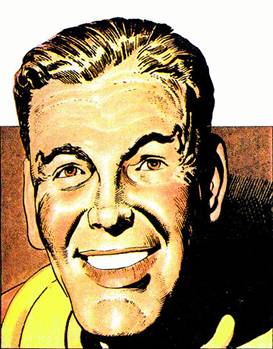


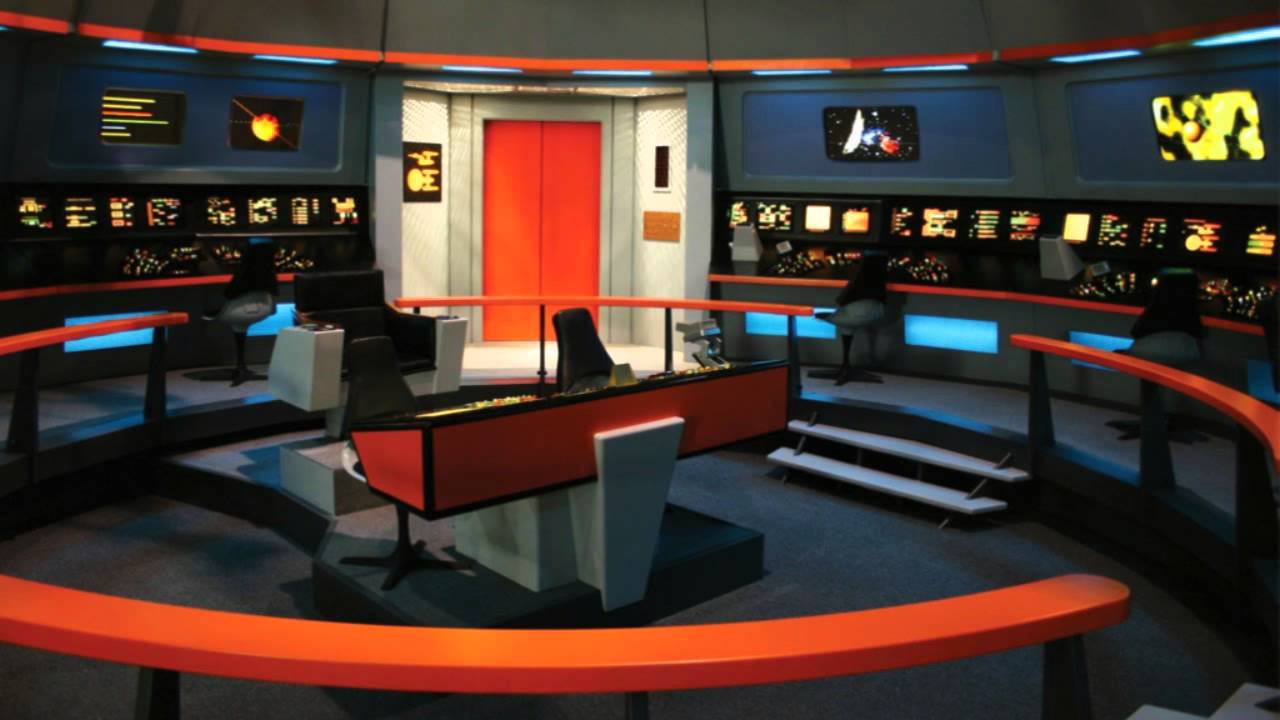
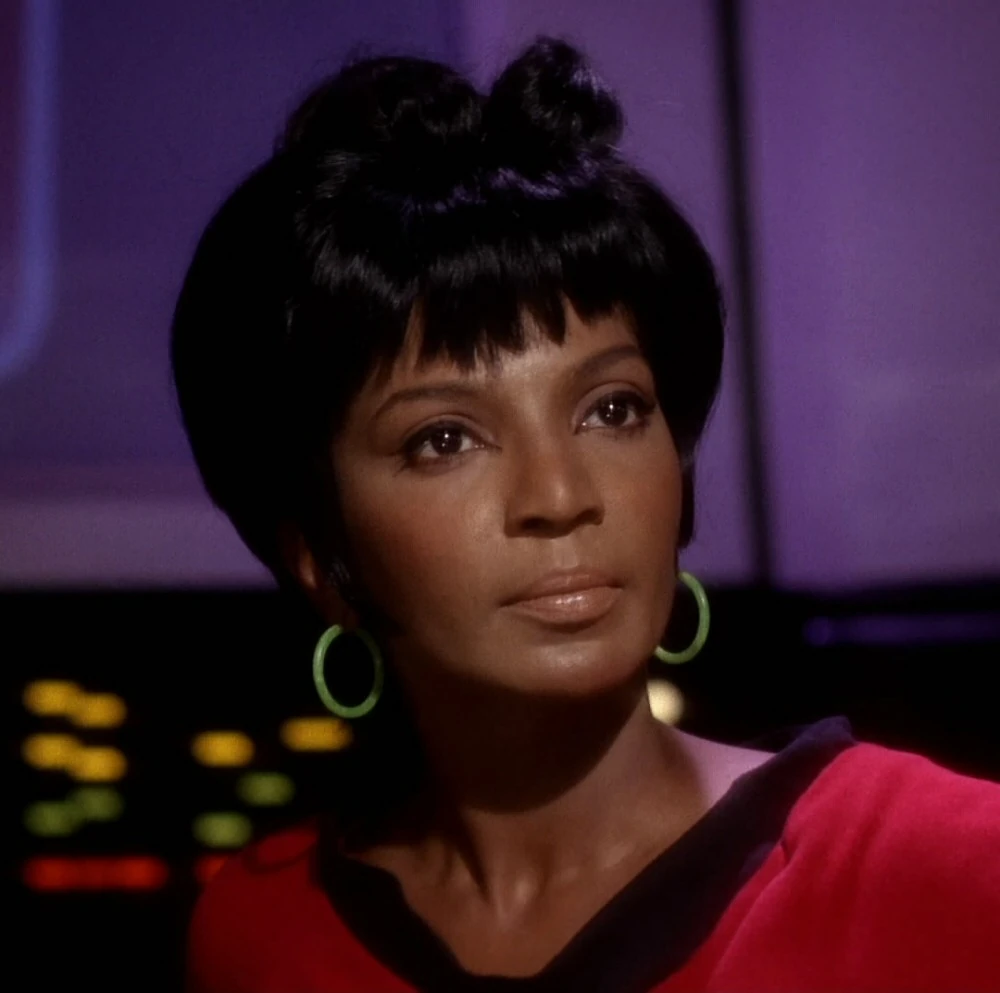


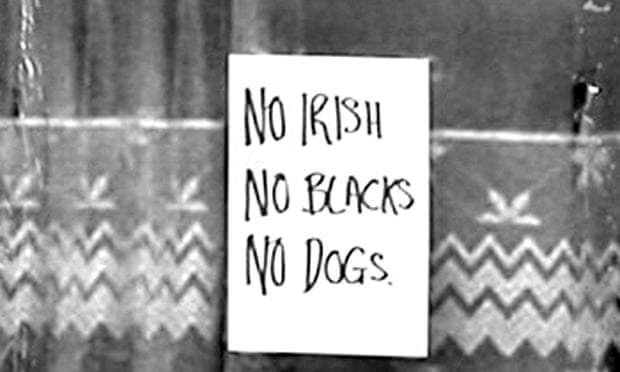
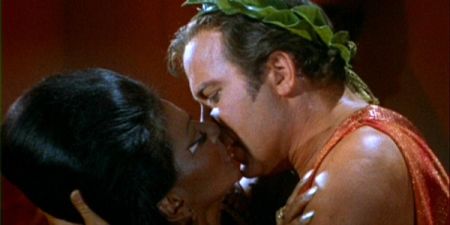

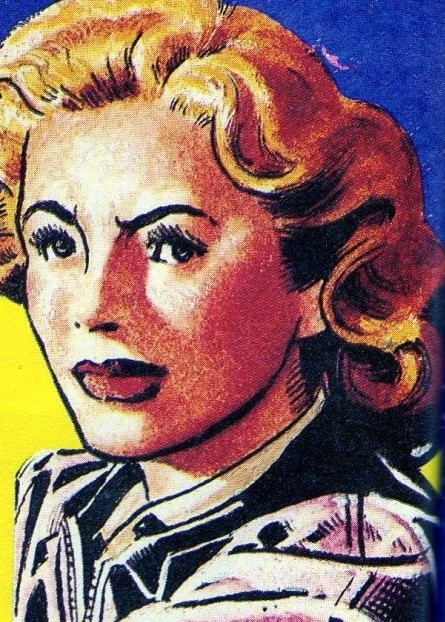

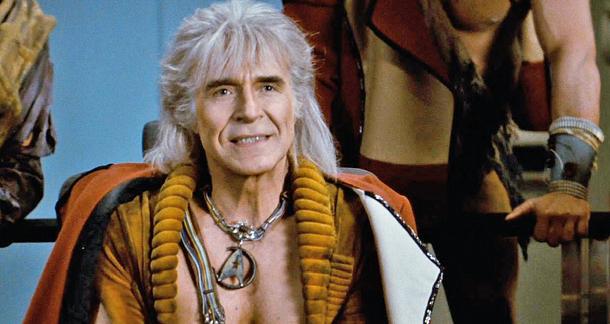


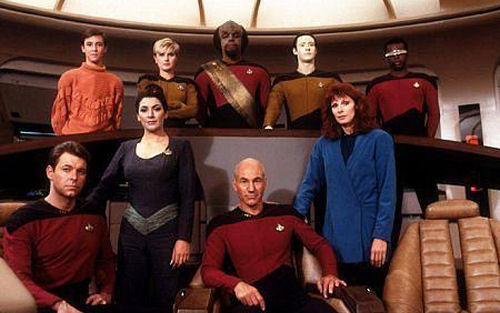


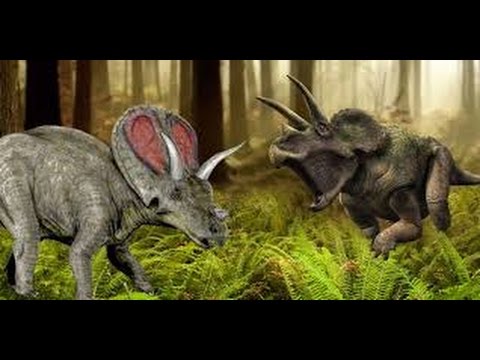
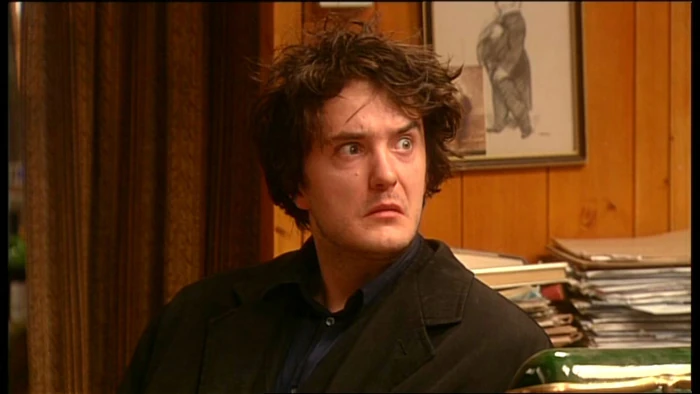


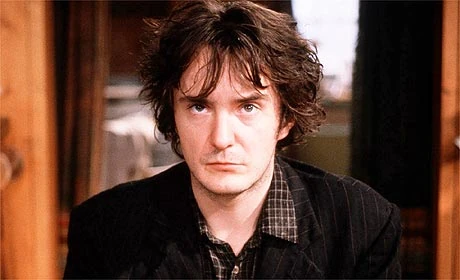


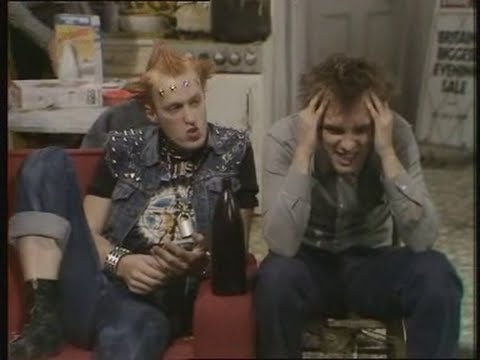


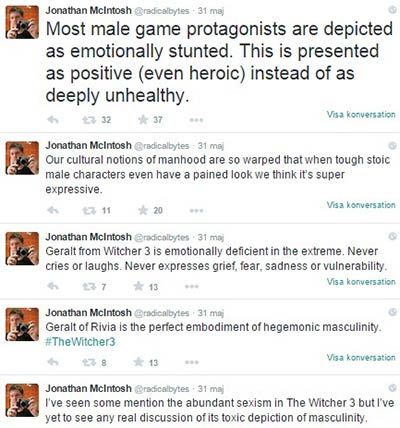


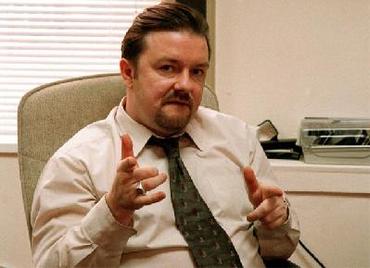
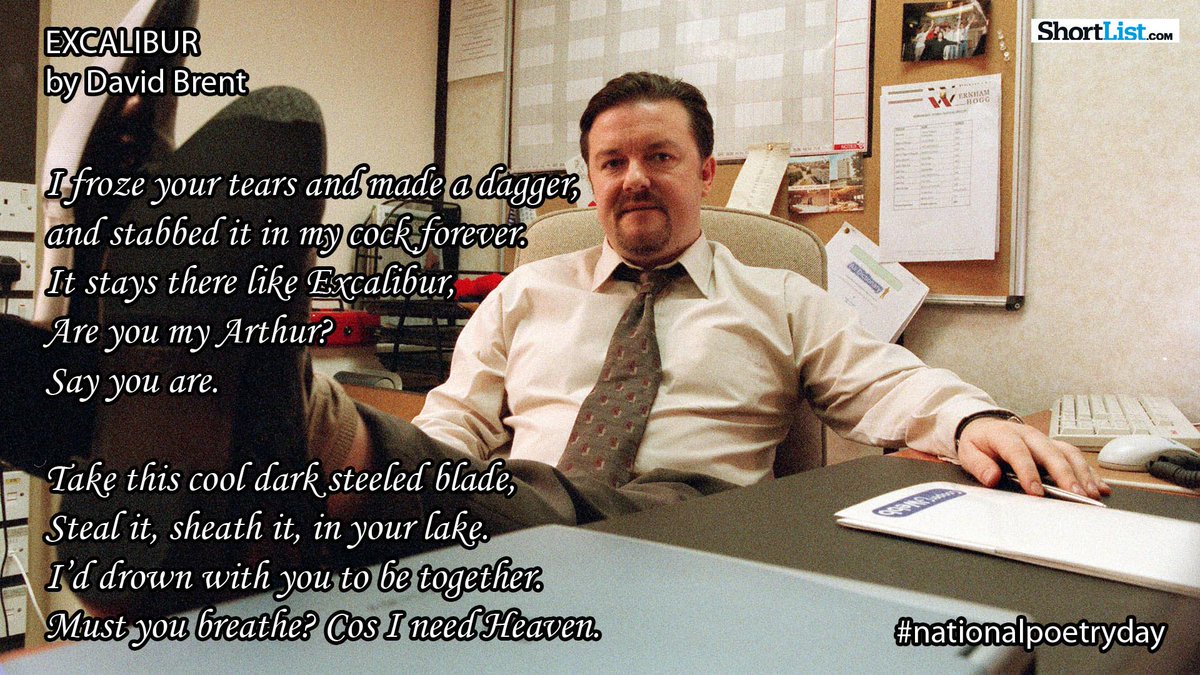


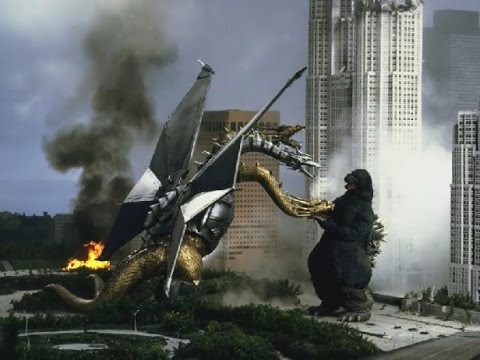



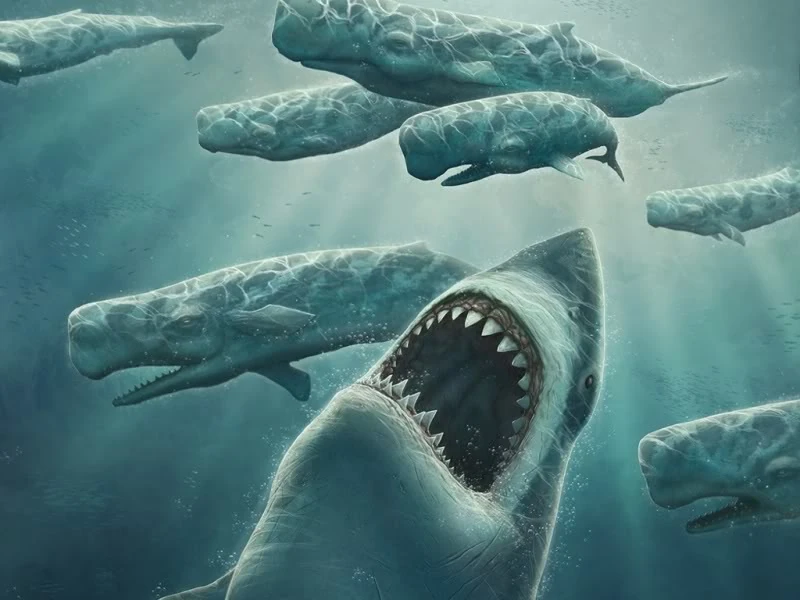


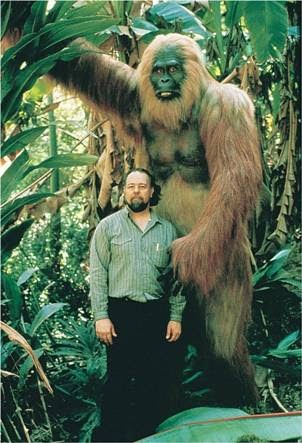









 burrunjorsramblesandbabbles