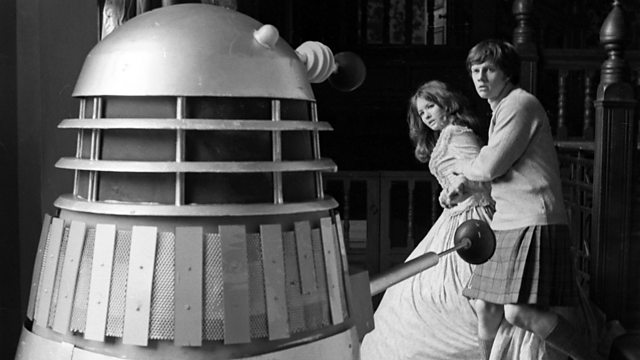
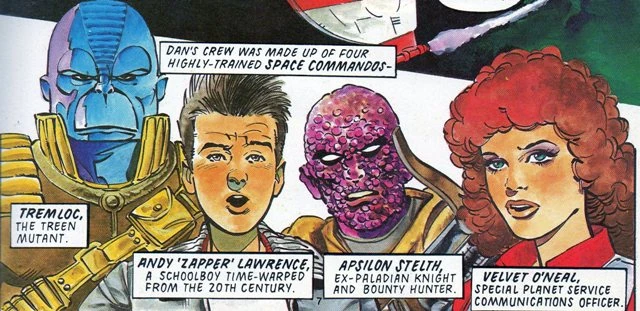
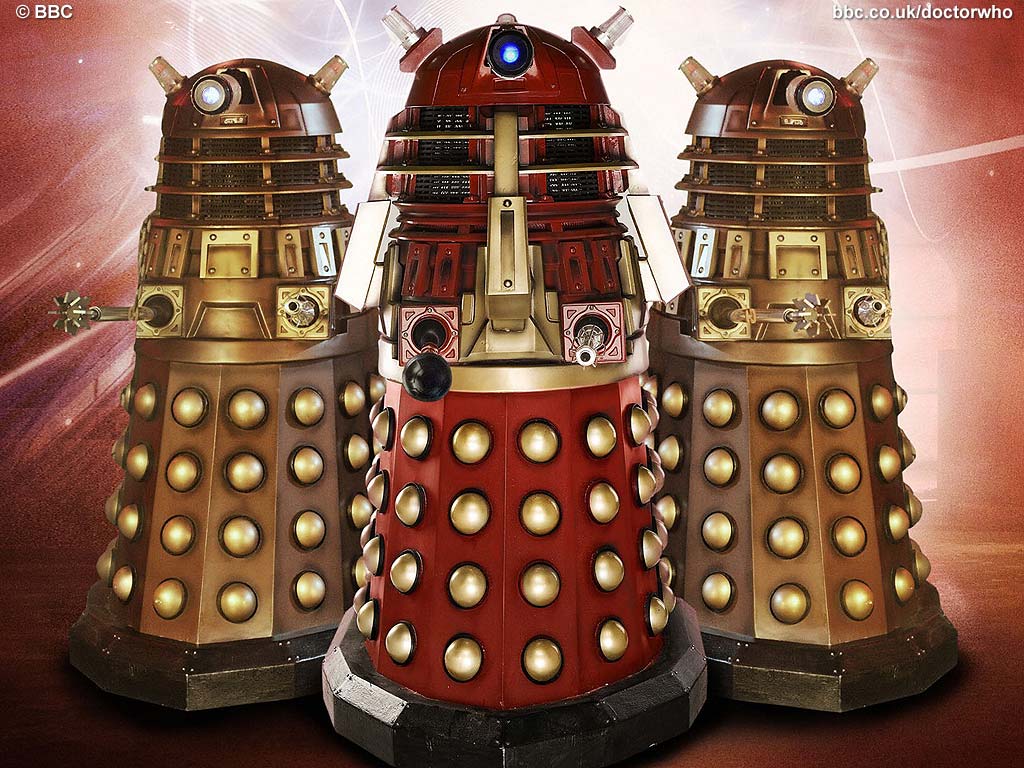
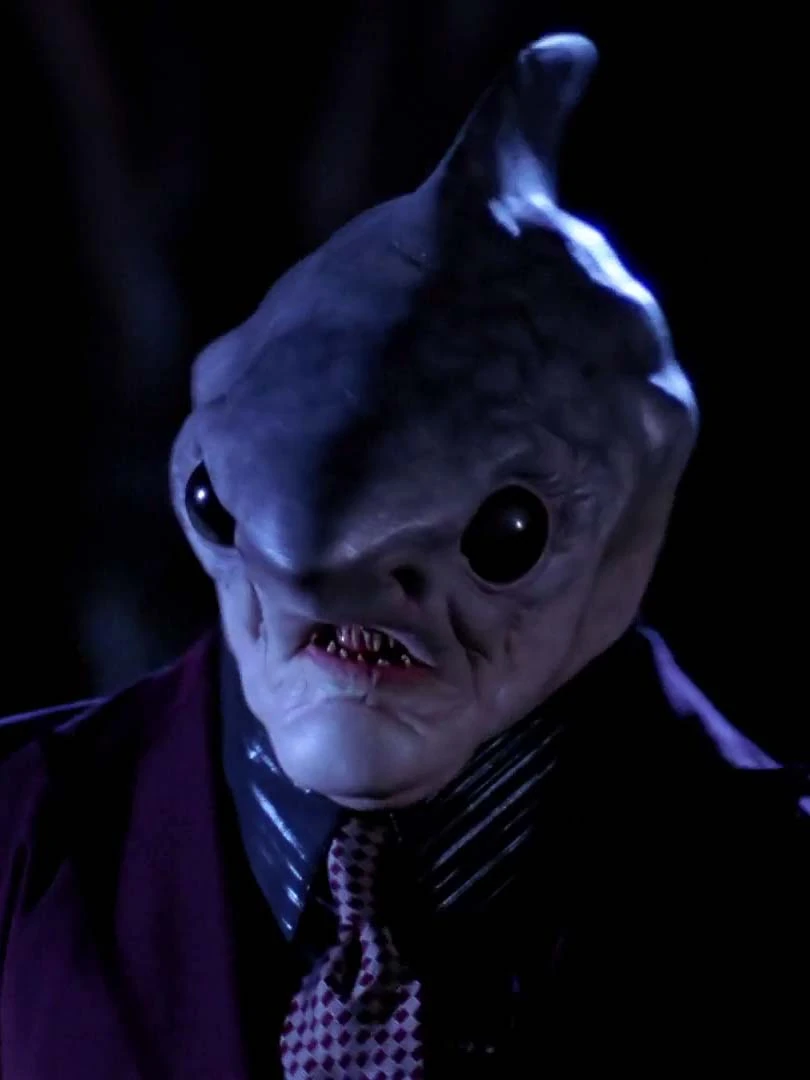
Could A Doctor Who/Star Trek Crossover Work?

Doctor Who and Star Trek are the two longest running and most beloved sci fi television series.

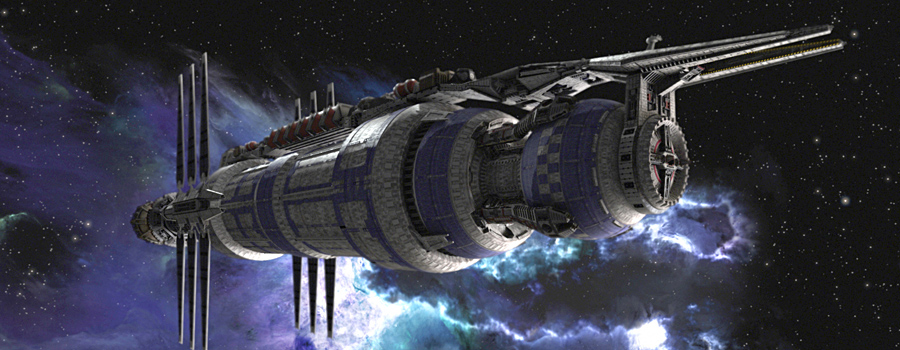
There has already been a crossover between both series there. A comic book miniseries, Assimilation 2, which saw the Borg and the Cybermen (two major antagonists from both series who are somewhat similar to one another) team up against the 11th Doctor and Enterprise D.  It was a good crossover, but sadly that’s all there has been despite the goodwill between the two shows.

In this article I am going to explore ways in which Star Trek/Doctor Who crossovers could have worked on tv.

3 Things A Crossover Would Have Had To Do

Make Sure That They Don’t Exist In The Same Universe
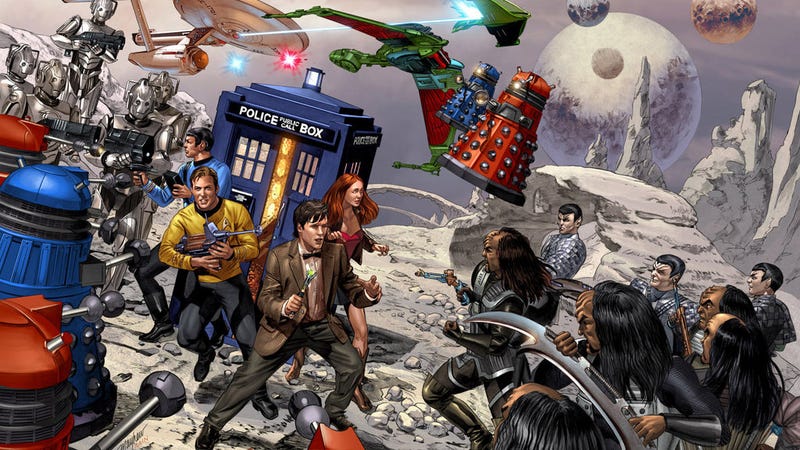
Whilst its a charming notion that Doctor Who and Star Trek take place in the same continuity, ultimately its one that wouldn’t work in practice.

Doctor Who and Star Trek have two such vast continuity’s and histories, that its often hard to try and make all of their own stories fit in together. Trying to squeeze all of the adventures from another equally long franchise in there as well would be impossible.

The easiest way would simply be to have the two series take place in alternate universes to one another. That way you really get the best of both worlds as you can still have them be linked in some way, but ultimately you would avoid making both series history even more muddled and contradictory.

Also I think this would open up more interesting story possibilities. You’d have the Doctor fall through a portal into the Trek universe (or the Enterprise fall through a portal into the Who universe) and then have a stranger in a strange land type of scenario.

For once the Doctor wouldn’t know ANYTHING about the Trek universe and its creatures, which would be refreshing (particularly with the way the Doctor has been God moded in New Who.) Whilst if you did it with the crew of the Enterprise you could have them explore the history of the earth in the Who universe that would obviously be totally different to the one they are accustomed too.

Indeed the future of humanity in Doctor Who is not always presented as being rosey like it is in Star Trek. Not only are there periods where humanity are conquered by monsters like the Daleks, but the humans themselves in stories like Frontier in Space and Planet of the Ood aren’t always presented as the good guys either.

Also the laws of both universes are different too. Time travel is ironically much easier in the Trek universe, whilst in the Who universe travel between other universes is much harder. So again perhaps the Doctor would be appalled at Kirk’s more cavalier attitude towards time travel (just like the department of temporal investigations were in Deep Space 9), whilst at the same time if the Enterprise got stuck in the Who universe then it might not be able to escape back into its own quite so easily.

Also you could explore the differences between the Who universe and the Trek universe’s histories to one another and explain why certain races exist in both universes such as humanity, whilst others such as the Klingons evidently don’t.

I tend to see it as being like this. In the Who universe no life ever evolved on Vulcan. The Vulcan we see in Power of the Daleks IS an alternate version of the Star Trek Vulcan, but its a barren lifeless husk as the circumstances on this planet simply didn’t allow life to evolve. Maybe in the Who universe Vulcan was struck by an asteroid before any intelligent life could evolve and made the planet barren.

As there were no Vulcans there were no Romulans either. Meanwhile as for the Klingons, lets just say in the Doctor Who universe they never ended up becoming a war like race. In the Doctor Who universe Kahless was killed before he could unite the Klingon Empire and they wiped themselves out.

As for the Earth’s history well I see it like this. In the Who universe history went different from the 70’s on. In Day of the Daleks, earth is shown to be on the brink of a Third World War. In Day of the Daleks this is averted, so there were no eugenics wars in the Who universe and therefore no Khan.

I know that the World War 3 we saw in Day of the Daleks wasn’t the Eugenics wars, but lets just say that was yet another different version. After all there are multiple possible futures for any event no matter how trivial

So lets say it goes like this. For Sir Reginald Styles peace conference one possible outcome was that he was able to reach peace which is what happened in the Doctor Who universe. Another was that it didn’t work and then led to the Eugenics wars decades later.

The bad future in Day of the Daleks meanwhile was created by the Daleks (or rather the rebels) tampering with history by killing Styles, which caused a war to break out instantly, as opposed to in the Star Trek universe where Styles actions simply didn’t ease tensions, but didn’t lead to an all out war.

Earth’s history would also be changed by the fact that there were no Vulcans to make contact with them in the Doctor Who universe. They were also later conquered by the Daleks in the 22nd century too which obviously held them back by many years too. Humanity’s experience at the Daleks hands may also have made them slightly harder to other races as seen in various Doctor Who stories such as The Mutants.

It makes sense after all. In one universe humanity’s first proper contact was with the Vulcans, a peaceful race and as a result they built up the United Federation of Planets, whilst in another their first contact was with the Daleks, the most evil race in the universe, which instead lead to them building the Earth Empire as seen in stories like Frontier in Space.

As for the Daleks and the Time Lords place in the Trek universe well, lets assume that in this reality, the Doctor was never born, and another member of the CIA was sent to disrupt the genesis of the Daleks.

Unfortunately this agent buggered things up and was captured by Davros. Davros was able to download all the info from his mind about the Time Lords into the Daleks databanks.

The Daleks came to see destroying the Time Lords as their most important goal due to the fact that the Time Lords could wipe them out at any point. The Daleks took the fight to the Time Lords much earlier as a result before they bothered with other lesser races like human beings (who they believed they would dispose of at a later date.)

The Time War was fought on a much smaller scale as neither race were as powerful when it happened, and it ended in the total extermination of both the Daleks and the Time Lords before the Daleks could ever reach the earth or even our galaxy.

As for the Cybermen and the Borg, well I see it going like this. In the Who universe as we know the Cybermen began on the planet Mondas. They were originally humanoid life forms who slowly removed their organic components and transformed themselves into emotionless machine creatures who sought to do the same to all other life forms in the universe.

Eventually however their planet Mondas was destroyed during a botched invasion of the earth in the year 1986 which nearly wiped out their kind. Though they would later establish a second base on Telos, they never became the intergalactic power they had once been on Mondas.

In the Trek universe however, what if the Mondasians only partially converted themselves? They still by and large became machine creatures, but they left some organic components behind as that way they did not have to waste so many resources doing a full body conversion.

These Cybermen later simply left Mondas and managed to take over a galaxy many light years away where they would eventually become known as The Borg!

The turning point was when the Mondasians of the Trek universe found a way to convert their victims using nanoprobes which was more efficient for them than full body conversions the Mondasians of the Doctors universe used. 

The Voth and the Silurians meanwhile can also be considered counterparts to one another. In the Who universe the creatures were unable to leave their planet and forced to go into hibernation on earth, whilst the Voth were able to leave and settled in the Delta Quadrant.

Over the next 65 million years, the Voth obviously evolved into a different life form, but still ultimately they evolved from the Trek universes version of the Silurians.

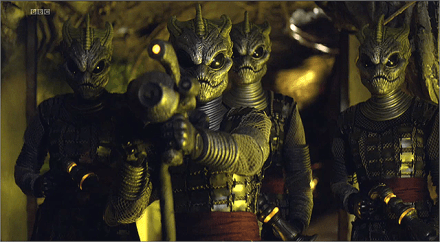
Finally as to why there are no Sontarans in the Trek universe, well its not so unreasonable to simply assume that they wiped themselves out in a war thousands of years ago.

Overall I think there would be a lot more scope for stories and no danger of continuity problems if Doctor Who and Star Trek were in separate universes.

Do NOT Have The Villains Fight

The worst thing about crossovers is that often whoever is writing them is a fan of one series or character more. Now this isn’t normally a problem when its the heroes. Ultimately even the most uber fanboy isn’t going to completely undermine one hero for another.

However sadly when it comes to villains often one will be completely undermined in favour of the other based simply on who the authors favourite is.

Look at Batman and Superman. Whenever they meet the writers are always so careful to show how both heroes are effective in different ways, have moments where they save each other, and make sure they BOTH play a part in saving the day.

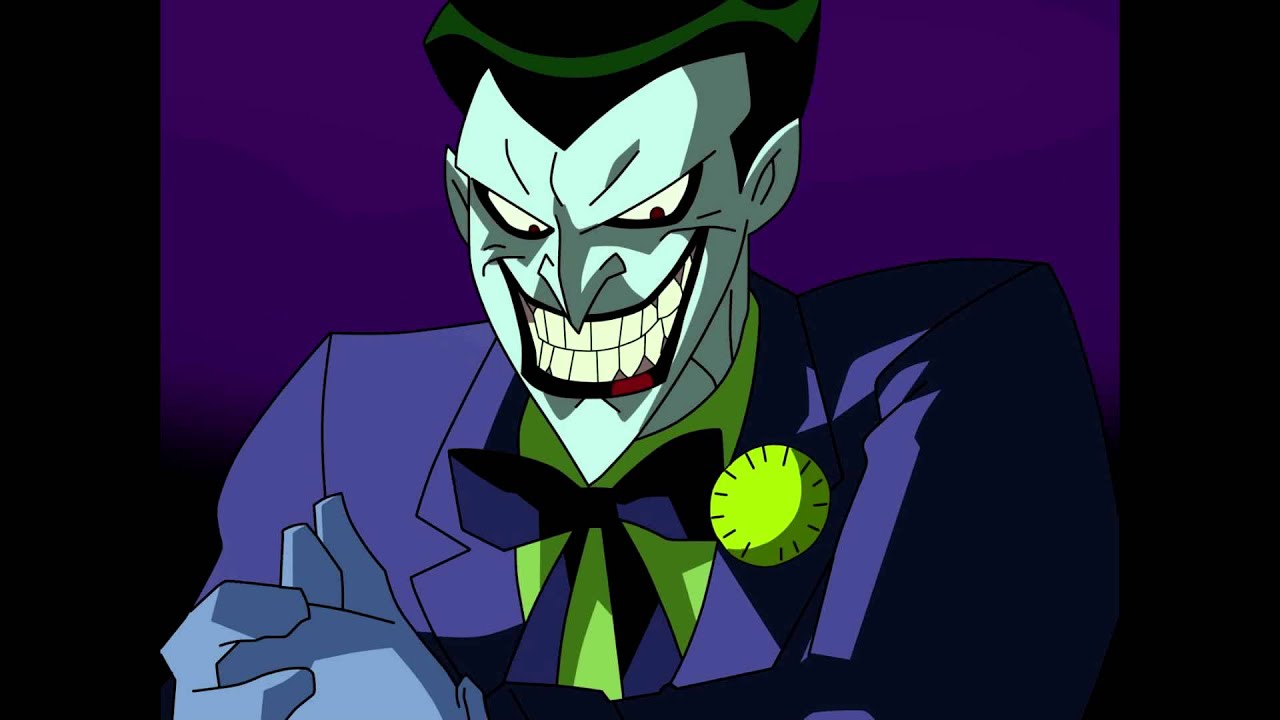
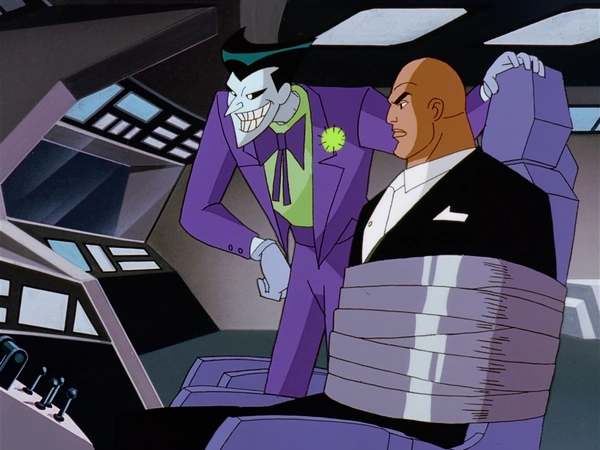
With the Joker and Lex Luthor, their two most iconic enemies however? The Joker who is overall the more popular villain has always thrashed Lex. No one playing Lex has ever won an Oscar for playing Lex for instance.

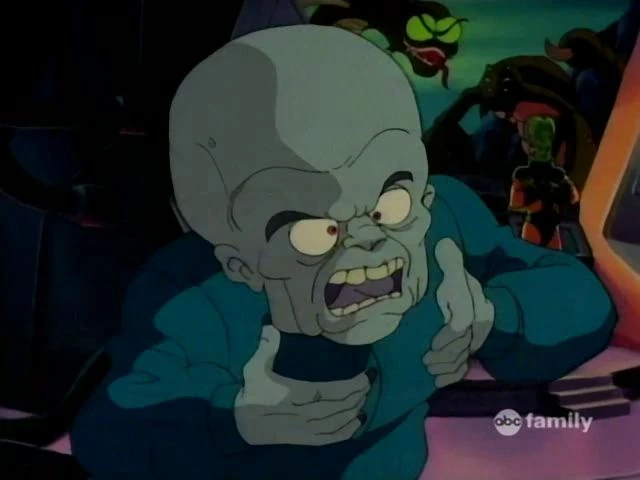
So far across animation, and comic books the Joker has outwitted Lex, captured him and used his own Lex wing to nearly destroy his entire life’s work (with Lex only being saved by Batman and Superman.) Captured and almost tortured Lex Luthor to death, killed him over and over again (when the Joker was imbued with the godlike powers of Mr Mxlyptlik), and beat Lex up in unarmed combat, whilst lecturing him about how much better a villain he is than Lex.

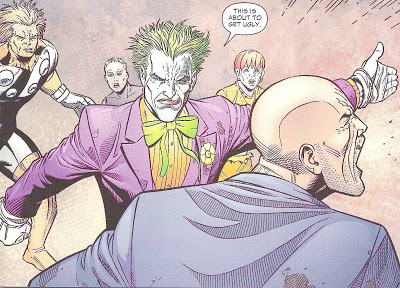
To be fair Lex did get a good insult in against the Joker, but at the end of the day, he was the one who was almost tortured to death.

The Simpsons/Family Guy crossover also whilst having Peter and Homer’s epic fight end in a draw, had Stewie Griffin the main villain from Family Guy capture and brutally torture Sideshow Bob and Nelson Muntz two major recurring antagonists from The Simpsons.

Then of course there is Alien Vs Predator Requiem which completely undermines the Alien for the Predator. The Aliens barely kill any Predators on screen in the film whilst one Predator mows its way through the Aliens, slicing and dicing them, blowing them up, and battering them away.

The crossover series Once Upon A Time meanwhile has regularly undermined one villain for another.

The Sheriff of Nottingham, Robin Hood’s archenemy got tortured by the Evil Queen, Snow White’s archenemy (after an unsuccessful attempt to seduce her.)

He had already got the shit kicked out of him by Rumplestitlskin, another famous fairy tale villain earlier.

Sad day for Robin Hood fans. If it had been Paul Darrow or Alan Rickman’s Sheriff’s however they would have found a way to talk themselves out of it and convince Rumple to follow them. This Sheriff was crap however.

In the classic movie King Kong vs Godzilla, Kong actually beats Godzilla. It is somewhat left open as both monsters fall into the sea and we merely see Kong fleeing, but ultimately the intention of the film makers at least was that Kong won, and the next time we see Godzilla he is a bit beat up.

Even within Doctor Who itself look at the Daleks vs Cybermen battle. The Daleks and the Cybermen were the Doctors two greatest adversaries, but they never met onscreen for 40 plus years until the 2006 story Doomsday.

Sadly when they did finally clash, it wasn’t a fight, as the Daleks slaughtered the Cybermen. 5 million Cybermen weren’t even able to chip the paint off the casing of one Dalek.

Finally even the actual Doctor Who/Star Trek crossover itself, “Assimilation 2” was guilty of this. It had the Cybermen completely and utterly thrash the Borg.

See for yourself

Assimilation is pretty much exactly the same as the Batman/Superman crossovers, in that it goes to such great lengths to make sure that neither the Doctor nor Picard are undermined for each other, but sadly when its the villains turn then the Borg are just made into completely second rate monsters compared to the Cybermen.

Of course the great irony is that by undermining one heroes villains for another, then you actually do end up undermining one hero for another. After all if the Cybermen can thrash the Borg so effortlessly, the Borg who gave Picard more trouble than anyone else (save Q). Then the Doctor who regularly beats the Cybermen is obviously better than Picard.

I’m not saying you can’t have the villains meet. It might be quite interesting to have the Daleks and the Klingons work together to take on a bigger threat, or to have the Master try and manipulate a Star Trek race like the Romulans into helping him rule the universe.

However definitely do not have them fight. You might be thinking “well its not so bad if one villain is already vastly more powerful than another anyway”, but even then I think that’s a weak argument.

Yes its fun to debate “who would win in a fight between so and so”, which is something I have done before, but ultimately as none of this is real then really a writer can decide anything they want in terms of a villains power.

For instance at one point the Daleks could be killed by being pulled over a rug, but another writer then made them so powerful that they could destroy every universe!

The only way you could have say the Cybermen and the Romulans fight is if you made it a draw, or at least showed them both being capable of killing each other, but perhaps the Cybermen would win this fight because they had greater numbers, or get lucky, or even just tricked the Romulans.

You certainly couldn’t have it that the Romulan’s weaponry was completely ineffective against the Cybermen, as when you do that you are just making one franchises villains lesser than the other. A crossover is supposed to be a celebration of two great franchises coming together. Its NOT supposed to be the writer of that particular stories favourite one pissing all over the other.

Make Sure The Right Doctor Meets The Right Star Ship Captain

Ironically Jon Pertwee has said “Beam Me Up Scotty” whilst William Shatner never has.

There have been many different versions of Doctor Who and Star Trek over the years, and not all of them would mesh together.

For instance I don’t think a crossover with 60s Who and Trek would really work. Stylistically they would be just too different.

60s Trek was famous for its beautiful sets, bright colours, up beat premise where everything had worked out for humanity, and featured aliens who were more human and could interact with people in different ways.

60’s Who however was in black and white, was renowned for being scary, its sets were dark, and claustrophobic, like the ice tombs of Telos, and obviously its most famous aliens were hideous monsters that wanted to take over the universe like the Daleks and the Cybermen.

You can see how those two worlds aren’t going to mesh. One is ultimately going to swallow up the other. Either you will have to have the first or second Doctor in colour and face more Star Trek type aliens, IE creatures who are more human, sympathetic, and in the process lose everything that made 60s Who great, its scary monsters, creaky sets and spooky atmosphere.

Or you are going to have the Enterprise in black and white, and the crew of the USS Enterprise fight over the top monsters, and in doing so lose everything that made the original Trek so great, its bright, beautiful sets, more human aliens who were able to interact with the crew in all kinds of fascinating ways, and more up beat, progressive tone.

A 60s Who/Trek mashup would really be out of the question, which is a shame as they are two of the best era’s for either franchise, but sadly they are just too different.

However I think you could have had a great crossover between the Jon Pertwee era of Doctor Who and Star Trek.

The Jon Pertwee era of Doctor Who was in colour, and its stories tended to be a bit more political at times just like Star Trek. Overall I think Trek and Who were just fun escapist series most of the time, but occasionally they could touch on some topical issues, and I think you see that more in the Pertwee era than any other.

Also I think the aliens and creatures in the Pertwee era of Doctor Who tended to be a bit more sympathetic and human than they were in 60s Who. You had creatures like the Silurians, the Draconians and the Sea Devils for instance who were just like us, capable of being good and evil, and villains like Omega who were genuinely tragic and sympathetic villains. Even old favourites like the Ice Warriors were shown to be capable of being good and evil too.

The Third Doctor is not entirely unlike Captain Kirk as a hero either. They both are action heroes who get into big over the top fight scenes, both also are fond of giving big cheesy speeches about morality, and both work for an organisation, UNIT and the Federation where they are respected, but at the same time mavericks who don’t always play by the rules and like to do things their own way.

The Pertwee era of Doctor Who I think was actually inspired by Star Trek to an extent. It drew from many things of course, but still I think Star Trek was in the minds of the makers of the show quite often.

Star Trek was first shown in the United Kingdom in 1969. Ironically Star Trek was far more popular at first in Britain than it had been in its native USA. It was a huge sensation in Britain in the early 70s, whilst in America though it had developed a strong cult following, it was actually a huge flop in the 60s.

Its worth noting that Jon Pertwee was a massive fan of Star Trek and used to watch it with his children whilst he was the current Doctor.

Many Pertwee stories appear to have been inspired by, or at least bare a strong resemblance to classic episodes of Star Trek The Original series.

The Curse and Monster of Peladon, both deal with the Doctor trying to convince a primitive planet to join the Federation, an organisation started by the earth which is a unification of several planets. The Curse of Peladon much like the Star Trek episode Journey to Babel is also a whodunnit type story with all of the delegates being accused of a murder and attempts to sabotage the peace process.

The Doctor Who adventure Frontier in Space meanwhile also bares some similarities to the various Klingon episodes of the original series particularly the story Day of the Dove. It revolves around humanity’s tense relations with another proud warrior race, the Draconians, with both having established a frontier in space just like the neutral zone between the Klingons and the Federation.

The Daleks and the Master meanwhile plan to provoke a war between the Draconians and humans, using powerful mind control techniques, and illusions, combined with playing on the already existing prejudices between both races. In Day of the Dove a highly advanced alien similarly pits the Klingons and the humans against each other through mind control techniques, illusions and again playing on the existing hatred between both species.

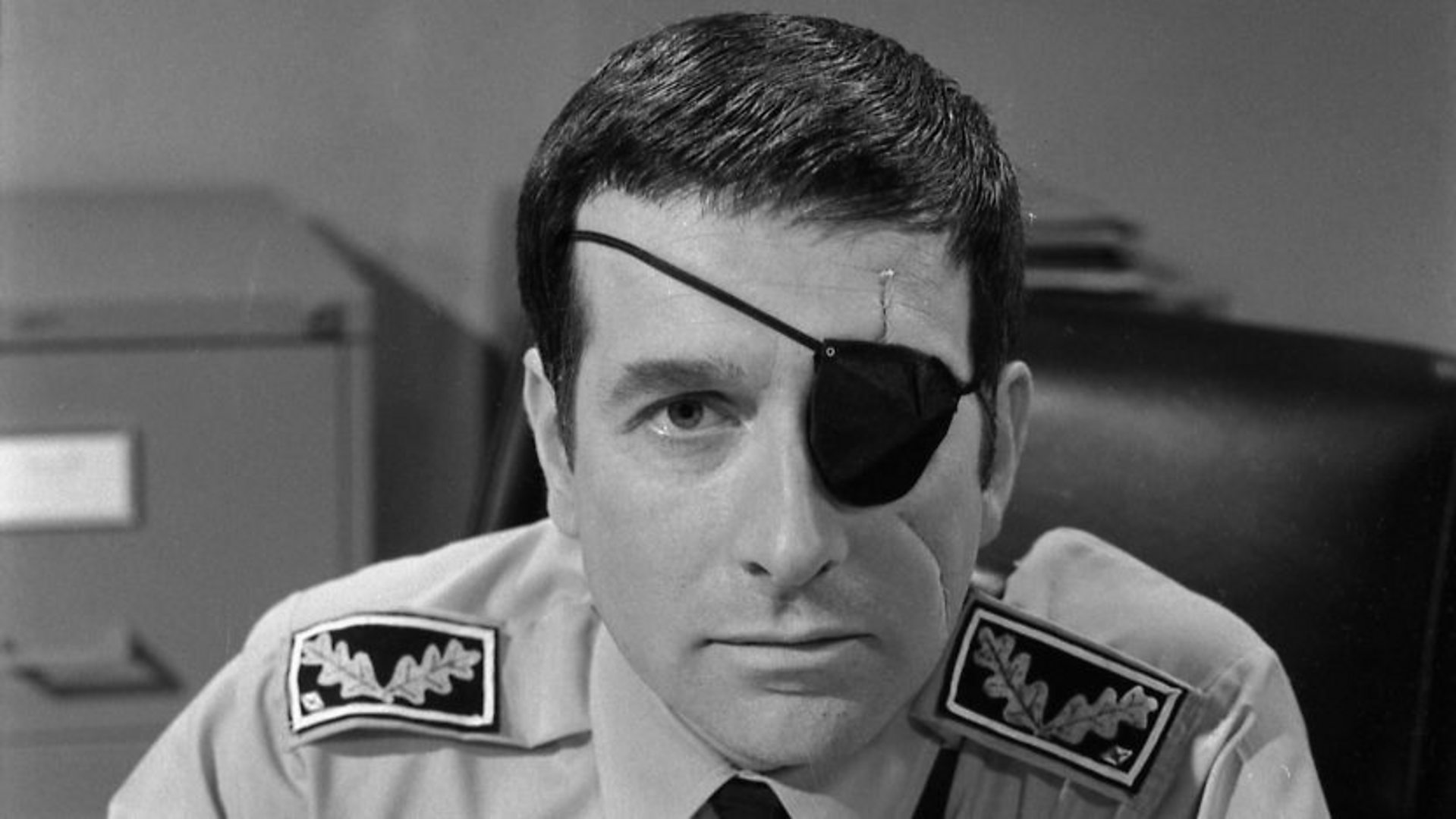
The Pertwee classic Inferno meanwhile which sees the Doctor travel to an alternate universe and encounter evil versions of his friends such as the Brigadier, Liz Shaw etc, (with the evil Brig having an eye patch.) Has often been compared to the iconic Star Trek episode Mirror Mirror where Kirk, Uhura and McCoy travel to an alternate universe where they encounter evil versions of the main cast (with the evil Spock famously having a beard to distinguish him from the original.)

Finally the Doctor Who story, The Mind of Evil is somewhat similar to the Star Trek episode The Dagger of the Mind.

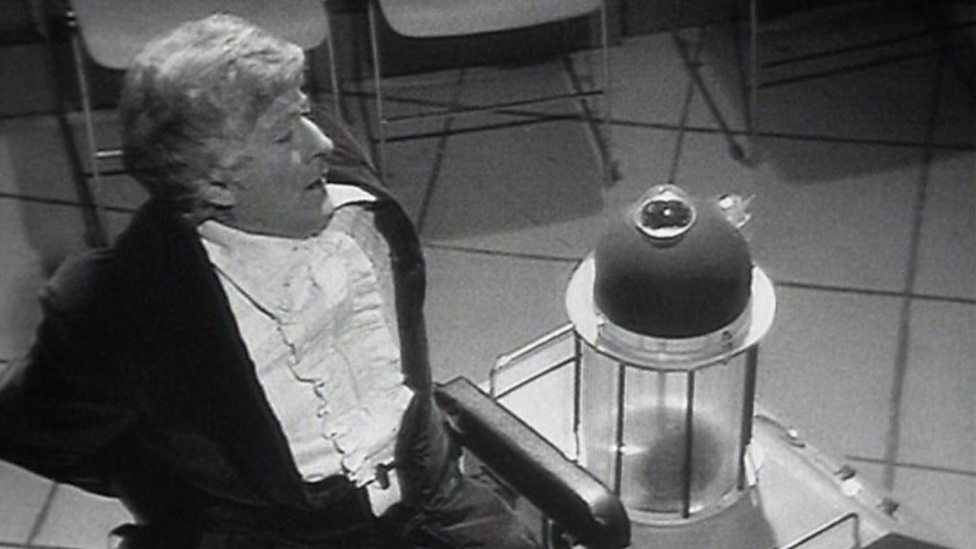
The Mind of Evil sees the Doctors nemesis the Master create a machine that can remove evil from people’s minds which he tests on criminals. In The Dagger of the Mind meanwhile there is a machine that is similarly used to rehabilitate prisoners by purging their minds of evil thoughts.

Both machines are at one point used on the main heroes, The Doctor and Captain Kirk. and nearly destroy their minds.
image

Overall I think its fair to say that Star Trek was one of the major influences of 70’s Who and thus its not hard to see how a Pertwee era Doctor Who and an original series Star Trek crossover might have been really good.

I’d LOVE to have seen a fight between Jon Pertwee and William Shatner. You’d obviously have to have it be a draw, but still it would would have been a brilliant fight scene.

You can see how Kirk and Pertwee’s Doctor would be a good match for each other, though Kirk definitely had the better fighting music.

As for the 4th Doctor and Star Trek the original series, well, that is obviously the crossover that everyone would have wanted to see.

Tom Baker and William Shatner are unquestionably sci fi’s two most famous leading men on tv. Both huge hams, with massive all encompassing personalities. Get those two in the one episode and you almost wouldn’t need a story!

I don’t think the Tom Baker era would be quite as perfect a fit for the original series of Star Trek as the Pertwee era, but at the same time unlike with 60s Who I can see this crossover actually working because of their differences.

Tom Bakers era was a little bit darker, and edgier than Pertwee’s. It tended to draw on old horror movies for inspiration, and was less up beat than Star Trek.

However that could have worked as it might have been interesting to see Captain Kirk go up against an enemy that was devoid of any kind of redeeming features.

The villains in the Tom Baker era tended to be absolute monsters like Sutekh, Morbius, Davros and Magnus Creel. All of these characters are not only absolute pure evil, but they are horrifying even just to look at too.

In Star Trek the original series meanwhile most of the villains were sympathetic, and in a lot of episodes Kirk was even able to reach a compromise with them.

Even Khan arguably one of the most evil original series villains, did genuinely love his wife, and want the best for his people. You can even have sympathy for him at certain points in Wrath of Khan, such as when his most devoted follower dies in his arms and Khan vows that he will avenge him. You could never have sympathy for a villain like Sutekh however.

It would be a knew and scary environment for the crew of the USS Enterprise to face an enemy like this. or Davros

I think Spock’s reaction to a monster like Sutekh in particular would be very interesting. Spock relies on logic. Normally he can understand most of the villains actions, even if he obviously doesn’t condone them. Khan for instance genuinely believes than under his rule the world will be a better place as he is smarter and stronger than the average person.

With Sutekh however there is nothing logical about his plans. He is just irrational hatred, and senseless cruelty, yet he is not insane. It would be hard for Spock to understand his actions in any kind of way.

At the same time however it would be interesting to see the 4th Doctor interact with the crew of the USS Enterprise as they are obviously somewhat more hopeful and merciful than the 4th Doctor who tends to be a bit more of a sombre, brooding, even at times a callous hero, who is far more willing to murder his enemies.

Imagine Doctor McCoy’s reaction to the Doctors callous dismissal of Lawrence Scarman’s death in Pyramids of Mars for instance. No way would he have let the Doctor off with it as easy as Sarah Jane Smith did!

I think its quite funny actually how the general public often view the Doctor as a peaceful scientist who never uses weapons, whilst Captain Kirk is often dismissed as an action hero.

Obviously yes, Kirk is a man of action, whilst not all of the Doctors have been, but still when you watch the two shows, of the two of them the Doctor uses weapons and lethal force against his enemies far more often. Kirk actually most of the time tries to find a peaceful solution in dealing with his foes, and most of the time he succeeds. Very rarely does Kirk have to murder his opponents. Hell even Khan, his archenemy he gave a way out to at first (though we all know it went spectacularly wrong, but still at least he tried.)

see here

The Doctor has clearly never thought “We’re not going to kill today”.

I can see the Doctor and Kirk clashing over the methods of dealing with their enemies in some instances. Obviously overall both men DO prefer a peaceful solution, but certainly the Doctor is more prepared to kill than Kirk or indeed any member of the Enterprise.

Though having said that I can also see the 4th Doctor having the utmost respect for the crew of the enterprise too. All of the Doctors love humanity, but the 4th Doctor had a particular love for the strength and perseverance of humans. One of his most defining moments is in the story The Ark in Space where he gives a speech about the indomitability of the human spirit.

“Homo sapiens. What an inventive, invincible species. Its only a few million years since they’ve crawled up out of the mud and learned to walk. Puny defenceless bipeds. They’ve survived flood, famine, and plague. They’ve survived cosmic wars and holocausts and now here they are amongst the stars, waiting to begin a new life, ready to outsit eternity. They’re indomitable, indomitable!”

With this in mind what greater example of the indomitable nature of the human race is there than the crew of the USS Enterprise?

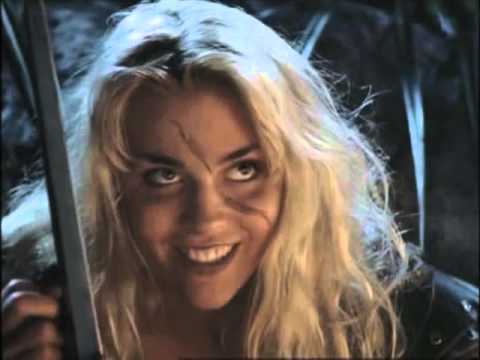
Also finally I’d have loved to have seen a romance between Leela and Captain Kirk. She’d definitely be his type. Savage, alien warrior woman, and she always seemed to respect men who were brave, great leaders and tough guys too, so I think her and Kirk would have made a brilliant couple.

Of course having said all of that it is worth mentioning that some Tom Baker era Doctor Who stories were inspired by various episodes of Star Trek the original series too.

Philip Hinchliff and Robert Holmes who made the show in Tom’s early years were big fans of Star Trek. Though Holmes did bash Star Trek’s habit of having all perfect aliens show up and fix everything. It was actually this that motivated him to make the Doctors people the Time Lords more flawed and even somewhat degenerate in the story The Deadly Assassin.

Still he did watch Star Trek regularly and bits of it popped up now and again in his work on Doctor Who.

The story Planet of Evil’s plot bares some small similarities to the Star Trek episode The Alternative Factor with both involving careless experiments leading to a rip between this universe and one made of anti matter which threatens to destroy both.

On the official BBC website, The Alternative Factor is even listed among the influences on the story.

See here. BBC Planet of Evil

Pyramids of Mars also explores a similar idea to the Star Trek episode Who Mourns For Adonais.

Both revolve around the idea that the Gods from ancient mythology were actually aliens (in Star Trek’s case we meet the Greek God Apollo, whilst in Doctor Who’s we meet Suetekh the Egyptian God of evil.) Though such an idea has been done to death in the decades since, it was a fairly original concept at the time.

Finally the Talons of Weing Chiang is also similar to the Star Trek episode Conscience of the King.

Both revolve around a war criminal (Magnus Creel in the Doctors case, Kodos the executioner in Kirks) who is in hiding and who had previous dealings with the main character, Captain Kirk and the Doctor. Despite the atrocities they carried out, Creel and Kodos actually believe that they are hard done too, and had things gone a little differently then they would have been remembered as great men.

Creel attempted to master time travel, but all of his test subjects died gruesome deaths and eventually he was forced to flee to the 19th century using his own time machine which ended up horribly disfiguring him.

Kodos meanwhile in order to deal with a lack of resources on Tarsus Four slaughtered over 4000 people.

I always loved it when the Doctor and Kirk confront Creel and Kodos and let them know just how they are viewed by the rest of the world. Creel learns that all of his experiments were for nothing, whilst Kirk doesn’t buy into Kodos’ pity party for one second.

DOCTOR: I was with the Filipino army at the final advance on Reykjavik. 
WENG: How can you in the nineteenth century know anything of the fifty first? You lie! 
DOCTOR: Listen. What’s your name? What were you called before you became a Chinese god? 
WENG: I am Magnus Greel! 
DOCTOR: Oh, yes, the infamous Minister of Justice. The Butcher of Brisbane. 
(The Doctor moves a cockerel on the board.) 
DOCTOR: Checkmate. 
WENG: It is impossible for you to know these things! 
DOCTOR: I know you’re a wanted criminal and that a hundred thousand deaths can be laid at your door. 
WENG: Enemies of the state! They were used in the advancements of science. 
DOCTOR: They were slaughtered in your filthy machine. 
WENG: So, you are from the future, and I, for all my achievements, are only remembered as a war criminal. Of course, it is the winning side that writes history, Doctor. Remember, you would not be here if it were not for my work. 
DOCTOR: Your work? Your work? 
WENG: Yes! I made this possible. I found the resources, the scientists 
DOCTOR: The zigma experiments came to nothing. They were a failure. Nothing came of them. 
WENG: No! No, they were a success! Why, I used them to escape from my enemies. The first man to travel through time. 

DOCTOR: Hmm. Look what it did to you. 
WENG: A temporal distortion of my metabolism. It can be readjusted. 

DOCTOR: Greel, listen. If you activate the zigma beam, it’ll be certain death for all of us. 
WENG: Lies, Doctor. 
DOCTOR: Listen, Greel! Greel, listen! The zigma beam is at full stretch. If you trigger it again, it’ll mean certain collapse. You know what that means? 
WENG: You can’t fool me. 
DOCTOR: There’ll be a huge implosion, Greel, and you’ll be at the centre of it. The zigma experiments were a disaster! 
WENG: No, no, the zigma experiment was a success! A brilliant, total success!
KIRK: I’m sure you are. Are you Kodos? I asked you a question. 
KARIDIAN: Do you believe that I am? 
KIRK: I do. 
KARIDIAN: Then I am Kodos, if it pleases you to believe so. I am an actor. I play many parts. 
KIRK: You’re an actor now. What were you twenty years ago? 
KARIDIAN: Younger, Captain. Much younger. 
KIRK: So was I. But I remember. Let’s see if you do. Read this into that communicator on the wall. It will be recorded and compared to a piece of Kodos’ voice film we have in our files. The test is virtually infallible. It will tell us whether you’re Karidian, or Kodos the Executioner. (switches on comm.) Ready for voice test. Disguising your voice will make no difference. 
KARIDIAN: (reading) The revolution is successful, but survival depends on drastic measures. Your continued existence represents a threat to the well-being of society. (stops looking at the paper) Your lives means slow death to the more valued members of the colony. Therefore I have no alternative but to sentence you to death. Your execution is so ordered. Signed, Kodos, governor of Tarsus Four. 
KIRK: I remember the words. I wrote them down. You said them like you knew them. You hardly glanced at the paper. 
KARIDIAN: I learn my parts very quickly. 
KIRK: Are you sure? Are you sure you didn’t act this role out in front of a captive audience whom you blasted out of existence without mercy? 
KARIDIAN: I find your use of the word mercy strangely inappropriate, Captain. Here you stand, the perfect symbol of our technical society. Mechanised, electronicised, and not very human. You’ve done away with humanity, the striving of man to achieve greatness through his own resources. 
KIRK: We’ve armed man with tools. The striving for greatness continues. But Kodos 
KARIDIAN: Kodos, whoever he was 
KIRK: Or is. 
KARIDIAN: Or is. Kodos made a decision of life and death. Some had to die that others might live. You’re a man of decision, Captain. You ought to understand that. 
KIRK: All I understand is that four thousand people were needlessly butchered. 
KARIDIAN: In order to save four thousand others. And if the supply ships hadn’t come earlier than expected, this Kodos of yours might have gone down in history as a great hero.
KIRK: But he didn’t. And history has made its judgement. 

I always loved both of these scenes as they take you deep into the villains psyche. As evil as they may seem, Greel and Kodos clearly still feel some guilt, buried deep down for all they have done.

For years have tried to do all they can to justify it to themselves. “I was just doing what anyone would have done, it was all worth it in the end as we got time travel thanks to my work.” They’ve come to believe this crap so much that they now see themselves as the victims, but the Doctor and Kirk however shatter their delusions and they can’t take it, with Creel in particular screaming like a petulant child that his experiments were a success.

Both stories also play out like classic detective stories with the Doctor and Kirk having to piece together various clues to find Kodos and Creel.

So you can see how there was a bit of Star Trek in the Baker era too. Not quite as much as in Jon Pertwee’s time of course, and obviously though all of these Baker stories have similar basic plots to their Star Trek predecessors they are definitely done in a different style.

Still the fact that both era’s did explore similar themes, coupled with the fact that they were different in a number of other ways could have potentially led to a very interesting crossover between Star Trek the Original Series and the Tom Baker era of Doctor Who.

Moving on from the Tom Baker era, I don’t think 80s Doctor Who would mesh very well with the original Trek which had graduated onto the big screen at that point, but I do think that there might have been quite an interesting crossover between Star Trek The Next Generation and mid to late 80s Who.

Later Who and Trek were quite interesting in that they were an odd mix of the old and new styles. They were a bit more gritty than previous versions of Doctor Who and Star Trek, as popular sci fi at that point was becoming much darker overall like Alien, Blake’s 7, Bladerunner, the Terminator etc.

Gone were the cosy spaceships like the Jupiter 2 from Lost in Space, big beautiful bright colours of the original Star Trek and heroes who always triumphed over the monsters like the Doctor and Captain Kirk.

In their place were anti heroes who often lost like Blake and his crew, filthy, creepy, gritty looking spaceships like the Nostromo and main heroes who regularly lost or were even killed.

You can see this in many episodes of the Peter Davison and Colin Baker era’s of Doctor Who in particular as well as many episodes of The Next Generation. However at the same time both still keep up the original versions more old fashioned, up beat spirit.

Thankfully the Next Generation still portrayed the Federation as a utopia just like in the original series. 80s Who meanwhile still kept up the original series fun sense of boys own adventure too.

Also the two shows explored similar ideas and themes too. The Cybermen who made a big comeback in the 80s were obvious precursors to the Borg in the Next Generation.

Both were cybernetic races who began as organic life forms until they slowly replaced all of their body parts with machine components and now seek to do the same to all other life forms in the universe.

The Borg Queen is also similar in design to the Cyber Controller as both have a huge dome shaped head and an enlarged brain.

Its no secret that the Cybermen were an influence on the Borg. Many of the writers of the Next Generation were big Doctor Who fans and there are in fact quite a few references to Classic Who in the Next Generation from the actors of then all 6 actors who had played the Doctor appearing on a computer screen to the crew of the Enterprise encountering a time pod that was bigger on the inside than the outside.

I’d like to have seen Picard meet Colin Bakers Doctor. Both have such a large, commanding presence, but Picard is very much a by the book character. He is someone who is prepared to sacrifice a planet out of fear of going against the prime directive. The Doctor meanwhile obviously whilst there are things he wouldn’t do, I can see him thinking he has the right to go against the prime directive if it suited him, and really clashing with Picard over it.

Another crossover that would have been interesting would actually be between Star Trek Voyager and the First Doctor’s era. Obviously that would be unfeasable due to the fact that Voyager was made decades after William Hartnell who played the First Doctor had passed away. (Though I suppose you could have done a special with David Bradley as the First Doctor instead.)

Voyager and the original Hartnell episodes of Doctor Who both revolve around people being lost in space and trying desperately to return home. In Doctor Who’s case it is the Doctors companions Ian and Barbara who the Doctor actually kidnapped from 60’s earth. Every story from that point on sees the Doctor try and make amends by getting them back to their right time, though sadly as the TARDIS isn’t working at that point he is unable to return them to earth for two years despite constant attempts.

Star Trek Voyager meanwhile revolves around a starship simply called the Voyager which becomes lost in the Delta Quadrant, an area of space controlled by the Borg, with the series focusing on their desperate attempts to get home.

I would have loved to have seen the First Doctor, Ian, Barbara and Susan accidentally fall into another universe and land on Voyager.

Not only would they be able to relate to each others predicament, but I can see certain characters being quite a good match for each other. The Doctor, the Voyagers hologram would be quite a good match for the First Doctor. Both quite arrogant, with a taste for the finer things, the most important members of both crews, but also the most difficult and at times selfish.

Barbara and Captain Janeway meanwhile are both strong, brave, non sexualised female heroes too, who yearn to return home. Whilst characters like Kirk and the Doctor want to keep exploring the universe, Janeway and Barbara are the polar opposites and just want to get home, and then have a completely quiet life.

The only Star Trek series that I don’t think could ever mesh with Doctor Who would be Deep Space 9. Now I love Deep Space 9. Its probably the best version of Star Trek for me after the 60s series. However as it tends to follow a story arc more, then it would be harder to stick in a story about Daleks and Cybermen into its narrative. Also its tone is overall, I don’t want to use the word realistic, but still its more about the politics of the Federation and other races like the Cardassians, and thus I don’t think the more comic booky world of Doctor Who would be a good fit.

Having said that I suppose you could do a story where maybe Worf was a companion to the Doctor. I think they’d be quite a good fit. Like the Doctor and Leela, except obviously Worf would be more intelligent.

I actually always thought you could have done a great Doctor Who/Star Trek crossover using the original planned story for the 5th and final Next Generation film. Originally it was planned to be a crossover movie that would have seen the greatest heroes from all the Star Trek series including Captain Kirk be brought forward in time to help Picard deal with a major crisis.

Sadly the script was rejected as at that point mainstream interest in Star Trek was beginning to fade. Still I always thought it would have been great if you’d had the Doctor be the one who brought all of the different Star Trek heroes together, as after all he might need them to deal with a crisis in their universe, as he isn’t as familiar with it as they are.

Here is what Patrick Stewart himself said about the proposed crossover film.

“One of the ideas John Logan and I had about what the next film would have been was a Justice League of Star Trek. Something would bring all the great Star Trek villains together from Khan to Shrinzon and Picard is the only person who could stop them and he has to go through time and pluck people he needs to help him. He goes back to the moment before Data blows himself up and takes him back to get Kirk and Spock and goes even further back to get Scott Bakula’s character Archer. The problem with that more than anything else is cost. How do you pay for that?”

I think it would have been cool if they had done this and had the thing that brought all of the villains together be the Master, calling the Doctor into action in uniting all of the greatest heroes against the Masters army of Star Trek villains.

The best Doctor to use for that story would be the 8th Doctor as he was the current one at that time, whilst I think that Geoffrey Beavers version of the Master would be a good one to unite the Star Trek villains. Imagine Khan and the Burned Master sharing the screen!

As for a crossover with the New Doctor Who and Star Trek well it depends. I think that a lot of New Who could have crossed over with Star Trek (though again it would have been difficult as New Who begun after all of the Star Trek series had finished ironically, just as the Star Trek sequel series began close to the end of Classic Who.)

I think the David Tennant era of Doctor Who would be the best one to have a crossover with.

I think the Tenth Doctor’s era would have merged with Star Trek the Original series the best. Much like with the Pertwee era, I think that you can see bits and pieces of Star Trek the Original Series throughout all of David Tennant’s time.

Though he has made a few good natured jabs at Star Trek over the years, Russell T Davies the producer of the show in Tennant’s time is a big fan of Star Trek. In fact he actually wanted to do a crossover with Star Trek in his first year as producer, but sadly these plans were foiled by the cancellation of Star Trek Enterprise.

Still you can see a definite Trek influence in Tennant’s time.

Take a look at the first season finale of David Tennant’s era, Army of Ghosts/Doomsday. Long regarded as one of the best New Who episodes, its kind of a mash up of two different Star Trek episodes at its core.

Army of Ghosts/Doomsday sees the Daleks escape the Time War by hiding in the nothingness between universes, the void. When they emerge they create a rip between realities which the Cybermen from another universe use to crossover into our reality. The Cybermen invade the earth and though they propose an alliance with the Daleks, the Daleks being Daleks, refuse and unleash their hidden army in the Genesis ark leading to an all out war between both races across the world. On top of this the Cybermen and Daleks tampering with the walls between realities are in danger of causing both universes to be destroyed. The Doctor however saves the day and defeats the Daleks and the Cybermen by pulling both armies back into the void and sealing them there, seemingly forever.

In the Star Trek episode The Alternative Factor a man named Lazarus discovers that there are multiple versions of himself and goes insane as a result. He tries to murder his counterpart from an anti matter universe. If the two of them meet however it will result in the total destruction of both universes, but the original Lazarus doesn’t care as he’s mad. With no way of stopping him, the anti matter Lazarus is forced to lure his evil counterpart into the nothingness between universes (the only place they can meet) where he asks the crew of the Enterprise to seal the rip between realities, trapping both versions of Lazarus in the nothingness between universes forever.

As you can see both stories involve a threat to two universes, caused by irresponsible travelling between universes, both feature a nothingness between universes where time stands still, and both feature the main antagonist being trapped in that nothingness for all eternity, whilst fighting with their mortal enemy.

Doomsday also bares some similarities to the Star Trek episode All Our Yesterdays. All Our Yesterdays features Spock and McCoy accidentally travelling into the past of a planet that is about to blow up. They land in its ice age where there is only one humanoid life form, a woman named Zarabeth. Zarabeth explains that she was condemned to live here by a ruthless dictator in the future and that none of them can return to the future as the time machine conditioned them to only be able to live in the past.

Zarabeth and Spock soon fall in love, but sadly it turns out that Zarabeth is lying and that only she can’t return to the future (furthermore if Spock and McCoy don’t then they will die) thus Spock and McCoy and forced to leave Zarabeth behind to a lonely life in the frozen wastes.

In Army of Ghosts/Doomsday meanwhile the Doctor and Rose are separated when Rose is almost pulled into the void along with the Daleks and the Cybermen. Fortunately however an alternate version of her father Pete catches her and takes her to his universe. After the rip between universes is sealed then Doctor and Rose are trapped in two different universes forever.

There are some similarities between Spock and Zarabeth and the Doctor and Rose. Both feature lovers trapped in totally different worlds from each other forever, and in both cases there is even a shot were we see all that separates them both is seemingly just a wall, but it is in fact an entire reality.

This trick is used again in The Girl in The Fireplace. Here the Doctor and Madame DePompadour who falls in love with the Doctor are separated by a wall, which is actually a barrier between two different time zones where the woman is forced to remain on the other side away from her love forever.

The Doctors Daughter meanwhile bares some similarities to Star Trek 3 The Search For Spock in that both feature a machine that can create the entire surface of a planet. In both cases the planet even aids in the resurrection of someone who died giving their life for the main hero (Jenny and Spock.)

The Waters of Mars meanwhile has a similar premise to City on the Edge of Forever in that both see the Doctor and Captain Kirk stumble upon an important historical person, who is a good person, but sadly needs to die in tragic circumstances in order for the greater good of humanity in the future.

The beloved Tenth Doctor story Human Nature/Family of Blood also bares some similarities to the Star Trek episode This Side of Paradise.

In both stories we have a character who is an alien, the Doctor and Spock suddenly become more human (in Spock’s case he is hit by spores that bring out his human side, whilst in the Doctors he actually becomes a human.) Both end up falling in love whilst in this state, and don’t want to go back to being their old alien selves, but eventually they are convinced that they have to by a friend, Martha Jones and Captain James T Kirk.

Of course there are other huge differences in the two stories plots but you can see how the basic crux of the two stories is the same.

I might add that it was during the Tenth Doctors era that they actually had the Doctor gain the power to basically perform a Vulcan mind meld. Of course they don’t call it that, but its pretty much exactly the same.

The Tenth Doctor is also somewhat similar to Captain Kirk in that he is a somewhat more emotional, flawed, human hero, who falls in love just about every other week. He’s also fond of giving big, cheesy, over emotional speeches about the morality of humans too.

A lot of critics of the Tenth Doctor have actually often complained that he was written more like a conventional human hero like James T Kirk than the previous Doctors, and there is a great deal of truth to this.

For instance I can imagine Captain Kirk in the Tenth Doctor story Voyage of the Damned a lot more easily than any of the first 7 Doctors. In that episode the Doctor falls in love with Astrid played by Kylie Minogue, snogs her and is devastated when she dies to the point where he screams “I CAN DO ANYTHING!” when he fails to save her.

Be honest here could you imagine William Hartnell, Jon Pertwee or Tom Baker, even Peter Davison’s versions of the Doctor in Voyage of the Damned?

But you could imagine Kirk as he was always in a similar position of losing the latest love of his life every second week!

Then of course there is this notorious scene from The Doctors daughter.

Now as we all know its ridiculous to have the Doctor say “I never would” when we all know he always kills his enemies.

However again I could imagine Captain Kirk delivering this speech and whilst it would still be a bit hypocritical (as Kirk has killed more than a few people), it wouldn’t be quite as glaring as the Doctor, as most of the time Kirk and the rest of the crew of the enterprise won’t kill.

Take a look at the Star Trek episode “By Any Other Name” where Captain Kirk shows mercy to aliens who murdered members of his crew in cold blood and even offers to help them.

In contrast the Doctor actively hunts down creatures like the Daleks and the Cybermen with the sole purpose of killing them, and even in some cases wiping their entire race out like in Remembrance of the Daleks.

Now to be fair it can be argued that its different for the Doctor as he often deals with monsters who are programmed to all be evil, like the Daleks and the Cybermen, and whose very existence is a threat to the rest of the universe. Captain Kirk’s enemies meanwhile like the Romulans and the Klingons do still at least have the capacity to choose between good and evil (though even then so do many of the Doctors enemies that he slaughters like the Ice Warriors, the Sontarans and the Sycrocrax.)

Still whilst it could be argued that the Doctor often has less of a choice than Kirk, either way you still can’t really have the Doctor go on about how he would never kill or never use a weapon when he does all the fucking time. In fact he probably has the highest kill count of any hero.

Definitely a man who never would!

With this in mind its not hard to see how the Tennant era would actually probably be the best fit for the original Star Trek in a lot of ways.

However there might be a problem with the fact that the Tenth Doctor and Captain Kirk are so similar. Part of what makes a crossover so much fun is seeing two different characters clash like Batman and Superman for instance.

You’d still have this with the Third Doctor and Kirk. As similar as they are in some ways, ultimately the Third Doctor is very different to Kirk. He is very anti authority, he is obviously a totally asexual hero, he is very British (even though he is an alien), more of a loner who likes to do things his way, and clashes even with his companions all the time, and is very stiff upper lip, serious and more restrained than the emotional Kirk, yet also far more willing to kill too.

With the Tenth Doctor and Kirk however I fail to see how they’d react to anything differently?

If they both were to meet a sexy, alien babe like Astrid or Shahna, they’d both fall in love with her. If they were both in a room full of aliens who weren’t sure about whether to continue warring with each other, like the Hath or the Eminian people, they’d both give a big cheesy speech about war being awful “WE’RE NOT GONNA KILL TODAY”, “MAKE THAT THE FOUNDATION OF YOUR SOCIETY A MAN WHO NEVER WOULD!” They’d also both go on about needing their friends like Martha, Spock and McCoy to stop them from going too far as well.

Its a moot point I suppose anyway as the two series were separated by many decades. Even the new rebooted Trek movies began just as Tennant was stepping down from the role of the Doctor.

As for Matt Smith well 11 has already shown to be a good match for Picard, with the 11th Doctors child like persona playing quite nicely off of Picard’s cool and more rational personality.

As for a crossover with the 12th Doctor or the 13th Doctor and the modern J J Abrams Star Trek movies, well I am sorry but I really would not be interested in seeing that.

I don’t hate the 12th Doctor. I’ve always spoken highly of Peter Capaldi as an actor, but I really did not like his era. I am not going to go into why here. I have done so many times before and well we’d just be getting off topic. If you’re really interested then check out the other articles I’ve written on the subject.

Its also no secret that I HATE the idea of a female Doctor. Got nothing against Jodie Whittaker either as an actress or a person (well I’ve never met her so obviously I couldn’t) But I have always felt a female Doctor was a mistake. I won’t go into it too much here as that’s really a subject for a different article, but I see it like this.

The Doctor is NOT like say the Trill from Star Trek where all of his different incarnations are actually different people. All of the Doctors are the same person whose body has simply changed. Regeneration is basically like an advanced form of healing. The Doctors old body is badly damaged, so it repairs itself, but in doing so it changes its appearance.

He is the same man however, and adding a gender change on top of that feels out of place. Also it doesn’t make any sense within the narrative as if the Doctor can change gender why has he not already when he has regenerated 12 times as a man? If he changes gender by chance, then there is no way he would be 13 men in a row. Similarly if he can change his gender by choice, why would he suddenly do it after being a man 13 times in a row? Why when he was morphing from David Tennant to Matt Smith and he knew he would be on his last ever life, did he not try to gender swap if he wants to or doesn’t care either way?

To me a female Doctor just doesn’t make sense so I personally would rather not see her meet the crew of the Enterprise.

Still good luck to Jodie anyway. Got nothing against her as she is just an actress earning a living like anyone else. And good luck to those who don’t think its silly and are just open to the idea. Hope you enjoy it, and by all means propose any crossover ideas between Jodie’s Doctor and Star Trek that you would like to see in the comments section below.

If Steven Moffat were still making Doctor Who I’d imagine he’d probably have there be a romance between the 13th Doctor and Captain Kirk. God imagine if the Doctor was added to the countless alien women James T Kirk has taught how to love!

William Hartnell and William Shatner have changed quite a bit since the 60s.


Doctor Who Reviews/ The Evil of the Daleks

The final Dalek story of the 1960s. The Evil of the Daleks has a somewhat more surrealist, even whimsical aspect to it, though it would also set down many tropes and ideas that later Dalek stories (particularly those of Big Finish and the New Series) would use.

Sadly all but the second episode is missing from the archives though much like The Power of the Daleks its reputation is still high among Doctor Who fans. It was even voted the greatest Doctor Who story ever made in a poll taken for the 30th anniversary.

Premise

The Doctors TARDIS is stolen in London in 1966. The Doctor and his companion Jamie are able to track the perpetrator down, a man named Edward Waterfield who sells Victorian clocks.

At his shop they discover an advanced, seemingly alien machine at the back, as well as the dead body of a man named Kennedy who appears to have died in the most terrible agony.

Before the Doctor can investigate further however, he and Jamie are knocked out by gas and whisked away 100 years into the past by Waterfield.

There Waterfield reveals why he stole the TARDIS and what his plan is. Waterfield and his friend Maxtible were experimenting with time travel technology which eventually created a portal to another time and world, Skaro!

The Daleks arrived through the portal and captured Edward’s daughter, Victoria who they threatened to kill unless he helped to lure the Doctor into a trap by capturing his TARDIS.

The Daleks threaten to destroy the Doctors TARDIS unless he helps them with their latest experiment. The Daleks have always been defeated by human beings and believe that it is because of certain traits that human beings have. The Daleks call this “the human factor” and wish to isolate it from humans in experiments and transfer it into themselves.

With no other options the Doctor is forced to help the Daleks and even performs experiments on their human captives, Victoria and Jamie.

The Doctor eventually is able to isolate the human factor and transplant it into three Daleks. The Daleks develop human emotions, become happy, caring and even come to see the Doctor as their friend.

The Doctor gives the three Daleks names, Alpha, Beta and Omega. Whilst Edward Waterfield only serves the Daleks reluctantly, Maxtible is willingly working for them as they have promised him the secret of alchemy.

The Doctor plans to spread the human factor like a virus throughout the Dalek race in the hopes that it will lead to a civil war that will destroy them.

However his plan fails and he is captured by the Daleks and taken back to Skaro (along with Waterfield, Maxtible, Jamie and Victoria.) the Emperor reveals that he no longer wants the human factor. Considering the experiment a failure after Omega, Alpha and Beta became too compassionate. The Emperor instead wants the Doctor to implant the Dalek factor (which makes the Daleks evil, xenophobic, and ruthless) into the human race throughout all of history which will wiping humanity from existence.

Once again with no other options the Doctor is forced to help the Daleks. The Doctor is able to isolate the Dalek factor which the Daleks then transplant into Maxtible. Maxtible comes to think and behave exactly like a Dalek just as they hoped. 

The Daleks then plan to implant the Dalek factor into the Doctor himself, in order to make him their servant. Their plan however fails as the Doctor programs the machine to make sure the Dalek factor only infects humans. 

The Doctor however pretends to be loyal to the monsters and works against them from within. Freeing the three humanized Daleks, the Emperor becomes scared that the human factor will spread. The Doctor tells the Emperor to send all Daleks through the Dalek factor machine to which the Emperor agrees.

Unfortunately for the Daleks, the Doctor reprograms the machine to infect all of the Daleks who go through it with the human factor.

The humanized Daleks soon turn on the rest of their kind and a massive civil war erupts. The Doctor, Jamie and Victoria escape to the hills of Skaro where the TARDIS is. Sadly Edward Waterfield is killed whilst saving the Doctor from a Dalek. The Doctor promises Waterfield that he will look after his daughter.

As the city of the Daleks erupts in flames and the Emperor is seemingly exterminated, the Doctor comments to Jamie on how he believes he has seen the final end of the Daleks.

Review

The Evil of the Daleks is overall deserving of its status as a classic story, but I do think its flawed somewhat, particularly when compared with the previous Troughton Dalek adventure.

The Evil of the Daleks was intended to be the final ever appearance of the monsters in Doctor Who, and whilst I am of course glad that it wasn’t, it would have been a brilliant send off for them if it did, and still serves as quite a good ending for the 60s Dalek stories.

Evil takes us deeper into the monsters psychology, as well as their society and how they function than any other before. We see their chain of command, the Emperor and how they deal with members of their kind who are different.

Before we have only ever seen the Daleks persecute other life forms, but showing them turn on and actually exterminate members of their own kind was a nice twist that made them seem even more horrifying. It also helped to explain why the Daleks were so uniform, and also helps to set up why the monsters are doomed for extinction as ultimately any race, or society, or belief system that can’t look inward and change when it has too will eventually stagnate and die.

The idea of a Dalek being infected with humanity is an interesting concept, and one which many later stories particularly in the revival, such as Dalek, Into the Dalek and Journey’s End would explore too. Though David Whitaker had explored the idea of a humanized Dalek in The One in A Million Dalek comic story much earlier, Evil marked the first time this idea was explored in the television series itself.

The creatures are also at their sneaky and manipulative best in this story too. We get to see them twist the minds of various people, good and evil over the course of the story. With Waterfield they can recognise that he would never help them willingly so they threaten to hurt the person he loves the most to get him to serve them. Maxtible however fulfils the Mavic Chen type role of being the devious, self serving human who thinks he can use the Daleks for his own ends, but they play on his greed instead.

The interactions between the Doctor and the Daleks are also particularly strong in this story. I think this adventure and Power of the Daleks really helped to shape the kind of Doctor Patrick Troughton ended up being.

When you look at other stories in season 4, Pat’s Doctor tends be a more lighter version of William Hartnell. A crazy old uncle/ grandfather type figure, fond of name dropping all of the famous people he has known throughout history.

However in these two stories we see the Second Doctor become a more manipulative and sly individual, often putting on a bumbling facade and even resorting to lying to his companions too.

This would carry over into stories like Tomb of the Cybermen, The Web of Fear and The War Games and really became the dominant characteristic of Troughton’s Doctor that would also in turn carry over into later Doctors too such as Sylvester McCoy and Matt Smith.

I don’t think the Second Doctors manipulative side however was ever more effective than it was against the Daleks. The Daleks were the only enemies who were a match for the Doctor, as they knew all of his tricks, and so he would often be forced to go the extra mile against the monsters.

You can see that in Evil the way the Doctor and the Daleks use everyone around them like pieces on a chessboard and are constantly trying to stay one step ahead of each other.

The supporting cast of the story is very strong too. John Bailey is excellent as Edward Waterfield, who is a truly tragic character,

Despite the bad things he does you never lose your sympathy for him as Bailey always gives the character a real gravitas, and I liked the way the character is able to find redemption at the end when he sacrifices himself to save the Doctor. The final scene where the Doctor promises the dying Waterfield that he will look after is very touching. Victoria Waterfield played by the late Deborah Watling also gets a strong start.

Some fans have knocked her character for not being strong enough, but personally I think this is unfair. After all how do you expect a young, pampered Victorian woman to react to being menaced by monsters?

I always thought Victoria had a more interesting backstory due to losing her father under such tragic circumstances. On the one hand the last few things he did such as kidnapping the Doctor, and even covering up the Daleks murder of Kennedy were terrible which made his loss even more painful for Victoria as we see in the next story Tomb of the Cybermen, but on the other he only did them out of love for Victoria, and in the end he did give his life for the Doctor, so there is at least that comfort for her.

I also loved her relationship with both the Doctor and Jamie. We got to see a softer side to both characters in the way they take such an instant liking to Victoria and become very protective of her.

I always thought that Victoria served as quite a good surrogate for Susan, whilst at the same time the Doctor would have been a surrogate for her father, (both eccentric, doddering old scientists obsessed with time travel.)

The sets and production values for this story are also among the best for any 60’s adventure. The Dalek Emperor is a truly spectacular prop and its destruction at the end of the story is a thrilling sequence as the monster pitifully begs its own subordinates to try and see reason and stop fighting or else the Dalek race will be destroyed.

In a way it reminds me of Davros later begging the Daleks for mercy in Genesis.

Despite these strengths however Evil is still let down by the fact that its just a bit too long. I think it drags when the Daleks make the Doctor perform their experiments. It picks up again when the main characters get to Skaro, but overall much like the first Dalek story it could definitely be an episode shorter.

Also some of the moments of comedy in the story are a bit too overt too like the infamous Dizzy Daleks.

Still overall The Evil of the Daleks is a classic, highly influential story and a great end to the 60’s Dalek saga.

Notes and Trivia

  • This is part of a trilogy of stories that all link into each other. At the end of The Faceless Ones the preceding story, the Doctor and Jamie discover that the TARDIS has been stolen which leads into The Evil of the Daleks. At the start of the next story the Tomb of the Cybermen meanwhile, The Doctor, Jamie and Victoria are still shown to be on Skaro before they take off for the next adventure.
  • Ian Levine attempted to animate all of the missing episodes for this story, but sadly his version has not been made available to a wide audience as of the writing of this article.
  • Though this was the last Dalek story of the 60’s the monsters would go on to make a cameo appearance in the Second Doctors last story The War Games.
  • Terry Nation the creator of the Daleks hated this story and said that if he had known about it when it was being made he would have pulled the plug on it.
  • Many aspects of this story pop up in future Dalek adventures such as the idea of Daleks being infected with humanity (Dalek, Into the Dalek) the merging of Daleks and humans (Revelation of the Daleks, The Parting of the Ways.) A Dalek civil war (Remembrance of the Daleks) and finally the Emperor of the Daleks (The Parting of the Ways.) Certain bits of dialogue such as the Doctors “final end” also pop up in future Dalek stories such as Victory of the Daleks.
  • Patrick Troughton named this as one of his favourite stories.
  • Fraser Hines who played Jamie has said that he was always desperate for the Daleks to show up as he had enjoyed watching stories with them before he was cast. Sadly for Fraser this marked the only time they appeared during his three year long stint as the companion.

Top 30 Dan Dare Monsters and Aliens

It was recently announced that Titan Comics will be reviving Dan Dare. Whilst the adventures of the pilot of the future have continued in the magazine Space Ship Away, (which only has a very small circulation) and there was also recently an award winning audio drama based on the character. There sadly hasn’t been a mainstream Dan Dare publication for almost 10 years. Its practically a dead brand, so naturally long terms fans are excited at the prospect of a whole new generation being introduced to the character.

I personally have decided to celebrate by looking at what I feel to be the greatest monsters from all of the various versions of Dan Dare throughout the decades. From the hideous Biogs, to the evil super computer Orak, to the bloodthirsty space Vampires to the evil galactic super criminal Xel, to the most famous of all Dan’s adversaries, the green skinned, dome headed super genius The Mekon!

30/ Morag

An ally of Dan Dare, appearing in the last ever issue of the 2000 AD series. Morag is an alien whose planet was conquered by the shape shifting aliens known as the Krulgans. The Krulgans were once great rivals of the Treens (who were the only species that could detect them) but by the 23rd century all of their power and influence appears to have gone, with the killer of Morag’s husband even working for the Mekon of all people.

Morag makes her introduction when she sends her pet Pterodactyl to murder the Krulgan. Scenes like this are why I love the 2000 AD version of Dan Dare so much. They’re just so wild and crazy almost anything can happen. Dan and Sondar have been chasing the Krulgan for the past 3 issues (as it was he who framed them both) and just when you think they’ve caught up to him suddenly out of nowhere, a Pterosaur shows up and snaps neck!

Morag though having inadvertently blundered Dan and Sondars chance to prove their innocence nevertheless agrees to help them bring down the Mekon. Sadly however it was at this point that the series came to an end, due to the Eagle reacquiring the rights to Dan Dare.

I think its one of the biggest wastes in all of comic books that we never found more about Morag. An alien woman who looked like Xena the Warrior Princess and had a pet Pterosaur that ate people at the very least sounds like a really, really fun character. Apparently there were even plans to give her her own spin off series after a short run in Dan Dare.

Sadly again nothing came of it, but personally I hope that we some day find out what happened to Dan, Sondar and Morag. It would be brilliant if we saw her in the revived Titan series.

29/ Orak

The main villain from the 50’s classic Rogue Planet. Orak is a gigantic super computer that rules over the Phant race who worship him as a God. Constructed many thousands of years ago, Orak ensures that the Phants and the Crypts are locked in a perpetual war through their food rations, with the Phants food making them more aggressive and the Crypts making them more docile.

Orak doesn’t have much of a personality for Dan to play off of, but still his design is brilliant, one of Hampsons best. Like all of his best monster designs it is powerful and menacing looking, yet at the same time it has an oddly pleasing shape with Hampsons use of striking colours and vivid details making it a fantastic piece of art in its own right.

Orak would later go on to influence characters in both Blake’s 7 and Doctor Who. In the story The Underwater Menace, the false God Amdo is based on Orak, whilst the super computer Orac from Blake’s 7 was based on and named after Orac, though Orac in Blake’s 7 was mostly on the side of the good guys however.

28/ Pescods

Cosmobe

The main villains from the late 50’s story The Phantom Fleet. Now the Phantom Fleet is almost universally regarded as the weakest of the original Dan Dare series by fans. Even Frank Hampson himself hated it.

Personally I think its not a bad story, its still if nothing else enjoyable. Still it definitely is flawed and the Pescods probably have the most uninspiring design of any of Hampsons aliens. They are just fish men.

However I have to give them some credit for being among the most dangerous aliens Captain Dan ever faced.

They are shown to have a weapon capable of eating metal, which they use to decimate an entire Treen invasion fleet. This could be seen as one of the first examples of the Worf effect in practice with the Treens who are the most iconic of Dan’s enemies being slaughtered en mass just to show how badass the new villains were.

Dan actually doesn’t manage to defeat the Pescods. Its only a blunder with their own weapon that causes their own destruction.

Whilst they may not have been in the best story and their design was quite bland, it cannot be denied that few villains gave Dan as much trouble as these guys so I feel they still deserve a place on this list.

These guys would absolutely thrash the Mekon in a fight.

27/ The Mercurians

 Mercury

Appearing in the third Dan Dare story “Marooned on Mercury” these aliens are peaceful but also somewhat placid too. They are easily conquered by the Mekon and the Treens but eventually Dan is able to convince them to overthrow their reptillian oppressors.

A problem with the Mercurians was that they were in some respects too similar to the Therons who had appeared in the original Dan Dare story Voyage to Venus.

The Therons were similarly a race of peaceful creatures who refuse to fight the Treens, until Dan Dare shames them into taking action against the Treens. The idea of Dan helping a peaceful but useless race of aliens to learn how to fight would also resurface in the Rogue Planet with the Phants and the Crypts.

Still despite this the Mercurians were quite an interesting race all around. They had a bizarre design and I liked the way they were only able to communicate with each other via song too.

Also whilst they were just kind of a retread of the Therons, in some ways I actually preferred them. The Mercurians somewhat refreshingly weren’t that fond of humanity either. The Therons were kind of the standard “thank you wise earth men for teaching us your ways” where as the Mercurians never really trusted humanity and they don’t become our allies afterwards either. Its more of a “get off our planet and keep your war with the Mekon away from us in future” type of agreement they have with humanity. Indeed throughout the story we are left to wonder if they are friend or foe, and in the end they only fight back through their own accord when they realise that the Treens will exterminate them completely.

26/ The Silicon Mass

The Silicon Mass is native to Venus. It lives on the Treens side of the planet in a large molten lake. The Silicon Mass is the most dangerous life form on Venus. Even the Treens are terrified of it. It has no weaknesses and devours anything that comes near it, even spaceships!

The Silicon Mass is an absolutely terrifying villain. You’re never sure just how intelligent it is. In some moments it feels like its on the level of an animal hunting and killing for food, whilst in others there are hints that its perhaps on the level of a human being or a Treen the way it is able to outwit its prey.

The Silicon Mass much like the Daleks in Doctor Who is one of the few genuinely alien life forms in all of science fiction in that there is nothing we can really relate to about it.

Its obviously not human, but its not even like any kind of animal either. Its a sentient, gigantic, mass of living silicon. I don’t know how it even eats it prey, it just seems to envelope them and then they’re gone!

Whilst the Silicon Mass was a brilliant creation, ultimately it only ever played a minor role in any of the stories it appeared in. It understandably was a bit limited as it only lived in one lake on Venus.

25/ Princess Myriad

Princess Myriad is a supporting character throughout the “Servant of Evil” story arc in the 2000 AD series.

Myriad is a warrior princess and ruler of the planet Lystria. She and Dan have a very tense relationship at first, but eventually the two grow to respect one another with Dan even declaring that she had more courage than anyone else he ever met.

Myriad for me was quite an interesting character as she was quite an interesting deconstruction of the stereotypical beautiful female alien in Science Fiction.

In shows like Star Trek we are often introduced to a female warrior alien who is alien looking in that she might have green skin or even have a bumpy forehead or something like that. Other than that she will still be presented in a way that’s designed to be appealing to the male audience. Not that there is anything wrong with that of course.

Still its nice every now and again to get an inversion of the usual cliche.

With Lydia they actually make her quite hideous looking. She has a long thin face with no nose, a tiny little blow hole for a mouth, and big black eyes.

Also she and Dan have a totally platonic relationship throughout. There is no “teaching alien women how to love”. Though Dan and Lydia clash at first, eventually the two come to have nothing but the utmost respect for one another based on the sacrifices both are prepared to make in order to bring down the Mekon.

Its just such a shame that we didn’t get to see more of Lydia as sadly the strip ended not long after her introduction and thus her story arc was left unresolved.

Personally I would love to see her return as an ally in the new Titans series.

24/ Elektrobots/Selektrobots

elekrobot

From the 50’s classic The Reign of the Robots. These robots were created by the Mekon and used by him to conquer the earth (and Venus) in Dan Dare’s ten year absence from the Solar System.

Reign of the Robots is one of my absolute all time favourite Dan Dare stories, and the Elektro/Selektrobots are a big part of that. Here Dan isn’t just fighting lizard men, or fish men, but huge mountains of flying steel!

I also love their designs as well. Their design can almost be seen as a precursor to many of the robotic monsters in Doctor Who including even the Daleks and the Cybermen themselves.

The Selektrobots have the same basic pepperpot shape as the Daleks, with a similar round base, dome shaped head, and long mechanical grip hands.

There are also elements of the Cybermen’s basic design in the Elektrobots look too, whilst they are almost identical in design to these white robots that appear in the classic Patrick Troughton story, The Mind Robber.

Overall Elektro/Selektrobots are the original classic British robots and its a shame that the Mekon didn’t use them more often.

23/ The Dark Lord

The main villain for most of the 2000 AD series. The Dark Lord was the leader of the Starslayer Empire which covered most of the region of the Lost Worlds Galaxy. In some ways he was quite a flat character. He was just a kind of generic evil space emperor. Even his name was a cliche.

Still I did love the Starslayer empire. It was actually the most ambitious story in probably any Dan Dare series. Normally it would be a big deal for Dan to rescue a planet from under the rule of an alien like The Mekon in Reign of the Robots, but here Dan would have to try and save an entire galaxy.

What was really interesting about The Dark Lord story arc was that the evil aliens looked mostly human whilst the aliens they were persecuting looked monstrous.

Its true that in most sci fi the sympathetic aliens are made to resemble us. The Doctor, Spock, Dan Dare’s own Therons etc whilst the aliens who are more unsympathetic like the Daleks, the Cybermen, Jabba the Hut and The Mekon are obviously more inhuman. Even the Klingons are later give a more monstrous look than say the sympathetic Vulcans.

However once again Dan Dare is able to turn quite an old Sci Fi cliche on its head by making the evil, frightening, alien resemble us in almost every way. The only difference between us and the Dark Lord physically is that his skin is green. Among the aliens he has conquered however and who Dan mus risk his life for are hideous Insectoid aliens.

Overall whilst he wasn’t the most deep villain the Dark Lord did make an effective nemesis for Dare and once again allowed Dan Dare to flip an old Sci Fi trope on its head.

22/ The Phants

Phants

Though they only appeared in The Man From Nowhere trilogy, these aliens are undoubtedly among the most iconic of all Dan Dare’s enemies.

The Phants would wage war on the hapless Crypts for sport every few centuries. They would drive them to near extinction after which the few surviving Crypts would escape and go into hibernation for years before returning to their ruined planet to rebuild, only for the vicious cycle to begin all over again when the Crypts would return to invade them.

It is later revealed that the Phants and the Crypts were both influenced by their food supplies, with the Crypts food making them aggressive and violent and the Phants making them placid and harmless.

Its quite an interesting twist that The Phants who seem like the most formidable monsters are really nothing more than mere pawns themselves of the great super computer Orak.

In terms of design they are reasonably interesting. They have a strange mixture of reptillian and mammalian characteristics. Their skin is scaly like a lizards, but at the same time their faces are long and somewhat deer like. They’re almost like some strange creature from Greek mythology the way they are a mix of different creatures and human beings.

However it is really the quality of their single appearance in the original Dan Dare series that scores them a place on this list. Sometimes you can get great monsters who were wasted in crap stories, and other times you can get what are fairly bland monsters that happen to be in terrific story.

I wouldn’t say the Phants are bland, but again its really the quality of their story that I think has made them endure as one of the all time most famous monsters from the Dan Dare franchise.

21/ Krulgans

Introduced near the end of the 2000 AD series, the Krulgans are a race of hairy war like creatures who once held a huge influence in the galaxy, though it appears to have vanished by the 23rd century. They also have the power to shapeshift.

The Krulgans are the sworn enemies of the Treens as the Treens were always able to smell them regardless of whatever form they were in.

It is hinted that the Treens won their centuries long conflict and destroyed their empire as one Krulgan is shown to be a servant of the Mekon.

Sadly as the Krulgans only appeared near the end of the 2000 AD series we didn’t really learn much about them and they have never been featured in any of the other Dan Dare reboots over the years.

I think this was a real shame as the Krulgans had real potential. The idea of giving the Treens a rival race is inspired.

I’ve always loved rivalries between alien species whether that’s the Rutans vs the Sontarans, the Narn vs the Centauri, the Klingons vs the Cardassians, or the Daleks vs the Movellans, there is always a lot of scope for some great stories in there.

You can explore what begun the conflict, show the desperation both species are willing to go to to escape the centuries long war, see how third parties might attempt want to take control of the situation for their own benefit (like the Shadows aiding the Centauri against the Narn.) Or you can even have our heroes be forced to take the side of one warring race not because they are any less evil, just less dangerous, like the Doctor working alongside the Movellans against the Daleks. Finally you can also have one race triumph over the other for a short while like when we saw the Narn get conquered by the Centauri in Babylon 5 or the Movellans be almost brought to the very brink of extinction by the Daleks.

I always loved these types of stories because it was fascinating watching two races start out as equals only for one to fall so miserably. This seemed to be the direction they were going in with the Krulgans as again the only one we see is the Mekons slave.

On top of their potentially fascinating conflict with the Treens, the Krulgans shapeshifting abilities also opens up a lot of interesting story potential. Unlike Dan’s other enemies there was obviously a real sense of paranoia. Its also worth mentioning that the single Krulgan Dan encountered was able to m

I can’t believe that nobody has ever returned to the Krulgans in all the various Dan Dare revivals over the years. Here’s hoping that Titan think of something cool to do with them in their up coming reboot.

20/ Spiders (The Web of Fear)

Now The Web of Fear is often regarded as one of the all time worst Dan Dare stories of the 60’s (though it did inspire a Doctor Who story of the same name many years later.)

Still the Spiders I thought helped to elevate the story somewhat. Their backstory is barely fleshed out, but they were quite an interesting idea, and the artwork from Keith Watson also helps this story to be more enjoyable than its reputation would suggest. The story is in black and white as many early 60’s stories were. I think a lot of the 60’s stories tend to be looked down upon because they are in black and white, and Dan Dare had become famous in the 50’s for its bright and exuberant colours, so understandably many felt this was a step backwards.

Still for this story I think it worked as it helped to generate a suitably spooky atmosphere with the monsters creeping in the dark, which wouldn’t have worked in a 50’s strip.

The Spiders originate from an asteroid that travels through space. They survive by invading other planets, wiping out the native life forms and taking all they can from them.

In a way the Spiders are a retread of the main villains from the second Dan Dare story “The Red Moon Mystery” but still I think they were quite interesting visually and I particularly liked the way their webs were able to ensnare their victims in space. This is an idea that the Doctor Who story of the same name would later utilise when the Great Intelligence traps the TARDIS in a web in space.

The Spiders are also shown to have telepathic abilities which allow them to control people. Though sadly they didn’t really do much with this power in the story itself I do think it was a great twist that the Spiders seemingly had an almost human like intelligence when initially they appeared to be nothing more than animals.

The Web of Fear is nowhere near as bad as its made out to be. Whilst I still wouldn’t call it a classic it does have a lot of interesting ideas and the Spiders are great antagonists.

19/ Monday 

Dan’s main ally in taking down the Biogs in the first 2000 AD story. Monday belongs to the 5th generation of humans who have settled on Mars. As a result of this his body has been altered somewhat to survive on the surface of the planet.

Monday was a brilliant character. With a striking design and likable personality, Monday made the perfect ally for Dan Dare. He is presented as being a strong, charismatic leader who will stop at nothing to protect his crew. He can be ruthless, yet is also fair, and though he distrusts Dan at first, eventually the two come to respect each other with Monday later sacrificing himself to save Dan and the rest of the earth.

Mondays death is one of the most moving moments in all of Dan Dare. The cover of his face staring into the sun mere minutes away from death is a truly striking and memorable image.

Whilst Monday’s sacrifice is perfect, at the same time I do think it was a real waste that the authors killed him off. Personally I’ve always thought that Monday, Rok and Doctor Ziggy Rodan would have been better supporting characters for Dan than those he had throughout most of the 2000 AD years, like Bear, Gun etc.

18/ The Two of Verath

An enemy of the 2000 AD version of Dan Dare, the Two of Verath were originally two criminals who despised one another, and were subsequently fused together as a punishment.

The Two was an inspired concept. Two sworn enemies forced to spend eternity together, both as different as night and day, with one of the two being a violent savage, and the other being a twisted mad scientist. Despite their animosity however the Two have to rank among Dan’s most dangerous enemies. They commanded an entire planet made up of the worst criminals in the entire Galaxy, and very nearly managed to slay the Mekon too, after the latter had tricked them.

The Two was a brilliant foil for the Mekon. I liked the way that the more intelligent member of the Two is ironically the one who falls for the Mekons trick.

At the same time however I like the way that the Mekon in turn greatly underestimates the Two. The Mekon assumes that as the Two’s minions are criminals, murderers, the absolute worst the universe has to offer, then they will have no real loyalty to the Two. However he gets a nasty surprise when the Two return in alliance with Dan Dare and the Mekon discovers that actually all of the criminals are genuinely loyal to the Two after all.

The Mekon discovers much too late that there is honour among thieves after all.

Its sad that the Two like many of the 2000AD characters has been overlooked. Personally I’d love to see him pop up as a sidekick of the Mekon and recurring enemy in his own right in the new Titan series.

17/ The Therons

Arch rivals of the evil Treens. The Therons originate from Venus and are human in appearance. They all have brown skin, and blonde hair.

The Therons are a completely peaceful race, though despite this they were inadvertently responsible for the ascension of the Treens. They evolved on the other side of Venus to the Treens, with the two sections of the planet being separated by a natural flame belt.

The Therons evolved from mammalian like life forms, whilst the Treens evolved from reptiles and Dinosaur like creatures. The Therons built a highly advanced society, whilst the Treens were initially nothing more than savage war like monsters. The Therons would later find a way to cross the flame belt where they attempted to civilise the Treens and help them by supplying the reptile men with pieces of advanced technology.

The Treens played along at first and pretended to be grateful to the Therons, convincing their neighbours that they had honestly changed. Sadly however the Treens would later attempt to conquer their neighbours and succeed in conquering humanity. Though the Therons managed to drive the Treens off of the Earth, Atlantis, the greatest city on earth was destroyed in the result setting humanity back by thousands of years.

The Therons vowed to never interfere in the affairs of other life forms ever again, but many thousands of years later when the Treens attempt to conquer the earth a second time, Dan forces the Therons to help him. Following this the Therons would go on to be frequent allies of Space Fleet against the Mekon and other threats such as the Red Moon.

The Therons might seem a bit blander than some of the more colourful monsters in other Dan Dare stories, but they have a very interesting history and made great counterparts to the Treens.

It was a wonderful irony that they had actually created arguably the most dangerous creatures in the entire universe, and it was also I feel quite a nice metaphor perhaps unintentionally for when larger countries attempt to go in and fix the problems of smaller countries, but end up just making everything worse.

The Therons would also go on to influence the Thals in Doctor Who, with the Thals and the Daleks having a similar dynamic to the the Treens and the Therons.

The Therons I feel are often left out of further versions of Dan Dare because they are seen as excessive baggage, but personally I always felt that they helped to flesh Venus and the Treens out more.

16/ Nimbus Aliens

Bellamy's aliens

The main villains from Project Nimbus, probably the best of the Frank Bellamy stories. These aliens are Ant men who originate from another galaxy and seek to conquer our solar system.

Their characters are paper thin, and their motive is very unoriginal. In fact they are so under developed, they aren’t even given names!

Still they score so highly on this list because of their spectacular design. Whilst the stories Bellamy worked on are not that highly regarded most critics and fans I think would agree that at his best, his artwork could rival even that of Frank Hampson, and the Ant Men certainly represent some of his best work.

I think they might have worked better as mechanical creatures. We’ve had a few insect or bug aliens in Dan Dare already, and I think they would have been more interesting if it had been left open as to whether or not they were wholly organic or at least part machine as what’s great about their design is that it looks like it could be a robot or an organic life form.

15/ The Atlantines

The Atlantines were the third intelligent race on Venus. The are not native to the planet however. Originally they came from the most advanced society on earth, Atlantis, but the Treens invaded and conquered their city.

Though the Therons did manage to drive the reptillian monsters away from the planet, unfortunately the Atlantines came to view all aliens as hostile and attempted to destroy them. In doing so they set off a Treen weapon left behind which eventually destroyed the entire surface of Atlantis.

The only Atlantine survivors were those the Treens had brought back to Venus who they would keep as their slaves along with their descendants. The Treens would perform horrific experiments on the Atlantines which caused them to develop a number of physical differences to regular humans such as blue skin, and a large bumpy forehead.

The Atlantines are eventually freed from the rule of the Treens by Dan and the earth men, and later become allies of the earth and the Therons.

The Atlantine’s are often jettisoned much like the Therons from future adaptations. Personally I thought they were quite effective in some ways.

They really showed us just how cruel the way the Treens and the Mekon were. It was through their cruel treatment of the Atlantines that Frank Hampson was able to make the Treens into the perfect metaphors for both the Nazis and the South African Apartheid regime.

There was also a certain tragic irony to the Atlantines. They had once been part of the greatest civilisation on earth, but thanks to the Treens when Dan first sees them, they are practically on the level of cavemen. They are violent, seemingly barely above animals, wield clubs, and they all live huddled by a fire in deep dark caves. Its a brilliant twist that I would have never seen coming that these people were once the most advanced on earth.

14/ Rok

Dan’s sidekick from the early 2000 AD series. Rok is a wolf like alien and a life long fan of Dan Dare who joins him on a mission to find the true mastermind behind the Biog invasion (which is later revealed to be the Mekon.)

Though he has some grissly habits like eating his enemies, what I think made Rok quite fun was that despite his fearsome appearance he was actually one of the sweetest, nicest and friendliest characters.

Indeed he’s far more sympathetic than the overwhelming majority of Dan’s human allies. Its just a shame that they didn’t use him more often.

13/ Living Axe

A minor villain, but still a fan favourite nonetheless. The Living Axe is great because its just such a crazy idea. Its almost comical at first the way Dan’s axe grows a face and then tries to eat him!

However the fantastic artwork from Massimo Belardinelli actually helps to give the Axe a somewhat frightening and disturbing aspect. The creature looks absolutely disgusting with its thick, bulging vains wrapping themselves around the steel. Its a truly bizarre mix of flesh and machine.

The Living Axe I think demonstrated what the 2000 AD series did well in that it was able to bring the most over the top ideas, even more so than the original series to life in a way that could still be quite effective.

12/ Solan

A Star Dweller and the main antagonist from 1978 Dan Dare Annual. Solan had a truly spectacular design. Like a weird cross between a Gargoyle and a Treen. Solan was one of the most powerful and dangerous creatures that Dan ever came across.

Solan has incredible mental powers, So much that he is able to build an entire city as well as several creatures and monsters such as the fearsome Scarag from his mind. Throughout the adventure Solan works alongside an evil human criminal named Mytax who wants revenge against humanity. The ending of the story sees Solan’s father arrive where it is revealed that Solan is in fact a child.

The ending is lifted straight from the Charlie X episode of Star Trek the original series, and its nowhere near as effective as it either, though the image of the gigantic Star Dwellers flying into space is absolutely striking. Despite the unoriginality of the conclusion to the story I still think that Solan was a great villain who again would have lots of potential in a future Dare series. A god like alien with an unusual friendship with one of the Earth’s worst criminals, who can conjor creatures with his mind, and who looks like a green Angel!

11/ Sondar

The most recurring character in the entire Dan Dare franchise after Dan and the Mekon themselves. Sondar has appeared in almost every iteration of Dan Dare.

Sondar is a Treen who stops suppressing his emotions after a near fatal encounter with the Silicon Mass which causes him to experience fear for the first time.

After this Sondar begins to question the Mekon’s orders and later helps Dan to bring down his regime. Sondar would later go on to aid Dan in future battles against the Mekon and other threats.

Sondar would be the only major supporting character from the 50’s, aside from Digby and the Mekon to appear throughout the 1960’s. He would also be the only character from the original series other than the Mekon and Dan himself to appear in the 70s series where it was revealed that he had somehow managed to survive for over 200 years. Sadly however the strip was cancelled before we could find out exactly how Sondar had survived or indeed how he and Dan hoped to bring down the Mekon who had framed them.

Sondar was a great character who in many ways was quite ahead of his time. The idea of having a more cold, logical, alien member of the crew that didn’t understand human emotions would obviously be something that would be replicated in many subsequent sci fi series, such as most notably Spock in Star Trek.

The idea of an alien from a malevolent race overcoming their naturally ruthless nature and then being rejected by its own kind as a freak is also something we have seen pop up across various other classic sci fi series such as Rusty the Dalek and Strax the Sontaran from Doctor Who or 7 of 9 from Star Trek.

I also felt that Sondar helped to make the series less black and white from the beginning as it showed us that unlike say the Daleks that the Treens weren’t all naturally evil. Most of them had simply been raised on evil beliefs, and if exposed to new ideas they could change.

This of course just made the Mekon all the more twisted at the same time as it showed how he chose to be the way he was after all.

10/ Carnivorous Sand

Sadly I can’t find a picture of this character online so I’ll just post a real sand storm.

Yes you read that right. In an issue of the 2000 AD series Dan goes to investigate what happened to an earth colony on an uninhabited planet that completely vanished.

He discovers that the sand on the planet is alive, and that it eats flesh! Many of Dan’s own team are stripped to the bone by the carnivorous sandstorms, but Dan is ultimately able to escape the planet by using his ship to affect the atmosphere of the planet to the point where it rains which destroys the sand.

What makes the flesh eating Sand so scary is that unlike the Mekon or Xel its not something that you can fight. Its literally a force of nature and once its cornered you, you’re gone. Its a truly frightening moment when Dan realises that basically what he is standing on and everything around him is a predator.

The images of the monster ripping its victims flesh from their bones and eating it in front of them are without doubt among the most gruesome and horrific in the entire 2000 AD series.

One notable thing about this monster was that it inspired a later episode of Blake’s 7 by acclaimed sci fi and fantasy author Tanith Lee called Sand. Sand has almost the exact same premise as this story, involving members of a colony vanishing on a seemingly uninhabited world only for our heroes to discover that it is because the sand on the planet is alive and has eaten the colonists. Avon even escapes the Sand monster using the same trick as Dan of making it rain.

9/ Moebius

The main monster from The Last of the Golden Ones trilogy. This is one of my all time favourite Dan Dare stories. It marks the end of the Lost Worlds story arc and sees the death of all of the 70’s era supporting characters. Though I never cared much for characters like Bear it still was shocking to see them die so suddenly and pointlessly. In a way it kind of reminds me of the ending of Blake’s 7.

Its an even greater irony that the alien that causes their deaths Moebius is actually not even remotely evil. Moebius once belonged to a race of aliens called the Golden Ones who wanted to explore the universe. The crew however were all killed by a space plague, but Moebius who was the last of them to die, was able to download his mind into the ships computer where he would continue to pilot the vessel, exploring the universe on his own for centuries.

Unfortunately the ship soon began to take on a mind of its own and began to conquer and destroy other worlds, and snatch spaceships .

Moebius’ mind was unable to overrun the ships, and there was no crew left to fix it.

The ship ends up snatching Dan’s space craft. There Dan and his men are forced to deal with the descendants of the others who have been captured, and who have since degenerated into brutal savages.

They build up the true mastermind behind the vessel to the point where you think its going to be the ultimate monster Dan has ever faced, and then in a brilliant twist it turns out to be the good guy who has brought Dan here so that he can help him destroy the vessel. Sadly whilst Dan is successful, none of his men are able to escape the ship in time, whilst Dan himself barely manages to escape and is left drifting, near death alone in space until he is discovered by the Mekon (poor guy can’t catch a break.)

8/ Signa

Again sadly I couldn’t find an actual picture of this character online so this will have to do.

From the 2000AD series, Signa is a gigantic squid over several thousand feet long. It comes from a race who lived in the vaccum of space who were believed to be nothing more than a legend by the people of earth.

Though possessing great power, Signa led a terribly lonely life. Later when he became marooned on an Ice planet, Signa goes to great lengths to lure Dan and his team down to where he is trapped simply so that he can finally have some company before he dies.

Its quite a good twist that Signa despite being one of the most powerful and dangerous of all Dan’s enemies is actually the most pitiful and helpless.

You can’t help but feel a bit sorry for him, as ultimately all he wants is just for there to be someone there by his side when he finally dies having never had anyone who ever even remotely cared for him throughout his entire life.

Of course your sympathy can only go too far as Signa is more than prepared to sacrifice Dan and his team in order to simply make his last moments tolerable as when he dies, they die.

Still Signa is arguably the most tragic character in the entire history of Dan Dare.

7/ Dan Dare’s Eagles

Dareseagles

From the 1980’s series. Dan Dare’s Eagles were a team of aliens and mutants whose job was to help him track down the Mekon and deal with other threats across the galaxy.

They consisted of communications officer Velvet O’Neil who though appearing human, was later revealed to be half alien, specifically a Scouran, she had the ability to change shape every seven years (and would appear in 3 different forms throughout the series.) Tremloc a mutant Treen with blue skin and a former criminal. Apsilon Stelth an ex Paladin Knight, and Bounty Hunter who is dying of a terminal disease, and finally the only human member of the crew Andy Zapper Lawrence who had been flung forward in time from the 20th century.

The team were something of a mix of Dan’s allies and team mates from both the 50’s series and the 2000 AD series. Scouran was something of an expy for Professor Peabody, whilst Zapper was in turn an expy for Flamer, Dan’s teenage sidekick from the 50’s, and finally Tremloc bares many obvious similarities to Sondar.

At the same time however Tremlocs criminal past, and Apsilon’s status as a bounty hunter obviously owes more to Dan’s allies like Bear from the 2000 AD series who were similarly criminals and murderers.

Whilst not the most original idea, I still really enjoyed the team. They were great allies for Dare as they were a much more varied lot compared to his previous teams. In the 50’s all of Dan’s allies had been fine upstanding members of society, whilst in the 70’s they were all criminals, but among the Eagles we had a hardened, brutal criminal, an enthusiastic young computer genius, a half human/ half alien who had never really fitted in anywhere and finally someone at the end of their life, desperate for one last thrill.

They were a very unlikely group to put together to say the least and that’s why in some ways for me at least they were Dan’s most interesting group of allies.

6/ Xel

Dan’s archenemy in the 1960’s. Xel was a criminal from another galaxy who was accidentally brought to our solar system by Dan himself when Xel stowed away on board his space ship. Xel would go on to become Dan’s main recurring adversary throughout the 60’s apart from the Mekon himself.

Xel was a very different type of enemy to the Mekon. Where as the Mekon was a cerebral character who relied solely on his brains, and was (most of the time at least) a more logical and cold villains, Xel was a savage, brutish, war like character who relied more on his sheer strength and power.

Xel could be a more direct foe to Dan, and actually take him on in one on one fights unlike the Mekon who always had to work through his enemies.

Another great thing about Xel was that Dan was completely responsible for the havoc he wreaked on our solar system, as he brought him here.

Whilst Xel to this day remains one of the most iconic and beloved Dan Dare villains, sadly except for a tiny cameo in the 2000 AD series, Xel has not appeared in any of the mainstream Dan Dare revivals.

Here’s hoping he turns up in the Titans Comics series.

5/ The Biogs

The first villains the 2000 AD version of Dan Dare ever faced. The Biogs are a hideous race of mutants whose technology is grown from living tissue. They travel the universe searching for other organic life forms that they can convert into their fuel. In a way they are kind of like an organic version of the Cybermen or the Borg the way they assimilate other races into their own.

The Biogs whilst a fascinating idea, score so highly on this list because of their absolutely spectacular design by Massimo Belardinilli. The Biogs are just a mass of flesh, slime and tentacles desperate to consume everything near to them.

The Biogs definitely helped to establish the 2000 AD version of Dan Dare as being a much darker and in some ways more frightening take on Dan Dare than anything that had come before.

4/ Vampires

From the Lost Worlds story arc. The Vampires are a race of bloodsucking monsters who lure Dan and his men down to their planet (which only has one continent shaped like a heart.)

They pretend to be a friendly and peaceful people at first, but later Dan discovers the awful truth when two of his men are lured away and killed by having their hearts torn out!

From the start I knew the aliens were really evil, simply because if they weren’t then there wouldn’t be any story, but I honestly would never have guessed that they were Vampires. Its a fantastic and absolutely terrifying twist when Dan finds out what they are and realises that all of his men are trapped unarmed and helpless with the Vampires ready to tear them to shreds.

The artwork for the creatures when they suddenly morph into red skinned, fanged, bestial monsters is fantastic, in fact I’d say that its Dave Gibbons, who drew most of the 2000 AD stories’ best work on the series.

To me the Vampires are without doubt the most frightening monsters in the entire Dan Dare franchise.

3/ The Red Moon Aliens

From the second ever Dan Dare story. The Red Moon Aliens are gigantic insect like creatures who have destroyed countless worlds across the universe simply to survive.

Originally their planet began to drift away from their sun and the beasts were forced to live underground in order to survive. They soon degenerated into hideous beasts who were forced to raid other planets in order to gain the food and resources from them. The creatures would first conquer the native life forms, take whatever they could from them, and then when they were of no further use, completely destroy them before moving on again.

By far and away one of the most interesting concepts in all of Dan Dare. Though their design isn’t anything particularly special. Its not bad, but it is just kind of a generic big bug. Its the idea behind them that’s so fascinating that on the one hand they are utter monsters, having destroyed billions of worlds across the universe, yet on the other they are also victims themselves having only ended up the way they are because of the tragic circumstances that befell them.

Also I love the way that there’s no easy way out for Dan when facing these aliens. Even when he has diverted them away from earth he still decides to wipe their species out as ultimately he realises that he can’t let them go back into the universe as they will continue to destroy billions more worlds.

The aliens recently appeared in the award winning Big Finish audio Dan Dare series. This version gave the monsters a Queen figure that Dan could play off of. Sadly however whilst the adaptation of the Red Moon Mystery was excellent in the end it simply had Dan imprison the monsters rather than wipe them out which I think took away from how dangerous they were in the original story.

Before these monsters felt so unstoppable that Dan of all people was forced to do something utterly heinous to stop them, but here sadly it seems the writers just took the easy way out and had Dan stop them in a way that kept his hands clean.

Still overall both the audio adaptation and the original story are absolute classics. Its worth noting that the Red Moon Aliens were a big influence on the Cybermen from Doctor Who. Kit Pedler, the co-creator of the Cybermen was a huge fan of Dan Dare, and the Cybermen’s origins are very similar to the Red Moon Aliens.

The Cybermen were originally organic humanoid life forms from Earth’s Twin Planet Mondas. When Mondas drifted away from our solar system however, the Mondasians in order to survive slowly replaced all of their organic components with machine parts until they became the Cybermen. The Cybermen would then in order to survive invade other planets and Cyber convert other races into members of their own kind.

The Cybermen’s first story The Tenth Planet was in turn very heavily inspired by the Red Moon Mystery too.

2/ The Treens 

The main alien race of the Dan Dare franchise. The Treens have appeared in every single version of Dan Dare to date.

The Treens originate from Venus. They evolved from reptiles and were originally a primitive and war like race, but when their neighbours, the peaceful and advanced Therons visited them, the Treens were able to steal their technology and become a highly advanced race in their own right.

The Treens would later suppress their emotions and become a totally ruthless race of conquerors desperate to subjugate all other life forms in the Galaxy.

The Treens would even succeed in conquering the earth a few times too.

Despite their status as the main villains of Dan Dare however, not all Treens were shown to be evil. Sondar was one of Dan’s closest allies, and many of the other Treens were only shown to serve their vile leader, the Mekon under duress.

The Treens are among the most important aliens in all of sci fi. Really I’d argue that they were second only to the Martians from H.G Wells War of The Worlds.

Whilst Wells’ Martians laid down the template for the classic alien invaders, the Treens marked the first time we really saw a fully fleshed out evil alien culture and society. Before the Treens most, though not all invading aliens were simply monsters, whilst with the Treens we saw how their society worked, their full history, and were taken deep into how their twisted minds worked.

They also marked one of the first instances of aliens being based on the Nazis too. Frank Hampson openly admitted to this and following the Treens we would obviously see many more examples of aliens and monsters being based on the Third Reich too such as the Daleks from Doctor Who and the Empire from Star Wars.

Whilst the Treens may be overlooked by modern audiences personally I’d say they were every bit as well realised as many other classic alien races in big sci fi franchises such as the Klingons and the Cybermen.

1/ The Mekon

Well who else would it be? The Mekon is the leader of the Treens and Dan Dares archenemy.

The Mekon has entered into popular culture in a way few other villains have. With his popularity at times even exceeding that of Dan Dare himself.

The Mekon was created by the Treens to lead them. There have in fact been several Mekons created through the centuries, but the latest is the only one we ever see.

The Mekon like the rest of the Treens is said to be utterly emotionless, but over the decades he develops a very personal hatred of Dan Dare to the point where he sometimes is even willing to sabotage his own plans just to make Dan pay.

The Mekon has appeared in every single version of Dan Dare to date with it being conformed that he will be appearing in the Titan comics version. Ironically his characterisation has remained far more consistent than even Dan’s himself over the decades.

An enormously influential character (with Davros from Doctor Who having been inspired both visually and in terms of characterisation by the Mekon.) The Mekon is not only the greatest Dan Dare villain, but one of the greatest sci fi and comic book villains of all time too.

Thanks for reading.

Characteristics Of 90s/00s Genre Series

The 90s/00s was a golden age for sci fi and fantasy series. Both decades marked many significant and positive changes in the sci fi and fantasy genres, and also produced some of the most enduring and iconic series and characters of the genre, such as Xena the Warrior Princess, Buffy the Vampire Slayer, Charmed, Babylon 5, The X-Files and the various Star Trek sequels.

In this article I am going to run through the common tropes and characteristics of series from these decades as well the influence they have had on the current generation of genre series, such as Game of Thrones and The Walking Dead.

1/ American Genre Series vs British Series

During the 90s America completely dominated the sci fi and fantasy market. In the United Kingdom meanwhile, the genre was for all intents and purposes dead on television.

Doctor Who had finally come to an end in 1989 whilst Blake’s 7 had ended many years prior. Though Red Dwarf still endured throughout the decade, it was often messed about by the BBC with there being several years between series 6 and 7, and later 7 and 8. for instance

The reason for this was because many high profile figures who ran British television during the 90s hated sci fi. The most notable example of this was of course Michael Grade, who launched a calculated campaign against Doctor Who in the late 80s which eventually succeeded in finishing the show for close to 20 years.

It wouldn’t be until the 00s before sci fi and fantasy series were capable of becoming mainstream successful television again in the United Kingdom, thanks largely to the massively successful revival of Doctor Who.

However even then almost all of the British genre series in the 00s, including the revived Doctor Who followed the tropes that the the American genre series of the 90’s and 00s such as Buffy, Babylon 5, Xena and Smalllville had laid down.

At the same time, the irony is that many of things that 90s American genre series pioneered from story arcs, to anti heroes, to characters dying regularly, to downer endings all originated in a British sci fi series from the late 70s, early 80s. Blake’s 7.

Now I am not saying that Blake’s 7 inspired all of these American genre series (though it did directly inspire some, with the creators of Lexx and Babylon 5 being huge fans of Blake’s 7.)

Still ironically I think that Blake’s 7 really represents the start of the 90s and 00s style despite coming over a decade earlier. Though often dismissed by modern critics as a dated, cheesy, low budget series, Blake’s 7 ironically was decades ahead of its time in terms of its story telling.

Whilst I am not going to deny that its production values are shoddy, ultimately if you can get past that, then there really is little to no difference between Blake’s 7 and indeed any classic genre series for the next 30 years.

British and American Sci Fi and fantasy have always had a habit of copying each other. At various points one will dominate the market, and so naturally the other will then try and emulate their style. There’s nothing wrong with it, but normally I feel that whenever the Americans or the British try and copy each other then there are still some notable differences as the American and British entertainment industries and markets are very different.

For instance Blake’s 7 borrowed a lot from Star Trek, right down to the teleporters, yet its really is the anti Star Trek.

Similarly Red Dwarf took a lot from Lost in Space yet the two shows sense of humour is as different as day and night. Lost in Space is upbeat, whimsical and family friendly, whilst Red Dwarf is more dry, cynical and certainly much darker all around.

In the case of the 90s and 00s series however what’s interesting is that for once there was really very little difference between British and American series in terms of style.

Take a look at say Merlin and Xena, or Doctor Who and Buffy and Angel and their styles, sense of humour are all pretty much the same. For whatever reason I feel that the 90’s/00’s style was able to perhaps translate better over seas than many others.

2/ Leading Roles For Women

A key feature of fantasy and sci fi series in the 90s and 00s is that they have much stronger roles for women compared to previous decades.

Now I am not saying that previous decades sci fi and fantasy were sexist.

I think shows like Star Trek TOS and Classic Who get a hard time from many contemporary critics, as though there are certainly some examples of vintage sexism in them, by and large both shows were actually very progressive for their time. Martin Luther King himself even said that Star Trek played a key role in the Civil Rights Movement!

Sci Fi and Fantasy were actually often the most progressive genres during the 50s, 60s, but still even with that, its true that there weren’t as many roles for women, as after all the entertainment industry in general was more male dominated back then.

However times change and I think that really throughout the 70s we start to see more and more leading roles for women emerge in some of the most iconic and successful genre series, from Wonder Woman, to the Alien film series, to The Bionic Woman, to The Survivors.

By the time of the 90s I don’t think anyone had any issues with a leading character being a woman, but what changed during this decade was that for the first time female led shows actually became dominant. The three longest running and most successful genre series of the 90s, Buffy, Xena and Charmed all starred female heroes.

It wasn’t just simply a case of women started to take on leading roles however. Throughout the 90s we started to see shows where the majority of the supporting characters were women, and the most dangerous and evil villains were women too.

There were still plenty of male led series during this decade such as Hercules, Angel and Babylon 5. Still even in these series there were plenty of strong roles for women. In Angel for instance the most powerful character is a woman, Illyria.

The 90’s was really a golden age for female heroes, not just in the sci fi and fantasy genres. Many non sci fi and fantasy female led shows such as Alias also enjoyed huge success during this time too. Still undeniably the most famous original genre characters from this time, both heroic and villainous were all women.

3/ A Character Suddenly Becomes LGBT

Again as a sign of the times becoming more progressive, 90s shows not only featured a greater representation for LGBT characters, but would often part way through their run turn a character that had previously been assumed to be straight; gay or bisexual.

Examples of this include Willow from Buffy, who became a lesbian in its fourth season when she entered into a relationship with Tara Maclay. Susan Ivanova from Babylon 5, who was in a relationship with telepath Talia Winters, and later Marcus. Finally Xena and Gabrielle themselves were in many heterosexual and homosexual relationships throughout the shows 6 year run.

In the case of Xena and Willow their gay relationships ended up becoming more popular with the fans, prominent in the show itself, and iconic and long lasting in general.

All of these characters remain LGBT icons to this day with Xena in particular having a huge following.

At the same time however there was some criticism directed towards the likes of Xena and Gabrielle, Willow and Tara and Ivanova and Talia’s relationships as they all ended in tragedy. This gave rise to the phrase “bury your gays” that refers to the apparent habit genre series have of never giving their LGBT characters happy endings.

Personally however I think that the “bury your gays” criticism is bogus. In actual fact the vast majority of relationships, be they heterosexual, or LGBT end in tragedy in genre series.

Take a look at Angel and Cordelia, she dies. Wash and Zoe? He gets impaled. Cole and Phoebe? He goes evil and she kills him and shows no remorse whatsoever. Anya and Xander? She is killed in battle after a very bitter break up where he dumped her at the altar and she tried to curse him! You could argue that Tara and Xena were less tragic as at least they were still in loving relationships with their spouses.

Even all of Buffy, (a leading heterosexual characters) relationships go sour. Angel and Riley both leave her (after Riley goes to see Vampire prostitutes) whilst Spike burns up in the Hellmouth.

Wesley and Fred is another heterosexual relationship that ends with both of them dying horrible, slow, lingering, pointless deaths.

So much for it always being a happy ending for straight characters.

People love a tragedy more than a happy ending and thus when we started to see LGBT relationships they too by and large would be portrayed as tragic. Though even then it was not always the case that LGBT relationships didn’t have happy endings either. Willow and Kennedy for instance is in fact the only romantic relationship from Buffy that ends on a positive note.

The 90s really broke new ground with its depiction of LGBT characters. Again it wasn’t the first time we had seen same sex relationships in popular television series. The first ever gay kiss occurred on British television in the 70s, whilst there had been prominent drama’s that tackled the subject of homosexuality before such as The Naked Civil Servant.

Still again much as with leading female characters then the 90s I feel saw LGBT characters become much more frequent and popular than before.

At the height of its success Xena was the most popular show in the world in terms of overseas sales. Its hard to imagine a television series starring an LGBT woman being so popular in the 60s.

Of course the success of these 90s show would lead to more shows featuring LGBT characters into the 00s, with Torchwood having an entire cast of LGBT characters.

4/ Story Arcs

Prior to the 90s most cult series did not have ongoing story arcs. The likes of Doctor Who, Lost in Space, the original Star Trek, The Avengers, Doomwatch all had self contained episodes. The reason for this was because when selling these shows abroad the makers had to take into account the fact that the entire series might not be brought, and so they decided to make each story one that could effectively introduce a new audience to the series.

There were some exceptions, such as the already mentioned Blake’s 7 and the Key to Time story arc in Classic Who.

However it would really be during the 90s that story arcs not only became practically mandatory for sci fi and fantasy series, but where many new types of story arcs were pioneered too.

Babylon 5 marked the first time a story arc spread out across an entire series from start to finish. Most of the show was written by the one man, Joseph Michael Straczynski who had mapped out the entire series before he had even written it. Though he had to make a few adjustments along the way, including replacing certain characters when their actors left.

Still the show was praised for how well it was able to develop its story across 5 years, and many series since have attempted to similarly tell a story spanning several years.

Examples of this can be found in the revived Doctor Who. The story arc surrounding Tennant’s Doctors severed hand for instance began in series 2 and though initially it seems like nothing more than a throwaway scene, it later ends up playing key roles in Torchwood series 1, and Doctor Who series 3 and 4’s story arcs.

Similarly the entire Matt Smith era follows one story arc, the war on Trenzalore, fall of the 11th prophecy, and the threat of the Silence.

Buffy the Vampire Slayer meanwhile would pioneer a new type of story arc, the Big Bad formula.

The Big Bad formula is where a major villain or sometimes a few villains will emerge, usually at the start of a series, though sometimes it might be as late as half way through.

The Big Bad will be the head of many of the lesser villains who appear in each episode. Their master plan may be slowly revealed over the course of the series. Their end game will naturally be a bigger threat than any other villain that year, and as a result they will be defeated in the season finale in a spectacular battle where they will usually be killed.

The next year a new villain will emerge to take their place and the pattern will repeat once more.

The Big Bad formula has been copied by almost every major cult series since. Being Human, Doctor Who, Smallville, Once Upon A Time, Supernatural, Charmed, Arrow, The Flash etc.

Whilst it would be wrong to say that story arcs in genre series began in the 90s, it was certainly during this decade that through the likes of Buffy and Babylon 5 they became more prominent than ever before.

5/ Characters Seeking Redemption

There had been anti heroes before the 90s, with both Doctor Zachary Smith from Lost in Space and Kerr Avon from Blake’s 7 being two classic examples.

However in the 90s they not only became a lot more common, but I feel were taken to a whole new level.

Where as Avon was merely ruthless and self serving, 90s anti heroes such as Xena, Angel, and G’kar had all been murderers of women and children in the past!

It was quite a risky thing to make characters we were meant to root for be guilty of such deplorable things, from advocating genocide, to rape, to cold blooded torture. But that was often the point of 90s shows, that people can change.

These characters will often have to face someone they wronged at some point and try find a way to earn their forgiveness. Sometimes it doesn’t work, like Angel and Holtz, whilst in others such as G’Kar and Londo, Angel and Giles and even Xena and Callisto the atoner is able to earn forgiveness from the person they wronged more than anyone else.

At the same time however these series would often play around with the idea of the former villains never being able to truly make up for what they have done, and thus characters like Xena, Angel, G’Kar and Londo are often denied their happy endings.

A fairly large amount of 90s/00s genre series have a character like this. In Xena there is obviously Xena herself. Xena was once an evil warlord who slaughtered countless villages before being redeemed by Hercules and Gabrielle.

Charmed meanwhile has Cole who was once one of the worst Demons but later finds redemption (eventually) through his love for Phoebe.

In Smallville there is Lionel Luthor who starts out as the shows main villain, but ends up becoming a father figure to Clark Kent.

In Babylon 5, G’Kar and Londo both qualify. G’Kar starts out as a vicious racist would be conqueror. Though his people the Narn were genuinely wronged by the Centauri, the Narn still went on to conquer other worlds, and bully other races they way they had once been. They also sought to not just simply get back at the Centauri, but to exterminate their entire race from the universe.

As time goes on however G’Kar after all he endures, sees the error of his ways and ironically ends up becoming an almost messiah like figure preaching love between all races of the universe.

Londo his rival/friend (though only in the later series) starts out desperate to reclaim his species former glory at any cost. This of course leads him into a very dodgy deal with the Shadows that almost destroys two worlds (including his own) and costs millions of innocent people their lives.

However as time goes on he too sees the error of his ways and does all he can to rectify the wrongs he caused and later ends up sacrificing himself to save his world.

Doctor Who has also played around with this idea too with both Captain Jack and the Doctor during the Russell T Davies era having been guilty of terrible things in their past, such as the time war (before it was retconned).

Finally Buffy and Angel have a seemingly never ending supply of these types of characters. From Angel and Spike, two of the worst Vampires in recorded history, to Anya a former vengeance Demon, to Doyle a coward who left his people to be butchered, to Illyria a former Demon who killed Fred, to Willow who flayed a guy alive and nearly destroyed the world, to even Giles whose reckless actions in his youth let loose a Demon that killed several innocent people.

These characters helped the 90s/00s genre series be somewhat more morally grey than many of their predecessors such as the original Star Trek series.

6/ Lovable Lovestruck Rogue

A popular character in 90s shows, this character was always a man.

He will start out as a villain, maybe the major enemy of the female hero. However as time goes on it will be revealed that he is in love with her. This will of course horrify him at first, not only because he has fallen in love with his enemy, but being in love will be contradictory to his nature, as he will be a creature of evil.

After realising his love for the female hero he will then try and become good. His love for her will motivate him to do some good things, but it may also motivate him to do some horrifying things too.

Eventually however his good side will win out, and he will even become more human and vulnerable, requiring the female hero to protect him. Throughout the story the female hero will struggle with feelings for him, which she will give into frequently. Ultimately however they will never get together, though usually by the end the female hero and male villain have a more respectful and caring relationship.

Cole from Charmed, Spike from Buffy and Ares from Xena all fit this template perfectly. All start out as major enemies of the main female heroes, Buffy, Xena, and the Charmed ones, all are creatures of evil who are not supposed to feel love. A Vampire, a War God, and a Demon respectfully. All try and do good to win round the heroine they are in love with and all do manage to do great things. Ares gives up his Godhood to save Xena’s daughter, Spike is almost tortured to death by Glory to save Dawn, whilst Cole saves the Charmed ones lives many times.

However all 3 do horrible things as a result of their infatuation. Spike almost rapes Buffy, Ares tries to blackmail Xena into giving him a child by threatening to go to the Gods, whilst Cole rewrites time itself, murdering Paige in the process to win Phoebe back.

All 3 lose their powers or become more human. Ares and Cole literally become human, whilst Spike gets a human soul.

Finally all 3 do not get the girl in the end, but still they all develop a more respectful relationship with her, with Ares telling Xena that he wouldn’t ever want her to go evil again as he loves her for who she is now, Cole helping Phoebe find love again, and Spike sacrificing himself to save Buffy and her friends.

A further similarity between Spike and Ares can be found in their relationship with the main male heroes of their respective franchises too, Hercules and Angel.

Spike and Ares initially start out as darker characters on the series starring a male hero. They both have nothing but hatred for the hero and thus get a chance to be more genuinely evil characters.

As time goes on however Ares and Spike both become more comical characters as we discover their hatred of Hercules and Angel is actually more shallow and petty. The two villain are both just jealous of Herclues and Angel and at times seem more like a squabbling brother than a true archenemy.

Naturally these characters were always very popular. Both James Marsters and Julian McMahon who played Spike and Cole went on to have fantastic careers afterwards. Sadly Kevin Smith who played Ares was tragically killed in an accident not long after Xena finished.

In many ways I think this character represented how the 90s and the 00s became more female dominated.

Normally in the past the role of the more romantic, lovestruck villain desperate for the heroes attention was taken by a woman. Catwoman in Batman,  Maxima in Superman, Black Cat in Spider-Man and in some versions Irene Adler in Sherlock Holmes. The role of the more vicious, unsympathetic, evil villain who wanted to kill the hero meanwhile was always taken by a man. The Joker in Batman, Lex Luthor in Superman, Professor Moriarty in Sherlock Holmes.

In 90s series however this classic set up was completely reversed. The hero and the evil, psychotic, villain who was a rival to the hero were occupied by women, Xena and Callisto, Buffy and Faith, whilst the lovestruck villain is now a man, Ares, Spike etc.

It was good to give both women and men a chance to play different types of characters.

7/ Crossovers

Many 90s and 00s series were part of a larger franchise. Again this was something that we didn’t really see that often before or indeed since (apart from the Arrowverse which is already based on a shared universe, DC comics)

The various Star Trek series, Voyager, Next Generation Deep Space 9, all took place in the same universe and had crossovers with one another.

The revived Doctor Who franchise during the 00s also had two spin off series, Torchwood and the Sarah Jane Adventures, both of which had crossovers with the parent show.

Xena and Hercules also took place in the same universe, as did Buffy and Angel. Finally even Babylon 5 had its own short lived spin off series too.

Personally I always liked the fact that these series took place in a shared universe for many reasons. To start with it allowed the writers to expand the fictional universe to a much greater extent. Also it was interesting watching what were similar ideas but from both a female and a male perspective, as was the case with Xena and Hercules and Buffy and Angel.

Hercules and Xena were both fantasy series set in ancient Greece, whilst Buffy and Angel were both Vampire series set in modern day. However the fact that Angel and Hercules featured male heroes meant they were more straight forward action series, whilst Buffy and Xena the two female led series had more of a soap opera element to them.

Also the fact that many characters would cross over between both series was interesting as we got to see how they interacted with the heroes of different series.

As already mentioned on Buffy and Xena, Spike and Ares were more complicated, romantic, conflicted, sexy, even sympathetic characters, whilst on the show starring a male hero they were comical, jealous, petty, and humorous characters.

Faith meanwhile is almost the reverse. On the show starring a female hero, Buffy, she is her archenemy, whilst on Angel he takes on the role of a mentor to the troubled Slayer.

Then there is the debate about which characters worked better on each show. Worf for instance many would agree was far more effective on Deep Space 9 than on Next Generation, whilst similarly there are many fans who preferred Captain Jack as the lovable, cheery sidekick to the Doctor on Doctor Who, as opposed to the depressed, angst ridden anti hero on Torchwood.

And finally many fans are split on whether Spike was better as the hilarious, sarcastic, rival to Angel, or the more complex, but wimpy, weepy love interest of Buffy.

8/ Ancient Villain Who Returns 

Many 90s and 00s shows feature an overarching villain who was once one of the most powerful and dangerous creatures in all of existence, but who was banished eons ago in a great war. Their followers however remain, and seek to try and find a way to bring them back. The heroes are always terrified of what will happen if they come back, and have to do everything they can to try and stop that from happening.

Examples of this trope in action include the Old Ones from Buffy the Vampire Slayer, Dahak from Xena and Hercules, The Shadows from Babylon 5, and the Daleks from the Russell T Davies era of Doctor Who.

The Old Ones were once the masters of the earth. They were god like Demons whose power was beyond mortal comprehension. However they were banished from the earth through a portal to hell. Many lesser Demons throughout the course of Buffy seek to open the Hellmouth and bring them back. Buffy knows that if the monsters were to return there is nothing she could do to stop them and has to prevent the Hellmouth from being opened above all else.

The Daleks in the Davies era of Doctor Who had similarly been the most powerful and evil creatures in the entire universe. They however were seemingly destroyed centuries ago in the Time War, but a few of them have survived and are trying to rebuild their race.

The Doctor throughout the Davies era is desperate to prevent that from happening to the extent that he even considers killing everyone on earth in the season 1 finale, The Parting of the Ways to stop the Daleks from regaining their power.

The Shadows meanwhile were similarly once one of the most powerful creatures in the entire universe who were driven away in a war, but much like the Old Ones, traces of them as well as followers survived throughout the Galaxy and they now plan to return which serves as the main threat throughout the first 4 seasons of Babylon 5.

Finally Dahak in Xena and Hercules was also said to have once been the most evil and powerful creature of all, even the Gods were terrified of him. However he too was banished from our reality before the rise of man. Just like with the Old Ones and the Shadows and the Daleks, traces of his evil remain, and years later his followers attempt to bring him back from the nothingness the Gods banished him too.

All of these characters were inspired to some extent by the old ones from the Cthulu mythos created by H.P Lovecraft, who were similarly ancient Demons who were sealed beneath the earth, yearning for a chance to return.

Even the designs for monsters like the Shadows and Dahak were somewhat Lovecraftian.

9/ Best Friend Who Is In Love With The Hero

This character is also popular in 90s/00s shows. They are the heroes rock. They would do anything for them, are there when the hero needs them the most, often help the hero through their darkest days, will take any secrets the hero has to the grave. Yet sadly the hero barely notices them. Certainly not in the way they would like.

Eventually this character will tell the hero how they feel and even perhaps try and make the hero feel guilty for not seeing them the same way they do. Things will be awkward for a while after until eventually the friend gets over their crush and gets a new love interest, whilst still remaining the heroes greatest friend.

Examples of this character include Martha Jones from the New Doctor Who, Chloe Sullivan from Smallville, Xander from Buffy, and Joxer from Xena.

Romance never had as big a role in Sci Fi and fantasy series before the 90s. The likes of Doctor Who, the Avengers, and Lost in Space feature no romance at all (other than an implied attraction between Peel and Steed). In Star Trek meanwhile Kirk obviously had many love interests, but they were all one offs, whilst Nurse Chapel’s infatuation with Spock didn’t play as large a role which leads me to my next point.

10/ More Soap Opera Elements

Perhaps as a result of the genre series of these decades becoming more female dominated, many of them tended to make a move towards being more of a soap opera.

Charmed, Buffy, the new Doctor Who, Torchwood all at times focused more on the characters relationships and personal drama rather than any supernatural threat.

One episode of Buffy called The Body, featured just one Vampire that appears at the end. The rest of the episode revolves around the death of Buffy’s mother from natural causes.

The decision to take the fantasy genre into more of a soap opera territory was somewhat controversial. On the one hand it did at certain points allow the writers to flesh their characters out more, but at the same time its true that it was at other points at the expense of the Fantasy and Science Fiction.

11/ Annoying Child of One Of The Main Heroes

Another character type that emerged in 90s, 00s shows. This character often starts out as a baby who is born through some special, mystical means. The baby stays a baby for a short while until the writers realise that its difficult to have an action hero constantly look after a baby.

So the baby gets aged and later resurfaces as an adolescent. The adolescent will be evil and want to make their parent pay, and do heinous things, worse things than even the heroes worst enemies.

However they will be forgiven at the last minute and redeemed.

Naturally these characters were never too popular among the fans. Eve from Xena and Connor from Angel follow this pattern completely whilst Chris and Wyat Halliwell together also fit this pattern loosely.

12/ Mixture Of Camp And Darker Material

Whilst its true that previous decades series could sometimes get a bit silly (not always on purpose) I don’t think there was ever quite as extreme a variation between darker and lighter material as there was in series such as Xena and Buffy.

Some episodes of Xena and Hercules can only be described as outright parodies such as the musical and modern day episodes.

Yet at the same time other episodes actually pushed the boundaries as to what was acceptable on television. For instance in the first episode to feature Callisto, Xena’s archenemy, the villain makes her entrance by casually slicing the throat of a 3 year old boy open.

Buffy similarly could waver between extreme camp and some of the darkest television ever made.

See for yourself.

I must admit that I didn’t think merging such extreme humour with such dark content always worked as sometimes it could feel quite jarring and off putting.

However that said it was true that it did give the 90s and 00s shows a somewhat wider range of stories they could draw on.

13/ Self Pitying Archenemy

Many 90s/00s series will often have a nemesis who tries to paint themselves as a poor, misunderstood victim. To be fair they will have been genuinely wronged. Maybe even by the hero. At first the audience will have sympathy for them, but eventually it will reach a point where it doesn’t matter what a shitty life they’ve had, their crimes will be so great. Often it will be a supporting character who will point this out to them in a defining moment and the villain will not be able to take it.

Eventually however this villain may be able to find redemption, but if not then they will at least finally take responsibility for the monster they became.

Callisto from Xena, Holtz from Angel, Faith from Buffy, the Master from the new Doctor Who, Grey from Torchwood, and Ethan from Primeval all follow this pattern.

Callisto was originally just a nice young girl from a small village called Cira. Unfortunately however when Xena raided the village she accidentally caused a fire which burned it to the ground. All of Callisto’s family including her little sister were burned to death and Callisto was driven completely insane.

Though obsessed with getting revenge on Xena above all else, Callisto doesn’t care who she has to hurt in order to make the Warrior Princess pay. In her first appearances she begins slaughtering hordes of men, women and children simply so she can frame Xena for their deaths. In her second appearance she murders scores of innocent people (including Gabrielle’s husband) because she knows Xena will feel guilt for their deaths as she ultimately made Callisto.

Eventually however Callisto pushes Xena too far when she plays a key role in the murder of her only son, Solon. To be fair Xena had been shown to be willing to murder Callisto before, but it was only from a practical point of view of she couldn’t let Callisto go around killing people, and she knew no prison would ever hold the lunatic (think on Batman!)

After Solon’s death Xena genuinely despises Callisto and even refuses to kill her at one point because she knows that will ease her pain. Incredibly enough however the two are able to forgive one another after Xena (who has become an Angel at this point) finally takes responsibility for making Callisto and uses her Angelic power to purge her soul of darkness.

Holtz in Angel meanwhile was once a noble Vampire hunter and rival of Angelus, the most twisted and evil Vampire of them all. Angelus later rapes and murders Holtz’ wife, snaps the neck of his infant son, and turns his child daughter into a Vampire, forcing Holtz to kill her himself by throwing her into the sunlight.

Holtz naturally wants to make the Vampire pay, even when Angelus is cursed with a soul and becomes a hero in his own right, Angel.

Angel much like Xena obviously feels guilt over the role he played in Holtz turn to the darkside. Holtz much like Callisto doesn’t care who he hurts in order make Angel pay. At one point he is even prepared to snap Angel’s infant son Connor’s neck!

Just like Callisto, Holtz finally pushes his archenemy too far when he goes after his son. Interestingly in both cases, Holtz and Callisto are only able to hurt Xena and Angel’s children thanks to one of their closest friends, Gabrielle and Wesley, betraying them. Xena and Angel subsequently try and kill Wesley and Gabrielle as a result in what are two of the most shocking moments in either series.

Holtz never achieves any kind of redemption however (though his sins were never as great as Callisto’s to be fair.) Still at the very least he does show some self awareness, telling his closest companion Justine that he knows he is headed for hell. Also rather interestingly he calls Angel, Angel rather than Angelus (which he always did before) in his final letter to Connor.

Before he had always seen his vendetta against the Vampire as righteous and made no distinction between Angelus and his souled counterpart, but his last moments show that at the very least he now knows that Angel is not evil, and that he is motivated solely by vengeance.

Faith in Buffy also follows this template to some extent. Throughout her entire life Faith was completely rejected by everyone close to her, except for her Watcher who was brutally tortured to death by the Vampire Kakistos right in front of her. All of this makes her a somewhat unstable, unpredictable character, but its only when she accidentally kills an innocent man who she mistakes for a Vampire that she is finally pushed over the edge.

Its quite a nice twist on the idea as unlike Callisto and Holtz who had horrible things happen to them, in Faith’s case she did something heinous by mistake and simply couldn’t own up to it.

Much like Callisto and Holtz, she goes around blaming everyone else for her turn to the dark side. At first Buffy actually feels bad for Faith, even at one point saying that it could have been her in Faith’s shoes. Of course just like Holtz and Callisto, Faith eventually pushes Buffy too far when she poisons Angel and Buffy tries to murder her. Prior to this Faith is also brilliantly called out by Willow, in much the same way as Callisto often was by Gabrielle.

Faith however later manages to achieve redemption and though she and Buffy never become great friends, they do end the series fighting against the First evil side by side.

Finally the Master during the Russell T Davies era of Doctor Who fits this template too. In the Davies’ era it was revealed that the Master had been driven insane by a constant drumming in his head that he gained when he first stared into the untempered schism as a boy.

Just like Callisto, one incident as a child twisted the Master’s personality and turned him into a monster. As a result of this the Doctor during the Davies’ era is more sympathetic towards the Master than he had ever been before.

In the classic era the Master was not insane. He was a megalomaniac who sought power, and though he and the Doctor had been friends, the Doctor had no quams about killing him. Indeed in The Mind of Evil he goes out of his way to try and murder him, whilst in The Deadly Assassin the Doctor says the Master is the one person in the universe he would wish death on.

The dynamic was completely changed however in Tennant’s time as the Doctor now wanted to help the Master and believed that deep down he wasn’t really evil. The Master also later redeems himself (though it doesn’t stick) in his last appearance in the Davies era where he seemingly sacrifices himself to save the Doctor by blasting Rassilon, the evil timelord who implanted the drumming in his head and thus made him a monster.

All 4 of these villains in some respects were inspired by the Joker. Not only are many of them portrayed as cackling, hysterical psychopath’s, but they all (with the exception of Holtz and Angel) have a gay subtext with the hero too. Also finally the idea of the villain not only being driven completely insane by one bad day, but being created by the hero too is reminiscent of Batman and the Joker.

The Joker was originally a small time crook named the Red Hood who tried to rob a chemical plant, but when Batman intervened he inadvertently knocked the Hood into a vat of chemicals which horribly disfigured him and drove him insane.

The Joker is often quick to point out how Batman made him and therefore is really responsible for the evil he causes.

It makes sense that villains in the 90s and 00s would draw on the Joker for inspiration. Though he had always been a cultural icon, the Joker’s popularity really skyrocketed during this decade thanks to Jack Nicholson and Mark Hamill’s stellar performances as the villain. This would continue into the 00s when Heath Ledger’s Oscar winning performance really cemented the clown prince of crime’s place as the most iconic comic book villain of all time.

14/ Killing Major Characters

This was less common in genre series pre the 90s (again apart from Blake’s 7 which was a trailblazer in this respect.)

There were a few instances of characters being killed off in genre series from the 60s, 70s and 80s such as Adric in Classic Who.

However generally speaking in series such as the original Star Trek, Lost in Space and Doctor Who main characters were never killed off.

In a post Blake’s 7 world however the reverse was certainly not true. It wasn’t even just that 90s series killed main characters. They would often do it suddenly, without warning. Fan favourites wouldn’t die in some big glorious battle. It would just be a sudden horrible accident, like Warren shooting Tara as he ran off, or Wash getting impaled, etc.

This has only increased to the point where now shows like The Walking Dead, and Game of Thrones regularly kill main characters off. Still its important to mention that it was during the 90’s that this darker and bolder style really came into fashion.

15/ Downer Endings

Yet another thing that Blake’s 7 pioneered, but really became the norm in the 90s. To be fair not all 90s and 00s shows had downer endings. Some such as Charmed and Buffy had reasonably happy endings.

Still many of the series from this time often featured quite bleak endings. Xena ends with the main character being decapitated, whilst Angel similarly ends with all of the main characters facing certain death. Even in Buffy though she and Willow succeed in making the world a better place, Anya and Spike two of the shows main characters both die. Similarly in Babylon 5 the lead character Sheridan dies before his time too.

In previous decades many genre series such as Star Trek and Lost in Space actually didn’t even have endings. They were often sadly cancelled before their time. Still even then it would have been unlikely for a series like Lost in Space or say Doctor Who to end with any of the main characters dying horribly.

16/ Greater Focus On The Paranormal

Throughout the 60s, 70s and 90s sci fi tended to dominate fantasy on tv. Writers and general audiences were interested in the idea of exploring other planets and meeting other races and where technology would take us in the future.

When you look at things like the original Star Trek and Dan Dare, there’s a certain optimism to them that’s charming even after all this time.

Back in the 60s people did genuinely believe that we would be living on the moon in 30 years time and flying to work in a space ship.

Hence why many sci fi series were set only a few decades into the future, such as Lost in Space, Space 1999, Dan Dare, and even various Doctor Who stories.

Sadly however by the 90s as this future failed to materialize, and audiences had had their fill of stories about space exploration, then they turned to stories about old myths and legends about creatures like Vampires, Werewolves and Demons, reinterpreted for modern audiences.

The 4 longest running, most successful, influential and culturally significant series of the 90s/00s period, Buffy, Xena, The X-Files and Charmed all featured supernatural creatures such as Vampires, Demons, Gods, and Witches. Though the Vampires and other supernatural creatures in The X-Files were given a more rational explanation in The X-Files.

There was a still a place for Sci Fi series like the Star Trek sequels and Babylon 5 and the Doctor Who revival.

Still even then many of the creatures in these series still had a somewhat supernatural aspect to them such as the Vorlons and the Shadows, who though still aliens were for all intents and purposes Demons and Angels in space, or the mysterious soul hunters in Babylon 5.

In the modern Doctor Who meanwhile creatures like the Daleks, and even the Doctors own people the Time Lords have also demonstrated supernatural like powers such as being able to revive the dead.

Demons have also been featured in both the modern Doctor Who and Torchwood, whilst the grim reaper himself also was introduced to the Doctor Who universe via Torchwood.

17/ Historical Series That Make No Attempt To Be Historically Accurate

A style that was really pioneered with Hercules and Xena. These series were set in the past, but would often not only feature many glaring historical inaccuracies, but would figures and events from various different periods, separated by thousands of years living together. For instance the Xena/Hercules franchise depicts Julius Cesaer, Vlad the Impaler, and Ulyssess all living at the same time.

Many subsequent fantasy series would be made in this mould over the course of the next two decades. The most successful was unquestionably the BBC’s version of Merlin, but others included The Legend of the Seeker, The Adventures of Sinbad, and the BBC’s version of Robin Hood.

Whilst many people may have knocked the historical inaccuracies of these series, I also rather liked them, as it added to the surrealist nature of all series.

18/ Series Set In Modern Day

Prior to the 90s not that many genre series had been set in modern day. Star Trek, Lost in Space, Blake’s 7 and Space 1999 were all set in the future. Whilst episodes of Doctor Who were set in modern day, and other series like Quatermass also favoured a contemporary setting, as the focus was on sci fi stories, meeting alien races, and the future, then naturally shows set in modern, everyday surroundings were not the norm.

This changed in the 90s as the focus shifted to the paranormal. In some ways this made the 90s shows more effective. On the one hand they weren’t as able to create new and fascinating worlds like Star Trek could, but the fact that the monsters exist in everyday surroundings and in some case, such as with the Mayor in Buffy, are able to use our own system against us.

As Jon Pertwee who played the Third Doctor once said “There’s really nothing more alarming than coming home and finding a Yeti, sitting on your loo in Tooting Bec.

The 90s/00s era took advantage of this to a greater extent than ever before with series like Buffy, Angel, The X-Files, Charmed, Torchwood, Being Human, and Primeval.

19/ A Future Where Technology Has Marched On, Yet Nothing Else Has

The final most common main setting for 90s genre series was a future where technology had improved, man had made contact with aliens, yet all of the same problems of today still persisted. They had simply moved to a different location.

Examples of this include Babylon 5 which is basically the UN in space, Firefly and Star Trek Deep Space 9.

Whilst its true that many previous sci fi series would use villains like the Daleks and the Klingons as metaphors for problems of the present like the Soviet Union and the Cold War. Overall the future in most sci fi television series and films tended to broadly be divided into two categories.

Either things had worked out for us like in Star Trek and Dan Dare, or humanity had gone evil like in Blake’s 7, or we had been conquered by evil monsters like the Daleks.

It was quite rare to see a mixture of both where the future was better and worse in some ways. Once again this became the norm for this generation of sci fi and fantasy series.

20/ Influence Of Chinese Horror and Fantasy Films

Throughout the 80s and the 90s there was a massive horror boom in Hong Kong cinema. These included the likes of the Mr Vampire film series, Close Encounters of the Spooky Kind, A Chinese Ghost Story and The Bride with White Hair and Heroic Trio film series.

Now many of the tropes of 90s genre series can actually be found in the 80s Hong Kong horror boom.

The makers of series such as Xena, have openly cited Chinese horror and action films as being major influences. Rob Tapert, the creator of Xena even listed the Bride with White Hair as the single biggest influence on Xena, this would be reflected in the two parter The Debt, which featured a Chinese woman as Xena’s mentor, and in the final episode of the series which was very heavily inspired by the classic A Chinese Ghost Story.

The Chinese horror movies blended horror and action like never before. We had kung fu Vampires, Demons, Witches and Zombies, all of which would go on to feature in shows like Buffy, Angel and Charmed. In the first episode of season 7 of Buffy, Dawn even jokes that the latest Vampire doesn’t seem to know all of the crazy Kung Fu moves they all seem to pick up.

Furthermore the Vampires in Chinese movies are always depicted as being monstrous and ugly. They were as single minded as animals and nothing but rip their victims to pieces. They didn’t even speak! Again you can see how this was reflected in later 90s and 00s series like Buffy with the Turok Han.

The Chinese Horror movies also regularly blended overt horror alongside slapstick comedy too, which Buffy, Xena and Charmed would all become known for.

The Chinese horror movies also featured strong, complex heroic and villainous roles for women too. In films like The Dead and the Deadly you’d see female characters beat the absolute shit out of Demons, Vampires and monsters long before their counterparts would in western television series.

Michelle Yeoh’s character in the Heroic trio and the leading character from The Bride with White Hair, played by actress Brigitte Linn are the forebears to the likes of Faith, Callisto and Xena. They are all evil, psychotic, villains who eventually change their ways and become heroes.

Yeoh’s character from the Heroic Trio, much like Xena later dies a violent death in order to achieve a proper redemption.

Conclusion

As you can see the 90s/00s pioneered a new style that managed to spread out across both fantasy and sci fi, and arguably travel better overseas than any other before.

However it would eventually be replaced by a darker, grittier style that was pioneered in 10s genre series like Game of Thrones and The Walking Dead.

In some respects however modern genre series just pick off where the 90s/00s style left off. Like 90’s/00’s genre series they still feature ongoing story arcs, the big bad formula, and more soap opera elements, and they kill characters off more often.

However what has been dumped from the 90s/00s style is the overt camp and humour. Most modern genre series tend to take themselves very seriously and indeed the likes of Xena and Hercules are sadly often looked down on by contemporary critics as being too camp.

Still the 90s/00s style does still persist in some genre series such as The Flash, Once Upon A Time and the revived Doctor Who.

Whilst mass audiences generally may prefer sci fi and fantasy (and indeed most forms of entertainment) to be dark and gritty nowadays, its nice to see 90s classics like Buffy and Babylon 5 not only still maintain a devoted following, but also their influence and style still continuing to influence series to this day.

Thanks for reading.


Top 10 Dinosaur Video Games

Dinosaurs have always been a good subject for video games, whether that’s playing as a Dinosaur tearing innocent people apart, or unloading rounds of machine gun fire into their scaly faces, or beating them to death with clubs, or fighting them as a giant ape on Skull Island. I think most people enjoy a good Dinosaur game. In many ways they have had just as much success in the video game medium as they have had in any other, and in this article I am going to run down my 10 favourite Dinosaur games from all platforms.

10/ Turok Dinosaur Hunter

For the Nintendo 64, this game didn’t have the largest variety of Dinosaur species. Just Velociraptors and one Tyrannosaurus Rex with the odd Pterosaur tossed in.

Still it more than made up for it with its engaging and somewhat unusual premise. The game took place in a bizarre fantasy land called simply The Lost Land, that mixed various time periods together. For instance the penultimate boss is a Tyrannosaurus Rex who has been cybernetically enhanced.

He has a robot laser eye and can breath fire!

The game spawned an entire franchise beyond even just video games with the character of Turok even gaining his own short lived comic book series too. In some ways Turok works better as a fantasy game rather than a Dinosaur one. Still it was a very engaging and exciting game all around.

9/ Dino D-Day

As crazy as its title would suggest, this 2011 game is set in an alternate universe where Hitler cloned Dinosaurs during World War 2.

Its true that its graphics are somewhat sub par for the time it was released, but I think it more than makes up for it with its wild premise as well as the large variety of Dinosaur species too. Everything from the classics like Tyrannosaurus to obscure creatures like Protoceratops.

I always like it when people merge two genre’s that you’d never think of putting together. Dinosaur and World War 2 games? Yet it worked and managed to bring something new to both genres.

In this respect the game kind of reminded me of the Ray Harryhausen classic Gwangi which similarly managed to blend the unlikely duo of Dinosaur movies and Westerns to great effect too.

8/ Jurassic Park: The Game

Released for several platforms in 2011, this Telltale game would prove to be somewhat polarising in a number of ways.

Still I must admit whilst it wasn’t perfect I did think it was still probably one of the better Jurassic Park games.

It had an original story, that actually served as a direct sequel to the original game (though it would later be contradicted by Jurassic World). The Dinosaurs are also every bit as scary as their film counterparts and the deaths are really quite gory and explicit.

In fact to be honest I’d say that was the best thing about the game was how creative the ways both the supporting characters as well as the main character were killed by the Dinosaurs.

This was actually an advantage that the games had over the films, as often the deaths in the movies were a little bit more straight forward. I feel the makers of the game had a little more fun with their dinosaurs.

7/ Peter Jackson’s King Kong The Official Game of the Movie

An all around excellent game. It follows the same basic plot as Jackson’s equally brilliant film version, but it obviously expands on the story too.

You get to play as both Kong and the main human protagonist, Jack Driscoll at different points throughout the game. As Kong its brilliant to fight head on often with multiple Vastatosaurus Rex’s (fearsome descendants of the Tyrannosaurus Rex) but my two favourite parts of the game are as Driscoll.

One is when a V-Rex knocks Kong off the edge of a cliff and you have to rescue Ann from it as Jack. Its one of the most intense moments in any game trying to hold off a V-Rex inside tiny little ruins with only a piece of bone!

The other is when the V-Rex again corners you and you have to summon Kong himself. You really feel all 4 of the main characters terror as the Rex relentlessly smashes down the walls of the rotten fortress they are trapped in.

I found the setting of this game effective too. Skull Island is a truly horrifying place, filled with rotting bodies, crumbling ruins of a once great civilisation and hideous monsters lurking round every corner.

Its a fitting setting for Kong as it just adds to the tragedy of his character that in many respects he has never fit in anywhere as the place he is taken from is so heinous.

Overall a very effective and exciting game.

6/ Jurassic Park: Operation Genesis

One of the best Jurassic Park games, this was not an adventure game, rather a platform building one. The player’s task was to create a version of Jurassic Park that would gain a 5 star approval rating.

Of course there are many obstacles to your goal, with the flesh eating Dinosaurs ironically in some ways being the least of your troubles. Tornado’s strike the island, your dinosaurs get sick, you run out of money and go bankrupt etc.

The game probably has the largest collection of different species of Dinosaurs of any Jurassic Park title, though sadly you can’t use them all. Still overall this was a brilliant game as it treated the Dinosaurs like real animals rather than as unstoppable monsters.

In this respect it really captured the spirit of the original Jurassic Park movie better than any other game in the series.

5/ The Lost World: Jurassic Park

Based on the film and book of the same name, this game however doesn’t really have a story. You just play as 5 different characters through a series of levels.

The reason I rank it so highly is because you get to play as both a Velociraptor and a Tyrannosaurus Rex.

I loved the T-Rex levels so much. Though they could get a bit samey, it was still brilliant being able to kill hundreds of Raptors and human soldiers. It was quite explicit when you killed people as either the Rex or the Raptor. Your human victims would scream for mercy as you tore into them with your claws as the Raptor, whilst as the Rex you’d hear both your Raptor and human victims scream in agony and their bones snap as you crushed them to a pulp in your jaws.

The levels as the other characters, a Compsognathus, a human soldier, and Sarah Harding are still enjoyable, but nothing can quite match playing as the T-Rex. Still it is brilliant the way the game allows you to explore this vastly different world from so many different perspectives, from the Compy that’s no bigger than a Chicken, to the humans who don’t belong in the Lost World, to the absolute king of all the Dinosaurs, the Tyrannosaurus Rex.

4/ Yoshi’s Island

Again in some respects more of a fantasy game, still as Yoshi is technically a Dinosaur then I’m going to list it.

Yoshi’s island is a prequel to the Mario series. It sees the evil Kamek attempt to kidnap two babies Mario and Luigi (both of whom are foretold to stop King Koopa, AKA Bowser in the future)

Though he is successful in capturing Luigi, Kamek ultimately fails to capture Mario who falls lands on Yoshi’s island, where all the Yoshi’s decide to band together to protect baby Mario from Kamek and his minions, rescue Luigi, and finally bring the boys to their parents.

Yoshi’s island is an absolute classic. Visually its absolutely stunning with all the levels being unique and beautiful in their own way. There is also a wide variety of monsters too, made up of plenty of old classic Mario foes, and plenty of new ones.

Its always fun to play as Yoshi and this game really helped to establish a lot of his most iconic traits such as his ability to turn his enemies into eggs and his crazy flutter jump.

When you think about it, Yoshi really is an unstoppable killing machine! He kills his enemies by eating them alive, and he can eat just about anything, but on top of that he can also turn the people he kills into weapons too!

Don’t be fooled by his cute appearance, Yoshi is one of the most dangerous Dinosaurs in any work of fiction and that’s what makes him so fun to play.

3/ Dino Crisis

One of the ultimate horror survival games. Dino Crisis was made by the creators of Resident Evil. Indeed at the time many critics dismissed it as being just a rehash of Resident Evil, with the Raptors standing in for the Zombies and the T-Rex standing in for the Tyrant.

The premise was also somewhat similar in that both revolve around a team going to investigate a remote area where an experiment has gone wrong, leading to monsters overrunning the place. In Resident Evil’s case it is because of an outbreak of the T-Virus that turns people and animals in Zombie like mutants, in Dino Crisis’ it is because of Doctor Kirk’s third energy experiment which creates a rip in the time vortex and allows Dinosaurs to emerge into modern day.  The main characters in both games is also the only female member of the team, Jill Valentine in Resident Evil, Regina in Dino Crisis.

Finally both sequels see the government get hold of the secrets of the experiment (Kirk’s third energy program, the T-Virus sample) which later thanks to their recklessness results in it getting loose in a big city. Raccoon City in Resident Evil’s case which is overrun with Zombies and eventually nuked, and Edward City in Dino Crisis which is eventually destroyed by Velociraptors.

Still whilst it can’t be denied that it did reuse a lot of the same game mechanics and tropes as its more famous predecessor, overall Dino Crisis managed to stamp out its own identity.

The Raptors were different to the Zombies in that they were a lot faster, more intelligent and could leap out of seemingly nowhere at the player without warning. Also the Tyrannosaurus was far bigger and much more terrifying than anything in the Resident Evil series too.

Also I personally though Regina was a lot better than Jill Valentine. Jill was always a bit too wet and mopey for me. Regina however was far more badass, and snarky. No scene demonstrates that better for me than when the Tyrannosaurus first smashes its way through a window and corners Regina in a tiny little room and she just responds with “you’ve got to be kidding me!”

I think its a shame that Regina is not more famous. The dry, fearless T-Rex and Raptor slayer definitely desevres more respect in my opinion.

I’d love to see a Dino Crisis film with Famke Janssen as Regina.

She’d be so perfect for the role its not true!

Dino Crisis is not without its faults. Like some of the Resident Evil games its a bit slow and it also doesn’t have the greatest variety of Dinosaurs. Still overall its a brilliant game that still holds up thanks to its atmospheric and engaging story.

2/ ARK Survival Evolved

One of the most recent Dinosaur games for the PS4 and X Box One. This game doesn’t have a story. Instead you simply have to train Dinosaurs in order to survive. The game has probably the largest selection of Dinosaurs of any game. Everybody’s favourites are here, Tyrannosaurus Rex, Spinosaurus, Giganotosaurus Allosaurus etc.

I do miss the lack of a story like the Dino Crisis games, but ultimately I can’t rate it as anything but a classic due to the sheer amount of Dinosaurs you get to train as well as the detailed lost world the player can inhabit.

1/ Dino Crisis 2

An oldie but a goodie, Dino Crisis 2 may look a bit primitive by today’s standards but for me its still the best Dinosaur game for a number of reasons.

To start with it has a great selection of Dinosaurs, also its fast paced (rectifying the problems of the first game.) However its story and setting is really what elevate it.

I love running through the crumbling ruins of old cities and military bases (always littered with mutilated bodies) that the Dinosaurs have overrun, finding out how the humans were eventually overcome. And then there is the twist that it was not by Dinosaurs, but a mysterious group of Helmet wearing women from the future.

Trust me it actually makes sense. One of the Helmet women, Paul I always found to be quite unnerving. It was the way she was so child like, yet still somewhat intelligent in other ways. She couldn’t speak and would act like a helpless child, yet was smart enough to use a gun, work a computer etc. You were left to wonder how much of the young woman she once was is left in there.

Dino Crisis 2 much like the first game would make a great movie. Hopefully one day it will get the recognition it deserves.

Thanks for reading.


Trump’s Syrian Air Strike: Meet the New Boss Same as the Old Boss

So much for draining the swamp.

Yes sadly it seems many people’s dreams of a peaceful co-operation between Russia, the US and Syria just went up in flames.

Donald Trump like the immediate US Presidents before him is apparently desperate to start a war after all.

Naturally many of Trump’s supporters such as Paul Joseph Watson who only supported him due to his anti war stance, and his desire to limit American intervention in the middle east have now turned on him.

Whilst some people have criticised Watson and others such as Lauren Southern for apparently “flip flopping” on Trump personally I admire them for sticking to their principles.

They only supported Trump because they believed he was a better option than Hillary Clinton in terms of foreign policy. Now that Trump is seemingly pursuing the same destructive foreign policies that Hillary wanted in toppling Assad then they are calling him out on it.


I will say there has already been a lot more criticism from Trump’s high profile supporters for his actions in Syria than there were from Obama’s for his many war crimes.

Trump’s Syrian strike not only classes him as a war criminal, but also reveals him to be a spineless, weak man who is easily manipulated by those around him into changing his position in the blink of an eye.

Courtesy of Ben Garrison cartoons.

Abby Martin, former host of Breaking the Set actually warned of this many months ago saying that she felt Trump’s biggest problem was the way he was too easily influenced and prone to changing his mind all the time.

See here in this video.

Trumps actions in Syria could very well lead us into a full scale conflict with Russia. It remains to be seen if Russia and America can smooth things over, but still he is taking a huge risk over what is ultimately a pointless endeavour.

To start with it is not known yet if Assad was even guilty of the recent chemical attack. I am not saying that he wasn’t, but its certainly not proven and in some ways it doesn’t make sense for Assad at this stage to gas his own people when things are generally heading in his favour. ISIS and Al Qaeda were both in retreat, peace talks were going ahead and at that point Trump was limiting intervention in the middle east. For him to suddenly blow that does seem a little unlikely, though again we still don’t know for sure.

Personally I think that this smells of another Saddam has weapons of mass destruction, Benghazi debacle, a lie cooked up to goad us into being ready for a pointless and bloody conflict.

Whatever the case even if Assad does turn out to be guilty then removing him is still the worst of all options. To start with it risks a war with Russia which could in turn escalate into a Third World War! Remember Syria is close allies with Russia, who in turn are close allies with Iran and China. The end result of Trump poking and prodding Syria and Russia could see the US, the UN, Russia, Iran and China all aiming nukes at each other. Russia is also no lame duck either. It has weapons capable of destroying an area the size of Texas.

Russia has already tore up a 2015 military operations agreement it had with the US, which gives both sides open communication regarding air operations. There is now a much greater risk of American and Russian jets accidentally shooting each other down!

Even if there somehow isn’t a war between Russia and America then removing Assad will make things worse for Syria. It will completely destablise the country just like Iraq and Libya and shatter it into a thousand pieces leading to more deaths, and another refugee crisis. It will also give ISIS a footing and lead to a greater rise in Islamic extremism (the very thing Trump promised to fight).

Ironically these are all the things that people (myself included) were terrified Hillary Clinton would cause if she got in. To be fair I do still think that Hillary would have caused a conflict with Syria and Russia if she had been elected President.

Just last night Hillary Clinton said she wanted the US to launch an attack against Syria and for Putin to be held accountable for his actions.

See here Clinton calls for Bombing Assad’s Air Fields.

Hillary Clinton called for Bombing Assad Hours Before Trump Airstrike

So its not a question of “if only Hillary had won” its more that sadly Trump was no alternative after all. No matter who the Americans voted for it seems war was inevitable.

It funny in a tragic way how Obama and Trump really are no different after all.

When Barack Obama was voted in in 2008, people hoped that he would be a positive change and end the conflict in Iraq and limit American intervention in the middle east.

Just like Trump he promised to do that and the two candidates he was up against, John McCain in 2008 and Mit Romney in 2012 were also both crooked war mongers. Thus Obama at the very least was seen as the lesser of two evils. Obama however ended up not only increasing the use of drone strikes significantly from George W Bush, but he too destroyed an entire country, Libya, in an illegal invasion.

Flash forward to 2016 and many people myself included hoped that Trump would be a positive change in terms of foreign policy and limit American intervention in the middle east as he promised to improve relations with Russia and leave Assad alone. He also went up against a candidate who was a crooked war monger, Hillary Clinton too.

However barely 3 months into his Presidency Trump has already carried out a war crime and an illegal attack on another sovereign state.

If you weren’t duped by Obama in 2008 being a positive change then you were probably duped by Trump supposedly draining the swamp in 2016.

It seems there is no escape. Its always the same war mongers running things from behind the scenes, using a spineless puppet as their front man. You can vote Democrat or Republican, Trump or Clinton, Obama or McCain and the result is the same. More wars.

Its time in my opinion that the left abandoned identity politics once and for all. Rather than constantly fight each other over trivial stupid things like gender pronouns, white male privilege etc. The left seriously needs to get its arse in gear and try and find a way to reform the current corporatist system that favours endless wars and expansion.


The Most Useless Heroes

Sorry David Bowie these people couldn’t be heroes for one second!

Not everybody has what it takes to be a hero. In some cases its because they are weak, cowardly, selfish or amoral. In others however they can be strong, brave, dashing, handsome, sexy, noble, have all the right ingredients on paper, but fail for one simple reason. They are completely fucking useless!

In this article we will briefly look at what I feel are the 4 most useless heroes on television. All of these characters really did mean well. They all have the heart of noble warrior, but sadly the competency of Homer Simpson.

4/ Emma Swan (Once Upon A Time)

I am sorry to have to include her here. I do like the character. She has an interesting backstory, great characterisation, and Jennifer Morrison who plays her is brilliant in the role.

Sadly however she makes this list simply because she NEVER saves the day. Seriously try and find me a main villain of the series that Emma has actually defeated?

In series 1 it is Henry who in a way brings down the Evil Queen. He is the one who stops Emma from eating the apple which forces Emma and the Evil Queen to work together which ultimately reveals the truth.

In season 2 it is Snow who kills Cora (following Rumple’s orders) in season 3 it is Rumple himself who kills Peter Pan, whilst Zelena the Wicked Witch is defeated by Regina.

In season 4 the snow queen is stopped by Ana, whilst Rumple is beaten by Belle. The Author meanwhile is beaten by Henry.

In season 5 Emma does kill Hook to be fair and she also killed Cruelle in season 4. Even then however Cruella couldn’t kill anyone and Hook also wanted Emma to kill him. Finally Hades the main villain of season 5 is killed by Zelena.

I haven’t seen the 6th season yet. Maybe Emma finally stops the badguy herself but really for the so called saviour its pretty poor that in the first 5 years she only killed two main villains, one of whom couldn’t kill anyone and another who wanted her to kill him.

This is pretty much what always happens in Once Upon A Time. The badguy is completely unstoppable and is about to kill everyone, Emma included, but then someone else bursts in and saves the day leading the viewer to wonder why Emma is called the saviour.

3/ Merlin (Merlin)

Again I liked this show a lot and Colin Morgan who played the character was excellent in the role. Sadly however Merlin ultimately makes the list as not only does he fuck everything up in the show but he is also technically a traitor to his kind too.

The premise of Merlin is that magic has been outlawed in Camelot by the tyrant Uther Pendragon. However an ancient prophecy states that one day Arthur and Merlin will bring magic back to Camelot.

Only problem is that this never happens! Now to be fair I did used to think that this was quite a good twist on the legend that Merlin’s knowledge of the great future caused him to make the wrong decisions. However I have changed my opinion now only in that it would have been better if he and Arthur had at least accomplished something before Arthur’s death.  I get that they needed to have Arthur die just like the myths but they should have had Arthur at least bring magic back before he died. Ultimately Merlin just looks like someone who supported two regimes that persecuted his own kind and turned his friend Morgana evil.

2/ Kendra the Vampire Slayer

The short lived slayer from Buffy’s second season. Kendra is most famous for her dodgy accent, but she was also quite a useless slayer too.

Granted she never went rogue and tried kill people like Faith. Still as a Vampire Slayer she has a pretty poor track record. She is killed by Drusilla barely a year into being a Slayer.

To be fair Kendra unlike the others on this list is meant to be lame. She is meant to highlight how Buffy is a superior Slayer as Kendra never thinks for herself. Still it cannot be denied she was a pretty lousy and unimpressive Slayer.

1/ Hawkman (Arrowverse)

The most useless hero. Hawkman is reborn over and over only to be killed by the exact same guy, Vandal Savage each time. Vandal Savage kills him over 200 times.

Then when Hawkman finally defeats him (only with help from two teams of heroes) Vandal returns and kills Hawkman again in a one on one fight, before going on to drink his blood.

No matter whatever the time or place, Hawkman will always be Vandal Savage’s little bitch.

I don’t think that it was a good idea to have Vandal Savage kill Hawkman and Hawkgirl so many times. It just made them look too inept that they couldn’t beat one guy for over a thousand years. Though Hawkman does finally triumph over Savage at the end of Legends of Tomorrow, but still its only with help and the score is still something like Vandal Savage 270, Hawkman 1.

Overall I’d say that’s a poor track record for any hero against his enemy and just makes Hawkman look all the more inept.

On top of that the only reason he was picked for the mission was because he was deemed unimportant by Rip Hunter and thus if he did die then it wouldn’t make that big a change in the timeline.

Film review: The Lego Batman Movie

R.J. Southworth's avatarRJ's Blog

lego-batman

“Does Batman live in Bruce Wayne’s basement?”
“No, Bruce Wayne lives in Batman’s attic.”

I have to admit, I thought the original Lego Movie was only okay. I really liked how it brought together so many different characters and how it utilised its Lego foundations, but I didn’t take to the main characters all that much. However, I’ve been really looking forward to The Lego Batman Movie for a while, both for the really great comedy which was on display in the trailers, and – as with the first movie – the mass of characters it was going to use. Plus I love Batman, and a new story built around this more satiric version of him, and the Gotham City he inhabits, looked like it would be worth watching. As it turned out, I wasn’t disappointed.

This particular incarnation of Batman (Will Arnett) revels in how awesome he is, and…

View original post 648 more words

Cult Actors 11 Mark Hamill

Mark Hamill is easily one of sci fi’s greatest leading men as well as one of its most versatile talents.

Whilst most famous for playing Luke Skywalker, the main hero from the original Star Wars trilogy. Hamill has brought a wide variety of colourful characters to life in his decades long career, from psychotic supervillains (such as most famously Batman’s nemesis, the Joker), to Hanukkah Zombies, to Paranormal detectives to ancient biblical figures. He has also enjoyed both a successful career in live action and become one of the most acclaimed and in demand voice actors of his generation. All of this of course makes him the perfect candidate for this weeks edition of Cult Actors.

We will examine Hamill’s most famous genre roles, as well as some of my own personal favourites, and see how he went from being the most noble of heroes for one generation, to the vilest of villains for another.

Early Career

Mark Hamill’s career began in the early 70’s with among his first prominent roles being recurring character Kent Murray on General Hospital and the leading role of Doobie in the short lived sitcom The Texas Wheelers. He also guest starred on television series such as The Partridge Family and One Day At A Time.

He also did some voice acting in the 70’s too including supplying the voice of Corey Anders in the animated series Jeannie. Corey was the love interest of the title character voiced by Julie McWhirter. He later voiced the same character in a special crossover episode of Scooby Doo, “The Mystery in Persia” in 1973.

Whilst Hamill enjoyed a consistent career on television throughout the 70’s, it would ultimately be his starring role in Star Wars as Luke Skywalker that would make him a household name.

Star Wars Film Series/ Luke Skywalker

The main hero of the original Star Wars trilogy, Hamill has to date played this character on and off for almost 40 years!

Hamill landed the role thanks in part to his friend Robert Englund (best known for playing the evil Freddy Krueger in A Nightmare on Elm Street film series.) Englund whilst auditioning for a role in Apocalypse Now, noticed that there were auditions going on down the hall for Star Wars and suggested to Hamill that he try out for the role of Luke.

Luke was something of a bland character on paper. A straight forward good guy with no real faults, but I think Mark brought a certain energetic quality to the character that made him more engaging to watch as well as a certain vulnerability in his relationship with Obi Wan that helped to make him seem more three dimensional. Though many fans and critics alike have accused Luke of being too whiny it has to be remembered that Luke at that start of the first film (since renamed An New Hope) is meant to be a whiny teenager who we see gradually grow over the course of the next 2 films into the hero of the galaxy.

Over the years Luke despite being the main protagonist of the original trilogy has been somewhat overshadowed by the roguish Han Solo in popular culture. It is to be expected as after all Luke is the goody two shoes, whilst Han Solo was the cool guy who got all the best lines.

Still I think its fair to say that many of the most iconic moments in the series still tend to be centered around Luke such as his final showdown with the Death Star and of course the famous revelation that Darth Vader is his father.

Personally I always preferred Luke anyway. I’m not saying I disliked Han Solo, but sometimes he could be a bit too smug for my liking. Luke I always found to be likable and his story I always found to be more interesting. When we first meet him we couldn’t imagine anyone less likely to bring down the fearsome Empire. A whiny brat who wants to shirk all responsibility to go hang out with his friends, but as time goes on we see him mature and slowly become a great and noble warrior capable of besting even Darth Vader.

Though Luke was perhaps a bit too idealistic at times, I don’t think this worked against the character as again he was much younger than Solo, and when you are young you do tend to see things in more simplistic ways.

Whilst the success of Star Wars made Hamill a star around the world, his career would somewhat suffer on both the big and the small screen throughout the 80’s.

He found himself typecast as the hero for many years and though he did get starring roles in other successful films such as the comedy Corvette Summer opposite Annie Potts (in her film debut), the epic war film The Big Red One opposite Lee Marvin and the Musical The Night the Lights Went Out opposite Dennis Quaid. Ultimately he found it hard to escape the young Jedi’s shadow.

Hamill poking fun at his typecasting problem in a later episode of The Simpsons, Mayored to the Mob.

Apparently he was turned down for the role of Wolfgang Amadeus Mozart in the film adaptation of the famous play about his life ( a role that he had played to great acclaim on stage years earlier in 1983) because the studio executives did not want Luke Skywalker in the film.

It would not be until the 90’s through his roles as The Trickster and The Joker that his career would be revitalised.

Still despite this Hamill never shied away from talking about his star making role as Luke and regularly spoofed it on television in series such as Family Guy, The Simpsons and Third Rock From the Sun.

He most recently reprised the role in Star Wars Episode 7 The Force Awakens, though his appearance in this film was a tiny cameo, it has been conformed that he will be be appearing in a larger role in Star Wars Episode 8 The Last Jedi.

With the character of Luke alone, Hamill secured himself a place as one of popular Sci Fi’s greatest icons.

Body Bags/ Brent Matthews

Hamill appeared in this classic anthology horror telemovie, in the final segment as a man who is taken over by the spirit of a serial killer.

Hamill’s character is a successful baseball player whose life is turned upside down when he suffers an accident that costs him his right eye. He subsequently undergoes an experimental operational procedure to replace it, but unfortunately the eye he gets belonged to a serial killer and a necrophilliac whose soul starts to take him over and tries and re-enact his killings.

The premise for the story is completely absurd. It was later parodied in an episode of the Simpsons called Hell Toupee where Homer Simpson gets a hair transplant and is taken over by the spirit of criminal Snake.

Still despite this the film works because it takes its absurd premise completely seriously and Mark Hamill is able to deliver quite a nuanced performance as he switches between the loving husband Brent and the monster that tries to take him over.

Village of the Damned/ Reverend George

A more minor role, Hamill appeared in this remake of the 1960’s cult classic. Though it was poorly received at the time of release, it has since developed a huge cult following.

The most notable thing about Hamill’s character is the way he is killed when the demonic children force him to shoot himself. Its not the goriest death in the film but its still quite disturbing nonetheless.

Whilst not as strong the original 60’s classic overall its a decent remake and it was quite nice at this point in his career to see Hamill return to playing a more toned down character after the string of cackling villains he had played.

The Trickster/ The Flash (1990’s), Justice League Unlimited, Lego DC Comics Superheroes: Attack of the Legion of Doom, The Flash (2014), Justice League Action

The Trickster is probably the character people associate with Hamill the most after Luke and the Joker. Not only did his performance as this character prove to be very popular, but he has also returned to the role many times over the past almost 30 years like the Joker and Luke.

Hamill first played the Trickster in the classic 1990’s live action version of the Flash. Whilst highly regarded now, sadly the show was not that successful when it first aired. It only lasted one season before being cancelled.

I think the series had real potential. It treated the source material seriously and it had a strong cast too. Clearly the show was both inspired by and also trying to cash in on the success of the Burton Batman films. The Flash was re-imagined as a darker, more brooding, angsty hero who was motivated by the death of a loved one at the hands of criminals like Batman. His costume is also reminiscent of Michael Keatons as Batman too, with the same sculpted latex muscles.

The show also had a dark and gritty tone like the Burton movies and took place in similar gloomy, Gothic settings. Finally its theme was also provided by Danny Elfman who also provided the theme for the Burton Batman films.

Mark Hamill’s version of the Trickster can be seen as yet another example of the Burton Batman’s influence on the series. In many ways he owes more to Jack Nicholson’s show stealing performance as the Joker than he does the Trickster of the comics.

In the comics the Trickster was really more of a lovable rogue than a villain. He was a crook, but he made sure that his crimes never killed anyone. He enjoyed his rivalry with the Flash, but he still had immense respect for him as a hero, and even liked him personally. In later issues the Trickster even became a fully fledged anti hero.

For this series however the Trickster is re-imagined as a sadistic, murdering psychopath like the Joker. Clearly the producers wanted the Flash to have a similar flamboyant, crazy archfoe like Nicholson’s Joker. A further parallel between the two villains can be found in the Tricksters first episode where he falls in love with the Flash’s love interest Megan Lockheart.

In the first Burton Batman film the Joker similarly falls in love with Batman’s love interest Vicki Vale.

In both instances the Joker and the Trickster think they have two love rivals in the form of Bruce Wayne and Batman, and Barry Allen and the Flash and try to murder the more harmless one, Bruce and Barry, being completely unaware that they are really the secret identity of their other ” love rival” Batman and the Flash.

If only the Trickster and the Joker knew that they were getting rid of the other guy too I think they’d have tried a bit harder.

In both cases the Joker and Tricksters crush’s led to some hilarious moments as the two villains are even crazier when in love (as indeed are we all).

The two whilst always psycho loonies become completely divorced from any kind of objective reality when pursuing the object of their affections. When the Joker first meets Vicki, he introduces himself by killing everyone else in the cafe, showing her pictures of his previous victims, and his former girlfriend whose face he has burned off with acid, after which he tries to burn Vicki’s face off with acid before Batman rescues her. He later sees this as him “doing well with a beautiful woman before she ran off with Batman.”

With the Trickster meanwhile, he and Megan first meet when she is chasing him for a series of grisly murders he carried out. The Trickster however corners Megan and captures her, after which he tries to slice her in half with a chainsaw. The Flash manages to save her in time, but the Trickster suddenly as he is being carted off falls in love with Megan and actually comes to believe that he saved her from the Flash and that she has been put under the Flash’s evil spell. Furthermore he also comes to believe that she was his loyal sidekick Prank, even though he never at any point had a sidekick called Prank.

When the Trickster first tells Megan that he has fallen in love with her, mere minutes after having tried to slice her in half you think he is joking. You think its just a taunt as the police take him away, but later when he is in the car talking about his beloved you realise “fuck he’s actually serious!

Whilst this version of the Trickster may have borrowed a lot from the Joker, in a nice irony he also may have inspired later versions of the Clown Prince of Crime too.

In his second appearance the Trickster is shown to be assisted by a young blonde woman named Zoey Clarke. Clarke begins as a groupie of the Trickster, sending him love letters in prison and yelling at Megan Lockheart that she didn’t deserve him, but eventually she helps him to escape and actually becomes his fantasy sidekick Prank.

Prank is utterly devoted to the Trickster even though he is relentlessly cruel to her. He ignores her at the best of times. He threatens to kill her, ties her up and puts a bag over her head that says “NAG NAG NAG” when she annoys him and regularly betrays her, sometimes even just because it amuses him rather than because he’s a dirty coward.

Yet despite this she always remains loyal to him. Zoey/Prank bares many similarities to Harley Quinn, the Jokers lover/sidekick who debuted many years later in Batman the Animated series. Harley like Zoey/Prank is utterly devoted to the Joker in spite the extreme physical and mental abuse he inflicts on her. Even on a superficial level they are both blonde, bubbly and sweet on the surface, but underneath they are vicious, sadistic and in their own way just as twisted and mad as the Joker and the Trickster themselves. Both even dress in similar bright, clown colours too.

There is even a scene where Zoey/Prank attempts to remove the Flash’s mask only to be threatened with death by the Trickster for trying to interfere in his rivalry with the hero. This is similar to the classic comic Mad Love, and its animated adaptation where Harley, foolishly believing that Batman is getting in the way of her and the Jokers courtship, captures Batman and tries to kill him only for the Joker to throw her out of a 5 storey window for trying to interfere in his fun with Batman!

You can see from these clips how the Trickster/Prank dynamic was a complete precursor to the Joker/Harley relationship. You could replace all 3 characters in the second video with the Joker, Harley and Batman and I don’t think you’d have to change anything but the names.

I have no idea if Prank was an influence on Harley. I must admit I have never seen her be mentioned as such, but she was definitely still her spiritual predecessor nonetheless. A blonde, childlike, sweet, but crazy murderer who was inexplicably devoted to a giggling, vicious psychopath who constantly mistreated her in the most appalling way’s played by Mark Hamill!

Whilst the Trickster was depicted as being the Flash’s archenemy, he was only in 2 episodes of the series. To be fair though the show only lasted for one year. Had it gone on longer then I’m sure he would have been in many more episodes.

The two episodes featuring the Trickster are in my opinion the best in the entire show. I think this series suffered from the fact that it was unable to use a lot of the Flash’s colourful rogues gallery. This was due to practical reasons as they simply couldn’t have brought characters like Gorilla Grodd to life realistically on their budget.

They did still have a few of the Flash’s other enemies such as Captain Cold and Mirror Master, as well as an evil version of The Flash based on the numerous Reverse Flash’s over the years.

However the Trickster was the real standout rogue of the series. He almost made up for the fact that they couldn’t have more famous enemies of the Flash. I’d rate Hamill’s Trickster as one of the greatest comic book villains adapted to film or television.

Like Nicholson’s Joker he simply steals any scene he is in and he is really what people remember the most from the 90’s series. That’s not to do down John Wesley Shipp who was a brilliant Flash, but I think that Hamill’s Trickster was really a stand out villain in every respect.

I’d say that the best episode with the Trickster was his second appearance. Here the Trickster captures and brainwashes the Flash, turning him into his partner in crime.

The scenes of the Trickster and the Flash going on a crime spree together and later putting Central City on trial are hilarious. They go completely Adam West in terms of how absurd they make it. I can kind of understand why the Trickster abandoned Prank for the Flash as he and the evil Flash are way more fun together.

You can tell Hamill and Shipp loved doing these scenes together. 

Hamill would go on to reprise the role of the Trickster over 10 years later in the animated series Justice League Unlimited.

The character only appeared in one episode “Flash and Substance.” Though drawn to resemble the version from the 90’s live action series, this interpretation of the character is actually closer to the comic book version. This Trickster though still insane is not a murderer. He is also a friend of the Flash and indeed the Flash later convinces him to not only tell him of a plot by the rogues to kill the Flash, but even turn himself in without a fight.

Whilst not as wild as his 90’s version, it was nice to see Mark get a chance to play a Trickster that was actually closer to the original version for once rather than a Joker copy.

Hamill next played the character in the animated movie “Lego DC Comics Superheroes: Attack of the Legion of Doom” (he also voiced Green Lantern’s archenemy Sinestro in this film too.) A joke is made about his resemblance to the Joker in other media, with someone even mistaking him for Batman’s archenemy.

Hamill later went on to reprise the role in live action in The Flash 2014 series. This series which is currently on its third season is a spin off of Arrow, with it, Arrow and Legends of Tomorrow all making up a shared continuity.

I think this series has been a worthy successor to the original 90’s show. It has a strong cast, great characters, and is faithful to the source material. Unlike the 90’s series it has been able to feature even the most over the top villains from the comics such as the Shark King.

The makers of this series are big fans of the 90’s series too and have filled their version full of many references, tributes and Easter eggs to the 90’s series.

To start with many cast members of the 90’s version have made appearances in the modern Flash. Mark Hamill obviously reprises his role as the Trickster, whilst Amanda Pays also reprises her role as Tina McGee from the original too. John Wesley Shipp meanwhile plays Barry Allen’s father, Henry Allen.

The connections between the 90’s show and the 10’s show run deeper than that however. Its not a sequel but they are actually connected in universe. In its second season the modern Flash show explores the concept of alternate universes. When the Flash travels through the multiverse to Earth 2 we get a glimpse of other alternate universes. One of them is the universe the CW television series Supergirl takes place on (which is conformed when the Flash ends up travelling to her universe in Supergirl’s first season). Whilst another is shown to be the universe of the 90’s Flash.

This therefore means that not only do both series take place in the same multiverse, but the modern show is really an alternate version of the events of the 90’s show and that Hamill, Pays and Shipp are all playing alternate versions of their characters from the 90’s series. So in a way they are reprising their roles.

Though one discrepancy does exist in the fact that Shipp’s character is called Henry in the 10’s show and Barry in the 90’s show when they are supposed to be counterparts to each other, it can be explained this way.

In the 90’s show’s universe which we will just call Earth 90 for practicality sake, Henry Allen was named Barry instead. Maybe his parents had settled on either Henry or Barry as their child’s name and in Earth 90 they went for Barry, whilst on Earth 1 (the name of the universe the 2010’s series takes place on) they went for Henry. Barry Allen on Earth 90 went into the police force and through an accident became the Flash of that universe who went on to battle criminals such as his archenemy the Trickster.

On Earth 1 meanwhile Henry Allen for some reason became a Doctor instead. He therefore never became the Flash, never met Doctor McGee and married a woman named Noira and had a child who he named Barry (perhaps because he knew that was what his parents were going to call him). Henry’s son through an entirely different accident later ended up becoming the Flash of that universe.

Incidentally later episodes show another universe, called Earth 3 where Henry Allen also became the Flash.

In this universe Henry was called Jay Garrick however (the name of the original Flash from the comic books) as in this universe his parents divorced before his birth, so he took his mothers maiden name of Garrick. She meanwhile named him Jay, which was the name of his brother in Earth 90. Presumably his brother was never born and she named him Jay instead. Thus in two universes Henry is the Flash, but in one he is the father of the Flash.

The idea of the 2010’s series being an alternate series of events to the 90’s one is further explored in the Trickster episodes.

In the 2010’s series it is said that the Trickster, 20 years before the events of the series went on a massive rampage throughout Central City where he killed over a dozen people and destroyed whole buildings before being apprehended. Not only does this coincide with the date of his rampage from the 90’s show, but when we are shown pictures of his previous crime spree, pictures of Hamill from the 90’s show are used.

On Earth 1 since Henry never became the Flash in the 90’s, then there was no one to stop the Trickster and his rampage claimed even more lives in this universe. Sadly no mention has been made of Prank in this universe and the Earth 1 Trickster is instead served by his equally insane son Axel (who was the Trickster’s successor in the comics.)

Personally however I believe that Prank is Axel’s mother in this universe. Hopefully we’ll see Prank in a future episode. I’d love to see a family of Tricksters rampage their way across Central City. Also they could have Prank be in the Arrowverse version of Suicide Squad as a replacement for Harley Quinn who they can’t use. Ironically I’m sure most people would accuse Prank of just being a rip off of Harley Quinn, but us fans of the 90’s Flash series would know that Prank came first.

The Earth 1 Trickster is every bit as twisted, evil, sadistic and insane as the Earth 90 version so Hamill once again is really playing the Joker more than the Trickster of the comics.

The Earth 1 Trickster is not the Flash’s archenemy however like his 90’s counterpart was. That position is filled instead by Eobart Thwaine and Zoom in the 21st century series. The Trickster has in fact only appeared in two episodes of the series so far due to Hamill’s busy schedule.

Still despite this the Earth 1 Trickster is still presented as one of the Flash’s most dangerous enemies. He comes closer to killing him than most of his other foes. Even more impressive when you consider that he is one of the few in this series that doesn’t have powers. In his first battle with the Flash, the scarlet speedster is forced to discover another power in order to defeat him (the power to phase through solid objects in order to get a bomb off his arm)

I am not sure which of the two Trickster episodes is my favourite. They have both been very strong. I loved his twisted relationship with his son in his first appearance (there was even a nice homage to Star Wars when the Trickster says “I am your father” to Axel) However I also felt the Trickster and Weather Wizard made a great team in the second episode. I particularly liked the Tricksters delusional rant about how after he kills the Flash, the hero of the city who everyone looks up to in a horrible way in public, then everyone will think he saved the city. Even though he is a lunatic you still wonder how he came to that conclusion?

Whilst the Earth 1 Trickster has not appeared in series 3 so far, Mark Hamill did go on to play the Earth 3 version of the character in a small cameo.

This version of the Trickster physically resembles the Joker. He has white skin, a large grin and greenish hair. The Earth 3 Trickster is also even more insane than either of his two counterparts as he is willing to blow himself up at the drop of a hat. The Earth 1 Trickster at least is still shown to value his own safety, but this guy it seems was going to blow himself to pieces even before the Flash showed up.

The Earth 3 Trickster is shown to battle the Jay Garrick Flash who is played by John Wesley Shipp. This marks the second time the two actors were reunited in the modern Flash series. In the Tricksters first appearance in the 2014 series, the villain captures Henry Allen. I liked the scenes with Henry and the Trickster, not only because they were nice homages to the 90’s series, but its also funny thinking that the Trickster and Henry in another universe (two in fact including Earth 3) were sworn archenemies with one another, but in this universe they barely know each other. Its the same with Henry and Doctor McGee who in another universe were practically soul mates, but on Earth 1 they only meet twice.

Mark Hamill and John Wesley Shipp have been fighting with each other for 20 years across 3 different universes, and finally when Mark’s about to kill John, John’s son from another ursts in and saves him!

Finally Hamill also recently voiced the Trickster in the animated series Justice League Action (where he also voiced both the Joker and Swamp Thing.) Sadly I have not had a chance to watch this series yet so I can’t comment on Hamill’s performance, but I’d imagine that it will probably be closer to the actual Trickster so as to not clash with Hamill’s Joker.

Not many actors have 3 characters that everyone, audiences, directors, writers want to see them keep returning to for over 20 years. Most actors are lucky if they have one character like that, like Arnold Schwarzanegger with the Terminator.  Some have 2 such as Stallone with Rocky and Rambo but its quite rare to have 3. The only other actor I can think of off the top of my head that had 3 characters they kept returning to over several decades is Peter Cushing.

Cushing played Victor Frankenstein, Van Helsing and Sherlock Holmes from when he was a young man to when he was an old man. Whilst other actors played those roles in between, audiences clearly were always wanting to see more of Cushing in these roles. With Hamill its the same. Yes other actors have played the Joker to great acclaim, and even the Trickster too, but still clearly people haven’t got tired of his versions of those great characters and obviously there will only be one Luke. Also much like Cushing with Van Helsing and Holmes, you almost don’t even notice that they are older. Cushing was still able to thrash Vampires in his old age as much as he could as a young Van Helsing, whilst Hamill’s Trickster is still as dynamic and engaging on the screen as he ever was.

No one can terrorise a room full of people and make you laugh at the same time quite like Hamill.

What’s even more incredible is that all 3 of Hamill’s performances as these characters in some ways are being brought to larger audiences than ever before after many decades. His version of the Trickster certainly is. Though well received from the start the original Flash series was for many years overlooked, whilst the recent series has not only proven to be a massive hit, but has also helped more people discover the original too. His version of the Joker meanwhile has similarly been arguably brought to larger audiences through the Arkham games (one of which saw him win a BAFTA for his performance) Though the original Batman animated series was always very popular, at the very least even if the Arkham games are not a wider audience they are still very high profile.

Finally the modern Star Wars films again though not more popular than the original are still massively successful.

Its doubtless that Hamill will go on to play all 3 characters for many more years to come. Personally I’ll always be happy to watch his Trickster terrorise the Flash and Central City either in live action or animation.

Ferris Boyle/ Batman the Animated Series

Hamill voiced this villain in what is regarded by fans and critics alike as one of, if not the greatest episode of Batman the Animated Series, Heart of Ice.

Boyle in contrast to the Joker and the Trickster was more of a straight, mundane villain. A slimy, crooked, weasly business man who doesn’t care who he hurts.

Still Boyle has the honour of creating one of Batman’s most dangerous rogues, Mr Freeze.

Victor Fries originally worked for Boyle. He was working on an experiment to try and cure his terminally ill wife Nora. He had placed her in suspended animation until a treatment could be found for her condition. Unfortunately Boyle decided to pull the plug feeling that it wasn’t profitable.

Victor pleaded with Ferris not to interrupt the experiment as it would kill Nora,  but Ferris didn’t listen and in the resulting scuffle where Victor pulled a gun on Ferris there was an explosion which seemingly killed both Nora and Victor.

This scene is easily one of the most powerful in any Batman adaptation. Michael Ansara who voices Victor and Mark Hamill play off of one another brilliantly. Fries is so emotional, begging with Boyle who in contrast is utterly pitiless. At no point does Boyle show even the slightest bit of compassion towards Victor and Nora. Then of course there is the weasly way he gets the better of Victor which helps to make Boyle one of the most utterly loathsome characters in the whole series.

Of course this later comes back to bite Boyle when it is revealed that Victor survived the accident and returns to get revenge on Boyle.

The final showdown between the two is another thrilling moment as Boyle pitifully begs Freeze to spare him, only for Freeze to be just as pitiless as he once was in return.

“You beg? In my nightmares I see my Nora behind the glass, begging me with frozen eyes. How I have longed to see that look frozen on you!”

You are actually annoyed for the only time in the series when Batman stops a villain from killing someone.

Hamill and Kevin Conroy who voices Batman also play off of one another brilliantly too. Hamill would later go on to play the Joker opposite Conroy as Batman, but even here you can see how well the two actors work opposite each other.

From the start its obvious that Bruce dislikes Boyle immensely, even before he knows what he has done, Bruce can tell what a phony Boyle is, and later though Batman stops Freeze from killing Boyle, he also doesn’t bother to free his legs from the ice. Earlier when Freeze accidentally shot one of his own men with his ice gun, Batman went to great lengths to help Freeze’s lackey. He even took him back to the Batcave to treat him. Here however he seems to enjoy watching Boyle squirm in the ice and even taunts him at one point.

Whilst not as dynamic a character as the Joker or the Trickster, Boyle was still an effective villain in his own right. He is a classic example of the banality of evil. A selfish, greedy coward who always thinks he will be able to walk away from the harm he causes other people unscathed. Hamill really captured the characters sneering arrogance and wretched cowardice perfectly.

The Joker/ DC Animated Universe, Arkham Game series, Batman the Killing Joke, Justice League Action, Birds of Prey, Batman New Times

Mark’s greatest role in my opinion. To so many of us who grew up in the 90’s, Mark is THE Joker.

Mark first played the Joker in the classic Batman the Animated Series in 1992. This series would be the first in what has become known as the DC Animated Universe, a group of tv shows and films all of which share the same continuity. The DCAU as its more commonly known would last for over 10 years until Justice League Unlimited in 2006. Most of Mark’s performances as the Joker are within the DCAU, though he has played the character in a couple of high profile non DCAU productions too such as most notably the Arkham games.

Many great actors such as Jack Nicholson, Cesar Romero and Heath Ledger have brought the Joker to life over the decades and they were all fantastic, but personally I think Mark was the best. Of course that’s just my opinion, but I think that Mark’s Joker had the widest range. Romero captured the characters lighter characteristics, Nicholson meanwhile captured the darker humor of the villain, whilst Ledger embodied the chaotic aspects, as well as his twisted relationship with Batman.

Hamill meanwhile I feel was able to capture all of those elements in his performance.

In certain episodes of Batman the Animated Series, Hamill’s Joker is a Romero style comical villain, such as Make Em Laugh where his plan is to brainwash three comedians in order to win a comedy trophy. At the end of the episode the Joker is humiliated by having the comedy trophy he wanted to steal knocked onto his head and his trousers pulled down in public. Such a scene would not look out of place in a classic campy Batman comic from the 60’s or indeed the Adam West series.

Hamill is every bit as good as Romero in showing a lighter side to the Joker in episodes like this, but at the same time he was also just as frightening as Ledger or Nicholson ever were in the darker episodes of Batman the Animated Series.

In the episode called Harlequinade the Joker plans to destroy all of Gotham with a nuclear bomb. Even when Batman disables the bomb the Joker still fires at it with a machine gun declaring “that bomb’s going off even if I go with it”! Here Hamill captures the “just want to watch the world burn” persona and psychotic fanaticism of the character as well as Ledger ever did. You genuinely believe that his Joker is prepared to kill himself, and millions of innocent people just for the sake of a joke.

In the episode The Laughing Fish meanwhile (which is based on the comic of the same name) the Joker tries to copyright fish that he infects with his Joker gas (which gives them the same hideous grin he has). When he is told he can’t copyright fish, a natural resource he starts murdering people one by one until he gets his wish. Just like the Dark Knight he announces who he is going to kill before he does it. I was always terrified of this episode when I was young. The Joker is more like a horror movie villain in this episode, stalking his victims in the night, preying on the most vulnerable and weak.

Another example of how frightening Hamill’s Joker could be can be seen in Jokers Favour where the Joker torments the lowly Charlie Collins for two years. Charlie angers the Joker when after a long day at work, he screams at the Joker on the road for cutting him off. Once he realises however that its the Joker and not just a rude driver, Charlie panics and drives away. Unfortunately the Joker starts following him.

Again I was always scared of this scene as a child. Imagine being in Charlies situation here. You shout and scream at someone you think is just an arrogant jerk, but then you see that its the most wanted man in the country! Then you hope he’ll just forget it. Surely he has other fish to fry. Indeed the Joker is being chased by both Batman and the police at that point. Yet he still devotes his attention to Charlie, following him, taunting him just simply by waving his hand out of the car. Later as Charlie panics he becomes lost in the woods and soon to his horror sees the Joker is still following him and now there is no one else around. When the Joker corners Charlie he agrees to spare him as long as Charlie helps the Joker at a later date.

Charlie goes to the effort of moving and changing his name to avoid the Joker, but two years on the Joker reveals that he has been following Charlie the whole time before he asks him for a favour (which would have killed Charlie had it not been for Batman).

Perversely the Joker describes this torture of Charlie and ruining his entire life as his hobby!

“For two years he watched me like a bug in a jar, watched and laughed and threatened my family!

Its a brilliant example of how chaotic the Joker truly is the way no one is safe from his inhuman cruelty. One minute he could be targeting the Mayor such as in the episode Be A Clown, the next he could abandon those plans to target the most lowly, harmless citizen like Charlie Collins all because it amuses him.

Finally in addition to this Hamill also I feel was able to portray the characters darker humour as effectively as any other actor too. Like Nicholson he was often able to get us to laugh at the villains vilest actions, like torturing Commissioner Gordon and killing his own men on a whim.

I have seen many people say that whenever they read a Joker comic they instinctively have Mark’s voice in their head for the Joker. I do too, and I think the reason for that is that unlike the other Joker performances you can imagine Mark’s voice fitting the villain in any type of story, from any era.

If its the camp, silly Joker from the 60’s Mark’s voice fits, if its the terrifying Joker that cripples Barbara Gordon from the 80’s then Hamill’s voice still fits.

Obviously you couldn’t imagine Ledger in a camp Adam West style story, and similarly you couldn’t imagine Romero in a darker Batman.

Thus again whilst the other actors managed to successfully portray the Joker from a particular era, Mark Hamill to me was the only one who was the Joker all around.

Another aspect of the Jokers personality that the 90’s animated series captured perfectly was his relationship with Batman. In this series the Joker wanted to kill Batman, but he was determined that he was the only one who would kill him.

Whilst this was something of a cliched premise, the shows writers and Hamill I think were able to do something new with it.

In the episode The Man Who Killed Batman the caped crusader is seemingly killed when he accidentally falls of a building during a confrontation with small time crook “Sid the Squid”. Sid becomes known as the man who killed Batman by the underworld and its not long before he meets the Joker.

The Joker pretends to be delighted with his foes demise at first. Even claiming he wants to shake Sid’s hand, but it’s apparent from the beginning that underneath he is unhappy with the whole situation. He later stages a robbery to draw the Batman out and when it doesn’t work he believes that Batman is gone and later not only tries to kill Sid, but even holds a funeral for the Dark Knight.

The Joker even cries at Batman’s death. At first it seems like a totally surreal situation. The Joker of all people is devastated at Batman’s death? He’s almost mourning him like a friend! When he says “without Batman crime has no punchline” you almost forget what their relationship really was and feel sorry for the Joker losing the one person who gave his life meaning!

However you later realise that it actually makes perfect sense. For the past 7 years the Joker has been determined to get back at Batman so much he has devoted his entire existence to it. He actually has had nothing else in his life for so long but his feud with Batman, and now he finds out that it was all for nothing. All those years were completely wasted.

The fact that Batman was also disposed of by such a small time crook hurts his ego tremendously. Now in people’s eyes if Batman is so easy to dispose of, maybe he wasn’t that powerful after all? Maybe it was just that the likes of the Joker, the Penguin and Two Face were so incompetent? Thus he is killing Sid almost to save face more than anything else.

Mark Hamil has listed this scene as being his all time favourite performance as the Joker and has even performed it at conventions.

Its such a delicious irony that if someone else ever kills Batman, the Joker, his greatest ever adversary will be the only person to avenge him (as the likes of Robin and Gordon would never kill anyone)

Another example of the Jokers obsession with killing Batman can be found in the episode Joker’s Favour. Here the Joker is cornered by Charlie after his attempt on his life. Charlie finally fights back and reveals that he found one of the Jokers old bombs. Charlie tells the Joker that he has had enough of him tormenting him and his family and so he is going to blow them both up.

The Joker becomes absolutely terrified to the point where he ends up calling out to Batman for help. When Batman shows up, the Joker even cowers behind the caped crusader until it is revealed that the bomb is a dud leaving the Joker utterly humiliated.

Probably the low point of the Jokers career.

The great thing about this scene however is that in many ways it is the reverse of the Jokers Eulogy to Batman. The Joker does not fear death in this series. We saw that when he was happy to blow himself up to destroy Gotham. Here however he is terrified at the thought of being killed by a “miserable little nobody” like Charlie Collins.

The Joker would love to be killed by Batman when he finally drives him over the edge, or in a blaze of glory that takes down Gotham. But he can’t bare the thought of suffering such an ignoble end at the hands of someone so (in his eyes) insignificant. Charlie knows this of course and rubs it in.

“You miserable little nobody. If I get caught again. Your wife and son are history!”

“You’re not getting caught. Not this time. I found this blown out of the van. This is how it ends Joker, no grand schemes, no final duel with the Dark Knight. Tomorrow all the papers will read is that the great Joker was found blown to pieces in an alley alongside a miserable little nobody. Kind of funny. You see I can destroy a man’s dreams too, and that’s really the only dream you’ve got. Isn’t it?”

I think Hamill is just as brilliant in this scene as he is in the famous Joker Eulogy moment as he really does make the Joker seem pitiful and desperate the way he tries to reason with Charlie, calls out to Batman for help in his absolute shame, and even hilariously at one point tells Charlie he’s crazy!

You’d have never thought at the start of the episode when the Joker terrorised Charlie that Charlie would later bring the villain to his knees. That was the great thing about Mark’s Joker though. He was such an utterly unpredictable character all around. You’d always hope he would show up, but at the same time you could never guess what type of story it would be or what would happen when he did.

You could to some extent with Batman’s other rogues. With villains like Mr Freeze or Clayface or Two Face for instance you would expect a darker episode, whilst with the Riddler you’d know it would be more campy. You could also guess what their motives would be too to some extent. Mr Freeze wants to help his wife, or its to do with his wife in some way, Clayface wants to be normal, Poison Ivy cares about plants.

With Mark’s Joker however you have no idea what way it could go. Would it be a silly comedy episode where the Joker was a total clown? Or would it be a dark frightening episode that takes us deep into what a relentless sadist he really is? Or would it be both?

What would the Joker want? Would his plans be a threat to all of Gotham or would he focus on something stupid like a comedy contest? Would the Joker be a deranged madman not caring if he blew himself up to get the Batman, or a miserable coward calling to him for help? Would he try and smash Batman’s skull in with a wrench or cry over his death? Would he casually toss the woman who loves him more than anything out of a window because she didn’t get his joke, or embrace her after she tried to blow his brains out and foiled his scheme? Would he toss one of his own henchman to his man eating mutant hyena’s because he asked a stupid question, or would he grieve when Batman destroyed his stupid robot, Captain Clown as though it were his son!

All of this made the Hamill Joker a character that you never got bored of watching.

Of all the Batman’s main enemies the Joker appeared by far the most frequently in the animated series which is not surprising. The animated Joker was an absolute tour de force in terms of his characterisation and Hamill’s performance.

After Batman the Animated Series finished Hamill would reprise the role of the Joker in the feature length film Batman Mask of the Phantasm.

A sequel to the Animated Series, this film was actually originally intended to be the finale to the series overall.

Here the origins of the Joker were explored. Originally the Joker (before he fell into a vat of chemicals that bleached his skin white and drove him insane) was a sadistic hitman working for the mob (much like Jack Nicholson’s version) He was responsible for the murder of Batman’s one true love Andrea Bueamont’s father.

Andrea returns many years later as the masked Phantasm and begins murdering all the members of the mob responsible for her fathers death, saving the Joker for last.

There are some brilliant Batman/Joker fights in this film but the greatest moment is Andrea’s final confrontation with the Joker. Here the villain is broken, beaten, and bloodied. He has no way of defending himself and she wants him dead more than anyone else on the planet. She is also already a killer. On top of that the Jokers base of operations for years is exploding. All of his life’s work is going up in flames and what does he do? He rolls his head back and laughs as though it were his greatest moment.

Again this is yet another example of how Mark’s Joker is just completely unpredictable. Still as mad as it is, much like the Joker shedding a tear at Batman’s death, it does makes sense from the Jokers twisted perspective.

Whilst the Joker does hate the idea of his death being a low key event, and not a final duel with his archenemy, at the same time you can see how he would laugh at the irony of it all. Batman made the Joker. He was a no name crook who was driven insane when Batman accidentally knocked him into a vat of chemicals. For years he has loved tormenting Batman with this knowledge, but now he is facing a monster that he created, the Phantasm who is going to finally be the one to kill him. Added to that the fact that Batman cares for her means that in death the Joker will taint Batman’s life in a way he never managed to in life, as killing the Joker will finally put Andrea beyond a point of no return. Thus he can’t help but laugh at it all.

This scene also demonstrates another defining aspect of Hamill’s performance as the clown prince of crime. His dynamic use of the villains laughter. Hamill would apparently practice his laugh on the way to the recording studio in his car. He joked that it was odd that no one seemed to think his behavour was odd.

Whilst Batman Mask of the Phantasm was intended to be the end of that version of Batman, ultimately a sequel series set many years later called The New Batman Adventures would soon follow. Hamill once again reprized his role as the Joker.

Much like the original series, the Joker was the most recurring villain. Of his many appearances in this series, his best was undoubtedly Mad Love, which was based on an old comic written by the creators of the series.

Here we discover the origins of the Jokers sidekick Harley Quinn, a character original to the Animated Series that proved to be so popular she was later incorporated into the comics and even subsequent live action adaptations of Batman such as Birds of Prey and the recent blockbuster Suicide Squad.

Harley began as the Joker’s psychiatrist Doctor Harleen Quinzell but she eventually fell in love with him after he spun false stories about an abusive past that she foolishly believed. She came to see the Joker as a poor lost soul that she needed to protect.

I quite like the way that the introduction of a love interest will almost always show a softer side to even the vilest villain like Alfred Bester in Babylon 5, but in the Mark Hamill Jokers case however it just shows a whole new twisted side to him.

Harley Quinn is a woman who loves the Joker more than anything else in the world. She gives up everything to be with him, and there is nothing she wouldn’t do for him.

He however treats her in the most appalling way. He regularly beats her, even comes close to killing her on many occasions. He also never shows her any real affection  and generally just uses her for his own ends and abandons her, even outright betrays her when it suits him.

A new low even for him!

Mark Hamill would go on to play the Joker in three episodes of Superman the animated series called “Worlds Finest”. This crossover episode established both of the Batman and the Superman cartoons existing in the same universe, effectively creating the DC Animated Universe.

In Worlds Finest the Joker travels to Metropolis after stealing a Kryptonite statue to make a deal with Lex Luthor to kill Superman for a billion dollars.

A meeting of two great, but twisted minds.

The Joker actually comes closer to killing Superman than any of his foes apart from Darkseid. Pretty impressive when you consider he doesn’t have any super powers. Had it not been for Batman then Superman would have been well and truly dead. Lois Lane too.

Some fans have criticised the fact that the Joker was able to dispatch Superman, and in the later Justice League series heroes like Wonder Woman and the Flash relatively easily whilst he still always struggles with Batman who has no super powers at all.

However I don’t see this as a contradiction. To start with Superman has a key weakness that the Joker can exploit. Remember that Lex Luthor, Supes archenemy has no powers either, and he not only fights the Man of Steel but the entire Justice League on a regular basis.

Also many of the more powerful heroes such as Superman and Wonder Woman greatly underestimate the Joker. They think due to his somewhat comical appearance that he is not a real threat. Superman doesn’t even take the Joker seriously when he has a Kryptonite statue until its too late.

Batman meanwhile through experience knows to never underestimate the Joker for a second and to always expect the unexpected with the Joker.

World’s Finest is a truly excellent story. Hamill is on top form and watching him interact with Clancy Brown’s version of Lex Luthor is also brilliant. Clancy Brown is for me and many others the definitive Lex. He is to that character what Hamill is to the Joker.

Watching the Joker and Lex work together is always interesting because you are never sure which one is worse. On the one hand the Joker is more senselessly cruel. You could never imagine Lex doing something as heinous as crippling Barbara Gordon just for the hell of it like the Joker. Everything Lex does has a purpose even if its just to get back at Superman. At the same time however the Joker at the very least has the excuse of being completely insane, where as Lex Luthor is completely responsible for his actions.

Sadly the only downside of having the Joker and Lex together is that whenever they fight one has to naturally get undermined as a villain. As the Joker is the most popular supervillain of all time, poor old Lex is always the one that gets undermined. I say that even as someone who prefers the Joker to Lex.

World’s Finest proves to be no different as at the end of the three part story, the Joker captures Lex and uses his own Lex Wing to bombard all of Metropolis with bombs killing thousands of people, before Batman and Superman manage to stop the Joker and save Lex.

Its sad that even in the animated universe the Joker still beats Lex but its nothing new.

Image result for Joker tortures Lex luthor outsiders 3

Image result for Joker tortures Lex

Image result for Outsiders issue 3

In animation or in comics Lex is always the Jokers little bitch.

Whilst its sad to see Lex get undermined, the combo of Brown and Hamill together is brilliant and not surprisingly this wouldn’t be the last time the these two versions of the famous villains would meet. In fact the DCAU Joker is ironically in more episodes with Lex Luthor than he is with any other Batman villain, apart from Harley Quinn of course.

Hamill would also voice the Joker in an episode of an animated series called Static Shock. This episode called “The Big Leagues” sees the Joker travel to the main hero of the show, Virgil Hawkins city to recruit a metahuman gang. Batman and Robin follow him there and working with Virgil they are able to foil the Clown Prince of Crimes plans.

Sadly this episode is not quite as strong as World’s Finest. Its not bad by any means but it is kind of just a standard crossover episode, though at least it did establish Static Shock as part of the DCAU.

Following the conclusion of The New Batman Adventures and Superman, Hamill would next play the Joker in the feature length film Batman Beyond: Return of the Joker.

This movie served as the finale to the Batman Beyond series. Batman Beyond was set 50 years after the New Batman Adventures and Superman. It sees an elderly Bruce Wayne train a new Batman, Terry McGuinness to protect the Gotham of the future.

This film naturally not only features the return of the Joker, but also shows us how the villains feud with the original Batman came to an end.

At some point after the New Batman Adventures (and Justice League and Justice League Unlimited) the Joker captured the second Robin, Tim Drake and tortured him for weeks on end.

Robin eventually broke and told the Joker all of Batman’s secrets. The Joker continued to torture the boy even after he told him all he wanted to know, until eventually Tim was driven completely insane. The Joker then dressed Robin as a tiny versions of himself and dubbed him “Little J”. He even came to see Robin as his son!

In this scene Mark’s Joker is every bit as terrifying and evil as either Jack Nicholson or Heath Ledgers Jokers ever were. Its hard to believe he was the same villain from Make Em Laugh with the trophy on his head and his pants by his ankles.

Ultimately the Jokers plan to use Robin or Little J to kill Batman backfires on him literally as Robin ultimately shoots the Joker through the heart.

It took a year for Robin to be nursed back to sanity after his ordeal. Bruce Wayne meanwhile forbade Tim from ever being Robin again.

50 years later the Joker mysteriously returns from the grave to torment Bruce Wayne and the new Batman Terry McGuinness  It is later revealed that the Joker survived by embedding his DNA and mind on a microchip which he then implanted into Robin’s neck in the weeks he held him hostage.

Though it took decades the chip was eventually able to physically turn Robin into a copy of the Joker and allow his mind to take over Tim’s body. The physical and mental changes only last for a short while however after which Tim has no memory of what happened, though the Joker says at the end that soon he will be able to live in Tim’s body permanently.

At the end of the film Terry McGuinness finally puts an end to the Joker when he uses his own electric joy buzzer to destroy the chip.

Personally I’d rate Return of the Joker as my favourite Batman movie in either live action or animation. I’d also say its Mark’s finest hour as the Joker and the most effective take on the villain I’ve ever seen.

In this film the Joker is an absolute monster through and through. Mark somewhat underplays the villain at certain points which gives the impression that the Joker’s sadism comes from who he is rather than his lunacy.

This idea was previously explored in Mask of the Phantasm when we saw that prior to becoming the Joker, he was already a sadistic criminal who murdered Andrea’s father in cold blood.

In Return of the Joker they continue the idea that all of the silly aspects of his personality, the clown costumes, gag guns, stem from his madness, whilst all of his cruelty comes entirely from who he is. When he talks about torturing Robin and “peeling back the layers” of the boy’s mind and taunts Batman over the death of his parents, there is an eerie calmness to him right before he bursts into a fit of his trademark diabolical laughter, which suggests that actually he knows exactly what he is doing. He isn’t just some madman killing because he is divorced from reality. Sane or insane he’d always enjoy hurting people.

This is by far my favourite Batman/Joker confrontation in any medium. The Joker has never seemed more monstrous the way he not only relentlessly tortures Robin, a teenage boy, but also tries to drag him down to his level too by forcing him to shoot Batman..

After Return of the Joker, Hamill would next go on to play the villain in the Justice League animated series. This series was released after Batman Beyond Return of the Joker, but it was set many years before it, though it was also set after the earlier Batman, the New Batman Adventures and Superman animated series.

The Joker first appeared in the two parter Injustice for All. This story as its name would suggest revolves around the Injustice Gang, the evil counterpart to the Justice League.

The Joker is not asked by Lex Luthor who formed the gang to join. Understandably Lex isn’t too happy with the Joker after their last alliance. The Joker however manages to prove himself by capturing Batman and ironically is the last member of the gang to be captured, managing to knock out Wonder Woman with an exploding doll and the Flash with exploding marbles!

Its great seeing the Joker and Lex together again and thankfully this time they don’t undermine either of them. Both get their chance to shine and have brilliant scenes with their archenemies Batman and Superman.

The Joker would next appear in two cameo’s in the episodes Only A Dream part 1 (again opposite Lex Luthor) A Better World part 2 before going on to appear as the main villain in the two parter Wild Cards.

In Wild Cards the Joker takes control of the Vegas strip. He plants bombs all over it and issues a challenge to the League to disarm them. However he also sends a new group of Metahumans (whom he freed from captivity and dubbed the Royal Flush Gan) out to try and stop the League

The Joker broadcasts the Leagues battle with the Royal Flush Gang on television to millions of people all over the world. After the League disarm the bombs it is revealed that the Joker’s real plan was to use Ace, the final member of the gang who has telepathic powers to drive everyone watching insane.

Wild Cards was a brilliant send off for the DCAU Joker. It saw him become a global threat as he tried to drag the entire world into his own lunacy. In a way it made sense. The Joker was always kind of a response to Batman. Originally the Joker was just an average crook, but then he became the Joker as a result of Batman becoming a more elaborate crime fighter. Now similarly Batman has upped his game with the Justice League, a team of super powered heroes who regularly save the world, and so the Joker has put together his own team of super powered psychopaths, the Royal Flush Gang and has come up with a scheme that will allow him to threaten not just Gotham but the whole world!

Whilst Wild Card’s marked Hamill’s final performance as the Joker in the DCAU, he would go on to play the villain in many non DCAU productions.

Hamill appeared opposite Adam West as Batman in the animated short film Batman New Times. He also provided the voice for the Joker in the short lived live action series Birds of Prey. Here his voice was dubbed over actor Roger Stoneburner who the producers felt resembled the character more. The Joker only appeared in one scene where he cripples Batgirl.

Hamill also voiced the Joker in a special feature included on the special edition DVD release of Batman 1989 which depicts the origin of Robin. This scene was originally to have been included in the Burton film, but was left out at the last minute.

In 2009 Hamill voiced the Joker in the video game Batman Arkham Asylum and returned to voice the character in the 2011 sequel Batman Arkham City. Both games were massive successes critically and commercially with Hamill even winning a Video Game BAFTA for his performance in Arkham City.

Whilst Hamill stated that his performance in Arkham City would be his last, he has since returned to the role twice. First in an animated adaptation of Alan Moore’s The Killing Joke.

Here Hamill was reunited with Kevin Conroy as Batman yet again. Conroy had voiced Batman throughout the entire DCAU, and also in the Arkham games opposite Hamill.

Kevin Conroy is really Mark Hamill’s greatest on screen adversary. His second would be the Empire who has fought for a longer period of time, but not as often, whilst his third would be John Wesley Shipp who he has also fought over the course of 20 years.

He and Conroy have as good a dynamic as Batman and the Joker as Christopher Lee and Peter Cushing had as Dracula and Van Helsing.

The Killing Joke was easily one of Hamill’s best performances. It gave him a chance to portray a more sympathetic version of the Joker. In the DCAU we knew that the Joker had always been evil, but the origin story presented in the Killing Joke depicts the Joker as a pitiful failed comedian who is driven to the brink of sanity when his beloved wife perishes in a tragic accident. He is later pushed over the edge when he falls into the vat of chemicals that transforms him into a chalk faced ghoul.

With this version of the character Hamill gets a chance to add a tragic edge to the villain, not only in the flashbacks, but even when the Joker tortures Gordon in an attempt to drive him insane. You can tell buried underneath the madness is a trace of the decent man he once was and ironically it is that that drives him to do such horrible things in this story. The Joker knows he is a monster and still somewhere feels guilt for it. Thus the only way he can ease that guilt is to prove to himself that anyone could be as crazy as he is given the right tragic circumstances. He therefore inflicts the worst tragedy possible on Gordon to try and make him snap.

When Gordon doesn’t snap the Joker can’t take it as it makes him realise that maybe its not just the tragic circumstances the befell him. Maybe there was always a monster lurking under the surface of the seemingly harmless failed comedian and loving husband just waiting to be unleashed.

Following the Killing Joke, Hamill would voice the Joker in the current Justice League animated series Justice League Action, though sadly I haven’t had a chance to see this series yet.

Hamill will always for me and so many others be the definitive Joker. Whilst he has played many great villains over the years the Joker is the one that I think he really threw himself into the most. Hamill himself has even referred to the character as his favourite role.

I hope he continues to play the role for many more years to come, but even if he doesn’t I think it can be agreed he has already had a hell of a run as the character.

The Hobgoblin/ Spider-Man The Animated Series

No one has made more puns about killing superheroes than Hamill.

Mark Hamill voiced this villain in the classic 90’s Spider-Man the animated series. The Hobgoblin was one of the shows most recurring villains overall. Whilst John Semper the producer of the series hated the Hobgoblin character from the comics, ironically he kept using him more than most other villains because he loved Hamill’s performance and working with him.

The Hobgoblin first appears in a two parter in the first season. Here the character actually manages to temporarily dethrone the Kingpin, the main villain of the series and take his place. Spider-Man is forced to go into an alliance with Norman Osborne and the Kingpin (albeit loosely) to bring the Hobgoblin down.

At first glance the Hobgoblin is somewhat similar to the Joker. He is another cackling, sadistic, flamboyant villain, but underneath he is actually a completely different character.

The Hobgoblin is not insane. He is just a money grubbing crook. All he wants is wealth and power and there is nothing he won’t do to get it. He’ll stab anyone in the back. In fact in his first appearance he manages to achieve not just a double cross, but a quadruple cross!

The fact that the Hobgoblin was merely someone with no scruples rather than an active psychopathic monster who wanted to make people suffer like the Joker, or even a power mad megolomaniac like Lex Luthor helped him stand out as quite an interesting and unique supervillain in his own right.

He didn’t always have to be the main threat in every episode he appeared in. He still could be such as in his first appearance, but in other episodes such as his season two appearance (which was also a crossover with the X-Men animated series) the Hobgoblin has merely taken advantage of the actual main villain, Doctor Landon’s scheme for his own ends.

Doctor Landon plans to exterminate all of Mutant kind with a new form of plague. No one of course knows this and to the general public at large, Landon is a benevolent scientist who wants to help Mutants. Even Beast initially believes he is a good man. Only the Hobgoblin knows what he is really doing however and blackmails him for money. The Hobgoblin is perfectly happy for Landon to commit genocide just so long as he can make a bit of money out of it!

Ironically however its the Hobgoblin that alerts Spider-Man and Wolverine to what Landon is really doing, as after Landon double crosses him, the Hobgoblin attempts to terrorise Landon in revenge which naturally draws the wallcrawlers suspicions.

Still again you can see how its interesting that on the one hand the Hobgoblin is one of the most reprehensible characters in the series as he is happy for millions of innocent men, women and children to die, on the other again he is not actively wanting to bring it about either. He is literally just indifferent to all forms of human suffering if it benefits him.

In the end the Hobgoblin ends up ironically saving mutankind (though not on purpose). He steals all of Landon’s work in a further effort to blackmail him for its safe return, but when Landon tries to take it back (and dispose of the Hobgoblin) the Hobgoblin ends up accidentally throwing Landon into a vat of chemicals in the resulting fight, which ironically mutates Landon into a 100 foot tall near unstoppable monster.

I always loved the way that the Hobgoblin fucked off after turning Landon into a monster that nearly ravaged all of New York, and took the combined efforts of the X-Men and Spider-Man to stop (even then had it not been for Landon’s assistant who was also a mutant the mutant Landon would have killed them all).

Again you can see how he just doesn’t care about the carnage he causes as along as he can make a profit on it. It doesn’t bother him one bit that Landon will kill thousands of people, he just flies away and leaves the X-Men and Spider-Man to clean up his mess even saying dryly.

“The chance for profit has gone and therefore so am I. So long suckers be seeing ya”

The Hobgoblins insatiable greed however proves to be his undoing in the third season. The Hobgoblin discovers a device which can open up portals and allow him to travel anywhere he wants. Naturally this proves to be useful for carrying out thefts, but when the machine begins to run out of power, the Hobgoblin is forced to go to the Kingpin for help, as only he has the resources to fix it. It was his company that built it in the first place.

The Hobgoblin thinks he can manipulate the Kingpin, but the Kingpin goes behind his back and tries to strong arm Norman Osborne into revealing the identity of the Hobgoblin. Unfortunately this ends up bringing back memories of Norman’s brief stint as the Green Goblin, causing that persona to re-emerge.

The Green Goblin subsequently attempts to kill the Hobgoblin and ends up exposing his identity to the world in the process resulting in the Hobgoblins arrest.

The Hobgoblin ironically did not need the Kingpin’s device at that point anyway. His past crimes had already given him tremendous wealth. He could have lived the rest of his life comfortably with no one, not even Spider-Man or the Kingpin coming close to discovering who he really was, but he was just so greedy he had to have more and ultimately that brought him down. Also the fact that it was Norman Osborne, someone he had stabbed in the back twice because of his greed just makes it all the better.

An alternate version of the Hobgoblin would appear in the second last episode of the series. Here ironically the Hobgoblin and the Green Goblin of this universe were shown to be best friends and even worked for an evil alternate version of Spider-Man bonded to the Carnage symbiote called Spider-Carnage (how’s that for a backwards reality!).

Its kind of sad in a way as you can see from this episode how, if the Green Goblin had not been so petty in insisting that he be the only Goblin themed villain, the two Goblins could have been an unstoppable team. In this universe the two villains manage to destroy all of New York and kill everyone in the city, bar J Jonah Jameson and Robbie Robertson, who they only spare because they need them. They also managed to hold their own against a whole army of Spider-Men from alternate universes (including one who has Doc Ock’s tentacles).

Had our Hobgoblin and Green Goblin teamed up, then our Spider-Man would not have stood a chance.

Whilst Hamill’s Hobgoblin may not have been quite as sensational a character as his Joker, it was still a brilliant performance all around and its not hard to see why John Semper kept bringing him back.

Solomon Grundy/ Justice League

Hamill voiced this villain in the DCAU Justice League animated series. Grundy was never a main villain. He was a large, super powered, idiotic, almost child like cursed Zombie who was often nothing more than a villain for hire.

Though Grundy was an enemy of Green Lantern in the comics here he was more of a foe of Superman, as he was one of the few enemies who could pummel the man of steel.

Grundy despite being a brute, would still nevertheless manage to redeem himself in his final story which sees him not only develop an unlikely friendship with Hawkgirl, but also sacrifice himself to save the Justice League.

Grundy’s death is a somewhat touching moment as Hawkgirl comforts her former enemy in his last moments assuring him that he will finally be allowed to rest and gain his “reward”.

Wolverine/ Wolverine’s Revenge

Hamill voiced this famous Marvel superhero in this video game that was released as a tie in to X-Men 2.

The game not only depicted Wolverine’s origins, but also came up with its own original story that saw the clawed mutant go up against the likes of Sabretooth, Magneto and Lady Deathstrike.

I’d say the game was definitely above average. Not an all time classic but it had a reasonably engaging story and it was fun to slice up badguys as Wolverine.

I wouldn’t say Mark was the best Wolverine. Hugh Jackman’s performance as the character has to rank as one of the all time greatest on screen heroes, whilst the definitive voice for the character is probably Cathal J Todd from the 90’s animated series.

Still Hamill’s performance has the right gruff qualities for the character and its nice to see him play a different type of hero to Luke. Wolverine and Luke, though both heroes are almost polar opposites. One a young, noble, idealistic hero, the other an older, rough looking, angry anti hero.

One final thing to mention about Mark’s Wolverine is that he is the only one who has beaten Magneto without help. Pretty incredible when you consider the fact that Magneto always curb stomps Wolverine.

To be fair its to be expected as Magneto can control metal whilst Wolverine’s entire skeleton is coated in metal! Still as we saw in Days of Future Past (which is set before the metal was laced to Wolvies bones) Even without the adamantium skeleton, Magneto is still able to curb stomp Wolverine with virtually no effort at all!

Whilst he may not be as iconic, at least Hamill’s Wolverine isn’t always Magneto’s little bitch like the Hugh Jackman version.

Gargoyle/ Hulk Animated Series

Hamill voiced this villain in the short lived 90’s Hulk animated series. Gargoyle from the start of the show was presented as being more of a bumbling, oafish character in some respects and thus it wasn’t too surprising when he ended up becoming more of a comic relief in the shows second season.

Whilst not the most memorable villain I think Mark did what he could with the relatively  minor part and brought a lot of humour and personality to the character.

Christopher Blair/ Wing Commander

One of the most popular video game heroes of the 1990’s, Hamill voiced this character in all but the second instalment of the Wing Commander video game series as well as the short lived 90’s animated series. He also played him in live action cutscenes too.

Some critics have compared Blair to Luke Skywalker. Both are space adventurers and straight forward, noble heroes, but I feel that Blair was a more mature, experienced character as opposed to the whiny teenager Luke was.

Sadly Hamill would not be asked to reprise the role for the 1999 Wing Commander live action film where Blair was played by Freddie Prinze Jr, though he did have a voice over cameo. To be fair though the film wasn’t a patch on the games so Hamill will really always be the definitive Christopher Blair.

Skips/ Regular Show

One of Hamill’s most popular roles, Skips is an immortal Yeti with a mysterious backstory and powers. Though he often has a more depressing and dour persona he does still have a strong sense of humour.

Skips often serves as the exposition guy. He knows almost everything about the supernatural.

Regular Show has proven to be one of the most successful animated series of recent years. Running for 8 seasons of 261 episodes, ironically this Yeti is the character that Hamill has played more times than any other.

He is set to reprise he role in the upcoming Skips movie.

John Curtis/ Criminal Minds

The main antagonist of the 8th season of Criminal Mind’s. Curtis is a serial killer who is driven to lunacy by his own petty jealousy and failures.

By far one of the most dangerous and twisted villains in the entire series Curtis only appears in full in the two part season 8 finale.

Its undoubtedly one of Hamill’s best performances. The character isn’t just a retread of the Joker and Trickster. In some ways he is a much darker character, as he lacks the theatrical qualities those two villains had which made them somewhat likable. Curtis is a repulsive, vicious and petty character through and through.

Other Roles

Among Hamill’s other genre roles include the villainous Maximus in the 90’s Fantastic Four Animated series,  the Hannukah Zombie in Futurama and Captain America’s archenemy the Red Skull in The Superhero Squad Show.

Hamill also voiced the main antagonist Fire Lord Ozai in The Last Airbender franchise. Whilst this character proved to be one of Hamill’s most popular roles, sadly I have not seen this series so I couldn’t comment on it.

Hamill has also supplied voices for many video games too including as characters in the Kingdom of Hearts and Call of Duty series,  and as Detective Mosely, sidekick to Gabriel Knight (voiced by Tim Curry) in Gabriel Knight Sins of the Fathers.

In live action he has also guest starred on television series such as Chuck, Third Rock from the Sun, the remake of The Outer Limits and SeaQuest DSV.

On stage meanwhile he has played roles as diverse as The Elephant Man and Mozart to great acclaim.

A truly versatile performer, Hamill has managed to earn a special place in genre stars both as one of its greatest heroes and villains.

Thanks for reading.