Month: September 2014
Top 10 British Female Singers of the 21st Century
,

in my opinion at least.
Now I am aware that it can get annoying when people group so many different female artists together simply because they are women. As Adele herself has said, female singer is not a genre, and neither for that matter is British singer.
However having said that I think it is important to acknowledge how successful both female and British singers are nowadays. We are currently in the middle of what is being called a “Third British Invasion”, and though there are many boybands that are enjoying international success such as One Direction. I think its fair to say that the most successful and influential British artists of the past 20 years have been female such as Adele, Susan Boyle and the late great Amy Winehouse, who is often credited with kick starting the third British invasion, (much like how the Beatles kick started the first British invasion back in the 1960s.)
In many ways we are living in a golden age of British female singers, and so I have decided to compile a list of my ten favourite contemporary British female artists. All opinions are of course my own and as always tell me what you think in the comments below.
10/ Dionne Bromfield

Not many people have a lot of time for Dionne Bromfield. Sadly she is often dismissed as having only been signed due to being the god daughter of the late soul singer, Amy Winehouse. However whilst it is true that she obviously did have an advantage through Amy, do not think that means she is not talented. Her two albums “Introducing Dionne Bromfield” and “Good for the soul” are both excellent, and she has demonstrated a remarkable talent as both a singer and a songwriter. One of her latest efforts “Black Butterfly” (scheduled for release on her next album) is a truly moving and beautiful tribute to her late god mother.
Sadly whilst Dionne does have a loyal following whom she has christened her “Dionettes”, none of her albums have been successful. I think her age has been her biggest problem, even more so than the claims of nepotism. Dionne’s music is different to that of your typical teenage pop stars like Justin Bieber, Willow Smith and Cher Lloyd. Its less mainstream, more old fashioned. Not many teenagers are going to be interested in hearing covers of Aretha Franklin sadly .
However at the same time the older crowd probably are not going to take her seriously either, as the idea of a thirteen year old soul singer does sound a bit daft at first, even though Dionne has as strong a voice as any one. Dionne is more talented than Cher Lloyd, Justin Bieber, The Wanted and Willow Smith combined as far as I’m concerned. She just hasn’t found the right audience yet. Hopefully as she gets older this wont be a problem. Dionne Bromfield definitely deserves more recognition. She is a very special talent and its not hard to see why Amy thought so much of her.
Best songs
9/ Duffy

Sadly as of the writing of this article Duffy appears to have vanished off the radar. Her second album “Endlessley” was a critical and commercial flop. Still her first album “Rockferry” is definitely a modern day classic. There’s not a bad track on the album and the best tunes are instantly recognizable like “Mercy”, “Rockferry” and “Warwick Avenue”. Whilst the sexy, upbeat “Mercy” is definitely Duffy’s most famous song. I find her more sombre efforts to be the most effective. I think there is a real genuine sorrow in Duffy’s voice that is greater than many of her contemporaries, as she has had a somewhat more difficult life.
I think Duffy from the beginning suffered from comparisons to others particularly Amy Winehouse. To be fair every female singer of the past almost ten years has been compared to Amy Winehouse, but I think it hurt Duffy more than say Adele or Paloma Faith, as Duffy seemingly was unable to escape from under Amy’s shadow. Hopefully she’ll stage a comeback soon. Even though her second album was a failure she is still very young. She just needs more songs like “Warwick Avenue” and less like “Well, Well, Well”.
Best Songs
8/ V V Brown

V V Brown is a very overlooked artist in my opinion. Both of her albums have been very different from one another, and very fresh and original overall. She has her own unique style and her lyrics are both very imaginative and fun. I just can’t figure out why she hasn’t made it really big yet. She has everything going for her. She has a wonderful voice, is a brilliant live performer, and she writes her own material too. Whatever the future holds for V.V. Brown however she has at the very least developed a very strong and loyal following.
Best Songs
7/ Emeli Sande

Scottish singer Emeli Sande has proven to be one of the most successful British artists of recent times. Just as famous for her songwriting as her singing. Sande begun her career penning hits for other artists before launching a career of her own. Though her talents as a songwriter are undeniable, what really scores her so highly on my list is her talent as a live performer. Her performance at the 2012 Olympic opening ceremony in particular was remarkable and stole the entire show for me.
Best Songs
6/ Lily Allen

Lily Allen doesn’t seem to be too popular these days. I think she was always quite a polarizing figure, as she was often quite bitchy about other celebrities like Cheryl Cole (though anyone who rips on Cheryl Cole is fine by me). On top of that much like Dionne Bromfield, many people I think often assume that she has only made it because of her famous relative, her father Keith Allen. (Though ironically now I think more people would tend to think of Keith Allen as Lily’s dad.)
Still for me Lily Allen is truly one of the best artists of her generation and she is probably the most influential after Amy Winehouse. Lily’s songs may not be quite as deep and meaningful as say Adele, but one can’t help but be won over by her wicked, cheeky sense of humour.
She is able to write songs about the most unlikely things like premature ejaculation, and still make them catchy. Lily’s voice is very sweet and innocent sounding which often contrasts wonderfully with her lyrics, though she lacks the range of some of the other artists on this list.
Still whilst Lily is somewhat limited there is a lot of milleage in what she does. Personally I have enjoyed all 3 of her albums and whilst there may be something of a backlash against Lily right now, her latest album “Sheezus” still made it to the top of the charts. I think she has a strong enough fanbase to enjoy a successful career for many more years to come.
Best Songs
5/ Adele

Okay now I must admit I am very much a latecomer to Adele’s music. Hipster that I am, I avoided her for so long because of how overhyped and overplayed she was. I must admit even today I do still find Adele to be horribly overrated. I feel that people often give her credit for things that she doesn’t deserve. For instance everyone gives her credit for being a female performer who didn’t use her looks to sell music, but she is not the only, and certainly not the first female performer of even her generation to do that.
Amy Winehouse alone never did and she received far worse abuse for her looks than Adele ever did (not that its a competition, but its worth remembering all of these people who go nuts every time Adele’s weight is made fun of, were curiously silent whenever Amy was called much worse.)
Still despite this it cannot be denied that Adele is a very special talent. She has demonstrated an incredible maturity for someone so young in both her lyrics and voice and has written songs that so many people can relate too. Whilst she doesn’t have the widest range as a vocalist, she more than makes up for it with the power her voice has. She is probably the best torch singer of the past 30 years and has enjoyed unbelievable commercial and critical success having broken records set by Amy Winehouse, Whitney Houston and even the Beatles themselves.
Best Songs
4/ Florence Welch

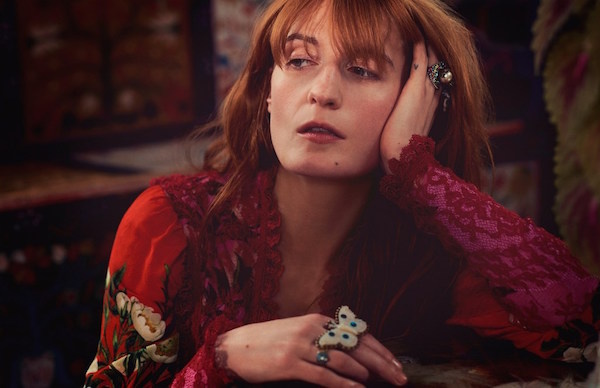
Florence Welch of the band Florence and the Machine is a strikingly beautiful, alluring one in 7 billion performer. Her voice has a somewhat more operatic quality to it when compared to many of her contemporaries. He songs meanwhile tend to cover unusual topics ranging from disembowelment, to drowning, to madness, to domestic abuse, to werewolves killing people.
One of her songs “the Bird Song” is about a woman who commits a murder only for a parrot to see it, and then repeat the dying man’s screams. The women then takes the parrot inside and breaks its neck, but ends up repeating her victims screams herself everywhere she goes, eventually leading to her being caught.
It reads like an Edgar Allan Poe story. I could easily imagine Vincent Price playing the role of the murderer in the bird song. The fact that Florence sings about such unusual, disturbing subjects is what makes her stand out so much. Many have compared her to Kate Bush, and whilst its obvious that Bush is a huge influence on her, Florence’s material is ultimately far darker. Though there has been some controversy over the darker content of many of her songs with some accusing “Kiss with a Fist” of promting domestic abuse. Ultimately Florence Welch has proven herself as one of Britain’s most successful artists around the world.
Best Songs
3/ Shingai Shoniwa

Shingai Shoniwa is the lead singer of the Noisettes. Her voice is strong, but sweet at the same time much like Dina Washington. She is a very eccentric, offbeat and charismatic performer. So far the Noisettes have had an inconsistent career. Their first album was a commercial flop, but their second was a monster hit and produced a number of hit singles including the masterpiece “Don’t Upset the Rhythm” Sadly however their latest album “Contact” was another flop, which was a shame as not ony was it a great album, but it felt like the Noisettes’s career was ready to go into the stratosphere. You should definitely check out the Noisettes three albums. There is a lot of variety among them indeed you’ actually be hard pushed to find 3 more different albums.
Best Songs
I’ve always loved That Girl in particular because it has a real Beatles vibe to it. Everything about it, its lyrics, its style, even the way its sung, makes it feel like a 21st Century Beatles track.
2/ Paloma Faith

Paloma Faith narrowly misses out on being my favorite female performer of the 21st century. I could spend days and days going on about how much I love Paloma, but I’ll try and keep this short. What makes Paloma such a favourite of mine is how imaginative her work is. Her lyrics often conjor up beautiful, vivid, fantastical imagery. Her massive, eccentric imagination encompasses everything she does, particularly how she dresses. There truly is no one like Paloma and her star has only continued to rise over the past few years. With three hugely successful albums under her belt, the future looks very good for ms Faith indeed.
Best Songs
1/ Amy Winehouse

Yeah I know a fairly obvious choice considering my other article “10 reasons to admire Amy Winehouse”, but still for me Amy has to stand head and beehive above the rest. Amy is really the British female artist of the 21st century. All of the others in this list look up to her and credit her with paving the way for them.
Amy was among the first of her generation to make it big abroad, particularly in America. She also helped to revitalize soul music and the stagnated British music scene.
Though she only released two albums before her tragic and untimely death, the impact she made with those two albums was immense and the quality of those two albums is enough to propel her to the status of legend easy.
Winehouse had the greatest range of any vocalist or songwriter on this list. She could sing songs that were light hearted, fun, and sexy, like “Amy Amy Amy”, or songs that were scathing and funny like “Stronger Than Me”, or that were darker like You Know I’m No Good”. Finally she was also able sing songs that were genuinely heartbreaking and moving like Love is a Losing Game.
Forget “Rolling in the Deep”: “Love is a Losing Game” is the greatest break up song ever made for me. It sums up the awful feelings of regret you have when your heart is broken to the point where you wished you had never fallen in love in the first place.
As I have said before “Love is a Losing Game” is a song that you can imagine, had it been released in the 1960’s everyone from Nat King Cole to Billie Holiday to Frank Sinatra would have covered it, and they all would have been able to do a really good version of it too because it is just such a fantastic song lyrically.
Sadly Winehouse is no longer with us, but her legacy lives on in virtually every major British female singer from Adele, to Jessie J, to Paloma Faith and many other female singers around the world, including Lady Gaga and Lana Del Rey, who have both cited her as a huge influence. She will never be forgotten and will always be one of my all time favourite artists.
Best Songs
Blake’s 7 vs Firefly
Blake’s 7 and Firefly are two of the most beloved science fiction television series, which is pretty incredible when you consider that both had a relatively brief run of television.
Both shows have many similarities with one another in terms of themes and premise.
Firefly and Blake’s 7 are space westerns that draw on old classic films such as the Magnificent Seven for inspiration. The main characters of both series are a rag tag team of liars, cheats, murderers and neer do wells who are on the run from a fascist organisation. The setting for the two series is a more dystopian future where technology has improved but nothing else has. Neither series are afraid to kill their lead characters without warning either. Finally both series revolve more around the conflict between humans rather than between human beings and alien races unlike other science fictions series such as Doctor Who, Babylon 5 and Star Trek.
From its inception Firefly has been compared with Blake’s 7. Google Blake’s 7 and Firefly and you will find dozens of articles and blogs comparing the two, some even claiming that Firefly was closely inspired by B7.
Paul Darrow the star of Blake’s 7, even called Firefly “the Blake’s 7 of today”. However despite this Joss Whedon, much to many fans surprise recently claimed in a new biography that he never watched Blake’s 7, or indeed any other British science fiction series such as Doctor Who. Any similarity between the two shows is therefore purely coincidental.
Still I do feel there are enough similarities between the two shows to warrant a full comparison.

VS

1 Best Captain

Roj Blake

Malcolm Reynolds
I am going to have to go with Firefly on this one. Blake was a great character. He was a truly flawed hero, who though charismatic, brave, loyal and genuine in his desire to free the oppressed masses from the tyranny of the federation. Blake was still nevertheless also obsessive, fanatical, arrogant and perfectly willing to sacrifice millions of innocent lives, including his own men for what he saw as the greater good.
However Malcolm I still feel is a better character overall. First off he had a better look. Malcolm’s costume is an iconic costume. I know that sounds shallow, but its true, Blake never really had an iconic look that was recognisable like other sci fi characters such as the Doctor, Reynolds or Captain Kirk.
Also I feel that Reynolds was a stronger central character. The problem with Blake was he was always kind of pushed to the side in favor of Avon. Even before Blake left, Avon was always everybody’s favourite. Even today Avon is the character everyone remembers the most. Reynolds however was never usurped by any of the other characters, though granted Firefly had a shorter run. Still even if it had gone on as long as B7, I don’t think Reynolds would have been pushed to the side.
Both Reynolds and Blake were more idealistic leaders of a band of outlaws, but where as with Blake I feel his idealism was the only aspect of his character that we saw, with Malcolm we saw other sides to his character too. Also I feel that Malcolm’s relationship with the rest of the crew was more fully fleshed out than Blake’s. Therefore I am going to have to go with lovable rouge Nathan Fillion on this one.
Winner

Best Anti Hero

Kerr Avon

Jayne Cobb
Two very similar characters. Kerr Avon and Jayne Cobb are both self servers who are shown to be perfectly willing to leave their ship mates behind in a time of peril, or even sell them out. They look at things in a purely cold and logical way and have no loyalty whatsoever to any other member of the crew.
They serve as a wonderful contrast to their more honourable, idealistic, compassionate captains. Which one is better however? Well for me this was an obvious choice. Avon.
Avon was a truly ground breaking character. He was not sci fi’s first anti hero on television. Prior to Avon, we had already had Jonathan Harris’s Dr Smith in Lost in Space. Dr Smith was certainly not your typical leading character. He was a murderer, a liar, a cheat, a coward, selfish, lazy, weasly and someone who would happily betray children just to save his own miserable neck. Despite this however the audience loved him and he became the main character in the series. To this day he is still the most remembered character from Lost in Space.
However where Avon differed to Smith was that Avon wasn’t just merely the most popular or the main character. He was actually the hero of the show. Avon was every bit as bad, if not worse than Dr Smith, but where as Dr Smith was the source of all of the Robinsons problems and was always made out to be a fool. Avon instead would often save the day through his dirty underhand, cowardly means. A classic example of this can be seen in the episode Animals, where Avon murders a scientist in cold blood in order to save himself and the rest of the crew. If this were Lost in Space and Dr Smith had suggested this, he would be howled down by the rest of the crew and the Robinsons would have found another way to save the day, with Dr Smith then promptly being humiliated in some way at the end.
In Avon’s case however he manages to convince the crew to go along with it and is actually the hero of the episode because of his murderous actions. At the end he remains thoroughly unapologetic about the scientists death and even jokes about it. “What about dr Paxton?” “Who?”.
Blake’s 7, as result of Avon’s influence was a much more morally grey series than the likes of Star Trek, Doctor Who or Lost in Space. Avon emphasised what a bleak, dark future our characters lived in
There was no one Avon was not prepared to kill. In the episode Orbit, Avon attempts to murder his longest serving ally Villa by throwing him off of the ship they are on which is about to crash because there is too much weight on board. Though Avon is able to find an alternate solution in time, he is still nevertheless once again thoroughly unapologetic about his attempt on Villa’s life, and even jokes about it to Villa at the end. “Its a trip I wont forget Avon.” “Come now Villa you know you are safe with me!”
Jayne sadly just cannot compare to Avon. He was a good character, but he never got away with quite as much as Avon did. Jayne was actually more like Dr Smith in that he did do awful things, but was always proven wrong or even humiliated, such as when Malcolm sticks him in an airlock for nearly selling the team out. Jayne didn’t really bring anything new to the whole anti hero idea like Avon did. Also Jayne never took over the show like Avon did.
Even before Blake left the focus was already starting to drift towards Avon, and certainly after Blake left, Avon proved more than capable of carrying the series on his own. Many fans and critics feel the show only really came into its own after Avon became the central character. I doubt that Jayne could have ever held the show as a lead character. Avon was just simply a much stronger character than Jayne ever was. In fact I would say that Avon was better than any individual character in Firefly. Avon simply made B7 the classic that it was.
Winner

Best Telepath

Cally

River
Firefly wins this easily. I liked Cally, but I think the writers did kind of fall into a formula with her where she would be the one who was always taken over by aliens. River on the other hand, though her story arc was uncompleted, I felt she was simply a much stronger, more mysterious and interesting character. You weren’t always sure which side River would be on.
Winner

Best villain

Servalan

The Operative
Two very good villains, but ultimately Servalan has to take the prize. Servalan is one of the greatest tv villains of all time. After Avon she is arguably the character people remember the most from Blake’s 7. The Operative was still a great villain. In some ways he was even more frightening than Servalan. Servalan was a sadist, but she was completely insane, where as the Operative was a sadist yet he felt he was justified. He felt that he was building a better world, and that any atrocity he committed was worth it in the long run. Villains who think they are on the side of right are always more chilling.
However Servalan had far more of a screen presence overall. Her interaction with the main characters, particularly Avon and Dayna was more interesting. I loved the way the more she took from Avon, the more she humiliated him, the more the formerly laid back cynic was driven down the path of madness. I might also add despite being the villain of the piece, Servalan never got her just desserts. In fact she was the only character ironically who most certainly did not die in the entire series, which just futher helped to highlight what a bleak, pessimistic time our heroes lived in.
Winner

Best evil empire

The Federation

The Alliance
Again I am going to have to go with Blake’s 7 here. The Alliance were great, and probably a little bit less cartoonish than the Federation at times, but the Federation were a far more terrifying enemy. What they do to Blake in the first episode alone, brainwash several children into believing they have been raped by him, (in an effort to discredit the resistance) is far more horrifying than anything The Alliance did in all of Firefly.
Winner

Best Ship

The Liberator

Serenity
Technically the Liberator is the better ship. In a one on one fight it could outrun and destroy Serenity in about five seconds. Still despite this I prefer Serentiy. The Liberator at times seemed a bit too powerful, where as I liked the way Serenity did seem a bit more vulnerable yet quite cosy at the same time. I also preferred its design too and it was certainly realized a lot better.
Best Theme
Firefly wins this round. I do like the B7 theme but the lyrics to the Ballad of Serenity were great.
Best Character Death

Gan
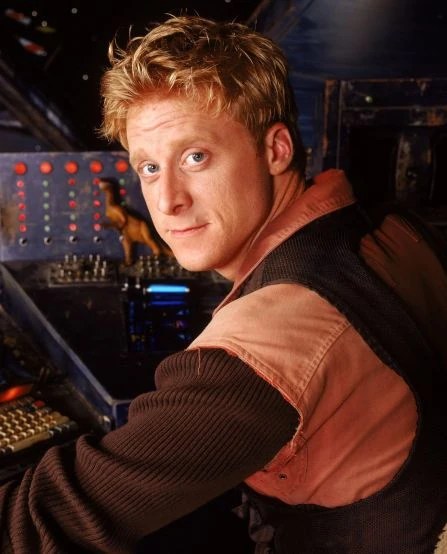
Wash
Blake’s 7 wins this round. Wash was a much better character than Gan and his death was just as shocking. However it was the reaction to Gan’s death which made it better for me. The reaction to Gan’s death was quite unsentimental which I felt was more fitting, as in the situation our heroes where in, no one really had time to grieve. They just had to move on as they were in constant danger. I also liked how Avon tried to used Gans death in an attempt to discredit Blake and ruin his credibility with the others.
Winner

Finale

Blake

Serenity
Blake’s 7 wins this easy. Serenity is an underrated sci fi classic and did a good job of wrapping up Firefly, but Blake the last episode of Blake’s 7 is possibly the greatest ending to any cult series. Its hard to describe the shock the first time you watch Blake, and see all of the main characters die violent horrible deaths. Its the boldest ending to any tv series. Even today with the likes of Game of Thrones such an ending would still most likely provoke outrage among the fandom. Even if Firefly comes bac I doubt it could ever top B7’s ending.
Winner

Final Result
Blake’s 7 wins 5- 4. As much as I love Firefly, Blake’s 7 is still my favourite of the two, though to be fair it did have a longer run. Maybe if Firefly had gone on longer it could have been as good, but as it stands now Blake’s 7 is superior in my opinion.
Doctor Who Vs Star Trek
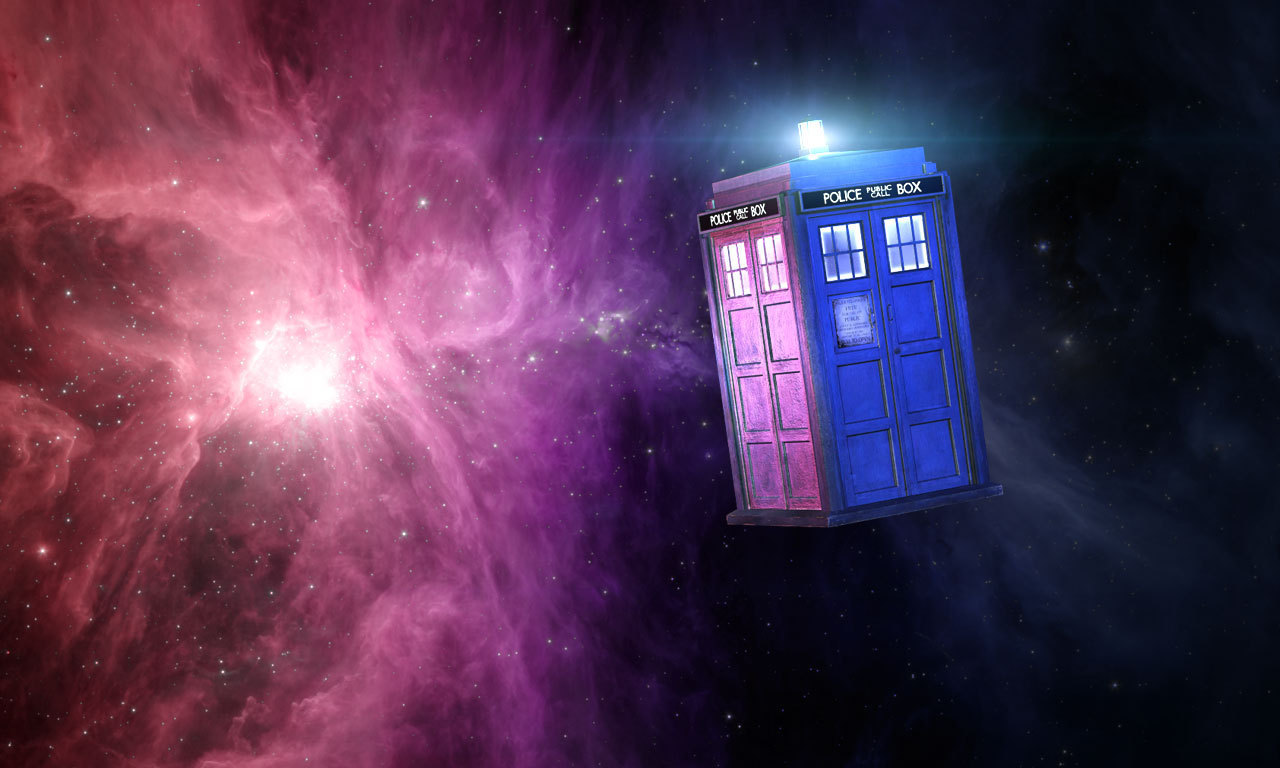

Doctor Who and Star Trek are the two most iconic science fiction television series ever made. They have amassed a following on a global scale like no other and have stood the test of time for over 50 years.
In this article I will be looking at the relationship between both series, the similarities as well as the friendly rivalry between them, and ultimately which I find to be superior. Remember that this is just my opinion, and please by all means tell me which you prefer in the comments below.
I tend to look at it this way. Star Trek is the Beatles of science fiction. It’s certainly the most famous (probably due to the movies more than anything else.)
Even people who have never seen any version of Star Trek still know its catchphrases and icons, such as “Beam me up Scotty”, “KHAAAAAAAAAANNNNNNN”, . “He’ dead Jim”, “It’s life but not as we know it”, “phasers on stun” etc
Also like the Beatles the original Star Trek series was very upbeat and optimistic and preached love and acceptance.
Doctor Who meanwhile was the The Rolling Stones of science fiction. It was the second most mainstream certainly, but it was always a bit edgier than Trek. Trek pushed the boundaries in positive ways too, like having the first interracial kiss, but Who was like the Rolling Stones in that it enjoyed just provoking controversy.
Doctor Who had horrifying monsters that terrified generations of children, scenes of graphic violence like dolls strangling people, the Doctor being drowned etc, that traumatised younger viewers. Who not only provoked controversy, but absolutely thrived on it at times.
Also finally the Doctor is like Keith Richards in that he is someone who can never die either.
Always remember that Star Trek is the Beatles and Doctor Who is the Rolling Stones.


Overview of Both Series

Before we start I’ll just give Trekkies who might not be as familiar with Doctor Who, and Who fans who might not be as familiar with Star Trek an overview of the other series. Obviously skip this if you know both of them.
Doctor Who originally began in 1963. It revolved around a mysterious alien called the Doctor, who travels through time and space in his magnificent machine called the TARDIS, which stands for Time and Relative Dimensions in Space.
Originally the TARDIS had the power to change its outside shape and size in order to blend in with its surroundings, whilst its inside shape and size remain the same. The device that does this however (called the Chamelion circuit) is damaged in the first episode, resulting in the TARDIS assuming the form of a police box for the rest of the series.
The Doctors real name and identity has never been revealed, with the Doctor merely being an alias.
Originally the Doctor was played by William Hartnell, who played the character as a doddering, bad tempered and even somewhat callous, but still ultimately heroic character.
The show was a massive success right away thanks in no small part to the introduction of the Doctors archenemies, the Daleks.
The Daleks were a race of hideous, slimy mutants, housed within tank like robots. They sought to exterminate all other life forms in the universe, as they believed themselves to be the supreme beings. Devoid of any compassion or pity, the Daleks were an instant sensation due to their ruthless nature, unique design, and frightening voices.
Throughout the 60’s Britain would be gripped in what would become known as Dalekmania which at one point even topped Beatlemania.
Sadly however William Hartnell was not a well man when he played the Doctor and was eventually forced to quit after just 3 years. The writers got round his departure by revealing that the Doctor had the power to change his entire body when he was mortally wounded. This process would become known as regeneration and it would later be revealed that the Doctor could do this 12 times, allowing him to have 13 different bodies.
Whenever the Doctor regenerates, though his entire appearance and outer persona change, he is still the same man underneath. All of the Doctors possess the same consciousness, memories, and core personality.
The Second Doctor was played by Patrick Troughton, who would also play the part for 3 years before departing the show at the end of the 60’s. During Troughton’s time many other notable enemies of the Doctor would be established such as the Cybermen (who first appeared in Hartnell’s last story, but became prominent in Troughton’s time,) the Ice Warriors and the Great Intelligence.
I think a large part of Doctor Who’s continued popularity is the strength of its rogues gallery in general, not just the Daleks. It’s surely no coincidence that the three most popular superheroes, Batman, Spider-Man and Superman have unquestionably the best villains. I am not saying that this is the only reason these characters, and Doctor Who are popular, but it certainly contributes to their massive popularity with children at least.
In Patrick Troughton’s last ever story we were introduced to the Doctors race, the Time Lords. The Time Lords were the most advanced species in the universe, but they were forbidden to interfere in the affairs of other life forms, which is why the Doctor was a renegade from his own people. The Time Lords would exile the Doctor to earth in the 20th century as a punishment for breaking their laws. (They would also force him to regenerate once more.) The Third Doctor would subsequently remain trapped on earth for the first 3 years of his run, before the Time Lords finally forgave him in the first story of season 10. (Which saw all then three Doctors unite to face a threat to the entire universe, Omega the founder of Time Lord society.)
Jon Pertwee took over in 1970 as the Third Doctor and would play the part for 5 years. During Pertwee’s time the Doctors most persistent single enemy was introduced, another renegade Time Lord, known as the Master. Much like the Doctor, the Master, who was originally played by Roger Delgado, would be played by a number of different actors through the years.
The Master initially changed his appearance through regeneration, but later stories would show the villain after having used up all of his 13 lives, steal other people’s bodies like a Demon to prolong his life.
Tom Baker would take over as the Fourth Doctor in 1975. To date Tom is the longest running and the most popular actor in the role. He played the character for 7 years. During his time the show also developed a much bigger following abroad including in America in particular.
Peter Davison took over the part in 1981 and stayed for just 3 years. After he left, Colin Baker would take over as the Sixth Doctor. Sadly however Colin’s time was beset by problems with the BBC, who at that point despised the show and wanted to finish it. He was dismissed from the role after just 2 years. Sylvester McCoy would then take over as the Seventh Doctor for another three years before the BBC finally pulled the plug on the show in 1989, after a 26 year run.
Doctor Who would later return for a one off 1996 tv movie which saw Sylvester McCoy hand over to Paul McGann. It would be another almost 10 years however before Doctor Who finally returned as ongoing series in 2005. The Ninth Doctor was played by Christopher Eccelston for just one year before he handed over to David Tennant.
During Tennant’s time Doctor Who would be restored to being one of the most popular shows in the United Kingdom, with Tennant being arguably the most popular Doctor since Tom Baker himself. Tennant stepped down from the part in 2010, with Matt Smith taking over as the Eleventh Doctor. In the 2013 story Time of the Doctor, Matt Smith’s incarnation regenerated into the 12th Doctor played by Peter Capaldi whose first series has just begun as of the writing of this article.
Star Trek meanwhile was created in 1966 by Gene Roddenberry. Its original pilot, The Cage was very different to the later series.
Its main character was Christopher Pike, played by the late Jeffrey Hunter who was a more, conflicted, tormented character. His science officer was a cold and logical female character called Number 1. Spock played by Leonard Nimoy did still appear, but he was a rather emotional character whose back story was not fleshed out.
The Cage despite being a classic piece of sci fi, performed poorly with test audiences. In some ways I think it was just too ahead of its time with its strong, non sexualized female characters and its incredibly dark content, such as Captain Pike being tortured by the Aliens, who conjure up images of hell itself from his mind.
Star Trek was truly unlike anything else on tv at that time, or since.
The show would be retooled for a second pilot (being one of the few genre series to get two pilots along with ironically Doctor Who itself.) This second pilot featured James T Kirk played by William Shatner as the main character, whilst Number 1’s cold and logical personality was transferred to Mr Spock. (Ironically it had been women who had the most problem with Number 1, whilst Spock would later go on to become the most popular character with female audiences.)
Star Trek was set in the 23rd century. Humanity is living in a golden age where not only is there world peace, but mankind has branched out into space and made contact with other peaceful alien species such as the Vulcans.
Sadly however there are also many hostile species too, such as the warlike Klingons and the Romulans both of whom would go on to be the most iconic alien species in Star Trek.
The main characters are the crew of the Starship Enterprise whose job is to explore unknown areas of the universe, seek out new life forms and make contact with them.
Star Trek sadly was not initially a big success. In fact it was almost cancelled after its second season, but pressure from fans convinced the network to keep it alive for just one more year.
Fortunately whilst Star Trek was not that big a success at first, it nevertheless developed one of the most devoted followings of any series. It would also go on to be a massive success in syndication as well as abroad too. In the United Kingdom in particular it was incredibly popular during its initial run. After almost ten years Star Trek would return on the big screen this time in 1978.
Star Trek the Motion Picture was a reasonable success, but it would be the next movie, Star Trek 2 The Wrath of Khan released in 1982 that would completely revive the franchise.
Often hailed as one of the most moving scenes in cinema history. Star Trek 2 Wrath of Khan is undoubtedly one of the greatest films of all time and really secured Star Trek’s future as a major film and tv franchise.
Many more sequels followed featuring the original cast, but it wouldn’t be until 1987 that Star Trek returned to its original home on television.
This series Star Trek The Next Generation was set over 70 years after the original series and revolved around an entirely new cast of characters, led by Captain Jean Luc Picard, played by Patrick Stewart.
Star Trek the Next Generation ran for 7 years in total and much like its parent series, would be followed by a number of films.
The Next Generation introduced many new alien races to the Star Trek universe, including most notably the evil Borg, who went on to become among the most popular alien races in all of sci fi.
Whilst the Next Generation was on, a third Star Trek series, Deep Space Nine was produced. Deep Space Nine would also run for 7 years.
It was a radical departure from the previous two Star Trek series in that it was set on a space station rather than a Starship and focused on problems within the Federation rather than on exploring the universe. Its leading character was Benjamin Sisko played by Avery Brooks.
A fourth Star Trek series would be produced concurrently with Deep Space Nine called Star Trek Voyager, which followed the exploits of Captain Janeaway, the shows first female lead played by Kate Mulgrew. The premise of the series saw the Starship Voyager become stranded in the Delta Quadrant, an area of space controlled by the Borg, and followed its crews attempts to get home.
Voyager was another massive success and ran for 7 years too. It would in turn be followed by a prequel series called Enterprise, but sadly by this point the Star Trek craze of the 90’s had begun to fade, and Enterprise would be axed after just 5 series in 2005.
Still its hard to keep a good franchise down (as Who fans know) and Star Trek would return just 4 years later on the big screen with a new trilogy of films based on the original series, but set in a changed timeline, which is still going strong as of the writing of this article.
Relationship With Each Other

Doctor Who and Star Trek have a very friendly relationship with one another.
There is a bit of a rivalry sure, buts its a very affectionate one (again like the rivalry between the Stones and the Beatles.)
It doesn’t hurt that many people who have worked on both shows are fans of the other. Jon Pertwee who played the Third Doctor was a massive Star Trek fan and even asked if he could interview William Shatner for British tv, which he later did. Sylvester McCoy who played the Seventh Doctor was also a big fan of the original series too, whilst John Barrowman who played one of the Doctors best friends, Captain Jack Harkness is a massive fan of DS9.
In fact many prominent people who worked on Doctor Who have even said that they preferred Star Trek to Doctor Who!
Christopher Eccelston who played the Ninth Doctor was a big Trekkie as a child, and said that it was very important to him, whilst he claimed to have only ever fleetingly seen the original series of Doctor Who.
Christopher Eccelston: Why Star Trek is Important To Me
Freema Agyeman, who played the Doctors companion Martha Jones also has named Star Trek as her favourite series too and said she would like nothing more than to be in it.

She may have been in love with the Doctor, but Martha would much rather have been on the Enterprise than the TARDIS.
Patrick Troughton who played the Second Doctor was also a huge Trekkie and used to watch the original series with his family far more than they ever watched Doctor Who. Ironically one of the last things Troughton ever did before his untimely passing, according to Anthony Ainley (who played the Master), was to get the autograph’s of the stars of the original Star Trek series.
Finally Richard Hurndall who took over the role of the First Doctor for the 20th anniversary story, The Five Doctors after William Hartnell’s passing, said that Star Trek was the only science fiction series he had liked.
“I think I’m a little too old to comprehend science-fiction, really. I’ve seen very few ‘Doctor Who’ episodes, but my favourite in the part is undoubtedly Patrick Troughton, who gets so much humour into it. I rather liked ‘Star Trek’, but otherwise I have left science-fiction to my grandchildren.”
–Richard Hurndall
As for the Star Trek crew meanwhile, Simon Pegg who plays Scotty in the new film series is a lifelong Who fan, whilst Patrick Stewart is also a big fan of Doctor Who as well. Leonard Nimoy also became a fan of Doctor Who in the 90’s and even expressed interest in directing a film based on the series. Sadly the plans fell through, but imagine how amazing it would have been if Mr Spock had been the person to bring Doctor Who back!
“Leonard Nimoy is a very pleasant, courteous, soft-spoken and generous man, who had already invested a great deal of time in researching Doctor Who. He had accumulated a fairly extensive collection of videotapes, covering all seven incarnations of the Doctor. We spent a fruitful couple of hours discussing the very basis of the show – what makes Doctor Who Doctor Who – as well as the psychology of its hero, companions, and various off-the-wall casting ideas.”
Many of the writers of the Next Generation were also big Doctor Who fans. Its not escaped people’s attention that The Borg are very similar to the Cybermen. Both are machine creatures who convert organic life forms across the universe into members of their own kind, and the writers of Star Trek acknowledged this by having the names of the first 6 actors to play the Doctor flash up on a screen.

Another episode of The Next Generation, Future Tense, even featured a time capsule that was bigger on the inside than the outside!
Tom Baker was actually almost cast as a time traveller in another Next Generation episode, A Matter of Time, though sadly the plans fell through.
Many cast and crew members from both shows are also good friends with one another too, such as most notably Jon Pertwee and James Doohan who played the original Scotty. The two first met at a convention and got to know each other very well.

William Shatner is also good friends with John Barrowman, with again the two having gotten to know each other at conventions.
Finally Captain Kirk himself wished Doctor Who a happy birthday on its 50th anniversary in 2013, whilst many Doctor Who actors also helped Star Trek celebrate its 50th birthday in 2016
Nichelle Nichols and Freema Agyeman
Happy 50th Birthday Doctor Who From William Shatner
The two franchises did have an actual crossover with each other in 2012, a limited comic book series which saw the 11th Doctor and Captain Picard team up to take on the combined might of the Borg and the Cybermen.

On top of this Colin Baker who played the 6th Doctor will also be appearing in the fan series, Star Trek continues.
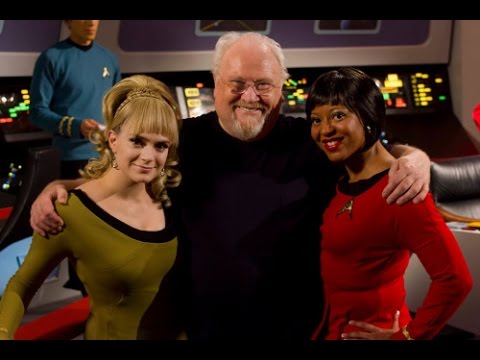
As you can see there is a lot of good will between both franchises. I think this might stem from the fact that Doctor Who and Star Trek somewhat paradoxically are very similar, but also very different.
On the one hand the two shows are never really going to be rivals with each other because one is really the quintessential British sci fi series, whilst the other is obviously the greatest American sci fi series. They compete in different markets in different ways. In America Star Trek is the mainstream, homegrown one, whilst Doctor Who is appreciated for being the foreign one, that’s unlike anything they have. In the United Kingdom meanwhile the opposite is true, with Doctor Who being the mainstream, homegrown one, and Star Trek is the foreign one that’s unlike anything we have.
They aren’t ever going to be threats to each other, but at the same time they do actually explore a number of the same themes as we will see.
Similarities Between Both Franchises

Doctor Who and Star Trek are quite different in a number of ways. One revolves around a central heroic character, and his sidekicks, whilst another is really more of an ensemble piece. The Doctor in Classic Who was also a very cold alien, distant, mysterious character, whilst the leads in Star Trek are often more flawed and relatable (even when they are aliens.)
Also I find that the aliens in Doctor Who tend to be monsters (apart from a few exceptions like the Doctors people, the Time Lords.) In Star Trek meanwhile the aliens tend to be more human.
There are advantages and disadvantages to both types of alien of course.
On the one hand the aliens in Doctor Who are far more imaginative, scary, and their designs are all very unique and striking, so they tend to stick in you mind more. The Daleks design in particular could almost be considered a work of art.
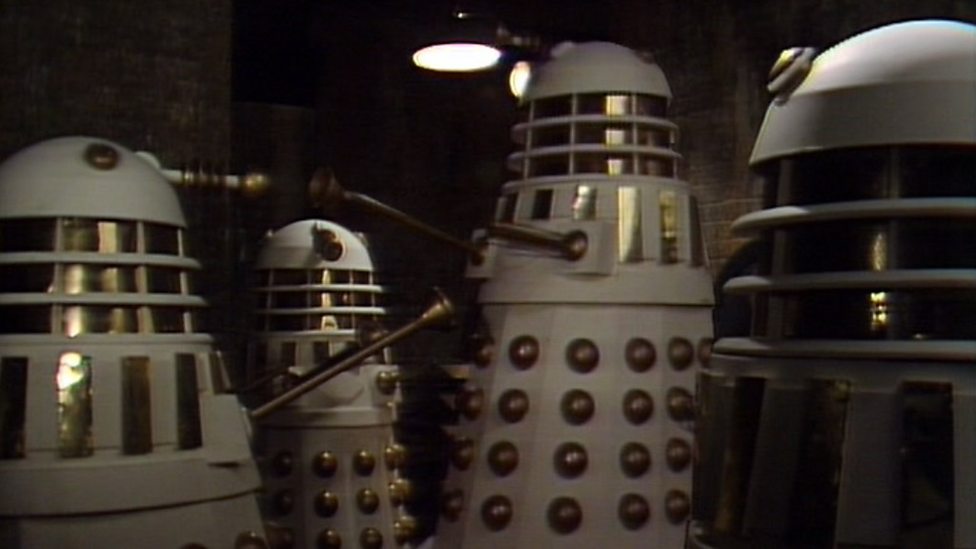

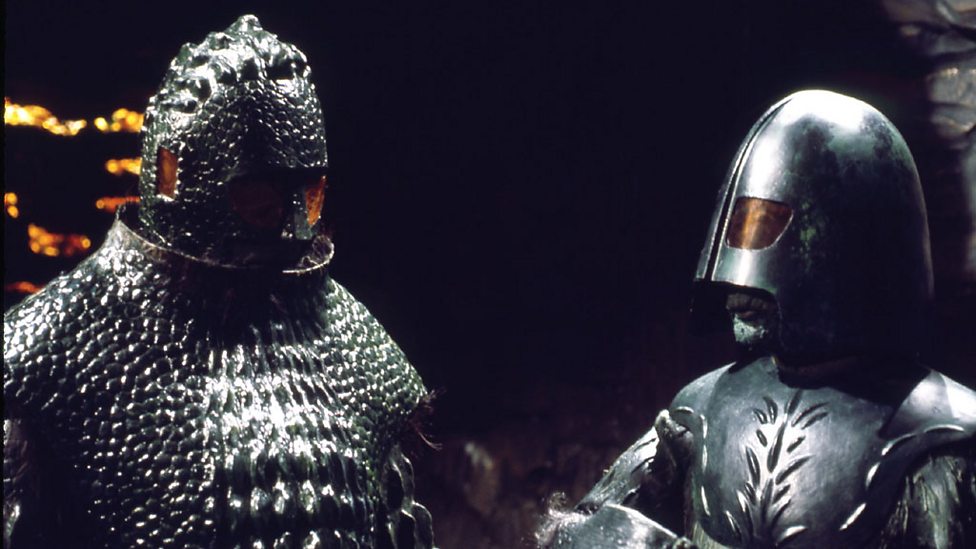

With the aliens in Star Trek like the Klingons, the Cardassians, the Romulans and even the Borg, you can see that not nearly the same amount time and effort has been spent into making them seem alien and unique like the Daleks and the Sontarans. Basically the crew just stuck wobbly bits on the actors foreheads or ears.
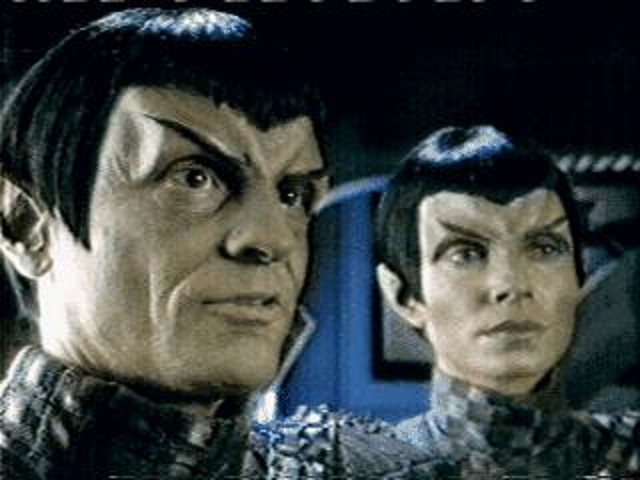


At the same time however the fact that the aliens in Star Trek are more human allows the writers to flesh them out more, and have them interact with the main heroes in a somewhat more deep and meaningful way than most of the Doctor Who aliens. You could never do a scene like the classic “in another life time we could have been friends” between Kirk and the Romulan commander from “Balance of Terror”, with a Sontaran or an Ice Warrior or a Cyberman for instance.
Still despite these key differences, there are a number of strong similarities and parallels that can be drawn between Doctor Who and Star Trek too.
To start with both Star Trek and Doctor Who have been able to run for so long because they are able to change their leads relatively easily for a number of reasons. The Doctor can regenerate, whilst the captain of the Enterprise can be easily replaced. Also both shows have such rich, imaginative universes filled with diverse races and creatures that there are always more stories to tell.
Another key similarity between both Doctor Who and Star Trek is that their leads are also more cerebral characters too. Whilst the likes of Kirk and the Third Doctor may be men of action when need be, ultimately all of the Star Treks leads, and the Doctors use their minds first and prefer peaceful solutions. They all will only ever kill as a last resort (which is sadly quite often.)
I also think quite an interesting parallel can be drawn between Captain Kirk and the Doctor too, in the sense that both are people who in some ways are very strict in following the rules, but in others are quite rebellious. Both are also explorers who hate having to settle down and have a normal life. They are always desperate to search for the unknown, or go where no man or time lord has ever gone before.
Star Trek and Doctor Who would also often use aliens as political metaphors. In Doctor Who’s case the Daleks represented the Nazis and race hatred in general, whilst in Star Trek the Klingons represented the USSR, and the tensions between the Klingons and the Federation also represented the cold war paranoia that was rampant at the time too.
Both the Cybermen and Khan also represent technology being abused in an effort to try improve humanity.
Both series were also very progressive for their time as well, and have continued to be so in the decades since.
Star Trek and Doctor Who are really (apart from a few stories) mostly politically neutral. They are entertainment for everyone to enjoy. Still they did often combat prejudices of the time through positive representation.
Star Trek had a multi racial crew, which included a Russian during the height of the Cold War, a Japanese man soon after World War 2, and a black woman during the height of the civil rights movement.
It also had the first ever interracial kiss in an American drama series. None other than Martin Luther King himself praised Star Trek’s progressive values and urged Nichelle Nichols not to quit the series.
Doctor Who meanwhile in various stories set in earth’s future such as The Tenth Planet, and The Moonbase would similarly depict a multi racial vision of the future, with The Tenth Planet featuring a black astronaut as one of its main characters.
Both series would also give strong roles to women too from Uhura, to Number One, to Barbara, to Sara Kingdom, to Zoe, to Liz Shaw, to Leela, to Sarah Jane Smith.
That’s not to say that there still wasn’t some sexism and racism in Star Trek and Doctor Who. Its to be expected in television from the 60’s after all, but still by and large Doctor Who and Star Trek were decades ahead of their time.
Not surprisingly Doctor Who and Star Trek had a very special appeal to many marginalised groups of people throughout the 60’s and 70’s.
Due to the fact that it was one of the few series to give a strong role to a black woman, many black people were inspired by Star Trek, including actress Whoopi Goldberg who said watching Uhura on tv convinced her that she could be an actress. She later landed a role on Star Trek The Next Generation too. Mae Jemison meanwhile an astronaut and the first African American woman in space was also inspired by Star Trek, and later guest starred in Star Trek the Next Generation as well.
Doctor Who on the other hand has always had a special appeal to LGBT people. Throughout the entirety of the Classic era the Doctor was almost always portrayed as asexual. He was about the only leading male character who didn’t get the girl at any point.
Furthermore the Doctor was also portrayed as an outsider, who had fled his own people because he had never really fitted in, and was also always a somewhat camp character too.
For many gay men in the 60’s and 70’s the Doctor was the closest thing they had to a role model. (It also didn’t hurt that the show was produced by a gay man throughout the entire 1980’s.)
“For me, as a young boy and a teenager, growing up in the north of England, in a world where I could never imagine being a gay man, let alone settling down and finding someone, I think Doctor Who was really asexual. There were programmes like The Sweeney which were very much about men chasing women, men getting women, whereas with Doctor Who you had a show that never really dealt with that.”
-Doctor Who producer Phil Collinson on the impact Doctor Who made on his life growing up.
Finally both Star Trek and Doctor Who explore many similar science fiction ideas and concepts. Both involve exploring the furthest reaches of the universe, and both also feature many time travel stories.
Time travel is obviously not as big a feature of Star Trek as it is of Doctor Who (though interestingly enough Doctor Who prior to the 11th Doctors era never really had that many stories that focused on time travel, with time travel instead always being used as merely a plot device to get the Doctor somewhere.)
Still many of the most popular Star Trek stories do focus on time travel such as The City on the Edge of Forever and Star Trek 4 The Voyage Home.
Whilst they have very different styles, as you can see they are at their core very similar shows and in the final section of this article I am going to draw up a list of specific examples of the franchises exploring similar stories and characters, in order to see which I prefer. I will also look at what I feel to be the best episodes of both series and the main characters as well.
1/ Most famous leading man

Tom Baker

William Shatner
This was a very hard one to choose. Tom Baker and William Shatner are both legends. To this day there are no two actors who are more closely associated with these franchises, which is no mean feat considering both franchises have more or less being running for the past 5 decades continually in some form or another.
Both men had huge personalities and were shameless hams too. More importantly both men were also great actors when they needed to be and could inject real gravitas into their larger than life characters when needed such as in “Search for Spock” when Kirk discovers that the Klingons have murdered his son, or in “Genesis of the Daleks” where the fourth Doctor is wondering on whether or not he has the right to destroy the Daleks.
Both men as you can see from these clips took the stronger scripts seriously, but for the poorer stories would often overact which in turn would elevate them greatly.
So who’s better? Again hard to say but I am going to have to go with Tom here. I feel bad saying that anyone is better than William Shatner, but I’m going to go with Tom only because based on everything I have ever seen of Tom outside of Who, he actually is the Fourth Doctor. Willaim Shatner does have certain similarities with Kirk, but not to the same extent as Tom does with the Fourth Doctor. If anything the Fourth Doctor is just a stripped down version of Tom Baker.
Winner

2/ Main Heroes Best Friend

Brigadier Alistair Gordon Lethbridge Stewart

Spock
Though the Doctor has had many companions over the years, I think its fair to say that The Brigadier is his best friend. Brigadier Alistair Gordon Lethbridge Stewart was the head of UNIT, an organisation designed to track down alien threats. The Doctor worked with him during his exile on earth, but the Brig would go on to meet the Doctor throughout many of his incarnations.
Spock meanwhile was the half human, half Vulcan Science Officer of the Starship Enterprise. He and Captain Kirk had one of the most enduring friendships in all of fiction, with the entire slash fiction subgenre having grown out of it.
Which is better however? Well this time its Star Trek. I love the Brig, but Spock takes the lead here as he is just as iconic a character as Captain Kirk himself. Everyone knows who Spock is, everyone knows his ears, his cold logical nature and the live long and prosper sign.
Also I feel that Spock had quite a large impact on television in that not only was he one of the first examples of a supporting character ending up being arguably the most popular with audiences: He also kind of established the trend in sci fi and fantasy series of there being a non human member of the team, who is the odd man out, but in some ways the most useful.
Whilst the Brig will always be a hero to Doctor Who fans, Spock is one of the most important characters in the history of science fiction.
Winner

Doctor Who 1 Star Trek 1
3/ Unrequited love interest

Martha Jones

Nurse Christine Chapel
This one wasn’t as hard as for me, Martha Jones beats Nurse Chapel easily. Chapel and Martha had the rather bad luck to fall in love with cold, unfeeling aliens (well the Doctor was more just unfeeling towards her.)
Martha however I think had more to her character than just being the unrequited love interest. She saved the entire earth from the Master in the season finale, and she eventually got over her crush on the Doctor and came back in Doctor Who series 4 and Torchwood series 2, as a truly strong and independent character. Chapel however never really got over Spock, and though she did help to save the day a few times, it was never to the same extent as Martha Jones.
Winner

Doctor Who 2 Star Trek 1
4/ Less annoying boy genius


Adric

Wesley Crusher
Classic Who and The Next Generation both had this type of character, the smug boy genius who thinks he is better than the main hero, and not surprisingly is despised by the majority of fans as a result.
Of the two of them I’m going to say Adric was less annoying. I think people tend to be a bit too hard on Adric. I always felt he was quite interesting, as he was one of the most tragic characters in the history of Doctor Who. He never fits in anywhere, even among the Doctor and his companions (with the Doctor often treating him as a bumbling oaf at best.)
The only person who ever truly cares for him, is his brother who is killed horribly. Finally however when it looks as though the Doctor is beginning to respect him, and he might just have found acceptance, he is killed by the Cybermen.
Wesley Crusher meanwhile felt like Gene Roddenberry simply living out his fantasies through this character who was clearly based on a young version of himself. Eugene Wesley Roddenberry.
Also Wesley Crusher took over the show and actually did undermine Captain Picard, whilst Adric’s arrogance was often used against him. Indeed it causes his death, as he stays behind on the Freighter because he thinks he can save humanity (when ironically if he had succeeded then he would have wiped the human race from history.)
With Wesley however again it simply felt like the writers just wanted him to be right all the time, and didn’t care that he came across as an obnoxious, arrogant know it all.
Also finally Adrics death is far more powerful than any scene with Wesley, so Adric takes this easily.
2017 Edit Update
Not that it matters as Adric had already won this, but still Wesley slips even further down in my estimation since Will Wheaton was revealed as a self loathing fanboy, Anita Sarkeesian brown nosing, white knight.
Normally its best not to associate an actor with the character they played, but since I never liked Wesley anyway, then this is just more reason to be team Adric in this debate.
Winner

By miles and miles.
Doctor Who 3 Star Trek 1
5/ Best Archenemy


Khan and the Master are the two most iconic individual villains in the Doctor Who and Star Trek franchises and both are quite similar characters in a number of ways.
The Master is a megalomainiac who wants to gain power over the cosmos. He believes that when he is in charge things will be better. Khan similarly was determined to rule the world and later the Federation, as he believed that he would in his own words bring order.
Whilst both villains have such grand ambitions for humanity, ironically they end up more obsessed with a petty vendetta against one man, the Doctor and Captain Kirk.
Khan despises Kirk because he left him on Citi Alpha 5, whilst the Master though respecting him at first comes to loathe the Doctor for foiling him so many times.
The Master and Khan’s hatred for their mortal enemies causes them both to actively sabotage their plans for conquest in some instances. In Wrath of Khan, Khan pursues Kirk through the Mutara Nebula which will compromise his ship, when he could have just left with the Genesis Device and had everything he wanted. In The Deadly Assassin meanwhile the Master uses the Doctor as part of his plan to steal the eye of harmony’s power, when he could have used any random time lord, rather than the Doctor who would be smart enough to figure out what is going on.
Even when near death and in the most unimaginable agony, Khan and the Masters hatred of the Doctor and Captain Kirk drives them on more than anything else.
The Master and Khan also are both master manipulators. Almost ever Master story from Terror of the Autons to Last of the Time Lords will show the villain twist the mind of someone, until they become his loyal servant.
Khan meanwhile is shown to similarly manipulate Lt Maria McGivers into helping him take over the Enterprise in Space Seed (though unlike the Masters female cohorts such as Lucy Saxon, Khan at least did genuinely love McGivers. In fact its her death which he blames on Kirk that motivates him more than anything else in Wrath of Khan.)
Both villains are also shown to use mind control on their victims too. The Master has always been hypnotic in some form or another. Whether that’s Delgado’s hypnotic chant of “YOU WILL OBEY ME!” or Eric Roberts spit that takes people over, or John Simm using the Archangel network.
Khan meanwhile memorably sticks horrible worm like creatures in Checkov and Terrell’s ears which allows him to control them.
Khan and the Master were also more of a match for the Doctor and Kirk too. The Master was a Time Lord like the Doctor and has his own Tardis, whilst Khan was actually superior to Kirk in a number of ways. As a result both Kirk and the Doctor are often pushed to their limits, and might even be forced to fight dirty in order to take down The Master and Khan.
Though normally more cerebral heroes who prefer to find a peaceful solution, the Doctor and Captain Kirk are still prepared to kick their enemies into bottomless pits and smash their head’s in with pipe’s if need be.
Whilst both the Master and Khan are excellent villains I am going to give this one to Star Trek.
Khan is a superior villain in pretty much every way for me.
To start with his backstory is more fleshed out. A problem with the Master is that you can’t really explore his backstory, as his whole thing (much like the Doctor) is that he is mysterious. Unfortunately this means that sometimes the Master can become quite a flat character.
Khan’s backstory in the Eugenics Wars was fascinating. It helped to flesh out the mythology of Star Trek itself and has served as the basis for some great spin off material. Also Khan I feel was written in a more 3 dimensional way. As wicked as he was you could actually have some sympathy for him. His grievance against Kirk is genuine, as Kirk ultimately did just dump him on a planet and then not bother with him for 20 years. If Kirk had just checked once then all of the horrors of Wrath of Khan could have been avoided.
With the Master meanwhile as much as I like him he could feel like a Saturday Morning cartoon villain some times.
Compare their dialogue to see what I mean.
DOCTOR: The Master’s consumed with hatred. It’s his one great weakness.
MASTER: Ha. Weakness, Doctor? Hate is strength.
DOCTOR: Not in your case. You’d delay an execution to pull the wings off a fly.
MASTER: This time, Doctor, the execution will not be delayed.. I have suffered long enough from your stupid, stubborn interference in my designs. Now we are coming to the end of our conflict, Doctor.
(Spandrell moves forward and the Master shoots him.)
DOCTOR: Why have you brought me here?
MASTER: As a scapegoat for the killing of the President. Who else but you, Doctor? So despicably good, so insufferably compassionate. I wanted you to die in ignominious shame and disgrace.
(The Doctor steps forward and gets shot.)
MASTER: Now, do as I say, Coordinator, or you’ll get the same.
(Engin strips the late President of the Y shaped sash and gives it to the Master.
MASTER: They’re not dead. Stunned. They’ll live long enough to see the end of this accursed planet, and for the Doctor to taste the full bitterness of his defeat!
KIRK: Khan, you dirty bloodsucker!! You’re going to have to do your own dirty work now! Do you hear me?! Do you?!
(Khan reacts to Kirk’s voice with shock. He clutches the communicator.)
KHAN: Kirk! Kirk, you’re still alive – my old friend…
KIRK: Still ‘old friend.’ You’ve managed kill just about everyone else. But like a poor marksman, you keep missing the target.
KHAN: (ironic) Perhaps I no longer need to try.
KIRK: (desperate) Khan, Khan, you’ve got Genesis, but you don’t have me! you were going to kill me, Khan! You’re going to have to come down here! You’re going to have to
come down here!
KHAN: I’ve done far worse than kill you. I’ve hurt you. And I wish to go on hurting you. I shall leave you, as you left me, as you left her. Marooned for all eternity in the center of a dead planet. Buried alive!
You can see how of the two of them Khan has more proper motives. He despises Kirk because Kirk caused the death of the woman he loves, and abandoned him on a dying world for years, where as the Master it seems hates the Doctor because he’s a little goody two shoes?
Also its not like I’ve chosen a crap Master story and compared it with Wrath of Khan. That scene is from The Deadly Assassin, one of the all time greatest Master stories, written by the most popular Doctor Who writer Robert Holmes.
Also everything Khan did made sense. With the Master at times they’d have him just do evil things because he’s evil! Or they’d have him do gimmicky things like dress up in disguise for absolutely no reason whatsoever.
Also Khan was wisely only used sparingly. He appears just twice in the original Star Trek canon. The Master meanwhile was horribly overused throughout much of Classic Who. As a result of this the Master’s effectiveness as a villain was not only greatly diluted, but he has also been in some absolutely horrendous stories.
Take a look at this scene from one of his latest appearances, The Last of the Time Lords. Here the Master has taken over the earth and aged the Doctor (who for some reason has shrunk?) Whilst the Doctors faithful companion Martha Jones has travelled the entire world for a year and, well see for yourself.
Easily one of the worst scenes in the entire history of either Doctor Who or Star Trek. This scene alone practically puts Khan ahead of the Master. Even the Cumberbatch version of Khan was never in anything as shit as that!
Still even when you look at the Masters best stories like The Deadly Assassin and Survival, they still in my opinion can’t match Wrath of Khan, and at the very least they don’t exceed Space Seed either.
Star Trek definitely takes this.

Doctor Who 3 Star Trek 2
6/ Alien Invaders

The Daleks

The Klingons
This is one that I don’t think many people including even Trekkies would disagree with me on. The Daleks are far better than the Klingons. Both are great villains and both served as great allegories for different things, in the Klingons case the Soviet Union, in the Daleks the Nazi’s. Ultimately however I think the Daleks still have to stand as the better alien invaders.
To start with they are more genuinely alien. The Klingons in the original series look liked us and in later series they still looked by and large like us, except they now had bumpy foreheads. The Daleks however looked totally alien. Okay I can understand that to some people the Daleks design might look a bit silly, but even then no one can deny that their design does not look even remotely human.
It has no legs, no arms, no face, nothing we can recognise. Also in terms of behaviour, the Daleks were more alien than the Klingons too. The Klingons behaved in a very human way. They had their own culture, their own code of honour, their own literature, even their own booze. The Daleks however had nothing we could relate too. They don’t have any culture, there are no Dalek laws, no Dalek customs, no Dalek literature, no Dalek art, no Dalek poetry, no Dalek code of honour, no Dalek society etc.
There are no Daleks that behave differently, no good guy Daleks, no extra fanatical Daleks, no Daleks that seek to gain power for themselves. All the Daleks behave exactly the same from the lowliest drone to the emperor. However they are not merely robots, they are flesh and blood creatures and they are also emotional creatures too. They are not driven by logic, but by irrational fear and hatred of other life forms.
Thus they aren’t really like anything we can relate too. They obviously aren’t like us, but they also don’t resemble any kind of animal, and they aren’t simply robots either.
I don’t really think there are any other aliens you can say that about. The Predator for instance is still very human, not just in terms of how it looks, but its whole warrior culture, whilst the Xenomorph aside from still having some human features like arms, legs and a mouth, is basically just like a big overgrown animal.
The Daleks however to ironically use a Star Trek quote are genuinely “life but not as we know it”.
I also feel that the Daleks simply have more charisma and screen presence than the Klingons. Their rasping, screeching voice alone is instantly imitable, which probably accounts for a large part of their popularity.
Another way you can tell the Daleks have the greater presence is that they take centre stage whenever they appear.
In all of their appearances in Classic Who they are the main villains and the focus is entirely on them except for one story “Frontier in Space”, though even here they are still the main villains, we just don’t find out until the end. In the New Who they have been the main focus in all but two stories they appeared in .
The Klingons however in their appearances in the original series were not always the main villains or focus of the stories. In Errand of Mercy the main focus I feel is on the aliens the Klingons are persecuting, in Fridays child again I feel the main focus is on the aliens. In The Trouble with Tribbles the main focus is on the Tribbles. The Klingons could be replaced by any alien in that story. In Day of the Dove meanwhile the main villain is the alien that is pitting the Klingons and the humans against one another.
The Daleks when compared with the Klingons are just simply too big a presence to be pushed to the side.
Finally the Daleks I feel have made a much larger impact on popular culture than the Klingons have. The Klingons are iconic, but not to the same extent as the Daleks. The Daleks are recognised all around the world. They have popped up in many American television series including “The Simpsons”, “South Park”, “The Big Bang Theory” and also the movie “Looney Tunes Back in Action”.
In the United Kingdom however the Daleks are almost a way of life. Back in the 1960’s the Daleks were ever bit as popular as the Beatles. Britain was gripped in “Dalekmania”, there were Dalek toys, soaps, posters, stage plays and even films based on the monsters.
In the decades since they have still remained popular. Most of the time whenever they return they are on the front of the radio times. The word Dalek even made its way into the dictionary at one point.
The Klingons have never enjoyed that level of fame in Star Treks long history. It could be argued that the Daleks were responsible for Doctor Who’s initial success. The show really took off after they appeared. The Klingons meanwhile I feel were only popular because they were in Star Trek. They piggy backed on the shows popularity, where as with the Daleks if anything back in the 60’s it was the other way around and Doctor Who piggy backed on the Daleks huge popularity to become a monster hit.
Winner

Doctor Who 4 Star Trek 2
Here are some examples of why the Daleks are way more badass than the Klingons just to further ram the point home.
and the final proof when did you last see a Klingon with John Lennon?
7/ Cyborg Invaders

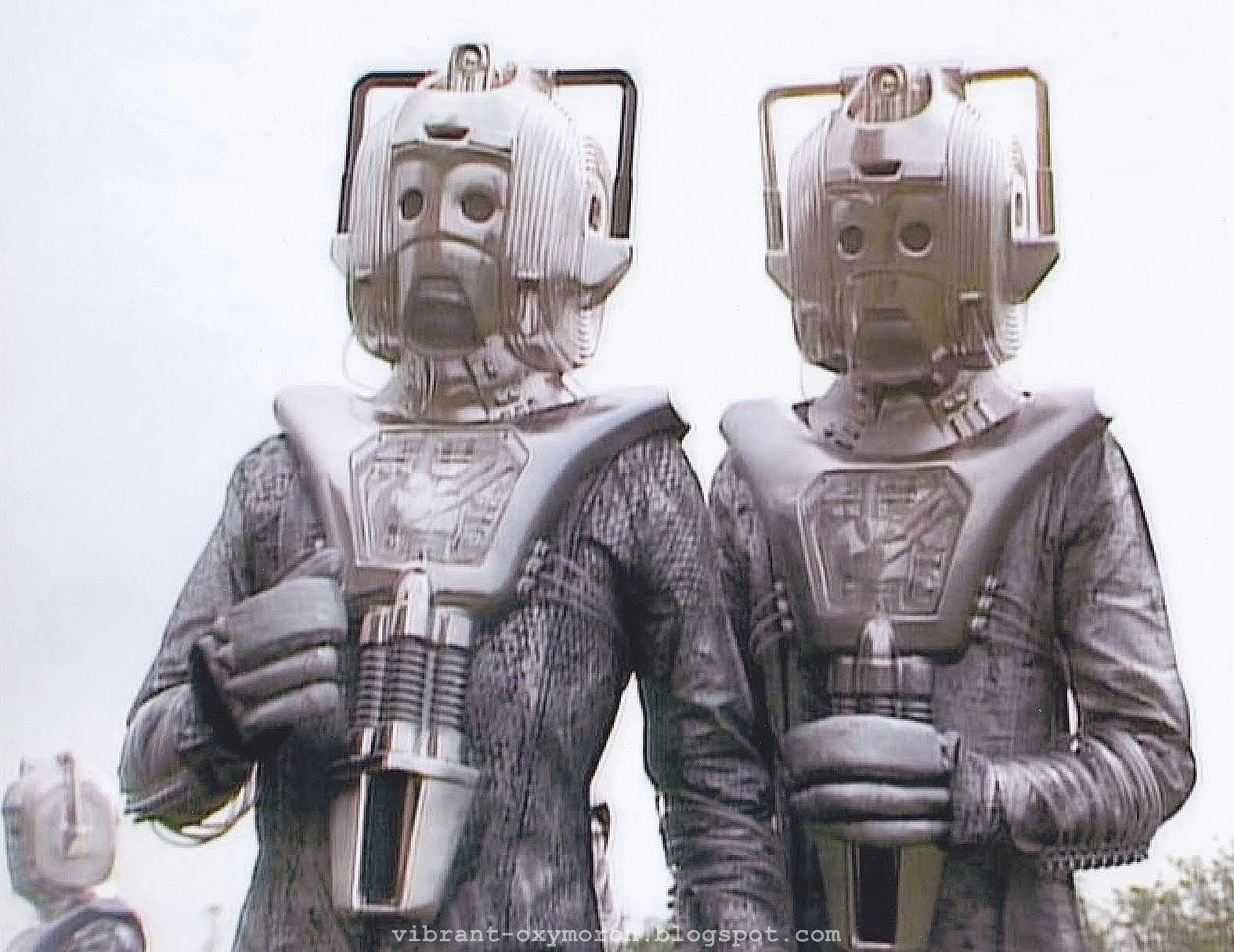
Cybermen

The Borg
This is a bit of tricky one. The Cybermen and the Borg are a very similar concept and indeed many fans of both series have commented on this over the years. Both are mechanical creatures who seek to convert all organic life forms across the universe into members of their own kind.
Its very hard to say which was the better take on the idea. On the one hand when the Cybermen were scary in stories like “Tomb of the Cybermen” and “The Invasion”, they were far more terrifying than the Borg ever were. However over the years the Cybermen I think have been a lot more mistreated than the Borg. They have had their asses kicked by just four Daleks, wiped out by a teenager with a sling shot and beaten up by James Cordens baby.
Cy-Derp Men
Ultimately however even with all of these humiliating defeats, I am still going to have to go with the Cybermen. They still scare me more for a number of reasons.
The thing about the Cybermen is I feel that a lone Cyberman is scary. If you are cornered by a Cyberman then there is really nothing you can do. You can’t reason with it and you certainly can’t fight it off either. You’ll break you fist if you just try and punch it!
Also Cyber conversion is far more terrifying. When they convert you, everything about you goes. You become a totally faceless, emotionless drone.
With the Borg not only can the process be reversed (as seen with Captain Picard who briefly became Locutos), but you can still see traces of the humans they once were in there.
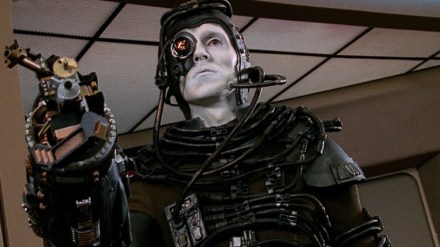
Take a look at this Cyber leader in comparison.

For all you know in life he could have actually been a she. A big, statuesque Lucy Lawless type beauty, or a shy, retiring, cute, nerdy girl with thick glasses like Bernadette from The Big Bang Theory. Or maybe he was a big burly guy, or a frail 86 year old who walked with a stick? We don’t know cause everything this person was has been replaced with a cold lifeless machine.
Cyber conversion is also a far gorier, more drawn out, and painful process than becoming a Borg too.
To me the Cybermen were far more frightening, though again I can see how the Borg are superior in a number of ways, as they were never undermined in quite the same way. Ultimately however I am still going to go with the Cybermen here.
Winner
Doctor Who 5 Star Trek 2
8/ Member of a villainous race who became a good guy

Madame Vastra

Worf
Both Trek and Who have had these types of characters. Vastra a member of the Silurians major enemies from Classic Who, and Worf a member of the Klingons major enemies from the original Star Trek series, who both become proud warrior allies of the main heroes.
Of the two I have to say that Worf is a much better character. As a lead of two long running series he was naturally more well developed than Vastra, who has only been in a few episodes so far. Also whilst I do like Vastra, at times I do feel that she and her sidekick Strax can feel a bit like novelty characters. Worf on the other hand never did, he was always a fully fleshed out member of the crew.
Winner

Doctor Who 5 Star Trek 3
9/ Best Leader Of Alien Invaders

Davros

Borg Queen
Davros and the Borg Queen though different characters fulfil a similar role to each other.
They are both not only the commanders of vast interstellar empires, but they also were designed to give the leading characters (The Doctor, Captain Picard and later Captain Janeway) a more human adversary to play off of.
The Daleks and the Borg are great villains, but understandably a lot of the actors playing the Doctor and Patrick Stewart found them quite limiting to play off of, as neither have any individual personalities. They are all mindless drones who mostly just shout their catchphrases “YOU WILL BE ASSIMILATED” or “YOU WILL BE EXTERMINATED!”.
Davros and The Borg Queen both of whom had individual personalities could finally give the leads an adversary they could have a proper confrontation with rather than just simply fight.
You can see how Davros and The Borg Queen gave the Doctor and Picard enemies that they could actually argue with, exchange ideas with.
Now whilst the Borg Queen was a very good villain I think that Davros really has to take this.
The Borg Queen was really just another variant of leader. She had more personality sure, but really she’s just kind a kind of glorified Supreme Dalek, or Cyber Leader.
Davros however created the Daleks and it was fascinating the way we could see how Davros had essentially created these monsters in his own image. Also the relationship Davros had with the Daleks was more complex too.
The Daleks on the one hand despised Davros almost as much as the Doctor as he is a non Dalek and therefore the enemy. However they also do still have some form of twisted affection for him.
Davros didn’t just simply give the Daleks life. He poured all of his own twisted beliefs into the Daleks and gave them their purpose to conquer all other life forms in the universe.
The monsters know that they would literally be nothing without him so they can never quite bring themselves to kill him. There are so many opportunities where they could have finished him for good yet they almost never take it. In Revelation of the Daleks for instance they decide to take him back to Skaro to stand trial for his crimes against them, rather than just simply zap him there and then.
Similarly in Genesis of the Daleks though they do shoot him, they don’t stick around to finish the job and Davros ultimately survives. Whilst some might argue that the Daleks simply didn’t know that his life support machine could keep him alive, in the next story Destiny of the Daleks it is revealed that the Daleks knew that he had survived as ultimately they are searching for him.
Again why would they leave a lesser life form alive for so many centuries just to gather cobwebs? Simple, because they couldn’t quite bring themselves to murder Davros. In a twisted way, he’s the closest thing the Daleks have to a father.
The Borg Queen’s relationship with her drones was ultimately not as interesting as at the end of the day they were just her servants. Davros was ultimately a more interesting take on the idea of giving a race drones a leader with an individual personality.
Winner

Doctor Who 6 Star Trek 3
10/ Best Story of Original Series Run

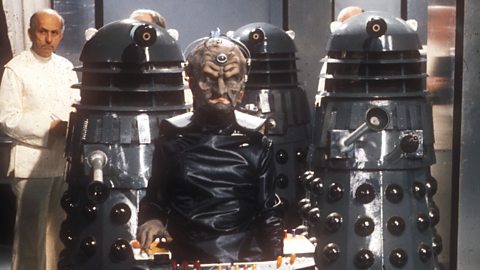
Genesis of the Daleks

Balance of Terror
Two television classics. Both of these stories instantly disprove the myth that Star Trek and Doctor Who are silly, childish series.
There’s really nothing I can fault about either story. The cast are all superb. William Shatner and Tom Baker are at their absolute best here, and the actors playing the main villains Mark Lenard as the Romulan commander (who later landed the role of Spock’s father) and Michael Wisher as Davros are among the best guest stars either show ever had. They both bring a tremendous amount of gravitas and menace to the villains.
Both stories whilst exciting on the surface, also have very deep meanings behind them. Genesis shows us how evil men like Davros can rise to power and even reshape an entire society in their own twisted image, not just through their own cunning, but through the idiocy and inaction of those around them. The Kaleds, Davros’ own people whom he later wipes out still foolishly think they can reason with him, whilst the Thals stupidly fall for Davros’ lies simply because its what they want to hear.
Balance of Terror meanwhile shows us how ironically the soldiers who fight in wars are not always actually enemies. They are often people who are being forced to fight someone else’s battle, and were it not for the great powers who are forcing millions of young men to slaughter each other, the combatants might have even been friends.
You can view Genesis of the Daleks as being World War 2, as we have a twisted, evil, xenophobic maniac who creates a new order of xenophobic maniacs to wage war against anyone who doesn’t fit his idea of the perfect being. Balance of Terror meanwhile is World War 1, in that it involves two great armies whose men don’t even want to fight and unlike the Nazis or the Daleks, have no real hatred towards one another, but have to fight anyway in what is ultimately a pointless conflict.
Now as for which of these two stories is better, well that’s very hard to choose. Still I’m going to go with Genesis here only because Genesis is slightly more interesting for me, in the way it takes us into the full history of Skaro. Skaro is a truly nightmarish world. Its surface has been destroyed by a thousand year conflict, the most hideous mutants roam the wastelands and the two intelligent life forms, the Thals and the Kaleds are both evil.
Its not hard to see how the most evil monsters in the entire universe could emerge from such a place.
Winner

Only marginally
Doctor Who 7 Star Trek 3
11/ Best Story of the Sequel Series

Day of the Doctor

The Chain of Command
I’m giving this to Star Trek. Doctor Who’s 50th anniversary story did its job of not only celebrating the history of Doctor Who, but also moving the series forward by having the Doctors save Gallifrey. I’m really looking forward to seeing where Steven Moffat takes the search for Galifrey story arc.
However I feel that Chain of Command is still the better story for a number of reasons. First of all its easier to watch. Day of the Doctor really only makes sense to a life long Doctor Who fan. To be fair that is kind of the point of an anniversary story, but still I can’t imagine even a casual fan having any time for it.
The Chain of Command meanwhile I think would hold up to even a non Star Trek fan as its a fantastic story all around. It’s a brilliant character piece as we see the sadistic Gul Madred slowly try and break Picard’s will. Gul is definitely one of the shows most effective villains. David Warner who plays him is amazing in the role, and gives the villain an eerie charm.
My favourite moment is definitely the final confrontation between the two when Maldred has been ordered to release Picard, but tries one last time to break his enemy.
Though its true the story obviously borrows from George Orwell’s classic novel 1984, it does still manage to do something new with it. Definitely one of Patrick Stewarts best performances; there is really nothing wrong with this story which sadly I cannot say about Day of the Doctor
Though I do like Day of the Doctor, it’s true that the Zygon story with Queen Elizabeth is silly and takes up far too much of the episode.
Winner
Doctor Who 7 Star Trek 4
12/ Best Ancient Astronaut story

Pyramids of Mars

Who Mourns For Adonais
Both Star Trek and Doctor Who have done stories that revealed the gods were aliens. “Who Mourns for Adonas” and “Pyramids of Mars”. Both stories I think demonstrate the differences between Who and Trek better than anything else. The Star Trek take on this story is a very romantic, philosophical story where the villain is still a very human character for better or for worse.
The Doctor Who take on this story meanwhile is a very dark, frightening story where the main villain is a total out and out monster. Both stories are all time classics and it isn’t really fair to compare them, as even though they touch on the same subject, they try something completely different and succeed just as much at what they set out to do.
Still since the point of this article is to compare them, I would have to again go with Doctor Who. Sutekh the destroyer terrified me growing up. I defy anyone to find a better villains voice than Gabriel Woof, the actor who plays him.
Winner

Doctor Who 8 Star Trek 4
13/ Best Alternate Universe Story

Inferno

Mirror Mirror
Alternate universes are another subject that Trek and Who have touched on many times in their history, but definitely the most famous example from each would be “Mirror Mirror” from Trek and “Inferno” from Doctor Who.
I must admit at first I thought I would have gone for the Who story as Inferno has always been a favourite of mine, but ultimately Trek is the winner here. “Mirror Mirror” is really the daddy of all alternate universe stories. It’s where all of the others including Inferno come from. Both stories are classics though and both offer us an interesting insight into the characters of the Brigadier and Spock.
Their evil selves represent what they could become if they were raised in a different environment. Their evil counterparts are the same people underneath. The Brigade leader is just as devoted to the military as the regular Brig is, whilst the bearded Spock relies on logic just like our version, but because both are now working for a corrupt regime they are the villains,. Still Star Trek wins, as Doctor Who was really following Star Trek’s lead.
Winner

Doctor Who 8 Star Trek 5
14/ Best movie

Daleks Invasion Earth 2150AD

Star Trek 2 The Wrath of Khan
This isn’t really a fair fight is it? The two Cushing movies are great, cheesy, 60’s fun, but Wrath of Khan is one of the greatest films ever made simple as that.
Winner

Doctor Who 8 Star Trek 6
15/ Worst story

Love and Monsters

The Omega Glory
Much like in deciding who was better Adric or Wesley Crusher, here we will determine who is the winner by looking at which is the less awful out of the two worst episodes. This time its Star Trek that’s the winner. The Omega Glory is terrible, dated, crap. I cringe at that moment when the American flag is brought out, however even that is still better than “Love and Monsters” with its abzorbing monsters, lame jokes about Doctor Who fandom, soap opera drivel and blow job or rim job jokes.
Winner

Doctor Who 8 Star Trek 7
16/ Best story where a main character dies

Adric/ Earthshock

Tasha Yar/ Skin of Evil
Doctor Who wins this as Adrics death at the hands of the Cybermen was far more moving, unexpected and quite bleak too, as Adric dies alone, scared and thinking that he failed to save billions of innocent people. Also the Cybermen are a better villain than Armus to kill off a main character.
Winner

Doctor Who 9 Star Trek 7
17/ Best story where a historical figure fights a monster

Vincent and the Doctor

The Savage Curtain
Doctor Who takes this easy. Vincent and the Doctor is a truly moving and poignant piece of television. It gives us one of the most mature and sensitive depictions of someone suffering from mental illness I have ever seen on tv.
Its not afraid to show how difficult it can be dealing with someone with severe mental health problems, and how sometimes a persons issues can be too great for any help. It also explores the ignorance some people can have of depression too, with Vincent Van Gogh being show to be treated as a freak by those around him.
Still at the same time it also shows how every little bit of support is important regardless of whatever happens. Even though the Doctor and Amy ultimately fail to help Van Gogh overcome his problems, the Doctor still feels that it was worth it as they still made him happy for a short period of time at least.
Winner

Doctor Who 10 Star Trek 7
18/ Best crossover episode

The Three Doctors

Trials and Tribble ations
Star Trek wins this time. I love the Three Doctors, but the Star Trek episode is better as it actually takes us back into the original series. It’s not just simply a case of the original character comes back. Here we actually do get to see the two very different worlds collide which is a lot more fun and unusual.
Winner

Doctor Who 10 Star Trek 8
19/ Best Cosmic Love Story

The Pandorica Opens/ The Big Bang
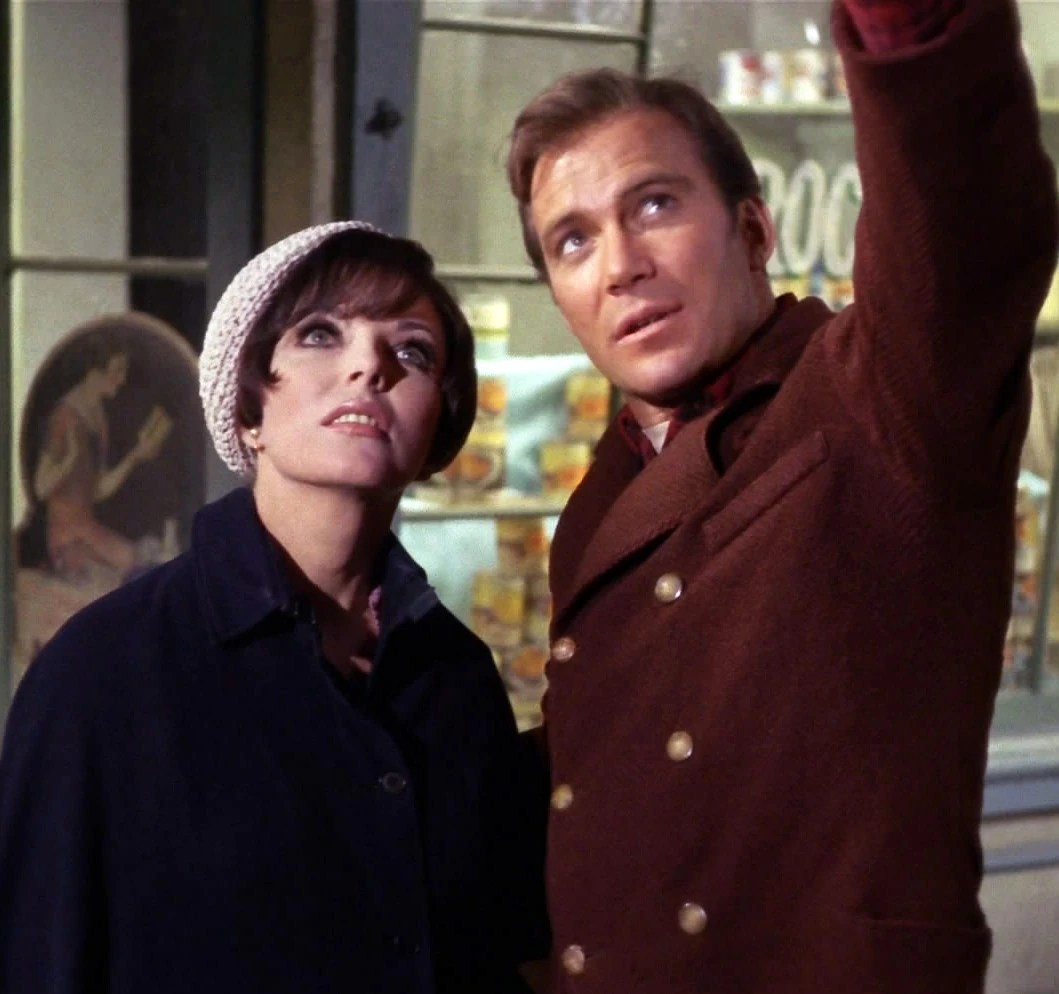
City On The Edge of Forever
As good a love story as Rory waiting outside a box for 10000 years for Amy is, I don’t think any of us can really forget Captain Kirk and Joan Collins tragic love story. Though “City on the Edge of Forever” may seem unoriginal now, that’s only because it has been copied billions of times since. Indeed it’s the precursor to many Doctor Who episodes, such as the Waters of Mars which sees the Time Lord become torn on whether to save one good person and change history in catastrophic ways, or sacrifice an innocent persons life for the greater good.
Winner

Doctor Who 10 Star Trek 9
20/ Best story with an evil version of the Hero

Amy’s Choice
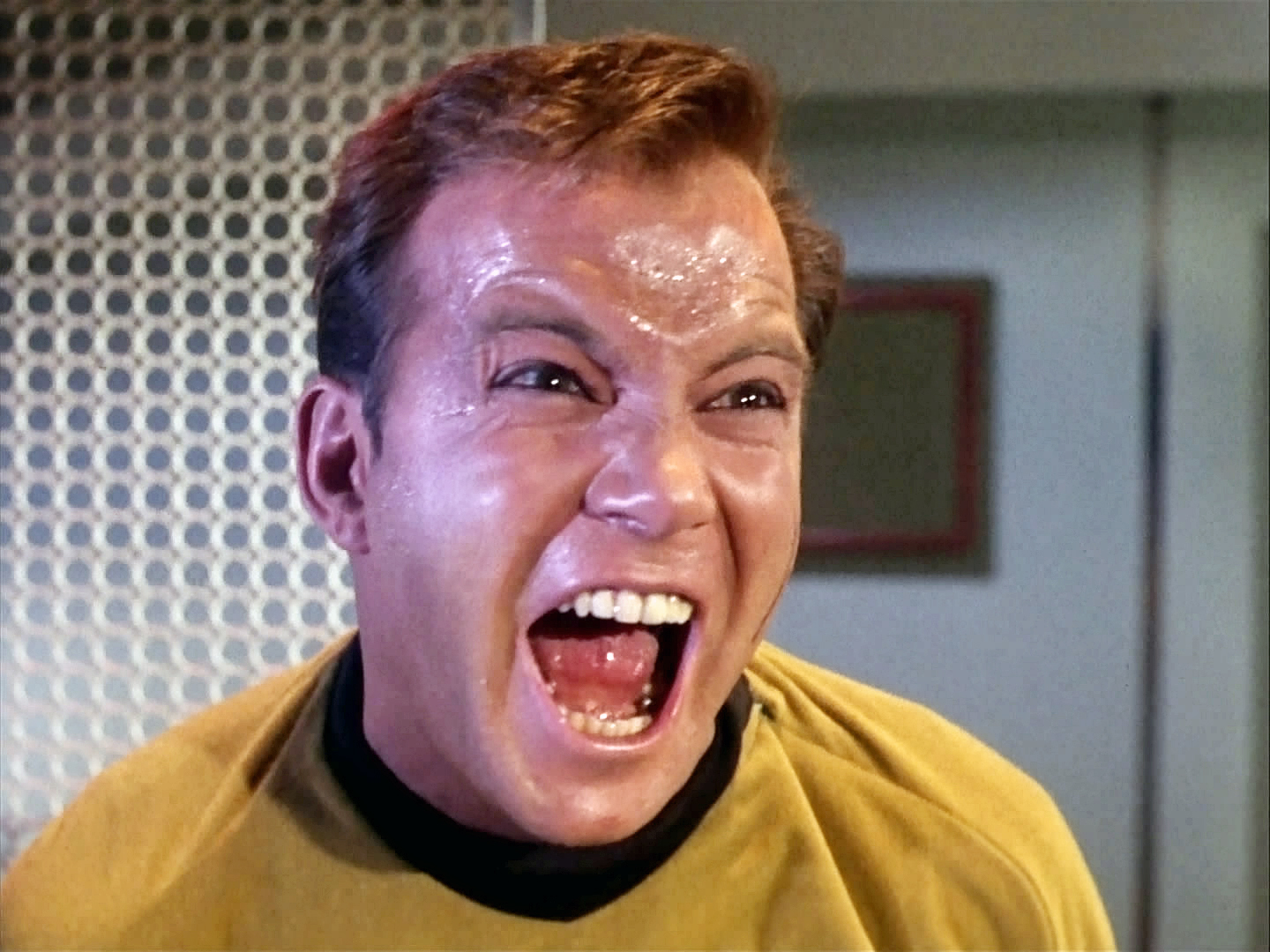
The Enemy Within
“Amy’s Choice” is a great episode and the Dream Lord is a very memorable character. However Star Trek has to take the lead here as its story is I feel much more bold and daring in terms of how evil it is willing to make the darker version of the hero (which is ultimately what we want to see from a story like this.) It has its evil version of the hero Kirk actually try and rape somebody. To have your main character, even just an evil version of them try and do something like that is incredibly shocking even by today’s standards, and an example of how Trek was willing to push the boundaries too.
Winner

Doctor Who 10 Star Trek 10
21/ Best theme


Doctor Who wins this one for me. There have been several Star Trek themes over the years where as Doctor Who has kept the one theme. There are different arrangements of it, but its basically the same theme. The best Star Trek theme for me would be the one that was used in the film series and the Next Generation. Even it however is not quite as brilliantly off beat and surreal as Doctor Who’s.
Winner
Doctor Who 11 Star Trek 10
22/ Best Love Story Where Someone Is Trapped In Another Place Away From Their One True Love Forever

Doomsday

All Our Yesterdays
A very specific idea, but again an example of how Doctor Who and Star Trek often explored similar concepts to each other.
In the Doctor Who story Doomsday, the Doctors greatest enemies, the Daleks and the Cybermen invade the earth. The Doctor defeats them by pulling both armies into the void, the nothingness between universes (there are shades of another classic Star Trek episode The Alternative Factor here, where the two versions of Lazarus are trapped in the nothingness between universes, fighting each other forever.)
Unfortunately however Rose, the woman the Doctor loves, ends up trapped in another universe as a result, and there is seemingly no way the Doctor can find her again. At the end of the episode however the Time Lord is able to send a projection of himself through one tiny little crack left between the universes. Sadly before he can tell Rose he loves her he is cut off, leaving both the Doctor and Rose heartbroken.
In All Our Yesterdays, Kirk and McCoy end up trapped back in the past of an alien world that is about to be consumed by its own sun, after accidentally falling through a portal created by a time machine. The two land in a barren ice age, where there is no intelligent life except for one woman named Zarabeth.
Zarabeth reveals that she was sent back here as punishment after taking part in a failed rebellion. If she ever leaves this time, then she will die. She lies that after having travelled through time, Spock and McCoy can’t travel forward back the way or else they will die too.
Zarabeth and Spock soon fall in love, but McCoy soon discovers her deception. Furthermore, Kirk back in the present discovers that as they were not prepared, Spock and McCoy will die if they don’t get back to the future and Spock is forced to leave Zarabeth behind in the past, where she will remain alone for the rest of her life.
As you can see both stories explore the idea of two lovers being separated by entire worlds. Both stories even feature the lovers standing on either side of a wall with it only looking like its the wall separating them, when it is in fact two entire realities.
Now both stories are classics, but I am going to give this to Star Trek. I have never liked romance stories with the Doctor. I just don’t think it works with the character. The Doctor really is most effective as the Holmesian, professorial, crazy old uncle type of figure.
Also I think that All Our Yesterday’s is a far more moving and tragic story all around too. Whilst it’s sad that Rose ends up separated from the Doctor, she does still live a brilliant life in that other universe. Indeed arguably better than the one she would have had with the Doctor.
She lives in a mansion with her whole family (including an alternate version of her dad who died in her universe) and she has a job that she love where she hunts monsters and saves the world.
Zarabeth on the other hand lives in a miserable little dark cave, in a frozen wasteland, with only raw bits of meat for company. It’s a miserable existence and there is nothing the main characters can do to save her from it. The final shot where she walks away crying as Spock is forced to leave her is absolutely heartbreaking.

It also doesn’t help that Russell T Davies would later go on to undo the ending of Doomsday two years later by not only having Rose return to our universe and reunite with the Doctor, but also later gain her own Doctor clone too.
Winner

Doctor Who 11 Star Trek 11
23/ Best All Powerful Organisation That Forbids Its Members To Interfere

Time Lords

United Federation of Planets
The Federation and the Time Lords are similar in some respects.
The Time Lords are the Doctors people and the most advanced race in the universe. After abusing their power for centuries, the Time Lords vowed to never interfere in the affairs of other planets ever again.
The Doctor however obviously broke this law many times. Originally he simply wanted to explore the universe as he was bored back on Gallifrey, but he ended up interfering in the affairs of other planets due to his strong sense of morals.
The Federation meanwhile represents the unification of several planets including the Earth and Vulcan. Just like the Time Lords they are forbidden to interfere in the affairs of other life forms. This law is known as the Prime Directive.
As I have been over both Kirk and the Doctor frequently get into trouble with the higher ups in the Federation and the High Council of the Time Lords.
Whilst I liked the Time Lords, I do think that the Federation were better. The Time Lords were very inconsistent. They went from being all powerful, benevolent gods, to corrupt, petty bureaucrats with primitive technology, to evil, vengeful monsters wanting to destroy all of creation. The Doctors attitude towards them changed too, from wanting desperately to get back to them in the Hartnell era, to being scared of being caught by them in Troughton’s time, to being annoyed with them, but respecting them in Pertwee’s time, to looking down on them in Tom’s time, to wanting to destroy them in the Tennant era, to finally doing all he could to save them in the 50th.
Also the Time Lords were best used fleetingly. The more we saw of them in stories like Trial of a Time Lord, the less interesting they became.
Winner

Doctor Who 11 Star Trek 12
24/ Best All Powerful God Like Villain

Black Guardian

Q
These two creatures power and very nature borders on the supernatural. They are the closest thing the Star Trek and the Doctor Who universes have to Gods.
I am going to go with Doctor Who here. The Black Guardian was a brilliant villain. He was only used fleetingly and whenever he did appear he was genuinely menacing.
Q meanwhile to start with was horribly over used. Also much like Wesley Crusher at times he did feel like a bit of a creators pet. Whilst I don’t dislike the character quite as much as some other fans, ultimately I think the Black Guardian was the far more sinister take on the idea.
Winner

Doctor Who 12 Star Trek 12
25/ Best Ship

Tardis

USS Enterprise
Doctor Who takes this. I do like the Enterprise. It has a spectacular design and is rightfully recognised around the world just as much as the Tardis.
However the Tardis is better in a number of ways for me. First of all it’s alive, and therefore can never be replaced, unlike the Enterprise which has been replaced many times.
Also the Tardis can travel to anywhere in the universe, and its virtually indestructable. The Tardis I feel is more unique the way it’s bigger on the inside than the outside too. It blends a classic sci fi idea like time travel, with surrealist ideas.
You can compare the Enterprise to a dozen other spaceships (though granted that’s only because most of them have copied the Enterprise.) Still the Tardis truly is one of a kind.
Winner

Doctor Who 13 Star Trek 12
26/ Best Reptile People

Silurians

Voth
Two very similar races. The Silurians first appeared in the 1970 story Doctor Who and the Silurians. They were a highly advanced race of reptile men who lived during the time of the Dinosaurs. When they discovered that an asteroid was destined to collide with their planet, they sealed themselves below ground in hibernation chambers where they would remain for 65 million years in suspended animation, until the humans accidentally awoke them.
The Silurians would then attempt to wipe humanity out, though later stories would show some Silurians live in peace with humanity. The recurring character of Vastra for instance who not only becomes an ally of the Doctor and protects humanity from various other threats, but she later ends up marrying a human woman named Jenny.
The Voth meanwhile evolved on the earth during the time of the Dinosaurs, and like the Silurians built a highly advanced society. They left the planet when they discovered it was going to be hit by an asteroid and travelled to the farthest reaches of space, eventually settling in the Delta Quadrant. The Voth would come to believe that they originated in the Delta Quadrant but would later discover their true origins.
Much like with the Borg and the Cybermen, many fans of both series have commented on the similarities between the Voth and the Silurians.
As for which is better, well that’s very hard to say as there is so little differences between them? Really I think the only way to decide is by looking at the quality of the stories they were in. Personally I think that the Silurians first appearance, Doctor Who and the Silurians was better than any Voth episode. Though at the same time Warriors of the Deep another Silurian story is one of the worst stories in either Doctor Who or Star Trek.
Still as I do love the Silurians first story then I’ll go with Doctor Who this time. I suppose though a more accurate assessment would be the Voth never reached the heights of the Silurians, but they never plumbed the depths of their worst stories either.
Winner

Doctor Who 14 Star Trek 12
27/ Best Electronic Sidekick

K9
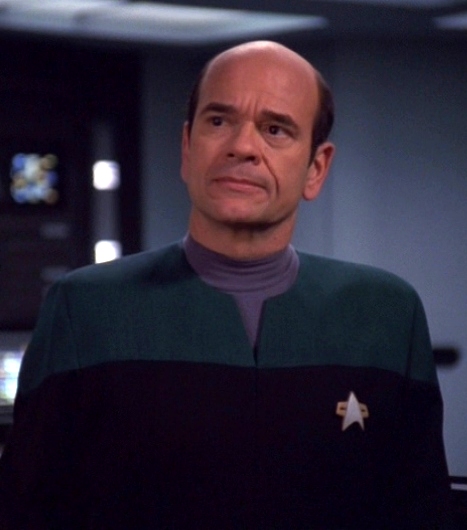
The Doctor
Star Trek wins this one. K9, the Doctors pet robot dog is to be fair far more iconic than the hologram, the Doctor from Star Trek Voyager.
Still that doesn’t mean that he isn’t still a a somewhat gimmicky character who was more of a toy advert than a character.
The Doctor meanwhile was a great character all around. In fact I’d say he was my favourite from Voyager and Robert Picardo was brilliant in the role.
Winner
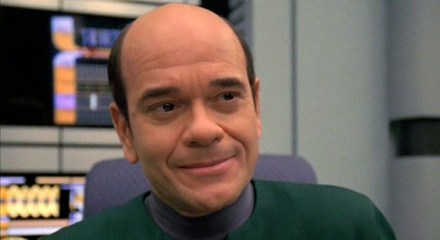
Doctor Who 14 Star Trek 13
28/ Best Story Where Time Is Changed And Humanity Is Doomed

Day of the Daleks

Yesterday’s Enterprise
Now this is a very difficult one to choose as both stories are among the best of either Doctor Who or Star Trek.
Both involve a change in history creating a timeline where humanity is at war with, or even conquered by the main villains of the franchise, the Klingons and the Daleks.
Day of the Daleks sees a group of humans from a Dalek ruled future travel back to the 20th century to kill the man they believe is responsible for their terrible future, Sir Reginald Styles.
Earth is on the brink of a third world war in the 1970’s, and Styles has gathered together all of the world leaders to try and reach a peaceful solution. Unfortunately however it turns out that Styles is a maniac and after gathering all of the world leaders together, he kills them all and himself in an explosion.
World War 3 begins and devastates the earth allowing it to be easily conquered by the Daleks. The Doctor discovers however in a brilliant twist that it was actually one of the rebels who caused the war. In a last ditch attempt to kill Styles the rebel blew himself up, being unaware that the other delegates were in the house at the time.
In Yesterday’s Enterprise the timeline is changed thanks to the presence of USS Enterprise C which falls through a time rift. Originally Enterprise C was destroyed whilst defending a Klingon outpost from an attack by the Romulans. This action helped to establish an alliance between the Klingons and the Federation (among other things.)
Sadly however now that that never happened the Federation and the Klingons are at war with each other and the Enterprise D’s crew must do all they can to get the Enterprise C back through the anomaly, even though it will mean the death of the entire crew.
Both stories represent among the best time travel adventures in either show, but which is better? Well I honestly can’t choose. On the one hand Day of the Daleks I think uses the concept of time being changed in a more interesting way. It’s a brilliant twist that the people who tried to make their future better ended up creating the nightmare they live in instead.
Yesterday’s Enterprise’s time paradox is more of a straight forward problem, just someone falling through time. However on the other hand, Yesterday’s Enterprise explores the effects that the change has on the main characters better.
One of the characters Tasha Yar was killed in the original timeline, and has to face the dilemma of either staying in a horrible timeline, or dying a pointless death in the original better timeline. Yesterday’s Enterprise is also somewhat bolder in the way it shows main characters like Riker be butchered on screen by the Klingons.
Ultimately for the first time I am going to have to call it a draw.
Doctor Who 14 Star Trek 13
29/ Best Story Where Main Character Is Consumed With Hatred For Hostile Alien Race

Dalek

First Contact
In these two stories the Doctor and Captain Picard are so consumed with hatred for the Daleks and the Borg that they begin to lose their heads.
Again it’s hard to choose which is better. I’d say as stories they are just as well acted and written as one another. Dalek is a more low key story sure, but for what it sets out to do then it’s just as good.
However I think that Dalek tackles the main heroes hatred of his mortal enemies in a more effective way. I think in First Contact they try and point out the comparisons with Captain Ahab a bit too much. They had already done the Moby Dick in space thing with Wrath of Khan and it really felt like they were just retreading old ground here.
These scenes I think demonstrate why the Daleks and the Borg are so popular with viewers. They really get under the main heroes skin like no other villain.
Doctor Who 15 Star Trek 13
30/ Best Story Where Brains In Jars Take Over A Society

The Keys of Marinus

The Gamesters of Triskelion
Both of these adventures have the same basic core premise. They revolve around a race who has evolved beyond the need for bodies as their brains are so well developed they can control others with their minds.
They both enslave the other humanoid life forms on the planet around them and torment them for their own amusement.
I am going with Star Trek here. The Gamesters of Triskelion is really the quintessential 60’s cheesy Star Trek episode. It’s certainly not the best, but it’s still tremendous fun. So much of what we think of when we think of Star Trek comes from this episode such as Kirk teaching an alien woman how to love, or the famous fighting music
Its hard to believe that in 26 years they never gave the Doctor great fighting music.
Winner

Doctor Who 15 Star Trek 14
Final score Doctor Who 15 Star Trek 14
Conclusion
The Third Doctor fanboying over Captain Kirk.
Doctor Who is better in this bloggers opinion. It wins barely by a 15/14. I am surprised in a way as I always preferred the Beatles to the Rolling Stones, but to be fair I think I have always known in my heart that Who was my favourite. Overall two great shows, and franchises, but Doctor Who is just a little bit more special to me. Still that’s just my opinion. Tell me what do you think?

Top 10 horrible things that have happened to Mark Gatiss
Mark Gatiss is a tv cult legend. Whether for his roles in “Doctor Who”, “Sherlock”, “Being Human” or “The League of Gentleman”, Gatiss has amassed a truly impressive body of work over his long career as a writer, director and actor.
However I’ve noticed recently that Gatiss frequently has something horrible happen to him in just about everything he is in. I suppose he could be called the John Hurt of comedy, as John Hurt similarly often played the victims such as Mr Olivander, Winston Smith, Kane, The Elephant Man and Quentin Crisp. (Ironically they even mention this about John Hurt in The League of Gentleman itself.) Gatiss similarly I feel often plays the victim and even when he doesn’t, something bad will still happen to him.
To date Mycroft Holmes is the only prominent role of Gatiss’s I can think of off the top of my head where he is not either, tortured, killed, humiliated or had all of his dreams crushed before him.
Here are what I feel are the worst fates that have befallen Gatiss’ characters throughout his long career.
10/ Mr Snow/ Blown up

A light one compared to some of the stuff that is to follow. Mr Snow is the leader of all the Vampires and seeks to overthrow the world. In an alternate timeline he actually succeeds and murders the Prime Minister on television. (Imagine watching Mark Gatiss rip David Cameron’s throat out on television. That doesn’t seem that bad a future after all.) Snow then establishes a Nazi like regime where Vampires rule over Werewolves and human beings. However his plans are foiled by the ghost Annie Sawyer, who detonates a bomb that destroys Mr Snow and all of the Vampires.
9/ David/ Turned into a Monster then burned to death

David is the son of Tubbs and Edward and at first is portrayed as a nice, charming well mannered individual. It’s hard to believe he could have come from Tubbs and Edward. Unfortunately however when David returns to try and take his mother away from his abusive father, Edward corners David alone and the next time we see him, David has become like his parents, a deranged “local” pig nosed freak.
One shudders to think what Edward did to him. By the time we next see him, David has degenerated further into a hairy, bestial monster that frequently eats people. Even Tubbs and Edward are scared of him. Ultimately however David is burned to death by the angry villagers of Royston Vasey on the night of his wedding to Barbara.
8/ Jason Griffen/ Strangled to Death

Gatiss appeared briefly in Pemberton and Shearsmith’s series Pscychoville as a bumbling actor who ends up stumbling into David and Maureen Sowerbutts flat. David and Maureen are essentially a mother and son version of Tubbs and Edward, with Shearsmith once again playing the more evil of the two. At first the two believe Jason to be a detective, but when they discover he is an actor, they don’t want to kill him. Sadly however when the actor discovers the body of another of their victims they are forced to strangle him to death. Though David is still reluctant, Maureen is absolutely loving it which just makes it even more disturbing.
7/ Scarecrow Man/ Strung up in a field

Andrew has an affair with Farmer Tinsel’s wife and in retaliation Tinsel strings him up in a field and tortures him for months on end. Later when two young girls stumble upon Andrew they decide to leave him there as they think if they released him he wouldn’t be their friend any more. It is not known what became of Andrew, but it can be assumed he either died or is still strung up in that field being tortured daily.
6/ Mr Chinnery/ Cursed for eternity

Poor Mr Chinnery means well, but after his ancestor, (also a vet) was cursed every animal he has treated has been killed in the most horrible of ways. Chinnery has put the wrong dog to sleep, pulled a cows guts out through its arsehole, and electrocuted fish, birds and even their owners on many occasions. Though it is implied that the curse is broken in the Christmas special, I can’t imagine that the writers of the show would have let him get off that easy.
5/ Gantok/ Eaten alive by flying skulls.

Gantok is a minor character who appears in the “The Wedding of River Song”. He is devoured by several flying skulls after he tries to kill the Doctor for beating him at chess. Despite this the Doctor does still try and save him, but he ends up getting torn apart anyway. This is probably Gatiss’s most OTT death, though not his most horrible.
4/ Hang Man Chan/ Eaten by crabs

An overlooked series in my opinion, Dr Terrible’s House of Horrible was a parody of all the old classic British Horror movies from Hammer and Amicus and also of other old classic British series such as Doctor Who and Jason King. By far and away my favorite entry in the series was the second episode, which featured Gatiss as the hilariously camp villain Hang Man Chan, known as the “Sinister bony fingered menace from the east”.
The character and the episode in general parodied some of the racism from these old British series, though not in a sneering way, as it is to be expected that television series from the 1960’s might not be quite as progressive as those of today.
Chang meets a very grisly end at the hands of Steve Coogan’s Nathan Blaze who is a send up of heroes like Jason King. First Blaze throws Chan several thousand feet onto jaggy rocks, but Chan survives thanks to his servants (the crabs) who give him a new crab arm. Blaze however then dips Chan’s clawed hand into boiling water and rips the skin off of it. Chan still survives and is then finally finished off when Blaze feeds him to his own crabs who pull him under water and rip him to pieces.
3/ Haig/ Eaten by David

Gatiss seems to get eaten quite a lot. Haig is some poor bastard who stumbles upon the local shop for a can of coke. After a disagreement over a “can of can’t” Haig awakens David, and Tubbs and Edward decide to make him David’s new “friend”. They capture Haig, take him upstairs and throw him in the same room as David who has now become a monster. Edward assures Tubbs that David will “like him to pieces” and Haig is last shown attempting to crawl out of Davids room before being pulled back in. As he is never seen again it can be assumed David devoured Haig, though as Tubbs and Edward meant “friend” as in wife, it is possible that David may have done other nasty things to him first.
2/ Les McQueen/ Ruined by his former bandmates

Les is arguably the most sympathetic character in the League of Gentlemen. He was once in a band called “Cremebule” who were on the verge of making it big, but were then blown away by the Sex Pistols and faded into obscurity. “Then punk rock came along and that were the end of us“. He constantly tries to relive his glory days with disastrous results. In the last episode he appears, Les finally meets up with his old bandmates, who it is revealed don’t care about him and actually manage to con Les out of all his life savings a few days before his retirement. The look on his face before he is conned out of all of his cash is heartbreaking. In the live show which is of debatable canon he does manage to land a recording contract, but is electrocuted on stage at his first gig.
1/ Builder/ Tortured to death by Tubbs and Edward

Gatiss played many of Tubbs and Edwards victims including the young boy they burn alive and the police man who comes looking for him in the first episode as well as obviously Haig. However by far and away their most memorable victims are the two builders of new road, one of whom Gatiss plays. These two unfortunate souls are subject to excruciating and prolonged torture. Edward strips them, forces them to watch Tubbs breast feed a pig, smears seering hot tar over their naked bodies and performs insane rituals where Tubbs molests them, before Edward cuts the builders free and shoots them down like animals with a crossbow bolt.
10 Reasons To Admire Amy Winehouse

Amy Winehouse was one of Britain’s greatest ever singer/songwriters. Though her career was short, she nevertheless made an immeasurably huge impact on the music industry. She revitalized soul music and paved the way for female and British artists to enjoy immense success abroad for the first time in decades.
Though Amy Winehouse tragically passed away at the age of just 27 years old in 2011, her legacy still lives on through her music, her fans and the Amy Winehouse Foundation, which her father founded in 2011.
In this list I have compiled what I believe are the main 10 reasons to admire Amy Winehouse both as an artist and as a person. I am not going to deny that Amy Winehouse had her fair share of controversies and problems, but she did many incredible things with her short life too.
During her lifetime the press rarely reported anything positive about Amy Winehouse, whilst after her death the opposite was true, and she became the 21st century version of Princess Diana in their eyes. This article however will instead look at what it was Amy Winehouse actually did that was admirable and ultimately made her one of the most celebrated artists of her generation.
10/ She tried to better herself

Contrary to what many believe, Amy Winehouse was not someone who glorified and encouraged drug abuse.
Her songs actually often showed the darker side to the Rock and Roll lifestyle more than most such as “You Know I’m No Good”.
“Rehab” far from telling people not to go to rehab because drinking and partying is fun, depicts someone who drinks because they have nothing else in their lives, no spouse, no job, no friends and has fallen into a rut. “I don’t ever want to drink again. I just need a friend.”
More importantly however Amy Winehouse also did attempt to conquer her addictions as well. She actually managed to overcome her addictions to drugs and was clean from them for 3 whole years before her death. Sadly however she was never able to overcome he addiction to alcohol. Though again she did make attempts to do so, and had even been clean for several weeks before her death. It was a relapse back into alcoholism that took her life in 2011.
Many people often see Amy Winehouse as someone who didn’t care about her life and would have always have ended up with her tragic fate. I don’t. I think she was someone who yes made mistakes, but tried her best to overcome them.
Someone who had managed to overcome several addictions already and was in the process of conquering another; does not strike me as someone who no longer cared for life. I think it could have ended very differently for Amy Winehouse. Her death was an accident remember, not suicide.
I think that had she lived she would have put them behind her and would have had a very happy life, and for those who say “she should have gone to rehab.” She did. Several times. It was a relapse that killed her.
9/ She did not conform

Adele is often the one who gets all of the credit for this. People will often go on about fabulous Adele is because she never uses her looks to sell music, doesn’t have a sexualised image, relies only on her voice and doesn’t dance around on stage. Adele is praised for not conforming to what women in music should look and behave like. Thing is Amy Winehouse did all of this about five years before Adele.
Amy Winehouse never used her looks to sell music. She never had a sexualized image, never danced around in her videos and relied only on her voice.
People praised Adele for doing just a video about her sitting on a chair “Rolling in the Deep” and doing another in black and white “Someone Like You”. Again however Amy Winehouse did a video that was just her sitting down “Rehab” and another that was in black and white. “Back to Black” years earlier.
Amy Winehouse was not your conventional female pop star in any way shape or form. She not only never used her looks, but she also made herself look even more unconventional. She dressed in style’s that were last popular in the 1960’s, even when her label were telling her not too.
I might add as well that when Amy Winehouse was around there were not as many female performers who relied solely on their voices. After Amy there were scores of them. Duffy, Susan Boyle, Florence Welch, Emeli Sande and of course Adele.
Amy Winehouse also endured far more abuse for her appearance than many of her contemporaries ever did as well. I am not trying to turn it into a competition, but it did make me a bit bitter a few years later to see many of the same media outlets that savaged Amy for her appearance, fawn over and kiss up to Adele for not using her looks and conforming. Take a look at these two vids from the Young Turks to see what I mean.
The irony surely can’t be lost on Ana and Cenk.?
However even with the media against her, Winehouse not only still managed to sell more with one album than many of her more conventional female contemporaries, but her look also became arguably the most iconic of any pop star from her generation.
I certainly am not saying that Amy was the first non sexualized female performer and I also don’t think there is anything wrong with sexualized female performers. It’s good to have a wide range of male and female performers, however I think it is true to say that when Amy emerged. Female and male performers who relied solely on their voices rather than their flashy image were not as popular.
It was simply because that was the fad at the time. Amy however made it trendy again for more old school singers, who didn’t have to dance around, such as Adele and Sam Smith to enjoy mainstream success.
Sadly however the mainstream media, and people like The Young Turks (who are the most vicious when it comes to judging a woman’s looks), will never give her credit for it. Ironically Amy is simply too unconventional for them. Still at the very least artists like Adele herself have always credited Amy for helping to pave the way for them.
8/ She won the respect of many of the most prominent artists

Throughout her career Amy Winehouse made many famous fans. Among them included The Rolling Stones, Elton John, Paul McCartney (who named her in 2008 as the person he wanted to sing the latest Bond theme), Ringo Starr, (who actually stood up for her when Natalie Cole criticised Winehouse for winning five Grammy’s, whilst suffering from her drug addiction claiming it was setting a bad example. Ringo said of Cole “that’s some real sour grapes“.) Debbie Harry, Alice Cooper, Ronnie Spector, George Michael (who also referred to her as the most talented songwriter he had ever seen in his entire career!) Tom Jones, Quincy Jones, Tony Bennett, Dave Grohl. Roger Dahltry (who referred to her voice as being one of the greats like Freddie Mercury and Etta James that you would instantly recognise), Brian May (who referred to her as a modern day musical legend), Annie Lennox, Bette Midler, Beyonce, and of course many of the modern day prominent artists that she inspired such as Adele, Lady Gaga, Paloma Faith and Emeli Sande.
Now before you say that these people only praised her after her death, I can assure you that is not the case, and I will provide sources for what I am saying at the end of the article.
Amy Winehouse had offers to work with George Michael, Debbie Harry, Stevie Wonder and Eminem all of which she had to turn down because of her addictions. Though fortunately she was able to collaborate with the Rolling Stones, Quincy Jones and most memorably Tony Bennett. Sadly she could have done so much more.
Still the fact that so many artists from so many different back grounds and generations, literally everyone from The Beatles to Beyonce were fans of her, speaks volumes about her talent.
7/ Her songs have been covered by many other artists


Sort of a continuation from the previous point. Amy Winehouse’s songs have been covered by other prominent singers. Many people have dismissed Amy Winehouse as someone who only had a great voice, but she was also let’s not forget a fabulous songwriter too and many other highly successful singers have covered her songs as a result.
George Michael, Caro Emerald, Elbow and Eddi Reader have all covered “Love is a Losing Game”, Ronnie Spector, Beyonce, Florence Welch and Brian Ferry have all covered Back to Black, whilst Fergie, Chris Martin and Paulo Nutini covered Rehab. That’s one of the many great things about Amy Winehouse’s music is that you can often listen to about four different versions of the one song by several different prominent artists. Of course in all occasions, I would say that Amy Winehouse’s versions are the best. It’s one thing to sing a song really well, but to also be able to write one that others would be interested in singing I think takes a very special kind of talent.
6/ She was very charitable

This side of Amy Winehouse was one that we never heard about it the papers or the media, but still nevertheless Amy Winehouse was an incredibly generous and charitable person by absolutely all accounts.
In fact she was even known as a “soft touch”. Among the charities that Winehouse donated her time, money and music too generously include the following “Adopt A Minelfield”, “Anti Slavery International”, “Breast Cancer Campaign”, “CARE (relief agency)”, “Children of the Andes”, “Children’s Medical Research Institute”, “Christian Children’s Fund”, “City at Peace”, “Comic Relief”, “Great Ormond Street Hospital”, “Greenpeace”, “Healthlink Worldwide”, “Hear the World”, “Heifer International”, “Holy Apostles Soup Kitchen”, “The Red Cross”, “LIFEbeat”, “Lifeline and rape crisis PMB”, “Opportunity International”, “Oxfam, rights and humanity”, “Save the Children”, “Save the Music Foundation”, “ST Jude Children’s Research Hospital”, “Teenage Cancer Trust”, “Christina Noble Children’s Foundations”, “Little Dreams Foundation”, “Lotus Outreach”, “Nelson Mandela Childrens Fund”, “UNHCR”, “UNICEF”, “V-Day”, “Water Aid” and “World Neighbours”.
She also once paid for the life saving surgery of a man in St Lucia named Jean De Baptiste. He said “It cost a fortune and Amy paid for the whole thing. Her generosity gave me my life back”.
Her father was later inspired by her genorisity to set up the Amy Winehouse Foundation after her passing.
5/ She supported other artists

Amy Winehouse set up her own record label in 2009 and helped to launch the careers of many young artists. Most notably her god daughter Dionne Bromfield who to date has produced two albums, with a third one planned. She also supported her backing singer Zalon as well as other singers such as Liam Bailey and Neon Hitch. Though Neon Hitch is not signed to her label, she has nevertheless credited Amy with helping her in the early years of her career.
4/ She broke America

When Amy Winehouse first conquered the American charts, there were actually very few British artists around who were popular on an international level. In fact just a few years earlier there had been the fewest amount of British artists on the Billboard charts since before the Beatles emerged! That’s not to say there where none when Amy Winehouse first conquered America. There was Coldplay, James Blunt, Dido and Joss Stone, but none of these artists really lead to a movement. They were one offs and it was still overall a very difficult time for a British artist to make it stateside.
However Winehouse managed to have record breaking success in America. Her album Back to Black marked at that point the highest ever debut from a British female solo artist on the American charts.
It also won five Grammy awards, which at that point was more than any other British artist had won in a single night. Thanks to the success of Amy Winehouse, the door became open for British artists in America, but its worth remembering that back when Amy Winehouse started it was probably the most difficult time to make it over there since the early 1960’s!
3/ She was honest

There was a real honesty to Amy that shone through all of her lyrics. She was someone who was not afraid to share anything about herself no matter how bad it may have made her look. This is most evident in songs such as “I heard love is blind” and “You Know I’m No Good”.
2/ She was very influential on other artists
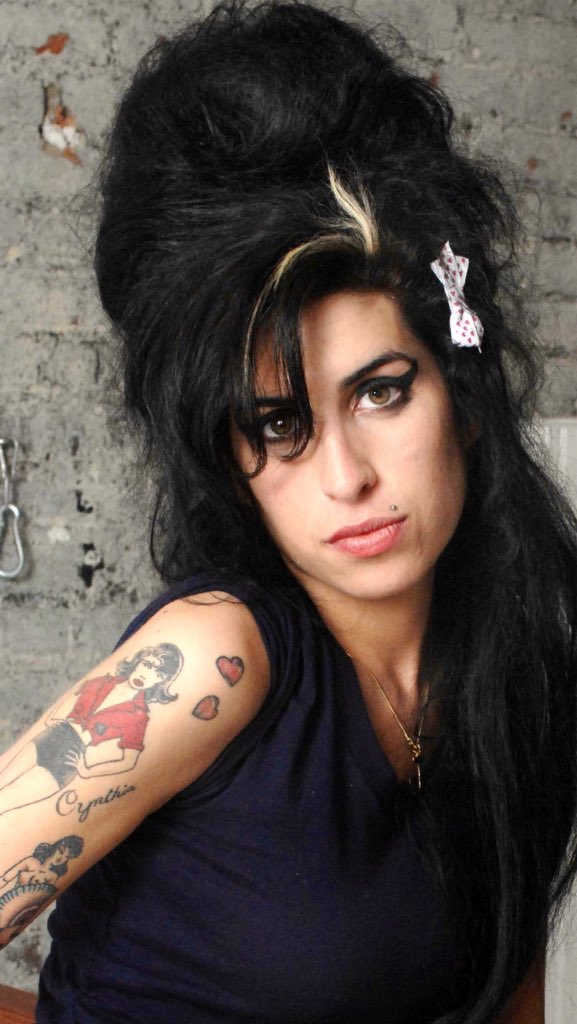
Amy Winehouse could very well be the most influential British artist of the past 20 years. Among those whom she inspired and paved the way for by their own admission include Adele, Lady Gaga, Jessie J, Paloma Faith, Rebecca Ferguson, Laura Mvula, Lana Del Rey, Florence Welch, Emeli Sandi, Sam Smith, Bruno Mars, Duffy, V V Brown, Estelle, Ellie Goulding, even Tom Jones comeback album was inspired by Back to Black. Spin magazine editor Charles Aaron said that Amy Winehouse was the “Nirvana moment ” for artists like Adele and Duffy and that “they could all be traced back to her in terms of musical attitude, styles and fashion”. Amy Winehouse was influential in so many ways.
First of all it is true that she paved the way for British artists in America in the 21st century and kicked off what has been called “the third British invasion”. Billboard chart manager Keith Caulfield said that “because of Amy or the lack there of the market place was able to get singers like Duffy and Adele.”
Second she also paved the way for female artists to have more mainstream success as well. Both Amy Winehouse and Lily Allen are credited with kick starting what was ultimately referred to by the media as “the year of the women” in 2009 which saw five female musicians nominated for the Mercury prize.
Solo female performers had fallen out of flavor at that point, particularly British female solo artists. Every type of singer or band goes through it’s periods of popularity. At one point boy band’s were the most popular, but then they faded. Amy, I and many others feel, led to the revival of the popularity of solo female singers around the world.
Finally she also helped to revitalise soul music and helped to reintroduce it to mainstream audiences, not only in the United Kingdom, but in America too hence why the third British invasion has also been referred to as a ” British Soul Invasion”, or “the British, Female Soul Invasion”.
1/ Her Talent


Okay this is subjective, but what the hell. Amy Winehouse as far as I’m concerned was one of the most talented singer and songwriters of all time. Its important to remember her talents as both a singer and a songwriter. As a singer she was equal to any one of the greats. She had the emotional depth of the likes of Billie Holiday, Etta James and Nina Simone in her voice. Don’t believe me? Listen to “Love is a Losing Game” Amy’s masterpiece in my opinion.
On top of that she also had an incredible range in her voice. Many people often think of Amy Winehouse as only being capable of singing sad more downbeat songs, but nothing could be further from the truth.
Listen to Frank her first, somewhat overlooked album and there are plenty of up beat humorous songs that can actually make you laugh such as “Cherry”, “Stronger than Me”, and “Amy, Amy, Amy”. Contrast this with heart breaking ballads like “Love is a Losing Game”, “Back to Black” or “Wake Up Alone” and you can get an idea of how versatile a singer she was.
There was simply no emotion her voice could not capture. I feel she was comparable to Freddie Mercury in this respect, as he was one of the few other vocalists who could capture any emotion in his voice too. He could sing light hearted, silly fun songs like “Fat Bottomed Girls” and moving, poignant pieces like “These are the Days of Our Lives”. For this reason Amy Winehouse and Freddie Mercury have always been among my two favourite singers. Unlike Adele or Billie Holiday both of whom are obviously still excellent singers. There is an Amy Winehouse and Freddie Mercury song for ever mood. Singers like Adele I feel can only cope with the sadder songs.
It wasn’t just in terms of emotional content Amy Winehouse was versatile. Her voice could also apply to many different genres too such as Jazz, Soul, RnB and even Reggae. If you doubt her versatility just look at the many different artists she inspired. Both Adele and Lady Gaga, two artists who are literally the opposite of one another have credited Amy Winehouse with paving the way for them.
Her talents as a songwriter meanwhile were just as strong. “Love is a Losing Game” in my opinion is the type of song that you can imagine, had it been released in the 50’s or the 60’s everyone from Billie Holiday to Frank Sinatra to Nat King Cole to Dinah Washington would have sang, and they all would have been able to do a great job of it because it is such a brilliant song.
The fact that Amy Winehouse was able to write songs that many other artists have wanted to sing, and at the same time made other people’s songs her own like the Zutons “Valerie”, which the vast majority of people would think was an Amy Winehouse song, (which is even more impressive when consider that the original was a massive hit too,) shows how gifted she was as both a singer and a songwriter.
http://www.people.com/people/article/0,,20263024,00.html
http://www.popeater.com/2009/03/16/lady-gaga-loves-strange-girls-like-amy-winehouse/
Top 10 Doctor Who villains who became good guys
The Doctor has one of the nastiest rogues galleries of any hero. He’s fought everything from Vampires, to living statues, to Nazi pepperpots, to Satan himself!
Still there have been a few of his enemies that have seen the error of their ways and even sought redemption. Compiled in this list are at least 10 of the Doctors major enemies who ultimately switched sides.
10/ Skaldak

One of the most evil members of the Ice Warrior race, enemies of the Doctor who date back to the 1960’s. Skaldak seemed beyond redemption as he ruthlessly slaughtered and dissected several innocent soldiers. He even tried to destroy the planet earth by kicking off a third world war, seemingly on a whim.
Ultimately however Skaldak proved he was really a big softie underneath as he not only spared Clara, but later humanity itself too. It can be argued however that he wouldn’t have been so generous, had his own people not shown up to rescue him. Whatever the case, at least he didn’t kick off world war 3, or force the 11th Doctor to slaughter everyone on the sub in order to stop him.
9/ The Master

Yes the Doctors archenemy actually makes the list. In his latest appearance as of the writing of this article, the Master not only helped the Doctor stop Rassilon’s plan to destroy every universe, but he also actually gave his life to save his former foe. Blasting Rassilon back in the “hell” of the Time War, the Master prevented Rassilon from destroying the Doctor completely and seemed to recant, or at least for the first time regretted all of the evil he had committed and even just who had become. The Master declared that without Rassilon’s lifetime of manipulation, he could have been something so much more “You did this to me! All of my life!“. Personally I would rank this moment as John Simm’s best ever performance in the role. It truly was the perfect ending to his version of the character.
As much as I love the Master, I would actually be happy if he never appeared again as this was such a fabulous ending for him. Due to his popularity we all know that the Master is destined to reappear again at some point, and chances are his reformation at the end of this story wont stick. Still for now I’m including him on this list as the last time we saw him he was performing an act of heroism and self sacrifice.
Another cool thing about the Masters sacrifice in “The End of Time” is that this was how Roger Delgado’s Master was to have originally died in Jon Pertwee’s final story by sacrificing himself to save the Doctor. Sadly however Delgado’s tragic and untimely death prevented this.
I have no idea if Russell T Davies, the writer of “The End of Time” wrote this in as a deliberate homage to the intended end to Delgado’s Master. Davies is a huge fan of the Pertwee era in particular, so its possible that this was an intentional nod. Either way it was great to see the Master ironically give his life for his Time Lord nemesis. It would have been the perfect end for Delgado’s Master, and it was the perfect end for Simms too.
8/ Noah

Noah is a rather unfortunate individual in the classic serial “The Ark in Space” who is transformed into a Wirren, a gigantic cockroach like alien. As a Wirren, Noah attempts to slaughter the last of humanity who are kept in suspended animation. The Fourth Doctor is able to get through to him however, and Noah instead sacrifices himself to save mankind in one of the classic era’s most moving moments.
7/ Dalek Caan

The true hero of “Journey’s End” Dalek Caan manipulates the Doctor and Donna’s time stream in order to ensure that both of them are able to stop the Daleks reality bomb and save every universe. Prior to this story, Caan had been one of the Tenth Doctors worst enemies. As a member of the Cult of Skaro, he not only killed many innocent people, but he was also technically at least partly responsible for the Doctor losing Rose too. However he managed to change his evil ways when he stared into the time vortex and saw all of the evils the Daleks had committed throughout history, which shocked even him. I always loved Caan’s final line to Davros where he explains why he has betrayed his kind “I saw the Daleks, what we had done throughout time and space I saw the truth of us, creator and I decreed no more“.
6/ Kroton

A Cyberman, one of the Doctor’s greatest enemies. To be fair Kroton himself was never specifically an enemy of the Doctor, but the Cybermen as a whole were so he still qualifies for me. Kroton was a Cybermen who developed human emotions and helped the planet Mondarin repel a Cyberman invasion. He would later battle Sontarans before joining the Eighth Doctor and Izzy as a companion. He would then go on many adventures with them before saving every single universe from being destroyed by the Master, after which he took over as the guardian of all of creation. The character only appears in spin off material, though the Eleventh Doctor would later go on to have a Cyberman companion too.
5/ Yvonne Hartman

Another Cyberman, Yvonne is different however in that she was actually a villain before she became a Cyberman. As the head of Torchwood, Yvonne captured the Doctor, messed around with the Void, which not only put two universe in danger, but allowed a whole invasion fleet of Daleks and Cybermen to emerge and slaughter millions of innocent people. However after being converted into a Cyberman, Yvonne somehow managed to retain her mind and held off a group of Cybermen by herself long enough for the Doctor and Rose to send the Dalek and Cyberman armies into the void. Ironically Yvonne is probably the first person to become a hero once they became a Cyberman.
4/ Dalek Sec

Dalek Sec was the leader of the Cult of Skaro and therefore the main villain in the two part season 2 finale Army of Ghosts/Doomsday. However in his next appearance Sec merged with a human being and subsequently developed human emotions. He became the first Dalek that the Doctor genuinely respected as a result, with the Doctor even referring to Sec as a “great man”. However Sec gets even more credit for being the first, and to date only Dalek to literally get in the way of Dalek fire and sacrifice himself for the Time Lord. The Doctor also believed that Sec was the only person who could have redeemed the Daleks as well. “The only creature who could have led you out of the darkness and you destroyed him”.
3/ Lytton

Originally Lytton was an enemy of the Fifth Doctor in the story “Resurrection of the Daleks”. He was portrayed as a thoroughly ruthless individual who was perfectly willing to slaughter his own men to save his own neck. Naturally Colin Baker’s more volatile Sixth Doctor was less forgiving towards Lytton, and refused to believe Lytton when he insisted that he wasn’t working for the Cybermen. However it soon turned out Lytton was telling the truth and was even helping to Cryons to stop the Cybermen and save both earth and time itself from them. Sadly by the time the Doctor had figured this out the Cybermen had already mostly converted Lytton, and though the Doctor still tried to save him, he was ultimately beaten to death by the Cybercontroller. Still Lytton’s last action at least bought the Doctor enough time to destroy the Cyber controller once and for all.
You think Yvonne got it bad.
2/ The Paternoster Gang

I never would have thought back in the Pertwee era that I would one day watch a Sontaran and a Silurian help the Doctor defeat the Great Intelligence!
The Paternoster Gang have become one of the most popular supporting characters in the history of the series. Having appeared in five episodes so far, they have helped the Doctor take on a whole host of other villains including The Great Intelligence, The Headless Monks and Mr Sweet. They fall into the same category as other teams the Doctor has worked with such as UNIT, The Children of Time and Jago and Litefoot, in that they are really more of a family for the Doctor who know him through multiple lives. In “Deep Breath” they were even used the same way UNIT were for Robot to help the transition from one Doctor to the next, though again its ironic that this time the Doctors family are made up of some of his worst enemies.
1/ Rusty

Yet another good guy Dalek from the latest Doctor Who episode “Into the Dalek”. Ironically the Daleks have more good guys here than any of the Doctors other enemies. In fact there are many more good guy Daleks than on this list. There is the one in a million Dalek, the Metaltron, Alpha, Beta and Omega and the Oswin Dalek. I could have filled the list with nothing but Daleks!
Rusty to me was the best attempt at doing a benevolent Dalek yet. He wasn’t simply a Dalek that had been infected with humanity, he was a Dalek that had simply learned to hate his own kind.
Techinically he isn’t really a good Dalek. He still has the same rage and hatred except that now it is towards the Daleks themselves, rather than humanity. Ironically he learned it from the Doctor. The original ending to “Into the Dalek” was to have had Rusty die, but the fact that the writers spared him suggests to me at least that they may bring him back for future episodes. I would love to see Rusty again help the Doctor out on future mission against the Daleks, or maybe even another enemy. However I hope that he is treated seriously in every one of his appearances and not turned into a comic relief like Strax. I realize a lot of people might not like the idea of the Doctor having a Dalek ally, but personally I think it could be quite an interesting to see one member of their kind wage war on them. We saw that briefly with Dalek Caan, but Rusty could take us deeper into the idea.
 burrunjorsramblesandbabbles