It was announced recently that Xena the Warrior Princess will be rebooted over 20 years after the series first debuted.
Very soon there may well be a whole new generation of young fangirls performing the Xena war cry.
Nothing is known about the reboot yet in terms of casting so we can only speculate as to who may be involved. In this article I am going to offer 7 suggestions for who I think could be great as one of the most iconic television characters of all time.
Lucy Lawless is pretty big shoes to fill and I must admit at first I wasn’t too keen on the idea of a remake for that reason, but the way I see it, if its good? Great! It will bring a whole new generation of fans to the series, and if its crap? Well then the original still stands as the classic it is.
All of these actresses I think would do the role justice.
Jill Wagner
Jill has the right build and gravitas for Xena and she has plenty of experience playing action roles in fantasy series such as Teen Wolf and Blade the Series.
I can see her take on the character being much darker than Lucy’s, which might benefit the show depending on what direction they were going in.
Xena could be both camp and very dark much like Batman and perhaps this remake will focus solely on the darker elements of the character such as certain versions of Batman have over the years.
Jill would probably be the best choice for a grittier take on Xena that focuses more on her brutal past and her blood feud with Callisto.
Jill is most famous for playing the psychopathic villainous Werewolf hunter Kate Argent in Teen Wolf. Her character was the constant tormentor of protagonist Derek Hale throughout the first season. Not only did she kill his family but she tortured him A LOT!
Poor Derek. It seems he didn’t do anything in series one but get tortured and beaten up by Kate.
The only reason you wouldn’t cast Kate as Xena is because she might be perfect as one of the villains of the series instead. She would be excellent as Alti, one of Xena’s archenemies in particular. Still I can also see her giving us a much grittier and darker version of the Warrior Princess herself.
Rachel Shelley
An English character actress best known for her role as Helena Peabody in The L Word (where she acted alongside Lucy Lawless herself). Rachel has had a consistent career on both sides of the Atlantic, but she has only ever really played guest or supporting roles which is a shame as I think she is a very good actress who could carry a series if given the chance.
She certainly looks the every inch the perfect Xena with her raven hair and piercing blue eyes and I think she would be able to handle the physical aspects of the role too.
The original and the second Xena together perhaps?
Katrina Law
Best known for her roles as Mira in Spartacus Blood and Sand and Vengeance as well as Nyssa Al Ghul in Arrow.
She’s already shown promise in both roles, with Mia in particular being one of the most well developed characters across the series as we see her go from a meek slave girl to a warrior in her own right.
I’d imagine that she would similarly be able to develop Xena in an interesting way as well as capture the various different sides to her personality.
Dawn Steele
A ridiculously underrated actress. Dawn is probably best known for her role as Lexie MacDonald in Monarch of the Glen though she has also appeared in other high profile British series such as Wild at Heart. She currently stars as Doctor Annie Jandhu in River City.
She is completely unknown to American audiences but that isn’t necessarily a bad thing. After all Lucy Lawless herself was a total unknown when she was cast as Xena. Sometimes casting an unknown in a big role like Xena or the Doctor can work as it can allow the actor to blend into the role more easily.
Dawn is excellent at playing strong, complex and sexy characters as seen with her role as Annie alone. Also as you can see physically she is a great choice for Xena as she bares a rather startling physical resemblance to Lucy Lawless.
Miranda MacDougall
A Canadian actress best known for her recent guest appearance on The Flash as Izzy Brown, a gender flipped version of the famous Flash villain, The Fiddler. Miranda made quite a big impression with her performance. She gave the character a lot sass and attitude, but at the same time, she also brought a more vulnerable, sympathetic side to Izzy such as in her relationship with the Elongated Man and even just in her musical aspirations.
Izzy felt like a fully rounded person, with her own dreams and ambitions that we wanted to see survive, rather than just the usual victim of the week.
Miranda also demonstrated a great range in her performance, as she was just as good at playing the more cold, logical and ruthless Thinker when the villain stole Izzy’s body.
See here.
Added to that she also looks a little like Lucy Lawless too and even has a somewhat similar delivery. When she tells the Thinker he/she talks too much, I couldn’t help but be reminded of Lucy.
Dana Delorenzo
Best known for starring as Kelly Maxwell in Ash Vs Evil Dead. Dana has proven to be an excellent action heroine and thanks to her background as a comedy actress and impressionist could easily capture the humour of the character too.
She would certainly be a choice that Lucy herself would approve of, as she worked with Dana on Ash Vs Evil Dead and singled her out for praise.
Dana physically is perhaps a bit too small to be Xena however. She stands at just 5 foot 3, but still you could work around that. After all not every version of Batman has been big and tall either. Michael Keaton for instance, physically was somewhat smaller and thinner than the typical image for Batman, but nevertheless he was undoubtedly one of the best versions.
Stephanie Beatriz
My number 1 choice for Xena. Stephanie is best known for playing the badass, perpetually angry, deadpan cop Rosa in Brooklyn 99.
Whilst primarily known for her comedy, Stephanie can do serious drama as well. Physically she is a great match for Xena as she is quite tall and imposing. Her humour is also a good match for Xena, who as tended to be more sarcastic and biting. I can imagine Rosa getting very frustrated with Joxer, very fast!
Stephanie has mentioned wanting to branch out and play more serious action roles, so for me Xena would be the perfect choice.
Let me know what you think in the comments of my suggestions and please tell me any suggestions you have for Xena and other characters in the series.
The true queen of evil, Famke Janssen is like a female Christopher Lee in that she more often than not tends to play the evil, alluring, dark sexy villain in genre and cult movies which also makes her the perfect choice for this edition of cult actors.
Janssen has always been one of my favourite actresses. She has an undeniable towering presence and this coupled with such a long career spanning film and television has allowed her to bring many exciting and colourful characters to life.
Kamala/ Star Trek The Next Generation
One of Janssen’s first ever roles. This character was a far more sympathetic individual than many of her later more famous parts.
Kamala is an empathic alien who is forced to marry a high ranking member of an alien species for political reasons. Along the way however she ends up falling in love with Jean Luc Picard and he her which somewhat complicates things.
This episode “The Perfect Mate” is essentially just a remake beat for beat of an original series episode called “Elaan of Troyius“. Both revolve around the captain of the enterprise having to escort a female alien who does not want to marry a member of a rival alien race, in order to prevent a war because she falls in love with the Captain. The Captain in both cases returns her feelings, though in both cases said aliens are said to have some kind of special supernatural power over men (not that either actress would need it!)
Of the two of the very similar stories “The Perfect Mate” is undoubtedly superior. I do enjoy “Elaan of Troyius” but it is one of the sillier TOS episodes. “The Perfect Mate” deals with the idea of a woman being forced into an arranged marriage in order to prevent a war in a much more nuanced and interesting way. The relationship between Kamala and Picard is a lot more touching the way she falls in love with him because of the kindness he shows her.
Janssen and Patrick Stewart have very good chemistry with each other and manage to make the relationship between Kamala and Picard, which happens in a relatively short space of time seem sincere and genuine. The two actors would later be reunited in the X-Men film series as Professor X and Jean Grey, two characters who couldn’t have a more different relationship. Indeed the idea of Jean and Professor X being in love would seem completely inappropriate, which is a testament to what good actors they both are that you don’t even think of them as the same people in this episode.
Overall a good start to Famke’s career and a strong performance particularly for an actress who had really had so little experience at this point. This was in fact her second acting role
Xenia Onatopp/ Goldeneye
Her breakthrough role. Xenia is arguably the most famous Bond villainess of all time.
She’s really the ultimate fetishized female character. She murders her victims by crushing them to death with her thighs whilst sleeping with them.
In many ways she kind of reminds me of the classic death by snu snu joke in Futuruma.
Whilst it might sound like an incredibly sexy way to die on paper, it would probably be one of the most agonising deaths known to man, having pressure put on your pelvis until you literally snapped in half like a twig.
Xenia I think was really the last iconic hench villain in the James Bond series. In the earlier films the hench villains like Jaws, Nick Nack, Tee Hee, and Odd Job were always so over the top. In some cases they even managed to overshadow the main villain such as Jaws who is arguably far more remembered than either Stromberg or Drax the two villains he worked for.
Similarly I’d say Xenia is the villain that people remember more than even Sean Bean’s 006.
The character of Xenia is utterly ridiculous but again I think that was part of the charm of the earlier Bond villains in general with their scarred faces, metal claw hands, and penchant for feeding people big hungry fish. Sadly I think this is something that is missing from the later villains who are a bit dull in comparison.
Whilst Xenia put Famke on the map it did typecast her as the sexy villain and though she did try and break free from it with different roles, ultimately as we will see many of her later roles were often in a similar vein to Xenia.
Evelyn Stockard Price/ The Darkness / The House on Haunted Hill
Another villainous character. Price is the scheming wife of an amusement park Mogul named Steven Price, whom she and her lover Donald Blackburn (who she later turns on and kills) plan to murder in order to gain access to all of his wealth.
She ends up being consumed by the dark power of the house however simply known as the Darkness, which takes her form afterwards allowing Janssen to play both villains.
Though the film has often been derided, I personally thought it was a great remake as it did at least try to do something new and it had a very strong cast.
Janssen is excellent as Price as she really does give the character no redeeming features whatsoever. She’s violent, treacherous, spoiled, selfish and a chronic backstabber.
I also like her and her husband Steven’s relationship with each other the way that there is absolutely no affection between them. Even before it becomes apparent that she plans to betray him its obvious that they can’t stand each other. He obviously only married her to boost his ego whilst she obviously only married him for his wealth.
Steven though not as quite as monstrously evil as his wife is still a repugnant character too and thus they both deserve each other. Though having said that as wicked as they are even they don’t deserve the horrible fate that befalls them, where their souls are condemned to an eternity of torture at the hands of the spirits of the patients in the house.
Spooky stuff, but its somewhat ironic that these two people who had the most poisonous marriage will now be suffering together forever.
Of course in the sequel after the power in the house is destroyed both of their souls are freed, though it probably won’t make a difference as they’ll end up going to hell anyway.
Overall Price is great performance from Janssen who manages to create a wonderfully vicious femme fatale.
Jean Grey (Phoenix)/ X-Men Film Series
Probably her most famous role. Famke played this superheroine/villainess in 5 films.
She was really the perfect choice for the character in every respect. Physically she is a large statuesque beauty, but the character of Jean also needs to have a certain gravitas as she is definitely one of the more tragic Marvel characters.
Jean really has the biggest role in the second and third film in the series. In the first movie whilst she isn’t wasted, its really more Rogue and Wolverine’s film.
The second movie meanwhile sees her memorably sacrifice herself to save the rest of the team. I always got a bit of a Wrath of Khan, Spock sacrificing himself vibe from Jean Grey’s death at the end of X-Men 2. There’s even a closing monologue from the deceased character at the end of each film over a shot of their resting place. Lets not forget that Bryan Singer who directed the film is a big Trekkie so I think he may have had Wrath of Khan in mind when making the film.
Jean’s death is very well acted on Janssen’s part, but some have criticised it for the fact that Grey seemingly didn’t need to leave the plane in the first place!
Some fans however have argued that this was the beginning of the Phoenix persona taking over her personality and that it forced her to leave so that Jean could effectively die and the Phoenix could rise in her place. This would tie into how powerful Jean was becoming at the end of X-Men 2.
X-Men 3 often gets a hard time, but I thought it was a good film. It had some flaws yes, namely how Cyclops is killed off too quickly. To be fair though X-Men 2 misused his character as well. Also James Marsden it must be remembered was unavailable for most of X-Men 3’s filming.
I think that James Marsden and Famke Janssen didn’t really have any chemistry with each other which was obviously a problem when they were meant to be this big great romance. The fact that her chemistry with Hugh Jackman was so much better obviously meant that Wolverine would be put at the forefront ahead of Scott.
Famke is the best thing about X-Men 3 even though she has very little screen time. She is perfect at switching between the tormented and guilt stricken Jean and the savage, animalistic Phoenix. The scene where she literally tears her friend, father figure and mentor Professor X to bits is both shocking and frightening.
In the comics the Phoneix was a powerful alien entity, but in the films it is revised to just being a split personality of Jean. Whilst some fans were understandbly upset at this big change from the comics, ultimately I don’t think the all powerful alien would have gelled with the films universe at that point as it did in the comics.
Overall I think X-Men 3 did a good job of condensing the Phoneix story arc and making it fit the more down to earth universe of the film series and Janssen was excellent at playing a woman possessed and tormented by a great evil.
The only gripe I have with it is that Janssen wasn’t given enough time to explore both sides of Jean’s personality, but she did well with the screen time she was given.
Its ironic in a way that on the one hand Jean is the most heroic part she has ever played, whilst the Pheonix is by far and away the most destructive villain she has ever played.
Though Jean is killed at the end of X-Men 3, Janssen would go on to play the role two more times. First as a hallucination in The Wolverine and finally in a cameo appearance in X-Men Days of Future Past which saw her and Scott resurrected via a change in time. To many fans and critics alike this helped rectify the terrible way their romance ended in X-Men 3.
Janssen expressed interest in reprising her role for the next X-Men film, but was passed over in favour of the much younger Sophie Turner. Janssen said that she felt it was Hollywood sexism that she had been replaced by a much younger actress though she wished Turner luck in the part.
Personally I don’t see this as being an example of sexism as the entire cast has been replaced by much younger actors for X-Men Apocalypse. Also on top of that Days of Future Past did feature her alongside Patrick Stewart and Ian McKellen. The only reason she wasn’t in it as much was because her character had been killed off and therefore couldn’t appear until the end, which was the same for Scott too.
Having said that though I would like to see one last film with the original cast and I must confess I thought that is what they were going for when they rebooted it at the end of X-Men Days of Future Past. Who knows maybe we’ll get a final film with the original cast some day.
Still with 5 films under her belt which covers everything from Jeans death to the Phoenix saga to the love triangle between her, Scott and Logan, in my opinion she’s already had a great run in the role and to me will always be the definitive Jean.
Miss Elizabeth Burke/ The Faculty
A more minor character Miss Burke is a kind hearted and supportive teacher of one of the main protagonists Zeke.
Sadly however she is later infected by the aliens and becomes a hideous mutated monster that tries to eat him alive. In the final confrontation with her, Zeke ends up ripping Burke’s head clean from her shoulders, though it then sprouts tentacles and walks away.
Despite this however at the end of the film after the aliens are defeated Burke ends up going back to normal. Famke survives the film which is a nice change considering she normally you know gets stabbed to death, eaten by an ancient evil or killed by criminals. Though its ironic that in one of the films where she gets off lightly she still gets decapitated.
I think the poor effects of this sequence actually add to it as it helps to reinforce the naturally cartooish element of this scene.
Trillian St James/ Deep Rising
A rare heroic role, though even then she is more of an anti hero. Trillian is a cunning and wiley thief who ends up having to help the main protagonist when hideous alien monsters begin to attack the ship and eat its passengers.
Janssen clearly has a lot of fun with the character who is more of a lovable rogue than anything else.
The ending of the movie sets things up for a sequel that sadly never happened due to the negative reaction to the first film, though it has since gone on to be regarded as a cult classic.
Despite the lukewarm reception to the movie at the time I think that Deep Rising helped Famke gain a reputation for appearing in somewhat more offbeat, indie films.
Rachel Wright/ I Spy
Famke Janssen played the main villain in this remake of the classic cult series of the same name.
Sadly the movie was an all around flop and really Janssen is practically the only thing worth watching in the film.
Owen Wilson and Eddie Murphy have a reasonably entertaining chemistry with one another. They both have a talent for creating memorable double acts, but sadly I’ve seen them both create more memorable duo’s with other actors like Dan Akroyd and Jackie Chan.
Famke is really the stand out in this film as she manages to create an unbelievably sexy yet quite menacing villain at the same time.
The main character Alex played by Owen Wilson is desperately in love with her and she often uses this against him, yet at the same time she is also a brutal and sadistic villain who enjoys hurting him physically too.
We see this in the scene where she tortures him and nearly castrates him! Janssen underplays the torture scene which is more sinister. She doesn’t burst into fits of laughter, but there is a perverse little smile on her face when she is stabbing a knife into his leg and twisting it.
You get the impression that she likes the fact that he has feelings for her simply because its yet another way she can torture him. Even though Alex is a somewhat bland leading man, Rachel’s treatment of him helps to add a real tragic element to the character.
Here is the person he loves more than anything, who he has pined for for years beating him to a bloody pulp, stabbing him and trying to slice off his penis and she’s loving it! And she is openly mocking him for being so foolish as to have ever trusted and cared about her. You can’t help but feel a bit bad for the guy.
Having said that though I felt Wilson’s character came across as being a bit pathetic when he was willing to believe Rachel when she claimed to be a triple agent right after she almost tortured him to death. I mean really, I understand that Famke Janssen is hard to resist, but her lies wouldn’t have fooled Sir Gullable of Believe’s Anything Town.
Plus if she had kicked me in the balls as many times as she does Alex I might be put off her a bit. She kicks him in the nuts about 5 times in the film.
Overall with Rachel, Famke created a sadistic, manipulative, cold and very effective villain. Its just a shame she wasn’t in a better film against more interesting heroes.
Muriel/ Hansel and Gretel Witch Hunters
My favourite performance of hers. Muriel is the main antagonist in the cult classic Hansel and Gretel Witch Hunters.
Hansel and Gretel was panned by mainstream critics when it was first released (though it was still a box office success) but it has quickly earned a reputation as a cult classic and there is even a sequel as well as a tv series spin off planned.
Its a fantastic idea of Hansel and Gretel being so traumatised by their experiences that they end up as Witch Hunters and Janssen’s Grand High Witch is the perfect villain for the two.
She is absolute pure evil through and through. She is the queen of the witches who was technically responsible for the slow and painful death’s of both of Hansel and Gretel’s parents (she later murders Hansel’s one true love whom she guts like a fish too). She also plans on using Gretel’s heart to create a spell that will make her and her army of witches utterly unkillable. Plus she eats children!
She is a total monster and what’s interesting is that unlike say Rachel she is a completely sexless villain. In her human form she still looks fabulous because she is Famke Janssen, but still she never uses her looks or sexuality at any point, nor does she express any interest in anything but slaughtering humanity. Also her true witch form is genuinely horrific too.
She makes her entrance into the film by using her magic to rip a guy apart using branches, and torture another guy by taking control of him and then forcing him to eat maggots and bugs before he literally explodes into a pile of blood.
She is the ultimate dark Queen and again I think you can see how she is like a female Christopher Lee with this role. This is like the female version of the kind of character he would have played when he was younger. I don’t think there are many people who can play those types of characters as effectively as you need to have a real commanding presence. You need to be someone who just looks powerful and dangerous the second you step on screen. I think Lee and Janssen both benefited from being so tall and striking looking and having such strong voices too.
Muriel’s death scene is even like something from a Hammer Horror in terms of how over the top it is. Its a Rasputin like death the way the heroes shoot her about 5 times, stab her, beat her to a bloody pulp, hang her from the ceiling and she keeps coming back. Even when she is being hung she reaches out and starts choking Hansel and nearly kills him. They finally manage to put her down for good by taking her head off with a shovel!
Overall I’d say that Muriel is one of my favourite supernatural villains and monster rulers. She literally has no redeeming features even to her fellow witches (at one point when she suspects there is danger she sends them ahead and isn’t even bothered when they are shredded by one of Hansel’s traps.) Janssen suitably plays the role with absolute relish and simply dominates any scene she is in.
Lenore Mills/ Taken trilogy
A very unusual part for Janssen to play. Lenore isn’t just a non villainous role, she is a complete helpless damsel in distress who spends most of the second film being captured, brutalized and tortured by the villains before being killed off in the third film.
A part of me wonders if she took this role of the vulnerable, victimized loving mother to maybe escape always being seen as the villain. If so it didn’t work as literally the first role she played after Lenore in Taken 2 was Muriel who is the polar opposite to Lenore in almost every single respect.
It does feel odd at first seeing Janssen be so helpless simply because of the characters she has played in the past, but she manages to blend in to the role fine and whilst her typecasting problem may not have been helped by this part at the very least I think she was able to show how versatile she is as an actress by playing a character who could not be more different to the types of roles she is most famous for.
Olivia Godfrey/ Hemlock Grove
One of her most popular recent roles, Olivia is the scheming, matriarch of the Godfrey family. She is a Vampire like creature called an Upyr and generally serves as the main villain overall of the series.
She does have some redeeming qualities and even attempts in the second season to try and redeem herself, but ultimately she always fails at any attempt to better herself and reverts to being a brutal, manipulative monster that enjoys literally ripping people’s hearts out.
The character is the type that Janssen could play in her sleep at this point, the tall, dark alluring, incredibly vicious villain, but Janssen is able to flesh her out somewhat in the second series when we see her try and control her demonic urges before a betrayal leads to her VERY bloody comeback.
The only thing I felt was a little off about her performance was her English accent. Normally the American accent she uses for her other films which is not her own is really good, but sadly her English accent was weaker, though thankfully she began to ditch it in later episodes of the series.
Other roles
Janssen also had a recurring role on Nip/Tuck as the antagonistic, transexual character Ava Moore. She played this character throughout the shows second and sixth season.
Sadly I haven’t seen the series so I can’t comment on it in any great detail but Janssen’s performance was very acclaimed.
Other non genre films she has appeared in include Father’s and Sons opposite Jeff Goldblum (which was her debut), The Gingerbread Man, Monument Ave, Rounders, The Wackness and RPM.
Whilst she has had a long and very varied career across many different genres and mediums, ultimately she will always be one of sci fi and fantasy’s finest leading lady’s and one of its most memorable villains.
The Doctor has to date been played by 13 actors on screen, William Hartnell, Patrick Troughton, Jon Pertwee, Tom Baker, Peter Davison, Colin Baker, Sylvester McCoy, Paul McGann, John Hurt, Christopher Eccelston, David Tennant, Matt Smith and Peter Capaldi.
Whilst we all have our favourites and least favourites I think it can be agreed that overall all 13 men have helped to keep the character alive for over half a century and added something to the image of the Doctor.
However what if things had been different? Not all of the actors who have played the Doctor were the producers first choice for the role and in this article I am going to run through a list of other actors who were almost the famous time lord. Who knows if any of these actors would have been as successful but its an interesting what if anyway.
The First Doctor/ Leslie French
A highly respected character actor of stage, film and television, French turned down the role of the First Doctor, but later appeared in the 25th anniversary story Silver Nemesis. Producer John Nathan Turner has said that his casting was a deliberate nod to the show’s beginnings on its 25th anniversary.
Second Doctor/ Brian Blessed
Apparently Blessed was almost cast as the Second Doctor. According to the actor he was too busy to play the role, but he later expressed regret over this having been a huge fan of the series.
Blessed’s name was later linked to the 7th Doctor by the press, but he said that he was never under serious consideration. He also recently expressed interest in playing the 13th Doctor nearly 50 years after first turning the role down. Who knows maybe he will still get his day.
The Second Doctor/ Peter Cushing
Peter Cushing was offered the role of the second Doctor but turned it down as he did not want commit to a tv series. He too said he regretted this decision.
When Bill Hartnell was forced to quite I was asked if I would be interested in taking the lead in the series twice. I turned it down which I now regret a little. It would have been fun, but at the time you know I considered myself a serious film actor and stepping into a television series seemed like a step backwards. I don’t know how serious the producers were about hiring me but perhaps if I’d said yes they would have been pleased and you would have had me fighting Daleks and Cybermen week in, week out. But I’m glad I didn’t in some ways as Patrick was so wonderful.
Peter Cushing of course did play the Doctor in two films based on the tv series, but these were ultimately set outside of the canon of the show.
Ron Moody/ The Third Doctor
One of Britain’s most respected character actors, Moddy was the producers first choice for the third Doctor. He turned them down but later said it was the biggest regret of his career. He said in an interview that whenever he hears Doctor Who’s iconic theme he kicks himself.
Bernard Cribbens/ The Fourth Doctor
Bernard Cribbens auditioned for the role of the fourth Doctor but was rejected by the producers as they felt his Doctor was too violent.
Cribbens later joker that he got angry when he watched Tom Baker who was eventually cast’s first episode and the first thing he did was batter his companion Ian Marter over the head.
Cribbens would later earn a special place in Whovians hearts as the lovable Wilfred Mott during the Tennant era.
Seventh Doctor/ David Warner
He was suggested to Doctor Who producer John Nathan Turner by writers Pip and Jane Baker.
It is not known if he was seriously considered or approached. He would later go on to play an alternate universe version of the Doctor in two Doctor Who Unbound stories, which are set in alternate realities from the main show.
He is excellent as the Third Doctor. He brings a real sense of authority and gravitas to the role and I think he would have made a fantastic on screen Doctor, not that McCoy wasn’t brilliant of course.
Seventh Doctor/Ken Campbell
He auditioned for the role of the Seventh Doctor but was rejected because his interpretation of the character was deemed too dark and frightening. At that point the producers of Doctor Who were looking for a much lighter take on the Doctor after Colin Bakers portrayal.
Of course ironically the Seventh Doctor as played by Sylvester McCoy went on to become arguably the darkest version of the character. I wonder if Ken Campbell felt annoyed at being rejected for what they eventually did with the character anyway like Bernard Cribbens?
Eighth Doctor/ Tim Curry
Tim Curry almost played the Doctor twice.
In the early 90’s when Terry Nation, creator of the Daleks and Gerry Davies, co-creator of the Cybermen, as well as the creator of the concept of regeneration itself wanted to revive the show their first choice for the role of the Doctor was Tim Curry. Sadly this version of the series never got off the ground as the BBC rejected Nation and Davies’s proposal as they hoped to relaunch the show in America. It is not known if Curry was even approached for this version.
Later however the producers of the 96 movie asked Curry and he accepted. Apparently Curry hoped the role would help him break free from always playing the villain. Sadly however the project went into development hell and by the time it was ready to go Curry was busy with other projects.
According to some online sources it was Curry who suggested Paul McGann his good friend to the producers
Many other actors were considered for the role of the Eighth Doctor including Anthony Stewart Head, Hugh Grant and even Billy Connolly who said he would have loved to have played the part.
I must confess as much as I like Paul McGann’s Doctor I do think that Tim Curry would have been the best Doctor since Tom Baker himself. Watch him in Clue (one of my favourite films) as Wadsworth the Butler and you can see what a fantastic Doctor he would have been.
American Doctor/ Harrison Ford
Yes as strange as it is to believe Hans Solo was almost the Doctor. In the 1980’s the producers of the later 96 movie planned to produce a remake of Doctor Who with Ford in the role of the Doctor.
Though Ford was a fan of the show he turned it down as he didn’t feel it would work as an American series or with an American actor. He later said George Lucas who was also a big Doctor Who fan called him an idiot for turning the role down.
Eleventh Doctor/ Robert Carlyle
Carlyle expressed an interest in the role of the Doctor in 2008 after Tennant announced he would be stepping down.
Carlyle said that he didn’t like to talk about it when there was another actor playing it as he felt it was rude to do so.
He said that he would treat the role with respect, but sadly he was never approached. Well not sadly as it turned out because Matt Smith ended up being one of my top 3 Doctors, but still Carlyle would make an excellent Doctor too.
Carlyle’s name has been linked to the role of the Doctor many times by the press, but ultimately it seems the closest he came to the role was during the casting process for the 11th Doctor when he was on the shortlist for possible actors who could play the part.
Among the other actors who have expressed interest in the role include Rowan Atkinson (who played a version of the character in the comic relief spoof, The Curse of Fatal Death) and Noel Fielding.
All of the actors in this list would have made excellent Doctors but ultimately it all turned out well in the end as the Doctors we have are as a wise man once put it, “splendid chaps all of him”.
Some actors have a real talent for playing nasty bastards.
I don’t think any actor really sets out to be the villain. Most actors I think have ambitions to be the leading man, but for whatever reason some just get pigeon holed into being the baddie. Not that that’s a bad thing of course. Often the character audiences are most interested in seeing is the evil villain and in this article I am going to run through what I feel to be the best villain actors.
Now before we start I want to make some things clear. First of all as always this is only in my opinion, I’m not pretending to speak for anyone else here.
Also the rules for being included on my list are as follows. You have to have played at least 4 villains. For this reason Heath Ledger sadly will not be included on this list. Obviously as the Joker, Ledger was one of the greatest villains in cinema history, but the Joker was his only villain role and thus you wouldn’t really say he was a villain actor at any point in his career. The Joker was the exception, and indeed his performance as the villain is often used as the greatest example of an actor being cast against type being successful.
Similarly Henry Fonda though also responsible for one of cinema’s vilest villains in Once Upon A Time in the West will also not be included in this list, as that was another example of an actor who normally plays sympathetic roles being cast against type and it being hugely successful.
Not all of the actors on this list are exclusively villain actors either. Some may even be known for playing heroes just as much, but in order to be a candidate you have to have played a fair amount of villains.
The actors on this list will not be listed in terms of who is the best actor, or even who is the best villain, but simply who has played the most villains. We shall start out with actors who have played a few big villains, and gradually move to actors who were typecast as villains almost to the point where you would struggle to name a heroic role they played.
I will also be doing a top 30 villain actresses lists later, so there will be no women on this list.
Lets get started then.
30/ John Hurt
Badguy roles: Caligula (I Claudius), The Horned King (The Black Cauldron), Adam Sutler (V for Vendetta), The Great Dragon (Merlin)
John Hurt as I have said before is an actor who has never really been typecast. Throughout his incredible career spanning 6 decades, Hurt has played just about every type of character from the hero, to the comic relief, to the villain, to the victim, to the wise old mentor.
Many of the roles people would associate him with couldn’t be less villainous such as the Elephant Man, Quentin Crisp, Kane, the Doctor and Mr Ollivander.
Still despite this throughout his long career he has created a number of memorable evil characters too.
His most famous bad guy role is as Caligula in the classic miniseries I Claudius. Hurt’s performance as the twisted Roman emperor is comparable to Bela Lugosi and Christopher Lee’s as Count Dracula in that everything we think of as Caligula comes from Hurt’s stellar performance. In real life whilst some suspect Caligula slept with his sisters and Robert Graves novel hints that he killed one of them. He never impregnated his favourite sister, nor did he devour the fetus from her stomach. Yet despite that we always hear about how Caligula ate his child in popular culture. One episode of Red Dwarf lists it as a historical fact when it comes entirely from Hurt’s portrayal.
Hurt’s Caligula has got to be one of the most evil and twisted villains in any work of fiction. As a child he murders infants, other children, slaves, small animals, and eventually his own father who he both poisons and frightens to death. He also burns his own house down when his aunt sends him to his room after she finds him playing sex games with his sister!
When he grows up he goes on to sleep with all three of his sisters, and his great grandmother, whom he also tortures, and molests on her death bed when she is gasping for air. He then along with Tiberius his uncle and adopted father, organises a gigantic slaughter of the population, with hundreds of innocent people’s bodies being dragged through the streets, including even children (one of whom is raped!)
Not long after this he then murders Tiberius and becomes the emperor. He later goes completely insane and actually believes he is Zeus the king of the Gods!
Now believing he is a god Caligula has a young boy whose cough irritates him mutilated and then his head sliced off, forces one of his most loyal senators to kill himself and then marries his favourite sister Drusilla whom he impregnates and later kills by slicing her stomach open with a knife. He then eats their unborn child!
He continues to impose a brutal and bloody reign of terror on Rome for years, killing hundreds more people on a whim before a group of his own men kill him simply to avoid being victims of his own senseless cruelty.
Hurt’s Caligula not only influenced how we saw the Roman emperor, but it also inspired a number of other similar deranged villains in popular culture including John Simm’s version of the Master in Doctor Who. Simm’s version of the Doctors archenemy was driven mad by a constant drumming in his head just like Hurt’s Caligula. I also often wondered if this song by Florence and the Machine about someone being tormented by a drumming in their head was perhaps in part inspired by Hurt’s Caligula.
Emperor Cartagia in Babylon 5, and Judge Cal from Judge Dredd were also inspired by Hurt’s version of Caligula.
I think in many ways Hurt’s Caligula was the first really crazy villain in the history of television. Nowadays we are used to villains like Mark Hamill’s Joker, Jerome from Gotham, the Simm Master, Callisto from Xena etc. Gleefully evil, cackling, almost child like, completely psychotic, total monsters who kill on a whim and carry out not only the most horrific, but the most unpredictable crimes too. You never know what is going to happen next with villains like this. They can do something one minute that makes you wince in horror, then the next is so crazy it almost seems silly and makes you laugh. No one is safe from them. One minute they might turn on and torture and kill their most loyal and beloved follower or servant for no reason.
Naturally villains like this are always the most popular as there is never a dull moment when they are around, but I think Hurt’s Caligula was really the first type of villain that we saw like this on television. Remember that Cesar Romero’s Joker was the only adaptation of the Joker pre Hurt’s Caligula and he was merely a harmless prankster.
Another one of Hurt’s big villain roles was the Horned King in the Disney movie The Black Cauldron. The Horned King is unlike most Disney villains in that he really belongs more in a horror movie.
He is a hideous, zombie/Demon like monster that has pet dragons. He also plans to create an army of Zombie monsters to destroy all life on the planet!
Hurt also provided the voice for Kilgharrah the Great Dragon in Merlin. Now Kilgharrah is not an out and out villain like Caligula and the Horned King.
He walks a fine line between villain and hero for most of the series and his reasons for going evil are also understandable too. Prior to the start of the series Uther Pendragon, a cruel merciless tyrant chains him, using magic chains beneath the city of Camelot where he remains for 20 years completely alone. At the start of the series he contacts Merlin and tells him that he and Uther’s son Arthur are destined to build a great kingdom and bring magic which Uther had outlawed back to the land.
However throughout the series the Dragon is shown to be a somewhat untrustworthy character whose reasons for helping Merlin are revealed to be simply so that he will one day be free when Arthur is king. In the second series he becomes the main villain, slowly manipulating Merlin and being responsible for Morgana’s turn to evil when he tells Merlin that he must kill her to save Camelot (even though she is innocent at that point) Later when Merlin is forced to free him in exchange for advice he tries to burn the entire kingdom to the ground to punish Uther for his imprisonment. He kills dozens and dozens of innocent people, roasts most of Camelots knights and nearly kills Arthur himself before Merlin finally manages to stop him.
After this Kilgharrah redeems himself and later saves Merlin in gratitude for sparing his life after his rampage. Kilgharrah continues to help Merlin until the series end becoming one of his closest friends.
Despite the fact that he redeems himself the Dragon is still really the main villain in the second series and certainly the big bad in the season 2 finale.
Also some fans consider him to secretly be the main villain of the entire series. This fan theory which originated in the following article states that actually Kilgharrah lied to Merlin about he and Arthur’s destiny’s as part of a calculated plot to bring about the end of the Pendragon dynasty.
That is an awesome read and the funny thing is it makes complete sense. It does explain why Kilgharrah’s prophecy about the golden age never came to pass and why Aithusa a small white Dragon that was supposedly loyal to Kilgharrah healed Morgana Merlin’s archfoe when she was dying. Sadly I don’t think that is what the writers intended, but if it is then the show is even better than I thought!
Hurt’s other big villain role is that of Adama Sutler in V for Vendetta, a ruthless fuhrer like figure who rules over a fascist Britain but is ultimately turned on and killed by his own followers.
I think that Hurt is really the best when it comes to playing tyrants. Whenever he is the villain or even just a sleazy, unsympathetic character like Alan Clarke he usually tends to be in a position of power, which is ironic as when he is the good guy he is often the victim of fascist or unfair societies like Winston Smith or Quentin Crisp.
Other villains he has played who are in positions of power include Mr Mole in the animated movie Thumbelina, Sailor John in the Thomas and Friends special, Sodor’s Legend of the Lost Treasure, General Woundwort in the Watership Down animated series and Lord Percival Grraves in King Ralph.
He is the ultimate tyrannical villain in my opinion and that’s why he earns a place on my list.
Famous Victims
Drusilla/ I Claudius
Caligula’s favourite sister, initially she is a willing participant in their incestuous relationship, but after Caligula goes completely insane she becomes terrified of him and only goes along with his sick desires to save her own life.
Later when she becomes pregnant she believes she can use it against him. This backfires on her rather considerably when Caligula chains her up and slices her belly open and eats the fetus. Caligula does this as he believes that he is Zeus and thus tries to emulate the myth where Zeus plucked his daughter Athena from his wife Metis’s stomach and swallowed it and the child later sprang from his head as a warrior woman.
Fortunately it cuts away just as Caligula pulls the knife on her, but still Drusilla’s agonizing screams are enough to make it one of the most disturbing moments in television history.
Camelot/Merlin
He didn’t destroy all of Camelot to be fair, though if the Kilgharrah conspiracy is true he did bring about its end through his own manipulation’s. Still Kilgharrah regardless did burn about half of the city to the ground. As I’ve said before think of Kilgharrah as a British Godzilla voiced by John Hurt. A big fire breathing reptile that burns whole cities to ash and flattens buildings.
Why the hell is Arthur using flaming arrows to fight a Dragon of all things?
He killed way more people than Smaug.
Stephen Fry/ V for Vendetta
The lovable national treasure met his end in this film when he mocked Hurt’s character on television. Hurt had him savagely beaten to death with clubs in response. Apparently this was why Fry took the role as he said that he had never been beaten to death in any of his previous parts.
The gag that cost him his life.
29/ Lee Van Cleef
Angel Eyes (The Good The Bad and The Ugly), McNeal (The Hard Way), Member of Liberty’s gang (The Man Who Shot Liberty Valance), Jack Colby (High Noon)
Lee Van Cleef though having played mostly heroic roles still begun his career playing villains and thugs. He was responsible for creating what is without doubt the most famous Western villain of all time, Angel Eyes from The Good, the Bad and the Ugly.
Lee’s film debut was as Jack Colby in High Noon a member of the villainous Frank Millers gang who plan to murder the main character of the film Will Kane played by Gary Cooper.
Van Cleef’s role is relatively small. In fact he has no lines at all, but he still has an obvious menace. I think Lee Van Cleef was somewhat lucky in that he just looked intimidating. With his piercing eyes, grim expression and towering height he could make you feel uneasy with just a glance.
Whilst Lee’s character is only a minor villain, he does have the honour of being the first person to appear in the film when we see him stare out into the distance with evil intent in his eyes.
Similar minor villain roles followed for the next few years.
The most notable of these was as one of Liberty’s henchmen in the classic, The Man Who Shot Liberty Valance.
Though this character was unnamed it was still a much larger part than his role in High Noon.
Van Cleef’s villain is part of a trio of thugs with the leader Liberty Valance played by Lee Marvin and the other unnamed criminal played by Strother Martin. Of the three of them Van Cleef’s character is actually the most tame. He is still a vicious thug who helps Liberty savagely beat, rob and do god knows what else to the people in the local town.
At the same time however he is shown to be a restraining influence on him and often prevents him from going too far and actually kill his victims. Strother Martin’s character however is just vile in every way. He stands at the back cackling with glee whenever Liberty hurts someone and only ever kicks people when they are helpless.
I must admit I always found the villains in this film far more entertaining than the heroes. I thought it was quite interesting the way that as evil as all 3 of them were they did genuinely care for each other.
When Liberty Valance is killed his two lackey’s are shown to be grief stricken. The way Van Cleef and Martin play it there is genuine anger and grief for their friend as you can see in the clip below. Its not like in other Westerns such as For a Few Dollars More where the villains have no real loyalty to one another. Here Liberty’s gang try and get justice for him.
What’s also interesting about the villains fierce loyalty to one another is that it is contrasted with the main hero of the film played by Jimmy Stewart who stabs his friend played by John Wayne in the back by stealing his girlfriend.
Van Cleef would continue to play similar minor villainous roles until the mid 60’s when he finally hit the big time in Sergio Leone’s For a Few Dollars More. Here he played a heroic character however, but not long afterwards he would be cast as the main villain in Leone’s masterpiece The Good The Bad and the Ugly.
Van Cleef’s villain Angel Eyes is a savage through and through. He is a gun for hire who loves his work and regularly turns on his own employers for kicks. At the start of the film he is hired to kill someone, but his target pays him double the money to kill the person who originally hired him. Angel eyes accepts his money but then decides to follow the job through anyway and murders his target and his son before going back to the person who hired him originally, who he also brutally kills in order to “follow the job through”.
Arguably his most brutal moment is when he tortures Tuco and comes close to having his eyes poked out! Its terrifying watching Angel Eyes lure Tuco in. The viewer can see what’s coming as Angel Eyes forces the crowd outside to play music to cover up his impending screams, but Tuco thinks its just a nice little tune and doesn’t realise until its too late.
Angel Eyes would go on to be seen as the ultimate Western villain. I think the villains in Spaghetti Westerns were always more effective than those in Hollywood westerns.
This is probably because they were more gritty. The villains in Hollywood westerns could never get away with doing as much. Liberty Valance for instance never actually kills anyone. A big deal is made of the fact that he intends to in the film. The villains in the Dollars movies meanwhile did things like graphically rape women on screen, brutally torture the main characters, and murder children, even infants.
Thus Angel Eyes the most twisted of them all perhaps not surprisingly entered into popular culture like no other Western villain either before or after. There have been countless characters inspired by Angel Eyes in various other works. Among the most notable examples include Revolver Ocelot in the Metal Gear Solid video game series and Marshall Nathan Van Cleef in the Jackie Chan movie Shanghai Noon.
Ironically after the success of The Good The Bad and The Ugly, Lee Van Cleef would go on to play almost nothing but heroes throughout the rest of his career. He did play a few more badguys, but they were few and far between. One of his most notable villain roles was in the Hard Way where he starred opposite Patrick McGoohan.
Despite the fact that he played almost exclusively heroes throughout the last 20 years of his career he was always remembered as a villain actor because of his role as Angel Eyes. That one prominent villain role overshadowed the rest of his long and very successful career.
He is the ultimate western villain and that’s why he earns a place on my list. The only reason he is not higher is simply because the later half of his career was spent playing heroes.
Famous Victims
Baker/ The Good The Bad and The Ugly
Not the most sympathetic victim, Baker hires Angel Eyes to murder someone, but the intended victim gives Angel Eyes double what he was paid to kill Baker instead. Angel Eyes still kills him commenting that once he has been hired he always follows the job through. After he returns to Baker he then does the same and smothers him with a pillow before blowing about 4 holes in his head.
I suppose you can look at it as either Angel Eyes is a brutal, psychotic, sadistic monster who is dangerous to everyone and everything around him, or he just has a really good work ethic?
Eli Wallach/ The Good The Bad and The Ugly
In one of the most memorable scenes from the movie Angel Eyes has Tuco tortured and forces a group of young men to play music loud enough to cover his screams.
What’s the most disturbing thing about this scene is the way Angel eyes forces other people to be complicit in the torture. The men who are playing the music, many of them just boys can’t bare to be a part of it, and one of them even breaks down in tears at what he is being forced to do. We also discover that Angel Eyes has done this before to many of the prisoners in the camp too. I’d imagine he probably does it every day first thing in the morning after he shaves but before he has his breakfast.
Patrick McGoohan/ The Hard Way
Lee Van Cleef killed him in a duel at the end of The Hard Way, though McGoohan with his dying breath also managed to kill Van Cleef as well. I always liked the ending of this movie not only because it was a spectacular duel, but also because it was cool the way the makers of the film having cast two such iconic actors didn’t undermine either of them. Normally when two icons are brought together one gets the shit kicked out of him, like the Joker and Lex Luthor, but here its a draw.
28/ Christopher Lloyd
Commander Kruge (Star Trek 3 Search for Spock), Judge Doom (Who Framed Roger Rabbit, Rasputin (Anastasia), The Hacker (Cyberchase)
Christopher Lloyd is probably best known to audiences for his role as the lovable mad scientist Doc Brown in the Back to the Future trilogy.
Still he has played a number of high profile villains over the years. In the later part of his career as he has shifted into becoming more of a voice actor he has become almost exclusively a villain actor.
He has provided the voice for dozens and dozens of cartoon baddies, but he has had a couple of high profile live action villain roles.
His first major villain role was as the evil Klingon and main antagonist Commander Kruge in Star Trek 3. Of all the hard as nails, bastard Klingon commanders there have ever been in Star Trek, Kruge is my favourite.
In fact I’d say that Star Trek 3 marks the best appearance of the Klingons in all of Star Trek. I like the Klingons but I feel that they have often been misused. They were a great idea, a rival alien race for the main characters, but who weren’t monsters like the Daleks or the Cybermen. Kirk couldn’t just slaughter scores of them like the Doctor could the Daleks.
They were despite their war like nature shown to have every right to exist the same way we did and so it sometimes allowed Star Trek via the Klingons to explore avenues that other series couldn’t and develop their society into a fully 3 dimensional culture.
However the problem with the Klingons was that they were often kind of non entities as villains. Most of the time in the Original Series they weren’t even the main focus of the episodes that they were in. They also throughout all of Star Trek have had a long history of being greatly undermined in favour of other villains. Hell the act of having a villain who was once powerful get thrashed easily has been called the Worf effect after the Klingon character of Worf who, though described as a deadly warrior was often shown to lose a great number of fights in Next Generation to set up how powerful the new villain was.
The deadliest enemies of the Klingons.
Star Trek 3 Search for Spock however was really one of the few times where I think the Klingons lived up to being the most famous baddies from Star Trek and a large part of that is because of the charisma and presence of Christopher Lloyd as Kruge.
Kruge is an utterly pitiless sociopath. He murders scores of people throughout the film, including the entire crew of the Gissom, Captain Kirk’s son David and even his own men.One of my favourite moments is when a giant, repulsive space worm creature actually wraps itself around Kruge like a snake and he just chokes it. Its slimy, spikey and just so disgusting most people I’d imagine wouldn’t want to look at it never mind touch it or choke the life out of it.
With Kruge we get to see just how savage the Klingons truly are. Kruge and his men murder prisoners on a whim and are beyond reason. Even when the planet is literally burning around him Kruge still tries to smash Kirks head in.
Unlike the Klingons who cowered at the sight of Tribbles, these guys are genuinely terrifying and the last thing you would ever want is to be at the mercy of them.
When they kill Kirk’s son its a very sudden moment. Kruge orders his death merely to show Kirk he means business and though Kirk tries pleading with him he goes ahead anyway and has David stabbed to death. Its not even the usual science fictiony type of death where the victim is vaporised by a phaser, its quite gory and visceral.
By far and away the most memorable moment in the film however is Kirk’s final battle with Kruge. This scene is brilliant as this really takes you deep into the hateful mind of the character. Both Kirk and Kruge have lost so much in their battle with each other, Kirk his son and his ship, Kruge his entire crew, yet Kirk is attempting to put their differences aside as if they don’t then they will both die. Kruge is such a petty, spiteful asshole however that he can’t and even when he is dangling over a firey abyss and Kirk tries to pull him to safety, he still tries to pull Kirk down with him.
When Kirk finally just says memorably “I HAVE HAD ENOUGH OF YOU” and boots him into a pool of lava you can’t help but cheer.
Its not hard to see why this scene has become so beloved and parodied by just about everything from South Park to the Simpsons. Its so perfect because they have built Kruge up to be the most vile villain that you want to see get his just deserts. A man who talks about honour, yet destroys spaceships in cowardly sneak attacks and has unarmed men and women and even children put to death. Who has the nerve to feel wronged when Kirk murders members of his own crew in self defence, when they try and steal his ship and after he has Kirks son killed for no reason even when Kirk begged him. Thus when he finally gets what’s coming to him it doesn’t disappoint as not only is it in the most sensational over the top way, but Kirk practically sums up what the audience itself is feeling towards Kruge at this point.
Lloyd and Shatner play off of each other brilliantly. As well as Shatner and Ricardo Montablan who played Khan in the previous film did. Khan obviously has much greater gravitas, but I liked the fact that Kruge in contrast was an utterly loathsome and vicious enemy for the crew of the Enterprise to face. With Khan we could have some sympathy with him as Kirk did genuinely wrong him in a way, but Kruge is just an asshole plain and simple who goes around killing other people but then when some of his own crew are killed in response he acts like he’s the victim which just makes him even more disgusting.
I think this movie was really what caused the Klingons to become seen as Star Trek’s main villains in popular culture. Though they had appeared in more episodes of the original series, I think if this film had featured the Romulans like it was originally supposed to then they would probably have become the more recognisable enemies to the general public. Thus through Kruge, Lloyd made yet another impact on the sci fi genre.
Aside from Kruge, Lloyd’s other most famous villainous role was as Judge Doom the main antagonist from Who Framed Roger Rabbit.
Whilst this movie was a comedy first and foremost I must admit I was always a little scared of Judge Doom when I was a child. I think its because you are used to cartoon characters being hurt, even killed and then being completely okay. So to see a character who could kill cartoon characters was quite disturbing. I also loved the ending where in a final twist it turned out that he was a cartoon character as well.
Lloyd always described this character along with Kruge as being among his favourite roles because of how irredeemably evil they both were.
Over the years Lloyd has lent his voice to many animated series. Whilst he has managed to play a wide variety of roles in live action in animation he is more often than not typecast as the villain.
His strong commanding voice really makes him a natural choice for the badguy. Whilst his most famous role will always be the lovable Doc Brown to so many of us he will also always be the Klingon bastard that killed James T Kirk’s son.
Famous Victims
David Marcus/ Star Trek 3 Search for Spock
One of the most powerful moments from any Star Trek film. David’s death is nasty and pointless as Kruge in spite of Kirk’s pleading orders one of the prisoners killed just to prove he means business.
David dies a heroes death as the Klingons actually intend to murder Saavik, but David nobly gets in the way. I just love the irony of Kruge who talks about honour having his men armed with knives butcher three unarmed people none of whom are soldiers. One of them is even a child!
What really makes this scene though it must be said is Shatners reaction to being told his only son is dead. Its a perfect combination of overwhelming grief the way he stumbles backwards into his chair and incredible rage. Its probably his best performance in the series.
Who the hell said that Shatner can’t act?
Marvin Acme/ Who Framed Roger Rabbit
Played by Stubby Kaye, Acme is killed by Lloyd when he drops a safe on his head. His death is what kicks off the main story of the film as Doom frames Roger Rabbit for his murder.
Mr Boddy/ Clue
In this classic comedy, Lloyd’s character Professor Plum is responsible for Mr Boddy’s death in the third ending. Clue has 3 different endings and in two of them Lloyd isn’t a villain (though he is still a creepy lech in all 3)
In the last ending he is revealed to have killed Mr Boddy who was blackmailing all of the guests there. He shot at Boddy in the dark, pretended he was dead when Boddy was just pretending in the hopes of escaping after he realised someone was trying to kill him) and later when he was alone bashed Boddy’s head in with a candle stick.
It turns out in a great twist however that the Boddy Plum killed was in fact another victim of blackmail himself. The real Mr Boddy was in fact Wadsworth the Butler (played by Tim Curry) who forced this other man to pose as him for the night. I always loved Plum’s reaction to being told he murdered an innocent man. It was so nonchalant.
WAIT A MINUTE WHO DID I KILL?
My Butler.
Oh shugs.
27/ Michael Clarke Duncan
Kingpin (Daredevil), Attar (Planet of the Apes), Manute (Sin City), Krall (Teen Titans)
The late great Michael Clarke Duncan though by all accounts a true gentleman off stage was a very effective onscreen villain.
Much like Lee Van Cleef he almost didn’t need to act as he was physically just so imposing. He also like many other great villain actors benefited from having a very strong voice.
He didn’t always play bad guys. His most famous role was arguably as the wrongly accused gentle giant John Coffey in the classic movie The Green Mile.
He also played a heroic character in films such as The Scorpion King opposite his close friend The Rock too.
Overall I wouldn’t say that he was someone who you’d always expect to be a villain. Much like Lee Van Cleef and John Hurt I think that he was probably the hero at least as often as he was the villain.
Still he did play a number of memorable rogues throughout his career.
He was the second actor to play Daredevil’s archenemy Wilson Fisk AKA The Kingpin of crime in live action after John Rhys Davies in the 2003 film Daredevil.
Sadly Daredevil was not that big a success and truth be told it sadly doesn’t hold up that well. Still Duncan I think was excellent as the Kingpin.
Really if the film is remembered at all then it is solely because of his performance. He simply dominates any scene he is in. Duncan gained an extra 40 pounds for the role in order to fit the physicality of the character.
I think it’s a shame that he never got a chance to play the character in a better production as he really captured the cool charm, psychotic rage and sheer arrogance of the villain superbly.
His Kingpin is someone who does feel like he is completely untouchable and even enjoys being able to tear other people’s lives apart. Duncan regularly expressed an interest in reprising the role before his untimely death but sadly it never happened outside of an episode of a Spider-Man cartoon. The only reason I ever wanted a Daredevil sequel was to see where Duncan would have taken the character next.
The Kingpin aside whenever Duncan played villains he tended to play thugs and bullies.
In this respect he was somewhat comparable to Clancy Brown. Brown was also normally brutish characters and heavies, but both he and Duncan got a chance to go against type when they played a comic book villain who was more a scheming criminal mastermind, the Kingpin and Lex Luthor.
Among Duncan’s most famous roles included that of the vicious one eyed sadistic Manute in Sin City and Thade’s vicious right hand man Attar in Planet of the Apes. Both roles were somewhat more cartoonish characters but Duncan I feel managed to inject them both with more genuine menace.
Duncan also did extensive voice acting too. His distinctive deep voice often meant that he was typecast as villains in cartoons more than in live action and he even got a chance to reprise his role as The Kingpin in a Spider-Man animated series.
Sadly Duncan passed away in 2012 at the age of just 54. It’s a real tragedy that his life and career were cut so short as I think there really were so many other great roles he could have played but fortunately in the time that he had, he established himself as a respected character actor and among the most effective on screen villains.
Famous Victims
General Krull/ Planet of the Apes
Krull is beaten to death by Duncan’s character in a brutal one on one fight. Krull had attempted to talk him out of it before hand but sadly it didn’t work. To be fair to Krull I wouldn’t have wanted to fight a bloodthirsty Michael Clarke Duncan either.
Rosario Dawson/ Sin City
Duncan’s villainous character Manute sadistically tortures Dawson’s character Gail. Whilst these scenes are graphic there is a certain comedic quality to them as the violence is so over the top, such as when Dawson bites a chunk out of the neck of the woman who betrayed her. In the end Gail gets even with him however when she machine guns him down.
Jack Murdock/ Daredevil
He is killed by the Kingpin when he refuses to throw a fight. Ultimately however this leads to the Kingpin’s downfall as years later his son Matt breaks the Kingpins legs in revenge.
26/ Peter Cushing
Grand Moff Tarkin (Star Wars), Doctor Terror (Doctor Terror’s House of Horrors), Herbert Flay (Madhouse), Professor Victor Frankenstein (Hammer Frankenstein series)
Peter Cushing was arguably more famous for playing heroic characters throughout his long career. He played Sherlock Holmes many times on film and television, Winston Smith, and Doctor Who in two film adaptations of the series in the 1960’s Doctor Who and the Daleks and Daleks Invasion Earth 2150 AD. By far his most famous performance was as Van Helsing. The image we have of Van Helsing as the ultimate Vampire hunter travelling from town to town fighting them, devoting his whole existence to wiping them out comes from Cushing more than it does even Stoker himself. In the original Novel Van Helsing is an expert on the occult, but he has not devoted his whole life to hunting Vampires. The paranormal is just one of many interests he has and his battle with Dracula is in fact his first encounter with the supernatural. The modern Vampire hunter as a character practically stems from Cushing’s Van Helsing.
Despite this however Cushing did play many iconic villainous roles too and I think its fair to say that most lists of iconic film villains will probably have at least one of Cushing’s bad guy characters among them.
Cushing played Grand Moff Tarkin, the main antagonist in the first Star Wars film. Though Darth Vader is obviously the most iconic villain in the series, Tarkin is the one in command of the Death Star and is responsible for the most iconic moment of villainy in the film, if not the series when he ruthlessly destroys Princess Leia’s home planet Alderaan; simply as a demonstration of the empire’s powers.
Tarkin may not be the most complex villain but Cushing imbues him with a real authority that allows him in some ways to be more menacing than Darth Vader himself. Its also interesting how Tarkin’s own arrogance brings about his downfall as he refuses to leave the Death star when the rebels are attacking the Death Star. He thinks so little of his enemies that he doesn’t believe he is any danger at any point and actually doesn’t want to leave in what he feels will be the Empire’s greatest victory. Of course he ends up paying a heavy price for it.
Whilst Tarkin was probably Cushing’s most high profile badguy part, to many of us his greatest villainous performance was as Professor Victor Frankenstein.
In Mary Shelly’s original novel the Professor was a more conflicted character, whilst in the original 1931 Universal film, the renamed Henry Frankenstein is a heroic character.
In the Hammer film series which began with The Curse of Frankenstein in 1957 the Professor played by Cushing was an outright villain who was willing to murder helpless old men and even pregnant women for the good of his experiments.
Cushing’s Frankenstein wasn’t simply a psychotic, cackling, wild haired mad professor. He was a charming, calm, intelligent, rationale character who underneath his steely exterior was a passionate, dedicated scientist that was willing to do whatever it took.
He wasn’t necessarily an evil person (at least in most of his films) he was just so dedicated that it overrode any sense of empathy he could have had for his victims. After locking Justine a woman who was in love with him and pregnant with his child in the same room as a psychotic monster, the very next morning we see Victor calmly sitting having his breakfast. It doesn’t even register to him the horror of what he has done. To him Justine, who threatened to reveal what he was really doing to the police unless he married her, was just another obstacle in the way of his experiments succeeding. He no longer saw her as a human being, similarly the people he murders to use in his experiments he just sees as spare parts.
At the same time however there are moments where he does demonstrate some self awareness such as in the final entry in the series where Frankenstein who by this point is a mass murderer comments to himself “If I can succeed just this once then every sacrifice will have been worthwhile”.
Cushing played the role in 6 films in total. The professor wasn’t always an out and out villain in each film to be fair.In Revenge of Frankenstein and ironically The Evil of Frankenstein he is more of an anti hero than a villain. In the 5th entry of the series Frankenstein Must Be Destroyed the character is completely deplorable.
At one point in the movie he even rapes a young woman. I must admit this was always my least favourite entry in the series for this reason. I felt it turned Frankenstein from a 3 dimensional villain to a card board cut out character. There was always a reason for the evil he did in the previous movies, but in this film he just rapes her because well he’s evil! Cushing himself hated the rape scene and felt it was not only distasteful but out of character for Frankenstein.
Cushing’s other big iconic villain role was as Doctor Terror in the anthology film Doctor Terror’s House of Horrors. The character is a mysterious stranger who at the end of the movie is revealed to be death himself who takes the main characters to hell.
Not only is Doctor Terrors House of Horrors regarded as a classic but it has also inspired many affectionate parodies too such as Steve Coogans series Doctor Terrible’s House of Horrible and Joss Whedon’s Dr Horrible’s Sing a long blog.
Cushing also played villainous roles in The Avengers and Space 1999. His other most prominent villainous role was perhaps as the demented serial killer Herbert Flay in the horror movie Madhouse where he starred opposite Vincent Price in a rare heroic role.
Whilst Cushing may be better remembered as a hero to most, there is no denying that he also made a big impact on popular culture with his villainous parts too.
I think Cushing was really the perfect icey, cool villain. He always felt in control as characters like Tarkin and Frankenstein which made it all the more exciting the few times he would lose it.
Famous Victims
Alderaan/Star Wars The most evil act on this list. Few cinema villains can boast that they have blown up an entire planet! What makes Cushing so effective here is how much he underplays it. To Tarkin slaughtering billions of innocent people is just another formality that he has to get out of the way.
Professor Bernstein/ The Curse of Frankenstein
Frankenstein’s first victim,Victor invites the lonely old professor up to his house and kills him by pushing him over a bannister. He then uses his brain for his creature, but unfortunately it is damaged resulting in the creature becoming homicidal. Victor later despite his best attempts to repair its brain is forced to kill the Professor a second time in defence by burning it alive.
Anna/ Frankenstein Must Be Destroyed
Poor Anna suffers the most at Frankensteins hands. First he blackmails her and her husband into helping him with his vile experiments, then out of the blue he rapes her and then when he finds out that she stabbed his latest experiment in self defence; he stabs her to death with a scalpel. This is vicious even by his standards and marks the only time he kills someone out of anger rather than because he needs too.
25/ Donald Pleasence
Ernest Stavro Blofeld (You Only Live Twice), Dr Michaels (Fantastic Voyage), Adrian Carsini (Columbo), Heinrich Himmler (The Eagle Has Landed)
A very underrated actor with an incredibly large range.
Donald Pleasence much like Lee Van Cleef is someone whose career can really be split into two halves. Initially like Van Cleef he was mostly a villain actor in the early years of his career, but later after his iconic turn as Doctor Sam Loomis in Halloween he was almost always cast as the hero.
Thus whilst he obviously is welcome on this list, he was not exclusively a villain actor which is the only reason he is so low down.
Pleasence was not a towering, imposing figure like Lee Van Cleef, but he had a lot of menace and screen presence nonetheless. Few people had as sinister and effective a voice as Pleasence.
Pre Loomis he did play a few sympathetic roles such as Colin Blythe in the Great Escape, but he was usually type cast as the villain.
Among his most notable bad guy parts from the early days of his career include Heinrich Himmler (which can be considered the opposite of his role in the Great Escape) and Doctor Michaels in Fantastic Voyage who suffers one of the nastiest deaths of any villain when he is absorbed by anti bodies.
However his most iconic villainous performance was as Blofeld, James Bond’s archenemy in You Only Live Twice. This marked the first full appearance of Blofeld who had only appeared fleetingly with his face covered prior to this. Even throughout most of You Only Live Twice Blofeld’s face is concealed, though again Pleasence’s voice helps to give the character more presence than in previous films.
Though many actors have played Blofeld over the years, including such high profile figures as Telly Savalas, Charles Grey and Max Von Sydow, Pleasance’s Blofeld is the one that is most remembered. No one can forget the image of his Blofeld stroking his white cat, with the large scar running down one side of his face over his eye, speaking with that quiet, unsettling voice at the centre of his evil empire.
In many ways the image of modern day supervillains stems from Pleasence’s Blofeld. There have been many parodies of the character over the years with the most notable being Doctor Evil from the Austin Power series.
Another one of Pleasence’s most famous villain roles was in an episode of Columbo. Here Pleasence was actually given a chance to play a more sympathetic villain. Though he is still a murderer, he is pushed into doing it and is shown to be a very intelligent, sensitive, almost down trodden character who Columbo himself even sympathises with.
Pleasence’s villainous career would ultimately come to an end when he played Doctor Loomis the main hero in the Halloween film series. After this he was rarely the villain ever again, but the image of his most famous baddie role Blofeld continues to endure in popular culture to this day just as much as it did in the 60’s.
Famous Victims
Helga Brandt/ You Only Live Twice
Probably the most grisly death in the whole Bond series, this is the classic “you have failed me” moment when Blofeld tosses the lovely Helga Brandt into a pool full of flesh eating Piranhas who strip her to the bone.
Conway/ Columbo
Pleasence murders his own brother in quite a gruesome way. He hits him over the head and then later suffocates him. Its proof of what a great actor Pleasence is that he is able to make such a character who murders his own brother in quite a horrific way still seem sympathetic to the audience.
Michael Myers/ Halloween
Okay so this wasn’t when Pleasence was a badguy, but I still feel that I should mention among his famous onscreen kills as Pleasence has kicked Myers ass in some quite spectacular ways.
He’s shot him through the chest about 6 times, blown out both of his eyes and then blown him to smithereens and finally he’s beaten him to death with a 2 by 4.
Yet he always comes back for more. I suppose he and Loomis are like Cushing’s Van Helsing and Lee’s Dracula this way.
24/ Lon Chaney Jr
Wolfman (The Wolfman), Frankenstein’s Monster (The Ghost of Frankenstein), Dracula (Son of Dracula), Kharris (Universal Mummy series)
Son of legendary silent actor and man of a thousand faces, Lon Chaney Jr was somewhat overshadowed by his father’s legacy throughout his career. Even today sadly whilst Chaney Jr has his fans he is still somewhat trapped within the shadow of his father.
He was a very talented actor in his own right and more importantly whilst his name may not be as recognised as some of the other horror greats he was still nevertheless responsible for creating a truly iconic horror movie character that persists to this day. The Wolfman.
Chaney played both the Wolfman and his human counterpart Larry Talbot. Both of these characters demonstrated the wide range he had. As the Wolfman he was superb acting under Jack Pearce’s heavy make up to portray a desperate, savage animal,whilst as Talbot he was innocent, sweet and sympathetic. Chaney set the template that many werewolf characters were to follow. Leon from The Curse of the Werewolf, David from an American Werewolf in London, even Oz in Buffy the Vampire Slayer all follow the pattern he set down of the sweet natured, romantic character infected with the curse of lycanthropy, and are all playing in many ways the same character.
Whilst the Wolfman was his biggest role and he returned to it many times, Lon Chaney Jr would play many other monsters throughout his long career.
He played the Frankenstein’s monster in Ghost of Frankenstein. He was the first actor after Boris Karloff to play the role. He also went on to play Dracula in Son of Dracula.
He played the Mummy Kharris in three films. He is to date the only actor to play all 4 of Universal’s monsters.
I wasn’t sure about adding Chaney here as Dracula aside none of the monsters he played were out and out villains. The Wolfman, Frankensteins monster and Kharris were all to some extent sympathetic characters. Still at the end of the day they were monsters who killed people and given that the modern werewolf is essentially made in Chaney’s image I feel it would be wrong to leave him off the list.
Famous victims
Bela Lugosi/ The Wolfman
Bela Lugosi plays the werewolf that bites and infects Lon Chaney Jr’s character. Chaney still manages to kill him when Bela is in his wolf form by bashing his head in with a silver headed cane which is really what Bela wants anyway to be free of the curse, but still I’m listing it as Bela Lugosi is a pretty high profile victim.
Lionel Atwill/ The Ghost of Frankenstein
Another high profile victim, Atwill is killed when Chaney’s Monster throws him into a machine which electrocutes him and causes a fire that burns the house down. I suppose you could also consider Atwill a victim of Lugosi as Lugosi’s character Iygor’s brain had been sewn into Chaney’s body and his voice is even dubbed over Chaney.
John Carradine/ The Mummy’s Ghost
John Carradine is killed when he tries to steal Kharris’s long lost love and Kharris in retaliation choke slams him through a window to his death.
23/ Tony Todd
The Candyman (Candyman film series) The Fallen (Transformers Revenge of the Fallen), Gladius Gilgamesh (Hercules the Legendary Journey’s), Vyasa (Angel)
Todd though definitely best known for his villainous role as the Candy Man has played a wide variety of characters on both film and television.
He was the main hero in the 90’s remake of Night of the Living Dead opposite Patricia Tallman.
One of his other most famous roles was as William Bludworth in the Final Destination series who though creepy was not an outright villain.
Another memorable sympathetic character was as Cecrops a sailor condemned to wander the oceans forever by Posiedon in a classic episode of Xena the Warrior Princess.
Still in spite of these roles he will always be remembered as the murderous Candyman. Todd described the role as his own personal Phantom of the Opera.
The Candyman is the malevolent spirit of the son of a slave who was killed for marrying a white woman by being smeared with honey and then eaten alive by Bee’s!
Despite his sympathetic origins the character is a monster who murders scores of innocent people with his hook hand.
The Candyman on screen is a towering presence of anger, bitterness and evil.
Todd would go on to reprise his role in two more films though neither were as successful as the first film critically or commercially the character of the Candy man nevertheless entered into popular culture as one of the most iconic horror movie villains of all time.
Not surprisingly after the Candy Man, Todd would go on to play many more villainous characters on film and television. He played the supporting antagonist Grange in The Crow. Though the Crow is really Brandon Lee and Michael Wincott’s film, Todd still puts in a great performance as the cold and thuggish Grange. He serves as quite a good contrast to Wincott’s flamboyantly evil character as he is more of a subdued villain who is only doing it for the money.
Todd has appeared in many classic cult series such as Smallville, Charmed, Angel, Babylon 5, Star Trek and Hercules the Legendary Journey’s.
He was one of my favourite guest stars on Angel as the Demon Vyasa in the episode The Shroud of Rahmon.
This episode isn’t generally too well thought of but personally its always been a favourite of mine because of Todd’s character. Vyasa is a ridiculously over the top villain.
He hates human beings so much he never shuts up about how much they disgust him.
“Human’s always got to feel things and then tell you about it, I’m so happy, I’m so scared, I’m so sad, it makes me want to puke”.
It’s hilarious when you consider not only the irony that he is doing what he hates humans for, describing his feelings but also the fact that he wears human clothes, speaks a human language and wants to gain access to a magical shroud made by human beings!
On Hercules the Legendary Journey’s meanwhile he played an evil priest who aside from releasing the ancient Demon Dahak into the world also kills Hercules’s best friend Iolaus.
This role was a brilliant contrast to the sympathetic character he played on the spin off series Xena the Warrior Princess.
Todd’s most recent high profile role was as the Fallen in the Transformers film series though he has also played such famous villains as Mr Hyde and Superman’s nemesis Darkseid.
Whilst the general public may not recognise his name at the same time I think most people would probably recognise him as he has been in just about every major cult series, often as a villain. Really Doctor Who is the only one he hasn’t been in yet.
Famous Victims
Helen/ The Candyman
The Candyman spends virtually the whole movie torturing her and though she manages to defeat him at the end of the film, it is not only at the cost of her life, but her very soul too as she is shown to become a damned, malevolent spirit murdering innocent people throughout all of eternity just like him.
Bob the Security Guard/ Angel
One of my favourite moments in the series, Bob is an accomplice of Vyasa, but as Vyasa isn’t too fond of humans he turns on him. Bob who is the security guard of the museum they are robbing asks his allies to hit him in order to make it look realistic that he was overpowered but Vyasa literally rips his entire head off with his hands and then says dryly to his severed head “Looks real to me”.
Iolaus/ Hercules the Legendary Journey’s
–
He is killed when Todd’s character throws a dagger into his heart. The dagger was actually meant for Nebula his lover but Iolaus got in the way to protect her. It wasn’t the first nor would it be the last time Iolaus would die but still it’s a pretty big deal to kill the heroes best friend.
22/ Alan Rickman
Hans Gruber (Die Hard), Sheriff of Nottingham (Robin Hood: Prince of Thieves), Elliot Marsden (Quigley Down Under), Judge Turpin (Sweeney Todd: The Demon of Barber Street)
I know most of you reading will probably be wondering why he isn’t higher up the list. Well remember this isn’t based on who is the best villain, but simply who has played the most villains. The guys at this point in the list are people who have played some pretty famous villains and if they popped up in a film you wouldn’t be shocked to see them as a villain, but you also wouldn’t be shocked to see them as a good guy either.
Rickman contrary to popular belief was not like say Tim Curry who is known for playing nothing but villains. He had great success playing many non villainous parts in films like Galaxy Quest, Dogma, and Love Actually. His role as Alexander Dane the frustrated Shakesperian actor cast in a lowbrow sci fi series in Galaxy Quest was easily one of his most beloved and iconic roles. “By Grabthar’s hammer he shall be avenged” Dane’s notorious catchphrase that he despised was quoted many times on social media by Rickman’s fans after his untimely death earlier this year.
I would also argue that his role as Severus Snape, his most famous in the last 20 years was heroic too. I know that’s a point of debate among fans and the character has a page on both villains and heroes wiki, but ultimately as he was trying to bring down Voldemort I consider him a hero. Hey Harry later named his son after him so clearly he didn’t think he was such a bad guy.
Still despite this Rickman obviously did play a number of brilliant villains throughout his career.
One of his most famous villainous performances was Hans Gruber in Die Hard. This was also the role that launched him to international stardom. Whilst Die Hard is a classic film Gruber is something of a straight forward, even quite bland villain in terms of how he is written. He’s just another evil German, the type of thing we had seen dozens of times before. Hell if anything crazy evil Germans that you could imagine strapping the hero to a railway line like Gruber were kind of old hat by the time Die Hard rolled around.
Rickman however was able to give the villain real class and charisma. He owns every scene he is in with his presence and adds so many layers to the villains persona like his sense of humour, manipulative nature and psychotic rage.
None of the villains in the 4 Die Hard sequels could compare to Rickman’s character and to this day he is still celebrated as one of cinema’s greatest villains.
Arguably just as famous was his turn as the Sheriff of Nottingham in Robin Hood: Prince of Thieves. Personally I think Rickman was the definitive version of the Sheriff overall.
Over the years there have been many different interpretations of the Sheriff.
Sometimes he is portrayed as a love rival to Robin Hood for Marian’s affections, other times he is a fat, bumbling oaf, with Sir Guy of Gisbourne being the most dangerous of Robin’s three villains such as in the Adventures of Robin Hood starring Errol Flynn.
Other times he is more of mastermind working from behind the scenes, twisting Prince John and Sir Guy into trusting him like Paul Darrows version in the 70’s BBC mini series The Legend of Robin Hood, whilst Sir Guy is still more of a physical threat. Then there are the versions who serve as Robin’s main foe, his equal in physical strength and cunning.
To me Rickman’s Sheriff managed to combine elements from all of the Sheriff’s previous portrayals. There were elements of comedy in his version. Rickman’s usual dry, witty sense of humour is in place here such as when the Sheriff promises to cut Robin’s heart out with a spoon! At the same time he is also a much more dangerous villain like other versions of the Sheriff. Like Paul Darrow’s Sheriff he is a political usurper manipulating those around him for his own ends, whilst he is also a physical match for Robin too. He is also even a love rival for Marian’s affections as well.
Thus to me he combines all of the elements of the various different versions of the Sheriff of Nottingham to create the ultimate version of the character.
Other high profile villain roles were Elliot Marsden in the Australian Western Quigley Down Under opposite Tom Selleck and the vicious, perverted Judge Turpin in Tim Burton’s Sweeney Todd.
Rickman always brought a lot of class and intelligence to the villains he played and often made them seem like the most charismatic and engaging character to watch.
Famous Victims
Harry Ellis/ Die Hard
A classic example of an asshole victim. To be fair Ellis didn’t quite deserve what happened to him, but still it is fun watching the cocky git think he can smooth things over, completely unaware of the lunatic he is dealing with in Gruber. It blows up in his face of course literally when Gruber has enough of him and blasts his brains out.
Michael Wincott/ Robin Hood:: Prince of Thieves
Wincott played Sir Guy in this film who worked for the Sheriff. Ultimately when he failed him the Sheriff run Sir Guy through with a sword. What makes this even worse is that Sir Guy is his cousin in this version!
Lucy Barker/ Sweeney Todd: The Demon of Barber Street
Poor Lucy is the object of Judge Turpin’s affections which results in him drugging and raping her. She then goes completely insane only to be murdered by her former husband years later, making her really the most tragic character in the story.
21/ Claude Rains
Doctor Jack Griffin (The Invisible Man), Prince John (The Adventures of Robin Hood), Alexander Sebastian (Notorious), Erique Claudin (The Phantom of the Opera)
Claude Rains was one of the most acclaimed actors of his generation who starred in some of the most famous and celebrated films of the 30’s and 40’s such as Casablanca.
He had a long and very varied career in which he played many different roles, but he did camp it up gloriously from time to time as a villain.
He played the Invisible Man in the first ever adaptation of HG Wells famous novel in 1933 produced by Universal studios.
There were some deviations from the novel. Namely the Invisible Man himself was portrayed as having been driven completely insane by the formula he used to turn himself invisible.
Apparently Wells disliked this change to the story, but personally I think it benefits Rain’s performance.
As much as I love the story of Dracula, The Invisible Man is my favourite Universal horror film and its because of how relentlessly evil and vicious the main villain is. Griffin is by far and away the most destructive of all the Universal monsters. He kills literally thousands of people, he derails trains, throws people off cliffs, bashes their heads in with chairs and traps them in exploding cars. A lot of the murders are quite graphic and drawn out compared to the deaths in other Universal monsters flicks. With Fritz in the original Frankenstein for instance we just hear a scream and then see his body hanging from the ceiling. With Kemp’s death in this film however the Invisible man beats him, ties him up and then tells him exactly how he is going to kill him before killing him in a very slow painful way by burning him alive!
Claude Rains is excellent in the role. He plays the character as a complete psychopath, but its not like say the Joker where he is a gleefully evil lunatic. The Invisible Man is full of anger at everything. He doesn’t have some twisted philosophy he wants to impose on the world, nor is he someone who even likes being evil. He’s just really, really pissed off at everything!
Rain’s would go on to play another one of Universal’s most famous monsters in their colour remake of the Phantom of the Opera.
Whilst this movie is highly regarded, ultimately the original silent version starring Lon Chaney Sr is still the most iconic adaptation.
The make up for the Chaney version is still far more striking. Reins Phantom just has a big burn across his face, whilst Chaney’s entire face has been disfigured.
Rains is still excellent as the Phantom and its great to see him get a chance to play a more sympathetic villain, but still I sadly I wouldn’t say that it was as interesting a character as the Invisible Man.
Reins would also go on to play Prince John in the Adventures of Robin Hood. This was a very different type of villain to both Griffin and Claudin. John is a total pansy! He is an effeminate, whiny, spoiled little man child who despite having the most power of Robin’s three enemies is completely useless.
Rains other big villain role was as the Nazi Alexander Sebastian. Though this character was arguably his most villainous role at the same time we do see more sides to him. He isn’t just a straight forward villain as we see a more human aspect to the character through his infatuation with the main female character Alicia played by Ingrid Bergman. Its ultimately his infatuation with her that allows her to infiltrate his organisation.
Whilst Rains may not have played as many villains as some of the other actors on this list, he still played plenty of memorable bad guys and through the Invisible Man and The Phantom he will always be a horror icon.
Famous Victims
Stupid Little Policeman/ The Invisible Man
One of my favourite moments in the film. Basically a policeman says at a meeting that he thinks the Invisible Man is a hoax only to be pounced on by the Invisible man who smashes his head in with a chair whilst screaming “A HOAX, A HOAX IS IT!”
When he is in the car afterwards talking to Kemp he mentions casually “oh I killed a stupid little policeman, smashed his head in with a chair.” Its the way he says it so calmly almost as an after thought that is both disturbing and in a dark way actually quite funny.
Paul Kemp/ The Invisible Man
The nastiest death in the whole film. Paul betrays the Invisible Man who promises to kill him the next night. The police try and get him to safety, but just as he thinks he has gotten away in his car, he discovers the invisible man hiding in the back.
The Invisible man then beats him, ties him up and then prepares to send his car over a cliff. He describes in gruesome detail how he will die, before sending him over the cliff where his car catches fire.
I love the Invisible Man’s last little line to Kemp that Reins absolutely spits out with bile when he sends him to his death “I always said you were a filthy little coward Kemp, you’re a filthy little rat as well!”
Biancarolli/ The Phantom of the Opera
The Phantom murders this spoilt, tantrum throwing diva when she gets in the way of his beloved’s singing career.
Much like Harry Ellis she is set up as being a bit of an asshole victim, but again I think its safe to say the Phantoms reaction to her bad behaviour was a bit extreme?
20/ James Marsters
Spike (Buffy the Vampire Slayer/Angel), Brainiac (Smallville), Captain John Hart (Torchwood), Lord Piccolo (Dragonball Evolution)
James Marsters is a highly talented actor whose biggest success has been in television unlike many of the other actors in this list. He’s never really branched out into film, but I don’t think that matters as I don’t think that television is any less of a medium than film.
James started a lot later than most as a television actor. He spent the first 10 years of his career on stage and was 36 before he landed his first big break as Spike on Buffy the Vampire Slayer.
The character of Spike was intended to be a minor villain throughout the first half of the second season who would be killed at the end of What’s My Line part 2 after which his love Drusilla and Angelus would become the main villains throughout the rest of the season.
James performance as the punk rock Vampire however proved to be hugely popular and so the character was simply put into a wheelchair instead. Its not hard to see why Spike proved so popular in hindsight.
The character was very different to the Vampires we had see in the previous episodes of the series. Joss Whedon famously hated romantic Vampires. The character of Angel who happened by accident aside (and was written off in the series as being a special Vampire with a soul) all the Vampires in Buffy’s first season are as inhuman as can be. They are sadistic monsters who look hideous, they live underground, they worship ancient Demon gods, they despise humanity and human emotions, they want to exterminate human civilisation completely.
They seem more like the Daleks or the Treens IE faceless totally inhuman monsters that we aren’t meant to have any kind of empathy with. The hero can kill as many of them as they want and we won’t think there is any kind of moral ambiguity there.
Spike however changed that. With Spike we saw a Vampire that not only spent more time looking like a human but also had real human emotions through his love for Drusilla. He wasn’t just a snarling monster dedicated to destroying humanity. Hell he loved human culture, he enjoyed watching the tv, going to clubs, listening to music. At the same time he wasn’t softer than any of the previous Vampires as a villain (at least not yet).
If anything he was even more violent than the Master the villain of the previous season. One effective moment sees him casually snap the neck of an older guy he judges to be too old to eat, but not to kill.
The character had so many different layers to him that he was always fascinating to watch. On the one hand he was a vicious thug, on the other a loving boyfriend and really his relationship and history with Drusilla and Angel were so fascinating that it would have been a gigantic waste to kill him off.
Whilst the character was obviously very well written credit must go to James and his chemistry with the other actors as to why he not only spared but eventually upgraded to a regular. Joss Whedon has said that it was James’s single guest performance in the season 3 episode Lovers Walk that convinced him to bring Spike back as a regular the following year.
Of course once Spike became a regular he was no longer a villain any more. First he had a chip put in his head which prevented him from killing by causing him pain every time he tried to hurt someone (similar to the conditioning Alex goes through in A Clockwork Orange) and then after falling in love with Buffy he won a soul. Spike’s descent from legendary slayer killing Vampire to love sick puppy dog became notorious among fans of the series. It didn’t help that he tended to get beaten up/tortured a hell of a lot more after he fell in love with Buffy too.
Hell in season 7 he spends two whole episodes just getting the shit kicked out of him and tortured. I can’t imagine what James must have thought when he read that script “okay just lie on your back whilst a big ugly Vampire pounds your face”
Spike probably went through more physical punishment than any other fictional character except for G’Kar from Babylon 5.
The process of a villain who was once terrifying losing all of their menace and strength and becoming a pansy has been dubbed “Spikification”. James himself would even joke about it in interviews and conventions. Still at the same time it obviously allowed them to flesh the character out further and really Spike’s story from start to finish is truly fascinating and Joss Whedon himself even said that he considered Spike to be the most well developed of all the many characters he has created throughout the years as he went from the lowest of the low trying to rape Buffy to an ensouled champion sacrificing himself to save the world.
All of that was down to James who was able to convince Joss that what was really supposed to be a minor villain like Mr Trick or Professor Walsh or even Luke had potential and James was always excellent in the role whether Spike was a villain, an anti hero, a champion or a sap he always made the character compelling and fun to watch.
I’d say that as a villain I actually preferred Spike on Angel to Buffy. He and Angel had more of a history together and so I feel he was able to be a lot more vicious and personal with Angel than he was with Buffy. Having said that though I also preferred him as a hero on Angel as again I felt he and Angel played off of each other much better.
Following the success of Buffy the Vampire Slayer James would win similar roles in various other genre series. Whilst he has never really branched out into films he has enjoyed a consistent career on television and has really become the go to guy for violent, badboy, sexy villains.
He played Brainiac on Smallvile. I have mixed feelings on Smallvile overall. I thought it was a brilliant series for its first 5 years, but its problem was that it went on too long. Past season 5 its no longer Superman the early years. Its Superman except he calls himself the red/blue blur which was ridiculous. By the time he finally puts on the suit in season 10 he has already done everything he is famous for. He’s beaten Brainiac, killed Darkseid, Bizarro. What’s left?
Still despite this I do think that Marster’s Brainiac was always an enjoyable character. At first glance he was somewhat similar to Spike. Another vicious badass in a black coat who eventually redeems himself. Brainiacs last appearance in the series sees him reprogrammed in the future where he becomes a hero.
Still under the surface I think Brainiac gave him a chance to play a different type of character as when you look at Brainiac he is actually the polar opposite to Spike. Brianiac is a cold, calculating character who rarely fights (not that he is not powerful) and has no emotions. He even chastises Bizarro for falling in love.
Spike on the other hand well, to start with he is violent impulsive and never plans things through. The few times he does he often just forgets his plan so he can attack Buffy/Angel like in School Hard or In the Dark. And it terms of being emotional, well remember Spike refers to himself as love’s bitch!
Marsters would go on to appear in as a very similar character to Spike on Torchwood the spin off of Doctor Who. This recurring character named John Hart truly was Spike in all but name right down to the accent. Still he was lots of fun nonetheless and its a shame that he didn’t reappear after the second series.
James also went on to guest star on Supernatural as a Spike like character the warlock Don Phil alongside Charisma Carpenter who played Cordelia Chase on Buffy/Angel.
The creators of Supernatural are big Buffy the Vampire Slayer and Angel fans and have cast many actors from those two series in roles on Supernatural, Amy Acker, Mercedes McNabe, Julie Benz, and Amber Benson. Often their characters are written as homages to their roles on Buffy and Angel, with Julie Benz playing a dying woman who seeks supernatural means to cure herself much like her Buffy character Darla who tried to become a Vampire in order to avoid dying of of a sexually transmitted disease whilst Mercedes McNab played a vapid Vampire similar to her character of Harmony the Vampire Valley Girl on Buffy and Angel. Marsters and Carpenter not only play similar characters, he as the love struck badboy and her the bitchy, egotistical valley girl who is smarter than she seems in this episode but also a married couple too.
This episode was lots of fun. Spike and Cordelia never really had that much interaction in Buffy so seeing them here was great, also it was funny seeing what was basically Spike come in kick the shit out of a Leviathan the unstoppable monster that the Winchesters had been struggling to fight. It was almost like a crossover with the Scooby Gang coming in and saying “that’s how its done” to the Winchesters.
Another high profile villain role of James was in the Dragonball Z movie Dragonball Evolution. Sadly the film was not that well received, though personally I thought that James was fine in it and it gave him a chance to play a different type of villain at least.
Whilst he has been somewhat typecast I think James Marsters has carved out a niche for himself as really the go to guy for the cool villain. James’s bad guys always look as though they have fun just being bad and hurting people.
Whilst James most famous roles are all villainous, the reason he is not higher on this list is because most of his villains tend to redeem themselves. Spike ultimately became a hero, in fact he was a hero for more seasons than he was a badguy. Brainiac was reprogrammed for good and even John Hart in his final appearance turned over a new leaf and helped Captain Jack so really whilst he has played plenty of villains they do always have a habit of going good in the end and thus you can argue he has played good guys just as much.
Famous Victims
Nikki Wood/ Buffy the Vampire Slayer
The second slayer Spike killed by snapping her neck. I think James Marsters is always really good for vicious fight scenes. Again its because his villains often look like they just enjoy being violent. Even when they’re the one’s getting beaten up like when Nikki sticks Spike’s head out of the train and he just laughs.
Angel/ Angel
From one of my favourite episodes of Angel. Spike captures Angel and chains him to the ceiling and spends pretty much most of the rest of the episode torturing him both physically and mentally with the aid of his sidekick Marcus, a sadistic Vampire who enjoys torturing, eating and molesting children! Its one of the darkest episodes of the series, but as usual there are some funny moments between Spike and Angel.
You’re an idiot Spike
Really do you think? Funny that because I’m not the one chained to the ceiling with hot pokers in my side.
John Barrowman/Torchwood
As Captain Jack Harkness the man who can never die John Barrowman has had more death scenes than any other actor. He’s not so much the man who can never die as he does die he’s more just the man who can never stay dead.
As his nemesis/former lover Hart probably kills Barrowman the largest amount of times.
He tosses him off a 5 storey building, he machine guns him down at point blanc range, he chains him up and tortures him and then he travels backwards in time and buries him alive for over 1000 years where he will keep reviving and dying by asphyxiation, dehydration and hunger. To be fair John was forced to do this by Jack’s demented brother Gray, but still of all the horrible things to happen to people on this list that’s probably the worst.
19/ Christopher Walken
Max Zorrin (A View to a Kill), The Headless Horseman (Sleepy Hollow), Vincenzo Coccotti (True Romance), Max Shreck (Batman Returns)
Truly one of the most iconic actors of all time. Walken is one of these actors much like Sean Connery and Jack Nicholson that is so recognisable virtually anyone can do an impression of him. Everything about him, his look, expressions, his voice is so striking and unusual that he always stands out.
Whilst many of Walken’s villainous performances are iconic ultimately I don’t think you can say he is known for only playing villains. Granted most of his characters are often unhinged and dark, but still many of his most famous roles are non villainous.
I think he is like Alan Rickman in that most people at first think of him as being someone who always plays the villain but when you stop and think about his career then you realise that he has actually played many famous non villainous roles too such as his Oscar winning role as Steven in The Deer Hunter.
As his career is so long we won’t have time to look at all of his viilainous roles so instead I will just cover my favourites.
The first film I ever saw Walken in was Batman Returns where he played the loathsome Max Shreck.
Shreck was intended to serve as a more ordinary, mundane villain in comparison to the flashy, cartoonish Catwoman and Penguin.
Still Shreck manages to hold his own against the two villains and be just as effective on screen in his own right. The best thing about Shreck is the way just about every word that comes out of his mouth sounds like a hustle or a sleazy con. Even when trying to talk the Penguin into killing him instead of his own son.
Whilst Max is a vile monster who murders scores of innocent people and has a hand in just about every dodgy deal and shady goings on in Gotham. Ironically he does demonstrate some nobility by giving his own life to save his sons.
It’s a shame in a way that the character was killed off at the end of Batman Returns as I think there was perhaps more they could have done with him, but still his final showdown with Catwoman is one of the best moments in the film.
Walken would later go on to work with Tim Burton the director of Batman Returns once again in the horror movie Sleepy Hollow.
Here Walken played the Headless Horseman. It was an odd role for Walken to play as he has no lines and very little screen time.
Still he manages to make the Horseman a very memorable creation as he brings a real savage, animalistic quality to the villain. In many ways his performance as the Horseman was comparable to Christopher Lee as Dracula in Dracula Prince of Darkness as Lee similarly had no lines.
At first glance the Horseman and Dracula might have seemed like easy roles for Walken and Lee to play as they have no dialogue, but actually I think its very difficult to play a character that does nothing but roar and still not only be menacing, but not look outright silly.
Probably Walken’s most famous role is as the Bond villain Max Zorrin View to A Kill.
Zorrin was somewhat more wild than previous Bond villains. He was a complete and utter psychopath who machine gunned down his own men for no reason other than just his own sadistic amusement. Most other Bond villains as ruthless and megolmaniacal as they were often did believe that they were right in their minds or were simply after power, status and wealth, where as Zorrin was just a total sociopath.
Roger Moore apparently was somewhat displeased with View to a Kill as a result of this, but still it cannot be denied that Zorrin is one of the most iconic Bond villains. He’s up there with Blofeld, Goldfinger, Jaws and Oddjob.
Few actors have a body of work behind them like Walken and whilst some of his most beloved roles have been heroic, even tragic, ultimately he has brought many classic villains to life too and thus he earns a spot on this and indeed probably most top villains lists.
Famous Victims
Dennis Hopper/ True Romance
In his only scene in the film, Walken tortures and kills Hoppers character.
This scene is a classic example of making a cameo as even though he’s only in the film for less than 20 minutes Walken still becomes one of the things people remember the most from it.
Catwoman/Batman Returns
Max Shreck ends up pushing Selina Kyle over the edge literally when he throws her through a 3 storey window. I always loved the sadistic way he tries to make her think he was just joking before he tries to kill her.
Of course it comes back to bite him later when she returns as Catwoman and shoves a taser in his mouth.
Miranda Richardson/Sleepy Hollow
After being revived the Headless Horseman first of all rips her tongue out when he forces a kiss on her with those pointy death and then drags her to hell to suffer for all eternity with him.
18/ Gary Oldman
Dracula (Dracula 1992), Norman Stansfield, (Leon the Professional), Jean Baptiste Emanuel Zorg (The 5th Element), Mason Verger (Hannibal)
Gary Oldman is one of the most celebrated British actors. He has made a career out of playing some pretty vile characters.
At the start of the list we looked at actors who have played some fairly iconic villains but weren’t really villain actors, and now we have moved on to actors who mostly play villains but have a few iconic heroic roles. The final few in the list shall be actors who are known for playing only villains. Obviously no actor has played nothing but villains, but the final few actors on the list shall be actors that if you were to name say 4 big roles of theirs off the top of your head they would be all badguys.
Now Gary Oldman in spite of his many badguy roles is famous for a few heroic characters such as Commissioner Gordon in the Nolan Batman film series. By large I’d say he is a villain actor, but still I think in all fairness if you were to mention Gary Oldman to someone then Gordon would probably be among the first roles they’d mention.
Oldman has been responsible for bringing many colourful villains to life. He played Dracula in Francis Ford Coppella’s adaptation of the famous gothic novel. Now I confess I am not the biggest fan of this version.
I don’t really like romantic Vampires and I certainly don’t think Dracula a monster based on Vlad the Impaler works as a tortured, misunderstood soul at all. Hell if anything seeing Vlad ascend to heaven at the end of this story could be seen as inappropriate.
Still fair is fair Gary Oldman is excellent as the count and regardless of whatever I may think of a romantic Dracula, Oldman is really along with Christopher Lee and Bela Lugosi one of the most iconic Dacula’s.
If there is another image of the count you will see spoofed in popular culture aside from the amalgam of Lee and Lugosi with the black Widow’s peak, long black and red flowing cape, razor sharp fangs and thick Hungarian accent. Then its Oldman’s Dracula with the big mad white hair, wrinkled face, long talons and red clothes.
My favourite villainous role of Oldman’s would definitely have to be Norman Stansfield from Leon the Professional. This character is actually in some ways even more vile than Dracula. Oldman is superb at making the character seem genuinely unhinged. Oldman’s performance was very well received. It has been referred to as the role that launched a thousand villains. His death however is my favourite bit of the film as its just such marvellous poetic justice.
Another famous badguy part of his was as Emanuel Zorg in the 5th Element. Oldman himself apparently didn’t think much of his performance in this film and said he felt he was too over the top.
Whilst I am not going to disagree that he was over the top. I still think he was by far and away the most entertaining character in the film. The character was already pretty silly lets be honest. I’m not knocking the film. I think its very enjoyable, but it does have a certain campy, kitsch appeal and really to me Oldman was right to make the villain similarly campy. If he had played it straight and made the character too serious and even frightening like Stansfield it would have looked out of place.
I think this role demonstrates Oldman’s wide range as a actor. With Commissioner Gordon he is obviously capable of playing a very straight, serious character with gravitas and depth, whilst with this role obviously shows he can camp it up gloriously if need be too.
Arguably his most famous villainous role was as Mason Verger in the 2001 film Hannibal. Verger is a sadistic, psychotic pervert who molests children and animals. He seeks revenge on Hannibal Lector for disfiguring him. The role was somewhat limiting for Oldman as he was for a lot of his time on screen covered in heavy make up. Still Oldman managed to make the character very frightening. He’s just as over the top in many ways but its obviously in a much darker way.
Oldman has played a wide variety of other villainous roles over the years including Carnegie from the Book of Eli, and Dreyfus from Dawn of the Planet of the Apes.
Dreyfus I think was actually one of his best performances as it gave him a chance to play a more nuanced, yet still completely crazy villain.
Oldman truly is one of the greatest actors of his generation and its doubtless that he will continue to play many more colourful villains for years to come.
Famous Victims
Mathilda’s family/ Leon the Professional
Norman Stansfield murders Mathilda’s entire family which sets the events of the film in motion. Its kind of like a Spaghetti Western in this respect or a Death Wish movie. Mathilda’s reaction to her family’s murder is truly heartbreaking.
Leon/ Leon the Professional
My favourite moment in the film when Oldman’s villain murders Leon the main hero and believes he has won, until he sees Leon has strapped bombs to himself which blows them both sky high.
Lucy Westerna/ Dracula 1992
Though Oldman’s Dracula is more romantic what he does to Lucy is far more horrifying as he rapes her first before turning her into a Vampire.
Again I felt that making Dracula a rapist was a little bit inappropriate when they had him ascend to heaven at the end of the film. Still the chemistry between Oldman and Sadie Frost when Dracula seduces her is strong. Apparently Oldman whispered dirty things to her before the scene in order to get her aroused. She later said that she couldn’t repeat them!
17/ Mark Hamill
The Joker (DCAU), The Trickster (The Flash 1990’s series), Hobgoblin (Spider-Man TAS), Fire Lord Ozai (The Last Airbender)
Mark Hamill is one of 4 actors alongside David Warner, Clancy Brown and Tim Curry who really were the voices of 90’s cartoon villainy.
Of course he is also well known for playing Luke Skywalker in the Star Wars film series, arguably one of the most famous heroes in cinema history.
In many ways Hamill is kind of the anti Lee Van Cleef in that his career can be divided into two half’s like hi,s but whilst Van Cleef started out playing mostly badguys before moving on to playing almost nothing but heroes. Hamill started out playing mostly heroic characters, before going on to play almost nothing but villains.
Much like Van Cleef, but again in reverse, it was probably down to his looks more than anything else as to why Hamill was typecast in the early part of his career. Hamill doesn’t really look like a villain. He looks too friendly and almost boyish. Thus naturally this coupled with Star Wars popularity made him an obvious choice for the good guy for many years.
All of that changed when he was cast as the Joker in the classic 1992 Batman the animated series. Hamill actually wasn’t their first choice.
Originally Tim Curry had been cast as the Joker and recorded 7 episodes of dialogue before he had to drop out. Different reasons have been given as to why he was replaced including that performing the Joker laugh put too much strain on his vocal chords and that his performance was too dark and frightening.
Whatever the case Hamill who had already played a more straight villain in the series was brought in to replace him.
As much as I love Tim Curry and I am sure he would have been an excellent Joker, Hamill to me is the definitive Joker.
Hamill captured both the comedic and the darker elements of the character which is something I don’t think any other actor has ever really done.
Nicholson and Ledger’s Jokers are both obviously very dark, whilst Cesar Romero’s version from the Adam West series was obviously more comical.
You couldn’t stick Ledger’s Joker in the Adam West series or Romero’s Joker in the Dark Knight without it looking a bit odd.
Hamill’s Joker meanwhile one minute could be a silly, seemingly harmless prankster, then turn into a vicious monster the next.
Some of the episodes he was in where pure Adam West camp like Make Em Laugh which sees the Joker turn three comedians into the most absurd villains through mind control, including one called Mighty Mom who at one point spanks Robin!
Then there is Return of the Joker where he captures Robin (who is just a teenage boy) and tortures him for months until he drives him completely insane. When we see him reveal Robin who is now completely insane to Batman and even show him footage he recorded of torturing Robin, describing perversely how he “peeled back the layers of the boys mind” and how he now considers Robin to be his son. Its as dark and frightening as any scene involving Ledger and Nicholson’s Jokers.
You can see how much more versatile Hamill’s Joker is from those clips. He is able to switch from one extreme to another effortlessly.
I think this is why I always have Hamill’s voice in my head whenever I read a comic with the Joker because I can imagine his voice in any Joker comic. Whether that’s the gritty, darker, modern stories or the campy 60’s classics. His voice fits them all.
On top of that Hamill also has in my opinion at least the best Joker laugh. Its certainly the most distinctive and it has a lot of power behind it too. It really encompasses the all consuming madness of the villain.
Hamill would go on to provide the voice for the Joker in various other animated series and films set within the same continuity as Batman the animated series. These various series were referred to collectively as the DC animated Universe or the DCAU for short.
He played the role in the New Batman Adventures, the sequel to Batman TAS, three episodes of Superman the animated series, a single guest episode of Static Shock, and 6 episodes of Justice League the animated series.
Hamill’s Joker though spending most of his existence torturing Batman also stirred up trouble for many of DC’s other heroes like Superman, Green Lantern and the Flash.
He also played the role in two films Batman Mask of the Phantasm and Batman Beyond Return of the Joker both set within the DCAU.
The DCAU came to an end in 2006 with Justice League Unlimited, but he has since gone on to reprise the role of the Joker in numerous other non DCAU productions including the Arkham video games series.
He is also set to reprise the character in an upcoming animated movie based on the Killing Joke and a new Justice League animated series this year.
Hamill’s success as the Joker would lead to him playing a wide variety of other villainous characters.
He played the Hobgoblin in Spider-Man the animated series. This performance was similar to the Joker in some ways as the Hobgoblin on the surface was another cackling villain. The Hobgoblin however was more of a greedy, lying opportunist underneath the theatrics. The Joker doesn’t really care about money, just causing lots of and lots of pain.
The Hobgoblin meanwhile is all about wealth and power. He’s more of a slimy double crosser. In his first story he changes his allegiance about 7 times and stabs just about every character in the back at one point.
My favourite moment is when we see the alternate version of the Hobgoblin who along with the Green Goblin has destroyed all of Manhattan, killing all but two people J Jonah Jameson and Robbie Robertson. I just love the Hobgoblin’s line when he finds them both sending out a radio broadcast from the Bugle for help
“Sorry this show is cancelled due to low ratings. THERE WAS NO ONE LEFT ALIVE IN THE CITY TO LISTEN!”
The villainous role Hamill has played most often after the Joker is the Trickster, the Flash’s enemy.
He first played the character in the short lived live action Flash series in the 90’s.
This version of the character unlike his lovably roguish comic book counterpart was portrayed as a murdering psychopath. Really he was the Joker in all but name.
This role actually predated Hamill’s performance as the Clown Prince of Crime, but whilst I thought the series was good it wasn’t successful and really it would ultimately be the Joker that would help Hamill finally break free from the shadow of Luke Skywalker.
Its a great performance from Hamill and really the closest thing to a live action version of his Joker we will ever see. The character even has a Harley Quinn like sidekick called Prank who is utterly devoted to the Trickster despite his frequent physical and mental abuse of her, which includes tying her up and putting a bag that says “nag nag nag” over her head and pushing her out of the getaway vehicle she uses to rescue him “how can I miss you if you won’t go away!”
Hamill later went on to play a much more sympathetic version of the character in Justice League Unlimited a DCAU show.
This version was like his comic book counterpart a loony, but a harmless loony who just causes trouble and doesn’t kill anyone. He has more of a friendly rivalry with the Flash.
Hamill also recently reprised the role in the recent Flash live action series meaning he has played the character on and off for over 20 years.
Over the years Hamill has played dozens of villains in animation and live action with his other most famous villainous role being Fire Lord Ozai for the Last Airbender series. Sadly I have not seen this series though so I can’t comment on Hamill’s performance. Hamill has played a few heroes since his role as the Joker such as Wolverine, but still he’s really for the most part a villain actor.
Though he will always be remembered as Luke to those of us who grew up in the 90’s he was the ultimate crazy cackling villain and the definitive Joker.
Famous Victims
Tim Drake/ Batman Beyond Return of the Joker
The Joker kidnaps the second Robin Tim Drake and tortures him for weeks on end eventually driving him completely insane.
Its chilling watching the Joker break Robin completely and even though Robin does eventually turn on the Joker it causes Robin to finally completely and utterly break down in despair. We later find out that it took a whole year for Robin to recover from the torture the Joker put him through.
One of the most disturbing aspects of the Mark Hamill Joker was the way he always seemed to enjoy hurting people who were more vulnerable. We see this in the episode Joker’s Favour when he torments the hapless Charlie Collins. Threatening him and his wife and child for 2 years and even most disturbingly of all calling his torture of him his hobby. Even the way he twists Harley Quinn’s mind and preys on her love for him can be seen this way.
This is the most disturbing example as Robin is just a child. Batgirl herself is genuinely shocked that he was capable of this and later asks Harley Quinn how she could actually go along with it. Even Harley who is more loyal to the Joker than anyone deep down is also horrified at what he has done.
Mr Freeze/ Batman the Animated Series
Hamill played the more straight villain Ferris Boyle prior to being cast as the Joker. At the time this episode was made Tim Curry was still the Joker.
Boyle is responsible for the creation of Mr Freeze. Victor Fries works for Boyle’s company and is trying to find a cure for his wife who is dying from an incurable disease. Boyle however feels Fries’s experiments aren’t going anywhere and decides to shut them down. Doing so will kill Nora but Boyle doesn’t care. After pleading with him to spare her, Victor in desperation pulls a gun on Ferris to stop him after which Ferris when Victor isn’t looking kicks him into several chemicals which causes an explosion that seemingly kills Nora and mutates Victor into Mrr Freeze.
Hamill is just superb in this scene. Boyle in contrast to the Joker is just so weasly, slimy and cowardly, yet extremely vicious too. Its more subtle than the Joker but in his own way Boyle is every bit as twisted.
Bonk/ Batman Beyond Return of the Joker
One of my favourite scenes when one of the Joker’s own henchmen called Bonk tries to turn on him and the Joker pulls a gun on him. Bonk begs for his life only for the Joker to fire anyway revealing its a joke gun. Just as Bonk breathes a sigh of relief the Joker fires it again revealing that it is a spear gun and impales him through the heart.
A classic example of how Hamill’s Joker can be terrifying one minute and hilarious the next and then terrifying again.
16/ Jack Nicholson
The Joker (Batman 1989), Jack Torrrance (The Shining), Frank Costello (The Departed), Daryl Van Horne (The Witches of Eastwick)
Jack Nicholson is probably best known for playing darker, damaged, even crazy characters. Not all of them are villains. He’s played the hero many times such as in One Flew Over the Cuckoo’s Nest. He’s also played a few completely non villainous roles like the President in Mars Attacks and the ill fated George Hanson in Easy Rider.
One of his more tame and normal characters. Seriously!
Still generally speaking Jack is better known for playing evil bastards. We’ve now moved on to the stage of the list where the actors are really better known as villains. They might have the odd iconic hero role, but when people mention their name its usually a bad guy that springs to mind. Obviously no actor has exclusively played villains, but still there are actors who are better known as villains and I’d say Jack is one of them.
Its hard to say what his most famous villainous role is. Jack’s one of these actors who has had so many iconic performances throughout his entire career that in many ways it all depends on when you were born as to what character you think of him as the most.
Still certainly one of his most enduring characters is Jack Torrance from Stanley Kubrick’s adaptation of Steven King’s novel the Shining. Jack is an abusive father and husband who is driven mad by the ghosts of the hotel he and his family stay in. He eventually tries to murder his wife and son with an axe and kills other people.
The ending hints that his soul has become doomed to haunt the house for all eternity alongside the other ghosts after he freezes to death.
Fewer images have burned themselves into popular culture like Jack Nicholson battering the door down with an axe and sticking his face through the hole to his terrified wife shrieking “HEEEEEERRRRREEEEE’SSSS JOOOOHNNNNNNNYYYYYYY!!!!!!”
The great thing about Torrance is that he isn’t just a psycho. Before the ghosts get anywhere near him you can tell he’s already a horrible guy the way he treats his son and tries to justify it to himself. In many ways the Ghosts just bring out his true self that was always bubbling under the surface.
Jack Nicholson later played the Joker in Tim Burton’s adaptation of Batman in 1989. He was their first choice for the role ahead of the likes of Tim Curry, Willem Defoe and the late David Bowie who were all considered. At the time this movie was a massive success but over the years it and Jack’s Joker have become somewhat polarizing.
Its natural with the new Nolan Batman movies that people would start to compare the two different takes on these characters to one another and in some ways the Nolan movies are superior, but the Burton movies I think hold up and in their own way and Jack is every bit as good a Joker as Heath Ledger.
Mark is still my favourite Joker, but I think its important to acknowledge that Jack is actually probably the most influential Joker.
Prior to Jack’s performance as the villain, the Joker had been seen by the general public as a camp character like dick dastardly due to Cesar Romero’s performance in the Adam West series and also because comic books in general were seen as silly, frothy nonsense. The villain had been a very dark character at various points throughout his long life in the comics themselves in stories such as Joker’s Five Way Revenge and most famously The Killing Joke, but to the mainstream public I think the Joker was just seen as a silly character that kids sang about in funny versions of Jingle Bells.
Jack’s version really showed the majority of people that the Joker was like Dracula, Blofeld, or Moriarty, an over the top, but still serious and menacing villain. I’d actually go one step further and argue was the success of Jack’s Joker that allowed more serious versions of comic book villains in general to appear on the big screen and be accepted by the general public.
Burton’s Batman film really kick started the superhero film craze. Its hard to imagine a world where superhero films weren’t big money spinners, but back in the 80’s Marvel and DC practically couldn’t get arrested. No one really had any faith in superhero films and television series.
The original Adam West Batman was intended to be a serious adaptation of the comic books at first, but the producers felt that no one would ever take a dramatic version of Batman seriously and so they made it into a comedy. It was a comedy classic and will always be, but at the same time you can see how the prospects of a serious Batman series or of any series based on a comic book may have seemed grim.
There had been the Hulk television series in the 70’s, which again though brilliant wasn’t faithful to the source material because the producer of the show Kenneth Johnson much like the makers of Batman, felt that comic books were too stupid to base a live action series on.
The Superman films of the 70’s and 80’s meanwhile had been more faithful to the source material. I think Christopher Reeve deserves credit for really establishing the superhero as a believable character to modern audiences. Still even then the villains were somewhat lighter.
Gene Hackman’s Lex Luthor is a jokey, bumbling oafish character. He’s not as dark or menacing as his comic book counterpart. That’s not to say that he doesn’t have his moments. Technically he does cause the death of Lois Lane before Supes rewrites time.
Still you can tell that the makers of the film felt that they wouldn’t be able to make a character like Lex into a serious villain. Gene Hackman himself even said he was reluctant to play the role because he felt that a comic book villain was the stupidest type of character you could plya. He was actually worried that simply playing Lex would completely finish his career. He only agreed to play it when he saw the character was more humorous as he felt that was the only way it could work.
Zod meanwhile in Superman 2 is a more serious threat, but even then a lot of the time he is actually used for comedy. We tend to see him more just reacting to things in a bored non chalant way. “Why do you say those things when you know I’ll just kill you”
Clearly few people took super heroes seriously, but absolutely no one took comic book villains seriously.
Jack’s Joker changed all of that. He was a comic book villain who was not only serious, but absolutely terrifying at points. He does genuinely horrific things like burn a young woman’s face with acid and then drive her to suicide which he later laughs off. He casually guns people down including his own men, he burns people to a crisp and then laughs at the charred remains, he stabs his victims in the throat, he poisons men, women and children to death with toxic gas.
Best of all however he does all of this in the most absurd, over the tops ways. His Joker doesn’t junk all of the comic book elements of the character. It embraces them. His Joker does stab people, but its with sharpened feathers, he poisons them but in a way that makes them laugh themselves to death, and he burns them to death with lethal joybuzzers. In contrast to the Hulk tv series that was utterly ashamed of its comic book roots or even the Superman films that were somewhat self conscious of them. Jacks Joker positively revels in them and still manages to be 100 percent serious. He’s as camp as can be yet still a dark, dramatic villain.
And people said the Burton movies weren’t camp
The thing about comic books is that they tend to be exaggerated. Everything about them, the way they are drawn, the types of stories and characters they have, even the dialogue.
I wouldn’t say that comic book is a genre, its a medium that requires larger than life qualities and thus any adaptation in other mediums needs to retain those qualities to a certain degree if its to maintain the spirit of the source material .
Now I can understand why comic books can be seen as comical to some, and they can certainly be interpreted that way as seen with Adam West, but at the end of the day its a medium like any other and it can be used for more serious stories.
Burtons Batman and Jack’s Joker in particular proved to mainstream audiences that the comic book style could be used to tell serious stories.
Jack’s Joker’s origin for instance is over the top, sensational and comic booky, but its also effective from a dramatic point of view when we see Jack Napier, a vain, humourless man become horrificly disfigured and degenerate into a mere shell of his former self mentally.
He and Batman also despite being such larger than life characters also have as effective a relationship as any other hero and villain. There are shades of Henry Fonda and Charles Bronson from Once Upon A Time in the West as we see how the Joker butchered Bruce Wayne’s parents.
After Jack’s Joker the role of the villain in comic book movies would usually be taken seriously and like Jack’s Joker they would also usually be over the top and comic booky.
The Green Goblin the main villain in Spider-Man played by Willem Dafoe is a sadistic monster who murders scores of innocent people, tries to kill children and even at one point promises to torture and rape Mary Jane to death! At the same time he is every bit as cartoonish as you can imagine. Just look at his costume! Then there is also Yellow Bastard from Sin City who is again as over the top a character as is possible (his skin turns yellow after he takes drugs to regrow his penis!) yet he is truly frightening villain. He is a child molester who enjoys torturing little girls as he can only get an erection when he hears them scream!
Villains like this are worlds away from Hackman’s likable jokey Lex Luthor who called himself “Lexy baby”. That’s not to do down Hackman who was excellent as Luthor, but you can see how Jack Nicholson as the Joker really is the daddy of all modern day comic book supervillains on film.
Even on television his influence can be seen in later portrayals of the Joker and other villains. Look at Jerome the possible proto Joker from Gotham, a twisted psychopath who murders his own mother because he thinks she is a filthy whore and later stabs his blind, ailing father in the eye with a pair of scissors. I think its safe to say that Jerome’s Joker follows on from Nicholson more than Romero.
The only way tv producers felt the Joker could possibly be brought to life on television in the 60’s. As a camp pansy that gets beaten up by an old man.
How the Joker is always portrayed post Jack Nicholson, as a sadistic, bloodthirsty monster that commits the most unspeakable crimes and then has a good laugh about it.
Even in animation Jack’s influence can be seen just as clearly. The Burton Batman directly inspired Batman the animated series which in turn led to the creation of the DCAU. Bruce Timm who created the DCAU along with writer Paul Dini said that Batman the Animated Series would never have been made without the 1989 Batman. The design of the Joker voiced by Mark Hamill in Batman the animated series as well as his backstory and characterisation were all inspired by Nicholson’s Joker. The Hamill Joker’s real name is Jack Napier which is the identity of Jack Nicholson’s Joker. He is also shown to be a sadistic mob enforcer before he becomes the Joker like Jack Nicholson’s Joker. In the comic books the Joker (whose real identity was never known) was a colourful criminal called the red hood before falling into the vat of chemicals.
Also whilst Mark’s Joker never murdered Batman’s parents like Jack he does murder the father of Batman’s one true love Andrea Buemont. Andrea much like the Michael Keaton version of Batman later hunts the Joker down and tries to murder him for what he did. The scene of the Joker murdering Andrea’s father and casually walking away as he hears her scream in anguish was directly inspired by the sequence where a young Jack Napier murders Bruce Wayne’s parents in front of him.
You only have to look at cartoons before and after Jack’s Joker. There is as big a difference as there is between the Jokers on television both before and after.
Pre Jack cartoon Joker, as harmless and as silly as Cesar Romero’s Joker.
Post Jack cartoon Joker, the stuff of nightmares!
Its incredible really when you think of how the Joker went from being in the 60’s a character that people felt outside of the comic books could never be portrayed as anything but a complete joke, to a character who is now taken so seriously that even in a Saturday morning cartoon aimed at children he is still almost always portrayed as a murdering psychopath. That’s all down to Jack Nicholson’s performance and thus really I don’t think you can say that any other actor who has played the Joker has had quite the same impact in the role as Jack.
I think that very few film villains in general have quite as large a legacy as Jack’s Joker.
Aside from his legacy I’d say that the thing about Jack’s Joker that really makes him stand out when compared to actors versions of the character is the way that he captures the black comedy of the villain.
Mark as we have seen has the biggest range in the role, Heath Ledger’s Joker meanwhile really captured the unstoppable, chaotic nature of the character as well as the sheer intensity of his relationship with Batman, whilst Cesar Romero captured the goofy, fun elements.
Jack’s Joker however was the best at doing the most horrendous things yet still getting the audience to laugh. Whether that’s casually shooting Bob his most loyal henchman, dancing a jig as he burns someone to death or even his joke about turning his lover into a living work of art by burning her face off with acid and then asking in all seriousness to Vicki Vale “Well I’m no Piccasso but do you like it?”
Best of all is his brutal murder of his former boss played by Jack Palance who he later says of “He was a terrorist and a murderer and an evil, evil man. On the other hand he had a tremendous singing voice.”
I remember reading one critic negatively compare Nicholson’s Joker to Ledgers by saying that Nicholson’s Joker now seems as clownish as Romero’s compared to Ledger.
To me that misses the point of Nicholson’s and Ledger’s Jokers. Nicholson’s was meant to be more clownish. More over the top. The aspect that he and Tim Burton were most interested in was exploiting the black comedy around the character. Ledger and Nolan by their own admission were more interested in focusing on the mystery of the character and his relationship with Batman. As far as I’m concerned both completely succeeded in accomplishing what they set out to do which was very different.
Nicholson like Hamill was a massive comic book fan. In fact like Hamill the Joker had actually been his favourite character. I think that he and Hamill really threw themselves into the part as a result.
Jack said that he felt the Joker was really more like a psychotic version of Bugs Bunny which in a way he is. He’s fiendishly clever and he makes us laugh when he hurts people. He just goes a little too far unlike Bugs.
With the Joker Jack achieved what Boris Karloff did with the Frankenstein Monster and Bela Lugosi did with Dracula in that he defined what is one of the most iconic fictional characters to the point were almost all future portrayals one way or another owe something to their performance as the character.
Jack has played a variety of other evil characters such as the Devil in the Witches of Eastwick in what is a show stealing performance (like most of Jack’s). I will say though that I think that Tim Curry is still the definitive on screen Satan in Darkness. Jack Nicholson was definitely the right choice for the Joker, but Curry makes a better Satan in my opinion.
Another one of Jack’s big bad guy roles was as Nathan R Jessup in A Few Good Men. A more subdued performance than the Joker or Jack Torrance, Nathan R Jessup was really more of a corrupt figure of power than a true monster. Jessup however has one of Jack’s most iconic moments when he spits out “YOU CAN’T HANDLE THE TRUTH!”
That’s always been one of the great things about Jack Nicholson is the way he is able to take a line that is completely mundane and make it iconic. There’s nothing special about “You can’t handle the truth” its a completely normal piece of dialogue, but its purely the way he said it that’s made it one of the most quotable lines from any film.
Jack’s last big villain role before his retirement was as Frank Costello in Martin Scorcese’s 2006 film The Departed. Costello was again not quite as OTT as the Joker, but was still a total sleaze bag. It was in many ways a more unglamorous role as Costello was like an aging bully. Knowing he is coming to the end of his time, but not accepting it gracefully which just makes him even more vicious, petty and bitter.
Though Jack has had a very long and wide ranging career. Everything from Sci Fi to crime thrillers to rom coms I personally think his best performances have been as villains. I’m not saying he is bad as the hero by any means, but I think I generally speaking prefer it when he gets a chance to be really evil and twisted.
Famous Victims
Scatman Crothers/ The Shinning
Jack kills Crothers by stabbing him in the gut with an axe in the Shinning.. There is a bit of a dark comical element as graphic and shocking as the death is the way the supposed clairvoyant fails to notice an axe wielding Jack Nicholson round the corner.
Jack tends to stick out in a crowd even when he isn’t holding an axe and limping with a murderous look on his face.
In real life Scatman and Jack were very close friends and in fact it was on Jack’s recommendation to director Stanley Kubrick that Scatman got the part.
Bob/Batman
A classic example of the black comedy in Burtons Batman. Earlier in the film the Joker had declared that Bob was his number one guy yet here he kills him on a whim. It wasn’t even Bob’s fault that Batman stole the balloons the Joker was using to gas the city, but he just blasts him anyway.
Of course when you think about it him saying that Bob was his number 1 guy and then killing him is actually a clever little joke against his former boss played by Jack Palance who said to Jack right before setting him up to die that he was his number 1 guy too.
The Joker was even doing an impression of Palance when he told Bob he was his number 1 guy which makes me think that he had planned to kill Bob since he first told that as part of the joke. He just wanted to wait for the right moment to do it.
You have to feel sorry for Bob as he clearly thought the Joker was being serious when he said he was his main guy and trusted him completely, hence why he handed him his gun when the Joker asked for it.
Just goes to show you if some insane, sleazy, perverted, murdering crime lord says you’re his number 1 guy he’s probably lying.
Tony/Batman
Another hilarious scene in a twisted kind of a way, The Joker kills Tony by burning him to death with his electric Joybuzzer.
What makes this scene is how much Jack relishes in the brutal yet flamboyant nature of the Joker. Again I think this is what made his Joker the precursor to modern comic book movie villains. Where as Gene Hackman only wanted to play Lex if he were a buffoon because he thought the character was too stupid to be taken seriously, Jack who was a life long fan of Batman absolutely loved the character of the Joker and threw himself into the part with unashamed evil glee.
He’s almost like a child here dancing around and laughing and singing as he slowly roasts a man into nothing but a charred skeleton.
15/ Charles Dance
Tywin Lannister (Game of Thrones), The Witchfinder (Merlin), Kenneth Crisby (Randall and Hopkirk Deceased), Benedict (The Last Action Hero)
With his long, thin, cruel looking face, imposing frame and deep booming, scary voice, Charles Dance is every inch the perfect evil Brit.
He has played a few non villainous and even some romantic roles over the course of his career such as Ellen Ripley’s ill fated love interest Clemens in Alien 3. This has always been one of my favourite performances of his simply because of the chemistry he and Sigourney Weaver had. I felt their relationship was far more interesting than her one with Dwayne Hicks in Aliens. Its just such a shame that he gets killed off too early in the film as he really is one of the best things in it.
Still overall I think its fair to say that whenever you see Charles Dance on screen there is a good chance that he is going to be evil. Dance himself has mentioned that the older he gets the more he tends to get offered villainous roles.
One of Dance’s first big villainous roles was as the main antagonist, the Demonic Sardo Numspa in the 1986 fantasy comedy The Golden Child.
The film is not bad overall. It was universally slated by the critics at the time but overall I found it to be a lot more enjoyable than its reputation would suggest.
Dance’s character is definitely the best thing in the film as he manages to create a villain who is quite sophisticated, urbane and witty yet also a complete oaf in some ways too.
Dance would go on to play the main villain in another classic action Comedy, The Last Action Hero.
Once again Dance demonstrated his talent for comedy as Benedict is an even more outrageous villain than Sardo.
Benedict is a film villain who is able to enter the real world and who plans to bring forth an army of the worst villains from films to conquer the world such as Dracula, Rosemary’s Baby and er Adolf Hitler.
He also has a glass eye which changes from scene to scene. Whilst I love the film overall I’d still say that Dance is the best thing about it with his grand delivery of lines such as “if God were a villain he’d be me” helping to make the film.
Throughout the 90’s and the 00’s Dance would continue to play a number of villains on both film and television including as Kenneth Crisby in the first episode of Randall and Hopkirk Deceased opposite an early, pre Doctor Who David Tennant. The both of them were responsible for one of the main protagonists Marty Hopkirk’s death, resulting in him coming back as a ghost.
I always really liked this episode of the series because of how well Dance and Tennant played off of one another. Tennant’s character Sallis is just completely batshit mental. He is a cross dressing, homicidal artist who murders his own fiance (and later dresses up as her and argues with himself). He also has chainsaw wielding robots which eventually turn on him and slice him down the middle.
Dance’s villain meanwhile was the classic, cold, arrogant, steely, suave villain who seems in complete control of everything around him as opposed to the hysterical, screaming Tennant, yet underneath he is every bit as sadistic as seen when he is happy to torture Jeff Randall along with Sallis. In fact he is arguably worse as unlike Sallis who is absolutely out of his mind he is completely aware of what he is doing.
Dance also played the Witchfinder Aredian in Merlin. Once again this was always one of my favourite episodes because of how effective a villain Dance is.
The scenes where he tortures Gaius played by Richard Wilson are among the darkest moments in the entire series. Once again Dance underplays it, but still manages to give the impression that Aredian absolutely relishes in torturing Gaius, even just in subtle ways like when he smiles after Gaius tells him that he would rather die than betray his friends.
Colin Morgan who played Merlin said in an interview after the show finished that if he could have played any other role in the series then it would have been Dance’s.
In the 2010’s Dance would win a whole new generation of fans when he played Tywin Lannister in George R Martin’s classic fantasy series Game of Thrones.
I was glad to see him get such a big part as I always felt that Dance had been somewhat wasted. He did have a steady career and appeared in many classic films and television series such as The Jewel in the Crown, but ultimately I think he never really got that one big iconic villainous role.
Not all villain actors do of course and many can become just as iconic through playing many different villains, but still I always felt that Dance could have played a really big villain like say a Bond villain or Lex Luthor or The Master from Doctor Who. He would have been excellent in all of those roles.
Thus the role of Tywin I feel finally gave him that character. Tywin for me was one of the most interesting villains in the series as unlike say Joffrey he isn’t just a complete psychopath. He is more a man hardened by the dark times he lives in. He saw his father, a kind and amicable man lose everything for that very reason and thus is determined to restore honour to his family name.
Since landing the role of Tywin Dance’s career has reached new heights and its doubtless that he will continue to play many more cultured, suave villains in years to come.
Famous Victims
Richard Wilson/ Merlin
The Witchfinder tortures Wilson’s character for information on Merlin and Morgana who he believes are both sorcerers. To be fair to the Witchfinder the two people he suspects of being sorcerers are actually the only two people in the Kings court who ARE sorcerers. Even though he may frame people he is quite good at his job.
Gaius resists the torture but The Witchfinder manages to break him in the end by threatening to expose Merlin as a sorcerer unless he confesses. After Gaius is forced to confess then Aredian goes back on his word and says that he will still expose Merlin and Morgana anyway.
Anthony Quinn /The Last Action Hero
Dance shoots the famous actor dead in a swimming pool after a humorous conversation about the differences between 180 and 360 degrees.
Kee/The Golden Child
She is killed by an arrow in order to save Chandlers life. It is her death that really motivates him to stop Dance’s character.
14/ Basil Rathbone
Sir Guy of Gisbourne (The Adventures of Robin Hood), Levasseur (Captain Blood), Richard the Third (Tower of London), Mr Carmichael (Tales of Terror)
The definition of elegant evil, Basil Rathbone in all fairness is possibly best remembered for playing Sherlock Holmes in a series of films throughout the 30’s and 40’s. He played the great detective in 13 films in total and his performance is definitely the most celebrated big screen version of the character. His version Sherlock Holmes was also an influence on the modern BBC drama Sherlock as it too was a modern day retelling of Holmes’s original stories.
Still despite this other than his performance as Holmes, Rathbone was most often the villain. A highly skilled fencer in real life Rathbone would often be called on to duel with the hero in long drawn out sword fights. This would later be parodied in the Jackie Chan film Shanghai Knights when the main villain, played by Aidan Gillan who is described as the best swordsman in the country is called Lord Rathbone.
Rathbone’s most famous villainous role was as Sir Guy in the 1938 classic The Adventure of Robin Hood. In this version Sir Guy was portrayed as being Robin’s archenemy instead of the Sheriff.
The Sheriff was more of a bumbling oaf in this depictio (though he did exhibit some intelligence at certain points) Sir Guy meanwhile was not only a physical match for Robin but also a rival for the affections of Maid Marian.
This would prove influential on subsequent versions of Robin Hood which would often beef up Sir Guys role. Though often the Sheriff will still be the true mastermind, many later versions see Sir Guy become the physical match for Robin as well as his love rival such as the 70’s series The Legend of Robin Hood or the 00’s BBC series Robin Hood.
The final duel between Sir Guy and Robin played by Errol Flynn is often regarded as one of the greatest sword fights in the history of cinema. Though it was not the first time Flynn and Rathbone had duelled with swords on screen. They first fought each other in Captain Blood in which Rathbone again played the devious villain, but this fight was much more famous and has gone on to influence similar fights in other works over the years.
Another famous swashbuckling villainous role of Rathbone’s was as Captain Esteban Pasquale in The Mark of Zorro.
Though he may be more famous to mainstream critics for his swashbuckling films and his performance as Sherlock Holmes he did make a fair amount of horror films too, often again as the villain. Many even regard him as a master of horror alongside such actors as Bela Lugosi, Boris Karloff and Christopher Lee. I personally wouldn’t go that far only as I don’t think he really made a comparable impact as a horror icon to them. As a cinema icon through Sherlock Holmes and Robin Hood yes, but in terms of his horror movies I just don’t think he had quite the same impact.
He did still make a number of classic horror movies however and worked with such big names as Boris Karloff and Vincent Price many times.
One of his first big horror roles was as Richard the third in Tower of London. Here he had the honour of killing Vincent Price by drowning him in a massive vat of wine! He and Price who were good friends in real life often killed and tortured each other on screen such as in Tales of Terror, where Rathbone traps Price’s soul in his body after he dies to torment him or Comedy of Terrors where Price kills Rathbone about 5 times!
Rathbone was a truly gifted actor who though probably best remembered for playing the heroic Sherlock Holmes was without doubt the best swashbuckling villain in the history of film.
Here is the great man in action though sadly despite his incredible skill in real life he actually only won one sword fight on screen in the 1936 movie Romeo and Juliet. Still that’s what happens when you always play the villain.
Famous Victims
Vincent Price/ Tower of London
Rathbone kills Price by challenging him to a drinking competition after which he then drowns him in a vat of wine. Rathbone does get some help from Boris Karloff, but still I am listing this as one of Rathbone’s victims. What’s funny about this is that Price would later kill one of his many victims in Theatre of Blood in exactly the same way.
Boris Karloff/ Son of Frankenstein
Though this was when Rathbone was a hero I’m still listing it anyway as this is quite a spectacular sequence as we have Rathbone swing through the air like Tarzan and drop kick the Frankenstein Monster played by Boris Karloff into a pit of tar.
As many critics have pointed out over the years the ending of this film and the final shot of the monster writhing around in the tar before it sinks may have been an influence on the T-1000’s death in Terminator 2.
Bela Lugosi/ Son of Frankenstein
Rathbone kills him by shooting him in the gut, though the sequel retcons it that he survived. Though Rathbone is the good guy this always struck me as a bit of a dodgy thing for the hero to do. He basically just decides to kill Iygor tracks him down and then shoots him and boasts about it to the police officer afterwards. To be fair the policeman does say he thinks he’s a worse fiend than his father, but he still gets off with it at the end.
13/ Malcolm McDowell
Alex DeLarge (A Clockwork Orange), Caligula (Caligula), Metallo (DCAU), Tollan Soran (Star Trek Generations)
A charismatic and engaging actor, McDowell is known for appearing in somewhat controversial films.
From the very beginning when he starred in If an X film about a brutal boys boarding school as well as its sequels McDowell earned a reputation as a somewhat daring, edgy actor.
It would ultimately be Stanley Kubrick’s masterpiece A Clockwork Orange that would really be his big break.
Though it was banned in the UK for almost 27 years by its own director, the film is now regarded as a classic and McDowell’s character Alex DeLarge is often regarded by critics as one of the greatest film villains of all time.
DeLarge is a fascinating character. He is a cultured and intelligent thug, a violent little hoodlum with a taste for the finer things and a love for Ludwig Van Beethoven. He’s not just some little punk who has spent his whole life on the street nor is he insane. He has had a privileged life and knows exactly what he is doing which makes him even more deplorable.
Ultimately however the film focuses not on how twisted DeLarge is but rather the society he lives in is. We see this in the way it deals with a monster like DeLarge. On the one hand even despite his heinous crimes their treatment of him is still utterly inhuman. They torture him for weeks on end to the point where he is unable to defend himself in a fight or even enjoy a sex life. He suffer greatly not only at the prison wardens hands but also on the outside at the police take advantage of the fact that he is unable to defend himself and beat him almost to death. Their actions very nearly drive him to suicide.
Still in spite of all of this Alex incredibly enough ends up getting away with all of his crimes as the government in order to cover up their own dodgy actions end up rewarding him with money and status.
Had he been rehabilitated in a proper humane way then he could have actually been made to feel sorrow for his crimes and properly paid for them, but now he’s likely to be worse than ever before and be able to get away with it now.
Whilst A Clockwork Orange is a classic that launched McDowell’s career abroad it did somewhat typecast him as depraved villains, though he would often become the go to guy for evil Brit’s in Hollywood films from then on.
He played Caligula in a biopic of the emperor’s life in the 70’s. Sadly whilst McDowell was good in the role his Caligula wasn’t nearly as good as John Hurt’s.
Really it felt like the makers of this film was just trying to outdo the baby eating scene in I Claudius.
In the later years of his career McDowell in contrast the hoodlums he used to play in his youth would often play the more cultured evil Brit.
He played Metallo in Superman the animated series and would later reprise the role in both Justice League and Justice League Unlimited. He also played the main villain Sorin in Star Trek Generations.
Once again there was controversy over his character in Star Trek as he was responsible for the death of Captain Kirk.
In recent years McDowell has branched out somewhat and taken on more sympathetic roles such as Doctor Loomis in the remake of Halloween, a role which was taken by an actor typecast as villains in the original Halloween. Apparently this was partly why the director of the film Rob Zombie cast McDowell.
Still most of his career has been spent playing villains and as Alex Delarge alone never mind the other memorable characters he has brought to life, he will always be remembered as one of the most exceptional on screen bastards.
Famous Victims
Cat Lady/ A Clockwork Orange
A classic example of the films black comedy, Alex kills the Cat Lady when he hits her with a giant statue of a penis. I often wonder what it would have been like if we saw Alex’s trial and they brought out the murder weapon. Such a scene might have made the film seem too comical.
Captain Kirk/ Star Trek Generations
The scene that most Trekkie’s despise, I must confess I was very disappointed with how anti climactic Kirk’s death was too.
Still at least he died facing down a villain played by an actor of McDowell’s calibre. McDowell said that he was looking forward to killing Kirk as its not every day you get to kill off one of the most iconic television characters of all time.
Adrienne Corri/ A Clockwork Orange
Corri plays Alex’s rape victim. It’s a truly horrifying moment as Alex dances around beating her husband whilst his thugs strip and gag her.
You’ll never listen to singing in the rain in quite the same way again.
12/ Robert Englund
Freddy Krueger (Nightmare on Elm Street film series), The Phantom of the Opera (The Phantom Mortality 1989), Gammil (Charmed), Mayor George W Buckman (Maniacs)
Robert Englund began his career playing most nice guys. He was often cast as the downtrodden, nerdy character. He didn’t really look menacing and in real life by all accounts he is supposed to be a total gentlemen.
Many of the make up artists who worked on the Nightmare on Elm Street Series said that it was hard for them to make Robert seem scary even with the scary make up because he was such a lovely man.
When he was cast as Freddy Krueger in A Nightmare on Elm Street it was actually intended to be a case of playing against type with nobody believing that nice guy Robert Englund could play the evil serial killer, child molester and rapist Freddy Krueger!
Of course it ended up working so well that he would become almost nothing but a villain actor for the rest of his career as well as a horror actor too. In many ways this was comparable to Leslie Neilson in Aeroplane. Prior to his role in Aeroplane, Neilson had been known as serious dramatic actor having starred in films like the sci fi classic Forbidden Planet. He was cast in Aeroplane because the makers of the film thought it would be amusing to have such a respected actor do silly things. Ultimately however it worked so well that Neilson ended up becoming a popular comedy actor in The Naked Gun.
Freddy Krueger was a brilliant creation because he was such an unstoppable killer.When he was attacking the main characters he was almost like an animal, roaring and hissing. Freddy seems so savage that you get the impression that he has lost any tiny grain of humanity he may have once had and now lives only for the kill.
Englund would go on to reprise the role of Freddy in 7 sequels as well as an anthology television series called Freddy’s Nightmare’s. Freddy usually just introduced each episode, but occasionally he did play a role in some episodes such as the pilot which showed us Freddy’s origins in great detail.
He also reprised the role in the music video Are You Ready by the Fat Boys.
Englund became a horror star much like Christopher Lee, Peter Cushing and Boris Karloff and he would go on to play many more frightening villainous characters such as the Phantom of the Opera and Mayor Buckman in the 2005 horror film Maniacs.
Maniacs I think is a very underrated horror flick. Its a total gore fest but that’s part of its charm as the killings are just so ridiculously over the top its almost like a cartoon. Englunds character who is the leader of the crazed town is without doubt the most demented and vile character in the film. I remember the first time I saw it thinking when the hero was fighting Englund at the end, that you actually wouldn’t care about getting away just making sure you got him!
Since his role as Freddy he has played a few non villainous roles such as in Wishmaster. Though Wishmaster cast a few actors famous for playing villains such as Tony Todd better known as the Candy Man as the main villains victims.
Still overall he is best known as a villain actor to modern audiences and as the man who brought Freddy Krueger to life he will always be a true horror icon.
Famous Victims
Tina/ Nightmare on Elm Street
The first victim in the Nightmare on Elm Street series. Poor old Tina is tormented by Freddy who attacks her night after night in her dreams, chasing her, scratching her, and eventually raping and slicing her to bits!
Johnny Depp/ A Nightmare on Elm Street
This actually marked Deppp’s film debut. He and Englund were good friends in real life. Depp’s character is killed when he falls asleep whilst watching over Nancy and is pulled into his bed by Freddy. We don’t know what it is Freddy does to him but he explodes into nothing but blood so I’d wager it wasn’t too pleasant.
Jennifer/ A Nightmare on Elm Street 3
A short but brutal moment. Freddy kills her by smashing her head into a television. As horrible a scene as this is, compared to Tina, Jennifer got off very lightly.
11/ Eric Roberts
The Master (Doctor Who), Sal Maroni (The Dark Knight), James Munroe (The Expendables), Mongul (DCAU)
Eric Roberts has had a very unusual career. One minute he will be in what is considered one of the greatest films ever made like The Dark Knight in a big role where he is praised and then he will be in a straight to DVD Z movie like Sharktopus.
Journalists and film critics I think have given up trying to figure out what stage his career is at. Just when they are ready to say that he is washed up and can only get work in straight to DVD crap then he will be in a massive blockbuster like The Expendables. That’s pretty much what his career has been like right the way through.
I think he is comparable to Christopher Lee and Tim Curry in this respect in that all 3 aren’t picky about what films and tv series they make.
Even though they are all big names they will all still be in just about anything. Of course whilst this has led all three to being in utter shit like Captain America 2, Congo and Sharktopus, it has also I think allowed them all to be in offbeat movies that most other actors would have turned down like The Wicker Man and The Rocky Horror Picture Show and Inherrent Vice.
Its also made all 3 actors careers more varied. You could do a book called the films of Christopher Lee or the films Tim Curry and there would be so much you could put in both from classic comedies to iconic horror movies to musicals and at the same time you could do a films of Eric Roberts book and it would be equally as varied. You’d have everything from Doctor Who to Batman to Sylvester Stallone films to cheesy giant monster flicks.
Whilst Roberts has had a very varied career he has more often than not been cast as the horrible slimy, smug, sleazy villain.
There are simply too many villain roles to list here and also unlike a lot of other actors on this list like say Robert Englund with Freddy there isn’t really one particular villain role he has been associated with more than the rest so I’ll just quickly run through my faves.
His best film is without doubt The Dark Knight. His character Sal Maroni is a perfect contrast to the more colourful villains of the piece like The Joker and Two Face. He is every bit as amoral as they are in some ways but he is more an example of the banality of evil. Just a greedy, self serving, lying crook as opposed to the flamboyantly evil, anarchic and chaotic Joker. He still however has a hand in some of the worst acts of evil in the film and the moral of the movie is that its people like him who allow the likes of the Joker to flourish as they create such a poisonous and corrupt society and don’t care who gets hurt. Of course its a glorious irony when Two Face a monster he had a hand in creating ends up killing him.
Whilst Roberts is excellent as Sal Maroni I think my favourite villainous performance of his is James Munroe in The Expendables. Munroe is almost like a Bond villain. He’s the perfect criminal mastermind always two steps ahead of the heroes and inhumanely cruel too. His vilest moment is when he has Sandra prisoner and taunts her about how he would never hit a woman right before smacking her across the jaw and then having her waterboarded for days on end non stop.
Over the years Roberts has done a lot of voice work and definitely my favourite vocal performance of his was as Mongul in the DCAU Justice League series. Once again even in a cartoon Roberts plays the smug snake villain as Mongul is a warped sadist who literally laughs at even the Justice League’s attempts to threaten him. Mongul’s best appearance is in the Justice League Unlimited episode “For the Man Who Has Everything”
In this episode he attaches a parasite onto Superman that makes him live in a perfect dream world where has children. Mongul comes to the conclusion that Superman is the only one who can threaten him and thus with him out of the way he can dispose of the rest of the Justice League. The comic is based on a famous story of the same name by Alan Moore and Dave Gibbons.
This is an excellent adaptation in fact I’d go as far as to say along with the final episode of Justice League Unlimited this is the best episode of the entire series.
Its truly horrific what Mongul does to Superman. Making him imagine that he is back on Krypton, that he has people who love him including two children, and then after 60 years (from Superman’s perspective) when he realises that it is a dream he is a broken man. Imagine if you discovered your entire life was just a dream, that everyone you ever loved was just a figment of your imagination and that you had to go back to a life where your entire world was dead!
At one point the parasite latches itself on to Batman too and he dreams that he is in a world where his parents were never killed. Its truly heartbreaking watching the young Bruce be pulled from his dream and lose his parents a second time.
Roberts is terrifying as Mongul. He is the ultimate DCAU villain with Batman, Wonder Woman and even Superman all being powerless to stop him. In the end they are forced to use his own parasite against him which traps him in his own perfect dream world. We don’t see his dream world, but we do hear screams as we see a smile form on his face which gives us an idea of the horrors he wanted to inflict on the real world. Its one of the darkest moments in the series by far. Its also a horrible irony that Mongul one of the most despicable characters in the series gets completely away with his crimes. As Batman himself bitterly says his ultimate fate is too good for him.
The Dark Knight wasn’t the first time Roberts fought Batman
A very underrated performance of Roberts was as The Master in Doctor Who.
Many people have criticized his take on the villain for being too camp, but I think it worked as his take was ultimately a lot closer to the villain than those who came after.
His version of the character was more of a manipulative, ruthless, charming sociopath who despised the Doctor as opposed to a complete lunatic like the versions of New Who.
Overall I’d rank Roberts very highly. He may have been in some really crappy films over the years but I think he has a decent body of work as a character actor and is an all around brilliant villain.
Famous Victims
His Wife/ Doctor Who
In the Doctor Who movie his first victim who is unnamed is in fact played by his own wife Eliza. The Master kills her swiftly by breaking her neck after possessing her husband Bruce.
Sandra/ The Expendables
Poor Sandra after being smacked by Munroe is tortured for days when he has her waterboarded. Though she is later rescued by Sylvester Stallone the torture scenes are still very explicit and there was much controversy over them.
Chang/Doctor Who
The Master kills him by snapping his neck like a twig. What’s quite funny in a dark way about this death is the way the Master second before killing Chang tells him that he loves him like a son. Though to be fair I can believe the Master would do that to his son.
10/ Robert Carlyle
Albie Kinsella (Cracker), Renard (The World is Not Enough), Don Harris (28 Weeks Later), Rumplestiltskin (Once Upon A Time)
One of the UK’s most popular and respected character actors, Carlyle’s career has mostly been spent playing the most twisted and violent villains. I’ve never actually seen him in something where he doesn’t violently kill someone. Though I’m told he doesn’t in the Full Monty, but still even in his directoral debut The Legend of Barney Thompson where he plays quite a put upon, tragic, sympathetic character he still murders about 3 people.
I find that Carlyle is often at his best when he is playing villains who are incredibly violent and brutal yet at the same time also quite pathetic and even tragic in some ways.
He has a lot of charisma as an actor and his accent alone gives him a lot of menace. Yet at the same time I feel he also has a lot of gravitas and is able to inject a lot of torment and confliction into many of his villains too which helps to flesh them out and make them seem more than just one note lunatics.
We can see this in so many of his characters such as Don Harris from 28 Weeks Later. Don is a coward who abandons his wife and a small child to be torn to pieces by Zombies, (well not Zombies but rage infected humans. I’ll just say Zombies for practicality sake. To be fair they do fulfil the same role as zombies and zombies come in many different shapes and sizes.) Despite his chickening out Don is a character you can feel sympathy for. He isn’t like say Doctor Smith from Lost in Space, a total miserable coward devoid of any redeeming qualities.
He does try and save his wife and even fights off the Zombies at first, but its only when the house gets completely overwhelmed by the zombies that he flees. As bad as this may seem I’m not sure many of us wouldn’t react the same way. Imagine it being faced with the prospect of possibly the most horrifying death known to man and having the choice of either escaping or staying and fighting in what is most likely a futile attempt to save someone else.
You can tell even Don is shocked at what he is doing. In that one moment of sheer terror he gave in and again none of us can say that we might not do the same. Don clearly did think that when it mattered he would be there for the person that meant the most to him, as we all like to think we would, but ultimately his fear overwhelmed him.
His cowardice though deplorable is also very human and Carlyle brilliantly captures the shame and guilt Don feels for the rest of the film before he becomes a Zombie. When he is lying to his children about how their mother dies you get the impression that he is lying to himself just as much, trying to convince himself that there was nothing he could have done to help her. Its a brilliantly acted scene.
Carlyle’s most recent high profile that of Rumplestiltskin in Once Upon A Time is a truly fascinating character as there are so many different sides to his personality.
On the one hand he is a frightening, vicious even somewhat sexy villain. Its quite bizarre how large a female fanbase the character of Rumple has considering he is a horrible, green skinned little imp!
At the same time however Rumple was also under his bravdo a miserable coward.
Prior to becoming the Dark one Rumple led a truly miserable life where everyone he ever cared about abandoned him except for his own son who was now being made to fight in a pointless war where he would most likely die.
His own father abandoned him as a child, his own wife grew to despise him for bringing shame to their family because he injured himself in order to avoid going to war (so that he could be with her and their son.) and left him for another man, who subsequently humiliated him by giving the weak and limp Rumple a chance to fight for her which he turned down.
Everyone in his own village hates him as they view him as a coward. He has no friends, no one except his son. When he breaks down in tears at the thought of his son going to war its impossible not to feel sorry for him.
He only takes the power of the Dark one in the hopes that he can use it to save his son and end the war. Unfortunately he is consumed by the power and it corrupts him instantly. Still as wicked as he becomes you can understand where he is coming from. He is someone who has constantly been made to feel as though he is worthless and now his son is going to be taken away from him to die in someone else’s conflict. When finally given power to make these people who have been tormenting him his entire life pay he relishes in it.
My favourite moment is when he gets revenge on a group of soldiers who had earlier humiliated him and actually forced him to kiss their boots in front of his own son.
In a later episode Rumple tells his apprentice and lover Cora that whenever he needs to summon dark magic then he takes himself back to this moment. When a man forced him to debase himself in front of his only son and he rips his throat out. I love the way Carlyle plays this scene. You can see him overcome with rage yet he underplays it as at the same time as Rumple clearly wants this moment to last. He wants the soldiers to feel the same fear and degradation that he did. Whilst he turns himself into a monster to protect the only person he has left his son, sadly this ultimately causes Rumple to lose his son too as he grows to despise what he has become.
The last thing you want to be is at the mercy of a Robert Carlyle villain.
Its hard to say what role Carlyle is most famous for.To modern audiences it probably is Rumple but he has had so many high profile roles over the years and the overwhelming majority of them apart from a few exceptions such as Hamish Macbeth are murdering sociopath’s. He’s been everyone from Hitler to Dracula.
The role that made him known across the entire United Kingdom was the evil, racist serial killer and rapist Albie Kinsella in Cracker.
Albie’s character was a very controversial villain to his killing off the character of David Bilbrough played by Christopher Eccelston. A scene involving Ablie murdering a shopkeeper in cold blood also drew in many complaints too.
You can tell from this early guest appearance that Carlyle was always going to be a big star.
He would later gain international attention for his role in Trainspotting as the sociopath Begbie. Sadly I have not seen the film yet so I can’t comment on Carlyle’s performance, but it was really this film and The Full Monty that helped him become a big star and many other high profile roles would follow such as Hitler in the brilliant Hitler Rise of Evil and the James Bond villain Renard before landing the regular role of Rumple on Once Upon A Time.
Whilst he has had a very long and successful career, I’d say about 80 percent of his most famous roles have all been villains. Whilst an actor of Carlyle’s talents should never be typecast at the same time its not hard to see why people keep giving him badguy parts as if you want a really violent villain who still has a lot of gravitas then Carlyle’s your guy.
Famous Victims
Alice Harris/ 28 Weeks Later
Like I said the last thing you ever want is to be at the mercy of a Carlyle villain. He always kills people in the most horrible ways, whether that’s eating them alive, tearing their tongue out so they can’t scream and then beating them to death with a stick or best of all turning them into a snail and stepping on them!
However this might take the prize as his most gruesome murder. His wife Alice is revealed to have survived being left to die at the hands of the zombies, however little does she know she is infected, but in her case she hasn’t turned. Unfortunately when Carlyle kisses her he turns into a zombie and savagely kills her.
He bites her throat out, puts his fingers through her eyes, and batters her face to a pulp. I watch a lot of horror movies, but even I find this difficult to watch.
Another typical example of Glaswegian domestics.
Milah/ Once Upon a Time
Rumple’s ex wife Milah easily falls into the too stupid to live category. Her ex husband whom she already has a bad history with (calling him a coward when he avoids going to war to be with her and her son, leaving him for a pirate and humiliating him and making him the laughing stock of his village and hurting his only son by abandoning him to run off with the sexy pirate, as Rumple has to tell him that she’s dead)
Now has the powers of a god and is insane. He also tends to take rejection rather badly. It is a sore spot for him after all having been rejected by everyone he’s ever loved in the most crushing ways possible.
So she’s decides to tell him that she never loved him further humiliating him in front of the man she ran off with. Thus not surprisingly it doesn’t end too well for her or her new lover.
Long may Robert Carlyle continue to bring misery and death to all of his enemies for our entertainment.
Christopher Eccleston/ Cracker
A truly shocking moment in the series. Eccleston said that he didn’t mind being killed off as it was great to be part of such a dramatic storyline and to work with Robert Carlyle.
9/ Michael Wincott
Topdollar (The Crow), Sir Guy of Gisborne, (Robin Hood Prince of Thieves), Captain Rochefort (The Three Musketeers), Armand Dorleac (The Count of Monte Cristo)
A very overlooked and talented character actor Wincott has been a villain in just about everything I have ever seen him in.
Certainly his most high profile and iconic roles tend to be villainous or at least unsympathetic. His gravely, harsh, deep voice alone makes him an ideal candidate for a villain.
His most famous role is as Topdollar in the iconic comic book movie The Crow.
The Crow has always one of my favourite films. It has a great story, and its cast was just perfect.
Brandon Lee was great as the romantic, tortured hero and really gave the role a lot of gravitas and pathos. Ernie Hudson meanwhile really brings the heart to the film as his character similar to his role in Ghostbusters is a normal decent man that helps to ground it somewhat. Wincott’s character Topdollar on the other hand is as vile as Lee is dashing and romantic.
Topdollar’s girlfriend is also his sister (or his father’s daughter as he puts it) and she enjoys cutting out people’s eyes and keeping them in ashtrays. His relationship with his sister doesn’t play a big role in the film, but its just a horrible little aspect the writers add that makes him seem even more loathsome.
There is nothing even remotely redeeming about Topdollar which makes him the perfect villain for the film as everything about it is so melodramatic, from its premise to its leading character. Topdollar an evil child murdering, sadistic crime lord who stabs swords through his own servants necks whilst shagging his eye collecting sister is the perfect antagonist for the film.
My favourite moment of villainy is when he has Sarah a 13 year old girl hostage and Brandon Lee’s character Eric agrees to surrender as long as he lets her go, but Topdollar just throws her off a building anyway.
It kind of reminded me of when Mr Burns in the Simpsons has Bart hostage and Grandpa Simpson begs him not to hurt the boy saying the usual “do what you want to me just don’t hurt him” and Burns replies “I’d rather do both” and kicks him into a crate that falls into the ocean!
Whilst Topdollar is in my opinion one of the greatest villains sadly I think that Wincott is often wasted as merely the supporting villain. He has played other leading villains such as Michael Korda in Metro. Still The Crow aside in many of his best films such as Robin Hood, the Three Musketeers and Dead Man he is the supporting villain to Tim Curry, Alan Rickman and Lance Henrickson.
Still despite this he has had many roles in many popular movies and he has also done extensive voice work too and has supplied the voices for many video game villains including the Prophet of Truth in the Halo series.
Though he may sadly be overlooked I’d definitely rate him as one of my favourite villain actors and as Topdollar he is easily one of the most effective villains in film history.
Famous Victims
Brandon Lee/ The Crow
Topdollar orders the death of Eric Draven and his wife Shelly. He has his thugs attack them in their own home where they torture and gang rape Shelly to death, and kill Eric by shooting him and throwing him from a building.
Of course Eric later returns from the grave to get revenge on Topdollar and his cronies. The Crow is kind of like a Leone Western in modern day with Brandon Lee’s ghostly Draven strumming his guitar being reminiscent of Charles Bronson quietly playing his Harmonica. Both heroes under the peaceful harmonies are burning with revenge for their loved ones.
Sadly Brandon Lee was killed during the making of this scene which naturally gives it an extra sense of tragedy and pathos.
Gideon/ The Crow
Gideon’s death is one of the first glimpses we get into how dangerous and just how brutal Topdollar is. Topdollar kills him for literally no reason at all by stabbing him in the throat with a samurai sword. When Gideon is literally choking on his own blood Topdollar spits out with venom”just fucking die” and blows his brains out.
Lt Sam Baffet
He is stabbed to death by Wincott’s character in a lift. Her death is what leads to the main character played by Eddie Murphy seeking revenge. I do like Eddie Murphy as a comedy actor but I think its safe to say his character isn’t as compelling as Brandon Lee’s in The Crow not that he is a comparable character mind you.
In a career spanning many decades and mediums Brown has played almost nothing but villains. He’s had a few non badguy parts such as in Star Trek and Cowboys vs Aliens but most of the time in live action or in animation Brown is the villain.
The role that really launched his career was as the loathsome Kurgan in the 1986 fantasy classic Highlander. Highlander revolves around a secret race of Immortals who fight with each other until only one remains. Immortals start out as ordinary humans until they die after which they return to life and are completely unkillable unless you slice their heads off. It is said that the last of the Immortals will win a power called the Prize which will allow him or her to decide the fate of mankind itself.
Brown’s character The Kurgan was in life a member of a tribe called the Kurgans who used to throw children to dogs for fun. The Kurgan killed all of the others so that he could simply be known as THE Kurgan.
The Kurgan would then continue to murder, rape and pillage his way through history. He had no real motivation other than to cause lots and lots of pain. It is said that if he wins the prize then he would use it to bring an eternity of torture and darkness to mankind
Whilst the character is pure evil what’s interesting and quite funny about him is the way the he is also in many ways just a little petty hoodlum. A lot of the dark comedic aspects of the character were apparently added by Brown himself which helped to give the villain a lot more personality.
The success of Highlander would lead to Brown being typecast somewhat as thuggish characters and he would later go on to play the vile bully Captain Hadley in the Shawshank Redemption.
It would be the role of Lex Luthor in Superman the Animated series that would help him break out of his typecasting problem.
Though Lex was another villain, he was worlds away from the thuggish and brutish Kurgan. Brown’s interpretation of the villain was akin to Telly Savalas as Blofeld. Charming, suave, well spoken, scheming and manipulative.
Superman the animated series was part of the DCAU and Brown would get a chance to reprise his role in Justice League and Justice League Unlimited.
Lex’s development across the DCAU has him go from just a corrupt business man to arguably the most dangerous villain in the entire universe when he merges with Brianiac.
Personally I think Brown was the definitive Luthor. Not only did his rich, smooth voice capture the intelligence and dignity of the villain better than anyone else in the role in either animation or live action, but I think much like Mark Hamill as the Joker he was able to capture various different sides to Lex’s personality. There have really been two different portrayals of Lex throughout the years in the comic books. Initially he was a supervillain who sought to conquer the earth and then the universe. He was a genius who could build giant robots, time machines, giant clone monsters, suits that could give him superpowers, death rays that could destroy cities, etc.
During the mid 80’s the character was reinvented as more of an evil business man who was a crime lord, but Superman could never lay a finger on him because he was so well connected.
Most other versions of him such as Gene Hackman’s portrayal and the version from Smallville stick to the evil business man model as its easier to make him seem more like a real person that way, though I prefer the evil genius version myself.
The DCAU rather cleverly managed to use both interpretations by having Lex start out as just a slimy business man who after his status as a crime lord was exposed grew to become a more dangerous criminal, also the presence of the Justice League causes him to up his game and after he merged with Brainiac his plans become cosmic. Brown excels at both the deceitful crime lord Luthor and the would be conqueror of the universe version.
Since Justice League came to an end Brown has gone to play Luthor in a number of other animated films and video games. He has played the role over a longer space of time than anyone else.
Brown has gone on to play a number of other cartoon villains over the years. In fact it would probably be easier to list cartoons where he hasn’t voiced a villain. Along with Tim Curry, David Warner and Mark Hamill he was one of the 4 voices of 90’s cartoon villainy as just about any big animated series from that decade was bound to have one of these guys as the baddie in it.
Still after Lex his most famous animated villain role is probably Mr Krabs from Spongebob Squarepants.
He has also had an extensive television career appearing in villainous roles in series such as Lost and the recent Flash live action series. By far his most famous television role was as the Demonic preacher Justin Crowe in the acclaimed mini series Carnivale.
Its doubtful that Brown will ever escape being seen as the villain, but that still hasn’t stopped him from enjoying a very varied and successful career. His most famous characters though all villainous could not be more different from the thuggish Kurgan to the witty and urbane Lex to the comical, oafish Mr Krabs.
Famous Victims
Sean Connery/Highlander
The Kurgan kills him after a protracted fight by slicing his head off. Connery at least remains defiant to the end and even spits in the Kurgan’s face. Still he dies on his knees after having already been run through with a sword and taunted by the Kurgan.
The Kurgan then goes on to rape Heather, Connor, Ramirez’s protege’s wife. The Kurgan believed that she was with Ramirez as he lied both to protect Connor and Heather (as the Kurgan would have most likely used her to lure Connor into a trap)
Heather never told Connor as she was too traumatised but he finds out many centuries later when the Kurgan gloats over Ramirez’s death.
Ramirez was an effete snob. He died on his knees. I took his head and raped his woman before his blood was cold. I see Ramirez lied she was your woman. And she never told you. I wonder why. Perhaps I gave her something you never could. And secretly she yearned for my return
What’s the most disturbing thing about this exchange is that its what he actually thinks!
I can’t not read “there can be only one!” in Clancy Brown’s big, deep, booming, scary voice in my head.
Gorilla Grodd/ Justice League Unlimited
Throughout the second half of the final series of Justice League Unlimited Lex keeps Grodd voiced by Powers Boothe in a cage where he experiments on him, tortures him, demeans him and feed’s him nothing but banana’s which he hates.
Grodd later manages to escape and faces Lex in one on one combat. He naturally bests Lex but when he tries to use his mind control powers to make Lex bow to him, Lex manages to reverse it and takes control of Grodd. After making Grodd admit that Lex is superior (which is absolute torture for Grodd). He then forces Grodd into an air lock and ejects him into space.
I always loved this last little exchange between Lex and Grodd.
Don’t feel bad Grodd it could have gone either way.
It really could’ve couldn’t it.
No of course not but why speak ill of the dead.
Juliet Landau/ Justice League Unlimited
Landau voices Talia, Lex’s lover whom he regularly physically and mentally abuses. Things get so bad that she is the one who eventually frees Grodd which turns out badly for her when Lex decides to use her to bring Brainiac back after Grodd is defeated in an experiment which kills her in a very slow and painful way.
To be fair though it is revealed that Lex would have used her in his experiments nyway. That’s just the kind of guy he is and thus itf anything betraying him was her only chance at survival.
7/ David Warner
Ra’s Al Ghul (DCAU), Gul Madred (Star Trek The Next Generation), Captain James Sawyer (Hornblower), MCP (Tron)
Throughout his long and extensive career Warner has played everyone from Hamlet to Van Helsing to the Frankenstein’s Monster to Jack the Ripper to The Doctor.
He has had many high profile non villainous roles in films such as The Omen, Straw Dogs and Star Trek 6 The Undiscovered Country, but overall the bulk of his career has been spent playing the cultured, evil Brit.
He has never been associated with just one villainous role like a number of other actors on this list and as his career is long it would take a whole separate article to cover it then I am just going to run through my favourite badguy roles of his here.
Warner is one of the main 4 voices of 90’s cartoon villainy. Watch any American cartoon series from that decade and chances are either he, Clancy Brown, Mark Hamill or Tim Curry will be a villain in one of them. Tim Curry will normally be the ridiculously flamboyant villain, Brown will often be either the criminal mastermind or the barbarian. Hamill will be the completely insane villain and finally Warner will be the more cultured and sophisticated, posh villain
Warner actually was probably in more 90’s cartoons than anyone else. He was the evil Archmage in Gargoyles, Talon in Mighty Max, the rouge agent Alpha in Men in Black, and Doctor Herbert Landon in Spider-Man the Animated Series. Landon was the main villain in the crossover episode between Spider-Man and X-Men the animated series who planned to exterminate all mutants (similar to Strikers plan in X-Men 2).
By far his most famous animated role was as Ra’s Al Ghul in Batman the Animated Series. In the comic books Ghul was one of Batman’s major adversary’s. In fact some fans even consider him to be Batman’s archenemy above the Joker himself! In the animated series Batman refers to him as more dangerous than the Joker and Lex Luthor combined.
Ghul was an immortal who had kept himself young through the magical Lazarus pits. His ultimate goal was to create a world free of crime, though in order to do this he felt he would need to kill off most of its population and start a new world from its ashes (with him as its ruler)
He was Batman’s equal in terms of intellect (he was able to figure out Batman’s secret identity all by himself) and physical prowess too.
The animated series which marked his first appearance outside of the comic books did him justice. Like his comic book counterpart he was by far and away the most powerful of all of Batman’s enemies with his plans threatening the world, not just Gotham. Warner was also the perfect casting as he captured both the icey charm and psychotic fanaticism of the villain.
No one knows how to deliver a supervillain monologue like David Warner.
Whilst many other actors have gone on to play Ghul throughout the years such as Jason Issacs and Liam Niesson in the Nolan Trilogy, Warner to me is still the definitive portrayal.
Warner would go on to reprise the role of Ghul in other DCAU shows such as Superman the animated series where the villain tried to drain Superman’s life force and steal his powers and Batman Beyond.
Among Warners more notable live action villainous roles include in films such as the horror anthology movie From Beyond The Grave where he plays a man driven to insanity by a Demon who then goes on to be a serial killer before actually becoming a Demon himself.
He also played three antagonistic roles in the sci fi classic Tron. Ed Dillinger the sleazy vice president of ENCOM who steals his employee’s work and passes it off as his own, and the main villains in the virtual world MCP and Sark, though he is uncredited for MCP.
He also played the demented James Sawyer in Hornblower, Evil the main antagonist in Terry Gilliams surrealist classic Time Bandits and the main villain Doctor Erasmus Pea in The League of Gentlemen film.
My favourite live action role of his however was as the Cardassian torturer in a two part episode of Star Trek the Next Generation where he acted opposite his old friend Patrick Stewart. This story called Chain of Command drew inspiration from George Orwell’s classic novel 1984 as it saw Warner’s character attempt to break Captain Picard through torture to the point where he will have no free will left. This is best exemplified by a scene taken almost straight out of 1984 where Warner’s character attempts to convince Picard that there are 5 lights when there are only 4 just because he says so. He doesn’t just want Picard to say that there are 5 to avoid torture, he wants it to get to the point where he will actually think that there are 5 if he says so. Warner’s calm, eerie delivery of “how many lights are there” before torturing Picard is truly chilling.
Warner has been a part of so many major sci fi and fantasy franchises from Doctor Who to Star Trek to The Outer Limits to Sapphire and Steel. Ironically in real life he doesn’t much care for the genre, but nevertheless he will always be one of its most acclaimed actors and finest villains.
Famous Victims
Patrick Stewart/ Star Trek the Next Generation
Warner’s character Madred tortures Picard for the entire episode in an effort to break his will. What is most disturbing is the way that at first Warner’s characters job is simply to torture him for information but as time goes on it becomes more personal as clearly Picard is the only person he has never managed to break and thus when he is told to release him he tries one last time to break him.
Though Picard remains defiant here he later admits that not only would he have said that there were 5 lights to have avoided more torture but that he actually did see 5 lights, showing that he had been broken and Madred had won after all.
Talia Ghul/ Batman Beyond
In this sequel series to Batman the Animated Series it is revealed that Ra’s Al Ghul managed to cheat death yet again by transplanting his mind into her body effectively killing her. I felt this brought a whole new dimension to Ra’s villainy as before as evil as he was you did always believe that he did genuinely love his daughter but here we see how he was willing to sacrifice her life as much as anyone else’s for his own plans.
Charlton’s victims/ From Beyond the Grave
In this anthology film Warner plays a man named Charlton who is driven to murder by a spectre in his mirror who says that the more people he kills the stronger it gets. At the end of the story however after the Spectre is strong enough he kills Charlton who then takes his place in the mirror and as hinted in the last few moments will drive another man to be a monster showing that it is an endless cycle.
6/ Rutger Hauer
Roy Batty (Bladerunner), John Ryder (The Hitcher), Cardinal Rourke (Sin City), Lothos (Buffy the Vampire Slayer)
For his role in Bladerunner alone Rutger Hauer is a true genre and cinema icon.
With his striking looks, powerful voice and commanding presence. Hauer is a gift to any production he graces.
Sadly I think he has been somewhat wasted in the recent years of his career. In films such as Sin City and Batman Begins he’s cast in more minor villain roles. I think that happens to a lot of great villain actors as they get older. Casting directors think they can no longer be quite as menacing as when they were younger, but they will still want to cash in on their existing fame so they’ll just have them play a more minor character to give them some personality at least.
Some actors are able to escape this such as Christopher Lee as Saruman, but sadly I think Hauer has been somewhat sidelined in recent years.
Still the big villainous roles that he has had in the past in classics such as Bladerunner and The Hitcher have truly given him a chance to shine and cement his status as one of cinema’s most engaging, charismatic and frightening villains.
His best performance was definitely as the main villain in Bladerunner Roy Batty, where he completely stole the show from Harrison Ford.
Batty was in some ways the more sympathetic character as ultimately all he wanted was more life, though he was still willing to kill other people and replicants just to save his own skin. Nevertheless in many ways Deckard could be seen as the villain of the piece.
By far and away his crowning moment however is his final confrontation with Deckard where he in an ironic twist saves the man who has been trying to shut him down and delivers a truly moving speech about the nature of mortality and how everything we are, everything we have accomplished can just vanish in the blink of an eye. Its a wonderful irony that a speech that sums up the bleakness of human existence yet at the same time all that is wonderful about it is delivered by an android.
Even in the short space of time that he lived Batty was still able to see and do many wonderful things showing that its not how long you live but what you do with it, hence why some people can accomplish more in 20 years than others in 80, yet at the same time in some ways its all irelevent as it all regardless of how spectacular and beautiful it may seem vanishes like smoke in the wind.
According to Hauer the real reason Batty saved Deckard was to show him what a real man is and in some ways through him leave his mark on creation.
Hauer actually rewrote the speech himself at the last minute. Originally the speech went like this.
I have known adventures, seen places you people will never see, I’ve been off world and back… frontiers! I’ve stood on the back deck of a blinker bound for the Plutition Camps with sweat in my eyes watching the stars fight on the shoulder of Orion. I’ve felt wind in my hair, riding test boats off the black galaxies and seen an attack fleet burn like a match and disappear. I’ve seen it… felt it!
Hauer changed it just before filming and in his own words “put a knife into it”.
Imagine being Harrison Ford during the filming of this scene. You’d know that right there Rutger Hauer had stolen the film from you. In decades to come people would always think of this as a Rutger Hauer film instead of a Harrison Ford film.
In contrast to the sympathetic and thoughtful Batty one of Hauer’s other most famous roles was as the complete monster John Ryder in The Hitcher.
Ryder is a serial killer who slaughters dozens of people in the most brutal ways from burning them to cutting them up to strapping them to two cars and ripping them in half. His victims include police men, women and children. He is an absolute savage and Hauer is truly terrifying in the role which was actually a very difficult character to bring to life.
Ryder does stretch credibility a bit that this one man can take down multiple police stations. He’s almost like the Terminator the way he is able to kill so many heavily armed people with ease, but Hauer manages to make it seem plausible as he is just so menacing and relentlessly evil you can believe he would be capable of bring a heavily armed squad of policemen to their knees.
Another notable performance of his was as Lothos the Vampire King in the movie of Buffy the Vampire Slayer. Now this movie famously was a lot more light hearted than the later classic television series that followed many years later.
When you read Joss’s original script then you can see it would have been a much better film than the finished result which was heavily edited by Fran Rubel Kuzui and made more comedic. In Joss’s original script Lothos was a brutal, savage, terrifying monster and I would have loved to have seen how Hauer would have played this version of the character.
As it is whilst the finished film is not bad its not hard to see why Joss Whedon was so unhappy with it. Though maybe this was for the best as it was partly Joss’s displeasure with the film that caused him to produce the later tv series that was closer to his original vision. If the film had gone the way he wanted then he might not have been tempted to revisit it again. Whilst the film like his original script would have been brilliant I much prefer the tv series and its spinoff Angel.
Hauer’s performance has often come under some heavy criticism for not being scary enough, but again the character was not meant to be scary in this version. I think the character of Lothos demonstrated that Hauer was quite good at comedy too as he was genuinely funny as Lothos. Indeed he and his manservant Amilyn played by Paul Reubens are the most entertaining things in the film by far.
Over the years Hauer has also done a lot of prominent tv work too including as The evil Huntsman in The 10th Kingdom and as Morgan Edge in Smallville. Though he has often been delegated to smaller roles sadly in many mainstream films the fact that he has often been willing to appear in more offbeat, edgy films such as Bladerunner has allowed him to play many colourful and interesting villains.
Famous Victims
Doctor Eldon Tyrell/ Bladerunner
The creator of the Replicants in a classic Frankenstein moment is killed by Roy Batty in a very, very gruesome way. He sticks his thumbs through his eyes and twists his entire head round! I guess Roy didn’t take just being told to accept his fate for Doctor Tyrell very well.
Donald Sutherland/ Buffy the Vampire Slayer
Sutherlands character Merrick is killed when trying to defend Buffy in the film. He tries to stake Lothos only for Lothos to ram the stake back into Merrick’s heart. This was different to Whedon’s original script when Lothos planned to turn him into a Vampire and Merrick shot himself instead. Apparently Donald Sutherland rewrote massive sections of the script which caused a falling out between he and Whedon on set.
Nash/ The Hitcher
One of the most gruesome kills on the whole list. Ryder kills Nash by tying her to two trucks and has her literally pulled apart.
He’s as violent as Robert Carlyle!
5/ Boris Karloff
Frankenstein’s Monster (Universal Frankenstein Monster series), Imohtep (The Mummy), Hjalmer Poelzig (The Black Cat), John Gray (The Bodysnatcher)
A true horror icon, Boris Karloff is best remembered for playing the Frankenstein’s Monster in the original Universal Frankenstein film.
The image we have of the Frankenstein monster as a 7 foot tall, green skinned, lumbering, dumb creature with a flat top head and bolts through its neck in popular culture stems entirely from Karloff’s portrayal.
In the novel the creature does not look like this and it is actually a highly intelligent and sophisticated creature who is rejected entirely for its appearance.
Prior to appearing in Frankenstein Karloff had been in 40 films, but it would be his 41st film that would secure him a place in Cinema history forever. Karloff was absolutely terrifying as the monster. When he corners his creator, Henry Frankenstein in the windmill and throws him to his apparent death he is like a mountain of hatred and violence, yet at other moments in the film he also brings a certain child like quality to the beast, such as when he is reaching for the light.
In this respect Karloff’s Monster is in some ways more sympathetic than the version in the novel. Both are sympathetic characters as ultimately both were brought into a world where they would never have been accepted, but Karloff’s child like Monster seems even more vulnerable and is not as accountable for his most deplorable actions such as murdering a child.
In the infamous scene where he kills the little girl by throwing her into a lake we can see that the Monster clearly didn’t know what it was doing and thought it was just playing with her by the absolute look of horror on its face when she doesn’t resurface.
Thus on the one hand Karloff’s monster genuinely doesn’t know what he is doing whilst at the same time he is arguably more frightening as when he is angry he does feel like he is beyond reason.
I think part of the reason Karloff was such a great choice for the role was because he could somewhat relate to the character who was a complete outcast.
Karloff was of Indian descent and was often bullied at school for his dark, swarthy looks. His upbringing was hard and therefore I think he brought this pain to the role and to later characters such as Imhotep too.
Karloff went on to reprise the role of the monster in two sequels, The Bride of Frankenstein and The Son of Frankenstein. In Bride the monster was shown to acquire the power of speech and become more intelligent like its literary counterpart. However what’s interesting is that at the end of the film the beast in contrast to the version from the novel who seeks to destroy everything its creator holds dear, actually makes peace with its creator and turns on the evil Doctor Pistoreous allowing Henry Frankenstein and his wife to escape whilst declaring memorably “WE BELONG DEAD” about itself, Pistoerous and its screaming bride.
Opinion is often divided as to whether his performance was superior in this film or the first. On the one hand its the first film that’s really embedded itself into popular culture, whilst in the second he does get more to do as the monster gets a chance to interact with more characters properly such as Doctor Pistorious and the moving sequences with the Hermit.
Personally I’d say that the fist film was his best performance as that was the film where he really managed to create a true cinema icon.
Whilst all 3 of Karloff’s Frankenstein films were big successes and are still regarded as classics he decided to stop playing the role after Son as he felt the character was running out of steam.
He did reprise it fleetingly three more times, in a celebrity Baseball match, in a film called Frankenstein 1970 where he plays Professor Frankenstein who is shown at the end of the movie to have given the monster his face, and an episode of a 60’s television series Route 66 where he plays himself playing the monster in a special guest appearance. Thus he played the role 6 times in total.
His success as the Frankenstein monster led to similar misunderstood, lumbering monster roles in other horror films. He played the mute servant in The Old Dark House made by Frankenstein director James Whale and the love struck Imohtep in the original version of The Mummy as well as Bateman who is horribly disfigured by Bela Lugosi’s villainous Doctor Volin and forced to carry out his evil bidding.
He did get a chance to play many completely unsympathetic villains too however such as Fu Manchu, and Hjalmar Poelzig from The Black Cat, a sadistic, brutal, necrophiliac, Satan worshipper, and the grave robbing John Gray in The Bodysnatcher.
He enjoyed a constantly strong career right until his death with one of his most famous roles as the voice of the Grinch in the Doctor Seuss classic How the Grinch Stole Christmas.
Karloff was one of the true kings of horror and though he had a very large body of work, he will always be the Frankenstein’s Monster. Even those who don’t know the name Boris Karloff will still recognise his image whenever they see a Frankenstein mask based on his performance.
Famous Victims
Bela Lugosi /The Bodysnatcher
Karloff kills him in this film by smothering him to death with his hands. Lugosi’s character was not the most sympathetic victim. He had tried to blackmail Karloff’s character earlier. In retrospect he wasn’t the smartest victim either. Meeting with the lunatic who kills people in secret in a dark alley and then telling him you know everything he is doing and will tell everyone unless he gives you money. It was inevitable how it was going to end.
Little Maria/ Frankenstein
In one of the most famous scenes from the film the Monster befriends a little girl who is not scared by its appearance but tragically ends up killing here when after being amused by her tossing flowers in the water that float, tosses her into the water where she drowns.
What’s interesting about this scene is that in some versions it was cut as people felt it was too disturbing. The cut version however was far more frightening. It cut just as the monster was reaching for her with a smile on its face and then the next shot is of her father carrying her corpse through the street.
This ironically created far more sinister implications that the monster had just killed her for its own amusement and left out the fact that it was an accident and that after it realised what it had done the monster was overwhelmed with grief and ran away.
Dwight Frye/ Frankenstein
Dwight Frye’s character Fritz is killed by the monster when it literally hangs him from the ceiling. To be fair he had been torturing the monster earlier with a torch so he kind of brought it on himself.
Karloff actually kills Frye in the sequel too by throwing him off a building. A deleted scene revealed that Frye’s character had in fact killed a young woman and framed the monster for it earlier and thus he was once again an asshole victim.
4/ Bela Lugosi
Dracula (Universal Dracula Film Series), Iygor (Frankenstein Film Series), Doctor Richard Vollin (The Raven), Doctor Mirakle (Murders in the Rue Morgue)
Bela Lugosi has always been a big favourite of mine. Few actors had as large and as engaging a personality on screen as Lugosi.
Bela Lugosi is best remembered for playing Dracula in the 1931 version of Stokers novel produced by Universal studio’s.
Lugosi’s Dracula created the image for the character in popular culture. In Stokers novel Dracula started out as a hideous old man who grew younger the more blood he drank. He also had long white hair, a white moustache, a thick white beard and he speaks perfect English. He also does not wear a cape or a Penguin suit either.
The image of Dracula with a black widow’s peak hair cut, a long black flowing cape, a thick Hungarian accent, a pale face and also being somewhat alluring to his female victims comes entirely from Bela Lugosi’s portrayal.
Much like with Karloff as the Frankenstein’s monster then you will recognise Lugosi as Dracula even if you have never even heard of him. Whenever you see a Halloween mask of Dracula with a black widows peak or a picture of him with a long flowing cape, that’s Lugosi you are looking at not Stoker’s Dracula. Lugosi is as much Dracula as Karloff is Frankenstein’s monster.
Though it is worth mentioning that not absolutely everything that we think of as Dracula comes from Lugosi. His version of the character for instance did not have fangs and he was also not romantic either. He didn’t even seduce his victims or have any kind of attraction to them. Though despite this Lugosi became something of a sex symbol due to the dark charisma of his Dracula. Not long after the films release despite almost being in his 50’s Lugosi received more fan mail from young women than Clark Gable!
Still it would be wrong to say that everything that we think of as Dracula comes solely from Lugosi, but he did create the image of Dracula overall and there are traces of his performance in every single Dracula that came after. He also set the template not just for Dracula but for Vampires in general to be seen as more alluring and captivating creatures in popular culture.
Lugosi would go on to reprise the role two more times on the big screen. The Return of the Vampire and Abbott in Costello Meet Frankenstein. In Return of the Vampire his character is only hinted to be Dracula in disguise, but he is still an evil Vampire count regardless.
He also reprised the role on stage many times afterwards too, having played it on stage earlier.
The role typecast Lugosi terribly for the rest of his career. He would almost always play the villain or a monster.
Contrary to popular belief after Dracula he did not only star in low rent B-Movies. He appeared in many other classic horror movies throughout his career such as White Zombie, Murders in the Rue Morgue, The Wolfman and The Island of Doctor Moreau.
He also appeared opposite Boris Karloff in many classic horror movies too such as The Black Cat and The Raven. Though they were often cast as mortal enemies in real life the two actors were quite good friends. They weren’t as close as Christopher Lee and Peter Cushing and they drifted apart in the later years of their career, but they had a very positive working experience and relationship.
What happens when an unstoppable force meets an immovable object.
What was interesting about their collaborations was that Karloff always got top billing, yet at the same time Lugosi often got the larger role. He is the man hero in The Black Cat, whilst in The Raven he s the main villain and Karloff is the supporting antagonist, almost sidekick of Lugosi. Even in Son of Frankenstein where Karloff is in his most famous role as the Monster Lugosi still gets more screen time than Karloff.
I will say that part of the reason I was always a bigger Lugosi fan than a Karloff fan was because in their movies together Lugosi was always the more captivating presence. Even taking into account the fact that he had a bigger role, whenever they shared the screen it was Lugosi that would hold my attention. In The Body Snatcher one of the few times that Lugosi did have a smaller role than Karloff I think he still holds his own.
Lugosi’s greatest moment after Dracula was in Son of Frankenstein where he played Iygor. Iygor would go on to become a classic horror movie character in his own right. I think Iygor also demonstrated that Lugosi had a wider range than people gave him credit for. Though Iygor was another villain, he was the antithesis to Dracula in that he was a repulsive outcast, rejected by society much like the Monster his only friend as opposed to the charismatic alluring Dracula. When you look at Iygor you wouldn’t even think that it was the same guy who played Dracula.
Lugosi would go on to reprise the role of Iygor in Ghost of Frankenstein and technically Frankenstein Meets the Wolfman. At the end of Ghost of Frankenstein Iygors brain is placed into the body of the monster and so in Frankenstein Meets the Wolfman Lugosi plays the monster.
Sadly his performance as the monster was heavily edited. Originally he spoke as the monster and played it as Iygor in the beasts body. I would have loved to have seen this performance as I think it would have been an interesting new take on the monster. Karloff’s monster was an innocent childlike creature that didn’t really know what it was doing where as Lugosi’s with Iygor’s brain in its body would have been more intelligent, but unlike Shelly’s thoughtful creature it would have been truly malicious.
Sadly all of this is cut from the film, though there is one tiny moment left in the film where the weakened monsters strength is restored and we see a little smile on its face. I always loved this scene as here we could see the glee Iygor must have felt at the prospect of being able to use the Monsters strength for his own ends. In that one moment the monster is a true monster!
Sadly towards the end of the 40’s Lugosi’s career began to decline and it would never really recover. In the last few years of his life Lugosi was forced to work with Ed Wood Jr the worst film director of all time.
There were two reasons Lugosi’s career failed. One was the declining interest in horror movies. Lugosi more so than an other actor was typecast in the horror genre. The real tragic irony about his death was that he died just before there was a major revival in the horror genre’s popularity. I think he was more typecast because he unlike Karloff and Lon Chaney Jr resembled his most famous role more. Karloff and Chaney Jr as Frankenstein and the Wolfman were both under heavy make up after all, also Lugosi’s own accent was part of his Dracula image too.
The other reason was because of his drug addiction which sadly made him a pariah among studio executives. Its sad what became of him but through his role as Dracula he will be remembered forever.
Famous Victims
Dwight Frye/ Dracula
Frye plays Renfield who suffers a truly gruesome fate at the hands of Dracula. First the Vampire king drives him insane and makes him his servant. He forces Renfield to help him travel to London and carry out his killings. Later when Renfield accidently leads his enemies to Dracula the Vampire kills him by sapping his neck and throwing him down the stairs.
In many ways Renfield is the most tragic character in the film. He is a completely innocent man who is tormented and enslaved by Dracula to the point where he becomes a mere shell of his former self. He dies on his knees, screaming and begging.
Alice Cooper wrote a song about the fate of Frye’s character called “The Ballad of Dwight Frye” which tells of Reinfelds descent into madness, his attempts to escape Dracula’s influence, his incarceration in an insane asylum and also expands on his character by revealing that he has a wife and a daughter who miss him after Dracula drives him mad.
Boris Karloff/ The Black Cat
Bela’s the fella and Borry is gonna be sorry.
Okay this was when Lugosi was the good guy but I couldn’t not mention this as its just too memorable a kill. To be fair Lugosi’s character is an anti hero in this film anyway. He was in fact meant to be a villain until a last minute change in the script.
Lugosi’s character Verdegast gets his revenge on Karloff’s character Poelzig (who murdered both his wife and daughter in his satanic killings.) By chaining him up and skinning him alive! Thankfully we only see the shadow and Karloff’s hands writhing in the chains as he screams in agony and begs Lugosi to stop whilst Lugosi declares with relish “how does it feel to hang on your own embalming rack Hjalmer”
Still even though we don’t see it it has to be the most gruesome death in the whole Universal horror cycle.
Lon Chaney Jr/ The Wolfman
Lugosi’s character simply called Bela bites Lon Chaney Jr’s character Larry Talbot and infects him with the curse of lycanthropy. Though Talbot beats Bela as a wolf to death with a silver cane, he is still cursed to become a monster on the night of the full moon for the rest of his life. As James Rolfe himself pointed out Bela wanted to die so technically he won here as he got what he wanted whilst Talbot remains cursed.
3/ Vincent Price
Prince Prospero (The Masque of the Red Death), Edward Lionheart (Theatre of Blood), Matthew Hopkins (The Witchfinder General), Doctor Phibes (Doctor Phibes film series)
The true master of horror in my opinion. Vincent Price began his career as a horror star in old black and white films such as The Invisible Man Returns, Abbott and Costello Meet Frankenstein, and Tower of London. In these early horror roles he was often the good guy or the hapless oaf.
It wasn’t really until the 1953 film House of Wax that he would become known for playing flamboyant lunatics. In House of Wax, Price plays a character called Henry Jarrod who after being disfigured in a fire goes completely insane and starts murdering people and coating their corpses in wax so that he can add their corpses to his collection of sculpture’s. At the end of the movie he is killed when he is submerged in a pool of his own molten wax.
Price would go on to play other similar characters, psychopathic mass murderers who kill people in ridiculously over the top ways in many classic campy horror films.
In The Abominable Doctor Phibes Price’s character murders the surgeons who failed to save his wife in hilariously gruesome ways including feeding them to insects, draining all of their blood into bottles and burning them with acid.
In Theatre of Blood he plays an awful Shakesperian actor named Edward Lionheart who after receiving appalling reviews begins murdering his critics in methods inspired by the works of Shakespeare. He has his victims bodies dragged through the streets by horses, drowns them in wine, decapitates them whilst they are asleep and leaves their severed head next to their wife in bed, he even feeds one of them his own dogs!
My favourite moment in the film is when he gives one critics wife a massage that’s so relaxing it causes her to make sex noises and so her husband thinking she is having an affair smothers her to death with a pillow! Its just such an absurd scene that it almost takes the film into outright comedy, yet at the same time when the critic does murder his wife it manages to pull back and be quite dark again. Its the perfect balance of comedy and genuine horror.
These movies were practically a whole subgenre on their own but they could have only worked with Price. Only Price had the necessary showmanship and charisma to make characters like Lionheart and Phibes work.
On the one hand he was able to make what were quite silly characters seem genuinely frightening and even at times sympathetic as Price often brought a gravitas to these characters too by portraying the likes of Phibes and Lionheart as genuinely disturbed and tormented men rather than just as out and out monsters.
At the same time his flamboyant style and excellent comic timing help to offset some of the darker elements of these characters. Edward Lionheart is quite hardcore even by horror movie villain standards. He tries to kill a guy by stabbing him through the eyes with two burning hot knives. Yet Price manages to make him quite likable by injecting plenty of humour and camp into the character which helps to lighten some of the darker aspects.
Price didn’t just play campy villains. He brought many darker and more menacing characters to life such as Matthew Hopkins in The Witchfinder General. He also starred in a number of films based on the works of Edgar Allan Poe which were all directed by Roger Corman such as The Masque of the Red Death, The Fall of the House of Usher and The Pit and the Pendlum.
My own personal favourite is The Fall of the House of Usher. Price plays a more conflicted villain called Roderick Usher. Roderick plans to kill both himself and his sister in order to prevent the Usher line from continuing. The Usher family tree is made up of nothing but murderers and rapists. The scene where Roderick describes the crimes of his forebears as well as the horrifying fates that befell them all never fails to send shivers up my spine. Roderick believes that there is a great evil in their blood and that the Usher family cannot be allowed to continue.
Its never revealed if there is some supernatural element in the Usher family tree or not, but Roderick nevertheless ends up driving his sister insane when he buries her alive and she later kills him after managing to crawl out of her coffin. Though Roderick’s actions are deplorable its interesting the way at no point does he view himself as a villain, calmly telling her fiance that he has no idea what horrors Roderick has spared the world by ending the Usher family tree and later even as his own crazed sister chokes him to death he says “there was simply no other way.”
Whilst The Fall of Usher is my favourite Poe/Price/Corman film The Masque of the Red Death is probably the most famous of the series.
Price’s character in this film, Prince Prospero in contrast to Roderick Usher is fully aware of how evil he is and positively relishes in it. At the end of the film he is ultimately killed by Death himself (also played by Price). I always loved Death’s final line to Propsero.
Why should you be afraid to die. Your soul has been dead for a long time”
In the later years of his career Price probably became best known for providing the narration to Michael Jacksons Magnus Opus, Thriller. Price’s sensational delivery of lines such as “no mere mortal can resist the evil of the Thriller!” is without doubt one of the most celebrated aspects of the classic song.
Whilst most of his career was spent playing villains Price did have a few good guy roles in films such as The Raven and The Fly, but ultimately he will always be remembered as one of cinema’s most outrageous villains
Famous Victims
Terry Thomas/ The Abominable Doctor Phibes
One of Phibes first victims, Phibes kills him by strapping him to a chair and then drains all of his blood from his body into bottles. The only thing I didn’t like about this scene was that it killed off Terry Thomas too early into the film.
Barbara Steele/ The Pit and the Pendulum
After her character Elizabeth drives Vincent Price’s character insane he gets revenge by brutally torturing her. At the end of the film the survivor’s of Price’s characters rampage leave his torture chamber vowing that no one will ever enter again. Little do they know Elizabeth is still alive, sealed in the Iron Maiden and unable to call for help as her tongue has been ripped out.
Coral Browne/ Theatre of Blood
In one of the most hilarious scenes from Theatre of Blood, Edward Lionheart kills Coral’s character Chloe Moon by posing as her camp hair dresser Butch and then attaching electrobes to her head which he uses to fry her alive.
Ironically after making this film Price and Browne would later marry and were together for the rest of their lives. Its an odd way for a couple to meet. One burning the other to death whilst quoting Shakespeare.
2/ Tim Curry
Doctor Frank N Furter (The Rocky Horror Picture Show), Darkness (Legend), Pennywise the Dancing Clown (It), Hexxus (Ferngully The Last Rainforest)
One of my favourite actors, Tim Curry is a truly larger than life presence who dominates anything he is in.
Nearly all of his most famous roles are as villains and the few that aren’t still tend to often be jerks or unlikable people such as the prissy Mr Hector in Home Alone 2 or Professor Oldman in Scary Movie 2. Oldman isn’t a villain per se, but he is still a sleazy, perverted lech.
Curry first rose to prominence as Doctor Frank N Furter in The Rocky Horror Picture Show. Frank N Furter was an absolutely outrageous character. A cross dressing alien that killed and ate people and slept with both the male and female main protagonists. Frank N Furter was a complete monster, a sex god, a rock star and threatened your sexuality if you were a straight man all at the same time.
Even if Curry had never done anything else after Frank N Furter that character alone would be enough to earn him a place in cinema history. Of course he would later go on to play many more weird and wonderful roles throughout his career. Indeed I’d say that he is as well known for his later roles such as Pennywise, and Wadsworth the Butler in Clue as he is for Frank N Furter despite the enduring popularity of Rocky Horror which truly has a cult following like almost no other film.
It is still in a limited release after 41 years giving it the longest run of any film in cinema history.
Curry played Darkness the main villain in Ridley Scott’s 80’s fantasy classic Legend. Darkness is without a doubt the best depiction of Satan in the history of film in my opinion.
Standing 8 feet tall with his bright red skin, massive horns and deep booming voice, Darkness is an absolutely spectacular sight. Ridley Scott cast Curry in the role because he felt (based on his performance as Frank N Furter which he had described as “a very brave thing to do”) that only Curry would have had the charisma and presence to bring such a flamboyant character to life.
The combination of the excellent make up and Curry’s magnificent performance almost makes Darkness seem like a work of art.
Another one of Curry’s most famous films Clue saw him play the main villain though only in the third ending. Clue is based on the famous board game of the same name and thus it’s 3 different endings were meant to reflect the completely random nature of the game where anyone can be the killer. In the first two endings of Clue, Curry’s character Wadsworth is the main hero who figures out the identity of the killer and catches them. In the third however it is revealed in a surprise twist that Wadsworth was the true criminal mastermind who orchestrated all of the murders from behind the scenes.
I was actually upset when I first watched the third ending as I liked Wadsworth so much I didn’t want him to be the badguy. Still the evil Wadsworth is an interesting performance of Curry’s as its more subdued than his usual flamboyant villains.
Personally I’d rate Clue as Curry’s finest hour even above the Rocky Horror Picture show. With Wadsworth he is able through the films multiple endings to create a character who is an incredibly likable charismatic, underdog of a hero and a ruthless, scheming, suave, vile villain.
As a villain and a hero he simply dominates the film which is no mean feat as its cast is made up of comic royalty including Madeline Khan, Christopher Lloyd and Michael Mckean. I’d definitely rate Clue as one of my favourite films and it was this film that made me a fan of Tim Curry for life.
By far and away Curry’s most genuinely terrifying villain is Pennywise from the classic Stephen King miniseries IT.
Pennywise is an alien from another universe that resurfaces every 30 years in the town of Derry to prey on the local children. It can take on any form it wants but it often assumes the form of a clown to lure children in.
Pennywise enjoys eating his victims when they are scared and thus it will often torment them for hours, even days before killing them by conjuring up illusions of or taking the form of their worst fears which can include anything from abusive parents to School bullies to simply characters from horror movies that scare them.
Pennywise is often regarded as one of the greatest horror movie villains of all time. Most top 10 scariest horror movie villain lists will have him in them.
Throughout the 90’s Curry would go on to play many more high profile villains in various films and television series such as Long John Silver in Muppets Treasure Island, Cardinal Richelliu in The Three Musketeers, a family of serial killers in Tales From the Crypt and Gaal in Earth 2. He also lent his voice to many cartoon baddies throughout this decade.
He became one of the 4 voices of 90’s Cartoon villainy. Almost every American adventure cartoon from this decade has either Curry or David Warner or Clancy Brown or Mark Hamill as a villain. Among Curry’s most notable cartoon villains include Hexxus an ancient sludge demon that seeks to destroy all life on earth in the animated classic film Fengully The Last Rainfoest, Skullmaster the main villain in Mighty Max, Doctor Petorious the main villain in The Mask animated series and Captain Hook in Peter Pan the animated series.
Lets hope he continues to entertain us with more colourful villains for years to come. I remember reading someone say online once that whilst it will be a sad day when Curry leaves us at the same time his obituary will be unlike anyone else’s as it will be full of cross dressing, flesh eating, sex crazed aliens, giant horned Demons, evil alien, child eating clowns, Butlers who are really either FBI agents or criminal masterminds, singing pirates, and more cartoon villains than is seemingly possible.
Tim Curry is a one man festival of conviviality, a devilshly lovable rogue, a sex god, a rock star and sheer joy in human form.
Famous Victims
Meatloaf/ Rocky Horror Picture Show
Meatloaf plays Eddie, Frank N Furter’s gimp and sex slave who later upstages him after he has unveiled Rocky. Naturally Frank being the prickly sort doesn’t take kindly to someone taking ll of the attention away from him and hacks Eddie to death with a pick axe and later not only eats him but feeds his sliced remains to his other guests too.
You should never ever try and upstage Tim Curry. Not that its physically possible to upstage Tim Curry, but you should never try anyway.
Georgie/ It
Poor, sweet, innocent little Georgie is lured to his death by Pennywise. We don’t actually see Pennywise kill him though the build up is disturbing enough) but we find out later that Pennywise actually pulled his arm off and then ate him alive.
A very nasty way to go, but considering Pennywise normally extends his victims suffering for hours even days on end Georgie might have actually got off lucky all things considered.
Its not hard to see why so many people trace their fear of clowns to this film.
Crysta/ Ferngully The Last Rainforest
Hexxus eats her alive, though she does manage to escape later. Tim Curry seems to eat people a lot in movies.
1/ Christopher Lee
Frankenstein’s Creature (The Curse of Frankenstein), Dracula (Hammer Dracula series) The Mummy (The Mummy), Fu Manchu (various films), Lord Summerlie (The Wicker Man), Saruman (The Lord of the Rings), Francisco Scaramanga (The Man with the Golden Gun)
Number 1 on this list had to be Christopher Lee. Not only is he one of the greatest villains anyway but technically he has played more villains than any other actor. Christopher Lee was in over 300 films, literally more than any other actor and roughly 75 percent of his roles were said to be villainous.
Thus no one has been a badguy as often as Christopher Lee. He is the true prince of darkness.
Lee’s first big break was as the Frankenstein’s creature in The Curse of Frankenstein released in 1957.
Though this film really belonged to Cushing who played the Professor, Lee was still excellent as the monster.
The brain for this creature had belonged to a highly intelligent and sophisticated man who Professor Frankenstein had actually murdered in order to use his brain. Unfortunately it was damaged before Victor could use it resulting in the creature being homicidal. However whenever it confronted Victor there was always a look of real hatred on its face which made it seem as though it still remembers Victor and what he did to it, even if everything else about the person it was is gone.
It was a nice little touch Lee added to his performance which made the creature’s interactions with its creator all the more interesting.
The next year Lee would go on to play Dracula again opposite Peter Cushing as Van Helsing.
Lee’s performance as Dracula would go on to be the most celebrated and influential after Lugosi’s.
Its true that the overall image of Dracula such the cape, accent, and widow’s peak comes from Lugosi, but still a lot of what we think of the Vampire count comes from Lee too.
The fangs come from his Dracula for instance, as do the towering height and bloodshot eyes. Really the modern image of Dracula in some ways could be seen as an amalgam of Lugosi and Lee.
Also the idea of Dracula actively seducing his victims comes from Lee. Whilst Lugosi’s Dracula had been alluring neither he nor any other Dracula pre Lee was shown to sleep with his victims.
Lee’s Dracula even turned the act of being bitten by a Vampire into a sexual experience for the victims.
At the same time however Lee’s Dracula whilst bringing this aspect to the character was actually the least romantic Dracula. He was a vicious monster who regularly beat, tortured and even killed his wives and his servants.
Lee’s Dracula was a monster truly worthy of Vlad the Impaler. He fed men, women and children and infants to bats, he burned his own servants backs, impaled his wives, forced his own servants to consume a plague that slowly ate their flesh and even tried to wipe out humanity!
He was dangerous to everyone and everything around him.
Lee went on to reprise the role of Dracula in 6 sequels for Hammer as well as more faithful adaptation of Stokers novel directed by Jesse Franco.
Though Lee himself was often unhappy with the Dracula films he made I think they still hold up as classics of the genre and if you haven’t seen them I really cannot recommend them enough. The character of Dracula I feel has been too romanticised in recent years and so Lee’s Dracula who truly is a bloodthirsty animal, roaring and hissing and tossing his victims across the room, off the tops of buildings and choking them to death really reminds you of what the character was supposed to be.
Lee would go on to play other iconic horror characters such as the Mummy in the film of the same name made by Hammer studios where he acted opposite Peter Cushing. Though they were often the bitterest of enemies on screen, in real life the two men were very close friends.
Lee also played Doctor Jekyll and Mister Hyde in an adaptation produced by Hammer rival Amicus called I Monster again opposite Peter Cushing as the professor who kills the monster at the end of the film.
Lee also played Fu Manchu in various films though sadly as I haven’t seen them I cannot comment.
One of his most famous roles was as the Bond villain Francisco Scaramanga in The Man with the Golden Gun.
The Man with the Golden Gun is not that highly regarded, but Scaramnga is still one of the most famous Bond villains.
A suave, skilled hitman who is a genuine rival to Bond in every way, he is a more subdued villain than some of Bond’s other more colourful enemies. He doesn’t seek world domination or ultimate power. He is just a sadistic hitman who loves his job.
Lee’s own personal favourite villain role was as the pagan Lord Summerilse in The Wicker Man. Long considered to be one of the greatest British horror movies ever made, Lee is absolutely superb at portraying a truly fanatical character who genuinely doesn’t believe he is doing anything wrong when burning a man to death.
In the later years of his career Lee was probably best known for appearing in both The Lord of the Rings and Star Wars franchises.
Naturally both of his roles in these franchises were villainous, Saruman and Count Duku.
Of the two characters I much preferred Saruman as I feel he was much more menacing. The scene where he thrashes and tortures Gandalf played by Ian McKellen is better than any scene involving Duku.
Lee never retired and kept on working until his death aged 93 in 2015. Indeed he even released a Heavy Metal album not long before his death.
Whilst he did play many non villainous roles such as Mycroft Holmes and Muhammed Ali Jinnah, Pakistani’s founder (which he considered his most important role.) Ultimately he was really the ultimate villain actor having played more villains than anyone else.
It feels weird when you see him as the good guy. He was the true Prince of Darkness and the greatest villain actor of all time in my opinion.
Famous Victims
Patrick Troughton/ Scars of Dracula
Troughton plays Klove Dracula’s much abused manservant. Dracula, beats him, whips him and burns his back with a searing hot piece of metal. Klove eventually stands up to him but he ends up being tossed off the top of Castle Dracula by the count himself.
Edward Woodward/ The Wickerman
Poor Seargent Neil Howe played by Woodward is lured to the island as he is the right kind of adult for them to use in their sacrifice, and burned to death in a Wickerman.
No one who ever saw the film could forget Howe’s screams as the flames engulf him.
Caroline Munro/ Dracula AD 1972
Probably the most famous Dracula kill in the whole film series. The image of Lee tearing her throat out is often used to depict Dracula more than any other.
The only bad thing about this brilliant scene was that Caroline Munro was out of the film too early.
A short look at actors who are also professional singers and have released singles and even albums. This will not be looking at singers who became actors like the late David Bowie or Madonna but rather people who are mostly actors but may have had a small music career on the side.
Lucy Lawless
Best known for her sensational role as Xena the Warrior Princess, Lucy Lawless has also had a career as a singer too and has performed to sell out audiences around the world, though I’d imagine having starred in one of the most successful cult series of all time can’t hurt her sales.
She actually did a bit of singing in Xena. Often whenever anybody would die such as Gabrielle’s husband or Solon her son she’d often sing at their funeral. In one episode however she actually sang Sisters are doing it for themselves. Seriously!
She does have a gorgeous voice. A true renaissance woman who’s as charismatic and engaging an actress as she is a singer.
Tim Curry
One of my favourite actors. We’ve always known Tim was an excellent singer since he first burst onto the screen in the Rocky Horror Picture show in fishnet tights singing about being a sweet transvestite and making Susan Sarandon and the audience shiver with antici………..pation.
However what a lot of people don’t know is that he actually did release a number of albums in the 70’s and the 80’s and singles too. None of them were successful commercially however.
He later joked when he released a compilation album that he couldn’t call it Tim Curry’s greatest hits as there were none.
He did have a great rock voice but I never really got into his music that much. He will always be one of my favourite actors, with Clue being one of my favourite films, but for some reason I just never bothered to track his music down.
I do love this performance however. This was taken recently after his stroke. Sadly as he is still in a wheelchair 4 years after his stroke it doesn’t seem likely that he will ever walk again. Still his speech has clearly improved as when you look at the footage of him just before this being interviewed at the Tony’s his voice was very slow and deliberate but here he is able to sing beautifully.
Lets hope his recovery continues.
Hugh Laurie
Of all the actors on this list Hugh Laurie has actually had probably the most success as a singer. His two albums Let Them Talk and Didn’t Rain have both been top 5 hits and were critically acclaimed.
Like Tim Curry he also wrote a lot of his own material. He is quite a talented blue’s singer though I don’t think his voice is particularly distinctive however like say Lucy Lawless or Katey Sagal whose voices I would instantly recognise but he is a very talented musician all around.
Bill Murray
Most people like a bit of Bill Murray but what a lot of people don’t know is that he actually is not a bad singer.
He recently did a Christmas musical called A Very Murray Christmas. It sadly wasn’t that great, but I did enjoy his duets with Miley Cyrus.
It was an odd musical collaboration to say they least, but I liked it as I felt he had quite a good crooner voice which was quite a good contrast with her more modern pop voice. It reminded me a bit of Tony Bennett and Lady Gaga’s duets.
Katey Sagal
Katey Sagal has one of the sexiest voices of anyone. She has such a strong, sensual, rich speaking and singing voice.
If you’re a fan of her work as an actress then you’ll have probably heard her sing already as she sings in just about everything I have ever seen her in Married With Children, Futurama, Sons of Anarchy and 9 Simple Rules.
She has however released 4 albums Moon over Brooklyn, Well, Room, and Covered.
I can totally see why Fry liked Leela so much.
Sir Christopher Lee
A true horror icon, Lee’s deep baritone voice and commanding presence made him a natural on stage.
Like Katey Sagal he did sing a few times as an actor including even in the Wicker Man, though his most outrageous performance was in The Return of Captain Invincible when he sang a song about how fabulous it was to get drunk (in a bid to make the hero Captain Invincible who was a recovering alcoholic fall off the wagon)
Such a display of extravagance that would make Tim Curry proud!
Lee would later release two heavy metal albums near the end of his life with the last being released when he was 91. He became the oldest person to have a single in the Billboard 200 stealing the distinction from Tony Bennett who had previously held the title with his duet with Amy Winehouse.
William Shatner
I wasn’t sure on whether or not to include him hear as technically he never sings! His spoken word delivery of classics like Rocket Man and Lucy in the Sky with Diamonds have become legendary though perhaps for all the wrong reasons.
Still I must admit I did enjoy his cover of Common People. Though to be fair he had another person sing about half of it. Still I do think his hammy delivery of the song’s lyrics do add a bit to it.
Funny to think that he hung in there for 50 years and finally did a good one.
I’d also like to give an honorary mention to Kelsey Grammer. He has a marvellous singing voice and much like Katey Sagal he too will often sing in everything he is in from the Simpsons to Frasier, but sadly and surprisingly he has never actually had a singing career. I’d definitely by an album by Sideshow bob but since he has never released a single or an album then I couldn’t include him here.
Star Trek and Dan Dare are two very similar franchises from different sides of the Atlantic.
Both essentially revolve around the same basic premise of a future that is a perfect utopia where all races and minorities live together in peace and the both also explore many of the same themes too such as journeying into the unknown and making contact with hostile alien races.
In this article I am going to run through all of the similarities between both franchises. In many ways Dan Dare really is the British Star Trek or since Dan Dare came first then Star Trek is the American Dan Dare.
I am not saying that Star Trek was inspired by Dan Dare. Its possible but I would doubt it as Dan Dare to this day has never been popular in America, in fact I’m not sure its even been published in America and I don’t think Gene Roddenberry was an anglophile so I’d very much doubt that Dan Dare inspired Star Trek.
I think both were really products of the era’s they came from. The first couple of decades after the war where an unsure, frightening time where no one was sure if we would even survive and not be plunged into an atomic third world war, yet at the same time there was also a sense of hopefulness that we would actually create a better world and there were many great achievements made during the first few decades after the war that would benefit future generations such as the establishment of the NHS in 1948, the civil rights movement in America in the 60’s, the legalisation of homosexuality in the UK in 1967, the second wave feminist movement which began in the early 60’s in America as well as huge advancements in technology such as the first man on the moon in 1968.
Dan Dare and Star Trek simply reflected both the hopefulness and pervading sense of fear from that time with the perfect future of Dan and Kirk’s world’s being what we hoped we would create through our social justice movements and new advances in technology, yet at the same time humanities hostile interactions with races like the Treens and the Klingons which could have at any moment erupt into a full blown intergalactic war which would have wiped humanity off the face of the universe reflected the cold war paranoia of the times too.
I have written about the similarities between Dan Dare and Star Trek briefly before but here I am going to go into a much greater detail as I think there a number of interesting parallels between the two great franchises.
Main Character/ Dan Dare/ James T Kirk
In some ways Dan and Kirk seem like polar opposites. Dan is very much the stiff upper lip, keeping his cool in a crisis type of hero whilst James T Kirk is often a very emotional, over the top, even at times downright hysterical hero.
Also Dan is practically asexual whilst Kirk is famously a ladies man who teaches many an alien woman “how to love”.
Still despite this there are some similarities between the two main characters.
Both are heroes from another time stuck straight in the space age. Dan is very much a world war 2 fighter pilot transported into the future (a later revival actually attempted to retcon it that Dan was literally a WW2 fighter pilot who fell through a portal in time into the late 20th century. )
Kirk meanwhile was very much based on Horatio Hornblower as was his successor Captain Jean Luc Picard.
Whilst Dan and Kirk were advertised as being the heroes of the future there were very much old fashioned types of heroes at their core with Kirk really being the classic swash buckling, dashing captain and Dan being a classic war hero.
Both also were presented as being an odd combination of a being a very much by the book type of hero and a maverick who played by his own rules.
Dan and Kirk are men who are devoted to Spacefleet and the Federation respectively, yet at the same time because they know the rules so well they can bend them and find little loop holes in them if they need to. They never just simply break the rules and ignore all the consequences. They are much smarter than that. Also as they are the people who are out in the deep recesses of space constantly finding and encountering new things then they are naturally more open minded and foolhardy than those in charge at the same time.
Their methods were somewhat similar too in that both preferred to resolve their differences in peaceful ways and even showed mercy to their most vicious enemies. In one episode of the original series Captain Kirk forgives and provides aid to a hostile race of aliens from the Andromeda galaxy. These aliens had taken over Kirks ship and brutally killed members of his crew, yet at the end of the story he still offers them aid simply to help their species go on. Dan meanwhile memorably shows mercy to the Treens in Voyage to Venus when he and the earth men finally defeat them and they don’t even take the food supplies they need back to earth by force and simply ask the Treens for it.
Despite this however if need be Dan and Kirk will use force, even lethal force if they have to and they are both very much action heroes at their core.
Both Dan and Captain Kirk have been accused of being imperialistic heroes too despite the fact that both series were very progressive in some ways. Spacefleet in Dan Dare and the Federation in Star Trek though supposed to represent all of humanity (and other races) in the future both it has been argued simply represent Britain and America and Dan and Kirk who often travel the universe convincing other races to follow humanity’s way of life have been accused of simply being advocates of the British and American way of life being superior. They never force their way of life on others, but that is often the message at the end that the aliens they encounter should be more like them and thus some have seen both Dan Dare and Star Trek as being somewhat imperialistic works.
Personally I don’t agree with this criticism myself. Remember that often the races that Kirk and Dare encounter are savage war like monsters who wish to destroy other races, planets, even whole galaxies. Yes its very much a good humans vs bad aliens, but then again so is a lot of sci fi. War of the Worlds, Mars Attacks, even Doctor Who though the Doctor is an alien most stories will still involve humanity having to defend itself from alien monsters such as the Cybermen and the Daleks.
Its nice when we do get a bit of variety and see aliens who aren’t just the evil invaders but still I personally don’t think the makers were intending it to be a case of Britain and America are better than everywhere else. Very few of the aliens in Dan Dare and Star Trek are meant to represent actual other human cultures, most of them are just monsters. In fact in Dan Dare only the Treens are meant to represent another actual human culture, Nazi Germany and I definitely don’t see anything wrong with saying our culture is superior to theirs and I am sure nor would most people.
Still it is true that Dan Dare and Star Trek despite their best intentions to present us with a vision of the future where everyone was treated equally did still present us with very British and American visions of the future, but again that can be seen as simply being a product of the times they came from. Dan and Captain Kirk are still very much almost stereotypes of the perfect British and perfect American heroes.
Kirk and Dan are fairly similar characters as you can see with the real key differences between them being cultural and also the fact that both arguably reflect their creators personalities. Frank Hampson who created Dan Dare was a devout Christian with Dan having originally been conceived as a vicar. Thus there was never even the tiniest bit of romance between Dan and his female companion Professor Peabody. Gene Roddenberry meanwhile was a notorious womanizer. He was having an affair with both Nichelle Nichols who played Uhura and Majel Barret who played Nurse Chapel during the making of Star Trek. Thus its not surprising that Captain Kirk as a result was much more promiscuous.
Still despite these differences both Kirk and Dare were similar types of heroes, a big square jawed, dashing, more old fashioned patriotic hero stuck straight in a futuristic environment.
The Future
One of the key aspects of Dan Dare and Star Trek was that both presented us with future’s where things had worked out for us in every way.
The technology to start with had obviously improved. In both visions of the future we now have big, gorgeous, brightly coloured spaceships that can take us from London to Venus in a matter of minutes, we have colonies on other planets and we have also managed to find a cure for many forms of disease too.
Society overall had also improved greatly too. All countries live together in peace and harmony, racism, sexism and prejudice in general is gone and there are no wars.
Added to that humanity has also made contact with highly advanced alien creatures and established a friendly relationship with them.
Both series stood out as a result of this for many reasons but chief among them was fact that in most forms of science fiction the future was presented as extremely negative. Either we had been conquered by aliens, or eaten by mutants, or destroyed in a nuclear war or the machines had overthrown us, or we had become monsters ourselves, both figuratively and literally.
Thomas More’s 1516 novel Utopia had presented us with a perfect society, but it was Dan Dare and Star Trek that really brought the idea into the modern day space age.
Some reviewers have criticised both series for being too upbeat and lacking the cynicism of other sci fi series such as Blake’s 7.
Still at the same time it cannot be denied that both Dan Dare and Star Trek have had arguably a bigger impact on society than many other sci fi franchises because of the positive version of the future they have presented. They both inspired astronauts, scientists and even architects to try and create the future that they showed us.
Leonard Nimoy said in one of the last interviews before his death that he feels that the reason Star Trek was so popular and still is was because it was one of the few science fiction series to give us hope for the future and I would agree. I think that it and Dan Dare really did perhaps in some small way help to reassure people from many different backgrounds that things were getting better as after all here were two very popular pieces of mainstream entertainment that were going out of their way to feature stronger roles for minorities and depict everyone living together. In the 50’s in the United Kingdom when many of the most popular forms of entertainment were racist such as the Black and White Minstrel Show then Dan Dare must have seemed like a shining light in the darkness which leads on to my next point
Social Equality
Both Dan Dare and Star Trek became renowned for promoting diversity and equal rights. They regularly gave strong roles for non white characters in a time when such a thing was not common.
In the first Dan Dare story Voyage to Venus a black man leads the final attack on the Mekon’s base. He is shown to be Dan’s superior and is depicted as a brave, charismatic, charming man who is liked and respected by all his men including Dan who he jokes around with.
Remember in 1950 when this story was released racism was still prevalent in the United Kingdom and would be for the next 15 years. Towards the end of the 50’s there were the Nottingham race riots and posters that featured racist slogans.
Thus Dan Dare that featured black men as captain, pilots and world leaders truly was decades at head of its time.
One story called The Phantom Fleet was very much in favour of immigration. The story began its run in April 1958 just before the Nottingham race riots and ran right the way through them. It also came just 4 years before the Commonwealth Immigrants Act in 1962 which restricted the entry of black immigrants into the United Kingdom.
The Phantom Fleet saw a group of aliens called the cosmobes flee to our planet out of fear from a race of hostile monsters. The creatures who are aquatic wish to live in the worlds oceans but there is a debate about whether we should let them in among the worlds leaders and in a further subtle nod towards the then current immigration crisis the leaders who are in favour of letting the aliens in are all dark skinned.
Of course it turns out to be the right thing to let the Cosmobes in as they not only end up helping to save us from the monsters but end up benefiting our society and planet too.
The plight of the Cosmobes was obviously a metaphor for the then current influx of immigrants into the United Kingdom from the Caribbean and the resultant tensions in our society. It obviously made the case for immigration by not only presenting it as the decent thing to do to help the Cosmobes in their time of need, but it also showed earth society improving as a result of allowing the Cosmobes in.
The story also featured both white and black men among Dan’s team with Dan at one point describing them as the finest team he has ever assembled.
Remember this story which had black and white men working together, saving each others lives, even just sitting and chatting and joking with each other and also revolved around our heroes letting outsiders in and being all the better for it, would be being released in shops right in the middle of massive riots in the middle of the streets over racial tensions.
Thus it was fairly bold to say the least.
Dan’s crew was made up of people from different ethnic backgrounds. Among his team included Lex O’Mailey who was Irish.
At that point there was also plenty of anti Irish sentiment in the UK too with there being plenty of signs saying No Irish, No Blacks across the United Kingdom.
Once again Dan Dare which featured its main character working with black and Irish men would have helped in some small way to curb these racist attitudes as Dan Dare was at the height of its success the most popular comic in Britain reaching sales of over 3 million.
The first issue of Dan Dare also saw him working alongside both the Chinese and the Russians. Again during the 50’s its hard to imagine many works of fiction portray these two communist nations as anything other than non sympathetic. Just take a look at the Ian Flemying Bond Novels from the 50’s.
Star Trek meanwhile which came 16 years later (Star Trek ironically started one year before Dan Dare finished) would similarly give stronger roles for racial minorities.
Among the crew of the USS Enterprise included Checkov a Russian, Hikaru Sulu a Japanese man and Uhura a black woman as well as Montgomery Scott a Scotsman. The show marked one of the first times there was a black woman on television who wasn’t simply a servant. As the communications officer she played a vital role in the show.
Nichelle Nichols apparently wanted to leave the show after its first season, but she was talked out of it by Martin Luther King who told her that her role in the show was very important!
He said to her
“You are our image of where we’re going, you’re 300 years from now, and that means that’s where we are and it takes place now. Keep doing what you’re doing, you are our inspiration. For the first time we are seen as we should be. You don’t have a black role you have an equal role”
Uhura would later have the first interracial kiss in an American scripted television series.
Though its true that Dan Dare and Star Trek were still of their times in some ways, ultimately they broke down barriers for roles for minorities in their respective mediums.
Feminism
Dan Dare and Star Trek also had strong feminist themes too. Ultimately the two main characters were still very much big macho, man’s man’s heroes, and there are examples of vintage 50’s and 60’s sexism in them, but still both series did try and give stronger roles for women.
Dan Dare had Professor Peabody who was a genius scientist. Peabody more often than not played a key role in the stories she was in. Dan had nothing but the utmost respect for her, in fact often he and the others were completely dependent on her advice and her inventions.
Frank Hampson said that he felt he struck a blow for women’s lib with the inclusion of Peabody in the cast.
Star Trek the Original Series on the other hand I always felt had weaker female characters. Even Uhura didn’t really have that much of a character, Janice Rand vanished after just a few episodes and Nurse Chapel was a complete wet fish.
Still whilst these characters may not have been as strong as Peabody, they did all still represent stronger roles for women as they were all women in positions of power, and all still shown to be strong, intelligent and resourceful characters at the end of the day.
Also in all fairness to Star Trek originally Gene Roddenberry had intended for a female character named Number 1 to be the second in command of the ship. Number 1 was a cold, logical and highly intelligent character exactly like Mr Spock who was still in the pilot but was a very different emotional character.
Ultimately the character of Number 1 was jettisoned because test audiences didn’t warm to her so her cold and logical personality was transplanted to Spock for the series.
Obviously that was the right decision as Spock was a much stronger character, but still it does go to show that Gene Roddenberry did try to create a different type of role for women on television as a a cold logical scientist. Number One would have been like Peabody the brains of the operation, but ultimately it was not to be.
Archenemy/ Khan/The Mekon
Though Khan has only appeared in 3 stories, one episode of the television series and two films Star Trek 2 Wrath of Khan and Star Trek Into Darkness. He is still regarded as Captain Kirk’s archenemy. The Mekon meanwhile was the most famous of Dan Dare’s enemies having appeared time and time again throughout all iterations of Dan Dare over the decades.
Khan and the Mekon are actually fairly similar villains. At a first glance they couldn’t seem more different.
Khan is the augmented superman who has 5 times an ordinary humans strength whilst the Mekon is a frail weak creature that can barely move without its flying chair.
Still they both are the same basic idea. They are both creatures that have been genetically engineered to be superior to other members of their kind so that they can lead them. In the Mekons case his intelligence was greatly enhanced hence his enlarged cranium whilst in Khan’s both his physical strength and intelligence were increased.
Both were not the only one of these genetically engineered tyrants but they both became the most notorious. They were both also ruthless tyrants who were served by other genetically engineered so called supermen who believed that they are superior to all other life forms in the universe.
Khan and the Mekon were the perfect enemies for Kirk, Dan and indeed the whole of the Federation and Spacefleet as they were the darker side of scientific achievement.
The Federation and Spacefleet represented our desire to get into space and see what was out there.
The Mekon and Khan meanwhile represented Eugenics, not only because they themselves had been experimented on and altered to fit a warped idea of perfection, but also because they despised others for supposedly being inferior. The horrors of the Nazi Eugenics were still fresh in people’s minds and so the Mekon and Khan reflected that. Spacefleet and the Federation where what we wanted in terms of all races living together and technology being used for things like building advanced spaceships, curing diseases whilst the Mekon and Khan were a terror from the past that abused science in an effort to create the perfect being and a philosophy that said that one race was superior to all the others.
Main Aliens/ Treens/Klingons
The signature aliens from both franchises were both meant to represent another nation. In the Treens case Nazi Germany, in the Klingons case Soviet Russia.
The Treens consider all other life forms in the universe to be inferior to them, a belief which is obviously similar to the Nazi’s belief of racial superiority.
The Mekon meanwhile is obviously a fuhrer figure to the Treens. In their first story the Mekon rules over half of Venus and the Treens are shown to rule over a race of humans called the Atlantines who are rounded up and kept in concentration camps around. The Mekon also performs horrific experiments on them and the captured members of Dan’s team such as Digby and at one point is shown to try and kill them using a gas chamber.
All of this evokes the then recent horrors of the Second World War. At the end of Voyage to Venus the Mekon is overthrown and he and his most loyal Treens go on the run for the rest of the series. The hunt for the Mekon and his most loyal Treens throughout the remainder of Dan Dare can be seen to mirror the hunt for Nazi war criminals such as Joseph Mengele after the Second World War.
The Klingons meanwhile are obviously the USSR and several episodes of Star Trek play on the cold war paranoia with Kirk and the Klingon commanders despite their open hostilities to one another doing all they can to avoid a full scale intergalactic conflict which they believe would completely destroy both of their civilisations. The final film to feature the original Star Trek cast was described by Leonard Nimoy as “what if the wall came down in space” and had very strong references to the then current tensions between Russia and America with the Klingon leader who wants to establish peace between the Federation and humanity being based on Gorbachev.
The Klingons and the Treens though larger than life aliens represented very real concerns for both the British and the United States in the 50’s and the 60’s. The fear of a war to truly end all wars and also the prospect of Nazi war criminals being free and roaming around Europe and it used them to give its villains a greater edge. In Britain we also hadn’t really gotten over World War 2 at that point either. Its memory still lingered in the minds of people and thus the Treens much like the later Daleks and Davros from Doctor Who who were the successors to the Treens and the Mekon in British popular culture really were the perfect monsters as to children they were just scary villains but to adults they were a grim reminder of the past.
Heroes closest ally/ Sondar and Spock
Sondar and Spock are quite comparable characters. Sondar was a member of the Treens who eventually after experiencing emotions realised how twisted their beliefs were and helped Dan defeat the Mekon, and eventually became a trusted member of Dan’s team.
Spock meanwhile was a half Vulcan/ half human and the science officer of the Enterprise and the best friend of James T Kirk.
Both characters helped to highlight how not only were all the people’s of the earth living together but we had now reached a stage where we were living with other species too. It was a multi cultural and multi species version of the future.
Sondar and Spock’s alien nature’s and inability to understand human culture and customs are often used for some moments of comic effect in both series too. Both Sondar and Spock whilst cold and logical aliens also did have more human qualities with Sondar being the only Treen who experienced emotions and Spock similarly due to his human heritage was one of the few Vulcans who ever expressed human emotions too.
Revivals
There have been many sequels and spin offs of the original Dan Dare and Star Trek.
Ironically Star Trek has had greater success than Dan Dare, though both have been revived including the Star Trek film series 5 times each.
The original Dan Dare was a massive success that ran for 17 years 1950-1967 whilst Star Trek the original series was a flop that lasted only 3 years.
Still the sequels to Star Trek have definitely been more successful not just commercially but in terms of remaining true to the spirit of the original.
The first sequel to both came about in the late 70’s. 2000AD revived Dan Dare in 1977 and Star Trek the Motion Picture arrived in 1979. Star Trek the Motion Picture featured the original cast and though it wasn’t the strongest of the Star Trek films it did its job in bringing a much wider audience to the series and paved the way for the much, much better sequel Star Trek 2 Wrath of Khan which is in my opinion one of the greatest films ever made.
So much of what we think of as Star Trek comes from the films whether that’s William Shatner’s classic KHAAAAAAAAAANNNNNNNNNNNNNNNN!!!!!!!!!! or Spock’s moving death scene, or Kirk kicking the evil General Kruge into a huge pit of Lava declaring “I HAVE HAD ENOUGH OF YOU!” the films added a huge amount to Star Trek’s legacy.
The second Dan Dare series meanwhile was very different to the original. Its premise saw Dan be disfigured in an accident whilst stopping the Mekon after which he was placed in suspended animation until medical science could reach a point where it could help him.
200 years on he is revived and given reconstructive surgery which makes him look completely different. By this point space fleet has become the Federation and it is a much more corrupt organisation. The Mekon meanwhile is still alive and having been banished from our solar system many years ago is a much more desperate and crazed villain than before.
The series was blasted by fans of the original Dan Dare as it really was Dan Dare in name only. Other than the Mekon none of the original cast returned and the series was much more violent and considerably darker than its predecessor with Dan himself being reimagined more as an anti hero than the stiff upper lip decent chap he was in the original series.
Despite the grilling it got from old school Dan Dare fans the series was still successful and ran for a few years.
In the 80’s Dan Dare and Star Trek would receive two more revivals. The Eagle, the comic that had ran the original Dan Dare strips was relaunched and it once again featured Dan as its flagship character. This version of Dan was said to be the grandson of the original who once again battled the Mekon who returned after a long absence to try an conquer humanity. This version lasted for over 10 years almost as long as the original and was very successful throughout most of its run, but by the early 90’s its sales had declined and it was eventually cancelled.
Star Trek meanwhile returned to television in 1987 with Star Trek the Next Generation. Much like the second Dan Dare this was set many years after the original, 77 to be precise and it featured a totally new cast of characters. Whilst it got off to a slow start it eventually became a massive success and ran for over twice as long as the original.
In the 90’s Star Trek would flourish with two more series Star Trek Deep Space Nine and Star Trek Voyager both of which ran for 7 years each, whilst Dan Dare after the revamped eagle finished was revived for a brief miniseries by Grant Morrison simply called Dare.
In the 21st Century both’s popularity began to die down. There was another Star Trek series titled Enterprise that came to an end in 2005, and the beginning of a new film trilogy in 2009. Dan Dare meanwhile was revived first in a short lived animated series at the start of the 21st century and then in a miniseries in 2007 and 08 which marked the last mainstream Dan Dare series to date. There has been a comic called Spaceship Away which though only having a small circulation has been ongoing since 2003.
There are plans for 2 new revivals of Dan Dare and Star Trek in the near future. Not only will there be another Star Trek film released this year in time for its 50th anniversary but there are also plans for a new Star Trek television series for the first time in over 10 years.
Dan Dare meanwhile will be revived this year in a new audio series which will feature adaptations of the old 50’s stories.
As you can see Star Trek has had the greater success in revivals in terms of not only commercial success but also in terms of what they have brought to the Trek mythology. There are so many iconic moments, characters like Jean Luc Picard, monsters and aliens like the Borg and the Cardassians that came about in the later series.
The sequels to Dan Dare though I loved all of them (except for Grant Morrisons version that was absolutely dreadful) never really entered into popular culture the same way as the original. Whilst a lot of what we think of as Star Trek comes from the films and television series as well as the original classic series, virtually all of what Dan Dare is remembered for in British popular culture is from the original Frank Hampson, 50’s and 60’s series.
I think the reason the revivals of Star Trek have been more successful is because they remained true to the message of the original of things getting better in the future. Whilst the Federation went through its fair share of troubles in the sequel series it was still the same benevolent force that it was in the 60’s series, the Enterprise is still piloted by an interracial and multicultural crew. If anything the future in the sequel series is even better than the one in TOS. The Klingons and humanity are now allies and in the sequel series women are shown to be able to be the captains of star ships. Sadly in the last ever episode of TOS (which I also consider to be one of the weakest episodes) it was revealed that women weren’t allowed to pilot starships which kind of ruined the whole idea of this being a perfect utopia. Fortunately Star Trek Voyager which featured a female lead, Captain Janeaway rectified this.
The sequels to Dan Dare meanwhile always tried to make Dan Dare darker and edgier and would often try and show the world Dan came from as being corrupt under the surface which I think was all wrong.
The whole point of Dan Dare much like Star Trek was that it did present us with a positive version of the future. Ironically that’s why it was so no pun intended daring, because it did to things like have Dan take orders from a black man in what was a thoroughly racist time in the UK.
Little kids would see signs that forbade black men from entering the premises, posters about not wanting a niger for a neighbour and then read comic books where Dan Dare their hero and role model was taking orders from a black man and joking around with him and looking up to him.
Sadly however I think a lot of the writers of the revivals simply didn’t get Dan Dare and if anything looked on the original as a dated piece of British imperialistic propaganda.
Thus they tried to eliminate the optimism of it.
Grant Morrison said that he felt the original series only worked if it was taken ironically and that he hated 50’s optimism and and ideals that Britain was better than the rest of the world. He even joked that Dan Dare was a fascist.
Thus his version had all of Dan and his main characters either be portrayed as unsympathetically as possible or suffer horrible fates with Peabody hanging herself and Dare himself getting raped!
The next Dan Dare revival needs to embrace the optimism of the original rather than reject it. It needs to much like the later Star Treks if anything improve on the originals optimistic vision of the future. Have LGBT people be among Dan’s crew, which obviously they couldn’t do in the 50’s, really show us a world where everyone is an equal. I think particularly in the current climate such a comic book, tv series or even audio series would appeal to people more than just another dark space opera.
Legacy
Both Dan Dare and Star Trek have left a huge impact on popular culture.
They have influenced many other forms of fiction and real life scientists and astronauts.
Stephen Hawking has said that Dan Dare was what got him interested in cosmology in the first place and that he would not have become a scientist had it not been for its influence.
Many pieces of architecture around the United Kingdom have been inspired by the early Dan Dare adventures
Many astronauts meanwhile have been inspired by Star Trek. Doctor Mae Jemison the first black woman to fly aboard the space shuttle cited the character of Uhura as her main inspiration.
Neil Armstrong himself also cited Star Trek as an inspiration and was a devoted fan of the series.
Many pieces of technology have even been inspired by Star Trek too.
Dan Dare has also been referenced in various pieces of music too by artists such as David Bowie, Pink Floyd and Elton John. Both David Bowie and Elton John cited Dan Dare as their favourite childhood hero.
Dan Dare also had a massive influence on science fiction on British television. Doctor Who was very heavily inspired by Dan Dare. Most famously the Mekon was an inspiration in terms of character and design on Davros the mad creator of the Daleks whilst the Treens were also an inspiration on the Daleks, the Cybermen and the Sontarans the three main monster races in Doctor Who. It also inspired Thunderbirds and many of the late Gerry Andersons series.
Star Trek meanwhile has influenced almost every single space opera in some way or another with the likes of Babylon 5 and Blake’s 7 in particular both owing a huge debt to the original Star Trek series.
Star Trek and Dan Dare as you can see were both somewhat similar franchises. Both presented us with a positive vision of the future, both took old or modern day fears such as the Nazi’s and the Cold War and placed them in the future, both also featured somewhat more old fashioned leading heroes and both struck a blow for civil rights and feminism in many ways too though their positive versions of the future.
The similarities between them are ultimately however purely coincidental due to Dan Dare’s limited life outside of the United Kingdom.
Though one small funny connection between them exists in William Shatners version of Rocket Man. Rocket Man by Elton John was partly inspired by Dan Dare. Elton John wrote another song about Dan Dare simply called Dan Dare Pilot of the Future, but Rocket Man was also partly inspired by him too.
Thus technically Captain Kirk sung a song about Dan Dare
This late Cretaceous herbivore is easily one of the most famous Dinosaurs of all time. Recognised for its truly spectacular appearance that’s almost like a cross between a Dragon and Griffin. Triceratops was also one of the last Dinosaurs to die out. It lived alongside the famous Tyrannosaurus Rex that fossil evidence shows would have preyed upon it.
The image of the cruel king of the Dinosaurs facing down this magnificent beast is one that has long fascinated people for decades.
Overview
Triceratops was roughly about 29 feet long, close to ten feet tall, and could weigh in at over 12 tons.
Its skull was among the largest of any land animal, with the largest skull on record being 8 feet long almost a third of the animals whole body.
It lived from 68-65 million years ago.
It was the largest of a group of plant eating Dinosaurs called the Ceratopsians all of which had similar big frills around their heads. Many of them also had horns too with Triceratops meaning “three horned face”.
There has been much debate about how the animal used its spectacular frill. Many experts have argued that it used it in defence against Tyrannosaurus Rex, whilst others have said that it was used to attract a mate or even just to help the animal cool down in the heat.
There is evidence for Triceratops using its horns to protect itself from a Tyrannosaurus Rex showing that even if they weren’t solely for that purpose then they were still an adequate form of defence.
One Triceratops specimen has several bite marks made by a Tyrannosaurus Rex on its frill and horns which have all healed showing that the Triceratops was attacked whilst it was alive and that it somehow overcame its attacker.
As to how Triceratops would have beaten off the Tyrannosaurus well there are many ways it could have done this. It could have been on its own when the Rex attacked but the rest of its herd may have then come to its aid. There has been some evidence for Triceratops’s living in herds. Or perhaps it managed to get a lucky shot in and gore the Tyrannosaurus to death.
Triceratops could not charge head first like a Rhino as it is often depicted doing in popular culture. The front of its skull was incredibly weak and if it charged head first like a Rhino then its beak would have shattered. This was seen in the documentary The Truth About Killer Dinosaurs in 2005 when a reconstructed Triceratops head’s beak smashed to bits when being made to charge at an object at full force. The animal could run at 12 miles per hour.
Thus Triceratops would have swung its head from side to side more like a wild boar when fighting than charging head first at the Tyrannosaurus. This would have meant that it would have had to have gotten near to the T-Rex in order use its horns which would still have been dangerous as even in a head on collision Tyrannosaurus would have a good chance of killing the Triceratops. The Triceratops that survived its attack with the T-Rex still had one if its horns broken in half by the Tyrannosaurus.
T-Rex’s were known to regularly prey on Triceratops’s as there have been many bite marks from T-Rex’s found on Triceratops bones. Despite being heavily defended they would have been easy meat for the Rex’s simply because they would have been easy to ambush.
That massive frill on their head blocked off all vision from behind and this coupled with their poor hearing and low intelligence (even by Dinosaur standards) would have allowed a Tyrannosaurus that could already run over twice as fast as Triceratops (T-Rex’s top speed was 25 miles per hour) to sneak up on it and quickly strike. All it would have needed would have been one good bite and the Triceratops would have been down.
Still as seen with this specimen that lived to tell the tale Triceratops was still capable of holding its own against the Tyrant Lizard King and may have even provided it saw it coming have perhaps been able to turn the tables on it now and again.
Whilst Triceratops’s are generally thought to have been herbivores there are some paleontologists who believe they may have been omnivores. This is based on the fact that their beaks were razor sharp and would have been capable of crushing bone just as easily as plants. Triceratops had a very powerful bite force greater than many famous carnivorous Dinosaurs. Thus it may have supplemented its diet with the odd mammal or small Dinosaur. It would have been like a Dinosaur version of an Enteledont a big ugly stupid, violent creature just wandering around eating whatever it wanted to basically.
Other than Tyrannosaurus, Triceratops had no real predators with its thick hide and massive size rendering it immune to attacks from most Dromeosaurs though infants may have fallen prey to smaller Raptors provided they could be isolated from the rest of the herd.
Triceratops vs Torosaurus
There has been some debate recently that the large Ceratopsian Dinosaur Torosaurus was in fact merely a mature form of Triceratops. If so this would make Torosaurus no longer valid as a species of Dinosaur much like Brontosaurus and Apatosaurus. This would also led credence to the idea that Triceratops did not use its frill to defend itself against Tyrannosaurus Rex as Torosaurus had massive holes in its frill which would have made it a poor form of defence.
However this has been disputed by many paelontologists who cite key morphological differences between the two species and argue that the similarities between the two beasts are common among many different Cetaropsians.
Until more specimens are found of both animals that would verify it one way or the other it can only be assumed at present that they are two different Dinosaur species.
British sitcoms generally speaking are often quite short, both in terms of episodes and seasons, tend to explore quite dark and cynical humour and most of the time feature main characters who are unsympathetic and even downright grotesque.
Its really what sets our comedies apart from American comedies. American sitcoms are almost the complete opposite to ours. They are often longer, more up beat, feel good and feature characters who are more relatable, human and all around likable like in Frasier or Scrubs.
I am not saying this makes our sitcoms better than American comedies. I think you need both, as the American sitcoms can provide us with more grounded every day humour, whilst at the same time the cynicism of British comedies can sometimes serve as a brilliant alternative, to the overt sentimentality of most American sitcoms
After watching that bit in The Big Bang Theory, you really need to watch something like The Young Ones before you’re sick into your own scorn!
In this article I am going to run through my favourite, disgusting, nasty characters from British Sitcoms. Now remember these characters are just my favourites so this isn’t meant to speak for other people. These will also not be in any order, as I found I simply couldn’t decide who was my all time favourite.
I will not be including Father Ted as it is an Irish Sitcom. Whilst it was made by Channel 4, as it was all Irish writers, actors and was made and set in Ireland, I consider it to be more of an Irish Sitcom. Bernard Black is also an Irish character but Black Books is more of a British sitcom all around so I feel its fair to include him. Ted however is really an Irish sitcom, financed by the Brits and thus whilst I do consider it to be one of the greatest sitcoms ever made, I will not be looking at any of its characters in this particular list.
Tony Hancock/ Hancocks Half Hour
Tony Hancock’ fictionalized version of himself that he played for close to 10 years is one of Britain’s most enduring comedy characters.
In many ways he is the blue print for so many who came after. He is the classic little ordinary, complete nothing, bog standard guy, who thinks he is so much smarter than everyone else around him. He’ll often go into big rants and prattle on for ages about the most tedious things that he thinks are really important.
Along with the late Sid James who also played a fictionalised version of himself, Hancock also really created the double act on British television in sitcoms. There are shades of Tony and Sid in Rik and Ade, and even later double acts like Noel Fielding and Julian Barrat.
There is a more pompous, deluded one (in this case Tony) who thinks he is a genius, whilst the other (Sid) is able to interact with normal people more often, though ironically at times he is actually the worse friend of the two of them.
He will often betray the other, or manipulate him for his own ends. Both are complete losers ultimately, who fail at everything, and both regularly mistreat each other, but one is slightly less pathetic and more aware of his surroundings, and slightly more two faced than the other.
We see this replicated in different ways in Richie and Eddie and Vince and Howard, as well as many other double acts in classic British sitcoms over the years.
Tony Hancock’s character also served incredibly enough as a precursor to some prominent American sitcoms too. Most episodes of Hancocks half hour would often just revolve around him and Sid doing the most boring, menial tasks, like trying to pass the evening without tv, being stuck in a lift, or even just giving blood!
The type of comedy his character employed was the very opposite of the over the top farcical comedy, which befitted the fact that Hancock was meant to be an unremarkable man, with a normal life, yet he yearned for, and more importantly thought he deserved more.
Many decades later Seinfeld one of the most popular American sitcoms would employ a similar style of having episodes focus on ordinary, mundane, every day things like the three main characters being made to wait at a Chinese restaurant. Seinfeld was often billed as the show about nothing, which was true of Hancocks Half Hour almost 50 years earlier. Seinfeld however I’d say was arguably closer to British sitcoms overall as its main characters were also far more unsympathetic than those you’d normally find in American series.
Its incredible when you look at Hancock’s Half Hour nowadays and see how so many of the jokes about then modern life in the 50’s are still just as applicable today. One episode features Tony’s television not working for the evening, and him being unable to cope, whilst another sees him become obsessed with his nose to the point where he has plastic surgery to try and change it. Nowadays in the 2010’s you could still do episodes revolving around people being too obsessed with their appearances or being too addicted to television and electronic equipment in general such as video games, mobile phones that they couldn’t cope for one evening without them.
The series overall was a true comedy classic and Hancock’s character was a tour de force of fantastic acting from Hancock himself and fabulous material supplied by Ray Galton and Alan Simpson, two of the finest comedy writers Britain has ever produced.
Sadly however whilst the series was popular it would be Hancock’s own personal problems and erratic behaviour that would bring about its end.
Hancock was in real life a deeply insecure and paranoid man who suffered from a variety of mental health problems such as depression and alcoholism. He became jealous of Sid James, fearing that he was getting too popular and had him dismissed from the show.
Whilst Sid James character was a fantastic foil to Hancock, in actual fact Tony’s creation proved to be capable of carrying the show all on his own, and many of the most celebrated episodes came from the period such as the Bowmans and the Blood Donor.
Sadly however Tony Hancock eventually jettisoned Galton and Simpson themselves, and this coupled with his failed attempts to break America and his increasing alcohol problems, eventually led to his career and mental health declining. In 1968 he killed himself at the age of just 44.
Decades on from his tragic death, Hancocks legacy still lives on to the point where in many ways his obnoxious yet lovable parody of himself is really the premiere British Sitcom character.
Bernard Black/Black Books
Created and played by Dylan Moran, this thoroughly unpleasant character was in many ways as much a caricature of Moran’s own personality as Hancock’s was. He wasn’t called Dylan, but basically he was at least an exaggeration of Dylan Moran’s stand up persona, as the grumpy Irish man, who loves drink and fags and hates all aspects of modern life.
The great thing about Bernard was that he was just an asshole through and through. It wasn’t as though society had made him the way he was, he was just a lazy, mean spirited, selfish bastard. I love it when Fran bigs him up to one of his girlfriends, saying that he is a genius and he later says
She thinks I am reclusive genius, and she’s going to be very upset when she finds out I”m a reclusive wanker!
In the last episode of the series they seemingly provide an explanation as to why he is so awful, when we find out that prior to the series his fiance died. However in a brilliant twist it turns out that actually he was just as awful when he was with her, and that in fact his fiance faked her death to escape him.
Despite his loathsome personality Bernard does have two very close and devoted friends, Fran and Manny, though as typical with British sitcoms its more implied that they only hang around with him, not because they like him, but just because they have nowhere else to go.
Still Bernard and Manny have quite a fascinating relationship with each other. In some ways Bernard is abusive to Manny played by Bill Bailey, whilst in others he is actually very laid back and forgiving of him.
He does things like screen his messages, destroy his personal belongings such as his CD player, a photograph of him on holiday (which Manny describes as one of the few times he has ever been happy in his entire life before Bernard rips it in two) and demeans everything he does, even though Manny does all of the work in the shop. He is also physically abusive to Manny too. He burns him, hits him across the face, in one episode he even staples his hand to a pile of books!
He’ll also explode with rage at the most unimportant things, things that no one else would even notice such as when Manny says lets party and Bernard screams in his face “DON’T YOU DARE USE THE WORD PARTY AS A VERB IN THIS SHOP!”
At the same time however Bernard is also incredibly lenient on Manny for things that would annoy most normal people.
In an episode of season 1 Manny’s stupidity results in Bernard being locked out of his own home for an entire night in the freezing cold rain. In the morning when Bernard comes back in and Manny tries to apologise, he shrugs his shoulders and says calmly “Oh forget about it” and that’s that.
In another episode Manny’s stupidity causes, he and Bernard to drink wine that is worth over 700000 pounds and Bernard again instantly forgives Manny.
In the first episode of series 2, Bernard makes a deal with Manny, where provided Manny plays the piano from inside the piano, so that it looks like Bernard is doing it to impress his girlfriend then Manny will get a weeks paid vacation. Manny ultimately slips out of the Piano and heads off to the pub leaving Bernard humiliated.
Now I am on Manny’s side here as Bernard used him and probably wouldn’t have kept his word again, but still you’d have thought that Bernard would have been angry at him for humiliating him in front of his girlfriend (who dumped him as well) but again he isn’t angry with Manny the next day, nor does he punish him.
He’ll scream at Manny for using the word party as a verb, but not for locking him out of his house, getting him in debt to over seven hundred thousand pounds and ruining his relationship with his girlfriend!
Bernard also wavers between seeming like a jealous lover, an abusive parent and a toddler in his relationship with Manny too.
At times he does seem to view Manny as the child he never had, refusing to let him eat sweets in case his hair falls out, chastising him for staying out late and getting him worried sick, planting a baby monitor under his bed and even blurting out “How dare you speak to me that way! My only son”.
Yet at the same time Bernard is completely dependent on Manny to the point where it feels like Bernard is Manny’s child. Manny feeds him, cuts his hair, washes his clothes, looks after his health. In the first episode of series 3 it is shown that without Manny to look after him, Bernard would degenerate completely.
On other occasions Bernard does seem like Manny’s jealous, crazy lover getting angry at the thought of Manny talking to girls, stalking and spying on him when he goes to work for another book shop and even referring to his new boss as Manny’s “fancy man”.
Its a truly twisted relationship and absolutely hilarious. Its made by both the writing and Moran and Bailey’s chemistry. Its a shame that the two of them never got a chance to work together again, though they both did appear in Shaun of the Dead with Bill Bailey apparently having a cameo as a Zombie. I actually don’t know at what point the Bill Bailey Zombie shows up, but I hope its when the Zombies pull Dylan Moran’s character David out through the window and eat him. That would be a brilliant irony.
One positive trait Bernard has is that he is a very talented writer. He is shown to write a highly complex and sophisticated 1000 page novel in the span of a few hours though it turns out to be a bit too complex for 3-5 year old audiences he was intending it for. A special feature on the series 3 DVD titled Bernard’s letter revealed that he actually did try and get his novel published but it was rejected and he didn’t take it so well.
This was actually the last piece of footage Moran has recorded as Bernard to date. Prior to becoming a comedian Moran tried to make it as a poet. A part of me suspects he was drawing on his past experiences of having his work rejected when making this hilarious scene.
Overall Bernard is a truly brilliant creation and though Dylan Moran has gone on to enjoy a successful career since as both an actor and a stand up comedian, he will always be Bernard to those of us who grew up with Black Books.
Victor Meldrew/ One Foot in the Grave
One of Britain’s most beloved tv characters in general, Victor whilst often seen as the archetypal grumpy old man who loves to complain about nothing was actually a more sympathetic individual than most British sitcom characters.
He was often despite his somewhat rough manner, completely right in what he complained about, whether that was stupid Doctors who asked him what he thought his medical condition was, people who littered in the street or his back garden, incompetent BT repair men, or people who were supposed to work on his house but ended up sleeping in his own bed!
Some episodes even portrayed him as a heroic individual, risking his own safety to protect others such as in the season 5 episode “Wisdom of the Witch” where he saves his neighbour Patrick’s life or in the sensational episode “Hearts of Darkness” where Victor whilst alone and lost in the countryside, stumbles upon an old folks home where the staff are violently abusing the patients. Victor liberates them by drugging the staff, encasing their feet in cement and dressing them up as scarecrows outside.
The scene where the patients are abused before Victor sets them free. This is a classic example of how One Foot in the Grave could get very dark even by British Sitcom standards. Remember that this scene is the edited version from the original broadcast where the abuse of the patients was even more graphic.
Whilst Victor unlike say Bernard, was actually a good man at heart. He was still very much a British character in that nothing ever went right for him.
We Brits do loser better than anyone else. Again in American sitcoms, characters like Frasier Crane who lives in a massive, fancy apartment, with a stunning view, dates a long line of beautiful, intelligent, sophisticated women, and has a high paying job that he loves, along with a close circle of friends and family; is considered a loser.
Victor however is someone who gets let go from his already low paying job after 30 years of service to be replaced by a box, finds out that everyone at work hates him when nobody cares that he is fired, his house also burns down, he is buried alive, he is regularly physically assaulted and grievously injured, (including being beaten by a man in the street he gets angry at for littering, and getting his foot encased in cement and then his toes broken when his friend tries to free it with a chisel.)
The character is eventually in the final episode of the series killed in a hit and run accident. Whilst some fans were naturally upset at this, ultimately to me it seemed like the only real ending that would have made sense, given that it was obvious that the entire universe hated Victor Meldrew from the start.
Such was the characters popularity that after he was killed off floral tributes were laid down at the scene of his death by fans from all over the country.
To this day Victor Meldrew remains a true British comedy icon. People still apparently come up to Richard Wilson and say Victors famous catchphrase “I don’t believe it”. This was of course parodied in Wilson’s hilarious guest appearance on Father Ted, when Ted stupidly thinking that he’d just love it if someone came up to him and said his catchphrase, ends up getting beaten up by Wilson.
Victor was a brilliant character. He was someone who at a first glance seemed like your typical horrible British sitcom character, but as time went on you saw he was actually the most reasonable person in the show who had to put up with the most appalling circumstances.
Richard Wilson was excellent in the role and whilst he has incredibly enough managed to avoid being typecast (watch him as Gaius in Merlin the character could not be more different to Victor.) The character of Victor will stay with him for the rest of his life as it is one of Britain’s best comedy characters.
Victor Meldrew was the older gentleman’s badass and a true working class hero.
Rick and Vyvyan/ The Young Ones
Rick and Vyvyan were played by Rik Mayall and Adrian Edmondson who are definitely my favourite comedy double act. No one can make me laugh as much as these two. I just have to look at Rik’s face and the mad expressions he often pulls and its enough to crack me up.
Rick and Vyv marked the first time their double act was brought to a mainstream audience. On stage they had played similar characters in the double acts 20th Century Coyote and the Dangerous Brothers. Two sad, perverted, physically and mentally repulsive losers who beat the shit out of each other in cartoonish, over the top ways, like slamming each others heads in fridges, bashing each other over the head with frying pans, cricket bats, sawing each others limbs off, setting each other on fire etc. Of the two of them Rik’s characters would usually be the one who got beaten up more often.
You can see how the characters of Rick and Vyv followed this template, but ultimately they became so much more than just merely an extension of Rik and Ade’s earlier act.
Rick, played by Mayall was a fantastic critique on left wing posers. People who claim to be Marxists, communists, yet have no idea what they are taking about. They won’t have even read Das Kapital (this is shown in one episode where Rick has fallen asleep in the middle of reading it.)
They’ll still nevertheless claim to be angry radicals, simply so that they can look edgy, cool and smarter than all of their friends, but at their core they are politically clueless and won’t have anything to say about real social inequalities at all.
They will also often claim to be from a working class impoverished background, and they will talk about everyone else’s privilege, whilst ironically coming from an upper middle class family.
People like Rick will also have sold out by the time they are in their 30’s. They will have probably joined an ultra right wing political party, or be head of a huge company their parents got them into and be obscenely wealthy. Or they may have used their status as an angry “radical” to become an edgy writer for a major paper, where again they won’t actually provide any kind of useful commentary on social inequalities, other than write a self aggrandising, self congratulatory article about how hard it was for them growing up, despite their wealthy background to become the fabulous person they are today. They will also probably end up owning about 2 houses whilst still claiming to be socialists.
We see this with Rick so clearly the way, he not only has no idea about anything he talks about, but also how all of his beliefs are completely hollow and contradictory to how he actually acts.
He claims that he yearns for a world where all men will love each other like brothers and where everyone is treated with respect. Despite this he always engages in violent, petty squabbles with Vyvyan, and he regularly bullies and demeans Neil and his beliefs.
He claims to be a feminist and constantly picks the others up for their supposedly sexist attitudes. Yet he always looks at porno magazines and in one episode he gropes a young woman played by Jennifer Saunders and looks down her top whilst she is asleep.
He also despite claiming to be a working class Marxist who hates Thatcher, is actually from a rich conservative background and in the last episode of the series says “That’s one thing I’ll say for Thatcher she certainly put the country back on its feet”
He also despite claiming to be an Anarchist (to the extent where he writes a massive A on his jacket) at the first sign of danger always demands that they phone the police and threatens to write to his MP or any other figure of authority.
Finally despite claiming to be a vegetarian, he also kills small animals regularly, often to show how edgy he is.
The character of Rick was described by Ben Elton one of the shows creators as “the typical try hard wanna be lefty found on University Campus’s at that time” but really there have always been people like Rick.
To this day Rick remains a by word for any clueless, obnoxious, know nothing know it all pseudo leftie. Take a look at this joke about Russell Brand in Private Eye just a few years ago.
To be fair to Russell I do think he talks a lot of sense about some things, like Scottish Independence and addiction but still I must admit I did laugh at this, and it does go to show you how well known the character of Rick still is decades on.
If anything I’d say Rick is sadly more relevant as a parody today, than he was in the 80’s. There are far more people like him on the left than there should be.
Take a look at Jonathan McIntosh or Full McIntosh as he is nicknamed who famously produces Anita Sarkeesian’s Tropes vs Video Games series. McIntosh claims that superhero movies as well as video games lead to violence in our culture and sexism too, as the superheroes like Batman and Captain America resolve their problems with violence instead of reason.
By the way many studies carried out have shown that there is no link between violence in forms of entertainment and violence in real life (especially video games), but he still holds them at least partly to blame for the violence in our society. He calls the violent methods superheroes use to solve their problems, toxic masculinity, and wants more superhero films and comic books and forms of entertainment in general to feature less violence and fighting, and see our heroes sort out their problems with peaceful means.
Here are some of his tweets if you don’t believe me.
Now take a look at this scene where Rick similarly gets angry at a Comic Book for having violence in it, and complains about how there should be more stories about love and peace instead of violence.
With people like McIntosh around Rick practically isn’t a joke anymore.
Rick was also a satire on the emerging punk poet scene too. He would often call himself “The People’s Poet” and claimed that kids looked to him for inspiration. In one hilarious moment Rick after finding out how much everyone hates him tries to kill himself with poison pills.
He goes into a big pompous speech about how this place will become a shrine and everyone will gather around for the People’s Poet. Unfortunately it turns out that the poison pills he is stuffing down his throat are actually laxatives!
I think that Rick endured more than many of Mayall’s other colourful characters because he wasn’t just a great slapstick character, but also a clever satire, and as we have seen with people like Full McIntosh around, its no surprise that Rick is more relevant than ever.
Whilst Rick brought the satirical edge to the show, it was Vyvyan that brought the real cartoonish element to the series. Vyv was a violent psychopath who regularly beat up both Neil and Rick and destroyed large sections of house.
He hammered nails into Neil’s head, set fire to Ricks arse, lifted Neil over his head and threw him through the air, hit Rick so hard in the balls with a cricket bat, the bat broke, wired the door bell to a bomb, kicked the television through a window. He even killed several people including characters played by such high profile names as Emma Thompson, Ben Elton, Stephen Fry, Hugh Laurie and Paul Merton all of whom he blew to pieces. In one episode he even kicked his own severed head down a railway line.
He literally made his entrance into the series by smashing his way through a wall.
Vyvyan is British comedy’s greatest badass
The Young Ones was obviously not even the first even British comedy to utilize slapstick, but where the slapstick in The Young Ones was different was that it was much more graphic and much more gruesome.
In British comedies like The Goodies, the slaptsick would consist of things like Bill Oddie getting hit over the head with a gold bar, it making a huge clunking sound, and then he not even notice it at first, before falling down.
In The Young Ones however the violence really looked like it actually hurt the main characters. In spite of how over the top it was it did look more realistic. The sound effects were less over the top, the characters bled and screamed.
It was a more gritty extreme form of slapstick and unlike anything before, though it would later go on to inspire similar forms of physical comedy in series like Father Ted and The IT Crowd.
It was the physical comedy that was one of the reasons the Young Ones was such a big hit when it first came out, and thus I’d say Vyvyan who was the one who brought that aspect to the series was just as important to its success as Rick was.
If you asked me to pick a favourite between the two of them I couldn’t do it, as they both brought so much to the series, which is why I am listing them both here.
For many years it was hoped that after the last episode of the young ones that Rik and Ade might return to their characters again at some point. According Nigel Planer who played Neil there were plans for an Old Ones style reunion, but Rik Mayall’s untimely death in 2014 ended those plans.
The two did reprise their roles after the show ended in a charity video alongside Cliff Richard called Living Doll which ends with Vyvyan knocking everyone else out including Sir Cliff himself. Throughout the show Rick was shown to be an obsessive fan of Cliff Richard in a further effort to make him seem uncool. I suppose Cliff Richard was a pretty good sport to go along with this.
Fun fact Ade Edmondson is the only person to perform on stage with Amy Winehouse and Cliff Richard, as he later appeared on stage as part of Amy’s backing band on Jools Holland’s Annual Hootnanny.
Edmund Blackadder/ Blackadder franchise
Okay not just a character but a line of descendants. Still overall apart from the first Blackadder they all have basically the same characterisation as one another, so I am listing them all here.
The first Blackadder was originally a snivelling, weasly, repulsive, slow witted character. The later dashing, somewhat sexy anti heroes are somewhat unusual among Rowan Atkinson’s characters. Atkinson is kind of like Rik Mayall, in that he normally plays repulsive, pathetic cowards. Look at his other most famous creation Mr Bean a bizarre man child who is possibly an alien from outer space. The first Blackadder fits in with those types of characters perfectly.
Its quite funny in a way how both Atkinson and Mayall would get a chance to go against type from their usual repulsive characters in the later Blackadder series, Atkinson as the smooth Lord Edmund Blackadder and Mayall as the sex god Flashheart. In series 1 they are both in their elements as the slimy Prince Edmund and Mad Gerald, played by Mayall in the last episode of the series. I guess they just got tired of always playing the sad git who never got the girl.
You can see how different the first Blackadder was to his successors. What’s interesting though is that in the unaired pilot that was not part of the series, Prince Edmund is portrayed as being as smart as the later Blackadders, but when it came time for the series Richard Curtis and Atkinson decided to make him an idiot. They felt it would make him more interesting if he were more flawed and a total under dog. It just goes to show you sometimes you get it right on the first attempt.
The first series of Blackadder is certainly not terrible. Atkinson’s performance is still excellent even if the character is not quite right. Also it has a very strong cast which includes Brian Blessed in a typical Brian Blessed performance, a big, shouty, mad guy and it also had many wonderful guest performers too such as Rik Mayall, Frank Finlay and Peter Cook.
Also it has a very interesting premise. It tells of a secret version of history where Henry Tudor lost the war of the Roses and King Richard the 3rd (played by Peter Cook) who was actually a kind, loving king and family man was killed accidently by Edmund Blackadder instead, when he stupidly thought the king was trying to steal his horse and cut his head off.
Henry Tudor went into hiding whilst King Richard the 4th (Edmund’s father) ruled for 14 years, during which time Edmund made many unsuccessful plays for the throne. Eventually however Edmund’s latest attempt resulted in the deaths of himself and his entire family.
After this Henry Tudor returned, seized the throne and rewrote history to completely erase King Richard the 4th and Edmund, and instead portray King Richard the 3rd as a monster and himself as winning the war of the roses.
The series also being one of the largest budgeted BBC sitcoms ever made looked spectacular, and finally the fact that it was a historical sitcom meant that it stood out from its contemporaries which were all set in modern day.
Also Prince Edmund is not so completely removed from his successors as you might think.
He is every bit as witty as they are and insults his enemies in every bit as creative ways as his descendants do. There are also some episodes that hint at a greater intelligence. For instance he is shown to have a great deal of weasel cunning like they do, and the 5th episode of the series involving a Witchfinder shows him to be the only one who views the witch hunts as barbaric, irrational and misguided. This sets the trend for later series that will often depict Blackadder looking at crazy things from the past from a rational modern perspective, and also despising the current trend and just genrally, being the only sane man among those around him.
Still having said all of that whilst the first series does have its charms, ultimately the later series are all much stronger and its really mainly down to how the character of Blackadder himself is portrayed.
From series 2 on Blackadder is portrayed more as a machiavellian, sly, witty, and urbane character. Though he is every bit as cowardly in later series, he is often able to cover it up behind a facade of bravery and bravado.
The later smarter Blackadders simply had more charismatic and engaging personalities because they were two steps ahead of everyone around them. It was also always funny watching them get the better of and humiliate their enemies, such as when Lord Blackadder tricked Melchett into drinking Baldrick’s urine, or when Blackadder the third had the two actors he was frustrated with framed as traitors and taken away to be tortured to death, or the many times Captain Blackadder gets the better of Captain Darling, from torturing him under suspicion of being a spy (even though he knows he is innocent), having Lord Flashheart beat him up, or even tricking him into eating a dead slug!
If I had to name my favourite version of Blackadder then it would have to be the version in the third series. This Blackadder to me was the best simply because he was the most evil. All of the Blackadders are pretty amoral, but this version is an outright villain. He murders dozens of people over the course of the series, by cutting their heads off, stabbing them to death, poisoning them, hanging them, he even has two actors that he doesn’t like tortured to death.
Hilarious example of the inhuman cruelty of the third Blackadder.
Everything about Blackader 3 is vile. Even just the way he treats Baldrick whom he constantly physically abuses. He smashes a jug over his head, threatens to torture him with a pencil and even roasts him over a spit!
One of my favourite moments though, that really just shows what a disgusting human being he truly is, is when Miss Miggens tells Blackadder that she is in love with him and has been for as long as she has known him, and his response in a typically dry, disdainful way is
Miss Miggens if we were the last three people on earth I’d be trying to start a family with Baldrick.
The best thing about Blackadder 3 though is that he wins all the time. Most of the other Blackadders as cunning as they are, their plans often fail due to bad luck, or Baldrick’s stupidity and indeed they all bar the third Blackadder end up dying violent deaths. This Blackadder however is so wiley that he even when things go tits up, he always has a way out. Apart from the first two episodes there is not a single episode where he doesn’t win at the end. At the end of the series he also manages to become king ironically fulfilling the wish of his ancestor the first Blackadder from years ago.
Having said that however whilst the third Blackadder is my favourite I will say that the 4th Blackadder might be the best objectively.
He and his men’s final moment alone is probably one of the most powerful and poignant pieces of television ever made. Its ironic in a way when you consider how British sitcoms are normally a lot colder and more cynical, yet arguably the most genuinely moving moment in any comedy can be found at the end of Blackadder Goes Forth, when Captain Blackadder, the last in a long line of scheming, self serving liars, genuinely wishes his men good luck as they go over the top to certain doom.
Personally I always thought this was the best ending to Blackadder. There was something fitting about the Blackadder dynasty coming to an end during the first world war.
It was symbolic of how the first world war was truly unlike anything that had come before. The Blackadders survived the witch hunts, the plague, the Tudor dynasty, the poverty of the 19th century, but it was finally the first world war that finished their blood line, and that’s because it wasn’t just another bad period of history, a corrupt, crazed monarch, a new form of disease or even just an unfair society. This was a conflict with new and devastating weapons, that spread out across the entire world where millions of young men where killed. Nothing would ever be the same again.
It also highlights the pointlessness of the conflict, that again here was a family with such history that had stretched back throughout the ages, been a key part of events such as the War of the Roses and the fall of many other Monarchs, finally ends on a field in the middle of nowhere, and its last surviving member will probably be buried under an unmarked grave. With no one even remembering his name.
There was a film called Blackadder Back and Forth that showed the dynasty surviving until modern day and though the film was great, personally I always felt Captain Blackadder was the best ending to the family.
Another area where Captain Blackadder was stronger than other versions of the character was that he was genuinely sympathetic. Unlike the others who were greedy self servers who wanted to advance their position in society. This Blackadder just simply wanted to escape the Trenches. He was also the only one who ever demonstrated any care for other people around him and even bravery in his final moments.
Captain Blackadder really combines the best qualities of the previous Blackadders. He is suave and smooth like Lord Blackadder, he has the acid tongue of the third Blackadder, and the fact that he is in the worst position, and is simply trying to escape the Trenches, allows the writers to make him more of an under dog that you can actually root for which is what they wanted with the first Blackadder.
Thus whilst I’d say that Captain Blackadder is the best iteration of the character objectively, the third one is still my favourite simply because he was such a magnificent bastard.
Blackadder continues to be just as popular nowadays. He and Mr Bean are really Atkinsons two most enduring creations and its a testament to his talent as they are both in many ways polar opposites.
Arnold Judas Rimmer/ Red Dwarf
All of the characters in Red Dwarf, Britain’s second longest running sci fi series after Doctor Who are excellent, and it was hard to choose just one here. I thought about just having the Dwarfers. Ultimately however I decided to settle on Rimmer, as whilst they are all great, I think he is the real standout character. He is both the funniest and has arguably the most complex personality.
He is every bit as vile as your average British comedy character. He’s a liar, a cheat, a backstabber, a miserable coward, he’s bitter, he’s a snob, he’s uptight, he’s a bore he’s an idiot, he has revolting attitudes towards women (his favourite book is how to pick up women with hypnosis.) He’s just an all around unpleasant person. However at the same time, when we find out about his past, we can see there is good reason for him to be the way he is.
His entire family despised him and abused him in utterly horrific ways. His father was a military failure who was determined for Rimmer to join the space corp. In order for Rimmer to meet regulation height, he would put him on a rack in order to make him taller but it nearly killed him instead. His father also asked Rimmer questions about the Space Corp every day before every meal, and if he got them wrong then he’d get no food. Once again this nearly led to Rimmer’s death from malnutrition at a young age.
His brothers (who all went on to big successes whilst he became a vending machine repair man) also used to bully him in some absolutely horrific ways. They chained him to the ground, smeared his face with jam and covered him in large flesh eating ants! They also once put a live mine in his school bag.
On top of that he was also molested by his uncle Frank when he was just a boy!
With all this in mind its not hard to see why he has so many issues. The fact that Rimmer at his core was such a basically tragic character allowed the writers to flesh him out in quite interesting ways. It was always left open as to whether or not all of Rimmer’s negative qualities came from his hang ups, and that without them he might be a decent person.
There are several episodes that show a much more sympathetic and even admirable side to his character. In the episode Holoship, Rimmer falls in love with a woman named Nirvanah Crane (played by Jane Horocks who later played Bubble on Ab Fab) and later sacrifices all of his dreams for her sake. In the final episode of season 6, Rimmer after having seen what a disgusting person his future self will become bravely fights him to the death declaring “better dead than Smeg”. In the most recent episode of the series, he also managed after facing his demons to destroy an entire fleet of simulants, killer androids that had cornered the crew.
At the same time however there are episodes that hint that as hard as his life has been he may have always ended up this way.
In one episode of series 4, we are introduced to an alternate version of Rimmer called Ace Rimmer who is everything our Rimmer is not. He is a suave, charismatic, likable, sexy, dashing hero who is beloved by everyone around him. Most people upon meeting him will say afterwards in utter amazement “What a guy!”
Ace Rimmer himself is a candidate for one of the greatest British sitcom characters of all time.
What a guy!
Naturally our Rimmer HATES Ace, as he thinks Ace got all the lucky breaks he didn’t get, but in a great twist it turns out that it was our Rimmer who got the break. Ace was held back a year in school and that caused him to finally settle down and make something of himself, whilst our Rimmer went on making excuses for his own failings “it was my parents, it was my background” etc.
Thus with Rimmer at various points, he is the most loathsome character, and at others the most heroic, and we are always left to wonder what his true nature is.
Rimmer’s relationship with Lister played by Craig Charles was also very interesting. On the one hand their relationship was very vitriolic in some ways. Lister does everything he can to annoy the prissy, uptight Rimmer. Rimmer in turn will often take a great delight in anything horrible that happens to Lister, from him being dumped by the love of his life Kochanski, tortured by the Cat for weeks, or even being seemingly horribly killed in Future Echoes!
Yet despite this the two do regularly save each others lives (one of the few times Rimmer demonstrates great physical courage is in the first episode when he, believing the Cat to be a hostile alien, charges at him whilst telling Lister to stand back). Most bizarrely of all though for two guys that hate each other, they don’t half spend virtually ALL of their time together. They sleep in the same bunk as each other, even though they have an entire spaceship 5 miles long to themselves, with over 200 rooms!
Many of the earlier episodes will often feature long scenes of the two men talking to each other on their bunks about things that matter the most, and they will often share their innermost secrets with each other.
Yet despite this they never admit to being friends. One hilarious example of this is when Rimmer is leaving the rest of the crew and says to all of them, seriously, including Lister “over the years I came to see you all as people I met”.
Still one episode in series 7 does come close to having one of them admit that they are friends, Something Blue. By this episode Rimmer has left, in order to take the place of Ace Rimmer and become a hero in his own right (though later episodes hint that he may have failed as the later Hologram Rimmer in series 10 is hinted to be the same one from series 1-7)
Anyway Lister actually starts to miss Rimmer and wonders if he was all bad, though he gets a quick reminder at the end of how obnoxious he truly as. Most hilarious of all though is when Lister at one point actually has a homoerotic dream about Rimmer. Read into that what you will.
Fun fact this actually marks the first interracial gay kiss in the history of British television
Rimmer was by far and away the most popular character in Red Dwarf. Its no surprise that series 7 which he is absent for half of is often regarded as one of the worst.
He is an all around fantastic character capable of great comedy and tragedy at the same time.
Alan Partridge/ Alan Partridge franchise
Steve Coogans most enduring creation, Alan Partridge is an excellent parody of British chat show hosts.
Almost every negative cliche about chat show hosts you can think of Alan embodies. Wanting to talk about himself more than his guests, fawning over his attractive female guests, crossing the line when he is joking about with them. He often ends up insulting and even humiliating them. He has actually assaulted and even killed his guests!
Over the years we’ve followed Alan’s career as it has slowly declined to the point where he went from a young up and coming chat show host to a failed tv star hosting a local morning radio show. Its a testament to how great a character Alan is that Coogan has basically been able to play the character on and off throughout his entire career.
Not many characters can be as funny after 25 years as Alan still is, and be just as effective at different points in his life. A lot of characters often only work at one point in their life. For instance the main characters of Friends only really work as young people. The show ends when they grow up and get families. On the other end of the spectrum meanwhile, characters like Jack and Victor from Still Game or Victor Meldrew only really work as old men. Alan however has been just as funny as a twenty something hopeful, and a middle aged has been, and he’ll be just as funny as an embittered 80 year old. Coogan will probably be able to play him until the day he dies.
Also on top of that Alan has been able to transfer to so many different mediums effortlessly. stage, television, literature, radio and even film and be every bit as hilarious in all of them. He’s easily one of comedy’s most adaptable characters. I think that’s because as awful as he is we can all relate to him in a way, as all of us deep down just want to be accepted and successful at what we do like he wants to. Thus in spite of all his MANY flaws there is something still human about him.
Examples of Alan’s success across so many different mediums.
What’s great about Alan is that we come close to feeling sorry for him so many times due to the many crushing failure’s both personal and professional he endures throughout his life, but we always end up losing our sympathy because he brings about 99 percent of his misfortune on himself.
Unlike Victor Meldrew who is a victim of the most heinous circumstances, Alan’s problems are all of his own doing, such as when he memorably insults the Farmers of his own town to the point where they drop a cow on him!
Personally I have enjoyed all of the Alan Partridge series, Knowing me Knowing You, I’m Alan Partridge and Mid Morning Matters. Steve Coogan has often spoken badly of the second series of I’m Alan Partridge , but personally I thought it was just as good as the others. One of the aspects of the series I liked the most was Alan’s relationship with his girlfriend Sonia who is a lot younger than him and who he clearly disliked “I love you in a way”. He clearly only keeps her around to boost his own ego, such as when he tells an old school bully with relish that his girlfriend is younger than him.
Coogan has embraced the popularity of Partridge. Often when an actor is associated with one role more than any other they will try and escape it, and never even talk about it, but in Coogans case he has always been happy to reprise his role, even just for charity skits and we can only hope he continues to for many more decades to come.
Basil Fawlty/ Fawlty Towers
What can be said about this character that hasn’t already been said? Truly one of the most iconic comedy characters of all time. What’s even more incredible is that Basil Fawlty was actually based on a real person called Donald Sinclair.
I’ve often wondered what Sinclair’s reaction must have been when he found out that Basil was based on him. Imagine if Basil found out that someone had based a comedy character on him!
The best thing about Basil is that he simply cannot cope with life, never mind running a hotel. He has about 5 mental break downs over the course of 12 episodes, he is prone to panic attacks, he explodes with rage and often takes his anger out on Manuel (who to be fair does sometimes does cause a lot of grief for Basil “Mr’s Fawlty she go crazy”.) In the final episode of the series its implied he may have had a heart attack from all the stress when his staff carry his seemingly lifeless body away. Its left open of course as they don’t come out and say it, but it does seem a fitting end to the series.
Basil really was the one who brought the dark side to British Sitcom characters. Tony Hancock laid down the foundations that British characters were often a bit more ordinary, delusional and with Sid James, he established the double act that most of them were to follow.
However Basil I think was the first British character who was a completely repugnant individual and who was a total loser too. He wasn’t just simply surly like Hancock or grumpy like Steptoe. He treated those around him in violent ways, nearly elbowing Polly in the face, and whacking Manuel with a frying pan.
Rather than just be involved in some social faux pas’s he would at various points be beaten up, publicly humiliated and suffer severe mental distress.
At the same time however Basil whilst awful would have to deal with people who were just as awful if not worse than he was such as Bernard Cribbins character Mr Hutchinson
Almost all British sitcoms after Fawlty Towers would feature leading characters who were much more unsympathetic like Basil often having to deal with other characters who were just as bad, like Alan Partridge and his awful guests, or Eddie and Richie’s dealings with their violent neighbours. Whilst Tony Hancock did establish many of the tropes of modern day British sitcoms, the darker edge of British comedy owes a lot to Basil.
The brevity of British Sitcoms also really began with Fawlty Towers too. Prior to Fawlty Towers most British sitcoms such as Rising Damp, Steptoe and Son, the Goodies and Hancocks Half Hour all ran for years and years, but again after Fawlty Towers we start seeing sitcoms such as the Young Ones, Bottom, Ab Fab, The Office, Extra’s that all have much shorter runs, with many of the creators of these series even citing Fawlty Towers short but memorable run as a reason.
Basil Fawlty was the man who established British sitcom characters as having short and very nasty lives. I’d say that with Basil, John Cleese made as big a contribution to British comedy as he did with his work with Monty Python.
David Brent/ The Office
The role that made Ricky Gervais a household name, David Brent is a classic nothing guy who thinks that he is something special whether that’s because of his poems, his music or his “fabulous” sense of humour.
The best thing about Brent was how delusional he was. He did literally have no idea of how much his staff either disliked him or didn’t care about him. Of course not that you had any sympathy for him, as his affection for his employee’s as seen in the final episode of the first series was very hollow, as he was ultimately prepared to make them all redundant to advance his own career.
I loved his attempts to weasel out of it and paint himself as the hero when he couldn’t take the job because of high blood pressure, claiming that he faked high blood pressure and cheated medical science itself in order not to take a job he could have simply refused. “What’s worse cheating medical science or cheating friends”.
The second series features an interesting development in Brent’s character when we saw the cracks start to appear in the image he had of himself after he was confronted with Neil who was actually genuinely popular with his staff. The great thing about Neil though was that he was actually worse than Brent. He was someone who seemed quite nice on the surface, but underneath would be happy to join in bullying you along with Chris Finch. Thus through his interactions with Neil, Brent whilst becoming more erratic, also became a bit more sympathetic too.
The character was not without his redeeming qualities. In the last episode its brilliant when he finally tells the loathsome Chris Finch to fuck off. Also there are moments where you can’t help but pity him, as he is ultimately someone who puts so much value in a fairly unrewarding job and its actually quite sad when he is forced to beg not to be let go in the last episode of the series.
Overall I actually preferred Gervais’s second series Extra’s to the Office, but Brent is definitely a better character than Extra’s lead Andy Millman, and I am not surprised that Gervais has returned to the character time and time again, including for a guest appearance on the American version of the Office, on Comic Relief and an upcoming film David Brent Life on the Road.
Brent could very well become a character like Alan Partridge that Gervais revisits again and again. The Office may have finished but Brent lives on.
Patsy Stone and Edina Moonson/ Absolutely Fabulous
Two of the most famous British comedy characters around the world. Ab Fab was one of the few British comedies from that generation, the alternative comedy generation, that managed to crack America. I think its because Patsy and Ednia were such well observed characters that they translated better over seas than many other British comedy characters
So well known are they in America that they even guest starred in a crossover episode of Roseanne in its 9th season.
The sad thing about this crossover was that this season was revealed to be a dream so that means that all of Ab Fab is just a dream if you take this seriously.
Patsy and Edina were a brilliant satire on people who have too much money and free time yet don’t have the first clue on how to spend it. They just wile away their days drinking, obsessing over their looks, trying to fit in with the latest fad and yearning for a by gone age when they actually did in some small way fit in.
Like many great comedy characters there is a certain element of tragedy to both characters. Patsy the more cartoonishly awful of the two of them, had a deeply traumatic upbringing, having been basically disowned by her own parents. Even with all of their wealth and power they are both still quite pitiful characters.
The two characters also allowed the series to provide a scathing attack on the fashion industry too. The character of Patsy is even shown to have had an operation done to her stomach to stop her from having to eat!
The best thing about Patsy and Edina for me however were the elements of physical comedy. I think Patsy and Edina were quite unusual among female characters in British sitcoms. Normally female characters in Sitcoms will be portrayed as the more straight laced character, but with Ab Fab it was great to finally get a chance to see women play the more awful, pathetic character who suffers great misfortune and even physical injury.
I think prior to Ab Fab people had been reluctant to watch women suffer in comedies in quite the same way. The thing is in British comedies, which by their very nature are darker then you have to suffer in order to be funny. Hell most British sitcom characters like Blackadder, Eddie and Richie from Bottom, Arnold Rimmer and Victor Meldrew are all beaten, tortured and even violently killed over the course of their series.
Still again understandably I think audiences were maybe a bit more reluctant to see women endure quite the same horrors, as men were and so women sadly were often delegated to being the straight laced, only reasonable character in British sitcoms such as Fawlty Towers, One Foot in the Grave, Red Dwarf, and Men Behaving Badly or they were just left out altogether.
Ab Fab however I feel broke down barriers by having the female characters be just as bad as and endure just as much as their male counterparts.
Ironically having women get horribly injured like being set on fire or falling down the stairs in Ab Fab and be portrayed as utterly pathetic people turned out to be empowering for women.
Itallowed other female characters such as Mrs Doyle in Father Ted, Fran in Black Books and Jen from the IT Crowd to emerge who were similarly awful, and who again also endured just as gruesome injuries and misfortune as their male counterparts whether that was Fran being hit by a car, and then having her neck broken, Jen’s feet being mangled by her shoes, or Mrs Doyle falling off the roof and down the stairs several times.
Thus whilst they might not be the most admirable people Patsy and Edina are true pioneers for women in comedy and they have remained truly iconic characters with Joanna Lumley and Jennifer Saunders set to reprise their roles in the upcoming Ab Fab movie this year.
Thanks for reading and let me know your favourite British Sitcom characters in the comments below
There are two reasons everyone goes to see Dinosaur or giant monster movies. To watch them eat people AND kick the shit out of each other. It might sound shallow but its true. That’s why Tyrannosaurus Rex is the most popular Dinosaur instead of that big lumbering harmless oaf Diplodocus.
In this article I have compiled what I feel to be the 10 most entertaining instances of giant monsters beating each other to a pulp.
Please share your favourites in the comments below.
10/ Future Predator vs Gorgonopsid
A rare television example from the wonderful 00’s British sci fi series Primeval.
The great thing about it is that its so unexpected. Throughout this episode the Future Predator has been made out to be the most dangerous creature the team has ever encountered. Its described by Helen Cutter as having an almost supernatural ability to stalk its prey. It eats lions for breakfast!
The Gorgonopid is an obsolete predator from the past, specifically from the Permian era before the time of the Dinosaurs that the team dealt with relatively easily in the first episode. They just rammed it with a truck and shot it a few times.
Despite this however the Gorgonopsid thrashes the Future Predator. To be fair the Predator does put up a good fight and even manages to tear the Gorgonopsid’s eye out, but still the Gorgonopsid not only crushes it to death but eats most of its children right in front of it too!
It truly is a spectacular sequence. It was the same team behind Walking with Dinosaurs that made this series so the effects are similarly top notch.
9/ Cyclops vs Dragon
From the Ray Harryhausen masterpiece The 7th Voyage of Sinbad, there are shades of the Tyrannosaur vs Kong fight in this sequence, as we have the giant reptile vs the more human monster. Here however its the big reptile that wins in quite a nice reversal.
Even though the Dragon can use fire, it still crushes the Cyclops in its jaws. The Cyclops never stood a chance as the Dragon is said to prey on its kind. Even when the Dragon is chained up its still capable of eating a Cyclops, as the wizard uses it as a guard dog to protect his lair.
8/ Pterodactyl vs Rhamphorhynchus
Another of Harryhausens finest moments. Everything about this scene is just amazing from the effects, to the beautiful scenery, to the stunning music.
Its actually quite rare in Dinosaur movies to see two huge flying reptiles battle it out.
Its not really a fight however. The Ramphorhynchus just slaughters the Pterodactyl and kicks it into the ocean before going on to eat its children! You go from being scared of the Pterodactyl to almost pitying it the way its just so outmatched by the other winged terror.
Even the Cyclops put up a better fight!
This scene went on to become one of the most iconic moments from any Dinosaur film. The image of the Pterodactyl holding Raquel Welch in its claws whilst battling another ravenous flying reptile is almost as iconic an image as Kong holding Fay Wray whilst fighting off a Tyrannosaurus Rex.
There have been homages to this fight in various other Dinosaur films such as most recently in Jurassic World where the lovely Katie McGrath after trying to protect two children exactly like Raquel Welch, is scooped up by a Pteranodon that then fights with another Pteranodon over her, only to then drop her in the water exactly like Raquel Welch. Katie however doesn’t have quite the same luck.
Katie’s death scene can be seen as a dark homage to this iconic sequence.
7/ King Kong vs 3 Vastatosaurus Rex’s
From Peter Jackson’s 2005 remake of the most famous monster movie. The V-Rex’s are said to be the descendants of Tyrannosaurus Rex itself. All the Dinosaurs in this film are fictional as the makers of the movie have said that if the Dinosaurs did survive in some remote area in the world, then they would have kept evolving into new forms.
According to spin off material the V-Rex’s have wiped out Kong’s whole species on the island. Peter Jackson even said that they killed his family. Kong therefore has a real personal hatred of the monsters and you can see it in the way he kills them all so viciously.
The only problem with the fight is that it does stretch credibility a bit much the way Anne is caught up in the fight and is completely unharmed. At one point Kong practically falls on her! It would have been better if Kong had put her down first, but its still a brilliant sequence.
6/ King Ghidorah vs Earth Monsters
From the Toho classic Destroy All Monsters. This film brought together most of their iconic monsters such as Baragorn, Manda, Anguirus, Mothra, Rodan and of course Godzilla himself.
The films plot sees a group of aliens called the Kilaaks brainwash all of earth’s monsters like Godzilla and Rodan and set them loose on humanity. After the humans manage to break their control over the earth Monsters,then they send King Ghidorah the space monster to kill them all.
One monster against 10 however? It doesn’t end well for Ghidorah and he gets beaten to death.
Sadly a lot of people look down on Godzilla movies because they are seen as cheap and silly, but the fights were always well done as they put a lot of effort and thought into them.
My favourite moment is when Anguirus a mutant Anklyosaurus bites Ghirodrah on the neck, and is actually carried through the air by Ghidorh before Ghidorah shakes him off and sends him tumbling to the ground.
5/ Ceratosaurus vs Triceratops
Another great scene from One Million Years BC from Ray Harryhausen. This sequence would often be used by Dinosaur documentaries to illustrate how Tyrannosaurus and Triceratops would have fought each other, even though its not a Tyrannosaurus its a Ceratosaurus. In real life Ceratosaurus never would have met a Triceratops and it most certainly would have never been capable of even holding its own against a Triceratops, but still who cares.
This is a truly thrilling sequence. I love the way we see the Triceratops’s horns literally dripping with blood after it gores the Ceratosaurus to death.
4/ Gamera vs Gyaos
Gamera has fought Gyaos many times. Gyaos is his archenemy after all, but my favourite brawl between the two of them is in the 1995 movie Gamera Guardian of the Universe (in my opinion the strongest of all the Gamera movies).
This fight is really brutal in places like when Gyaos actually cuts his own leg off to escape the Turtle. The ending however when Gamera blows Gyaos to smithereens is one of the most spectacular monster deaths.
3/ T-Rex vs I-Rex
From Jurassic World the latest entry in the Jurassic Park franchise. Despite its massive success this movie tends to polarise opinion among the fans. Personally I thought it was a huge improvement on the third film, but still not quite up to the standard of the first two. Though as far as 4th entries in a series go I’d say it was well above average overall.
The Tyrannosaurus/Indominus fight is without doubt one of the best moments in any of the 4 films. Not only is it a spectacular sequence but it also brings the T-Rex back to the franchise with a bang.
I like most fans of the series hated the way they treated the T-Rex like crap in the third film. Not only is he my favourite Dinosaur, but he is the logo of the franchise.
So to see the female T-Rex from the first film show up to save the day was a brilliant way of making up for Jurassic Park 3. There is even a little take that to Jurassic Park 3 when the T-Rex smashes its way through a Spinosaurus skeleton.
Whilst it is a bit far fetched to have a T-Rex and a Velociraptor tag team against the I-Rex its still fantastic watching the two icons of Jurassic Park put the young upstart in her place.
Who would have thought you could have outrun a T-Rex in high heels? Remember in the first film when it almost outran a car?
2/ Godzilla vs Mecha Ghidorah
This list could have been nothing but fights from Godzilla movies, but obviously to give it a bit of variety I had to tone it down a bit to just a few.
To me this is the best one on one fight in the whole Godzilla series. Its from the 1990’s version of Godzilla vs King Ghidorah.
I always liked Mecha Ghidorah as he was really a combination of Godzilla’s two most dangerous foes King Ghidorah and Mecha Godzilla. He has all the great qualities of both, he can fire weapons from so many different parts of his body like Mecha Godilla such as when he shoots a grappling hook from his chest, but like Ghidorah he towers over Godzilla and even picks him up!
Godzilla is at his most relentless in this fight too the way he doesn’t give up and ultimately manages to destroy Mecha Ghidorah by himself which is pretty impressive when you consider that he normally needs help to beat the regular Ghidorah.
1/ King Kong vs T-Rex (Original)
The first giant movie monster fight. The effects might not be quite as smooth as some of the modern classics but it still holds up.
What’s great about this fight is the way that the Rex and Kong are like two boxers fighting each other. Willis O’Brien who animated this sequence was a former boxer himself and he did actually base this fight on his own experiences.
There are traces of this fight in so many big monster brawls. The big reptile vs the more human monster, the human cowering in the corner, the tooth vs fist aspect.
The man who brought Avon to life in the cult classic Blake’s 7. Paul Darrow has had a very long and successful career, though he is known for playing mostly villains. Darrow’s most enduring characters have also all been from cult series, and also often from within the science fiction and fantasy genres. In this article we will be taking a look at his most prominent roles as well as giving an overview of his career.
The Sheriff of Nottingham/ The Legend of Robin Hood
Darrow’s first major role was as the evil Sheriff of Nottingham in this miniseries that told the life of the most famous British folk hero of all time.
Prior to this he had appeared in many high profile television series, such as The Saint, Emergency Ward 10, Z Cars, and the Doctor Who story Doctor Who and the Silurians.
This role however not only marked his first big break, but it also in many ways set the template for much of his later career. Following this performance he would often play villains and anti heroes. though this was a much more subdued performance than his later scenery chewing turns as Avon and Maylin Tekker however.
This series, though very popular at the time, has been somewhat overlooked in the decades since which is a shame. It’s a brilliant adaptation of Robin Hood, and one of the best things about it is how it handles the villains.
The series features all 3 of Robin’s most famous adversary’s Prince John, Sir Guy and the Sheriff and manages to find the right balance between them.
Most other adaptations tend to either omit one of Robin’s enemies, or even two and only feature the Sheriff, or they’ll do down one of them to be a complete non entity.
In the Adventures of Robin Hood for instance, Sir Guy played by Basil Rathbone is Robin’s archenemy not the Sheriff. The Sheriff doesn’t really have any big role in the story. He’s not a physical threat to Robin at all. He’s fat, short, cowardly and he’s also quite slow witted too. (Though there are some moments that hint at a greater intelligence.) Generally speaking however the Sheriff is not really anything in that film.
In Robin Hood Prince of Thieves meanwhile, Sir Guy is nothing more than the Sheriff’s lackey whilst Prince John is not in this version at all.
Its hard trying to find space for 3 strong villains particularly when Sir Guy and the Sheriff often occupy the same role. Swordsman who is Robin’s equal who works for the king, and whose job is to track him down, and who may be a love rival for Marian’s affections etc.
This adaptation manages to find the right balance by making Sir Guy the physical threat to Robin and the love rival for Marian, whilst the Sheriff is a political usurper with the biggest ambitions and who manages to twist Prince John’s mind and manipulate him and every one else around him, including even Sir Guy for his own purposes.
Unlike the Adventures of Robin Hood whilst the Sheriff may still not be a physical match for Robin. He is no fool and is two steps ahead of everyone. Even when he is finally defeated he manages to find a loop hole that spares him a slow torturous death by pointing out that his rank entitles him to a quick execution via an axe.
The Sheriff is almost the complete opposite to Sir Guy in this series. He sits at the back calmly planning whilst Sir Guy goes out there and fights Robin. He is almost asexual as he only cares about gaining power for himself, and if anything looks down on Sir Guy for letting his infatuation cloud his better judgement.
Prince John meanwhile who is played by David Dixon is also portrayed as a slightly more intelligent character which makes a nice change. He is aware of just how slimy and ambitious the Sheriff is, but at the same time he is also aware that he needs the Sheriff to help him become king. Its interesting watching the two of them interact with John being aware that the Sheriff is using him for his own ends, but John at the same time is also using the Sheriff to quietly dispose of his enemies. There’s an unspoken agreement between them of you scratch my back, but both are aware that the other will stab them in the back as soon as its convenient.
Its very interesting watching how these three very different villains work together and even try and use each other for their own selfish ends. We have Sir Guy, the best swordsman who can more than hold his own with Robin, and though he is genuinely in love with Marian. He is at times arguably the most loathsome of the three as he is the most openly sadistic, taking a perverse pleasure in torturing and murdering Marian’s own father when he tries to get in the way of their relationship. John meanwhile is the one with the real power who is smarter than people think and often plays the fool to throw people off, whilst getting other people to do his dirty work. Finally the Sheriff, the cold, ruthless, icey master manipulator who in many ways sits at the true center of this dark empire, is the true main villain of the series who is two steps ahead of Robin and who is practically untouchable until the very end.
Though this series may not be as fondly remembered as other adaptations it was still very influential on later BBC versions of Robin Hood.
Darrow’s Sheriff in particular would serve as something of a template for Nikolas Grace’s version in Robin of Sherwood and Keith Allen’s version in the BBC’s 00’s version of Robin Hood.
I’d rank Paul as one of the best Sheriff’s. I’d say that Alan Rickman’s in Robin Hood Prince of Thieves is probably the definitive version, but Paul’s is definitely a close second and I’d strongly recommend The Legend of Robin Hood to anyone as its a great series overall and definitely one of Paul’s best performances.
Kerr Avon/ Blake’s 7
His most famous role, Avon was in many ways the creation of Paul Darrow as much as he was Terry Nation.
Blake’s 7 revolved around a group of criminals. Led by a man named Roj Blake who tried to bring down a corrupt interstellar empire called the Federation in a stolen alien spaceship called The Liberator.
It was pitched as being essentially a Dirty Dozen and Robin Hood in Space. The fact that Avon was among Blake’s group of rebels makes this role the opposite to his performance as The Sheriff of Nottingham.
Avon, according to Nation was originally written to be a fairly bland character. He was to be the annoying guy who would complain all the time and be proved wrong by Blake. Darrow however gave the character such charisma and presence that the dynamic was changed. Instead Avon would often be shown to be in the right and even save the crew of the Liberator many times.
Avon was a truly groundbreaking character in so many ways. It would be wrong to say that Blake’s 7 was the first genre series to focus on a character who was a total, irredeemable bastard. Lost in Space, which came over 10 years earlier than Blake’s 7 had focused on the villainous Doctor Zachary Smith.
When he first appeared Doctor Smith was willing to murder women and children for his own ends, and though he did calm down as time went on he always remained a greedy, selfish, cowardly, backstabbing weasel of a man. Despite this or more likely because of it he was the most popular character in the series, and the show very quickly began to focus entirely on him.
Doctor Smith however, though he was the main character, was never shown to be right. He was often portrayed as being too stupid to live, and he always had to be rescued by the more heroic characters around him. Each episode would often end with Doctor Smith being humiliated in some hilariously over the top fashion, whether that was being tossed out of a moving spaceship, hung from a tree, being forced to listen to the Robot’s awful singing, or wait on the Robinsons hand and foot for several weeks after he turned their spaceship into an intergalactic hotel.
Doctor Smith was also a comical character too, and indeed Lost in Space itself became one of the first sci fi comedies as time went on thanks to Smith’s influence. Its greatest influence can be found in the likes of Red Dwarf and Futurama with Dr Smith himself having been cited as an influence on the likes of Bender and Arnold Rimmer.
Avon however in contrast to Doctor Smith was often shown to be correct. Morally he was just as corrupt as Doctor Smith. He only really cared for himself. He was happy to shoot people in the back, and had it not been for Blake. He would have happily sold the Federation the secrets of the Liberator to buy his freedom. Not caring that it would have made them even more powerful and able to inflict devastation on more planets across the universe.
Nevertheless his ruthless and callous actions often saved the day. A classic example of this is in the episode Star Rats when Avon is forced to sacrifice a scientist in order to save the rest of the crew. This would have been unthinkable in Lost in Space. I can easily imagine Doctor Smith being happy to let someone die, but the difference is that an alternative solution would have been found and Doctor Smith would have been made to pay by the writers for his evil actions.
Here not only are the crew forced to go along with Avon’s actions and murder an innocent woman, but at the end of the episode when Avon says he got them out of that and someone brings up her name, Avon actually quips “who?”
In one episode Avon even tries to murder his longest serving ally Vila when the two are trapped on a spaceship that is crashing. Avon is told by the ships computer that jettisoning Vila will stop the crash, and Avon instantly without a seconds thought tries to kill Vila. He actively hunts Vila through the ship with a gun.
Avon shows absolutely no remorse or hesitation. He talks in a perfectly calm voice trying to lure Vila in whilst holding a gun in his hand “Vila where are you. I need your help. I know how they sabotaged us, but I can’t do it alone please help me” Vila who knows what he is planning, is show to be cowering in a box crying! The actor who played Vila, Michael Keating added this aspect to the scene as he felt it was appropriate. Avon and Vila had never had a good relationship, but Avon had always helped Vila when it mattered.
Vila was the least popular member of the crew. Dayna viewed him as a creepy lech (which he was) whilst Tarrant always enjoyed bullying him and even threatened to kill him, telling Vila that he could throw him off the ship and no one would care as they all hated him. Avon later threatened to kill Tarrant if he did this again and told him that Vila was for more useful to them than Tarrant ever was. In many ways among the current crew Avon was the closest thing Vila had to a friend. Vila even told Avon that he felt safe with him. With this in mind for Vila to see Avon actually try and murder him without a seconds hesitation is a truly devastating blow to the character.
Though Avon does manage to find a way to save them both at the end of the episode. He is once again completely unapologetic about the fact that he did still try to kill Vila. He even makes a joke about his actions to an angry Vila at the end of the episode.
Its a trip I won’t forget Avon.
Come now Vila as you always say you know you are safe with me!
Much like Doctor Smith though he started out as just a supporting character from the end of season 2. Avon became the main protagonist of the series and by far away the most popular among viewers. To this day ask anyone who saw Blake’s 7 on television and the first and possibly only thing they will remember will be Avon.
Avon would prove very influential on many subsequent anti heroes in popular culture. Blake’s 7 though often slated for its shakey sets was ironically the blue print for almost all modern fantasy and sci fi series like Game of Thrones, Babylon 5, Firefly, and Buffy the Vampire Slayer.
It did all the things these series did first. It was the first genre series to have ongoing story arcs. Previous series like Star Trek and Doctor Who’s stories were most often stand alone (most television series did this for syndication and sales abroad, as often they would not be repeated in order and therefore it was felt it would be easier for people to jump in at any point.) Blake’s 7 however broke new ground by having the episodes all work their way up to a climactic season finale which is now the norm.
It also was the first to regularly kill main characters. Again nowadays its odd NOT to have half the cast of a series at least die violent horrible deaths, but back when Blake’s 7 started it was unprecedented. Blake’s 7 made George R Martin look like a light weight. It literally killed all but one main character (possibly two) throughout its 4 year run. It was also the first to end on a real downer. Again nowadays most genre series in Britain certainly will have bleak endings, but Blake’s 7 was the first to really establish that trend.
Finally Blake’s 7 was also the first to present us with Avon an unsympathetic character who beat up women, shot people in the back, betrayed his friends, was happy to give a fascist regime advanced technology, as the character who actually saved the day, and only ever won because of the dirty tactics he employed.
It was a whole new type of hero. Certainly as far removed from the likes of previous British sci fi heroes such as the Doctor and Dan Dare as you can imagine, but also worlds away from the idiotic Doctor Smith. With Avon, Paul Darrow essentially created the modern 21st century anti hero.
There were many different layers to Avon’s character however. He wasn’t just a black hearted villain. Though obviously his anti hero qualities were what made him stand out, but at the same time Darrow gave what I felt was a very nuanced performance and was able to show a lot of interesting different sides to this seemingly villainous person.
It was obvious in spite of how self serving he could be that he did care about certain members of the crew. He and Blake did clearly care about each other. It was subtle but you could see it there as Avon in spite of everything that happened, still never did turn his back on Blake and after he left was desperate to save him.
Blake for his part later said in one of his last moments with Avon that he had always trusted Avon from the very beginning. Little did Blake know that when they first met, Avon did try and betray him. He tried to convince Jenna to leave Blake to die on the planet Cygnus Alpha and run off with the money of the Liberator. His speech to Jenna telling her that if they both stay with Blake they will end up dead as he can’t win against the Federation rings eerily true when you consider the ending of the series. Still what’s interesting about Blake (who didn’t know this ) confession of having always trusted Avon, is that we do see a look of guilt on Avon’s face. It’s probably the only time we ever see him show any kind of remorse though he quickly gets over it.
Avon was also shown to have romantic feelings for another member of the crew, Cally. It was unclear just how much he did care for her, but many episodes show him being prepared to go the extra mile to help her above all the others, whilst other episodes show him still being prepared to leave her to die.
Most interesting is in the episode Horizon when Cally teleports down to rescue the others and Avon pleads with her more than he did with anyone else not to go. Though he hides it, its obvious that he cares about her more than all the other members of the crew combined, yet when she does go down and is captured too. Avon ultimately plans to leave her and the rest of the crew without a seconds thought. He does end up saving them all, but it’s only because he later discovered that he couldn’t survive on his own without the other members of the ship.
Its a rather humorous moment when Avon works out with the ships computer Orac how he can survive. Orac tells him that once he makes it to the neutral area of space he will be okay, but that if he is pursued by three Federation ships before he gets to the neutral space, there is no way he can escape them on his own. Avon then plots a course for the neutral space perfectly happy to leave Cally and the others to be imprisoned, enslaved, tortured and even killed, but just as soon he sets off he is pounced on by three federation ships and realises that he will have to save the others after all.
Paul Darrow has said that he never saw Avon as being evil more just pragmatic to the point where he appeared callous. He was someone who lived in a very difficult time and unlike Blake was not idealistic, and often did what had to be done not only for his own sake, but for the rest of the crew.
He was a fascinating character and again whilst the writing of the show was top notch credit must go to Paul Darrow not only for his performance, but also because it was he who really made Avon into what he was.
Terry Nation the creator of the series said in an interview when asked about the popularity of Avon.
” Paul Darrow took hold of the part and made it his own. It could have been a very dull role, but this particular actor took part of it and gave it much better dimensions than I ever gave it on paper.”
Avon was possibly the only main character who definitely did not die at the end of the series. The only character who didn’t die for sure was the evil Servalan.
In the last episode Avon tracks Blake who has been MIA for two whole years down, but thanks to misunderstanding he believes that Blake has betrayed them all and actually kills him before Blake can explain himself. Throughout series 4 it is hinted that Avon is in fact going insane.
Its a brilliant twist Avon, the laid back cynic from the earlier series is unable to cope after becoming leader, and after he loses both Cally and the Liberator; you can see him gradually begin to descend into madness.
One episode in series 4 sees him burst into a fit of demented laughter after Servalan (who he has become obsessed with killing, after she killed Cally) not only escapes his latest attempt on her life, but actually tricks him into risking his own life and the lives of his crew into making her rich!
I love the way the other members of the crew are angry at Avon at first, but then when he starts laughing like the Joker they get scared. You can see even they are thinking “has he snapped?”
If he didn’t lose it then, then he most certainly goes insane after he murders Blake. When the Federation troops storm the base, and one by one slaughter the entire crew, Avon doesn’t even react. Even when they are calling to him for help, he doesn’t react. The final shot sees him standing over Blake’s corpse smiling once again in a way that indicates he has completely lost his marbles before it cuts off and we just hear gunshots.
To this day many people have argued that Avon survived, but since no sequel was ever made and since he’s surrounded by about 70 heavily armed guys then yeah he is most assuredly dead.
Truly one of if not the greatest ending to any television series. Even by today’s standards this would be bold. Game of Thrones looks like Watch with Mother compared to this ending.
Paul Darrow and Terry Nation did try and produce a sequel mini series in the 90’s which would have revealed that Avon was taken alive so as not to make him a martyr. Avon would then have been put into exile like Napoleon and would have had to have made public announcements decrying the resistance regularly to crush its hope. Many years later however Avon would escape and lead a new team of rebels against the Federation. The series would have ended with Avon’s death finally bringing an end to the series.
Whilst this sequel was never made Darrow has gone on to reprise the role in numerous Big Finish audios of Blake’s 7 set before the last episode.
Blake’s 7 remains a cult classic to this day have established a loyal following all over the world. Paul Darrow has always been proud of the work he did as Avon and is still a regular at conventions all over the world.
With Avon Darrow achieved what all actors really want. That one character that is not only perfect for them, but also a enduring character that will always be remembered.
Captain Hawkins/ Maylin Tekker/ Doctor Who
Paul Darrow appeared in two Doctor Who stories Doctor Who and the Silurians and Timelash.
Of the two of them The Silurains is far better. Its easily one of the best Doctor Who stories ever made. Sadly Paul doesn’t have the biggest role in it. He’s just a generic UNIT soldier, though he is in it right the way through. He still doesn’t make it quite to the end as he is killed by one of the Silurians.
Timelash which he has a bigger role in is sadly often regarded as one of the worst ever episodes of Doctor Who.
Now Timelash sadly is in a lot of ways as bad as people make out. It suffers from a rushed script, shoddy direction and some very poor production values. There are however some positive elements to the story that I feel get unfairly overlooked. It was ironically a trend setter, as this was the first story that saw the Doctor travel with someone important from history, with their adventure with the Doctor subsequently inspiring their most famous work.
Many stories in the revival have followed this same formula, such as The Unquite Dead, Vincent and the Doctor, and The Shakespeare Code. Added to that the make up for the Borad is among the most effective for any monster in the history of the series.
So overall the story is not without merit.
Paul Darrows performance meanwhile is very over the top, but personally I felt it was one of the most entertaining aspects of the story.
The great thing about Maylin Tekker is that he is a classic example of a big ego, small name type of a badguy. He is nothing more than just a crappy little lackey with no charisma, intelligence, or anything special, yet he thinks he can be the one who finally defeats the Doctor. What’s brilliant is that the Doctor has nothing but contempt for him. He doesn’t even have a kind of grudging respect for him that he has for say the Master. He just views him as a little worm.
Ah my dear Tekker still living in other people’s shadow’s are we.
In spite of this however he is not entirely without merit. When he discovers that the Borad plans to destroy his people, he sacrifices himself in a futile effort to stop him. Even the Doctor is shocked at this.
The character is more than just a boring lackey and I think Paul’s performance benefits the character as the fact that it is so over the top really gives you an idea that this character is so full of himself based on nothing!
One of the good things about Paul being in Timelash was that Colin Baker who plays the Doctor in this story had previously appeared in an episode of Bake’s 7 as a villain called Bayban the butcher.
Colin completely stole the show as the gloriously over the top villain and he often joked that Timelash was Paul’s revenge, as he got to appear as an even more over the top villain on Colin’s show later on. The sad thing for Paul is that the episode of Blake’s 7 Colin was in, is often regarded as one of the best episodes of the whole series, so I suppose Colin still has one over on him that way.
Big Finish needs to get these two in something again.
Over the years Paul’s name has been linked to the role of the Doctor. Though contrary to popular belief Paul was not going to play the role with Sarah Michelle Gellar as his companion in the 00’s. That rumour started out as a joke when Paul after being asked if he would have ever wanted to play the Doctor, said that it would be fun, and that he would love Buffy to be his sidekick.
Paul is a massive fan of Joss Whedon’s work including Buffy, Angel and Firefly. However later in typical fashion it was misreported as Sarah Michelle Gellar and Blake’s 7 star in new Doctor Who. Sadly neither were ever in the running, though that would have been brilliant.
Paul would have made an excellent Doctor. Hopefully he can still play the role in a Doctor Who Unbound audio story one day for Big Finish.
Zarok/ MediEvil
Paul Darrow provided the voice for the main villain in this classic video game.
Zarok is a hideous demonic wizard who raised an army of zombies, shadow demons and gargoyles to conquer the land of Gallowmere, and at the end of the game he changes into a gigantic dragon like creature.
Though Zarok is pure evil. He is a somewhat more comedic villain. Described as being as camp as a row of tents, Paul has great fun hamming up the characters grandiloquent dialogue.
Funniest of all is his death when after having been beat by his archenemy the living skeleton Daniel Fortesque, he tries to kill him by making his own castle fall to bits. Whilst in the middle of an evil laugh however a piece of debris falls on Zarok and crushes him to death, with only his arms sticking out the side.
Darrow also supplied the voice for many other gargoyles and demons and monsters throughout the game too.
Paul later went on to reprise his role for MediEvil Resurrection a remake of the game on the PSP.
Grand Moff Tarkin/ Star Wars Empire at War
Darrow voiced this character originated by Peter Cushing in the first Star Wars film. Darrow was good friends with Cushing in real life and says that it was an honour to take over a role from him.
The character much like in the original film is just a straight forward bad guy, but Paul like Cushing imbues him with enough authority and menace to make the character effective.
Paul is one of the few actors to appear in the Blake’s 7, Doctor Who and Star Wars franchises.
Duncan Clench/Toast of London
Paul Darrow appeared in this classic, surrealist British comedy starring Matt Berry. It’s hardly surprising as Matt Berry is a fan of British science fiction series such as Doctor Who and Blake’s 7. There are many other references to and actors from these series in Toast of London, such as Peter Davison (The 5th Doctor) and Louise Jameson (Leela the companion to the 4th Doctor).
Darrow’s character Duncan Clench is the director of a ridiculous play that Berry’s character Toast is starring in. Unfortunately Clench’s boyfriend who is a cyclops is jealous of Toast because after having only met him for a few minutes. Clench falls in love with Toast and his boyfriend drowns him in a jealous rage.
Despite his apparent death, Clench later shows up and scolds Toast for directing his play. Though Clench claims he survived. The implication is that he is a ghost, as he is still dripping wet and is suddenly able to teleport around the room.
Its a classic example of the crazy humour of the show and Darow is suitably creepy as the ghostly yet still snobby director.
Other Roles
Paul recently appeared a the main villain Lord Rathan in the audio drama series Minister of Chance alongside such other big names as Jenny Agutter and Sylvester McCoy. Sadly I haven’t had a chance to listen to this series yet, but it has proven to be very popular so much so that there is even a facebook page with thousands of likes to try and get a film adaptation made of it.
Darrow has also provided voices for other computer games including another Star Wars game Star Wars the Old Republic. He also had a recurring role on Law and Order UK throughout its entire run as Judge Prentice and in 2009 he appeared in a recurring role in Emmerdale Farm as Eddy Fox.
Sadly in 2015 Darrow suffered an aortic aneurysm. Though he survived both his legs were partially amputated and he now uses a wheelchair.
Much like with Tim Curry who is also in a wheelchair now as a result of a stroke. Its sad seeing a childhood hero who was so full of life suffer such from such a debilitating condition, but at the same time its also incredibly inspiring in both cases the way both men have continued to work, and remained in such good spirits throughout.
Darrow continues to work with Big Finish and lend his voice to video games, documentaries and is still a regular at conventions around the world.
Whilst he has had a long and steady career on television he will forever be Avon which is a pretty good thing, considering Avon is easily one of the greatest television characters of all time.


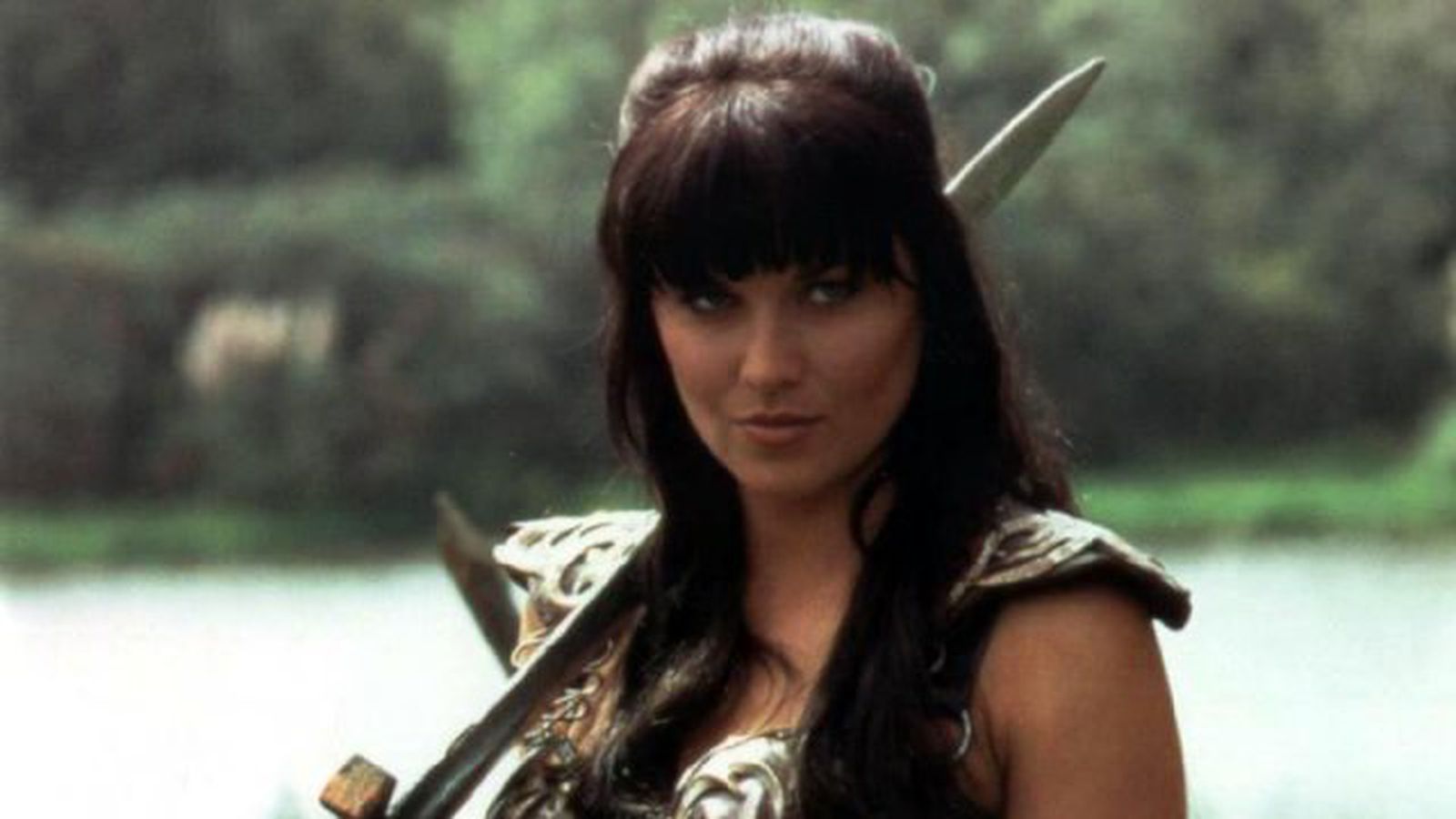


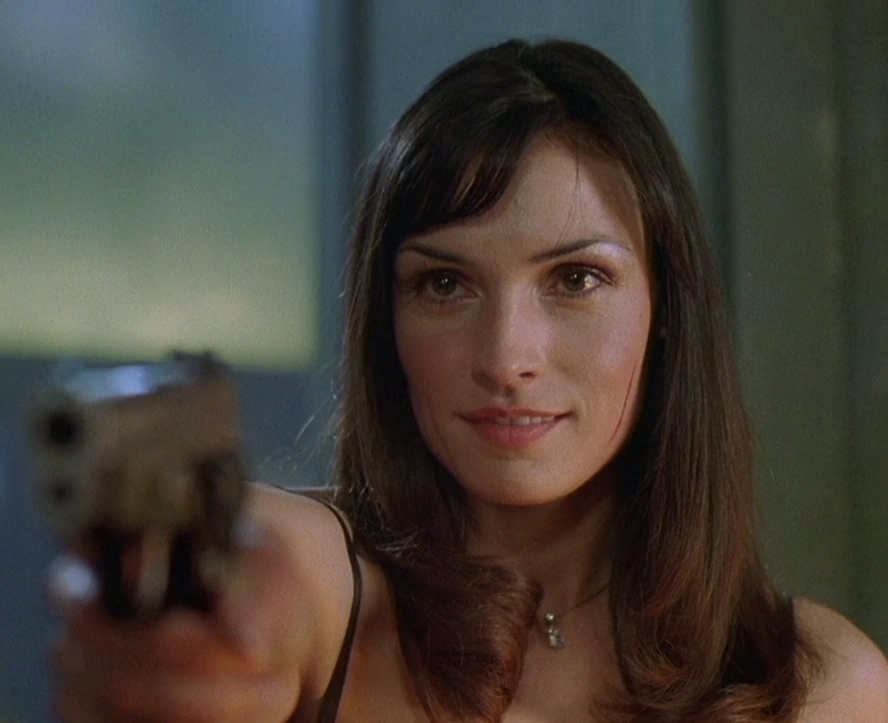


%201.5.jpg)

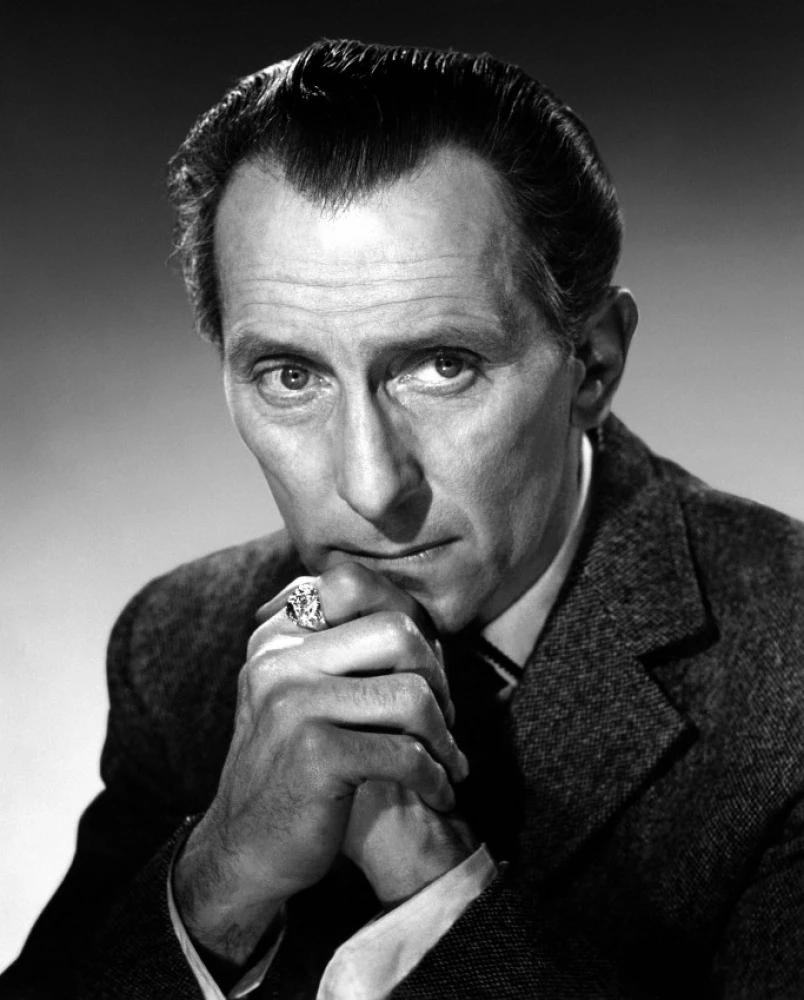


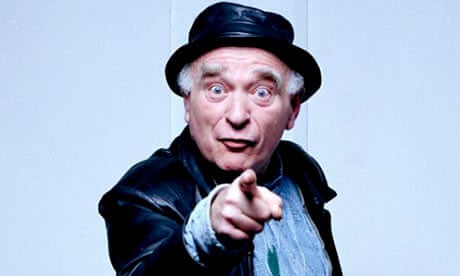


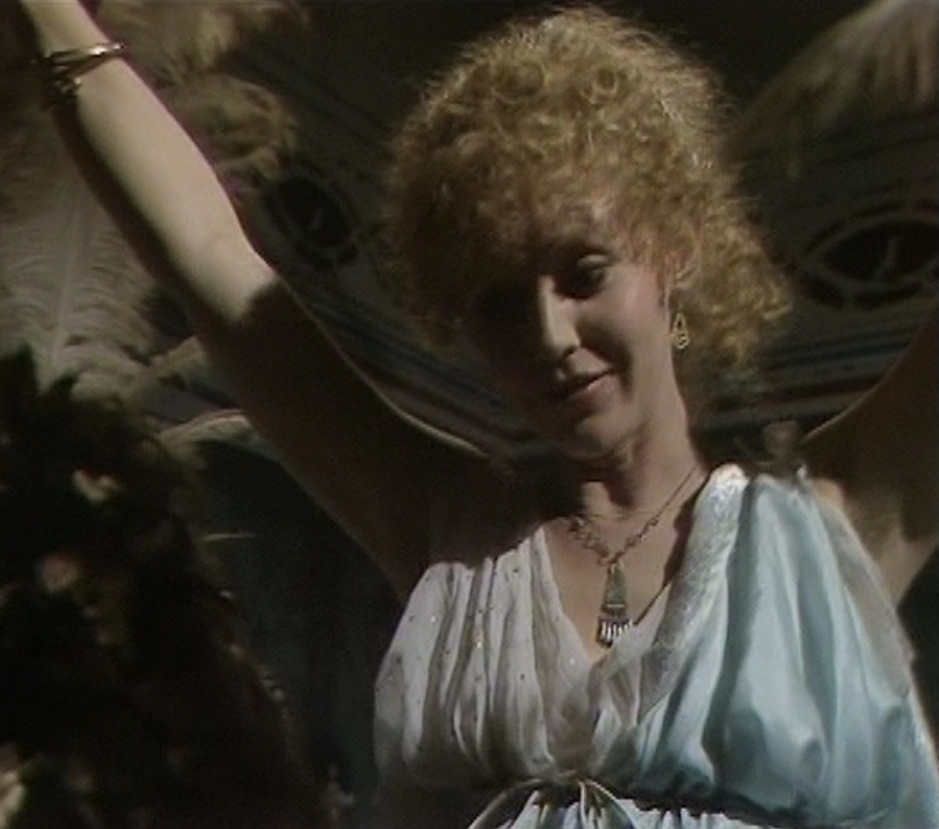
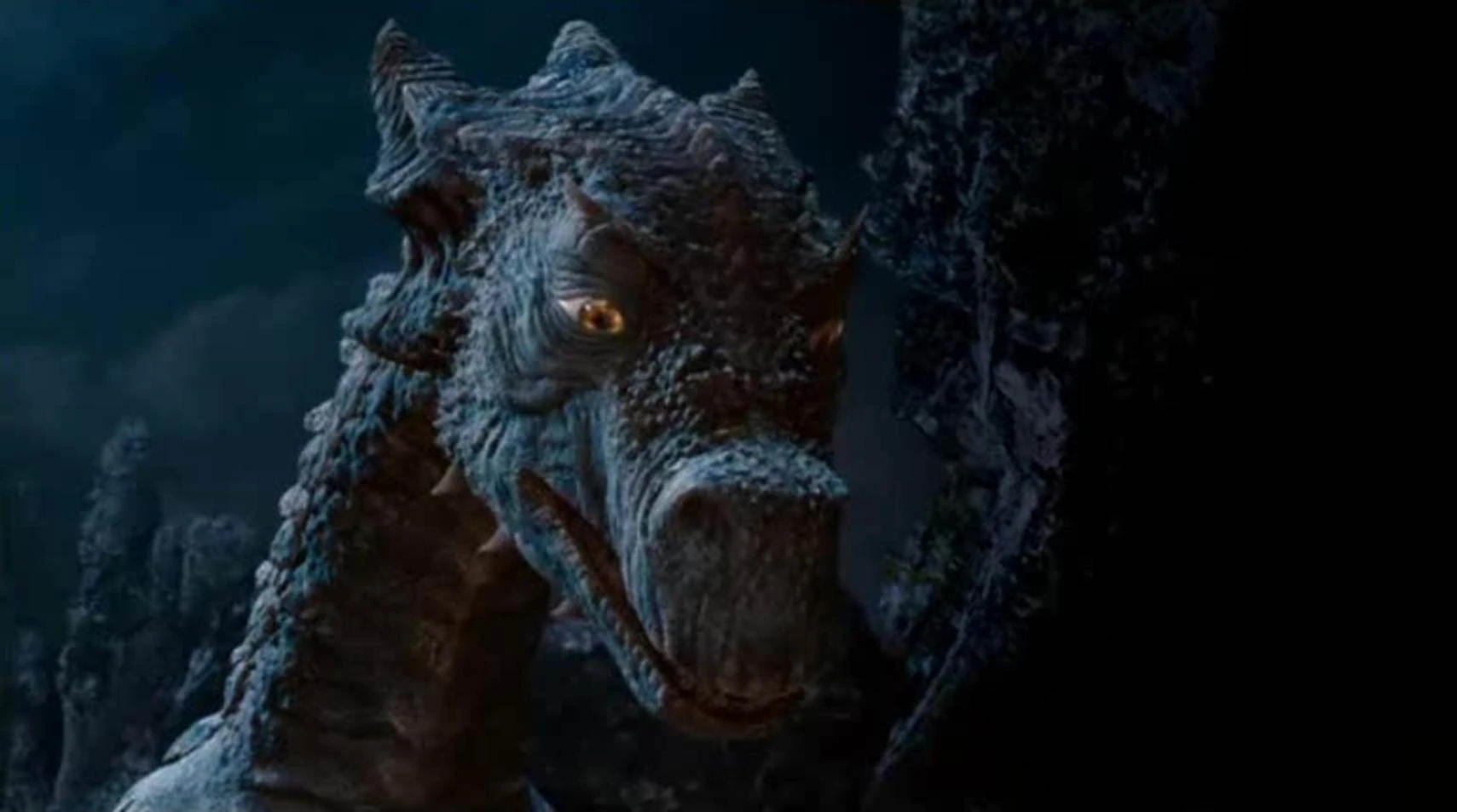


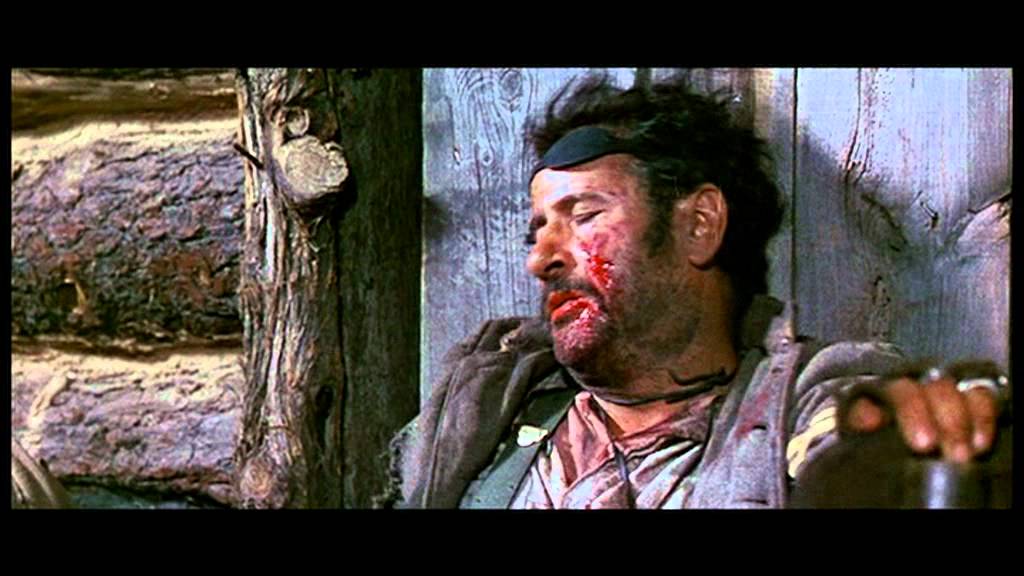


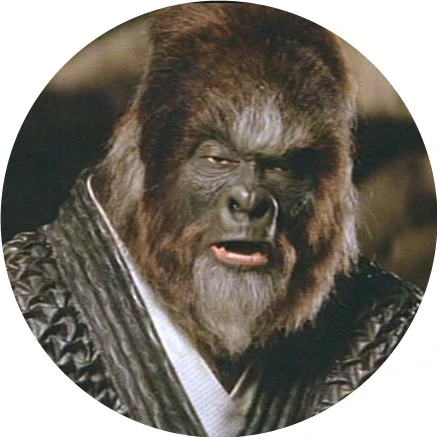

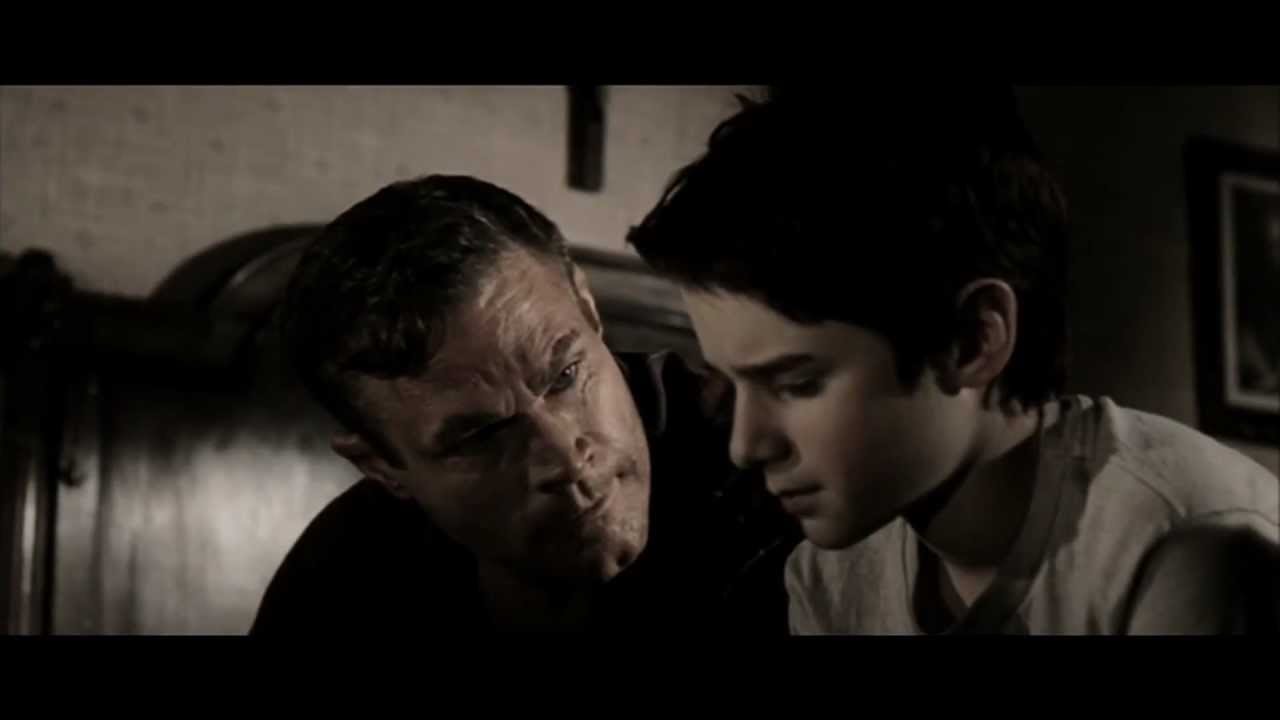


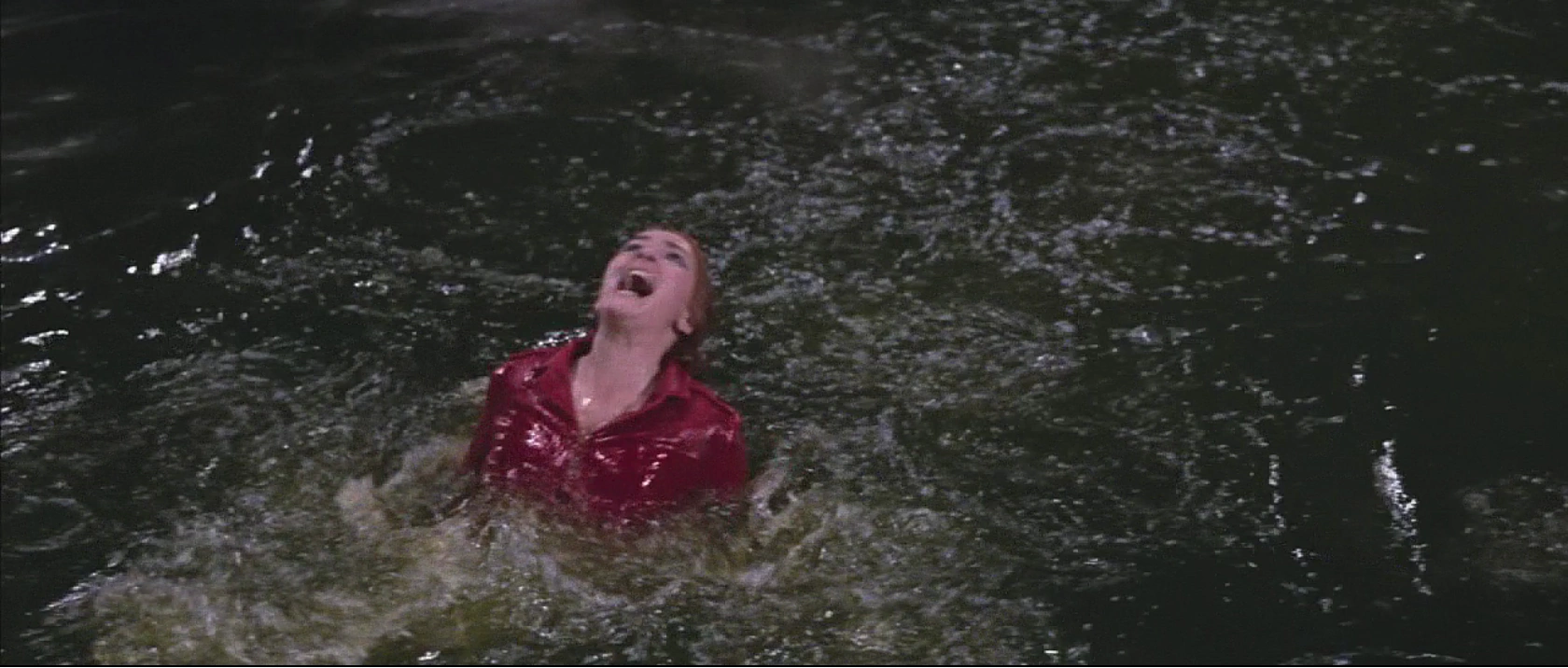


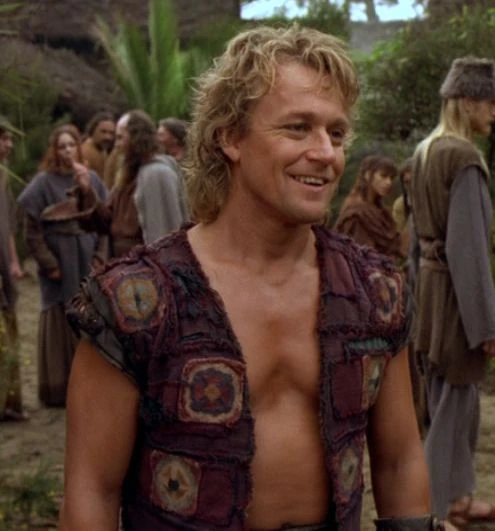 –
–


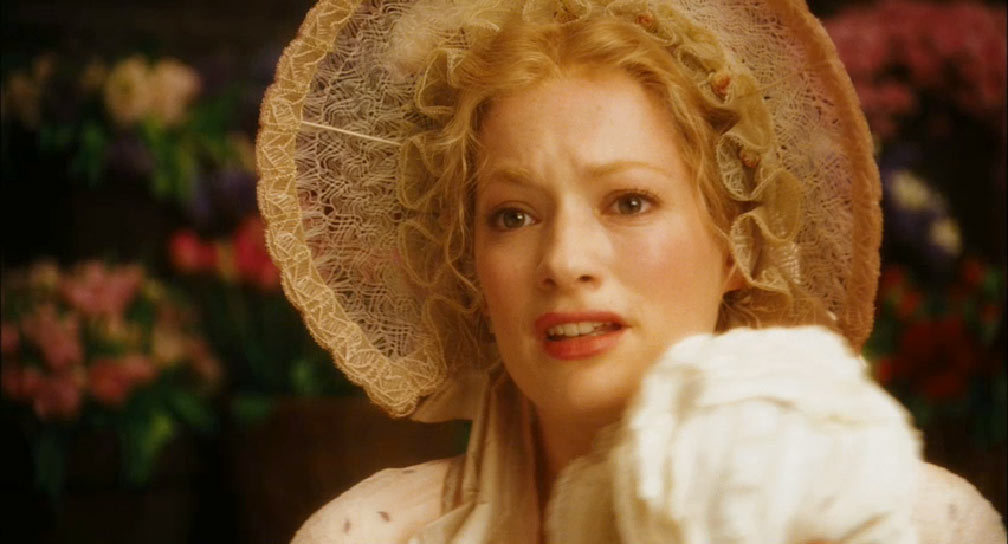


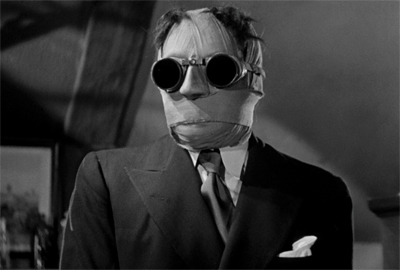



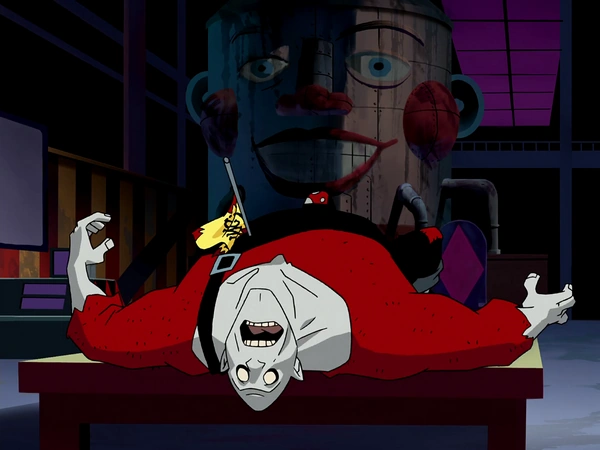


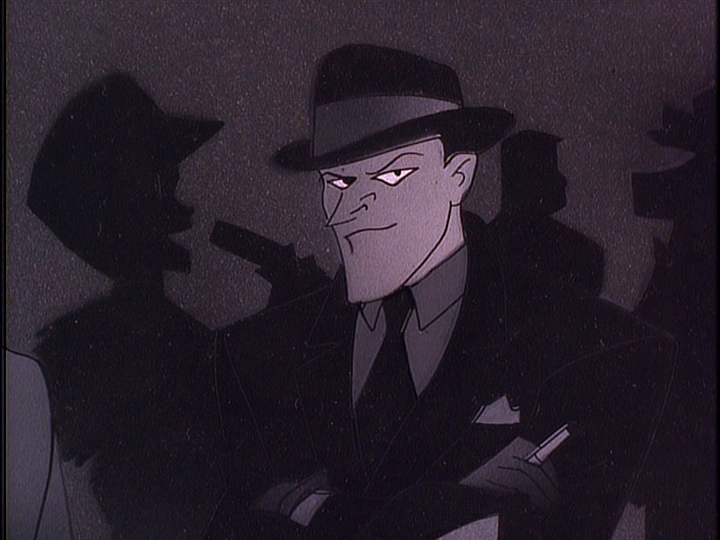


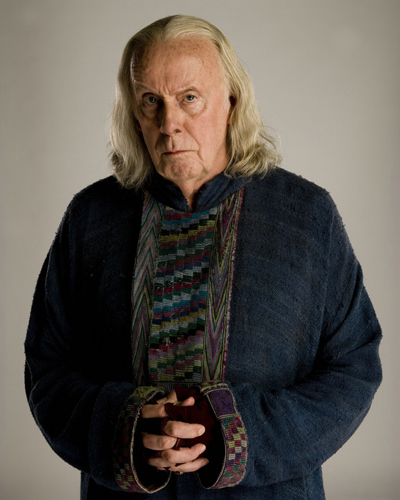


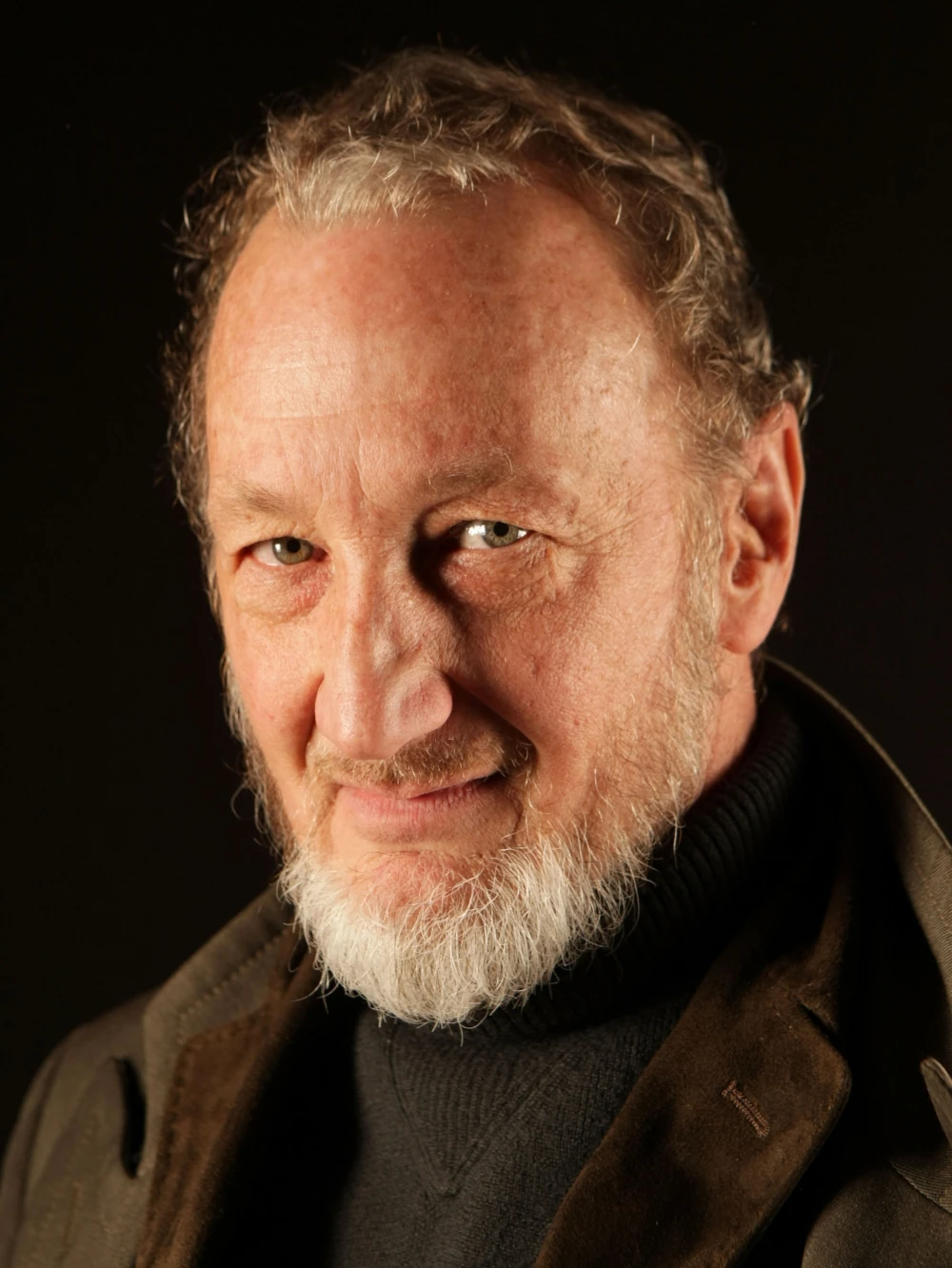


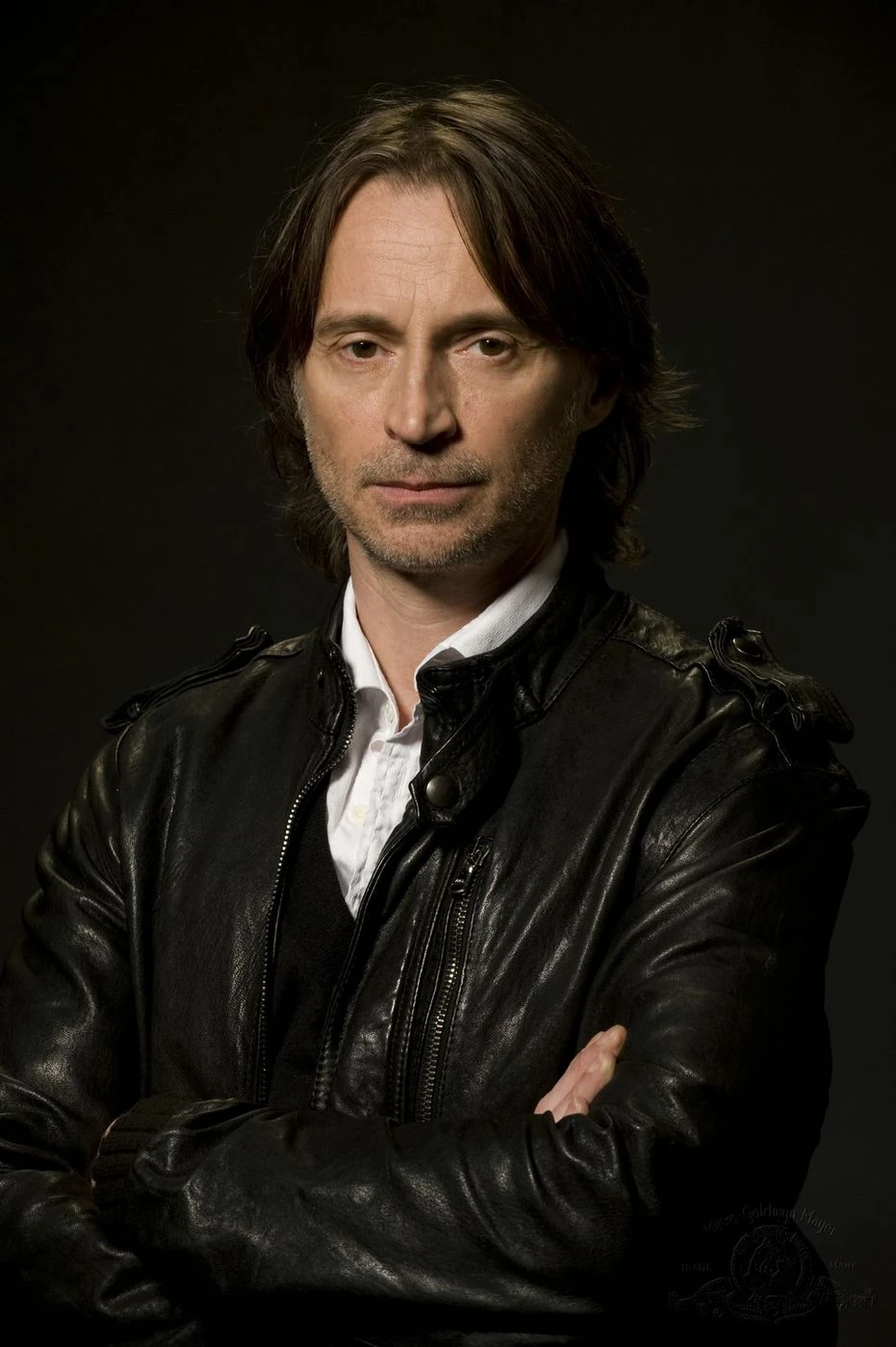


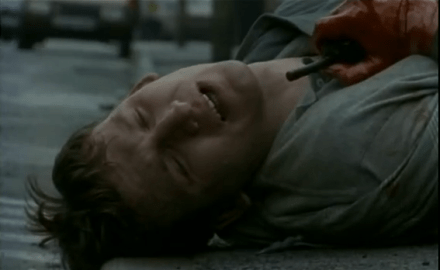


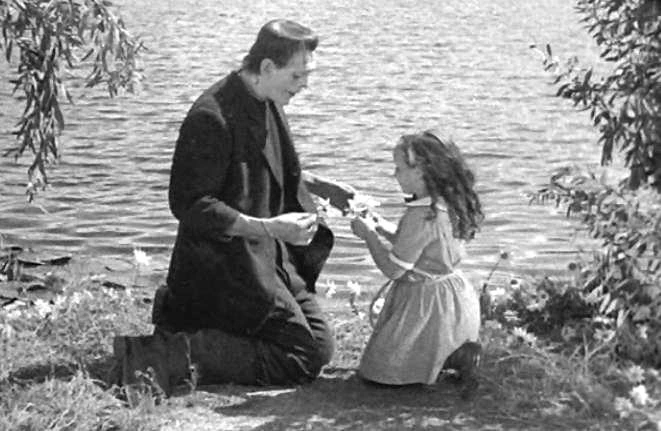


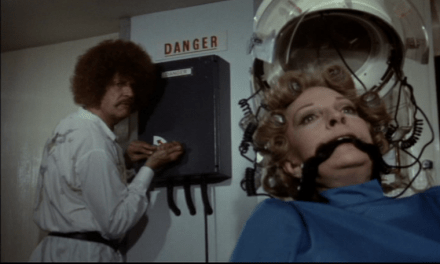
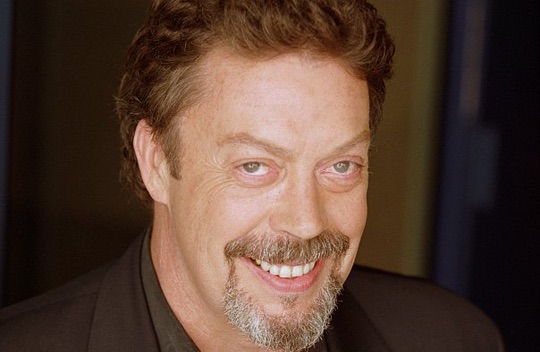


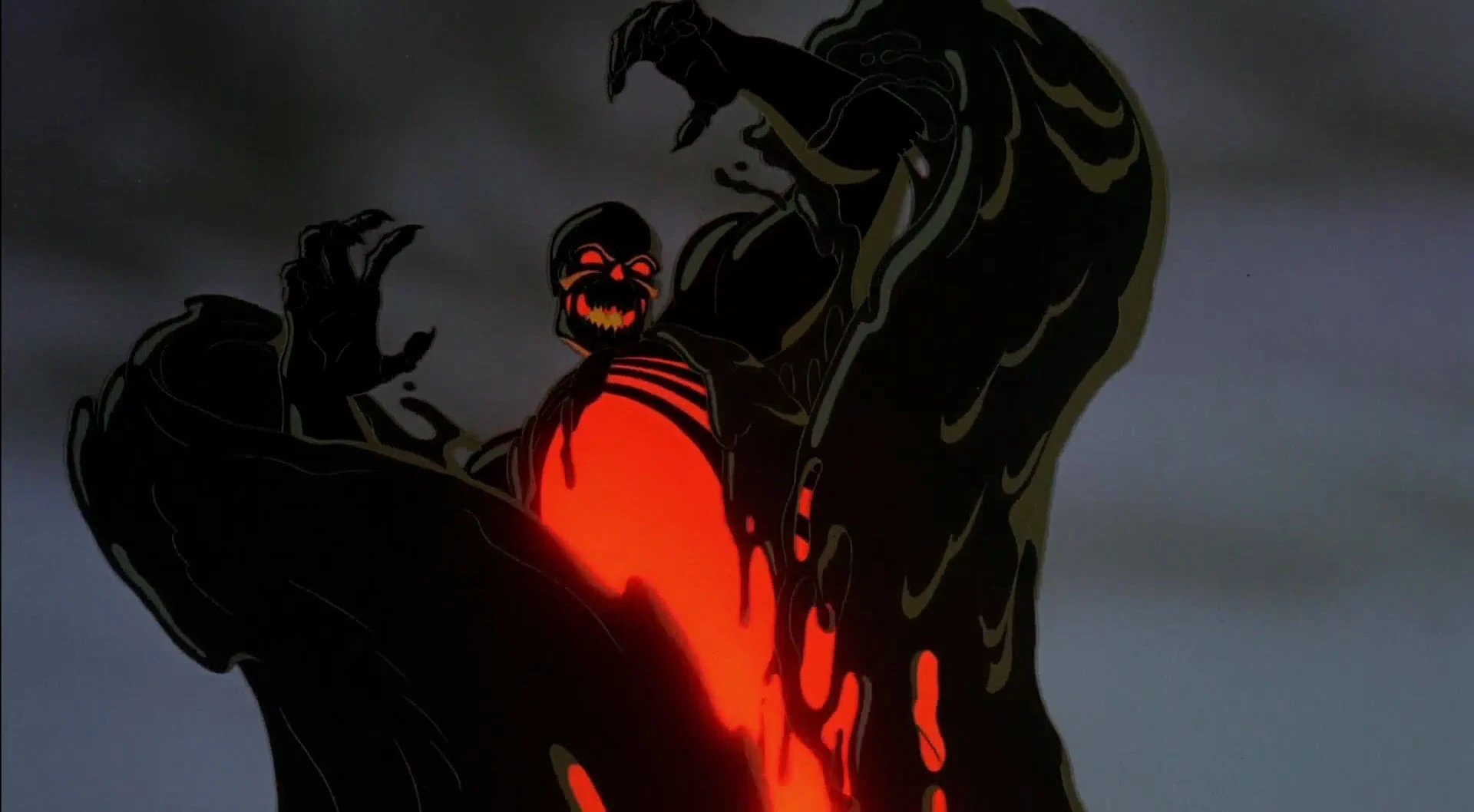
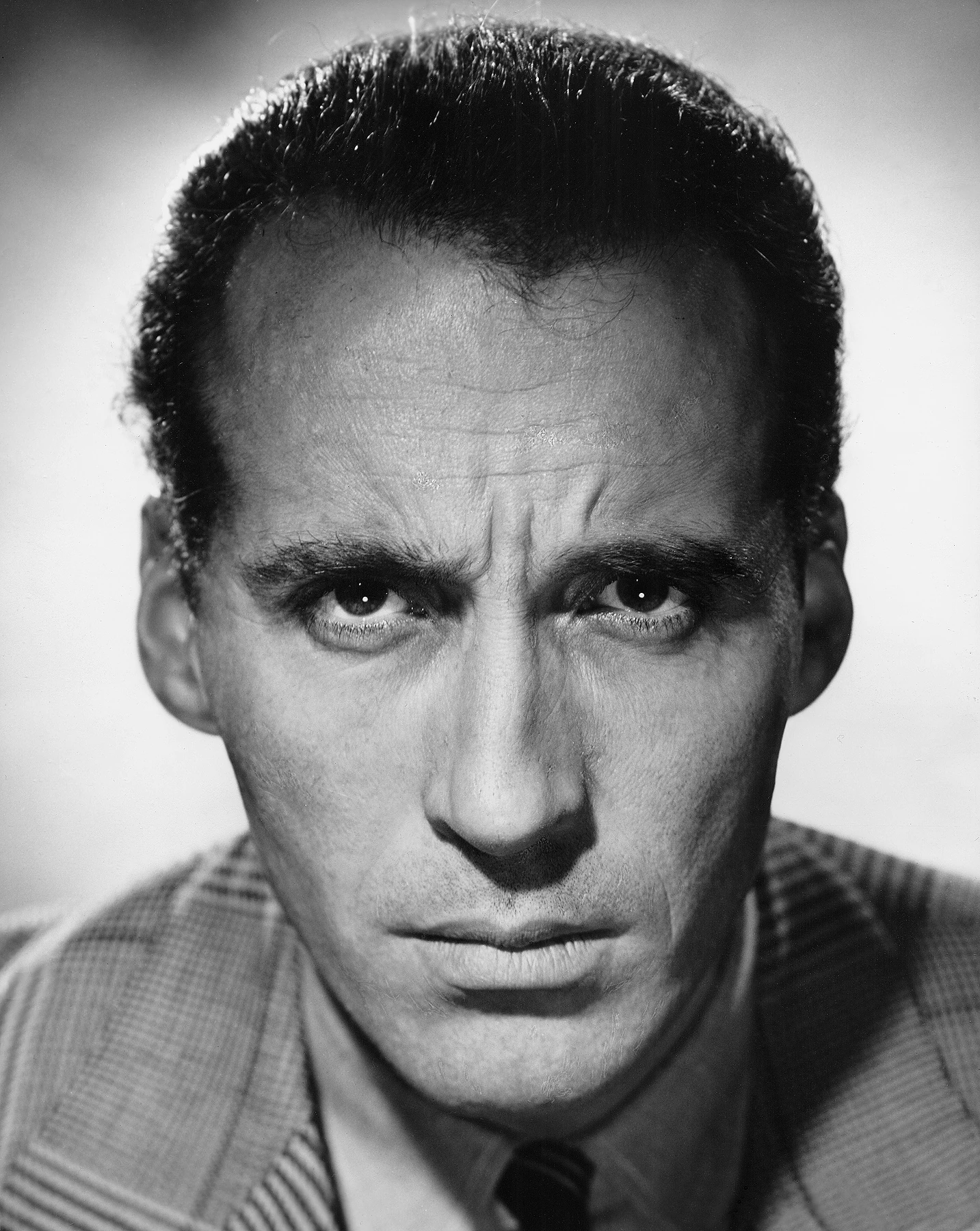






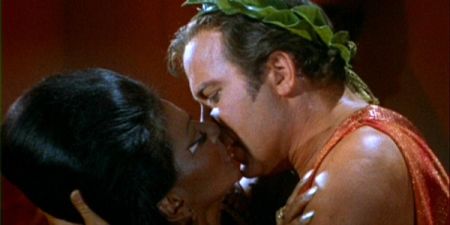


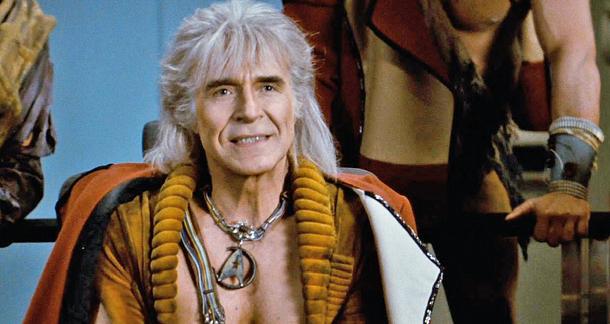


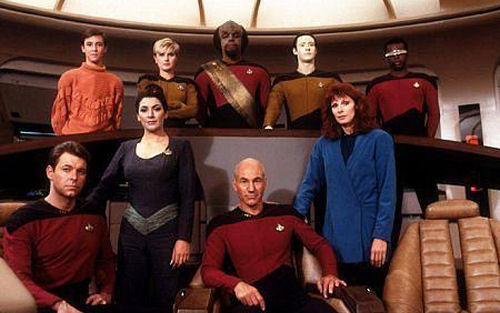


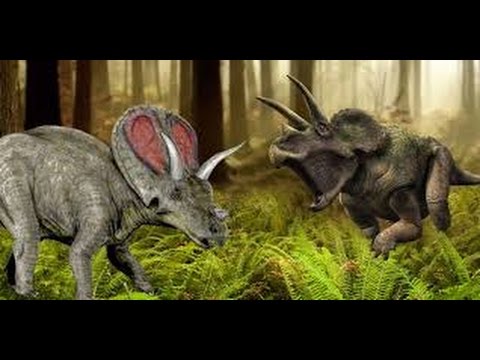
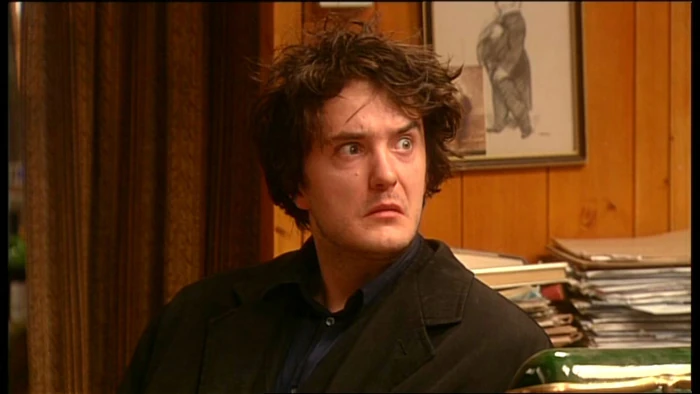




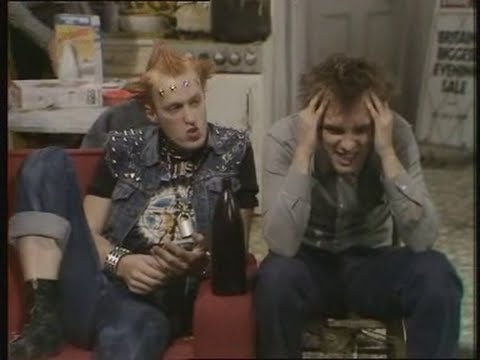






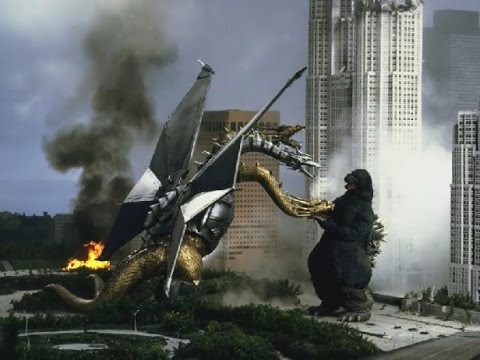



 burrunjorsramblesandbabbles