You would have thought that the older Tom Baker would have remembered this, unless Gallifrey is going to come back again! I wouldn’t put it past the Fitzroy Clique to reuse that story arc.
In the previous articles we’ve looked at how the mantras of “all change is good” ,”William Hartnell morphed into Patrick Troughton and that was a change, so this is the same,” “Doctor Who is all about change” destroyed the core identity of Doctor Who as it meant that the Doctor could be anyone, and anything (a recent retcon of the series by Russell T Davies revealed that the Doctor can even regenerate into animals.)
In this article we will be exploring, somewhat paradoxically how the revival has also suffered from becoming too repetitive and how this is linked to its lack of respect for the shows past.
Ironically for a show that tries to justify its ever increasingly disastrous creative decisions with “it’s all about change”, the 21st century version of Doctor Who has become one of the most formulaic and predictable genre series in almost every respect.
It’s companions, story arcs, villains, even its Doctors to some extent are all just slight variants and rehashes of the same characters, themes and stories again and again.
The reason for this is because the writers ironically don’t practice what they preach and are scared to break out of what they think is a winning formula. (It was back in the 00s, but we are now almost 20 years on. That would be like if 80s Who was still being filmed in black and white.)
Added to that their obsession with rewriting Doctor Who’s past with things like the Hybrid Prophecy, the Timeless Children, gender bending regeneration and the Master being in love with the Doctor etc, has become their only way of keeping the show “fresh” and original. Ultimately however the majority of the shows stories are still just the same old drek we’ve seen dozens of times before, except now the Doctor is a girl, or the Master is a girl so that means it must be really fresh and exciting right?
Ultimately the way you keep a show fresh and exciting is by having the character go on new adventures, new types of stories and have them encounter new types of characters and villains.
That was how Classic Who reinvented itself. It changed the types of stories the Doctor went on, from historicals to base under siege, to spy and espionage thrillers, to gothic horror, yet underneath it all, it always kept the Doctor the same character fundamentally.
The same is true for any long running series. Look at Angel, the spin off from Buffy (which I just recently finished rewatching.) It went from a supernatural crime noir series, to a Prisoner style series about Wolfram and Hart trying to break Angel, to a supernatural soap opera, to a series about its lead running an evil law firm.
Throughout it however the character of Angel, though going through natural developments, still always remained Angel, a heroic Vampire with a soul.
The makers of New Who however it seems have it the wrong way round. They think that the core character, who serves as something for the long time viewers to latch onto, should be changed to the point where they are completely unrecognizable, whilst the stories can just keep being the same, boring old ideas from 2007 without any kind of variation. (That would be like in Angel had remained a crime noir series for 5 seasons, but the character of Angel had one season been retconned into being a Werewolf, the next an actual Angel, the next a God, etc.)
Added to that if you keep obsessing about rewriting the characters past, then it means that you will end up constantly keep retelling the same stories. For instance season 9 and 12 of the revival both give us different accounts of the Doctors origins. The classic era meanwhile, most of the time would fill a gap in, like why the Doctor ran away in The War Games, and then leave it at that. The writers would decide to go on and tell new stories, or fill in other gaps about the Doctors life and as a result didn’t spend two whole years on the same question. Fair enough Genesis presents us with a different account of the Daleks origins, but as we have been over, the first Dalek story didn’t really show us the Daleks origins, just gave us a vague second hand account. Furthermore after Genesis no one bothered to explore the Daleks origins again, because what would be the point? We had seen that story now, move on to something else.
Sadly however the Fitzroy Clique have become too focused on the wrong thing, and as a result New Who even without the politics, the fan rage against the destruction of the Doctors character, is just simply a tired and boring show for most viewers in the following ways.
1/ Enemies
“Remember a time when the return of the Daleks was a big deal as they hadn’t been around for a few years?”
The overwhelming majority of New Who seasons have featured either the Daleks, the Cybermen or the Master, or some combination of them as the main villains.
Season 1: The Daleks
Season 2: The Daleks and the Cybermen.
Season 3: The Master
Season 4: The Daleks and Davros
Specials: The Master and Rassilon
Series 5: The Alliance, the two main members of which are the Daleks and the Cybermen.
Series 6: Finally a new villain.
Series 7: The Great Intelligence
Series 8: The Master and the Cybermen
Series 9: There is no main villain per se, but the story arc still revolves around the Daleks and the Master and the Time Lords.
Series 10: The Master and the Cybermen
Series 11: Tzim Sha
Series 12: The Master and the Cybermen.
Out of 12 series, just two feature a new villain, whilst only three don’t feature the Daleks, the Cybermen and the Master or some combination of those three villains. In fact out of the last 5 season finales, only two haven’t featured the Master and the Cybermen teaming up.
Furthermore the monsters themselves I find have often become somewhat formulaic in terms of their role in the series. Before the Daleks, the Cybermen and the Master all represented very different threats to the Doctor.
The Daleks were an evil he could never stamp out. They were an empire who covered the galaxy. Even if the Doctor saved one planet from them, a hundred more would still be under their control at any given time. “We have been delayed not defeated, the Daleks are never defeated.”
The Cybermen were in contrast a desperate, dying race, struggling to survive. They had reached the point of extinction as an organic race, and had prolonged their lives as machine creatures. Now however they were reaching extinction again and seemingly couldn’t prolong their lives any longer. In a way they were more sympathetic as they just wanted to survive. Also in contrast to the Daleks, they didn’t view those they conquered as being inferior creatures. On the contrary they converted them in the hopes of learning from other life forms.
The Day of the Daleks
CONTROLLER: If only you would let me recruit more human security guards, I DALEK: Humans are treacherous and unreliable! CONTROLLER: Not all humans. I have served you faithfully. DALEK: Do not dispute with the Daleks! Obey without question! CONTROLLER: Very well.
The Tomb of the Cybermen
CONTROLLER: We have decided how you will be used. KLIEG: Yes? CONTROLLER: You are a logician. Our race is also logical. You will be the leader of the new race. KLIEG: You will listen to my proposals then? CONTROLLER: Yes, we will listen, but first you will be altered.
See the difference between them?
Both monsters were also used differently in terms of how they were scary. The Daleks lacked a physical presence as they were small, pepper pot shaped, vulnerable, and therefore they would always be scary in large numbers. They would also often be put in a powerful position, or given lackeys who obeyed them like the Ogrons, or if they were few in number, we’d get a chance to see how they manipulate people around them.
The Cybermen meanwhile up close had a tremendous physical presence. If one of the monsters cornered you it was terrifying, as there was no way you could even defend yourself against it. As a result the Cybermen were often used in tight, claustrophobic settings in Classic Who such as in the sewers in The Invasion and the icey tombs of Telos where they could be lurking around any corner and there was no escape.
The Master meanwhile was a different type of enemy in that he had a more personal grudge against the Doctor, was more manipulative and sought to bring about his own universal order.
Now in all fairness to Russell T Davies I think he did do a lot new and interesting things with the Daleks. Even Steven Moffat I feel was able to find a new take on the monsters in some of his stories too. (Ironically I think a lot of the new series writers did a better job with the Daleks and some other villains than the Doctor himself.)
Still the villains overuse and the fact that they constantly have to keep being used in the big, grand finales have gradually caused them all to slowly become the same bland, generic supervillains to the point where by the end of the Chibnall era, there’s hardly any difference between the three of them.
All three have at various points in the revival been turned into villains who are the last of their kind, and are desperately trying to rebuild their fallen empire. (The Daleks in Parting of the Ways, the Master in Last of The Time Lords, The Cybermen in Nightmare in Silver.)
All three have been responsible for the destruction of Gallifrey and the Time Lords at different points. (The Daleks in the 9th Doctors era, the Cybermen and the Master in Chibnalls era.)
The Cybermen’s desire to turn people into members of their own kind was eschewed completely in their latest appearance, where the monsters simply wanted to destroy all life in the universe, much like the Daleks. The Master meanwhile similarly wanted to destroy all life in the universe too. (Which is extremely out of character as the villain is normally a total coward who would never risk his own life.)
At the same time the Daleks have also become too earth centric like the Cybermen too. In the classic era, the Cybermen were interested in the earth more because it was their twin planet. The Daleks meanwhile though invading earth in two stories (The Dalek Invasion of Earth and Day of the Daleks) were often shown to be warring with other species throughout Classic Who.
Their first story sees the monsters battling with the Thals, The Chase features their conflict with the Mechanoids, Daleks Master Plan features their dodgy alliance with other alien races to conquer the Galaxy, Planet of and Death to feature the Daleks fighting with and enslaving other alien races (the Spirodons and the Exxilons) whilst Destiny revolves around their war with The Movellans.
All of this helped the Daleks to feel like a wider threat than the Cybermen, as humanity were just one of many races they had enslaved and warred with. In the revival however, other than the Time War, that is only fleetingly glimpsed, (and a tiny blink and you’ll miss it cameo of the Movellans.) We haven’t seen any other alien species the Daleks have either enslaved, are allied with or are at war with like the Ogrons, the Thals, the Draconians, The Exxilons, the Movellans, the Varga’s, the Aridians, the Delegates of the other galaxies, the Spirodons etc.
Furthermore the revival also doesn’t play to each monsters unique strengths either. Both the Daleks and the Cybermen are usually just depicted in the exact same way, as a massive army sweeping across the land. There’s no attempt to try and play to the Cybermen’s strengths by having them attack the heroes in tight claustrophobic settings, or show a planet under the Daleks rule. The Daleks and the Cybermen will both often just fly through the air, zapping everything in sight and then all get blown up, or swept away at once.
Even the Master gets this treatment too somewhat. His manipulative nature, though played up in The Sound of Drums to some extent, is eventually abandoned so that he too eventually just unleashes a massive army of monsters. Similarly The End of Time and Death in Heaven also both simply see the Master unleash an army like the Daleks and the Cybermen.
Then there is the fact that many of all 3 villains stories take place on modern earth, specifically modern day London too.
In the classic era a grand total of just two Dalek stories took place on modern earth in 26 years. Resurrection and Day (and even then that was only partly in both stories, Evil also takes place albeit very briefly in its first episode.)
In the revival however 6 Dalek episodes have taken place entirely in modern day earth (whilst 4 more, The Parting of The Ways, The Magicians Apprentice, The Day and Time of the Doctor have taken place partly on modern day earth.)
All but four meanwhile (Asylum of the Daleks, Into the Dalek, Bad Wolf and The Witch’s Familiar) have taken place on earth in general. In the classic era, only 5 Dalek stories in total took place largely or entirely on earth (Two 60s era Dalek stories Invasion and Evil, one 70s era Dalek story, Day and two 80s stories took place on earth. Even then Evil of the Daleks only takes place partly on earth. Parts of The Daleks Masterplan and The Chase take place on earth, but as a whole both stories take place largely on alien planets.)
With the Cybermen meanwhile ironically only three stories in 26 years took place on modern earth (and even then Attack only partially takes place on earth,) and only one took place in London. With New Who meanwhile only Nightmare in Silver and their recent season 10 and 12 appearances don’t take place on earth.
All 3 villains have more or less merged together as bland, generic doomsday villains who now have largely the same motivations, the same method of attacking, scaring the viewer (arriving in huge armies), their stories have largely the same locations, they are also often thrown together too. (Every Cyberman story since 2014 has featured the Master, and prior to that 4 Cybermen episodes feature Daleks.)
See what I mean?
This wouldn’t even be as bad if these three villains not only didn’t keep showing up every single year, but they kept being the main villains of every single season too. Do you know that the Classic series once went 5 years without using the Daleks from Troughton to Pertwee? (It also had two more gaps of 4 years each without the pepper pots.) The Cybermen meanwhile were absent for 5 years in Pertwee’s time and later 7 years from Tom Baker to Peter Davison? In fact including these gaps and the 3 years they missed with Hartnell, there are twice as many seasons without Cybermen than with them in the Classic era (can you say the same thing about the revival?)
The Classic era also didn’t feature the Master for the first 7 years either, yet New Who it seems is completely dependent on these classic villains?
Obviously I am not saying don’t use the classic villains at all. The Daleks, Cybermen and the Master when used properly are fantastic villains, but it can’t come across as anything but lazy when all 3 are trotted out almost every single year as the main antagonists.
Rather than focusing on changing the Doctors sex or species, a better way to bring about change to Doctor Who would be in creating new and iconic villains. Other than the Weeping Angels, so far no new series villain has become as iconic as any of the classic series major villains. (The Silence could have, but their arc more or less petered out.)
None have even had the strength to carry a series. It’s not because the new series villains are poor. On the contrary I think a lot of New series villains like say The Beast could easily carry a full series and become just as iconic as classic era villains like say the Sontarans. Ultimately however I think that the writers of the new series either don’t care enough to develop their new antagonists, or are perhaps too scared to try something new ironically when they should in this instance.
Companions
Now for the record I have enjoyed many of the companions in the revival. The likes of Billie Piper, Freema Agyeman, Karen Gillan and John Barrowman were all excellent in their roles, and have all gone on to have fantastic careers on both sides of the Atlantic.
That said however when you look at the companions story arcs, their backgrounds and even just their relationship with the Doctor, you can see that the revival once again falls into a formula.
All of the companions barring a very few, Jack, River and Nardole are from 21st century earth.
The majority of them are attracted to or in love with the Doctor. (Rose, Martha, River, Jack, Amy, Clara.)
Several of the female companions have a wimpy, boyfriend, who becomes the secondary companion of the Doctor, and is jealous of the Doctor, but who eventually proves himself a hero in the end. (Rory, Mickey and Danny.)
Several of the female companions have a more sympathetic father figure and a more aggressive mother figure who hates the Doctor as she sees him as a bad influence. Nevertheless at the end of the series, the Doctor and the mother will reach an understanding. (Rose, Martha, Donna.)
The companions story arc will usually be the following. The Doctor notices there is something odd about her. (The words Bad Wolf keep appearing, he keeps meeting her, there is something on her back, there are cracks in her bedroom, there are multiple versions of her etc.)
In all instances this will be because in the finale the companion will get super powers, be revealed to be the most important person in all of creation and save the entire universe from one of the Doctors archenemies.
Finally the companion will often have to be ripped from the Doctor too. She can’t just leave on her own accord (apart from Martha.) There will have to be some over the top, sci fi explanation for why she can never see him again. (Different universe, can’t travel backwards in time, can’t see her again without her burning up etc.)
However in all cases the writer doesn’t have the guts to actually kill the companion, so she still has to live a happy, wonderful life, it’s just that the Doctor can’t see her anymore. Rose still lives in a mansion with her David Tennant clone, Amy and Rory live a wonderful life together in New York, Donna gets happily married and gets a winning lotto ticket, Clara gains super powers and her own TARDIS.
Not all of the companions follow every single aspect of this template, (though some do like Clara.) All of them however will follow at least a few of these tropes to the point where the companion is now more of a stock character than ever before.
It is true that a few companions in the classic era were dull, uninspired characters who weren’t really developed well such as Dodo.
Still at the very least the classic era for the most part always tried to make the companions backgrounds and relationship with the Doctor different. Take a look at the 4th Doctors era alone.
You have Sarah Jane a journalist from modern day earth who has a strong friendship with the hero, Leela, a savage warrior woman from another world who tends to clash with the Doctor, Romana a Time Lady who is an equal to the Doctor in intelligence and Adric a young boy from another universe who the Doctor develops a strict mentor/student relationship with, Teegan who is a reluctant companion, and finally Nyssa who looks up to the Doctor, but has a much warmer relationship with him than Adric.
Even the 2nd Doctors era gives us a wide variety of companions in terms of backgrounds and relationships with the Doctor. We have Ben and Polly who are merely friends with the Doctor, and who come from modern day England. Then we have Jamie who is from the past, and who becomes more of a willing accomplice to the Doctor, as he has a similar desire for adventure and recklessness. Victoria meanwhile is more vulnerable and younger and has more of a father/daughter relationship with the Doctor, whilst Zoe on the other hand is from the future and talks to the Doctor as an equal due to her scientific background.
The original series ironically despite what the media tells us, often made more of an effort to at least make its companions different, where as the revival is still essentially just reusing the Rose Tyler template after 15 years.
Story arcs
Aside from the companions story arcs more or less being exactly the same, the shows other major story arcs are all very similar and repetitive too.
Series 1, 2, 3 and 4 all feature a monster or villain from the Time War whose main aim is to take over the earth and rebuild his fallen race and empire there. The Dalek Emperor, the Cult of Skaro, The Saxon Master, Davros and the Daleks. The Specials even reuse this idea with Rassilon and the Time Lords.
Also all season finales of the Davies era, apart from Journey’s End feature the villain trying to turn humans into monsters (the Emperors Daleks, the Cybermen, the Master race, whilst the shock twist in Last of the Time Lords is that the Toclafane are humans, much like how the shock twist in The Parting of The Ways is that the Daleks were humans too.)
The Matt Smith era meanwhile relies heavily on the Doctor learning he is about to die. The specials see the Doctor learn about a prophecy that he will die “Your song is ending.” In season 5 the Doctor discovers that his TARDIS will blow up at a specific date in the future. In season 6 sees the Doctor learn that an astronaut is going to shoot him at some a specific date in the future at lake Silencio. Finally season 7 sees the Doctor learn that he will die in a future battle on Trenzalore.
Season 9 and seasons 12 both tease us that the Doctors origins are not what we thought, and reveal the identity of something that is only referred to by a mysterious title. “The Hybrid,” “The Timeless Children.” Both finales then feature the Doctor back on Gallifrey, where the Time Lords are portrayed as monstrous and we discover this mysterious something is the Doctor, and our perception of him has been changed forever.
The Master and the Cybermen have also been featured as the villains, working together in 3 out of the last 5 finales, whilst 5 finales in total feature aliens invading the earth. The Stolen Earth and the season 11 finale meanwhile both feature aliens stealing planets.
Finally in what is perhaps the laziest bit of writing in the entire franchise, series 12 saw the Doctor reduced to the last of his kind again. The first 7 years of the revival saw the Doctor cope with the Time Lords having been wiped out, whilst the 50th saw all of the Doctors team up to save the planet. Killing the Time Lords off again 7 years later not only almost seems comical after everything the Doctor went through to save them, but also smacks of “we honestly don’t know where to take this character, so lets revisit the same story arc from 2005 because it worked back then.”
On top of this the revival also tends to reuse certain episode types as well. To date there have been 9 episodes of the revival set in Victorian London. On top of that there have also been a number of episodes that see the Doctor meet a historical figure who helps the Time Lord battle an alien threat, only for the Doctor to then show them that they will be remembered, or at least lecture the audience about it.
The Unquiet Dead, The Shakespeare Code, The Unicorn and the Wasp, Vincent and the Doctor, Rosa and even the recent Tesla episode all follow the same basic plot. This isn’t always a bad thing mind you as Vincent and the Doctor I feel is one of the strongest episodes of either series, but still when you have so many other aspects of the revival that are similar it does start to look as though the Fitzroy crowd aren’t really trying to think up new stories and ideas.
Conclusion
It’s not always a bad thing if a writer reuses certain ideas. Both Terry Nation and Robert Holmes reused certain themes and concepts. Also it’s not as though Doctor Who hasn’t become formulaic for certain periods in the past, such as the Troughton era that relied too heavily on base under siege stories, or the Pertwee era that became too caught up in invasion earth, spy and espionage stories.
The difference is however that these periods never lasted as long, because new blood would always come in and shake things up. New Who meanwhile has featured the same basic ideas, from last of the time lords, to Daleks, Cybermen, The Master always being the main villains, to companions being the chosen one, from modern day earth, fancying the Doctor for close to 15 years now.
The reason for that is because they are all following the same cult like mantra of “Doctor Who is all about change” but are all focusing on changing the wrong things. They are focusing on changing time honored traditions and pieces of Doctor Who lore to keep it fresh, whilst peddling out the same tired ideas that they still think are current and trendy.
The result is a show that is making no one happy. Fans are furious that the lore is being disrespected with The Timeless Children, whilst casual viewers have not surprisingly adopted an attitude of “seen one Doctor Who, seen them all.” Which for a show about a man who can travel literally anywhere is quite sad.
In the next edition of this series we will be looking at the negative effect the shows toxic fandom have had on the series.
Elena suddenly felt the ground beneath her feet give way. The small castle that she and that hideous abomination were hiding in began to fade away into nothing but darkness. In a last ditch attempt the mass of tormented souls that had been pursuing Elena tried to reach out and grab her, but she jumped into the black abyss that was appearing ahead of her.
Both she and the monster fell through an endless darkness as the last of the castle faded away into smoke.
For how long they fell, they weren’t sure. Time didn’t seem to exist in the abyss they found themselves in. In the very distance however, Elena could see what looked like a tiny window, in reality, it was the frame of the painting she had been pulled through. She pulled herself towards it as much as she could and though it seemed to get further and further away at first, just as all seemed lost she suddenly found herself right in front of the window frame and crawled through it. As the mutant looked back, she saw the abomination that had chased her falling through the endless darkness, not even attempting to flee. In the darkness it was finally free from Scratchman’s control, and unlike Elena, the monster had no desire to escape back into the hell it came from. In this darkness will was the only thing that mattered. As there was no space or matter, when Elena tried to use force to escape through the portal it didn’t work, but ironically as soon as the portal began to fade her terror made her will strong enough to be brought towards it.
The alien knew this, but didn’t care. An eternity through nothingness was still preferrable to a second under Scratchman’s cruelty.
In this void the pain and memories of what they had lost didn’t seem to bother the creature as it sank peacefully into the darkness.
Once Elena had made her way through the portal and back into Scratchman’s castle she started to think the monster had been right not to bother. All around her were hideous monstrosities who had crawled out of the paintings. Both Scratchman’s victims who had been twisted beyond all recognition, and their tormentors who had followed them, fighting and tearing at each other. The hall itself had also vanished and was now replaced by a massive cavern made from mangled flesh and bone. In the very distance Elena could see what looked like several creatures working together in torturing a Demon. It was in fact the Demon that Scratchman had left in control of the paintings, who had earlier captured Elena.
The creature pitifully begged it’s former victims to show clemency which of course fell on deaf ears. Just as before Elena wisely stayed out of the fighting and tried to make her way through the bloodbath to find the Doctor and Yarox.
The Doctor’s attack on Scratchman had only distracted him for a few minutes, but in that time his will was distracted his entire world, or rather what was left of it had been thrown out of order. Several pocket dimensions he had created, such as the paintings had collapsed, the structure of his castle had been stripped to it’s bare bones. (Literally. The foundation of the castle was made of the corpses of the billions Scratchman had slaughtered.)
Even outside his castle, the entire landscape had been ravaged. The land split open, and the lake of torment began to flood the land. The armies fighting outside Scratchman’s castle were swept away in a tidal wave, with only a few Harpies and some of Scratchman’s Demons managing to fly away.
The waves very nearly toppled the castle itself and burst through it’s foundations, flooding the inside. Elena was barely able to escape by climbing up a nearby wall, which she was able to do easily as many of the bones were sticking out of the walls.
She was one of the few survivors to crawl or fly to safety up the castle’s walls. As Elena looked down she saw all of the Demons and their former victims suffering together in the burning green waters as they were washed away.
Scratchman was able to save the Doctor and Yarox from being swept away by the flood as it broke through the walls into his room, by lifting them through the air with his telekinetic powers.
“I don’t know why you bothered” The Doctor said defiantly.
“I’m still not going to help you.”
“Oh I know Time Lord. I’ll have to find a way to break your machine instead. You are too dangerous to be allowed to live, but well I think a little dip in my lake is too good for you. Look at the trouble you’ve caused. I have even less time to make it out of this world now. No I think I have just the right punishment in mind for you.” Scratchman said as he slowly morphed back into his humanoid form.
Scratchman carried the two time travellers down a long hall that was flooded with the lake of the damned. Along the way several of Scratchman’s most loyal minions called out to him, but he didn’t listen.
When they finally reached the end of the hall it was a gigantic silver room, with a huge hole in the centre and monitor on the wall. The water it seemed was incapable of flowing into this area. It just stopped at the entrance.
Scratchman lowered himself to just beside the hole whilst he held the Doctor and his companion above it.
“You see Time Lord it is not just this universe that sustains me. Some of the previous realities I conquered I keep around as small pockets of existence like this one. I have too. I can never tell how long it will be before I overrun each universe. I’ve been trapped in this godforsaken reality for so long now however I’ve had to eat through most of my reserves. Still these are the last of the realities I claimed as my own. They are kept alive through a special supply of energy, even your little trick couldn’t hurt them. They sustain me.”
“Don’t worry though I wont just throw you in. Where’s the fun in that? Since I might not be getting out of this, I might as well enjoy myself don’t you think?”
Scratchman dropped the Doctor and Yarox into the hole. Below was a long, silver, yet dark corridor.
“This is a little anti climactic Harry?” The Doctor said.
A massive fire ball came hurling itself down one end of the corridor forcing the Doctor and Yarox to flee. As they ran further down the corridor, the roof suddenly disappeared.
Up above was nothing but blackness, but the Doctor and Yarox could hear screams and roars all around them. The fireball itself seemed to be screaming.
The Doctor and Yarox reached the end of the corridor where there was a portal, that looked like a hole in the ground, that led to one of Scratchman’s pocket dimensions.
The Doctor looked into the portal and saw a dimension that appeared to be nothing but a gigantic wasteland, with a huge tree in the middle. Several damned souls were trying to climb up the tree, which was covered in jagged, spiked branchses. The souls were cutting themselves on the branches the higher they climbed and were screaming, yet seemingly had no choice but to keep climbing.
“Ah you’ve reached the remains of one my favourite hell dimensions, you get the gist of the game now, if you can get out of my little maze I’ll let you go, well I’ll kill you quickly at least, well quicker than I would have. If not suffer in one of my many layers of hell.”
The Doctor helped Yarox to climb over the wall, after which Yarox then helped to pull the Doctor over, whilst the fire ball vanished down the hole into the hell universe below.
On the other side of the wall was another fire ball that forced the two time travellers to flee up the corridor.
“It’s like we’re trapped in some gigantic, nightmarish pinball machine.” The Doctor said.
As the Time Lord and his companion turned down the nearest corner, they saw a gigantic Iron Dog, with blood and flesh dripping from its fangs. The creature charged at the two time travellers, who both jumped to either side of the wall, narrowly dodging the abomination.
They then ran ahead of it together to the end of the corridor, which ended in three more corridors.
Picking one at random the Doctor and Yarox ran down the centre corridor, only for a gigantic fireball to come rolling down the other end.
“I really hate those things.” The Doctor said as he and Yarox ran back down the way.
When they reached the end of the centre corridor again, the Iron Dog was waiting for them. Roaring and hissing, as the Doctor tried to help Yarox climb over the wall, suddenly from above a gigantic griffin like creatures emerged from the darkness and grabbed the Doctor in it’s talons. Yarox tried to pull the Doctor back down, but the Dog pounced on Yarox. The Griffin carried the Doctor high above the maze, which was absolutely enormous web of corridors, filled with fire balls, creatures and other dangers.
The Griffin dragged the Doctor to another pit at the end of a corridor and dropped him down it. The Doctor however managed to hold on the edges of the hole as he fell.
Below he could see this pocket dimension, or layer of hell, was a gigantic lake of fire, over which there was a huge suspension bridge between two large cliffs. The Doctor could see that several people were being forced to walk from one end of the bridge to the other. Each time they crossed the bridge however hideous Griffin like creatures, similar to the monster that had brought the Doctor to the pit in the first place would attack them, and force most of them into the fire below.
The Doctor tried to crawl back up, but each time he did the Griffin would fly back down and claw at him.
Yarox meanwhile was able to wriggle free from the Iron Dog when it bit into his back as the creature (which stood over 7 feet tall) only grabbed a flap of his clothes which when he pulled it ripped, allowing him to then slide under the monster undetected.
Yarox then ran down the right of the 3 corridors. Once he reached the end of it he came across two large wooden doors without any handles. He tried to push them open, but suddenly the doors started to pull open at either side, revealing the two doors to be a mouth, filled with razor sharp teeth.
The mouth which dribbled green, acidic saliva started to snap shut furiously and moved down the corridor after Yarox. Unfortunately at the other end the Dog was already waiting for him. With nothing left to lose and in a rush of adrenaline, Yarox jumped at the Dog as it leaped at him. Grabbing onto it’s head, he jumped over the beasts head and onto it’s back.
Whilst it was distracted trying to shake him off, the Dog failed to notice the wooden mouth that charged at him. Within a few seconds the two doors lined with razor sharp teeth had closed around the Dog’s head, ripped it off and crushed it into powder. The two doors then crushed and consumed the rest of the animal, whilst Yarox made his way down the left corridor.
Elena meanwhile had managed to make her way to Scratchman’s control room. Crawling along the walls of the rapidly crumbling castle, she could see that the water stopped at the silver corridor and crawled along towards it. Once she was near enough she then jumped onto the metal corridor.
Elena could see Scratchman watching the Doctor and Yarox struggling in his twisted game on the massive computer screen. Scratchman was hysterical with laughter at the two time travllers plight.
Elena knew it was pointless to try and attack Scratchman. There was no way she could hurt him, and she’d probably vaporize herself if she touched him.
Even if she tried to help the Doctor then Scratchman would still see her on his monitor. Still she couldn’t just leave him dangling over one of Scratchman’s worst layers of hell.
Elena quickly jumped down the hole into the maze. There she ran down the corridor until the roof disappeared. She then seeing a fireball heading in her direction jumped up to the top of the wall beside her. It took her a few goes, and it was only on her last attempt before the fire ball reached her, that Elena managed to grab the top of the wall with her finger tips, and pull herself up before the fireball consumed her.
Balancing herself on the top of the thin wall, Elena looked all over the maze, which did resemble a gigantic pinball machine with giant flaming pinballs running down almost every corridor. In the distance she could see the Griffin hovering over the Doctor.
Wasting no time, Elena jumped from the top of one wall to another until she reached where the Doctor was. Catching the Griffin off guard with a powerful kick to the head, she managed to send it flying over the top of the nearest wall, before helping the Doctor up.
“Elena, I honestly thought I’d never see you again, then again, I didn’t think I’d ever seen anything again dangling over that abyss. Thank you.”
“You’re welcome, where’s Yarox?”
“I don’t know we got separated in this overgrown pinball machine, come on we need to find him.”
The Griffin suddenly re-emerged from behind the wall furious causing both the Doctor and Elena to flee, though Elena was able to land a good kick onto the monsters chest first.
The Doctor and Elena both called out for Yarox across the maze.
“Doctor? Elena? You’re both alive. I’m over here. Two corridors down.” Yarox shouted.
Elena and the Doctor tried to run down the nearest corridor in Yarox’s direction, but it was blocked by two skeletons holding two shields with Scratchman’s human form on them, smiling.
Elena tried to kick the shield but she suffered an electric shock, whilst the Skeletons were unaffected. As the Doctor helped Elena up, he saw the Skeleton’s as well as Scratchman’s face on both shields laughing hysterically.
With the Griffin not far away, the Doctor and Elena realised that they didn’t have time to try and fight through the Skeleton’s and so the Doctor helped Elena over the wall, but on the other side was red water rather than a floor. Elena jumped over to the top of the wall on the other side, after helping the Doctor up.
Unfortunately when the Doctor prepared to jump over, a gigantic snake like creature emerged from the water. Hissing and snapping at the Doctor, Elena kicked the monster from behind, distracting it and allowing the Doctor to jump over, though he landed on his stomach over the wall. Whilst his feet dangled over the red water, another snake like creatures head began to emerge, but Elena pulled herself and the Doctor over to the other side before they could do anything.
As soon as they landed on the other side however, two fireballs from either direction came charging at them.
“Oh give us a break.” Elena said.
“I think you’ve forgotten where you are supposed to be”. Scratchman said.
Again the Doctor helped Elena up, but before she could return the favour, the Griffin returned and grabbed the Doctor.
A tug of war ensued with Elena only barely holding on to the Doctor. Fortunately the two fireballs below colliding caused a mine explosion which shook knocked the Doctor, Elena and the Griffin backwards.
The Doctor and Elena quickly ran down the nearest corridor, but at the end of it was another hole which led to a very different type of hell dimension.
This dimension was nothing more than a hideous swamp of black tar, though at the centre of the tar was a giant throne, atop which a massive Demon with horns and a pig like face sat.
“Erlik has been so desperate to torture the Time Lord in his swamp. Looks like he’ll get his wish after all” Scratchman laughed.
A fireball blocked off the way back, but the Griffin flew towards the Doctor and Elena.
In desperation the Doctor attacked the Griffin and grabbed it by the talons. Elena soon joined in and together the two of them were able to pull the Monster down for a few seconds before it flew away, with both still holding onto either claw.
Whilst the Griffin struggled to kick them away in the air, the Doctor got a good look around and saw Yarox running down a nearby corridor from another flaming ball.
He and Elena then jumped away from the Griffin and landed in front of Yarox.
“Doctor, Elena” he said with joy.
“We’ll talk later” the Doctor said as he ran away from the fireball.
The three time travellers ran down the long corridor, but on the right hand wall, the three were distracted by a what looked like a door to another one of Scratchman’s pocket dimensions.
The three saw a woman standing in the doorway, though to the three of them she appeared very differently. The Doctor saw her as a hideous Demonic hag, whilst Yarox saw her as the most stunningly beautiful woman he had ever seen with flame red hair, and piercing green eyes. Elena meanwhile saw a relatively ordinary woman.
The Doctor was the first to break out of the trance and quickly pulled his two companions out of it.
They soon reached the end of the corridor, which was another portal on the ground. This time it led to a version of hell that appeared to be nothing but a Frozen wasteland. As the Doctor prepared to help his two companions up the nearest wall again, the walls around them suddenly grew to over 60 feet tall.
“Not very sportsman like Harry” The Doctor said.
“Again I think you’ve forgotten who you were talking too? Be glad I gave you a chance for as long as I did.”
The Doctor and his two companions tried to push at the walls as hard as they could, but it was no use. As the fireball hurled towards them they had no choice but to jump through the portal into Scratchman’s frozen wasteland below.
Scratchman burst out laughing.
“Poor Doctor. If this had been any other time I would have given him more of a chance, but ah well time is short. He brought it on himself.”
Scratchman turned around causing the water flooding his castle to retreat and the walls to turn to fire again.
“Let’s just hope his little machine is smart enough to realise I don’t appreciate or respect stubborness.”
In the wasteland below the Doctor struggled to move the cold was so biting. His people the Time Lords could withstand the cold to a much greater extent than human beings, but even he was beginning to pass out. Around him Elena and Yarox were both completely unconscious.
“Elena, Yarox.” The Doctor said weakly. “Please, we have to move, find shelter or we, we” He collapsed face first into the snow.
Well its official now, Jodie Whittakers era has been a disaster. DVD sales are down, merchandise is virtually non existent, and the shows viewers have dropped almost every week since her first episode to under 4 million.
That’s with all the publicity, support and promotion the show could have, and it being placed in the best time slot. (Not only is Sunday night less competitive, but the show is also being shown in January, the best month for any tv show.)
Naturally fans have begun to hurl accusations at certain individuals and groups for ruining this once most wonderful of series.
Chris Chibnall, Jodie Whittaker and the SJW boogey men tend to get the most of the blame. I used to hold the SJWs solely responsible, but in truth now I think they were merely a symptom of the greater problems with the entire 21st century version of Doctor Who.
Ulltimately the 21st century version of Doctor Who never showed any respect to the original. It never attempted to carry on its story arcs, characterisation of the Doctor or other characters like the Master, the Daleks etc.
It was always in essence a remake, which would have been fine, except that it insisted on being a sequel in order to cash in on the originals huge success.
Sadly however unlike other fandoms that generally tend to reject unfaithful adaptations, Doctor Who fans have been quite unique in rolling over and taking the vandalisation of their favourite series.
Over the course of this miniseries, we will see how a particular fandom incrowd were able to dominate all areas of the Doctor Who franchise, not just the television series. We will see how this incrowd didn’t have the shows best interests at heart, how they nurtured a kind of self loathing fanboy mentality and spread lies, such as “Doctor Who is all about change, so all change is good”: and how these lies ultimately destroyed the very core concept of Doctor Who.
The Fitzroy Crowd and their takeover of the franchise
Throughout the 90s when Doctor Who was off the air, a fandom incrowd began to take over all forms of Doctor Who related media. The book range, the magazine, the audios. This incrowd have often been referred to as the Fitzroy Crowd, as many of them used to congregate at the Fitzroy pub. They included Russell T Davies, Steven Moffat, Paul Cornell, Nicholas Briggs, Mark Gatiss and Chris Chibnall.
The Fitzroy Crowd, contrary to popular belief were not the only people interested in reviving Doctor Who throughout the wilderness years. Terry Nation the co-creator of the Daleks pitched a version, as did Leonard Nimoy, the actor and director best known for playing Spock in Star Trek. Steven Spielberg even expressed an interest in the brand at one point.
See here.
“Leonard Nimoy is a very pleasant, courteous, soft-spoken and generous man, who had already invested a great deal of time in researching Doctor Who. He had accumulated a fairly extensive collection of videotapes, covering all seven incarnations of the Doctor. We spent a fruitful couple of hours discussing the very basis of the show – what makes Doctor Who Doctor Who – as well as the psychology of its hero, companions, and various off-the-wall casting ideas.”
-From the Nth Doctor book.
The Fitzroy Crowd however I feel had a slight advantage over the others as they had connections within the BBC. (Steven Moffat’s mother in law is Beryl Vertue, whilst Russell T Davies was close friends with Julie Gardner before making the revival.)
Of course that’s not to say it was entirely nepotism as to why they were handed the brand. Davies and Moffat had both produced award winning, successful shows prior to working on the new series. As Terrance Dicks himself said, getting ahead is both who you know, and what you know.
Still ultimately I think its fair to say that Davies and Moffats connections might have given them more of an edge than say Leonard Nimoy, who though more famous, would have undoubtedly been looked down on by the heads of the BBC, as the star of a silly sci fi series. (The heads of the BBC were known for their disdain for the genre in the 90s and 00s, which also undoubtedly contributed to Doctor Who’s long hiatus.)
Still the Fitzroy crowd in hindsight I don’t think were really the right people to bring the show back, despite the massive success of the revival at first. To me the Fitzroy crowd have always been too cliquey and refused to ever allow contrary voices to get a look in.
This article from Lawrence Miles about Paul Cornell sums up the Fitzroy Crowd’s attitude towards their critics.
“But if all this monkey-posturing sounds absurd, then let’s put in the context of the late ’90s / early 2000s. You may remember a time, in the days before “Doctor Who fans” meant thirteen-year-olds, when the Virgin / BBC novels actually seemed important. The authors certainly thought they were important, and pride was their most valued possession. After all, the reason I gained a reputation as an unhealthy influence was that I broke what Keith Topping called “the unspoken code”, the Omerta-like law which held that New Adventures writers should all stick together in the face of fandom and not publicly criticise each others’ work. I say “Omerta”, but in practice, they behaved more like Medieval overlords than mafiosa: the elite have to form a united front, because otherwise, they’ll be revealed as weak, flabby individuals and the peasants will get ideas above their station. Oh, and you’re the peasants, by the way. When the new series began, those authors who were promoted to scriptwriter-level went from “overlords” to “royalty”, which is why my heartless attack on Mark Gatiss was received with the same shock as if a small-time landowner in the Middle Ages had just referred to the Prince of the Realm as a big spaz.
You think I’m exaggerating…? Then consider this. When Paul Cornell took me to task for the social faux-pas of having opinions, he seemed appalled that I was incapable of respecting the natural hierarchy, and asked whether there was anybody I ‘bent the knee’ to. Bent the knee…? What is this, geek feudalism? When I told him that I had no interest in serving or reigning, he asked me: ‘Do your followers know that?’ I found it horrifying that anyone could even think that way, and I still do.”
Now Lawrence Miles is in all fairness a biased source against the Fitzroy Crowd. He had a very big public falling out with most of them in the 00s, but still when you look at their interactions with people on twitter, or what the likes Davies himself has to say about his critics it becomes obvious that there is at least a grain of truth to Miles statements.
Here
“I do worry about being surrounded by yes-men. You’re right, it happens. […] I don’t think it’s happened to me yet. In the end, just as good writers are hard to find, so are good script editors, good producers and good execs. When you find good people like Julie and Phil, their sheer talent cancels out the risk of them yes-ing. I suppose the danger is not RTD And The Yes-Men, but a triumverate of people who are so similar that contrary opinions don’t get a look-in.”
Russell T Davies- The Writers Tale
With this in mind it becomes obvious that Doctor Who has become the vision of one fandom elite in all areas. The show, Big Finish, the books. Anyone who dislikes anything these people have to do with the show is cast out as a pariah from the fandom. Worse these people will never give up the brand it seems. When one of them stops working on the show, they will hand it over to one of their friends (who all think the same, as can be seen with Moffat and Chibnall.) As a result of this for all their talk of the show is all about change, it has become stagnated over the past 30 years to a greater extent than ever before.
Still a bigger problem lies in the fact that this fandom elite who everybody must “Bend the Knee too,” don’t actually care much for the original series at all. They have prevented it from returning as itself, peddled lies about the original that no one dare question, and have changed what the Doctor is in popular culture.
Anyone who disagrees with their opinions, like Doctor Who is all about change, a female Doctor is the best idea since Hartnell changed into Troughton etc. Then you are cast out of the fandom and franchise as a heretic.
The Fitzroy’s Crowd’s disdain for the original
Steven Moffat and Chris Chibnall claim to be lifelong fans of the original, yet they turned Jon Pertwee and Roger Delgado’s characters into what you see above. Note: I’m not having a go at the person who did the drawing which is really good. I apologise to anyone whose drawings I have used to illustrate this point before if using them caused these fans, who have nothing to do with the downfall of the show any distress. I am just using them to illustrate how there is really nothing of Pertwee and Delgaod’s Holmes and Moriarty dynamic in how these characters are perceived by their own fans anymore.
Now I don’t think that the Fitzroy Crowd hated the original series and wanted to actively destroy it. I think they all probably did watch the classic era as children and have a nostalgic love for it, but ultimately I don’t think any of them have ever watched it since it was first aired.
Chris Chibnall outright admits in this interview here that he has never watched the classic era since it was on tv.
I think the same is probably true for the rest of the Fitzroy Crowd. You can tell by their opinions of the Doctor, and their analysis of the show that they clearly don’t know what they’re talking about. They’re trying to piece Doctor Who together from memory when they were children, and because nobody dares to question their opinions on anything then it becomes received wisdom.
For instance take a look at Moffat’s analysis of the character of the Doctor.
“We know him to be a sort of academic aristocrat who one day, on a simple moral imperative, erupts from the cloisters and roars through time and space on a mission to end all evil in the universe, unarmed and,if possible, politely.
Consider for a moment — as you would have to if you were casting this part — what kind of man makes a decision like that? He’s profoundly emotional (it’s a profoundly emotional decision), he’s idealistic (unarmed?? Not even a truncheon??), he feels the suffering of others with almost unbearable acuteness (or he’d have stayed at home like we all do when there s a famine or a massacre on the news), he’s almost insanely impulsive (I don’t think I need explain that one) and he is, above all, an innocent — because only an innocent would try to take on the entire cosmos and hope to persuade it to behave a little better.”
No one who has even a basic understanding of the Doctor would come to that conclusion. The Doctor it is said multiple times left Gallifrey because he wanted to explore the universe. He wanted to discover new life forms, new planets, learn the secrets of the universe as a scientist. He did NOT set out on a mission to save the universe. Furthermore far from being someone who feels the suffering of others, there are many times where the Doctor has to be forced into helping others. The Third Doctors entire era is practically him being forced to help others.
The Time Lords exile the Doctor to earth because they see it as being vulnerable to attack. He is put there to protect it as much as it is a punishment. The Doctor however still tries to leave during his exile, even though he knows the earth needs him. He even tries to leave during two crisis’! The Fourth Doctor similarly has to be forced and threatened with death into solving problems such as during the Key to Time story arc.
GUARDIAN: There are times, Doctor, when the forces within the universe upset the balance to such an extent that it becomes necessary to stop everything.
DOCTOR: Stop everything?
GUARDIAN: For a brief moment only.
DOCTOR: Ah.
GUARDIAN: Until the balance is restored. Such a moment is rapidly approaching. These segments must be traced and returned to me before it is too late, before the Universe is plunged into eternal chaos.
DOCTOR: Eternal chaos?
GUARDIAN: Eternal as you understand the term.
DOCTOR: Look, I’m sure there must be plenty of other Time Lords who’d be delighted to
GUARDIAN: I have chosen you.
DOCTOR: Yes, I was afraid you’d say something like that. Ah! You want me to volunteer, isn’t that it?
GUARDIAN: Precisely.
DOCTOR: And if I don’t?
GUARDIAN: Nothing.
DOCTOR: Nothing? You mean nothing will happen to me?
GUARDIAN: Nothing at all. Ever.
(The Tardis materialises amongst the ruins and the Doctor rushes out. Thunder rolls.)
DOCTOR: Come out, meddlesome, interfering idiots. I know you’re up there so come on out and show yourselves!
(Sarah sneaks out cautiously with a torch.)
DOCTOR: Messing about with my Tardis. Dragging us a thousand parsecs off course.
SARAH: Oi, have you gone potty? Who are you shouting at?
DOCTOR: The Time Lords, who else? Now, you see? You see? They haven’t even got the common decency to come out and show their ears.
SARAH: They’re probably afraid of getting them boxed, the way you’re carrying on.
DOCTOR: It’s intolerable. I won’t stand for any more of it.
SARAH: Oh look, why can’t it have just gone wrong again?
DOCTOR: What?
SARAH: The Tardis.
DOCTOR: What? Do you think I don’t know the difference between an internal fault and an external influence? Oh, no, no, no. There’s something going on here, some dirty work they won’t touch with their lily white hands. Well, I won’t do it, do you hear
The next segment is from Spearhead From Space where the Doctor already knows aliens have landed on earth.
Ultimately the Doctor is a hedonistic character. Someone who just wants to live life by his own rules and hates being forced to do anything he doesn’t want to. He does still have a strong moral sense, so if he sees a problem, most of the time he will interfere. (Though many times the Doctor is also just trying to help himself after his curiosity has gotten him into trouble.) Still he is not someone on a mission to save the universe.
As for being unarmed, this is yet another gross misunderstanding of the Doctors character. The Doctor is a scientist first and foremost who wants to simply explore, so he naturally doesn’t like weapons. Still far from being idealistic, the Doctor is practical and understands that sometimes he has to use weapons to protect himself and the people around him.
Case in point.
DOCTOR: Professor, you don’t happen to have an elephant gun, do you?
LITEFOOT: Elephants? Why on Earth do you want an elephant gun?
DOCTOR: We’re about to embark on a very dangerous mission.
LITEFOOT: Well, I’ve a Chinese fowling piece if that’s any good. Used for duck, mainly.
(The Doctor looks at the long-barreled weapon.)
DOCTOR: Made in Birmingham. Yes, that’s the main requirement. Could you get me a small boat?
Steven Moffat also said that he wanted to recapture the dynamic of Pertwee’s Doctor and Delgado’s Master with Gomez/Capaldi (I’ll give you a minute to laugh at that) by depicting the Doctor and the Master as friends.
Moffat said that not once did Pertwee and Delgado play the Doctor and the Master as anything but friends.
Here’s the quote.
“I was looking back at the old Jon Pertwee/Roger Delgado ones and what’s fascinating about that is that they only ever play it as friends. They never, ever play it as enemies at all. They’re just two gentlemen having fun with each other. The Doctor’s best friend is a murdering psychopath, that’s actually quite fun.”
Here are some actual interactions between Pertwee and Delgado.
MASTER: I hope I’m not interrupting anything important.
DOCTOR: No, no, indeed not. You’ve come here to kill me, of course.
MASTER: But not without considerable regret.
DOCTOR: How very comforting.
MASTER: You see, Doctor, you’re my intellectual equal. Almost. I have so few worthy opponents. When they’ve gone, I always miss them.
DOCTOR: How did you get in here.
MASTER: Oh, don’t be trivial, Doctor. I see you’ve been working on the Nestene autojet. My own small contribution to their invasion plan.
DOCTOR: Vicious, complicated and inefficient. Typical of your way of thinking.
MASTER: Now, come, come, Doctor. Death is always more frightening when it strikes invisibly.
DOCTOR: Tell me, how do you intend to activate these flowers.
MASTER: Oh, by a radio impulse which the Nestenes will send. I shall open the channel for them. We’ve distributed four hundred and fifty thousand of these daffodils, so when four hundred and fifty thousand people fall dead, the country will be disrupted.
DOCTOR: And in the confusion the Nestenes will land their invasion force.
MASTER: Exactly. It’s a shame that you can’t be here to enjoy the chaos and destruction with me. Goodbye, Doctor.
(Jo walks in just as the Master was about to shoot the Doctor. As the Master is distracted, the Doctor grabs something from the bench.)
JO: You were quite right
DOCTOR: Wait! Don’t shoot.
MASTER: Doctor, you do disappoint me. We Time Lords are expected to face death with dignity.
JO: Oh, no!
DOCTOR: Don’t worry. He’s not going to kill me.
MASTER: That is your last mistake.
DOCTOR: If you fire that thing, you will never be able to leave this planet.
MASTER: You’re bluffing on an empty hand, Doctor.
DOCTOR: I’m not bluffing and my hand, as you can see, is not empty. If you kill me, you will destroy the dematerialisation circuit from your own Tardis. You recognise it, I feel sure.
MASTER: Where did you get that.
See how the Master is willing to kill him and the Doctor has to genuinely bluff his way out? Hey maybe this is just one out of character moment for Delgado?
The Daemons
MASTER: You realise, of course, that you’re a doomed man, Doctor?
DOCTOR: Oh, I’m a dead man. I knew that as soon as I came through that door, so you’d better watch out.You see, I’ve nothing to lose, have I?
MASTER: Enough! Azal, destroy him!
AZAL: Who is this?!
MASTER: My enemy and yours, Azal.Destroy him!
AZAL: This is the one we spoke of. He too is not of this planet.
MASTER: He is a meddler and a fool.
AZAL: He is not a fool, yet he has done a foolish thing coming here. Why did you come?
DOCTOR: I came to talk to you. DOCTOR: To try and make you listen to me.
AZAL: Why should I? I see no consequence of value.
MASTER: Then kill him. Kill him now!
AZAL: Very well.
(Azal aims his hand at the Doctor.)
JO: No!
The Time Monster
DOCTOR: Greetings to you, Krasis. Any friend of the Master’s is an enemy of mine.
MASTER: Oh come, Doctor, must we play games? I take it you have something to say to me before I destroy you?
DOCTOR: Yes, I most certainly have.
MASTER: Miss Grant?
JO [on scanner]: What’s happened to the Doctor? You must help him!
MASTER: Ah, he’s beyond my help, my dear. He’s beyond anybody’s help.
JO [on scanner]: You mean that thing, that, that creature really swallowed him up?
MASTER: Ah, that’s a nice point. Yes and no. Yes, it engulfed him. No, it didn’t actually eat him up. He’s out there in the time vortex and there he’s going to stay.
JO [on scanner]: Then he is alive?
MASTER: Well, if you can call it that. Alive for ever in an eternity of nothingness. To coin a phrase, a living death.
JO [on scanner]: That that’s the most cruel, the most wicked thing I ever heard.
MASTER: Thank you, my dear. Now, what are we going to do about you, though? You’re an embarrassment to me. As indeed is that antiquated piece of junk of the Doctor’s. Now let me see
JO [on scanner]: I don’t really care anymore. Do what you like, but just get it over with.
MASTER: Your word is my command. Goodbye, Miss Grant!
(The two Tardises move in and out of each other in the vortex. On the scanner, Jo’s image sways then blurs as the two time machines finally separate.)
Episode Five
The Sea Devils
DOCTOR: How do you know about them?
MASTER: Oh, from the Time Lord’s files.
DOCTOR: More stolen information?
MASTER: Naturally.
DOCTOR: Well, why do you want to contact them?
MASTER: Those reptiles, Doctor, were once the rulers of this Earth. And with my help, they can be so again. DOCTOR: I still don’t see why you want to help them. What can you possibly gain?
MASTER: The pleasure of seeing the human race exterminated, Doctor. The human race of which you are so fond. Believe me, that’ll be a reward in itself.
The Mind of Evil
JO: But I don’t see why you’re so upset. If you give him back the circuit and he hands over the missile
DOCTOR: You just don’t understand, do you, Jo? Once he gets that circuit back he’s free to roam through time and space. We’d never catch him.
JO: Then you’ll just have to give in. The Master’s got the missile and all we’ve got is this wretched machine.
DOCTOR: Jo, will you stop stating the obvious. What did you say?
JO: I said all we’ve got is this machine.
DOCTOR: Well, that’s it. That’s the answer. We’ve got the machine and we’ve got our friend, Barnham.
JO: I don’t understand.
DOCTOR: With a little help from you, old chap, we can destroy this machine and the Master at the same time.
[The Master’s Tardis]
MASTER: Ah, Doctor. I was afraid you’d be worried about me, so I thought I’d let you know that I’m alive and well.
[Prison Governor’s office]
DOCTOR: I’m extremely sorry to hear that.
Colony in Space
DOCTOR: Now you stay here! I’ve got to try and stop this senseless killing.
MASTER: It won’t do any good, Doctor. They won’t listen to you. It’s always the innocent bystander who suffers eventually.
DOCTOR: And what’s that supposed to mean?
MASTER: (leveling a gun) I’m afraid you’re both about to become the victims of stray bullets
Frontier in Space
(The Master is in the cage with Jo.)
MASTER: Why? What’s his plan?
JO: He wanted to get to the flight deck. He was outside the ship when you made your course correction!
MASTER: Was he now. How very unfortunate (laughs). By now he’s probably thousands of miles away, swimming around in space by himself. But just in case he isn’t, you come with me, Miss Grant. Come on.
Claws of Axos
MASTER: Stop him! Don’t you understand. He’s committing suicide and he’s taking us all with him! He’s doing this for Earth, not for you. He’s putting you all in a time loop and you’ll never get out of it! Never!
DOCTOR: Well, it’s perfectly simple, Brigadier. A time loop is, er. Well, it’s a time loop. One passes continually through the same points in time. Passes through the same. Yes. Well, the Axons said they wanted time travel and now they’ve got it.
FILER: What about the Master.
DOCTOR: Well, I sincerely hope he’s with them.
FILER: Hope.
DOCTOR: Well, I can’t be absolutely sure. I was pretty busy at the time. But I’m ninety percent certain though.
FILER: How much.
DOCTOR: Well, pretty certain. Well, I suppose he could have got away. Just.
Yep the Master and the Doctor were never portrayed as enemies in Delgado’s time. Except in literally every single Delgado story!
It is true that the two were meant to have been friends years ago, and the Doctor does express some regret at how the Masters turned out. Also in Colony in Space the Master offers to let the Doctor help him build his better world.
However the Doctor and Masters past friendship is actually only mentioned in a grand total of one story of the entire classic era, the Sea Devils. It is never presented as interfering in eithers feud with one another in the present. Both may have regrets, but both are perfectly willing to kill the other if need be from the start and the more their feud goes on, the more they develop a genuine hatred for each other that eclipses their former friendship.
Furthermore in Colony in Space the Master’s offer to the Doctor is less about the Doctor and more about his beliefs in building a better galaxy.
The Master throughout the Delgado era wants to rule over planets like the earth because he believes that under his rule he can make them a better place.
See here.
AZAL: I answered your call because the time was come for my awakening. The time has come for the completion of the experiment or its destruction.
MASTER: Then fulfill your mission by granting the ultimate power to me. Who else is there strong enough to give these humans the leadership they need?
DOCTOR: I seem to remember somebody else speaking like that. What was the bounder’s name? Hitler. Yes, that’s right, Adolf Hitler. Or was it Genghis Khan?
MASTER: Azal, I have the will. You yourself said so.
At first he thinks that the Doctor can help him build this better world, as he is on a similar wavelength (another renegade Time Lord.) When he finds out that the Doctor will not only never help him, but is actually a bigger threat. The Master becomes determined to destroy the Doctor, which leads to their feud intensifying.
Moffat however has clearly never watched these stories since the early 70s but remembers vaguely that Delgado and Pertwee were friends in real life and assumes it must have been that way on the show. This explains his ridiculous reading of their relationship. Two guys who regularly tried to shoot each other, blow each other up, stab each other etc, were just two old gentlemen having a laugh!
Similarly the Doctors phobia about guns as we have seen is something that no one who actually watched the show could possibly think. Chris Chibnall openly said in a recent interview that the Doctor never throws punches or fires bullets.
It’s not like these are isolated incidents. Part of Jon Pertwee’s entire Doctor was that he was an excellent fighter.
Then there was the moment the Fitzroy crowd actually came third in a Doctor Who trivia quiz.
Clearly the Fitzroy crowd have no knowledge of or interest in the Classic Show. They liked it as children, and they like some of the ideas and characters such as the Daleks, but ultimately they see Classic Who as a boring, embarassing, dated old show that they fixed.
See here for Moffat’s opinions of the show in the 90s.
“Back when I was in my early twenties, I thought Doctor Who was the scariest programme on television. I had one particular Who-inspired nightmare which haunts me to this day — except it wasn’t a nightmare at all, it was something that happened to me on a regular basis. I’d be sitting watching Doctor Who on a Saturday, absolutely as normal… but I’d be in the company of my friends!!
Being a fan is an odd thing, isn’t it? I was in little doubt — though I never admitted it, even to myself — that Doctor Who was nowhere near as good as it should have been, but for whatever reason I’d made that mysterious and deadly emotional connection with the show that transforms you into a fan and like a psychotically devoted supporter of a floundering football club, I turned out every Saturday in my scarf, grimly hoping the production team would finally score.
Of course my friends all knew my devotion to the Doctor had unaccountably survived puberty and had long since ceased to deride me for it. I think (I hope) they generally considered me someone of reasonable taste and intelligence and decided to indulge me in this one, stunningly eccentric lapse. And sometimes, on those distant Saturday afternoons before domestic video my nightmare would begin. I’d be stuck out somewhere with those friends and I’d realise in a moment of sweaty panic that I wasn’t going to make it home in time for the programme—or worse, they’ d be round at my house not taking the hint to leave — so on my infantile insistence we’d all troop to the nearest television and settle down to watch, me clammy with embarrassment at what was to come, my friends tolerant, amused and even open-minded.
And the music would start. And I’d grip the arms of my chair. And I’d pray! Just this once, I begged, make it good. Not great, not fantastic —just good. Don’t, I was really saying, show me up.
And sometimes it would start really quite well. There might even be a passable effects shot (there were more of those than you might imagine) and possibly a decent establishing scene where this week’s expendable guest actors popped outside to investigate that mysterious clanking/groaning/beeping/slurping sound before being found horribly killed/gibbering mad an episode later.
At this point I might actually relax a little. I might even start breathing and let my hair unclench. And then it would be happen. The star of the show would come rocketing through the door, hit a shuddering halt slap in the middle of the set and stare at the camera like (and let’s be honest here) a complete moron.
I’d hear my friends shifting in their chairs. I could hear sniggers tactfully suppressed. Once one of them remarked (with touching gentleness, mindful of my feelings) that this really wasn’t terribly good acting.
Of course, as even they would concede, Tom Baker (for it was he) had been good once — even terrific — but he had long since disappeared up his own art in a seven-year-long act of self-destruction that took him from being a dangerous young actor with a future to a sad, mad old ham safely locked away in a voice-over booth.
Which brings us, of course, to Peter Davison (for it was about to be him). I was appalled when he was cast. I announced to my bored and blank-faced friends that Davison was far too young, far too pretty, and far, far too wet to play television’s most popular character (as, I deeply regret to say, I described the Doctor). Little did I realise, back in 1982, that after years of anxious waiting on the terraces in my front room, my home team were about to score — or that Davison was about to do something almost never before seen in the role of the Doctor. He was going to act.
Let’s get something straight, because if you don’t know now it’s time you did. Davison was the best of the lot. Number One! It’s not a big coincidence or some kind of evil plot, that he’s played more above-the-title lead roles on the telly than the rest of the Doctors put together. It’s because-get this!-he’s the best actor.
You don’t believe me? Okay, let’s check out the opposition, Doctor-wise (relax, I’ll be gentle).
1. William Hartnell. Look, he didn’t know his lines! (okay, fairly gentle. It wasn’t his fault) and it’s sort of a minimum requirement of the lead actor dial he knows marginally more about what’s going to happen next than the audience. In truth, being replaceable was his greatest gift to the series. Had the first Doctor delivered a wonderful performance they almost certainly would not have considered a recast and the show would have died back in the sixties.
2. Patrick Troughton. Marvellous! Troughton, far more than the dispensable, misremembered Hartnell, was the template for the Doctors to come and indeed his performance is the most often cited as precedent for his successors. Trouble is, the show in those days was strictly for indulgent ten-year-olds (and therefore hard to judge as an adult). Damn good, though, and Davison’s sole competitor.
3. Jon Pertwee. The idea of a sort of Jason King with a sillier frock isn’t that seductive, really, is it? In fairness he carried a certain pompous gravitas and was charismatic enough to dominate the proceedings as the Doctor should. Had his notion of the character been less straightforwardly heroic he might have pulled offsomething a little more interesting. His Worzel Gummidge, after all,is inspired and wonderful.
4. Tom Baker. Thunderingly effective at the start, even if his interpretation did seem to alter entirely to fit this week’s script. (Compare, say, THE SEEDS OF DOOM and THE CITY OF DEATH. Is this supposed to be the same person?) I think I’ve said quite enough already about his sad decline so let’s just say that it’s nice to see him back on top form in Medics. Well, is was while it lasted.
5. Colin Baker and Sylvester McCoy. Miscast and floundering. Neither made much impression on the role and none at all on the audience. Or at least on me.
Is it because Davison doesn’t fit the established, middle-aged image of the Time Lord — even though, with twelve regenerations the Doctor must be a rather young Gallifreyan with, we know, a definitively youthful, rebellious outlook? Is it that some fans had actually latched on to tackier, more juvenile style of the earlier seasons and actually missed that approach? Whatever the explanation, if it’s possible for anyone to watch something like KINDA and not realise the show was suddenly in a whole different class then I find that slightly worrying. Perhaps — no definitely — there’s something about being a fan that skews your critical judgements.”
Now in all fairness to Moffat he did refute some of these criticisms. People’s opinions change over time (my opinion of New Who has become more negative for instance in the last few years.) Still I can’t help but think that Steven Moffat deep down still feels this way towards the Classic era.
Look at his depiction of the First Doctor in Capaldi’s last story. Here he rewrote the First Doctor to be a sexist, sexual braggard!
This is a shameful misrepresentation of the character to 21st century audiences. The first Doctor was never depicted as a sexist. His era actually featured many strong, brave female characters such as Barbara and Sara Kingdom, both of whom the Doctor never treated as inferior or less than the men around him.
The Doctor could be condescending to Susan, but that was because Susan was his grand daughter and 15 years old! The Dalek Invasion of Earth depicts the Doctor as still viewing Susan as a child only to realise at the end that she is now a woman, and has outgrown him. The line about how she needs a jolly good smacked bottom, is meant to be embarrassing as it shows the Doctor still viewing Susan as a troublesome little girl.
Moffat however completely takes it out of context and has the Doctor say the same thing to Bill, a 20 something woman he has never met before! This almost makes the Doctor look like a dirty old man. It’s one thing to still view your teenage grand daughter that you raised as a little girl, its another to walk up to an obviously adult woman you don’t know and threaten to spank her! (The fact that he earlier boasted about the members of the fairer sex he’s known, like Al Bundy would, just makes it worse.)
Steven Moffat is far from the only member of the Fitzroy crowd to trash the original.
Russell T Davies outright said that the original was an utter joke until he and David Tennant came along.
See here.
It’s hard to express the joy of that. For 20 years, this thing was a joke. It was slightly embarrassing admitting liking it. In fact, very embarrassing. You’d see comedians taking the piss out of it. It would crop up on I Love the 60s shows, where they would make it look like rubbish. And to see it being what it always was in our hearts is just amazing. You mentioned it in the same sentence as James Bond. My God, that’s impossible!
Can you feel the love Russell T Davies has for the original series?
Mark Gatiss similarly said in a recent interview that if the revival had not come along, then the original would have been forgotten about as it didn’t hold up to modern audiences.
With “fans” like this, who the fuck needs haters? Seriously what can a hater do to the original that the Fitzroy Crowd haven’t? Say it doesn’t hold up? Insult its characters and the actors who played them? Create a narrative that the original was a total joke that has been accepted by the press?
I think most of the Fitzroy Crowd simply saw the show as being a potential cash cow that could further their careers. Russell T Davies for instance originally pitched Torchwood as a series before Doctor Who called Excalibur, but when it was rejected he decided to spin it off from Doctor Who.
The narrative is often that the Fitzroy Crowd were all big shot writers who were taking a risk in producing an embarrassing old show like DW.
Sadly the rest of fandom buys into their lies, but the truth of the matter is that whilst Doctor Who in the 90s was no longer a mainstream series, it was still a huge brand.
I myself grew up in the 90s. I was born in 1991 after the original series finished. I was introduced to it through video releases and I was far from the only person my age who enjoyed it. Plenty of my friends enjoyed the original series and I was never teased for liking it. Obviously everyone’s experience is different and I don’t doubt some people were ridiculed for liking it.
Doctor Who is a sci fi and fantasy series, and sci fi and fantasy sadly have a negative stigma attached to them. Even today with the record breaking success of the Marvel Cinematic Universe, sci fi is still seen as a niche genre in some respects.
Yes shallow morons on panel shows (tv made by idiots for idiots) laughed at Doctor Who in the 90s, but that doesn’t mean that millions of other people didn’t like it.
Incidentally even today people on panel shows and other comedy series still ridicule Doctor Who. Look at this clip from the Australian version of Gogglebox where they absolutely ridicule the 21st century Doctor Who.
If this above clip was from a 90s show then it would be used as proof that nobody ever liked Doctor Who during that decade by the Fitzroy Crowd. Face facts, the type of people on these shows are never going to love Doctor Who. If its a fad for a short while, like during the Dalekmania craze, or when it was first brought back during the Tennant era, they might say they like it for a short period, but ultimately they will always view sci fi as a silly, childish genre.
During the 90s Doctor Who still had a larger following than the overwhelming majority of genre series (save possibly Star Trek.) In 2002 when the British public were asked which old series they would most like to see come back, Doctor Who topped the poll with the majority of the vote( beating out Blackadder, Fawlty Towers and Dad’s Army.) Most of the people who voted were under the age of 20, and therefore born during the time of Doctor Who’s supposed decline.
See here.
Jump to 5:20 to see the Radio Times poll.
In 2002 the Doctor was also voted the greatest tv character in a poll for SFX magazine, beating out various characters in then current, popular series such as Buffy the Vampire Slayer and Farscape among others.
Furthermore every single Doctor Who story that existed was released on video during the 90s and the 00s. If there had been absolutely no demand for them, why would the BBC (who had no love for the series) release obscure and poorly recieved stories like Underworld?
Even compilation videos like the Pertwee Years were best sellers. See here. Jump to 4 minutes in to see Pertwee talk about its success.
Its worth noting that even today Classic Who still maintains a devoted audience. Every single year Classic Who outsells New Who on DVD.
See here, the best selling tv series on DVD and Blue Ray in the United Kingdom for both 2015 and 2017. Classic Who ranks considerably higher than New Who for both years.
Once again its clearly mostly young people who are buying Classic Who DVD’s as the rest of the top ten tv series are all modern programmes.
Furthermore anything Doctor Who related on television was a massive success during the 90s too. Dimensions in Time, the notoriously reviled Eastenders crossover shown in 1993, pulled in over 13 million viewers. The 96 movie contrary to popular belief was not a flop either. It received a positive critical reception at the time and pulled in over 9 million viewers (almost as many as Rose, the first episode of the revival.)
Its also worth noting that until Voyage of the Damned, the first episode of the 4th series of the Russell T Davies era; Rose the first episode of the new series was also the highest rated.
So clearly Classic Who still had a massive following and does still hold up to modern audiences. Obviously I’m not saying that Classic Who could still be a mainstream series (What show from even the 90s could still be shown on primetime mainstream television?) Still to people who love sci fi and fantasy of which there are millions, Classic Who holds up as much as any other genre classic.
Furthermore given how fondly in was remembered by the general public, who’s to say that a more updated version of Classic Who with better practical effects couldn’t have pulled in millions of viewers too?
Far from being a dead show that Russell T Davies was taking a risk bringing back, it was a sleeping giant that he and the rest of the Fitzroy Crowd monopolised for themselves, used to boost their own careers and launch their own projects such as Torchwood/Excalibur.
Among the other ways the Fitzroy Crowd have attempted to down Classic Who’s success is claiming that it never had an overseas following, and that women never enjoyed Doctor Who until they came along.
The narrative is that Doctor Who was NEVER popular abroad until the Steven Moffat era. Critics and fans will often make out that Doctor Who was totally obscure in places like America until Matt Smith, which is demonstrably not true.
Doctor Who first caught on in America in the late 70s, early 80s. At one point in the 80s its popularity in America was greater than it was in Britain! In America DW’s viewers from 1984 on were over 9 million, whilst they generally tended to hover at 7 million in the UK (until the 86 cancellation where they dropped.)
The Doctor Who fanclub of America was also the largest in the world throughout the 80s.
The shows popularity faded in the late 80s due to the BBC raising the prices of the stories to the point where no one could afford to buy them. This was part of the BBC’s calculated attempt to finish the show in the late 80s. (Which also included slashing its budget, giving it no publicity, putting it opposite Coronation Street etc.)
See here.
Still it nevertheless remained a cult favourite in America on a par with Buffy the Vampire Slayer, or Lost In Space. The character of the Doctor (or rather the 4th Doctor) became recognisable to the general population, as did other icons from the series such as the TARDIS and the Daleks.
There were many loving references to the series on American tv in shows such as the Simpsons and Futurama throughout the 90s and 00s. (The character of Leela was partially inspired by and named after Leela from Doctor Who.)
Even to this day whenever an image of the Doctor is used on America tv it’s almost always Tom Baker rather than any of the New Doctors.
See here.
Even when Sheldon is talking with his girlfriend called AMY, then its still Tom Baker they use as he is more recognisable.
Its hilarious that even with these references we routinely get told that Doctor Who only caught on in America from the New Series onwards.
See here.
Aside from America, Doctor Who also had large cult followings in Japan, Australia and New Zealand. It was in fact shown in over 80 countries around the world.
The revival has not actually enjoyed more popularity in America than the classic era. Both are cult series in America that have enjoyed success by the standards of cult series, but neither are what you would call mainstream hits. (New Who’s viewing figures at the height of its popularity in America were barely over 2 million.) However New Who’s success is beefed up by the media, whilst Classic Who’s is done down to the point where fans who don’t know any better, assume the classic series was completely obscure Stateside until Moffat came along.
It was harder to sell series to other countries and develop followings abroad during the time of the Classic series too. No streaming service, no internet, and no channels like BBC America. A series had to actually be sold back then, and for Classic Who to be seen in 80 countries and make the millions it did for the BBC was incredible.
As for female fans, well its true that the classic era of Doctor Who was overall more of a guys show. On average men prefer sci fi to women. The reason for this is most likely because sci fi is generally perceived in popular culture to be an action genre, and men on average prefer action movies.
Actual genre fans know that sci fi can come in various different forms, but still the stigma persists and so women on average are not drawn to the genre as often as men.
Still women do need escapism and fantasy too. I think that whilst there is a grain of truth to it, the idea of women not liking sci fi is greatly exaggerated and is perhaps more of a self fulfilling prophecy.
Doctor Who meanwhile I think was able to overcome the stigma of being just an action series for women, due to the fact that its leading man was certainly not a conventional action lead. Even in Pertwee’s time. At a first glance, Pertwee who is much older is not going to seem like a conventional leading man. Doctor Who’s massive mainstream popularity from the 60s to the 80s also ensured that it became a part of British popular culture like few other genre series, and thus was more accessible to women.
Throughout the 60s, 70s and 80s, Doctor Who was a family show, watched by fathers, mothers and little boys and little girls. On the 1970s Documentary, Whose Doctor Who, which is collected on the DVD release of The Talons of Weng Chiang; just as many young girls are interviewed as young boys, and just as many mothers are spoken to as fathers as representatives of DW’s core audience.
The competition winner from Doctor Who magazine was on set today, a 15-year-old girl. When I was a kid, 15-year-old girls didn’t watch Doctor Who.
-David Tennant
A surprising number of American Whovians are women. Joan Paquette a legal secretary from Boston is attracted to Doctor Who’s bumbling charm and mastery of the impossible. Says Graphic Designer Jan Scuza of Cambridge Mass, the Doctor is a humanist hero who fulfills a need in our technological society. Notes Barbara Shewchuk 28, a stenogropher from Bridgeport, Pa “The fact that Doctor Who cares about all life forms shows that you can trust him”
-Extract from Time Magazine in the early 80s.
Throughout the 90s when DW became more niche, then most of its fanbase did tend to be men in the UK. In America however throughout the 80s and the 90s, over 80 percent of its fanbase were young women. (Remember that in America it was more popular in the 80s than it was in the UK.)
Once again however these female Classic era fans are erased from history just as often as 90s era fans like me are because we don’t fit the Fitzroy did it all narrative.
Now just to be clear I am not trying to do down the Fitzroy Crowd’s success. Classic Doctor Who had a huge audience in the 00s, and Doctor Who was still a big brand. Still had the revival not captured the publics imagination on its own steam, then the nostalgia for the original would have faded within a year or so. Added to that the revival has managed to develop its own cult following in places like America, made up of many people who never saw the original series. It also has to be said that Matt Smith is unquestionably the second most recognised Doctor in America too after Tom Baker. Chances are if its not an image of Tom Baker they will use for the Doctor, it will be one of Matt Smith.
I’m more than happy to give the revival the success its due. The problem is however that the Fitzroy Crowd have not been happy to give the original credit for its success. The narrative that they have created is that the original was only ever a niche thing, liked by nerdy men (not that there is anything wrong with that!) Until they came along.
It would be like if Chris Nolan came along and said that nobody had ever heard of Batman until he directed The Dark Knight. The reason for this however is because it helps the Fitzroy’s lies to become more accepted by the fandom, as it becomes a case of “Well if it wasn’t for us then the show would just be an embarrassing little niche thing, only liked by nerds, so you have to go along with everything we say.” Which leads onto my next point.
Self Loathing Fanboys
The curse of any fandom is the self loathing fanboy.
The self loathing fanboy will usually be from a more upper middle class background, and will have been teased by people when he was younger for liking sci fi. As a result he will be desperate above all else for it to be accepted and the most popular tv show on earth.
Now fair enough we are all like this to some extent. We all seek acceptance, and we all want the things we love to get their due.
Still the self loathing fanboy is so desperate for acceptance that he will be happy to make any concessions to what he thinks are the it crowd, just to see his favourite show, character, be popular.
Whilst there are self loathing fanboys in every fandom, Doctor Who is sadly rife with them for many reasons.
Ironically a large part of that is because Doctor Who was more successful than most other genre series, and because it later received a far worse treatment from the media.
Most genre series are lucky to last a few years. Firefly, Dollhouse, Randall and Hopkirk deceased, were all axed after one year, whilst even the likes of Star Trek, Lost in Space and Blake’s 7 all only lasted three or four years.
The likes of Buffy, and Xena meanwhile were able to have decent runs, but they were shown on very small channels and only ever became big cult series. Joss Whedon even said that if Buffy were shown on a mainstream channel, its viewers would have seen it cancelled (as was the case with Firefly that was shown on a larger network.)
Classic Who however was shown on the mainstream British tv channel in the best time slot. It was one of the most popular British televisions series in general throughout the 60s and the 70s and even the early 80s. Unlike other sci fi series, which sadly are depicted as being just a thing for young men in the media. Doctor Who broke down all barriers. Mothers, fathers, little boys and little girls, and old grannies and grandfathers all gathered round to watch it.
When the show became more niche in the 90s, its fans weren’t equipped to handle it. All big franchises popularity waxes and wanes over the years. (No one can remain at the top forever. This is why the most important audience to get are the cult audience who are going to stick with you no matter what.)
Take a look at Batman. It was a huge sensation in the 60s, only to drop back to obscurity until the 1989 film after which it was a sensation until the late 90s, only to fade again until the Nolan movies. It then went through another bad patch after the Nolan movies until the Joker in 2019.
Throughout it all however the character has remained a recognizable part of popular culture and maintained a devoted fanbase who have kept him alive.
Doctor Who was exactly the same throughout the 90s and the 00s, but sadly unlike Batman fans, DW fans weren’t equipped to deal with it. Batman had after all begun as a more niche character, so when he went back to being one, Batman fans attitude was “well we were fine before, we’ll be fine now.”
The same applies for Star Trek fans. Star Trek until the 80s was a niche thing, and after its mainstream popularity died in the 00s, their attitude again was “we got by in the 70s we can do it again.”
With Doctor Who however because it never had a period of being niche before its cancellation, they just couldn’t cope. They couldn’t bare it just being another cult series (even if it was the most popular cult series alongside Star Trek!) They couldn’t bare the thought that more casual viewers might not be as interested in it anymore, now that it wasn’t current.
In all fairness to Doctor Who fans however, the show also did have a harder time from the media in the 90s and 00s than say Star Trek ever did.
From the 90s on, most comedians, particularly in Britain were cowards. They only ever went after targets that the media said were safe to go after, from celebrities that the papparazzi were harassing, to religious groups that were safe to poke fun at, to unpopular political leaders.
In order to appear edgy however these comedians would be nasty to these easy targets.
I have already written an article exposing these comedians cowardice and bullying nature.
If you have the time please check this article out. I talk about their shameful treatment of Doctor Who towards the end, but I’d recommend reading the other sections to get an idea of how these bullies work.
Sadly due to how much the BBC and the media hated the classic series, then it became an easy target for these hack comedians. Their treatment of it, much like their treatment of other vulnerable targets such as Amy Winehouse went beyond the pale. It’s one thing to make a light hearted joke about a show being nerdy, or cheesy as is often the case with Star Trek. It’s another to get the person who actually killed the show on to laugh and sneer at it, and make out that it was just a laughing stock.
I totally understand why a lot of Classic Who fans felt bad at this awful treatment, but you have to always look at things in a measured way. Yes these bastards may have been able to sneer at True Who in the 90s, but 30 years after it finished, Doctor Who is still one of the best selling series on DVD, whilst almost all of these panel shows that mocked it are long forgotten.
Sadly however it seems that Doctor Who fans let the bullies win. They were so desperate for the show to not ever be niche again, that they were willing to go along with any trend that they thought might make it popular.
Obviously all fans want their franchise to be successful, but there is a fine line between updating something in a practical way, and selling it out, which sadly the makers of New Who crossed from the beginning. Sadly however they were able to bully a lot Classic era fans into going along with it under the justification of “if you don’t support this we’ll go back to the 00s/90s”
As a result Classic Who fans didn’t defend the show’s traditions and lore until it was too late. Jodie Whittakers Doctor represents the final straw. There is absolutely nothing of the original left in her anymore, so fans have finally started to complain (then there is also the fact that Jodie isn’t popular either.) Still its come too little, too late..
From the start Who fans should have held the Fitzroy Crowd accountable for fucking with the lore and traditions of the character, but we didn’t.
When you look at how fans of other franchises reacted when their characters and traditions were being messed with compared with Doctor Who fans, it’s a little embarrassing.
Star Trek fans complained when a Beastie Boys song was used in the trailer, because they felt it wasn’t staying true to the tone of the series.
Doctor Who fans meanwhile actually supported turning the Master, the Doctors archenemy from this.
Into this.
Again not having a go at the person who made this video. I never like to punch down, which picking on a random fan whose never done anyone any harm, and just makes videos as a hobby would be, but I think this vid is the best example of what Moffat did to the character, to contrast with the True Who portrayal of the Master. I suppose the maker of the video should be happy, that this is the best representation of Missy/12’s relationship that they like, which is absolutely fine, I could think of online.
That would be like if Khan had been played by Sarah Silverman, and had been rewritten into being in love with Captain Kirk and sang “I’M FUCKING CAPTAIN KIRK” in the style of her I’m fucking Matt Damon song.
Do you think for one second that Star Trek fans would be happy with that? Do you think they’d say such ludicrous things as “Sarah Silverman channelled Ricardo Montablan when she sang about fucking Kirk” or “There was always a sexual subtext between Kirk and Khan, only homophobes don’t acknowledge it.”
As it was Trekkies were unhappy with Benedict Cumberbatch being cast. Cumberbatch gave a good, serious performance, and didn’t turn the character into a joke like Missy, but Trekkies were still unhappy with him in the role simply because he wasn’t a natural fit for the role of Khan.
Similarly look at the shit Jared Leto got from Batman fans for his performance as the Joker. Leto’s Joker whilst certainly not one of my favourites, was at the worst bland and fairly unremarkable.
That’s still better than Missy, who as I have been over before literally threw out absolutely everything about the character of the Master.
The Masters main motivation is to conquer the galaxy and make it fit his vision, hence why he calls himself THE MASTER, the clues in the fucking name Moffat. Having a version of the Master not want power is like having a version of the Joker who isn’t a clown, or a version of Magneto who doesn’t bend metal
Yet Moffat knew so little about the character he did just that.
Delgado Master
DOCTOR: (About the Masters plan to take over the galaxy.) You’re risking the total destruction of the entire cosmos.
MASTER: Of course I am. All or nothing, literally! What a glorious alternative!
DOCTOR: You’re mad! Paranoid!
MASTER: There, Miss Grant. I think we’ve seen the last of the Doctor. Buried for all time under the ruins of Atlantis. You know, I’m going to miss him. JO: He’s not finished. I just know it. MASTER: Of course he is. JO: No, you’re the one who’s finished! Do you think that, that creature out there will ever let you control it? MASTER: I do so already. He came when I called. You saw that yourself. JO: Like a tiger comes when he hears a lamb bleating. MASTER: Nicely put, my dear. You know, that was worthy of the late lamented Doctor himself. You know, I could kick myself for not having polished him off long ago. Just think of the future. Dominion over all time and all space. Absolute power forever. And no Doctor to ruin things for me.
MASTER :Think of it, Doctor, absolute power! Power for good. Why, you could reign benevolently, you could end wars, suffering, disease. We could save the universe.
Burned Master
MASTER: Rassilon’s discovery, all mine. I shall have supreme power over the universe. Master of all matter!
Ainley Master
DOCTOR: You’re quite right. One mistake now could ruin everything. MASTER: I know that, Doctor, and it could happen so easily. DOCTOR: What do you mean? MASTER: The universe is hanging on a thread. A single recursive pulse down that cable and the CVE would close forever. Even a humble assistant could do it. DOCTOR: You’re mad! (The Master produces his weapon, then switches on the tape recorder to broadcast his message to the universe.) MASTER [OC]: Peoples of the universe, please attend carefully. The message that follows is vital to the future of you all. The choice for you all is simple. A continued existence under my guidance, or total annihilation. At the time of speaking, the DOCTOR: Blackmail. MASTER: No, Doctor, I’m merely reporting the state of affairs. I have it in my power now to save them or destroy them. DOCTOR: You’re utterly mad. MASTER: Back, Doctor. The proceedings must not be interrupted. It’s mine. The CVE. It’s all mine. DOCTOR: Only while that cable holds.
MASTER: A turbulent time, Doctor, in Earth’s history. DOCTOR: Not one of its most tranquil, I agree. MASTER: A critical period. DOCTOR: You could say that. MASTER: Oh, I do. The beginning of a new era. PERI: Doctor, do you get his drift? DOCTOR: I’m afraid I do, Peri. PERI: He wants to pervert history. DOCTOR: Not that the Prince of Darkness here would see it as perversion. MASTER: Maudlin claptrap. The talents of these geniuses should be harnessed to a superior vision. With their help, I could turn this insignificant planet into a power base unique in the universe. DOCTOR: And you intend to use the Rani’s bag of tricks to achieve this egocentric scheme. MASTER: You are indeed a worthy opponent. It’s what gives your destruction its piquancy.
Now take a look at Missy, the female version of the Masters attitude to gaining ultimate power. In her first story Dark Water/Death in Heaven, she gives up an indestructable army of Cybermen to the Doctor (without a failsafe) and says.
DOCTOR: All of this. All of it, just to give me an army? MISSY: Well, I don’t need one, do I? Armies are for people who think they’re right. And nobody thinks they’re righter than you. Give a good man firepower, and he’ll never run out of people to kill. DOCTOR: I don’t want an army! MISSY: Well, that’s the trouble! Yes, you do! You’ve always wanted one! All those people suffering in the Dalek camps? Now you can save them. All those bad guys winning all the wars? Go and get the good guys back.DOCTOR: Why are you doing this? MISSY: I need you to know we’re not so different. I need my friend back.
In what universe is that the same character? One is willing to destroy the universe to gain ultimate power, the other says she doesn’t need an army? Missy never makes any other attempt to gain power over the galaxy in her entire time on the series.
That alone is enough to make her stand out from the others (leaving aside the whole sex change.) Moffat also fucked up the Doctors relationship with the Master.
See here
True Who story, The Deadly Assassin
MASTER: Escape? Escape is not in his mind. Now he is hunting you. GOTH: It was a mistake to bring him here. We could have used anyone. MASTER: No, we could not have used anyone. You do not understand hatred as I understand it. Only hate keeps me alive. Why else should I endure this pain? I must see the Doctor die in shame and dishonour. Yes, and I must destroy the Time Lords. Nothing else matters. Nothing
New Who story, Dark Water.
MISSY: You know who I am. I told you. You felt it. Surely you did.
DOCTOR: Two hearts.
MISSY: And both of them yours.
DOCTOR: Clara. Clara. Clara. I’ve got to get Clara!
(The Doctor runs to the lift door.)
MISSY: Oh, Clara, Clara, Clara! You know I should shoot you in a jealous rage. Now, wouldn’t that be sexy?
On top of that, Missy embodies NONE of the Masters other character traits like his hypnotic nature, his manipulative streak, his signature weapon the TCE that shrinks people.
I’d say she is the Master in name only, but even then she’s not.
Yet poor old Jared Leto and Benedict Cumberbatch get raked over hot coals for simply not being as charismatic as Ricardo Montablan, Mark Hamill, Heath Ledger, Jack Nicholson, and Cesar Romero? Meanwhile some Doctor Who fans actually praise Steven Moffat for properly capturing the Masters character, and the writer himself was even able to single out Missy as one of his greatest triumphs?
The reason for that is again because all a lot of Doctor Who fans care about is that the show is popular. Back in 2014, before the backlash against identity politics really began, a lot of fans felt that was what the kids were into, so they went along with it. (The makers of New Who are still under that delusion, hence why the show is crashing and burning.)
The Fitzroy Crowd are the ultimate self loathing fanboys meanwhile. They were all embarrassed to admit they liked Doctor Who to their snobby friends in the industry. (Moffat more or less admits in the quote I posted above.)
None of them had any respect or confidence in the format, and all were more interested in telling their own stories.
Sadly however they were able to dupe fans by playing on their collective self loathing and overwhelming desire for Who to be successful, and the result is ironically that the show is now in a worse position than ever before.
Not only did it sell out to the wrong fad, but now its hard to say what Doctor Who is anymore because its identity has been broken and twisted.
In the next article we will dissect the final lie the Fitzroy Crowd perpetrated “Doctor Who is all about change” and debunk that myth once and for all.
The fifth Cyberman story of the Classic era, the Invasion was also a story of many firsts and helped to introduce a formula to the series that would endure for many more decades to come. It would also mark the Cybermen’s final appearance for five years in the show.
Synopsis
Escaping from the land of fiction, the Doctor, Zoe and Jamie arrive near the moon in the latter part of the 20th century. After evading an alien missile fired from the earth, the trio arrive in the English countryside. In their escape the TARDIS is damaged, causing its exterior to turn invisible.
The Doctor decides to contact his old friend, Professor Travers (who had earlier helped him deal with the Great Intelligence in two seperate instances.)
When the Doctor, Jamie and Zoe arrive at Travers place however, they discover that he is away with his daughter Ann, and has left the home in the care of his colleague Professor Watkins and his neice Isobel.
Isobel informs them that Watkins has gone missing whilst working for International Electronics which has quickly become the leading electronics company worldwide.
The Doctor and Jamie decide to investigate its main office, but are quickly discovered and brought to the company’s managing director Tobais Vaughn.
Though Vaughn ensures the Doctor that the Professor is simply dedicated to his work and has no time to see anyone, the Doctor quickly becomes suspicious. After the Doctor leaves it is revealed that Vaughn is working with a Cyber planner.
The Doctor and Jamie are soon captured after leaving the meeting by two strangers and taken to meet their commander, Alistair Gordon Lethbridge Stewart, who had previously helped the Doctor defeat the Yeti’s in the underground. They discover that since the Yeti invasion, Lethbridge Stewart has been promoted to the rank of the Brigadier of UNIT, a special taskforce designed to track down alien or paranormal threats.
The Brigadier asks or the Doctors help in investigating International Electronics, with the previous UNIT operative who investigated the company having gone missing.
Isobel and Zoe soon decide to investigate the company themselves after getting fed up of waiting for the Doctor and Jamie to return. They are quickly captured however after Zoe destroys a robot receptionist, whilst the Doctor and Jamie are also abducted after trying to rescue them.
The Doctor and Jamie are taken to the company’s countryside base where they meet Doctor Watkins who informs the Doctor that not only is Vaughn working with mysterious allies, but that he is forcing him to help build a weapon of some kind.
The Doctor is able to summon UNIT for help, as well as locate Zoe and Isobel. A UNIT helicopter then rescues the Doctor, Zoe, Jamie and Isobel, though doing so alerts Vaughn to the danger UNIT poses to his plans.
Back at UNIT HQ the Brigadier shows the Doctor pictures of alien space ships outside of Vaughns base, conforming that he is working with aliens. When the Doctor and Jamie later investigate they discover that Vaughn is working with the Cybermen.
Vaughn is able to halt UNIT’s investigation by forcing, (through mind control) a retired general at the Ministry of Defence to impede UNIT’s plans.
The Brigadier briefly leaves for Geneva control to try and get help. Meanwhile it is revealed that the device Vaughn has been forcing the Professor to build is a weapon against the Cybermen, with Vaughn hoping to control them after their invasion of earth.
The Cyberman he tests the weapon on however is driven insane and flees into the sewers, where the rest of the Cybermen are beginning their invasion. Zoe, Isobel, and Jamie are almost killed by the Cybermen in the sewers after they go there to try and obtain proof of the monsters existence, but they are saved by UNIT in the nick of time.
UNIT meanwhile are able to rescue the Professor from International Electronics. From the Professors accounts, the Doctor is able to deduce that the Cybermen intend to send signals through devices produced by International Electronics which will pacify the human population, allowing the Cybermen to convert the entire population easily.
The Doctor is able to shield his companions and the UNIT staff however from the Cybermen’s mind control device using depolarizers, which block the Cyberman’s signal.
UNIT are able to overcome the Cyber invasion force in London, which prompts the Cybermen to cut their losses and destroy the earth using a Cyber megatron bomb.
Vaughn agrees to help the Doctor after the Cybermen betray him and uses his weapon to help the Doctor and UNIT battle the Cyber forces on earth. Vaughn is killed in the final battle, though the Doctor and UNIT are able to destroy the Cyber megatron bomb after which the Russians destroy the Cyber mothership with their rocket.
With the invasion foiled, the Doctor, Zoe and Jamie depart in the Tardis.
Review
The Invasion is I feel a somewhat overlooked story. Its arguably the most important serial from the late 60s alongside The War Games. Whilst the War Games may establish the exiled to earth story arc, The Invasion sets the template not just for Pertwee era UNIT stories that were to follow, but the majority of invasion earth stories as well. Even up to the revival. The Sontaran Strategem/The Poison Sky for instance essentially recreates the dynamic between Vaughn and the Cybermen, with the Sontarans and Luke Rattigan.
The Invasion also marks the first time in Doctor Who that modern technology is utilised by an alien menace to take over the earth. Other stories to explore this theme include Spearhead from Space with the Autons, and The Sontaran Strategem/The Poison Sky.
Whilst a lot of the stories tropes and basic plot may seem somewhat basic to modern viewers as a result of being emulated so frequently. Overall I think the Invasion still holds up due to how well its realised.
Douglas Camfield who directed the Invasion was definitely one of the series strongest directors (if not the strongest) and The Invasion plays to many of his greatest strengths as a director.
Douglas had a real talent for action and the Invasion has some of the most over the top and creative action scenes for Douglas to work with. From the Doctors escape via helicopter (which is sadly missing) to UNIT’s showdown with the Cybermen in the streets of London, which rivals the Yeti’s fight in Covent Gardens in terms of how explosive it is.
At the same time however Douglas plays to the Cybermen’s strengths as villains too. The Cybermen always work best in more closed, claustrophobic environments where there’s no way you can outrun, or outfight them if they corner you. The scene of the insane Cyberman cornering Jamie, Zoe and Isobel is one of the most frightening and memorable moments with the monsters, as the main characters terror is prolonged when the monsters slowly advances towards them.
The Invasion is also responsible for one of the most striking and memorable images of the original series too, when the Cybermen march in force in front of St Paul’s Cathedral. Like the Dalek Invasion of Earth before it, the Invasion wonderfully contrasts an every day icon from a famous city with an unearthly creature.
Whilst the Invasion has plenty of action, all of its characters are given enough attention to the point where we feel like we get to really know them.
Isobel and Zoe have great chemistry with one another, though there are some cringey “women’s lib” moments between Isobel and the UNIT soldiers that come off as more demeaning to women than empowering. Its always better just to have strong female characters, than talk about it. Still overall for the most part Isobel is a likable and capable character that helps move the plot along, rather than hinder it.
Having said that however I wish that they had been able to use Professor Travers and Anne in the role of the Professor and Isobel as was originally intended. Travers had a great chemistry with the Doctor, whilst Anne was one of my favourite guest characters in any 60s Who story. She would also have been able to take a more proactive role in helping the Doctor due to her background as a scientist. Still Isobel and the Professor are adequate replacements who quickly establish their own rapport with the Doctor and his companions.
Nicholas Courtney meanwhile gives a very strong performance as always as The Brigadier. Though the character had appeared in The Web of Fear before, this marks his first time in the more familiar role as the head of UNIT (as well as UNIT’s debut as well.)
Courtney and Troughton’s chemistry is more straight forward and friendly than Pertwee and Courtney’s, which at times is actually more enjoyable to watch, though it doesn’t have quite the gravitas that the end of say the Silurians does.
The appearance of the Brigadier also marks one of the first story arcs in the shows history too. The Invasion is very much a sequel to The Web of Fear. It doesn’t just reference previous events, but shows the consequences of them too, with the Great Intelligence’s invasion having led directly to the creation of UNIT.
This wasn’t the first time that toriginal series tried to build up a story arc. The Cybermen themselves followed a story arc through the destruction of their planet, but this story nevertheless helps to build the continuity and lore of the show to a greater extent and make it feel like the one ongoing story, rather than just loosely connected adventures.
Tobais Vaughn is one of the shows most memorable villains, thanks in no small part to Kevin Stoney’s stellar performance. His characterisation is fairly straight forward. Misguided genius who thinks he can guide humanity with the help of aliens, but there are plenty of wonderfully nasty little moments, such as his torture of the Professor that really show how hateful he is.
In some ways Vaughn can be seen as a precursor to the Delgado Master. Both have the same motivation of wanting to take over the earth because they believe they can make it a better place, though deep down both are really just egomaniacal, power hungry and petty. Both ultimately just enjoy having power over other people, as seen with Vaughn’s sadistic treatment of the Professor. Both also fulfill the same role of being the devious humanoid villain working with an alien race that they think they can manipulate and then dispose of, only to be betrayed themselves.
I also love the fact that though Vaughn helps the Doctor defeat the Cybermen at the end of the story, he still doesn’t really acheive redemption as he only helps the Doctor because he hates the Cybermen. Even when he does the right thing, its for the wrong reasons.
The Cybermen are also brilliantly handled in this episode. Their designs are impressive, they are shown to be formidable in their final battle with UNIT and the story tries to do new things with the Cybermen, unlike the Wheel in Space which was sadly just a retread of the Moonbase.
The Invasion shows a much more manipulative side to the monsters, whilst also exploring the idea of their emotions being restored after conversion, which is an interesting idea and again one that would be explored in future stories.
The idea of the Cybermen taking control of everyday technology and using it to turn on people is also a nice extension of what the monsters were originally meant to represent, of our technology turning inwards and destroying us. Whilst some critics have complained about their lack of dialogue, personally I think this made the creatures more effective. For me the Cybermen always be quiet as they are meant to be emotionless cyborgs. The later bombastic Cybermen of the 80s, though fun seemed far more out of character.
Having said that is a shame that the Cybermen are once again invading the earth. Unlike the Daleks I don’t think the Cybermen where ever able to branch out and become a galactic threat, which sadly undermined their menace. The monsters are also introduced just a bit too late into the story too.
Overall the Invasion is a classic, highly influential story and definitely one of the best of Patrick Troughton’s final season.
Notes and Trivia
This story bares many similarities to the Daleks Master Plan. Both stories mark the final appearance of the main villain of their respective Doctors eras (The Daleks were the main villains of the Hartnell era, whilst the Cybermen were the main villains of the Troughton era.) Both fittingly are much longer than the monsters other appearances (The Invasion is 8 episodes, whilst Masterplan is 12 episodes.) Both feature the main villains working with a human villain played by Kevin Stoney who is killed by the monsters at the end. Both also star Nicholas Courtney in a heroic role, and finally both stories were also directed by Douglas Camfield.
This marked the final appearance of the Cybermen for 5 years. They did not appear again as Terrance Dicks, the script editor for the Pertwee era hated the Cybermen, and hated working with Kit Pedler their creator, who wanted too much control over the scripts.
(This article is from a friend of mine named Laurence Buxton. I have decided to showcase some of his writing here. Let me know what you think, and enjoy.)
DOCTOR WHO. SEASON 18 REVIEW. By Laurence Buxton 2019.
Season Credits : –
Produced by John Nathan-Turner
Executive Produced by Barry Letts
Scripts edited by Christopher Hamilton Bidmead
THE LEISURE HIVE
Written by David Fisher. Directed by Lovett Bickford
Plot
The Doctor and Romana cut short a less-than-successful holiday on Brighton beach and decide to head to the famous Leisure Hive on the post-apocalyptic planet Argolis. They soon find themselves caught in a political powderkeg, where the natives are at risk of being manipulated to sell the Hive by a breakaway group of their mortal enemies the Foamasi. Meanwhile a militant young Argolin, Pangol, is looking to use the power of the Hive’s Generator, tweaked by the Earth scientist Hardin, to form an army of doppelgangers to destroy the Foamasi. The Doctor must not only convince the suspicious Argolins he is not behind a sudden murder in the Hive, but find a way to reverse his accidental rapid ageing and to prevent all-out war breaking out between the Argolin and the Foamasi…
‘The Time Lord’s looking his age all of a sudden – is the party over for Doctor Who?’
Review
Following the popular, if shortened and rather frivolous season 17 ( after shooting of the troubled Shada production was finally abandoned ) few could have expected the massive changes that Doctor Who, under the stewardship of JNT and Christopher Bidmead, would incur. With the departure of producer Graham Williams and script editor Douglas Adams the undergraduate humour that had begun to slip in during s16 was firmly vewtoed, and so when the series reappeared there would be very little, apart from the continuing presence ( for now ) of Tom Baker and Lalla Ward on board the TARDIS, to link it to what had gone before.
Not since season 7, with the introduction of Jon Pertwee, colour TV and UNIT, had there been quite as many fundamental changes to the on-screen realisation of Dr Who. Gone was the time tunnel sequence that had been a staple of Tom Baker’s time on the show; gone too was the ghostly howl of the theme tune, to be replaced by a ‘travelling through the stars’ opening segment and a more haunting, phased and up-tempo ( often referred to as the ‘disco’ ) arrangement by Peter Howell. Both seemed to be aimed at dragging the series into the 1980s, and it only took a brief look at the sets and special effects in the trailers to realise that the standards of both had done the same.
Even more changes are clearly signified by the opening scene, ones which give a chilling notice of intent for a gloom-laden future for the season, and for the Doctor personally, especially when compared to the previous year’s. The knockabout first moments of season 17 (Destiny Of The Daleks) on board the TARDIS had seen a coughing K9 being teased by the Doctor about having ‘laryngitis’, whilst Romana casually tried on a succession of new ‘bodies’ and ‘styles of dress’ – the latter including Baker’s – with the Doctor sniffily passing judgment on each. In The Leisure Hive, the opening titles to part 1 are followed by a plaintive and wistful synthesiser score accompanying a very lengthy pan across a notably out-of-season, windswept Brighton beach – all flapping deckchairs and abandoned beach tents. The camera finally alights on the Doctor, alone, wearing a vampire-like variation of his famous outfit, and slumped as if dead with his hat over his face. Even the apparent attempts to inject humour into this startlingly forlorn scene with the arrival of Romana and K9 sit disconcertingly with the viewer (the Doctor’s apparent narcolepsy, K9’s ill-advisedly going into the sea to ‘fetch’ a ball for Romana, and exploding) and with their referencing of decay and death seem to bode ill for both the titular hero and his trusty metal dog in series 18. More of which in future reviews…
The Leisure Hive, a story rumoured to make wry comment on the declining status of the British tourist industry, is nothing if not convincingly brought to the screen, with a gloss and sheen that was then new to the production, with evocative shots of the planet’s surface. The directing and camerawork from Bickford is certainly distinctive, and with the use of editing the Foamasi come across as an effective menace, when depicted as shadows, claws etc. This effectively increases the tension levels through the opening episodes, where a breakaway group of the Foamasi (originally envisaged as a kind of alien Mafia) are breaking their way into The Hive. They are also, unfortunately, rather too portly when viewed properly to convince as being able to disguise themselves as humans (as with Julian Glover’s head being the ‘disguise’ for the Jagaroth in series 17’s City Of Death). Hence the close-ups and single-camera work used here by Bickford, who unfortunately ran over budget and was not asked to return to the program.
There are also a certain amount of pacing problems with The Leisure Hive, notably in the first half, where events such as the landing of Mena’s spaceship, and the aforementioned pan along the beach are perhaps allowed to run on for rather too long and test the viewer’s attention span before the story, let alone the season, has really got going. Another oversight is the moment where Hardin’s shifty financier, Stimson, is fleeing from a Foamasi and leaves his glasses on the floor which are promptly stepped on and crushed by the alien – whilst a suitable conveyor of the ill fate which is about to befall him. However the likelihood of him either not noticing or at least trying to retrieve them stretches credibility, and a more convincingly edited sequence would at least have shown why he did not try to get them back. Apart from what is shown from the later shots of the Foamasi, however, the costuming and casting in The
Leisure Hive are generally strong, and the political scene on Argolis is well-realised through the many conversations by the major players in the boardroom. The theme of characters such as Morix and Mena displaying their mortality ( through the ‘buds’ dropping off their heads and visibly dying as this happens ) links in well with the grim themes of entropy and decay not only in the Argolin world but season 18 generally, themes that set the season a league away from what had gone before in light-hearted stories like The Horns Of Nimon and The Creature From The Pit.
Other aspects of the production are more hard to fault. Peter Howell does the incidental music for The Leisure Hive, and he does a good job at initiating a very different, austere synth soundtrack for the season, a clear step away from what had previously been heard on the show. Howell also went on to score the likes of Meglos and though obviously varying from story to story, the haunting style of this background music adds much to stories such as State of Decay, Warrior’s Gate and particularly Paddy Kingsland-scored Logopolis. There is a balancing during the suspenseful and serious scenes of high-pitched drone and lower, clanking ominous sounds. The opening pan along Brighton beach is perhaps the most distinguished moment, however, the aforementioned mournful melodies finally lightening with the ironic burst of “Oh I Do Like To Be Before The Seaside” upon the glimpse of the Doctor. Nonetheless the underpinning of the action with pensive, minor-key synthesized motifs will form another navel-gazing element of a downbeat season.
It is noticeable that this more serious atmosphere is partly induced by the changes in the dialogue, which are certainly noticeable in this story – as well as the removal of Baker’s physical pratfalls of series 17 there are noticeably fewer wisecracks made between the Doctor and Romana, and the concentration is now on not only political but scientific wording : discussions hinge here on the likes of tachyon recreation generators, anti-baryon shields, and so on. This would gain the show criticism by some long-term reviewers for being rather distant and clinical, and for fans of David Tennant’s more recent portrayal of the Doctor there are no vague ‘timey-wimey’ style explanations here.
Not as accessible to a casual viewer as in the past, perhaps, but there are at least strong and more serious performances from most of the guest cast. David Haig, well-known now for playing comic supporting roles alongside Hugh Grant in the likes of Four Weddings And A Funeral and Two Weeks’ Notice, shines as the increasingly militant and deranged Pangol, convincingly developing the character from apparently good-humoured tour guide to hate-filled fanatic, and making his ultimate defeat suitably poetic. Adrienne Corri also puts in good work as the dignified and wise Mena, and Laurence Payne, who would go on to appear as the ambitious scientist Dastari in the Colin Baker story The Two Doctors , plays the short-lived Chairman Of The Board, Morix, who desperately wants to finish the negotiations over the Hive before his imminent demise. Nigel Lambert also has plenty to do as Hardin, and forms a trusting bond with Baker’s Doctor. There are also great cliffhangers to part 1 ( where the Doctor is apparently dismembered by the Generator ) and part 2 ( where the Doctor emerges from the machine prematurely aged ).
Following on from the notorious ‘commentaries’ which accompany the DVD releases, much has been made of the tensions between Tom Baker and other cast members this season, which, coupled with the apparent after-effects of an illness that he caught in Australia, bring a world-weariness to his performances that had been totally lacking in previous years. Coupled with the need for him to play an aged version of his character, complete with long beard and sad eyes, Baker suddenly seems far more subdued, less comic ( even the ‘arrest the scarf’ comment he makes on being accused of Stimson’s murder is glossed over ) and even when not aged by the machine his portrayal here comes across much more consciously autumnal – when K9 ‘dies’ from going in the water at the beginning he continues to snooze, remains seated during his conversation with Romana and falls asleep again before she has finished. The more mature, less garish and more stylised black and burgundy version of his ‘costume’, which Baker allegedly did not approve of, arguably adds to this sense of decline, as well as his occasionally gaunt appearance, broody demeanour and slightly greyer hair. On the issue of his superbly-realised ‘aged’ appearance after entering the Generator special mention should go to make-up artist Dorka Nieradzik, and Baker’s increasingly drained, wistful and desperate performance has garnished great praise, for all the rumours of bad behaviour on the set.
Then of course there’s poor old K9, with his original voicer John Leeson back in the fold. With his indisputable logic and lethal lasers, the ‘metal dog’ had been such a useful ally to the Doctor and Romana in the past, particularly in season 17, but here he’s pretty much sidelined in scene one after his dip in the Channel – a deliberate ploy from the new production team that would become a regularity until the character was written out later in the season. The character had been seen as too easy a way for the heroes to escape from potentially difficult situations, hence lessening the danger and heightening the humour, and so spends much of s18 being mistreated, repaired or generally being out of action. If there were such a thing as the ‘Royal Society For The Prevention Of Cruelty To Droids’, then they would have had a field day with the majority of stories in s18.
The Leisure Hive represents a dour new direction for Who under JNT and, more temporarily, Bidmead. Technobabble takes over from titters, longeurs from laughs, and the fact that the show struggled for viewing figures up against the more light-hearted sci-fi of Buck Rogers is perhaps not so surprising in hindsight. In fairness however the serial, whilst containing one or two costuming and plotting issues, and whilst rarely remembered as either a fun romp likeCity Of Death or a gothic masterpiece like Talons Of Weng-Chiang, did at least allow the show to develop
greatly away from the sometimes farcical tone of the previous show. It also establishes the themes that would, in some form or another, encompass the entire season.
MEGLOS
Written by John Flanagan and Andrew McCulloch. Directed by Terence Dudley
Plot
An old friend of the Doctor’s, Zastor, requests that he visit his planet of Tigella (one of two planets in the Prion star system, the other being Zolfa-Thura) to help investigate why the Dodecahedron (the source of their power) is fluctuating. The problem is compounded by the fact that their society is split into two tribes – the Savants, who have used its power scientifically, and the Deons, who believe that the Dodecahedron has been passed down from the god Ti. However, the TARDIS is trapped within a time loop by the last remaining Zolfa-Thuran, a cactus-like Meglos who has enlisted the help of some Gaztak mercenaries, led by the grumpy General Grugger and the impulsive Brotadac, and forces an Earthling to merge with him to enable him to take the Doctor’s identity. The Doctor needs to free himself and Romana from the time loop, stop Lexa and the rest of the Deons from launching a coup, prevent his own execution at Lexa’s hands and stop Meglos and the gaztaks making off with the dodecahedron.
‘A talking cactus, a devilish Doctor doppelganger – is Douglas Adams back on board?’
Review
After the serious introduction to the new season with the dramatically different The Leisure Hive, Meglos appears on paper to be a surprisingly quick return to the more whimsical, not to say fantastical style of storytelling of s16 and particularly s17. A talking cactus with aspirations to steal an immensely-powerful device and disguising itself as a diabolical double of the Doctor, whilst enlisting the help of a semi-comic selection of blundering space pirates. On the face of it, a return to the light-hearted entertainment of the show’s then recent past.
However Meglos touches on themes which had always been central to Doctor Who, in particular the battle between science and religion – here represented by the scientific Savants, led by Deedrix and the fanatical religious figures of the Deons, led by Lexa. This is slightly at odds with what could have been an unusually knockabout and daft adventure in the gloomy season 18. Inevitably the Deons are shown to be stubborn and struggle to listen to reason, though like the Savants ultimately their intentions are noble, and whereas in the past a race of scientists has not always managed to co-exist with others – note the strained ‘union’ between the Sevateem and the Tesh in the season 14 story, “The Face Of Evil” – at least there is a genuine chance of co-operation after the heroic death of Lexa and the destruction of the Dodecahedron.
Typical to the season, however, there are also themes of society being in decay and needing a revolution or change, and the attempted sacrifice of the Doctor by the increasingly powerful Lexa links back to rituals in stories such as The Power Of Kroll, where not only is such barbarism is shown as primitive, xenophobic and closed-minded, but the Dexans’ increasing dominance actually allows the pirates to make off with the Dodecahedron. Once again the Doctor arrives at the correct time, as unbeknown to the Tigellans Meglos is launching a plan that will take advantage of the Time Lords’ friendship with Zastor, and curiously it is Meglos’ abuse of the Doctor’s privileged position that, having threatened his life, allows him to bring down the threat to the fractured society and help it develop.
In fairness the suspicion of the Doctor is on this occasion understandable, due to the very convincing impersonation by the human-melded Meglos, even though it is never really explained why the villains needed to go to all the trouble of obtaining an apparently random human earthling was needed for this rather than a local Tigellan. It is also not convincingly explained how Meglos performs many of his actions in this serial, from the shrinking of the dodecahedron to the piloting of the spaceship, to the sealing the doors shut to prevent the Gaztaks from looting the ship, to the notorious ‘Chronic Hysteresis’. not to mention how the character is able to give the appreciative Brotadac the Doctor’s coat for good keeping.
On the subject of the titular villain, Tom Baker surpasses himself in the role of his own adversary, contrasting nicely even with his now more subdued – and occasionally grouchy, note the opening scene in the TARDIS – Doctor. Having already proven his ability to play an ‘evil’ version of the Doctor by briefly doubling as his robot imposter in “The Android Invasion”, Baker is asked here to play both the Doctor and the main villain for most of the story, and in doing so provides it with its ‘draw’. Baker steals the show every time he is on-screen as the villain, whether roaring “I am Meglos!” at Karris, shouting “Patience!” at the excitable but dim-witted Brotadac or coldly stating, “We mustn’t disappoint the Tigellans” to his co-conspirators, upon first appearing to them and the viewers in the Doctor’s guise. The actor’s excellence keep the strange premise grounded, and provides the unusual but excellent cliffhanger to episode 1.
Baker is great too at subtly enhancing the Doctor’s softer, warmer qualities when he pretends to be the disguised Meglos in return. The spiky green make-up for the actor as Meglos fights against the Earthling trying to exert his independence from him is excellent, and as on the Leisure Hive the production values are strong, including the scenes toward the stories’ climax where the Doctor and Meglos are locked away together as there is not the usual superimposing problem of having the same actor on screen twice. Indeed the two characters are immediately personally distinct in every way, which again stands as a compliment to Baker’s ability, even it renders the obvious subterfuge on the viewer less convincing than expected – there’s rarely a moment of doubt as to which ’version’ of the Doctor is which. Still, whatever criticisms Baker had of the changes made to Doctor Who for his last season, the first two stories in particular give him a great chance to play outside the normal constraints of the Time Lord’s character.
Unsurprisingly then it’s the lead actor’s show, but there are other strong performances. Lalla Ward is given plenty to do as Romana – note her curious reaction in the opening scene in the TARDIS when Baker states “First things first – but not necessarily in that order”, and it’s good to see K9 get a serious run-out after his ‘cameo’ in the opening scene of The Leisure Hive, though the metal dog is no sooner repaired than he runs out of power and is demeaningly kicked by Grugger. Stand-out among the guest cast is the surprise return of former Who star Jacqueline Hill (a rare case of an actor/actress who had portrayed a former companion, in her case Barbara Wright, returning in a guest role), giving a three-dimensional performance and instilling some genuine debating skills into the character rather than portraying her as just a two-dimensional ranting religious zealot – she even heroically lays down her life for Romana. Crawford Logan and Christopher Owen are also committed as Deedrix and the ‘possessed’ Earthling respectively, although Bill Fraser’s role as the grumpy, blustering Grugger is something he had by now been rather typecast in, after similar roles in comic films alongside the likes of Frankie Howerd. Though intended as mostly comic relief, Frederick Treves is mostly as annoying to the audience as the coat-obsessed Brotadac as he is to his fellow schemers, whilst Edward Underdown’s Zastor sadly fails to convince as any kind of leader even before his attempted deposing by Lexa.
Again the production values are more convincing than in then recent years : Meglos’ spaceship is clinical but convincingly high-tech, and the contrast between the white of the Savants and the red attire with black headgear of the Deons is simple, but striking. Perhaps for budgetary reasons the dodecahedron is shielded from the audiences’ view whilst still in its larger form, however, and its underwhelming ‘detonation’ at the end, to the chagrin of the squabbling villains, is a rather throwaway ending to the serial. There is also a fairly unconvincing sequence at the end of episode 2, where Romana is chased and apprehended by the Gaztaks, led by a shrill and rather unthreatening Brotadac, and once again the production team’s attempts to convincingly recreate the surface of a vegetative world look over ambitious, although it is still far from the worst ever seen on the show.
Peter Howell handles the incidental music for the story, and for the most part does very well at supplying apt atmospheric touches to different occasions and situations – the eerie rattle musical cue for Meglos immediately grabs the audience’s attention whenever he appears, which combined with Baker’s unblinking and stern-faced portrayal is the highlight of the serial. There is also the use of stately music in the early Debating Chamber sequences establishes the society well, and the increasingly fast-tempo use of ‘chanting’ vocoders in the sequence where Lexa is attempting to sacrifice the Doctor builds to a tense climax as the rope burns away.
There are also welcome touches of humour peppered throughout the tale, surprisingly for this more austere season, although fan reaction to these is often exaggerated due to the notable absence of comedy in the other stories. Furthermore, unlike the latter stages of the Williams era some of them actually seem to have been in the script originally, and those that do appear more improvised and natural are a little more tightly-edited and not allowed to get out of hand. That said, there are more unguarded moments that appear to have been allowed through – the previously mentioned one from Lalla Ward in the opening TARDIS scene, where she clearly winces, and one from a giggling Baker in the initial scene of the ‘time loop’. Other jokes, where Zastor chides Deedrix for being argumentative or during the Chronic Hysteris – which was itself widely criticised as being part of padding to increase the story from 3 to 4 parts – where K9 addresses the Doctor as Mistress, are dealt with in a more deadpan fashion that would have been the case in the past. The previously mentioned long-running joke about Brotadac’s obsession with Meglos’ discarded coat which he ends up wearing also works as a metaphor of changed identity, along with Meglos’ adoption of the Fourth Doctor’s persona, the fight for control of the Earthling and the spooky moment where the Doctor ends up facing his doppelganger. That comes immediately after the belly-laugh moment where the Doctor witnesses Meglos being winded and apprehended, opining “Ooh nasty – that could have been me!” before exactly the same fate happens to him seconds later. “Haven’t I seen you somewhere before?” states Baker upon facing his double, a sequence that briefly harks back to the ready wit and fun of the previous season.
But whilst not nearly as bleak as other season 18 stories such as The Leisure Hive, Warriors Gate or particularly Logopolis, Meglos also continues the former story’s theme of society stagnating, and the impasse between the Savants and the Deons in the opening debate being mirrored by the TARDIS crew being trapped by the Chronic Hysteris. The famous, endlessly-looping short sequence of comic events (the Doctor tripping over, Romana’s casual exasperation), which the crew escape by deliberately performing it out of turn, is regularly remarked on as a comment on the show’s former failings under the Williams era. It’s possible to imagine JNT and Bidmead saying Romana’s repeatedly circling opening groan of “Oh blast – here we go again!” to the previous season’s similar frolics, but here the sombre incidental music, and the way that Baker and Ward’s previously lightheartedness changes to real concern at the possibility of being stuck in it forever, makes the threat more unsettling than comic. This feeling is reinforced when a serious-faced and malevolent Baker subsequently appears as the transformed Meglos has been criticised for having a lightweight conclusion, and the comments are valid. Overall, though, is still a very enjoyable adventure in the classic Doctor Who mould, with generally strong acting and with its less downbeat mood it breaks up the more weighty stories that make up season 18, and one featuring a very impressive dual role from the still impressive Tom Baker. The next three stories, making up the E-Space trilogy, would see a return to a more thematically-rich style of storytelling.
E-SPACE TRILOGY
FULL CIRCLE
Written by Andrew Smith. Directed by Peter Grimwade
Plot
The Doctor tries to take the reluctant Romana back to Gallifrey, but pass through a Charged Vacuum Emboitment. Despite the scanner showing that they are on their home planet, they have actually landed on Alzerius, containing people whose origins are from another planet, Terradon. There is a schism between the crew who wish to take off in the Starliner (led by Three Deciders) to return to Terradon and a band of outcasts who reject the oligarchy of the Deciders. When the Mistfall descends, strange Marshmen start to emerge from the swamps, and spider-like creatures start to hatch from eggs that have come from the Riverfruit that make up part of the colonists’ diet, and the outcasts take refuge on board the Starliner which puts the crew at further risk. As well as trying to prevent Romana from devolving when she is bitten by a spider the Time Lord tries to discover what the connection is between the the spiders, the Marshmen and the crew, and just how long they have been preparing to leave Alzerius…
‘The Doctor and Romana immediately regret entering E-Space – and on top of Adric there are Marshmen for them to deal with, too…‘
Review.
It’s off into E-Space we go with the Doctor, for a trilogy of very different adventures : an evolutionary tale, a Hammer horror homage and an experimental mind-bender. Full Circle, the first of the trio, harks back in some ways to the ‘sympathetic monsters’ and moral dilemmas of early Pertwee-era Who, despite the higher production values and extra sheen. Furthermore it adds an extra twist to the genre as well as another element of variety to an already varied season, with the revelation that the Marshmen, and the Marshspiders before them, are ultimately the same race as the crew – and the circle of life will continue unabated unless drastic change is made.
Full Circle is the first story by the then 18-year old Andrew Smith, and it has to be adjudged a success, never gaining cheap criticism over the years in the manner of either the ‘derivative’ vampire tale State Of Decay or the ‘overly-complicated’ or ‘baffling’ Warriors’ Gate, with Smith’s scripts proving remarkably multi-layered and mature for the author’s age. The story also succeeds in introducing the unlikely ( and unpopular ) future companion of Adric in a subplot, where the adolescent fruitlessly endeavours to prove himself to his brother Varsh and his friends in much the way that the Starliners’ crew try to prove to themselves that they are not trapped on Alzerius. This determination to gain respect would be a characteristic that, whatever one thinks of the character and Matthew Waterhouse’s performance, would define the character through to his surprise exit in the Davison years.
The atmosphere is definitely murkier than the more ‘straight-ahead story’ of the preceding Meglos. The idea of Mistfall clearly fills the locals with a sense of dread, and the spooky music during part 1, including electronic drums and pan-pipe style synths as well as the usual minor-key motifs, enhances the menace of the bubbling swamps. Moreover the Doctor himself is fairly slow to get to the scene, too late to save Decider Draith who is chillingly dragged into the swamp whilst accosting Adric. The idea of being locked away on the sterile Starliner for up to ten years is shown as being almost as much of a punishment as being left outside during the Mistfall, and the irony that the crew have never learnt to fly the fully active Starliner seemingly condemns them to their needless fate, the same as befell the previous 40 000 or so generations.
There are strong central performances to enhance the clever concept, too. Baker shows charming little flashes of humour: when he meets the Marsh Child “How odd – I usually get on terribly well with children!” or flashing the now-rare grin when the Deciders introduce themselves to him, “And I’m the Doctor!”, quiet inquisitiveness in the opening two episodes, his usual unpredictable reactions to events, one amusing telling-off of Adric upon a crowd of Alzerians emerging from the TARDIS, “What is this, Noah’s ark!?” and finally roaring his dismissal of the Deciders’ flimsy moral self-defence after the Marshchild’s death, “Not an alibi – Deciders!” make this another strong outing for his portrayal of the Time Lord. But it’s Lalla Ward who gets the plaudits this time, coming into her own away from Baker’s Doctor. Here we see Ward able to play a more assertive yet nuanced version of Romana – witness her cheerful admonishment of Adric for asking her to touch his wounded knee – acting despondently upon hearing that she is wanted back on Gallifrey, during the quietly intimate scene with Baker in her quarters on the TARDIS, or the scene where, with the help of Adric, she disarms Varsh and points the knife at him before calmly handing it back. But the piece de resistance is the moment where she gets possessed by the spider – just as Baker got to play against the preconceptions of the audience in previous adventures, here it is Ward’s turn, and she rises to the occasion.
One of the accusations always levelled at the classic series of Doctor Who is that it contains wobbly sets and rubbery monsters, but here the season again defies this – if only to a point. The Marshmen arising from the swamp represent a dramatic (if unfortunately curtailed) climax to part 1, and the Marshchild comes across as a genuinely innocent and sympathetic character whom the audience immediately feels sorry for. As a contrast, however, the scuttling spiders are far less realistic, and Romana’s initial dismissal of them seems a more appropriate reaction than her subsequent terror. However the interiors of the Starliner are minimalist but effective, and the Inquisition chamber beautifully balances the black and grey décor with the gold of the Deciders, whilst the make-up for Romana’s ‘possession’ is also a winner.
One aspect of the production that becomes apparent from here on in, and would become an even more noticeable problem during Davison’s tenure as the Doctor, however, is the ‘costuming’ of some of the regulars. Whilst Romana here appears in a strikingly different red gold and white apparel as opposed to her ‘sailor’ outfit of the first two transmitted tales, the Doctor’s attire, though stylish, distinctive and more urbane than his previous ‘random collection’ of clothes, is by now seeming to be as much a ‘uniform’ as clothes of choice. Whilst Davison’s Doctor’s inflexible cricket garb and Colin Baker’s notorious multi-coloured coat when playing the role are worse intruders in this sense than the 4th Doctor’s’ burgundy outfit, JNT’s stating that this was for merchandising reasons only half-convinces, and has given rise to speculation that this was also an attempt to ensure that Baker played the Doctor as a dramatic part and not simply as an extension of the more comic side of his real-life personality. In any case, considering how many times the Doctor lands on a planet or spacecraft and is instantly threatened or ‘tried’ for a crime by suspicious individuals, coupled with the amount of clothing that we have seen on several occasions within the TARDIS, it makes little sense that he would now ensure that he or his companions would look even more out of place than usual, and therefore place themselves in immediate danger and hinder his investigations. In the near future, Adric’s off-yellow and grey ‘pyjama’ outfit becomes a particularly hideous example of this once he stows away on board the TARDIS, in this adventure.
On the subject of Adric, Matthew Waterhouse gets a great deal of bad press for his performance here as Adric, and his general attempts in the future at trying to display the character’s often contradictory qualities of intelligence and well-meaning kindness whilst being naïve and desperate to impress. Actually his performance in Full Circle is not too bad, displaying a pragmatic side (when he advises that Romana look outside the door rather than look for technological ways of surveying the surface of the planet), brief moments of burgeoning sexuality (the aforementioned scene with Romana), bravery (when he helps Romana fight off the River people), and ironically reacting more calmly and naturally to the Doctor than in later adventures. He still finds himself on the receiving end of a fair few Baker broadsides throughout the adventure, however, as does Romana, and commentaries on the E-Space trilogy box-set have proved rather candid on the deteriorating communications on-set at the time – such as Baker allegedly not looking at his co-stars during takes if riled. Perhaps more pertinently during his time on the show, the character’s occasional sulks or ill-considered wilfulness, such as one which indirectly leads to Decider Draith’s death, hindered his would-be allies and greatly alienated viewers, right up to the character’s final story.
Of the rest of the cast, Richard Willis impressed many as the more headstrong Varsh, by some way the best of the actors playing the Outlers and unfortunately casting a shadow over the appointment of Adric as companion, and the death of his brother saving his life would be rather glossed over for much of the mathematician’s time on board the TARDIS. George Baker is probably the best of the Deciders, although Leonard Maguire impresses as the ill-fated Draith. The musical accompaniment, like many this season, is of a high standard, particularly the Church organ-style music during the ‘Decider’ scenes on board the Starliner.
The subject of resistance to change, or an (in)ability to adapt is a key theme to Full Circle. The Marshmen are observed by Romana as adapting to their new environment quickly when she admonishes Varsh and the others; in contrast are the inhabitants of the Starliner, who in some cases show a struggle to develop without the Doctor’s assistance – take the scene where the three Deciders each expect the others to come up with a solution to the Marshmen invasion. There is a neat moment where the Doctor remarks to Adric that “we’ve come full circle”, which his new companion remarks is what the scientists have observed – which can be compared with the Chronic Hysteris sequence in Meglos . Ultimately the two remaining Deciders are forced to make a decision on whether the Starliner stays and their race continues to go full circle or leaves, and evolves, and the fact that they depart Alzerius – albeit with a little prodding from the Doctor – provides the positive resolution to the story. Apathy is defeated, though the theme of stagnation and disinterest would again surface during the E-Space trilogy (Warriors’ Gate).
Full Circle is another strong story, well-directed by debutant Peter Grimwade and with plenty of opportunity for both Baker’s Doctor and Ward’s Romana to shine in a well-written script that disproves the addage that first-time or ‘fan’ writers cannot come up with the goods. The addition of Adric’s ‘boy genius’ to the TARDIS crew would allegedly cause ructions on-set, but the theme of change prevalent in the tale is particularly apt here – with the arrival of Adric, the process of change had begun of the crew themselves. By the end of the season the Doctor, Romana and K9 would all, like the crew of the Starliner, be gone…
E-SPACE TRILOGY
STATE OF DECAY. Written By Terrance Dicks. Directed by Peter Moffatt
Plot
Still trapped in E-Space The Doctor, Romana, K9 and the stowed-away Adric arrive on an unnamed planet. They are surprised to find that it is almost feudal, and note that the villagers are in fear of the ‘Three Who Rule’: elusive beings who dwell in a nearby Tower, and with the help of their guards, the Habris, seem to be behind the annual disappearance of a number of the younger villagers. Threatened by the Lords’ guards and the mysterious ‘Wasting’, the adventurers look to investigate the reason why the corpses of the missing villagers are drained of blood, whether the Three Who Rule and the Tower itself are linked to a spaceship which once landed there, and whether a long-standing enemy of the Time Lords could be behind the current state of decay…
‘It isn’t just the young stowaway on the TARDIS who’s’ proving a pain in the neck…’
Review.
“It’ll be dark soon” notes Romana towards the end of the first episode, and this observation highlights not only the ethos of the gloomy march to oblivion of season 18 of Doctor Who but more specifically the phobia of creatures that fear the sunlight. And the fact that State Of Decay is the title is something of an irony, as not only is the story about a society that has become something of a regression but the story itself is something of a throwback, being as it is a rewrite of an adventure initially intended to take place in the Gothic days of s15.
During the earlier days of the Tom Baker era classic monsters from film and literature had been the subject of homage successfully. His very first story (Robot ) was a tip of the hat to King Kong, and another of his earlier adventures (The Brain Of Morbius) was clearly inspired by Mary Shelley’s Frankenstein. So why not take the vampire legend and put that unique Doctor Who spin on it too?
Of course Gothic Horror such as The Brain Of Morbius had been successfully done during the Hinchcliffe era, and even when not featuring any kind of horror genre-related villain, it had been a defining feel of early Tom Baker stories such as series 12, 13 and 14. Indeed, an early form of the serial had been submitted by Terrance Dicks back in 1977 during the Hinchcliffe era called The Witch Lords, and was intended to open series 15, but due to a clash with a BBC adaptation of Bram Stoker’s Count Dracula the claustrophobic, lighthouse-based story Horror Of Fang Rock (which was perhaps even more horror-inspired) was commissioned instead. With hindsight, then, one can see such a story fitting in well to that period of Tom Baker’s tenure.
The title and theme of State Of Decay slot more appropriately into this entropy-obsessed season, however, and encapsulate the general theme of societies in decay, decline and regression. The Doctor’s conversation with Camilla and Zargo in the second episode highlights this, as does his subsequent chat with Romana where he deduces that the vampires are the original crew of Hydrax, and that the ‘throne room’ was once the spaceship’s control booth. The planet is clearly in a state of devolution, obvious from the scene where the Doctor talks of ‘consonantal shift’ explaining the changing of the Three That Rule’s names over a great period of time and the fact that the control room is now a throne room, and from the moment the villagers produce communicators and other hi-tech devices yet, as in Full Circle, are unable to explain what ‘the Wasting’ actually is. Once again, such self-destructive traditions and fears are questioned by the Doctor upon his arrival, and by doing so he prevents a society from stagnating – ironically causing the literal ‘wasting away’ of the Three That rule when he slays the Great Vampire.
Another theme that rears its head is the easiness of waiting for things to improve rather than taking risks to ensure that they do. The scene where Tarak, Kalmar and the others argue in the dwelling highlights a theme that was particularly noticeable in the previous story, Full Circle, where the crew of the Starliner showed an unwillingness to learn how to launch a perfectly functional Starship, actually sabotaging it to avoid doing so. Kalmar admits he is prepared to put off any revolution for several generations if necessary, and apart from Tarak the others agree that it is ‘too soon’. The acquisition of knowledge is seen as the greatest power in a society like theirs, as Camilla remarks to Zargo, and this is backed up by Tarak’s remarks to the others about the importance of the Doctor. It is no coincidence that Aukon comes across as the most knowledgeable of the vampires and is also effectively their leader.
The planet is realised onscreen as largely a plush and convincing environment, and the ‘covering up’ of high-tech equipment among apparently mediaeval settings is convincingly done, enhanced by the sometimes occasionally archaic incidental music, whilst accentuating the spooky threat of the vampires. The use of location filming during the first episode gives the chance for a surprisingly relaxed-looking Doctor and Romana to stroll through genuine flora at dusk, and the moment where the bats (aka ‘The Wasting’) bite the Doctor and fly over them could be straight out of a classic Hammer film. The superimposing of a bat over Aukon during episode 1 shows a stylised touch which previous Who had rarely attempted, and is a memorable image which removes the need for stilted information dumps. Clothing-wise the more stylised, two-tone black and burgundy Baker fits in perfectly here, of course, despite seeming a little more chipper than at certain other times this season. There is an ominous moment the moment we first see the Doctor in the TARDIS, however, where Romana is concerned at his pained expression, which seemingly doesn’t bode well long-term for this incarnation of the Time Lord. Baker’s Doctor had always been famous for almost cheerfully enduring physical pain in early stories like Arc In Space, or dealing with being menaced by monsters in tales like Nightmare Of Eden in farcical fashion – not any more.
Adric has a rather strange adventure here, however, showing ‘Artful Dodger’-style cheekiness (which was originally how the character was envisaged), but his inward and easily malleable nature makes him less than sympathetic. Within moments of being caught entering the villagers’ dwelling he is helping himself to their food and their son’s coat, though with hindsight it’s a shame that he didn’t continue to wear this more natural looking garment during his time on the show instead of his horrendous yellow ‘pyjama’ outfit. Furthermore the Alzerian later displays turncoat-style behaviour in apparently acquiescing to become like the Lords, and gives an unconvincing explanation to Romana about fooling them into a false sense of security. Whether due to Waterhouse’s performance or a conflicting script, Adric’s behaviour during this adventure never convincingly comes across as anything other than self-serving, even though he does eventually attempt to slay Zargo towards the end of the tale as the Time Lord and Lady are threatened. This portrayal of the character contrasts with the more plausible attempts he made to help the Doctor and Romana in his debut story Full Circle. K9 finally gets to have a less battering adventure of his own here, a rare event this season, and delivers a cutting summary of Adric in the TARDIS upon discovering the stowaway – “Immature humanoid – non-hostile.”
Characterisation is generally inconsistent in this story, sadly. Ivo, head of the village, shows equally unfathomable motives throughout, going from acceptance of any uprising to betraying it. This is unfortunate when the humans are clearly shown to be the oppressed and disadvantaged peoples of the planet, ruthlessly preyed on by the Lords. More appealing by far is Arthur Hewlett as Kalmar, with his quiet subversion evoking memories of Timothy Bateson as Binro the Heretic in the Key To Time adventure The Ribos Operation, and Thane Bettany as Tarak, who in contrast to his peers shows the charisma and the bravery to defy both the Three Who Rule and the once loyal villagers who now serve under Habris and his guards. On the subject of the Lords, Emrys James is imposing and entertaining as the dominant Aukon, though his dominant performance does reduce Rachel Davies’ Camilla and William Lindsay’s Zargo to the role of hissing, bickering sidekicks whenever he is present.
There are other quite noticeable flaws. The on-screen realisation of the Great Vampire is a disappointment almost on the scale of the Skarasen in Terror Of The Zygons, and the rocket going straight up and then straight back down to pierce its heart, is poetic but truly corny. The use of blood as ‘fuel’ over such a long period of the time raises the simple question of why has it not evaporated or gone bad, being organic, not to mention the fact that the planet’s population now seems extremely meagre for them to continue plundering. Considering how the peasants’ society has regressed over time it is surprisingly easy for the Doctor to get them up-to-speed with the high-tech equipment, and it is equally surprising they have not destroyed or thrown it out once it became useless to them. It is also difficult to work out what the ‘perks’ of becoming a guard are, as the Three That Rule still threaten to feed them to the great one upon the slightest failing, and show no concern when informed that they are dying.
State Of Decay is not perfect and with its use of hypnotism, mind-reading and other vampire cliches, seems a little out of place in a season heavy on science, but it remains a stylish story even today, for sure, and though criticised for being something of a derivative horror story given the Doctor Who treatment, it is nonetheless watchable and reinforces the themes of the season as directly as any of the stories without being too heavy-going. Those who criticised the story for perhaps lacking much under the surface or for being too simple would soon see the flip-side of the coin…
E-SPACE TRILOGY
WARRIOR’S GATE
Written by Stephen Gallagher. Directed by Paul Joyce ( assisted by Graham Harper )
Plot
At the point where N-Space and E-Space meet, a time-sensitive Tharil named Biroc escapes from a slaver cargo vessel holding others of his kind, and hijacks the TARDIS which, like the slave vessel, has become trapped there, near a gateway. He warns them that the slavers are following him and that they cannot be trusted. The Commander of the slaver ship, Rorvik, is determined to recapture Biroc who has been navigating them, and is becoming increasingly irritated at both the entrapment of his ship and the rest of his crew’s apparent disinterest in escaping. The Doctor will need all of his wits to investigate a mysterious gateway and an abandoned banquet hall nearby, utilise a number of mirrors which provide passage for time-sensitive aliens, avoid the threat of the malfunctioning Gundan robotic knights, rescue the captured Romana from Rorvik who believes her to be time-sensitive too and intends her to replace Biroc, and prevent both the slave ship from diminishing the Gateway into nothingness and its captain from misjudging the power of the mirrors and destroying everyone…
‘Who knew E-Space could get so complicated’?
Review.
One of the fascinations of Doctor Who, particularly in its’ ‘classic’ days, was the sheer range of its types of storytelling, and s18 had already encompassed this – a sly satire on the culture and holiday business ( The Leisure Hive ); a fantastical ‘villain with delusions of grandeur’ tale ( Meglos ); a pacifistic and environmentally-aware precautionary tale of evolution ( Full Circle ) and a homage to the horror genre ( State Of Decay ). With the 5th story to be released chronologically, however, season 18 went one stage further, with a bizarre tale of time-travelling reformed aliens, cruel and listless humans, mysterious mirrors and mystical castles, which showed influences from sources as diverse as Jean Cocteau, Stanley Kubrick, C S Lewis and Mervyn Peake.
Warrior’s Gate , though utterly distinct from either, ranks with The Mind Robber during the Patrick Troughton era and Ghost Light during the McCoy era as one of the most experimental serials in the show’s history, featuring concepts that would baffle any first-time viewer. Furthermore, faced with the need to convincingly wrap up the E-Space trilogy (which had had little bearing on the previous adventure other than the Vampires had fled there to hide from the Time Lords), return the Doctor to N-Space and plot the departures of both Romana and the now long-suffering K9, it would need to include a convincing reason why they would choose this moment to depart. Not only did the writer succeed in doing this, and expanding on the themes of season 18 as a whole, but they managed to create a world like no other in the Doctor Who canon – the Tharils, the mirrors, the gateway, the abandoned hall, the shrinking dimensions and the time winds are all strikingly original, to an almost daunting degree when all are presented at once.
Once again the Doctor finds himself faced by a pseudo-tyrant, in the form of the blustering and impatient human Commander Rorvik, “We’re back in nowhere” mutter the crew near the beginning of the story, and this sums up the quandary they find themselves in, and Rorvik’s desperation to escape. In typical series 18 fashion it is not so much the prospect of death but that of being trapped or regressing which seems to breed even greater apathy and fear of action in both the time-sensitive Tharils (represented most strongly by the noble yet enigmatic Biroc), who are clearly being mistreated and even killed, and their new masters the privateer crew. The theme of devolution is present in the Tharils once being masters but now being slaves, and that of apathy is evident not only in their failure to rebel until the Doctor and Romana arrive, but also in the crew who show little urgency to escape E-Space, although their inertia is not wholly condemned by the fact that as the Doctor says to Biroc, “sometimes it’s best to do nothing, if it’s the right sort of nothing.”
In many ways it should be possible to have sympathy for the crew for the literal and metaphorical limbo they find themselves in, despite the casual cruelties they inflict on their former masters. “Nowhere to go and no way of getting there” remarks Rorvik sourly to the crew at one point, and they say nothing. In many ways the void the crew are in, trapped between N Space and E Space, reflects their state of mind. This sense of aimlessness then ensures that they remain trapped, their lack of personal progression being displayed in their concern with maximising their bonuses rather than escaping the void. Following on from the theme shown in the likes of Meglos of individuals failing to evolve and going round in circles (the Chronic Hysteresis), and the same thing happening to societies in The Leisure Hive, Full Circle and State Of Decay, Warriors’ Gate takes the extra idea of the oppressors becoming the oppressed – with the Tharils having been defeated by their then ‘inferiors’ rising up and defeating them with the aid of the Gundans. The decay of the Tharil civilisation after that revolution ties in with the idea presented in State Of Decay, where the fortunes of the oppressed are actually declining the longer they allow the current state of affairs to continue.
“It’s always darkest before the storm” says the Doctor, linking to Romana’s comment about night being about to fall in the previous story, and though the murky huts, darkened ‘tower’ and gloomy wood of the previous story are stylistically completely opposite to the well-lit spaceship, white void and fantastical castle behind the Gateway, there is a similar underlying bleakness about this story. The Doctor himself seems to have developed something of a death wish, where he nearly pushes a button that would have destroyed the TARDIS in the first episode and recognises that chance is in itself not an explanation for what he could have done. When he faces apparent decapitation by the Gundans he seems, at times, strangely resigned to his fate, albeit cheerful when he is not ultimately killed. In fact this story could be seen as the ultimate encapsulation of the Doctor succeeding by being ‘passive’ – such as his aforementioned comment to Biroc, his tolerance of Biroc and acceptance of a logic which is alien to him and finally his opposing of Rorvik’s rashness in trying to escape E-Space, even though it is something the Doctor himself wishes to do.
Lalla Ward, generally considered to have steadily improved as an actress since her initial Doctor Who appearance as Princess Astra in The Armageddon Factor, puts in one of her finest performances, and so whilst her departure at the end to stay with Rorvik in E-Space has been signposted – both by her comment in Full Circle to the Doctor and her earlier remark to Adric that she and the Doctor may soon be going their separate ways – it is a curiously rushed scene when she and K9 depart, with the Doctor’s comment, “You were the noblest Romana of them all” standing in sharp contrast to the increasing discord that Baker and Ward’s relationship was going through at the time. As for poor K9, after his more dignified treatment in State Of Decay he’s back to being abused with a vengeance here: overheating, running out of power, getting kicked and thrown away all in the same story. To literally add insult to injury he is even belittled by Adric! It’s difficult not to see this constant belittling of the character as being alienating to the children who were intended to be his fanbase, and for the character’s sake it is good to see his suffering end as the Doctor orders him to stay with Romana and the Tharils.
Surprisingly in such a ‘puzzle within a puzzle’ story, characters such as Aldo and Royce provide effective and accessible humour, and the two succeed in grounding what could have been a grim and incomprehensible story with some down-to-earth observations and their general laissez-faire attitude, and their cowardice only goes further to ensure that they will not escape from the gateway. Kenneth Cope puts in as reliable a performance as ever as the more level-headed, no-nonsense Packard, the perfect foil to Clifford Rose’s irascible Rorvik. Even Rorvik himself is not a stereotypical villain, however, as his frustration is understandable when surrounded by the apathy and counter-productive attitude of the crew, and the fact that he causes his crew’s death by the hot-headed action in trying to blast away is an irony in a season where inaction is often seen as the worst thing to do. As he himself remarks caustically to the Doctor “I’m finally getting something done!” It is a bleak conclusion to a tale where all the humans
are apparently killed in the inevitable blastback, regardless of whether they agree with Rorvik’s rash but understandable action.
Warrior’s Gate is undeniably complex. Whilst well-made with remarkable effects and brimming with intriguing ideas its mixture of mind-bending science, surreal fantasy, satirical comment and comments on self-destruction, slavery and cycles of oppression make it unlikely to top a fan’s favourite poll, and it is certainly a story that requires more than one viewing due to its density. It is also not only the end of the E-Space trilogy but the end of another era for the Fourth Doctor with the departure of long-standing companion Romana and the even longer-standing K9, and with Adric now the sole companion on board the TARDIS the Doctor prepares to return to N-Space – where an old enemy awaits…
THE KEEPER OF TRAKEN. Written by Johnny Byrne. Directed by John Black
Plot
The Doctor and Adric return to N-Space and are visited on the TARDIS by the aged and infirm Keeper Of Traken, who states that he has perceived a great evil within his potential successor Tremas and his family – wife Kassia and daughter Nyssa. Although Traken is a planet where decency is paramount, the arrival of an evil life form, calcified on arrival by the essential ‘goodness’ of the planet and now known as the Melkur, leads to the mysterious deaths of a number of citizens which are blamed on the Doctor and Adric. The Melkur has also taken control of Kassia by means of a collar, and is manipulating her in order to become Keeper himself and gain access to the source. Who is the Melkur, and why do they wish for control of the source?
‘Anthony Ainley makes his Doctor Who debut – and there’s barely a cackle in sight…’
Review
With Tom Baker’s time on board the TARDIS now drawing towards an end (it was during the filming of this serial that it was announced on the BBC that the Liverpool-born legend would be leaving the show), Season 18 continues its remarkable range of different adventures with the almost Biblically-themed Keeper Of Traken. And for the role of the snake in the garden of Eden, there can be only one long-standing adversary of the Doctor to fit the bill – the Master.
The tale of Traken is ultimately especially grim, of course, as the Master – the real force behind the evil, calcified Melkur – manipulates the people of the ‘utopia’ of Traken to not only ascend to the throne but to steal the body of the wise and open-minded Tremas, who seemed to represent a better, more astute future for Traken, and ultimately to lead to its destruction in the following episode. The corruption and destruction of the planet by the satanic Master (note the number of references to not looking into the Melkur’s or the possessed Kassia’s eyes) would of course go on to form part of a similar plot of the David Tennant story, “Utopia”, carried over into the following two episodes which concluded season 3 of the new series. Here, however, his ultimate aim is to obtain a new, healthy body, the audience being deliberately misled to think that his aim is universal domination and Jacobean-style revenge on the Doctor – though with the now more malevolent than ever Master, neither of those motives are far away either.
The season’s themes of entropy and decline cast a shadow over Traken from the beginning of the story, in the image of the dying Keeper in the TARDIS, the initially unexplained death of the old man in the grove, the notion of the Melkur immediately being pinpointed as an all-pervading evil corrupting the ‘absolute goodness’ of Traken; the still hideously-wizened figure of the Master, skulking in the Melkur and reaching out to seize the body of Tremas (an anagram of Master) in the very final scene, and the ominous fact that the clock’s hands on the Master’s newly-disguised TARDIS in that scene are at five to midnight, boding ill for the final story in the series. Curiously there is also the theme of rebirth and change after a low period, as evidenced by both Traken and the Master’s restorations by the end of the story – a theme which becomes evidenced again in Logopolis through the Doctor’s own fate.
Whilst the behind-the-scenes documentaries have often pointed the finger at Tom Baker being less than satisfied in s18, he seems calm here, and at times quite warm towards Waterhouse. In the opening scene he discusses the wonders of N-Space to Adric and even puts his arm around the young Alzerian, and shows the full array of the 4th Doctor’s emotions – humour, bafflement, empathy, grace, brief indignation, a tendency to ramble and absent-mindedness, along with a greater awareness of his incarnation’s limited timespan. “I know that feeling” states the Doctor when the aged Keeper makes a remark about feeling his age. Although Baker is clearly looking older he puts in a lively performance here, getting his famous humour into his performance when captured. “I wonder what we’ve done this time”, he whispers to Adric, and ponders aloud to his captors if they are the welcoming committee and knocks two of his opponent’s heads together with the obvious but effective quip, “two heads are better than one”. Yet he also enhances the threat of Melkur where he admonishes Tremas for wanting to keep his honour intact rather than give him the master plans so he can help save Traken.
Intriguingly the other more recent theme that had come up in Season 18 : that of changing one’s course of action rather than simply keeping the status quo not always being for the better (in Warrior’s Gate) is again referenced here, with the consul’s willing adoption of Kassia as the new Keeper proving as ill-thought out as Rorvik’s suicidal decision to try and blast free of the Gateway in the previous story. Unfortunately the combination of the apparently ‘nice to each other’ Traken peoples being generally extremely suspicious of outsiders and willing to pass death sentences on even each other quickly may try the patience of those who are supposed to sympathise, whereas in Warriors Gate, of course, the ship’s crew were led by the stories’ main villain, Rorvik. One also has to wonder why the Traken people are so convinced of the Doctor and Adric’s ‘ultimate evil’ when unlike the Melkur they have not calcified upon arriving in the grove.
Anthony Ainley, who became so maligned for his occasionally OTT performances as the Master during the Davison era, has been uniformly praised for his rounded portrayal of Tremas in The Keeper Of Traken. His compassion, knowledge of science and shrewd good judgement helps him form an immediate empathy with the Doctor, and his decency is reflected in the warmth of his daughter Nyssa (played by Sarah Sutton) whose pure-heartedness contrasts greatly with the weak-willed desperation of Kassia, who has fallen under the thrall of the Melkur. Nyssa, who would soon become a surprise long-term companion on the TARDIS, has greater character development here and in Logopolis than in many of her subsequent stories with Davison’s Doctor, due to the more obviously personal effect that the Master/Melkur’s machinations have on her. Roland Oliver’s performance as the pragmatic Proctor Neman, looking at monetary gain for himself until his shock execution, is also impressive, though it is another indictment of Traken’s supposedly virtuous society that such a corrupt character has become so prominent. John Woodnutt is as entertaining here as the self-assured and seemingly politically-astute Seron he was in dual role of Forgay/Broton in Terror Of The Zygons , and even adds a touch more fruitiness to the role this time around, and proves his good intentions as he begs Kassia to reject the evil within her.
Even Adric’s many detractors confirm that Waterhouse is on good form here, too – forming an effective double-act with future co-companion Nyssa which mirrors the Doctor-Tremas partnership. Sheila Ruskin’s Kassia is more hit-and-miss, however. She is overly histrionic in the scene where following the Keeper’s death she denounces the Doctor and Adric as the culprits for the recent evils on Traken, even considering the Shakespearian tragedy that the character is central to – her love for her husband and wish for him not to suffer and playing into the Master’s hands. Geoffrey Beevers makes up for this, however, as the silkily-evil and Iago-like Master/Melkur, although as a downside the untreated voice of the Master lacks the echoing resonance of the Melkur’s, and is less effective as a result.
To complement the well-thought out society of Traken there is an appropriately-stagey (but well-realised) combination of Elizabethan-style sets from Tony Burroughs, with the right array of lighting to denote the time of day when outside, and though the grove does not look like anything other a set in itself, it is attractive and imaginatively designed, with the off-white form of the Melkur proving a strong, contrasting image. Roger Limb’s soundtrack, though not perhaps the best of the season, is steady and stately without being too intrusive, and the costumes etc, in a range of subdued reds, blues and greys, provide a society into which the Doctor’s flowing burgundy garb fits in well, though the same can hardly be said of Adric’s attire.
The Keeper Of Traken is one of the more consistently-highly rated stories from season 18, a dark scientific fairy tale with tragic overtones but without the tone of utter gloominess that pervades the following Logopolis. Though looking a little wearied Baker is back to his energetic, more spirited and humorous self, but the arising of the Master, the time on his TARDIS’ clock-face and the mentions of “time running out” during the story are an ominous portent for what is about to happen…
LOGOPOLIS. Written by Christopher Hamilton Bidmead. Directed by Peter Grimwade
Plot
The Doctor, alerted to oncoming danger by the ringing of the Cloister Bell in the TARDIS, decides to head to Earth to measure an original police box as part of a scheme to fix his chameleon circuit with the help of the peoples of Logopolis. However the Master has materialised his TARDIS on board the Doctor’s, and due to his psychotic tendencies the deaths of a number of Logopolitans, whose chanting of a series of complex numbers keeps the entire universe in check, interrupts the process and threatens the whole of creation with entropy. Robbed of several of its workers Logopolis decays dramatically, followed by the Traken Union, and the Doctor, Adric, Nyssa and accidental new companion Tegan Jovanka join forces with the Master to prevent universal annihilation. Can the Doctor’s old nemesis be trusted even now, however, and who is the strange ghost-like figure that keeps appearing?
‘A ghostly grim-reaper and a black-clad blackheart – is time almost up for the Doctor?’
Review
The curtain finally comes down on the Fourth incarnation of the Doctor after seven hugely successful years, in what is unquestionably one of the gloomiest stories in the canon of the series. As season 18 is not exactly a barrel of laughs even at the best of times, Baker’s forlorn face, the ultimate encapsulation of the entropy theme and the utterly desolate feel all make Logopolis seem a fitting season finale, if not necessarily a wholly-satisfying end to a once so jocular incarnation of the character.
It is Tom Baker’s performance that naturally takes centre-stage here, and Matthew Waterhouse’s constant questioning and repeating his phrases in the TARDIS during the earlier scenes has to be endured as a minor distraction. As in The Keeper Of Traken there is an initially warmer rapport between the two now Romana and K9 are no longer on the scene yet Baker looks tired, drawn and fearful throughout, in a manner never seen before even in this more sombre season, and before long he is snapping his impatience with Pertwee-like fierceness. Ironically one of the rare moments he smiles (apart from the brief flash of those familiar teeth as he suggests a tour to Earth to measure a police box) is as he lies ‘dying’ at the bottom of the Pharos research Tower. Thus even in death he achieves victory – even as the Master has achieved one of his aims (the destruction of the Doctor) the Doctor succeeds heroically in foiling the Master’s opportunistic attempt to seize control of the Universe. It also allows Baker to depart in a manner appropriate to his often larger-than-life legendary portrayal, after a season where the theme of decay seems to have had a quietening effect on his character too.
The idea of entropy comes to a head here, both explicitly – Baker directly addresses this in his first scene in the grove, noting the decay of the TARDIS, as does Adric to Nyssa, and entropy is openly discussed as Logopolis visibly decays, coupled with the more subtle but noticeable ‘decay’ of Tegan’s car – looking battered and getting a flat without the means to replace the tyre (the spare is flat too) – drawing parallels with the now inadequate nature of the TARDIS. Of course the universe’s peril from the Master’s ultimate plan seems to indicate the decay and destruction of everything, and the shrinking of the TARDIS in part 3, with the Doctor still inside, also foreshadows the ‘shrinking’ of the universe, as does the miniaturisation of the Master’s victims with his Tissue Compression Eliminator. This ties in with the downsizing of the Gateway in Warriors Gate, along with the shrinking power of the respective sources inMeglos and The Keeper Of Traken, and the forthcoming ‘death’ of the Doctor is cleverly referenced during the ‘mini-TARDIS’ scene as, trapped inside, he sees his companions looking down at him, desperately calling his name.
Logopolis has a wary standing amongst long-term fans, however, many of whom criticise certain plot holes, notably when the Doctor is in the TARDIS and debates ‘flushing out’ the Master in his own TARDIS, and the ending of the story at the Pharos Research tower, where the Doctor and the Master are supposed to be working together to prevent the utter destruction of what is left of the universe. Adric’s bafflement at block transfer computation, and at why the Doctor needs to go to Earth to find a police box in the first place, is understandable, too. The decision by the Doctor to flood the TARDIS has also been particularly condemned in such a science-heavy season as being deeply improbable, although it does fit in with the title character’s apparent death-wish, previously seen in Warriors’ Gate. The fetching of Nyssa from Traken is another such issue, as is the fact that the police immediately deduce that Vanessa and the policeman are dead, even though the only ‘evidence’ of this are two tiny doll-like figures – and one has to wonder who called the authorities in the first place. Finally there are the logistics of the Master’s deranged plan to hold the universe to ransom from on board the research tower, which bearing in mind that the authorities are still a factor is flawed in the extreme – one suggestion put forward by reviewers is that the Master might have been playing a cruel practical joke on the Doctor, which is made to look unlikely by his subsequent concern and panic when the Doctor goes outside to disconnect the cable.
Anthony Ainley’s performance here is a curious one, too, the actor following up his superb portrayal of the kindly, reasonable and honourable Tremas with a Master who, though bearing a general resemblance to that of Delgado’s, is altogether more psychotic and malevolent, and whose schemes are far less rationally-based. This is not Delgado’s ruthless yet oddly gentlemanly crook, nor is it the wizened, wraith-like figure of Pratt/Beevers, desperately clinging to the remnants of life and gleefully inching closer to rejuvenation. This is a character who as well as taking that extra silver of pleasure from the suffering of others, that Pratt and Beevers displayed, seems to have an almost impulsive, ever-cackling evil, one which if left unchecked would not only threaten his own life but the decay of the entire universe. If that weren’t enough, the Master then cannot help but threaten to continue the destruction of all life unless they subject to his will, and his giggling near-collapse at the delight of holding such power suggests total psychosis and a more unfocused megalomania than ever seen before from the character. The Doctor’s subsequent astonishment at this unhinged behaviour (famously exclaiming “You’re utterly mad!” when his nemesis makes his latest plan clear) is rather contradicted by his earlier comment to Adric. “He’s a Time Lord. In many ways we have the same mind.”
Davison’s initial trio of companions are all together by now, with the loud-mouthed Tegan becoming an occasionally reluctant and complaining presence on board the TARDIS. Janet Fielding’s portrayal of the character is notably at odds with the good grace of previous passengers, and the first scene where she screeches at Tom Baker for an explanation (and his pained expression as she does so) is a moment of surprise humour in a doom-laden tale. Despite the fact the character went on to become, like Adric, one of the more criticised companions in the show’s history, and despite the fact that her dialogue with Aunt Vanessa is rather clumsily geared at making sure the audience know she is a flight attendant – her emotional reactions to events – whether berating the crew of the TARDIS, talking openly to the Monitor about the joyless lives of the Logolopitans or learning of the death of Aunt Vanessa – provide some genuine, believability and humanity to a miserable and sterile story, though her costume is no better than Adric’s. Matthew Waterhouse’s performance, however, is sadly not as strong here as in the previous story, hectoring Baker’s Doctor repeatedly in the opening stages and his OTT greetings of Nyssa seem forced – almost suggesting a potential attraction from the former towards the latter, though any potential relationship which could have humanised the characters never did come to pass. On a positive note, John Fraser provides gravitas as the welcoming, dignified and ultimately terrified Monitor, conveying the scale of doom in part 3 as entropy overwhelms Logopolis.
The sets are again of a high standard. The Master’s TARDIS is a clever variation on the traditional model, with a devilish red tinge to the outer panels, and the cold, sterile sets for Logopolis, described by the Master as “a cold, high place overlooking the universe”, are well-lit and suitable for an austere story such as this. Paddy Kingsland creates an ethereal, haunting score, notably during the scenes where the Doctor first sees the Watcher across the road and later on the bridge overlooking the Thames, and this sets the mood for the gloomy adventure ahead along with the dignified incidental music when the Doctor first arrives on Logopolis. The chicken-guitar funk music where the Doctor, the Master and the companions are attempting to get into the Pharos tower is a little less successful, however, rather breaking the consistent mood of the story even bearing in mind that something more up-tempo was needed for the chase scene.
Finally, after the Doctor’s ‘life flashing before the eyes’ moment clinging for dear life to the tower, and seeing his old enemies – the Master, a Dalek, the Pirate Captain from The Pirate Planet, a Cyberman, Davros, a Sontaran, a Zygon and the Black Guardian – comes the regeneration scene on the ground beneath. There is a similar ‘run-through’ of his companions – Sarah-Jane, Harry, Brigadier, Leela, K9, and the two Romanas – looking down at him and calling his name as well as the present and correct trio, and an effective use of special effects (unlike the moment where the Doctor is supposed to be hanging from the tower, and the badly choreographed reactions of the companions who ‘watch’ him fall) where the Watcher, now revealed to be a transitional stage between the 4th and 5th incarnations of the Doctor, merges with him in a flash of green and then white light. “It’s the end – but the moment has been prepared for” gasps Baker, with a triumphant expression at odds with the Master’s apparent ‘slaying’ of him, before the fresh-faced Peter Davison sits up wordlessly in his place. The theme of change referenced here in the constant ‘regeneration’ of the Master’s TARDIS (and the Doctor’s attempt to do the same to his ), and the clearing of the decks (the jettisoning of Romana’s room) is complete, with the once-inconceivable changing of the lead actor.
Logopolis, then, gives Baker a memorable (if not always for the right reasons) send off. It is a sombre, doom-laden final goodbye for an actor in the part of the Doctor, who will probably always be remembered as its most popular. It does well in bringing the themes of entropy and decay which had seeped through all the stories of season 18 to the forefront and to a conclusion, and with the regeneration of the Master to compliment that of the Doctor (whose own instability would not be cured until the end of Davison’s first transmitted story Castrovalva), hinted at the show’s future, where the two’s fates would be as interlinked as they were in Pertwee’s day. Whether one approves of all the changes Nathan-Turner had made during the season, there was little doubt that the show which concluded with Davison now in the role of the Doctor had completely evolved to enter the 1980s.
The second Cybermen adventure. The Moonbase also marked both a radical change of the Cybermen’s design and their characterisations, turning them into complete machine creatures.
It also marked the first of 4 Cybermen stories throughout the Second Doctors era.
Plot
The TARDIS lands in the year 2070 on the Moon. Using spacesuits, the Doctor and his three companions, Jamie, Ben and Polly explore the Moon, but whilst they play around in the low gravity, Jamie is injured.
Jamie is found by people from a nearby Moonbase who take him in for treatment. The TARDIS crew soon follow Jamie into the base and learn that the Moonbase controls the weather of the earth, using a machine called a Gravitron.
Unfortunately however the base is suffering from problems. A plague has infected various members of staff, which has made it more difficult to control the Gravitron. Whilst Jamie is in the sick bay, Polly spots a Cyberman abducting one of the patients next to him, suffering from the plague.
Hobson, the leader of the international team aboard the Moonbase, dismisses Polly’s claims believing the Cybermen were all killed when Mondas blew up in the 1980s. Hobson also gives the Doctor 24 hours to figure out the cause of the disease or else he will be forced to leave the Moon.
The Doctor later discovers that the Cybermen are spreading their plague through infected sugar from the food stores. Having dwindled the base’s staff, the Cybermen are able to take the base by force easily and reveal that they intend to use the Gravitron to disrupt the weather on earth and kill everything on the planet. The Cybermen are able to gain control of the Gravitron by using brainwashed human servants.
Using fire extinguishers, nail varnish remover and other substances that dissolve plastic mixed together, Ben, Polly and a recovered Jamie are able to fight back against the Cybermen, but the monsters soon send a second army to attack the base. The Doctor however is able to best the Cybermen by using the Gravitron itself to send them back into space.
Review
The Moonbase is a somewhat overlooked adventure. Its not surprising in a way as on the surface it is just another Troughton era, base under siege story. That plus that fact that two episodes were missing meant that it naturally wouldn’t have that much appeal to contemporary audiences. (Though both missing episodes were recently animated.)
A common criticism of The Moonbase is that it is just a remake of The Tenth Planet. Personally I find this claim to be somewhat hollow. Yes they both involve monsters attacking a base, but again so do many classic Troughton era stories from The Ice Warriors, to The Web of Fear, to The Seeds of Death. (I might add that The Moonbase predates all of these adventures.)
Other than the base under siege formula however, there are no real similarities between The Moonbase and The Tenth Planet.
The Cybermen are portrayed very differently across both stories. In The Moonbase we see a more clever, sneaky side to the monsters the way they divide and conquer the base using a plague. The idea of the Cybermen being desperate after the destruction of Mondas is also a nice contrast with The Tenth Planet too. In The Tenth Planet the monsters were a strong invading force, far in advance of us, who had armies capable of overrunning every military base and city on earth. Here however they are forced to skulk in the shadows, resort to sneak attacks, and ironically use humanity’s own technology against them.
This would help set the tone for future Cyberman stories where the monsters were shown to be nearing extinction. Personally I liked this idea as it helped set them apart from the Daleks in many ways.
The Daleks were a vast empire across the universe with countless resources and servants, whilst the Cybermen were once a great power desperately struggling to reclaim their former glory. In a way the Cybermen were more sympathetic as all they wanted was to survive, but sadly that has to come at our expense, as the only they can reproduce is to convert us!
The Daleks don’t need to invade. They do so out of pure malice, whilst the Cybermen in contrast make it very clear in The Moonbase that they are disposing of humanity, not for revenge or hatred, but simply to eliminate a potential threat. In this respect we don’t really have the moral high ground against the Cybermen. With the Daleks is more black and white. They are the badguys who want to kill everybody, but ultimately the Cybermen are behaving no differently than we would in this story.
Sadly the two races can never go exist, as the Cybermen essentially have to prey on us, so they are just trying to get rid of us before we get rid of them.
The redesign of the Cybermen for this story is more than just a superficial difference. Here the Cybermen are made completely mechanical. In The Tenth Planet not only did they still have some organic parts (like human hands) but they also still appeared to have individual names and identities. Here however they are all machine like drones.
In some ways this is less effective than the original Cybermen design from The Tenth Planet. They loose the body horror aspect of the original Cybermen were you get the feeling there really is a human sliced up under the mask. At the same time however these Cybermen are far more terrifying in close corners than the original Mondasian Cybermen ever were.
The original Cybermen did look somewhat more vulnerable because there were still some organic parts that looked like potential weak points. You could imagine in a fight being able to make them bleed, or hurt them by pulling out the various wires on their bodies.
The Moonbase Cybermen in contrast however are a mountain of steel that you’d probably break your hand off of if you tried to hit! There is no way you could even defend yourself against one if it cornered you.
The story takes full advantage of this in various scenes such as when the Cybermen brutally beat two workers to death, or when Cyberman corners Jamie in the sick bed, which is undoubtedly one of the tightest, most claustrophobic moments in 60s Who. Here we have one of our main characters, who even if healthy couldn’t possibly fight off this monster, trapped completely helpless as it looms over him. The Cybermen’s blank face and total silence also helps to heighten the terror, as you have no idea what is going on in its head. Again in contrast to the Daleks who would always shout their intentions “EXTERMINATE, DO NOT MOVE, DO NOT MOVE, SEEK LOCATE DESTROY!” The Cybermen in this story barely utter a word and are actually all the more sinister for it.
In many ways The Moonbase is the story that would help to establish the Cybermen’s identity to viewers and fans for decades to come. Certainly most Classic era Cybermen stories seem to follow their portrayal in this adventure at least, as more mechanical, desperate creatures, working through infiltration and simply trying to survive.
Aside from the Cybermen themselves, the story holds up in most other respects. The sets are well designed, the direction is tight and atmospheric, and the guest cast is particularly strong.
The regulars, Ben, Polly, Jamie and the Doctor are also on top form here. Though Jamie is somewhat sidelined for part of the story, the four nevertheless make an effective team against the Cybermen for the second part. (Considering Jamie had to be included at the last minute, I think the writers got round the problem rather well by not only making him part of the action, but also using his injury to build up the threat of the Cybermen stealing patients.)
Patrick Troughton delivers a solid performance, though I think at this stage, Troughton hasn’t really worked out his own Doctor’s personality in quite the way he would later.
In these early Troughton serials he is very much just a younger, friendlier Hartnell. He’s more Holmesian, deadly serious, constantly consults his 500 year diary etc. The more clownish facade that he’d use to throw his enemies, that really defines his character starts to appear in later adventures towards the end of his first season.
Still in some respects his more subdued performance here helps to sell the threat of the Cybermen better, such as his memorable delivery of the line “Some corners of the universe have bred the most terrible things.”
Overall whilst The Moonbase is not one of the all time greatest Doctor Who stories, much like The Tenth Planet I’d say that its a minor classic. Its a well written, well directed, well made, tight, scary story that also manages to develop the Cybermen and set the standard for the monsters portrayal for decades to come.
Trivia
Michael Craze who played Ben in this story said that he preferred the Cybermen’s design in this adventure. He found the Tenth Planet Cybermen to be utterly laughable.
This story is a direct sequel to The Tenth Planet. The events of The Tenth Planet are mentioned, with there being no cover up of the Cyber invasion in the 80s. According to Hobson, every child on earth knew who the Cybermen were after the events of the Tenth Planet. The Cybermen also mention having survived Mondas’ destruction and being forced to upgrade (hence their different appearance.) The Tomb of the Cybermen follows on from this story, with the Cyber controller explaining that after the events of the Moonbase, they retreated to Telos. In both The Moonbase and Tomb of the Cybermen the monsters also recognise the Doctor from previous encounters. This marks one of the first examples of a story arc in televised science fiction, as well as a rare example of a story arc in 60s Who. (Prior to this the Daleks in The Chase mention making the Doctor pay for foiling their invasion of earth seen in the previous adventure. Other than this reference however, the Dalek stories, unlike the Cybermen adventures at this stage remained largely unconnected.)
This story was commissioned before The Tenth Planet episode 4 had been broadcast due to the immensely positive response to the Cybermen from viewers.
Much like The Tenth Planet, this story was greatly inspired by Dan Dare (which Kit Pedler was a huge fan of.) The Cybermen’s plot is similar to The Mekon’s from Voyage to Venus. In that adventure, the Mekon attempted to build a base on the Moon that would control the weather on earth. The Cybermen’s position in this adventure is also similar to the Treens, who also lost their home planet in Voyage to Venus, and would subsequently be portrayed as desperate in later Dan Dare adventures.
A story of many firsts, but also sadly the last regular appearance of William Hartnell as the Doctor. The Tenth Planet would help to shape the future of Doctor Who in more ways than one and lay the groundwork for the Troughton era in particular.
Plot
The TARDIS arrives at the South Pole in 1986. The Doctor, Ben and Polly decide to explore and discover the Snow Cap Base, a space tracking station, designed to supervise the Zeus IV spaceship. The base is commanded by the hotheaded General Cutler who takes an immediate dislike to the four time travellers and locks them up.
Suddenly the Zeus IV is dragged off course by a mysterious force, and a new planet begins to emerge in the sky. A rescue ship, the Zeus V, piloted by Cutlers son, Terry is sent to try and rescue the lost vessel meanwhile.
The Doctor recognises the new planets continents as being identical to earth, and realises that the planet is Mondas, earth’s identical twin planet, and warns the base that the Mondasians will soon be arriving.
Sure enough, a mysterious spaceship soon lands in the snow and three strange robot like creatures emerge from it who quickly kill the guards and overtake the base.
The creatures reveal that they are Cybermen and that they were once similar to human beings, but in order to survive their planet drifting off course, they slowly removed all of their organic components and replaced them with machine parts. They also removed all of their emotions to prevent themselves from going insane.
The Cybermen prevent the base from saving the Zeus IV rocket and it is seemingly destroyed. The monsters then reveal that Mondas is draining energy from the earth and that it will soon explode. The Cybermen intend to get as many people off the earth as possible before this happens and convert them into a new race of Cybermen. Cyber scout ships soon begin to appear in every major city and command base around the globe as a full scale invasion of earth begins.
The Doctor and his companions, working with Cutler are able to fight back against the Cybermen using their own weapons and reclaim the base, though the Doctor quickly collapses from exhaustion afterwards.
Cutler plans to use the Z-Bomb, a special to secret weapon to destroy Mondas. He is warned however from Geneva HQ that destroying Mondas this close to earth could release vast amounts of radiation which would kill billions. Cutler doesn’t care however as if he doesn’t act soon the Zeus V will be destroyed.
Ben however, working with another scientist named Barclay is able to sabotage the bomb. Cutler attempts to kill the Doctor, Ben and Polly in response, but he is killed by the Cybermen who retake the base. The Doctor realises that Mondas will be destroyed instead as it will absorb too much power from the earth.
The Doctor attempts to mediate with the Cybermen and offers them a new home on earth alongside humanity, but they refuse to listen. Taking Polly hostage, the Cybermen send Ben and various other scientists from the base to disarm the Z-Bomb. The Doctor deduces however that the Cybermen are actually planning to use the bomb to destroy the earth in order to save Mondas and warns Ben.
Ben and the others fight back against the Cybermen using radiation rods (having realised that the Cybermen are vulnerable to radiation, hence why they needed the humans to work on the bomb.)
The Cybermen however take the Doctor hostage, and as more Cybermen surround the base all hope seems lost. Fortunately, Ben and the others are able to hold them off long enough for Mondas to absorb to much energy, after which it harmlessly vaporises into nothing.
Following Mondas’ destruction, all of the Cybermen on earth start to die and the invasion is over. (The Zeus V is also ironically able to return safely to earth.)
Ben rescues Polly and the Doctor from the Cyber ship. The Doctor however is still very weak and poorly, but he simply tells Ben and Polly that “Its far from being all over.”
The Doctor heads out alone to the TARDIS, though Ben and Polly follow after him. When they finally reach the TARDIS they find the Doctor collapsed on the floor. Suddenly a beam of light emerges from the Doctors body, and much to Ben and Polly’s shock he changes into the form of a much younger man with thick dark hair.
Review
The Tenth Planet is a story that I think for many people often sadly doesn’t live up to its hype.
Its the first Cyberman story, the first story where the Doctor regenerates, and it has the most sought after missing episode. I’d imagine many fans probably expect it to be an epic, all time classic adventure like Genesis of the Daleks or Caves of Androzani, and sadly its really only an above average story. I’d say its a minor classic. As a result I think its come in for some unfair criticism over the years.
Its not bad, but it’s certainly not as strong as the first stories of other memorable villains like Terror of the Autons or The Daleks. Overall it tends to play out as a more basic base under siege story. In all fairness however this adventure was actually one of the very first ever examples of the base under siege formula in Doctor Who. Still its not used quite as effectively here as it would be in the Troughton era. Despite only running at four episodes, its pace is somewhat lethargic in places.
The most disappointing aspect of the story is that Hartnell’s Doctor isn’t given much of a send off. He is out of action for the third episode and he doesn’t play that big a role in the others he’s actually in either. The most significant thing he does is simply warn Ben that the Cybermen want to destroy the earth. Its entirely down to Ben that the Cybermen are defeated however.
I don’t blame the writers for this. Originally the Doctor was going to save the day, but Hartnell fell ill during the making of the story and had to be written out of the third episode and his role was subsequently reduced for the fourth.
Still whilst I understand why it happened (and I think they got round it rather well by having the Doctor collapse there by setting up the idea of Doctor’s body wearing a bit thin.) It is a shame that Hartnell’s Doctor just kind of fades away rather than going out as a hero.
Hartnell’s performance is nevertheless as strong as ever. He most certainly does not phone it in, and he gets some of his most memorable lines and deliveries such as his famous speech towards the Cybermen. “Emotions, pride, hate, fear! Have you no emotions? Sir?”. Its not the most memorable send off, but Hartnell certainly makes the most of it.
Still despite some failings, The Tenth Planet is overall a strong story with many fascinating concepts and ideas. The Cybermen themselves are obviously a brilliant idea that has stood the test of time for 5 decades. They were a genius fusion of the age old concept of men being turned into monsters, (such as Vampires, Zombies and Werewolves) and then contemporary techno fears. They played on the fear of a loss of identity, mankind’s constant attempts to cheat death backfiring on him, the primal fear of becoming something totally inhuman, and fears for our future of technology turning in on us; all at the same time.
The Tenth Planet deserves credit not only for introducing the Cybermen but also for using them in a somewhat more effective way than many future Cybermen stories.
The Tenth Planet is really the only Cyberman adventure where the monsters do genuiney blur the line between man and machine. In later stories the Cybermen I feel are portrayed as being totally mechanical creatures. In some later classic era stories such as Revenge of the Cybermen, their ability to turn humans into Cybermen isn’t even mentioned!
In the Tenth Planet however the Cybermen do still have organic parts, such as their hands. I also love the fact that their faces are covered in cloth rather than metal. When I was younger I used to have nightmares where I would pull the cloth off and see the mangled, mutilated, faces underneath!
I also like the fact that these Cybermen have names such as Krang. Again it helps to reinforce the idea that these machines were not only once people, but that there are still traces of the person they once were, chopped up and mangled inside.
Sadly later writers I think would just write the Cybermen as second rate Daleks, IE, generic robo conquerors, but in this adventure they stand as their own, perhaps in some ways, more disturbing concept than the Daleks.
My only problem with the Cybermen’s design in this adventure is that its a bit too clunky in places. The chest units are too big and cumbersome and would not have been practical for later adventures.
The direction in this story is also among the best for any Classic era story. Derek Martinus gives the story a tight claustrophobic feel that suits the Cybermen. The Cybermen are always at their best in tiny little surroundings where they can corner you, and there’s no way you can fight back. Martinus also makes use of the location too, such as when the monsters first emerge through the snow storm and we can’t quite make them out at first, but still get an idea of how large and powerful they are.
I also like how the first thing we glimpse clearly of a Cybermen is its organic hand, before it zooms up and we see rather surprisingly that there is a robot creature attached to it. Much like the Daleks in their first story we are left guessing as to what the monsters true nature really is until the big reveal later in the story.
The supporting cast for The Tenth Planet is also very strong. Robert Beatty gives a stellar performance as Cutler, a human villain who makes a nice contrast to the Cybermen, as he is a very emotional character.
Cutler is a sympathetic character who just wants to save his son, albeit is willing to go to any lengths to do that. The tragic irony is that his son survives, whilst Culter, for all the sacrifices he made to protect his son, dies believing that Terry was killed. You can’t help but pity him, despite his more ruthless actions.
The rest of the scientists at the base’s characters aren’t as well fleshed out, but they serve as fairly likable foils for the Doctor and his companions during the story. They have enough personality that you actually do care about them when the Cybermen attack.
Whilst it may be more remembered for the concepts it pioneered than anything else, The Tenth Planet is still overall an enjoyable, well written, well acted and well made adventure that serves as a decent send off for the Hartnell era, even if Hartnell himself is sadly relegated to the side for most of the serial.
Influences
The Cybermen were created by the series scientific adviser Doctor Kit Pedler and the then script editor Gerry Davies.
Both men were inspired by the British comic strip Dan Dare (which had also served as an inspiration on Terry Nation when writing the original Dalek stories.)
The main villains of Dan Dare were a reptillian race known as the Treens who had no emotions and sought to conquer the universe. Much like the Cybermen, they had also augmented themselves, removing all of their emotions. The Treens had also genetically engineered a member of their race, The Mekon, with super intelligence to lead them.
The Treens came from Venus and were driven off their home planet by Dan at the end of their first story. Throughout the remainder of Dan Dare’s initial run, the Treens would be portrayed as a desperate band of creatures, trying to reclaim their former glory.
The Treens influenced the Cybermen in a number of ways, from their emotionless nature and reliance on logic, to their desperate situation after losing their home world in their initial story, to finally their leader, the Cyber Controller. The Cyber Controller was originally to have been a small, flying creature with an enlarged brain, similar to the Mekon. Ultimately however the budget would not allow this, though the Cyber Controller was still given a large brain inspired by the Mekon’s look.
The future of the Tenth Planet also matches that seen in Dan Dare. Dan Dare broke new ground in the 1950s by depicting all of the races of the world living together in the future (long before Star Trek) which is seen in The Tenth Planet, which features the black actor Earl Cameron as one of the astronauts. Space Command HQ in Geneva is also a similar organisation to Space Fleet from Dan Dare as well.
Finally the plot for The Tenth Planet was directly inspired by the second Dan Dare adventure, The Red Moon Mystery, which also revolves around a planet that can travel through the universe like a spaceship and that returns to our solar system to wreck havoc.
Kit Pedler was always very open about his love for Dan Dare, even supplying the forward to a 70s reprint of Dan Dare, where he said that “the Cybermen are very like the Treens.”
Legacy
The Tenth Planet is one of the most influential and important stories in Doctor Who’s history. It marked the introduction of both the Cybermen and the concept of regeneration.
The concept of regeneration is generally believed to have been created by Gerry Davies (though prior to this Innes Lloyd had wished to recast William Hartnell using a different method in the story The Celestial Toymaker. Here the titular villain would have made the Doctor vanish, and when he returned he would have had a different appearance.)
At the time The Tenth Planet had been made, nothing had been revealed about the Doctors race (including even what they were called) and so it was decided to introduce the idea that the Doctor could renew himself, thereby changing his physical appearance whenever his body broke down.
Originally it was going to be revealed that the Doctor’s body renewed itself every 500 years, and that the Doctor always dreaded the process. The producers also intended to reveal that Hartnell’s Doctor was not the first, with their having been multiple Doctors (including a pirate incarnation) before Hartnell.
Ultimately most of these ideas were jettisoned from the final script, and the process of renewal remained vague and undefined for many years. It wouldn’t be until the 4th Doctors era when the process would be fully fleshed out and we discovered that the Doctor could only regenerate 12 times. It wouldn’t be until the 20th anniversary story, The Five Doctors meanwhile until we found out that William Hartnell was the first Doctor after all.
The Tenth Planet was also one of the first examples of the base under siege format, which would go on to become dominant in the Troughton era. In much the same way as The Invasion and The Web of Fear can be seen as dummy run’s for the later Pertwee era, then so can the Tenth Planet be seen as a template for the Troughton era. It features his most recurring monsters, the Cybermen, the standard formula for many of his stories, and some other key Troughton aspects too. The Hartnell Doctor for instance, though normally commanding in his other stories, struggles to be taken seriously in this adventure from Cutler, which is a common plot point in many Troughton adventures.
Scenes from the Tenth Planet would also later be recreated for the docu drama An Adventure in Space and Time in 2013.
Notes and Trivia
William Hartnell was very unhappy at being forced to leave the role of the Doctor that he loved so much. Nevertheless he approved of his choice of successor. According to some sources Hartnell described Troughton as the only man in England that could take over. Michael Craze and Peter Purves however have both disputed that he ever said this, as they felt Hartnell was so protective of the role he wouldn’t have liked anyone else playing it. Hartnell’s widow Heather however said that Hartnell loved Troughton and later Jon Pertwee’s performances as the Doctor. She also said that Hartnell watched most of Troughton’s era, but eventually it became too painful for him, and he subsequently only saw a few of Pertwee’s stories. Hartnell himself said in an interview taken in 1971 that he felt Doctor Who had become too violent and was no longer for kids. Nevertheless he did reprise the role in 1973 and in his final interview said that he was proud it had gone on for so long.
The 2017 two part story World Enough and Time/The Doctor Falls serves as a prequel of sorts to this story. It reveals the creation of the Cybermen (who originated on a colony ship away from Mondas) and features the return of the Mondasian Cybermen seen in this story. This blogger however personally does not consider the new series canon to the old.
The Cyber invasion of 1986 is revealed in later Classic era stories such as Attack of the Cybermen and The Moonbase to have not been covered up afterwards and becomes an important historical event.
This story was set twenty years after it was broadcast.
The final segment of the history of N-Space. Not as much is known about this period as whole, though some eras such as the 31st century are well documented, other eras are still somewhat shrouded in mystery.
In this chapter we will look at the third golden age of mankind in the 31st century, the fall of human civilisation, the final destruction of earth, the defeat of the Brain spawn, the third and final Dalek empire, and the ultimate fate of N-Space.
31st Century: The Second Golden Age of Man
At the start of the 31st century humanity had advanced to new levels of technological and societal development. Thanks to new breakthroughs in medical science, people in the 31st century on average lived well into their 150s. In fact life expectancy had become so great that people who exceeded the age of 160 were taken away to a gigantic space station outside the galaxy and placed into self preservation chambers to avoid overpopulation on earth and its various colonies.
On the space station the senior citizens would be plugged into a machine that would allow them to live in a virtual reality, where they would appear young and strong for the rest of their lives. (It is believed that humans could actually live up to over 200 years in the future.)
Other advances in technology allowed humanity to construct faster than light drives, which allowed them to explore the very furthest reaches of the universe.
Advances in robotics had also reached their peak during this century, with there being over 100 million sentient robots on the earth all with their own distinct personalities and identities.
Earth would also be home to various alien species too, among them included the Lobster like Decaponts and even some old enemies of humanity such as the Vampires and the Morgions.
Vampires had been driven to almost extinction following the vampire wars but a few factions had survived in the ensuing centuries. They had never been able to regain their former power in our galaxy, but they were still able to cause a lot of trouble for the Democratic Order of Planets.
Whilst the Doop generally tended to exterminate any vampire faction they came across, from the 29th century onward, new advances in neuroscience that could repress the violent aspects of vampires personalities would allow the blood suckers to be rehabilitated for the first time. The monsters would still need blood to survive, but they survive on the blood of animals.
Whilst it still took a century’s worth of research, and various vampires were killed in the experiments, ultimately the experiments were a success. Even then however they required such skill and money that only a few vampires were rehabilitated. These vampires were specifically chosen. They included many great scientists, architects, explorers and heroic figures from throughout earth’s history. After losing the war, the vampires had become more picky about who they chose turn, hoping to build an army from only the very best specimens of humanity.
One of these reformed vampires would later design and oversee the construction of the largest building in New New York, dubbed “The Vampire State Building”, within the first decade of the 31st century.
The Vampire State Building.
The Morgions meanwhile were a highly aggressive race who had almost gone to war with humanity in the late 30th century. A peace treaty had been signed in the 2990s however and as a sign of good faith several Morgions would be placed in high positions on earth. Among the most famous examples included Morbo who became a famous reporter on earth.
Despite the peace treaty there would be several close skirmishes between humanity and Morbo’s race. Even when hostilities ceased, many Morgions could not hide their contempt for humanity.
Throughout the first few decades of the 31st century, the Planet Express Crew would be involved in arguably the most important events concerning humanity and even the universe itself.
Planet Express originally began as just a small business, started by Professor Farnsworth to fund his scientific experiments. Farnsworth was one of the greatest scientific minds in the history of mankind. He had made many vast contributions to the field of robotics, yet despite this he was a somewhat controversial figure, as he was always reckless and arrogant. He only became worse in his later years as his senility and lapses in memory meant that his experiments were often dangerous and had catastrophic consequences.
In addition to this Farnsworth had also made many powerful enemies throughout his long life such as most notably Carol Miller, the owner of Momcorp, his former lover.
Farnsworth was dependent on Planet Express to keep his research going and though they were only a delivery company, they would often become involved in dangerous and important events. This was again as a result of the Professors reckless behaviour as he’d often send the crew on dangerous missions completely unprepared.
Throughout the 31st century the Planet Express team consisted of Turanga Leela, a one eyed mutant from the sewers who mistakenly believed she was an alien, left on earth by her parents, Philip J Fry, a delivery boy from the 20th century who had been cryogenically frozen for 1000 years, and Bender Bending Rodriguez, a robot.
Leela was the only competent member of the crew. Fry, though brave and kind hearted, was also careless and immature, whilst Bender was a cheat, a liar, a thief and a borderline sociopath.
Whilst Leela was in contrast smart, resourceful, brave, and both a skilled pilot and fighter. She could also be arrogant, obsessive and a little reckless too. On more than one occasion she got the crew into serious trouble such as when they faced the giant interdimensional whale, or when her reckless actions nearly got her and Fry killed by giant bees.
Still overall Leela was an effective and resourceful leader, and the Planet Express Crew were often able to improvise their way out of the problems they came across thanks to her quick thinking.
Among their notable early adventures included preventing a gigantic garbage ball from crashing into the earth, and preventing the Omicronians from destroying the earth in the year 3000.
The Omicronians were arguably the biggest threat to humanity in he early 31st century. Their technology was far in advance of the entire Doop.
Despite regarding humanity as nothing but a plague on the universe. The Omicronians loved human made forms of entertainment, in particular human television from the late 20th century.
The first Omicronian invasion of earth was caused by the interruption of the broadcast of an earth show “Single Female Lawyer”. (Though the show was broadcast in the late 20th century, it took one thousand years for the signals to reach Omicron Persei 8.)
Lrrr, the ruler of the planet Omicron Persei 8 led a vicious attack on the earth, killing 100s of millions of innocent people and decimating the entire Doop fleet. Lrrr threatened to destroy the entire earth unless he was able to see the final episode of Single Female Lawyer, and so the Planet Express Crew were forced to act it out to the Omicronians.
The Omicronians were satisfied enough with the ending of the Planet Express Crew’s version of Single Female Lawyer not to wipe out humanity, but they also were not satisfied with it enough to give humanity their secret recipe for immortality.
Whilst the Planet Express Crew saved humanity from the original Omicron invasion, they were ultimately responsible for the second invasion in the year 3001. Whilst on a long journey home from a delivery, the Planet Express Crew stumbled upon an Omicronian nursery. The Omirconian young were in their larvae form, and Leela and the others believed they were non sentient simple celled organisms.
When Leela later discovered that they were intelligent life forms she tried to stop the mass eating of Popplers, but by then it was too late. The Omicronians later attacked humanity and threatened to devour humanity in revenge. Zapp Brannigan however was able to negotiate a treaty with the Omicronians where they would devour only the first human who ate their young (ironically however this was Leela.)
One of the Omicronian young named Jrrr who had befriended Leela however was able to convince Lrrr not to eat Leela and leave humanity alone (though Lrrr still devoured an annoying human activist along the way.)
The crew would have more run ins with the Omicronians along the way, often ironically being forced to help Lrrr and his wife NdNd fix their marital problems.
The crew also had frequent run ins with Zapp Brannigan, who harboured feelings for Leela. Zapp Brannigan had originally been a celebrated hero of the Doop, but after a catastrophic defeat at the hands of the Killbots where he lost hundreds of thousands of men he suffered a nervous breakdown which he never fully recovered from. He later tried to spin his “victory” over the Killbots as being a noble sacrifice where young men volunteered to be slaughtered until the robots reached their pre set kill limit and shut down.
Still the effect this had on Captain Brannigan’s psyche was obvious. He became hopelessly incompetent, cowardly and child like after the war with the Killbots. Having devoted his life to the military for so long, he also began to focus on his personal life too, again with disastrous consequences. Sadly however Zapp’s previous victories and status as a celebrated hero meant that he was able to keep his position, despite his subordinates despising him. The Doop also found Zapp useful as he was often willing to do the Doops dirty work that other Doop commanders were not willing to do after his breakdown. Still to those who knew him, Zapp was a mere shell of his former self and a constant embarrassment for earth.
Leela absolutely despised Zapp Brannigan, but he was not the only enemy of high status the Planet Express crew would make over the years. Carol Miller, the Robot Devil, the Robot Santa, the Robot Mafia, President Nixon and even the tv chief Alcazar all became bitter enemies of members of the crew.
Among the Planet Express Crew’s other notable adventures included helping to foil the Decaponts brief invasion of earth, foiling Carol Miller’s plan to use robots to conquer humanity, curing an environmental crisis caused by robots, and foiling President Nixon’s attempts to destroy all robots on earth.
In the early 3010’s Leela would also lead a successful campaign to gain equal rights for the sewer mutants, allowing them to live on the surface. (After Leela discovered the truth about her heritage and reunited with her parents.)
The crew were also among the survivors of the doomed spaceship Titanic, and discovered the lost undersea city of Atlanta. The robot Bender would also encounter God himself after being lost in deep space. The creator of N-Space would take the form of a binary code to communicate with him.
By this stage, millions of years after his war with the Anti God, God had come to realise that the best way to help his creations was to use a light touch. God wanted to help his children, but there were too many prayers from all the worlds to hear. Also the more dependent he made people on him, the more civilisations would stagnate.
God now worked from behind the scenes, helping out in ways where his creations weren’t even aware of his influence.
Bender meets the father of N-Space.
Turanga Leela would also be responsible for freeing the Doctor, the Robinsons and the original Planet Express Crew from a gigantic interdimensional predator. The creature which resembled a gigantic Whale fed on obsession and would capture stray travellers, swallowing them whole and then keeping them alive in it’s stomach so that it could feed on their obsession.
The Doctor (in his fourth incarnation) the crew of the Jupiter 2, and the original Planet Express Crew were consumed by the predator that managed to catch them all by surprise.
Their obsession had fed the beast for many centuries and made it much stronger, but when it devoured Leela she was able to overpower the beast and fly it back to earth, where she released all of those it had devoured.
The Doctor is released from the Space Whale by Turanga Leela alongside the Robinson family, Doctor Smith, the Robot and the original and current Planet Express crew.
The Doctor would go on to become a great friend of Fry and Leela afterwards. He even offered them a chance to travel with him, but ultimately the two turned him down. Many years later their daughter would go on to travel with the 10th Doctor.
The Robinson family meanwhile would be celebrated as heroes back on earth and quickly adjust to life in the 31st century. Doctor Smith in some respects actually found life in the 31st century preferable to his old life, as he lived in luxury with the Robinsons.
Unlike the others however Smith was not viewed as a hero. History had remembered the Doctor as a slimy, villainous saboteur. It was only on Will Robinson’s word that Smith wasn’t arrested and prosecuted as soon as they arrived back on earth. Will knew the truth about Doctor Smith, but as the two had developed such a close friendship over the years he supported Smith’s claim that he was on board the Jupiter 2 accidentally.
Still whilst the authorities closed the case, the public still tended to view Smith as a villain and he would spend the rest of his life desperately trying to repair his reputation.
The Robot meanwhile would also find life hard in the future as it was an obsolete piece of technology, and whilst many robots still revered him as a cybernetic hero, he struggled to find a purpose in the 31st century. At one point the Robot even considered allowing himself to become an exhibition in a museum, but Will Robinson refused and would as always support his friend through a difficult time. He would later find a purpose again as a member of Time’s Champions.
The Planet Express Crew would make several journey’s through time and space as well, many of which ended in disaster. The entire crew where thrown backwards in time to 1947 where they crashed in Roswell (becoming the source of the infamous crash. Their actions would also lead to the creation of the notorious Majestic, see 20th century section for full details.)
Bender would also using the Anti God’s curse travel backwards to various different points to carry out several crimes. Among the times he visited included the early 21st century during the Mekon’s invasion of earth. Here he looted New York as the Treen’s were levelling the city. Through a cloaking device Bender was able to make his ship appear like the Treens vessels in order to hide from them. (He also took part in some of the destruction and destroyed a few of the buildings around the cryogenics lab where Fry was in suspended animation.)
By far and away the crew’s most disastrous attempt at time travel however was when the Professor developed a machine capable of travelling only forwards in time. The Professor had attempted to test it with Fry and Bender by just a few minutes, but he went forward several hundred thousand years in the future to a point where the earth had been largely destroyed by the solar flares.
The Professor, Bender and Fry would continue travel forward in the future to a point where they hoped the backwards time machine would be invented, but they went forward too far and eventually reached a stage where all life on earth was extinct. With no way to escape, they were forced to go forward in time to when the universe would end. The three time travellers believed there was no way to get home and effectively were committing suicide by travelling to what they believed was the end of all things.
However to their surprise once N-Space ended, it started up again and they were able by travelling forwards to reach the correct point (though actually they went forward too far again and were forced to travel to the next version of N-Space.) The Professor incorrectly believed that these were different universes with the same history, but they were in fact the same universe being reborn over and over again.
Fry, Bender and the Professor are forced to journey through the entire history of N-Space to try and get home.
From this point on the history of N-Space differs in some versions. In some versions Fry is sadly from Leela’s perspective lost forever and though she goes on to take over Planet Express and turns it into a global business. Sadly she never finds love again and spends most of her life mourning Fry.
In the version we will be looking at however she and Fry and reunited again after the Professors device takes Fry to the right point.
The Professors actions would ultimately allow the Mesrak’s to discover the truth about N-Space’s cyclical nature in the far future when they monitored his history.
Over the course of their adventures together Philip J Fry would develop romantic feelings for Leela. She did not feel the same way at first however, only seeing him as a friend. Fry would try and win Leela’s heart through various means, but for almost ten years his attempts were a constant (and often embarrassing) failure.
Needless to say Leela would also sometimes get more than a little frustrated with Fry’s various attempts to woo her, but over time she would realize the depth of her feelings for Fry. The two would begin an on again, off again relationship in the 3010s and eventually marry (several times across various timelines.)
The Brain Spawn Invasion
Arguably the most important events in Philip J Fry’s life would be his battles against of one of the most dangerous and evil races in all of N-Space, the Brain Spawn (who were believed to be the Anti God’s first ever creation.) The Brain Spawn had the power to drop the intelligence of any race they encountered, and had destroyed countless worlds throughout their million year long history. The monsters ultimate aim was to catalogue all of the history of N-Space and then destroy it. (They would then go on to do the same to other universes.)
The Nibblonians had been locked in conflict with the Brain Spawn since the beginning of N-Space, but they had never found a way to block the Brain Spawn’s powers and would always be rendered helpless whenever they tried to defeat the Spawn. Finally however after millions of years of hopeless battles and defeats, the Nibblonians would learn of a possible alternate future where the Brainspawn would finally be defeated.
The Nibblonians had attempted to master time travel. They knew of the Time Lords, but distrusted and despised them after their actions during Rassilon’s rule (which had nearly wiped the Nibblonians from history.)
The Nibblonians had only ever been able to look into the future, but not travel into it. They could see multiple timelines but sadly almost all of them ended with the Brainspawn destroying not just the Nibblonians, but all life in N-Space and all realities.
In one version however, one individual, a human male from the 20th century was able to destroy the Brain Spawn once and for all in a battle in the early 31st century.
The Nibblonians saw that this was because he lacked the Delta Brainwave, a feature common among all organic and mechanical creatures in the universe. The reason Fry lacked this trait was because he was in fact his own grand father, after sleeping with his own grandmother when he and the rest of the Planet Express Crew arrived back in the year 1947.
The Nibblonians considered allying with their hated enemies the Time Lords and using their facilities to travel to the future with Fry, however they saw that this would not be suitable for changing the future. Fry needed to live in the future to prevent other threats and become close to Leela in order to create another figure who would save the universe.
The Nibblonians also grew scared that if other species found out about Fry’s unique nature in lacking a delta brainwave then they would capture and experiment on him.
The Nibblonians decided to use earth’s technology to freeze Fry for 1000 years until the 31st century. During the 1000 years the Nibblonians would make several visits to earth to ensure that Fry was not killed by the various alien invaders that plagued the earth in the interim period.
When Fry was unfrozen Nibbler would later become a pet of Turanga Leela so he could keep an eye on Fry for when the time was right for him to battle the Brain Spawn.
That time came in the year 3002 when the Brain Spawn who had grown in power greatly launched a full scale invasion of earth. The monsters drained the intelligence of everyone on earth to catastrophic levels, but Nibbler was able to help Leela to escape the planet before the Brains attacked.
Nibbler explained to Leela that only Fry could stop the Brain and left her a note to give Fry, warning her that she would be too stupid once she was on earth to remember it.
Even with her limited intelligence Leela would help Fry battle the leader of the invasion of earth however, simply referred to as the Big Brain.
Fry was able to use the Big Brain’s powers to trap his enemies in a virtual world against him and send the Big Brain and his army away from earth.
After the Brain’s invasion was foiled no one on earth retained any memory of the Brain Spawn except for Fry, allowing Nibbler to return to his post and monitor both Fry and the earth in case the Brain Spawn returned,
2 years later Nibbler would approach Fry himself to help battle the Brain Spawn whose billion year war against the universe was about to reach its head.
The Brains had spent centuries exploring the universe, gathering information about all of the species of the universe. They now knew everything there was to know about the universe and from that knowledge had created a weapon capable of vaporizing N-Space into nothing.
Fry boarded the Brain Spawn’s sphere and planted the Nibblonians bomb which would blast the Brain Spawn into another uninhabited universe.
Whilst Fry was successful in setting off the bomb, the mini spaceship the Nibblonians gave Fry to escape broke down and he was trapped on the sphere as it was blasted into another universe.
Just before he was banished from N-Space, the Brain Spawn revealed the truth to Fry, that Nibbler had sent him to the future against his will. Whilst they were trapped in the other universe, the Brain Spawn was able to use its limited time travel technology to send Fry backwards in time to just before Nibbler froze him. Only Fry could travel backwards however as he was at the nexus point between so many different timelines.
Fry arrived back in the 21st century and grabbed Nibbler before he could freeze him. Nibbler was eventually able to convince Fry to allow his earlier self to be frozen in order to save Leela. He also let Fry know of a prophecy that stated Leela would be the Other. He didn’t elaborate on what this meant exactly, just that Fry and Leela were destined for great things together.
Just before he faded from time however Fry was able to let Nibbler know that the ship the Nibblonians had given him to escape was faulty, and so in the new timeline, the Nibblonians gave Fry a better escape ship which allowed him to set off the bomb, and escape the sphere before the Brain Spawn were blasted into another universe.
Once the universe was saved, Nibbler would wipe Fry’s memories of the event in order to preserve his cover once again.
Frozen Universe
Fry and Leela travel the world together when time is frozen.
By the end of the year 3013 Fry and Leela were in a full time committed relationship. After a near fatal accident on the moon, Fry decided to ask Leela to marry him. Leela was unsure at first and Fry told her to meet him at the Vampire State Building at 6:30 if she wished to marry him.
Sadly when Leela seemingly didn’t arrive at 6:30, Fry decided to commit suicide by throwing himself off the top of the Vampire State Building. Unfortunately as he fell to his death he saw that Leela was arriving after all.
Fry had stolen the Professors new time machine which could send someone back a few seconds. His watch hadn’t adjusted to the time skips and so whilst it said 7:02 it was actually still half six.
Fry fell to his death, but Leela was able to catch the machine. She used it to go backwards in time but unfortunately it only went back to when Fry was already falling from the Vampire State Building.
Leela kept making Fry relive the same moment until she found a solution. Eventually Bender was able to break Fry’s fall, but unfortunately the Professors time machine was damaged in the process and it created a time field that froze the entire universe except for Fry and Leela.
Fry and Leela would spend several decades together in the frozen world. Though Fry tried to fix the time machine it soon became apparent that there was nothing he could do. Fry and Leela would marry in the frozen world and had a long and happy life together.
Towards the end of their lives, when it seemed as though time would never restart Fry and Leela were approached by the Professor on the Vampire State Building. Just before the universe was frozen Leela’s messing around with the time machine in an attempt to save Fry had seemingly vaporized the Professor. In truth it had simply trapped him in a time eddy and after several decades he was able to escape. The Professor would then repair the machine, though he was forced to send it back to before Fry and Leela accidentally broke the machine. Unfortunately the Professor, Fry and Leela would lose their memories of the event meaning that they would seemingly be doomed to relive the same actions over and over again.
Fry and Leela’s happy life together comes to an end where it began on the Vampire State Building.
Fortunately before Fry and Leela’s actions could doom the universe a second time the Time Lords were able to detect a major threat to the time vortex, and quickly sent the 4th Doctor to the 31st century to deal with it. The Doctor was able to approach Leela and told her to visit the Vampire State Building much earlier to ensure Fry wouldn’t jump. He then destroyed the Professors time machine to prevent it from ever being used again.
In the new timeline Leela would accept Fry’s proposal just as before and the two wed quickly at the end of 3013.
The Planet Express Crew after Leela and Fry’s wedding in the revised timeline. The Doctor was also present at their wedding too.
The Return of The Brain Spawn
As Fry and Leela celebrated their new life together, the two would once again be forced into conflict with the most dangerous enemy they had ever faced. The Brainspawn.
One of the Brainspawn had managed to escape the Sphere before Fry had detonated the device. Now alone in the universe, the last Brain Spawn spent many years trying to free his kind from the other universe.
After several years of failure the Brain Spawn would come to the conclusion that it could never free its people, and so it instead tried to get revenge on the rest of the universe.
The Brain Spawn, using the knowledge that had been gathered by the info sphere was able to create a plague that could attack a common feature among all the life forms of the universe (even Robots), a particular strain of DNA. At the same time however thanks to another machine the Spawn constructed that could magnify someone’s mental capabilities, it was able to send its field to lower people’s intelligence across the entire universe, making the most advanced life forms too stupid to be able to create a cure.
Billions of people across the entire universe were killed by the plague. On earth Fry, just as before was not affected by the Brain Spawn’s field due to the lack of Delta Brainwave. This time however he was crippled by the plague and physically unable to fight the Brain. Fortunately however Leela was immune to the plague. A mutation unique only to her meant that she lacked the strain of DNA the plague attacked.
Fry and Leela would be forced to work together in order to combat the Brain Spawn. Fry who physically was barely able to walk, was forced to advise Leela who was too stupid to even pilot the Planet Express ship by herself.
Working together the two were able to find the last of the Brain Spawn and defeat him. Fry was able to tamper with the machine that augmented its powers, causing it to overheat and the Brain Spawn to fry, whilst Leela held him off physically.
With their intelligence restored the great powers were then able, working together to create a cure for the plague.
This event had been foreseen by the Nibblonians many centuries ago, which had led them to dub Leela “The Other” as it had only been the combination of her unique mutation and Fry’s lack of delta brainwave that had allowed them together to save the universe.
(In the original timeline when Fry was lost in the future, Leela did still manage to barely defeat the Brain Spawn together. However it was only after many more worlds were destroyed by the plague including the Nibblonians and Decapont. Humanity itself was almost destroyed too.)
Following the defeat of the Brain Spawn, Fry and Leela would later have two children. Elena and Lia.
Artwork from LadyBender. She did NOT draw this for me. I found it online.
Lia would go on to be a highly successful pilot and celebrated hero among the military, whilst Elena, initially was something of a slacker. She developed a very close relationship with her uncle Bender who had a bad influence on her.
In the year 3132 however Elena would aid the Tenth Doctor in stopping the Daleks from invading the earth. These were the Renegade Daleks who had found a way to take control of people’s minds by attacking the Delta Brainwave. The Daleks ultimate aim was to use the machine to attack the Delta Brainwave and kill all other life forms in the universe. However the Daleks had not found a way to immunise themselves from their own weapon as they still had the brainwave too. Whilst the Daleks could simply broadcast a signal to target individuals and even groups to control their minds. In order to blast it across the universe to destroy every life form, the signal would need to be stronger to the point where they couldn’t protect themselves. The monsters desperately searched for a way to make themselves immune.
The Daleks tested their mind control machine on the earth and turned all humanity, its robots, and any other aliens on the planet into their slaves. All except for Elena and her father were affected. Elena had inherited her fathers lack of Delta Brainwave, as had Lia. Lia however was away in a battle at the far edges of the solar system.
When the Daleks saw that two humans were immune to their machine they captured Fry and Elena and planned to dissect them to see why they were immune.
The Doctor however rescue Fry and Elena. (The barrier around the Doctors Time Lord mind protected him from the Daleks weapon for now. Their weapon was still somewhat cruder than the Brain Spawn’s natural ability to target the brain wave, which would have been able to penetrate the Doctors natural defenses no problem.)
Working together, the Doctor, Fry and Elena destroyed the Daleks weapon and their invasion force on earth. After the Daleks were defeated, Elena joined the Doctor as his companion. Elena would go on to become one of the Doctors closest and longest serving companions, with the two developing a very close father/daughter relationship.
During their adventures, Elena also met her future husband, Yarox who had come from billions of years in the future, at a point when the universe was dying and the earth had long since been destroyed. He joined the Doctor and Elena initially just to see the universe when it was younger, and the earth that he had only seen in legends.
Over the course of their many adventures together however, Elena and Yarox fell in love and after she became pregnant with their child, they returned to the 31st century where they married in the year 3138. The Doctor later attended their wedding alongside Elena’s parents, her sister, and the rest of the Planet Express Crew. The Doctor and Bender however later come into conflict over who the Godfather of Elena and Yarox’s child was.
Leela and Fry’s lineage meanwhile continued for thousands of years, with many of their descendants going on to be great heroes too. In the original version of events however when Fry was lost, then Elena was never born, and as she was never there to help the Tenth Doctor, he failed to save many worlds across the universe. He still lived to his 13th life however.
Also as Fry and Leela’s descendants were never born, many more calamities would befall the earth and other worlds, though humanity still survived until the end of the universe.
Time’s Champions
The Thirteenth Doctor
After several hundred thousand years of imprisonment, the Anti God was freed from his prison by the Federation of Evil, an empire made up of the Anti God’s former minions who had bandied together. Demons, lesser Vampires, Centaurs, and various other abominations. They were one of the great powers of the universe, and were feared even by the Time Lords.
The Federation of Evil long sought to free their “father” and in the year 3150 they seemingly found a way when they were able to take control of “Death” herself. Being the most powerful of all the Guardians, the Federation of Evil attempted to use Death to free the Anti God by tearing a hole in the very fabric of N-Space itself. The Time Lords however quickly detected the disturbance, and launched an all out attack against the Federation of Evil. Whilst they normally did not interfere, even they realised what a huge threat the Anti God posed to the rest of creation.
Unfortunately the Federation were able to hold the entire Time Lord empire off with Death. Still the Time Lords, using all of their power were able to keep Death distracted for the time being, preventing her from freeing the Anti God.
Whilst Death was distracted, the Time Lords sent the three most recent incarnations of the Doctor into the heart of the Federation of Evil (they didn’t have enough power to travel further back throughout his Time Line.)
They abducted the 9th, 10th and 11th Doctors alongside their companions and sent them into the heart of the Federation. The three Doctors battled various monsters together including Centaurs, Kali (the Indian Goddess who in reality was a six armed alien that had been turned into a homicidal Vampire and later joined the Federation of Evil after leaving earth) and Zombie warriors.
The three Doctors however were ultimately able to free Death who destroyed the Federation of Evil in response for enslaving her.
The Three Doctors. The 11th (top) 10th (left) and 9th (right) were sent deep into the heart of the darkest place in the universe by the Time Lords to free Death herself.
Whilst most of the Federation of Evil were destroyed, unfortunately Death had created a tiny rip in the fabric of N-Space. It was too weak for the Anti God to get through completely, but still a few survivors of the Federation of Evil (including Kali) attempted to widen the rip. This time however they were opposed by the 13th Doctor who arrived at the behest of the Time Lords. The Doop also sent a team in to investigate.
Turanga Leela had joined the Doop after wanting to branch out from Planet Express and find something new. (Zapp Brannigan had by this stage been dishonourably discharged.)
The Doop had been sent to investigate the ruins of the Federation of Evil to find out what could have destroyed their entire empire overnight.
Leela was well into her 70s at this stage, but thanks to modern day medical science that meant she was only middle aged.
All of Leela’s garrison were destroyed by the monsters, except for Leela herself who soon met up with the Doctor. The two also rescued Catherine Danforth from her prison.
After leaving the earth, Catherine had become devoted to stamping out the Anti God’s minions all over the entire universe. She had been a frequent enemy of the Federation of Evil, but at some point in the early 31st century they managed to kidnap her. They subjected Catherine to decades of torture, but she simply laughed at their attempts to hurt her, telling the monsters that she had endured torture from the Anti God himself!
Still the monsters held her prisoner for decades and after Death wiped out most of their forces Catherine was left to simply rot in her little prison. The Doctor and Leela however discovered her cell and freed her, and Catherine helped them stop the monsters from widening the rip to allow the Anti God to escape. Unfortunately however the Anti God was still able to project itself into N-Space, but its power was greatly dwindled.
The Anti God was now no more powerful than a mid level Demon, and it was forced to work with the last of the Federation of Evil to try and fully bring itself into our universe.
The Time Lords sent out various agents to try and destroy the Anti God and the last of the Federation of Evil. They also naturally forced the Doctor to try and track down the monster, and even sabotaged his TARDIS for the second time, preventing it from being able to leave the 31st Century!
Leela and Catherine willingly worked with the Doctor to try and stop the Anti God meanwhile. Leela hated working for the Doop. She hoped after Zapp Brannigan had been dishonourably discharged that it had become a more credible organisation, but ultimately it was still corrupt to its core and run by incompetent, greedy and selfish men and women.
The three however found that they were no match for the remnants of the Federation of Evil, and so the Doctor picked up various other heroes from across N-Space’s history for help (the Time Lords allowed the Doctor to make a few trips across time and even to another universe to pick up people to help him.)
The Doctor chose, Dan Dare, Sondar, Morag, his former companions Ace Rimmer and Avon, The Robot from the original Jupiter 2 mission, Captain Jack Harkness (who he picked up from M-Space, long into the future. The Doctor of N-Space and Jack were old friends, with Jack having met him throughout all of his lives.) They also occasionally even recruited Godzilla to fight larger threats, though obviously Godzilla was not an official member of the team.
Together this group who were dubbed “Time’s Champions” and they battled the forces of the Anti God as well as various other threats including the Daleks, the Cybermen, and the Master.
In the year 3165 Time’s Champions were able to banish the Anti God back to his prison for the rest of N-Space’s history with the last of the Federation of Evil finally being destroyed in the process.
Leela later retired and spent her final years with Fry. She passed away in the year 3218.
Philip J Fry and his daughter Elena would later have their final battle with the Brain Spawn in the year 3223
These Brain Spawn had managed to escape their imprisonment in the Sphere. Using the resources of the Sphere itself, the Brain Spawn were able to perform experiments on themselves to be able to travel through dimensions. The creatures experiments however had left them with other mutations. Now they could not only reduce their enemies intelligence, but drive them insane too! Using this power they no longer needed weapons and were able to make races, planets, entire empires destroy themselves.
Fry and Elena, being the only two who were immune again were forced to infiltrate the Brain Spawn’s hideout where they used a weapon, created by the Nibblonians, which fired a signal, back across the Brain Spawn’s ray that they used to drive other life forms insane which destroyed the Brains.
Whilst Fry and Elena were able to destroy the Brain Spawn for good this way, sadly Fry was mortally wounded in the process by one of the humans the Brain Spawn had driven mad. He died in his daughters arms, feeling content with his lot in life and was buried alongside Leela.
(In the original timeline without Fry and Elena a massive war broke out between various other races and the Brain Spawn. The combined forces were able to build a weapon to use against the Brain Spawn which did destroy them, but at a cost of hundreds of Galaxies, including the Andromeda Galaxy.)
The Fall of Mankind
Over the next 1000 years peace reigned in the galaxy, but sadly it was not to last as the old threats of the Daleks, the Cybermen and the Furons began to rise again.
The Daleks had been driven almost to extinction by the end of the 32nd century. Not only had a civil war between Davros’ Daleks and the Renegades dwindled their already diminished numbers, but the real blow came in the early 32nd century when the 7th Doctors actions involving the Hand of Omega in the 1960s resulted in the destruction of Skaro in the 32nd century.
Whilst the Imperials were wiped out by the 7th Doctors actions, a few Renegades survived back in the 32nd century and would slowly rebuild their power source over the next several hundred years. Davros meanwhile after returning to his own time would attempt to build a new race of Daleks again, but he was later captured by the former renegade Daleks. They did not kill him however. Realising that they needed him due to his genius and the knowledge he had of the Time Lords, the Daleks would keep Davros as their prisoner, though they made many concessions to him.
Davros would try and take control of the Daleks many more times, but as the centuries went on, Davros became content with his role. Whilst he might never lead them, Davros was the only creature in the entire universe that they would go to for help.
The new Dalek empire slowly built itself up over the course of the next thousand years to be the largest and strongest of all their empires. By the year 4000 the Daleks attempted to exterminate humanity through the construction of a weapon called the Time Destructor which could age an entire planet to dust. Fortunately however these attempts were foiled by the First Doctor, though the empire still continued to persist.
The Cybermen meanwhile had similarly been driven to almost extinction but they too slowly built up their forces across the universe and overcome many of their previous weaknesses.
At the same time, the Furons, having been given more help by humanity over the years had now become a force to be reckoned with in the universe again. Unlike the Daleks and the Cybermen however, the Furons bore humanity no ill will and even sought to protect them from other threats. They were often shunned by humanity however who didn’t want to be associated with the new Furon empire or become dependent on them.
Unfortunately however from the 40th century onward this would lead to problems. Earth began to panic at the rise of the Daleks and the Cybermen (even more so after the Time Destructor incident which had led to a war between various other powers and the Daleks for a few decades.) As a result mankind would pour all of its resources into developing super weapons to defend itself.
Problems would soon arise however as countries began to fight over ownership over certain weapons, despite the unified earth government and eventually this led to a global conflict at the end of the 40th century which destroyed all of human civilisation and laid waste to the planet earth. The earth colonies believing the earth was dead would abandon it, and over the next couple of hundred years most of these colonies were destroyed by the Daleks and the Cybermen, or they would later become part of the new Galactic Federation which took the place of the Doop.
Only a few humans survived the war on earth and they would all be left mutated albeit in different ways.
Some of the humans were reduced mentally to the levels of animals and scoured the radioactive wastelands for food and water. Others however were mutated mentally in other ways. The dormant Furon DNA in their bodies was accelerated and they developed telepathic abilities. Unfortunately however these advanced mental abilities also caused them to become more unbalanced and irrational. These humans were also mutated physically too, with their hair falling out, and their skin turning hard and red and veiny.
These mutated humans believed the surface of the earth was uninhabitable and so they retreated underground to the ruins of Old New York. There they came to worship an unexploded atomic bomb from the 20th century. The bomb was the most dangerous weapon ever devised by man and had never been used, even when earth was under threat from aliens such as Mekon, as they feared it would destroy the planet.
The mutant humans believed the bomb was god and would regularly sing hyms to it.
The dark future of humanity in the 44th century.
On the surface meanwhile a new race would emerge in mankinds place. Throughout the 30th century mankind had performed experiments on various animals, accelerating their intelligence to human like levels.
After the world war destroyed human civilisation, the hyper intelligent apes proved to be the most successful creatures. They were able to huddle together in the wasteland and build a small, albeit extremely primitive society. These Apes followed a religion set down by an Ape known as the Law Giver, who came to believe that all of humanity was evil. He wrote down that Apes were gods chosen people and that man was the enemy.
The Ape society would be made up of 3 different species. Chimps who became the scientists, Apes who became the soldiers and hunters, and Orangutans who became the leaders and politicians.
The Ape society lasted for close to 300 years. During that time they came to believe that they were the first society ever to exist on the earth. However towards the end of the 44th century, the Apes faced a major threat as the beast man returned.
Fall of the Planet of the Apes
The three astronauts, Taylor, Landon and Dodge who had fallen through the time fissure outside of the earth in the 20th century crash landed onto earth near the end of the 44th century. Finding nothing but a desert for miles, the trio believed that they had landed on an alien planet.
When they made their way to a nearby jungle they encountered some primitive humanoids, one of whom, a young female that they came to name Nova, Taylor took a shine too.
Unfortunately however not long after making contact with the humans, the Apes appeared and started to hunt the humans. The Apes, thanks to the law givers teachings considered mankind to be the most degenerate beasts and so they took a sadistic pleasure in hunting, torturing and killing them.
Taylor, Landon and Dodge were caught up in the hunt and Dodge was killed, whilst Taylor and Landon were captured, though Taylor was wounded in the throat, which prevented him from being able to speak.
Taylor, Landon and Dodge discover that mankind has fallen from the top of the food chain.
Taylor would be experimented on by the Apes for a few days afterwards as they mistook him for just a simple beast. Once he regained his speech however, the Apes still did not believe that Taylor was a genuinely intelligent creature. The Orangutans believed him to be a mutation and wanted to dissect him.
Two Chimpanzees, Zira and Cornelius attempted to defend Taylor as they believed him to be a missing link between Apes and humanity. However they were dismissed as heretics by the Orangutans for this.
One of the Orangutans, Doctor Zaius knew the truth not just about Taylor, but humanity in general. He covered it up as he felt that it was better for Apes to believe they were God’s chosen people and that mankind was evil.
Zaius had already lobotomised Landon and now sought to do the same to Taylor, but Taylor was able to escape with Zira and Cornelius’ help. Taylor would also rescue Nova along the way.
Together they made their way to the Forbidden Zone, an area just outside the wasteland Taylor and the others had landed in.
They were followed there by Doctor Zaius and after a confrontation, Taylor was able to gather proof that there had once been an advanced human civilisation to Zira and Cornelius.
Zaius admitted to Taylor that he had always known about mankind but that he considered him to be utterly repugnant and evil, but Taylor did not listen and headed further into the Forbidden Zone with Nova to escape the Apes. There he learned the awful truth that this was actually his planet, and that man had wiped themselves out after all.
Back in the Apes city things returned to normal. Doctor Zaius covered up the evidence of a previous human civilisation and with Taylor long gone, the Apes continued to believe that they were the only people on earth, but soon new problems began to emerge.
The Apes food supplies began to ran out thanks to the humans eating their crops. In desperation they sent various scouts out into the forbidden zone. The scouts however either disappeared or returned completely insane. The Ape scouts had actually ventured into the city of the mutant humans who had tortured them into insanity for information.
The Orangutans felt that this was proof there was another intelligent society out there and so they decided to investigate the forbidden zone. Whilst claiming to simply want to find out if there were other intelligent beings out there. In truth the Apes wanted to conquer them and use their resources. Doctor Zauis himself personally led an army of Gorillas into the mutants city.
Meanwhile Taylor had been kidnapped by the mutants who imprisoned him within the ruins of their city. Nova searched the wastelands for help and eventually came into contact with another astronaut from the 20th century, Brent whose ship had fallen through time.
Brent and Nova eventually stumbled upon the mutants city too, where the mutants tortured them for information on the apes, before forcing Taylor and Brent to try and kill each other using their mind control powers.
Unfortunately however for the mutants their powers did not work on the Apes, whose skulls were too thick, and so when the Apes marched on their city, the mutants were completely defenseless. The Apes slaughtered hundreds of the mutants including their leader.
Over the course of the war, Nova was killed as well, whilst Brent and Taylor attempted to stop the Apes from accidentally setting off the bomb. Brent was killed after a shoot out, whilst Taylor was mortally wounded. With his last breath, Taylor set the bomb off. The entire surface of the planet was consumed in an atomic blast. Not long after its destruction God visited our solar system for the first time in several hundred thousand years. He had never taken that much interest in the earth and upon seeing how it had destroyed itself, he remarked bitterly before leaving.
“In one of the countless billions of galaxies in the universe lies a medium sized star, and one of its satellites, a green and insignificant planet, is now dead.”
In truth however a few of the Apes and humans had survived the nuclear holocaust. During the war some of the mutants had retreated underground to a special bomb shelter that had been built in the late 31st century to withstand another full scale invasion like the Dalek invasion. The shelter could hold potentially hundreds of thousands of people. It was more like a mini city.
The Apes were able to make their way into the shelter by threatening to murder the mutants they had prisoner. Once they were inside the shelter Apes shut the door behind them and started to slaughter the mutants. Before they could finish the job however the bomb went off.
The Apes quickly realized that in order to survive they would have to work with their human enemies.
The two species would be forced to live in the shelter for many years, waiting for the radiation levels to drop, before they were able to venture onto the surface. There was enough food supplies in the shelter for the meagre numbers of Apes and Mutants.
The two races scoured the radioactive wastelands for years searching for other survivors and food. They eventually discovered, deep underground, the ruins of another 20th century relic. UNIT HQ, which had sunk under the earth during the Mekon’s first invasion of earth. Most of the alien technology had been destroyed, but some of it had persevered under the earth, buried under tons of rubble. The explosion from the bomb had cleared away the rubble however and destroyed most of the ruins of UNIT HQ. However the most precious alien technology that had been preserved in the black archive by a shelter had survived and would be found and salvaged by the Apes and Mutants.
The humans of the 21st century had not used the technology as it had been very unpredictable in tests, though of course the Apes and the Mutants no longer cared as their planet was already dead.
Many of their attempts to master the technology would end in utter disaster. One group of Apes and mutant humans believed that the earth could not be saved, and so they used time travel technology and travelled back to the 20th century to try and take over early man (with the technology allowing them to still exist despite killing their ancestors.)
The Apes and the Mutants created a gigantic mechanical version of Godzilla, dubbed Mechagodzilla to conquer the earth in the 20th century. (See 20th century section for the full details.) Another time travelling group of Apes meanwhile would whilst trying to travel backwards in time project themselves back further in time and to a distant planet Zandor where they settled. These Apes would also splice their DNA with that of aliens (taken from samples in UNIT HQ.) Among the aliens DNA they experimented with included Time Lord DNA, which would allow these Apes the power to regenerate. These Apes would come to be known as Calarons.
Back in the 44th century meanwhile the two races working together were eventually able, using the salvaged UNIT tech, to terrorform the earth into a habitable planet again. Over the course of the next several hundred years the humans and the Apes working together created a highly advanced and prosperous world. The humans also genetically altered their bodies fix their mutations. They had realized that their mental powers had led to great mental imbalances. By the 47th century humanity and its new neighbours were ready to branch out into the stars again and it initially came into contact with its old ally, the Furon empire.
The Furons by this stage were locked in a war with the Galactic Federation that had risen up since the fall of earth. Among the powers of the Galactic Federation were the Ice Warriors.
The Furons helped both humanity and the Apes, claiming that they cared about the human race and wanted to help them due to the fact that modern man was descended from the Furons. They supplied them with advanced technology and promised earth they could make it a galactic power again. Humanity wanted nothing more than to be a major force in the universe again and so they quickly fell under the influence of the Furons.
Naturally the Furons favoured humanity over the Apes which would lead to the Apes being seen as second class citizens on earth. There were fewer Apes on earth than humans, and despite how well both species had worked together to rebuild their shattered planet, there were still lingering resentments from both species towards one another. Many Apes still followed the Law Givers teachings which said that all of humanity was evil, and cited the fact that it was a weapon created by man that had almost burned the earth to nothing as further proof of his teachings. The humans were only too happy to turn on their simian neighbours at the Furons urging.
The Furons in reality however didn’t really care about humanity. They simply wanted as many disposable foot soldiers to use in their war against the Federation as possible.
Many humans and Apes were killed fighting in the Furons cause. Fortunately however several Apes and humans on earth saw the Furons for what they really and formed resistance groups against the current earth government that was under the thumb of the Furons. These resistance groups were able to provide the Federation with inside information about the Furons, and the Federation in turn would supply them with enough aid that they were able to overthrow the earth government. The Furons response was brutal however and they very nearly destroyed the earth again. Fortunately however the Federation were able to beat the Furons back and destroyed their new empire. The Ice Warriors themselves would strike the final blow against the Furons as revenge for the destruction of ancient Mars.
The new earth government then become a part of the galactic Federation after the destruction of the Furon empire. For the next several thousand years humanity now established as part of a major galactic power enjoyed a peaceful existence, though technologically speaking it was never able to match the golden age of the 30th-39th centuries. In the 50th century, time travel experiments ended in disaster and very nearly led to another World War. One of the worst criminals of this period, Magnus Creel would travel back to the 19th century in a disastrous attempt to finish his experiments. (See the 19th century for full details.)
There were also a few more skirmishes and wars with races such as the Daleks and the Cybermen. In the 53rd century meanwhile, mankind along with the rest of the Federation was drawn into a war with Galaxy 5.
By the 60th century the Daleks had reached a level where they matched the Time Lords. Both races, mindful that a full blown war could lead to their destruction engaged in a cold war with one another for many more thousands of years to come afterwards.
This cold war ended in the 96th century when the Daleks and Davros created their ultimate weapon capable of erasing all universes from existence. The weapon was destroyed by the 13th Doctor who was sadly killed in the process (as was Davros.)
The 13th and final Doctor was later buried on Gallifrey where he was celebrated as their greatest hero.
The Daleks power was greatly crippled thanks to the 13 Doctors final actions, and they would never be able to match the Time Lords again. Slowly over the next several thousand years, their empire began to crumble once again.
At the start of the 97th century mankind and the Apes, having long since left the Federation were forced to abandon their home planet, earth, when it was bombarded by solar flares from the sun.
The earth was rendered uninhabitable, and one group of humans placed themselves into cryogenic suspension on a gigantic ship known as the Nerva Beacon until they could return home whilst the rest along with the Apes would colonise various other worlds and even build up a small empire.
Some humans and Apes were left behind on the earth. Whilst most of them died, a few did survive as nomads for a few centuries afterwards.
In the year 10000 Philip J Fry, Bender, and Professor Farnsworth arrive in Farnsworth’s forwards only time machine where they visited the ruins of earth’s civilisation. They stumbled upon a reconstruction of the Statue of Liberty, as well as a replica the Apes built of the Statue of Liberty after earth was terrorformed and other statues built by alien races who came to live on the earth in the eons humanity was a part of the Galactic Federation. These statues were created together as a sign of unity of all the races living together on earth.
Realizing that they would never be able to get home unless they travel to a point where the backwards time machine was invented, Bender, Fry and the Professor travelled forwards in time.
Ironically whilst this was going on, the Doctor arrived on the Nerva Beacon as it approached earth. Unfortunately however the Beacon was under attack by a hideous race of parasites known as the Wirren who wanted to wipe out humanity. The Doctor and his companions, Sarah and Harry however destroyed the Wirren before travelling ahead to earth. There they discovered the Sontaran, Styre had kidnapped several humans who he brutally tortured in some cases to death, in order to find out humanity’s weaknesses.
At this stage the Sontarans and the Rutans were still waging a war against one another and the Sontarans believed that earth could be of strategic value. The Doctor however managed to destroy Styre and all of his experiments preventing a full scale Sontaran invasion of earth.
The humans on the Beacon then successfully recolonised the earth and restored it to its former glory for several centuries afterwards. Most of the Apes who left the earth however remained on outer colonies, believing the planet to be beyond saving once again.
By the year 105105 earth was ravaged by a third ice age. Fry, Bender and the Professor briefly arrived in this period only to leave when they saw it was not advanced enough to have created a backwards time machine.
Ironically however once again, not long after they left the Doctor in his Second incarnation arrived with his companions, Jamie and Victoria. The three of them helped to defeat a group of Ice Warriors buried under the ice for thousands of years, who were awoken by a group of human explorers.
Eventually the Ice Age came to an end, but human civilisation would fall once more and enter into a second dark ages where magic was the dominant force on earth.
Fry, Bender and the Professor briefly visited this period before once again quickly departing.
Princess Bean, an inhabitant of Dreamland, a major kingdom of the second dark ages, (also known as the time of magic.)
By the year 351120, earth was covered completely in water and gigantic blood thirsty monstrous shrimps preyed on the humans who now live in an underwater city.
This time period was visited by Philip J Fry, the Professor and Bender who were nearly devoured by one of the oceans giant super predators before departing once more.
By the year 1 million the oceans had dried up and mankind had been able to establish a highly advanced society once again. Unfortunately however one of the creatures created to serve mankind, a monster created from the DNA of past creatures to exist on the earth (including various alien life forms, and even that of a Giraffe) was able to enslave large sections of humanity.
Fry, Bender and the Professor briefly visited this time, witnessing the Giraffe like creature persecuting its human slaves before being forced to travel forwards in time once again.
Not long after they left however the First Doctor, Ian, Barbara and Susan arrived and were able to overthrow the monster, saving humanity once again.
Humanity would then continue to flourish on the earth and on other planets across the universe for millions of more years to come.
The Dwarfers
3 million years into the future, the humans fleeing from the Dalek Invasion in the 22nd century were awoken from their several million year slumber. Having drifted millions of light years away from earth, these humans incorrectly believed that they were the last humans left alive in the universe.
These humans then built an empire that would last for a couple of hundred years. During that time they constructed various robots to serve them including Mechanoids and Simulants as well as various genetically engineered life forms.
Unfortunately however both the Simulants and the GELFS would eventually overthrow their human masters and virtually wipe them out. They also went on to exterminate most other life forms in that part of the galaxy too.
Not long after the fall of this earth empire, the spaceship Red Dwarf drifted into this area of space. Its single surviving crew member, Dave Lister had also been in stasis for 3 million years. Meanwhile during that time on board Red Dwarf, Listers pregnant pet cat that had survived in the cargo hold’s descendants had evolved into a race of sentient cat people. The Cat people however almost wiped themselves out in religious wars before fleeing Red Dwarf. They left behind the old and the sick to die, and eventually only one male specimen remained on Red Dwarf.
When Lister was awoken from his stasis by the ships computer Holly, his former bunkmate, Arnold Rimmer was revived as a hologram to keep him company.
The two later encountered the last male Cat, who Lister simply dubbed The Cat. None of the crew particularly liked each other, but they still often spent all of their time together to avoid going insane out of loneliness.
For the first year or so the Dwarfers would simply drift through space aimlessly. Lister incorrectly believed that all life in the universe had become extinct in the millions of years they had been drifting through space.
Rimmer however felt that there had to be intelligent life out there, though he was often a little too eager to assume anything slightly peculiar was the work of aliens.
After a year or so drifting through space, the Dwarfers encountered a lost Mechanoid named Kryten, whose ship the Nova 5 had crashed in an accident during the Simulant wars, killing all of the crew except for Kryten himself. Having been programmed to serve the crew members no matter what, Kryten continued to serve them long after death.
When the Dwarfers found Kryten they would take him back to Red Dwarf. There Rimmer attempted to take advantage of Kryten’s docile nature and make him his servant, but Lister convinced Kryten to break his programming.
Kryten then explored the galaxy using Listers space bike, but unfortunately he crashed into an asteroid which smashed him to pieces. Lister was able to repair Kryten but his factory settings were restored, meaning Lister had to help him try and break his programming again.
The four Dwarfers had many dangerous encounters with Simulants, Gelfs and other remnants of the human empire that had fallen before their arrival.
Five years into their travels however after an encounter with a particularly nasty GELF called a despair squid, Red Dwarf was stolen from its crew by Kryten’s nanobots.
The Dwarfers travelling in a scout ship called Star Bug were forced to chase Red Dwarf across the galaxy. During their adventures the crew had more encounters with the GELFS and Simulants. Not all of these were hostile however. One GELF named Legion successfully constructed a hard light drive which allowed Arnold Rimmer to actually have a physical body. Added to that the body created by the Hard Light drive was virtually indestructible too.
The Dwarfers most dangerous encounter however was with their own future selves. In the original timeline the Dwarfers discovered a time machine, built by the human colonists in the far future. Later after meeting up with one of the few advanced alien civilisations left in this area of the galaxy, the Dwarfers were able to acquire a faster than light drive.
The foursome used the combination of the two machines to travel all across N-Space. Lister saved Kristine Kochanski, the woman he loved. She had been on board the Red Dwarf when the accident struck the ship, and she went on to travel with the Dwarfers throughout all of time and space, eventually marrying Lister.
Sadly however unlike the Doctor, access to time travel corrupted all of the Dwarfers. They became arrogant, selfish and were not above associating with some of the absolute worst figures throughout history if it suited them.
These versions of the Dwarfers had actually met their earlier selves years earlier, when Lister, the Cat and Rimmer had found a way to travel backwards in time on Red Dwarf thanks to a stasis leak. They met Lister not long after he had married Kochanski.
At some point on their travels however Lister and Kochanski were caught in an accident where Kochanski was killed, whilst Lister was reduced to a brain in a jar. Further troubles struck the Dwarfers when their time machine was damaged and they were hurled back to their original time and place, 3 million years in the future.
The future Dwarfers approached their earlier selves and asked for their help, as they needed to study and analyse their earlier selves, still working time machine in order to duplicate its time drive for theirs.
However after meeting their future selves, the past Dwarfers became disgusted with them. They dismissed their future counterparts as amoral, free loading scum and forced them out at gun point.
The future Dwarfers did not give up however. They couldn’t bare the thought of going back to their old lives of being trapped in deep space and actually attacked their earlier selves. They told them that it would be better to cease to exist by killing their old selves than live like rats, trapped together in deep space forever.
In the battle, the future Dwarfers whose ship was more advanced were able to slaughter their earlier selves, but just before his death the past version of Arnold Rimmer was able to destroy the time drive which erased the future versions of the Dwarfers.
Time was then restored to a few days to just before the present Dwarfers discovered the original time machine. In addition to this however the two time lines crossing over and being erased had caused elements of the future timeline to seep into the current one. As a result the current Star Bug was far larger and more advanced than it originally was. Also the time machine was merged with its counterpart from the future too, which meant that it could travel through time and space.
The Dwarfers would use this machine to try and visit the 20th century, but sadly they arrived in 1963 which led to changes in the time line that they were able to fix, though only after much calamity (see 20th century section.)
The Dwarfers were then visited by an alternate reality version of Arnold Rimmer known as Ace Rimmer, who was a brave, dashing, noble hero beloved and respected by almost all those he came into contact with. The N-Space version of Rimmer meanwhile was a miserable, uptight, petty, self serving coward who was detested by the other Dwarfers.
Though his relationship with them had improved over the years, and he had shown some bravery against his future selves, Rimmer was still the source of most of the Dwarfers problems both directly and indirectly.
Rimmer hated Ace who had visited their crew many years before they lost Red Dwarf, considering him to be the version who had all the luck and breaks that he never did. Ironically the only reason Ace had made something of himself was because he had been held back a year in school which caused him to buckle down, whilst the N-Space Rimmer had spent the rest of his life making excuses for his awful behavior and constant failures.
Ace however quickly revealed to Rimmer that he wasn’t the same Ace he had met years earlier. The original Ace had at some point been killed in action, but before his death he ensured his legacy would never die. He trained another alternate version of Rimmer to be just like him, and he eventually took over as the new Ace. He then went on to train another, who went on to train another and so on. The current Ace told his N-Space counterpart that there have been literally thousands of Ace Rimmers and that it is the destiny of all versions of Rimmer to eventually become Ace Rimmer. This Ace also told his N-Space counterpart that he was dying and wanted the N-Space Rimmer to succeed him.
Lister was somewhat skeptical that the self serving coward he had known for years could change, but ultimately helped the N-Space Rimmer realize that it was his destiny to become Ace and after the current Ace died, he left to become the new Ace Rimmer.
Ace’s machine could travel in time and space (as well as across universes) and the N-Space version of Rimmer would go on many adventures. He struggled at first, but in time he became a great hero just like his forebears.
Eventually however Ace Rimmers time machine became damaged and he ended up stuck in the 50th century. There he would meet the 8th Doctor (who was travelling with Avon at that point.) The 8th Doctor took Ace Rimmer on as a companion and the three of them went on many more adventures throughout time and space together saving many worlds and even stopping the Anti God in the late 20th century (see previous section.)
Eventually however after many years Rimmer left the Doctor and settled in humanity’s far future during the great robot wars where he would help the human race defeat the robots. After this the 13th Doctor then recruited him as a member of the Time’s Champions and he worked with them throughout their entire tenure before resuming his journey’s through time and space and the multiverse for many more years before passing on the mantle of Ace Rimmer once again. Ironically though the original Ace considered the N-Space Rimmer to be the most worthless version of him he had ever encountered in the entire Multiverse (and at that point he most likely was.) The N-Space Rimmer went on to be the greatest version of Ace there had ever been.
The 3 remaining Dwarfers meanwhile later picked up an alternate universe version of Kristine Kochanski as their new crew member. Lister discovered that this version of Kochanski was in fact his own mother and that he was his own father. Lister had been abandoned in a box under a pool table when he was just a boy. He never had any inclination of who his real parents were, except for some writing on the box “Ouroboros”.
Lister later learn however that he had impregnated the alternate Kochanski and then travelled backwards in time and abandoned his infant self under the pool table, with ouroboros representing an ancient symbol a snake eating itself. Lister came to believe that this meant that the human race could never truly go extinct as Lister was effectively trapped in a time loop with his earlier self.
Sadly however Kochanski was left trapped in N-Space away from her version of Dave Lister who she loved dearly. It would take Kochanski a long while to warm to this version of Lister who she regarded initially as a disgusting bum.
Kochanski subsequently went on more journeys with the Dwarfers of N-Space, battling their old enemies, the GELFS and the Simulants, but it would be an encounter with the lethal, intelligent virus known as the Epideme that would change the lives of the Dwarfers forever.
The Epideme infected Dave Lister and though Kochanski was able to destroy the malignant virus once and for all, sadly she had to sacrifice Listers arm in the process. Kryten believed that if they could find his old nanobots then they could build Lister a new arm.
Kryten eventually discovered much to his surprise that both the Nanos and Red Dwarf were on board Starbug. The Nanos after stealing Red Dwarf shrunk it and fled through the universe until eventually they decided to hide inside Listers laundry basket!
Kryten however managed to capture them and forced the Nanos to not only give them back Red Dwarf, but build Lister a new arm.
The Nanos feeling guilty agreed to both terms, but unfortunately they ended up overcompensating. They not only restored Red Dwarf to its original size, but they also revived the Red Dwarf crew (including a new version of Rimmer.)
Unfortunately these new crew members had no memories of the accident or any knowledge of anything that had happened to the ship since. They initially arrested Lister, and Kochanski for piloting a Star Bug unauthorized and the Cat and Kryten as stowaways. Lister in an attempt to escape foolishly asked the nano version of Rimmer for help who predictably betrayed them for his own ends. However Rimmer’s attempts to help them ended up getting the crew in more hot water as Rimmer attempted to use the Captain’s personal records to blackmail them to get to the top.
Ultimately for stealing the crews private and confidential information, Rimmer, Lister, Kochanski, the Cat and Kryten were all sentenced to a year in prison on board Red Dwarf.
During their year in prison the Dwarfers would be sent on various suicide missions into deep space which they inexplicably managed to survive. At the end of their year in prison however, Red Dwarf was attacked by a microbe which slowly ate away at the ship. The crew all fled, leaving Rimmer, Lister, Kochanski, the Cat and Kryten behind (as there weren’t enough escape pods.)
Using an interdimensional machine Rimmer travelled to an alternate universe to try and find a cure, but when he returned he saw that he had been away longer than he hoped. The microbe had spread to the point where Red Dwarf was about to explode, whilst Kochanski, Lister, The Cat and Kryten had fled to another universe. Unfortunately the interdimensional machine had burnt out in the process leaving Rimmer trapped.
As all hope seemed lost for Rimmer he would be saved by the Doctor, Avon and his old hologramatic self, Ace Rimmer. The three of them landed on Red Dwarf by chance, and the Doctor was able to devise a cure for the microbe, saving the ship from destruction.
The Doctor then repaired the interdimensional machine and used it to travel to the universe the other Dwarfers had escaped too (which was a different universe to the one Rimmer had earlier visited.)
After saving the others from the perils of this universe, when they returned to N-Space they found Red Dwarf under attack from Simulants. The Simulants had encountered the resurrected nano crew of Red Dwarf when they fled the ship. Horrified to see that more humans had survived after the destruction of their empire, the Simulants slaughtered the entire nano crew, but they discovered after torturing several of them, that some humans had been left on board Red Dwarf.
The Simulants attempted to destroy Red Dwarf, but the Doctor was able to destroy the Simulant fleet. The Nano Rimmer was killed in the process, but the Doctor however managed to download the deceased nano Rimmer’s consciousness into a spare Hologram disc effectively allowing him to live again. The 8th Doctor also upgraded the disc with a hard light drive allowing the new Hologram version of the nano Rimmer to have a body too. The Doctor however forgot to clean the memory drive of this new hologram disc which meant that the nano Rimmer now had all of the original hologram Rimmer’s memories too prior to becoming Ace (as well as his own.)
This new hologram version of the nano Rimmer would stay with the Dwarfers whilst Ace Rimmer continued on his travels with the Doctor and Avon.
Lister, Rimmer, Kochanski, Kryten and the Cat continued to go on more adventures together, but as time went on Lister became depressed and self destructive eventually forcing her to leave. Lister however would believe that Kochanski had died and only discovered the truth many years later, which Kryten had withheld from him.
The four Dwarfers subsequently had more encounters with GELFS, Simulants, and Expanoids. They would also encounter God himself. At this stage in his life, God referred to himself as the Universe. He also believed that he had only created one race worthy of being considered intelligent, the Time Lords, in his entire existence (though the Dwarfers believed that he was talking about humanity.)
The Dwarfers it is believed never made their way home, but they still nevertheless went on to live long lives, with Lister dying well into his 170s. Sadly however it also not known at the current time of writing if he ever met up with Kochanski.
The Final Years of The Earth
By the year 5 million, mankind had split off into two sub races, one highly intelligent, and the other violent and degenerate (who were disparagingly referred to as the Dumblocks.)
Fry, the Professor and Bender visited the more advanced civilisation in the year 5 million and asked them to build a backwards time machine to help them get home. They agreed, but unfortunately when Fry, the Professor and Bender arrive 5 years later, they discovered that the Dumblocks had overthrown and destroyed the advanced city.
In the year 10 million mankind has returned to his original form, but they are locked in a brutal war with robots. Bender, Fry and the Professor arrive in this period only to leave against Benders protests when they see how hostile it is.
In the year 50 million humanity is once again a thriving civilisation, though men are rare and prized in this world. Fry, Bender and the Professor arrived in this time and discover that they have invented a backwards time machine. Unfortunately Bender, still angry at being made to leave the time that was a paradise for him when the robots were killing people, spitefully forced their time machine to travel forward again.
The time machine next travels to the year 1 billion. By this stage all life on earth is extinct. The last of humanity has fled the earth in a spaceship for Refuses 2 alongside another alien race known as the Monoids. The journey takes several hundred years, during which time the Monoids overthrow humanity and plan to exterminate them. Fortunately however the first Doctor foils this plan, and the last of humanity, and the Monoids are able to live together in peace on Refuses 2.
Back on earth meanwhile, which drifts ever closer to the sun, the Professor, Fry and Bender realize that there is no way for them to get home. No life will ever exist on earth again, and as their ship cannot travel through space they are stranded. As Fry wanders the waste lands he discovers a message left by Leela that managed to survive a billion years telling Fry that she was at her happiest with him.
Content with his lot in life, Fry tells the Professor that he is happy to journey to the end of the universe with him and Bender and the three move forward again.
Several billion years later, Refuses 2 dies just like the earth, but humanity perseveres and tries to find a new world. Yarox, the Doctors companion, and Leela and Fry’s son in law comes from this period.
Eventually humanity is able to find refuge from one of its oldest enemies, the Master. The final incarnation of the Master in an attempt to build his perfect army arrives near the end of the universe to discover who will be the most resourceful species.
He builds a machine, bigger on the inside than the outside which can protect the last survivors of the universe from its death, but only if they agree to serve him. The Master intends to turn the last survivors of this universe into his army who can conquer the next universe for him, and then survive its destruction and conquer the next and so on, and so on for all eternity.
The Thirteenth Doctor however is finally able to destroy the Master and allow the last of humanity, and other final races to live in the Masters machine which allows them to exist in peace for the rest of N-Space’s history.
At some point after this the Mesrak’s evolve in the last area of the universe capable of supporting life. The Mesrak’s explore what little of the universe they can and find no other life forms (the Masters machine is hidden from them, and beyond their reach.)
The Mesrak’s come to the conclusion that they are the last life forms left in the universe. They later discover time travel and venture back through the history of the universe and catalogue its entire history (as well as the history of other universes too.) They later send out the capsules containing the histories of these universes to various other realities (including ours) where they become the basis of classic sci fi adventure series, novels, books and films.
Eventually however even the Mesrak’s planet falls and all life in the universe dies as the N-Space crumbles away into nothing. The only survivors are Philip J Fry, Bender and the Professor who are preserved in their time machine. They witness the final atom in N-Space decay into nothing signalling the final death of N-Space.
Just then N-Space starts up again. The Professor incorrectly believes that it is a new universe, but it is in fact the same reality, simply repeating itself.
Fry, Bender and the Professor travel forward in time throughout N-Space again, but they go too far. The three time travellers then venture forward to the end of this version of N-Space before travelling to the correct point.
Their time travelling creates three time duplicates who take their place before they left in this version of N-Space. The time duplicates are killed when they land on top of them and are later buried by Bender.
Bender, Fry and the Professor witness the death and rebirth of N-Space.
Fry is then able to reunite with Leela and the two continue their life together as always.
True love. Fry waited over several trillion years to reunite with Leela.
The two most evil, loathsome and hated figures throughout the entire galaxy from the 21st to 24th centuries.
Arguably one of the most turbulent periods of human history. In this section we will be examining how humanity would survive constant attacks from the Venusian tyrant, the Mekon, an invasion from the most evil creatures in all of creation the Daleks, only to become monsters themselves in the 23rd century, before uniting with other races to usher in a new era of peace and prosperity in the 31st century.
The Age of Spacefleet
Dan Dare, the finest captain in all of spacefleet.
The 2040s was a golden age for mankind. Humanity was united like never before, all prejudices and inequalities of the past were nothing more than a distant memory and technology had reached new heights.
Sadly however as mankind celebrated its great achievements. One of its oldest and deadliest enemies plotted its destruction. The Mekon.
This tyrant had made many attempts to invade the earth throughout the 20th century. His attempts had been foiled by the likes of the Doctor, Bernard Quatermass, and even the Furon invader Crypto.
Still the Mekon did not give up and by the 2040s he had almost completed plans for two new super weapons to use against humanity and the Therons, the other humanoid race who lived on Venus.
The weapon against humanity was to have been built on the moon and disrupt the weather on the planet earth to the point where it would destroy all of human civilisation. The Mekons weapon against the Therons meanwhile would cause the fire from the Flame belt to spread over the Therons city on the other side of the planet, wiping them out.
The weapon was unstable however and needed perfecting. Still the Mekon was prepared to wait. He wanted to destroy the Therons completely. Despite claiming to have elevated himself above emotion, he held a special hatred for the Therons as inferior scum. With humanity meanwhile he hoped to turn them into a slave labour force and use them to help conquer other worlds.
In the year 2047 Captain Dan Dare arrived through the rip in time that he had fallen into almost exactly 100 years earlier. The Treen vessel that had abducted him was sent even further into the future, with Dan managing to escape it in an escape pod before it was pulled further in time.
Dan would be taken in by UNIT who investigated the crash site. He discovered much to his horror that he had been gone for over 100 years.
Dan Dare visits his “grave” in the late 2040s.
It took the captain a long while to adjust to life in the 21st century. UNIT would help him get a job as a pilot and over the next ten or so years Dan would rise up the ranks, becoming one of the most respected and celebrated pilots of Spacefleet.
Whilst he may have shot to fame as the man from the past, Dan’s reputation as a pilot would soon eclipse that. During the course of these 10 years, Dan’s success as a pilot in the future would allow him to live a more extravagant lifestyle than he ever did in the 20th century. He would also meet up with his relatives including the archeologist Ivor Dare. Ivor was in fact Dan’s great nephew, but as he was so much older than Dare physically, Dan would often just refer to Ivor as his uncle.
In the year 2055 Dan would come into conflict with what would eventually be his greatest enemy for the first time. The Mekon!
The Venus Mission
By 2055 mankind’s population had increased to over 13 billion. With food becoming scarcer, mankind turned to Venus for help. Humanity did not yet have the technology to leave the solar system and whilst some terrorforming had been accomplished on Mars (including restoring the oxygen to the planet in the late 2040s.) The Martian soil was not yet fertile enough to grow plants.
Venus was an elusive planet that humanity knew was inhabited, but that no one had ever been able to get to. There had been a few manned expeditions to Venus in the early 21st century, but they had never returned and the planet was subsequently put off limits.
Now out of sheer desperation, more missions would be mounted to Venus but they too seemingly vanished without a trace.
Spacefleet was on the brink of giving up until Captain Dan was able to work out that the problem was a forcefield around the planet (which the Captain would later discover was the work of the Mekon.)
The forcefield was designed to attack the impulse engines, which all earth ships used, causing them to explode. Dan would lead a team using an old fashioned craft, that was able to infiltrate the forcefield and land in the jungles of Venus.
Dan’s team consisted of his loyal batman, Digby, Professor Joeclyn Peabody, Sir Hubert a Spacefleet veteran and two experienced pilots Hank and Pierre.
As soon as they landed, the team faced various dangers, including the Silicon Mass (which devoured Peabody’s vessel), giant Dinosaur like reptiles that inhabited the Venusian jungles and the Atlantines.
All but Hank and Pierre who had the good fortune to land on the Therons side of the planet were taken prisoner by the Treens. Though they briefly managed to escape (thanks to a defective Treen named Sondar, who became defective after experiencing an emotion, fear when he confronted the Silicon Mass.) The Mekon was able to quickly recapture all of the earthlings except for Dan, who during the fight was knocked down a ravine which washed him down a secret passage way under the flame belt to the Theron’s side of the planet.
There Dan was reunited with Hank and Pierre and learned the truth about the history of the Therons and the Treens influence on humanity. Dan was able to convince the Therons to help him. Though they did not want to restart their conflict with the Treens, Dan was able to convince the Therons to take responsibility for their role in the ascension of the Treens, who were only able to become a threat to humanity thanks to their reckless actions many centuries ago.
The Therons helped Dan sneak his way back into the Treens camps, (passing by the lake of monsters which served as the perfect natural defence for the Mekon’s city) disguised as an Atlantine slave. In the camps Dan met with another rebellious Atlantine slave, Dapon, and the two of them would work together to try and free Dan’s friends and stop the Mekon’s super weapon from going ahead.
Back at the Treen city meanwhile, the Mekon carried out horrific experiments on his 3 human captives. He wanted to test how strong untamed humans like his Atlantine slaves were as well as how high a pain threshold they had.
After the experiments (which nearly killed Peabody, Hubert and Digby.) The Mekon was satisfied that the Treens were superior, but he nevertheless grew worried that humanity may discover what he was planning as they had already made their way to Venus. He didn’t think that even the Treens could fight off the combined might of the Therons and humanity and so he decided to use more underhand means. (The Treens super weapon that he hoped could destroy the Therons, was still not ready to use as it was still too unstable.)
The Mekon forced his captives to record a message from humanity, stating that they crashed on Venus, and that Captain Dare was killed in the crash, but that the Treens took them in and saved their lives. The Mekon also wanted them to lie to humanity that the Treens are more than happy to share the food supplies on Venus with the human race.
Peabody and Sir Hubert refused to help the Mekon, even under threat of torture or death, but Digby seemingly agreed.
The Mekon hoped to win humanity’s trust by helping to cure the famine crisis on earth, after which he could then convince them to allow him to build a station on the moon, to help control the weather to help the humans, (which he would actually use to destroy humanity.)
The Mekon’s message was broadcast to earth and it did fool humanity for a short time, with the Treens even being hailed as heroes (though UNIT of course had their suspicions.)
Ultimately however Digby’s aunt would discover the truth when she was able to decipher Digby’s hidden message. Digby said that staying with the Mekon was just like being on holiday in Sunnymouth. When Digby was actually on holiday on Sunnymouth, he was falsely imprisoned. Anastasia quickly warned Spacefleet and the Treens on earth were imprisoned.
Back on Venus meanwhile, Dan was able to infiltrate the Mekon’s base with Dapon’s help and both rescue his friends and capture the Mekon in a confrontation. Dan would also rescue Sondar, who helped the earthlings to escape using Treen hover pads, powered by thought.
Unfortunately however, the Mekon’s vastly superior brain allowed him to take control of the hover pads, just as Dan and his friends were almost free over the lake outside the city. Before the Mekon could drag Dare back to the city, using a Theron device, Dan was able to sabotage the hover pad, sending himself and the Mekon tumbling into the water below.
The Mekon was unable to swim and so whilst the Treens tried to rescue their leader, Captain Dan escaped.
Knowing that the Therons had helped Dan, the Mekon declared war and decided to use his super weapon. Even though it hadn’t been tested yet and was so unstable that it could destroy all of Venus. The Mekon was still willing to take the risk.
He knew that he couldn’t fight a war on two fronts (with humanity, having been made aware of his tricks.) So the Mekon wanted the Therons out of the way with as soon as possible.
Fortunately Dapon was able to destroy the Mekon’s super weapon by piloting one of the Treens vessels into the weapon, sacrificing himself in the process.
Dan and the others were able to escape to the Therons side of the planet after Dapon’s sacrifice. Both the Therons, and the Treens then broke their peace treaty and launched all out war on one another.
Both the Treens and the Therons however were evenly matched and every time one would attempt to launch an attack, the other would find a way to block it. The twos weaponry began to cause one another’s technology to stop working. Before all of the Therons space ships broke down however, they were able to get Dan and his friends back home.
Back on earth Dan would organise an attack on the Treens side of the planet whilst they were still vulnerable. The earth forces would succeed in overpowering the Treens whose weapons were all useless. During the fight the Mekon would escape Venus, along with some of his loyal Treens, but he faked his death.
With the Mekon’s defeat, the Treens were forced to surrender. Sondar would be appointed their new leader, the Atlantine slaves would all be released and granted equal citizenship with the Treens and Therons. For the first time the Treens and the Therons would genuinely work together for the good of Venus.
Free from the Mekon’s influence, many Treens were able to experience emotions for the first time and came feel guilt for their actions under the Mekon. Others however remained loyal to the Mekon and were convinced that he would return to lead them.
The Mekon meanwhile had fled to Mercury, a small planet in our solar system which had not yet been explored by humanity. The Mercurians were a peaceful, but somewhat placid and primitive race, allowing the Mekon and his Treens to easily conquer them.
Quickly establishing a new base and slave force on Mercury, the Mekon plotted his revenge against humanity and the Therons.
Back on earth, Captain Dan would be hailed as a hero. The Therons and the Treens under Sondar, would supply earth with enough food supplies to fix the famine crisis on earth (with the Treens advanced technology allowing them to harness enough food supplies for earth and Venus many times over.)
Whilst Dan would go on many more adventures in the years to come, his success on the Venus mission would tend to overshadow his later exploits at least until the first Treen invasion of earth.
The Red Moon Mystery
A few months after the Venus mission, mankind would face a new threat far greater than even the Mekon. The Insectoids of the Red Moon.
These creatures had visited our solar system many thousands of years ago where they had devastated the surface of Mars, before King Ghidorah had driven them out.
The magnetic forces of the Red Moon caused any earth vessel that came near it to shut down. It also caused widespread devastation on the colony on Mars as it passed the planet.
Dan, Peabody and Digby were able to rescue the colonists using a Venusian vehicle called the Anastacia which was immune to the effects of the Red Moon. However the earth would soon be thrown into panic when the Red Moon approached. All machinery began to break down on earth, preventing anyone from escaping as the Insectoids began to launch an attack on humanity.
Professor Peabody was able to devise a solution however after theorising that the Insectoids were able to find planets by tracing the light from their suns through space, as light was the only thing that could travel through space.
The Treens would construct a gigantic lighthouse to lure the Red Moon away from the earth. Once it got a good distance away from the earth and humanity’s technology could work again. Dan, Digby, Peabody and Sondar would fire a weapon from space capable of destroying the entire planet.
None of them wanted to, but they had no choice. The Red Moon would have gone on to destroy billions more worlds across the universe. Little did they know however a few of the Insectoids managed to escape and would later resurface many centuries later as a force to be reckoned with.
The weapon Dan, Digby, Peabody and Sondar used to destroy the Red Moon was so unstable that it caused their craft to crash land on Mercury. Back home everybody believed that they were dead, but in truth they not only survived, but would stumble upon another great threat to earth.
Marooned on Mercury
Dan Dare comes face to face with his archenemy the Mekon a second time.
On Mercury, Dan, Peabody, Digby and Sondar would discover that the Mekon had conquered its inhabitants and was preparing a second attempt to invade the earth.
In truth however the Mekon didn’t just simply want to conquer humanity. He judged them to be too much of a threat to his plans for conquest and now sought to exterminate them completely.
The Mekon had created a deadly plague that would be capable of wiping out all life on earth, but he had no way of depositing it on earth. An unauthorised Treen ship would never make it past either earth or Theron security.
The Mekon however had a way round this. Not all of the earth vessels that had arrived on Venus before Dan and his team had been destroyed.
One vessel had been captured by the Mekon, who kept its crew prisoner as a back up plan in case his initial conquest of earth didn’t succeed.
When the Mekon fled to Mercury, he took the captured earth crew with them. The Mekon hoped to trick the earthlings to fly back to earth in their own vessel, by allowing them to think they had escaped. The Mekon would of course keep a sample of his plague in the ship which would be released once the ship reached earth.
The Mekon had not used this plan initially, as before he had wanted to use humanity as a slave labour force, as well as study their race and history. Again however, he now regarded humanity as too dangerous to be allowed to exist.
Dan and Peabody were able to discover the Mekon’s plan and rescue the earth crew before they fell for the Treens ruse. The Mekon however was able to capture Dan and his friends and attempted to starve them into serving him. Once again however Dan was able to escape the Mekon and convince the Mercurians to revolt against the Treens, as well as alert earth to his location.
Knowing that he couldn’t stand against the combined forces of Earth, Venus and Mercury, the Mekon and his loyal Treens were once again forced to flee into space.
Back home, Dan, Digby and Peabody were all hailed as heroes for thwarting the Mekon once again, and the trio would go on many more adventures over the next few years (including foiling the Mekon yet again when the villain attempted to crash an earth space station onto Venus to reconquer the Treens.)
Dan’s next major adventure however would take him beyond our solar system. In the year 2058, earth would be visited by an alien known as Lero who belonged to a humanoid race of aliens called the Crypts.
He explained that the Crypts were locked in a perpetual conflict with a pitiless race known as the Phants. Every 10 thousand years, the Phants invade the Crypts planet and virtually wipe out their race. The only way the Crypts survive is to preserve members of their race in suspended animation in space. Once the planet became habitable again, the Crypts would revive and then return to build their society, only for the same horrible cycle to repeat.
Lero begged Dan and the earth men to help his people, as they were so weak and pacifistic they could never stand up to the Phants. Dan agreed, and he, Digby, Lex O’Mailey and a young cadet named Flamer would travel across the universe to Cryptos.
The journey would take two years, one year to reach Cryptos, and one to get home. The crew would be placed into suspended animation during that time.
When the earth men arrived on Cryptos, the Phants had already begun their invasion. During their battles with the Phants, Dan’s team discovered the reason the Phants were so aggressive and the Crypts were so passive.
The two races food supplies were drugged with chemicals, which in the Phants case heightened aggression, and in the Crypt’s case lowered it. Dan would later discover when he travelled to the Phants home planet that the real architect behind the perpetual war was a super computer called Orak. Many centuries ago, Orak had been created to protect the Phants from invaders. It was arguably the greatest war computer ever built, but after hundreds of years of protecting the Phants, Orak, having developed its own sentience, wished to create another war to give itself a purpose and also just simply for its own amusement.
Orak had led the Phants to destroy the two other inhabited worlds in the Phants solar system besides Cryptos; Alerok and Phascos. Both of those worlds inhabitants were vicious and callous warlike people who warred with each other. They had also invaded the Phants, many hundreds of years prior before being driven off. The Phants had no problem waging a war on, and ultimately destroying both races under Orak’s guidance.
However with the Crypts, the Phants were not happy invading what were a peaceful people who had never done them any harm. Orak also lacked the technology to move the Phants to other worlds beyond his solar system, so he instead drugged the Phants, turning them into vicious war mongers to attack the Crypts.
Whilst Orak loved war, he was also a poor loser and so after the first Phant invasion that he would ensure his people drugged the Crypt’s supplies too, and lock them in a vicious cycle for his own amusement.
Dan was able to defeat Orak and shut the evil supercomputer down for good, freeing both races and allowing them to rebuild together.
A few of the Phants however didn’t want to give up the power they had over the Crypts and so after Dan left, they stole the main file for Orak and fled across the Solar System. They would later build another body for Orak who would go on to lead them to build a massive empire where they would force the various races they ruled over to wage war with each other for their own amusement. Dan Dare would later come into conflict with them in the 23rd century.
Orak, leader of the Phants and one of Dan Dare’s archenemies.
After defeating the Phants, Dan prepared to return home, but Lero revealed his terrible secret.
The journey to Cryptos actually took longer than he said. It took five years to get there and five years to get back. Dan was angry at the deception, but understood why Lero had lied and forgave him as he and his companions went back into suspended animation to return home.
When they arrived back on earth in the year 2068 Dan and his men discovered much to their horror that the Mekon had invaded and conquered the planet with the aid of his new servants, the Elektrobots.
The Treen Invasion of Earth
The new masters of humanity.
A few months after Dan and his team left for Cryptos, the Mekon and his Treens unleashed their new army of Elektrobots on Venus. They initially conquered the Treens as the Mekon knew that there was still great support for him among their people.
Whilst many had adapted to having emotions, others couldn’t cope with the new feelings and missed having their Atlantine slaves perform their grunt work.
Most of the Treens sided with the Mekon over Sondar when he returned, and those who didn’t were quickly put to death when the Mekon reclaimed his former city. Sondar however was able to escape and would remain on the run for 10 years.
The Mekon would then lead his people to finally conquer the Therons, with his new Elektrobots giving them the advantage they needed.
Within less than a week, all of Venus was under the Mekon’s control.
The Mekon immediately prepared to invade the earth, but first he had to deal with an old enemy in the form of the Furons.
The Mekon would lure the latest version of Crypto into a trap on Venus by launching constant attacks on Orthopox’s labs on earth with his Elektrobots. Though Crypto was able to slaughter many Treens, the Mekon was able to kill the latest version of Crypto by trapping him in one of his gas chambers in the Treen city.
The Mekon would then from Crypto’s corpse create a plague that unravelled the DNA of the Furons and launched it at all of the most important planets in the Furon empire. Billions of Furons were slaughtered, and their forces were forced to retreat from earth to try and hold on to what little power they could. Orthopox and the new Crypto vowed revenge, but within a few years thanks to the Mekon’s influence the Furon empire completely collapsed as more and more of their enemies would get hold of the Mekon’s plague. Over the next few hundred years, the last of the Furons would struggle just to stay alive.
With the Furons out of the way, the Mekon launched his Elektrobots at the earth. The Elektrobots however were no match for earth’s giant monsters.
Just as they had always done, Godzilla, Jiras, King Kong, Anguirus, Gorosaurus, and Rodan fought to protect the earth and slaughtered thousands of the Mekon’s robot warriors.
Eventually however the Mekon was able to defeat the monsters by using knockout gas on the monsters on Monsterland. Whilst they were asleep, the Treens would abduct the monsters and take them to a small planet, just outside the solar system.
There the Mekon would attempt to find a way to control them, but the monsters after waking up destroyed the Mekon’s base on the planet. The Mekon would attempt to set up another but the Monsters proved to be too difficult to control, and eventually the Mekon would abandon the project as he had more important matters.
Godzilla, King Kong, Anguirus, Gorosaurus, Jiras and the rest of earth’s monsters would continue to live on this world for over 1000 years afterwards (with their mutated DNA allowing them to live for so long.) Long after the Mekon’s invasion humanity would continue to leave them on what would eventually be christened, monster world. Despite the monsters many heroic actions, humanity felt they were more trouble than they were worth, and so they would be left on this planet in peace (though they would return to earth for later battles.)
With the monsters gone, humanity lost its advantage. The Elektrobots and the Treen warships massacred Earth’s defences and conquered their entire world in a few months.
Over 5 billion people were killed in the Treen invasion. It was the single most devastating event in human history at that point.
Fry survives the Treens invasion of New York, which was destroyed in the process. The reason the Treens spared this building was because they wanted to examine the humans who were frozen, with the Mekon believing that they must be special if humanity had preserved them.
After the surrender of humanity, the survivors would be rounded up into concentration camps and ghettos around the world. The Mekon forced humanity to build more advanced robots known as Selektrobots and weapons that would allow him to conquer other planets beyond our solar system.
The Mekon soon built up a large empire thanks to his robots.
The Elektrobots and Selektrobots, the weapons the Mekon used to conquer the earth and various other worlds across the universe.
The Mekon would also perform various experiments on his enslaved humans, with another 3 billion people dying in agony over the next 10 years the Mekon ruled over the earth.
Reign of the Robots
After 10 years in space, Dan discovers to his horror that the Mekon has conquered humanity.
Upon arriving back on earth, Dan and his team were instantly captured by the Elektrobots who took them to face the Mekon.
The Mekon told Dan with glee how he had conquered humanity and how they were now his slaves. He planned to make Dan his servant however rather than simply kill him.
The Mekon was angry when he found out that Dan was lost in space after his conquest of earth. Despite claiming to have elevated himself above emotion, the Mekon wanted to make Dan suffer. He hated him above all of his other enemies such as the Doctor, Gamera, the Furons and Godzilla.
In the years the Mekon ruled over the earth, Dan would become an icon to humanity. The man who had beaten the Mekon three times and who was now lost. Many hoped that he would one day return and overthrow the green tyrant.
The Mekon knew that if Dan ever did return then he couldn’t just kill him, as Dan would become a martyr to the cause of the earth men. So he decided that he would crush what was left of their spirit by forcing Dan to serve him.
To accomplish this, the Mekon abducted those he knew were closest to Dan, including Sir Hubert, and Peabody and kept them in suspended animation for 10 years so that he could use them as leverage to make Dan obey him and renounce the resistance, should he ever return.
Sure enough when Dan saw his friends in the Mekon’s care he had no choice but to obey the Mekon’s will, and the Mekon would send Dan and his friends to work in his harshest labour camp.
However whilst in the camp, Dan was able to make contact with the last tiny pocket of resistance and with their and Sondar’s help (Sondar was serving as a double agent for earth within the Mekon’s head quarters.) Dan was able to discover how the Mekon controlled his robots.
He had a speaker in his levitating chair which he gave the Elektrobots their orders through. After a confrontation with the Mekon, Flamer was able to give the Elekrtobots new orders to turn on and destroy one another.
With the entire invasion force of robots destroyed, humanity and the aliens on the other worlds the Treens had conquered overthrew them. The Treens numbers were small and they had only been able to maintain their rule through the robots. Whilst most of the Treens had sided with the Mekon at first, as time went on many of the Treens who had begun to develop emotions under Sondars rule found it hard to repress them again and carry out the Mekon’s ruthless orders.
The Mekon would have all “traitors” executed by his robots and slaughtered millions of his own people, but many survived and would form a resistance movement with Sondar. Either through desertion or execution however, the Treens numbers had been greatly depleted by the Mekons actions, resulting in those who remained loyal to the Tyrant being forced to rely on their robots.
The Mekon however was not beaten yet. He had a special back up army of Selektrobots who were far more powerful, and intended to use them to not only reconquer planets such as the earth, but also carry out a mass slaughter of billions on every world to crush any further hope of rebellion.
Dan however was able to pilot one of his vessels into the space station the Mekon used to control the Selektrobots, eliminating the entire Selektrobot invasion fleet and ending the Mekon’s rule over the earth.
The Mekon was captured by human and Theron forces, but whilst on Venus he managed to escape by flying over the molten lake the Silicon Mass lived in. The Mekon was seemingly killed when the Mass consumed his vessel. In truth however he managed to teleport to safety at the right moment. He wanted to fake his death at the right moment and in a way where they wouldn’t expect to find a body.
As it was, Dan still didn’t believe his archenemy was gone and would insist on the Mekon remaining at the top of the most wanted list in the solar system. The Mekon would subsequently lay low for the next few years as he slowly rebuilt his forces.
All of the Treens who were loyal to the Mekon were imprisoned (on some of the worlds they had conquered however the Treens were executed.) Sondar would once again be appointed as the head of the Treen state on Venus.
Not all of the Elektrobots had been destroyed, but they had all been deactivated. The Elektrobots would later be reactivated and reprogrammed to aid humanity. The technology from the Elektrobots would later serve as the basis for the robots of the 31st century.
It took mankind many years to recover, but ironically the decades after the Mekon’s invasion would be more prosperous. Mankind would unite with the various worlds who had been conquered by the Mekon and together they would form a small federation of planets who would all help each other rebuild their fallen civilisations.
Over the next few decades mankind would expand beyond the solar system and advance like never before.
The Phantom Fleet
In the year 2069 mankind would face yet another threat from space. The Pescods, a race of ocean dwelling creatures from a far away planet who had created a virus that could eat metal. Humanity was given a warning of their coming by a race known as the Cosmobes whose entire planet had been destroyed by the Pescods.
The Cosmobes were a tiny race of fish like creatures who wanted to live in the oceans of earth. Their population was small, and their small size and aquatic nature meant that they would not compete for resources.
Humanity was still unsure about allowing an alien race to co-inhabit the earth. Whilst they had established a peaceful contact with various other races, humanity had never willingly shared the planet with another species before.
Still the Cosmobes proved themselves by helping Dan, Digby and Peabody destroy the oncoming Pescod fleet (though not before both humanity and the Treens endured heavy casualties from the Pescods virus that destroyed dozens of warships.)
The Cosmobes would mostly keep themselves to themselves under the ocean, but they would aid humanity at various points over the next several decades.
By the year 2070 a base on the moon had been established which helped to regulate the weather on earth for humanity’s benefit. Unfortunately in 2070, a group of Cybermen would attack and invade the Moonbase in the hopes of using it to destroy all of humanity.
These Cybermen were survivors from the 2020s war. Low on power, they had been forced to go into hibernation for years to reserve it, but now they were ready to launch their counter attack.
They would have succeeded had it not been for the intervention of the Second Doctor who was able to destroy the Cyberfleet by whisking them away into the sun. A few of the Cybermen survived however and fled across the galaxy to find a new base.
Eventually they settled on the isolated planet of Telos that was inhabited by a race of creatures known as the Cryons, a peaceful race who had adapted to the cold atmosphere of Telos and when the planet’s atmosphere began to rise on the surface, the Cryons built a gigantic city with refrigeration units to survive.
Sadly this was the reason the Cybermen would target their people, as they needed the refrigerator units to preserve their low power. The Cybermen would virtually wipe the Cryons out and preserve themselves in the Cryon’s chambers, though before they froze themselves, they set up a series of traps to not only protect themselves but ensnare those with the highest intellects to be converted once the Cybermen had reached full power.
Throughout the 2070s and 80s mankind would establish colonies on various worlds throughout the galaxy. Still they would be forced to endure many threats chief among them being of course the Mekon, who would create a new race of mutant Treens who were physically incapable of any kind emotion and far more physically powerful. The Mekon first attacked Venus with his new supertreens. He wanted to exterminate what he regarded as the previous inferior race of Treens, who he was ashamed of.
Dan however was able to save Venus from the Mekon, but once again the villain managed to escape justice.
The Mekon would later work with Davros, who had escaped the destruction of the time travelling Dalek mothership in 1963 through an escape pod, but the blast still knocked him over 100 years into the future. Davros’ escape pod was captured by the Treens and taken to the Mekon.
Davros simply wanted to return to his home time, but the pod he escaped in had been damaged. The Mekon offered to give Davros the resources and equipment he needed if he helped him.
With no other choices Davros agreed and together Davros and the Mekon would create a race of hideous, gigantic, carnivorous blob creatures that they would used to decimate several worlds and launch an invasion of earth. The 7th Doctor and Dan Dare working together were able to destroy most of the Mekon and Davros’ creations, though Davros subsequently fled with some of the Mekon’s equipment and would later be able to travel to the future.
A few of Davros and the Mekon’s mutants would survive however in the jungles of Venus. Whilst the Therons were able to keep their population under control, they did not wipe them out and the blobs over the years would develop a greater intelligence thanks to further, unintended mutations. They would come to live in peace with their fellow Venusians for thousands of years to come.
A descendant of the Mekon and Davros’ mutant blobs in the 31st century. Though they would come to live in peace with their fellow Venusians and other races, they still always remained a somewhat naturally aggressive species.
In the 2080s whilst exploring beyond our solar system, Dan would encounter the former despot named Xel. Whilst Dan would prevent Xel from reconquering his home world, unfortunately the monster would stow away on board Dan’s ship. The villain would make many attempts to conquer the earth, and even partnered with the Mekon on one occasion.
Dan would always stop him but he would never bring Xel to justice and he always felt immense guilt over having inadvertently brought the former tyrant to the earth’s solar system.
Xel, one of Dan Dare’s greatest enemies and the second most wanted man in the earth solar system after the Mekon.
Dan Dare’s adventures in the 21st century would come to an end in the year 2088 when he had one last encounter with the Mekon.
By this time Dan had retired from spacefleet, but he and Digby would be called back into action when the Mekon, and the last of his Treens captured a space station which they intended to crash into the earth.
Dan and Digby as ever were able to foil the Mekon’s plan, but Dan was mortally wounded and put into a coma in the process.
Whilst Digby was able to get help, sadly it was too late and there was nothing anybody could do for Dan. Not wanting to lose the greatest hero of the 21st century, Spacefleet would have Dan placed into suspend animation alongside the others in the cryo lab such as Fry until something could be done to help him. Ultimately he would remain there for close to 200 years before medical science could properly revive him.
The Mekon meanwhile was successfully captured and put on trial. Crowds of people on earth called for the monsters blood and his trial had to be conducted in secret for his own safety.
The earth authorities decided to imprison the Mekon in a cylinder at the end of the solar system. He would remain trapped there for close to one year, before the last of his loyal Treen guards were able to rescue him, by blasting the cylinder through space to an uninhabited planet far beyond the federation the earth was a part of.
The Treens would track the Mekon down and free him. Knowing they could not return to the Federation, the Mekon and the Treens would build their forces up slowly over the next few decades.
The Mekon would create a new empire covering multiple solar systems. By the mid 22nd century he would have been more than powerful enough to conquer the Federation (though the Federation was at that point ruled by the Daleks, the Mekon’s empire was actually bigger than the Dalek empire at that point too.)
However before the Mekon could launch his attack on earth, he came into conflict with a race of shapeshifting Ape like creatures known as the Krulgans.
The Krulgans had themselves built up a massive empire and were every bit as evil and ruthless as the Treens. The two races war would last for close to 100 years and would see the destruction of both empires. Once his empire had fallen, the Mekon would retreat back to the earth solar system in the late 23rd century where he would once again come into conflict with a revived Dan Dare, though more on that later.
With the Mekon gone, the federation would enjoy a period of peace for the next few decades, though it would have to deal with a few more threats towards the end of the 21st Century.
In the year 2090 a group of renegade Ice Warriors would attempt to conquer the earth using the moonbase. They were opposed by the Second Doctor who was able to divert their invasion force into the sun.
In the year 2099 an earth colony on the distant world of Vulcan would encounter a far flung group of Daleks lost in time and space.
These Daleks had been performing time travel experiments in an attempt to try and capture the Doctor. The time machine had gone off course however and crashed landed into the Mercury swamps on Vulcan.
The Daleks lost their power and went into a state of hibernation for many centuries before the earth colony discovered them.
Vulcan was the most distant earth colony and had been cut off from earth more or less for the past 15 or so years.
The colony had been experiencing problems for years thanks to a group of rebels. When the Daleks were discovered by a scientist named Lesterson, he hoped that they could be used to help fix the colonies problems.
Lesterson had no idea what the Daleks were really capable of and assumed they were just harmless robots. The Second Doctor meanwhile who had landed on Vulcan after his recent regeneration tried to warn Lesterson, but sadly he wasn’t the only person on the colony who foolishly thought they could use the Daleks.
The rebels hoped to use them as an army to overrun the colony, as did Bragan one of the higher ups on the colony who wanted more power.
The Daleks, despite the Doctors best efforts were able to manipulate the humans on the colony into giving them the materials they needed to build up a massive army of Daleks, who proceeded to slaughter most of the colonists.
Fortunately before they could exterminate everyone on the colony or make their way to the other planets in the federation, the Doctor was able to destroy the Daleks by giving them a power overload.
One Dalek survived however and would later return to Skaro in the future, where it informed its superiors of the Doctors change of appearance.
22nd Century
Humanity faces an enemy even more evil than the Mekon in the 22nd Century
One of the many advances earth would make in the early part of the 22nd century was the development of of sophisticated Holograms.
These Holograms were not only full, lifelike projections of human beings, but the disk that projected them, their light bee was capable of full consciousness. Furthermore humanity would also find a way to download a humans memories onto a hard drive in the early part of the 22nd century, meaning that once this disk was merged with the Hologram’s light bee, it could effectively allow a person to survive as a Hologram.
Only a few Hologram’s were created however as the technology was expensive. Only the super rich would be able to download their memories onto hard drives before they died. Even then however many of them did not wish to become hologram’s as they couldn’t touch one anything. Their bodies were still composed entirely of light.
Attempts were made to try and build a hard light drive, but sadly the Federation would never succeed in developing the software.
In the year 2120 a group of Elite holograms would be sent out on various deep space missions on Holoships, with their objection being to explore the universe.
12 Holoships would be created and dispatched. Almost every Hologram volunteered for the mission. On a Holoship the Holograms could eat, drink and interact with their environment as it was all simulated. Only the most elite were chosen however.
All the Holoships would become lost in deep space, but at least one was shown to have survived for 3 million years into the future, where it was still exploring. One Holoship however would be infected with the Holovirus and its crew would go completely insane and cause havoc across the universe.
During the early years of the 22nd century, for the first time mankind felt secure and safe in the universe, but sadly it was not to last.
Throughout the 22nd century mankind would be forced to battle the greatest evil it had ever faced, the Dalek Empire.
This was the original Dalek Empire, made up of Zolfian and Yarvelling’s, rather than Davros’ Daleks. They had already conquered and destroyed many worlds by this stage, including Alvega.
The Daleks first came into contact with humanity (from their perspective) in the 2110s when a stray human space ship named The Guardian accidentally wandered into the Dalek’s area of space.
The Guardian had been sent to exterminate an infestation of Krynoids on the planet Arides. When the Daleks captured the crew, they intended to exterminate them, but the Guardian’s captain Kirid was able to trick the Emperor of the Daleks by convincing him that the Krynoids were a threat to the Daleks as well.
Kirid tricks the Emperor.
The Emperor however eventually found out about Kirid’s deception and though the Guardian was able to eliminate the Krynoid infestation, the Daleks ultimately destroyed the Guardian. Kirid could have escaped the Daleks, but he willingly sacrificed himself to stop the Krynoids.
The Emperor of the Daleks took note of humanity during this encounter considering them to potentially be a threat, and the next year yet another earth vessel would stray into the Daleks territory.
The Starmaker, which unlike the Kirid was merely a cruise space ship, crash landed on Skaro after it was blown off course.
All of the crew except for Captain Fleet and two small children, Tom and Jennie were exterminated. Worst of all however the Daleks were able to discover the location of earth from the starships remains and soon made plans to claim it as their own.
Fleet did manage to escape to earth and warn humanity of the Daleks, but sadly nothing could prepare them for what was coming.
In the 2020s the Daleks would pilot their own planet into the Federations area of space. The Daleks had earlier experimented with moving worlds with the planet Skardal.
The Daleks had attached a giant motor to the molten core of Skaro effectively turning Skaro into a giant spaceship.
Upon arriving in our solar system, the Daleks would launch successful invasions of the earth colonies on Mars, Jupiter and Saturn. They attempted to launch an invasion of Venus, but the combined might of earth, the Therons and the Treens would push them back (though not without enduring heavy casualties.)
On Saturn, three siblings, Jeff, Andy and Mary Stone would succeed in starting a rebellion that drove the Daleks out of the planet.
The Daleks were able to hold off the combined might of the other worlds of the Federation and remained in the earth solar system for 10 years. This period became known as the first Dalek war, and it saw the deaths of over 15 billion people from the combined worlds against the Daleks.
Earth had many notable victories against the Daleks such as when the Stone siblings where able to infiltrate Skaro and discovered the plans for many of their weapons.
However the Daleks ultimately won out and would have invaded and destroyed the earth and indeed the entire Federation had it not been for the intervention of the Time Lady Romana. Then in her 5th incarnation, Romana helped the Stones prevent the Daleks from using their ultimate weapon, the Giostrak ray.
The Giostrak ray specifically attacked the molten core of each world. Whilst the Daleks had the upper hand in the war, they knew that they didn’t have the power to conquer each world, and so they decided to cleanse the entire galaxy of life. The Giostrak rays were invisible to the human eye, but they could travel across space and they would heat the core of a world to such an extent that they would eventually explode. The Daleks used them to destroy dozens of worlds in the Federation, and wreck havoc on various others including earth.
Humanity even surrendered to the Daleks, with their ray causing mass earthquakes and volcanoes to erupt, but the Daleks continued to fire the ray.
Fortunately with Romana’s help the last tiny pocket of resistance were able to break into Skaro and destroy the weapon. Sadly both Jeff and Andy were killed in the process.
The Giostrak ray had taken decades to build and furthermore before its destruction, Romana had used the ray to attack the core of Skaro itself causing volcano’s and earthquakes to devastate the entire planet.
The Daleks were in no state to take on the combined forces of the Federation so they fled our galaxy.
Romana 5 saves humanity from the Daleks in the early 22nd century.
The Dalek Invasion
The darkest period of human history begins.
The Great Dalek War had devastated the Federation, but by 2050 mankind and the other worlds had begun to recover. Sadly however so had the Daleks.
The Daleks had found another way to conquer worlds without actually attacking them directly. Chemical warfare.
During their war with humanity the Daleks had taken several human prisoners. These poor souls had sadly not been rescued during the final attack on Skaro and the metal monsters would continue to experiment on their captives for decades to come.
They attempted to turn some of their captive humans into slaves by mutating their bodies. They created several hideous flesh eating monsters who were conditioned to be totally loyal to the Daleks.
The Daleks would also perform horrific experiments on their human prisoners brains. They wiped their minds and cut pieces of their brains out, turning them into mindless drones, called Robomen. Unlike their mutant servants, the Robomen were unstable and would break down regularly. Still they could last for several months and would be useful foot soldiers for the Daleks.
Worst of all however the Daleks would create a powerful plague from experimenting on their human captives.
The Daleks knew that any missiles would be shot down, so they hid their plague inside a shower of small meteorites which they fired at the earth.
The plague quickly spread throughout the earth and to its outer colonies. Earth and its colonies soon became quarrantined by the rest of the Federation, as all of the worlds desperately struggled to find a cure. The plague however would still spread to the planets beyond the earth’s area of space in the Federation to the point where only the outer worlds of the Federation were able to remain safe.
Two groups of humans however were able to escape the devastation of their world. These humans were chosen as part of a project in order to make sure that humanity would survive in case no cure was found. Several thousand uninfected humans were to be kept in suspended animation (as the journey would take over a century) in two ships that would travel to a far away galaxy known as the Isera Galaxy.
As much as the Federation wanted to help humanity, they couldn’t risk the plague getting loose in the universe, and so they tried to stop the vessels from escaping the earth. In the fight where several brave earth men gave their lives against both the Daleks and the Federation, the vessels would manage to escape the galaxy. One of the two ships was badly damaged however and would drift off course for over three million years with its crew in suspended animation.
The other ship would make its way to the Isera Galaxy. Neither the Federation, nor the Daleks knew where the vessel was going, and they were too busy with other more important matters to follow it. No one would ever venture into the Isera Galaxy as it was dead and of no value to any other race. Even strategically it was too remote.
Thus when the humans arrived there 100 years later in the 23rd century they would be able to establish several colonies in peace from any alien life. Their terrorforming equipment allowed them to bring life to the dead worlds of the Isera Galaxy and make the planets habitable again.
Over the centuries they would spent in the Isera Galaxy, myths would develop around the earth. Only a few historical records survived, and gradually as mankind failed to encounter any alien life in the dead Isera Galaxy, many came to believe that the Daleks were a myth and that mankind had simply left the earth due to overpopulation.
The hundreds of earth colonies in the Isera Galaxy would later be united under the alliance of planets in the 24th century, though 200 years later this would lead to a civil war with the Browncoats attempting to gain independence for their worlds. The war which lasted for ten years ended in a victory for the Alliance, though there would be still be several supporters for independence, such as most notably Malcolm Reynolds, the captain of the ship Serenity.
The Alliance would endure for several hundred years until it would be rediscovered by the earth in the 29th century and became part of the earth empire.
The vessel that drifted 3 million years into deep space meanwhile eventually collided with an asteroid which damaged the preservation chambers, reviving the crew.
These humans 3 million years into the future would build an empire in deep space cut off from the rest of humanity. They would create various mutants, Mechanoids and robots known as Simulants in Deep Space to serve them. (They would also continue to develop Hologram techonology, eventually cracking the secret of a hard light drive.)
After 1000 or so years however the Simulants and the Gelfs would overthrow their human masters and slaughter most of them as well as most other life forms in that Galaxy, though we will be covering this period of human history in a greater detail later.
The Daleks quickly launched their invasion at the Federation once it had become scattered and weak thanks to their plague.
The last of humanity on earth would eventually discover a cure to the plague mere weeks before the final Dalek invasion of the earth in the year 2167, but by that point humanity had endured so many casualties that they were in no position to take on the Daleks.
All of the earth colonies were either destroyed or under the Daleks rule by this stage, as were most other worlds in the Federation apart from those on the very outskirts who had mounted an effective defence against the Daleks.
Attempts were made by the surviving planets on the outskirts of the Federation to reach the earth and gain access to the cure so that they could then fight the Daleks, but sadly as the Daleks had conquered the rest of the Federation, then every Federation ship that tried to make it to the earth was shot down.
Monster World was right within the outskirts of the Federation and so the Federation would attempt to use the likes of Godzilla, King Kong, Jirass and Anguirus to fight back against the Daleks. They had a few victories at first, but the Daleks would soon create giant monsters of their own by fusing several of their mutations together. They also mutated several of the giant Dinosaur like creatures on their world.
Godzilla and the rest of earth’s monsters were eventually defeated by the Daleks and their army of giant monsters. Godzilla slaughtered hundreds of the Daleks and their mutations, but ultimately there too many of them for the monsters to fight. The Daleks weapons were far more advanced than any other race of aliens Godzilla had ever faced and could hurt the monsters too. Some of earth’s monsters would be slaughtered by the Daleks.
Godzilla, Jirass, King Kong, Anguirus, Rodan and Gorosaurus would subsequently be used to help defend the last planets in the Federation.
Within Earth’s solar system meanwhile, the Mercurians would be easily conquered by the Daleks, whilst the Therons and the Treens managed to place a gigantic forcefield around Venus. The forcefield kept the Daleks out, but sadly the Therons and the Treens were not strong enough to take the Daleks on either. The Daleks war fleet dwarfed the Treens and the Therons combined.
Still the Treens and the Therons did at first try and fight the Daleks off when they launched their first direct attack on the earth, but they were hopelessly outnumbered.
Sondar, who still commanded over the Treens at this point in their history personally led the attack against the Dalek fleet, but after his entire garrison was destroyed he was forced to flee. Unable to return to Venus as the forcefield was placed almost immediately after the Treen and Theron fleet lost. Sondar would be forced to go on the run for the next decade.
Sondar would amass a group of rebels from conquered planets and colonies all over the Federation. They would cause trouble for the Daleks, and even manage to ship supplies of humanities cure to the still free outskirts of the Federation.
Sadly however the Daleks would eventually within the first 12 years of their rule over earth and the other worlds in the Federation, track the rebels down and kill them all except for Sondar who managed to escape thanks to the actions of the 12th Doctor, who Sonder would then join on his journey’s through time and space for many years.
As much as they couldn’t bare it the Treens and the Therons were forced to remain trapped on Venus for the next few decades, watching helplessly as humanity suffered under the Daleks rule.
The Daleks laid waste to most of earth’s cities in their final attack on earth. London, Paris, Rome, and New York were completely devastated by the Daleks saucers.
The Daleks lay waste to New York. After the Mekon invasion of earth, New York was made the location of the new earth government with its retro design, and as result it was one of the first cities to be destroyed by the Daleks. Once again the cryogenics lab was spared, as the Daleks wished to use the humans as test subjects. Fry and Captain Dan were among the lucky few to survive by chance.
Before the Dalek invasion the population of earth was at the highest it would ever be. Over 70 billion people lived on the earth. On all of the earth colonies combined meanwhile, there were over 400 billion people. After the Dalek invasion however less than 100 million humans survived overall and that number would drop over the next 30 years the Daleks would rule over earth and the other planets in the Federation to barely over 10 million.
The Cosmobes would also be almost driven to extinction by the Daleks. Being more advanced than mankind they put up a better fight than humanity, but the Daleks would destroy the civilisation they had built under the ocean.
They would continue to send troops under the water to hunt for surviving Cosmobes throughout the rest of their time on earth. Only a very few Cosmobes would manage to survive.
A Dalek emerges from a river after hunting a Cosmobe in the later years of their occupation of earth.
One group of Cosmobes managed to set up a sanctuary under the ocean for humans. This city was built from the ruins of city called Atlanta. The Daleks had sunk into the ocean during their attack.
In order to survive under the ocean the Cosmobes would fuse their DNA with the humans giving them the appearance of Mermaids.
The humans would continue to live in Atlanta safe from the Daleks (with the city being at the very bottom of the ocean floors.) After the Dalek invasion when the Cosmobes would decide to flee earth, the “Mermaids” would continue to live in Atlanta until the 31st century. During that time however several legends would develop about how the city had survived
The Daleks only kept that tiny percentage of humans alive because they found humanity to be the most useful servants and lab rats. It was easier for the Daleks to mould the DNA of humans, allowing the Daleks to turn them into their mutant servants, and reshape their bodies in other ways that made them more useful slaves and foot soldiers in their wars with other races.
Other races however who they couldn’t mutate as easily, and who were deemed too troublesome, the Daleks simply exterminated. The Daleks whenever they invaded a planet would always evaluate the dominant race. If they could be of use as a slave labour force, or as grunts to use in later wars, or if their planets were of any use then they would be kept alive for the time being, but if not, then the Daleks would completely destroy the surface of the planet completely.
Humanity simply lucked out in that not only were they useful test subjects for the Daleks, but the earth also had many natural resources that were of use to them too.
There were over 600 worlds with life on them in the area of the Federation the Daleks conquered (including all of the colonies.) Only 20 including the earth would remain by the end of their 30 year rule.
The Daleks conquer humanity by launching a plague which decimates the Federation, except for the outer colonies. After fending off the Therons and the Treens who are forced to retreat to Venus, a weakened Earth is then easily overrun by the Dalek invasion force.
Rule of the Daleks
The darkest days for mankind.
For the next 30 years the Daleks would rule over the earth and the other worlds in the Federation.
The conquest of the Federation had helped to expand the Dalek empire like never before. Prior to their war with humanity the first Dalek empire had managed to claim a few solar systems of isolated planets, but this marked the first time they had brought down a major power in the galaxy. The Daleks would subsequently expand over the next 30 years to claim more solar systems and a few smaller empires.
Earth along with most of the planets they had conquered were turned into giant factories at first to create weapons, more Daleks, and more mutant servants.
A gigantic lab was built over the ruins of New York where the Daleks continued to mutate more humans into monsters to serve them in their war against other life forms.
After 10 or so years of experiments, the Dalek scientists would create a horrific form of green slime which would twist the human body into a hideous mutated form. Not all of these mutants were powerful however, and those who were of no use to the Daleks would be vaporised.
In the year 2180 a resistance group would destroy the Daleks lab over New York. It wouldn’t set the Daleks back by much as they had other facilities on the other earth colonies the Daleks had conquered.
Still the mutanagenic slime was not destroyed. It would sip into the sewers and ruins of old New York below. Not all of the Daleks mutants were destroyed either and many of them would retreat to the ruins of old New York to escape the Daleks. Over the next almost two decades of the Daleks rule more survivors would come to live under New York to escape the Dalek. These humans would be abducted by the mutants and dipped into the Daleks slime which came to flow through the ruins like a river. Just as the mutants were shunned by humanity then the mutants came to despise all normal people and would only allow them to enter the sewers if they were mutants.
The mutants would survive for hundreds of years after the Dalek invasion below New New York that would be built over the ruins of the old one. Over time they would become a more peaceful people and develop a thriving society. Their existence would be discovered by the surface world in the 27th century by the government who would regard them as inferior scum. It wouldn’t be until the 31st century however when they were finally granted equal rights and able to live on the surface thanks to the actions of Turanga Leela (a sewer mutant who had lived on the surface for her entire life as she had passed as an alien.)
The sewer mutants in the 31st century, the descendants of the mutants created by the Daleks in the 22nd century.
The Daleks would force the rest of their human slaves to mine the earth for materials and resources to build more weapons and space ships. Aside from creating mutants to police their camps, the Daleks would create more Robomen.
During the middle of the Daleks rule over the Federation, they came into serious conflict with the Mechanoids. (Who they had had a few more minor skirmishes with before.)
The Mechanoids were a race of highly advanced robots from a far away star system. They had been created by a galactic union of worlds to store information about the entire history of their galaxy (and many others that their creators had visited.)
The Mechanoids were essentially mini libraries that could hold a virtually unlimited amount of information. Unfortunately the Mechanoids would develop sentience and armed with the knowledge of the entire galaxy, they were able to take control of it in no time, and from there they would build a massive empire.
The Mechanoids believed in conquest as after learning the history of various worlds they had become fascinated with how some races were able to conquer others and relive their burdens through them. The Mechanoids wanted that power for themselves and they believed having studied the history of so many empires that they could avoid their mistakes.
The Mechanoids first came into conflict with the Daleks during the early days of the Daleks empire. The Mechanoids had the obvious advantage technologically speaking, but the Daleks were soon able to become a match for the Mechanoids as they slowly built their empire up. A war almost broke out between them. Both races however decided on an uncharacteristic truce until one could gain an advantage.
With the Dalek empire now having gained a huge advantage in the conquest of the Federation, the Daleks launched an attack against the Mechanoids. The Daleks had the advantage at first, but the Mechanoids were able to form an alliance with the surviving outer planets of the Federation and various other powers, many of whom had become terrified of the Daleks after the destruction of the Federation.
The Daleks soon found themselves outmatched against such a large alliance. In desperation they turned to the planet earth itself. The Daleks intended to remove its core completely and replace it with a giant motor and death ray attached, one capable of vaporising an entire planet. They had been working on this ray for decades, before the monsters had even conquered the earth.
Our planet was to become the greatest weapon of the Daleks, allowing them to destroy the Mechanoids and their allies and spread their empire even further across the universe.
There were still some small human resistance groups scattered around the earth that had caused some minor trouble for the Daleks over the course of the 30 years they had ruled the earth.
By the year 2197 however, almost all of these resistance groups had either been crushed or given up. All hope for humanity seemed lost.
The Fall of the Daleks
“They dare to tamper with the forces of creation. They dare, and we have got to dare to stop them.”
In late 2197, as the Daleks were preparing to finish turning the earth into their super weapon, their greatest enemy, the Doctor would arrive on earth.
The Doctor was in his first incarnation, and was actually intending to take his two human companions Ian and Barbara back to their time in 60s London. Sadly as always, his unpredictable time machine had taken him too far into the future.
The Doctor and his companions explored the ruins of London, but whilst the Doctor and Ian were examining the corpse of a Roboman, Barbara and Susan were abducted by possibly the final resistance group in all of Britain.
They told Barbara and Susan that it was not safe out on the streets as the Dalek and Robomen patrols were searching for survivors. Sadly before they realised the danger they were in the Doctor and Ian were captured by the Daleks.
Back at the saucer, the Doctor and Ian found out to their horror how the Daleks had conquered humanity. The Doctor would attempt to escape from the Daleks clutches, but the monsters were testing him and monitoring the Time Lord to see if he was a threat, and as soon as the Doctor got out of his cell the Daleks instantly ambushed and prepared to robotize the Time Lord.
The last group of rebels meanwhile were preparing to launch their final attack on the saucer. The rebels were led by a man named Dortmun, a scientist who for years had attempted to build a weapon that could harm the Daleks. He believed he had finally constructed a weapon that could shatter their casing, a new kind of bomb.
Sadly the bomb ultimately had no affect against the Daleks, but the rebel attack that night created enough of a diversion for the rebels to rescue some of the prisoners including the Doctor just before the Daleks could robotize him.
The rebels however were completely demoralized by the failed attack and many of them gave up, whilst others had were scattered across London after the attack to escape the Dalek and Robomen troops.
Only Barbara and a young girl named Jennie were able to return to the rebels HQ where they would try and help the crippled Dortmun escape through the Dalek infested London. Sadly however Dortmun, believing he was holding the girls back, sacrificed himself against the Daleks.
Barbara, Dortmun and Jennie try and escape a Dalek infested London.
Barbara and Jennie would make it to the countryside, but they would later be sold out by Dalek collaborators and taken to the camps.
Ian meanwhile after the attack on the saucer had managed to stow away on the Dalek saucer, alongside another rebel. The two made it to the main Dalek camp, where after an encounter with the Black Daleks most vicious pet mutant, the Slyther, Ian was able to climb up the Daleks main shaft to their base.
At the same time Barbara tricked the Daleks into taking her to their base to meet the Black Dalek, by claiming that she knew of a rebel plot to attack them (she used Dortmun’s old plans for his bomb as proof.)
Whilst in their base, Barbara would discover the Daleks key weakness. They controlled all of their robomen with a single speaker in their headquarters. Barbara tried to take control of it and give the robomen new orders to turn on the Daleks, but sadly she failed and was captured again.
The Doctor meanwhile, working with Susan and a small group of rebels figured out what the Daleks were planning and sent Susan and a rebel named David to tamper with the Daleks main power source.
The Doctor knew from his previous experience with the Daleks that monsters couldn’t leave their metal city without the power dishes on their back. Susan and David were able to sabotage the Daleks power source, causing the Dalek machines to break down all over the world, whilst the Doctor with the aid of the rebels infiltrated the Daleks base and rescued Barbara. The Doctor would then give the robomen new orders to turn on and destroy the Daleks.
All over the world robomen started to attack the now vulnerable Daleks. Several of the Daleks human slaves in the camps also seized the opportunity and joined in attacking their former masters.
Whilst the Daleks were being slaughtered by their own servants, Ian who had managed to crawl up the shaft they had intended to send their bomb down into the earth’s core, blocked up the shaft.
When the bomb went off it destroyed the Dalek headquarters, with the Doctor, Ian, Barbara, and Susan having managed to get the slaves to safety first.
Most of the Daleks were killed in the blast that consumed the headquarters, whilst the few survivors around the world were killed off by their own robomen, or died as a result of their power being sabotaged by Susan and David.
Mankind was free for the first time in 30 years thanks to the Doctors actions. Whilst the Doctor, Ian and Barbara prepared to leave, Susan had fallen in love with David during their adventure against the Daleks, and the Doctor, not wanting to stand in his grand daughters way. Told her to stay with David and build a new life on earth, her favourite planet before leaving in the TARDIS.
After saving humanity from the Daleks, the Doctor bids Susan farewell.
With the Daleks plans to transform humanity into a weapon gone, the Daleks were forced to retreat from the Mechanoids and their allies. The weaponized earth was their last hope, and now they were completely outnumbered by their enemies. The Daleks retreated back to Skaro which in turn fled to the farthest reaches of the galaxy. The Daleks original empire had almost been almost completely destroyed.
23rd Century
Over the course of the 23rd century mankind would rebuild his devastated planet. It would take over 70 years for humanity to rebuild its cities and develop fully functioning societies again.
Mankind was assisted in rebuilding by the other surviving races of the Federation, their allies and also the Therons and the Treens who felt guilty at not being able to help the earth from the Daleks during their rule.
Life on Venus had been hard during the Dalek’s rule. Many of the Treens had come to blame the Therons for their predicament arguing that if they had still been under the Mekon’s rule then they would have been strong enough to fight the Daleks and defeat them.
This would eventually lead to a civil war on the Treens side of the planet between the Mekon loyalists who believed they should try and find their former leader to lead them into battle against the Daleks, and those who still wanted to work with the Therons. The war killed millions of Treens and devastated entire cities, with the Theron loyal Treens eventually winning out.
In addition to this it took so much energy to power the forcefield that protected Venus from the Daleks, that there was very little power left over for anything else, forcing the Therons and the Treens to scrape on very few resources.
Overpopulation on Venus prior to the Dalek invasion of earth also meant that Venus had become dependent on trade from other worlds which resulted in a mass starvation on the planet too.
Although they hadn’t been invaded by the Daleks themselves, Venus was still left utterly devastated as a result of the Dalek invasion of the solar system, with 100s of millions of Therons and Treens having died from the combination of the wars and famine.
Venus would need help itself to recover, but still even in its most desperate times, it would still supply aid to the earth in order to make up for its past inaction.
Susan would also play a key role in helping the earth rebuild. Her advanced Time Lord intellect helped humanity to develop terrorforming equipment far more advanced than before. Susan eventually married David and had two children with him in the early part of the 23rd century, John and Gillian.
As John and Gillian were half Time Lord then they aged much slower than any human would, and so their father passed on before they were even teenagers. The two were still teenagers in the 2270s, despite being born in the early 23rd century.
In addition to help from other species, some pieces of technology from the Daleks had been left on the earth and other worlds after their invasion, and it would be salvaged and used to not only rebuild humanity, but advance it in some respects to greater levels than ever before by the 2270s.
The Mechanoids meanwhile were left devastated after the war with the Daleks. It would be their former allies however who would turn on the Mechanoids afterwards that would completely destroy their empire.
The various races who had worked with the Mechanoids and the surviving worlds of the Federation against the Daleks, knew that the Mechanoids were an evil, pitiless race of conquerors in some ways no better than the Daleks.
With the Mechanoids now at the weakest they had ever been, the allied planets didn’t want to waste a golden opportunity to eliminate this potential threat and so they turned on and attacked the Mechnoids. Completely unprepared and weak, the allied worlds were able to destroy what was left of the Mechanoids empire in no time and the few surviving Mechanoids would be forced to flee across the universe to try and rebuild.
One group of Mechanoids would come to settle on a jungle planet. These Mechanoids would later capture a stray a human named Steven Talyor in the early 24th century who had crashed onto their adopted planet (dubbed Mechanus.)
The Mechanoids would keep Steven Taylor prisoner for several years and perform various experiments on him in an effort to try and create a weapon to use against not just humanity but humanoid life forms in general. They managed to master several mind control techniques and even planted false memories in Steven’s head of the Mechanoids being simple service robots.
Steven would later be rescued when the Doctor, Ian, Barbara and Vicki arrived on Mechanus. The foursome were being chased through time and space by the Daleks (these Daleks were from a later point in their history after they had discovered time travel.)
The Daleks and the Mechanoids would fight one another whilst Steven managed to slip out. The Doctor left behind a bomb which destroyed the entire Mechanoid city on the planet, killing all of the Daleks and Mechanoids.
The new Federation would be made up of the survivors of the old Federation and their former allies against the Daleks who together made up a larger power than the previous Federation ever was.
At first humanity was a small influence in this Federation but that would change over the next century.
In the early 2270s, Dan Dare would be revived from his cryogenic suspension. Thanks to the influence from various other worlds, humanity now had the technology to treat his injuries, though in order to do that they had to reconstruct his entire face, giving Dan a totally different appearance from before.
Captain Dan’s new appearance after the reconstructive surgery.
Dan Dare was revived more as a piece of propaganda than anything else. The new global government that had seized power after the Dalek invasion hoped that Dan, seen as the icon of the greatest era in human history could help win the people round.
From the start however this plan would backfire on them. Dan frequently clashed with this government that was far more ruthless and xenophobic as a result of the Dalek invasion. Still throughout most of the 2270s, Dan would nevertheless serve them in the battle against the Daleks.
Skaro had been forced to flee across the universe from the new Federation who wanted to crush the Daleks power completely. It eventually settled in a distant galaxy where the Daleks would begin to build up a small power base. However one of the races the Daleks had conquered would send out a distress signal that would be picked up by the Federation who were able to surround and corner the Daleks.
The Daleks were outmatched by the new Federation, but they were able to build up a strong defence against them. The war waged on for a few years, and the Daleks came close to developing a weapon that would have allowed them to destroy the Federation.
The weapon was designed to control the magnetic field in the milky way galaxy which would have allowed the Daleks to rip apart space ships and even planets from a distance.
The monsters had been working on the weapon on Skaro for many centuries, even before the end of their invasion of earth.
Captain Dan and the Doctors grand daughter Susan would working together, succeed in destroying the weapon (though not before the Daleks were able to use it to devastate several worlds in the Federation.)
Susan had become disenchanted with the new earth government like Dan, but she still agreed to help them as the Daleks were obviously a greater evil.
After the Daleks super weapon was destroyed, Susan and Dan would be hailed as heroes back home. Sadly the earth government would attempt to capture Susan and her two children. It hoped to discover what type of alien Susan was for its own purposes.
The earth government would perform several horrific experiments on Susan, but Captain Dan would rescue her and together they would free her children before exposing what was going on to the general public. The government would deny all responsibility, and those responsible were seemingly arrested (though in truth they would continue to work for the government for decades afterwards.)
Susan decided to flee into deep space. She wasn’t scared for her own safety, but had to put her children first. Dan understood and he only stayed behind to try and expose more of the government’s dodgy dealings.
Susan and her children would leave the Federation and explore the universe for many years, but sadly she and her children would later be attacked by Daleks who had travelled from the future (See part 2 of the history of N-Space for full details.)
The short war with the Daleks eventually came to an end in the year 2277, when the Daleks were attacked from within by an old enemy, the Thals.
The Thals had been forced underground by the Daleks many centuries ago just before the metal monsters had begun to build up their empire. The Thals had waited underground for the right time to strike, and now with all of the Daleks efforts spent simply defending themselves from the Federation, the Thals were able to strike at the monsters city. Catching them off guard they destroyed the Daleks main power source, causing all of their machines to break down.
The Daleks were put into a state of suspended animation. Back on earth there was almost a universal support for the Daleks to be exterminated whilst they were vulnerable. Ultimately the other worlds in the Federation did not want to carry out a genocide, and so they instead simply quarrantined Skaro off to prevent anyone from ever reactivating the Daleks.
The Thals meanwhile would try and rebuild the surface of their world.
The Biogs Invasion and The Mekon’s Return
In 2279 earth would be invaded by a race of hostile alien monsters known as the Biogs. The Biogs originated from the planet Zicron and their machines and weapons were made of flesh. They travelled the universes assimilating other creatures into their technology. They were commanded by the Mother Biog.
The monsters were directed to the earth by Dan Dare’s old archenemy, the Mekon. The Mekon’s empire had by this point crumbled and the monster sought to make the Federation its new base of operations.
The Mekon hoped that the Biogs would be destroyed by the combined forces of the Federation, but not before greatly weakening them, allowing the Mekon and his Treens to then emerge and take over in the aftermath.
The first planet in the Federation that the Mekon directed the Biogs to was the earth for no reason other than simply because of his intense hatred for mankind. (The Mekon had no idea that Dan had been revived at this point.)
The Biogs would set up their base on Jupiter which they prepared to attack the earth from. Dan however would be the first to discover its presence after losing a ship to the Biogs. At the time the head of the Space Corps accused Dan of losing the men through his own incompetence. They did not believe that there could be any life on Jupiter. They also did not particularly like or trust Dan, even with his status as a hero after foiling the Daleks with Susan. Dan Dare constantly questioned the Space Corp and the earth government’s methods. The head of the Space Corps was really looking for any excuse to get rid of Dan.
Dan would stow away on board another vessel passing by Jupiter called the Odyssey. which was piloted by a 5th generation Martian named Monday. Monday’s people were the descendants of the original earth colonists on Mars from the 21st century. Their colonies had been destroyed during the Dalek Invasion of Earth along with most of the of the rest of the earth colonies.
A few of the human settlers on Mars however had managed to survive on the planets surface (which had long since had oxygen restored to it.) But they would be forced to live a desperate and nomadic existence throughout the years of the Dalek occupation of earth. In the last 70 years they had managed to rebuild, but centuries of living on Mars had altered their bodies somewhat to be larger and stronger.
Monday discovered Dan not long after they had taken off, but fortunately the Martian was more open minded than those in the Space Corps and he took Dan’s warning seriously.
Dan and Monday, working together would battle the Biogs, but the monsters proved to be too powerful, and all of Monday’s crew but Dan, Monday, and Doctor Ziggy Rodan were devoured by the mutants.
The Space Corp would send a fleet to try and destroy the monsters, but they were all effortlessly destroyed by the Biogs.
Monday however would manage to pilot the Odyssey straight into the heart of the Biogs mothership which managed to force it into the sun. Sadly however Monday was unable to escape in time and he too was consumed in the sun.
Monday bravely sacrifices himself to save the earth from the evil Biogs.
Back on earth Space Corps refused to reinstate Dan, or even acknowledge he been right about Jupiter, much to Doctor Rodan’s anger. Doctor Rodan and Dan would begin a relationship with each other that would last for a few more years until her apparent death.
Dan had suspected that the Biogs had been led to earth and with the help of a Werewolf named Rok he was able to track down the true culprit, the Mekon.
After the failure of the Biogs invasion, the Mekon had teamed up with the notorious Two of Verath.
The Two of Verath were two of the worst criminals in the galaxy who were fused together as a punishment. Prior to being joined together, the two were sworn enemies.
One was a sadistic mass murderer, and another was a ruthless eugenicist. The two had since taken over a planet on the outskirts of the Federation where the worst criminals and the scum of the galaxy came to live.
The Mekon and the Two formed an alliance to disrupt the Federation’s economy, throwing it into anarchy, but in truth the Mekon attempted to double cross the Two. He hypnotised the Two, and implanted a bomb into their chest, capable of destroying a planet. (It was the last of the super weapons the Treen empire had developed in their war with the Krulgans.)
The Mekon intended to send the Two to attack the dominant race of the Federation’s home planet, where once they killed the Two, the bomb would go off. With the head of the Federation destroyed, the Mekon believed that it would throw the Federation into anarchy and allow him to take control in the aftermath.
The Two of Verath.
Dan and Rok were able to make their way to the Two’s headquarters. Whilst they were able to discover the Mekon’s plan, they were not able to stop him from hypnotising the Two.
The Mekon at first did not recognise his old enemy, but after scanning his mind he discovered the truth and tried to feed Dan Dare to maggots!
The Mekon and Dan Dare meet for the first time in almost 200 years.
Dan however was able to escape with Rok’s help but they were too late to stop the hypnotised Two from making their way to the planet. However the Mekon had greatly underestimated the inhabitants of the planet who were able to free the Two from the Mekon’s mind control and send them back to the Mekon.
Dan would subsequently form an alliance with the Two to destroy the Mekon. The Mekon saw through their ruse however and tried to murder the Two. To the former rule of the Treens surprise however, he discovered that the criminals on the Two’s adopted planet were genuinely loyal to the Two and defended him from the Mekon.
In order to escape the Dare, Rok, the Two and the hordes of criminals out for his blood, the Mekon literally tore the small planet apart.
Dan and Rok were able to escape, whilst the Mekon placed a forcefield around himself to survive. The Two however quickly threw themselves into the Mekon’s forcefield in time and survived the planets destruction.
The Mekon and the Two of Verath were left floating in space together. Both wanted to kill the other, but sadly neither could for now. If the Mekon killed the Two he would explode, whilst if the Two killed the Mekon the forcefield would collapse and he would be killed by the vaccum of space. The two villains agreed to call it a truce for now.
The Mekon’s forcefield would eventually make its way into the Federation’s missile silo in space. The two villains were quickly abducted by the Federation security, but the Two was able to turn the tables on their captors by threatening to shoot himself which would have set the missiles off, destroy the neighbouring solar systems.
With no choice the Federation were forced to surrender their missiles to the Mekon and the Two who would use them to devastate several worlds in the Federation as a demonstration of what would happen if the rest of the Federation defied them.
Dan, Doctor Rodan and Rok working together would be able to foil the Mekon and the Two’s plans. Doctor Rodan was able to shut down the bomb with a special signal that scrambled its circuits, whilst Dan and Rok were able to drive the Mekon and Rok from the Missile silo (fighting past the Federation’s robots that the Mekon and the Two had taken control of in the Missile Silo.)
The Mekon and the Two would be forced to go on the run again.
They would eventually be found by some of the few surviving Treens from the Mekon’s old empire. Though he now had the upper hand Mekon did not kill the Two. As much as they despised one another the Mekon and the Two realised that they were of use to one another for now. The Two had connections via criminals all over the Federation that would be of use to the Mekon and his Treens.
The scientific side of the Two alongside the Mekon would create a virus that attacked Rok’s people. The race of Werewolves Rok belonged too had spent centuries controlling their bloodthirsty urges unlike other Werewolves across the universe which was why they had been fully integrated into the Federation. The Mekon and the Two’s virus however was like rabies in that it completely drove the Wolves mad causing them to degenerate into animals, savagely attacking one another and various other life forms across the Federation, spreading the curse of Lycanthropy further. The Mekon contacted the leaders of Rok’s people and said that they would give them the cure as long as they handed Dan, Rok and Doctor Rodan over to them.
With no other choice the Federation would attempt to capture Dan, Rok and Rodan (whilst still trying to find a cure on their own, and capture the Mekon.)
Fortunately Dan, Rodan and Rok would find a sample of the Mekon’s virus which the earth government were able to derive a cure from (they also discovered that the Mekon did not have a cure himself.)
The Mekon and the Two would next track down the last of the Cosmobes that had fled to the outskirts of the galaxy during the Dalek invasion.
These Cosmobes were derided by the rest of the Federation as cowards and traitors and were generally seen as second class citizens and even shunned by most of its other inhabitants.
The Mekon would ally himself with one of the Cosmobes who was desperate to make the rest of the Federation pay. The Mekon and the rogue Cosmobe would together create a weapon that could dry up all of the waters on each world. The weapon had been invented by the Cosmobes at an early point in their history when they like many other races warred with each other. Whilst the weapon had long since been demolished, the rogue Cosmobe however believed he could rediscover the formula and with the Mekon’s help he managed too.
The Two’s various criminal connections allowed the villains to deposit this weapon on various worlds around the Federation leading to a massive loss of life. Fortunately however Dan, Rodan and Rok, working with the Cosmobes, tracked down the Mekon and destroyed the weapon. The rogue Cosmobe would be betrayed by the Mekon who abandoned him to be captured.
Over the next few years, Dan, Rodan and Rok would continue to track down the Mekon and the Two’s criminal minions and enterprises all over the entire Federation and shut them down before finally facing the Two and the Mekon at their headquarters.
In the confrontation the villain’s headquarters were destroyed and both Doctor Rodan and the Two were seemingly killed in the explosion, whilst the Mekon and his few surviving Treens fled into deep space.
Dan was left utterly devastated at Rodan’s death and with the Mekon gone, he now lacked a purpose and would spend the next few years in solitude whilst Rok returned to his people.
In truth however Doctor Rodan and the Two had survived. They had managed as the base was blowing apart to escape into a capsule which was then blown off course and drifted outside the Federation’s reach to a primitive planet.
At first the Two and Rodan would be forced to work together to survive on this hostile world. They would later be captured by one of the two civilisations on the planet, the Grystroks, a ruthless war like people who the Two was only happy to serve (and eventually took control of.)
Rodan meanwhile would flee the Grystroks and aid the race they were persecuting, the peaceful Lias for the next decade.
Revival of the Daleks
In the year 2285, an earth prison ship named the Starfinder would crash land on Skaro near the abandoned city of the Daleks.
The ship contained two prisoners, one of whom named Ladiver had been arrested for breaking the quarantine and visiting Skaro a few years prior.
Not long after the ship crashed, the Daleks were reactivated by a member of the crew and began to slaughter them one by one.
The captain of the vessel, Redaway initially believed that Ladiver was the traitor, but the two were quickly forced to work together to fight off the Daleks. Redaway was eventually captured by the Daleks however who brutally tortured him to death.
Redaway is tortured by the Daleks. During the torture session he was able to discover the identity of the real traitor. Sadly though Ladiver was able to rescue Redaway, he died of his wounds before he could tell Ladiver the truth.
Ladiver soon discovered that the traitor was in fact a member of the crew rather than a prisoner, Bob Slater who hoped to use the Daleks as his army to conquer the Federation.
Slater had reactivated the Daleks using several devices that he placed on their backs. If the Daleks disobeyed him then he could simply deactivate them again. The Daleks pretended to be docile servants for Slater, but in secret they were able to reconnect their power source.
Slater watched in horror as the devices fell off the Daleks backs and his former “servants” turned on and killed him.
The Daleks prepared to begin their war against the Federation again, but Ladiver was able to escape their city and warn the Thals. The reason Ladiver had visited Skaro was to be with his lover, a Thal woman named Ijanya, who he had helped defeat the Daleks years ago.
Whilst Ladiver distracted the Daleks, Ijanya was able to deactivate the monsters power source, putting them out of action once again. Before he was put into a state of suspended animation, the Black Dalek vowed Ladiver that they would return.
The Daleks are shut down a second time by the Thals.
The survivors of the Starfinder would return to earth, where Ladiver would be pronounced dead, allowing him to stay on Skaro with Ijanya.
Sadly Ladiver and Ijanya’s life together would not be a happy one. A few years after the defeat of the Daleks Skaro would be invaded by a race known as the Moroks. The Moroks were an emerging space power from just outside the Federation.
They conquered Skaro relatively easily. At first the Federation attempted to defend Skaro in case the Moroks tried to reactivate the Daleks. The Moroks however soon made an alliance with the Federation. The Moroks would destroy the Daleks and conquer the Thals if the Federation left them alone.
The heads of the Federation agreed. By this stage earth and various other races who had suffered under the Daleks had gained a greater influence in the Federation and they had no trouble with exterminating the Daleks.
They had still been prevented however from doing so by the Thals who did not want to carry out a genocide. Even though the Federation were far more powerful than the Thals, they did not wish to set a dangerous precedent of larger powers imposing their will on smaller planets.
However the Moroks who were seen as evil conquerors could do the Federation’s dirty work for them and wipe out the Daleks after which they would “negotiate” a peace treaty for the public.
Ladimer was given a warning by a friend of his in the Federation that the Moroks would invade and humanity would be happy to let them have the Thals.
With no other choice, Ladimer and Ijanya would lead a team to rescue the Daleks from the city. The Thals were no where near advanced enough to take on the Moroks. The Daleks were their only hope. A small group of Thals were able to hold the Moroks off long enough for the Thals to get most of the Daleks safely underground.
The Thals reactivated the Daleks underground, though much like Slater it was in a way where they would shut down the Daleks if they turned on them.
The Daleks would reluctantly work with the Thals to fight the Moroks for many years. Eventually however even with their limited resources the Daleks were able to develop their own power source, but they still worked with the Thals, as neither could stand against the Moroks.
The Moroks outnumbered both the Daleks and the Moroks greatly and were able to slaughter their small armies.
One of the Daleks killed during the Morok’s invasions casing was later placed in the Morok’s museum of greatest triumphs.
The Moroks would make a fatal mistake at the start of the 24th century when they unknowingly released Davros’ Daleks from their prison.
These Daleks were far more advanced than Zolfian and Yarvelling’s Daleks but they had been sealed beneath a mountain for several thousand years by the actions of the Fourth Doctor. With only limited resources the Daleks were completely trapped below ground with neither the original Daleks nor the Thals even being aware of their existence.
The Morok’s however detected the old Kaled bunker below the ground and thinking it was a secret Dalek base they blasted their way there. As soon as they made their way in however Davros’ Daleks fought back and were able to slaughter the Moroks.
Davros’ Daleks were more powerful than the Moroks as they could power themselves and fly.
They wiped out the entire Morok invasion force relatively quickly and then turned their attention to the Thals.
Davros’ Daleks, just as they had done thousands of years ago slaughtered the Thals. The Zolfian and Yarvelling Daleks sided with Davros’ Daleks, despite having worked with the Thals for years, they showed no clemency to them.
Most of the Thals were exterminated but a few led by Ijanya managed to escape to another world. The Thals had not mastered spaceflight yet and would not do so for the next couple of hundred years, but they were able to capture a Morok spaceship and force its occupants to take them across the universe to another planet.
The Thals would never return to Skaro on a permanent basis again. Ladimer was killed by the black Dalek and leader of the Zolfian and Yarvelling Daleks who had worked with for years against the Moroks (the two had even saved each others lives during the constant battles against the Moroks.)
The surviving Thals fled beyond the Federation’s area of space as they no longer trusted humanity. They would spend the next several centuries building themselves up to strike back at the Daleks.
Back on Skaro Davros’ Daleks would force Zolfian and Yarvellings Daleks to further mutate themselves in order to match Davros’ Daleks, and they upgraded their casings to be more powerful and capable of powering themselves too.
The leader of the Zolfian and Yarvelling Daleks, and Davros’ Daleks would then merge together into the one entity, who would become the new Emperor of the new unified race of Daleks.
The new unified Dalek race would pilot Skaro out of the Federation and Morok’s reach into another galaxy. Despite how advanced and powerful they were, they were few in number and so they needed to regroup. The Federation would search for Skaro, but it travelled far beyond their reach, where the Daleks would over the next 100 or so years build up a new empire, far larger than the original as well as discover time travel.
Red Dwarf
In the year 2292 the legendary Jupiter mining corp ship Red Dwarf would become lost in space. Red Dwarf carried a crew of over 1000 people when a radiation leak caused by a faulty drive plate killed all but one of its crew, the lowest ranking technician, Dave Lister.
Dave Lister had been put in stasis, a special kind of suspended animation for a few months as a punishment for smuggling his pet cat, Frankenstein, on board.
Whilst Lister was in stasis, the second lowest technician on board the ship (and Listers bunk mate) Arnold Rimmer failed to fix the drive plate properly, leading to the destruction of the crew.
The radiation leak was so great that no earth crew could board Red Dwarf to rescue Lister and so it would be forced to drift through deep space, piloted by its sentient computer Holly for over 3 million years.
Red Dwarf would eventually drift into the galaxy where the humans who had earlier fled from the Dalek invasion of earth had escaped too. By the time Red Dwarf arrived there however, almost all of the humans had been killed off by the Gelfs and the Simulants who were now the dominant life forms, though a few stray Mechs and other man made creatures survived.
On Red Dwarf itself however there would be one other survivor besides Dave Lister. His pet Cat, Frankenstein was stored safely in the cargo hold of Red Dwarf away from the radiation. Frankenstein was pregnant and she and her kittens descendants would eventually over the course of 3 million years evolve into a race of intelligent cat people called the Felix Sapiens.
The Felix Sapiens would come to worship Lister as their god and after a holy war that nearly wiped their species out, the Cat people would leave in two vessels to try and find the mythical lost world of Feschie (in reality an earth colony Lister had planned to move to with Frankenstein.)
The old and the sick were left behind to die on Red Dwarf, with eventually only one young male remaining.
Dave Lister would be awoken from stasis three million years into the future (with only seconds having passed for him.) By that stage Holly, who gone somewhat peculiar due to the millions of years of solitude, had revived Arnold Rimmer as a hologram to accompany Dave Lister. Hologram technology had been revived in the later part of the 23rd century before Red Dwarf had become lost. This technology however was more basic than that before the Dalek invasion, but it was now more common, with various space ships having their own hologram member. It would be discontinued at the start of the 24th century however with the government believing it was ultimately too expensive and pointless as the demand for more and more holograms was growing at that point.
Rimmer and Lister along with the last Cat person on Red Dwarf (who Lister came to simply name The Cat) would later discover an abandoned Mech named Kryten and together the 4 of them would go on various adventures in deep space together, though we will be looking at the history of the Dwarfers in greater detail later.
The Lost Worlds
In the year 2294 Dan Dare would be sent on a mission to explore an uncharted area of space that the Federation had attempted to colonise many times before, only to lose all contact with the colonists each time. The mythical lost worlds.
The mission was seen as suicide, but Dan still eagerly accepted. He had spent years in solitude grieving for Doctor Rodan, but now he was eager to resume his career. Sadly however his public clashes with the government meant that no one would hire him. The Lost Worlds was the only possible chance he could get to be the captain of a vessel again and so he took it.
Dan knew given the Lost Worlds reputation that no one would willingly venture into the Lost Worlds, so he was forced to make his crew up of some of the worst criminals and outlaws in the Federation.
Whilst this would later lead to problems, with one of the criminals attempting to overthrow Dan and leading a mutiny. Two of the criminals, a large brutish man nicknamed Bear and another nicknamed Gun (as he had a gun built into his hand) would become two of Dan’s best friends.
Dan would travel the Lost Worlds in a gigantic space fort, with a scout ship christened the Eagle.
Dan’s mission was actually to try and find any survivors of the recent colonies that earth had established on the outskirts of the Lost Worlds, but which much like the Federation’s previous attempts to colonise the Lost Worlds, they had lost all contact with.
It wouldn’t take Dan long to discover that there were no survivors on the outer planets, but he would continue to explore the Lost Worlds right up until the early 24th century.
Dan would explore more of the Lost Worlds than anyone before him. Among his most notable adventures in the Lost Worlds included his adventure on the sand planet of Vern, where the sand was not only alive but it ate flesh. An entire earth colony that had settled on the planet, believing it to be uninhabited were consumed by the living sand.
When Dan arrived to investigate, several of his men would be devoured by the killer sand, and his ship would be trapped in a sandstorm. Dan however would be able to escape the sand planet by using his ship to affect the atmosphere, making it rain which weakened the sand enough for it to loosen its grip on Dan.
Dan would also encounter a planet where a few lesser vampires had survived and would do so long after their creators were slain by the Time Lords.
For thousands of years these monsters lured passing ships to their world and slaughtered their inhabitants. They slowly built up a small population of captured aliens who served as their regular food supply. These aliens would be broken down emotionally by the vampires through constant torture to ensure that they would never turn on them.
Whilst the alien population served as a regular food supply, the monsters still loved luring passing ships and hunting less docile and easy victims.
The Eagle would be lured down to the planet, with the vampires pretending to be a peaceful, yet somewhat primitive society at first. The first night they spent there however, Dan would discover the awful truth when two of his men were lured away by two vampire girls who ripped their hearts out.
More of Dan’s men would be slaughtered by the vampires, but they managed to fight their way out past the monsters and back to the Eagle.
Dan Dare and his men battle the Vampires of the Lost Worlds.
By far and away Dan’s greatest exploits in the Lost Worlds were his battles against the Star Slayer empire, the biggest power in the Lost Worlds. It would take Dan many years to bring down their empire, but he managed to convince many of the worlds in the empire to rebel, and succeeded in killing the Star Slayers ruler, the Dark Lord in a duel.
The Dark Lord, Dan’s nemesis during his time in the Lost Worlds.
Sadly Dan’s adventures in the Lost Worlds would come to an end when his crew encountered Moebius, a member of a highly advanced race known as the Golden Ones. Moebius’ crew had decided to explore the universe, but unfortunately a plague had killed all of the crew except for Moebius himself who had downloaded his mind into a computer.
Moebius would continue to pilot the ship through the galaxy, but it eventually developed a mind of its own and began capturing various races and destroying entire worlds.
Moebius desperate to stop the destruction would abduct Dan and his team in the hopes that they could finally destroy the ship from within and save countless worlds.
Though Dan managed to destroy the ship, sadly all of his crew were killed in the process and his fortress was destroyed.
Dan would be left floating in space until he was eventually found by his old archenemy, the Mekon.
Servant of Evil
The Mekon had travelled to the Lost Worlds many years ago to escape the Federation. He felt it was the perfect place to begin a new empire. His Treens were able to conquer a few planets and used their resources to build various weapons. However their plans to become a major force in the galaxy were hampered when the Mekon fell ill.
Mekon’s were genetically engineered to live for centuries, and this Mekon, the last of his kind was nearing the end of his natural life span. The Mekon would pull all of his Treens efforts into trying to find a way to prolong his life. They soon learned of the existence of the Crystal of Life, a powerful artefact, created from a star.
When the Mekon first discovered Dan he simply intended to torture and kill his archfoe, but when his attempts to make Dan relive the most painful moments from his life instead made the former pilot amnesiac. The Mekon decided to use Dan as a pawn to help him retrieve the Crystal instead.
The Mekon had also imprisoned Sondar (who had settled in the 23rd century after his adventures with the Doctor.) Sondar would escape however and manage to restore Dan’s memories, but unfortunately by that time Dare had done everything the Mekon had wanted, and the former Venusian tyrant was able to acquire the crystal.
The Mekon would gain immortality from the crystal and become far more powerful than ever before.
Armed with his new powers and abilities the Mekon would return to our galaxy. Despite having originally repressed his emotions, the Mekon had learned how to hate over the centuries. He despised not only Dan Dare but all of humanity too, and wanted to make them all suffer.
Dan and Sondar followed the villain back, but the Mekon prepared for them. He hired a shapeshifting Krulgan to impersonate and frame Dan.
This Krulgan was actually a former enemy of the Mekon during the wars, but since the collapse of his empire he had resorted to being a mercenary in the Federation’s area of space.
The Krulgan at first refused to work for the Mekon, but the former Venusian tyrant was ultimately able to force the Krulgan into helping him by threatening to expose him to the Federation. The Treens could detect a Krulgan in any form it had assumed through their advanced form of smell (which is why the Treens were the first people to challenge them.)
The Krulgan assumed Dan’s form and framed him for a high profile murder in the Federation. Dan and Sondar would be forced to go on the run as they tried to hunt the Krulgan down and clear their names.
When they finally found the monster, it was killed by a a warrior woman named Morag, using her pet alien that resembled a Pteranodon!
Morag’s people had been enslaved by the Krulgans and her husband had been killed by the Krulgan that had framed Dan and Sondar.
Morag had no idea that the monster had framed Dan and Sondar before it killed them, and she agreed to help them clear their name and bring down the Mekon (who she also held a grudge against as the Treens had destroyed her home planet in their war with the Krulgans.)
For the next few months, Dan, Morag and Sondar would work together to try and bring down the Mekon but not only did the villain cover his tracks well, but the trio were constantly being hunted by the Federation.
Dan would be forced to undergo more reconstructive surgery to change his appearance a second time.
Dan’s new appearance after his reconstructive surgery.
The Mekon would destroy the government on earth with his new weapon and took control of the earth after defeating the earth’s armies in the year 2304. The Mekon was aided by several Treens on Venus, who even after all this time still remained loyal to the former tyrant.
The Mekon’s second occupation of earth would only last for a few months. He did not devastate the planet in the same way as before. Cities were left largely intact. Still the Mekon’s rule over the population was brutal and over 500 million people would be slaughtered by the villain, more than both World Wars combined. Most of his rule was spent trying to defend the earth from the new Federation. He would force his human slaves to help build weapons that he hoped could devastate the other worlds of the Federation.
Dan, Morag, and Sondar working with the other worlds of the Federation would infiltrate the Mekon’s base and drive the monster off the earth.
The Mekon would go on the run with his loyal Treens and Dan, though this time he would not be able to escape the Federation’s area of space. He would remain the most wanted fugitive in the Federation for the rest of his life.
After saving the earth Dan, Morag and Sondar would be approached by the 13th Doctor to accompany him to the 31st century for an important mission. After being returned to their own time, they would later go their separate ways. Morag to try and find more of her people, and Sondar to try and help Venus recover from the Mekon’s actions.
Dan meanwhile, his named cleared would form a new team called Dan Dare’s Eagles (named after his old vessel.)
Dan’s Eagles consisted of Tremloc, a benevolent Treen mutant, Velvet O’Neil, a member of a race of aliens known as the Scouran and Andy Zapper Lawrence, a human who had been flung forward from the 20th century. Dan naturally could relate to Zapper and would take on a fatherly role to young boy.
Dan’s Eagles would have many more battles with the Mekon and his Treens as well as various other threats to the galaxy over the next few years.
Towards the end of the 2300s, Dan would finally discover that Rodan had survived and would aid her and the Lia’s to finally drive the Two of Verath off Glasias. Rodan and Dan would later marry in the early 2310s. Their relationship was long term for a while however as Dan continued to try and track down the Mekon (and the Two), whilst Rodan would continue to help the Lias rebuild their world.
However whilst Dan’s name was cleared and many would come to regard him as a hero again, he still clashed with the Earth government all the time.
The new earth government established after the Mekon’s second invasion of earth was even more hostile to aliens, and was desperate to make earth a major power that could never be invaded again. Over the course of the next 50 years, the earth would slowly begin to undermine other powers in the Federation to the point where it would become the dominant power in the Federation. The primary reason for this was the establishment of the super computer, Control in the year 2320.
Control would allow mankind to terrorform planets to a greater extent, control the weather on certain planets, and power more advanced weaponry than other worlds in the Federation.
Slowly but surely humanity would begin to stamp their will on their former allies.
In the early 2310s The Mekon would discover the secret of time travel and attempted to change history so that his first invasion of earth was never repelled.
Dan however managed to travel back and confront the villain in the past. He would be forced to work alongside his younger self. Dan simply told his younger self that he was his great grandson (he often told people in the future that he was simply the grandson of the original Dan Dare to avoid explaining how he ended up in the future, and why he looked different.)
Though Dan foiled the Mekon’s plan, the villain would continue to try and perfect his time machine. His experiments however ended up creating ripples throughout the time vortex which threatened all of time and space, eventually drawing the Time Lord’s attention, who quickly sent the 10th Doctor in to deal with the problem.
The 10th Doctor his companions, Elena and Yarox, as well as Crypto 245 and of course Dan Dare himself would work together to stop the Mekon’s time travel experiments from destroying the universe. At this stage the last of the Furons had been reduced to nothing but intergalactic nomads, travelling from world to world, desperately trying to survive.
Still despite Orthopox not wanting to draw attention to their race now that they were vulnerable (and many species wanted revenge.) Crypto’s hatred for the Mekon eclipsed everything else, and he was determined to make the monster pay for destroying his people.
Working together, the Mekon’s archenemies were able to destroy his time machine and seemingly kill the green skinned tyrant once and for all.
With the Mekon gone, Dan would settle down with Doctor Rodan for many years. He became a recluse for a while, disgusted with what the Federation were doing, he would later aid various resistance groups making him an outlaw.
Dan and Rodan would be forced to flee to an area of the Federation, still not under humanity’s control with the two being branded as traitors back on earth.
Dan would make one last visit to earth’s area of space again however near the end of his life to do battle with his archfoe the Mekon for the final time in the year 2330.
The Mekon had survived the Doctor, Crypto and Dan’s attack on his base, but he had been left badly wounded. The Mekon was saved by his few surviving Treen servants who placed him on an advanced life support machine that barely kept him alive. The Mekon had finally been driven insane by his latest defeat. Over the decades his hatred for humanity and Dare above all else had slowly dragged him deeper and deeper into madness, but now near death and in constant pain, the Mekon’s rage finally pushed him over the edge.
The Mekon knew that he wouldn’t live for much longer in his current state, and so he sought to make all of reality pay. He couldn’t bare the thought of the universe going on without him. He was also bitter that no matter how hard he tried his empires had always fallen, and his enemies, humanity, had if anything been made stronger by his actions.
The Mekon decided to rebuild his time machine, but this time he would turn it into a weapon. He would intentionally use it to rip apart the time vortex, which would not only destroy this universe, but all realities as well.
The Mekon didn’t want to use it to try and go back to change his own history. Changing time in such a direct way was dangerous in N-Space, and even if he did manage to find a way to change things, the Time Lords would detect him and he was in no position to take them on.
The Mekon no longer wished to conquer. He just wanted to tear everything down.
With only a handful of Treens to help him, the Mekon formed an alliance with the Two of Verath and together the two villains would recruit human rebels as their new allies.
The Mekon through hypnosis was able to take control of the leaders of the various human rebel groups which had previously always fought and made them steal pieces of equipment for his weapon. Even the Two of Verath was duped by the Mekon as he merely believed that they were building a time machine. The Two hoped to travel back and prevent being fused together. Under the Mekon’s guidance the rebels were unified like never before but they also became far more ruthless and began slaughtering civilians on certain colonies.
Dan would be summoned to help by one of rebels he had worked with years ago named Kasta who suspected something was wrong. Doctor Rodan had sadly passed away in the year 2327, and since her death Dan had become somewhat reclusive and pessimistic.
Still he agreed to help his former ally and the two would eventually discover the truth. The Two would also discover what the Mekon was really planning and turned on him, though the Mekon would in turn kill the Two.
The Mekon was also able to mortally wound Dan, but before his death Dan would overload the Mekon’s weapon causing it to explode and finally destroy the former Venusian tyrant once and for all.
Dan would be buried on the neutral world he had spent the last few years of his life on alongside Doctor Rodan by Kasta.
Back on earth Dan would still be smeared as a traitor by the earth government and his heroic exploits in finally destroying the Mekon would be covered up by the government.
He would be largely forgotten as a result for hundreds of years afterwards, but by the 31st century Dan’s exploits would once again be known to the public and he would become one of humanity’s most celebrated heroes.
The Mekon’s influence on the resistance movement caused it to collapse completely. The earth government were able to smear all resistance movements as Mekon sympathisers. It would take decades for the resistance movement to recover.
Over the next 60 years after the Mekon and Dan Dare’s death in 2330 mankind would come to completely dominate the Federation thanks to Control. All planets would either be ruled by humanity or at least become dependent on them. The Federation under humanity’s guidance would conquer thousands more worlds and expand like never before. A few planets would remain neutral, but throughout the 24th century most of our galaxy would be under the earth’s rule. Humanity would be utterly ruthless in stamping out all opposition in the most brutal way possible, ironically becoming no better than the Mekon himself.
By the late 2370s the resistance movement had begun to recover and over the next 20 years it would score many notable victories against the Federation.
The Federation in response would clamp down even harder on any form of resistance with Federation officers earning a reputation for brutality that would persist for hundreds of years afterwards.
In the late 2380s the resistance movement was led by a man named Roj Blake who scored many notable strategic victories against the Federation and was able to win round more support for the resistance than ever before.
The Federation however would nevertheless manage to capture Blake in the year 2390 thanks to the efforts of Space Commander Travis who Blake was able to grievously wound in the process, blowing off his arm and one of his eyes. Rather than simply kill Blake however the Federation brainwashed him to renounce the resistance on air. If they killed him he would have been a martyr, and so instead they brainwashed him into being a loyal citizen of the Federation. In the meantime the Federation would hunt down and slaughter almost all of Blake’s former allies.
A few years later in 2394, the few surviving members of Blake’s resistance would manage to track their former leader down and help restore his memories. Unfortunately the Federation would capture Blake again as well as slaughter the last of his former allies (even after they had surrendered.)
The Federation attempted to brainwash Blake once more, but his mind had built up a resistance to it, and he continued to renounce the Federation. Still not wanting to kill Blake and make him a martyr, the Federation would instead discredit him by brainwashing several children into believing that they had been raped by Blake.
With his reputation completely destroyed, Blake was shipped off to the prison planet, Cygnus Alpha.
Along the way Blake would attempt to take over the ship with the aid of several other criminals including Kerr Avon, a computer expert, Jenna Stannis, a smuggler, Vila Restel, a cowardly thief, and Olag Gan, an alien who had murdered a Federation guard that murdered and raped his wife.
The attempted takeover however was quickly crushed thanks to Vila’s incompetence, but Blake, Avon and Jenna would get a second chance, when the prison ship stumbled across a seemingly abandoned gigantic alien spacecraft.
The prison ship would send several guards to explore the ship, but they were all killed by its self defence system. Not wanting to lose any more men, the commander would send Avon, Blake and Jenna to the ship, promising to spare them if they found out what was wrong.
Avon and Jenna nearly succumbed to the ships defence system, as it used illusions to draw its victims in, but Blake after his experiences with the Federation could recognise the illusions for what they were and destroyed the defence system.
Jenna would then quickly pilot the ship away from the Federation. The alien vessel that Blake would come to christen the Liberator could move faster than any Federation ship and came equipped with a teleportation device. Blake would follow the prison ship to Cygnus Alpha where he would rescue Villa and Gan.
Later Blake would recruit another ally, a young alien telepath named Cally. Cally’s people, the Auroni were a peaceful race who had been persecuted for decades by humanity.
Together, Blake, Jenna, Vila, Cally, Avon, Gan and the Liberator’s living computer, named Zen would be known as Blake’s 7 and they would become the most notorious enemies of the Federation. The Liberator allowed them to outfight and outrun any Federation ship, whilst its teleportation system allowed them to infiltrate Federation bases and colonies like never before.
The original incarnation of Blake’s 7.
Blake’s 7’s most notable victory in the early years was stealing the super computer named Orac, who would become a member of their crew.
Blake’s 7 were pursued in the early years by Travis, though in reality the greater threat came from Servalan, Travis’ superior.
Servalan was the most vicious, power hungry and sadistic woman in the entire Federation. She was hated and feared by all of her superiors and those who worked with her. Whilst all of Travis’ efforts were spent trying to capture Blake (with the Federation wanting the Liberator to study in the hopes of mastering its teleportation system.) Servalan would slowly build up her power throughout the Federation’s ranks.
In the year 2395, Blake would launch an attack on Federation control only to discover that it had been moved to a far away planet called Star One. In the resulting confrontation with Travis and Servalan, Gan was killed and the crew began to lose faith in Blake.
Things had always been tense between Avon and Blake. Avon did not care about Blake’s cause. In fact he felt it was pointless and that Blake would get them all killed eventually as he could never hope to win against an empire.
Avon had only stayed with Blake because it was the safest option for him, but he regularly tried to undermine his authority.
Still Blake would carry on as the leader of the group as he desperately tried to find the real location of control. After a year or so of searching, Blake was finally able to track down Star One.
When he arrived at Star One however he discovered that Travis had beaten him there.
Travis by this point had become an outlaw from the Federation as well for a massacre he carried out many years ago. Servalan had given him a pardon because she felt she could use him against Blake, but after the two’s failure had resulted in the secret of Control not being on earth being exposed, Servalan allowed Travis to be tried to take the heat off of her.
Travis was driven insane by what he felt was a betrayal of the Federation and sought to make all of humanity pay. He had managed to contact a race of hostile shapeshifting aliens from the Andromeda galaxy who had sought to expand their empire into the Federation’s area of space.
The aliens however had been kept out by Star One’s defence system, but Travis was able to give them the secret code to by pass the defence system, and infiltrate Star One. The aliens quickly slaughtered the humans sent to monitor Star One and prepared to destroy the base.
Ironically Blake would now be forced to try and protect Star One from the aliens. As bad as the Federation were, the aliens planned to exterminate virtually all of humanity, as well as the other races under their rule.
During a confrontation with the aliens and Travis, Blake was badly wounded. Avon was able to kill Travis, whilst Cally was able to dispose of all but one of the bombs Blake had placed around the base.
The last remaining bomb shut down Star One’s defences, allowing the full alien invasion fleet to move in.
With no other choice, the Liberator sent a distress signal to the Federation. Servalan had just managed to assume control of the Federation after staging a coup and she instantly dispatched her main war fleet to defend Star One.
In the meantime the Liberator would hold off the aliens by itself. Avon was forced to lead the attack as Blake was still recovering from his wounds.
A full scale intergalactic war would break out between the Federation and the aliens, with the Liberator fighting on the Federation’s side. The war lasted for several months and ended in the complete destruction of both the alien and the Federation fleets. In their final counter attack the aliens were able to destroy Star One completely.
Though the aliens were defeated, the Federation’s power was completely crushed. Blake had seemingly won.
Blake and his crew however would be forced to abandon the Liberator during the final days of the war, and both Blake and Jenna would subsequently become lost.
Avon, Cally and Vila would return to the Liberator after the war, and they would pick up two new companions along the way, Del Tarrant, a petty criminal, and Dayna, a young weapons expert.
Along with Orac and Zen they would make up the new 7 with Avon as the new leader in Blake’s absence.
For the next year Servalan would desperately attempt to rebuild the Federation’s empire. She would become more fixated on capturing the Liberator and Orac, seeing them both as her way of reclaiming her former power.
Avon ironically would take up the now missing Blake’s place as the leader of the resistance, though it was not for altruistic reasons. Avon enjoyed the freedom he had in the post Federation galaxy and was determined not to loose it.
Sadly however after a year of leading the crew, Avon would make a fatal mistake when he took the Liberator through a dangerous fog in space in order to meet up with what he thought was Blake.
In reality however it was Servalan who was tricking Avon in an attempt to get her hands on the Liberator. Whilst Servalan managed to outwit Avon and steal the ship leaving Avon and the rest of the crew stranded on Terminus (an unstable man made planet.) The fog Avon had brought the Liberator through ultimately destroyed the ship. Though Servalan was able to teleport to safety in time, she was left stranded on a far flung earth colony, during which she was overthrown as the President. Servalan would subsequently fake her own death, and go under the alias of Commander Sleer and slowly work to regain her power.
The former crew of the Liberator meanwhile would run into trouble on Terminus. Cally was be killed by one of Servalan’s booby traps, whilst the others would struggle to survive against the dangerous creatures of the planet and in the freezing conditions.
Eventually however they would be rescued by an immortal named Dorian, who kept himself alive for centuries by sacrificing innocent people’s lives to prolong his own. He intended to make the crew his new sacrifices, but Avon managed to kill Dorian, after which the former Liberator crew would adopt Dorian’s spaceship, Scorpio, and his headquarters as their own.
Thanks to Orac, the crew would be able to adapt old Liberator technology to Scorpio including the teleportation system and the ability of the ship to go faster than any Federation vehicle.
They would also take on Dorian’s former assistant and lover, Soolin, who he had also attempted to sacrifice as a new crew member to replace Cally, whilst Scorpio’s living computer, Slave, made up the new and final incarnation of the seven.
Under Avon’s leadership the crew of the Scorpio would continue to fight the Federation for a year. Though they had many more notable victories, including stopping the Federation from acquiring the Tachyon Funnel, a planet destroying weapon developed by the rogue scientist Egrorian. The Federation was still able to slowly rebuild its power thanks to the help of a new mind controlling drug which they were able to spike the population of various worlds with.
Avon needed a figure head to unite the various rebel factions together to strike back at the Federation and destroy it whilst it was still weak.
Avon hoped that Blake could be the figure head. Blake had been stuck on the planet Gauda Prime, a rogue world populated by criminals for the past year or so. Jenna had sadly since departing from the Liberator been killed in a confrontation with Federation scout ships.
All the time spent alone on Gauda Prime had made Blake bitter and paranoid and though he still wanted to destroy the Federation, he would make every single one of the people he recruited go through a test to see if they could be trusted where he would pretend to be a Federation agent.
Sadly this would ultimately backfire on him, when Avon arrived. Scorpio was shot down on arrival by criminals. Tarrant had nobly stayed behind on the ship to pilot it whilst the others teleported down. He survived the crash only to be found by Blake on the ground below who performed his usual test of character on Tarrant. Unfortunately before he could explain what had happened, Tarrant escaped and told Avon that Blake had betrayed them.
Before Blake could explain it to Avon, Avon shot him dead. Immediately after Blake’s death, his base was swarmed by Federation troops. Ironically one of Blake’s allies was in fact a Federation double agent. One by one, Dayna, Vila, Soolin and Tarrant were shot dead by Federation troops.
Only Avon who had completely snapped from the realisation of what he had done, was left to face down the Federation guards in a last stand.
In the year 2397, all of the members of the final incarnation of Blake’s 7, but Avon are slaughtered by the Federation.
Avon was captured by the Federation who did not want to make him a martyr figure. Ironically Avon himself had become something of a figurehead to the resistance movement in Blake’s absence.
Servalan, who had once again managed to seize power, gave Avon an ultimatum that if he publicly renounced the resistance and made out that Blake had been a traitor then she would allow him to live in exile. Avon was a totally broken man at this point and put up no resistance to Servalan.
Avon would spend two years in exile, whilst Servalan, using Orac that she had managed to retrieve from where Avon left it on Gauda Prime was able to expand the Federation again to greater levels than before.
Eventually in the year 2399, Servalan would decide to finish Avon off and sent assassins to kill him. Avon meanwhile who had recovered from his mental breakdown was able to kill the assassins and stole their vessel which he used to flee from the Federation.
Avon knew it was pointless to try and fight the Federation again so he fled to the neutral city of Kaldor city beyond the Federation’s reach where he would remain for a few years, under the alias of Kaston Lago.
Whilst on Kaldor City Avon would face the last of the Fendahl that had survived the Doctors attempts on it’s life in the 1970s.
In the year 2407, Avon would help foil an invasion of Kaldor City by the Cybermen who wanted to use it as a launch pad for an invasion of the Federation.
Avon would work with the 8th Doctor and Arnold Rimmer against the Cybermen. This version of Arnold Rimmer was a hologram from several million years in the future. He had left the crew of Red Dwarf to assume the identity of Ace Rimmer, a dimension hoping heroic alternate version of himself. At first he struggled however, but after joining the 8th Doctor he gradually became a more genuinely heroic figure, worthy of the title of Ace.
Avon would subsequently join the Doctor and Rimmer, and the three of them would travel together for many years.
Back in the 25th century meanwhile, Servalan would degenerate further in the later years of her rule. She became more paranoid, psychotic, perverted and reckless despite her earlier success. The last few years of her rule were a very dark time indeed.
Servalan wanted to conquer the Lost Worlds area of space. Ever since Captain Dan’s mission to the Lost World’s the Federation had largely ignored the Lost Worlds out of fear.
In the 2380s however they had attempted to establish colonies there, but just as before they had lost contact with them. Servalan would later in the year 2397 mount a rescue mission to Vern, the sand world in search of the one man she had ever loved. Whilst there she became stranded with Tarrant who she was forced to work with to escape.
The records of Dan’s mission to the Lost World’s had been lost when all of his exploits were covered up by the Federation.
This would prove fatal in the year 2414 after Servalan’s death, her successor who was just as obssesed with conquering the Lost Worlds. (It had become a symbol to to the Federation of power) mounted another expedition to the Lost Worlds. The Federation were able to conquer various planets at first (though they stayed away from Vern of course.)
However one team would make a mistake of landing on the Vampire planet Dan had visited a century earlier.
One of the Federation troopers was infected by one of the Vampires and when he returned to the Federation, he would infect others, and eventually even the new supreme commander himself would be transformed into a Vampire.
Vampires had largely been driven to near extinction throughout the Mekon and Dalek invasions of earth. Both the Treens and the Daleks singled the bloodsuckers out as threats.
A few had survived and spread to the outer colonies, but they were too few in number to pose a major threat. The infected Federation guard however was able to infiltrate the Federation high command and very soon Vampires would spread across the Federation, taking over entire colonies.
The new supreme commander would be quickly deposed a second time after she was discovered to be a Vampire, but he would soon try and unite the Vampires together as an army against the Federation.
Whilst the Vampires were never able to overthrow the Federation, they did weaken it considerably. The Vampires mixed in with numerous rebellions, and incompetent, corrupt supreme commandersc caused the Federation to finally collapse. Throughout the rest of the 25th century the entire galaxy fell into chaos. Whole planets were destroyed, others fell into a dark age, whilst others including the earth quarantined themselves from any other world to prevent Vampires from making their way to their planet.
Contact between earth and outer colonies would still happen however. Ships would still try and deliver food and supplies to the outer colonies that needed them. Simply travelling from world to world was dangerous. Vampires, criminals, and other races and organisations who tried to assume power in the Federation’s absence all fought with one another constantly and attacked any passing ships that came by.
Servalan would be remembered as one of the most evil women throughout history.
Servalan’s human descendants would continue to have an impact on human society for many centuries to come. Servalan had one daughter in the year 2400. Her daughter grew up to be a cruel, sadistic and selfish woman just like her mother. One of Servalan’s descendents would even become a Vampire during the wars. She often claimed to be the original, but this was a lie.
Servalan’s descendants would continue to be involved in the shadier dealings of the earth empire and the Democratic Order of Planets.
Carol Miller, a direct descendant of Servalan in the 31st century who was every bit as corrupt and evil.
The 100 year long Vampire wars would come to an end at the start of the 26th century in the year 2525 when earth would develop a new weapon capable of unravelling the Vampires DNA which they were able to use to virtually wipe them out across the entire galaxy.
Over the course of the next few decades the earth would attempt to establish a new central power in the galaxy to unite the warring planets.
By the 2570s earth had managed to unite several of the planets in the galaxy under the banner of the earth empire. This “empire” was not malevolent however like the Federation. In fact it sought to protect the planets under its jurisdiction. Alien worlds in the earth empire would receive aid from the earth (that had come out the best from the Vampire wars as it was the only planet that had never been invaded by the Vampires at any point.) Earth would help cure famines and diseases on various planets, and help their people rebuild their worlds. Earth would also pay out reparations to various planets that had suffered under the Federation too.
These worlds would also still govern their own laws, with earth never being allowed to interfere again. However all of these planets armies would still be forced to help humanity if it ever became involved in a war, regardless of who was the aggressor, whilst humanity was under no obligation to help these worlds if it didn’t want to. Many worlds agreed to this condition simply because they had no choice.
In the year 2588 an earth expedition would be sent to Telos to uncover the secret history of the Cybermen.
The expedition however was founded by a secret terrorist organisation known as the brotherhood of logicians who wanted to reconquer the former Federation’s territory.
The Brotherhood funded what was for all intents and purposes an archeological expedition so that they could revive the Cybermen and use them as their servants to help reconquer humanity.
Two members of the brotherhood would join the expedition as double agents to free the Cybermen from their tombs when the time was right.
The Second Doctor and his companions, Jamie and Victoria would arrive on Telos at the same time as the expedition. The Doctor suspected that Cleeg, one of the brotherhood had an ulterior motive, but sadly the Time Lord’s curiosity got the better of him, and he left it too late to stop Cleeg, who revived the Cybermen for the first time in 5 centuries.
The Cybermen are awoken for the first time in 500 years.
The Cybermen quickly turned on Cleeg and the explorers. Recognising their old enemy the Doctor, the Cybermen wished to turn them all into a new race of Cybermen and partially converted a member of the crew Toberman.
The Doctor however would convince Toberman to turn on the Cybermen and was later able to use the Cybermen’s own traps to destroy and imprison them back in their tombs declaring “Last time they were frozen for 5 centuries. This time it must be forever!”
Sadly Toberman despite breaking free from the Cybermen’s control would still be killed in a final confrontation with the Cybercontroller, as were most of the rest of the expedition (including Cleeg himself.)
With the Cybermen sealed back in their tombs, the Doctor hoped he had seen the last of his old enemies, though as he said to Jamie he “never liked to make predictions.”
The earth empire would continue to expand throughout the galaxy for the remainder of the 26th century, but in the late 2590s it would come into conflict with another vast interstellar empire, the Draconian empire.
The Draconian Conflict and The Second Dalek Wars
The Draconians
At the start of the 27th century humanity and the Draconians would establish a frontier in space to avoid any future skirmishes.
Neither the Draconians or humanity really wanted to go to war with one another. The Draconians were not an evil race of conquerors like the Treens or Daleks.
Sadly however both races were instinctively distrustful of one another and had many close calls, with their worst being in 2605 when General Williams fired on a Draconian vessel that was travelling to the earth to negotiate, and contained a nobleman from Draconia.
The ship was a war cruiser as that was deemed the only way the noble man could travel, but its guns were empty. Still Williams felt the cruiser was an act of aggression and destroyed it. Years later he would discover that it was unarmed and would try and make amends for his sins.
In 2610 the tensions between Draconia and Earth would reach their peak when a third party, the Master would attempt to manipulate the two races into a full scale conflict with one another.
The Master, then in his first incarnation would send Ogrons to attack both earth and Draconian ships, often killing most of the crew. The Master would use a hypnotic device that would cause the Draconians to see the Ogrons as humans, and the humans to see the Ogrons as Draconians.
Fortunately before a war broke out the Third Doctor and Jo Grant would arrive in the middle of one of the Masters Ogron raids. The Doctor was not affected by the Masters device and saw the Ogrons for what they really were.
The Doctor had a hard time trying to warn humanity about the third party provoking both sides for its own benefit. The Master using a forged alias was the chief of police in the earth solar system framed the Doctor and Jo as criminals.
Eventually however the Doctor was able to knock out one of the Ogrons that had attempted to assassinate the Draconian emperor, and after the Master was forced to flee, the effects of his hypnotic device wore off, allowing the Draconians to see the Ogron for what it really was.
The Doctor and the Draconian Prince would then warn the President of earth, and she authorised an earth vessel led by General Williams (who was desperate to make amends) to the planet of the Ogrons to try and gain proof of a third party (with the population of earth now being hungry for war against the Draconians.)
When they arrived on Draconia however, the Master was already waiting for them and he had summoned his allies, the Daleks!
The Doctors two greatest enemies meet.
The Daleks since fleeing our galaxy in the 24th century had settled far beyond even the andromeda galaxy. They had since discovered the secret of time travel to the point where they were able to create a machine that could travel anywhere in time and space which they had earlier used to chase the First Doctor through various locations in an attempt to exterminate him.
The new Dalek race had suffered a set back in their early time travel experiments however when the Second Doctor spread the human factor throughout their race, which gave many Daleks human emotions such as compassion and remorse.
A civil war broke out on Skaro between the humanized and regular Daleks which very nearly wiped out their entire race. Ultimately the regular Daleks won out, but still a few of the humanized Daleks would escape to the furthest region of the galaxy. These Daleks would eventually develop their own society and religion which persisted at least until the 31st century. They referred to themselves as Deacons to distinguish themselves from the Daleks.
The Planet Express Crew encounter the Deacons in the 31st century.
Back on Skaro the Daleks would recover from the civil war and go on to build a massive empire that dwarfed the previous one belonging to the Zolfian and Yarvelling Daleks.
They would continue to experiment with time travel technology and even briefly found a way to change history so that their invasion in the 22nd century was never overthrown by the Doctor. Ultimately however the timeline would be restored by the Third Doctor in the 1970s (see the 20th century section for full details.)
After their invasion was foiled the Daleks would attempt to abduct the Doctors TARDIS from the time vortex itself. Instead however they abducted the TARDIS of the Doctors archenemy, the Master.
The Daleks initially believed that the Doctor had just changed his face again and prepared to kill him, but the Master was able to talk his way out of it. He convinced the Daleks that he could be of help to them in destroying the earth and Draconian empires.
The Daleks were preparing to launch a full scale invasion of our galaxy. They were more advanced than humanity, and their empire was several times larger than earth’s and Draconia’s. However the Daleks knew that if they were to attack the earth empire, then all of the neighbouring great powers of our galaxy and its neighbouring galaxies would unite against them. The Daleks reputation was still worse than humanities even after all this time.
The Daleks wouldn’t just have to fight the earth, but several entire galaxies. Though they were more than willing to fight all of the great powers, the Master promised the Daleks that he could make their conquest easier by provoking a war between earth and Draconia.
The Master believed that a war between earth and Draconia could potentially escalate to include the other great powers, as many of them still had interests in the earth and Draconian empires.
Once the war had destroyed most of the great powers the Daleks could easily move in and conquer the survivors.
The Daleks agreed to let the Master live for now whilst he put his plan into action. The Master meanwhile whilst provoking a war between earth and Draconia, tried to find a way to make his hypnotic device work on the Daleks in the hopes of provoking a civil war among their race that would wipe them out.
The Master would also prolong his life by giving the Daleks information on the Time Lords and their history which had eluded them until now. The Masters actions would ultimately be what helped to elevate the Daleks to a level where they could threaten the Time Lords.
General Williams entire team were slaughtered by the Daleks and Williams, the Doctor and the Prince of Draconia were taken before the Gold Dalek who wished to exterminate all 3 of them.
The Master however wanted to prolong the Doctors torture by making him see the earth and the galaxy he loves so much in ruins, and so he convinced the Gold Dalek to keep him alive until the war was over.
The Doctor, Williams and the Prince would escape however, with the latter two fleeing back to earth and Draconia to warn their people of the Daleks intentions.
The Doctor meanwhile would be wounded by the Master in a final shoot out before making his way back to the TARDIS.
There the Doctor would send a telepathic message to the Time Lords, telling them that he needed to find the Daleks base. Even with the Masters plan foiled, the Daleks would still be more than powerful enough destroy the earth and Draconian empires.
The Time Lords directed the Doctors TARDIS to Spirodon. Here the Daleks were working to create a virus that would allow them to wipe out most life in our galaxy. They were also through experiments on the native life forms who they had conquered, the Spirodons, attempting to master the secret of invisibility.
Finally the Daleks were also preparing a massive army on the planet Spirodon too, who were kept in stasis until the time was right.
After recovering from his wounds, the Doctor would work with a kamikaze group of Thals who had landed on the planet to foil the Daleks schemes. (These Thals had set up a base on Skaro briefly where they found out about the monsters plans before following them to Spirodon.)
The Doctor was able to position one of the Thals bombs by an ice volcano near the Daleks base which caused an eruption, burying the Daleks base, their army, all samples of their plague, and all of their research on invisibility under thousands of tons of molten ice.
The Thals would then escape by stealing the Dalek supreme’s vessel leaving him trapped on Spirodon, whilst the Doctor and Jo escaped in the TARDIS.
The Doctor had set back the Daleks greatly. Not only had they lost their two key weapons, the secret of invisibility and their plague, but earth, Draconia and various other great powers were now united against them.
Still the Daleks still felt confident that they could destroy the great powers. The plague, the Masters plan to create a war were only to make the Daleks invasion easier.
From the year 2610 to 2690 earth, Draconia and various other great powers across the Galaxy would unite to fight the Second Dalek empire. The war was the bloodiest in our galaxies history. Humanity did not suffer as many casualties as they did during the Dalek war, but that was only because so many races were involved. Still humanity did endure incredible losses. The greatest since the Dalek invasion. Over 30 billion people were killed in the second great Dalek war.
From all the great powers combined, over a 100 billion people would be killed in the conflict against the Daleks. The Daleks would eventually be beaten back in the 2690s however, having lost billions of soldiers of their own during the war.
Their final strike took place on the planet Calesk, on the very outskirts of the galaxy. Here the Daleks attempted to create a weapon that could rip a hole in the fabric of the universe. The Daleks hoped to use it to create worm holes in any part of the universe that could destroy their enemies fleets.
Little did the Daleks know however their weapon was so unstable that it would actually shatter the barriers between N-Space and every other universe causing them to all bleed into one another, leading to the destruction of all universes as all anti matter realities would bleed into their counterparts.
The Daleks experiments already created several rips between realities, which caused the USS Enterprise from D-Space to fall into N-Space. The USS Enterprise was the flagship of the Federation from D-Space, a benevolent organisation that united several planets together. This was the original Enterprise, piloted by Captain James T Kirk.
The Enterprise arrived in Calesk’s solar system where it was almost destroyed by the Daleks. Fortunately however the Third Doctor arrived on the Enterprise in time and would help the crew escape the Daleks.
Working together, the crew of the Enterprise and the Doctor would attack the Daleks base on Calesk (whilst the allied forces held the Daleks army at bay.)
Though the Enterprise suffered many casualties (more on this mission than any other in fact.) With their help, the Doctor was able to destroy the Daleks weapon and their base.
With Calesk gone, the Daleks last chance of victory was lost and the monsters were forced to retreat back to their empire, whilst the Enterprise returned to D-Space before the tears in reality healed.
Whilst the Daleks were beaten back, they still held on to their empire. None of the great powers including the earth had the willpower to wage another war against the Daleks again in order to rescue the planets under their rule and so a truce was called for now.
Over the course of the next 40 years however the Daleks would still launch many attacks on the earth and various other powers across the galaxy. These incidents never led to another full scale war, but they still saw a heavy loss of life.
One of the most notable incidents however came in the year 2702 when a space plague began to sweep through the galaxy killing millions of people on colonies around the galaxy.
The only known cure for the plague was parrinium a substance that was most common on the planet of Exillion. Unfortunately however any ship that went to Exillion never returned as the city would drain any vessel that landed of all its power.
Still with no other choices the Earth empire would dispatch a ship to Exillion to mine for parrinium.
At the same time however the Daleks would dispatch a vessel to the planet. The Daleks hoped to mine the parrinium themselves and then destroy the surface of Exillion to prevent humanity from obtaining any more supplies. The Daleks would then use their supply to hold the earth to ransom and effectively make them surrender.
Both ships however were affected by the power drain from the city. The Daleks weaponry would also be rendered completely useless by the power drain as well, forcing them into a temporary alliance with the human party, and the Third Doctor who had also landed on Exillion with his companion Sarah Jane.
The Daleks lied to the Doctor and the humans that they were suffering from the same plague too, though the Doctor naturally had his doubts.
The Doctor, the Daleks and the humans would struggle to survive together at first against the hostile Exxilons who attempted to sacrifice the Doctor and Sarah to the City that they worshipped as a god.
The Daleks however were able to overcome the power drain by replacing their dead ray guns with machine guns that allowed them to slaughter the Exxilons on mass and conquer their planet.
The Daleks would then force the Exxilons and the humans to mine the parranium for them.
The Doctor meanwhile would work with a rogue Exxilon named Bellal to infiltrate the Exxilon’s city where he would scramble its brain eventually causing the City to die. At the same time the Daleks also destroyed the beacon of the city, restoring power.
Now at full strength the Daleks revealed their true plans to the humans and the Doctor and that they intended to launch a plague missile onto Exillon once they were in space, rendering further landings impossible on the surface of the planet.
However just as the Dalek had gotten clear of Exillon, one of the human party who had stowed away, activated a bomb which destroyed their vessel. Sarah had also managed to sneak all of the parrinium onto the earth ship (replacing it with bags of sand on the Daleks ship.)
The parrinium would be shipped back to the earth colonies, curing the plague.
Whilst the Daleks would send their agents to infiltrate and attack various human colonies and bases, earth and various other powers would send their agents to fight the Daleks too.
Almost all of the agents sent to fight the Daleks however never returned. Eventually the earth government would send criminals in against the Daleks, as they couldn’t find any volunteers.
One of these criminals Abslom Daak would go on to become one of the most notorious enemies of the Daleks.
Originally Daak just joined the war against the monsters to escape the death penalty but it later became more personal for him when the woman he loved was killed by the Daleks.
Daak would work with the Doctor on many occasions. Though the two had very different methods, they nevertheless would make an effective team against the Daleks.
Abslom Daak vows to wipe the Daleks
Abslom Daak uses his trademark weapon, a laser chainsaw on the Daleks.
Daak would later go on to travel with the Twelfth incarnation of Romana in E-Space for many years who he developed feelings for.
Daak would spend much of his life travelling with Romana 12 who he fell in love with. She never returned his feelings however, but the two still had a very close friendship.
These skirmishes would continue for the first few decades of the 28th century until the Daleks would be caught in a war with another, equally vicious race of machine creatures known as the Movellans.
The Dalek and Movellan war would last for a further almost 2 centuries, during which time all of the Daleks hostilities with the earth ceased as the monsters pulled all of their efforts into fighting their new enemy.
The rest of the 28th century would be a more peaceful time for mankind as it spread further out into the galaxy and made new advancements in technology. There would be great advancements in robotics during this time, with many robots developing full sentience for the first time.
Another major advancement during the 28th century included limited time travel technology which was able to pull people from just before their moment of death. The technology to develop this had first been mapped out by Ron Popeil in the 21st century when he discovered a crystalline surface. He wasn’t able to harness its true potential however, and though there would be some study in the Crystalline’s in the 23 century, it wasn’t until the 28th century that they would be harnessed to their full potential.
Even then however this time travel technology was extremely limited. It could not pull a person’s full body into the present. Only their heads would be brought through time.
These time displaced heads were kept in jars surrounded by the crystalline substance to keep them in the present. This crystalline substance could also de age them to their prime too, and effectively allow them to live forever.
When this technology was first unveiled many hailed it as the greatest invention in the history of mankind, but others viewed it as inhuman to keep people locked in a state between life and death. Attempts were made to harness the crystalline substance in such a way that the full bodies could be brought into the present, but sadly this was never achieved as the Crystalline substance was too limited.
The heads would be able to overcome this by having robot bodies and even clone bodies attached. Many of the heads would on to live very productive lives, with Nixon even becoming President again in the 31st century.
The biggest controversy involving the heads would happen at the end of the 28th century when Jesus was brought back through the crystalline’s. Jesus’ head would disavow the religions that worshipped him and tried to tell humanity the truth about God. Unfortunately however this led to mass riots in the streets and many denouncing Jesus (and by extension the rest of the heads) as fakes. In order to save their business the head museum would send Jesus backwards in time.
Several advancements in cloning and genetics would be made throughout the 28th century too which would result in humans becoming a lot more durable than ever before and life expectancy increasing until the late hundred and 50s.
The Furons would also recover in the 28th century. Ironically they would be aided by humanity. The human race felt a certain kinship with the Furons, due to the fact that all humans contained some Furon DNA, and Crypto had still saved mankind from various threats. They would offer the Furons asylum from their enemies in the Earth empire, as long as they would aid humanity in any future wars. The Furons happily agreed and ironically thanks to humanity they would slowly begin to rebuild over the next few hundred years.
Unlike the other races in the earth empire the Furons were able to convince humanity to make concessions to them. Human criminals would be shipped off to the Furons to allow Orthopox to carry on his experiments.
At the start of the 29th century mankind would be called into yet another intergalactic war with their old enemies the Cybermen.
These Cybermen were the survivors from Planet 14. After their failed attempt to conquer Kaldor city these Cybermen had since built up a massive invasion force and were able to convert entire worlds into members of their own kind.
The Cybermen would have the upper hand against humanity in the war, but the human race and their allies would be assisted by the Vogans. The Vogans originated from a planet made of gold, the one metal which was fatal to the Cybermen and they supplied vast amounts of gold to the Cybermen’s enemies allowing them to destroy the Cyber fleet.
Just before they retreated however the Cybermen would fire a Cyber missile at Vogan which devastated the surface of the planet.
Furthermore as many other planets had been made aware of the planet of gold then there would be more invasions of the planet from other races. Eventually humanity would place a quarrantine around Vogan ten years after the Cyber wars in the year 2840. However even with the quarrantine, the Vogans would still retreat underground for the next 60 years .
On earth meanwhile a group of Silurians would be revived in the year 2850. Things would be peaceful between the Silurians and humanity at first, but sadly it didn’t take long for things to escalate between them yet again. Part of the reason for the conflict was because these Silurians wanted to revive the other members of their kind, but the earth government refused for now, believing that it would create more problems on the already overpopulated earth.
Both the humans and the Silurians made attempts to destroy the other which ended in the deaths of the Silurian group.
Nevertheless as the reptiles had been brought to the public’s attention, the government would search for other Silurian hibernation chambers around the world. Terrified of what would happen if the Silurians awoke, but not wanting to destroy the Silurians, the government would have the Silurians shipped out to an uninhabited planet that had been terrorformed to resemble earth 65 million years ago. Several of the Dinosaurs kept in suspended animation however would be kept on earth in Zoos.
Dinosaurs buried under the earth in the Silurians preservation chambers are revived for the first time in 65 million years.
There were widespread complaints and protests held on earth from the population, with people arguing that the Silurians had just as much right to live on earth as humanity. There would also be Silurian groups who would launch attacks on the earth to try and reclaim it.
The Silurians adapted to life on their new planet and would by the end of the 29th century establish more peaceful relations with humanity and both races would even share technology with one another. Still relations were never completely easy between humanity and the Silurians. Things would only get worse in the 29th century when several aliens would come to settle on earth and be granted full citizenship. Many Silurians would launch terror attacks on the earth decrying both humans and the aliens who had settled there such as the Decapod’s phoney earthlings.
By the end of the 29th century the Daleks and the Movellans had become locked in a logical empase. Neither could fire a shot without the other’s battle computer finding a way to block it.
The Daleks would seek out their own creator Davros in an attempt to try and break the stalemate. The Daleks had by this stage abandoned Skaro. Having plundered it of what little resources it had left, the Daleks were now scattered across hundreds and thousands of worlds.
In the year 2887 a small group of Daleks, along with several slaves would land on Skaro and dig through the ruins of the old Kaled bunker to find their creator Davros.
The Emperor of the Daleks was aware that Davros had not died when they shot him centuries ago. He had found the notes about his life support machine and worked out that he had simply been placed into a state of suspended animation. The Emperor had kept this knowledge secret however in case the Daleks ever needed their creator again one day.
Unfortunately however for the Daleks, both the Movellans and the Fourth Doctor along with his companion, the Second Romana would land on Skaro just as they had almost finished digging through the ruins of the bunker.
The Doctor would be able to make his way to the ruins of the bunker where Davros had simply been left for thousands of years before the Daleks. Davros had been placed in a state of suspended animation by his life support machine, whilst it slowly regenerated his organs.
The entire process had taken over 1000 years, but Davros was now ready to live again.
The Doctor did his best to try and get the revived Davros away from the Daleks, but the monsters in retaliation started to exterminate their slaves until the Doctor was forced to release Davros back to them.
The Doctor however was able to negotiate with the Daleks to release their prisoners which they regrettably did.
The Doctor soon discovered the truth about the Movellans, that they were not only no better than the Daleks but that they wanted to destroy Skaro to prevent the Daleks from breaking the stalemate. The Doctor however was able to lead the freed Dalek slaves to overpower and destroy the Movellans. Though highly advanced, the Movellans could be easily overpowered physically as simply pulling their power pack free would be enough to deactivate them.
Davros meanwhile grew paranoid about the Movellan spacecraft and sent all but one of the Dalek squad to it, strapped with explosives to the craft to destroy it.
The Doctor however managed to make his way to Davros and destroyed the Dalek that was guarding Davros before forcing him to detonate the bombs early, destroying the Daleks before they reached the Movellan ship.
The escaped human slaves would escape Skaro in the Movellans ship taking Davros with them as prisoner.
The Daleks were too preoccupied to rescue Davros and he would be taken back to Earth where he was tried for his crimes against the rest of the universe. Davros was found guilty and placed in suspended animation where would remain for close to a century.
In the year 2897 a small group of Planet 14 Cybermen would attempt to destroy Voga before beginning their second campaign against the Earth Empire. The Cybermen attempted to send three captured humans, strapped with three Cyber bombs to the centre of the planet which would rip the planet to pieces.
The Doctor however would foil the monsters plans and destroy the Cyber ship.
The final surviving group of Cybermen from the Cyber wars meanwhile would retreat to Telos. Having learned that there was a city of Cybermen there during the wars, the Cybermen would awaken the other, more primitive members of their kind from the Ice tombs of Telos and upgrade them. (They would also revive the Cyber Controller who had been badly damaged and drained of his power, but not destroyed.)
The unified Cyber race would prove to be more powerful than any before and it would expand throughout the 30th century, building up a massive empire.
The earth empire meanwhile would fall throughout the 30th century. Many of the worlds that had previously been dependent on earth had become advanced enough to survive on their own. More importantly the human race found that it simply didn’t have the resources to waste on other planets anymore. In the 2960s, the earth empire finally collapsed and by the end of the decade, earth would help form the Democratic Order of Planets along with various other races who would all be treated as equals.
In the year 2977 the Dalek and Movellan war would finally come to an end when the Movellans created a virus capable of attacking the Dalek mutants. The plague spread throughout their entire empire and very nearly destroyed their race.
The Movellans in turn would be destroyed when various allied powers attacked them. The allied powers had been waiting for the right moment to strike. They had considered attacking the Daleks and the Movellans when they were both distracted fighting one another, but there was concern that the Movellans and the Daleks may unite against the allied powers.
Instead they decided to wait until one had destroyed the other and then strike at the winner whilst they were weakened. The Movellans worn down by centuries of fighting the Daleks were quickly overrun and destroyed.
The last surviving Daleks would be forced to flee from the allied powers and the earth empire to try and survive.
They would perfect android duplicate technology which would allow them to infiltrate various planets across the galaxy and for a while remain hidden.
In the year 2980 the Daleks would rescue Davros from the prison ship, but their creator soon turned on them. Davros knew that the Daleks had no real loyalty to him and would discard their creator once he had served them. Davros wished to create a new race of Daleks and after poisoning several of the Daleks that had saved him with samples of the Movellan virus, managed to escape to Necros.
(During this time the Daleks also attempted to change the history of earth in the 1980s by using their duplicates though this invasion was ultimately foiled by the Fifth Doctor. See the 20th century section for full details.)
During this same year a group of Daleks would infiltrate the earth with the aid of their android duplicates.
These Daleks would attempt to destroy the planet by using the mutants in the sewers. The descendants of their original creations, the mutants had since built a thriving society in the sewers.
The Daleks however having found that their DNA had mutated to unprecedented levels wanted to study them and create a new race of mutants to serve them.
The Daleks would easily enslave the mutants and perform absolutely horrific experiments on them. Thousands of mutants were killed, entire communities were wiped out by the Daleks actions.
Sadly no one on the surface even knew the Daleks were underground as no one cared about the mutants. They were seen as inferior scum at best by the surface dwellers.
Fortunately the Doctor and his companion Leela would help the Mutants and defeat the Daleks before they could unleash their army of new mutants on the surface. Most of the Daleks new mutants were destroyed, but a few would surface below the regular mutants “city”.
One of these mutants, dubbed El Chupanibre, would terrorize the regular mutants for many decades after.
Leela faces the Daleks in the sewers of New York in the 30th century.
During her adventure against the Daleks, Leela saved the life of a young mutant couple Turanga Morris and Turanga Munda. At the time Munda was pregnant with their only daughter who Munda decided to name Leela after the woman who saved her and her husband’s life.
Munda and Morris’ child was initially only born with one mutation, a single eye and they felt that she was too “normal” to not be allowed to live on the surface. The two mutants would disguise Turanga Leela as an alien and abandoned her at an orphanage where she would be raised.
Leela would believe she was an alien abandoned on earth for the first 25 years of her life. Still her parents would always watch out for her throughout her early life from the sewers and help her out from time to time.
Leela would later learn that whilst her parents gave her up to ensure a better life for her, they never abandoned her.
On Necros meanwhile Davros would quickly take control of its main facility, Tranquil Repose and use it to create his new army of Daleks.
Tranquil Repose was a medical facility where those dying of terminal diseases were kept in suspended animation until a cure could be found for their condition.
Davros would transform some of the people kept in suspended animation into his new race of Daleks, conditioned to obey only his will. He chose those he deemed to be the greatest intellects and strongest minds to be his new race of Daleks. Those he judged to be the lesser intellects meanwhile he turned into food and sold to the outer planets in order to gain money for his experiments.
The Doctor is horrified to hear what Davros has done to the Tranquil Repose facility on Necros.
With his new army of Daleks completed, Davros would then lure his archenemy the Doctor (then in his Sixth incarnation) to Necros as part of a trap.
Davros succeeded in capturing the Doctor, but just as he was about launch his new army, his original Daleks arrived and captured him.
These Daleks had been summoned by one of the staff at Tranquil Repose who had grown to despise Davros. Whilst the Daleks took Davros back to Skaro to stand trial for his crimes, they also intended to recondition his new army of Daleks to be loyal to them.
Fortunately however a knight named Orcini who had been hired to kill Davros, but who still wanted an honourable kill destroyed the Dalek army with a bomb before they could be activated.
The Doctor would subsequently convince the people on Necros to harness the planets on the planet to create a food source to feed the starving planets.
Davros meanwhile would later escape from the Daleks. He would spend the next few years attempting to take control of the monsters only to fail each time.
Davros would later find a way to revive the frozen Dalek army on Spirodon, who he then reconditioned one at a time to be his servants. These new and upgraded Daleks would drive the original Daleks from Skaro (after the Movellan war the monsters had returned to their old home planet which they had terrorformed.)
Davros would make Skaro his new base of operations and he would also upgrade his own body too. As the Doctor would later comment “he had removed the last vestige of his human form.”
Davros in his new form.
Davros’ Daleks on Skaro would be referred to as the Imperials, whilst the original Dalek faction would be referred to as the renegades.
Both factions would over the course of the next century or so build up their own empires whilst constantly warring with one another.
In the year 2985, the new Cyber empire had expanded to such an extent that the earth grew terrified and would attempt to mount an alliance between various other races even beyond the Democratic Order of Planets against the Cybermen.
The Cybermen however would attempt to stop the conference from going ahead by planting a Cyber bomb on the earth which would have been capable of destroying the entire planet.
The Fifth Doctor and his companions however would successfully deactivate the bomb, but the Cyber leader had a back up plan.
He would crash a gigantic ship into the earth filled with Cyber bombs which would render planet uninhabitable. Despite his best efforts the Fifth Doctor was no match for the Cybermen who were able to steer the ship towards earth. Unfortunately for the Cybermen however their own technology inadvertently sent the space ship back 65 million years where it was the cause of the final extinction of the Dinosaurs.
The Cybermen however still achieved a small victory over the Doctor as they forced his companion, Adric to remain behind on the ship as it crashed. Adric’s death would continue to haunt the Doctor for centuries to come.
The alliance of planets would wage war on the Cyber empire which would last from 2985 until the year 2997. The alliance of planets was the largest humanity had ever assembled and ultimately even the Cybermen couldn’t withstand it and they were eventually beaten back to Telos.
One group of Cybermen did manage to make their way to earth during the war where they would revive several of earth’s giant monsters buried under the ground as Cybernetic monsters. Among these included several of the Gyaos and King Ghidorah.
The earth would be forced to turn to giant monsters such as Godzilla and King Kong for help. All of earth’s giant monsters had continued to live on Monsterworld for the past 1000 years. Their mutated metabolism would allow them to survive for several thousand years, though by this stage baby Godzilla had fully grown meaning there were three Godzilla’s now. The Federation had attempted to weaponize Godzilla in the 24th century, but the monsters were too powerful for the Federation to capture.
The monsters had played a brief role in helping to fight back the Daleks during the second great Dalek war.
The Democratic Order of Planets would still nevertheless be able to bring Godzilla, King Kong, Jiras, and Anguirus back to earth with the help of the 12th Doctor.
Back on their home planet for the first time in close to 1000 years, the monsters would battle the Cyberized versions of their old enemies such as Ghidorah and Gyaos. Godzilla and his allies would destroy the Cybermen’s monsters whilst the Doctor destroyed their invasion force on earth. The monsters would then be shipped back to Monster World.
In the year 2998 the Cybermen would succeed in capturing a time vessel which they attempted to use to change the history of the universe by preventing Mondas’ destruction. These plans were foiled by the Sixth Doctor, and with the last suriving Cryons help, the Sixth Doctor was also able to destroy the Cybermen’s base of operations on Telos, forcing the last of the Cybermen to retreat across the universe.
By the end of the 30th century human civilisation was thriving like never before thanks to both its own technological advancements and those of the various alien species that had come to settle on the earth. However this would create a problem of people in the 30th century becoming decadent as they no longer had any responsibilities. In order to get round this the government would force people to take jobs through computer chips implanted in their minds. Those who lacked the chips were deemed outlaws.
At the end of the year 2999 Philip J Fry would be awoken from his 1000 year long slumber. Having been preserved solely to battle against the Brain Spawn when they returned, Fry was not sorry to leave his life in the 20th century behind as he felt his life was going nowhere.
Fry awakens in a very different world to the one he left behind.
Sadly however the job he was assigned by Turanga Leela at the cryogenics lab was the same as his job from the 20th century, a Delivery boy. He refused to go back to his old life and fled from Leela who tried to install his career chip. .
Along the way Fry encountered a robot, Bender and the two of them would soon forge a strong, if somewhat unusual friendship.
Leela would catch up to Fry in the ruins of Old New York where the two bonded over the loss of their family and not fitting in 30th century earth. Fry inspired Leela to quit her job, and the three of them tracked down Professor Hubert Farnsworth, Fry’s great, great, great, great, great, great, great, great, great, great, great, great nephew.
Farnsworth ran a delivery company called Planet Express which he used to fund his outlandish experiments. His old crew had been tragically killed on an expedition against gigantic bees and he was only too happy to hire Fry, Bender and Leela.
Despite the fact that he was a Delivery boy again, Fry was happy to work for the Professor.
Whilst only a delivery company, the Planet Express crew would become involved in many of the most important events in earth’s history throughout the 31st century.
In the final article of the series we will take a look at the golden age of mankind in the 31st century, how the Daleks and the Cybermen would rebuild their shattered empires, the cold war between the Daleks and the Time Lords, the fall of mankind and its enslavement at the hands of the Apes, the Furon wars, the second Ice Age, and the final fate of mankind.
(Drawing by Deviant Art user Wormongerer. I found this online, he did not draw it for me.)
In the last article we looked at how N-Space was created, the early years of N-Space’s version of earth and our solar system, the rise of various races such as the Time Lords, the Daleks, the Cybermen, the Sontarans, the Treens, the Furons, and finally the war between the Gods.
In this article we will be taking a look at how modern man first discovered he wasn’t alone in the universe, how humanity survived alien invasions from the most evil and destructive creatures of N-Space such as the Daleks, the Cybermen, and the Furons, its battles with giant prehistoric monsters and finally how ironically many of these prehistoric beasts such as Godzilla and Gamera became heroes to humanity.
20th Century
The three unlikely heroes of humanity throughout most of the 20th century.
It would be from the 20th century onward that the history of earth in N-Space became more outwardly different. Whilst extraterrestrials had visited the N-Space version of earth several times before and had even helped to shape its history. All of these previous visitations had either passed into legend such as the vampires, or been covered up like Light.
Nevertheless even prior to the Cyber invasion of 1986, the various alien visitations throughout N-Space’s version of earth, as well as the presence of the Silurians civilization still created many notable changes in N-Space’s version of earth’s history relative to our own. For instance N-Space’s version of humanity was much more advanced by the start of the 20th century in both technological and societal terms as a result of extraterrestrial influence.
Still we will be looking at the 20th century of N-Space’s version of earth in a greater detail, as it was really during this century when everything changed for humanity.
1900s
In the year 1908, a Blisk’s spaceship crashed into Russia in Tunguska. This was the last Blisk ship to survive the Furon war. In a desperate attempt to escape its enemies, it fled towards the earth, falling through the time fissure in the process. The fissure propelled the ship several thousand years forward to the early 20th century.
Upon arriving on earth, the Blisk slowly infiltrated Russian society. They would help the communist party gain control of Russia and slowly replaced its members with their own kind in disguise.
One member of the communist party, Leon Trotsky discovered the truth about the Blisk who subsequently had him assassinated.
The Blisk’s ultimate aim was to build humanity up to the level where they could create weapons that would allow them to not only take over the entire earth, but reform it into an irradiated water world just like Mars. It took them several decades to attempt this however, due to their limited resources and humanity’s own constant infighting.
1910s
In the year 1911, Marcus Scarman led an expedition into the black Pyramid where Sutekh had been imprisoned for over 1000 years. Ignoring the warnings from the locals, who still believed the legends of Sutekh, Scarman foolishly stumbled into Sutekh’s tomb.
Though the Eye of Horus kept Sutekh imprisoned, Sutekh was still able to muster up a mere fraction of his former power to kill Scarman and then reanimate his corpse.
Scarman under Sutekh’s command constructed a small army of Mummy robots using bits and pieces of Osiran technology left on the earth. Moving the Mummies to Scarman’s estate in England (along with the Osiran technology.) Sutekh also transported a portal leading to his tomb from Egypt which allowed him to still control Scarman in England.
Sutekh hoped to create a rocket in secret in Scarman’s estate which he would then fire at the Pyramid of Mars, destroying both it and the Eye of Horus, freeing him.
One of Scarman’s friends, Doctor Warlock as well as his brother Lawrence, became worried when the Professor didn’t return from Egypt and decided to investigate Scarman’s estate. Unfortunately they soon became trapped when Sutekh placed transduction barriers around the estate to prevent anyone from getting in or out. Sutekh would then order both his robots and Marcus to kill all the humans on the estate (including Sutekhs own human servant, Numan.) Whilst Lawrence was able to evade the monsters, sadly Doctor Warlock was killed by the Mummies.
Fortunately however the Fourth Doctor soon arrived on the estate in his TARDIS along with his companion Sarah. The Doctor had been alerted to Sutekh’s presence when the Pyramid of Mars which monitored Sutekh’s tomb, sensed a breach and sent a warning signal out into the universe to alert any nearby life forms “Beware Sutekh!”
Whilst no one on earth had the technology to even decipher the message, the Fourth Doctor realized what the warning meant, having heard about the real Sutekh on his various travels. The Doctor and Sarah worked with Lawrence to try and shut down the work on the rocket.
At one point Sarah Jane Smith begged the Doctor just to leave, but the Doctor warned her that Sutekh would destroy the world unless they stopped him. Sarah however scoffed at the idea, pointing out that they knew that Sutekh didn’t destroy the world in 1911. The Doctor then took her back to her time (1980), where Sarah saw the earth desolate and devoid of any life. The Doctor explained to her that a being of Sutekh’s virtually limitless power could easily destroy time itself.
Sarah discovers what will become of her world and countless others if Sutekh is not stopped from escaping in 1911.
Unfortunately however Lawrence botched the Doctors attempts to sever Sutekh’s control over Marcus. Doing so would effectively kill Marcus and naturally Lawrence wanted to save his brother (foolishly believing he could free him from Sutekh’s influence.)
The Doctor admonished Lawrence, telling him that his brother was already dead and that the costs would be immeasurable if Sutekh was not stopped. Despite the Doctors warnings to Lawrence, he still tried to reach his brother again, who still completely under Sutekh’s control, tortured Lawrence to death for information about the Doctor. (Sutekh had suspected that an extra terrestrial was on the estate, as no human could possibly have the knowledge to sever his connection with Marcus.)
The Doctor and Sarah despite Lawrence’s death succeeded in placing a bomb on the rocket, but when they tried to detonate it, Sutekh was able to hold the explosion with his mental power. In order to stop Sutekh, the Doctor was forced to travel to his tomb (which he did using the portal, concealed within a sarcophagus.)
The Doctor distracted Sutekh long enough for the Osiran to release his hold over the bomb, causing it to explode. Unfortunately however before the Doctor could escape, Sutekh stopped him with his powers and began to torture the Time Lord. Though the Doctor didn’t give into the torture, Sutekh was able to briefly take control of his mind, and forced the Doctor to take Scarman and his robot Mummies to the Pyramid of Mars using his TARDIS.
There the Mummies would destroy the Eye of Horus, despite Sarah and the Doctor’s best efforts to stop them.
With Sutekh now able to move again, he declared that he would crush the earth and hurl it to the very depths of space. The Doctor however was able to stop the monster at the very last minute using a device from his TARDIS.
The Doctor stretched the portal Sutekh used to escape from his prison to the point where it would take the Osiran several million years to reach the end of it, which was longer than even the great lifespan of an Osiran.
Whilst this method worked and ensured the final defeat of Sutekh. Stretching the time corridor caused a fire which burned the Scarman estate to the ground. 60 years later, UNIT HQ was built over its ruins.
1920s
Allosaurus, one of the top predators of the plateau.
In the year 1925 mankind discovered that Dinosaurs had not entirely died out in the KT extinction event at the end of the Cretaceous period.
Professor George Challenger discovered the plateau where the Dinosaurs, kept preserved in the Silurians chambers for millions of years had been awoken due to movements in the earth creating a plateau, which disrupted their chambers. The awoken Dinosaurs now roamed the plateau as the dominant life forms.
Challenger was not actually the first person to explore the plateau however. The eccentric explorer Maple White had actually discovered this “Lost World” earlier, but he sadly had become trapped there. It was his daughter, Paula, that alerted Challenger to the existence of this incredible place, by showing him her fathers diaries and drawings of the prehistoric creatures he had encountered.
Challenger decided to mount an expedition to see if White’s claims were true. He led a team consisting of Paula White, journalist Edward Malone, big game hunter Lord John Roxton, and sceptic Lord Summerlie.
As soon as they arrived on the plateau they encountered Dinosaurs and prehistoric creatures, but sadly the explorers were soon trapped by a Brontosaurus that destroyed the log, linking the plateau to the outside world.
The team subsequently encountered various other Dinosaurs including both Allosaurs and Tyrannosaurus Rex, the apex predator of the Plateau, and even a vicious ape man, whilst struggling to survive.
The Kings of the Lost World, Allosaurus top and Tyrannosaurus Rex bottom.
Paula would also sadly discover that her father had been killed by the Dinosaurs on the previous expedition.
The explorers eventually found a way to escape, and in a further stroke of luck, they discovered a Brontosaurus at the bottom of the plateau. It had earlier been pushed off of the edge of a cliff by an attacking Allosaurus. The sauropod had survived the fall, and after nursing it back to help, Challenger shipped it off to London as proof of their adventures. The Brontosaurus however quickly escaped and rampaged its way through London. It destroyed a lot of property, but fortunately didn’t kill anyone before it jumped into the Thames and swam off into the English channel.
The public are alerted to the existence of living Dinosaurs in the 20th century.
Challenger was sued for damages caused by the Brontosaurus, but he would still nevertheless be remembered as one of the greatest and most influential scientific figures of the 20th Century.
Edward Malone and Paula White meanwhile married after the adventure, with Malone’s fiance having left him during his time on the plateau.
Earth meanwhile would face another extraterrestrial menace in the late 20. A group of robots from the future known as the Expanoids who successfully invaded and conquered humanity. Their aim was to eliminate all forms of advanced technology from the earth’s history. After their conquest, they established a ban on any forms of electronic equipment, which lasted for close to 30 years. All forms of science that weren’t sanctioned by the Expanoids would be banned too.
Fortunately time travellers from the future, Dave Lister, Arnold Rimmer, The Cat and Kryten, (a mechanoid) followed the Expanoids from their time period back to the 50s and succeeded in short circuiting the invaders with a weapon designed by the last remaining human resistance force.
Though the invasion was defeated, the damage the Expanoids had done to the timeline of earth however was still immense, so the Second Doctor whilst working for the Celestial Intervention Agency was sent forward to the future, just before the Expanoids had travelled back to the 20s.
The Doctor alerted, Lister, Rimmer, The Cat and Kryten to the Expanoids presence much earlier, and the five of them succeeded in destroying the Expanoids before they could arrive in the 1920s, restoring the timeline.
1930s
The 8th Wonder of the World.
In the year 1933, Carl Denham discovered a map leading to Skull Island. Denham was a celebrated explorer and film maker and wanted to shoot his latest movie on the legendary lost island. Myths had developed around Skull Island over the last several hundred years. For Denham in the 30s, this must have been like discovering a map to Atlantis.
When Denham arrived on the island however with his ship the SS Venture, the Natives, who were preparing for their sacrifice to Kong (which happened every decade) decided to select Ann Darrow, Denham’s leading lady instead.
The Natives were not evil. They had spent their entire lives struggling to survive on the worst place on earth and regularly had to sacrifice their own daughters, sisters and mothers to the great Ape. This was a golden opportunity not to have to sacrifice one of their own and they took it. If one of their number was not presented up to Kong then he would simply break his way into their village and take one of them by force. The last time this happened several decades ago, 50 villagers were killed in the attack.
The father of the young girl, chosen to be sacrificed to Kong, (victims were normally selected a month before the Ape’s arrival to be given time to say goodbye to their families.) Personally led the attack on Denham’s ship where Ann was captured and later handed over to Kong.
Denham, and Jack Driscoll, Denham’s first shipmate (who had fallen in love with Ann during the course of their journey,) led a team through the jungles of skull island to try and find Ann. There they encountered various Dinosaurs and other dangerous creatures along the way.
Whilst the Brontosaurus was normally a peaceful herbivore, the harsh environment of Skull Island had caused it to become more hostile and aggressive to any animal that came near its territory, which the crew of the Venture discovered much too late.
Jack Driscoll who along with Denham was the only person to survive the encounter with Kong and the pit, would have nightmares about the horrific creatures he saw devour his shipmates for the rest of his life.
In addition to this, Kong as always was forced to protect his latest bride from the various monsters he shared Skull island with including a ferocious Tyrannosaurus Rex and a flying Pteranodon.
Kong fights off hordes of Dinosaurs and prehistoric creatures to protect Ann Darrow.
Eventually Jack was able to rescue Ann and make his way back to the Venture. Unfortunately however Kong followed him back to the village. There the great ape killed several Natives and crew members of the Venture before Denham was finally able to knock Kong out with a gas bomb.
Denham then decided to bring Kong back to civilization just as Challenger had done with the Brontosaurus almost 10 years earlier, believing that he was worth more than all of the movies in the world.
Back in New York Denham showcased Kong as the 8th wonder of the world, but unfortunately the Ape managed to escape on the opening night and went on a rampage across New York.
Kong killed dozens of people and even derailed a train before he was able to recapture Ann, by literally pulling her out of the hotel room she was staying in with Jack.
Scared and unsure of the strange new environment he found himself in and still desperate to protect Ann. Kong climbed to the top of the Empire State building, with Ann in tow.
It proved to be a fatal mistake, as at the top of the building, Kong was now vulnerable and fighter jets would, after a protracted fight, shoot the great Ape down.
After surviving for over 100 years on the most dangerous place on earth. King Kong finally succumbs to the weaponry of modern man.
After Kong’s death, his remains were shipped off to the American Museum of Natural History.
Denham meanwhile was sued for damages for bringing Kong to New York, just like Challenger.
Unable to pay off the lawsuits, Denham in his desperation would be forced to go back to Skull Island to look for lost treasure, said, according to rumors, to be left over from the original Skull Island civilization.
When Denham returned to Skull Island however, he was turned away by the Natives who blamed him for the destruction of their village.
Forced to go to the other side of Skull Island. There Denham not only had more encounters with Dinosaurs, but he also discovered Kong’s son, who he came to nickname Kiko.
Kiko in contrast to his father was very friendly towards the human explorers and protected them from the Dinosaurs. Sadly however whilst Denham was able to find the treasure. Skull island soon began to break apart.
The landmass had always been unstable and had slowly been breaking off over the centuries. Now finally the latest earthquake ripped the island to pieces and sunk it beneath the waves.
The Natives and most of the Dinosaurs were killed when the Island sunk (though a few including the Brontosaurus were able to swim to safety.)
Kiko would sacrifice himself to save Denham by holding him above the water until the Venture was able to rescue Denham.
The gold Denham acquired on the island allowed him to pay of the lawsuits and become a very wealthy man in his own right. Still Denham would carry guilt over his actions for the rest of his life and in his later years, the former film maker became an animal rights activist. He donated masses of his wealth to projects devoted to protecting and conserving rare or endangered species, before passing away in 1971.
Whilst the Megaprimatus Kong were believed to have been extinct following Kiko’s death, it would later be revealed that a few specimens had survived on the Island of Pharo, an offshoot of Skull Island, though more on that Island’s history later.
In the Himalayas meanwhile the Second Doctor would face one of the Anti God’s most evil children. The Great Intelligence
The Great Intelligence had been sealed in a pocket dimension many thousands of years ago by one of God’s followers, but at some point in the 16th century it was able to enter N-Space once again.
The Intelligence was able to use a Tibetan Monk named Padmasambhava meditations which brought him to a higher level of consciousness as a gateway to return to N-Space. It then took control of Padmasambhava’s body.
The Intelligence would spend the next several hundred years, using its robotic servants (which it disguised as Yeti, local, harmless ape like creatures.) To try and find a way to completely corporolize itself so that it could become a god.
By the 1930s the Intelligence was almost ready, but the Second Doctor, working with an explorer named Quentin Travers (who was there to try and find the real Yeti.) Was able to stop the Intelligence’s plans and send the monster back to its prison.
Travers and the Doctor would part on great terms (though Travers respected the Doctor as possibly the greatest scientist he had ever met. He still found it hard to believe his claims about having a time machine being true.)
Travers would go on to be one of the greatest explorers of the 20th century and go on to have many more encounters with the paranormal over the decades.
In 1938 the Thirteenth Doctor would travel back to Cairo to save a young Alistair Gordon Lethbridge Stewart from the last of a race of aliens known as the Quesilacs.
The Quesilacs were the most advanced race in their solar system. They conquered the other worlds in their solar system and later expanded to conquer other solar systems across the universe. They came to believe in their arrogance that they were the masters of the universe.
They soon got a very nasty surprise when they came into conflict with the Daleks. The Quesilacs attacked a Dalek colony. As they caught the Daleks off guard, they were able to defeat the small colony, but it soon brought the wrath of the Dalek empire down on their heads.
The Daleks easily slaughtered the Quesilacs. Within a matter of months the Daleks destroyed all of the colonies the Quesilacs had spent centuries building up.
The Quesilacs surrendered unconditionally many times, but the Daleks still kept attacking them. The Daleks saw no strategic value in their relatively small empire, and did not believe the Quesilacs would be useful servants either. They were not physically powerful and the Daleks couldn’t remould and tamper with their DNA as easily as they could with other creatures such as human beings. So the Daleks decided to simply exterminate the “lesser creatures” and they destroyed every single one of the Quesilacs colonies and burned their home planet to cinders.
Only a few Quesilacs survived, but they managed, through one hit and run attack, to steal a Dalek time machine.
The Quesilacs were unable to pilot the ship properly and so instead they arrived in 1980s London, (simply because the earth was in the time machine’s memory banks.)
After staying on earth for a while, the Quesilacs decided to make it their new home planet. They could have piloted their machine to another uninhabited planet, but the Quesilacs, having been utterly humiliated by the Daleks, wanted their new home planet to be one that would be claimed in conquest. They also, knowing this was a planet the Daleks would invade at an earlier point in their history, wanted to set a trap for the metal monsters on earth in the 22nd century that could destroy them.
The Sixth Doctor and Brigadier Alistair Gordon Lethbridge Stewart however were able to foil the Quesilacs plans and seemingly destroy the last of their race, but one of the aliens managed to escape and using the Daleks time device, travelled back to the 30s to kill the Brigadier as a boy. The Thirteenth Doctors TARDIS was of course directed back there by the Celestial Intervention Agency.
The last of the Quesilacs knew that the Doctor would most likely try to stop it and so it would ally itself with various humans. It gained their help by showing them false images that he created of the Brigadier as a world leader, causing a third world war that would eradicate human civilization. He lied to his human allies and told them that he was a mutated survivor from the war (explaining his alien appearance.)
The alien and its followers would attack the Brigadier’s family, and though the Doctor intervened, sadly the Brigadiers mother and father would both be killed in the attack. Eventually the Doctor was able to destroy the last of the Quesilacs, and the young Alistair would then be put in a foster home, but he never forgot his parents and would later join the military in honour of his father who had been a celebrated war hero.
The Thirteenth Doctor would after this adventure travel to the far future and meet the Brigadier as an old man. The Brig recognized the Thirteenth Doctor as the man who had helped him as a boy from what he thought were merely deranged people at the time.
The Brigadier realized what had happened and thanked the Doctor for saving him as a boy and the two shared their last drink together, a toast to the Brigadiers parents.
The Thirteenth Doctor was both the first and last Doctor to meet the Brigadier, who passed away just a few months after the Thirteenth Doctor visited him. He along with all incarnations of the Doctor would later attend the Brigs funeral.
1940s
In 1943 the Seventh Doctor would visit earth to deal with a powerful enemy he had battled in a previous incarnation, Fenric.
One of the first Demons created by the Anti God and by far and away one of the most evil. Fenric was more of a manipulator than other Demons. He would enjoy twisting the minds of people around him and slowly convince people and even entire races into destroying themselves.
Fenric’s latest target was humanity. Arriving on the earth in the 3rd century, the Doctor in an unknown incarnation was able to defeat Fenric before he could wreck havoc.
The Time Lord challenged Fenric to a game of chess which last for over 40 days. The Doctor knew that Fenric loved a challenge and so he devised a move that Fenric could never get round.
Fenric spent too long in the one body and became weak enough for the Doctor to imprison in a flask, sealing Fenric in another dimension.
However even from within his flask Fenric would able to influence the universe around him.
Fenric would influence the corrupt Commander Millington, a British officer, into creating a toxic substance which he then buried under the ocean. The chemical would over centuries poison the oceans and the environment of earth, killing most life, and mutating humans into hideous, blood drinking monsters called Haemovores, who would wipe out the rest of humanity, before succumbing themselves to the poisoned atmosphere.
The last of the Haemovores, and indeed the last creature on earth was brought forward in time by Fenric. Fenric initially brought the Haemovore to the 10th century to try and free him from his flask, which was taken by the Vikings.
Several Vikings were killed and turned into Haemovores in the process, but they were ultimately unable to free Fenric.
Fenric would instead lay several traps for the Doctor throughout time, including bringing his companion Ace to him, all to ensure his own escape in the year 1943.
Fenric did eventually escape from the flask, but the Doctor was able to foil his plans to exterminate mankind. Ironically Fenric originally convinced the last Haemovore (who had gone on to infect others.) To plant the poison beneath the ocean that would eventually exterminate his planet.
The Haemovore on the Doctors urging destroyed Fenric, with his own poison, the remainder of which was destroyed by the Doctor afterwards; preventing the terrible future from coming true.
During the war the Nazis would utilize paranormal creatures and magics against their enemies, forcing the Allies to turn to the black arts, which led to the establishment of the paranormal agency Department Q. After the war, Department Q would be used to tackle paranormal threats in the UK such as Vampires, Werewolves, Demons, Ghosts and the various minions of the Anti God. It would occasionally work with Majesitc, UNIT and British Rocket Group to tackle extraterrestrial threats, but generally speaking it would focus on paranormal threats.
In 1947 earth would receive more visitors from the future in the shape of the Planet Express crew.
In the 31st century, the Planet Express crew had been watching a supernova from a safe distance, but sadly a mistake from Philip J Fry whilst working a microwave released radiation into the supernova, which created a rip in the time vortex that hurled the Planet Express ship backwards in time to the year 1947, where it crashed just outside Roswell.
An alien member of the crew, Doctor Zoidberg was captured by the military who proceeded to dissect him alive! Zoidberg however not only survived, but also due to his tremendous alien constitution, wasn’t even hurt. (In fact he had quite a nice time and even annoyed his captors by talking too much.)
Zoidberg would be rescued by Turanga Leela and Philip J Fry (who went as far as to throw several of Zoidbergs organs in the Presidents face!) During the time travellers stay in the past, Philip J Fry would sleep with a woman named Mildred, who he later discovered (much to his horror) was in fact his grandmother!
This resulted in Fry being his fathers father and his own grandfather! The resulting mutation that would come from this would render Fry the only creature in N-Space to lack the delta brainwave (a feature which all animals and even robots possessed), which made him the only creature in the entire universe immune to the power of the Brain Spawn.
The Planet Express crew managed to escape through the rip in the time vortex back to the 31st century before it sealed shut. Bender however, a robot was left behind, but he was buried underground and the military were unable to find him. He would remain under the ground for 1000 years, all alone, though he didn’t seem to mind. The Planet Express crew would find him in the 31st century and dig him out.
Sadly the Planet Express’ trip to the past would not be without consequences. This had been an alien incursion unlike any other in recent history. The likes of Fenric and Light had happened in remote areas and been covered up, but this incursion was against the government itself who had been left utterly helpless against one alien spaceship. The President had almost choked to death on an aliens gallbladder!
Majestic, a secret organisation, designed to find and destroy alien, and paranormal threats to America (and keep their existence hidden) was founded in 1947 not long after the “Roswell incident”.
Over the next decade however Majestic would develop branches all over the world. (In Britain Department Q was seen as not equipped for dealing with extraterrestrial threats.)
Under the guidance of Silhouette. (The head of the American branch.) They became somewhat independent of the governments they supposedly worked for. Silhouette actually intended to overrun the world by salvaging pieces of alien technology from subsequent alien incursions.
Majestic would stop a few genuine alien threats to the earth, but they soon began to capture benevolent alien invaders too and used the creatures technology to slowly build up weapons that could allow them to conquer the earth. By the end of the 50s Majestic were almost ready to begin their plans.
Their single greatest weapon was a robot over 50 feet tall, capable of smashing buildings and was equipped with a gigantic laser capable of cutting through solid steal! This robot needed a human brain to power it however. Silhouette would later choose that of the President himself after his death at Crypto’s hands in the 50s.
1950s
In the year 1950, celebrated war hero Dan Dare would be abducted by a Treen spacecraft. The Mekon frequently monitored the earth to make sure humanity were not a threat. Now and again they would take live specimens for experimentation.
The Treen vessel that had abducted Dan however would fall through the time fissure. It would be transported almost 100 years into the future in the late 2040s. In the 20th century Dan would be presumed dead.
The 1950s would come to be known as the first golden age of monsters. Man’s experiments with nuclear power would awaken and mutate several of the Silurians Dinosaurs, buried deep beneath the earth. Many of these Dinosaurs (along with the Silurians who were preserved alongside them) would simply be killed by mankind’s experiments with nuclear power, but others not only survived, but due to their already mutated metabolism would absorb the radiation into their bodies and become far more powerful than ever before.
The golden age of monsters would be kicked off by the revival of an ancient predator known as a Rhedosaurus. This beast was actually one of the first meat eating Dinosaurs ever to evolve. It bore many similarities to the Dinosaurs Archosaurian ancestors and was possibly the only quadroped meat eating Dinosaur. The species had gone extinct towards the end of the Triassic period, but the Silurians had revived them towards the end of the Cretaceous period through their cloning technology and just as with other Dinosaur species they mutated them until they grew larger and more powerful.
Rhedosaurus normally grew to 30 feet long and could weigh in at over 2 tons. The Silurians mutant however was close to 150 foot long and over 90 tons in weight.
One of the Rhedosaurus, the largest and most powerful, had gone rogue however. Like all of the Silurians mutated Dinosaurs, it’s intelligence was greatly increased, but in this instance it broke free from their control and went on a massive rampage. It killed many other mutant Dinosaurs and destroyed the largest Silurian city in its rampage.
The Rhedosaurus would be driven away by other mutated Dinosaurs to the Antarctic to recover. The Antarctic was the only place on earth the Silurians didn’t colonise as it was too cold, though the Rhedosaurus with its mutated metabolism was able to survive.
The mutant however would later be buried under an Avalanche, where it would be preserved for 65 million years until the year 1953. The beast would be awoken by an atomic blast which further mutated it, making the Dinosaur grow larger and more ferocious.
The Rhedosaurus would go on a rampage first destroying a lighthouse, before surfacing in New York where it would destroy several buildings and kill thousands of innocent people.
None of the military’s weapons would even slow the beast down and its blood also spread a plague that killed many hundreds more.
The military were finally able to destroy the Dinosaur using a special weapon, fitted with a bullet made of isotope which was able to pierce the Dinosaurs skin.
Dubbed “The Beast from 20000 Fathoms” by the press, the Rhedosaurus’ rampage was seen as a one off at the time, but barely one year later mankind would face another of the Silurians mutant Dinosaurs. One far larger and more dangerous than even the Beast itself. Godzilla!
In the year 1954, atomic testing near Odo Island would awaken the Silurians mutant T-Rex’s, and their egg, all of which had been kept in a state of suspended animation in the Silurians chambers for 65 million years under the surface of Odo Island.
The blast was not intended to get anywhere near the island, but it was more powerful than its makers had predicted and spread to the outskirts of Odo. There was a massive scandal at the time from the villagers of the island, but this would quickly be overshadowed by what was to come.
The blast not only disrupted the preservation tanks, but the radiation would also mutate both Tyrannosaurs further, causing them to grow larger, stronger and even develop the power to breath an atomic ray.
These two Tyrannosaurs had once been the mightiest of the Silurians mutants and had even defeated the Brain Spawn. They were created many thousands of years after the Rhedosaurus, when the Silurians had really perfected their cloning technology.
Of the two, the female Tyrannosaurus was the more aggressive. She decided to deal with the threat of humanity, whilst the male quickly retreated to a small nearby island with the egg to protect it until it hatched.
The female Tyrannosaurus would make her presence known to the world when she destroyed two cruise ships, before going on to attack Odo, where she would kill most of the population of the island.
The Queen of the Monsters makes her presence known to mankind.
The natives on the island would dub the mutant Tyrannosaurus, Godzilla, which the rest of humanity would come to know it as.
Godzilla soon made her way to mainland Japan (formerly her and her mates home) where she ravaged it. It is believed that over 2 million people were killed in the monsters rampage which dwarfed that of the Rhedosaur’s.
Godzilla was just defending her territory. As far as she was concerned, humanity were alien invaders. She didn’t recognize any of these strange, mammalian creatures who had seemingly taken the place of the Silurians, her creators, that she had served for her entire life. Furthermore she was convinced that the atomic bomb which had awoken her was an attack on her and her mate too, so Godzilla was determined to destroy all of humanity.
None of the Japanese airforce’s most advanced weapons were even able to pierce the hide of Godzilla who returned night after night to inflict more death and destruction for several weeks.
Godzilla would finally be destroyed by arguably the most devastating weapon mankind would ever create. The Oxygen Destroyer, which was created by Professor Serizawa, as part of a weapons project, but he came to regret its creation immediately after.
Terrified of what it would do if unleashed, Serizawa at first didn’t want to use the weapon, arguing that it would be worse than Godzilla if it fell into the wrong hands. Ultimately however as Godzilla’s rampages continued to take more lives, Serizawa would be forced to use his weapon on the Tyrannosaur.
Serizawa would burn all of his notes to prevent anyone else from discovering the formula and deposited the weapon in the ocean where Godzilla slept. The weapon killed Godzilla, reducing her to nothing but a skeleton in a matter of minutes.
Sadly Serizawa would kill himself by cutting the cable that would have brought him to the surface after using the Oxygen Destroyer. Taking its secrets to the grave.
The female Godzilla succumbs to the Oxygen Destroyer.
Whilst Japan celebrated the defeat of Godzilla, little did anyone know that the male Godzilla was still alive. It had focused on protecting the baby whilst the female attacked Japan.
When the female didn’t return, the male Godzilla would decide to remain on the Island it had fled too. It was scared, not for its own safety, but simply to leave its child unattended for any length of time.
The egg of the mutant Tyrannosaurus’ couple had also been affected by the radiation, and made much larger, though the egg had also been put into a form of stasis by the radiation too and wouldn’t hatch for decades.
The male Godzilla would stand watch over his unborn child, shunning humanity as much as he could.
The 1950s would also see the establishment of British Rocket Group. Using pieces of advanced alien technology (that they were able to procure from Majestic who were extremely reluctant, but couldn’t keep all of their stolen tech.) British Rocket Group hoped to send a man into space before either the Russians or the Americans.
The project was headed by Bernard Quatermass a respected British scientist (and old friend of Professor Travers.) Bernard was born in the year 1914. He was a somewhat prickly and difficult individual, who had a very unconventional style. Many who worked with him found his methods very frustrating and unpredictable.
Still those who knew him the best, knew that deep down Quatermass was a good man who worked tirelessly for the benefit of humanity.
Bernard Quatermass began his career in the 30s in Rocketry, though he also did top secret work for the government. He is believed to have helped stop the Nazi rocket programme, though he was not allowed to discuss his work with the government and remained tight lipped about it to the grave.
In 1954, not long after the female Godzilla’s rampage, Quatermass’ work with British Rocket Group would come to fruition with the launch of the first ever manned rocket into space. Unfortunately however the rocket would go off course and later crash straight into the heart of London.
Worse still the ships only surviving passenger Victor Carroon had become infected by an alien entity whilst in space and would soon go on a rampage across London, before Bernard Quatermass himself would be forced to bring the alien mutant down in Westminster Abbey. The creatures existence would of course be covered up by Majestic.
Quatermass’ career would suffer greatly as a result of this failure, but he would later be able to redeem his reputation the next year when he was called in to help defeat another giant monster, Gamera.
The last male Gamera had remained buried under the ice, when a small nuclear explosion that crashed in the Antarctic (caused by a downed fighter jet) not only awoke Gamera, but just as with Godzilla, the radiation affected Gamera’s already mutated metabolism. It caused him to grown much larger, heal from his previous injuries, (sustained from both Ghidorah and the Treens) and develop firey breath.
Gamera however was much more badly affected than Godzilla. The pain from his mutation drove him temporarily insane and he would soon lash out at humanity. Just like Godzilla, he would attack mainland Japan and begin slaughtering its inhabitants. However Gamera did still retain some of his former moral code. Even at his lowest point, he still saved a small child during one of his rampages.
Gamera would eventually be defeated by the Z-Plan, a project headed by Bernard Quatermass himself. The Z-Plan was a giant rocket that was designed to send Gamera to a far away planet. Gamera was successfully lured to the giant rocket and then fired to Mars.
The rocket didn’t reach Mars however. It would be blown off course and circle the outer reaches of the solar system for many years. During his solitude Gamera would regain his senses and later be desperate to atone for his mistakes during his moment of madness on earth.
Quatermass meanwhile would be hailed as a hero on earth for stopping Gamera and would continue his work with British Rocket Group which received greater funding from the government as a result.
The next year, in 1956, Quatermass would again save humanity from an extraterrestrial menace. A group of aliens from one of Saturn’s moons had slowly begun to take over human bodies in England. Being able to communicate with one another telepathically. The aliens were a hive mind. The aliens intended to alter the earth’s atmosphere to allow them to survive without human bodies. Doing so would however wipe out almost all life on earth, but the aliens didn’t care.
They wanted earth, a much larger planet as a colony for their ever expanding population. Quatermass however was able to foil their plans by launching one of his failed experimental rockets at the asteroid which the main invasion force had intended to use to return to earth which destroyed it. This also killed the aliens on earth who were all connected to those on the asteroid.
Though Quatermass had saved humanity and made contact with an intelligent alien species. Once again Majestic would cover it up from the public, much to Quatermass’ annoyance.
Quatermass despised Majestic. He didn’t think it was right to conceal the truth from the general public and (rightfully) believed that Majestic were up to something, but sadly he was never able to gather the necessary evidence to bring them down. Majestic were very good at covering their tracks.
Towards the end of 1956 another alien menace would threaten the earth, the Ymir, an experiment of the Mekon from Venus. The Treens had been monitoring the earth for many decades and had grown scared by the presence of creatures like Godzilla and the Rhedosaurus. If mankind were ever able to weaponize these creatures then there was no race in the galaxy they could not conquer. The Treens grew even more anxious when they saw that mankind was planning to send its first manned rocket to Venus.
The Mekon was secretly planning to build the Treens forces up to the point where they could conquer all life forms in the galaxy. Naturally he didn’t want mankind to stumble on his plans.
The Mekon ordered that experiments be done on the giant Dinosaur like reptiles that lived within the jungles of Venus to try and create their own Godzilla and Gamera.
The Ymir would be the first attempt at creating such a beast. It was designed to grow to its full size within a matter of days. It also began its life however as a kind of ooze which allowed it to latch itself onto the earth vessel when it arrived on Venus and survive the trip through space back to earth, after which it then grew into a sentient being.
The Ymir would continue to grow until it was as big as a building within a few days. The monster would then rampage its way across Rome, even climbing the Colloseum before being shot down.
Due to the public spectacle of its death. The Venusian giant’s existence was never kept from the public, but Majestic would still lie that the creature was simply another prehistoric reptile rather than a creature from Venus.
Whilst the Ymir didn’t conquer humanity as the Mekon had hoped, it still stopped mankind from sending more rockets or space probes to Venus for the next couple of decades. In the meantime the Mekon would order his men to create another Ymir, albeit larger and more powerful.
In 1957 yet another of the Silurians mutant Dinosaurs would be awoken by an atomic blast, an Anklyosaurus that would come to be known as Anguirus, who much like Gamera would briefly be driven insane by the pain of his mutation. He was awoken on an island not too far from Odo where the first two Godzilla’s had been mutated, and instinctively headed there.
Odo Island had 65 million years ago once been home to the Silurian’s main laboratory where they created most of their Dinosaurs (hence why the two hero Tyrannosaurs would be chosen to buried under there.)
Anguirus at this point didn’t even remember his old life, his mind was so frazzled by the radiation, but he headed there on instinct.
Before Anguirus made it to the island however he encountered the surviving male Godzilla. Ironically the two mutant Dinosaurs had fought alongside one another during the time of the Silurians, but now Anguirus didn’t even recognize its former friend it was so insane.
Though Godzilla did recognize Anguirus, he didn’t care about their former partnership either, as the first thing Anguirus did was viciously attack Godzilla.
In their first battle both fell back into the ocean after wounding one another, but Anguirus soon escaped and headed for Japan, which had been its homeland. Godzilla followed him there however, determined to finish off this new enemy and the two monsters had their second fight across Osako which ended in a victory for Godzilla who was able to overpower the mutated Anklyosaur with a bite to the neck, after which he then burned the monsters body with his firey breath, seemingly killing Anguirus.
Anguirus however survived, but his body was placed into a state of suspended animation whilst it would heal. The process would take 20 years, during which time Anguirus’ body would sink quietly to the ocean floor. Its irradiated nature prevented any animals from scavenging the corpse whilst it healed.
Godzilla puts Anguirus out of action for two decades.
Godzilla returned to the island he had taken his son, but the Japanese government became terrified at the idea of another Godzilla being on the loose after the female’s rampage a few years earlier. The Japanese air force would send in several planes to try and stop Godzilla. Whilst their weapons were incapable of even hurting mutant Tyrannosaur, they were still able to defeat the monster by causing an avalanche on the island which buried both the male and its egg under several thousand tons of ice. Godzilla and its offspring would both remain trapped under the ice for close to 30 years afterwards.
The following year mankind would have to deal with yet another mutant Dinosaur’s rampage. This time it would be London that would be the victim of one of the Silurians former pets.
The monster in question was in fact the Brontosaurus that Challenger had brought back to London, 30 years ago. The Brontosaurus had swum back out to sea from the Thames, but it had been unable to reach its home and simply came to live on a small, mostly uninhabited island off the coast of France.
Unfortunately however a French nuclear bomb test would strike the island the Brontosaurus had chosen as its home and mutate the monster. The Brontosaurus was not quite the same as the two Tyrannosaurs who became the two Godzillas or the Rhedosaurus. Those three monsters had been designed by the Silurians to be bigger, stronger and smarter than any Dinosaur could ever be.
The Brontosaurus meanwhile was closer to being just a normal Dinosaur. It had still been cloned by the Silurians however, as the Brontosaurus had died out long before the Silurians had evolved. Its DNA was still somewhat more resilient than that of a normal Dinosaur, allowing it to absorb the some of the radiation from the blast, which much like Godzilla would mutate it.
The Brontosaurus’ mutation however would be far more unstable and the creature slowly began to die. In its death throes the Brontosaurus would make its way back to Britain (with its new home having been laid waste.)
The long necked Dinosaur would go on another massive rampage across London, killing several hundred thousand people and destroying many buildings before it sunk back into the ocean where it finally succumbed to the radiation and died.
The mutant Brontosaurus rampages its way across London. Dubbed The Giant Behemoth by the press, it was mistaken at the time due to its size as a Paleosaurus, a gigantic marine reptile with a similar body plan. An examination of its skeleton retrieved from the ocean floor showed that its was a Bronotsaurus however.
The two final prehistoric creatures to be awoken during this decade where two Pteranodon’s, who would come to be named Rodan.
These two mutant Pteranodons were originally created by the Silurians to combat spaceships from invaders. They were among the most effective of the Silurians mutants.
A small family of the Pteranodons had been preserved under a mountain. A male, a female and an unhatched egg. Just like the Tyrannosaur family, their underground chambers were hit by an atomic bomb which not only awoke the two Pteranodon’s but further mutated them, causing the two Pterosaurs to grow much larger and become far more powerful.
The Pteranodons who would dubbed Rodan’s by the press would go on a rampage just as Godzilla, Gamera and the Rhedosaurus had done before them.
Both creatures however would be killed when the military caused the volcano the two beasts were resting under to erupt. The male Rodan was the first to be consumed in the fire whilst the female Rodan, after failing to save her mate would quickly join him in death.
Little did the military know however, the egg, which had also been mutated would hatch. Protected from the lava, as it was still in the Silurians base, the baby Rodan would flee once the lava that killed its parents died down. It flew across the world, eventually finding a nest in a small secluded island.
The beast would remain hidden from humanity for close to 30 years whilst it matured. It finally would return to Japan in the late 80s, looking for more members of its kind, where it would eventually come into conflict with Godzilla, though more on that later.
The death of the two Rodan’s for many signalled the end of the golden age of monsters.
After the two Rodan’s rampage, protective measures would be taken to ensure that no more Godzilla’s and Rodan’s could ever be created. Not only would there be fewer atomic tests carried out, but the ground beneath and the immediate area would always be scanned by Majestic first to make sure there were no creatures buried beneath.
These measures would by and large prove successful, though there would still be a few more mutants created through careless testing such as Barugon, a mutant Triceratops in 1965. Still overall mankind would take greater care to avoid the same mistakes, though sadly not all of the previous monsters they had created were gone for good as they would later discover.
As the 50s drew to a close a bigger menace than Godzilla, the Rhedosaurus and Gamera combined would make its way towards earth. The Furon empire.
These aliens were at the height of their power in the 1950s. Their empire covered multiple galaxies, their weaponry was at its most advanced and various physical and mental augmentations had improved their mental abilities to unprecedented levels. Still despite this the Furons cloning technology was beginning to fail them after several thousand years.
Each time they cloned one of their warriors, the cells would become slightly degraded. Whilst this didn’t cause any immediate problems for the Furons, their scientists worked out that eventually over the course of the next few generations, the cells would continue to degenerate, making the clones more and more erratic and unstable, both physically and mentally until they could no longer clone themselves.
In order to prevent this, the Furons would need to find some uncorrupted pure Furon DNA, to revitalize the gene pool for future clones.
Orthopox 12 one of the empires leading scientists discovered by looking through the Furon history records that a group of pre clone Furons had settled on earth after the Martian war. The Furons had mated with the early humans (at that stage the human race’s numbers had dwindled after the Treen invasion) to the point where Orthopox believed that almost every single human being carried a trace of Furon DNA in their bodies.
Orthopox would lead a top secret mission to the planet. He didn’t want to launch a public invasion in case any of the Furons many enemies found out why they were there and tried to destroy the earth.
None of their enemies or indeed the Furon population at large could be allowed to know that their race was in such great danger and that humanity was possibly their only hope.
Orthopox would only take one Furon warrior, Crypto 136 to help him harvest the human DNA. One Furon soldier would seemingly be all he would need.
Crypto 136 was captured by Majestic however, who after dissecting him, would harvest the Furon technology to build more advanced weapons.
With Silhouette’s plans to conquer humanity now almost ready, she was determined to finish the Furon invasion force and war broke out between Crypto 137 (the replacement of Crypto 136) and Majestic in America.
Despite Majestics experience with battling aliens however, they were completely outmatched by Crypto 137 who slaughtered his way through Majestics forces, destroyed their super weapon Robo Prez, and personally killed Silhouette in a duel.
Silhouette’s plans for global domination come to a pitiful end when all of Majestics attempts to beat back the Furons are crushed.
Following Silhouette’s death Crypto would, using his shapeshifting powers assume the President’s (who he had also assassinated earlier’s) identity
Crypto covered up the Furon’s invasion and shut down the last of the American branch of Majestic’s operations. He would then set up a device to harness Furon DNA from people all over America. Most of the victims were unharmed, though a few were killed and their brainstems harvested for Orthopox’s experiments.
As the 50s drew to a close with mankind having survived multiple attacks from giant mutant Dinosaurs and with an alien now in the White House, it was obvious that things would never be the same for mankind again.
1960s
Throughout the first half of the 60s Majestic would slowly begin to lose all of their influence all over the world. Following the destruction of the American branch, which was the centre of their power, the other branches remained disconnected and separate.
This made them vulnerable to attack and very soon Majestic would come into conflict with the Blisk, when the Blisk began to put their plans into action. The Blisk would wipe out all but the British branch, which would be a mere shell of its former self by the end of the 60s.
Still throughout most of the 60s Majestic would have enough influence to cover up other extraterrestrial visitations and incursions in the UK.
Crypto 137 would die in an accident in 1961. Following his death, John F Kennedy would become the President. Orthopox and Crypto 138 were relieved to not have to constantly deal with the responsibility of having Crypto pose as the President. They felt that it was drawing too much attention to their activities, so they would both lay low for the next few years whilst Orthopox continued his experiments.
Towards the end of 1961, a space capsule crashed into the Nevada dessert. The capsule had in fact been sent by the Mesrak’s and contained information on the full history of D-Space. The translation circuits were not damaged in the crash, and so when the American government took the capsule in and examined it they were able to learn the full story of this alternate universe. One of the men who worked on the project, Gene Roddenberry, would later use the information as the basis of a television series, Star Trek in 1966.
Star Trek went on to become one of the most beloved and iconic television series of N-Space. Such was its popularity that a religion would even develop around the show in the far future. Little did anyone know however that it was actually based on a true story.
The government were happy for Roddenberry to use the history of D-Space as the basis for Star Trek as it helped to hide the capsule (whose crash had made the news.) From the public as it convinced them it was all fiction.
Two years on in 1963 the First Doctor and Susan would land on earth, in London. It was at Susan’s request. She had developed a particular fondness for the earth and humanity and wanted to spend more time among them in her favorite century.
The Doctor meanwhile had important business to deal with. He had stolen an object from the Time Lords before he left as a safety measure in case they came after him. The Hand of Omega, a powerful stellar manipulator which the founder of the Time Lords had used in his earliest experiments.
The Doctor however had noticed that another time vessel had been pursuing him through the vortex. At first he was worried it was the Time Lords, but he soon realized that they were homing in on the Hand of Omega. Whatever these creatures were they wanted it.
Knowing that he couldn’t let it fall into anyone’s hands, the Doctor tried to hide the Hand of Omega, but as a safety measure he programmed it to destroy anyone who tried to use it except for him. The Doctor decided to hide the Hand of Omega on earth, with it being, as far as he knew, a quiet unassuming planet. The Doctor felt sure no one would ever find it there.
Whilst the Doctor only intended to be on earth for a short while in order to programme the hand, Susan became so attached to the earth that she insisted on staying and even enrolled at a local school, Coal Hill School.
Meanwhile in America more time travellers from the future would arrive to inadvertently create havoc on the timeline.
These time travellers came from over 3 million years in the future. They were Arnold J Rimmer, Dave Lister, The Cat, and Kryten.
The travellers had become lost in deep space and longed to return to earth. After having found a machine that could allow them to travel in both time and space, the foursome intended to finally go home.
Unfortunately Kryten would inadvertently send them to Dallas 1963, in the book depository, just as Lee Harvey Oswald was about to shoot John F Kennedy.
In the original timeline, Lee Harvey Oswald shot Kennedy from the depository killing him instantly, but when Rimmer, Lister, the Cat and Kryten beamed in, they accidentally knocked Oswald out of the window before he could shoot Kennedy.
Thus history was changed and Kennedy never died. One year later in 1964, President Kennedy was impeached for sharing a mistress with Mafia boss, Sam Giancana. It was the biggest scandal in American history. Kennedy was sentenced to three years in an open prison in July, ’65. J. Edgar Hoover then became president; he was forced to run by the mob, who had pictures of him at a transvestite orgy.
Soon after his election, the USSR were allowed to install a nuclear base in Cuba in return for Mafia cocaine trafficking between Cuba and the States. With a Soviet nuclear base 30 miles from the US mainland, people fled from all the major cities.
Realizing their mistake the Dwarfers travelled backwards in time to try and set history on the correct course. They arrived before their future selves and made sure that Oswald would be sent to a higher level of the building, but unfortunately Oswald missed. With there being no other levels of the building for him to make the shot, the Dwarfers decided that a second gunman would have to fire from behind the Grassy Knoll.
With none of them wanting to murder Kennedy themselves, Dave Lister would travel to the year 1965 and speak with President Kennedy himself. He succeeded in convincing the disgraced President to sacrifice his life to restore history and Kennedy travelled backwards to 1963 with the Dwarfers. Kennedy shot himself from the grassy knoll, before fading from time.
With history set on the correct course, the Dwarfers returned to their own time (though not before giving Lister a well deserved beating after all the trouble he had caused them, by forcing them to go backwards in time in the first place.)
Kennedy secures his place in history.
The day after Kennedy’s assassination, on the other side of the pond in England, two school teachers named Ian and Barbara would encounter a man that would change their lives forever, the Doctor.
Susan’s behaviour at Coal Hill School had become more erratic in the last few months. She was obviously a promising student, but at times she would talk about historical events as though she were actually there, make strange predictions about the future and even talk about time travel.
Ian and Barbara became worried that there was something wrong with her personally and decided to speak with her parents. On the 23rd of November, they followed Susan home to totters lane.
To their surprise it was a junkyard and when they entered all they found was a police telephone box, with Susan nowhere to be found.
The two teachers were soon confronted by an old man, with long flowing white hair, a cane, and dressed in somewhat old fashioned Victorian clothes and a cape.
The strange, somewhat grumpy old man demanded they leave, but when they heard Susan’s voice coming from the box, Ian and Barbara rushed into it.
To their shock, they discovered the police box was bigger on the inside than the outside.
The old man, who referred to himself as the Doctor explained to Ian and Barbara that he and Susan were aliens from a far away planet and that the police box was capable of travelling to any planet at any point in its history. Susan called it the TARDIS, which stood for Time and Relative Dimensions in Space.
The Doctor explained that the TARDIS also had the power to change its outside shape in order to blend into its surroundings, whilst the inside would always remain the same size. It had assumed the form of a police box, which were common at that time.
The Doctor told Susan that either Ian and Barbara would have to go with them, or that he and Susan would have to leave the earth in order to prevent the presence of aliens being discovered in the 1960s, which would damage the timeline of humanity.
Susan however having grown fond of earth so much said that she would rather leave the TARDIS instead. The Doctor not wanting to lose his grand daughter, simply took off with Ian and Barbara still on board.
In the resulting struggle the TARDIS would crash land on prehistoric earth where it would be damaged slightly. The device which allow it to change shape on the outside, the Chamelion circuit was broken and so the Doctors TARDIS would permanently be stuck in the form of Police Box. (The Doctor would attempt to fix it a few times, but he would soon grow accustomed to the police box form and decide to keep the TARDIS in this shape.)
Naturally things were difficult on board the TARDIS at first between the Doctor, Ian and Barbara, but over time the two would have a positive effect on the mysterious alien who would soften up and eventually became a hero battling against evils such as the Daleks.
The Doctor would also later try and make up for his mistake and try and get Ian and Barbara back to their own time.
A few days after Ian and Barbara’s disappearance, Coal Hill School would soon be made the base for another, but much more sinister alien presence. The Daleks.
The Daleks were actually the creatures who had been following the First Doctor in an attempt to steal the Hand of Omega. The First Doctor had no idea of course. He hadn’t even met the Daleks at that point. After the First Doctor left earth with Ian, Barbara and Susan, he was desperate to try and get back to 1963 to make sure the Hand of Omega was safe. Sadly however he couldn’t pilot the TARDIS that well at that point in his life and it wouldn’t be until 1966 that he would arrive back in London.
After dealing with Wotan in 66, the Doctor discovered a message left by his future incarnation telling him that he had dealt with the aliens and sent the hand of omega home. Satisfied with this the Doctor wouldn’t bother with the Hand of Omega for many years to come, until he was in his Seventh incarnation.
The Seventh Doctor centuries later from the Doctors perspective, whilst travelling through the vortex, noticed a massive disturbance in the year 1963 near the planet earth, which was in reality the Dalek mothership heading towards the planet in search of the Hand of Omega.
The Doctor realized that the Daleks were the aliens who pursued him all those years ago in his first incarnation, and headed towards earth. If the Daleks managed to get hold of the Hand of Omega it could make them as powerful as the Time Lords, allowing them to decimate all of creation. The defences the First Doctor left around the Hand of Omega would not be enough to deter a race as advanced as the Daleks. The Seventh Doctor however had learned so much more about the Daleks and their weaknesses since, so he would have a better chance of tricking them.
When the Seventh Doctor arrived back in Totters lane mere days after his first incarnation had left, he discovered that there were in fact two groups of Daleks after the Hand. The Renegade faction who were led by the Supreme Dalek and the Imperial faction who followed the Emperor (in reality, Davros.)
Both had established bases in London and had various human minions searching for the Hand of Omega. The Imperial Daleks had taken control of the head master in Coal Hill School, having implanted a device in his head which allowed them to control him. The Renegades meanwhile were aided by Mr Ratcliff, a former Nazi collaborator who was drawn to the Daleks similar xenophobic ideology. As always, once the Daleks had no further use for these servants, they disposed of them all.
The Renegade Daleks most useful human servant however would be a little girl named Jasmine. The monsters regularly used children as components of their battle computers. A child, under their control, with its intelligence advanced by their experiments, could help the Daleks overcome their reliance on logic.
Though the Daleks were motivated by an irrational hatred of other life forms, they still always looked on solving their problems from a purely logical perspective (as they had no other emotions aside from hatred.) Jasmine was just the latest unfortunate child to be used to overcome this weakness.
The Renegade Daleks killed Jasmine’s family not long after they arrived in London, and abducted her to use in their plans. Their murder as well as what happened to Jasmine would later be covered up by Majestic.
Whilst the two Dalek factions fought, the Doctor quickly reprogrammed the Hand of Omega. The Renegade Daleks managed to find the Hand of Omega first however, as despite their smaller numbers they initially had the upper hand in the conflict.
The Doctor, not wanting the Renegades who wouldn’t fall for his trap to get the Hand, sabotaged their time vessel, leaving them trapped on earth long enough for the Imperials to regroup.
Now aided by a special weapons Dalek, the Imperials wiped out the entire Renegade faction except for the supreme Dalek, who quickly managed to escape.
The Daleks war with one another across the streets of London in 1963. Though the Renegades had the upper hand at first, the Imperials soon won the conflict with the aid of the special weapons Dalek.
The Imperials, under Davros’ command tried to use the Hand of Omega to turn Skaro’s sun into a source of unlimited power similar to the Eye of Harmony on Gallifrey, but thanks to the 7th Doctors machinations, it instead caused Skaro’s sun to explode, vaporizing the planet into nothing. It then destroyed the Dalek mothership (though Davros unknown to the Doctor escaped.) The Hand of Omega, following the Doctors orders then returned safely to Gallifrey.
The Doctor would then corner the Dalek supreme where he convinced the monster to kill itself, by lying to it that it was the last of its kind. As soon as the Dalek killed itself, Jasmine would be freed from its influence. Sadly her mind was completely broken, and she would spend the next 15 years in an institution. Even when she regained her senses, and spoke of metal monsters controlling her. Everyone thought she was still insane.
After leaving the institution, Jasmine would later track down information about other extra terrestrial incursions and paranormal incidents and tried to hunt them down herself. The Dalek knowledge remained in her mind. Normally after a child had served its purpose in the battle computer then the Daleks would simply dispose of them. Here however because the black Dalek had killed itself, Jasmine was able to retain some of its knowledge.
This would allow her to build Dalek weaponry and technology to a limited extent which would enable her to face various alien invaders and monsters herself, saving the earth many times in secret. Jasmine would whilst stopping an alien incursion, later come face to face with the Tenth Doctor. She would subsequently join him and become one of his longest serving and closest companions, with the Doctor serving as a replacement parent figure for the young girl.
The British branch of Majestic had not been able to deal with the Dalek invasion. Instead their efforts were as always focused on the Blisk, but they did provide a suitable cover up for the Dalek battles that had waged across the streets of London.
Towards the end of 1963 earth would have to deal with yet another alien incursion, this time from its past.
In early December of that year Doctor Matthew Roney uncovered what appeared to be human remains from several million years ago beneath Hobbs lane (an area rife with supposed ghost and Demon sightings), alongside what appeared to be a strange missile.
The military believed it to simply be an unexploded bomb left over from World War 2, but Roney suspected there was more to this strange artefact.
Roney contacted his old friend Bernard Quatermass, and the two discovered that the missile was in fact a space craft, complete with the fossilised skeletons of several Insectoids inside it.
Bernard Quatermass was able to deduce through experiments and research into the area’s history that a psychic projection of these aliens had remained (explaining the areas history of ghost and Demon sightings.) He also discovered that the aliens had imprinted their own DNA into that of early human beings through experiments, giving some humans telepathic abilities.
Quatermass theorized that in early times the humans with the alien genes instinctively hunted those without them. Quatermass believed that this may have accounted for many of humanity’s violent actions towards one another throughout their history.
The military did not believe Quatermass’ wild theory and planned to unveil the canister, which they still believed to be a Nazi weapon of some kind. Quatermass warned them that the machine could still, if powered, provoke humans with the alien genes to become violent towards those without them.
When the machine was unveiled, the power cables used to hold it up, ended up recharging it, causing the machine to influence the modern day descendants of the humans infected with alien genes to begin attacking the other humans of the city. Even Quatermass briefly began to attack Doctor Roney. The machine also began to project images of the Insectoids which looked like Demons above London sky.
Quatermass after regaining his senses aided Doctor Roney in shutting down the Insectoids machine, preventing there from being mass slaughter in the streets of London. Sadly however Doctor Roney was vaporized as the ship blew itself up.
Following the destruction of the Insectoid vessel, Bernard Quatermass would broadcast a message detailing the truth about the Insectoids origins and warning humanity not to give into their base instincts, or else earth will one day end up a dead world like Mars.
Quatermass’ message was broadcast live, but he was not originally intended to reveal the truth. The British government, working with Majestic had prepared a cover story of it being a secret weapon the Nazis had developed to try and control the British public. Quatermass, a then respected scientist was to read out the false explanation to the British public to give it more credibility.
Quatermass refused to give into their lies however and wanted to warn humanity about their true origins. After the broadcast, the public went wild, with people who had been controlled being accused of being aliens. There were more riots in the streets (they would come to be nicknamed the Martian riots by the press.) Quatermass did not feel guilty however. As awful as it may have seemed now, he felt that it would be better if humanity knew that it was not alone and could prepare for the next alien visitation.
Eventually Majestic and the government together were able to discredit Quatermass in public and spread their cover story that it was an unused Nazi weapon. The public eventually bought it and Quatermass’ reputation was destroyed. He would also be blacklisted and not work for almost the rest of the 60s whilst Majestic still existed. He would suffer a mental breakdown and later be forced to move in with his daughter Paula and her husband to make ends meet.
Though Quatermass’ career would recover in the 70s, the rest of the decade would be a dark time for him.
At the start of 1965, another highly respected scientist’s career would be tarnished when he discovered something that mankind was not yet ready to accept. Doctor Mafune, discovered what appeared to be a gigantic marine Dinosaur. The creature was in fact one of the Silurians mutated Dinosaurs, a Spinosaurus that had been awoken and further mutated by nuclear testing. This monster however unlike Godzilla was content to live at the bottom of the ocean and was extremely elusive, making it difficult for Doctor Mafune to try and get proof of the monsters existence. Many accused Mafune of simply trying to cash in on the recent monster craze.
Later when Mafune developed a device that he believed would allow him to control not only the large Spinosaurid that he had dubbed Titanosaurus, but marine life in general. Mafune’s ideas were dismissed and his career ended up in ruins.
Later in 1965 Ian and Barbara, after travelling through time and space with the Doctor for two years would successfully land back on earth, after the Doctor was able to help them pilot a stolen Dalek time machine back to 60s London.
Towards the end of 1965, another earthling, lost in space would finally make its way back to its home planet. Gamera!
After drifting aimlessly in Quatermass’ rocket for nearly a whole decade. Gamera would be freed by a passing asteroid which destroyed the rocket. Gamera subsequently fell back onto earth where having regained his senses, the giant beast was desperate to make amends.
He would soon get a chance when he came into conflict with a gigantic reptillian monster called Barugon.
Barugon had been created by the Mekon on Venus. With it being yet another attempt by the Venusian to rival the monsters of earth such as Godzilla, Barugon much like the Ymir would start out as a small creature and then rapidly grow until it reached a gigantic size. Barugon however was far more powerful than even the Ymir, and had the ability to freeze other life forms with its breath.
The Mekon sent Barugon to the planet to conquer humanity, and destroy any of its giant monsters that may still exist.
When Barugon first faced Gamera, he easily defeated the giant turtle and froze him before rampaging across Japan. The military however would manage to hold Barugon off long enough for Gamera to unthaw himself after which Gamera finally defeated the Venusian monster by drowning him in lake Biwa.
Gamera would continue to protect the earth throughout the rest of the 60s. Though the military would make more attempts to capture him. In time the public would come to see Gamera as a hero.
Gamera would the following year in 1966 face one of his deadliest enemies, the winged terror known as Gyaos.
One of the Gyaos that had been experimented on by the Atlanteans and preserved under the earth was awoken by an exploding Volcano which disrupted its incubation chambers. Gamera would soon be drawn to the area (remembering where the monster had been imprisoned) and the two monsters would have many battles with one another across all of Japan.
Gamera however was finally able to defeat the Gyaos whose body had been altered by the Atlantean’s experiments. Not only had its skin turned brown, but it was also made more sensitive to light, which Gamera was able to exploit to ultimately destroy Gyaos.
Earth would face another more homegrown threat in 1966, in the form of WOTAN, an artifical intelligence.
WOTAN had rebelled against its master and sought to enslave humanity to maintain it. It constructed near invincible War Machines to wage war against humanity and the monsters took to the streets of London.
The First Doctor was able to capture and reprogramme one of the War Machines which he then sent to destroy WOTAN’s head quarters, shutting down all of its machines in the process.
After the Doctor defeated WOTAN and checked the status of the Hand of Omega. He would receive a message from his grand daughter Susan in the future. In the 22nd century, the Doctors grand daughter Susan had married David and had two children with him, John and Gillian. After helping humanity rebuild after the Dalek invasion. Susan eventually left in disgust at how corrupt humanity had become. Unfortunately as she and her children were exploring the galaxy, the Daleks would soon track her down.
These Daleks were from far in the future and they were desperate to find a Time Lord and torture them for information (at this point in their history the Daleks were locked in a conflict with the Time Lords.)
The Daleks were able to track Susan down after looking through their history records. Susan had become a famous figure in human history, though after her disappearance, many had suspected she was an alien and the Daleks, knowing that the Doctor had travelled with a grand daughter, who had been there at the end of their invasion, were able to work out who she really was.
Susan and her family were caught completely unaware by the monsters, but she managed to help her children escape. Using the Daleks own time travel equipment, she sent John and Gillian through time to the 20th century, a period where she knew her grandfather would be.
Susan had intended to go with them, but unfortunately she had to hold the Daleks off whilst her two children escaped, so she gave them a message to give to the Doctor. The last sight John and Gillian would see of their grandmother for years would be a Dalek shooting her. They believed she had died, but in truth the Daleks had simply stunned Susan.
Susan would endure months of agonizing torture at the Daleks hands, whilst her two children arrived back in the 60s. Meeting up with their grandfather, the Doctor was heartbroken when they told him what had happened to Susan and he hoped to honour his granddaughter by looking after her children. The three would go on many adventures throughout time and space together. John and Gillian would simply refer to the Doctor as their grandfather, when he was in fact their great grandfather.
After many years of adventures with the First Doctor, John and Gillian’s travels would come to an end, when the First Doctor came into conflict with his old enemy the Celestial Toymaker.
The Celestial Toymaker was a powerful godlike Demon, created by the Anti God millions of years ago. He had been one of the Anti God’s favourite children and had been greatly spoiled by the Anti God, causing him to develop a somewhat bratty, childlike persona. After the Anti God’s imprisonment, the Toymaker focused more on simply amusing himself, albeit often at the cost of innocent lives and even whole worlds.
The Toymaker had faced the Doctor before, with the Doctor being the only person who had ever managed to outwit him leaving the Toymaker humiliated and eager for revenge. The Toymaker managed to capture the Doctor and his two great grandchildren for a rematch. Wanting a challenge, but at the same time not wanting to lose, the Toymaker decided to keep the two children with their advanced intellects as his playmates and sent the Doctor (after the Doctor beat him at his own game again) in his TARDIS back to 1960s London. He sent the Doctor to a second after he had left with John and Gillian. He then wiped the Doctors memory of Susan’s “death” and of John and Gillian.
With his memories gone, the Doctor was back in 1966, believing he had just defeated WOTAN and he waited patiently outside the TARDIS for Dodo (who had decided to leave him.) The Doctor would then take on Ben and Polly, two young Londoners who had helped him during the WOTAN incident as his companions.
At the same time as the Doctor was defeating WOTAN, two other alien races would visit the planet.
One of the visitors was a group of renegade shapeshifters who wanted to use captured humans to serve as duplicates of themselves (by fusing the human captives with their own DNA, which would allow them shapeshift into the aliens form) to prevent being captured. The Second Doctor would foil their plan however and free the aliens prisoners.
The other visitors meanwhile where the Doctors archenemies, the Daleks, who were operating in the centre of London. These Daleks were from an earlier point in the monsters history than those who had faced the Seventh Doctor in 1963. These Daleks were actually working through their human servant Professor Edward Waterfield.
Waterfield himself had come from the 19th century, but his experiments with time travel had created a portal to the Daleks home planet. The Daleks, who at this stage were desperate and without their own time travel equipment, burst into Waterfield’s house and captured his daughter Victoria. The monsters threatened to kill Victoria unless her father helped them find the Doctor. Waterfield would capture the Doctors TARDIS in 60s London after having tracked him down and used it to lure the Time Lord and his companion Jamie McCrimmon across London into a trap, after which he then brought them both to the 19th century.
There Daleks would force the Doctor to conduct experiments to try and isolate the human factor from their human captives. The Daleks believed that humanity had always beaten them because of some special factor that allowed them to over the Daleks, cold and logical personality. The Daleks wished to try and weaponize it.
Though the Doctors experiments were successful and he even created three humanized Daleks, the Daleks would later whisk the Doctor, Jamie, Edward Waterfield, Victoria and another of their human pawns, Theodore Maxtible (who helped Waterfield create the time machine) back to Skaro, where the Emperor of the Daleks abandoned the experiments with the human factor.
Instead the Emperor now wanted the Doctor to use the same technology to isolate the Dalek factor, which makes the Daleks, xenophobic, and ruthless. The Emperor wanted the Doctor to infect humanity with the Dalek factor and spread it like a virus throughout the history of earth, wiping humanity from existence.
The Doctor however instead was able to spread the human factor among the Dalek population which caused several Daleks to develop human emotions and turn on and exterminate the xenophobic and ruthless Daleks. A civil war broke out between the two factions which very nearly wiped the Dalek race out! Sadly Edward Waterfield (along with Maxtible) was killed during the war, though the Doctor promised a dying Edward to look after Victoria and the Doctor, Victoria and Jamie would escape Skaro in the TARDIS.
At the end of 1966, the Second Doctor, Jamie, Ben and Polly would visit one of the last two remaining outposts of Atlantis. They soon discovered that they weren’t the only visitors from the surface world however.
Professor Zaroff, a genius scientist from the surface had arrived in Atlantis many years prior. He had been instantly accepted by its people, as he helped to deal with a famine crisis.
Zaroff was now working on an experiment which he claimed could allow Atlantis to refloat. In truth however Zaroff was planning to use Atlantis’ technology to drain all of the waters of the earth into its core, causing an explosion that would destroy the entire planet. Zaroff had been driven completely insane by the death of his wife and children.
The Doctor was able to foil Zaroff’s plan, but unfortunately Zaroff’s actions would cause the destruction of Atlantis. Still the Doctor was able to help its people escape in time.
The Atlanteans despite the Doctors help, came to view all surface dwellers as evil after Zaroff’s actions and believed that they would have to destroy them before they could return to the surface.
These Atlanteans would come to settle in the remains of the other remaining Atlantean outpost, which contained the preserved bodies of more advanced Atlantean’s as well as their giant monsters, Megalon, the Gyaos, and Manda. It would take them decades to revive the other Atlanteans and their monsters, (as these Atlanteans had descended into primitives) but when they did they would both launch attacks against mankind.
In 1967 Gamera would face another of the evil Mekon’s monsters. The Mekon managed to create a group of smaller Treen mutants that could merge together into a super monster, which he called the Viras. The Mekon hoped that the Viras in their human form could remain hidden from Gamera and monitor the giant turtle long enough to discover his key weakness. The Viras found out about Gamera’s desire to protect children above all else and used it to lure the giant Turtle into a trap. Ultimately however Gamera was still able to defeat Viras when he revealed his true form, by bringing the monster to the upper atmosphere of the planet where he was destroyed.
In late 1967 after several decades, the Blisk’s masterplan was ready. Crypto 138 had been installed in the White House a second time in 1966, taking the place of Johnson. Whilst Orthopox had initially been relieved to not have to deal with the responsibilities of the President. The Blisk’s agents all over the world had begun to interfere in the Furon’s activities. Orthopox believed that it was Majestic up to their old tricks, and installed Crypto in the Whitehouse a second time. Unfortunately for the Furons however, the Blisk would launch an attack on their mothership, which blew it to pieces, destroying all of their work and seemingly killing Orthopox. Orthopox however was able to survive by downloading his mind into a hologram unit, which fled to earth. Orthopox would be able to communicate with Crypto 138 (who barely survived an assassination attempt from the Blisk’s human agents, the KGB) with a hologram projection.
Orthopox and Crypto would track the KGB agents down to London to find out what they were really planning. Orthopox and Crypto discovered that they were turning humans into hideous mutations and Crypto would later work with a rogue KGB agent, Natalya, and an MI6 agent Ponsomby to stop the KGB from transforming all the citizens of London into similar monsters.
Ponsomby however would turn on Crypto and capture him. Ponsomby was in fact working for Majestic 12 and simply wanted revenge against Crypto for the death of Silhouette (who he had been in love with.) Crypto however instead managed to kill Ponsomby and finally destroy Majestic 12 completely.
Following this Crypto and Natalya would travel to Japan where they were forced to deal with a gigantic monster created by the Blisk through experimenting with the DNA of the first now deceased female Godzilla.
The bones of the original female Godzilla who attacked Japan in 1954 were fished out of the bottom of the ocean by the Blisk, on the orders of their commander, who wanted to create his own giant monster from its DNA. The Blisk commander however also wanted to make his own monster simply because he liked the film that had been made about the tragic events of 1954.
Crypto would defeat the Blisk’s giant monster, that they had even named Kojira, before he and Natalya would track the KGB down to their base in Russia. There Crypto and Orthopox discovered the awful truth, that the Blisk were behind this entire plan. They also discovered the Blisk’s plan was to launch spores from their base on the moon that would not only transform every human into Blisk, but would also irradiate the waters of earth too, and flood all of its continents.
Whilst the mothership had been destroyed, Crypto’s saucer had survived and he, Orthopox, and Natalya were able to travel to the Blisk’s moonbase where they destroyed the Blisk’s spores and seemingly killed the last of their kind off.
Back on earth with the destruction of the final branch of Majestic, the government was thrown into a panic. Despite the problems Majestic had caused for the government, they were still seen as their best protection against any potential alien incursions which had grown more frequent in the last few years.
Bernard Quatermass’s brother, Martin who was a journalist, meanwhile would write a massive expose on Majestic, detailing their many crimes as well as what they had been hiding from the public. Of course just like his brother, Martin would be silenced by the government who threatened to have him blacklisted or worse unless he retracted his statements.
The British government’s fears of another alien invasion would soon come true the following year in 1968, when the Great Intelligence returned.
The Intelligence was able to enter our reality a second time when Professor Travers experimented on one of the Intelligence’s spheres he had captured after the last incursion.
Travers believed that the advanced alien technology harnessed from the Intelligence could benefit humanity, but unfortunately when he reactivated the sphere, originally used to control the Yeti robots, the Intelligence was able to use it as a bridge to re-enter our world. It would then activate the remaining Yeti robot Travers had brought back from the Himalayas, who would then go on to build several more Yeti robots.
These Yeti who were more advanced and powerful than the previous Yeti’s would quickly overrun London. Establishing a base in the London underground, Majestic’s absence were felt, as the military struggled to deal with the crisis. Many civilians were killed, as the Yeti’s were now armed with guns that fired a strong kind of webbing that instantly crushed its victims to death. The military were able to evacuate London for a few months however, with the “official” story from the government being that there was a terrorist attack.
The Intelligence had conquered London, but it knew that it couldn’t hold out for long. Its main plan wasn’t simply conquest anyway. The Intelligence hoped to lure its former enemy, the Doctor into a trap, so that it could drain the knowledge from his brain. The Doctor fascinated the Intelligence. It believed that with the Doctors knowledge it could rule the universe!
The Intelligence’s trap would succeed in luring the Second Doctor to London after which the monster, whilst possessing Professor Travers told the Doctor that it would spare his friends (who it had cornered with its Yeti), if he agreed to let it drain his mind.
The Doctor with seemingly no other choices agreed. In truth however the Doctor was planning to reverse the Intelligence’s machinery, so that he would drain its mind and destroy it.
Unfortunately just as the Doctors plan was about to go ahead, the Doctors companion Jamie, and several of the military attacked the Intelligence’s base. Whilst it was distracted they destroyed its control system which severed its link with the Yeti. Now powerless, the Intelligence retreated into space.
Though the crisis was averted, the Doctor was angry, as he could have ended the threat of the Great Intelligence once and for all. The Doctor warned the military that the Intelligence might one day return to earth before leaving in his TARDIS.
After the incident was cleared up, the government started work on setting up two new organisations to take the place of Majestic in case the Intelligence, or any other threats emerged. The organisation was designed to take the place of Majestic not just in the United Kingdom, but all over the entire world and it would come to be known as UNIT. The UNIT branches would always be made to answer to the government unlike Majestic, to prevent them from going rogue like Majestic. It wouldn’t be until 1970 however before UNIT was properly founded.
In the meantime regular British agents would be called in to deal with more paranormal cases along with the understaffed Department Q. Many of these agents had already been filled in of the existence of the paranormal and Majestic, but now they would essentially have to take their place until UNIT was properly established. Many of these agents would have to learn how to use the advanced technology, salvaged from Majestic.
Many of Britain’s finest agents would be unable to cope with these new inhuman threats, but some would be so successful that even after the establishment of UNIT, they would continue to be sent on these more elaborate missions. The two most notable examples were John Steed and Emma Peel.
John Steed had worked for the British secret service for the past 10 years. He and Mrs Peel, as well as his earlier partner, Cathy Gale. had already faced a few paranormal threats, even before the final destruction of Majestic, but from 1968 on they would face more outlandish threats, including mad scientists who were able to switch their bodies with Steed and Emma Peel, a Krynoid seed that landed in Surrey Green, and eventually grew into a gigantic monster capable of threatening the earth, telepaths, and invisible criminals.
Steed and Mrs peel battle a Krynoid in Surrey Green in 1968.
The duo’s most dangerous adversaries however were a race of cybernetic monsters, simply known as the Cybernauts.
The Cybernauts stood 7 feet tall and were virtually indestructable. Their strength was also limitless, and some models had cybernetic brains that could allow them to think to a certain extent. They were the creation of the insane but brilliant scientist Clement Armstrong. The Cybernauts would ultimately prove to be too unpredictable and murdered their own creator, after which they shut down.
Steed and Mrs Peel take on their mechanical archenemies. The Cybernauts.
Clement’s brother, Paul, just a few months after his death would capture several scientists and force them to help him construct more Cybernauts which he wished to use against Steed and Mrs Peel as revenge for the death of his brother. Ultimately once again, the Cybernauts would kill their “creator” Paul, before being shut down.
Later in 1968, the Second Doctor, whilst on a mission for the Celestial Intervention Agency would reunite with his former companion Jamie McCrimmon.
Jamie had been sent back to his home era by the Time Lords when they captured the Second Doctor. They had also wiped all of Jamie’s memories of his adventures with the Doctor, but he was later found by the Meddling Monk. The Monk, who had finally managed to fix his TARDIS, (after the Doctor had damaged it), tracked Jamie’s family down, knowing that he was a companion of the Doctor. The Monk hoped to lure his old nemesis into a trap through Jamie and was genuinely shocked when he found Jamie himself living with them. The Monk captured Jamie and scanned his mind (a painless process, which happened when the prisoner was unconscious. The Monk may have been a renegade, but he was not evil or sadistic like the Master or the Rani.)
The Monk discovered that a block had been placed around Jamie’s mind. After removing it and restoring Jamie’s memories, the Monk learned of the Doctors exile and could barely contain his laughter. Still the Monk saw potential in Jamie and wanting an assistant of his own, the Monk pretended to be a former friend of the Doctors to Jamie to win him round. He promised Jamie that they would find the Doctor, but of course he had no intention of doing so and the two would go on many adventures together throughout time and space.
The two would do many great things together, though they would also change the histories of many worlds however. The Monk was able to influence the somewhat naive young Jamie, that his way was for the best, by playing on his hatred of the Time Lords. Whilst their intentions were always for the best, sadly not all of their changes worked out as they hoped.
Eventually however Jamie came to realize that the Monk’s actions were wrong and after a clash, the Monk would abandon Jamie in London in the year 1961. The Monk did not just dump his former friend on the streets however. He gave him a false identity and wealth that would allow his former friend to live a comfortable life.
When Jamie became part of the swinging London scene however, he would waste most of the money the Monk left him on hard partying. By the time he was reunited with the Doctor he working a low paying job in a gas station.
Jamie would join the Doctor again. He missed his old friend and being able to explore other worlds and times.
The following year in 1969, the First Doctor would work with John Steed and Emma Peel against both the Daleks and the Cybernauts.
This group of Daleks came from a period in their history where they had just discovered time travel. They had tried to destroy earth before it could threaten them in the future. However the Celestial Intervention Agency stopped them. Knowing that there were other, more advanced life forms that wanted to protect the timeline, the Daleks decided that they would have to apply more sneaky, underhand means.
To that end the Daleks hoped to bring about mankind’s destruction using the Cybernauts. They aided one of the former scientists of Majestic named Colin Cushing to mass produce the Cybernauts. Cushing had been the most ruthless of Majestic’s scientists, having performed absolutely horrific experiments on both human and alien captives. He was a wanted man and willingly worked with the Daleks in the hope of taking over the earth. The Daleks were able to deceive him by pretending that they were the last of their kind and made him think that he would only have to deal with a few of them once he had taken over the earth.
The Daleks however were able to reprogramme the Cybernauts brains to exterminate all non Dalek life forms on earth.
The Doctor working with Steed and Mrs Peel would be able to break into Cushing’s base and reprogramme the Cybernaut army he was creating to turn on the Daleks. The Daleks and the Cybernauts fought. The Daleks were more advanced and were able to kill multiple Cybernauts at a time, however the Cybernauts had vastly superior numbers, and so they were able to still overpower and kill many Daleks.
Whilst the two were fighting, the Doctor was able to destroy Cushing’s base, eradicating all of the Daleks, their technology, and the Cybernauts production line.
After the earth was saved yet again, the Doctor would offer Steed and Mrs Peel a place on the TARDIS. (He was travelling with John and Gillian at this point.) However the two, feeling they still had work on earth, politely declined.
In 1969 Gamera would be called on to deal with another threat from outer space.
The last of a race of flesh eating aliens abducted two young boys from Japan named Akio and Tom in a scout ship and brought them to their world.
The aliens known as the Hirexi had visited earth through its history many times. They had always been interested in humanity and enjoyed abducting them for experimentation, entertainment and even as food (with human meat being something only a privileged few of their race were allowed to eat.)
However the Hierxi fell victim to the Gyaos who destroyed their entire civilization. The last few surviving members of their kind managed to create their own giant monster to battle the Gyaos. The aliens hadn’t attempted before as they had seen the damage that the likes of Godzilla had inflicted on humanity and did not want to risk something similar on their world.
Still it soon became apparent that there was no other way to defeat the Gyaos. The Hierxi created many monsters who fell before the Gyaos, but eventually they did manage to create a monster called Guiron that was able to easily overpower any individual Gyaos. Unfortunately by that stage the Hierxi’s population had been dwindled so much that they were unable to recover.
Also whilst Guiron was able to easily overpower any Gyaos, there were so many of them, that he couldn’t wipe all of their forces on the planet out, and the monsters would still patrol the ruins of the cities, snatching up any surviving Hierxi’s they could find.
Though dangerous Demons in their own right, the Gyaos were no match for Guiron. Sadly Guiron would come too late to save the Hierxi.
Eventually only two Hierxi’s remained, two women. Knowing that their race could never continue, they chose to live a comfortable life together, protected by Guiron from any remaining Gyaos. The last Hierxi decided that they would dine on the most exquisite meat in the galaxy. Two human brains!
The Hierxi spacecraft that had abducted the two boys had been the first Hierxi spaceship to arrive on the planet earth in 10 years.
Unfortunately for the two remaining Hierxi, Gamera would follow the ship through space to their home planet. There he would battle with Guiron several times before finally managing to destroy the beast and successfully bring the children home.
1970s
The 4 astronauts chosen to be the first human explorers in deep space. Stewart would be killed before the vessel reached its destination due to a malfunction in her life support machine. She was the lucky one.
The 1970s begun with the launch of the first manned mission into deep space. 4 Astronauts, Talyor, Dodge, Landon and Stewart would be placed into suspended animation during their journey which would last for over 1000 years, and take them far beyond our galaxy.
Unfortunately the ship would be lost almost instantly on take off, when it fell through the same time fissure, the Blisk, and Captain Dan Dare had earlier fallen through. A rescue mission would soon be mounted to try and find out where the first ship had vanished too, but the rescue vessel would fall through the same time fissure. Both ships would be transported to the 39th century.
The disappearance of both vessels would lead to a temporary halt in the space program of Russia and America, with many dubbing the area the ships vanished through, the Bermuda Triangle of Space.
Later in 1970, Gamera would defeat another gigantic monster that threatened Japan, Jiger.
In 1972 the earth would be under threat once more. This time from the Cybermen of Planet 14. This event would come to be known as the first of 3 great Cyber invasions of earth (with each one being worse than the last.)
The Cybermen would invade the earth with the help of a treacherous human servant named Tobias Vaughn. With Vaughn’s help the Cybermen intended to construct a machine that could control the minds of everyone on earth, allowing the Cybermen to convert every single human being into a member of their kind.
Of course should this fail the Cybermen had constructed a gigantic superweapon that would easily allow them to take the earth by force if need be, but they wanted as many humans as possible to be converted.
Vaughn meanwhile was no fool and knew that the Cybermen would either dispose of him, or convert him once they had ruled the earth and he attempted to create a weapon that would allow him to destroy the Cybermen once they had conquered the earth, allowing him to rule in their place.
The Cybermen launch their invasion in 1970s London.
The Cyber invasion would be repelled by the Second Doctor and UNIT. UNIT had been fully established as Majestic’s replacement in the 4 years since the incident involving the Yeti in the underground.
The man chosen to head the British branch, Alistair Gordon Lethbridge Stewart (born in 1930) had helped the Doctor defeat the Great Intelligence and cover up the Yeti attack afterwards. Now promoted from the rank of Colonel to Brigadier, the Doctor recognized him from their previous adventure, and the Brigadier, knowing what the Doctor was capable of, trusted him enough to let him help UNIT deal with the threat.
The Doctor and UNIT would succeed in destroying the Cybermen’s hypnotic device, causing the monsters to launch their megatron bomb. Tobias Vaughn also turned against the Cybermen when he discovered that his weapon would be of no use against them. Vaughn did help the Doctor and UNIT fight their way into the Cybermen’s base, but he would be killed by the Cybermen during a confrontation.
Tobias Vaughn is killed by the Cybermen.
The Doctor and UNIT would succeed in destroying the Cyber bomb, allowing the earth forces to launch a series of missile strikes against the Cyber invasion force whilst they were weak destroying them completely.
The invasion would be covered up afterwards by UNIT, though there would be countless books written on it and even a film adaptation based on the conspiracy that aliens were behind the strange mass hypnosis in 1972.
The official cover story was that it was terrorists again. The Doctor however became something of a celebrity afterwards, with Isobel Watkins coverage of the cyber invasion helping to make him a well known face in the public eye. Isobel did not try and cover up the real cause of the invasion and was soon silenced. She wouldn’t be blacklisted like Quatermass, thanks to the influence of the Brigadier, but she would find her reputation in ruins and would be forced to write for other magazines covering other supposed alien incursions and visitations. Some of these were genuine however, but still for years she was somewhat bitter at how her career had turned out, but she would later be vindicated in 1986 after the second Cyber invasion, when details of the first invasion would be made public knowledge.
Still as the Doctor was featured in her story and even interviewed, then he became known to the public for the first time. Though after Isobel was discredited, he too would be dismissed as a quack and be quietly forgotten about by the public. Among those who believed in aliens he would be remembered and even sought out a few years afterwards (though only in his second incarnation.)
In the interim period from his perspective, the Second Doctor would be captured by his own people, the Time Lords. The Time Lords wanted to punish the Doctor for breaking their most sacred laws of non interference. The Doctor argued that he had been a force for good in the universe, battling evils such as the Daleks, the Cybermen, the Great Intelligence and the Ice Warriors. The Time Lords came to see the Doctors point of view, and agreed that he still had a part to play in the battle against evil across the universe.
Still not wanting to let a renegade go unpunished the Time Lords settled on a compromise. They would send the Doctor back to earth in the 1970s as they had foreseen a time of great peril for the planet and felt that only the Doctor could protect humanity. The Doctor however would be unable to leave the planet earth until the Time Lords deemed fit. As a further punishment, the Doctor would be forced to regenerate once more.
The Doctor however would be given a reprieve by the Celestial Intervention Agency. They promised to allow him to avoid being exiled or being forced to use up one of his regenerations if he agreed to go on missions for them. With no other choice the Doctor agreed to their terms. At some point the agency would restore the Doctors memories of John and Gillian and send him to rescue them from the Celestial Toymaker. The Celestial Intervention Agency were scared that the Toymaker could discover the secrets of the Time Lords through John and Gillian.
John and Gillian would subsequently join the Second Doctor on his adventures with the CIA, battling enemies such as the Daleks, and the Cybermen, before the Doctor dropped them off at the University of Zeb in the far future believing that the missions he was being sent on were too dangerous for them.
John and Gillian during their travels with the Second Doctor.
The Doctor, John and Gillian fight the Daleks during his time with the Celestial Intervention Agency.
Whilst working for the Celestial Intervention Agency, the Doctor would pick up Jamie as his companion again in 1960s London. The Doctor would later be sent on a mission to rescue Susan from the Daleks. The Doctor was unaware that she had survived, but the Celestial Intervention Agency had foreseen a time when the Daleks would wipe out the Time Lords, through a plague which they were able to create through horrific experiments on Susan, their only Time Lord captive. With the Time Lords gone, the Daleks would go on to wipe out the rest of N-Space.
Shocked and delighted that his granddaughter had survived, the Doctor would succeed in rescuing Susan and together they destroyed the Dalek task force and all of the research they had done on Susan. Susan had withstood the torture (which had lasted several months from her perspective.)
The Doctor would subsequently drop Susan off on Zeb where she would be reunited with her two children. The Doctor would continue to visit them at least once every incarnation to see how they were doing.
The Doctor and Jamie would later pick up Victoria again too, though both would eventually part from the Doctor once more.
Among the other notable adventures the Second Doctor went on during this time included 3 where he met his first as well as his future incarnations (more on these three adventures later.)
The Doctor and Jamie would also battle the grand high witch and her minions, and the two time travellers also visited Planet 14 where they stopped the Cybermen from Planet 14 from launching a powerful mind control weapon they had spent decades building which could allow them to control the minds of entire solar systems at a time. It was their ultimate project and after its destruction, the Doctor would be recognized as one of the Cybermen’s greatest enemies (this event was before the Cyber invasion of 1972.) The Doctor and Jamie would also battle the Cybermen many times during the days of the original Mondasian empire.
The Doctors battles the Cybermen during his time with the Celestial Intervention Agency.
The Doctor and Jamie would also face the Meddling Monk. Whilst the Doctor was ordered to bring him back to the Time Lords, Jamie would allow him to escape for all he had done for him, but warned the renegade Time Lord that if he met him again he would allow the Doctor to hand him over.
The Doctor would also battle the first Mekon. This Mekon had created a weapon that would allow him to absorb the solar flares from the sun and redirect them towards any planet in the solar system. The Mekon hoped to use this to wipe the Therons out completely and conquer the earth. The Second Doctor however was able to use the Mekon’s own weapon against him and destroy his base, killing him. The second Mekon that would take his place however, would be far worse.
The Celestial Intervention Agency would gift the Doctor with several new weapons and gadgets during his time with them, including a weapons belt, that’s compartments were bigger on the inside than the outside, an escape hatch in his TARDIS, and a stattinia remote control that could allow him to summon the TARDIS. As time went on the Second Doctor would also become more ruthless in dealing with his enemies.
Eventually the Second Doctor would find a way to break free from the Time Lords control and would resume his travels again, but the Celestial Intervention Agency would track the Doctor down however and this time, knowing that they couldn’t control him, sent the Doctor to the high council of the Time Lords who still wished to carry out his exile. The Doctor however was able to escape the Time Lords once more, but this time he was only able to have his TARDIS make one stop, ironically to earth in 1972, as the Time Lords had already programmed his TARDIS to travel to earth, and then burn itself out, (but they hadn’t taken away the Doctors knowledge on how to control it yet.)
On earth the Doctor searched for resources to try and repair his TARDIS. He kept his head down so as not to draw attention to himself. He didn’t seek out his old allies UNIT for this reason, knowing that the Time Lords would find him there.
Still over the next few months in 1972 the Doctor would help defeat more alien incursions and even some home grown threats too. His recent fame as a result of Isobel’s expose meant that people would seek the renegade out for the first time to ask for help in dealing with paranormal threats.
The Time Lords would use this against the Doctor. Just as he was on the brink of repairing his TARDIS, the Time Lords would use their power to animate several Scarecrows and use them to frighten the locals in the English countryside.
The Doctor of course investigated but he only discovered that it was the Time Lords behind the Scarecrows when it was too late. The Scarecrows were able to capture the Doctor, take him back to the TARDIS, which was then teleported back to Gallifrey, where the Time Lords would then both complete the Doctors regeneration, and finally remove the knowledge of how to pilot the TARDIS from his mind, before sending him back to earth to begin his exile. Most of the Doctors time with the Celestial Intervention Agency would be wiped from his memory too. They’d allow him to remember a few things, such as what happened to his grand daughter Susan and also John, Gillian, Jamie, Victoria etc, but they wiped his memory of various other adventures and details. As time went on the Doctors memories of his time with the Celestial Intervention Agency would become more hazy, to the point where he didn’t even remember that he had a stattinia remote control.
As soon as the newly regenerated Third Doctor arrived on earth in late 1972 (only a few months after the Cyber attack), he would be taken in by UNIT. The Brigadier did not believe that this apparent stranger was the Doctor at first, but soon came to see that he was the same man when the two were forced to deal with another threat to the earth. The Nestene Consciousness.
The Nestene Consciousness had built up a massive empire since the days of the Anti God. Earth was simply the latest planet they had set their sights on.
A group of Nestene’s were sent to the earth to exterminate and enslave most of humanity, making way for the Nestene colonists to arrive on the planet.
The Nestene’s created an army of soldiers called Autons to invade, all over the world, made from plastic, (as it was the only substance they could animate.) The plastic soldiers were equipped with high powered guns and were deposited in shops (disguised as mannequins) allowing them to strike in all of the major cities around the world.
The Nestene invade the earth.
Whilst UNIT held off the Autons to prevent mass casualties the Third Doctor and his companion Liz Shaw were able to confront the Nestene’s at their base where the Doctor was able to sever their connection to the Autons. The Nestene would even assume their physical form, that of a giant green octopus monster and attempt to strangle the Third Doctor, but with Liz’s help the Doctor was able to defeat the Nestene and shut down its entire army of Autons, after which it was then imprisoned in UNIT HQ.
Following the defeat of the Auton invasion, the Doctor would be appointed UNIT’s scientific adviser. They had attempted to persuade Bernard Quatermass to be UNIT’s scientific adviser, but he turned them down, at that point believing that UNIT, who had still not revealed the truth about the Martian riots in 1963, were potentially no better than Majestic.
Quatermass would be able to resurrect his career the next year in 1973 when he was appointed the head of the revived British Rocket Group.
The Doctor meanwhile was more than happy to serve as UNIT’s scientific adviser as not only would it make it easier for him to overcome the threats the Time Lords had sent him to earth to stop, but he would also have access to UNIT’s resources, which he hoped to use to repair the TARDIS and break his exile.
During his time on earth, the Doctor would come to live in Old Mill Cottage in Mayfield.
Old Mill Cottage in Mayfield. The Third Doctor would live there during his exile on earth, but later Doctors would all stay there too, with the 10th Doctor spending the most amount of time there after the third.
The Doctor and the Brigadier would next come into conflict with a group of Silurians, who were awoken from their slumber by a mining operation. The Silurians with their pet Allosaurus would instantly begin attacking miners, and later UNIT soldiers who came to investigate their base. They regarded humanity as being nothing more than dangerous animals who had taken their rightful place.
The Doctor knowing that the Silurians were just lashing out in fear and that they were actually a peaceful race. Tried to reason with the Silurians, warning them that if they continued to provoke mankind then it would lead to a war that could destroy both races. The Doctor assured the Silurians that he could take them far away to another uninhabited planet where they could live in peace.
The Doctors attempts to reason with the Silurians don’t go too well at first.
Eventually the leader of the Silurians came to see that the Doctor was right, and called off hostilities with humanity. Unfortunately, a young upstart Silurian who wanted to exterminate humanity and also gain power for himself, created a plague that he hoped would wipe out mankind. As soon as the leader of the Silurians found out, he was horrified, and gave the Doctor a sample of the plague to help him create a cure.
Unfortunately the leader of the Silurians would soon be killed by the young upstart who shot him in the back. Tthe Doctor was still able to derive a cure from the plague however (though not before it spread through London, killing many innocent people.)
The Silurians would try to destroy humanity again, by capturing the Doctor and UNIT HQ. They threatened to begin killing the entire staff of UNIT, including the Brigadier and Liz unless the Doctor helped them use a nuclear reactor to alter the atmosphere of earth where it would be made too hot for humans to survive, but perfect for cold blooded reptiles like the Silurians.
The Doctor however was able to sabotage the Silurians plans again, by tricking them into believing that he had botched the molten core so much that it would flood the planet with lethal radiation. The Silurians retreated underground to escape what they believed would be another disaster and placed themselves into suspended animation.
Of course the Doctor was able to shut down the reactor, but when the Doctor later came to investigate the base, he discovered the Silurians new leader, had remained on guard. The Brigadier who had followed the Doctor to the base was able to gun down the leader of the Silurians before it could kill the Doctor.
With their leader gone the Doctor hoped he could revive the rest of the Silurians one at a time and convince them to agree to his terms.
After losing so many men to the Silurians however and after their two previous attempts to destroy humanity had almost succeeded. The Brigadier would order the Silurians base destroyed before the Doctor could revive even one of them.
The Doctor was utterly horrified. He accused the Brigadier of cold blooded murder as though some of the Silurians had gone along with their leaders evil actions. The majority of those destroyed in the base by UNIT’s attack had not even been revived during the Silurian incursion and may very well have been open to the Doctors ideas. Much as their first leader had been.
The relationship between the Doctor and the Brigadier would remain cool for a long while afterwards. Though they still respected one another and where able to work together. It would be a long while before the two became actual friends.
Not long after the Silurian incursion the Doctor and Brigadier would be called in to deal with another extraterrestrial incursion. The aliens in question, from a far away planet beyond our solar system had actually originally arrived as ambassadors to try and make peace with humanity.
Unfortunately however the aliens touch was lethal to humans and a former astronaut, believing the aliens to be monsters after he saw them accidentally kill some of his friends, attempted to frame the aliens as monsters on television and provoke a war between the two races. The Doctor and the Brigadier however were able to foil these plans.
Towards the end of 1972, the Doctor and UNIT would be sent in to monitor the Inferno project. The Inferno project was created by Professor Stahlman to drill right through the earth’s crust in order to access a new type of gas that Stahlman hoped could replace fossil fuel as a natural resource.
Unfortunately not only where Stahlman’s experiments incredibly dangerous, but the drilling also released a green slime that turned anyone who came into contact with it into a hideous, bestial, monster, called a Primord. Anyone a Primord touched would turn into a Primord too.
The Doctor tried to warn Stahlman that his reckless actions could have even worse consequences for mankind, but the pig headed scientist refused to listen and things became so heated between Stahlman and the Doctor that they even came to blows!
Later when the Doctor was experimenting with the TARDIS console, he ended up inadvertently sending himself to another universe.
This universe’s history was different to N-Space in that in the 1950s, Majestic just as in E-Space were able to overrun the earth. There were still counterparts to people from N-Space in this world however, including Stahlman, Liz Shaw and the Brigadier.
Thanks to the influence of Majestic however they were very different people from their N-Space counterparts. The Brigadier was known as the Brigade Leader and was an utterly pitiless commander, utterly devoted to Majestic’s cause.
Just as in N-Space, Stahlman was head of a project to drill through the earth’s core (though in this reality it was staffed by a slave labor force.)
The Doctor tried to stop Stahlman’s project from going ahead. Not only did it unleash more green slime that infected several of the staff at the project (and Stahlman himself) turning them all into monsters, but Stahlman’s drill ended up ripping the crust of the earth apart. Powerful radioactive forces were unleashed which began to melt the earth until it eventually burned away into nothing. The Doctor however was able to escape from the alternate earth, minutes before its destruction.
The alternate earth is destroyed thanks to Stahlman’s reckless experiments with the earth’s core.
Back in N-Space the Doctor was able to stop N-Space’s version of Stahlman from causing the same catastrophe. Along the way Stahlman of N-Space would also be turned into a Primord too.
Though the Doctor had saved N-Space’s version of earth yet again. He would be haunted by nightmares of the alternate version of earth that he failed to save.
In early 1973, the Doctor would come into conflict with his old friend, the Master for the first time since they left Gallifrey centuries ago.
The Master wanted to take control of the earth as he believed humanity would be perfect as his army to conquer the galaxy and in his mind, bring order to it. When he heard that the Doctor was exiled there, specifically to protect it, the Master couldn’t resist the challenge. He wanted to prove his superiority to both the Doctor, the only renegade to rival, and in some areas’ exceed him and the Time Lords too. (Who had chosen the Doctor to protect this planet.)
The Doctor and the Masters feud which will last for thousands of years begins on earth in the 20th century.
The Master would attack UNIT HQ and free the Nestene Consciousness from its prison. He hoped to use it to take control of the earth, after which he would then of course dispose of the Nestene. The Master would aid the Nestene by helping them to create more advanced Autons that could infiltrate human society to a greater extent. The Masters Autons came in all shapes and sizes, from mannequins, to dolls, to plastic daffodils to chairs. Thousands would be killed by the Masters Auton minions before the Doctor and the Brigadier would be able to finally destroy the Nestene invasion force for good this time. Whilst the Doctor was able to steal the directional UNIT from the Masters TARDIS, leaving him trapped on the earth. The Master was able to escape both the Doctor and UNIT.
The Master would spend the next few months constructing a weapon that would make people experience their worst fears as hallucinations. The Master hoped to use this weapon at a peace conference and kick off a third global conflict, after which he could then re-emerge and take over.
The Doctor was able to destroy the Master’s machine, but sadly his attempt to kill the Master failed. and the villain was able to swipe the directional UNIT from his TARDIS and escape the earth again.
The Master would later be captured by a race of powerful aliens known as the Axons. The Axons were parasites that fed on the life force of other creatures. They devoured entire planets at a time and were a highly advanced and feared race. However they had never mastered the secret of time travel, which they believed would make them utterly unstoppable.
When the Master’s TARDIS collided with their ship, the Axons were able to capture the renegade. Having heard legends of the Time Lords for centuries, the Axons were shocked to learn that they existed and demanded that the Master construct a time vessel for them.
The Master however was aware that the Axons would dispose of him once they had given them access to the Time Lords secrets and so he cut a deal with the monsters.
The Master would direct the Axons to the earth, telling them that there was a Time Lord stranded there that they could use for their plans. The Master knew that the Axons would destroy the earth if they went there. and that if they got their hands on the Doctor and forced him to help them, they could end up decimating billions of worlds across all of time and space. The Master however didn’t care. He was willing to make any sacrifice to save his own miserable neck.
The Axons attacked the earth, killing many innocent people and capturing the Doctor, who they attempted to torture into helping them, but the Doctor managed to trick the Axons, by using time travel technology to trap them in a time loop forever. The Doctor attempted to trap the Master in the same time loop, but unfortunately the villain escaped yet again.
The Doctor and his new assistant Jo Grant would soon be sent on a mission by the Celestial Intervention Agency to a planet in the far away future to stop the Master from gaining a powerful alien super weapon which the Agency had foreseen he would use to devastate millions of worlds across the universe.
The Doctor was successful in stopping the Master retrieving the weapon, but the villain once again managed to escape, whilst the Doctor would be sent back to earth to resume his exile once his mission was over.
Back on earth, the Doctor, Jo and UNIT would face the Master yet again when the villain attempt to awaken Azal from his ancient slumber. The Master hoped that Azal would see that the Master was worthy to lead mankind and transfer his great power to the Time Lord. Instead Azal, after seeing how little progress humanity had made in the centuries since his slumber, decided to destroy mankind. The Doctor, Jo Grant and UNIT working together were able to defeat the Master, whilst Azal would destroy himself in confusion when Jo Grant was willing to sacrifice herself to protect the Doctor.
The Master was captured this time by UNIT and put on trial. The Masters trial would be broadcast to all of the world’s leaders, all of whom had made aware of the criminal’s activities on earth. The Master would defend himself during the trial and make it known to the various world leaders that he would help them if it suited him.
JUDGE: Counsel for the defence may now cross examine the witness
THE MASTER: Thank you, your honor.
THE DOCTOR: Of all the infernal… You don’t mean to tell me he’s defending himself?
THE MASTER: Sadly, yes. Sir Roderick met with a most unfortunate accident.
THE DOCTOR: Yes… I’m quite sure that he did.
THE MASTER: Would the court please make note of the witness’s hostile attitude. The Doctor is a very old, and, may I say, a very dear acquaintance, but sometimes a little incautious and hot headed in his choice of language.
THE DOCTOR: I’m not hot headed, you scoundrel.
THE MASTER: Do make a note of that.
THE DOCTOR: Now see here…
THE MASTER: I really think, Doctor, it may be best if you take a nice deep breath. I say this, speaking as a friend.
THE DOCTOR: I am no friend of yours!
THE MASTER: Indeed? The whole court has heard you give an impassioned speech asking for me to be shown clemency. Who but a friend would do that?
THE DOCTOR: A merciful man.
THE MASTER: A humane one?
THE DOCTOR: Yes.
THE MASTER: But it is these very humane humans of yours that wish to put me to death.
THE DOCTOR: Well… you’ve killed hundreds and tried destroy their planet half a dozen times.
THE MASTER: I dispute that last statement. I really must protest. I have not tried to destroy this planet. I will admit I have, perhaps encouraged regime change on several occasions.
THE DOCTOR: You admit it!
THE MASTER: The human race is not very advanced is it Doctor? They still, for example practise the death penalty.
THE DOCTOR: Yes…
THE MASTER: They regard all alien life as hostile and frequently wipe it out in their encounters with it.
THE DOCTOR: That is regrettable.
THE MASTER: You see, ladies and gentlemen of the court, please don’t take this amiss, but as a species you’re not experienced enough. You are likely to misconstrue the actions of other species simply because you cannot yet comprehend them. You may perceive our actions as a threat when really they are a benevolent attempt to bring you advancement. Would you not agree, Doctor?
THE DOCTOR: I would not!
THE MASTER: So, when you brokered a peace treaty with the Silurians, what was the reaction of the human race?
THE DOCTOR: They, er, well, they blew them up.
THE MASTER: They destroyed an ancient civilization? Dear me, hardly the action of an advanced species. Is it, Doctor?
THE DOCTOR: No. No, on that I must agree. But humanity is… well… I mean, for a level 2 civilization, they’re doing remarkably well.
THE MASTER: A level 2 civilzation! Would you care to define a level 2 civilization?
THE DOCTOR: I’m not really sure I should.
THE MASTER: Come now, Doctor. You introduced it into evidence?
THE DOCTOR: Very well. A level 2 civilization is one that has discovered elementary space travel, hydrocarbons, antibiotics and the principles of nuclear fission.
THE MASTER: A capital definition. And what do most level 2 civilizations do with the discovery of nuclear fission?
THE DOCTOR: They build power stations.
THE MASTER: But what, would you say, is the principal use made of it by humanity?
THE DOCTOR: Oh, that’s hardly fair. Its how humanity learns, they find a thing and their first use is always.
THE MASTER: Yes Doctor?
THE DOCTOR: In weapons. They make nuclear weapons.
THE MASTER: And how would such a development be viewed by, say, a level 3 civilization?
THE DOCTOR: As barbaric. But..
THE MASTER: Barbaric! And tell me Doctor. What level is our own race?
THE DOCTOR: Ah, ah, well, a level 12 civilization.
THE MASTER: So would you say you are more qualified to judge humanity’s actions than they are?
THE DOCTOR: Er…
THE MASTER: I’ll rephrase the question. Are they qualified to judge your actions?
THE DOCTOR: Certainly not.
THE MASTER: So are they qualified to judge me? All right let me put it to you. I stand here accused of being now what is it, ah yes under article 18B of the Emergency Powers Act of being of hostile origin or association, and of committing acts prejudicial to public safety. Doctor I dispute these allegations, and you are going to help me prove them false.
THE DOCTOR: I have absolutely no intention of helping you.
THE MASTER: Since arriving on this planet, would you not agree that I have revolutionized the efficiency of the plastics manufacturing industry?
THE DOCTOR: Yes, but
THE MASTER: Thank you. I’ll admit my methods were aggressive, but oh so human. And have I not also had remarkable results with the elimination of psychopathic tendencies in the criminal mind.
THE DOCTOR: Only by
THE MASTER: I’m afraid its a yes or no question.
THE DOCTOR: Yes, but
THE MASTER: And finally, did I not offer humanity a remarkable solution to its energy crisis?
THE DOCTOR: Fine, yes fine. But in every case
THE MASTER: I know, I know. My good intentions were rebuffed and misconstructed. Surely, however even you can agree with my actions in Devils End.
THE DOCTOR: Not in the slightest.
THE MASTER: Come now. Who better to sit in judgement on a level 2 civilization than its creator, Azal of the Daemons. We can both see the mess this species is in. You can choose to do nothing. I tried, oh how I tried, and then when that failed, I appealed to Azal, hoping he could shape and reform it. Instead regrettably, he wrote the experiment off. Wasn’t that what happened, Doctor?
THE DOCTOR: Well… yes. If it hadn’t been for Miss Grant. You’re leaving out your actions on Uxarieus, where you tried to take control of.
THE MASTER: Where I attempted peacefully to adjudicate on a dispute between worthy pioneers and a legitimate mining concern. But I’m fairly certain Doctor that events on other planets are outside the jurisdiction of this court, and should not be brought into play.
THE DOCTOR: They prove that you want to play God.
THE MASTER: Merely to improve the existence of the common lot, I assure you. I am on this planet for its own good.
THE DOCTOR: If not the good of its population.
THE MASTER: Now, that is unfair, Doctor. I try my best. What more can anyone say?
THE DOCTOR: You intend to escape.
THE MASTER: Oh why bother? Someone will come for me. After the last war, both the Russians and the Americans snapped up Hitlers rocket designers. You have made me famous. I owe you a great debt, Doctor. The finest criminal mind on the planet. Didn’t your friend the Brigadier have trouble avoiding my extradition to… well, lets start with Geneva, New York, Moscow. Correct?
THE DOCTOR: Yes.
THE MASTER: In fact, that’s why this fine example of British justice is being beamed into the offices of every state leader around the world. Isn’t it?
THE DOCTOR: You’ve certainly brought a lot of attention to yourself. You always were a conceited show-off.
THE MASTER: Thank you, Doctor. Tell me — when you find a piece of alien weaponry lying about, what do you do with it? Do you hand it over to the Brigadier?
THE DOCTOR: Certainly not. I deactivated those fusion mines you left for me. They could have blown up an entire country.
THE MASTER: Indeed. An amusing little toy. I can rig up something similar in a trice. I really must thank you for proving my point so neatly, Doctor. You really should have arranged for my deactivation when you had the chance. You’ve just reminded everyone watching that I am the most valuable weapon in the world. And I very much look forward to doing business with all of you.No further questions.
THE DOCTOR: Now see here!
THE MASTER: No further questions!
Extract from the Masters trial in late 1972.
The Master would remain in prison for several months. During that time UNIT searched for his TARDIS, but sadly they failed to find it.
Later in 1973, with the great powers of the planet earth on the brink of a third global conflict Sir Reginald Styles was able to gather the leaders of the great powers together for negotiations.
It was no exaggeration to say the safety of the entire world hinged on this conference. Unfortunately a few nights before the conference, a mysterious figure appeared in Styles house and tried to shoot him with a strange looking weapon before vanishing.
Naturally UNIT and the Doctor would soon be brought in to defend Styles. The Doctor and Jo would come into conflict with more soldiers wielding futuristic weapons, and hideous ape like creatures called Ogrons.
During one of the fights, the Doctor and Jo would accidentally be sent into the future where the Doctor learned the awful truth about the future of mankind. Sir Reginald Styles was in fact secretly a radical who killed all of the other delegates and himself in an explosion which kicked off a third world war. The war lasted for many years, wiping out most of the population of earth in the process. The war was so devastating that the Furons believed that the human race had been killed off and left the planet.
The few unlucky survivors of humanity would be forced to scrape out a pitiful existence for many decades until their planet was invaded by the Daleks. The Daleks were able to easily overrun the last humans who they rounded up as a slave labor force into camps. The Dalek camps would also be policed by their ape like servants, the Ogrons.
The Daleks would turn earth into a giant factory, harvesting its resources and minerals to construct powerful weapons that would allow their empire to expand further into space.
The Doctor would be captured by the Daleks, who tortured him almost to death to discover his identity. The Doctor was later rescued however by the same soldiers he had faced in Styles house. They explained to the Doctor that they had been fighting the Daleks for years, but knowing they would eventually lose, they were able to steal some of the Daleks time travel technology and attempted to kill Styles before he could start the war.
The Doctor however did not believe that Styles was a ruthless killer and was able to deduce that he was not in fact responsible for the explosion that killed the delegates. It was ironically one of the soldiers named Shura, who in an attempt to kill Styles, blew up the house. Shura was unaware that the rest of the delegates were in the house at the time.
The Doctor and Jo quickly hurried back to the 20th century to warn Styles. Unfortunately however the Daleks knowing that the Doctor was trying to tamper with their history, arrived back in full force to destroy the peace conference themselves.
UNIT would hold the Daleks off outside the house whilst the Doctor was able to get Styles and the rest of the delegates to safety. The UNIT soldiers were hopelessly outmatched by the Daleks who slaughtered dozens and dozens of them before breaking their way into the house. Fortunately the delegates had all managed to escape and Shura, having been warned of the Daleks coming by the Doctor. Detonated the bomb, destroying the entire Dalek task force.
Styles conference went ahead and war would be averted, changing the future. A Dalek invasion would still happen in the 22nd century, but unlike the version in the rebels altered future, it would be repelled.
The Brigadier’s competence would be called into question after the 73 Dalek invasion. He had lost so many soldiers to what was only a few Daleks. Genenva had no idea just how dangerous the Daleks were and the Brigadier would eventually thanks to the Doctors testimony be able to prove that the Daleks were more dangerous than the other aliens they had faced. Still he would always be haunted by the images of the young men he had lost to the Daleks.
The Daleks and their Ogron servants arrive at Styles house and fight the UNIT soldiers. The Brigadier would consider this to be the low point of his career due to the staggering amount of men lost to just a few Daleks.
The Doctor and Jo Grant would be sent on another mission through time and space not long after by the Celestial Intervention Agency to help the planet Peladon in the far future. After they were brought back to earth by the Time Lords, the two would then come into conflict with their old archenemy, the Master.
From his prison the Master had come into contact with a a group of Sea Devils, ocean dwelling cousins of the Silurians, who had been awoken from their slumber.
The Master had grown to despise the Doctor so much that he wanted to provoke a war between humanity and the Sea Devils simply to get revenge on him. As the Doctor was fond of both races, then no matter what side won it would hurt him. Sadly despite the Doctors best efforts to broker peace between the two races, the Master’s hold over the Se Devils was too strong and in order to stop them from exterminating humanity. The Doctor was forced to destroy their base.
The Master meanwhile was able to escape in the confusion and make his way back to his TARDIS, though not before promising the Doctor that he would see him again.
Sure enough just a few weeks later the Master would return yet again. This time the Master was after a Crystal that would allow him to control Chronos, a Chronovore. The villain would travel back to ancient Atlantis. Though the Doctor was once again able to foil the Master, sadly the Masters actions would lead to the destruction of ancient Atlantis (see the previous section for more details.)
Later in 1973, Mrs Peel would leave the service after her husband was found alive, though Steed would continue to work with the service throughout the remainder of the decade, alongside agents, Tara King, Purdi and Gambit.
In November 1973, the Doctor’s exile would finally be lifted by the Time Lords. The Doctor, UNIT and Jo would face arguably their biggest challenge, Omega, the founder of the Time Lords himself.
Omega had been driven insane by the centuries of solitude. He wanted to make the Time Lords suffer for abandoning him and planned to unleash the anti matter from his universe into N-Space to destroy it.
Omega launched his first attack against Gallifrey, and the Time Lords were barely able to contain the anti matter. Almost all of their power was used to try and contain it.
With the Time Lords indisposed of. Omega sent his anti matter monsters, the Gel guards to capture the Doctor, exiled on earth. Knowing that the Doctor was their last chance, the Time Lords using their last ounce of power abducted both the Second and First Doctors from their timelines and sent them to 1973 earth to help the Third Doctor.
Unfortunately however their power was so low that they were only able to send a projection of the First Doctor to communicate with his later two selves.
The two Doctors would still along with the rest of UNIT HQ be captured by Omega’s gell guards and taken to his base in the black hole. The three Doctors (with the first still being able to communicate with them.) Were able to come up with a plan to defeat Omega. The Second Doctors recorder had survived the trip into the black hole. Protected by the TARDIS’ force field, it had remained matter (Omega had converted the Doctors, and the UNIT staff into anti matter to bring them into his black hole.)
The two Doctors were able to trick Omega into smashing the forcefield, allowing the matter and antimatter to collide, destroying Omega and his anti matter prison, whilst the two Doctors managed to escape back into N-Space, being converted back to matter along the way.
The First and Second Doctors would be sent back to their own time by the Time Lords (with their memories being wiped of the events so as to preserve the timeline.)
The Time Lords then in return for saving them, lifted the Third Doctors exile and restored the memories of how to pilot the TARDIS to his mind. Though the Third Doctor would resume exploring time and space. He had grown very attached to 1970s earth and would return to help the Brigadier regularly. He even left the Brig with a device that could contact him across all of time and space (which he dubbed a space, time telegraph) in case the Brigadier needed help in dealing with another menace.
The Doctor would next help UNIT deal with a renegade super computer, similar to WOTAN, called BOSS in early 1974. Linked directly to a human brain,.Boss had developed its own personality and desires. It sought to conquer mankind, and had created giant maggot creatures which spread a hideous, poison that transformed its victims skin green.
The Doctor however once again was able to save humanity, foil Boss’ masterplan and destroy the renegade computer.
Not long after defeating Boss, the Doctor would be captured by the Mekon. The Mekon had been monitoring the earth for some time. Whilst planning to create a new giant monster that could defeat Gamera, the Mekon had taken note of the Doctor’s activities. The Venusian tyrant came to believe the Doctor in some respects might be a bigger threat to the Treen’s plans for earth than any giant monster. The Mekon had also taken note of the various alien threats to the earth such as the Daleks, the Cybermen and the alien ambassadors.
Many of the races that had attacked the earth, such as the Daleks and the Cybermen were clearly more advanced than the Treens were (at that point.) The Mekon grew terrified of a similar invasion of Venus and so he decided to capture the Doctor and brainwash him to both protect Venus the same way he had done for earth and also to build the Treens up to being as powerful as the Time Lords. The Mekon was able to capture the Doctor by unleashing several of his new mutant creations on earth.
These hideous amorphous blob like creatures feasted on human flesh, and went on a rampage across London, but whilst UNIT were called in to deal with them, one of the creatures who was directly under the Mekon’s control was able to catch the Doctor by surprise.
The monsters had been as single minded as animals and so the Doctor was completely caught off guard when one was able to seemingly think for itself.
The Doctor would be shipped back to Venus where the Mekon would attempt to brainwash the Time Lord. The Mekon’s technology would not be able to get past the barrier around the Doctors mind and so the Mekon would attempt to torture the Doctor to break him. The Doctor however didn’t cave and so the Mekon decided to play on what he believed was the Doctors only weakness. His compassion.
The Mekon threatened to slaughter more and more of his Atlantine slaves every day until the Doctor agreed to build a weapon that could allow him to conquer the Therons.
The Doctor having no other choice was forced to agree to the Mekon’s demands for now. The Brigadier meanwhile, desperate to rescue his friend, would be forced to go to the second leading expert on alien life on earth. Bernard Quatermass. Quatermass had generally shunned UNIT, but he and the Doctor had ironically become good friends. They spent a lot of their free time together at a local pub (along with John Steed) and enjoyed sharing stories about the various alien menaces they had combated over the years. Quatermass would first help the Brigadier defeat the Venusian monsters, by creating a formula that could melt their slimy bodies (which had been able to absorb all projectiles UNIT had fired at them.)
Quatermass then sought out an unlikely ally in Crypto 139. Crypto 138 had since died in an accident and his replacement had come into conflict with Bernard Quatermass and British Rocket Group a few times. Quatermass had recently stopped Crypto from slaughtering a small town in rural England to harvest their brain stems. Crypto and Pox had targeted the town because it was cut off from most of the rest of England. They intended to cover up their actions by blowing it up afterwards and then make it look like a meteor strike.
Their defeat at Quatermass’ hands marked the first time that Crypto and Orthopox had been defeated by a human without any alien help. As a result Pox actually believed that Quatermass must have been an alien and ordered Crypto to harvest Quatermass’ brainstem so he could study it. The two Furons would then launch an attack against British rocket group which devastated their headquarters but once again Quatermass was able to evade the Furons.
Quatermass had successfully managed to track down Crypto and Pox’s headquarters, but was waiting for the right moment to strike at the aliens. Now however he would be forced to ask for their help. Crypto had a flying saucer far more advanced than the Treens technology. It was the only way they could get to Venus.
Quatermass was able to convince Crypto to help by telling him about the Doctor and how if the creatures from Venus gained access to the knowledge of the Time Lords through him, then they would be more powerful than even the Furons.
Crypto agreed to take Quatermass and the Brigadier to Venus. Unfortunately the three of them greatly underestimated the Treens who were able to shoot Crypto’s scout ship down.
The Doctor meanwhile was forced to build a machine that could alter the sun into a power source for the Venusians like the Eye of Harmony.
If the Doctor so much as made one mistake then the Mekon would slaughter a family of Atlantines right in front of him. Crypto’s telepathic and telekenitic abilities meanwhile helped the Brig, Quatermass and Crypto himself sneak into the Treens base where they were able to rescue the Doctor. The Doctor however didn’t stop there. The Doctor knew he had to destroy the Mekon’s lab where he was creating the monsters and with Crypto, the Brigadier and Quatermass’ help the Doctor would kill all of the Mekon’s monsters by distributing Quatermass’ chemical into their food supply to poison them all.
The Doctor would have preferred another way, but there wasn’t one as the mutants were beyond help, having been conditioned by the Mekon to do nothing but kill. The Mekon also had so many of them that if not stopped they could be a truly devastating army for the Venusian tyrant. The Doctor then destroyed the Mekon’s base, after Crypto and the Brigadier were able to get the Atlantine slaves to safety.
Unfortunately however the Atlantines had been the servants of the Treens for so long that they had forgotten how to survive on their own and didn’t bother to take advantage of the golden opportunity the Doctor had given them to overthrow their reptillian oppressors.
The Doctor, Quatermass, Crypto and the Brigadier would escape back to earth in Crypto’s saucer (which the Doctor was able to repair.) Narrowly avoiding the Mekon’s forces along the way.
The Doctors actions would set the Mekon back by 100 years, with many of his most devastating weapons being lost and all of his mind control technology too. Still the Mekon did not give up and made plans to destroy the Doctor and the Furons once and for all.
Back on earth the Doctor, Quatermass and the Brigadier would unite a few months on yet again when visitors from D-Space would arrive on earth. In D-Space, a highly advanced race known as the Plasicore had created a mutant designed to feast on humanoids (considering them to be a plague on the universe.) The more humanoids the beast ate, the stronger it became. The creature had consumed entire worlds and colonies and was now attacking the Federation, who had been forced into a loose, unlikely alliance with the Klingon empire. Together the Federation and the Klingons created a vastly powerful super weapon that they hoped could destroy the beast. The weapon was fired by the USS Enterprise (whilst the Klingons and the Romulans held the monster off.)
The weapon though effective, ended up creating a massive rip in time and between D-Space and N-Space which the enterprise fell through. Unfortunately a tiny fragment of the creature survived too and headed towards N-Space’s version of earth to regain its former strength.
The crew of the Enterprise would beam down to earth and assist the Doctor, Quatermass, and the Brigadier in finally destroying the monster before it could devour the population of earth. The Third Doctor had worked with the crew of the Enterprise earlier from his and their perspective (but later in the history of N-Space.) The two had previously teamed up to take on the Daleks, whose actions threatened all of reality and had even become friends during the incursion. Captain Kirk would become one of the Doctors best friends through all of his subsequent incarnations.
Not long after the creature was defeated and the crew of the Enterprise returned home, the Doctor and the Brigadier would be called in to investigate the disappearances of several scientists. The Doctor discovered that it was a Sontaran named Linx, stranded in 10th century England, who was abducting scientists from the future to use as a slave labor force to help repair his ship so that he could resume his war with the Rutans.
Linx was also interfering in the affairs of human history by supplying a warlord named Irongron with high advanced weaponry. The Doctor was able to travel back to the 10th century and defeat Linx, send the scientist back to their own time and destroy Linx’s weaponry.
It was during this adventure that the Doctor would first work with Sarah Jane Smith. Sarah Jane was an aspiring reporter who had arrived to investigate the disappearance of the scientists. Using her more established aunt’s name as an alias. The Doctor quickly saw through her deception, but kept her around as he saw something of himself in this young reporter who was eager to find out the truth and discover new things. Still Sarah Jane ended up stowing away aboard the TARDIS, simply out of curiosity and travelled with the Doctor to tenth century England.
Sarah though inexperienced, proved to be brave and very resourceful and even saved the Doctors life directly from Linx. It didn’t take long for the Doctor to want to ask her to travel with him, but first he knew he had to take her home to give her a choice.
Unfortunately when the Doctor and Sarah arrived back in 1974, a few months after they had left for the 10th century. They discovered London was deserted. A group of renegade scientists using time travel technology had abducted various Dinosaurs from the past into modern day London including several ferocious Tyrannosaurus Rex’s.
Many people had been killed in the Dinosaurs initial rampage before UNIT were able to evacuate everyone from the city. The Brigadier had his hands full in dealing with the Dinosaurs, who just seemed to pop out of nowhere.
The Doctor was able to discover who was bringing them into modern day, a group of renegade scientists, whose plans were much bigger than to simply revive the Dinosaurs. They intended to erase humanity from existence, all except for a select few who would be preserved in a time bubble and build a new world afterwards, free of pollution and man’s devastating effect on the environment.
The Doctor would foil their plan by using the scientists own time travel technology to send them back to the age of the Dinosaurs.
The Doctor would then ask Sarah to join him on his travels and the two would go on many more adventures through time and space, encountering the Daleks and the Ice Warriors along the way.
When they returned in late 1974, the Doctor and Sarah would be forced to help UNIT deal with another alien invasion. The Giant Spiders of Metebelis 3’s Queen hoped to complete her super weapon that would allow her to conquer the Galaxy. She needed the final blue crystal which the Doctor had stolen from her on a previous expedition to Metebelis 3 to power it. Unfortunately for the Queen however, when the Doctor handed the crystal back to her (after her attack on earth), the weapon proved to be too unstable and destroyed her instead by burning out her mind.
Sadly the Doctor in order to hand over the crystal had been forced to enter her cave where he died from radiation poisoning. With his last breath the Third Doctor was able to make his way back to earth where he regenerated into his next incarnation inside UNIT HQ.
The Fourth Doctor would barely have time to settle into his new body when he and the Brigadier would be forced to deal with a new menace. This time from earth itself. Professor Kettlewell had devised a highly powerful robot that in some ways could think for itself and was virtually indestructable. The robot would fall into the care of a terrorist organisation who hoped to use the robot to kick start a third world war. The Doctor and the Brigadier were able to foil these plans and arrest the terrorists, but unfortunately the robot having developed its own mind and plans, still wished to exterminate all of humanity. The Brigadier in an attempt to rescue Sarah (who the robot had developed some affection for.) Fired a special disintegrator ray that Kettlewell had devised as a weapon for the robot. However this simply altered the robots body to the point where it grew to over 100 feet tall. The Robot would rampage its way across England, before the Doctor was able to destroy the monster using a virus, created by Kettlewell himself which was able to eat the Robot away to nothing but rust.
The Doctor would then resume his travels alongside Sarah and Harry Sullivan, a Doctor from UNIT as his new companions, leaving the Brigadier to cover up the robots rampage.
The Doctor, Sarah and Harry would return to earth in October 1975 after being summoned by the Brigadier. The threat in question was a race of alien shapeshifters, known as the Zygons. The Zygons home planet had been destroyed by a solar flare and the creatures were looking for a new home. A scout ship had arrived on the earth many centuries ago in Loch Ness in Scotland. The Zygons had also taken one of the many gigantic, Dinosaur like creatures from their home planet called the Skarasen. They genetically engineered the creature to be far larger, and later cybernetically augmented its body too.
The Zygons did this for two reasons. First and foremost they needed the Skarasan’s lactic fluid as a source of food. Rather than breed several dangerous Skarasan’s this way they’d have one that would not only be larger and could produce enough lactic fluid for millions of Zygons in a year, but it was also now practically immortal too. Furthermore as part of its brain was now mechanical, then the Zygons could control the Skarasan much more easily.
The Zygons intended to use the Skarasan as a weapon to conquer mankind. Over the decades as the Zygons prepared their invasion, sightings of the Skarasan in Loch Ness would lead to the creations of myths about the Loch Ness Monster. The Zygons intended to terrorform the earth to resemble their own planet years ago. They also waned kill off most of humanity but leave some of them alive as a slave labor force. The Doctor was able to destroy the Zygon’s base with the help of UNIT (the Brigadier personally shot their leader, the ruthless Broton dead.) The Doctor would then destroy the device the Zygon used to control the Skarasan, before it could enact Broton’s final command to destroy humanity. The monster would then retreat back to Loch Ness, the only home it knew where it would remain for thousands of years.
Later in 1975, the Fourth Doctor and Sarah would arrive on Venus. Since the Doctors last visit, the last of the Mekons mutant monsters had escaped and were now terrorizing both the Treens and the Therons.
Quatermass’ chemical had killed almost all of the Mekon’s mutants and those that weren’t killed by the chemical were destroyed when the base exploded, except for one creature that would come to be known as the Silicon Mass.
This creature had been created from a similar process to the Ymir, with the Mekon hoping it could overcome the previous monsters failings. It was only in the gestation period however when Quatermass’ chemical poisoned it and the combination of the chemical and explosion altered the monsters body in ways even the Mekon wouldn’t have wanted.
The creature much like the Ymir kept growing, but unlike the Ymir, it never grew into an actual animal. It remained a large blob of white silicon that was virtually indestructable. It could devour just about anything in its path, with all of the Treens and the Therons warships and the mightiest reptiles of the Treens jungles succumbing to the mutant.
The Therons and the Treens had been forced to unite, much to the Mekon’s annoyance. The Mekon believed in the superiority of his race to such an extent that he genuinely believed that they didn’t need any help until it was almost too late.
The Doctor agreed to help the Treens and the Therons, obviously feeling responsible for the monsters creation. The Mekon still not only wanted the Doctor dead, but also to try and weaponize the Silicon Mass.
The Doctor was able to create a weapon that he believed would attack the Silicon Mass’ DNA. The Mekon however would betray the Doctor and take control of the Theron craft the Doctor was going to fire the weapon from, and made it crash into the Mass’ body where the Doctors chemical was absorbed. The Doctor and Sarah were the only two survivors, being able to jump onto a large tree from the ship in time.
The Doctors weapon did not work completely. It stopped the beasts growth, and weakened it, but it did not die. Still a barrage of fire from the Treens weakened the monster further and it eventually retreated into a molten lake. The Treens believed that it died, but in truth the monster simply went into a state of suspended animation beneath the lava.
It would awake many decades later. In that time it would actually mutate to be even more powerful, but fortunately it was far less aggressive and would live a mostly solitary existence for the rest of its life in the lake. The Silicon Mass would however consume anything that came near the lake. The Mekon would attempt to recapture it several times, but it was too powerful even for the Treens and remained in its new home for millions of years afterwards.
The Mekon was able to capture fragments of the Silicon Mass’ DNA during the various battles with the beast and use them to create hundreds of clones of the creature. The Mekon intended, whilst they were still in their gestation period, to fire them in rockets at earth where they would grow to full size and completely destroy the planet. He would also keep several of them preserved for conquest of other worlds. Fortunately the Fourth Doctor and Sarah Jane would, with the aid of several Therons, destroy the Mekons new lab and all of its clones of the Silicon Mass.
The Silicon Mass’ rampage had further set the Mekon back. It would be a long while before the Treens would be able to strike out against any world, and the Mekon after his recent failure would be forced to deal with several rebellious Treens in the ensuing years.
The Fourth Doctor would decide after several more adventures in time and space with Sarah, to take a break in Old Mill Cottage. However he made a slight mistake in calculations and arrived there four years on from Sarah’s time in 1980.
The Doctor discovered that Sarah had been on the missing persons list since 1976. She was last spotted working with UNIT in late 76. As soon as the Doctor found this out, he knew that he would have to take Sarah back to 1976 for a few more missions with UNIT before taking her back to 1980 (whenever she wanted to stop travelling with him.)
In 1976, after a few more detours (including to stop Sutekh in 1911.) The Fourth Doctor and Sarah would reunite with UNIT once again to deal with a race known as the Kraals, who sought to conquer the earth using android replicas to infiltrate human society.
The Doctor was able to foil their plan, ironically by using one of their replica’s against them. A few months later the Doctor would call on UNIT this time to help him deal with an even greater threat, plant monsters called the Krynoids.
The Krynoids were a hostile race who travelled through space in pods. They’d quickly spread over entire planets in a matter of months and destroy all life on them.
The Doctor was able to destroy one of two pods, but unfortunately the other was shipped from the Antarctic back to England by Harrison Chase, an eccentric millionaire with a twisted obsession with plants. The Krynoid was able to escape Harrison and consumed his entire estate. The Doctor with UNIT’s help was able to blow the monster to pieces before it could spread any further.
Not long after the Krynoid invasion, the Brigadier would be forced to work with Crypto again in order to stop an invasion from Werewolves during which UNIT HQ in Geneva would be devastated.
After the Werewolf invasion, the Brigadier would make sure the UNIT always had a healthy supply of silver bullets and Department Q would also work with UNIT a lot more closely from this point on, with UNIT now realizing that aliens would be capable of using the paranormal just as much as humanity.
Alistair Gordon Lethbridge Stewart would retire from UNIT not long after the Werewolf invasion. Overwork, and his first marriage breaking down led to him quitting his position.
He would take up a job teaching afterwards, hoping for a more quiet life. Unfortunately however the Brigadiers past, or rather his future would soon catch up with him. In late 76 the Brigadier would encounter the Doctors two companions, Tegan and Nyssa who had become separated from the Doctor. The Brigadier agreed to help them and when they returned to the TARDIS, they found a strange, hideously mutated alien claiming to be the Doctor, whose latest regeneration had gone wrong. The Brigadier had doubts, but seeing the alien was in pain they agreed to help him.
The alien, whose real name was Mawdryn was part of a failed experiment from another race to gain the Time Lords ability to regenerate, which had instead left them trapped in a hideous emaciated form, unable to die. The aliens hoped to use the Doctors companions to lure him into a trap. Only the regeneration energy from a Time Lord could end their lives of constant agony. Doing so however would effectively kill the Doctor too.
When the Fifth Doctor arrived from the future, with a future version of the Brigadier, the future Brig met his previous self, creating a temporal paradox which was enough to kill Mawydrn and the rest of the aliens. The parodox also wiped much of the Brigadier from 1976’s memory too, including virtually all of his years with UNIT. The Doctor would return both Brigadiers to the correct time periods. Later in 1983, the Brigadiers memory of all of his years with UNIT would be restored by a visit from the Fifth Doctor.
7 years after his encounter with Mawdryn, the Brigadiers memories of his time with UNIT are restored after a visit from his best friend, the Doctor.
The Fourth Doctor would later in 1977 battle the last of the Fendahl. The creatures skull was found by a group of human scientists and it was slowly able to take control of one of them named Thea, transforming her into a Fendahleen. The 4th Doctor and his companion Leela were able to destroy the Fendahleen before she could grow in power, and then disposed of the Fenahl skull, by depositing it in a black hole. The skull however survived and would later arrive on the planet of Kaldor in the 23rd century.
In 1979, the Fourth Doctor, and the Second Romana would travel to Paris for a holiday, only to encounter the final splintered version of Scaroth.
Scaroth and the last of his people, the Jageroth, had arrived on earth before any life had developed on it. Their ship had been badly damaged and whilst Scaroth was advised by his men to make repairs. He was scared that they were exposed on this uninhabited planet and took off. The ship subsequently exploded and all of the Jageroth were killed, except for Scaroth, who was splintered into different versions across time throughout earth’s history. Each of these different versions of Scaroth had helped to push humanity forward technologically in the hopes that the human race could invent a time machine, which would allow the latest version to go back and time and stop his earlier self from taking off too early.
Unfortunately however it was the radiation from the exploding Jageroth ship which caused a mutation in the primordial soup on earth to develop into the first, simple celled life forms, from which all life on the planet would descend.
Scaroth didn’t care about erasing humanity from existence, considering them to be inferior scum. The latest version of Scaroth went under the alias of the respected count, Scarlioni and he used this title to acquire the resources to try and build his time machine.
As soon as he learned the truth about the Doctor and Romana, he forced Romana to build a time machine for him, by threatening to destroy all of Paris.
Whilst Scaroth was able to travel back, the Doctor, Romana and private detective named Duggan, were able to follow him there and stop him before he could change history.
Arriving back in 1979, Scaroth who was in his true, Jageroth form, was killed by one of his henchmen who threw a grenade at him in fear, which destroyed the time machine as well.
Towards the end of 1979, Crypto 139 and Orthopox would face a new enemy, a renegade Furon named the Master. The Master hoped to become the new Furon emperor and kill Crypto and Orthopox in the process. He also intended to destroy humanity to prevent them from having a hold over the Furon people. Crypto and Orthopox (who at that point were down on their luck and living in a casino!) Were able to stop his plans and kill the Master, with Orthopox becoming the new emperor.
Orthopox’s reign as the emperor would usher in a new golden age for the Furons, though it would also lead to their greatest defeat many decades later.
1980s
In 1980 the Fourth Doctor and Sarah Jane Smith would encounter the disembodied spirit of an ancient creature named Eldrad. Eldrad had once ruled Kastria but after aliens invaded the planet, he was banished to the earth. Though his body died, his mind would remain buried under the earth for millions of years before being finally freed by a drilling experiment.
Eldrad would briefly take control of Sarah, before using radiation to create a new form. (As he based it on Sarah’s, the first body he found. Eldrad briefly assumed a female form.) Eldrad told the Doctor that she needed to get back to her planet to help them from the aliens and though he had doubts the Doctor eventually agreed.
When they arrived back on Kastria, they found the planet utterly devastated. It was not possible to live on the surface anymore and when the Doctor, Sarah and Eldrad made their way through, seemingly the only Kastrian facility left. They were beset by booby traps.
When they finally made their way past them, the Doctor discovered from Eldrad (who also turned herself back into a man.) That there were no alien invaders. In fact Eldrad had been a cruel tyrant who had destroyed the surface of their planet when they attempted to rebel.
It was in fact the Kastrians who attempted to destroy Eldrad. Eldrad revealed that he had databanks containing enough DNA to create an army of billions of Kastrians to invade the universe.
However Eldrad discovered much to his horror that the Kastrians in the millions of years he had been away, destroyed the data banks and wiped themselves out.
A message from King Rokon, told Eldard that the Kastrians didn’t think life was worth living on the planet after he devastated it. Knowing that he had survived and could always return to make them into monsters, who would wage war against the rest of the universe. The Kastrians actually felt oblivion was their only escape.
In the final moments of his message, Rokon taunted his old enemy stating “I salute you from the dead. Hail Eldrad. King of nothing!”
Eldrad didn’t give up however. Instead he wanted to make the earth people his new army to rule the universe. The Doctor and Sarah however would defeat Eldrad by knocking the monster down a ravine, using the Doctors scarf!
As soon as the Doctor and Sarah left Kastria, the Doctor received a message from Gallifrey telling him he had to return (in reality it was his archenemy, the Master attempting to lure him into a trap.) As he couldn’t take Sarah with him at that time, he was forced to drop her back on earth in 1980.
The Doctor was sad to part from Sarah and thought about going back for her afterwards, but he felt that she had moved on with her life. Still he would later leave her a present in the form of K9 mark 3, a robot dog from the future.
With K9 as her sidekick, Sarah would go on many more adventures of her own, tracking down extraterrestrial and paranormal threats. She would go on to meet many later incarnations of the Doctor, with the Time Lord always regarding her as one of his best friends.
Later that year the Tenth Doctor would help Jasmine defeat a powerful and dangerous race of aliens known as the Reslacor. The Reslacor were predatory telepaths who fed on psychic energy. They would attack a life form telepathically and slowly drain its mind, killing it in an exceptionally painful way.
Physically they were very frail and weak, but it didn’t matter as their mental attacks could kill their victims before they’d even have a chance against them.
The monsters began attacking London, slaughtering people, and driving others insane in the streets, but the Doctor and Jasmine were immune to the aliens attacks. The Doctor because he was a Time Lord (Time Lords were capable of placing barriers around their minds) whilst the experiments on Jasmine’s mind by the Daleks rendered her immune.
After the invasion was foiled Jasmine would join the Tenth Doctor as his new companion.
Towards the end of 1980 the Doctor and the Masters feud would reach new heights with devastating consequences for all of N-Space.
The Master and the Doctor had faced on another on the planet Traken, where the Master (now on his 13th life, and nearing death) hoped to steal the ancient power of Traken which would make him virtually omnipotent. He also hoped to trap the Doctors mind in the core of his TARDIS, which would allow him to drain the Doctors knowledge of his travels, after which he would then leave him trapped there forever.
The Doctor however managed to foil the Masters plans and seemingly finished the villain by destroying his TARDIS. Unfortunately however the Master survived and with his second TARDIS disguised as a grandfather clock, and using the last of the power of Traken he had absorbed. The Master was able to transplant his consciousness into the body of Tremas, a kindly old man and the father of the Doctors future companion, Nyssa.
The power of Traken had altered the Masters mind permanently which would allow him to deposit his mind into other bodies in the future.
The Master prolongs his own miserable existence at the cost of Tremas’ life.
The Master in Tremas body would follow the Doctor to earth, hellbent on revenge. He would fuse his TARDIS with the Doctors to try and set a trap for his archfoe, but whilst the Doctor was able to separate the two TARDIS’. The Master was able to retrieve information from the TARDIS’ memory banks and learned where Logopolis was (as the Doctor had intended to travel there.)
Logopolis was an ancient planet, said to contain an ancient power and secret. Naturally the Master wanted to know what it was for his own purposes. He arrived on Logopolis and began to wreck havoc on the planet until they told him what their secret was. Unfortunately the Master interrupted one of their experiments which would lead to the destruction of billions of worlds.
N-Space had in fact lived long past its original life span. Entropy should have consumed it centuries ago, but the Logopolitans had found a way to contain it with their computers until another solution could be found.
With the computers inadvertently destroyed by the Master, the entropy spread out across N-Space destroying billions of planets (among them Traken.) It is not known just how many worlds where destroyed by the entropy, but it is believed that over a quarter of N-Space was reduced to nothing, making the Master the biggest mass murderer in the history of N-Space.
The Doctor and the Master would be forced to work together to stop the entropy from destroying all of N-Space. Using technology salvaged from the Logopolitans (who had all perished) fused with technology from the Time Lords, and earth too, the Doctor and the Master, from a satelite dish on earth, were able to divert the entropy into E-Space. (The entropy would not destroy E-Space as it was a different universe, but it did have an unforeseen negative consequence.)
The Master however attempted to weaponize the entropy first. Having found a way to control it, the Master threatened to unleash it back into N-Space unless the most powerful races of the universe served him. Fortunately the Doctor was able to deposit the entropy into E-Space permanently.
The Master in response would push the Doctor off the top of the satelite dish, which killed his 4th incarnation.
In the original version of events the Doctor would simply regenerate into his 5th incarnation.
However years later, a future incarnation of the Master would attempt to change history by tampering with the Fourth Doctors demise.
This version of the Master had stolen technology from the Celestial Intervention Agency (with his latest body being a member of the Celestial Intervention Agency) and he was able to pinpoint what would be the best part of his timeline to change. The Master saw that if he never went to Logopolis, then he would eventually end up as the High President of the Time Lords. The technology wasn’t perfect. It could only give you a vision of a potential timeline, not the entire history of it, but in this instance the Master was able to pin point where this timeline would begin.
The Master met his old Tremas incarnation and told him to give up on his vendetta against the Doctor for now. The Tremas Master found it difficult, with his hatred for his former friend being all that had kept him going for the last few years. Still he agreed and time changed.
Logopolis was never destroyed and neither were billions of other worlds such as Traken. The Fourth Doctor would not regenerate either and he would continue travelling with Adric.
Eventually just as in the original timeline, Adric would long to return home to E-Space and just as in the original timeline whilst the Doctor would be reluctant at first, he would agree to help him go home. Whilst in E-Space the two would reunite with Romana (still in her second incarnation.)
The Doctor and Romana, having always had feelings for one another, fell in love and they later married in E-Space and had three children. The two had a more happy, quiet life together, though once their children became old enough, the Doctor and Romana would resume their adventures and explore E-Space again.
The Master meanwhile following his older self’s advice would fake his death and then recruit other renegade Time Lords for his cause, including the Monk, the Rani, and the War Chief (all of whom the elder Master knew.) He was also able to make an alliance with Borusa (who the Master from the future knew was corrupt) by showing him his future, trapped as a statue in the Death Zone and assured him he could help the Time Lord change his destiny.
With the renegades help, the Master would conquer Gallifrey. Borusa was later disposed of, but the Master would keep his word to the other renegades and put them in high positions in his new Gallifreyan society. The War Chief was made the head of the Gallifreyan army, the Rani was made the head of the scientific elite, the Monk the head of the new Celestial Intervention Agency, whilst the Master became the new lord President.
The Time Lords would build up a massive empire under the Masters guidance. In time their influence spread out to trillions of worlds, including Logopolis and earth. They would also seemingly destroy the Daleks too.
The Masters new Time Lord empire would do many good things across the universe at first. It helped to cure diseases, and thanks to the Monks actions it would help various races avoid disasters and catastrophes around the universe. It would also unite various races together (though they were all still under the Time Lords.) The inventions of the Rani meanwhile would elevate many worlds across the universe in a way they never would have otherwise.
Peace would be brought to many galaxies, but power would soon go to the Masters head and it would corrupt him to a greater extent than ever before.
He would punish entire worlds if there was any attempt at resistance. Many of what the Master considered to be lesser races, would also be subject to horrific experiments under the Rani as well (including humanity, though this was really more to spite the Doctor.)
As time went on the Master would become more paranoid and unstable too. He would destroy entire worlds for the most trivial reasons. He also murdered the War Chief, when he (incorrectly) believed that he was plotting against him. The empire would eventually fall into complete chaos, but it would soon face a greater danger from the old enemy of the Time Lords, the Daleks.
A few Daleks had managed to escape the Time Lords attack on their empire. At that point they were drastically behind the Time Lords in terms of technology and so the Time Lords easily crushed them. Still a few Daleks had not only managed to escape to another universe, but they also rescued Davros (who was at that point imprisoned by humanity.)
Fleeing to another universe, the Daleks and Davros would build up a massive empire there, as big as the Time Lords. However where as the Masters empire had collapsed due to his own paranoia, the Daleks had thrived, as the monsters were all united under a single cause. Also unlike the Master, the Daleks did not have to deal with rebellions. They either completely exterminated the races they took over or experimented on them until they could no longer be a threat.
The Daleks after conquering a huge section of this universe would launch an attack against the Time Lords. The war raged on for thousands of years and would leave both universes completely devastated. Most life forms in both empires were wiped out in the cross fire, but eventually the Daleks would gain the upper hand and push the Time Lords back to Gallifrey. Not wanting to lose to Davros and the Daleks, the Master would activate his ultimate weapon. Created by the Rani’s experiments from the Eye of Harmony, the weapon was able to expand the power of the eye to the point where it would create a black hole that would eventually consume all of N-Space.
The Master had only installed the weapon to automatically go off if he died. He didn’t want Gallifrey to go on if he died (the Master had granted himself a new cycle of regenerations and intended to keep granting himself more for all eternity.)
Just before the Daleks broke into the citadel (having utterly laid waste to Gallifrey) and killed the Master, the Master sent a message to Davros simply telling him “I win”. The device would destroy all of N-Space and the universe the Daleks had moved to as well.
Fortunately however before the Daleks killed the Master, the Monk was able to pull Romana 10 and the 10th Doctor from the original timeline. Knowing that the Master had changed history. The Monk had wanted to pull the Doctor from the original timeline to help against the Daleks (with none of the Time Lords having any idea where he had gone.)
The Master refused however. No one on Gallifrey was even allowed to mention the Doctors name under the Masters rule.
Still the Monk under desperate circumstances during the Time Lords final strike was able to bring Romana 10 and the 10th Doctor into this timeline. With only a limited amount of time to set things right, the two were unable to help the Time Lords against the Daleks. Just before Gallifrey was destroyed, the Doctor and Romana would flee to E-Space. The two hoped that they could find their counterparts and find out what caused the change to the timeline.
Sure enough Romana and the Doctor would find their counterparts, married with children and still in their 4th and 2nd incarnations, but now much older.
The 10th Doctor and 10th Romana attempted to convince the two to go back and change things (after finding out that the change occurred when this Doctor never went to Logopolis.)
In the changed timeline, the 4th Doctor never regenerated, lived to a ripe old age, married Romana and had 3 children in E-Space.
The elder 2nd Romana and 4th Doctor refused however as that would erase their children from existence. The alternate 4th Doctor also did not want to be responsible for bringing the Master to Logopolis which would destroy worlds. The 10th Doctor understood. The guilt had haunted him for centuries since. Unfortunately however, some of the Daleks were able to survive the destruction of N-Space, by travelling to E-Space. The monsters quickly rebuilt their forces and begun to wage war on E-Space.
They were far more advanced than any other race in E-Space and the Daleks would go on to destroy many millions of worlds in this universe (including Deita, Romana’s favourite world.) The two Romana’s and the two Doctors tried to stop the Daleks, but these Daleks were far more powerful than the Daleks they had ever faced before, as they had the time to dominate all other life forms in two universes!
Romana 2, would be killed in the fight and whilst the Fourth Doctor would be able to get his children to safety from the Daleks. He ultimately decided that he would have to set the time line right to save 3, and undoubtedly many more universes from the Daleks.
The Doctor kissed his children goodbye. He didn’t let them know what he would be doing (and they had no idea. They didn’t even know who the later versions of Romana and the Doctor even were.) They suspected something was wrong because of how upset he was, but the Doctor simply told his children that he had something to take care of and would be back later.
Romana 10 and the Tenth Doctor sadly couldn’t travel back as they were from a timeline that no longer existed. Their very presence was so unstable that they could fade at any moment. The alternate Fourth Doctor, thanks to the Masters changes was the current Doctor and so he was the only one who could change his own timeline.
The Tenth Doctor and Romana 10 are pulled into the alternate timeline to help set things right.
The older Fourth Doctor was able to stop the Master from meeting his younger self and changing things so that the villain would never go to Logopolis. However he soon found that this still wasn’t enough to change the timeline and that he would have to influence his past self’s actions too.
Unfortunately the power from the machine that had been used to send him into the past was wearing off. (His Tardis and the 10th Doctors TARDIS had both been destroyed by the Daleks.) The alternate Fourth Doctor soon slowly began to fade into nothing. He took on a ghostly appearance as a result, but would still be able to influence the world around him to a limited extent, albeit only for short periods. He would refer to himself in this state simply as the Watcher.
The aged, alternate Fourth Doctor begins to fade as the machine that propelled him to the past’s effects wear off until he becomes a ghostly figure existing between timelines. He would come to refer to himself as the Watcher.
The Watcher would contact the current younger Fourth Doctor telepathically whilst on earth and the two soon met away from the Doctors companion Adric. The Watcher informed his earlier self that he needed to go to Logopolis to avoid a terrible future. The Doctor at that point had considered not going to Logopolis after the Master had merged his TARDIS with the Doctors on earth. The Doctor was concerned that the Master could follow him to Logopolis, still the Watcher assured his past self that he would have to go to Logopolis to avert a bad future.
The Watcher also informed the Doctor that very soon he would regenerate too. After the Doctor made it to Logopolis, the Watcher would then take Nyssa away from Traken to Logopolis to be reunited with the Doctor. Thanks to the Watchers actions, history would subsequently follow its original path, with the Master destroying Logopolis, the entropy destroying several worlds, the Doctor ejecting the entropy into E-Space, and finally the Master throwing the Fourth Doctor off of the satelite to his death.
As the Fourth Doctor regenerated on the grass below, the Watcher merged into him, with the Watchers timeline now being erased from history. The newly regenerated Fifth Doctor would have no memory of his other life as the Watcher however and the memories would not return throughout any future incarnations of the Doctor, until after the 10th Doctors adventure in the alternate time. This would only increase the Doctors hatred of the Master for making him erase his children.
Time is set on the correct course thanks to the Watcher’s actions. With his past erased, the Watcher is absorbed into the Fourth Doctor as he regenerates into his successor.
The newly regenerated Fifth Doctor, Nyssa, Tegan and Adric would soon be pursued by the authorities for trespassing on the satelite. Whilst the Doctor, Nyssa and Teegan managed to escape back to the TARDIS, Adric was arrested.
The Master, still hungry for revenge slaughtered the guards and captured Adric, before seemingly letting him go.
In truth however the Master was simply projecting an illusion of Adric into the Doctors TARDIS to control it from the inside, whilst he still kept the real Adric prisoner.
The false Adric piloted the TARDIS back to before God created the universe so that the explosion would destroy it.
The Master taunted the Doctors companions as the heat slowly began to melt the TARDIS, projecting an image of himself on their scanner, laughing at their fate.
Fortunately Nyssa and Tegan, under the still weakened Fifth Doctors instructions were able to pilot the TARDIS to safety. Unfortunately the Master had prepared for this and was able to lure the TARDIS to an uninhabited planet.
The Master had salvaged tech from Logopolis that he could use to create illusions, so strong they could actually interact with the world around them and even think for themselves.
The Master still needed a living being at the centre of the machine and chose the Doctors companion Adric to use.
The Master tortured Adric until he created the illusion of himself to sabotage the TARDIS. (Though even then Adric, despite the torture was able to project a warning to Nyssa in time which ultimately saved her and her companions lives.)
The Master however using Adric as his pawn was able to create an entire city from the boys mind called Castrovalva that he used to trap the Doctor, Nyssa and Teegan.
The Master hoped to condemn his 4 enemies to an eternity of torment, by making them relive the same moment over and over again. The Doctor, having now fully recovered from his regeneration was able to break free from the Masters program, though not from Castrovalva itself.
Now driven over the edge with rage at his plans failing, the Master attempted to beat the Doctor to death with a crowbar, but whilst he was distracted one of the Castrolvalvans, sacrificed himself to destroy the Logopolitan tech.
Following its destruction, Castrovalva began to fade from existence, and whilst the Doctor, Adric, Nyssa and Teegan were able to escape, the Master was cornered by the Castrovalvans, who began to tear him apart.
Sadly whilst the Doctor believed he had seen the last of his mortal foe, the Master had been able to escape the Castrovalvans simply because they faded before they could kill him.
A few years later in 1983, the Fifth Doctor would encounter the Master once again, when he had forged an alliance with another of the Doctors old enemies, the Mekon!
Later that same year the Fifth Doctor would come into conflict with his old enemy, Omega. Omega, who had survived his first encounter with the three Doctors and had managed to escape back into our universe. Having altered his body to be able to survive in N-Space once again, Omega simply wanted to live in peace in N-Space, but unfortunately he began to return to his anti matter form.
If Omega returned to being anti matter completely then he would destroy all of N-Space, but the former founder of the Time Lords didn’t care. Having been alone for so long, and unable to cope with going back, Omega was happy to bring down all of N-Space with him.
The Doctor however with help from the Time Lords would send Omega back to his own universe before he could tear apart N-Space.
Towards the end of 1983 the Fifth Doctor would reunite with the now former Brigadier Alistair Gordon Lethbridge Stewart which would lead to a confrontation with the alien Mawdryn and Stewarts past self from 1976 (see 70s section.)
Once the former Brigadiers memories were restored, he would take up his old position with UNIT.
The return of Brigadier Alistair Gordon Lethbridge Stewart would help to unify the UNIT forces, though even then there were still some concerns that he was too old. Nevertheless, the Brigadier would soon prove his doubters wrong and help usher in a new golden age for UNIT.
The following year in 1984, earth would face its greatest threat in the form of the Anti God himself.
The Anti God’s most evil son, Satan, was accidentally freed from the cylinder by a group of academics, a professor and a priest who discovered the cylinder buried deep beneath a church. Upon being freed Satan would soon possess several of the academics and began to torture and kill them for its own amusement.
Satan torments the survivors.
Satan’s end game was to free its father, the Anti God and as it slowly built its power up, the final survivors among the trapped humans would receive a warning from the future in the year 1999. The warning only appeared when they were dreaming. It was video footage of the Anti God, slowly emerging from a portal into the world.
The warnings from the future, coupled with the engravings on the crypt, slowly allowed the humans to put together the full extent of the threat they were facing.
Satan was able to regain his former strength after possessing a woman named Kelly and created a portal in a mirror to bring its father into our universe.
Just as Satan was about to pull its father into N-Space, one of the surviving humans, Professor Catherine Danforth ambushed Satan from behind and pushed him through his own portal into the universe where the Anti God was imprisoned.
The Priest would then shatter the mirror that led to their universe with an axe, destroying the portal and leaving Satan, the Anti God, and unfortunately Catherine trapped in the Anti God’s universe seemingly forever.
Catherine saves N-Space from Satan and the Anti God, but is damned forever as a result.
Catherine’s lover, Brian Marsh who saw her fall into the portal, but was powerless to save her would be haunted by nightmares of Catherine emerging from the church in place of the Anti God. He became determined to save her, which would ultimately lead to disaster.
UNIT would cover the story up, but Martin Quatermass would later write an expose on the events.
Later in 1984, earth would be invaded by the Daleks once again. These Daleks came from the far future, from what was probably the monsters lowest point in their history.
The creatures had lost the war with the Movellans who had created a virus that attacked the Dalek mutations. With almost their entire empire having been destroyed, the Daleks first sought to rescue their creator Davros (who had been in the custody of humanity for 90 years) in the hopes that he could cure the plague.
They also hoped to use their robotic duplicates to infiltrate and invade earth in the 20th century. That way they could eliminate humanity in the past without drawing the attention of the Time Lords.
At the same time however, the Daleks planned to take the fight to the Time Lords themselves. They lured the Fifth Doctor and his companions, Teegan and Turlough to earth in their time corridor and then captured them with the help of their duplicates.
The Daleks intended to send the Doctor and his companions duplicates back to Gallifrey where they would assassinate the members of the high council and replace them with duplicates, allowing the Daleks to control the power of the Time Lords from within.
The Daleks plans however would be disrupted by Davros. Knowing that his creations would discard him once he had cured the Movellan plague. Davros was able to brainwash several of the Daleks and their human servants. He would send them back to earth to try and kill the Doctor, which would lead to a battle between Davros’ Daleks and those of the Supreme Dalek. The Doctor (who escaped the Daleks clutches thanks to the help of a rogue Dalek duplicate) was able to destroy both factions with a sample of the Movellan plague.
The renegade Dalek duplicate meanwhile back in the future would destroy the prison ship Davros had been held on. Whilst Davros was able to escape, the data the Daleks had drained painfully from the Doctors mind about the Time Lords was destroyed.
The Supreme Dalek still nevertheless told the Doctor that the Daleks plan had not failed. As they had duplicates all over the world (including in key positions of power) then they could eventually provoke another war that would destroy humanity.
Fortunately however the Doctor would be able to send a warning out to Brigadier Alistair Gordon Lethbridge Stewart who was eventually able to shutdown all of the duplicates or help them eventually break free from the Daleks control.
One of the Daleks human servants, Gustav Lytton had managed to escape in the final fight with the monsters. Lytton came from earth’s future, from a far flung earth colony. Despite coming from a race of hardened mercenaries, Lytton claimed that he never served the Daleks out of choice. Indeed the Dalek Supreme never trusted him and actually, just before their 80s invasion of earth was foiled, ordered that Lytton be exterminated.
Lytton only managed to escape because the Daleks were too busy fighting one another. Still despite his reluctance at serving them, Lytton did kill many innocent people ruthlessly under the Daleks orders and even tried to shoot the Doctor during the final battle.
Ultimately Lytton escaped to earth, but was left stranded in the past. Desperate for help, he sent out a distress signal through the vortex. It eventually reached the last of the Cryons, the original inhabitants of Telos in the year 1985.
The Cryons needed help to stop the Cybermen who, having been beaten back to Telos were now seeking to change their own history by destroying earth before Mondas invaded and thus save Mondas. The Cybermen attempted to use a captured time vessel to divert Haley’s Comet to the earth, which would exterminate all life on it.
Lytton agreed to help the Cyron’s stop the Cyber plan in exchange for his freedom from earth.
The Sixth Doctor would be drawn into the conflict (with his TARDIS being unknowingly diverted there by the Time Lords who had foreseen a truly terrible future if the original Cyber Empire was not destroyed.)
The Doctor along with Lytton however would be captured by the Cybermen who forced the Doctor to take them back to Telos.
Whilst there however Lytton escaped and attempted to steal the Cybermen’s time vessel. Sadly he was captured and though the Cybermen tortured him by brutally crushing his hands. Lytton did not betray the Cryons, and so the Cyber Controller ordered he be converted to tell the where the Cryons were.
The Doctor meanwhile, with the help of the former Cryon leader Flask, was able to place his sonic lance in several of the Cybermen’s high explosives. Enough to destroy their entire base.
Before it blew however, the Doctor attempted to rescue Lytton from Cyber control. Lytton however had already been partially converted and begged the Doctor to kill him.
The Cyber controller used Lytton as bait to lure the Doctor in. As he prepared to shoot the Time Lord, Lytton in his final act, saved the Doctors life, by stabbing the Cyber controller in the arm and gave the Doctor enough time to grab his weapon which he used to slaughter the Cyber controller and the Cyber leader.
Sadly however the controller with his dying breath managed to beat Lytton to death. Though the Doctors bomb destroyed Cyber control, foiling their plans and saving the earth. The Doctor felt that he may have misjudged Lytton, who in the end had ironically died a hero, saving humanity and countless other worlds from the Cybermen and had even withstood torture to protect the Cryons.
The Doctor is unable to save Lytton from the Cybermen.
Later in 1985, the Sontarans, working with the Androgums, would capture the Second Doctor (whilst he was working for the Celestial Intervention Agency.)
They intended to dissect the Doctor to find out why Time Lords are so adapted to time travel and harness that power for themselves. Fortunately however Jamie managed to escape and would help the Sixth Doctor and Peri save the earlier version of the Time Lord, with the Sontarans and the Androgums turning on each other.
Towards the end of 1985 the Sixth Doctor and the Brigadier would foil an invasion of earth by the Quesilacs, where they succeeded in destroying all but one of the monsters who later escaped backwards in time (see 30s section.)
In early 1986, Crypto 140 would would set up a major weapons factory on earth. Orthopox believed it would be the perfect place for their weapons factory as earth was an obscure, primitive planet that the Furon’s most powerful enemies had no knowledge of.
The weapons were constructed by rebel Furon’s as a punishment, as well as slaves from planets the Furons had conquered all over the universe.
Crypto would force his slaves to build him a car to replace his saucer. Crypto however intended for the car to be a dangerous weapon that could take control of any other vehicle or machine. Crypto had his men piece it together from bits and pieces of vehicles belonging to some of the most evil men in human history such as Adolf Hitler. Crypto even dubbed the vehicle “Project Satan”.
Unfortunately the AI machine used for the car would give it sentience and Project Satan would quickly break free from Crypto’s lab and rampage its way across the world, persevering for over 1000 years.
The device which allowed Project Satan to control other machines did not work as Crypto had intended however. It would be able to rewire other machines programming (though only sufficiently advanced machines) causing them to physically transform into homicidal vehicles similar to Project Satan. However even then the process would only be temporary. The robots Project Satan infected would also be able to infect others, spreading what was effectively a robotic curse, that would come to be known as the “Werecar” curse throughout the earth for the next thousand or so years.
The first robot Project Satan infected was ironically one of Crypto’s. A service robot, that had helped to build the car itself. After it was damaged, Crypto simply tossed it aside, but the robot survived and would later reconstruct its body into a more human form.
The robot would also persevere for over 1000 years, where it would every so often change its identity and persona to the public. It became all of the great acting robots throughout history, with its final identity being that of Calculon in the 31st century.
A bigger problem would soon arise when several of the Treens under the Mekon’s command would loot the factory, killing all but one of the Furon slaves, a woman named Mersa.
Mersa, who had been the head of a resistance movement on her own world against the Furons, would be forced to work with Crypto reluctantly to stop the Treens.
Together the two of them would shut own the Treens base of operations around the world, before finally confronting them on Venus. The two were able to prevent the Mekon from firing Crypto’s most dangerous and unstable weapon at the heart of the Furon empire.
The weapon would have destroyed the entire galaxy of the Furon’s home world (with the Mekon then hoping that he could emerge and take over what was left of the empire in the chaos afterwards.)
Despite her hatred for the Furons, Mersa helped Crypto as the Mekon’s plans would have destroyed her home planet, as well as trillions of other innocents, still trapped under the Furon’s rule.
After the Mekon was defeated and the weapon destroyed, Crypto would allow Mersa to go free for saving his life and people. He acknowledged that she would never stop trying to free her people and that the next time they met, they may be forced to kill one another. Still for now he gave her a chance to go free.
The Mekons plans had destroyed the Furon’s most advanced weaponry and Orthopox wanted to wipe Venus off the face of the universe. He prepared an invasion fleet, but the Mekon knowing that his people would never be able to stand against the Furons, prepared a back up plan. The Mekon, having been observing Crypto for many decades, knew the Furons special interest in earth and threatened to reveal it to their greatest enemies unless he called off the conflict. Orthopox was forced to call off the attack, knowing that he couldn’t possibly hope to protect the earth from so many enemies at once.
Still he assured the Mekon that as soon as they found a way round this, he would destroy Venus completely and utterly.
A few months later that same year, Ace would be whisked off of her planet to Ice World in the far future where she would meet the Seventh Doctor and eventually become his companion. In truth it was Fenric that had taken her to Ice World, as part of his plan to lure his old enemy into a trap (see 40s section.)
Later in 1986, a group of Silurian criminals were awoken in Japan. These Silurians were the most notorious criminals of their race. Many in the government had advocated just leaving them to the mercy of the oncoming asteroid (in reality a freighter piloted by the Cybermen.)
However they were imprisoned together, with only the Silurian who imprisoned the criminals, seemingly being capable of freeing them. Unfortunately however the damage done by the human mining operation was so great that the Silurians chambers were completely destroyed. Most of them were killed, but a few survived and soon made plans to claim the earth as their own.
The Silurians wanted to exterminate humanity, regarding them as nothing but vermin, and then re-awaken and enslave the other Silurians and the Sea Devils still hibernating under the earth.
The Silurian criminals had seen what had happened to Godzilla and the other mutants they had created, who had been further mutated and made more powerful by atomic weapons. They wanted to find one of their old mutant Dinosaurs buried under the earth and turn it into a weapon.
After infiltrating UNIT, the Silurians would find out the location of the Island of Pharoh.
Pharoh had broken off from Skull Island many centuries ago, taking a few specimens of its unique fauna with it, including a few meat eating Dinosaurs, and Megaprimatus Kong’s. Some of the humans from Skull Island also went with them and would similarly come to worship the great beasts they lived with, just like the original Skull Islanders.
UNIT found out about the Island’s discovery in the late 70s after which they quickly quarantined the island.
Unfortunately the Silurian criminals were able to make their way there and take control of the giant beasts. They would mutate the Dinosaurs using the Silurian technology and then further mutate them to rival Godzilla in size using radiation.
Not all of the Dinosaurs on the Island of Pharoh survived the process, and only one of the few Megaprimatus Kong’s on the island survived too.
The Silurians created close to 100 giant monsters, ready to wage war on humanity, but the Sixth Doctor, aided by UNIT troops would shut down the Silurians plans. Unfortunately however when the Doctor destroyed the machine the Silurians used to control the monsters, the backlash from the machines destroyed most of the monsters brains. All except two, a mutated specimen of Giganotosaurus (that would be dubbed Gorosaurus) and the last surviving Kong, as they were the strongest of the two monsters.
Gorosaurus and the mutated Megaprimatus Kong, the only two survivors of the Silurians experiments. This Megaprimatus would come to be referred to as King Kong by the press, despite not having anything to do with the original creature discovered by Denham in the 30s. The Silurian’s experiments also caused its fur to turn bright red unlike the other members of its kind.
The Silurian criminals were all killed when the Doctor destroyed their base, whilst both Kong and Gorosaurus would continue to live on the island in peace for many years afterwards. The two would occasionally fight with one another, for sport more than anything else.
At the end of 1986 earth would be invaded by the Cybermen from Mondas. This invasion would go on to become one of the most important events in the history of mankind. Unlike the previous invasions of the 20th century this would not be covered up.
The second Cyber invasion begins.
The Cybermen hoped to drain the power from the earth’s core in the hopes of saving their own dying world, Mondas. They also planned to convert as many human beings as possible into a new army of Cybermen to conquer other worlds.
The Cybermen first targeted all of the main military bases on the earth, before moving into the big cities. Thousands of people were killed whilst many more herded into their ships for Cyber conversion.
The monsters easily crushed earth’s military no problem and they most surely would have won their invasion had it not been for the fact that Mondas absorbed too much energy from the earth and began to break up.
The Cybermen tried to avert this by using one of earth’s own weapons (that they had easily captured) to melt the earth’s core. The First Doctor and his companions, Ben and Polly would hold the Cybermen off long enough until Mondas absorbed so much energy it melted into nothing but cosmic dust.
Almost all of the Cybermen died as soon as their home world melted and their ships crashed all over the world too. A few Cybermen did manage to survive, but they were so weak and so few they were forced to flee back into space.
The First Doctor who was already near the end of his life was so worn out by the ordeal that he would regenerate into his next incarnation.
After foiling the Cyber invasion, the Doctor regenerates for the first time in front of an amazed Ben and Polly. It would take them sometime to believe that the Second Doctor was the same person as the first.
There would be no attempt to cover up the 86 invasion. Over the course of the next few years, details about previous visitations that UNIT and Majestic had covered up over the last few decades such as the previous 70s Cyber invasion would be realised to the public.
UNIT would still be utilized however as a defence force against further alien invasions.
Despite the fact that humanity were now aware of aliens UNIT would still attempt to cover up future incursions to prevent there from being a widespread panic.
In 1987 earth the second golden age of monsters would begin following Mothra’s attack on Japan. Two minature beings called the Cosmos had arrived on the earth to try and awaken Mothra. The Cosmos were fairy like creatures created by God many millions of years ago. Their job was to travel the universe and awaken and heal God’s warriors, which they could do with their magical singing voices.
The Cosmos were on the brink of reviving the Mothra that had crashed to earth millions of years ago on Infant island (and whose egg had been worshipped by the local natives as a relic from the gods) when they were captured by a man named Clark Nelson who used them as an attraction.
Mothra soon awoke to rescue the fairies and went on a rampage through Tokyo. She cocooned herself in the city centre before emerging in her final form. Mothra would rescue the two fairies before returning to infant island, where she would remain for the next few years. UNIT would monitor the island in secret, but they soon came to the conclusion that unlike other monsters such as Godzilla and the Rhedosaurus, Mothra was not dangerous unless provoked.
In 1988 Brigadier Alistair Gordon Lethbridge Stewart after 5 years decided to step down from his position. During his retirement party, the Brig would be visited by the Second Doctor (who at this point was working with the Celestial Intervention Agency. This was early in his involvement with them, before he would later reunite with Jamie and Victoria.)
The Doctor even with the Agency’s control over his TARDIS was able to steer it to the correct point in time to visit the Brigadier.
The Doctor and the Brigadier enjoyed a nice afternoon together where they reminisced about old adventures against the Cybermen, the Yeti and Omega. (The Celestial Intervention Agency allowed the Doctor to keep his memories of his future incarnations, though they would later vanish when he was exiled.)
Just as the Doctor prepared to leave however, suddenly a strange anomaly from the sky abducted both the Doctor and the Brig, taking them to a far away planet.
The two would face hordes of Cybermen before the Doctor was able to deduce where they had been taken too. The Death Zone on his own planet of Gallifrey. The Second Doctor and the Brig were able to make their way to the tower of Rassilon (which was guarded by a Yeti.)
In the Tower they met the First Doctor and Susan, the Third Doctor and Sarah Jane Smith and the Fifth Doctor, and Tegan and Turlough.
Except for the Fifth Doctor and his companions. They had all been brought here by the same mysterious force and they had all faced various dangers and monsters on their way to the tower too, including a Dalek that pursued the First Doctor and Susan, Cybermen who had attacked the Fifth Doctor and his companions, as well as Sarah Jane and the Third Doctor (though they were saved by a Raston Warrior Robot, which slaughtered a squadron of armed Cybermen with minimal effort.)
The Doctors and their companions also encountered the Tremas incarnation of the Master in the Death Zone too. Ironically he had been sent by the Time Lords to help the Doctor. The Time Lords had promised him a new cycle of regenerations if he saved the Doctor.
Unfortunately for the Master none of the Doctors believed him. The Third and the Fifth Doctors would both abandon the Master, with the Fifth Doctor leaving him in the care of the Cybermen! The Master however managed to convince the Cybermen to spare his life. He told them that together they could steal the power of the Time Lords by taking over the tower.
The Cybermen had every intention of killing the Master once the tower was theirs, but the Master managed to destroy them by luring the monsters over a trap in the tower.
Realizing that the Doctors would never believe him, the Master decided to cut his losses, kill his old archenemy and claim the power of Rassilon’s immortality for himself.
However just as the Master prepared to shoot the first three Doctors and their companions, the Brigadier was able to sucker punch the villain and knock him out.
Soon after the real mastermind behind the insidious scheme was revealed. Borusa, the President of the Time Lords, and the Doctors former mentor at school.
Borusa who was nearing the end of his regeneration cycle was desperate to try and gain the power of immortality, allowing him to effectively rule Gallifrey forever. However in order to gain the power of immortality you have to play the game of Rassilon, where you have to choose champions to survive the Death Zone and make it to the tower.
Borusa chose the then 5 incarnations of the Doctor as his champions and filled the Death Zone full of monsters and enemies the Doctor had faced before such as the Daleks, the Cybermen and the Master. (His attempts to pull the Fourth Doctor and his then companion, Romana failed and he ended up trapping them both in the time vortex.)
Unfortunately for Borusa, the game of Rassilon had been set up by the former president to catch out and imprison rogue Time Lords.
Borua was condemned to eternal life as a statue alongside other Time Lords who had similarly sought the secret of immortality in the past.
With Borusa defeated, all of the Doctors were returned to their correct time (as were their companions and the Master) with all but the Fifth Doctors memories being wiped of the event to preserve the timeline. The Fourth Doctor and Romana would also be freed from the vortex and returned home too. The Fifth Doctor would be offered the position of High President of Gallifrey but he turned it down to continue his travels.
Back on earth in the summer of 1988, a Japanese mining expedition would accidentally release the male Godzilla from the iceberg it had been trapped in for 30 years.
Upon being freed the male Godzilla would instantly head towards Japan and go on a massive rampage throughout Tokyo, killing hundreds.
Just as before the military’s weapons would not even succeed in slowing Godzilla down and so the Japanese would turn to another way to stop the mutant Tyrannosaur.
They would attempt to bring King Kong from the Island of Pharoh to fight Godzilla. Kong’s existence had become public knowledge despite UNIT’s best attempts.
The Japanese air force were able to drug Kong and bring him straight to Godzilla. During their first fight, Godzilla easily defeated Kong, who fled to Tokyo where he went on a rampage. Much like his predecessor, Kong abducted a young woman before the military were able to subdue him again.
They brought Kong to Godzilla a second time, but this time the great Ape was able to absorb electricity from a lightening strike which enabled him to fight Godzilla on a more even footing. The two monsters great battle would take them deep into the ocean where an earthquake, caused by the monsters themselves swallowed up Godzilla and trapped him, whilst Kong was able to swim home to safety.
The greatest monsters the earth has ever seen battle one another.
In November 1988 a fleet of Cybermen from the future would arrive on earth to try and steal the Nemesis statue, a powerful Timelord artefact that the Doctor stole when he first left Gallifrey.
These Cybermen wished to gain control of the Nemesis in order to become as powerful as the Time Lords and transform earth into the New Mondas. The Seventh Doctor however would destroy the Cybermen by programming the Nemesis to eliminate their fleet.
In 1989 Gamera would return to earth. The giant turtle had left in the late 70s. Feeling that he had done everything he could for humanity, Gamera wanted to explore the universe. He would go on be a hero on many worlds throughout the galaxy, battling various monsters, including several Gyaos.
He returned to earth at the end of the 80s however when pursuing the last of a vicious race of creatures known as the Zigra. The Zigra had destroyed their own world in a series of wars and now wished to make a new planet the base for their new empire.
After foiling a previous attempt to conquer another world, Gamera followed the Zigra to earth, where he would finally manage to destroy them once and for all after which he would return to space once again.
Later in 1989 Godzilla would escape the pit he fell into at the end of his battle with Kong and continue to ravage Tokyo.
This time however the king of the monsters would be opposed by Mothra. Mothra however proved to be no match for Godzilla who tore the winged beast apart.
Fortunately however Mothra’s two children that she had given birth too since her last attack on Japan, would manage to defeat Godzilla. Catching him off guard, they were able to web Godzilla up and knock him into the ocean.
As the 80s drew to a close the Doctor would have one more encounter with his sworn foe the Master in the town of Perivale. The Master had become trapped on a mysterious planet that had the power to alter those who lived on it, bringing their darker, more violent urges to the fore until it eventually transformed them into animals. Many eons ago members from an advanced race landed on the planet and attempted to harness its power for their own means. The power soon consumed them however and turned them into hideous, feral, Cheetah people. The Cheetah people would using what was left of their technology bred creatures that could travel across worlds and bring prey to them.
The journey could only go one way, as once the planet took hold of you it kept you there. Even if a Cheetah person did manage to escape, then the planet would pull them back eventually.
The Master would take control of the Cheetah people and sent their pets into Perivale in the 80s to fetch people for them to hunt and kill.
The Master knew Perivale was the home of the Doctors companion Ace and hoped he could draw him in eventually. The Master felt that with the Doctors help he could perhaps escape (with the Doctor only helping him if he was also stranded.) If there was truly no escape, then the Master would at least get his revenge on the Doctor.
Sure enough the Seventh Doctor and Ace would be drawn to Perivale and it wasn’t long before one of the Masters minions, a Cheetah woman named Kara captured Ace.
Ace is captured as part of the Masters trap.
The Doctor would follow Ace to the Cheetah planet where he would encounter his archenemy. The Master had already begun to degenerate into a savage killer, taking an outright pleasure in watching the Cheetah people tear their victims to pieces.
The Doctor was able to work out that those who were beginning to turn into Cheetah people could create portals to other planets too, but as they had not completed the transformation then there is as chance they might be able to resist the pull of the planet. The Master had never tried this method as none of the people he brought to the planet survived long enough, whilst the Master himself did not want, until recently to give in to the Cheetah virus for even a second.
Ace, who had developed something of a romantic fixation with Kara had already begun to transform into a Cheetah person and the Doctor was able to use her to get himself, along with others the Master had kidnapped back home to Perivale. The Master meanwhile escaped using one of Ace’s friends, Midge, who had begun to turn into an animal.
Back on earth, the Master instantly began to plot his revenge against the Doctor. He murdered several people and took over more with the Cheetah virus to lure the Doctor out. Ace was unable to fight or else the virus would overtake her and so the Doctor was forced to confront the Master and his minions.
The Doctor managed to kill Midge when the two crashed their motor bike’s together. Kara also arrived briefly in our world to save Ace and though she chased away those under the Master’s control, the Master ultimately stabbed Kara to death.
The Doctor after recovering from his fight with Midge would confront the Master. By this stage the Master had come to relish in the dark power of the Cheetah planet, believing he could control it now. He teleported the Doctor back to the Cheetah world and attempted to beat him to death with a piece of animal bone!
The Doctor however managed to overpower the Master and overwhelmed with hatred for the villain, tried to smash his head in with a rock!
At the last moment the Doctor however realized that the Cheetah virus would consume him too if he carried out an act of violence. Furthermore due to the fact that they were both time lords, their transformation could have a more devastating effect on the planet, than any of its other inhabitants (as the planet was influenced by them as well.)
The Doctor tried to plead with the Master, stating that they would both die if they didn’t put their differences aside and escape. The Master however didn’t care he was so desperate to destroy the Doctor. The Doctor however using the last of the virus’ power teleported himself back to earth, leaving the Master trapped on the seemingly dying world.
Back home the Doctor and Ace were freed from the virus and continued on their travels. The Master meanwhile would later escape the Cheetah world, but the virus had affected his already unstable mind, pushing him even further into darkness.
The Doctor and the Master have one of their most vicious showdowns.
1990s
The 90s would come to be known as the second golden age of monsters.
In 1990 Godzilla would return from the prison Mothra had left the monster in. The two Mothra’s would have more fights with the beast and drive him away from Japan briefly again, but Godzilla would always return.
Both Mothra’s as well as the Cosmos would go on to be seen as heroes. The Cosmos would even appear on Japanese talk shows, such was their popularity.
Godzilla would soon find a new enemy, in the child of the two Rodan’s killed at the end of the 50s. By now it had grown as large as its parents. Rodan unlike Mothra however was no friend to humanity and would attack major cities just like Godzilla. Still most of the time the two beasts would be locked in combat with each other.
Godzilla would usually get the better of Rodan in these confrontations, but Rodan still never went down without a fight and unlike Anguirus was able to escape before Godzilla could finish him off.
Sadly one of the Mothra’s would be killed battling an evil organisation known as the Red Bambo. Started by a former member of the Japanese branch of Majestic. The Red Bambo sought global domination and used stolen Silurian technology to genetically engineer giant monsters with which they had hoped to use as an army.
Only two of the many monsters they had created had survived however, a giant Lobster which they named Ebirah and a gigantic bird creature. Both were unpredictable and not easy to control either, but still they hoped to eventually master the Silurian technology.
The Mothra’s would discover the Red Bamboo’s base. It was located on Devil Island, not too far from Infant Island. The Mothra’s were able to destroy the Red Bambo’s stolen technology, however being small and weak in their larva, caterpillar forms, they were both wounded against Ebirah, (who they still managed to web up and bury at the bottom of the sea.) One of the two Mothra’s sadly succumbed to her injuries and died, whilst the other returned to infant island.
The Red Bambo meanwhile, though having lost the Silurian technology would make other plans for world domination. They allowed Mothra to think that she had destroyed their base, but would secretly begin to rebuild their forces. When Ebirah eventually resurfaced, they were no longer able to control the beast and so were forced to create a special chemical that kept the monster at bay.
A bigger threat would emerge towards the end of the year when one of the Anti God’s most evil creations would visit the earth. King Ghidorah.
King Ghidorah, sensing that the only creatures that could possibly threaten it were in Japan headed there first. One woman, descended from the early human’s infected with Insectoid DNA’s race memories would be triggered by the sight of Ghidorah to the point where she even assumed the persona of one of her ancestors.
She warned the government of Ghidorah’s impending attack on the planet, but sadly the Japanese airforce’s weapons were completely useless against the three headed Dragon.
The surviving Mothra was called in to help, but Mothra was no match for Ghidorah and she was forced to turn to her old enemies, Godzilla and Rodan for help.
Neither wanted to help humanity. Both ironically felt humanity had always persecuted them (with Godzilla’s mate having been killed by humanity in the 50s, and Rodan’s parents having been killed too.)
Mothra decided to face Ghidorah alone where she was hopelessly overpowered. Godzilla and Rodan were impressed by her bravery and selflessness however and decided to help her.
Working together the three monsters were able to overpower King Ghidorah. Godzilla held the golden giant down, whilst Rodan flew Mothra to safety, allowing her to get out of range of Ghidorah’s attacks. Mothra was then able to web up Ghidorah’s head, covering its three mouths.
Now helpless against Godzilla, the king of the monsters beat the golden dragon almost to death, forcing it to for the first time in thousands of years, flee from a world.
Godzilla and Rodan, along with Mothra become unlikely saviors of humanity when they drive Ghidorah off the planet.
Godzilla and Rodan would come to an understanding with Mothra that they wouldn’t attack humanity as long as humanity didn’t bother them.
Godzilla and Rodan however still felt they had to settle their own differences and so they would fight it out on a small Island off the coast of Japan.
The two’s fight would last several weeks and would leave both monsters injured for a short while afterwards.
At the beginning of 1991 earth would be faced with yet another alien invasion. The robots from Planet X. The creatures lived on a small planet sized asteroid that they drove through space. They sought to conquer the earth for its natural resources.
Knowing they would never stand against Godzilla, the aliens made preparations. First of all they were able to capture King Ghidorah using mind control techniques. Second they approached humanity peacefully at first, lying to them that Ghidorah was attacking their world and that they needed Godzilla and Rodan to fight it off.
They promised humanity a cure for all of the diseases on earth. Though skeptical at first, the humans eventually agreed and helped the robots capture Godzilla and Rodan (who were still weak after their fight.)
Godzilla and Rodan were taken to Planet X where they won a staged battle with Ghidorah, after which the robots would take control of them using the same methods.
All three monsters were then let loose on earth. The military and UNIT attempted to repel them, but it was no use.
One of the robots however, having developed its own personality, and having fallen in love with an earth man, gave the earthlings a secret weapon which could scramble the robots systems.
The robots invasion force would be destroyed and the three monsters freed from their control.
King Ghidorah would instantly attack humanity, but Godzilla and Rodan would fight him off a second time.
The battle ended with all three monsters tumbling into the ocean. Though Godzilla and Rodan were ultimately victorious, the battle left them both weak and Godzilla would retreat into the ocean, whilst Rodan left for the mountains.
Many people assumed that Godzilla had died when he didn’t resurface and some even held a tribute to the beast, despite his previous rampages for saving humanity from Ghidorah twice.
The aliens from Planet X meanwhile would flee the solar system instantly after their invasion was foiled.
They were scared not of retribution from humanity, but from Ghidorah for controlling him.
With their mind control technology destroyed by the earth (which had taken years to build) they had no other defences against Ghidorah who would pursue their world throughout space for a few years until Ghidorah finally destroyed them for controlling him.
Godzilla would head for Infant Island in search of his old ally, Mothra. He was so weak however that he didn’t make it there and instead came to rest on Devil Island.
In 1992, the Red Bamboo had become more bold. Mothra had since grown into a full Moth form. She had accelerated her growth in order to combat future threats, but doing so had left in her in a comatose state.
The Red Bamboo without seemingly having to worry about Mothra, conquered Infant Island and enslaved its population, forcing them to build weapons.
One of the Infant Islander slaves however, along with three shipwrecked sailors discovered Godzilla and were able to awaken and repower him by using an Infant Islanders sword to draw lightening to the beast.
Godzilla would defeat both Ebirah and the giant bird, before destroying the Red Bamboo’s base. However one of the Red Bamboo’s scientists with his dying breath was able to set off the island’s self destruct device.
Mothra, having been awoken by her people’s summons was able to make her way to Devil Island where she rescued the prisoners before the Island blew up. Godzilla briefly confronted Mothra before he escaped the island. He was in a somewhat feral state after being awoken and so he attacked his former friend before regaining his senses.
Godzilla kills Ebirah by ripping its claws off.
Now back at full strength Godzilla returned to the island he had placed his son on all those decades ago after his mate’s initial rampage on Japan. After several decades of mutating within the egg, the baby Dinosaur was ready to hatch.
In the decades since Godzilla had placed his egg there for protection, a group of scientists had set up a facility on the island to try and find a way to control the weather.
A mistake from the scientists would create a radioactive storm which mutated several praying mantis’ and a giant Spider, causing them to grow to the size of Godzilla. (The radiation from Godzilla’s egg had already sept into the earth of the island, mutating the spider to a certain degree, with the humans actions merely accelerating the process.)
The mantis’ would attack Godzilla’s child as it was hatching and attempted to devour it, but Godzilla quickly saved his child and slaughtered all but one of the beasts.
The giant Spider however, who would come to be known as Kumonga would begin to attack the humans and cornered baby Godzilla and the last of the mantis’. After devouring the mantis Kumonga attempted to kill baby Godzilla, but Godzilla would again intervene and after an intense battle he was able to burn Kumonga along with his son.
The humans were able to escape in the ensuing confrontation, whilst Godzilla and his son would go into a state of hibernation to sleep through the winter the humans had plunged the island into.
Back home this incident would be reported as “Godzilla saves scientists from giant spider!” As a result of this, his actions on Devils Island, and his battles against King Ghidorah, Godzilla would soon become seen as a national hero of Japan.
Godzilla and his son overpower Kumonga.
When Godzilla awoke a few months later and the ice had thawed, he discovered that Kumonga had not died. The monster had also gone into hibernation after the two Godzilla’s attack, where it slowly healed itself. Still weak from the attack. Kumonga would not attack Godzilla again out of a combination of fear and respect.
Over the course of the next few years more monsters would gravitate towards Godzilla’s island. Many did so as the beasts were able to sense one another’s presence and so with Godzilla and his child already there, Rodan soon followed and eventually the more monsters arrived on this one island, the more they would all come to see it as a haven.
The island would be dubbed Monster Island by the media.
Among the many monsters that came to reside on the island was Anguirus, Godzilla’s old foe from the 50s. Much like with Kumonga, Anguirus knew not to attack Godzilla after their last encounter, but the two monsters would over time develop something approaching a friendship with one another, with Anguirus becoming Godzilla’s closest ally.
The version of Mothra that lived on the island was actually the child of the previous Mothra who had helped Godzilla defeat Ghidorah. That Mothra had decided to explore space, believing that the earth had enough protectors. Mothra sought to help other more vulnerable worlds and decided to leave its child with its old allies and friends, Godzilla and Rodan for protection while it was gone.
She decided not to leave it on Infant Island, feeling that the previous Mothra’s had made its people a target. The Cosmos would also leave with the original Mothra. The adult Mothra would later meet up with Gamera in space, when she helped him slay a particularly vicious pack of Gyaos and the two would become close allies, journeying from world to world together.
For the next year or so the monsters and humanity would for the first time live a peaceful existence with one another.
In 1993, mankind would come under threat from a powerful sorceress named Morgaine who came from another universe where magic was the dominant force. Morgaine had also managed to chain one of the Anti God’s Demons, the Destroyer.
Morgaine however, being fully aware of what the Destroyer could do, only intended to unleash him if all of her other plans failed. Though the Seventh Doctor and UNIT (aided by the former Brigadier Alistair Gordon Lethbridge Stewart who had come out of retirement again, for this mission) were able to foil Morgaine’s schemes for conquest, she was still able to release the Destroyer.
The Doctor knew the beasts great weakness. A weapon made of Silver could destroy it in its weakened form. Lethbridge Stewart however would steal the silver bullets from the Doctor, feeling that it was better if he took the risk (as he felt he was more expendable than the Doctor.) The former Brigadier bravely faced down the Demon and destroyed him, saving his planet once more.
The Doctor is overjoyed to find his best friend survived.
In 1994 Gamera and Mothra would return to earth under the control of the Master! The Master had gained advanced mind control technology on his travels, and used it to take control of the two monsters after luring them into a trap.
The Master sent them to earth where they attacked monster island. Together the two monsters succeeded in capturing Rodan, Gorosaurus, Kumonga, Anguirus, and Mothra Jr. Gamera kept Godzilla busy, whilst Mothra was able to subdue the other monsters thanks to a little help from the Master who provided her with more advanced weaponry. Gamera however was not able to overpower Godzilla with the two monsters fighting to a stand still, before Gamera had to flee.
The monsters Mothra had captured would then be placed under the Masters control and were sent to attack cities all over the world, with the Master broadcasting a message that he would only relent when humanity agreed to his rule. Godzilla would soon seek out his old enemy King Kong and together the two of them would defeat the Masters various monsters around the world, whilst the 7th Doctor, aided by UNIT was able to shut down the Masters control of the monsters.
The Doctor knew that the Master would have to have a fail safe against the Monsters in case they turned on him and sure enough, the Master had created a weapon that could poison the monsters (which he had attempted to use on Godzilla and Kong.) With Godzilla, Kong, Gamera and the adult Mothra’s help the Doctor and UNIT were able to break into the Masters head quarters and stop him from firing the weapon and killing the monsters. The Doctor was able to find a cure for the poison after it had infected Kong and Godzilla, but sadly Mothra who had absorbed a larger dosage to save Godzilla died
Many governments around the world would call for Monster Island to be destroyed afterwards, though ultimately it was decided that it was best not to provoke the beasts. Still Monster Island would heavily monitored from here on out, and attempts would be made to try and prevent the monsters from leaving again.
Gamera meanwhile would decide to remain on earth. Wanting to make amends for the evils he had carried out under the Masters orders, Gamera would not live on Monster Island however and would instead travel the world, waiting for the chance to redeem himself.
The following year in 1995, earth would again be invaded by a hostile race of insect like creatures who would be aided by two giant monsters, Gigan and Godzilla’s archenemy, King Ghidorah.
These aliens had created Gigan, a cybernetic creature on their home world many eons ago to protect it from any potential invasions. Sadly however their world would ultimately be destroyed by their own carelessness. They polluted its atmosphere to such an extent that they were struggling to survive and so the insect creatures now sought to make earth their own home.
Having monitored the earth, they knew that its monsters together could easily repel Gigan and so they were able to capture King Ghidorah using mind control techniques.
They also had prepared a special weapon for Godzilla, believing that if they could just dispose of the king of the monsters, then the others would be easily beaten by Ghidorah and Gigan.
Sure enough when King Ghidorah and Gigan began their assault on Japan, Godzilla and Anguirus would instantly respond and begin to battle the monsters.
Godzilla however would be felled by the aliens weapon, but before it could finish him off, a group of humans were able to destroy the aliens base on earth. After regaining his full strength, Godzilla along with Anguirus would thrash King Ghidorah and Gigan, sending them both fleeing back to the stars.
Unlike the doomed aliens of Planet X, the cockroaches were able to escape retribution from Ghidorah at first by using hypnotic suggestion to make themselves invisible to the beast.
The invasion of earth from Ghidorah would alert the Atlanteans, who made contact with the Insects. The Atlanteans cut a deal with the aliens that both would destroy the surface world and then share the earth, building a better world together.
The Atlanteans would launch their own monster Manda as part of their first attack. Manda however would be captured quickly by the military. The Japanese branch of UNIT, utilizing technology salvaged from aliens, were able to freeze Manda after which they then hoped to deposit the monster on Monster island.
The Atlanteans would then send Megalon to destroy Japan, who the Atlanteans judged to be the biggest threat after their defeat of Manda. During the attack however, a former member of the Japanese branch of UNIT, would use his own cyborg creation, Jet Jaguar to battle Megalon.
Jet Jaguar was constructed from bits and pieces of alien technology. Even his own creator was unaware of how advanced Jet Jaguar actually was. The robot had developed some form of sentience and was able to alter its body so that it could grow to a huge size to combat Megalon.
The Insect aliens however would send their monster, Gigan to aid their Atlantean allies. Knowing that he would be no match for both beasts, Jet Jaguar went to Godzilla for help.
Together Jet Jaguar and the King of the Monsters would easily defeat Megalon and Gigan, sending the latter fleeing back to the stars once again.
Towards the end of 1995, the Atlanteans would play their final card. They released their mutated version of Gyaos onto Japan. Gamera would track the monster down and though it was far more powerful than the regular Gyaos he had faced on other worlds. He was still able to completely destroy the monster after an intense battle.
Gamera kills Gyaos.
Unfortunately however, the Gyaos’ mutation allowed it to produce several thousand eggs. Normally a Gyaos, much like Mothra could only produce one offspring. The Gyaos had laid all of its eggs before its final fight with Gamera. It laid them all over the earth.
The monsters would hatch within a month or so of their parent’s death and their mutation would also allow them to grow to full size within a few days. The monsters would go to ravage cities all over the earth. All of the monsters from Monster Island as well as Kong and of course Gamera would fight and slaughter the Gyaos all over the world, but there were simply too many of them. No matter how many Gyaos, Godzilla, Kong and Gamera were able to kill, more would soon emerge. It was one of the darkest periods of the 20th century, with whole cities being destroyed by swarms of the mutants.
Even the Atlanteans were horrified with the destruction the Gyaos were creating. They feared that the monsters would destroy all life on the planet, not just humanity and that there would be no way of controlling them either.
The Atlanteans would work with UNIT and the Seventh Doctor (UNIT at this point was commanded by Brigadier Bambera, but just as with the Destroyer, Sir Alistair Gordon Lethbridge Stewart would come out of retirement to help deal with the crisis.)
Using samples of the Gyaos’ DNA, the Doctor would successfully create a plague that attacked the mutant Gyaos. Most of the beasts were killed, but the few remaining Gyaos would merge together into a super monster. These Gyaos were able to merge together into a single beast because of their mutations which allowed them to alter their DNA to a greater extent.
The super Gyaos proved to be immune to the Doctors plague and would go on to lay more eggs that would hatch similar creatures. UNIT and the Doctor, working with the three mightiest of earth’s monsters, Godzilla, Gamera and Kong were able to attack the Super Gyaos’ nest and destroy its eggs before they could hatch. All three monsters would battle the Gyaos together, but Gamera would be the one to finally destroy the Super Gyaos. Sadly it would be at the cost his own life, with the two monsters dealing a mortal blow to one another.
Whilst Gamera was dead, little did anyone know that one specimen of his race had survived. Just before the Gyaos invasion, Gamera had searched through the only ruins of Atlantis on the surface (which had recently been excavated for the first time.) He had visited them simply out of curiosity, but discovered an incubation chamber which contained an egg for another Gamera. The egg however having been kept in a state of suspended animation was still dormant. Gamera would place the egg somewhere safe, not wanting it to fall into human hands. It would be discovered several decades after his death.
Following the destruction of the last Gyaos, Gamera would be celebrated as a hero around the world, as would both Kong and Godzilla. There would be films made about their exploits, as well as toys, video games, comic books, to celebrate the three heroic monsters.
Despite this however there was still great controversy surrounding the beasts. Naturally those who had lost loved ones during the previous rampages of Godzilla, Gamera and Kong boycotted the movies made about the three monsters and in many cases demanded they be banned as they were offensive to the victims.
Still the three monsters would continue to be celebrated heroes and Kong and Godzilla would go on defend the earth from many more threats in the decades to come.
The Atlanteans meanwhile would reach a peace treaty with humanity. Obviously they were forced to make concessions and all of their leaders and scientists who had unleashed the Gyaos and Megalon were imprisoned.
In 1996, Crypto 141 would create several theme parks under a human identity which made him a wealthy man and gave him access to various humans to use in his experiments. These theme parks however were staffed by various robotic replica’s of various monsters and characters from fiction, who in some cases, after developing sentience would break free and begin to plan to take over the world. Crypto would with Orthopox’s help, defeat all of his robots, but one of Crypto’s theme parks survived. A horror theme park with life sized robot replica’s of characters like Dracula and the Frankenstein’s Monster. These robots unlike the others had no desire to conquer the earth and so they would happily remain in their haunted mansion for a few years, which Crypto simply said was closed for repairs.
The Doctor in his first incarnation would later arrive at the house whilst being pursued by the Daleks (who at that point in their history were not as advanced as the Furons, though they would later overtake them.)
Later in 1996 an alien family known as the Zone family arrived on the earth. Their own planet had been destroyed by a race of hideous Demons known as the Garogans.
The Zone family had always loved the earth and used to visit there on holiday all the time. Just before the destruction of their world, the eldest son in the family, who would go by the name of Hikaru Sakimori on earth had undergone many experiments to try and increase his size and strength so that he could battle the hordes of giant monsters the Garogans would unleash on the Zone family’s world.
The Garogans had no real power of their own. They were few in number and they had no home planet, only a small space station.
Sadly however whilst the experiments would work and Hikaru would be able to change his size, it came too late, with virtually all of his people having been killed at that point.
The family retreated to earth, hoping they would be safe, but the Garogans followed them there. Hoping to slaughter the last of their enemies. The Garogans also hoped to harvest earth’s monsters for their own ends.
Hikaru, working with Godzilla would repel the various monsters sent by the Garogans over the next year. Godzilla became the closest ally of the Zone family, with Hikaru even building a cave for the monster and his son to live in, after the destruction of Monster Island. Among the monsters the Garogans would send to attack the earth included Godzilla’s old enemies, Gigan and King Ghidorah.
Ghidorah was an old ally of the Garogans, who would help the dragon find the Insect aliens home planet. Ghidorah would destroy their home world just as he had done Planet X. Gigan attempted to protect his people and fought with his former ally, but he was no match for Ghidorah. After the insect aliens were destroyed, Gigan would be captured by the Gargorans and brainwashed into being their servant.
Ultimately Gigan would be killed despite the improvements built into his body by Hikaru.
Godzilla and Zone Fighter battle hordes of monsters to protect humanity.
At the end of 1996 Hikaru would finally destroy the Garogans headquarters and eliminate their threat. The Zone family would remain on earth for a few years afterwards before deciding to explore the greater universe. As much as they loved the earth, it could never truly replace their home. They spent the rest of their lives planet hopping.
A few of the Garogans would survive and in 1997 they would return to earth with a new monster Garugan. Garugan was a mechanical monster that the Garogans had been working on for years. Intending it to be their ultimate weapon, they had managed to salvage it before their base was destroyed and later finished it on an uninhabited planet.
When the monster arrived on earth, it would come into conflict with Anguirus and Mothra.
The two monsters proved to be now match for Garugan, but Angurius would later summon Godzilla from his cave and together Godzilla, Anguirus and Mothra were able to destroy Garugan and the last of the Garogans for good.
Later in 1997, Godzilla would face what would be his greatest enemy after Ghidorah himself. Another mechanical creature, Mechagodzilla!
Mechagodzilla was the creation of a race of sentient ape creatures and humanity from the earth’s future. Many centuries from now, humanity would almost wipe itself out in a atomic war, with only a few primitives and underground mutants left behind. Though the mutants and the apes (who evolved to take mankind’s place as the dominant life form on the surface of the planet) hated each other at first (and even attempted to exterminate one another.) A further nuclear strike on the planet would ultimately bring the final survivors together in desperation. Whilst some Apes and humans attempted to try and terrorform the planet, others believed that the earth was dead.
Using time travel technology, stolen from the ruins of UNIT HQ in the future. These humans and Apes travelled backwards in time to the 20th Century, where they hoped to exterminate all of humanity and save the planet from destruction in the future. They would then build their perfect civilization to live in using the alien technology.
The Apes and the Mutant humans would not be wiped from existence, despite killing their ancestors, thanks to the advanced technology they stole from the ruins of UNIT HQ, (which included tech left over from Operation Golden Age in the 70s, which would similarly have allowed the scientists to wipe out all of humanity and their influence from the history of earth, save for their chosen few.)
The Mutants and the Apes from the future unite to take over the earth in its past. Whilst in the past both would use human disguises to blend in.
The time travellers were believed to have landed at some point in the 50s and would spend the next few decades constructing their super weapon, a giant mechanical version of the greatest of all earth’s monsters. Godzilla.
In 1997 their mechanical monster was finally ready, but knowing what a danger the earth monsters could be, they initially disguised their robot as Godzilla in the hopes of convincing the rest of earth’s monsters to turn on Godzilla. Godzilla being the strongest would kill several of them, before they brought him down, after which, with Godzilla dead and the monster forces depleted. Mechagodzilla could pick the survivors off more easily.
The aliens deception did not fool Anguirus, Godzilla’s best friend who attacked the impostor, managing to tear a piece of its fake skin off in the process and exposing it as a fake. Sadly Anguirus was no match for Mechagodzilla who beat him senseless and broke his jaws!
Anguirus would survive however and later managed to alert the real Godzilla about the impostor.
Sadly Godzilla would not fare much better as Mechagodzilla would swiftly defeat the king of the monsters in their first battle, though not before Godzilla exposed the truth at last by blasting off his double’s fake skin.
Godzilla faces his evil double for the first time.
The Apes and the Mutants would quickly face a new enemy in the form of King Cesar. Once one of God’s greatest soldiers, King Cesar had loose powers of precognition and foresaw that he would be needed at certain points in earth’s future to help in many great battles. Since he would not live that long, Cesar was forced to place himself into a deep kind of stasis. He could be awoken by a statue and a certain ritual which were placed into the hands of a special cult who worshipped Cesar as their god.
The Apes and the Mutants attempted to destroy the statue to prevent Cesar from awakening, but his human followers were able to awaken the ancient monster. Unfortunately King Cesar was no match for the robot either, but Godzilla, having recovered from their last battle intervened and with King Cesar’s help Godzilla was able to defeat Mechagodzilla by ripping his head from his shoulders.
With King Cesar’s help, Godzilla defeated his mechanical archenemy.
Most of the Apes and the Mutants invasion force were killed by the humans after Mechagodzilla’s destruction, but a few survived and would later salvage Mechagodzilla’s remains.
Towards the end of 1997 earth would mount its second deep space mission. A vessel called the Jupiter 2 was to be sent to a planet capable of supporting life in the Alpha Centauri system. Its crew was to be a family who would help prepare for future colonists. Of several thousand volunteers, the Robinson family were picked, whilst distinguished astronaut and pilot, Major Don West was chosen as the ships emergency pilot. The final member of the crew was a robot, designed to help the space family monitor and control the environment.
The robot that accompanied the Robinson. At that point it was the most sophisticated piece of technology ever built by man. It would later serve as an inspiration to other robots in the far future as a Cybernetic hero.
The journey to Alpha Centauri would take 5 years, with its crew being placed into a state of suspended animation in the meantime. In N-Space, the cold war did not end in the early 90s and so when the Americans won the space race with the construction of the Jupiter 2, it was believed for years that the USSR were responsible for its sabotage. It would later discovered to be a terrorist organisation known as Aeolius 14 Umbra, desperate to pit both sides against one another.
Doctor Zachary Smith, a corrupt, greedy, self serving man who worked for the government would serve as Aeolius 14 Umbra’s double agent to sabotage the mission from within.
Just before it was about to take off, Doctor Smith would sneak on board the Jupiter 2 and reprogram the Robot to destroy the ship from within, exactly 1 hour after take off. Just as the ship was ready for take off however, Doctor Smith noticed that the Robot’s power had been shut down for the journey and so he snuck back on board and reactivated it. However he was unable to get off just as the ship was taking off and was trapped on board the Jupiter 2 with the Robinsons.
Doctor Smith’s extra weight caused the ship to slowly drift away of course into an Asteroid belt where it was nearly destroyed. Doctor Smith would be forced to revive Major West to pilot the ship to safety. Major West would subsequently revive the rest of the Robinson family (against the wishes of Doctor Smith.)
Doctor Smith shut down the Robot before it could carry out his commands, but unfortunately, the youngest child of the Robinson family, Will Robinson reactivated the Robot which went on a rampage throughout the ship. It nearly killed the Robinsons and destroyed their guidance system which sent the Jupiter 2 far beyond the solar system and deep into the galaxy.
The Jupiter 2 would never return to earth during its own time. It would drift through the galaxy for the next 30 plus years, desperately trying to make its way home, whilst being beset by various problems, including alien monsters, asteroid belts and Doctor Smith himself.
As time went on Doctor Smith, despite having originally attempted to kill the Robinsons, softened up and even became friends with the two youngest children, Will and Penny Robinson. Sadly however he still ended up causing problems for the family, regardless of whether he was attempting to help them or plotting against them, due to his utter incompetence. As John Robinson himself once said “how does one survive his (Smith’s) good intentions”.
Nevertheless despite this the Robinsons would later discover that ironically they owed Smith a huge debt of gratitude. A few years into their mission, Smith would find a way to travel in time to 1997 (after stealing a time vessel from an alien ship.) Smith was able to stop his earlier self from going on board the Jupiter 2, but unfortunately in the new timeline an uncharted asteroid would destroy the Jupiter 2 a few months into its journey, killing all of the Robinsons and Major West. The Robot would travel back to try and convince Dr Smith to go on board the Jupiter 2. Though reluctant at first to give up his comfortable life home, Doctor Smith found that he could not leave his friends to die and ironically stowed away on board the ship to save the Robinson family this time.
During its time in deep space the Jupiter 2 would come into conflict with the Galactic Federation many times. The Galactic Federation had existed for over 5000 years and included millions of worlds in our galaxy and beyond. It was one of the few areas of the universe where magic was not outlawed. Most other civilized worlds saw magic as a force for evil and shunned worlds where magic was the dominant force. (Leading to the establishment of a federation of magical worlds.)
The Galactic Federation however saw magic and science co-exist peacefully, with magic simply being seen as a natural force that could be used like any other.
However there would be one race of magical creatures who would become outlaws within the Federaton, the Saticons.
The Saticons had been corrupted by dark magic which had turned them into hideous monsters who had no aims other than to cause disruption and discord on all civilizations throughout the known universe. The Robinsons would encounter the Saticons a few times including when they attempted to launch an attack on earth.
The monsters captured the Robinson family’s Robot and through him created a curse on all pieces of electronic equipment made by man to break down or turn against their masters. The curse worked on the Robinson family themselves, but fortunately before it could spread to the earth (where it would surely have wiped out humanity.) The Robot was able to overcome the curse and destroy the Saticons spell, with the feedback destroying this pack of Saticons themselves.
The Saticons, sworn enemies of the Galactic Federation and the Jupiter 2.
Sadly the Jupiter 2’s journey’s would come to an end after 30 years of being lost in deep space, when it was attacked by the transdimensional space whale that devoured the crew. The crew didn’t die however. The whale didn’t feed on those it devoured. Instead it fed on their obsessive natures after preserving them in its stomach in a state of suspended animation.
In the crew of the Jupiter 2’s case, it was their obsession with getting home. The crew themselves would not be harmed. whilst the whale fed on their obsession. The Robinsons would remain trapped in the whale’s stomach, completely unaware for close to 1000 years, alongside others the Whale had eaten including the 4th Doctor.They would all later be freed by Turanga Leela in the 31st century, but more on that later.
A few months before the ship was consumed by the Whale, William Robinson sent out this distress signal, complete with footage of their adventures. The Robinson family, their robot and Doctor Smith would eventually return home, but it would not be for close to 1000 years.
Back on earth there was a great scandal over the loss of the Jupiter 2. Accusations of sabotage towards the USSR would nearly provoke a Third World War, but as the USA weren’t able to find any evidence, eventually things cooled down. Still the loss of the Jupiter 2 would be yet another setback for the space program.
The following year in 1998, the Mutant humans and Apes from the future, having fished the remains of Mechagodzilla out of the water and repaired him. Made preparations for their next attack. Realizing that they’d need extra help against Godzilla, the Mutants sought out Doctor Mafune.
Mafune had lived in poverty since his career had been destroyed back in the 60s. Worse his work had now fallen into obscurity and his wife had fallen into depression, eventually killing herself. The Mutants meanwhile had read up on Mafune’s experiments and hoped that with them, they could control another monster to aid Mechagodzilla against Godzilla.
The Mutants and the Apes ensured Mafune’s loyalty by saving his daughter after one of Mafune’s own experiments had killed her. They revived Katsura as a Cyborg, though her mind was still her own.
In debt to them, Mafune gave the Apes and the Mutants the secrets they needed to build a device which could control Titanosaurus. Doctor Mafune knew full well the extent of the Apes and the Mutants plans, but he didn’t care. His bitterness and hatred of humanity for the years of loneliness and ridicule had driven him mad. Katsura meanwhile did not want to help the mutants, but sadly she had no choice.
The Apes and the Mutants could not only control her, but they would abuse Katsura, ridiculing her as a freak and telling her that no one would ever love her the way she was now.
Worse still the time travellers would place Mechagodzilla’s brain in Katsura’s body, which would not only allow the monster to think for itself, but also easily survive any further attempts to tear its head off.
Mechagodzilla and Titanosaurus were let loose on Tokyo and Godzilla would confront the monsters. Though he was able to overpower Titanosaurus, Mechagodzilla was too powerful.
Godzilla battles Mechagodzilla and Titanosaurus to protect humanity.
Even though Godzilla managed to tear Mechagodzilla’s head from his shoulders once again, the robot was still able to defeat the king of the monsters. Katsura however, having regained control of her senses would sacrifice herself to destroy Mechagodzilla’s brain, putting the giant out of action for good.
Godzilla would then destroy the fleeing Ape and Mutant fleet and then with a quick blast from his atomic ray, freed Titanosaurus from their control, with Titanosaurs then retreating back to the ocean to recover.
The Mutants and the Apes plans are foiled when Katsura sacrifices herself. Their fleet is then destroyed by Godzilla, ending their threat once and for all, whilst Doctor Mafune was betrayed by the Apes before hand leading to his death.
Over the course of the next year mankind would after the recent spat of monster attacks, make attempts to capture the monsters one by one and place them on a new Monsterland. (The old one had been destroyed by atomic testing, forcing many of the monsters to scattoer.)
By 1999 almost all of the giant monsters of earth would be kept on Monsterland. Godzilla, Anguirus (who had recovered since his ordeal at the hands of Mechagodzilla) baby Godzilla, Rodan, Mothra, Manda, Gorosaurus, Kumonga and many more. Kong and Titanosaurus would be among the only giant monsters not relocated to Monsterland, with Titanosaurus living under the sea as before and Kong continuing to inhabit Pharo Island.
Not long after it was established however, the monsters haven would be invaded by another race of hostile alien invaders. The Kilaks.
The Kilaks like many invaders hoped to weaponize the monsters of earth, having seen how they were able to repel various alien invaders. The Kilaks had already succeeded in controlling King Ghidorah (having caught him unaware after the destruction of the Garogans.)
The monsters mind control techniques would be just as effective against the earth monsters and they would unleash them on every major city on earth.
Mankind would smash the Kilaks control over the monsters, except for Ghidorah who they would send to destroy the earth monsters.
However Ghidorah proved to be no match for them and Godzilla, Gorosaurus, Anguirus and baby Godzilla would finally destroy Ghidorah.
After a reign of terror lasting over a billion years, King Ghidorah finally meets his end at the hands of Godzilla, Gorosaurus, Anguirus and baby Godzilla.
After Ghidorah’s death Godzilla would personally destroy the Kilaks base, eliminating their entire invasion fleet and saving humanity once again.
The monsters would then return to live on Monsterland where they would continue to live for the next several decades.
Towards the end of the 1999 humanity would face more trouble from the greatest threat to all life in N-Space. The Anti God!
Biran Marsh was still desperate to try and find a way to free Catherine Danforth after she had been imprisoned whilst stopping the Anti God. Brian’s every waking moment was consumed with guilt at having let Catherine make the sacrifice to stop Satan.
Brian spent over 10 years heading a project to try and explore other universes. The project was supervised by UNIT to make sure all went well. Despite his desperation to save Catherine, Brian was still aware of the danger the Anti God posed, and so he made sure that his experiment would free Catherine, and only Catherine.
Brian had found a way to zero in on a certain object from another universe and teleport it into our own. Brian hoped to use this to pull Catherine from the Anti God’s universe. He knew that after decades of torture she would be completely insane, but all that mattered was freeing her from the torment.
Brian’s experiment was a success and Catherine was pulled from the Anti God’s universe. Little did Brian know, the Anti God had corrupted Catherine in her decades long stay in its realm. It had turned her into a hideous Demon, even more dangerous than Satan himself.
Catherine feigned that she was happy to be free from her prison, but she soon made plans against him. Much like Satan she was able to possess others and turn them into savage beasts which she used to over run Brian’s facility. She kept Brian alive to torture. She told him of the pain she had gone through at the Anti God’s hands, and how she only ended up in its clutches because Brian and the others were too weak to help her. The tortures the Anti God had inflicted on her were beyond comprehension and ironically that motivated her to free him. She now wanted the entire world, that she felt had abandoned her to experience the same pain.
The 8th Doctor and his two companions, Rimmer and Avon were quickly drawn into the conflict when the Doctor received a vision of the Anti God emerging from the church. His advanced Time Lord brain allowed him to pick up the signals that humans could only see in their dreams.
The Doctor also noticed disturbances in the dimensional space on earth and quickly tried to locate the source. Along the way, he would encounter Crypto 141 whose Furon brain had been able to detect the warnings about the Anti God too.
The 4 were able to track down the source of the disturbance to Brian’s facility. Working with Brian they were able to shut down the machine just before Catherine could bring her “father” into our world.
Catherine fled into the streets of London, possessing more people and causing mass panic in the streets to distract the Doctor, UNIT and Crypto, whilst she fled with a piece of Brian’s machine which hoped to create a portal with.
Choosing a church as the place to free her master, the Doctor was able to track Catherine down from the warnings he had received in the future.
Whilst UNIT and Crypto held off the Priests she had possessed, the Doctor, his companions and Brian made their way into the church to try and stop Catherine. Catherine easily overpowered them however and was able to create a portal to bring the Anti God into our world.
The portal appeared in the Church doors, and as the Anti God emerged from the Church, it instantly overpowered Crypto and all of the UNIT soldiers with its thoughts, forcing them to bow to it as it declared that a new age would begin.
The Anti God enters our world in the year 1999 thanks to Catherine’s actions.
Back in the Church the 8th Doctor and Brian were able to get through to Catherine, reminding her of the good woman she used to be and how the Anti God was just using her. At the last minute Catherine turned on the Anti God before he could fully materialize in N-Space. As the Anti God was pulled back into its own universe it attempted to hold on, but as it hadn’t fully crossed over it wasn’t strong enough and was sent screaming back into its prison.
Unfortunately the stress this put on Brian’s machine would cause it to explode. Whilst the Doctor, Rimmer, Brian and Avon escaped the exploding church, Catherine remained behind. Not wanting to be overcome with the Anti God’s evil again, she chose to die as herself.
Brian’s project was immediately shut down and he would spend the rest of his life as a recluse. Though Catherine had told him, just before her death to live his life to the fullest, he was never able to get over her death and remained a broken man until the end of his life.
The sad irony was that Catherine had in fact survived the destruction of the church. She had been left extremely weak and disfigured, but she was able to survive and eventually heal thanks to her Demonic constitution. She took on a new, albeit more demonic appearance after healing. Catherine would remain in the shadows for the next few decades. Always fearful of the Demon overtaking her, Catherine would wander the earth alone for decades using her powers to hunt monsters such as Vampires and Demons before eventually leaving the earth for deep space in the 2040s.
The Anti God’s brief re-appearance on earth had been filmed by a young man named Victor Barwick, grandson of Howard Barwick, who was present during the original incident with Satan in the 80s.
Howard had told his grandson the truth about the incident and Victor became obsessed with it. He wasn’t sure he believed it, but on the date it was said to happen, Victor decided to visit the church in London the Anti God was said to come from in the visions.
He hung outside the Church with a camera and managed to remain hidden from UNIT. He caught the Anti God on camera for a few seconds before the monster noticed him, and brought Victor to his knees too.
After the crisis was averted, UNIT held Victor for a few hours to question him. After seeing the footage he had on film they knew that it was the footage that had been as a warning about the Anti God and so Brigadier Bambera would order that Victors footage be sent backwards in time using Dalek tech harvested from the 1970s invasion, complete with a recording of a warning about the Anti God.
On the final day of the year 1999, the 7th Doctors TARDIS was brought to earth by his archenemy, the Master. The Tremas version of the Master had been exterminated by the Daleks in the far future. The Doctor had been tasked with bringing the Masters remains back to Gallifrey. Even in death however the Master could not be trusted.
Thanks to his experiments with the power of Traken years ago the Masters mind was able to survive as a disembodied creature for a short period of time. The Master was able to overrun the TARDIS and force it to crash into the middle of a gang war in New York. When the Doctor emerged from his TARDIS he was shot right away, and the Master was able to crawl to safety in his disembodied form.
The 7th Doctor would later die when medics, unfamiliar with his alien body accidentally killed him whilst trying to treat his gunshot wounds.
The 7th Doctor regenerates into the 8th Doctor.
The Master would take control of a young medic named Bruce and after brutally murdering Bruce’s wife, he would attempt to open the minature Eye of Harmony in the Doctors TARDIS. All TARDIS came equipped with a small version of the Eye of Harmony that link to the main one back on Gallifrey, which powered every single TARDIS.
The Master hoped to schiphon the power of the eye into a device that would allow him to steal the Doctors remaining regenerations. Doing so however would rip the Eye apart, destroying the earth itself. The Master didn’t care however. He was more than happy to sacrifice billions of innocent lives to save his own miserable neck.
The Doctor however had set up a special defence system for his Eye of Harmony where it could only be opened by a human eye. (This incorrectly caused the Master to believe that the Doctor was half human for a short while, though the Doctor not wanting to let details of his life back home be revealed, played up the idea for a short while too. It was complete nonsense however. The Doctor was a Time Lord. He just simply regarded human beings as his favorite species.)
Still the Master was able to outwit the newly regenerated 8th Doctor by taking control of his new companion Grace’s mind. The Master with Grace’s help was very nearly able to steal the Doctors lives, but fortunately Grace was able to regain her senses in time and shut down the Eye. The Doctor and the Master then fought with one another which ended with the Master being absorbed into the Eye where he seemingly perished (though the Doctor would later discover the Masters mind had survived yet again, and the villain would take over the Doctors TARDIS before possessing the body of the Doctors companion James.)
At the same time as the Doctor was fighting the Master, on the night of the 31st December, 1999 another of N-Space’s greatest heroes life would be changed forever. Philip J Fry.
Philip was born in the year 1970. At the end of the 20th century his life seemed to be going nowhere. Whilst his relationship with his family was close. He was stuck in a dead end job as a delivery boy and his girlfriend had dumped him.
Little did he know, Fry was one of the most important people in all of N-Space. Due to the fact that he was his own grandfather, Fry lacked the Delta brainwave which all organic and mechanical life forms possessed. This made him the only person who could stand against the Brainspawn, hideous minions of the Anti God who could reduce the intelligence of almost any life form to the point where they would be helpless.
One of the Nibblonians (who would later come to be named Nibbler) had foreseen that Fry would have to stop the Brainspawn in the year 3000. Since he would not live that long, Nibbler would have to freeze Fry until then. He lured Fry to the Cryogenic lab with a crank call and then when Fry was leaning back seconds before the clock struck midnight, Nibbler blew on it, sending Fry back into one of the tubes where he would remain frozen for 1000 years
A time travelling version of Fry would later arrive at this exact moment. This version of Fry had come from the 31st century. He had successfully defeated the Brain Spawn before they were about to activate their weapon that would have destroyed the entire universe by sending them into another, uninhabited universe. Unfortunately however Fry had become trapped with the monsters and they offered to help him go back to his own time and stop himself from being frozen. Fry agreed both to save himself and to get back at the Nibblonians, who he had just discovered had orchestrated for him to be frozen.
Fry arrived back minutes before Nibbler pushed him into the tube and began to choke the Nibblonian. Nibbler tried to explain to Fry how important it was that he be alive to stop the Brain Spawn. Fry was so angry at being used he didn’t care, until he thought back to the woman he loved in the future, Leela. Knowing that saving himself now would doom Leela, Fry pushed his elder self into the tube to ensure he would be frozen.
Just before he faded away however he left Nibbler with a warning that the machine he used to try and escape the Brainspawn (Scouty Puff JR) in the future broke down, and so in the new timeline, the Nibblonians gave Fry a more advanced model (Scouty Puff SR) that allowed Fry to set off his bomb and escape the Brain Spawn.
As the 20th century draws to a close, Fry sacrifices himself to save the woman he loves.
21st Century
The scourge of humanity throughout much of the 21st century. The Mekon.
As the 21st Century dawned, mankind’s future looked a lot more promising than ever before. It had advanced to new levels technologically, it had found a way to control its giant monster population and it was aware that it was no longer alone in the universe. As the decades rolled on, humanity would reach new levels of technological and social development, but unfortunately the 21st century would also see one of the darkest periods in human history during the Mekon’s invasion of earth.
2000’s-2040’s The Rise of Spacefleet
Throughout the first 10 or so years of the 21st century nothing changed much for humanity. The Furons operated in secret to harvest human DNA and Godzilla and the other monsters would occasionally leave their island to defend mankind from another threat. Among these included gigantic robots created by the Mekons human agents on earth, one of the Anti God’s Demons named Dialoka, and a monster created by a second wave of Zygon invaders, larger and more dangerous than the Skarasan.
In the early part of the 21st century, Department Q was bought by the reclusive millionaire and former 70s popstar Ethan Kotasbi. Kotasbi would expand the Department over the next few years, with its membership having dropped to just two people, Doctor Jonathan Brand and his assistant Jennifer Simmons, before he took over. However the new team would be beset with various problems including team members being possessed by Demons and the team turning on one another.
In 2007, Department Q would finally come to an end when the team turned on Kotasbi, who had more sinister plans for them, which resulted in the deaths of Kotasbi and most of the teams members.
UNIT would continue to flourish meanwhile. During the early 21st century UNIT was run by Martha Jones and Petronella Osgood. Petronella had been inspired to join UNIT after the tragic death of her mother, Laird who had been murdered during the Dalek invasion of the 1980s. Whilst Martha distrusted the Doctor at first, in time the two would develop a very close friendship, with Martha going on to work with the Time Lord throughout many of his lives.
Earth would also receive another protector in the year 2001 in the form of Ultraman, who was the combination of two beings. A human named Shin Hayata and an Ultra Warrior from Nebula M78.
The Ultra Warrior had been pursuing a gigantic monster through space when he crashed into Shin Hayata killing him. Feeling guilt for Hayata’s death, the Ultra Warrior merged his body with Hayata’s. This would restore Hayata to life and allow him to change into the giant Ultra warrior when he needed too.
Hayata worked for Science Patrol an organisation established in the late 90s to deal with earth’s giant monsters in Japan to replace their branch of UNIT that had been destroyed during the Gyaos invasion.
He would regularly change into his Ultra Warrior form to battle various giant monsters that threatened the earth. In this form he would become known as Ultraman, and become celebrated as one of the earth’s greatest heroes.
Ultraman battles various monsters to save humanity in the first decade of the 21st century.
One of Ultraman’s most notable battles was with the monster known as Jirass, who was created by Professor Nikaido from the DNA of the original, 54, deceased Godzilla. Nikaido had raided the Blisk’s headquarters some time after their defeat in the 70s. There he discovered the bones of the first Godzilla, left to rot by the Blisk and tried to clone the original Godzilla.
Nikaido did succeed in creating a new female Godzilla, but it was not a clone of the original. It was much smaller and weaker at first than either of the previous two Godzillas. Furthermore this Godzilla would develop more unintended mutations that were not present in the first two, thanks to Nikaido’s experiments.
The most obvious of these were a giant frill around the new Godzilla’s neck. Nikaido would dub this new Godzilla, Jirass and set it loose, for no reason other than because he wanted to create a legendary monster of his own.
Ultraman faced the monster and after a vicious fight seemingly killed Jirass by ripping off her frill.
Jirass however survived. Her accelerated healing factor allowed her to recover from her wounds (though she never regrew her frill, and would always bare a scar from her battle with Ultraman.)
Jirass would later form an alliance with various other rogue giant monsters and launch another rampage in Japan in 2007, which both Ultraman and the male Godzilla would unite to stop.
During the fight Jirass whose strength had increased since her last meeting nearly killed Ultraman, but he would be saved by Godzilla. After the monsters were defeated, Godzilla would take the wounded Jirass back to Monsterland, not wanting to lose the only other adult member of his kind he had discovered. Once she recovered, Jirass would remain on Monsterland with the male Godzilla. She and the male Godzilla were unable to have a child of their own due to their mutations, but Jirass would become the adopted mother of Godzilla’s child.
Jirass would help Godzilla battle various other monsters and alien invasions over the course of the next 50 years. People would come to view her as a hero too and the press would dub Jirass “Queen of the Monsters”.
Ultraman and Jirass have their first battle with one another. Though initially facing each other as enemies, Jirass would later become an ally of Ultraman and a force for good in the world.
Ultraman would in the year 2010 find a way to separate from his human counterpart Shin Hayata without killing him, thanks to bis superior Zoffy who had managed to track him down. The Ultra Warrior would leave with Zoffy and continue the good fight across the universe, whilst Shin Hayata would resume his normal life back on earth.
Two years on in 2012 ,the USA and Russia would be plunged into a war which only lasted for a year, but had utterly devastating consequences for both.
After the war in 2012, the cold war would come to an end and a new era of peace would be ushered in for the next ten or so years.
In the year 2013 the 11th Doctor would face the Devourer for the first time. The Devourer had crashed landed onto the earth many hundreds of years ago in Haiti. It was so badly damaged in the crash that it would remain as a mindless entity floating through the wilderness occasionally reanimating the dead. These undead creatures would be christened Zombies by the locals. Unlike the other dead the Devourer brought to life, these Zombies were just mindless creatures, utterly harmless and easily tamed by the locals. The Zombies would become a useful slave force for the locals, and many priests would claim that they were responsible for the creation of the Zombies with their “magic”. They would then attempt to create more “Zombies” by using a drug that would reduce living people into being brain dead slaves. As time went on this sick practice would become more widespread to the point where most people in Haiti believed that Zombies were just poor souls, captured, and drugged into being slaves, unaware that some of them were actually real Zombies.
In 2013 however the Devourer began to regain its former power and intelligence after a century or so of healing. Its Zombies soon began to attack and devour the locals. The Eleventh Doctor however was able to stop the monster from regaining its former strength, but unfortunately he did not destroy it as he believed.
The Devourer escaped to Shanghai where it created an army of Zombies which devastated the city before the Doctor once again was able to foil the Devourer. The monster would then revive many of the previous giant monsters that the likes of Godzilla and King Kong had killed, including several Gyaos and King Ghidorah himself! Naturally Godzilla, Jirass, Anguirus, and Kong would face these giant Zombies. Zombie Ghidorah proved to be the most dangerous, but Godzilla, Jiras, Anguirus and Kong managed to tear Zombie Ghidorah apart after a truly vicious battle.
The Doctor would once again defeat the Devourer but it escaped into space where it would attack the Federation, leading to Zombies appearing on various worlds around the Galaxy, the Doctor would finally destroy the monster, but at the cost of his 11th incarnations life.
In the year 2019, the egg of the last Gamera would hatch, with the Gamera growing to full size in a matter of months. This second Gamera would invade defeat a giant monster known as Zedus before going to explore deep space like the first Gamera.
In the year 2020 mankind would be invaded by the Cybermen once again. These Cybermen were the survivors of the 1986 invasion. Having spent decades slowly building themselves up, abducting people and converting them in secret. Prior to their invasion they had attempted in late 2019 to use a space station as the launch pad for their invasion. These attempts had been foiled by the Second Doctor, Jamie and a young woman named Zoe who joined the Doctor and Jamie on their travels afterwards.
Still though the Doctor had foiled this plan, the monsters were ready for a full scale invasion. They had also constructed several giant robots to do battle with earth’s monsters. These robots would be dubbed Cyber King’s.
The invasion was far larger than the previous two combined and resulted in the deaths of millions of people, with whole cities being converted into Cybermen. With the aid of the 12th Doctor and Godzilla, humanity would finally defeat the Cybermen in the year 2022.
Over the course of the next two decades all of the different races and nations of the earth would come together like never before. In light of the devastation of the Cyber invasion, many of humanity’s old issues were abandoned and a new global power called Space Fleet would be established. By the end of the 2030s, mankind had established a colony on Mars. The first colonist on Mars was Philip J Fry the Second, nephew of the original Philip J Fry.
In the original timeline Philip J Fry 2, never knew his uncle. After the original Philip was frozen, his older brother Yancy would name his son after him. Philip and Yancy had never had an easy relationship, and years later in the 31st century when Philip heard about his nephew he believed his brother had stolen his lucky clover and his identity, but was later touched when he discovered the truth and was finally able to move on from his past.
Fry learns the truth about his nephew.
This timeline would later be altered however when Fry travelled backwards in time from the 31st century, creating a time duplicate of himself, who would resume the original’s life for the first ten or so years of the 21st century, and continue to live with his family, including Yancy and Philip the 2nd (who was still named after his uncle.)
This time duplicate version of Fry would later return to the future by freezing himself after discovering that he was destined to become Lars, Leela’s husband in the future (with it being Fry’s jealousy of Lars that had motivated him to travel to the past in the first place.)
Regardless of these changes to the timeline, (which would have a greater effect in the 31st century.) Philip the 2nd would still be the first man on Mars in the 2030s, establishing a thriving colony on the planet by the late 2040s.
By the 2040s mankind had recovered completely from the third Cyber invasion. It established colonies on other worlds and made tremendous advances in medical science, and space travel. Mankind was entering into what would be one of the greatest periods in its history.
It would be during this period that Catherine Danforth would steal an earth ship and using her magic was able to alter the ship, making it more powerful and able to leave the earth’s solar system. She could no longer bare to be around humanity and be reminded of what she once was. She would spend the next 1000 years exploring the universe, battling evil on various worlds.
In the next section of the history of N-Space we will be looking at age of Spacefleet, Dan Dare’s battles with the Mekon, the final fate of earth’s giant monsters, the horrors of the Dalek invasion of earth in the 22nd century, the rise of the Space corps, the legendary loss of the mining ship, Red Dwarf, humanity’s darkest hour during the years of the Terran Federation, and the Cyber wars

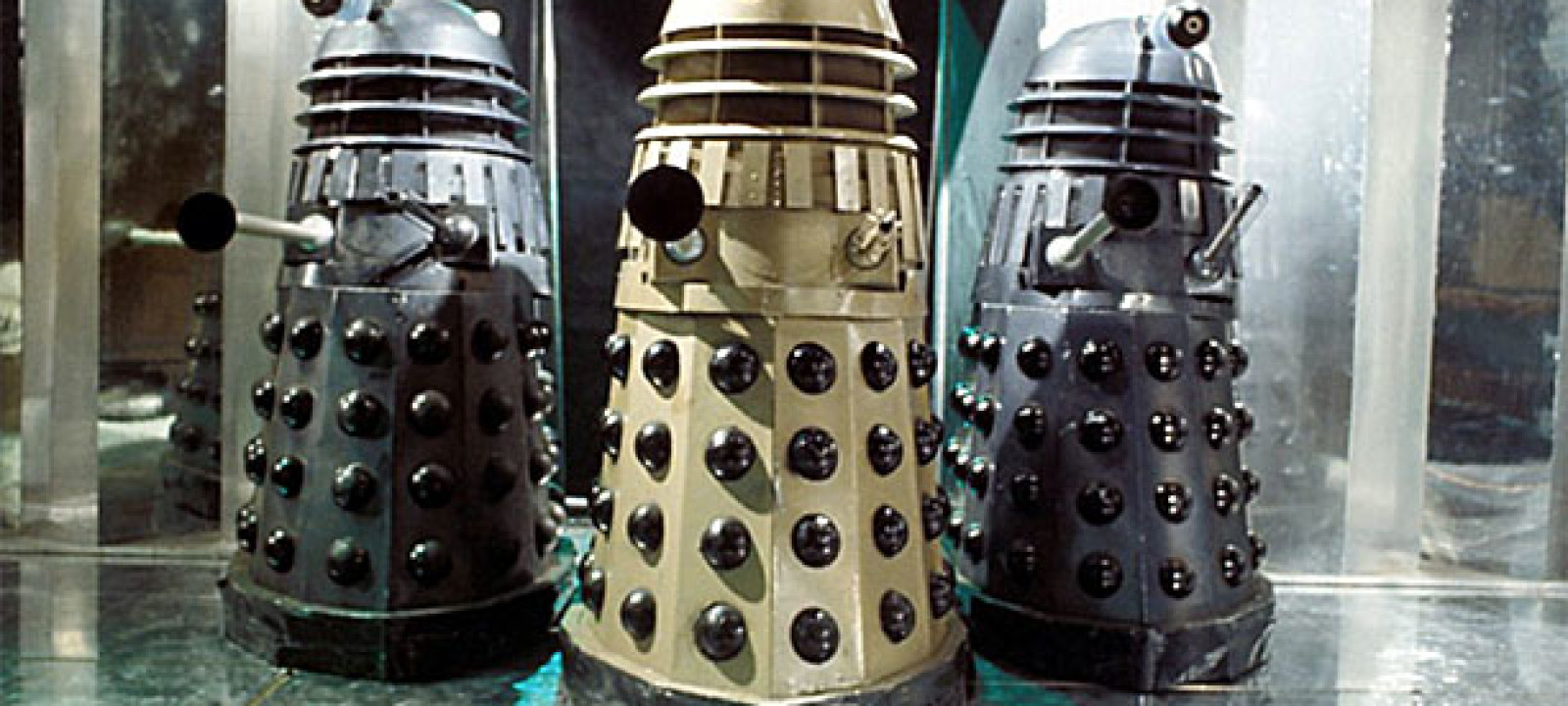




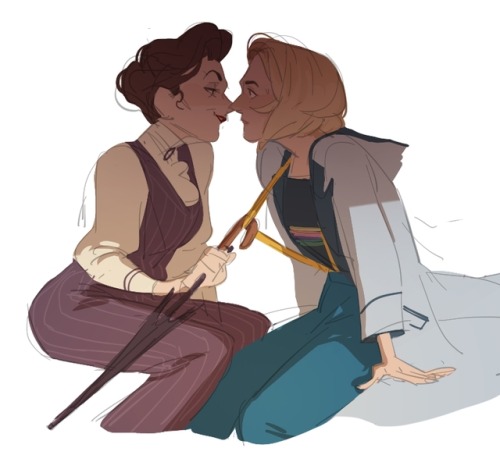




























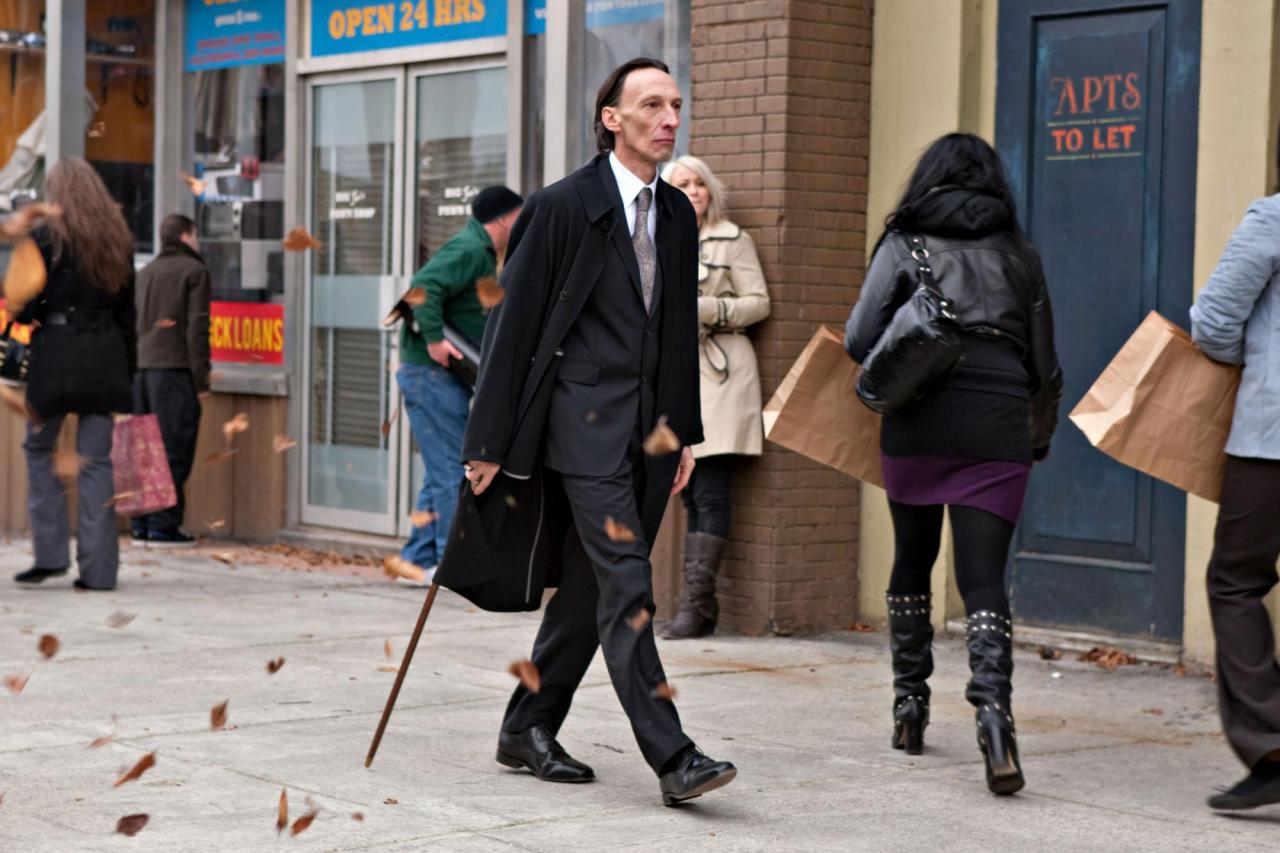


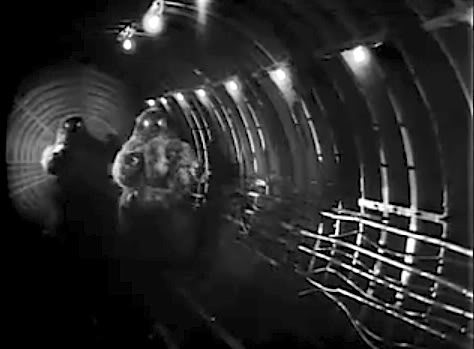


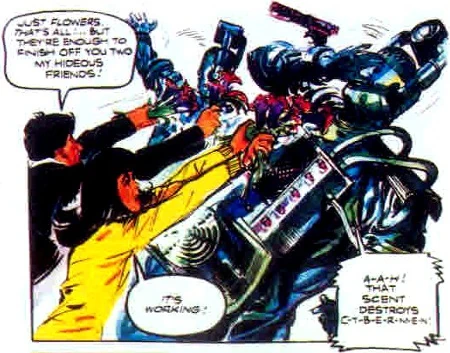






 burrunjorsramblesandbabbles