Tyrannosaurus Rex is really the perfect video game villain when you think about it. It’s big, ugly, kills lots of things, it’s relentless, it’s recognised all over the world as the ultimate killer. It’s really the perfect challenge for any hero to face.
Just as with film and television, any Dinosaur video game has to have an appearance by a T. rex at some point. In non Dinosaur video games meanwhile again just like with non Dinosaur films and television series Tyrannosaurus is often the lone Dinosaur that will be used.
Below is a list of arguably the most prominent appearances by Tyrannosaurus in the video game medium.
Dino Crisis Series
Tyrannosaurus appears in every entry of the survival horror video game series Dino Crisis , except for Dino Crisis 3. The Dino Crisis games revolved around Dinosaurs being brought into the present and causing havoc through experiments with time travel technology that went wrong. Dino Crisis 3 which is set in the far future and in space meanwhile features fictional Dinosaurs instead. Though these Dinosaurs are actually created from the DNA of real Dinosaurs including Tyrannosaurus Rex. The Dinosaur that is created from T-Rex’s DNA is called Australis.
Australis a mutant space T. rex!
Still since it doesn’t really properly appear in Dino Crisis 3 I will not be looking at it here.
Dino Crisis
Tyrannosaurus is encountered fleetingly throughout the first entry in the series. Whenever it does appear however it is completely unkillable except for during the final battle. It can also swallow the main protagonist Regina whole with a single bite. Often the best thing to do whenever you see it is just to get the fuck out of there. It can however in some encounters be driven off with grenades such as when you first encounter it crashing through the window of an office.
The T. rex will often just pop up completely at random and without warning. I always loved that as it made the game much more tense for me that at any moment this large unstoppable behemoth could suddenly just come crashing out of nowhere. Maybe you’d be out in the open and suddenly you’d hear a rumbling and then it would be there, or maybe just its head would come smashing through a window without warning. It definitely kept the player on edge in a good way.
The T. rex is ultimately the final boss in the game, but depending on how you play it can be defeated in a number of different ways. In one possible ending the Tyrannosaurus is actually shown to swim after Regina it is so determined. The Tyrannosaurus is fixated on hunting Regina throughout the entire game. You could compare it to Sharptooth in the first Land Before Time Movie in that in both cases the T. rex really has no reason to chase the main heroes, as they’d be nothing more than one bite to it and there are dozens of larger Dinosaurs it could attack and kill.
The for want of a better word relationship between the T. rex and Regina is like a reverse Ahab/Moby Dick. Here it is the big bloody awful animal with huge teeth is obsessed with killing the human and is ultimately destroyed by its quest.
Opening scene where the T. rex makes its first appearance killing Cooper.
Regina’s many encounters with her most fervent admirer.
What happens if the player isn’t careful.
Dino Crisis 2
In Dino Crisis 2 Tyrannosaurus only appears in two sequences. It battles the character of Dylan both times. I guess Regina had had her fill of T. rex attacks in the first game. The T. rex in this game is given an actual motivation for wanting our heroes dead. In the opening cutscene its eye is blown out by David a friend of Regina and Dylan.
Unlike the Rex in the first game this one wasn’t just mean for the sake of it.
My favourite moment is when the T. rex fights Dylan in a Tank. Believe it or not this scene isn’t so far fetched as a real Tyrannosaurus Rex’s bite force would have easily been strong enough to bite through the armour of a tank no problem.
Just like in the first game the T. rex cannot be killed whenever you face it, it can barely be slowed down. You have to flee both times you encounter it. However it can not swallow you whole in this game, instead it just rips you apart.
Ultimately the T. rex is not the main villain of the game. When it shows up in the last level it is replaced by a Giganotosaurus.
Though Giganotosaurus was larger than Tyrannosaurus in real life this game obviously exaggerates the size and power of Giganotosaurus. Not that it matters of course as its still an awesome scene. What I love about it is that it feels almost comical the way the T. rex has been chasing you the whole game and then all of a sudden completely out of nowhere, a larger Dinosaur just shows up and steals the limelight.
Dino Crisis 2 is easily one of my favourite video games. In fact I’d say that it is possibly the greatest Dinosaur game ever made. My only problem with it however is that I feel the T. rex is used perhaps a bit too sparingly. You never get the feeling that it could be around every corner like the first game, because it only pops up twice. I think they should have maybe stuck in one more T. rex fight scene.
Dino Stalker
Black Tyannosaurus
This sequel to Dino Crisis 2 featured Tyrannosaurus once again as the main villain. Tyrannosaurus first appears where it kills two Carnotaurus, who much like the Rex normally does in the other games had been chasing you throughout the whole game. The Rex also appears in the final battle where you kill it by knocking the Dinosaur into lava.
Overall this game is not as strong as the previous two. Its a decent shoot em up and the graphics for the time are pretty good. It’s also great seeing Tyrannosaurus restored to its position as the main villain, but still it’s sad that the Dino Crisis franchise had to bow out on this fairly average game.
Jurassic Park
Naturally being the logo of the franchise Tyrannosaurus has appeared in every game based upon the Jurassic Park film series.
It is the main villain in the Jurassic Park Arcade, Snes, and Sega games, it also pops up as a main villain in Jurassic Park 2 the Chaos Continues, Jurassic Park Chaos Island, and Jurassic Park Trespasser. It is a playable character meanwhile in Jurassic Park Warpath, and the Sony Playstation adaptation of The Lost World Jurassic Park.
T-Rex, Spinosaurus fight before Jurassic Park 3
In Jurassic Park Operation Genesis the Tyrannosaurus is shown to battle the Spinosaurus in an obvious tribute to their fight in Jurassic Park 3.
I think that probably my favourite appearance by Tyrannosaurus in a Jurassic Park video game is in tell tale’s Jurassic Park the game. This game was actually intended to be a sequel to the first film. It would later be contradicted by Jurassic World as the end of this game states that Isla Nublar, the setting of the first movie was bombed, killing all of the Dinosaurs there. However in Jurassic World the T. rex is said to be the same one from the first film.
The best thing about the T. rex in this game is the way it kills you. The Deaths are always so elaborate. It crushes your skull between two huge crates, crushes you under cars. At times its more fun letting your character die just to see what happens.
And you thought Regina got it bad!
Primal Carnage
Tyrannosaurus appears in this game. It is the most powerful Dinosaur in the game. Considerably more so than the Spinosaurus which it kills in the trailer effortlessly. It is both a playable character and an enemy. It has the ability to swallow human beings completely which will regain your health if you are playing as the Tyrannosaurus.
Turok Franchise
Tyrannosaurus has appeared a few times in this long running franchise though only ever as a supporting character.
Turok Dinosaur Hunter
A Tyrannosaurus named Thunder appears as the penultimate boss that Turok battles. It is the pet of the main villain of the game. What makes this a particularly cool T-Rex fight is that it as you can see it part robot. It has a robot laser eye and can breath fire!
Only thing better than a T. rex? A T. rex with laser beams attached to its fricking head.
Turok Evolution
Tyrannosaurus appeared in a few cameos in this entry of the series. In one level you will encounter a Tyrannosaurus that is feasting on a sauropod it just killed. The Rex will notice you and chase you. Though it may also kill some villains that are chasing you, it’s best to take care of this Rex as quickly as possible.
The main villain of the game Bruckner rides a Tyrannosaurus at the end. Unfortunately Bruckner is widely regarded as one of the worst video game villains of all time.
There were even the Tobais Bruckner awards in Electronic Gaming Monthly which awarded the very worst in video games, characters, levels, etc named after the character.
Turok (2008)
A large female Tyrannosaurus named Mama Scarface appears in the latest entry of the series. She is far larger than any real life Tyrannosaurus or indeed any real life theropod. She is the most powerful Dinosaur in the game and will chase the player through multiple levels. Sadly other than her size there is not much notable about this Tyrannosaurus.
Yeah that’s cool, but does it have a laser eye?
King Kong (2005)
In this video game adaptation of Jacksons movie, the V-Rex which is a descendant of the Tyrannosaurus Rex appears as a frequent antagonist. When you play as Kong you can fight it, but as Jack it is completely and utterly unkillable and will kill you in a single bite.
I think my favourite T or V-Rex level is when it knocks Kong off of a cliff and you have to as Jack rescue Ann armed only with a spear or an old Raptor bone from the V-Rex. I wish this scene had been in the film
Turns out Adrien Brody isn’t as good at fighting T-Rex’s as as a 25 foot gorilla is.
Join me tomorrow when I look at T.rex’s appearances in comic books
Tyrannosaurus Rex has appeared in many television series over the years ranging from classic science fiction series to award winning documentaries.
Despite the limitations of the tv medium in terms of effects compared to film. It’s fair to say that T. rex has had just about as varied a tv career as film career.
Doctor Who
Tyrannosaurus Rex has made many appearances in the worlds longest running science fiction series.
Its first possible appearance is in the story Doctor Who and The Silurians In this story the main villains, The Silurians who are ancient reptiles that existed from before the dawn of man have a pet Dinosaur.
The Dinosaur is never identified however and in other media it has been referred to as an Allosaurus rather than a Tyrannosaurus.
However in the novelisation of the story it is referred to as a Tyrannosaurus Rex. Since the novelisation was written by the same man who wrote the actual story on television Malcolm Hulke, this seems to suggest to me at least that it was meant to be a Tyrannosaurus in the episode.
However its worth noting that Malcolm Hulke whilst being an excellent writer seemed to know very little about prehistory. For instance the main villains of the story could not possibly be from the Silurian era, as it came long before any reptiles had evolved. Perhaps he like many people simply got T. rex and Allosaurus mixed up.
Regardless of whether or not the Silurians pet was a T. rex, the king of the Dinosaurs would go on to make an appearance in the story The Invasion of the Dinosaurs. In this adventure several mad scientists bring many Dinosaur species including Tyrannosaurus Rex through time to modern day London.
The T. rex is badass. It smashes its way through buildings, kills other giant Dinosaurs, fights off UNIT, an organisation that has taken on the worst monsters in the entire Universe and is only scared away by grenades which still don’t manage to kill it!
No greater an authority on monsters than the Doctor himself even says that the Tyrannosaurus Rex was the most vicious and powerful predator ever to live on the earth.
It would be an awesome appearance by T. rex if it wasn’t for the fact that the effects used to bring it to life are so fucking shit.
These are without doubt the worst Dinosaur effects I have ever seen. They are so bad the Dinosaurs can’t do anything. They literally just wobble from side to side. They cant even die properly. They just collapse into themselve!.
The worst scene however is the “fight” between the Tyrannosaurus and the Brontosaurus which actually reminds me of when as a five year old I’d to make my dinosaur toys fight with one another. Even by the standards of the special effects in classic who these are bad and sadly they drag the quality of the story down terribly.
40 years on and the makers of the story are still ashamed of it.
Tyrannosaurus next appeared in the 1984 story The Mark of the Rani. Here the nefarious timelady villain the Rani has captured several Tyrannosaurus embryo’s and keeps them in storage. Unfortunately at the end of the story when the Doctor sends the Rani and the Master hurling through the time vortex in the Rani’s TARDIS one of the jars containing the Rex is broken and time spillage causes it to grow to full size where it promptly devours the two villains, though despite this they would both appear again with no explanation.
A better T.. rex than the one in the Pertwee story, but that’s not saying much.
Tyrannosaurus would also go on to appear in the revival on two occasions as well. In the story Dinosaurs on a Spaceship a sleeping child T. rex makes a small cameo, whilst in the recent series 8 premier Deep Breath a Tyrannosaurus is accidentally brought forward through time by the Doctor. The T. rex is portrayed more sympathetically here. It doesn’t attack anyone or even cause any damage during its time in modern day, and in a strangely poignant scene the 12th Doctor translates its roars to reveal that it is scared in this strange new environment and feels alone.
A much better T. rex than the one in The Invasion of the Dinosaurs. Even if it is far too big.
The Doctor promises to bring the Dinosaur back to its own time, only for it to be killed instantly by the main villain of the story. A half android, half human monster called the Half face man, who kills his victims so that he can collect pieces of their bodies and attach them to himself. It is revealed that he killed the Dinosaur just for a small piece of its optic nerve. The Doctor actually feels immense guilt for the Dinosaurs death.
As I already mentioned the T. rex in Deep Breath is much, much bigger than a real life Tyrannosaur. This is actually acknowledged by several people that its much bigger than it should be, but Vastra who is a Silurian, and whose species thus lived at the same time as T. rex’s says that apparently they were all this big.
Here is the size of the Deep Breath T. rex compared to a real one.
Now Spinosaurus, King Kong and Jack Horner lets see you call the Moffat T. rex a cocksucker.
As to why the T. rex’s were all this size in Vastra’s lifetime but not on other occasions such as during the invasion of London, I have my own explanation.
I think that the Silurians genetically modified them and presumably other Dinosaur species to be larger. Perhaps they did so in order to fend off an alien invasion. This could explain why the earth was never invaded during the time of the Dinosaurs but always keeps getting invaded in the modern age. Its hard to imagine any race of aliens being willing to take on the Silurians when they have an army of T. rex’s that size to defend them. I would love to see a story where the Doctor travels back to the time of the Silurians and helps them defeat an army of aliens that want to invade the earth and we get to see an army of T. rex’s that big slaughter their way through the aliens.
I also think the Silurians modified the Tyrannosaurus’s to be more intelligent too. That would explain why the giant T. rex in Deep Breath was not shown to attack anyone when it wandered through London and how it was intelligent enough to have its own language. When you think about it if the Silurians did modify a T. rex to be that big they’d have to make sure it was more placid or else they’d be in trouble. I think that they modified its brain to the point where it was as intelligent as a human being and wouldn’t attack other sentient creatures such as human beings and Silurians, only other animals.
Tyrannosaurus has gone on to appear in numerous pieces of spin off material related to Doctor Who as well such as comic books and audio stories. In the Audio story “The Five Companions” several T. rex’s appear in the death zone on Gallifrey where they manage to kill several Daleks, saving the Doctor and his companions in the process. It’s basically like the ending of Jurassic Park but with Daleks instead of Raptors.
In the novel Made of Steel, a Tyrannosaurus serves as the main hero when the Tenth Doctor uses it to destroy the evil Cybermen. I suppose considering that in the Doctor Who universe it was the Cybermen who wiped out the Dinosaurs this can be seen as a payback. .
T. rex would also clash with the Daleks again in a short Doctor Who tidbit comic book story, though the Tyrannosaurus in this story was in fact an alien from the planet Raxas. Raxas it is established is a planet where the life forms have evolved to look exactly like the Dinosaurs on earth. There are not only T. rex’s but also raptor’s, Pteranodon’s, Apatosaurus’s and Triceratops’s on Raxas.
I actually quite like that idea as it kind of makes sense. In Doctor Who and pretty much all of science fiction we see hundreds of aliens that look like human beings such as as obviously the Doctor himself, with the explanation being that they have simply evolved to look like humans as that is a very successful form to take.
So with this in mind why wouldn’t some aliens evolve into Dinosaurs on other planets too? The Dinosaur form is clearly very successful. They ruled the earth for 150 million years. If you want to be able to kill lots and lots of things what better form to take than a T. rex?
The idea of life on other planets evolving in exactly the same way as on earth is not such a far fetched idea believe it or not. In fact there are many leading scientists who believe that many planets may be actual duplicates of the earth, rather than just having similar life forms.
So with this in mind maybe somewhere out there in the infinite recesses of space there is a planet where Dinosaurs still roam.
The Daleks try to conquer Raxas only for the Dinosaurs to slaughter them. The T. rex’s in particular crush several of the Daleks in their Jaws and under their feet. Though the Daleks are later able to build a base on the planet they never manage to conquer it.
It is established in other Doctor Who stories that Dinosaurs have evolved on billions of other planets around the universe.
On Skaro the home planet of the Doctors enemies the dreaded Daleks, Dinosaurs ruled the planet before the Daleks humanoid ancestors the Kaleds emerged. Even after the Kaleds became the Daleks dinosaurs still roamed certain area’s of Skaro and the Doctor later used several of them to destroy a Dalek squad that had captured them.
Skarosian Dinosaur thrashes a Dalek squad.
Sadly we didn’t get to see any T. rex’s on Skaro, but it is established that there were T. rex’s on plenty of other planets.
On the Doctors home planet of Gallifrey there were gigantic creatures called Gargantosaurs that lived long before the Doctors humanoid people the Time Lords evolved. The only Gargantosaurs we saw looked like T. rex’s and were extremely dangerous.
T. rex’s on Gallifrey
It is established that the Gargantosaurs died out before the Time Lords emerged however.
Dinosaurs also existed on the planet Mondas where the Doctors other main enemies the Cybermen came from. The Cybermen much like the Daleks originally began as humanoids, before transforming themselves into cybernetic creatures. The Dinosaurs on Mondas unlike on Gallifrey were shown to live alongside the human race. After the humans transformed themselves into the Cybermen they also began to cyberconvert the Dinosaurs as well.
A T. rex on Mondas that has been cyber converted. Cyber T. rex!
By far and away the best appearance by T. rex in the Doctor Who franchise however is in the 11th Doctor comic books where we are introduced to Kevin a gigantic robotic T. rex who becomes the Doctors companion.
Kevin the Doctors pet robot T. rex. Technically he should have 2 fingers instead of 3, but I’ll let that go, as the idea of a gigantic robot T. rex that travels through time saving the universe is just too awesome.
Kevin would help the Doctor battle Sontarans and also a gigantic evil squid that takes control of people’s minds. Why this was never an episode of the tv show I’ll never know.
Personally I am rooting for Kevin to be the next companion alongside the lovely Osgood after Clara leaves.
Who wouldn’t want to see that on the small screen? It would have to be with Capaldi now, but again who wouldn’t want to see Malcom Tucker riding on the back of a T-Rex fighting alien monsters?
Of course Kevin would have to look like this
and not like this
cause that’s just shit.
Tyrannosaurus also appeared in a special feature for the story Earthshock. In this story the Doctor’s companion Adric is killed when he is trapped on the freighter by the Cybermen that crashes into the earth. Adric was disliked by large sections of the fandom, who viewed him as an irritating boy genius who thought he was smarter than the Doctor himself. However the people that made this special feature I guess hated him so much that they decided his previous death was too good for him, so they had him survive the crash only to be killed seconds later by a T. rex.
Red Dwarf
Red Dwarf was doing the whole Dinosaurs on a Spaceship thing first.
In the Red Dwarf episode “Pete” the crew discover a time machine of sorts that has the ability to age or de-age someone, to the point where it can even bring the dead back to life. When a crew member simply named Birdman’s pet bird called Pete passes away, Kryten tries to use the time machine to bring him back to life. Unfortunately he turns Pete into what he was several million years ago. A Tyrannosaurus Rex. Birds are descendants of meat eating Dinosaurs remember, though they did not evolve from T. rex itself.
Still anyway Pete now a T. rex goes on a rampage across the shop killing his former owner birdman. The T. rex however seems to cause more of a rampage through vomiting, burping and having a diarrhea attack which very nearly kills the captain who is part of a group who try to ambush the creature from behind when it has its attack.
At the end of the episode the T. rex is turned back into a bird and Bird man is even brought back to life using the time machine. He is even reunited with his beloved Pete too so its seemingly a happy ending for once. “Pete ate me! He must be really out of sorts he’s never eaten me before. Never.” Unfortunately it soon turns out the Pete was in fact pregnant. His or rather her new offspring who is still a Tyrannosaurus escapes and goes on to lick the captains back whilst he is in the middle of a massage which leads to him having a complete mental breakdown. It doesn’t matter in the long run as the captains a bit of a dick anyway. This actually marked one of the few times he got his just desserts, so I suppose you could consider this another heroic appearance of Tyrannosaurus.
The Land of the Lost 1974 tv series
This somewhat overlooked campy 70’s classic featured a Tyrannosaurus Rex named Grumpy as the main villain. Grumpy was the undisputed king of the land of the lost who pursued our heroes across nearly every episode.
The only creature that he never attacks is a large female Allosaurus named Big Alice. It is hinted that the reason he never attacks her is because she is in fact his mate and thus her children are Tyrannosaurus/Allosaurus hybrids like Gwangi.
The Land of the Lost 1991 tv series
New intro with new and improved Dinosaurs
This 90’s remake of the 70’s series once again featured a Tyrannosaurus named Scarface as the main villain. Just like Grumpy Scarface constantly pursued the main characters and was at the top of the food chain in the Land of the Lost.
There is one episode however which sees it battle a gigantic alien cyborg. This fight was modelled on the Kong vs T. rex fight from the original King Kong.
Sir Arthur Conan Doyle’s The Lost World
Tyrannosaurus appeared frequently in this 90’s television adaptation of Sir Arthur Conan Doyle’s novel. It doesn’t play that big a role however. The Lost World often unlike the book and other adaptations went far beyond just Dinosaurs. This Lost World had everything from alien monsters to portals to other dimensions to supernatural creatures. One episode even featured John Roxton turning into a Vampire like creature and drinking the blood of a Velociraptor!
Still T. rex made quite a few appearances in the series, with one episode involving a mother T. rex chasing the main characters after Challenger and Malone steal one of its eggs. It also plays a large role in the pilot episode too and appeared in the opening credits as well for all 3 seasons.
This series was quite overlooked. It was somewhat comparable to Xena the Warrior Princess in terms of its tone and style, in that it never really took itself too seriously. and was really good fun. It’s definitely worth a look if you are a fan of Conan Doyle’s novel or are a Dinosaur enthusiast in general.
Dinosaur!
This one off documentary was hosted by Christopher Reeve. One of my earliest memories was watching this documentary over and over again.
It still holds up as great entertainment even though so much of it is dated in terms of Dinosaur knowledge. To start with Christopher Reeve is the perfect host. Not only is it great having Superman himself host a documentary about Dinosaurs, but I think Reeve was a good host for this documentary in particular as he loved Dinosaurs in real life. Unlike some of the other hosts for Dinosaur documentaries he is really passionate about the subject. Also the stop motion sequences featuring the Dinosaurs which were animated by Phil Tippet are spectacular.
They are at places genuinely frightening such as when the Deinonychus rip apart the Strothiumimus or the scene where the T.rex corners the Monoclonius. It builds up almost like a horror movie as the hapless Monoclonius wanders into a jungle munching on leaves only to notice the rotting and mutilated corpses of several Hadrosaurs around it. At the same time we also the Tyrannosaurus slowly creep up behind it with the blood of its previous victims still smeared all over its mouth.
I have never felt so sorry for a Dinosaur as I do for the Monoclonius. At first you think it might have a chance against the Tyrannosaurus when it wounds it in the leg, but when the Rex shrugs it off and corners the Monoclonius you realise all it has done is anger the Rex and the poor Monoclonius has absolutely no way of defending itself from the Tyrannosaurus.
The Simpsons
That’s actually quite sad.
Tyrannosaurus has appeared a few times in this classic animated comedy.
In Treehouse of Horror 6 Tyrannosaurus appears in the second segment Time and Punishment. Here it attacks Homer Simpsons when he travels backwards in time using a toaster causing several comical changes to the future in the process.
This segment is obviously a parody of the classic Ray Bradbury story A Sound of Thunder which revolved around people travelling back to the time of the Dinosaurs and causing a change in history simply by crushing a seemingly insignificant butterfly without even realizing it.
Tyrannosaurus also appeared in the episodes Bart Sells His Soul where Bart imagines Lisa being devoured by a Tyrannosaur and in the more recent Days of Future Future where it is shown to be a part of Cretaceous Park, an obvious parody of Jurassic Park, and also an allusion to the fact that the most famous Dinosaurs in the Jurassic Park franchise; T. rex and Velociraptor both come from the Cretaceous era.
Futurama
Tyrannosaurus has also appeared in Matt Groening’s other memorable animated series Futurama a number of times.
In the episode “I Dated A Robot” Philip J Fry who is from the 20th century fulfils one of his life long dreams which is to ride a Tyrannosaurus Rex.
Unfortunately by this point not only have Dinosaurs been brought back, but they have now been domesticated so much that children ride them and thus Fry looks rather odd getting so excited at taking part in Jurassic Kiddie Park. Despite this though the T. rex does still end up biting his hands off.
A robot Tyrannosaurus also appeared in the later episode A Clockwork Origin where it very nearly devours Fry and fights with several other robo dinosaurs
However its most notable appearance in the series is when it appears in the series that Fry and Bender watch called The Scary Door. Here the Tyrannosaurus is shown to fight off an alien invasion by itself in a parody of War of the Worlds where the Martian invaders where destroyed by the smallest, most harmless bacteria which they had no immunity too after all of our most powerful weapons had failed.
Family Guy
Its always his little arms they go for
Tyrannosaurus has appeared in Family Guy a few times. My favourite cutaway gag is in Stewie Griffin The Untold Story where Peter Griffin was once show to have had a pet Tyrannosaurus Rex
The thing is you probably could teach a Tyrannosaurus tricks as they were more intelligent than cats and dogs. According to some experts they were more intelligent than even Lions. You would obviously have to be pretty brave to try and teach it tricks and make sure it was not in a populated area.
Mr Bean
In a classic scene from the Christmas special Mr Bean recreates the birth of the baby Jesus and adds in tanks, a T-Rex and a Dalek! Of course its not the first time T. rex has fought a Dalek but still it’s brilliant. I think Rowan Atkinson must like Dinosaurs since he has had a T. rex in both of his most famous creations, Blackadder and Mr Bean
This should be the plot for the next Christmas Doctor Who story. Steven Moffat please try and make this work as a story!
Primeval
Tyrannosaurus appears in this ITV series about anomalies, portals to the past opening up in modern times allowing prehistoric creatures to emerge in modern times.
In this sequence below you see a Tyrannosaurus rampage its way across a huge city killing people. Its a brilliant sequence. The later episodes of Primeval were sadly in my opinion not quite as strong as its earlier series. I think it was the loss of Douglas Henshall’s Nick Cutter that really affected the series. He was simply a more interesting character than either of his successors. Still the Rex rampage here is one of the last big hurrah’s for me.
Personally I would have left her. Some people like those who run around when a ravenous Tyrannosaurus is running about are just too stupid to live.
Walking with Dinosaurs
A female Tyrannosaurus appeared as the main protagonist in the final episode of this ground breaking BBC series. It’s a testament to the popularity of the T. rex that it is the only meat eating Dinosaur who is given the role of the main protagonist in the series. All the other leading dinosaurs are herbivores or at the very least small inoffensive fish eaters or omnivores like the cynodonts.
Its hard to make a large super predator into a sympathetic character, but as T. rex is the most famous Dinosaur there is no way they could have made the focus on any other Dinosaur.
In this story the Tyrannosaurus is shown to care for her young and even dies defending them. Despite this however they still thankfully don’t play down the Dinosaurs vicious nature as we see it tear a helpless Hadrosaur to pieces. The young T. rex’s even turn on and kill their younger sibling.
This episode is definitely my favourite episode of the series. I’ll never forget the image of the young Tyrannosaurs standing around their mother wanting her to wake up as the asteroid that would eradicate the Dinosaurs from the face of the earth forever comes hurtling towards the earth. It’s like a reverse of the Land Before Time, but just as sad.
The only thing I dislike about the Walking with T. rex is the way it looks. It just doesn’t have as pleasing a shape as other versions of the Tyrant Lizard King. Perhaps its its colour scheme, but it just looks duller than other Tyrannosaurs.
T-Rex A Dinosaur in Hollywood
This documentary produced by the Walking with Dinosaurs team charts T-Rex’s history on the big screen. It is a spoof documentary featuring interviews with some of T-Rex’s co-stars including King Kong.
At the end of the docu Robert Vaughn is eaten by a Tyrannosaurus. Bob Vaughan is probably the most famous person to ever be eaten by a Tyrannosaurus. He is also probably the first person to be eaten by a feathered T. rex.
Barney the Dinosaur
Sorry I have to mention this. This is without doubt the low point of Tyrannosaurus’s long career on television even if it is one of its most famous representations. In my opinion Barney is an evil creation. How could anyone reduce such a fearsome and powerful creature to something like this? A purple cuddly annoying kids entertainer. Even if you are not a Dinosaur fan at least show some respect to the king of the Dinosaurs. Jack Horner couldn’t have done a better job of smearing T. rex’s image.
Dino Riders
Tyrannosaurus appeared in this animated series frequently. The shows premise revolved around a race of aliens known as the Valorians who have been conquered by the evil reptile like Rulons. One group of Valorians however manages to escape backwards in time to the age of the dinosaurs. Unfortunately however one group of Rulons becomes trapped back in the past with them. Both the Valorians and the Rulons decide to fight each other by riding on the backs of Dinosaurs and strapping laser beams to them.
Its exactly as stupid and amazing as it sounds.
T. rex appears in many episodes of the series and the main villain of the series the leader of the Rulons, Krulos naturally rides on the back of a Tyrannosaurus.
Sliders
Tyrannosaurus appeared in an episode of this classic sci fi series called Dinoslide. The premise of Sliders revolved around a group of people being lost in the multiverse and having to travel through multiple realities to try and reach their own reality. In this episode as you can see they arrive in a reality where the Dinosaurs never died out and naturally a Tyrannosaurus is waiting for them. This wasn’t the only episode to feature an earth where Dinosaurs still ruled however and the previous time, it was an Allosaurus that was the main meat eater that pursued the main characters.
Extreme Dinosaurs
Tyrannosaurus was the main hero in this classic 90’s cartoon series. The premise for this series saw an interdimensional criminal named Argor Zadrok increase the intelligence of several Dinosaurs to carry out his evil plans. The T. rex, the Stegosaurus, the Pteranodon and the Triceratops all rebel against him as do the Raptors. However the Raptors remain evil nonetheless and try and wipe out humanity in order to allow reptiles to rule the earth once more. The T-Rex was named T-Bone.
Originally these characters appeared on the series Street Sharks as the Dino Vengers, though in that series their origins were different in that they were aliens from another world.
In many ways Extreme Dinosaurs was just Street Sharks with Dinosaurs.
The Truth About Killer Dinosaurs
This 2005 documentary hosted by Bill Oddie attempted to show us how powerful Tyrannosaurus really was. The documentary revealed that T. rex had a bite force of over four tons which would have enabled it to crush a car easily. In the ten years since the documentary was released it is now believed that Tyrannosaurus may have had a bite of over 23 tons almost six times what this documentary claimed.
Much like Christopher Reeve, Bill Oddie proves to be the perfect host. Like Reeve he was a Dinosaur fan himself in real life and brings a similar passion and enthusiasm to the documentary.
Dinosaucers
This series followed a similar premise to the much later Extreme Dinosaurs, revolving anthropomorphic Dinosaurs saving the world. Here however Tyrannosaurus Rex was the main villain. The T. rex was named Genghis Rex and his archenemy was Allo a heroic Allosaurus. He commanded the ruthless Tyranno’s.
Not the best series in the world but still insane enough to be a minor classic nonetheless.
The Land Before Time series
A Tyrannosaurus named Red Claw appeared as the main villain in this television adaptation of the famous film franchise.
Red Claw is accompanied by two Utahraptors named Screech and Thud. However they are more tolerated by the Tyrannosaur instead of being his actual companions.
It is speculated that this is the same T. rex as the Sharptooth from the first film, though this has never been conformed it is possible considering he has a damaged eye like the Tyrannosaur from the first film.
Thanks for reading. Next up a look at T. rex’s appearances in video games.
Tyrannosaurus Rex is by far and away the most famous Dinosaur. Over the years it has had a career few actors could dare dream of, having played every role from the leading man, to the tough grizzled anti hero, to the villain, to the plucky comic relief. He has starred in horror movies, sci fi classics, comedies, and even bizarre rom coms! He has worked with such big names as Peter Jackson, Steven Spielberg, Ray Harryhausen and faced everyone from Batman, to King Kong, to Doctor Who, to The Ghostbusters, to Angel, to Homer Simpson. He has even had an iconic band named after him!
Yes old Rexy is a superstar there is no doubt about that and in this article I am going to be looking at some of the Tyrant Lizard King’s most iconic moments in cinema history. It’s doubtless that this article won’t even begin to represent half of T. rex’s total appearances on the big screen, but still I hope at the very least to capture his most memorable moments in films nonetheless.
So join me as I explore how one Dinosaur has managed to remain in the public’s consciousness as a symbol of sheer terror like no other as we take a look at Tyrannosaurus Rex on the big screen.
Film Appearances
Picture for the upcoming sequel from the cult hit Dark Sky which will involve Nazi’s and T-Rex’s.
Tyrannosaurus has had quite the film career. He has had a part in pretty much every iconic Dinosaur film you can think of, usually as the main villain or sometimes hero. He has however appeared in other non Dinosaurs films too such as Night at the Museum. Often whenever a movie needs to have a Dinosaur of some kind, whether for comedy or tension, then the cruel king of the Dinosaurs is the one they go for as it is the arguably the one Dinosaur that absolutely everybody would recognize.
The Willis O’Brien Years
Willis O’Brien is sadly a name that is unfamiliar to most people. He was one of the most influential people in cinema history and his legacy can still be seen today in some of the worlds most acclaimed directors such as Peter Jackson and Steven Spielberg.
O’Brien contrary to popular belief did not invent stop motion animation, a process where a model is animated frame by frame. He nevertheless was the one who pioneered and brought it to mainstream attention. It was his movies, such as King Kong in particular that would inspire the next generation of special effects guru’s such as the late great Ray Harryhausen who later became O’Brien’s close friend.
O’Brien was fascinated by Dinosaurs and indeed his earliest short films all featured Dinosaurs in them. However it would be his short 1919 film The Ghost of Slumber Mountain that would mark the Tyrant Lizard King’s debut on the big screen.
The Ghost of Slumber Mountain
This film originally ran for 30 minutes but sadly was cut down to just 11 minutes. Its plot (which was written by O’Brien himself) was somewhat surreal.
It involved a man named Holmes telling his nephews about his time on Slumber Mountain where he found a cabin belonging to a late hermit called Mad Dick. Mad Dick apparently had a magic telescope which Holmes later uses to look at Slumber mountain with. There he see’s the mountain as it was 65 million years ago. He sees a Brontosaurus, a Triceratops and a Tyrannosaurus Rex, which fights and kills the Triceratops.
Unfortunately Holmes looks at the Dinosaurs for too long and creates a rip in the very fabric of time itself which allows the Tyrannosaurus to emerge into modern day where it attacks him. The movie not only marks T. rex’s first appearance on the big screen, but also the first time T. rex was shown in battle with its archnemesis Triceratops.
The Lost World (1925)
The first full length Dinosaur movie based on Sir Arthur Conan Doyle’s novel of the same name. O’Brien was hired to do the special effects for this film based on the massive success of The Ghost of Slumber Mountain. Though considered crude by today’s standards this silent movie was nevertheless a record breaking success when it was first released and is still regarded as a classic of the genre 90 years later.
Now Tyrannosaurus Rex did not appear in the original novel. At the time Sir Arthur Conan Doyle was writing Tyrannosaur fossils were not that well known, so Allosaurus was made the main meat eating Dinosaur of Doyle’s adventure. Though it should be noted that the large meat eating Dinosaur that appears in the novel of the Lost World is never identified. It is merely speculated by Challenger that it could be either an Allosaurus or a Megalosaurus, but he also admits that it could be any one of the great meat eating beasts.
Still the Dinosaur in The Lost World is often regarded as an Allosaurus and therefore Allosaurus is still the main meat eating Dinosaur that appears in O’Briens Lost World. Fortunately however remembering how great he was in Slumber Mountain. O’Brien would make sure to give his old pal Tyrannosaurus a role in the film.
T. rex only appears in a single scene, but it is still arguably the most famous from the film and also establishes the T. rex as the most powerful Dinosaur on the plateau.
The Tyrannosaur attacks a large Ceratopsian Dinosaur called an Agathaumas. Earlier an Allosaurus had attempted to attack this type of Dinosaur and had been hopelessly overpowered and gored to death by it. The T. rex however is able to dispatch the Agathaumas in a matter of seconds, first by leaping on the Ceratopsids back and then using its mighty jaws pulls the herbivore on its side after which the Tyrannosaur then rips the Agathaumas’s guts out with its teeth. Not long after killing the Agathaumas the Tyrannosaur literally leaps through the air and grabs a passing Pteranodon with its tiny arms, which it then rips apart in its jaws before throwing to the ground and stepping on it, bringing a whole new meaning to the term overkill.
Again though the sequence is brief it is still very memorable and for decades afterwards would often be used to illustrate how Tyrannosaurus may have battled Triceratops in countless Dinosaur documentary’s, even though the animal is not a Triceratops but an Agathuamas.
King Kong
T. rex with his new best friend
T. rex and Willis O’Brien would reunite one last time for what would ultimately be O’Brien’s most successful project King Kong.
Originally after The Lost World, O’Brien had hoped to make another Dinosaur film called Creation about another lost land of Dinosaurs discovered in modern day. Tyrannosaurus was among the Dinosaurs slated to appear in the film and it would have battled and killed a Stegosaurus. Ultimately however Creation was shelved by King Kong creator Merian C Cooper who felt that its story was boring. Cooper had nevertheless been impressed with the special effects used to bring the Dinosaurs to life in the test footage shot for Creation and subsequently hired O’Brien to work on his own project about a giant ape falling in love with a human woman.
O’Brien would not only bring the ape to life with his stop motion effects, but he would also insert Dinosaurs into the film as well, including a Stegosaurus, a Brontosaurus, a Pteranodon an Elasmosaurus and of course a Tyrannosaurus Rex.
The T. rex once again appears in only a single scene, but O’Brien makes sure it is memorable. The Tyrannosaurus is shown to battle Kong when it attempts to devour the object of his affections, Anne Darrow played by the late Fay Wray.
The fight between Kong and the Tyrannosaurus is arguably the first real Kaiju battle in the history of cinema. It would serve as an inspiration on many subsequent Dinosaur and monster battles over the years such as the infamous battle between the Tyrannosaurus and the Spinosaurus in Jurassic Park 3. There are even shots lifted from the Kong/Tyrannosaur battle for the T. rex/Spinosaur duel such as the shot of Anne cowering under a tree as the two titans clash, that we see replicated when Grant cowers under a fallen tree as the T. rex and Spinosaurus size each other up.
Shots taken from this fight can also be seen in Kong’s battle with Godzilla in King Kong vs Godzilla, his fight with Gorosaurus in King Kong Escapes and finally in Peter Jacksons 2005 remake where Kong wrestles with 3 Vastatosaurus Rex’s (descendants of the T. rex)
In many ways Tyrannosaurus Rex has gone on to become seen as Kong’s archenemy in popular culture. Though the much maligned 70’s remake replaced the T. rex with a snake, most other versions will have Kong battle a Tyrannosaur including both the 60’s animated series called The King Kong Show and the 00’s animated series Kong the Animated series. A robotic T. rex is also set to appear in the upcoming Kong-King of the Apes animated series on Netflix. Even the King Homer parody from The Simpsons featured King Homer tangling with a T. rex.
I think this is probably why the 70’s movie is often seen as the black sheep of the Kong movies. Over time though its reputation has improved ultimately the lack of Dinosaurs, and lack of T. rex in particular will always make it less enjoyable than the other Kong movies.
I mean really not that Kong isn’t a fairly impressive character, but the makers of the 70’s movie should have known everything is better with Dinosaurs.
Fantasia
Tyrannosaurus Rex would be featured in this iconic Disney movie in the classic The Rite of Spring sequence. Despite the films iconic status however. The T. rex is inaccurate for many reasons.
To start with it is shown to live alongside creatures like Dimetrodon and Stegosaurus. Stegosaurus lived during the Jurassic era whilst Tyrannosaurus lived in the Cretaceous period. There is a bigger gap between Tyrannosaurus and Stegosaurus than there is between us and Tyrannosaurus. Dimetrodon meanwhile lived millions of years before the Dinosaurs. It is also by the way not a Dinosaur. It is from the Synapsid family a group of reptiles that Mammals originated from. Dimetrodon is actually more closely related to you and I than it is to any Dinosaur.
Also finally the Tyrannosaurus has three fingers. At the time it was not known to be fair exactly how many fingers it had and many other depictions from the early 20th century including King Kong gave it three fingers too. There is a long standing rumour however that Walt Disney insisted to the animators that it be given three fingers as he felt it looked better that way.
Inaccuracies aside this remains one of Tyrannosaurus’s most iconic film appearances. The scene where it kills the Stegosaurus is truly a classic Dinosaur battle and actually manages to I think give the Dinosaurs a certain depth for the first time. Unlike in Kong you don’t just look at them as monsters in this scene, but rather actual animals as we are actually meant to sympathise with Stegosaurus as it it is hopelessly outmatched and killed by the T. rex, rather than being another monster that can’t wait to fight it.
This is also the film that began the whole T. rex/Stegosaurus feud in popular culture.
T. rex not surprisingly has many mortal enemies in popular culture, Triceratops, Spinosaurus, Anklyosaurus, and Brontosaurus, though actually only a few of these Dinosaurs would have met Tyrannosaurus in real life.
The famous T. rex/Stegosaurus fight from this film has since been recreated in the Disneyland Primeval Diorama and Walt Disney World’s Epcot’s Ellen’s Energy Adventure.
One Million BC
This fantasy film that features Cavemen living alongside Dinosaurs briefly features a Tyrannosaurus Rex. It is played by a man in a suit for its fleeting cameo where it tries to devour some small children before being slain by the main protagonist Tumak.
The scene isn’t exactly T. rex’s best showing despite the iconic status of the film. The costume is so crummy that the monster has to spend most of its time hidden behind a bush to conceal himself. Surprisingly though this film was the one that won an Oscar for its special effects instead of King Kong!
The movie is still enjoyable don’t get me wrong, but certainly not one of the highlights of T. rex’s long and luxurious film career. It only gets a mention here as it was one of the first ever instances of Dinosaurs fighting cavemen in a film, and certainly the most influential.
This movie would later be remade in the 60’s where it was retitled One Million Years BC. The effects for this remake were supplied by Willis O’Brien’s protege Ray Harryhausen. This scene itself was even remade.
The effects were a definite improvement of course, but sadly the attacking Dinosaur in the remake is an Allosaurus not a Tyrannosaurus as Harryhausen felt a Tyrannosaurus would have been too powerful and would have destroyed the Cavemen and their village in no time. Though as it was even an Allosaurus would have been too powerful and would have destroyed the village in no time as well. The attacking Dinosaur is in fact a sub adult Allosaurus.
Dinosaurus
This overlooked 60’s Dinosaur film features a Tyrannosaurus Rex as the main antagonist. The movies plot sees two Dinosaurs, a Tyrannosaurus and a Brontosaurus as well a caveman that were all frozen in ice awaken on a small island.
Whilst the Brontosaurus and Cavemen naturally are very nice and even both befriend a young boy, the T. rex goes on the rampage and destroys a bus full of people. The T. rex however does manage to cause the death of the films main human villain who it crushes under several rocks. Sadly however it also causes the death of the caveman too. It is ultimately defeated at the very end of the film when it is knocked into the ocean by a bulldozer where it apparently dies.
The ending hints that it may have survived however, as a set up for a sequel that ultimately never happened.
The Tyrannosaurus is brought to life through both stop motion animation and animatronics. Though this film is often overlooked it was nevertheless a huge influence on Michael Crichton the author of Jurassic Park and he himself cited it as one of his influences on Jurassic Park.
The Lost World (1960)
Tyrannosaurus was the main villain in this somewhat sub par version of Sir Arthur Conan Doyle’s classic directed by Lost in Space creator Irwin Allen.
Now I enjoy this film and it actually has one of the best casts of any version of The Lost World it must be said. Professor George Challenger is played by horror icon Claude Rains and Lord John Roxton is played by The Day The Earth Stood Still star Michael Rennie.
Still where the film is let down is through its Dinosaur effects. This movie uses what has become known as the Slurpasaur technique. For those of you who are unfamiliar with it, the Slurpasaur technique is where you basically take a lizard and superimpose it to look big and stick horns on its head. This effect was also used to bring the Dinosaurs in One Million BC to life except for the Tyrannosaurus.
It’s actually not the worst visually as long as you don’t use the technique for actual Dinosaurs. If it’s just supposed to be just a giant monster then okay I’ll buy it, but when you have someone going on about this being a Brontosaurus like in the movie and we just see a big Lizard then it becomes too much for me.
The Slurpasaur technique was later parodied in “The Lost World Jurassic Park” when Vince Vaughn’s character mentions that he was expecting big iquanas.
The Tyrannosaurus in this movie is represented by a crocodile with fins stuck to its back and horns glued to its head, making it look more like a badly done Spinosaurus than a Tyrannosaurus.
It appears in two sequences. First it wrestles with a Brontosaurus which is represented by a lizard with a frill around its head and fins glued to its back. Once again it actually looks more like a badly done Dilophosaurus than the animal its supposed to be. Or at least the Dilophosaurus from Jurassic Park as the real animal most likely did not have a frill.
This fight sequence is actually a pretty good Dino battle. My only problem with it is that it makes me a bit uncomfortable as we are actually watching real animals fighting with each other.
This was actually one of the reasons that the Slurpasaur technique went out of fashion because many people saw it as a form of animal cruelty. It wasn’t just because of its all around general crappiness.
The Tyrannosaurus shows up again in the final showdown where it is revealed to be the natives of the plateau’s fire god whom they make sacrifices to (similar to Kong).
The T. rex manages to kill one of the movies more unsympathetic characters who had earlier in what was a very shocking, out of place scene tried to rape the friendly native girl.
I’m not saying you can never show scenes of explicit violence. Obviously if the story warrants then fine, but in this instance it just seemed totally out of place with the rest of the film. The movie seemed like an episode of Lost in Space, just silly, camp fun and then suddenly there looked like what was going to become a scene from a movie like A Clockwork Orange in it.
Still I suppose if anyone had to get killed horribly by a Tyrannosaurus then its good that it was this guy. You’d be hard pushed to find a more unsympathetic T. rex victim in any film, including even the cowardly lawyer who famously abandons the two children to die in Jurassic Park.
Really if someone had to die in this film then it just had to be him.
The T. rex is ultimately killed by Gomez who in an effort to redeem himself (after he tried to murder the whole team earlier due to Roxton abandoning his brother to die on an earlier expedition.) Manages to slay the beast by causing it to become buried under an avalanche, though he himself also dies in the process.
The avalanche Gomez kicks off destroys the entire plateau, but one of the Tyrannosaurs eggs is saved by Challenger who plans to bring it back to London as proof of their adventures. This sadly is arguably the most laughable scene in the whole film as Challenger sits there holding a small gecko with horns on its head claiming that its a baby Tyrannosaurus Rex. One wonders what his colleagues would have thought when he returned home and presented this as his proof of The Lost World.
The sad thing about this film is that originally Willis O’Brien had been hired to do the effects. This movie was for all intents and purposes supposed to be an updated, colourized, talkie version of his 1925 adaptation of The Lost World. Think of how amazing it would have been to have seen the T. rex/Brontosaurus fight with O’Brien’s Dinosaurs, or the T. rex fire god as an O’Brien T. rex rather than a silly lizard with a fin on its back. Sadly Irwin Allen decided to use the Slurpasaur technique as it was cheaper and took less time.
Allen was notorious for never wasting a penny, hence why he often reused shots and costumes and sets all the time. In his iconic series Lost in Space for instance he used the exact same shot for a space ship taking off every single time a space ship was shown to fly away, even if the ship in question looked nothing like the ship taking off from the original footage. He also reused footage from The Lost World itself in many of his subsequent series such as Lost in Space and Voyage to the Bottom of the Sea.
O’Brien whose career was in ruins at this point was apparently very disappointed with Allen’s decision and the finished film overall.
Such a shame really when you think that The Lost World with its fabulous cast and gorgeous sets and beautiful colour could have been O’Brien’s last hurrah, and a fitting epilogue to his career as the 1925 Lost World had been his first feature length film. Sadly however Allen’s limited budget meant that O’Brien’s talents weren’t utilized and the film was compromised overall. It was turned from a potential classic which it would have been with O’Brien’s effects and its stellar cast to really a third rate B-movie with iguana’s with fins stuck to their backs standing in for Dinosaurs.
The Last Dinosaur
Tyrannosaurus appears as the main villain in this Japanese Dinosaur movie which is like an odd mix of Journey to the Centre of the Earth and Moby Dick. The films plot sees a company called Thrust Inc discover a valley of prehistoric creatures in a valley underneath the polar ice caps.
As the team who investigate it are picked off one by one by the relentless Tyrannosaurus, one member of the expedition Maston Thrust played by Western star Richard Boone eventually becomes obsessed with destroying it and gets more of his team members killed in the process.
Though the Tyrannosaurus is referred to as the last Dinosaur, there are in fact several Dinosaurs shown to live in the valley alongside it, including a Triceratops that the Rex kills.
The Tyrannosaurus is brought to life by a man in a suit similar to other classic Japanese monster movies. Overall the film isn’t a classic like Kong or Jurassic Park by any means. The effects are a bit ropey to say the least and the Tyrannosaurus’s size changes frequently throughout the film.
Still it’s a decent monster mash and if you are a fan of old Japanese Kaiju movies it’s definitely worth a look.
Ray Harryhausen
Ray Harryhausen was really Willis O’Brien’s successor. He perfected the stop motion animation process and inspired dozens of film makers over the course of his decades long career. He has had arguably a much greater impact on the industry than many major directors.
Now Harryhausen’s most famous films are arguably those to do with ancient mythology such as Jason and The Argonauts which features the famous skeleton duel, and The 7th Voyage of Sinbad which memorably features a giant Cyclops.
Still he did do quite a few memorable Dinosaur films such as The Beast From 20000 Fathoms, One Million Years BC, The Animal World and The Valley of the Gwangi.
Though not as famous as say Jason and the Argonauts many of his Dinosaur films were quite influential and ground breaking. The Beast From 20000 Fathoms in many ways kicked off the atomic monster craze of the 1950’s and set the template for so many movies that came after from The Giant Behemoth to Gorgo to even Godzilla itself. The Animal World meanwhile can be seen as The Walking With Dinosaurs of the 1950’s as it attempted to present Dinosaurs in a more realistic way and show them frolicking in their natural habitat like a wildlife documentary.
Naturally of course Tyrannosaurus Rex being the most famous Dinosaur popped up in a few of Harryhausen’s projects.
Harrhausen’s earliest experiments with Stop Motion involved Dinosaurs, as he had been fascinated with Dinosaurs since before he even learned about stop motion.
His first ever project was called Evolution and he made it when he was 13 years old. It attempted to tell the story of life on earth making it like a 1930’s version of the Walking with series.
Harryhausen shot several sequences including a Brontosaurus emerging from the ocean, several cavemen frolicking and a fight sequence of between a Tyrannosaurus Rex and a Triceratops. The T-Rex is also shown to kill a small Hadrosaur too. Though some of these shots are inaccurate by today’s standards, at the same time some of Harryhausen’s work for Evolution is actually ahead of its time.
For instance the Tyrannosaurus sequence portrays the creature as a more active, warm blooded, bird like creature jumping out at the Triceratops and leaping on its back. At that time Dinosaurs by and large were depicted as slow moving, sluggish and obviously more reptilian.
The sequences are very impressive technically, even without taking into consideration the fact that they were made by a teenager!
Sadly the film was never completed. Harryhausen apparently became disheartened when he saw Fantasia as he realised that it had taken Disney with a whole team of animators years to do what he a teenager was trying to do on his own.
Thankfully however Harryhausen still kept the footage which would later be released on DVD. He also would later show the footage to Willis O’Brien when he first met him many years later.
Tyrannosaurus would later go on to appear in The Animal World which was essentially the same idea as Haryhausen’s own Evolution project, though sadly only the Dinosaur footage remains of the finished film.
Both Harryhausen and Willis O’Brien worked on this project. According to Harryhausen he did virtually all of the animation on the film with O’Brien merely helping to build the Dinosaur models.
Sadly T. rex does not appear for long. The Dinosaur that gets the most attention surprisingly is the little known theropod Ceratosaurus who would also later get a starring role in Harryhausen’s version of One Million Years BC.
Tyrannosaurus only appears in a small sequence where it once again battles a Triceratops before the Dinosaurs are wiped out by an asteroid.
This marks possibly the first time the death of the Dinosaurs was ever depicted on screen in live action.
Tyrannosaurus would go on to appear in Harryhausen’s most famous Dinosaur film The Valley of the Gwangi.
Now Gwangi as it is more commonly known was actually the idea of Willis O’Brien. It involved Cowboys fighting Dinosaurs. Sadly O’Brien was never able to get the project made, though he did near the end of his life produce another Dinosaur western called The Beast From Hollow Mountain which featured an Allosaurus fighting cowboys before dying in a swamp.
Harryhausen wished to film Gwangi as a tribute to O’Brien who had by this point passed on.
Gwangi’s plot sees a group of Cowboys discover a lost valley of Dinosaurs where they encounter a Pteranodon, a Styracosaurus and a large theropod called Gwangi. The Theropod after killing the Styracosaurus as well as several of the cowboys is brought back to civilisation to star in a circus. Ultimately it escapes before going on the rampage throughout the town. Killing an elephant as well as several people before being burned to death in the church.
Now there is some debate over whether or not Gwangi is a Tyrannosaurus or an Allosaurus. O’Brien had intended for him to be an Allosaurus in his version, and on the DVD box he is referred to as an Allosaurus too.
However Harryhausen does say in his biography that he decided to make Gwangi more of a Tyrannosaurus. He also refers to the beast in his synopsis for his version as a Tyrannosaurus, whilst also referring to it as an Allosaurus in the synopsis for O’Brien’s version in his biography.
He also says he based Gwangi’s design on Charles R Knight’s painting of a Tyrannosaurus Rex.
So Gwangi is a Tyrannosaurus right?
Well again not exactly. Harryhausen also states in his biography that he decided to make Gwangi a hybrid of Tyrannosaurus and Allosaurus which he dubbed a Tyrannosaurus Al “Odd Lizard King”.
Now you might ask what is the difference between a Tyrannosaurus and an Allosaurus? Well there are many.
Though superficially they may seem very similar, two giant theropods with big heads and small arms, the two actually have very little in common with each other.
Tyrannosaurus was bigger and far stronger. Its jaws where also tremendously powerful too. It had a bite force of over 23 tons. Allosaurus on the other hand had in comparison a minascule bite force. Its bite force was in fact weaker than modern predators such as Lions, Tigers and even Leopards. Tyrannosaurus also had much greater intelligence than Allosaurus too and its senses were far more advanced.
At the same time however Allosaurus was far faster than Tyrannosaurus. It could run at 35 miles per hour. Allosaurus could run faster than an Olympic level athlete, a Lion, Tiger, Rhino and over three times as fast as an Elephant. Tyrannosaurus could only run at 18 miles per hour meanwhile.
Allosaurus was also more agile and lighter on its feet than Tyrannosaurus too and had far larger arms, equipped with three razor sharp claws.
Some experts believe that Allosaurus used its claws to grab hold of its victims. In Walking With Dinosaurs it is shown to leap though the air and latch onto the side of a Diplodocus.
Allosaurus also though having a weak bite still nevertheless had a devastating way of using its jaws against its prey.
It could open its mouth very wide and would swing its head like a hatchet which would allow it cleave massive pieces of flesh from its victims bodies. Its skull was incredibly strong in order to withstand the stresses of doing this.
As you can see T. rex and Allosaurus whilst effective predators were clearly designed for very different purposes. Tyrannosaurus Rex clearly relies on sheer power to bite through the skin of heavily armoured Dinosaurs and finish them before they can fight back such as Triceratops and Anklyosaurus. It was also smarter too as it had to be able to devise strategies to avoid the weaponry of these Dinosaurs.
Allosaurus meanwhile was designed to take on creatures like the giant sauropods who were many times its size. It needed to be fast as the sauropods could easily swat it like a fly. It also needed to be able to leap through the air and rather than have a strong bite it had to be able to tear massive pieces of flesh from its victims bodies.
One thing that they did have in common was that they were both the kings of their world, at the top of the prehistoric food chain.
Gwangi, the Tyrannosaurus Al therefore combines the strengths of both Dinosaurs. He has the physical strength, superior size, massive bite force, greater intelligence and advanced senses of a Tyrannosaurus Rex, but the superior speed, agility and larger arms of an Allosaurus.
This can be seen in the film when he manages to tackle a Styracosaurus a creature that a strong Tyrannosaurus would have a better chance of taking down. He also manages to break down a massive steel cage which again is something a T. rex would have a better chance of breaking through. At the same Gwangi is also shown to be fast enough to catch a horse. A Tyrannosaurus would not be fast enough to keep up with a horse.
Gwangi when it was first released was sadly not that big a success though over time it has become seen as a cult classic.
Definitely the highlight is the scene where the cowboys rope Gwangi. I must say though that a rope would never be enough to restrain either an Allosaurus or a Tyrannosaurus but it’s still good fun none the less.
Planet of The Dinosaurs
This 70’s B-Movie features Tyrannosaurus as the main villain.
Its plot sees a group of astronauts marooned on an alien planet that is populated by creatures who are identical to Dinosaurs, with the explanation being that this planet is just at that point in its history.
Tyrannosaurus first shows up part way through the film where it kills an Allosaurus. It later emerges and begins killing the main characters one by one. Its almost like the villain in a slasher movie not only the way it picks people off one by one, but also the way it also seems to collect their bodies as trophies as it takes back every one of its victims, Allosaurus or human being back to its cave.
Though this film was panned when it was first released its stop motion Dinosaur effects supplied by Jim Danforth were rightfully praised and I’d say that the whole movie is worth it because of its impressive Dinosaur sequences.
One notable scene in this film involves the Tyrannosaurus killing a young Rhedosaurus. Now Rhedosaurus is not a real species of Dinosaur. It is in fact a totally fictional species invented for the Ray Harryhausen film The Beast From 20000 Fathoms. Danforth was a close friend of Harryhausens, in fact Harryhausen was a mentor to Danforth in much the same way that O’Brien had been a mentor to Harryhausen himself. This scene was thrown in as a tribute to Harryhausen.
Rumour has it that the model used for the Rhedosaurus was in fact the same one used for The Beast From 20000 Fathoms, but this is contradicted by other sources that state that Harryhausen destroyed the model shortly after use in order to use parts of it for other Dinosaur models in later films.
The Land Before Time
Tyrannosaurus Rex is the main villain in the first (and best in this bloggers opinion) entry in the Land Before Time film series.
The villainous T. rex is named Sharptooth is evil even by Tyrannosaur standards. He is shown to pursue the main protagonists seemingly for no reason other than just because. Its not like they are even a source of food to him. Together they probably wouldn’t even make one bite for him!
Sharptooth is also responsible for one of the worst tearjerkers in the history of cinema when he kills the main protagonist Littlefoot’s mother.
I’m not going to lie this scene still makes me tear up even today. I defy anyone to watch the scene of Littlefoot thinking his mom is still alive when he sees his shadow huge in the distance and runs towards it, only for it to get smaller and smaller the nearer he gets and not cry. Writing about it now is enough to make me tear up.
Sharptooth’s death with this in mind is not only extremely satisfying, but also fittingly spectacular too with the main heroes pushing a giant boulder on his head, which sends him plummeting into a lake where he drowns. (Though if you watch closely you can see the boulder actually hits the Tyrannosaur in the crotch, which almost makes me feel sorry for him!)
Sharptooth has to rank as one of cinema’s greatest villains due to how terrifying he is and the grief he puts the main characters through.
The Land Before Time 2
The T. rex’s returned as the main villains in The Land Before Time 2. In this film however they were given a more sympathetic role than Sharptooth in the first movie, though to be fair that wouldn’t be difficult.
The films plot revolves around our main characters discovering a Dinosaur egg which turns out to be a cute baby T-Rex named Chomper.
Chomper is probably in all fairness the most adorable Theropod of all time.
Unfortunately his parents who come looking for him are the usual big, bloody, awful, scary kind of Tyrannosaurus’s.
At the end of the movie Chomper decided to leave his friends in order to save them and their families from his parents. Whilst none of The Land Before Time sequels in my opinion where a patch on the first film this is definitely the best of the sequels. I liked the way that it portrayed the Tyrannosaurus’s in a more sympathetic light. It helped this movie stand out from the first one more, rather than just being the same T. rex versus the good guy herbivores. Also I like Chomper and Littlefoot’s friendship too. The final scene where Littlefoot has to say goodbye to Chomper is surprisingly moving.
The Land Before Time 5
Chomper and his mother and father from the previous film returned for this sequel. This time they are presented in an entirely sympathetic role with the true main villain being a Giganotosaurus that is eventually killed by Chompers father near the end.
In real life Giganotosaurus was larger than Tyrannosaurus and was in fact the first meat eating Dinosaur conformed to be larger than T. rex. This film marked the first time the two behemoths were shown to share the screen together.
Overall this film is not the best entry in The Land Before Time series, but as a T. rex fan I always enjoy watching T. rex thrash one of the contenders to the throne at the end of the film.
The Land Before Time 7
Tyrannosaurus returns for a small role in this entry in The Land Before Time series. It is shown first of all in a flashback where we see the Lone Dinosaur defeat the most fearsome Tyrannosaurus Rex of all time. Some fans have argued that this is meant to be the T. rex from the first film, but there is nothing to conform this in the film itself.
Another Tyrannosaurus also appears at the end of the film to menace the main characters briefly, but the main villain of this film is really the much smaller Allosaurus.
Jurassic Park
Possibly Tyrannosaurus’s most famous appearance in cinema history if not popular culture itself. Just about every scene involving the T. rex in this film is an iconic moment from the water shaking as it approaches, to it devouring the cowardly Lawyer on the toilet, to it chasing the jeep.
By far and away its greatest moment however is its final fight with the Velociraptors at the end of the film, which manages to make the Tyrannosaurus seem heroic, but without turning it into a super hero like later films in the series would.
The funny thing is this scene was a last minute addition. Originally the movies ending was more low key involving the Raptors simply being crushed by falling bones. However during the making of the movie Spielberg felt the T-Rex was the real star of the film and that the audience would be upset if they didn’t get to see it one last time. He changed the ending to give Rexy one last heroic moment.
Spielberg pulls out all of the stops to really make the Rex into something special, yet at the same time I liked the way he also makes it seem like a real animal. We see it chomping down on humans of course like any movie monster but at the same time its not like say the Spinosaurus from Jurassic Park 3 that just chases the humans for no reason all over the island. We see the Rex frolicking in its natural habitat, hunting other Dinosaurs, defending its territory, and abandoning its prey when it escapes.
This more realistic portrayal of Tyrannosaurus would help change how we viewed the beast in popular culture. Prior to this Tyrannosaurus was generally seen in the more upright, tripod shape, but after Jurassic Park it would always be depicted in a more bird like stance.
This movie also I think changed the Dinosaur Tyrannosaurus was most often depicted with from Triceratops to Velociraptor.
Though T. rex vs Triceratops is still a very popular set up, in most pieces of more recent Dinosaur fiction the classic Dino set up is now one unstoppable T. rex and several Raptors like Jurassic Park.
The Lost World Jurassic Park
Tyrannosaurus Rex appears as the main dinosaur in this sequel to Jurassic Park.
Here we are introduced to a family of Tyrannosaurs who again much like the T. rex from the first film are portrayed more as real animals caring for their young than movie monsters.
They still get to cause lots of death and mayhem though such as most notably at the end of the film when the male Tyrannosaurus is brought to the city and destroys a bus, kills a small family (and their dog) and devours some random guy who is simply credited as unlucky bastard.
One again this grand finale with a T. rex was added at the very last moment. Originally the ending of The Lost World was going to involve Pteranodons attacking our heroes as they attempted to escape Isla Sorna.
Ultimately Spielberg decided once again to give the viewers more of the T. rex and changed the ending adding the San Diego sequence.
Some have criticized the Rex’s rampage throughout the city, but I liked it. I felt it was quite a nice homage to old monster movies from The Lost World 1925, to the Dinosaur smashing its way through a modern city. To King Kong (with the boat being named the Venture after the boat in Kong.) To finally Godzilla through the Japanese tourists fleeing the Tyrannosaur.
Jurassic Park 3
The black sheep of the Jurassic Park franchise. Tyrannosaurus Rex is only in one scene where it fights the Spinosaurus.
Now this scene split the JP fandom right down the middle. As anyone with even a passing interest in Dinosaurs knows Tyrannosaurus Rex had the strongest bite of any Dinosaur. It had a bite force of over 23 tons. If it bit down on the Spinosaurus’s neck it would have killed it instantly.
Above is a reconstruction of a T. rex head for the 2005 BBC Documentary The Truth About Killer Dinosaurs, nicknamed steely Dan. It was given a bite force of 4 tons which is still greater than any other large meat eating Dinosaur or any other land animal ever to live on the planet. With a bite force of only 4 tons this T. rex was powerful enough to crush a car with its jaws with minimal effort and due to having a bite force of 4 tons it would have needed to have had a skeleton stronger than reinforced steel. Other estimates by Mason B Meers have shown that a real Tyrannosaurus could have had a bite of 23 tons, almost 6 times Steely Dan’s bite force. With this in mind imagine the damage a T. rex could do to a Spinosaurus’s neck, especially considering that Spinosaurus had a relatively slender neck too.
Of course the real reason that Tyrannosaurus’s bite didn’t kill the Spinosaurus was because of Jack Horner, the films scientific advisor. Now Horner has famously made it clear that he despises Tyrannosaurus. How one can have a hatred of an animal that has been extinct for 65 million years I have no idea. I think it stems from the fact that Horner studies Hadrosaurs, which were T. rex’s favourite prey. Unlike Triceratops and Anklyosaurs who were armoured and there could put up a fight, the hapless, Hadrosaurs are often depicted, unfairly as lowly idiotic Dinosaurs that would have been easy meals for the ravenous T. rex’s.
Naturally Horner a man who LOVES Hadrosaurs isn’t going to be too keen on the T. rex and decided to take him down a peg or two and replaced him as the main villain for the third Jurassic Park film.
Horner claims that Spinosaurus had a head that was 8 feet long and a body that was 60 feet long on the making of documentary for Jurassic Park 3. Horner is talking complete nonsense. He is right that Spinosaurus was the biggest meat eating Dinosaur ever to have lived on the earth. It was also a vicious and powerful predator in its own right. However he is grossly exaggerating its size and power. It did not have an 8 foot head, nor was its body 60 foot long. He shouldn’t have spread such misinformation as one of the worlds most renowned experts on Dinosaurs.
Horner did serve as the adviser on the first two films, but he was given complete free reign on the third and even allowed to decide which Dinosaurs would appear. Hence why there was even a chase scene involving Hadrosaurs.
The reason Horner was given such complete control over the third film is because it was directed by Joe Johnston who knew nothing about Dinosaurs and took Horner at his word. Steven Spielberg who directed the first two was a Dinosaur enthusiast himself and knew not to believe Horner’s biased lies against T. rex.
To be fair to Horner thought he does seem to have given up on his hatred of the T. rex to some extent, as he recently admitted that T. rex would have a good chance against I-Rex.
Having said that though I don’t know why Spielberg who loves the T. rex so much hired Horner in the first place? Why didn’t he hire Phil Currie or Bob Bakker who both love T. rex as much as he does?
Whatever the case whilst Jurassic Park 3 was the least successful of the Jurassic Park movies among both fans and the general public, though the T. rex/Spinosaurus feud entered into popular culture and there have been several reconstructions of the fight over the years. The T. rex always kills the Spinosaurus in them.
Jurassic World
Tyrannosaurus Rex returned for a heroic role in Jurassic World. Rumour has it that Spielberg insisted on this to make up for the negative fan reaction to the Rex’s small role in Jurassic Park 3. There is one scene certainly that was intended as a take that to Jurassic Park 3 when the T. rex smashes its way through a Spinosaurus skeleton on its way to battle the films main villain the I-Rex.
The Tyrannosaurus from this film is meant to be the same one from the first film “Rexy” hence why it is shown have scars down its throat from its battle with the Raptors.
I very much liked the Rex’s appearance in this film. It did make up a little bit for the third movie. T-Rex and I-Rex’s fight is brilliant and seeing the Rex play a heroic role is a wonderful little call back to the ending of the first movie.
My favourite shot is at the end of the movie when the T. rex after having killed the I-Rex roars out in triumph. Once again having triumphed over its Dinosaurian and human enemies. Its yet another wonderful little callback to the first film.
It was also great seeing the Rex restored to its rightful position as the logo of the franchise.
Carnosaur Film Series
Tyrannosaurus Rex appeared in all of the entries in this Dinosaur film series that was released at round about the same time as Jurassic Park.
Carnosaur dealt with a similar premise to Jurassic Park of Dinosaurs being brought back to life through cloning. It was based on a novel of the same name by John Brosnan.
The films plot differs to the novel in some ways. It sees a mad scientist create a virus that causes women to give birth to Dinosaurs including several Deinonychus and a T. rex.
The T. rex is naturally the main villain of the piece and gets a climactic showdown with the main hero who uses a skid steer loader to battle it.
Now this movie is obviously not high class entertainment, but its still good for a few laughs. Sadly it has along with its sequels been discontinued on DVD for now, so its virtually impossible to get a hold of.
Tyrannosaurus returned in all of its sequels Carnosaur 2, Carnosaur 3 Primal Species and two unoffical sequels Raptor and The Eden Formula where it is the only Dinosaur that appears.
The Lost World 1998
This overlooked version of Sir Arthur Conan Doyle’s book is I feel the best adaptation after the original 1925 version.
It makes many huge deviations from the novel, but I think that works in its favour as unlike other versions a lot of the twists like Roxton being the villain and the deaths like Summerlee and Djena, Edward Malone’s main love interest are quite shocking and unexpected the first time round.
Tyrannosaurus is the main Dinosaur of the film that murders both Djena and Sumerlee.
Sumerlee’s death is a lot more gory than you’d expect. Normally being killed by a T. rex is the preferred way of being killed by a Dinosaur if you’re a human in films. Just one bite and its over, but poor old Sumerlee gets ripped limb from limb and tossed about by the Rex, and his mutilated body is later found by his team mates.
Overall this is an excellent appearance by T. rex. You really get the impression that he is the king of the Lost World. Nothing stands up to him, not the vicious, psychopathic natives, not the Raptors, they all flee the second he shows up.
Overall this is a great film and definitely one of the better depictions of the Tyrant Lizard King in popular culture.
King Kong (2005)
I wasn’t sure about whether to include this as technically its not a T. rex that battles Kong in this version. It is in fact a Vastatosaurus Rex “Ravager King Lizard” which is meant to be the direct descendant of Tyrannosaurus Rex. It makes sense in a way as when you think about it if Dinosaurs were still alive somewhere in the world today, then they would have continued to evolve.
Still I have decided to list this here anyway.
Here Kong battles three V-Rex’s. According to spin off material the V-Rex’s are meant to have wiped out Kong’s entire species except for Kong who is now the last of is kind. This helps to explain Kongs intense hatred of them. Think about it would he really fight three of them at once and risk Ann’s life rather than just get out of there if he didn’t really hate them? Jackson has stated that he believes Kong’s own family were killed by the V-Rex’s.
The Kong V-Rex fight is definitely one of the best kaiju battles in the history of cinema. I am not sure whether or not its better than the original. Obviously from a technical point of view its better, but I think its perhaps a bit too elaborate at times. I think this is a problem with a lot of the Dinosaur sequences in Jackson’s remake. They are enjoyable, but it feels like Jackson tries too hard to make them more over the top/ He has to have everyone get caught up between the Brontosaurus’s, buried under them etc, he has to have Kong and the V-Rex’s and Kong all get caught up in vines etc.
Sometimes less is more. A Brontosaurus chasing a guy up a tree and a T. rex fighting Kong in a forest are enough.
We’re Back A Dinosaurs Story
This animated movie which is based on the Hudson Talbott’s children book of the same name, features a Tyrannosaurus voiced by John Goodman as the main protagonist. The T. rex named simply Rex is experimented on by aliens and gains human intelligence alongside several other Dinosaurs as well as Pterodactly named Elsa voiced by Felicty Kendall who eventually falls in love with Rex.
I always loved this film so much growing up and its still a favourite of mine even today. It’s refreshing to see a heroic T. rex and the film has a wonderfully surreal story involving the Dinosaurs battling an evil Circus man. I always got creeped out at the end when after he is defeated he is eaten alive by his own crows.
Not T. rex’s most ferocious appearance in popular culture of course, but still a fun movie nonetheless.
Tammy and the T-Rex
By far and away the low point of T. rex’s career on the big screen. This dreadful film sees a woman implant her boyfriend’s brain in the body of a gigantic robotic Tyrannosaurus Rex. Seriously! Granted its meant to be a comedy, but still I’d rank this as probably T. eex’s worst film appearance. I suppose all big stars have that one film they are ashamed of, that they only did for the money.
Ice Age 3 Dawn of the Dinosaurs
Tyrannosaurus Rex appears in this film. It also makes a fleeting cameo in the original Ice Age frozen in ice.
Originally the large female T. rex named Momma is set up to be the main villain of the film, but gradually we see that it is more of a loving mother and the true main villain is Rudy, a gigantic Baryonx.
Baryonx was a medium sized fish eating Dinosaur, but in this film it is depicted as being the largest meat eating Dinosaur of all time. This was at the behest of the films producer who felt Baryonx looked scarier than the T-Rex.
However despite this at the end the T. rex is still shown to be superior when it thrashes Rudy and pushes him over the edge of a cliff, saving the main characters in the process. It’s always a crowning moment of awesome watching the king of the Dinosaurs thrash some new punk who thinks that he can take his place.
Blackadder Back And Forth
Tyrannosaurus appears briefly in this film adaptation of the classic BBC comedy. It appears when Blackadder and Baldrick travel back to the age of the Dinosaurs. It attacks them through the door of their time machine before being killed by Baldricks dirty underwear which also apparently causes the extinction of the Dinosaurs too.
Go to 6 minutes 56 seconds for the T. rex or just watch the whole film, as it’s hilarious.
Night At The Museum
Tyrannosaurus appears in this classic comedy about exhibits in a museum that are brought to life at night by magic. In quite a nice twist the T. rex (which is a living skeleton!) is shown to be very affectionate towards the main character and really becomes his pet. It also helps save the day at the end of the first film too. Though it appears in both of the sequels, sadly its role is more limited.
T-Rex Back to the Cretaceous
This somewhat odd educational film sees a teenage girl named Ally travel backwards in time to the age of the Dinosaurs where she helps protect a group of T. rex eggs for all the good it does as the Dinosaurs are wiped out soon after.
This movie also explores the discovery of Tyrannosaurus Rex too.
Overall its a pretty decent film that helps to show a new side to Tyrannosaurus Rex by depicting it as caring for its young. It manages to both be very educational and a fun romp at the same time.
The Land of The Lost
A Tyrannosaurus named Grumpy appears in this 2009 adaptation of the classic 70’s television series of the same name. The T. rex originally just tries to hunt the main characters, but soon gives up when they manage to escape. Ultimately things become personal when Will Ferrell’s character Dr Rick Marshall insults it by inferring that its brain was the size of a walnut. It spends the rest of the movie trying to kill him as a result. At the end of the movie however it becomes Rick’s friend and even helps to defeat the actual main villains of the film, the Sleestaks.
This film was panned by the critics and a box office failure. Personally I don’t know why. I thoroughly enjoyed it overall, but the highlight for me is definitely Grumpy’s confrontation with Rick where Rick bravely stands his ground and charges against Grumpy only to get swallowed whole in about 2 seconds.
Throughout its many appearances in film and television over the decades, Tyrannosaurus Rex has been portrayed as the ultimate killer. A towering image of savagery, brutality and raw animal power. It has no equal, no creature can possibly hope to match its devastating strength.
However was this what Tyrannosaurus Rex was actually like? Was it really as bad as the films would have you believe.
Well in actual fact the real life Tyrannosaurus was far worse.
The real Tyrannosaurus was far more terrifying than any creature Hollywood could ever spring on us and in this article I will show you just how powerful and deadly the real tyrant lizard king was.
Jaws
We will start with the primary weapon of the Tyrannosaurus. Its massive mouth. Tyrannosaurus’ jaws were arguably among the most devastating natural weapons ever to exist.
Its teeth were over 9 inches long and very thick and robust. Paleontologist Bob Bakker has said that the teeth of Tyrannosaurus when compared with other meat eating Dinosaurs were like armour piercing bullets. According to Bakke, the teeth of predatory Dinosaurs such as Giganotosaurs were like steak knives, ideal for slicing their way through flesh, but if they hit a bone then they would just snap, where as Tyrannosaurus’ teeth in comparison could crush their way through bone.
The teeth of Tyrannosaurus also curved backwards which made them ideal for holding onto struggling live prey. According to Phil Currie a leading expert on meat eating Dinosaurs, the teeth also had tiny little meat hooks which would have helped to pull more and more meat from its victims, the more they struggled deeper into its throat.
It also agreed that Tyrannosaurus had the strongest bite of any land animal ever to live on the planet, though over the years there have been many different estimate’s given for the full force of a Tyrannosaurus bite.
In 2005 the BBC documentary “The Truth About Killer Dinosaurs” built a complete reconstruction of a Tyrannosaurus head. The reconstruction revealed a number of interesting things. To start with the bite force of a Tyrannosaurus was over 4 tons. This is stronger than any animal alive today. A bite force of 4 tons is also far higher than any other large meat eating Dinosaur including even that of Spinosaurus.
The test also showed that in order to generate such a strong bite, Tyrannosaurus would have needed to have had a skeleton stronger than reinforced steel. The reconstructed Tyrannosaurus head was actually made from steel and powered by hydraulics. It was even nicknamed “Steely Dan”.
If Tyrannosaurus’ skeleton alone was stronger than steel just imagine how powerfully the whole animal would be, when you add the thick muscles that would have anchored those strong bones.
These tests also showed that Tyrannosaurus could have easily crushed a small car in its jaws no problem and it also could have ripped off over 500 pounds of flesh in a single bite too. 500 pounds is about the weight of your average Lion, that’s how much Tyrannosaurus could fit in its mouth in a single bite!
Whilst this documentary was very ground breaking at the time ultimately science marches on and it has since be proven that the tests carried out in this docu were wrong. Tyrannosaurus was in fact far more powerful that this documentary suggested.
Further tests conducted in 2012 revealed that Tyrannosaurus would have had a bite closer to 6 tons, whilst a further test by Gregory M Erickson an expert on meat eating Dinosaurs conducted for the documentary Dino’s vs Mammals revealed that Tyrannosaurus could have had a bite force of 9 tons, over twice that of Steely Dan.
Finally an earlier study by Mason B Meers in 2003 meanwhile also came to this conclusion that Tyrannosaurus had a bite force of over 23 tons.
If so this would give Tyrannosaurus the strongest bite force of any animal ever to have lived on the planet, far greater than even the Megalodon Shark which has a bite of 20 tons and over twice that of Deinosuchus a prehistoric crocodile that had a bite force of 11 tons.
Dinosaur George meanwhile famous for his youtube series has said that he believes its bite was even greater than any previous estimate. Whatever the case Tyrannosaurus, even if the lowest estimates were true had a stronger bite than any other large meat eating Dinosaur.
Whilst some may mock Tyrannosaurus’ puny arms, ultimately as you can see with jaws like these Tyrannosaurus really didn’t need them. Even then though Tyrannosaurus actually still had very powerful arms anyway. Each arm could lift about 400 pounds. Still obviously Tyrannosaurus’s main weapon was its huge mouth.
Senses
Tyrannosaurus’ senses were highly advanced compared to other Dinosaurs.
Its eyes were positioned at the front of its head with its snout dropping down in front of them. This would have given it steroscopic vision a trait found mostly predatory animals as it allows them to judge long distances. Tyrannosaurus’ eyes were apparently positioned slightly better than those of modern day hawks which meant it would have had even keener vision than they do.
Its eyes were also larger than any other land animal with only the giant Squid and a few species of whales having slightly larger eyes, whilst its sense of smell was just as advanced. Bob Bakker has said that Tyrannosaurus’ sense of smell was comparable to 100 bloodhounds.
Finally in addition to this, its sense of hearing was according to Phil Currie much more refined and could allow the animal to detect lower noises in the ground.
Speed
The debate about how fast Tyrannosaurus could run is an old one. It has been depicted as everything from a lumbering behemoth to a fleet footed 9 ton Road Runner from hell!
At one point it was proposed that Tyrannosaurus Rex could have run as fast as 40 miles per hour. In order to do this it would have needed to have had over 80 percent of its body mass in its legs which is completely impossible.
Tyrannosaurus according to the most recent estimates could have only run at a maximum of 18 miles per hour. Though slower than other large carnivores such as lions and even other Dinosaurs like Allosaurus, this is still for an animal of this size very fast. It’s almost twice as fast as an elephant and about as fast as Rhino. It’s even faster than most human beings and most importantly than the majority of its intended prey species. Furthermore Tyrannosaurus’ stamina and huge body would have allowed it to maintain this speed over a very long period of time, meaning that even if you kept ahead of it at first, in the long run you could not outrun it.
Durability
Tyrannosaurus Rex was a very tough animal. It had an incredible pain threshold and great healing capabilities. We know this because many Tyrannosaurus skeletons have been found with gruesome injuries which have healed.
These include broken legs, broken ribs, (even in one case a broken neck!) Bones that have been whacked by Anklyosaur clubs (which could swing with a force of over 4 tones) scratches made by Triceratops horns such as the famous specimen Sue whose leg was punctured by a Triceratops, and even bite marks made by other Tyrannosaurus Rexes.
All of these injuries however have healed. One Tyrannosaurus skeleton even had a bite mark made by another Tyrannosaurus in its brain case that had still healed!
Tyrannosaurus were more than capable of withstanding injuries that would have killed other animals
Intelligence
Tyrannosaurus by Dinosaur standards was a very intelligent animal. Its brain was over twice the size of Spinosaurus or Giganotosaurus. It was in fact the most intelligent giant Dinosaur, with the only Dinosaurs in general that were more intelligent than it being the small meat eaters like Stenychosaurus.
It was also more intelligent than modern day Crocodiles and Alligators too which is no mean feat as Crocs and Alligators are more intelligent than certain mammal species. They can even be taught tricks provided you are brave enough to teach an animal that can kill you tricks!
Instances of Tyrannosaurus in the Movies not being as powerful as a real Tyrannosaurus
King Kong (2005)
In this excellent remake of the 1933 film directed by Peter Jackson, the titular ape takes on 3 Tyrannosaurus Rex’s (actually V-Rex’s, descendants of the Tyrannosaurus.) Now its silly getting worked up over King Kong being inaccurate considering Kong is a complete work of fiction. Still its worth noting that there is one moment where a T. rex or V. rex bites down on Kong’s arm and Kong not only is unaffected but tosses the Tyrannosaurus aside. If that were a real Tyrannosaurus, Kong would have had it. The force of a real Tyrannosaur bite would have crushed his arm, if not taken it clean off. Even if it didn’t then the infection from the bite as well as the blood loss from losing over 500 pounds of flesh from his arm would have been enough to take care of Kong.
Jurassic Park 3 (2001)
The scene that every Tyrannosaurus fan hates, the fight between the Tyrannosaurus and the Spinosaurus. Much of this scene is inaccurate, but the bit that stands out the most is when the Tyrannosaurus bites down on the Spinosaurus’s neck. If that were a real Tyrannosaurus, the Spinosaurus would have been killed outright. Either the force would have snapped its neck or possibly taken its head off if the Rex bit down hard enough. Of course much like Kong this film was meant to purely entertain rather than educate, but I think it was the fact that Jack Horner, the films adviser said that this scene was 100 percent accurate that pissed off most Tyrannosaurus fans so much even to this day.
Jurassic Park (1993)
The famous Tyrannosaur, Raptor fight whilst one of, if not the most iconic Dinosaur moment in cinema history still doesn’t do the king of the dinosaurs justice. To start with the Raptors are shown to struggle in the Rex’s jaws for a bit before dying. If it were a real Rex they would be killed instantly, not only due to the force of the Rex’s bite, but also due to the fact that Raptors much like birds had hollow bones. However a bigger inaccuracy is the way the Raptors are able to scar the Rex’s throat. In real life Velociraptors claws were not designed for disembowling and reconstructions have shown that they were not strong enough to pierce even the hide of a crocodile. There is no way they could have scarred a Tyrannosaurus Rex’s skin.
Conclusion
As you can see Tyrannosaurus was by far and away one of the most dangerous creatures ever to live on the planet. It was the perfect combination of strength, speed, and intelligence (by Dinosaur standards). Though it may no longer be the largest meat eating Dinosaur, it is still in terms of strength, intelligence and killing power utterly unrivalled.
I have been fascinated by Dinosaurs for as long as I can remember. (Though you may have guessed that already from my Gravatar profile picture.) I think everyone at some point in their lives is obsessed with Dinosaurs, but thankfully in my case I never grew out of it. With this in mind it shouldn’t come as such of a surprise that I have decided to devote a series of articles to these wonderful creatures called Dinosaur Spotlight, each of which will look at one Dinosaur species in great detail, how it lived, its role in popular culture, such as its history in film and television and other forms of media, and also deconstruct some of the most famous myths about the animal.
Now the first Dinosaur I will be looking at in this series is Tyrannosaurus Rex, by far and away my favourite Dinosaur. I know that is a very unoriginal thing to say. Tyrannosaurus is like the Dinosaur version of a rock star, it is so famous and beloved.
Still the reason for that is because it is just such a spectacular creature. Even its name which means the “Tyrant Lizard King” is as Bob Bakker put it “irresistible to the tongue”.
In this article we will be giving you a few basic facts about Tyrannosaurus Rex that you need to know before we move on to exploring its role in popular culture, the main myths surrounding the tyrant lizard king and its devastating power in later articles.
Tyrannosaurus Rex Overview
Tyrannosaurus Rex lived in North America 68-66 million years ago during the Cretaceous period. It was one of the last Dinosaurs to go extinct, and lived alongside other famous Dinosaurs such as Triceratops, Ankylosaurus as well as numerous Dromeosaurs and even giant Sauropod, (long necked, planet eating) Dinosaurs such as Alamosaurus. Though they are often depicted as enemies in popular culture Tyrannosaurus never lived alongside other more famous long necked Dinosaurs such as Diplodocus, Brachiosaurus or for that matter the famous plated Dinosaur, Stegosaurus.
There is more distance between you and Tyrannosaurus Rex than there is between Tyrannosaurus Rex and Stegosaurus.
This is less inaccurate
than this
Tyrannosaurus Rex was the undisputed king of its world. It had no rivals and would have preyed primarily on the large Duckbill Dinosaurs, the Hadrosaurs. However it most likely would have preyed upon any large herbivore it could catch and fossil evidence shows that it did hunt the likes of Triceratops, as numerous Tyrannosaur bite marks have been found on Triceratops bones.
Tyrannosaurus belonged to a group of Dinosaurs known as the Tyrannosaurs, who originally began as small meat eating Dinosaurs during the Jurassic era. The Tyrannosaurs were descended from the Coleosaurs, (a group which includes mostly small meat eating Dinosaurs, including both Velociraptor and modern day birds.) Gradually however throughout the Cretaceous period, the Tyrannosaurs evolved to become larger, eventually usurping other large meat eating Dinosaurs families who they drove to extinction by out competing them. By the end of the Cretaceous period, the Tyrannosaurs had become the dominant and largest meat eating Dinosaurs in any areas they occupied.
Among the other members of the Tyrannosaurs family included Tarbosaurus (Tyrannosaurus Baatar), Albertosaurus, Daspletosaurus, Nannotyrannus, and Gorgosaurus.
Due being descended from the Coleosaurs, Tyrannosaurs were more closely related to smaller meat eating Dinosaurs such as the Dromeosaurs (which included the famous Velociraptor). They had nothing in common with other larger meat eating Dinosaurs such as Allosaurus or Giganotsaurus, despite superficially having a similar body plan of a large head and small arms. The Tyrannosaurs were actually much more closely related to modern day birds than to other large meat eating Dinosaurs too, and DNA supposedly extracted from a Tyrannosaurus skeleton proved to be similar to Ostrichs and Chickens.
It is also believed that early small Tyrannosaurs even had feathers, though there is currently no evidence that any larger Tyrannosaurs would have been covered in feathers, which actually could have proved problematic for such a larger creature being covered in insulation as it may have caused it to become over heated.
Still despite this it is also known that the brains of Tyrannosaurs, including Tyrannosaurus Rex were far more similar to modern day Alligators. Tyrannosaurus’s brain was almost identical to an Alligator in fact and therefore in terms of behaviour if we can compare the Tyrannosaurus to any animal alive today then it would be to an Alligator rather than to any avian.
Crocodillians like Alligators and modern Crocodiles are not Dinosaurs, but they are related to them as they belong to the same group of reptiles, the Archosaurs.
It is not known why the Tyrannosaurs unlike their relatives such as the Dromesosaurs and the birds grew to be so massive, but whatever the reason they went over the course of several million years from tiny bird like creatures to massive behemoths who were the undisputed apex predators of their environments.
Tyrannosaurus Rex however was by far and away the largest of all the Tyrannosaurs. It was over 40 feet long, 18 feet tall at the shoulder and could reach a maximum weight of 10 tones. It was longer, taller, and heavier than any land animal alive today.
It was believed for almost 100 years to have been the largest meat eating Dinosaur and the largest land based predator ever to have lived on the planet. Now however we know that there were 3 meat eating Dinosaurs, Spinosaurus, Giganotosaurus and Carcharodontosaurus that were all larger than Tyrannosaurus. All of these Dinosaurs lived at different times to Tyrannosaurus and would have never met it in real life.
Tyrannosaurus is believed to have been the most intelligent of the large meat eating dinosaurs and may have looked after its young. Evidence for this comes from an adult Tyrannosaurus found near the body of an infant, but whether they lived together or simply died together is not known for sure. The first T. rex was first discovered in the year 1902 by Barnum Brown who was nicknamed “Mr Bones” because he had discovered so many Dinosaur bones. It was originally named Dynamosaurus Imperiosus by Henry Fairfield Osborn. Dynamosaurus Imperiosus means “Powerful, mighty lizard”. Fortunately even though Dynamosaurus is quite a powerful and majestic name, Osborn would ultimately christen it Tyrannosaurus Rex, “The Tyrant Lizard King” which is subsequently the only full Dinosaur name known to the general public. Triceratops’s full name for instance is actually Triceratops Horridus, but most people only know its first name.
Osborn declared that Tyrannosaurus was deserving of its title as it was the supreme fighter in the animal kingdom.
“Tyrannosaurus is the most superb carnivorous mechanism among the terrestrial vertebrata in which raptorial power and speed are combined.”
In the following articles we will see how Osborn was 100 percent correct in his assessment of the rightfully named King of the Dinosaurs.
Finally it is worth noting that original reconstructions of Tyrannosaurus, depicted it as standing upright like a tripod as this wonderful painting below from Charles R Knight depicts.
After the link between Dinosaurs and birds was firmly established however, subsequent depictions of Tyrannosaurus Rex generally tend to show it in a more bird like stance.
Next up a look at the devastating power of Tyrannosaurus Rex.
The Second Doctors first adventure. The Power of the Daleks not only reinvented the character of the Doctor, but also his mortal enemies.
Written by David Whitaker who had helped to create Doctor Who itself, though it is sadly missing from the archives, Power of the Daleks remains one of the most acclaimed and influential Doctor Who stories of all time.
Plot
The Doctor regenerates into his second incarnation before a confused Ben and Polly. Neither are sure what to make of this strange new man who has seemingly appeared in the Doctors place and who neither conforms nor denies that he is the Doctor.
Polly thinks it is the Doctor, but Ben is confused as this stranger doesn’t even act like the Doctor they knew.
The TARDIS takes the three time travellers to the planet Vulcan in the far future. The Doctor witnesses a murder of a man sent from Earth to check the human colony located on the planet, and discovers a badge on the man’s corpse that he uses to bluff his way into the colony by pretending to be the examiner, with Ben and Polly as his team.
The examiner was summoned by the deputy governor of the colony Quinn to deal with a group of rebels, though despite this the governor does not consider the rebels to be that dangerous.
Lesterson the colony’s leading scientist meanwhile discovers a crashed space capsule within the Mercury swamps of the planet. The following night the Doctor discovers much to his horror that it contains two deactivated Daleks with a third one missing.
Lesterson soon finds the time travellers in his lab and demands to know what they are doing here. The Doctor says that his badge (the examiners badge) allows him to go anywhere on the colony. The Doctor deduces that Lesterson is hiding the third Dalek and believes that he might be trying to reactivate it.
Sure enough Lesterson after the Doctor leaves manages to successfully reactivate the third Dalek with the help of his two assistants Resno and Janley. Unfortunately the Dalek instantly shoots Resno dead. Janley assures Lesterson that Resno will be fine, but Lesterson, still afraid removes the monsters gun stick.
Quinn meanwhile after being accused of sabotaging the communication console and summoning the examiner is replaced by Bragen in his role as deputy governor by the Governor himself. Little does he know Bragen is in fact in league with the rebels to take control of the colony. It was also Bragen who not only smashed the communication console but also killed the real examiner too.
Quinn is put on trial and the Doctor, Ben and Polly attend his trial. There they are confronted by the Dalek that Lesterson has reactivated. The Dalek claims to be the colony’s servant. The Dalek subsequently proves its worth to the colonists by creating a computer that can detect metiorites. The Doctor of course knows the truth, and when he confronts the Dalek it instantly recognizes him which finally convinces Ben who he is.
Lesterson subsequently reactivates the other two Daleks, though he also removes their guns too. The Doctor soon notices that there are more than 3 Daleks and warns everyone that they are breeding. This is met with ridicule by the colonists who believe the Daleks to be machines.
Janley who is also in league with the rebels and Bragen believes that they can use the Daleks to help stage a takeover of the colony. The Doctor, Ben and Polly’s cover is also broken, but the three are nevertheless able to escape from prison.
Lesterson later comes to realize that not only are the Daleks reproducing by themselves but that they are evil and begins to have a mental breakdown. The Daleks manage to create a production line that creates hundreds of Daleks.
These Daleks begin to slaughter everyone in sight including Janley and Lesterson. Bragen meanwhile is killed by Valmaar whilst attempting to kill Quinn who is made Governor.
Before the Daleks can exterminate everyone on the colony the Doctor is able to destroy the Daleks by giving them a power overload.
With the Dalek army destroyed the Doctor, Ben and Polly slip away in the TARDIS, unaware that one of the Daleks has survived.
Quotes
Dalek/ Why do human beings kill other human beings?
Dalek/ We understand the human mind.
Dalek/ We are to wait here until the human beings fight among themselves.
Dalek 1/ Exterminate all humans.
Dalek 2/ Exterminate all humans
Dalek 1/ Exterminate! Annihilate! Destroy! Daleks conquer and destroy, Daleks conquer and destroy!
All Daleks in Unison as they leave their ship one after another/DALEKS CONQUER AND DESTROY, DALEKS CONQUER AND DESTROY, DALEKS CONQUER AND DESTROY, DALEKS CONQUER AND DESTROY, DALEKS CONQUER AND DESTROY, DALEKS CONQUER AND DESTROY, DALEKS CONQUER AND DESTROY!!!!
Dalek/ We are not ready yet to teach these human beings the law of the Daleks!
The Doctor/ Ben, Polly come in and meet the Daleks
Polly/ Who?
The Doctor/ The Daleks.
The Doctor/ But the thing it does most effectively is kill human beings.
Dalek/ (shouting over the Doctor) I AM YOUR SERVANT! I AM YOUR SERVANT! I AM YOUR SERVANT! I AM YOUR SERVANT!
Lesterson/ It will be the end of the Colony’s problems
The Doctor/ Yes it will be the end of the Colony’s problems because it will be the end of the colony.
Review
The Power of the Daleks is easily one of the greatest Dalek stories ever made.
Sadly as all of its episodes are missing its impossible for me as a modern viewer to truly appreciate its value. Neither recons nor audios can give you a full appreciation of the story sadly.
Still even with that I would nevertheless rank Power as one of the all time classic Doctor Who stories. Even as a Recon and at 6 episodes long, Power of the Daleks never drags for even a second.
There is so much going on in this story from the mystery surrounding the examiners murder, to the problems with the rebels on the colony, to Quinn’s trial and that’s before we get to the Doctor and the Daleks both of whom are completely reinvented for this story.
I think this adventure really benefits from having strong guest characters such as Lesterson who in contrast to the likes of Bragen and Mavic Chen from the previous Dalek story actually believes he can harness their power for good and pays a heavy price for it.
Lesterson’s death at the Daleks hands is a classic Frankenstein being destroyed by his own creation moment as Lesterson in his madness reminds the Daleks that he brought them back to life which they acknowledge only to gun him down instantly. This scene more than any other save their murder of their own creator Davros in Genesis of the Daleks years later demonstrates how utterly beyond reason and compassion the Daleks truly are. In many ways this scene could be seen as a precursor to Davros’s death as both involve someone who was completely unaware of what they have unleashed in creating/bringing the Daleks back coming to the awful realization just seconds before they too are exterminated.
Janley also serves as quite an interesting antagonist as she is presented in a much more sympathetic light than Bragen, but is still nevertheless shown to be willing to cover up a murder and even blackmail Lesterson for her own ends.
Bragen on the other hand is presented as totally villainous character. Indeed he is arguably presented as being more evil than the Daleks themselves.
In one scene a Dalek genuinely questions why human beings kill other human beings after Bragen murders a fellow colonist in cold blood. Its quite a nice twist to show how in some ways human beings can actually be more evil than the Daleks as the humans of this story like Bragen slaughter each other for their own ends, whilst the Daleks all work together for the good of their race.
Whilst the story benefits from having strong supporting characters what makes it truly stand out is the way it manages to reinvent the Time Lord and his greatest enemies and indeed the show itself.
Everybody bangs on about wanting to find The Tenth Planet episode 4 and I don’t know why. Well obviously I want to find all the missing Doctor Who’s, but in terms of wanting to find an episode that deals with the first regeneration then Power of the Daleks episode 1 should be the most sought after episode.
The Tenth Planet episode 4 simply has the Doctor change at the end, but its here we get to see how the changeover from Hartnell to Troughton is handled.
Interestingly enough the story does not try and reassure people that Troughton is still the Doctor right away. In fact it could be argued it does the reverse as Troughton regularly refers to the Doctor in the third person and acts nothing like Hartnell, something which is at one point commented on by Polly.
This might seem a bit of an odd thing to do, but in hindsight you can see that it was actually a very clever way of letting people know that Troughton’s Doctor wouldn’t just look different, but would have a completely different personality to Hartnell as well which ultimately is what allowed the show to survive, as this allowed Troughton as well as all his successors to stamp their own interpretation on the character and reinvent him for new audiences.
Later in the story the audience is assured that despite the vast differences in the way he acts that Troughton is the same man when the Daleks recognize the Doctor. The inclusion of the Daleks in this story was a very smart move as the Daleks were the most iconic thing about the series and having them basically say this is still the Doctor would have instantly eased all doubts.
Simply by including the Daleks the writers were able to have their cake and eat it too. They were able to make viewers wonder if this is the Doctor and then say yes it is simply by having the Doctors oldest enemies recognize him.
Troughton is on top form here. He is instantly able to inject his trademark humour into the character of the Doctor yet he is also able to add a more mysterious edge to the character than Hartnell was. In this story the Second Doctor is a very secretive character who is two steps ahead of everyone and never lets anyone even his companions in on what he is planning. At times his somewhat more light hearted Doctor can seem ironically somewhat more sinister than the cantankerous Hartnell ever did such as when he is casually playing his recorder whilst Ben screams at him that a man has just been murdered.
As for the Daleks, it could be argued change just as much as the Doctor himself!
This story is written by David Whitaker who keeps up their hatred for other life forms which is their defining trait as well as their ruthlessness, but changes them in other drastic ways.
Nation always made a point of demonstrating how alien the Daleks were. His Daleks were shown to be unable to understand human concepts and referred to our children as our descendants. The Daleks in Power meanwhile are shown to be able to manipulate human beings with spectacular ease. They play on both our strengths like Lestersons desire to help his fellow colonists and our weaknesses like Bragen’s greed and desire for power, and even manage to pit the humans against one another all the while getting what they want from both sides.
At one point a Dalek even comments on how they know exactly how the human mind works which is about as far away from Nations Daleks who didn’t even know what our children were as you can get.
The fact that the Daleks are now much more manipulative makes them the perfect adversaries for the more manipulative Second Doctor. I have always said that the Second Doctor worked the best against the Daleks as here the Daleks actually seem like more of a match for the Doctor than ever before. Both are beings of immense power who are pretending to be something they are not, the Doctor, the hapless examiner, the Daleks, friendly sweet little robots and are playing everyone around them including the Doctors own companions like pieces on a chest board against each other, trying to stay ahead of the other and expose the others lies.
Nations Daleks though effective villains for how alien they were, and the perfect villain for Hartnell to get outraged at, would not have worked in this story as well against Troughton’s Doctor.
Nation’s Daleks were also depicted as being more weaker physically. In their first story they cannot even leave their own city whilst in the Dalek Invasion of Earth they have to launch plague missiles hidden in metiorites before they can invade the earth and even then they are only able to rule a devastated earth through Robomen slaves. Nations Daleks were still a threat because of how advanced they were, but in terms of actual physical power they were quite weak and Nation did this on purpose as it was a wonderful irony that these ridiculous looking, frail creatures despised others for being supposedly inferior.
The Daleks in this story meanwhile are shown to be truly formidable creatures. The Second Doctor at one point warns that one Dalek is capable of destroying the entire earth colony of Vulcan by itself. At the end when the Daleks begin slaughtering the people of the colony its like a scene from the new series where the Daleks are more like a force of nature just destroying everything in their path.
I actually think that this story was very influential on how the new series would portray the Daleks as the new series would tend to portray the Daleks as being more manipulative and more powerful like in this story.
Dalek features the Dalek playing on Rose’s compassion and tricking her like the Daleks do to Lesterson in this story, whilst The Parting of the Ways features the monsters manipulating all of human society from behind the scenes and Victory of the Daleks similarly features docile Daleks who pretend to be our servants in order to get what they want At the same time the likes of Dalek and Doomsday also show us how much damage one or a few Daleks can inflict.
Overall the Power of the Daleks is one of the greatest Doctor Who stories ever made. Its such a shame that I will most likely never be able to watch it in all its glory, but still even as just a recon it holds up and I would encourage all Whovians to give it a go as it is arguably the most important serial in the shows history after the first Dalek story itself and is fantastic, atmospheric adventure in its own right.
Final Rating
5 out of 5 stars
Notes and Trivia
In his first draft of this story David Whitaker revealed that the Doctor was the last of his kind who had all been wiped out by the Daleks in an intergalactic war. He also revealed that William Hartnell had not been the first Doctor with the Doctor removing certain trinkets and pieces of clothing from his previous incarnations. These were ultimately cut from the final drafts by Dennis Spooner though it is still somewhat hinted that the Daleks destroyed the Doctors home planet within the story itself. Whitaker was very unhappy with these changes though its interesting to note that all of these ideas would emerge in later stories by different writers. In The Brain of Morbius it is revealed that there were 8 Doctors before William Hartnell. It would later be established that Hartnell was the original Doctor however, but still the idea of an unseen Doctor before the first was played with in the revival in some way with the War Doctor an unseen Doctor who came before the first of the revival Doctors, the Ninth Doctor. Finally the idea of the Doctor being the last of his kind who had been destroyed in a war with the Daleks would be used as the Doctors backstory in the 2005 revival too.
Dennis Spooner wrote the final drafts of this story but was uncredited.
This was the first Dalek story not to be written or co-written by Terry Nation. Apparently Nation disliked how the Daleks were used in this story though he said that he did not think that it was a bad story at all.
According to the trailer, this story is set in 2020.
Ben later mentions the Daleks in another story hoping he doesn’t meet them again.
The role of the Doctor in Doctor Who has to date been played by 13 actors.
All of them have brought something new to the role and made it their own whilst at the same time managing to successfully keep up the illusion that this is still the same character we have been following for the last 50 years.
Now some Doctors era’s have been more popular than others. Indeed some Doctors like the 8th Doctor haven’t really had an era at all! However every actor who has played the role has been successful as every actor in my opinion at least has contributed greatly to the show and the characters longevity and enduring appeal.
In this article I will be examining how each actor made the role their own and what it was exactly each actor contributed to the role.
The First Doctor William Hartnell
The original Doctor. It goes without saying that if it were not for William Hartnell none of us would be here discussing the good Doctor after 50 years.
However Hartnell did more than merely get the show off to a good start. Through his performance he laid down the foundations of the character that all of his successors would follow.
It can frustrate me a little bit when people say that the Doctor can be anyone. The Doctor whilst obviously different in each of his many incarnations is still nevertheless in my opinion merely a different version of William Hartnells character each time he regenerates.
You might not agree with this but look at it this way the basic core elements of the Doctors character are all completely established in Hartnell’s interpretation.
The mystery surrounding the character is established in Hartnell’s time. We never knew the Doctors real name during Hartnell’s tenure and 49 years after he left the role we still don’t know the Doctors name and indeed the mystery surrounding who he is is still strong enough to be the focus of a story arc running through several seasons of the Matt Smith era.
Similarly The Doctors somewhat selfish and childlike nature and desire to explore, and never be tied down to one time and one place for any amount of time is established in Hartnells time. We see this run throughout all subsequent Doctors from Troughton telling Victoria that he loves what they are doing as no one else in the entire universe can do what they are doing, to Pertwee’s rebellious streak during his exile, to Tom’s Doctor moaning like a petulant child about having to do missions for the time lords or run errands for the Brigadier, to Matt Smith’s Doctor being unable to stay at Amy and Rory’s for a single day without painting the fence or nipping off to battle Zygons in another time and place.
The Doctors strong moral code was also established during Hartnell’s time too. Though Hartnell’s Doctor did start out as a somewhat shadier character it didn’t take him long to mellow out and become the hero we know and love from the later years of the show.
Hartnell’s Doctor in his later years is someone who never kills unless he has no choice or it is in self defense and always seeks a peaceful alternative first. He tells the Drahvins this when they try to threaten him in “Galaxy 4” into murdering the Rills for them. You could easily imagine David Tennant’s Doctor or Jon Pertwee’s Doctor telling the Drahvins that he will not murder the Rills for them and that just because the Rills are different it does not mean they have any less right to exist than they do.
Hartnell’s Doctor also establishes the Doctor as being more of a Holmsian hero that uses his mind to solve his problems rather than weapons. That’s not to say that Hartnell’s Doctor never picks up a weapon if he has to, such as in The Chase when he uses a bomb to destroy the warring Daleks and Mechanoids.
Still Hartnell’s Doctor isn’t a James Bond type of hero he doesn’t have a gun on him all the time, he doesn’t have a weapons cabinet stored in the TARDIS somewhere. This applies to all subsequent Doctors as well. Whilst again all Doctors including even the 10th Doctor who loathes firearms more than any other will pick up a weapon if they have to. 10 uses one in his very last story The End of Time (and proves surprisingly to be an excellent marksman!) Still all of the Doctors are more cerebral heroes just like Hartnell.
At the same time whilst Hartnell established the Doctors strong moral code, he also established a number of his less sympathetic qualities.
Hartnells Doctor is quite a ruthless character. Though not wanting to kill he is shown to be more than willing to which is true of all of his successors too. In The Daleks Masterplan he sacrifices the entire planet of Kembel in order to save the universe from the Daleks something we could imagine many of his successors like the 7th Doctor in particular doing.
Hartnell’s Doctor is unbelievably arrogant and quite condescending to those around him even his own companions. We can see this reflected in all of the subsequent Doctors. They are all arrogant to a degree. The Second Doctor never lets his companions in on what his plans are, the Third Doctor regularly makes the Brigadier feel like a pompous military idiot, the Fourth Doctor can often be quite short and blunt with the tiresome humans around him. Even the Fifth Doctor though certainly softer than his predecessors was not above simply dismissing his companions suggestions or becoming visibly frustrated with those around him such as in Warriors of the Deep.
Hartnell’s Doctors relationship with his companions is reflected in his successors relationships with their companions too. Hartnell really captures the loneliness of the character. During his era we see how the Doctor’s companions including even his own grand daughter ultimately all outgrow him. Its almost like Peter and Wendy, the Doctor who never ages loves his carefree life of just travelling the universe, doing what he wants to do and having fun. Unfortunately all of his companions eventually want to grow up, they want to belong somewhere, they fall in love, they want to go home, have responsibilities and have families of their own and the Doctor is left devastated by it all. m.
Again we see this reflected in subsequent Doctors and companions such as 2 and Victoria, 3 and Jo Grant and several times in the new series. The 10th Doctor and Rose is actually, romantic undertones aside not too unlike the first Doctor and Ian and Barbara as again we see Peter and Wendy parallels with the human companion who was whisked away by this immortal, foolhardy adventurer return to their ordinary life, something the immortal hero who just journey’s on can never have, but also doesn’t want to either as they’d find it boring.
Finally even in terms of his appearance the other Doctors follow on from Hartnell. Hartnells Doctor has very long hair, a clean shaven face and more old fashioned, Victorian, Edwardian era clothing as well as a hat.
This is true of virtually all of the Doctors that come after’s appearance. 2,3,4,5,6,7,8 and 11 all have long, flowing hair, whilst 10 and 12’s is big and thick. War and 9 who are meant to stand out are the only two who do not have the big mad Doctor hair, whilst no Doctor again except for War has any kind of facial hair, all but 9 have more old fashioned clothing and finally 2, 3, 4, 5, 7 and 11 all have hats as a part of their costume.
Thus as you can see Hartnell truly does lay down the foundations of the character. All the Doctors that come after follow his template. There isn’t one Doctor that breaks the Hartnell template and say has the Doctor carry a weapon with him everywhere he goes or reveal his true name to us.
It does annoy me when I see people say the Doctor can be anything as I think you sell short what it was Hartnell actually accomplished with his version of the Doctor and how much of his performance can still be found in his successors 50 plus years on. To simply say that Hartnell merely gave the show a strong start, (and he did as his era marked one of the series most popular periods.) Still does not do his true contributions justice in my opinion.
Whilst all the Doctors follow the Hartnell template the versions that he was most influential on were definitely the 6th and the 9th Doctors both of whom followed a similar story arc of starting out as darker, even more unlikable characters, but mellowed out and were ultimately tempered by their companions throughout their era.
Whilst Sydney Newman may have originated the character of the Doctor, I’d say that it was Hartnell who really created what the character was supposed to be.
The Second DoctorPatrick Troughton
William Hartnell definitely in my opinion created the character of the Doctor. Patrick Troughton on the other hand was really the one who showed us how regeneration should be handled.
As the 6th Doctor actor Colin Baker said Pat had the most difficult job to do. If he hadn’t been brilliant then the show would have finished after two Doctors and most likely due to large amount of episodes that were wiped would have been forgotten about.
Troughton however ensured the characters longevity by being both different, yet the same to Hartnell.
On the one hand his portrayal was as different as could be imagined on the surface from Hartnell. Where as Hartnell was grumpy and awkward, Troughton was warm, friendly, fun and sweet. Where as Hartnell was very commanding, dignified and seemed in control, Troughton was hysterical, over the top, frantic and seemed liked an idiot. Troughton was really the one who brought a more vulnerable side to the Doctor. As his co-star Frazer Hines once said of him you could actually believe his Doctor could die unlike Hartnell.
At the same time however Troughton’s Doctor had more ironically of a sinister edge to him than Hartnell did. Whilst Hartnell might have been more cantankerous and grumpy on the surface at least you knew where you stood with him. With Troughton however he had a more manipulative and cunning side and was not above twisting the minds of his enemies and even his companions if need be.
Still whilst Troughton played the Doctor in a completely different way to his predecessor on the surface, he never went too far in changing his core character.
Troughton followed the template Hartnell had laid down with his performance. His Doctor didn’t tell us his real name or everything about himself, nor did he suddenly carry a gun with him everywhere, or behave in a way that we could never imagine Hartnell behaving in a million ways.
Thus Troughton really established in what ways the Doctor could be different and in what ways he must remain the same. He laid the foundations for how regeneration should always be portrayed.
With this in mind its no surprise that Troughton is often cited by many actors who have played the role as being their favourite Doctor. Jon Pertwee, Peter Davison, Colin Baker, Sylvester McCoy, Christopher Eccelston, Matt Smith, even First Doctor substitute actor Richard Hurndall have all said he was their favourite Doctor.
You can see elements of his performance the 5th, 7th and 11th Doctors in particular. Peter Davisons Doctor much like Troughtons is a very vulnerable Doctor that people don’t take seriously though in Troughton’s case its dues to his more clown like antics in Davison’s its due to his youthful appearance.
Troughton’s humour and sense of whimsy as well as his more manipulative side are all reflected rather obviously in Sylvester McCoy and Matt Smith’s portrayals of the Doctor.
The Third Doctor Jon Pertwee
Jon Pertwee’s role in ensuring Doctor Who’s success for decades to come I think is often overlooked. You have to remember that when Jon Pertwee took over the show’s popularity was at an all time low. Indeed the show was facing the axe and many felt that it could not survive in the new decade. Pertwee however and Barry Letts and Terrence Dicks the shows script editor and producer, not only managed to turn it around but ironically they helped it achieve a far greater level of popularity than ever before.
Whilst there were many reasons for this, not least of all the switch to colour, I think a lot of credit has to go to Pertwee’s performance.
Pertwee made the Doctor a more accessible hero than either Troughton or Hartnell which was vital in a time when people probably weren’t sure if they could still watch an old show from the 60’s.
Pertwee instantly won them over as his Doctor though less mysterious and edgy than either the First or the Second Doctor was much more of a conventional leading man and therefore probably a lot easier for people to take to right away.
His Doctor was someone you knew you could trust. He wasn’t sneaky and manipulative like Troughton nor was he grumpy and cold like Hartnell. He was straight down the middle, trust worthy and dashing.
He was also more of a central heroic figure than either of his two predecessors. Hartnell in many of his stories actually played a more passive role to his companions whilst the Second Doctor though the hero was often only able to beat his enemies through manipulation.
Pertwee was definitely the first actor to bring a real physical edge to the character. As Steven Moffat himself would later say all of the Doctors after Pertwee have to have a somewhat physical edge to them too. Even Sylvester McCoy’s Doctor is shown to be able to knock a man down with just his finger.
Ironically despite being one of the oldest actors to play the role I actually think Pertwee in some ways helped pave the way for younger actors in the part because he did make the role into more of a conventional hero. You can see how Tennant’s similarly dashing, more human Doctor would evolve from Pertwee’s Doctor.
The Fourth Doctor Tom Baker
The most iconic Doctor of them all. Tom Baker is by far and away the most larger than life Doctor and that’s saying a lot.
His gigantic all encompassing personality allowed him to dominate the role for 7 years, longer than any other actor either before or after.
Tom really made the character into a global icon. Though the series did have a following in many countries around the world pre Tom Baker, it was really during Tom’s time that it finally caught on in places such as America.
Even to this day whenever you see a parody of the Doctor on American tv its still Tom Baker whose image they use.
His distinctive scarf, curly hair and toothy grin gave the Doctor an iconic image that everyone would recognise whether they had seen series or not. Thus thanks to him the Doctor could become a character like Sherlock Holmes or James Bond an instantly recognisable piece of popular culture.
I think its also fair to say that Tom was by far and away the most alien of all the Doctors. This of course made him contrast wonderfully with his immediate predecessor Jon Pertwee who had been the most human of the original 7.
Tom’s Doctor really seemed like he was from another world. He would react to the most mundane, meaningless little things to us with child like enthusiasm, yet at the same time could actually be quite cold when it came to things that were important to us.
It felt like his emotions weren’t tuned to things the same way that ours were. He still had emotions, but they just didn’t work the same way that ours did.
Tom’s Doctor is to this day what many people still think of as the Doctor. Traces of his alien nature and wacky sense of humour can be found in all of his successors in the role including even in some of the more serious Doctors such as Christopher Eccelston.
The Fifth Doctor Peter Davison
Now Peter Davison I’d say had probably the hardest job after ironically his favourite Doctor Patrick Troughton. Tom had played the part for 7 years and had been the first Doctor in many other markets around the world such as in the United States.
Still Peter rose to the challenge and ensured the shows success for the next decade.
Davison helped bring the character back down after Tom Bakers larger than life portrayal. Whilst Tom’s Doctor had obviously been wonderful, it is true he had begun to seem too invincible by the end of his tenure. A lot of tension had gone out of the series, but Davison like Troughton before him was able to bring a certain vulnerability to the role that helped make the Doctor seem like a more fallable character once again. This in turn allowed for new and exciting twists such as Adric’s shocking death to happen.
Davison also perhaps most importantly paved the way for younger actors in the role. At the time of his casting there were probably very few people who would have believed a man in his 20’s could have played Hartnell’s character. However again Davison rose to the challenge and proved to be superb at portraying an old man trapped in a young man’s body.
As a result of this other younger actors such as Paul McGann, David Tennant and Matt Smith would be given a chance to play the Doctor to great acclaim. Indeed ironically recently there was a lot of uproar over an older man Peter Capaldi being cast in the role because people had become so used to younger Doctors.
Thus Davison was truly a trail blazer in this respect and its somewhat fitting that David Tennant (who is also Davison’s son in law) himself would acknowledge this in character as the 10th Doctor in Time Crash.
You were my Doctor
The Sixth Doctor Colin Baker
Poor Colin was the unluckiest actor in the role of the Doctor. Colin was pretty much fucked from when he was first cast. It was a dark time for the world’s longest running science fiction series. It was still as popular as ever with the general public and its popularity on a global scale was sky rocketing to unprecedented levels, but unfortunately from behind the scenes the heads of the BBC, Jonathan Powell and Michael Grade in particular had the knives out for it.
They would do everything in their power to finish it and sadly for a long while Colin was made the fall guy for the shows untimely decline in the late 80’s. Fortunately nowadays many people realize that not only was it not his fault, but Colin actually if anything helped keep the show afloat during those dark days.
Colin’s enthusiasm for the character of the Doctor was unmatched. Having been a fan of the show since its inception, Colin knew the character of the Doctor inside out and had lots of wonderful ideas for his Doctor that would take the character in an exciting new direction, whilst at the same time also returning him to his roots too.
Colin had envisioned his Doctor as being a darker more unpredictable character like the First Doctor. One who at first the viewers would be unsure of, but who gradually as time went on would be revealed to be a much softer character.
Sadly however the writing as well as some poor decisions made by the producer John Nathan Turner botched some of Colin’s ideas. These included having the 6th Doctor physically assault his companion Peri and of course the notorious costume Turner made him wear. Colin had originally wanted to dress his Doctor in a black costume to reflect his darker nature.
Despite the poor writing and decisions he was saddled with, being pushed to the side in many of his stories as a result of then script editor Eric Saward’s lack of enthusiasm for the character of the Doctor, and the fact that he was only given two years due to his high profile sacking by Michael Grade in another attempt to finish the show. Colin’s Doctor has proven to be every bit as influential and enduring as any of his predecessors and successors.
Just as Davison reminded us that the Doctor could be a fallable character Colin reminded us that the Doctor could be a darker character. I think from about Pertwee’s time on the Doctor becomes a somewhat cuddly figure in popular culture. Pertwee’s Doctor is very much a straight forward good guy. Tom’s Doctor meanwhile though at times quite cold, is still a very lovable character. Davison’s Doctor who followed was of course a sweet, sensitive and dashing young hero.
Colin however reminded us that the Doctor is the man who tried to murder a caveman in cold blood in the jungle, who abducted Ian and Barbara who destroyed Kembel, who lied to, manipulated and risked the life of Jamie in Evil of the Daleks. He wasn’t always someone that could be trusted. He didn’t always look at things the same way we did, as he was after all an alien and he could be ruthless if he needed to be for the greater good.
Just as all the Doctors who come after Pertwee have a physical edge to them then all the Doctors who come after Colin have a much darker edge to them too.
Sylvester McCoy’s Doctor is a very dark interpretation of the character and I think that Doctor could have only really followed Colin. It would have been too jarring to see the Doctor go from the sensitive, tragic hero unable to shoot Davros in 5’s era to the ruthless master of time who condemns Davros to die telling him “goodbye Davros it hasn’t been pleasant” in 7’s era. 6 coming in between the two acts as a great buffer showing the Doctor become more willing to embrace his darkside after the horrors he has witnessed.
Similarly the 9th Doctor follows a similar arc to 6. Like 6 he starts out as a grumpy, darker, more ruthless character who isn’t afraid to kill his enemies. Is 9 burning Cassandra death that unlike 6 dropping his enemies into acid. 9 however much like 6 becomes a softer character as time goes on.
10 and 11 have their fair share of darker moments such as drowning the Racnoss, leaving Soloman the trader to die. These are all moments we could imagine Colin’s Doctor doing. Similarly I could easily imagine 11 smothering Shockeye to death with cyanide as well. Why not is it any different to his attacking a Dalek with a wrench or casually ripping a Dalek open in The Wedding of River Song?
Finally the 12th Doctor in particular owes a lot to the 6th. 12 just like 6 is an older, grumpier, darker more ruthless character who follows a younger, more likable on the surface Doctor. Clara and 12’s relationship is also similar to 6 and Peri’s.
In both cases we have a companion who travels with a young Doctor who is their hero and their friend, but who then quickly into their friendship vanishes and is replaced by a grumpy old git who at first they are not sure they like, but who they eventually come to develop a much deeper respect for and friendship with as they have come to appreciate this Doctor warts and all and no longer have an idealised version of their friend.
Colin left a big impact on the character in his brief tenure. He proved that even when the show was being mishandled, the character of the Doctor was interesting enough that it could still be completely reinvented in such a fascinating way. A lesser actor would have most likely not bothered given the way the show was being mistreated by those in charge and who would have blamed him?
However Colin with his limitless enthusiasm and love for the character still gave us one of the most influential versions of the character yet seen.
He has also continued to support the show, proving to be an excellent ambassador for it and has given us many more wonderful stories involving his Doctor through his splendid work with Big Finish.
We were very lucky to have an actor as devoted to the role as Colin during what was such a dark period for the show. Whilst it was sad for him as he had to play the role during the worst possible period for an actor to play the part. It was good for us that even in that period there was still something as interesting and enjoyable as his Doctor.
The most underrated Doctor whether you like it or not!
The Seventh Doctor Sylvester McCoy
The final Doctor of the classic era, McCoy had inherited the show at a point when it was pretty much a dead man walking. The BBC’s smear campaign had been successful and it was now only a matter of time before the show would finish.
No one involved in the making of the show could have saved it at that point. Not John Nathan Turner, not Andrew Cartmel and certainly not the actor playing the Doctor. The BBC had made up their minds and that was that.
All those involved in the making of the show could do was make sure that it would finish on a dignified note and fortunately in most people’s eyes they succeeded.
Sylvester McCoy brought the mystery back to the character of the Doctor. For the first time in decades McCoy actually made us ask the question “Doctor Who?”.
He reminded people that we actually know very little about Britain’s favourite alien. This idea was later expanded on in the new series during the 11th Doctors era.
What McCoy’s Doctor did that was truly exceptional however was that he completely shook up the Doctors status among the Time Lords. Since the Third Doctors era the Doctor had always been portrayed as a loser among the Time Lords.
Even the Master was meant to be of a higher status than he was. The Time Lords were still shown to be dependent on him due to his superior knowledge of the universe, having explored more of it than they did and he was offered the position of president. Still generally speaking the Doctor was presented as a lowly time lord.
With the McCoy Doctor however the show hinted that he was more than just another time lord. He was perhaps one of the creators of their society.
The idea of the Doctor being more than just another time lord is again something that we see reflected in the revival with the Doctor now being the last of his kind.
Though many mainstream critics slated the McCoy era when the revival started, pointing out how crap Doctor Who had been before it was axed and how the new one was superior in every way the revival Doctors actually were not unlike 7.
Mysterious characters who were more than just another time lord travelling with feisty cockney teenagers, that description fits 7 completely as well as the new Doctors.
Through his innovative and subtle performance McCoy proved that even after 26 years, even when the show was facing certain doom the character of the Doctor could still be reinvented by a talented actor.
For that we should all be very grateful to McCoy. Whilst it may have been received wisdom that Doctor Who was crap when it finished for years when people actually went back and looked at the 7th Doctor and his era they saw how wrong that assertion was.
The 7th Doctor would be voted the fans favorite Doctor in 1993 being one of only two Doctors to unseat perernial favorite Tom Baker, whilst for the 40th anniversary poll two of his stories made the top ten, giving him more stories in the top ten than any other Doctor after the 4th Doctor.
The Eighth Doctor Paul McGann
Probably the unluckiest Doctor after poor Colin. McGann was only given one film on television to play the role. Whilst he never had to deal with Michael Grade he is actually on screen the most wasted Doctor of them all.
Still even with that McGann managed to leave his mark on the character. McGann was the first actor to really make the Doctor into a more romantic character. Whilst this move was understandbly a controversial one (though its not entirely without precedent) it still nevertheless cannot be denied opened up new and for many people exciting possibilities with the character.
Though I am not its biggest fan the Doctor Rose storyline is undeniably one of the most iconic in Who history and it would not have been possible without McGann who properly established the Doctor as being capable of being a romantic character.
McGann’s greatest contribution however has been through his work with Big Finish. Once again we as Doctor Who fans were lucky to have an actor who was so devoted to the role of the Doctor as McGann. Through his work with Big Finish McGann has ensured that the Eighth Doctor has not been a wasted incarnation after all.
Though on television his output has been small on Audio McGann is actually the most prolific Doctor and we have seen his character develop from the romantic, Byronesque character of the 96 movie to the vengeful embittered character from the recent Dark Eyes series.
It would have been very understandable of McGann to walk away after the 96 movie. Like both Colin and McCoy he was at one point given the blame for why his Doctor had not been as successful. Fortunately however just like Colin he stuck by the character and has through his work with Big Finish given us one of the most well developed, interesting and ironically now one of the most popular Doctors of all time.
McGann also along with Peter, Colin and Sylvester helped to keep the show alive through their Big Finish work in the wilderness years too. Their audio adventures ensured that there were always new performed Doctor Who stories for us fans to enjoy and McGann’s work in particular allowed us to feel like we were entering into a new Doctors era as here was a Doctor that we had seen very little of on television who story was unfolding before our ears for the first time.
After his most recent appearance in The Night of The Doctor which finally gave his Doctor a proper send off fans have been demanding further appearances from McGann.
Whilst it sadly doesn’t look likely for the foreseeable future at the very least we still have his marvellous work with Big finish to enjoy.
The War Doctor John Hurt
Now I wasn’t sure on whether or not to include him here as though he is technically the Doctor, he never had an era, but since the Eighth Doctor never really had an era either I have decided to include him.
Now personally I liked the whole War Doctor idea. For me it was a wonderful exploration of what it is that makes the Doctor such a special and unique character.
The Doctor changes, but he never really changes. As I have explored there are certain aspects of his personality that must always remain the same. However the War Doctor poses the question what if he did actually change? What if there was something so horrible like the Time War that was actually able to cause the Doctor to abandon everything he had ever believed in and become a totally different man?
When we first see the War Doctor he couldn’t be less like the Doctor. He is a man who is seemingly willing to butcher billions of innocent men, women and children, he carries a weapon with him everywhere he goes and uses it as a first resort and even physically he doesn’t resemble the Doctor. He has short hair, a thick beard and mustache and scruffy more modern clothes.
However at the end of the story when he ultimately does the right thing and manages to find a way to save Gallifrey without spilling a drop of innocent blood proving he is the same man after all.
A lot of fans felt this was a cop out after having built the War Doctor up as the dark Doctor, but to me that was the whole point. We were meant to see how there could never be a truly dark Doctor.
At the end of the day nothing could change the Doctor not the horrors of the Time War not the Sisterhood of Karn’s magic to be capable of abandoning his principles and murdering the innocent. At the end of the day regardless of how different he may seem as a result of regeneration or everything that has happened to him or the sisterhood of Karn’s magic, the Doctor is still that same hero underneath from the Hartnell era. The hero who thinks outside the box, who is utterly unpredictable, who manages to think up ideas that sound crazy buts somehow work and who never gives up. This is further reinforced by the fact that all of the Doctors help him save Gallifrey showing that all of them would do the right thing as they are all the same man.
I ask you what better analysis of a character like the Doctor a man who changes yet remains the same could you hope for on the shows 50th anniversary.
Whilst the War Doctor was very well written I think the character only worked because of John Hurts performance. Hurt was able to inject the character with a very strong air of mystery and danger as well as unbelievable regret.
The first time you watch the Day of the Doctor you do genuinely believe that he might actually destroy Gallifrey. At the same time however he doesn’t go too far in making the War Doctor seem dark. He still keeps up the Doctors gentlemanly qualities when he is around Clara and there is still a certain twinkle in the War Doctors eye even in his darkest moments that gives the viewer hope and ultimately makes it believable when he does the right thing at the end.
Whilst I understand that a lot of people were upset not to see more McGann, personally I loved the War Doctor and felt John Hurt did a superb job with his characterisation.
The Ninth Doctor Christopher Eccelston
The first Doctor of the revival, Eccelston had a very hard job. He had to remind people why the character of the Doctor had been so enchanting and introduce the character to a new generation of viewers.
Fortunately it can be agreed that he succeeded on both counts.
He combined the best qualities of many previous Doctors. Tom Baker’s quirky sense of humour, Colin’s grumpiness, Troughton’s sense of adventure, Pertwee’s physicality, McCoy’s mystery, Hartnell’s irrasciability, McGann’s romantic side and even Davisons vulnerability.
At the same time he gave the character a much harder edge and grittier quality than any of his predecessors. His Doctor was a no nonsense character with a much more stripped down appearance. Eccelston took the character seriously and it worked. It reminded people that the Doctor who had become seen as a figure of fun was a complicated, at times actually quite dark and very interesting character.
Eccelston also captured the Doctors rage against his archenemies the Daleks more effectively than many other incarnations. Eccelston really sold the idea that these were the monsters that not only struck fear into the time lords heart more than any other but repulsed him too. Thus he not only helped show the new audience that the character of the Doctor was to be taken seriously, but that the Daleks were too.
Though he sadly only played the role for one year he helped to introduce the character of the Doctor to a new generation and completely reinvented him for the 21st century.
The Tenth Doctor David Tennant
One of the most popular Doctors of all time, Tennant actually had a very difficult job when he took over the role from Christopher Eccelston 10 years ago.
Though the revived sci fi series had been a huge hit, losing its leading man after one year, even for a show like Doctor Who could have been disasterous.
Indeed if the new Doctor had not worked out it would have been easy to just dismiss the success of the Eccelston series as just a nostalgic flash in the pan.
Fortunately Tennant proved that the new Who could survive Eccelston and took the show into a new golden age.
Tennant much like Pertwee in the 70’s made the character of the Doctor very accessible to mainstream viewers. His Doctor was easy to like. He was charming, sweet, brave, sexy, charismatic, romantic and very human too.
However at the same time Tennant was able to flesh his Doctor out over the course of his 4 year tenure. He showed us many sides to the time lord some that weren’t always pleasant such as his rampant hypocrisy, vengefulness and his unbelievable arrogance.
During Tennant’s era Doctor Who was restored to the position of being a national institution again something which it hadn’t really been since the 70s and a large part of that was due to Tennant who made the Doctor into a hero that everyone could root for.
The Eleventh Doctor Matt Smith
After Tennant left though Doctor Who had reached unbelievable heights of popularity many people were unsure if the series could survive the departure of the much loved Tennant. Fortunately Matt not only proved to be hugely popular in the Uk but he helped the show take off around the globe for the second time.
Smith’s Doctor in many ways was Tom Baker to Tennant’s Pertwee. He was the more offbeat, alien Doctor that came after the dashing, straight forward more human Doctor. Smith I think was the best at capturing the Doctors more alien qualities after Tom Baker.
Where Smith really excelled however was ironically despite being the youngest actor to play the role in conveying the Doctors age. When Smith talked of his long life and all the things he had done I actually bought it more than when many older actors in the role did.
He was able to capture the Doctors great wisdom, and weariness beautifully such as in the scene with Stormageeddon. A little moment like this is enough to really show you what is at the heart of the of the character of the Doctor, someone who has seen and done so much, yet still feels that there is more they could do as they just can’t rest or settle down at any point.
I also feel that Smith managed to portray the Doctor as a more of a sweet doddering old man at other times too such as in his interactions with the Ponds.
Smith’s Doctor is probably the most iconic on a global scale after Tom Baker. Certainly in America Smith’s Doctor will be the most famous after Baker. The Bowtie is also probably the most recognizable piece of clothing of any Doctor after Bakers long scarf.
The current global popularity of the series is in a large part down to Smith.
The Twelfth Doctor Peter Capaldi
Okay so its early in his era and I haven’t been that fond of his era you may have noticed. Still I have found the Twelfth Doctor to be a truly excellent incarnation of the Time Lord so far.
Both Capaldi’s performance and Moffat’s characterisation have complimented each other wonderfully and Capaldi has silenced all of his critics who claimed he was too old for the part.
Its ironic in a way that nowadays people would wonder whether or not an older actor could play the role. In this respect Peter Capaldi could be seen as a reverse Peter Davison.
Just as in the 80’s no one was sure if a young man could succeed in the role in the 21st century after two young dashing Doctors contemporary audiences wondered if an old fashioned, grumpier, older Doctor could work, but Capaldi has proven to be just as popular as either Tennant or Smith and will no doubt go down as one of the fan favourite Doctors.
Thus just as Davison blazed a trail for younger actors so no doubt will Capaldi until it will get to the point where in another ten years people will be wondering if a younger actor once again can play the role of the Doctor.
Now I know this is going to be a very controversial article. JNT as he is more commonly known is often referred to as the man who killed Doctor Who.
Personally I find this title to be completely inappropriate. Yes there is no denying that the man made mistakes during his 9 years as producer on the show, such as those awful question marks on the lapels, the 6th Doctors costume, and blacklisting old writers.
Still all showrunners, producers, writers, make mistakes. Barry Letts overused the Master in season 8, Russell T Davies stuffed the show full of pop culture references, Steven Moffat tended to reuse certain ideas and concepts, Bob Holmes made the show too violent for some.
However I think that with JNT we tend to only focus on his negative points simply because he was the producer when the show got cancelled twice. Obviously people are naturally going to think that he was the man who finished it, and focus only on the bad things he did like 6’s costume as proof he finished it.
However as I have explored before JNT was not responsible for the cancellation it was entirely the fault of the BBC ,and indeed I think if anything JNT was the man who managed to keep the show afloat during its darkest days.
Whilst I don’t assume many people will agree with me here, I have decided to compile a list of the best things JNT did whilst he was producer of Doctor Who. Positives that I feel far outweigh any of the bad things he did with the show.
He Brought Back Old Iconic Enemies
Now many have criticised JNT for this, and its true he did overuse the Master, and he brought back some enemies that really did not need an encore appearance, like the Silurians.
Still lets not forget that he did successfully bring back many enemies who had been gone for years and gave them a whole new lease of life.
Look at the Cybermen. Pre Earthshock they had had one appearance in the last 12 years. Furthermore that appearance wasn’t exactly an all time classic was it? Indeed its a fairly poor and dull story that makes the Cybermen into complete jokes with the Doctor even ridiculing them “You’ve no home plane,t no influence, nothing, you’re just a pathetic bunch of tin soldiers skulking about the universe in an ancient spaceship”. If the Doctor isn’t remotely scared of them, why should we be?
JNT really brought the creatures back with a bang and made them a legitimate menace in the Whoniverse again in Earthshock, which many consider to be among the best Cyberman stories ever made.
I’d argue that it was John Nathan Turner who really made the Cybermen into the Doctors second archenemies. Obviously the Cybermen had been big in the 60’s, but in the 70’s they had only one story. You can see how had they not come back in the 80’s it would have been easy to just dismiss them as an old 60’s monster, like the Yeti that had had its time.
By bringing them back in the 80’s and having them face all of the 80’s Doctors (as well as Jon Pertwee in the 5 Doctors whom they had missed out on meeting in the 70’s), JNT made it a right of passage for the Doctor to meet the Cybermen at least once. They became along with the Daleks and The Master, the only other villain to face every Doctor on screen, and thus they became the other ever lasting icon of the series rather than just another old 60’s icon.
As for The Master, well whilst it is true that he overused him, at the same time he also completely reinvented the character as well. He also cast Anthony Ainley, who was absolutely superb in the role. Also it could be argued that much like with the Cybermen it was really John Nathan Turner that built the Master up into being the Doctors other main foe. Prior to Turner the Master similarly had had his golden period when he was introduced, but he had only appeared once since then.
Granted that one story The Deadly Assassin had been an absolute classic, but still its easy to see how the Master could have just been seen as a 70’s thing that had had its time. It was JNT who made it a right of passage for the Doctor to face the Master at least once, and similarly allowed him to face both the first and the second Doctors in the Five Doctors too, allowing him to face every Doctor onscreen too.
Davros meanwhile is definitely a character that I think was saved by John Nathan Turner’s era. Davros’s debut story, Genesis of the Daleks was one of the greatest Doctor Who stories ever made, but sadly his return in Destiny of the Daleks was handled badly.
The story was poorly made, Davros looked cheap and laughable, the character was written as a one note baddie shouting about how he will lead the Daleks to victory. Which is completely at odds with his final almost poignant moment in Genesis where he tries to destroy them, having finally realised how evil they were. On top of that the character is treated as a joke. Much like with the Cybermen in Revenge, the Doctor isn’t remotely scared of him and makes jokes at his expense “Oh poor Davros” and pats his bald head and tells him he is misquoting Napoelian.
If that had been his last ever story after Genesis then it would have been a real shame. It would have basically undone his perfect ending in Genesis just to make the character a joke.
JNT fortunately gave us three excellent stories with Davros.
He made Davros a complex character again in stories like Resurrection and Revelation. He made him someone that the Doctor was both frightened and disgusted of like he should be.
Look at Davros in Destiny here and see how much more comically he and even the Daleks are portrayed. Both are bested by a hat.
Its not really a fitting way for a villain as psychotic and dangerous as Davros to be defeated is it?
You can see how Davros in that story is more of a jokey character “Not ME you FOOL”.
Now take a look at the three confrontations between Davros and the Doctor in the three 80’s stories, and you can see how the characters menace was restored as JNT if nothing else, took him very seriously.
All three of those scenes are brilliant, and they allow us to see how much the Doctor has changed over the years too. We see how the 5th Doctor wants to kill Davros because he believes he is too dangerous, but can’t bring himself to murder someone in cold blood. The 6th Doctor meanwhile is willing to kill him but is unprepared when he meets him. Finally the 7th Doctor is not only morally willing but unlike 6 is actually waiting for him. He has taken the fight to Davros and by this point knows him well enough to trick him by using his temper into provoking him to act without thinking.
Thus 7 succeeds where his two predecessors failed. Though even then its quite a nice twist the way Davros once again manages to slip through the net and I would have loved to have seen where they would have gone with the Davros story arc next in Classic Who. Would the 8th Doctor have been devastated that Davros had survived and have been even more determined to destroy him? Or would he have been guilty at what he did in Remembrance?
JNT also carried on from the end of Genesis too unlike Destiny.
He showed Davros develop a distrust of the Daleks due to their actions in Genesis and, had him actually turn on them in Resurrection, and then try and build his own race of Daleks in future stories.
Also just like with The Master and the Cybermen and his own creations, meeting Davros became a right of passage for the Doctor in the 80’s and therefore Davros I feel entered into popular culture in a way that he otherwise would not have done. I don’t doubt that Davros would have been remembered by fans on the strength of Genesis alone, but I doubt he would be quite the icon he is without the 80’s stories.
He Helped The Show Catch On In America
Yes unlike Moffat he is actually the one we can give the credit to for this one. Of course that’s not to undo the great work Moffat has done for the show abroad, but still the man who really helped the show catch on stateside was JNT.
During the early 80’s Who managed to catch on for the first time in America earning a big cult following over there. During JNT’s time the show was being seen by close to ten million people in America. It would ultimately be seen by over 150 million people in over 80 countries worldwide during the JNT years. Who had always had an overseas following since the Hartnell era, but really it was during JNT’s time that the shows popularity really took off abroad.
Barry Letts the producer of the series during the Pertwee era credited Turner with the shows rise in popularity in America.
“I know there was quite a campaign against John, and there are a lot of people who knock him. To the extent that I worked with him, we got on fine. What I think John has done as a producer, which has helped the show enormously, is that he’d got a great feeling for the show business side of television. ‘Doctor Who’ has become public property over the years, and John has picked up on this and expanded it enormously. An awful lot of the expansion of the programme in America was due to John’s efforts in publicity. That side of producing was something that I wasn’t very good at, and John is. You couldn’t work on the show for years unless you love it, and love the work you’re doing. Ultimately it becomes an expression of your personality. You wouldn’t do the job just as a way of earning money, because you don’t earn that much.”
He Cast Three Brilliant Doctors
Okay now I’d imagine that this is probably something not everyone is going to agree but in my opinion JNT cast three very talented actors in the role of the Doctor all of whom went on to be very successful and very influential actors in the role.
Peter Davison was very popular. He was the first young man to be cast in the role and paved the way for later younger actors in the role such as Paul McGann, David Tennant and Matt Smith.
Colin Baker though dealt the hardest blow by Micheal Grade was nevertheless able to make the most of it, and has since through his work with Big Finish given us one of the most well developed incarnations of the time lord. He also similarly proved influential on later Doctors. His dark, aggressive, unpredictable, grumpy Doctor who is still a big softie underneath served as a clear template for the likes of Christopher Eccelston and the current Doctor Peter Capaldi.
Sylvester McCoy meanwhile brought the mystery back into the character as well as much of the whimsical crazy humor, traits which again we see emerge in new Who Doctors like Matt Smith. Moffat’s “Doctor Who” arc involving a huge mystery surrounding the power behind the Doctors real name is not unlike the Cartmel Masterplan.
Say what you will about JNT he clearly had a good handle on the character of the Doctor as he cast actors who were all perfect for the part, and he had lots of interesting ideas for the character, such as casting someone younger, making the Doctor more mysterious, manipulative, darker, grumpier all of which subsequent writers including both Steven Moffat and RTD have used to great effect too.
He Defended Colin And The Show
I lost a lot of respect for Eric Saward when I saw how he basically stabbed Colin Baker in the back after leaving his position as script editor, by saying in an interview that he doesn’t feel he should have been cast in the role. He also later said he felt Peter Davison was not the right choice either in the Trials and Tribulations DVD.
John Nathan Turner however always to the very end defended Colin and did all he could to try and prevent him from being dismissed in the role. As a result of this Colin has no ill will towards JNT and even still considered him a friend for many years afterwards.
Look at how Colin defended JNT in this interview here
“Well I have extremely strong opinions about that, I feel very very sympathetic towards John because what he’s done for the programme is ten times what anyone else has done for it. There’s a tiny, tiny coterie of fans who are very frustrated because they’ve never been producer of the programme, they’re mainly in Britain, but there are two or three that I could name but won’t, in the UK, who have made it their lifetime job to do everything they can to sabotage John Nathan-Turner, and I think it’s miserable, petty, ghastly behaviour and I think they’re worms that ought to be trodden into the ground. (laughs) Don’t mess around, Colin, tell them what you really think.
But John was the producer for a very long time, and he’s responsible for it being over in the US and he came over and marketed it, he always cared about the fans, he always made sure people like myself and Nicola came to conventions when our first inclinations were that we weren’t too sure about it. He persuaded people like Pat Troughton, who never wanted to talk about the programme, who found out he loved it! And John kept the programme on the air in Britain, he was the only person fighting for it. Witness the fact that now he’s been ousted, there’s nobody in the BBC who’s waving the flag.
But those same people are still campaigning to get rid of the little bit that John’s still doing, he’s working on the videos and they’ve orchestrated a sort of hate campaign based on his choice of videos now! It’s so stupid, and it’s all jealousy, simple jealousy. I think the right-minded fan… it’s like all vocal minorities, they can swamp the majority, which covers a wide range of opinions, I’m not saying that everyone agrees with everything John’s done, of course he’s made mistakes, I’ve made mistakes, you’ve made mistakes. But they’ve said ‘Doctor Who has become a pantomime’. One article said that once. I don’t see men dressed up as women, that’s pantomime, I don’t see terrible jokes, apart from mine, and that’s my choice, not John’s. John is a friend and for a while he shrugged it off but now it’s beginning to get to him. If some people want to make someone unhappy, that’s up to them, but I think the rest of us should make sure that’s not allowed to continue. I rest my case.”
At the same time JNT also had to deal with the BBC’s attempts to smear the show. They constantly aired fan grievances on television and even allowed some of them to launch personal attacks on JNT, but John always stood his ground and defended the show.
See here
He also at the same time when the show was off the air did all he could to keep it alive in the public’s consciousness including even hosting events celebrating the series.
If nothing else Turner was a great ambassador for the series.
He Stayed On As Producer
Now this might sound a bit of an odd thing to say considering that one of the biggest complaints against JNT from fandom is that he overstayed his welcome.
The thing is that JNT actually wanted to leave a lot earlier, but was forced to stay on by the BBC. After the Trial of a Time Lord the BBC would have axed Doctor Who if Turner had left as they could not find a replacement. Nobody wanted to take on a show that the BBC had made it known they hated and wanted to finish. Taking on such a show would have effectively killed their career stone dead. Turner knowing this however and desperately wanting to move on to new projects (at one point he was even offered Bergerac!) decided to stay on for the good of the show.
Thus if it had not been for him then we wouldn’t have had the entire McCoy era.
The McCoy era is often regarded as one of the shows best era’s, that features one of the most popular companions, that many regard as a blue print for the new series, and finally that allowed the original series to at the very least finish in a dignified way. It features some of the best stories the series ever produced in its 26 year run, Remembrance of the Daleks, Survival and The Curse of Fenric.
That’s all thanks to John. He stayed on at the risk of his own career, and he also I might add had only a few months to put season 24 together. Season 24 is definitely the weakest of the classic era’s run, but again consider that Turner had just a few weeks to get a new script editor, and a whole new Doctor its a wonder it got made at all. And whilst season 24 may not have been the best series, both Cartmel and McCoy Turners two picks for the roles he had to fill so quickly both turned out to be fabulous and later produced some of the greatest who stories ever made.
His Mistakes Were Not As Great As People Make Out
Not only does fandom focus solely on John Nathan Turner’s mistakes but I feel they are often blown out of all proportion as well.
For instance he is often slated for overusing past villains. Whilst there is no doubt that he overused the Master who appeared 11 times, he actually used the Doctors other enemies fleetingly.
The Daleks and the Cybermen were each in his era 4 times and that’s including the 5 Doctors which isn’t really either a Dalek or a Cyberman story. The Sontarans and the Silurians meanwhile he used a grand total of once each!
Now lets compare that to other era’s. In the Letts/Dicks era the Master appeared 8 times, the Daleks 4 times, and the Ice Warriors twice.
In the Davies era there is an appearance from the Daleks at least once every year as well as multiple appearances from the sontarans and the Master. Davies even went as far as bringing the Macra back.
In the Moffat era meanwhile the Daleks, the Cybermen, the Angels, the Master, the Sontarans, the Zygons have all appeared regularly.
So whilst I am not saying that JNT was right to use the Master so regularly he was not the only producer to do over use a villain, and indeed at least the Master was the only villain he overused, unlike other producers who overused multiple older villains.
Also another major criticism of his that he never used older writers is not entirely true either. It is true that at first he was reluctant to use older writers as he wanted to bring fresh new talent to the series, but as time went on he began to regularly use older writers for the show.
In his first series as producer he commissioned Terrance Dicks to write a story, he also commissioned Dicks to write the 20th anniversary story. Bob Holmes meanwhile wrote 4 stories during his time as producer and he commissioned him to write two more which sadly didn’t come about due to other circumstances. He also asked Terry Nation to write for the show 3 times but again he was unable to due to other commitments.
Thus can you really say that Turner never asked any of the older more established writers to work for the series when he asked the three most prominent writers a combined total of 11 times to write for the show?
Its also worth mentioning that many of the old established writers such as Malcolm Hullke, David Whitaker and Brian Hayles had all passed on by the time John Nathan Turner took over the show.
Finally its important to mention that the viewing figures did not go down during his time on the show until the BBC started messing it around.
Throughout the Davison era and Colin Baker’s first series the show was very popular. Its viewing figures were between 7 and 9 million in the UK almost 10 million in America and over 150 million people around the world. Ironically that probably represents its most popular period on a global scale. However after 1985 when the show was taken off the air for 18 months and then brought back in a poor timeslot its viewers fell drastically. Then when it was moved to the same slot as Coronation Street its viewers took another plunge. Its viewing figures in the late 80’s also dropped abroad due to the BBC raising the prices of stories to a ridiculous degree. The fact is the BBC wanted to kill it and really far from being the man who took a healthy show and drove it into the ground he was someone who managed to keep a show afloat that the BBC were attacking from every angle, slandering it on shows like Point of View, This Morning, giving it no advertising, slashing its budget, putting it in poor timeslots and raising its prices abroad.
Of course there are some things JNT did that cannot be defended. The costumes he picked for the last three Doctor were almost all universally awful. I actually don’t mind the 7th Doctors costume though. I think its actually probably the most recognizable piece of clothing for any Doctor after the 4th Doctors scarf.
Conclusion
As you can see Turner did a lot of good for the show during his 9 years as producer. Whilst I don’t doubt he made mistakes, ultimately I see him as the man who championed and defended the show during a very dark time when the BBC were practically devoted to its destruction. Even during those dark times Turner still manages to give us three excellent Doctors, classic stories like Androzani, Fenric and help the show break into the international market like never before.
Its such a tragedy that Turner died before the show could return in 2005. He most likely died thinking he had killed the show too. Hopefully as time goes on perhaps history will look on Turner more favourably.
Sadly I think that the DVD range of Classic Who stories is partly responsible for Turners reputation still being so negative.
To start with they have never made a tribute documentary to him which I think is disgraceful. This is a man who like it or not was the shows longest running producer and who cast almost half of the actors who played the Doctor. Yet there isn’t one tribute to him? There is to Philip Madoc who was in 4 stories but none to JNT?
Added to that I feel the documentary’s tend to be one sided in their presentation of JNT. They tend to only show Saward’s side of things. Granted JNT is dead, but still I often find that even those who are in favour of JNT like Colin Baker aren’t allowed to express their support for him on these docu’s. Colin it seems is only ever allowed to express the negative things about John. We have never seen him for instance be allowed to say anything like what he said in the interview I posted above on the DVD’s.
There should be a more balanced account of JNT on the DVD releases at least.
Controversial opinion I know but hear me out on this. The Late Philip J Fry is often cited by both fans and the creators of the show itself as being among the best episodes of the series.
As a story in its own right its very well written and well acted, it contains plenty of great laughs and some really touching moments too, such as Leela’s message to Fry (see above). It also has at its core a very interesting premise from both a comedic and science fiction perspective, and it features wonderful shout outs and parodies to some of the greatest sci fi stories ever told, from The Time Machine, to The Planet of The Apes, to The Hitchhikers Guide to The Galaxy.
With this in mind why would anyone dislike this episode? Well when you actually look at it closely you can see that it completely ruins the Fry and Leela relationship and the story of the show overall.
The story sees Fry, Bender and the Professor accidentally travel forwards too far in a machine that can only travel forward in time. Arriving in the year 4000 the three of them decide to travel further forward in the future to a point when a machine that can travel backwards is invented. Unfortunately they go too far and arrive at a point when all life is extinct on the planet earth.
Realizing that there is no way back, the three of them decide to travel to the end of the universe itself. They survive the death of this universe and arrive in a second universe which has an identical history to our one.
They decide to travel forward to the correct point in this universe, but again arrive too late, so they decide to travel forward to the end of this universe and arrive in a third universe with the same history, where they finally arrive at the correct point. Though they end up killing their duplicates in the process. Fry is reunited with this universe’s Leela.
Now as you can see the problem with this episode is that technically it kills off the characters of Leela, Zoidberg, Hermes, Amy and Cubert. All the versions of those characters that appear in future episodes are duplicates.
The first Leela who we will just call Leela-1 for the sake of practicality is not Leela-3.
Some fans have argued that it is the same Leela by stating that in Futurama time is a cycle so what happens at the end of The Late Philip J Fry is simply that they are thrown backwards in time, but sorry that isn’t the case.
The Professor states clearly that they are witnessing the creation of a new universe, not the old one they left. He also when they arrive in the third universe they eventually settle in says that this universe is several feet shorter than their own one, meaning it is a different universe with the same history.
Leela-3 is therefore not Leela-1. She didn’t go through all of those past adventures with Fry like The Sting, The Devil’s Hands Are Idle Playthings and many others. That was an entirely different character. Furthermore the Fry that she went through all of those adventures with is not the same Fry as the one she is with now. That Fry is killed by the original when he and the Professor and Bender land on and crush their duplicates.
This affects future episodes for me such as Fun on the Bun when we see Fry and Leela remember past adventures from series 1-4 as technically they didn’t share them together.
You can see how that might throw a spanner into the works of the Fry and Leela relationship. It also contradicts what we saw in the season 5 opener where Fry did manage to build a Leela robot exactly like the original and wasn’t happy with her because she wasn’t his Leela. Here its exactly the same situation. His Leela is dead, but he is now happy with a copy?
However whilst The Late Philip J Fry may spoil later episodes somewhat this way it has a far worse effect on previous episodes.
Its sad now whenever you watch previous episodes that are Fry and Leela heavy such as The Sting (a fave of mine) as you now know that Fry and Leela ultimately had an unhappy ending.
The Leela from that episode ended up alone. She spent her whole life almost angry at Fry for something he didn’t do and worse she ended up with Cubert. Aside from the fact that that is quite creepy. I certainly can’t watch any episodes from season 1-4 with Leela and Cubert the same way again, thinking that Leela and Cubert will end up having sex with one another!
Its very sad to see Leela end up with a horrible guy who mistreats her, cheats on her with her friend and then dumps her, divorces her and takes half of her well earned money.
It also at the same time ruins other characters too. Amy stabs her friend in the back and has an affair with her husband. Whilst Amy may have been mean to Leela in the past this I feel was a step too far and again makes you hate Amy when you watch previous episodes from season 1-4.
Also Zoidberg is given quite an unhappy ending as he is fired and completely forgotten about by the rest of the crew. Even though the others were meant to mistreat him it was always hinted that they cared for him underneath.
For all of the main characters from the first 5 seasons to have such sad endings is terrible for me, particularly when you see how nice things could have worked out for them in series 7. Leela does end up with Fry, a guy who really loves her for who she is, Zoidberg ends up with a woman who similarly cares for him for who he is etc.
For me The Late Philip J Fry is an episode that I simply have to scrub from canon in order for me to enjoy the show as a whole.
If I had my way Fry would have just travelled forward in time in universe 3, when the machine that could travel backwards in time was invented and used it to go back to the correct point in universe 1 and be reunited with that version of Leela, who is the one I wanted to see in the series finale marry Fry, not some clone from another universe.
Though I liked the series finale seeing Fry and Leela have a great life together I still felt unhappy with it thanks solely to The Late Philip J Fry. Due to that one episode it is established that that wasn’t the Leela from series 1-4, the whole original series run, that was in that episode. She’d been dead for trillions of years. It was simply her clone that had actually spent most of her life with a Fry clone that our Fry killed in cold blood that had that happy ending.
I wonder what her reaction would be if someone dug up the original Fry that she had actually fallen in love with’s corpse.
Over the years there has been a lot of debate among whovians as to what the Doctors actual age is. One minute he is 400, then he is 1000 then he is 700 then 953 then 900 again. Steven Moffat himself has said that the Doctor himself isn’t sure what age he is due to the fact that he regenerates and travels through time which is fair enough. For all we know Gallifreyan years may not be the same length of time as earth years. A Gallifreyan year may be equivilant to 10 earth years.
Still for fun and because I am bored I have decided to based on the information seen in the show try and work out what the Doctors real age is, inconsistencies and all.
How Long Can Each Incarnation Live For?
A good way of determining the Doctors age is by looking at how long a single incarnation of a time lord can live for. Now its never said for sure how long each incarnation of the Doctor can live for, but we can work it out based on 11. 11 was about 11 hundred years old at least when he died of old age.
He had spent two hundred years on his goodbye tour in series 6 and then spent another 900 years on Trenzalore. He may have lived an extra hundred years or so in between series 6 and 7, but lets just say he was about 11 hundred years old when he died.
So that’s the maximum an incarnation of a time lord can live for. This means that a time lords total life span is about 14300 years.
As you will soon see however the accident prone Doctor who has rattled through his incarnations is actually quite young for a time lord.
How Long Did Each Doctor Live?
The First Doctor lived for 11 hundred years. we can tell this based on the fact that he died of old age much like the 11th Doctor. Therefore he must have lived as long as he did.
There is a bit of a contradiction here however as the Second Doctor says that he is 400 years old. This can be explained however by the fact that he felt younger after having been renewed in a younger body. Look at it this way suppose when you were 80 years old you were youthed and became a twenty year old again. You might say “I’m twenty” when giving your age as you would look and feel like a twenty year old. Technically yes you would be in the body of a twenty year old, but you would actually have been alive for 80 years. Similarly the Doctor was actually 1100, but after his regeneration which made him younger he considered himself a 400 year old. This would also explain when the Third Doctor refers to himself as being over 1000 years old. On that occasion he was referring to his actual age rather than the age he had been regenerated to.
The Second Doctor meanwhile lived for only 3 years what we saw on screen. We now this because there was never a period where he was not with a human companion, Ben, Polly, Jamie, Victoria and Zoe. None of them were shown to age during their time with the Doctor so we can assume that his whole life was three or maybe 5 at the most years.
Of course this is not including the season 6B theory. Season 6B was created by Paul Cornell to explain some of those glaring plotholes and errors in the later multi Doctor stories.
In the Five Doctors the second Doctor knows that Jamie and Zoe had their memories wiped of their travels with him and were sent home. Thing is he couldn’t know that as Zoe and Jamie’s memories being taken by the Time Lords according to The War Games happened mere minutes before his regeneration and exile to earth. Also in The Two Doctors he is shown to be working with the time lords even though he was on the run from them at that point in his life, and Jamie knows about them too when he never learned about the Time Lords until The War Games. Plus there is also the fact that both Troughton and Hines look considerably older and the rather stupid moment where the 6th Doctor asks his predecessor where he managed to get a statini remote control.
Season 6B gets round these errors by stating that just before the time lord high council changed his appearance at the end of The War Games the Celestial Intervention Agency captured him and offered him a pardon provided he became an agent of theirs.
With no other choice the Doctor agreed and spent many years as their agent and later picks up Jamie and Victoria as his companions at some point. The Three Doctors, The Five Doctors and The Two Doctors all take place in this time period for the Second Doctor. Eventually however the Doctor managed to escape from them, but they later captured him and deciding he was too much of a loose canon handed him back over to the high council. The high council wiped his memory of his time with the CIA and completed his regeneration and sent him to earth in exile.
I have always rather liked this theory and it does explain those errors in the multi Doctor stories rather nicely. It explains how the Second Doctor knows about Jamie and Zoe losing their memories in The Five Doctors and how Jamie knows about the Time Lords in The Two Doctors, why the second Doctor and Jamie look so much older and finally how 6 does not remember being given the statini remote control when he was in his second incarnation.
Sadly however season 6B has never been made canon, though as is this case with most spin off material there is nothing in the show to contradict it itself and so therefore if you want to consider it canon then it is. Terrence Dicks has embraced it meanwhile and even set a second Doctor novel during the season 6B timeline.
If we take Season 6B as canon then the Second Doctor lived for well over 200 years. We can tell this based on how aged he looks in The Two Doctors. Remember that the 11th Doctor did not age at all in 200 years in series 6 so therefore in order for the second Doctor have aged as visibly as he did he must have lived for a lot longer than that, though for how long I don’t know, lets say 400 years as that’s how long it was before 11’s hair began to get a bit grey in The Time of The Doctor.
Whatever the case whether you consider Season 6B canon or not he did not remember these years due to the Time Lords wiping his memory so to the best of his knowledge his second incarnation lived for just 3 or so years.
The Third Doctor meanwhile lived for 300 years. We can tell this based on the fact that the Fourth Doctor said he was 700 years old when he was at the beginning of his life. As the Second Doctor said he was 400 this means that 300 years have taken place since them.
Now these 300 years must have taken place in the Third Doctors life. We know that the Second Doctors whole life that he remembers was spent with Jamie and Jamie didn’t age 300 years when he was with him. Thus it must have happened in 3’s time. There is a gap for these adventures to take place in The Third Doctors life. In between The Green Death and The Time Warrior the Doctor is free to travel the universe and he has no companion so he could have easily had 300 years worth of adventures.
The Fourth Doctor meanwhile must have lived close to 200 years. We know this because the Sixth Doctor states that he is 900 at the beginning of his life. Now again these two hundred years must have taken place in the Fourth Doctors life. The Fifth Doctor could only have lived for 3 years as much like the Second he was never without a companion none of whom aged when they were with him.
Thus these two hundred years take place largely in 4’s life. The Fourth Doctor has two large gaps in his life without a companion and added to that Romana is a time lady and therefore has as long a life as he did.
The Sixth Doctor meanwhile lived for exactly 53 years. The Seventh Doctor states mere minutes after he has regenerated that he is 953. Therefore since 6 stated that he was 900 at the start of his life he lived exactly 53 years.
Now its impossible to tell how long 7 and 8 lived for, but since both McCoy and McGann had aged visibly by their last appearance as the Doctor, Doctor Who 1996 and The Night of the Doctor, (as both were made many years later). Since it takes over 400 years for an incarnation to age, both of these incarnations therefore lived for over 400 years.
The War Doctor meanwhile as he died of old age lived for 1100 years just like the First Doctor.
Now here we run into a problem as The Ninth Doctor says that he is 900 years old. An obvious contradiction to what we saw before. A possible theory for this could be that as he shunned the War Doctor from his memory he wiped all the years he was him from his memory too, though as the 8th Doctor was so closely linked to War, having decided to become him, maybe he decided not to count the years he was 8 either and rounded his age off roughly at where he was when he was 7 in the 900’s.
The Ninth Doctor meanwhile we know lived for one year. The 10th Doctor states that he is 900 years old at the start of his life so therefore 9 lived just one year. Added to the 9 is always travelling with Rose too. Though he may have been on adventures without Rose before hand clearly he had not been on that many as he mentions having recently regenerated in Rose.
The Tenth Doctor lived for just 6 years. The 11th Doctor says that he is 906 in his first year, but this is not including his year in the negated timeline in The Last of the Time Lords. Therefore the Tenth Doctor including that negated year lived for 6 years.
Finally the Eleventh Doctor as we know lived for 11 hundred years.
The Doctors Total Age
So taking all of this info into account.
The First Doctor lived for 1100 years
The Second Doctor lived for 400 plus years (including Season 6B which I do!)
The Third Doctor lived for 300 years
The Fourth Doctor lived for 200 years
The Fifth Doctor lived for 3 years
The Sixth Doctor lived for 53 years
The Seventh Doctor lived for 400 plus years
The Eighth Doctor lived for 400 plus years
The War Doctor lived for 1100 years
The Ninth Doctor lived for 1 year
The Tenth Doctor lived for 6 years
The Eleventh Doctor lived for 1100 years
Total age = 7263
Like all celebrities the Doctor lies about his age. In all fairness though he is much younger than a time lord his age should be. He has lost about 7037 years of his life due to his dangerous lifestyle.


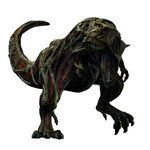


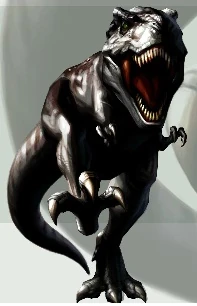


![[IMG]](https://i0.wp.com/40.media.tumblr.com/60c775d90e46875164d54758a9a1a5d3/tumblr_nhxsg2Zg9O1stod31o1_1280.png)
![[IMG]](https://i0.wp.com/daneesaur.co.uk/wp-content/uploads/2014/08/dinos.jpg)




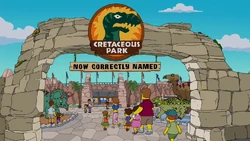


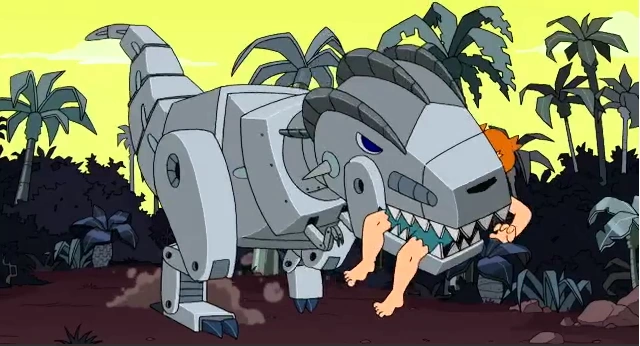

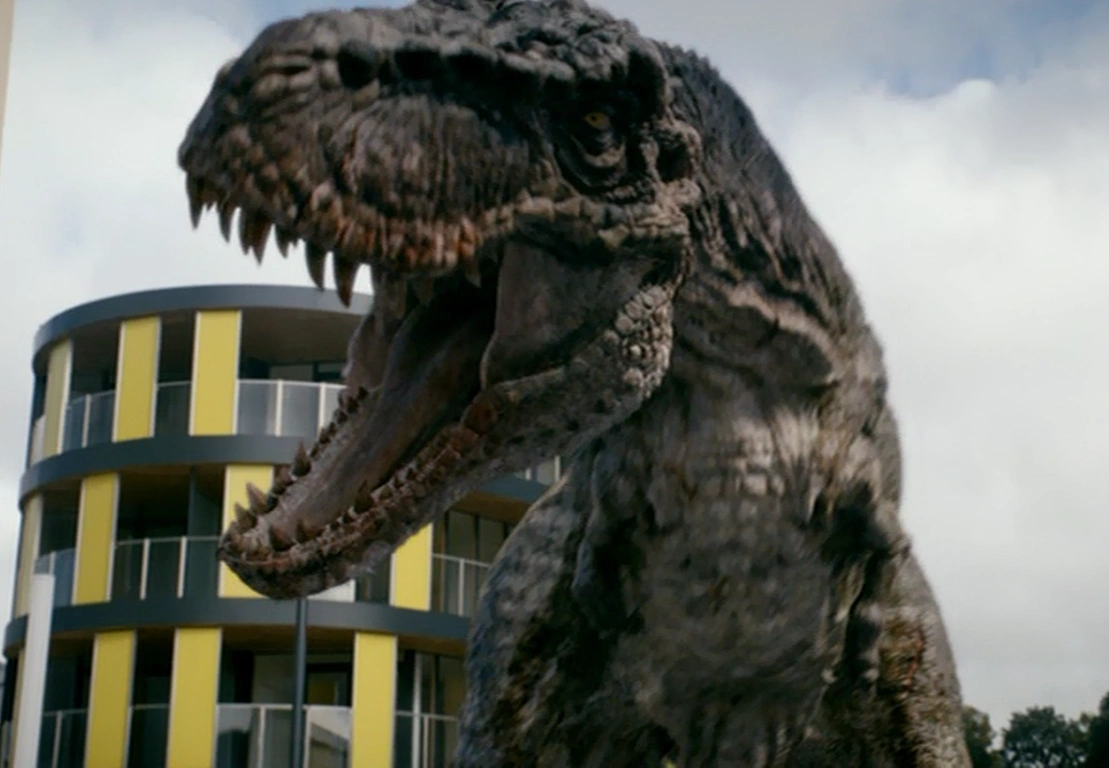
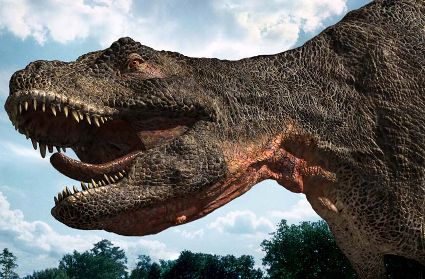


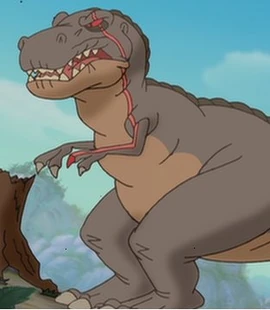
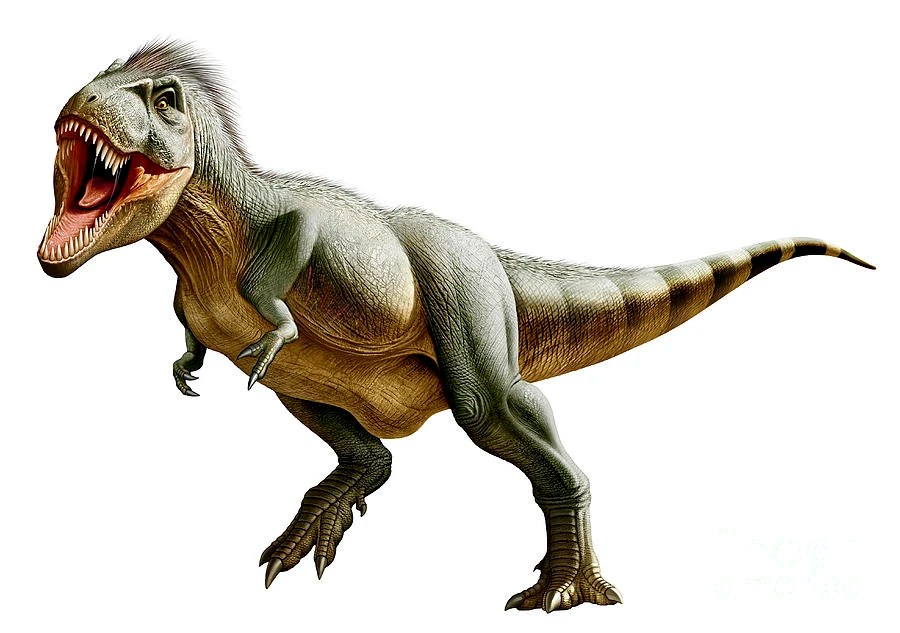


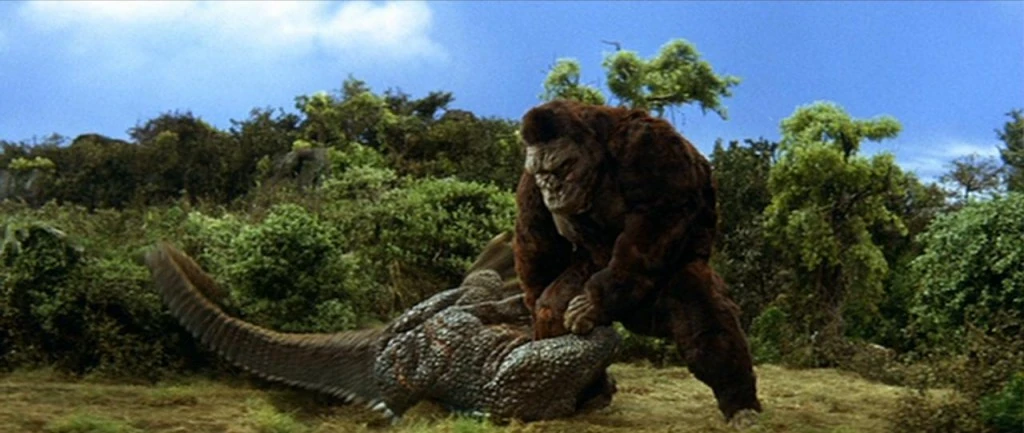


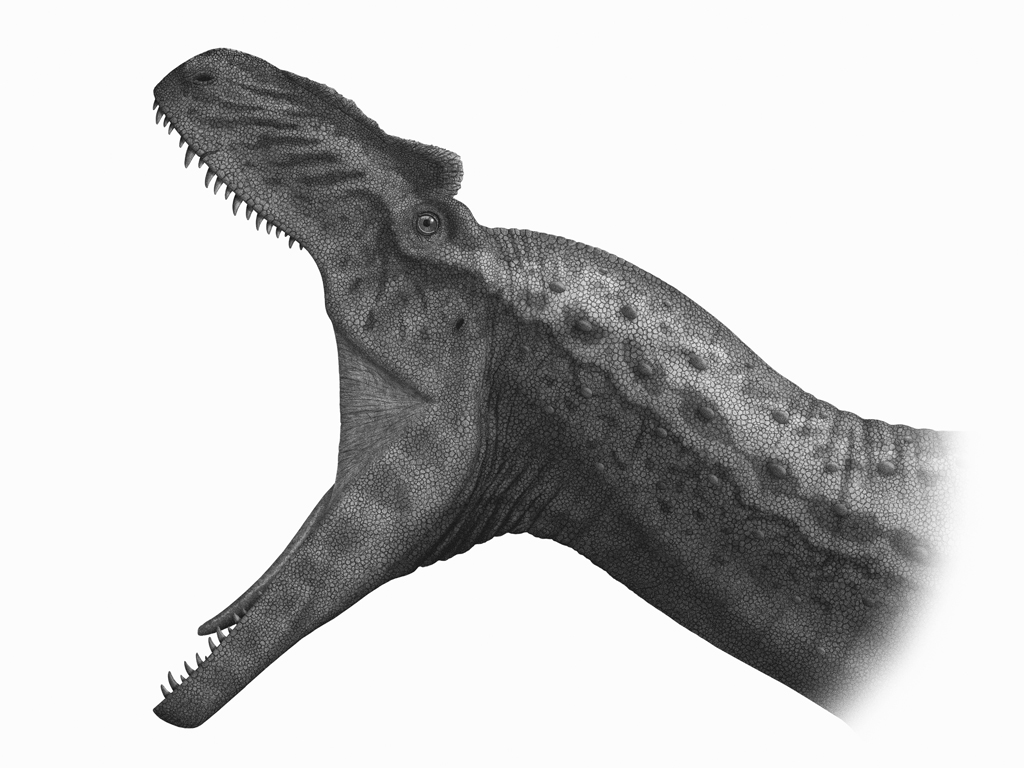

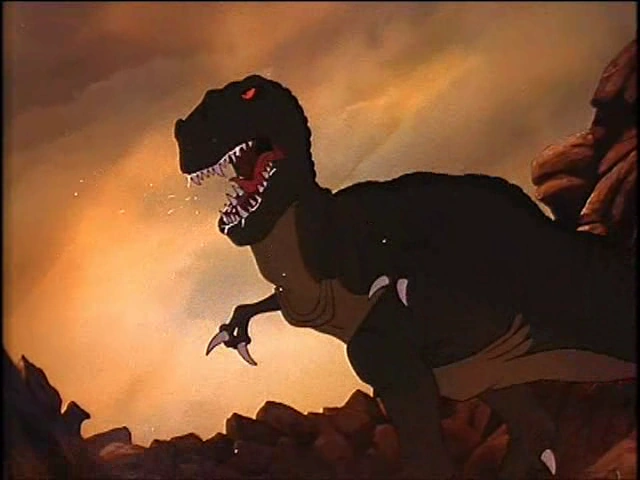


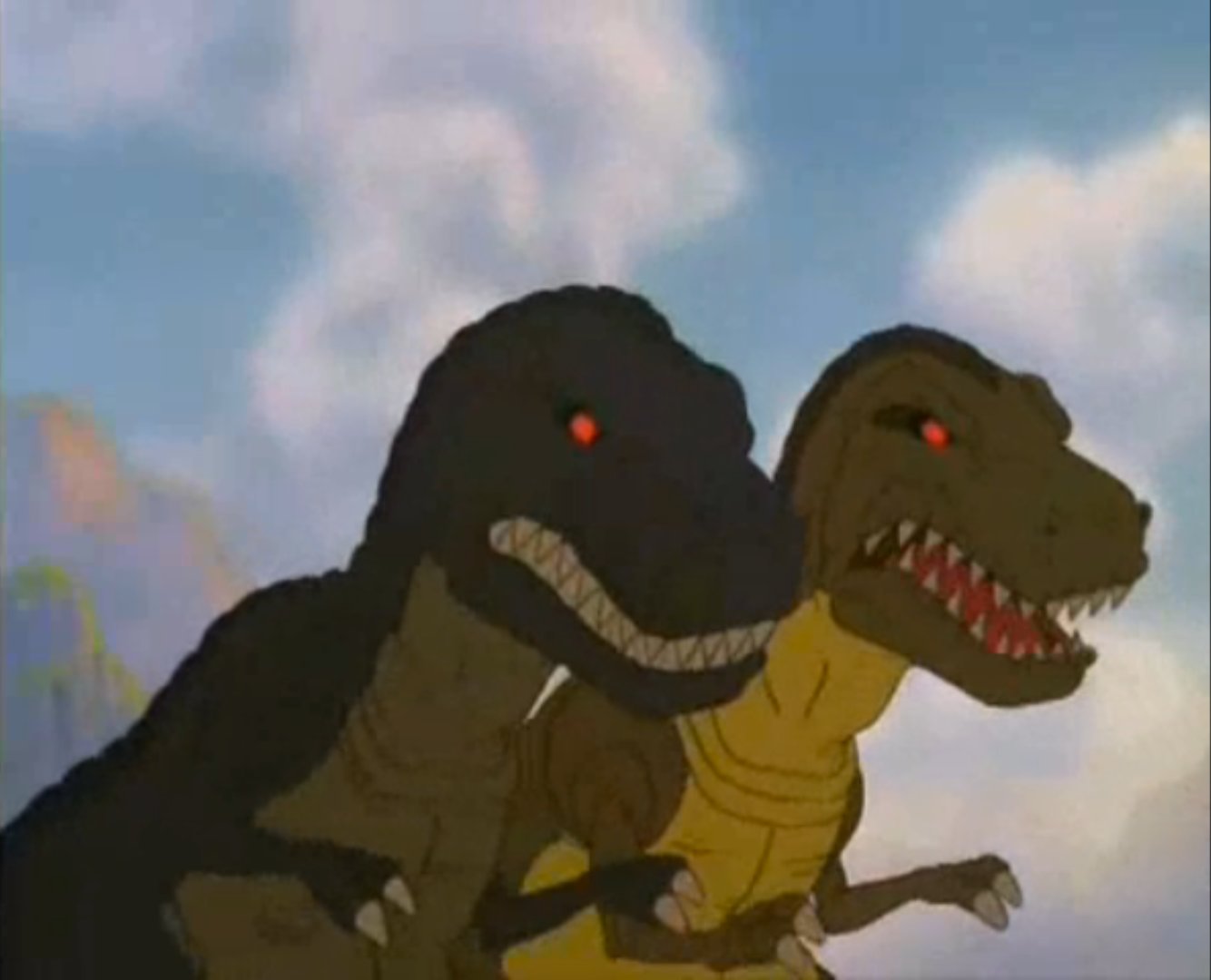


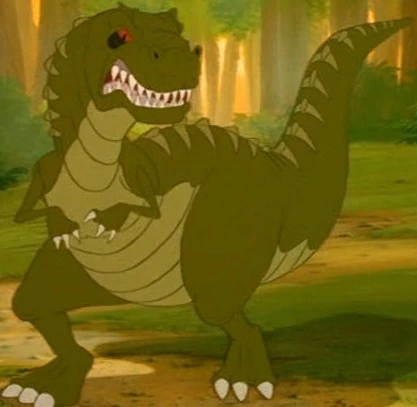


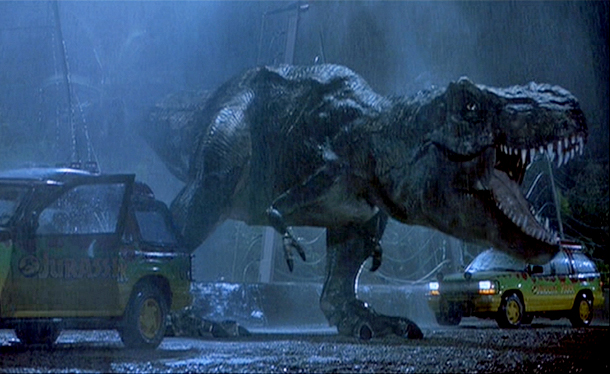


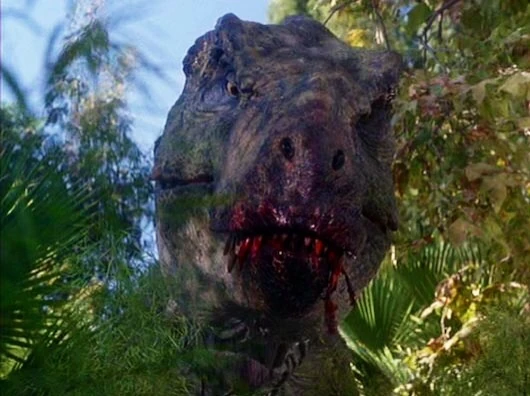


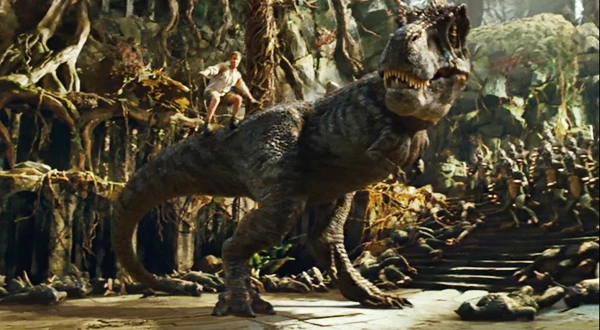


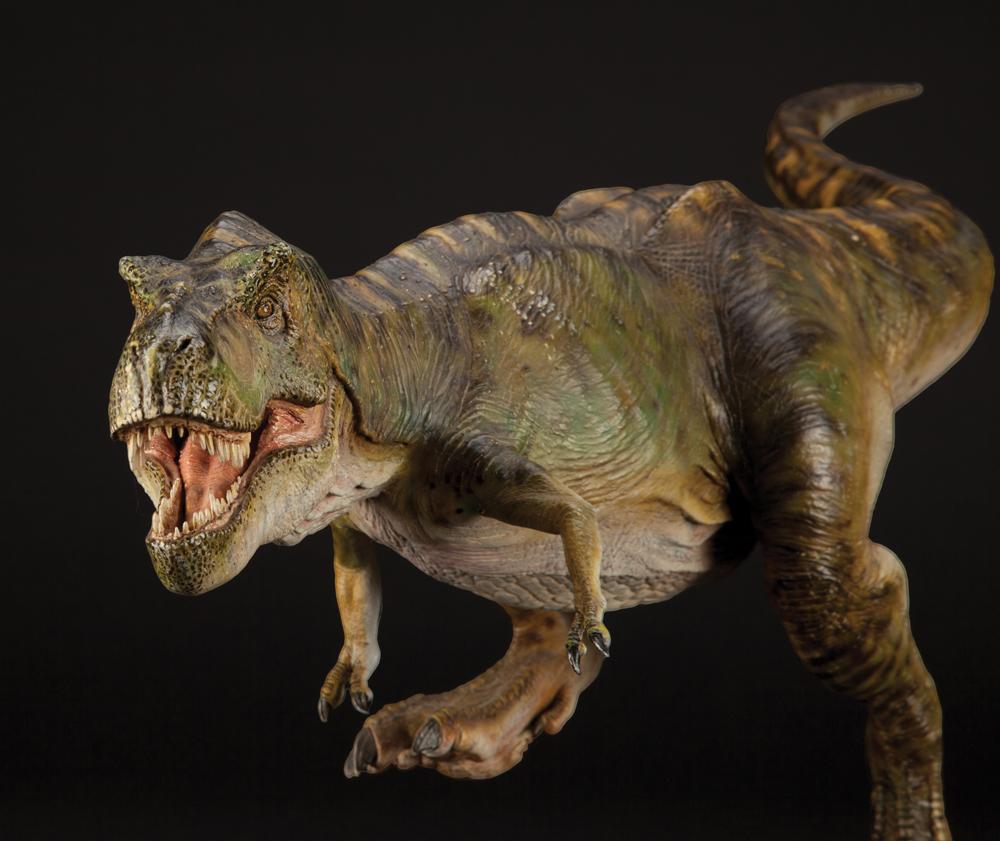


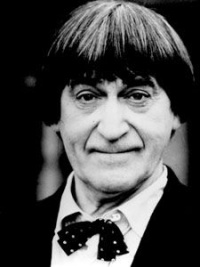


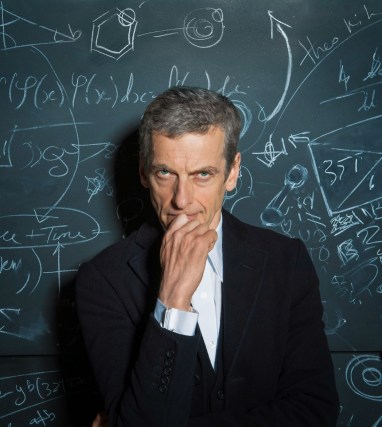


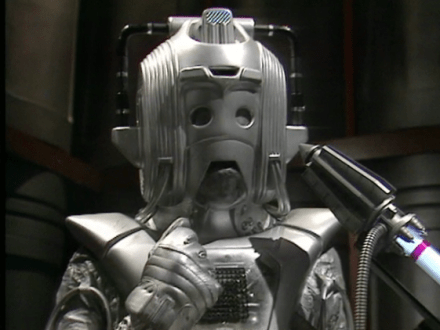


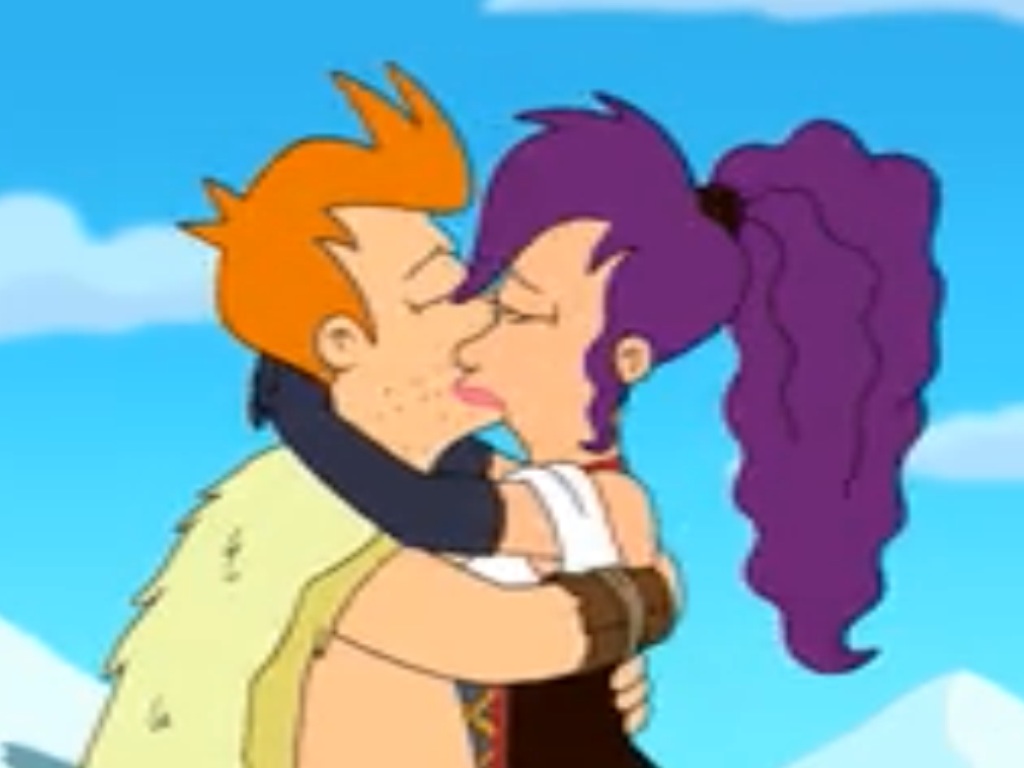


 burrunjorsramblesandbabbles