Doctor Omega is a 1903 science fiction novel by the French author Arnould Calopin. It revolves around a mysterious alien professor who goes under the alias of Doctor Omega. The Doctors real name and identity are never revealed throughout the book and not much of his backstory is given either. All we do know is that Doctor Omega and his grand daughter Suzane are in exile from their people. Though very few details about Doctor Omega’s race are given in the story, we do know that they have discovered and mastered time travel.
Doctor Omega (who is often just referred to as the Doctor) settles in France where he attempts to build a new type of time machine from a strange type of metal called Stellite. His experiments soon draw the attention of his neighbour, the creative and sensitive Denis Borel.
Omega is only too happy to let Denis in on his experiments, and after the time vessel which the Doctor christens “The Cosmos” is built. He invites Denis and a large hulking man named Fred to join him on an adventure into the past.
The three travel to Mars thousands of years before its destruction, landing straight in the middle of the Martian ocean. There they encounter gigantic whale like monsters and a race of hostile, reptillian Mermen. They soon reach the land where they encounter giant, Elephantine monsters, hostile gnome like aliens and intelligent, but poisonous plant life.
Travelling further inward they encounter a valley full of giant snake monsters and large bat like humanoids. Eventually the trio reach an advanced city of gnome like creatures who abduct the Doctor and his companions. The Gnomes, who are at war with a similar race, discover that the Stellite used to build the Cosmos is capable of deflecting their enemies weapons and cannibalise the ship to create shields to win the war.
Omega and the others are kept prisoner even after the war by the victorious Martian race, but with help from a friendly Martian named Tiziraou; Omega is able to contact his grand daughter Suzane, using a space time telegraph. Suzane in turn is able to contact another renegade of their people, Professor Helvetius who subsequently rescues the three time travellers from Mars in a craft similar to the Cosmos.
The ending of the story sees Doctor Omega build another space time machine to go on more adventures with Denis, Fred and Tiziraou who they take on as a companion.
When it was first released Doctor Omega proved to be a huge hit, but it quickly fell into obscurity for 100 years. Eventually in 2003 the book would be rediscovered, re-released and translated into English for the first time for Doctor Who’s 40th anniversary. This edition included more direct references to Doctor Who (including Sonic Screwdrivers.) As well as a foreward by Terrance Dicks, a former Doctor Who script editor.
Doctor Omega would develop something of a small cult following and more stories featuring the character would be released for Black Coated Press. These stories which featured the good Doctor meeting other famous fictional characters would eventually be collected as an anthology book called Doctor Omega and the Shadowmen.
Naturally many fans and critics have considered Doctor Omega as a possible influence on Doctor Who. The similarities are quite staggering. Even physically Doctor Omega resembles the first Doctor, as played by William Hartnell. Both have long flowing white hair, a stick, wear a long flowing cape etc.
Ultimately however Doctor Omega has never been mentioned as an influence on Doctor Who by anyone involved in the creation of the series and the book was never released outside of France prior to 2003, so it seems most likely the similarities between the two characters is coincidental.
Nevertheless Doctor Omega can be seen as Doctor Who’s literary predecessor regardless and as a result I think people have tended to overlook the character of Doctor Omega. Naturally when people think of writing about a time travelling alien, then its Doctor Who they go to. Still there is value in the Doctor Omega story in its own right and now I think the time is better than ever for the character to step out of the shadows, as now Doctor Omega can fill the void left by the absence of trueDoctor Who.
For the past few years Doctor Who has gone down a very bad path. From the Peter Capaldi era onwards it began to pander to the regressive left. Now I myself would identify as left wing. I support the Welfare state, the NHS, legalising cannabis, I’m pro choice and I support gay marriage and gay couples rights to adopt children.
That said however I feel the modern day left has been taken over by upper middle class career socialists who simply want to use left wing politics to further their own careers, or foster their own prejudices against white men, and white people in general.
I’m all for stronger roles for women and minorities, but the regressive left it seems care more about attacking or replacing roles for men than they do in building women up.
If you are interested I have written many articles which cover the sad decline of the revival of Doctor Who due to pandering to the regressive left on this blog, but I don’t want to get bogged down in this argument again. If you disgaree with me, please take it to the articles I have written on the subject.
Whilst the Peter Capaldi and Jodie Whittaker eras represent the nadir of the entire franchise. If we’re being honest the 21st century version of Doctor Who was never the same show as the original, 1963-1989 version.
The original classic era Doctor Who was primarily a sci fi adventure show, with a focus on horror, monsters, high sci fi concepts, and derring do. The revival was always more of a soap opera series with a focus on romance, shipping, and making its audience cry at sad moments.
There hasn’t been a series in the style of the original since it finished in 1989. Some critics and so called Doctor Who fans would say that Classic Who is dated and therefore couldn’t be made for modern audiences.
Personally I think that is utter nonsense. Classic Who looks dated only because of its low budget effects and sets. Many of the ideas and concepts in the Classic series were actually decades ahead of their time, such as the Matrix in The Deadly Assassin, or the Cybermen who were complete precursors to the Borg.
The Classic era still holds up and always has. In 2017, Classic Doctor Who was the best selling science fiction series on DVD and Blue Ray in the world. (It was also the third best selling cult series on DVD and Blue Ray.)
If a series done in the style of Classic Who were released on a streaming service (which could allow for the stories to be longer) and had a decent budget then I think would be a hit. It would fill a void for both mainstream horror (which classic who often did) and sci fi.
Now ideally I’d love for this series to be Doctor Who, but sadly in the current climate that is not going to happen. During the 90s when the show was off the air, Doctor Who was taken over by a fandom clique, who are often referred to as the Fitzroy Crowd (as they all used to congregate at the Fitzroy club.) The Fitzroy crowd includes the likes of Russell T Davies, Steven Moffat, Chris Chibnall, Nicholas Briggs and Paul Cornell.
Almost all of the most prominent Doctor Who fiction of the past 20 years has been produced or at least overseen by members of the Fitzroy Crowd. Whenever one of the clique steps down from producing the main series, they make sure to hand it over to another member of the clique (as can be seen with the likes of Russell T Davies handing the show over to Steven Moffat, who then handed it over to Chris Chibnall.) All of the spin off material is also produced and written by this fandom incrowd too. The books, the comics and the audios etc.
The Fitzroy crowd have made it clear in the past that they have contempt for the style of the original. Though they do have a nostalgic affection for the classic series from when they were children, ultimately they don’t want to produce a similar series.
Examples of the Fitzroy crowd’s “love” for the original series.
At the same time the identitarians who hold the Doctor Who franchise in an iron grip, have no real love for the Classic era either. Take a look at the reviews from the new Time Team in Doctor Who magazine made up of notorious SJWs like Claudia Boleyn and Christel Dee. They regularly slag off the original series for supposedly being sexist, dated and gimmicky (which it never was.) All they care about is in turning the show into a propaganda piece for their own agendas.
Since these people hold all the sway at the BBC, don’t expect to see anything even resembling Classic Who for a long while.
Doctor Omega meanwhile is a public domain character. He is thankfully not in the shackles of the BBC or the Fitzroy crowd and you could do all the same types of adventures with Doctor Omega as you could with the classic era Doctor.
Omega has a machine that can travel to any planet at any point in time. Omega is a mysterious alien with a love of exploration. Omega can be caring and morally righteous, yet also quite ruthless too. He is both a level headed, practical, grandfatherly figure; and a fool hardy, reckless adventurer. All you’d have to change would be the name from the Doctor to Doctor Omega. (Even then Omega is often referred to as just the Doctor too.)
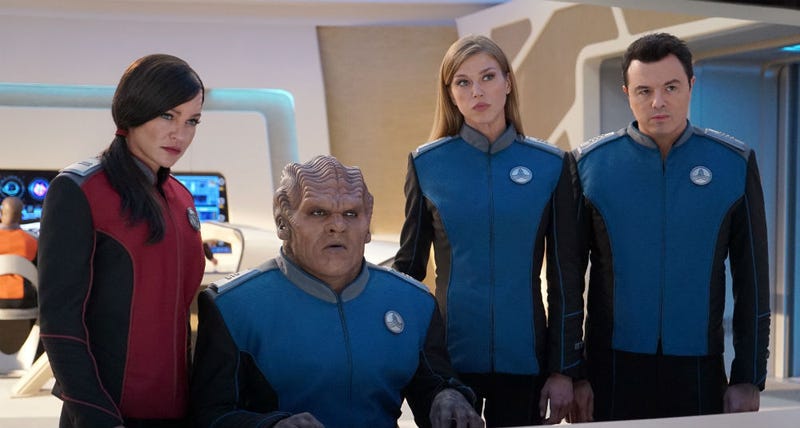
The Doctor Omega tv series would be to Doctor Who what The Orville was to Star Trek. The Star Trek franchise went through a similar bad patch to Doctor Who in the late 00s-late 10s. Like DW the focus of the Trek franchise was changed in an ill guided attempt to pander to modern audiences.
The original Trek series were always more philosophical, thoughtful and nuanced, whilst the J J Abrams trilogy of films were just generic action movies. (J J Abrams much like the Fitzroy Crowd expressed a contempt for the original Star Trek series, finding it slow and boring.)
Star Trek Discovery meanwhile, the most recent Trek television series was taken over by the same cancerous ideology as the Moffat and Chibnall era’s of Doctor Who. They also showed the same level of disrespect for established canon and beloved characters. (Just look at what Discovery and Moffat era Who did to the Master and Spock for instance.)
Fortunately however Seth McFarlane, the creator of Family Guy would produce (and star) in a series called The Orville, which was far closer to the original Star Trek series in tone and style. The Orville featured the same more thoughtful and nuanced stories of the original Star Trek series, as well as characters and concepts that were closer to the original Star Trek series.
The Orville is not a Star Trek series, but it has a similar premise of a future where humanity has become part of a galactic federation of planets, and a crew of humans and aliens go exploring on a ship through the universe.
Whilst critics were slow to warm to The Orville. It proved a huge hit with viewers and Star Trek fans and has recently been renewed for a third series.
The Orville has not only filled the Star Trek shaped hole in the television landscape. It has also shown that the Trek formula can be updated for modern audiences. You don’t need to dumb Star Trek down to being a generic action blockbuster like Abrams did. With a decent budget and good scripts you don’t even have to change the look of the show, let alone the type of series it actually is.
Much like with Doctor Who, there was no way the current idealogues in charge of the actual Star Trek brand were ever going to produce a show or film similar to proper Star Trek. The Orville was the only way we were ever going to see proper Star Trek. Furthermore its success will now show potential future producers and holders of the Trek brand that a profit can be made from actually updating the original, as opposed to tossing everything about the original out and just cashing in on the name.
Doctor Omega, the series could do the same for Doctor Who. Give us a chance to see proper Classic Who style adventures, whilst showing people that the old style, if updated in practical ways can work which might end the Fitzroy Crowd’s strangle hold over the series.
Doctor Omega would actually be an easier sell than The Orville which was accused of being derivative of Star Trek at first. No one could accuse Doctor Omega of ripping off Doctor Who as he debuted about 60 years earlier!
Of course I wouldn’t want Doctor Omega to remake any classic era stories. It would be new adventures just in a similar style. You could invent a rogues gallery for Doctor Omega similar to the Doctors, the same way that the Krill in The Orville fill a similar role to the Klingons and the Romulans in Star Trek as well, but again you’d give them their own backstories and characteristics.
Personally I think it might be interesting to adapt monsters from other Classic sci fi stories in the public domain and have them fill the role of the Doctors colourful rogues gallery. Doctor Omega has been used for crossover stories in the past, so it would be continuing the tradition. Just as Doctor Omega was the predecessor for Doctor Who, then so were many classic literary monsters predecessors for the Doctor’s enemies.
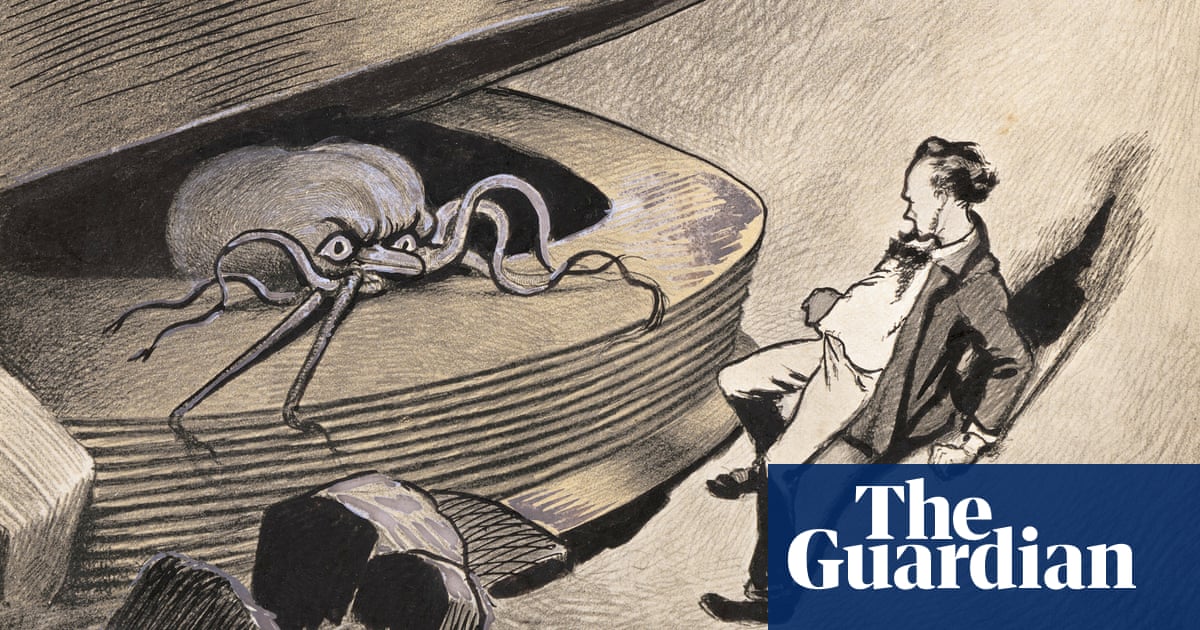
For instance the Martians from H.G. Wells War of the Worlds could take the place of the Daleks in the Doctor Omega series.
The Martians who invade the earth in Wells classic novel were one of many key inspirations on the Daleks. Both are hideous Octopus monsters who house themselves inside tank like robots. Both speak in electronic, but hysterical voices. Both are pitiless conquerors devoid of any concept of pity or remorse and both come from a dying, barren world.
The Daleks and Wells Martians also serve as metaphors for xenophobia and race hatred, chemical warfare, man’s desturctive effect on the environment, and technology moving inward and turning people into machine like creatures.
The Martians could also have quite a close personal connection to the Doctor too. The first Doctor Omega book, (which presumably would be adapted as the first story.) Sees the Doctor and his companions reluctantly help a ruthless race of Martians defeat their enemies. The Martians are described by one of their own, Tiziarou as a dying race who have become so dependent on technology they could never cope without it.
The series would reveal that the Martians Omega helped would eventually become Wells Martians. Thanks to his help they would only defeat their enemies, but all other races on Mars, devastating the planet before moving to earth.
In a later story of the series (perhaps the first season finale?) Omega would return to earth where he would discover that the monsters had invaded in his absence and devastated the planet before being defeated by bacteria.
The Doctor and his companions would then be captured by the forces of earth who would force him to build a war ship to use against the Martians, before they could launch a counter strike.
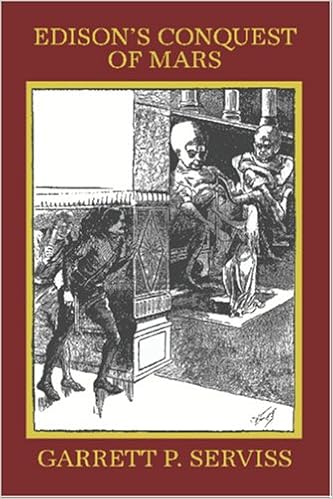
This story would be an adaptation of both War of the Worlds (which would unfold via flashback) and Edison’s Conquest of Mars. Edison’s Conquest of Mars was an unofficial sequel novel to the original War of the Worlds which saw Thomas Edison build a war ship from the ruins of the Martian technology left over after their invasion, to launch an attack on the Martians.
The novel sadly doesn’t hold up that well to contemporary audiences. It has some inspired ideas, but overall it reads as nothing more than a puff piece for Edison.
Replacing Edison with an Omega who is reluctantly forced to lead a war could make the story more interesting and the conflict more tense. The ending of “Omega’s Conquest of Mars” would see the last of the Martians flee to another world (perhaps Mor-Tax in honour of the War of the Worlds tv series.) Where they would build up their forces, eventually becoming a major galactic power similar to the Daleks.
From there you could use the Martians in all of the same ways you could the Daleks. You could do stories involving the monsters conquering other planets, mastering time travel, trying to invade the earth again etc. You could even incoporate elements of later adaptations of War of the Worlds too into the monsters characters and design as they alter their bodies and technology throughout history.
Doctor Omega would always feel tremendous guilt every time he met the Martians, knowing that it was his own innocent trip to the past which caused the monsters to become among the dominant life forms in the universe, making their confrontations more interesting.
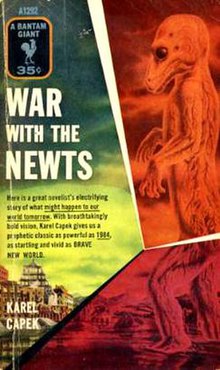
For the Silurians and the Sea Devils meanwhile, the Newts from Karel Capek’s classic novel could take their place.
War with the Newts is a classic sci fi novel that sees mankind discover a race of ocean dwelling reptile like creatures who they enslave and exploit, but who eventually turn the tables on humanity. The creatures bare a slight similarity to the Sea Devils from Doctor Who, in that both are lizard like humanoids who are unable to share the planet with humanity and both serve as a metaphor for xenophobia and race hatred. At one point the Newts are even referred to as “Sea Devils!”
The Newts could easily fulfil the Sea Devils and Silurians role of frightening looking reptile men, who are actually sympathetic, intelligent creatures who have a right to live on our planet too.
The Great Intelligence’s place could be taken by The Mad Mind. The Mad Mind is an unseen monster from The City and the Stars by Arthur C Clarke. The Mad Mind is a disembodied intellect created to rule the galaxy, that eventually devastates it. The creature is imprisoned, but could easily escape to wreak more havoc in a Doctor Omega series.
The creature could possess people and serve as a more distant, alien enemy that the Doctor couldn’t fight, or even defeat as it has no form just like the Great Intelligence. An adaptation of The City and the Stars would also be an excellent adventure too. Another bonus about using these monsters is that it could bring more attention to obscurer sci fi stories and novels.
The Cybermen could be replaced by the robots from Karel Capek’s R.U.R play. The robots in this play though not greatly resembling the Cybermen follow a similar theme of mans own technology turning in on him. The robots themselves could also fulfil the role of being giant robotic creatures.
Of course it would be hard to incorporate War of the Worlds, War of the Newts and R.U.R into one timeline, but it could be done.
War of the Newts would take place after War of the Worlds. Humanity might ironically use the Martians technology to overthrow the Newts and enslave them. The humans would then overthrow the Newts after they rebelled and took us over (which happens in the book) with the robots from R.U.R who would then overthrow humanity, forcing the humans into an alliance with the Newts to reclaim the planet. The last of the robots would then be forced to flee into space where they would settle on a far away planet and build up an empire from there. (This could serve as a problem in future stories for when humanity meets other races, as humanity would perhaps be known and hated all over the galaxy for creating a monster race that went on to slaughter hundreds of worlds.)
For the Master meanwhile, Doctor Omega’s friend Professor Helvetius could take his place. Helvetius could serve as an ally for the Doctor in several stories who we gradually see descend into darkness and who the Doctor is forced to fight, leading to their feud.
The iconic British comic book character, Dan Dare meanwhile could serve as a Brigadier type character for Doctor Omega. He has a similar, stiff upper lip attitude and even a similar look. Dan’s time would have to come after the Newts and humanity reclaimed the planet and would be depicted as a golden age for mankind. The inclusion of Dan Dare would also bring in his enemies such as the famous Mekon and the Treens.
Captain Dan, Digby, Professor Peabody and Spacefleet could easily be Doctor Omega’s version of the Brigadier, Benton, Liz Shaw and UNIT.
Finally Doctor Omega could even be made to change his face too. I think it would be better to have it be something that only Omega can do however. You could have it that on an advanced planet Omega found a machinea that can allow you to live forever, as whenever you get too old it rebuilds your body into a younger form, but changes your appearance.
Doctor Omega would have stolen it, as he felt that one lifetime wouldn’t be enough for him to explore the wonders of even one galaxy. Every time the Doctor got old or was wounded he would use the machine to rebuild himself and from a real world perspective change actor.
With these ideas you could essentially produce a Doctor Who expy series, except that the characters and ideas in this series came before Doctor Who! You could utilise all the great things about the brand whilst being free of the tyranny of the BBC, the Fitzroy Crowd and the Regressive left.
Of course ultimately I wouldn’t want Doctor Omega to replace Doctor Who completely. In a few decades time a proper version of Doctor Who could easily return, but until then Doctor Omega could give us a proper Doctor Who series. Doctor Omega would also be the only way to ensure that the classic style is updated as currently the people in charge of the brand have no interest in reviving the true series.
As for who I would cast? My choices would be the same as they would for a proper Doctor Who series.
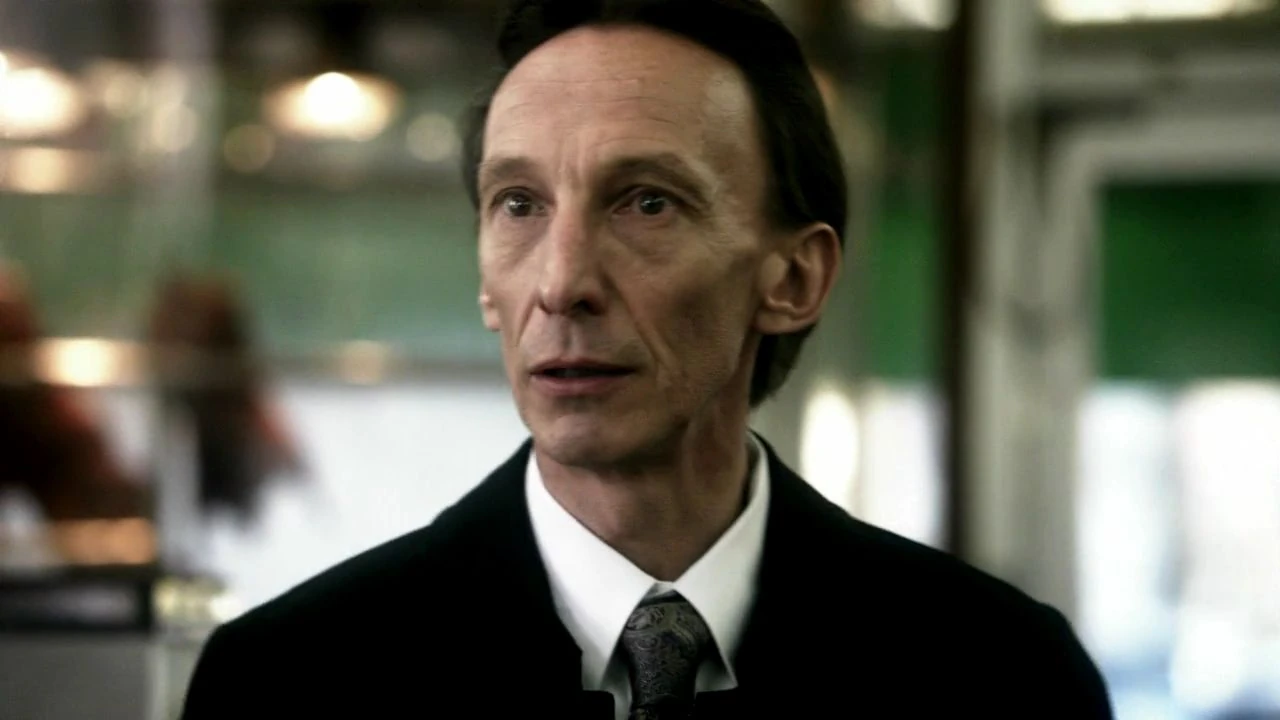
Julian Richings, a British actor best known for playing Death in Supernatural would be a perfect choice for Doctor Omega. He looks somewhat like the character and would have the necessary authority and gravitas to pull it off.
Dana Delorenzo of course would be a perfect choice for Suzane. Personally I’d replace Fred with Suzane as Doctor Omega’s first companion. Fred doesn’t really have any personality, and again I’m for having more roles for women as long as it’s not designed just to take a role away from a man. Suzane is already a character in the novel, and ultimately Fred is just an ordinary man with no backstory, whilst Suzane has a greater link to Omega and a mysterious origin of her own which could make for a better dynamic. Dana could bring a lot to the character and make her a stronger, more proactive character than the Susan of Classic Who.
Finally Wentworth Miller I think would be good for Denis. Miller is a charismatic actor best known for his starring roles in Prison Break and Legends of Tomorrow. I think Miller would be a good choice for Denis as in real life, Miller is somewhat more sensitive and thoughtful than a lot of the characters he plays. Denis could give him a chance to show that side off more, yet at the same time Miller could make the character less of a wimp like the literary Denis and more of a vulnerable hero.
The first incarnation of Doctor Omega.
and his two companions
the more aggressive Suzane
and the sensitive and creative Denis Borel
Thanks for reading and let me know what you think below.
Recently I’ve noticed some strong similarities between two of my favourite horror franchises. The Evil Dead and Buffy the Vampire Slayer.
I’d go as far as to say that they are more comparable to each other than to any other franchise in terms of style, tone and premise as we will soon see.
Overview of Both Series
The Evil Dead franchise began with a low budget independent horror movie, called Within the Woods, directed by Sam Raimi and starring Bruce Campbell and Ellen Sandweiss.
The film revolved around a group of twenty somethings stumbling upon an old cabin in the woods, built next to an Indian grave yard. The spirits from the grave however soon possess one of the group, Bruce (played by Campbell), who goes on to pick off the others one by one. Though Ellen (played by Sandweiss), Bruce’s girlfriend is able to slay Bruce. The ending of the film shows that the spirits have survived and leaves her fate open as one of her possessed friends advances on her from behind.
Evil Dead 0.
The film proved to an unexpected success after being shown as a b-movie before a screening of The Rocky Horror Picture Show.
A few years later in 1982. Raimi would produce a remake, titled The Evil Dead which followed the same premise. Rather than being spirits from an Indian graveyard however. The monsters were Demons from hell, summoned by a book called the Necronomicon.
Bruce Campbell and Ellen Sandweiss also played brother and sister rather than lovers, and switched roles. Ellen’s character was now possessed by the Demons, whilst Bruce’s character, renamed Ash, became the final survivor.
The ending of Evil Dead similarly saw the last survivor, Ash, being attacked by the Demons after he believed he had banished them, leaving his fate open.
The film was a huge success, though it also proved to be extremely controversial due to its excessive gore. It was even banned in the United Kingdom.
A sequel would be produced in the late 80s, Evil Dead 2: Dead By Dawn, which has often been mistaken for a remake as it opens with Ash and his girlfriend Linda from the first movie arriving at the cabin and reading from the book. Linda is also played by a new actress. However it is still intended to be a sequel. Raimi and Campbell had intended to open Evil Dead 2 with a recap of the first film, but they couldn’t get the rights as it was owned by a different company. Instead they were forced to reshoot a recap of the first film.
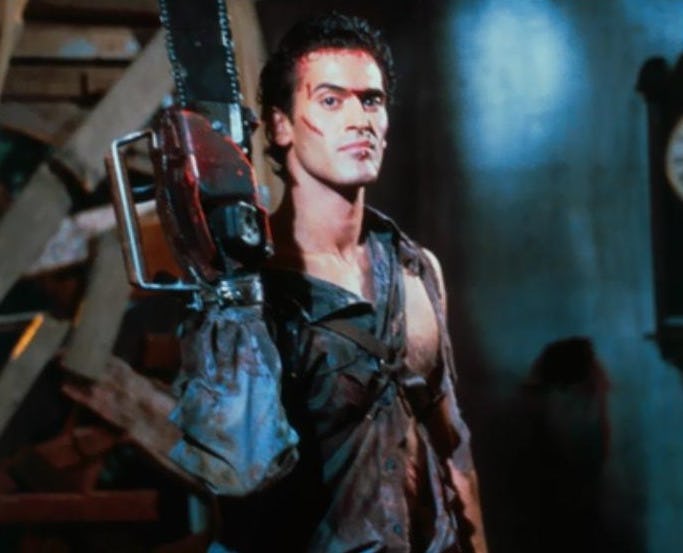
5 minutes into the second film, the Demons are shown to grab Ash just like the ending of the first Evil Dead. Everything from there on can be considered a sequel (and would later be by the series Ash Vs Evil Dead.)
Evil Dead 2 sees the owner of the cabin Raymond Knowby’s daughter, Annie arrive at the house. Though initially believing Ash killed her parents, she later discovers the truth when her demon possessed mother Henrietta returns. Ash and Annie are able to send the Demons back to hell using the Necronomicon, though sadly Annie is killed before she can close the portal and Ash is also sucked through.
The ending reveals that the portal actually sent both the Demons and Ash to the medevil era.
Several years later another sequel would be released titled Army of Darkness which would see Ash battle the forces of the Necronomicon in the 12th century. At the end of the film Ash, after defeating the Demons is given a magic potion that will send him back to his home era.
From here there are two endings. The original intended ending from Sam Raimi, and the more family friendly ending for the theatrical cut. (Though interestingly enough neither of these endings would be regarded as canonical by subsequent entries in the series.)
Original ending.
Theatrical ending.
Over the course of the next two decades. Ash would return in various comic books and video games, including several crossover series which would see Ash encounter such characters as Xena the Warrior Princess, Jason Vorhees, Freddy Krueger and even several Marvel superheroes.
There was also a remake of Evil Dead in 2013, featuring a new female hero. The remake though successful, was more of a serious horror movie like the original, than the later entries which tended to blend humour and horror.
Two years later in 2015, Bruce Campbell finally made a full return to the role in the series Ash vs Evil Dead. This series saw Ash come out of retirement (after accidentally unleashing the Deadites again) and be forced to work with two new Demon slayers, Kelly Maxwell (played by Dana Delorenzo), and Pablo (played by Ray Santiago). The series also expanded on the Demon lore, revealing who created the Necronimcon and introduced the character of Ruby, played by Lucy Lawless (best known for her role as Xena the Warrior Princess.)
Running for 3 series, Ash vs Evil Dead proved to be a huge critical success and brought even greater attention to the franchise. Sadly however after its conclusion in 2018, Bruce Campbell announced that he intended to retire the character of Ash, seemingly bringing an end to the franchise for good.
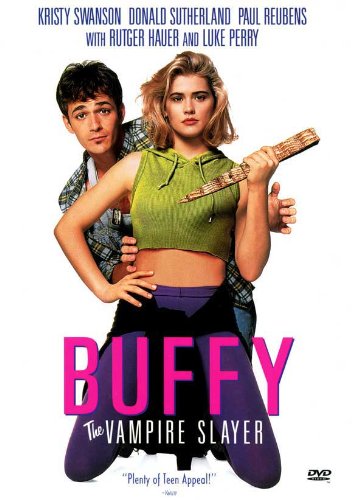
Buffy the Vampire Slayer originally began as a film in 1992, starring Kristy Swanson as Buffy. Its premise revolved around one girl in every generation, known as the Slayer being granted the strength and power to hunt Vampires. The latest Slayer, Buffy Summers, is approached by Merrick, a member of an organisation known as the Watchers, to combat the ancient Vampire king Lothos (played by Rutger Hauer.)
Merrick is killed by Lothos, who later launches an attack on Buffy’s school. Ultimately however unlike all of the Slayers before her. Buffy is able to slay Lothos by going against the rules of the Watchers and doing things her own way.
The Buffy movie was a moderate success, though Joss Whedon was reportedly unhappy with it. He felt that they toned down the horror aspects, and theme of female empowerment from his original script too much.
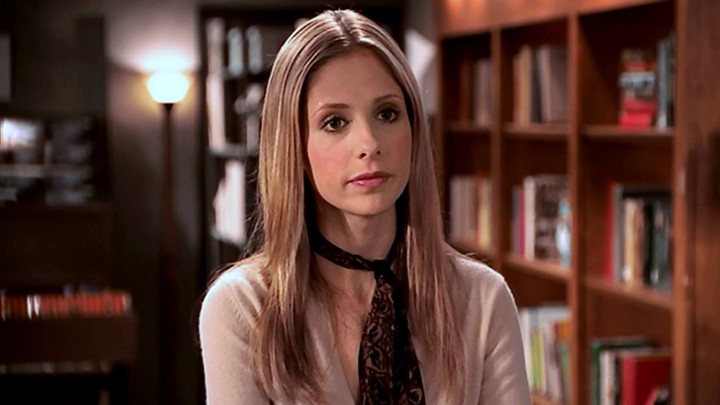
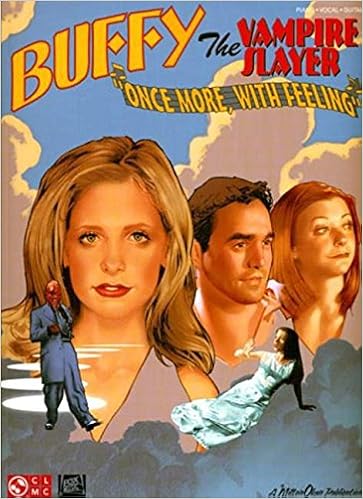
5 years later Whedon would revive the project as a series. The series, which starred Sarah Michelle Gellar as Buffy, was a loose sequel to the original film. It takes place several months later and shows Buffy moving to Sunnydale, desperate to move on with her life, only to be approached by another Watcher, Rupert Giles (played by Anthony Stewart Head.)
Buffy at first refuses to continue on as the slayer after the events of the first film, only to be forced into action when her new friends Willow (played by Alyson Hannigan) and Xander (played by Nicholas Brendon) are attacked by Vampires. Buffy later discovers that Sunnydale is built over a portal to a hell dimension which makes it a magnet for not only Vampires, but Demons, Werewolves, Witches and other supernatural creatures.
Buffy’s main adversary was initially The Master, an ancient Vampire king, buried below Sunnydale who sought to open the Hellmouth and allow the Demons trapped within to emerge back into our world and conquer humanity.
Over the course of the series Buffy would go on to battle various other monsters, such as Demons, Ghosts, Werewolves, Zombies, Witches, Gods, Robots and even Aliens from outer space! The core cast would also expand over the course of the series too.
Arguably the two most significant supporting character in the series, outside of Buffy’s original three friends, were Buffy’s two love interests. The Vampires, Angel and Spike (played by David Boreanaz and James Marsters.)
Angel was introduced in the shows first series initially as a mystery man who gave Buffy cryptic advice on Vampires. Part way through season 1 however Angel was revealed to be a Vampire, cursed with a human soul, and therefore capable of feeling remorse. Angel and Buffy would fall in love in season 2, though later that year Angel would lose his soul. Reverting to the evil Angelus he had been before. Angelus would serve as the main antagonist for the shows second season. After gaining his soul back at the end of season 2, Angel would later gain his own spin off series, simply titled Angel that would run for 5 seasons and become a major and influential cult hit in its own right.
Spike meanwhile initially began as an enemy of Buffy’s in season two and would continue to recur as a villain until season 4 when he was kidnapped by The Initiative. An organisation devoted to tracking down and experimenting on supernatural creatures. The Initiative implanted a chip in Spike’s brain that caused him pain every time he attempted to hurt someone, but not Demons, resulting in Spike becoming an unlikely ally of Buffy’s.
In season 5 Spike falls in love with Buffy, which leads to a destructive and abusive relationship between the Vampire and the Slayer, culminating in Spike’s attempt to rape her in season 6. Following this Spike would later win himself a soul and find redemption by sacrificing himself in the season finale of Buffy, before being resurrected as a regular for the final season of Angel.
The series was initially conceived as a “High School is hell” metaphor, but later series would depict Buffy in college and as a young adult. Outside of her battles with the undead, the series also saw Buffy cope with everyday personal problems such as her mother dying and subsequently being forced to raise her little sister Dawn.
At the end of the series. Buffy, much like in the original film, goes against the Slayer rules, and has Willow (who over the course of the series becomes a powerful Witch) cast a massive spell which turns every potential Slayer into a Slayer.
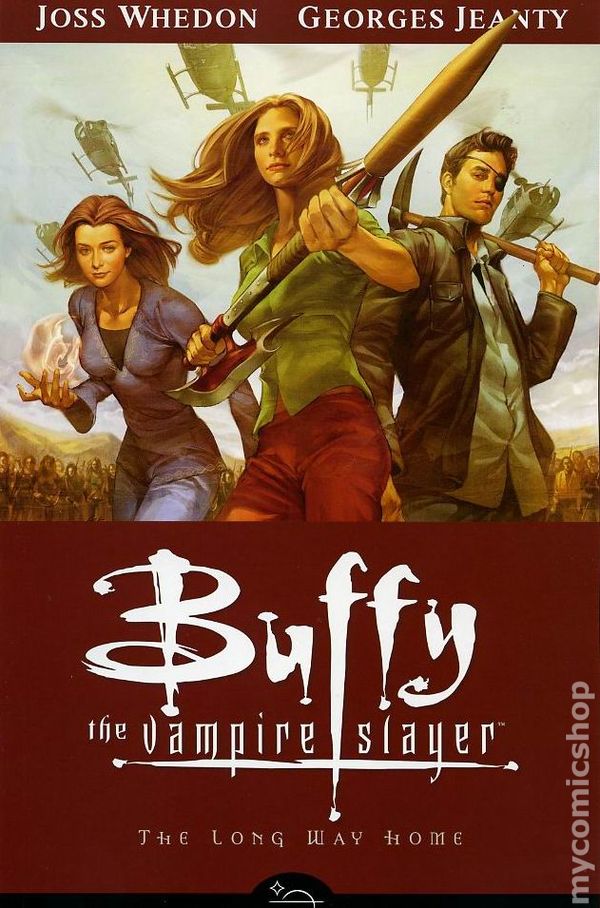
Buffy finished in 2003 after 7 season, whilst Angel finished the following year in 2004. 3 years later however, both Buffy and Angel’s stories were continued via two comic book series which are still going as of the writing of this article.
The official comic book continuation of Buffy and Angel which is said to be canon according to Buffy creator Joss Whedon.
In 2018, Joss Whedon announced that he would be remaking Buffy, 15 years after the original finished its run. No details are known about the casting or plot at present.
Both Buffy and Evil Dead would go onto be very influential on subsequent horror films and television series, with the characters of Ash and Buffy being among the most iconic horror characters. Edgar Wright, the director of Shaun of the Dead has cited Evil Dead 2 as one of his biggest influences, as has Eric Kripke, the creator of Supernatural. The makers of both Charmed and the 21st century version of Doctor Who meanwhile have both credited Buffy with inspiring and paving the way for them.
The stars of both franchises such as James Marsters, Bruce Campbell, Ted Raimi and Eliza Dushku have also gone on to land major and leading roles in various other cult series and films as a result of both franchises popularity.
Evil Dead’s Influence on Buffy
Joss Whedon, the creator of Buffy and Angel is a fan of the Evil Dead franchise, having cited it as a big influence.
There have even been a few direct references to Evil Dead in Buffy, such as the First Evil shouting “DEAD BY SUNRISE!” in an homage to “DEAD BY DAWN” the tagline of Evil Dead 2, and a phrase that is frequently shouted by the Demons of the series. In the episode Crush, Xander also refers to Spike as “The Evil Dead.”
Whedon’s later horror movie, Cabin in the Woods followed the same basic premise as Evil Dead. It sees a group of twenty somethings become lost in a cabin in the woods, and after reading from a book, they end up unleashing ancient Lovecraftian Demons into the world. There is even a reference to the Deadites, the main villains from the Evil Dead franchise too.
With this in mind it is likely that at least some of the similarities between both franchises were intentional. There’s nothing wrong with this. All works of fiction take from others (including Evil Dead which borrowed from everything from The Three Stooges to HP Lovecraft.) Nothing is truly original, but still I think its fair to say that the Evil Dead in many ways was a predecessor to Buffy.
Interestingly enough however Bruce Campbell is a huge Buffy fan and has included a few references to it in his work too. In My Name is Bruce, Campbell’s fictionalized version of himself, who is called in to fight a Demon by one of his fans. Says after the Demon is seemingly slain. “Next time there is a Demon. Call that Buffy chick.”
Finally the season 2 episode of Ash vs Evil Dead called Delusion, where a Demon attempts to trick Ash into believing that the supernatural are all figments of his imagination, was inspired by the Buffy the Vampire Slayer episode, Normal Again, which featured a similar plot.
Similarities
Both Revolve Around A Reluctant Chosen One
Both Evil Dead and Buffy revolve around a hero who is chosen by the forces of good to fight Demons and monsters. Both are even regularly referred to as the chosen one.
Ironically however in both cases the chosen one is, on the surface at least. Not anybody’s ideal idea of a hero and is extremely reluctant to be a hero too.
Ash is shallow, lazy, unmotivated, arrogant, egocentric, and at times, somewhat lecherous.
Buffy meanwhile though not nearly as unsympathetic or unlikable as Ash, is still, in the original movie at least. Initially shown to be quite shallow, spoiled and vapid.
Both Buffy and Ash regularly quit being the chosen one for long periods at a time, such as at the end of season 1 of Ash vs Evil Dead, and the end of season 2 of Buffy. It would be unthinkable for another Vampire hunter character like Blade or Peter Cushing’s Van Helsing to quit.
Both Buffy and Ash also regularly screw things up, such as when Ash says the wrong words to release the Necronomicon in Army of Darkness, or when Buffy leads dozens of young girls to their deaths at the hands of Caleb.
Both are even responsible for unleashing a lot of the monsters they face. Ash unleashes the Demons in season 1 of Ash vs Evil Dead when he reads from the book to try and impress a girl, (whilst he’s stoned.) Buffy meanwhile is responsible for letting the Master go free in Prophecy Girl when she blunders head first into his base. In season 2, Buffy also inadvertently causes Angel to lose his soul. To be fair to Buffy in regards to Angelus, unlike Ash’s many screw up, she had absolutely no idea that Angel would lose his soul. Still to have the hero be responsible for letting the villain be free in any way is again not something that you could imagine with most other heroes.
Buffy and Ash’s flaws do sometimes make them come over as unsympathetic and selfish, but at other times they can make both characters seem more human, which is why both have such an enduring popularity.
Who wouldn’t react the way Buffy and Ash do a lot of the time? Imagine being told that you will have to spend the rest of your life fighting the most hideous, evil, bloodthirsty monsters. That you’ll never be able to have a family, or any kind of normal life again, and that the rest of your life will probably be very short. You’d have a right to be pissed off and ask why does all of this have to fall on your shoulders?
Unlike Blade or Peter Cushing who make it a mission to hunt the forces of darkness, Ash and Buffy are thrown into it unprepared.
Buffy and Ash in both cases later gather together a group of misfits, and unconventional heroes to help them battle the paranormal. The Ghost Beaters in Ash’s case, and the Scooby Gang in Buffys.
Buffy and Ash’s unconventional status as heroes is regularly used as a source of comedy and tragedy in both series, which leads to my next point.
They Both Mix Horror and Comedy
Evil Dead and Buffy are not the only examples of the horror and comedy genres being merged together.
However I think its fair to say that they represent arguably the most extreme examples. Most other horror comedies tend to settle on being largely one over the other.
Scary Movie for instance is totally a comedy with a horror movie setting, whilst An American Werewolf in London might have humorous, and witty moments, but it is still largely a horror movie.
With Buffy and Evil Dead however the comedy is so severe that it is more or less a complete parody, whilst the horror in both franchises represent some of the most extreme and gruesome in the history of the genre in either film or television.
The jump from comedy to horror is so large as you can see from the two clips above, if you were to watch both clips in isolation you probably wouldn’t believe they were from the same show!
Both Buffy and Evil Dead are able to merge both genres together so well because they make everything so extreme. The monsters are so over the top, even just in terms of appearance that the viewers are able to accept the horror and comedy being so over the top as a result.
Buffy Vampires vs The Deadites
The main villains of both franchises possess many strong similarities with one another in the following ways.
Origins
The gigantic, Lovecraftian, tentacled creators of the Vampires and the Deadites.
In both the Buffy and Evil Dead mythology, gigantic god like Demons were said to have ruled the earth many thousands of years before recorded history began. They made the earth a hell before being banished to another dimension, allowing the age of man to begin.
In Evil Dead’s case these Demons were referred to as the Dark Ones, whilst in Buffy they were referred to as the Old Ones. Both are based on the Old Ones from HP Lovecraft’s Cthulu mythos.
The Dark Ones were banished by one of their own, Ruby, through a book called the Necronomicon, which she hoped to use to control them. Ruby however was later stripped of her powers. In Buffy it is not known who banished the Old Ones, but the Demons were cast through a portal to hell, located beneath Sunnydale (which is referred to as the Hellmouth.)
The Vampires and the Deadites meanwhile are lesser creatures created by the Dark Ones/Old Ones to help them escape. The Deadites are released through the Necronomicon, and their goal in all three films, and the tv series, is to use the book to release the Dark Ones to overthrow humanity and bring hell on earth.
In Buffy meanwhile the Vampires were created when one of the Old Ones fed on a human and infected him, turning him into a Demon/human hybrid. He then went on to infect another and another, creating the Vampire race. Vampires main aim in Buffy is similar to the Deadites, as they hope to open the Hellmouth and release the Old Ones to overthrow humanity and bring about hell on earth.
They’re Both Demon/Human Hybrids
The Deadites and the Vampires are not people at all. They are Demons who inhabit the corpses of humans. They absorb the memories of the human bodies they take over, and even some negative personality traits, but they are still not the people whose bodies they take over in the slightest. In some cases they even refer to their predecessors in the third person.
In both franchises we see a few instances of the Demon inside of Deadites and Vampires outside of a human body and it is depicted as nothing more than a savage animal. Therefore the entire Vampire or Deadites personality comes from the memories of the host it takes over. The Demon that possesses Deadites is referred to as a Kandarian Demon, whilst the Demon that possesses Vampires is referred to as a Van-Tal.
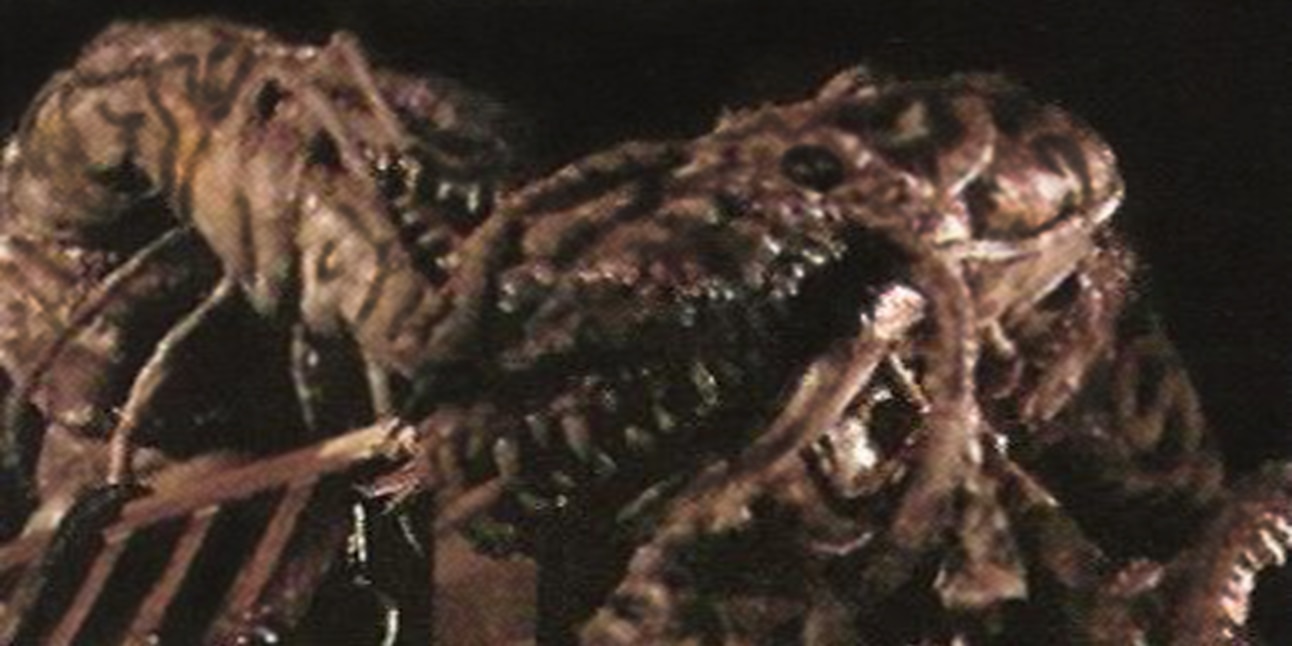
The Van-Tal Demon left, and the Kandarian Demon right, without human bodies to inhabit. Vampires and Deadites only refer to the combination of these Demons in a human body.
Both Demons will often use their hosts memories to trick and torment their loved ones.
Examples of this include in Evil Dead 2 where the Demonic version of Henrietta attempts to trick her daughter Annie into releasing her by singing a lullaby the real Henrietta used to sing to Annie when she was a little girl, or in Ash Vs Evil Dead when Kelly’s mom is possessed and the Demon uses her memories to repeatedly torment Kelly.
First the Demon lets Kelly think her mother is alive, (after she was killed in a freak accident 6 months earlier.) It lies to Kelly and claims that she was injured and suffered amnesia for 6 months, before it murders her father. Even after killing her father however. The Demon manages to trick Kelly again, making Kelly believe that her mother is merely possessed and that she can fight it with Kelly’s help. Worst of all the Demon later lies to Kelly that her mother wasn’t killed in an accident, but that she in fact killed herself to escape her failure of a daughter!
Spike’s mother similarly after she is turned into a Vampire enjoys tormenting her son, by claiming that she never loved him, always regarded him as a failure, and worse that she had a sexual attraction to him!
In both cases we know that neither Spike nor Kelly’s mother viewed their children that way. Sadly however from Spike and Kelly’s point of view, there would always be a tiny grain of doubt, as the Demon has access to their memories and inner thoughts. This tiny grain of doubt is shown to torment Spike and Kelly for practically the rest of their lives.
At the same time however whilst the Demons are able to use their hosts memories to torment or trick people, ironically there are some instances where their hosts memories can affect them to some extent. The Demons can even end up having a fleeting affection for their hosts loved ones.
Examples of this include the Demonic version of Henrietta who is shown to become visibly moved when the real Henrietta’s daughter Annie sings (ironically the lullaby the Demon had attempted to trick Annie with earlier) purely due to Henrietta’s memories. This ultimately allows Ash enough time to slay the beast.
Similarly in Buffy both Spike and Drusilla, even as Vampires still love their parents. Spike even goes as far as to turn his mother into a Vampire, whilst Drusilla later takes a pleasure in torturing Angel as revenge for killing her loved ones. Even though technically Drusilla is a Demon, merely inhabiting the corpse of the young woman whose actual loved ones Angelus killed. Once again the hosts memories are enough to trick Drusilla into caring about their deaths, just like Henrietta and Annie.
Whilst not humans, the Deadites and the Vampires do draw a fine line between Demon and human. They also explore the idea of our memories really defining who we are more than anything else to the point where an evil Demon from hell can still feel affection and love, simply due to inheriting our memories.
They Are Both Completely Evil
The Buffy Vampires and Deadites are both evil, sadistic monsters who enjoy not only killing, but torturing their victims. Despite the very rare, fleeting moments of affection from some Demons and Vampires. There are virtually no shades of grey to either.
They are all colossal perverts who frequently sexually abuse their victims too, or are at least shown to derive a perverse pleasure from torture.
Examples of this include Angelus who was shown to frequently rape his female victims, Marcus a Vampire who enjoyed torturing, raping and killing children, and even Spike who mentioned doing horrible things to girls Dawn’s age.
In the Evil Dead meanwhile Ruby’s Demon children similarly mention a desire to gang rape Kelly, whilst another female Deadite tears a man’s penis off whilst giving him a blow job. Then there is the notorious tree rape scene from the first Evil Dead.
With this in mind, coupled with the fact that they aren’t people at all, just Demons inhabiting, and therefore really desecrating human corpses. There is absolutely no moral ambiguity in killing Deadites or Vampires at all. The main heroes, Buffy and Ash can kill them in the most gruesome and over the top ways, and not once does any other character, or the viewers question if they are doing the right thing. If anything its extremely satisfying watching the Vampires and the Deadites suffer the most gruesome deaths.
In both cases however they’re both such perverts that they often enjoy being beaten up and tortured to an extent.
The Vampires and the Deadites ridiculous cruelty is often what allows both Buffy and Evil Dead to frequently switch between such overt comedy and such visceral horror. Sometimes their cruelty can be used in a more petty, comical way, with the Vampires and the Deadites being portrayed as homicidal trolls, or just jerks, whilst in other instances they can be portrayed as horrifying, sexual predators.
They Both Look Similar
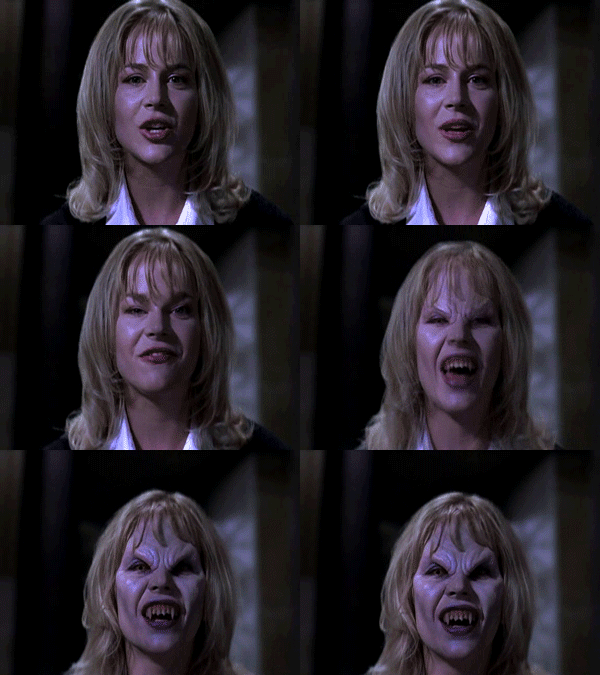
Vampires and Deadites can appear human, but when they attack they revert to their true Demon form. Their Demon forms look somewhat similar. They both have large, bumpy foreheads, yellow eyes (in some cases) slightly paler skin, and sharp teeth.
Joss Whedon himself even said that he preferred the more overt Vampire make up for the creatures in the earlier seasons, because it reminded him of the creatures in old horror films like Evil Dead.
Finally as if those similarities weren’t enough, both the Deadites and the Buffy Vampires main enemies are a reluctant hero, who is picked by the forces of good to do battle against them, and is referred to as The Chosen One.
They Both Span Multiple Mediums
Buffy and Evil Dead have had a greater success across several different mediums than most other horror franchises.
Big tv hits like Supernatural, Charmed, Being Human, Hex etc, have not crossed over into film or comic books or video games as frequently as Evil Dead and Buffy. Charmed did produce a sequel comic book series, but only one very basic mobile video game and never (to date) a film. Similarly many horror film franchises like Alien, Halloween, and Friday the 13th have not crossed over into television, whilst those who have such as A Nightmare on Elm Street and Scream have not crossed over into the video game medium with as much success.
Meanwhile I think its safe to say that not many horror franchises have spawned musicals!
It’s even more incredible when you consider that Buffy and Evil Dead have largely been produced by the same people over the decades. The 92 movie may have deviated from Joss’ original idea, but it was still his script.
There are many reasons as to why these two franchises have been able to cross over across so many different mediums more than others.
The fact that they lend themselves to parody more than other franchises is what allowed both to have musical instalments.
At the same time the fact that they do treat their horror seriously, and are even willing to go the extra mile in terms of gore and visceral content (up to and including showing people be skinned alive on screen!) Means that both can just as easily be adapted into terrifying, shocking horror movies too.
The fact that both have such wide universes and mythology, allows them to be adapted as television series, comic books and video games. The fact that they both star such dynamic and over the top action heroes also makes them both a natural fit for video games and comic books too. Even Supernatural and Charmed though having a wide enough universe, both of their leading heroes are more toned down compared to Buffy and Ash. Sam and Dean are ordinary humans (most of the time) who have to rely on spells, and weapons and don’t tend to do as much over the top physical fighting as Buffy, whilst similarly, the Charmed Ones tend to rely on spells and potions to destroy Demons.
Buffy meanwhile has super strength, stabs her enemies, cuts their heads off, and burns and beats them to death. Ash similarly has a chainsaw hand, hacks his enemies to pieces and gets involved in the most over the top surreal fights scenes.
You can see how both characters could easily translate into the comic books and video game mediums.
Conclusion
As you can see there are a number of similarities between Buffy and Evil Dead. Both feature more human, flawed, reluctant heroes, both merge extreme horror and comedy together, and both feature main antagonists who are the lesser minions of Lovecraftian Demon Gods, whose main goal is to free their masters and cause as much havoc as possible.
Finally due to their larger than life nature and dynamic, action leads, both have been able to conquer just about every medium.
The key difference between the two franchises is that The Evil Dead is aimed more at guys, whilst Buffy the Vampire Slayer is aimed more at women.
Both franchises are hugely popular among both genders, and there are plenty of strong, heroic and villainous roles for both genders in both franchises.
However that said I do think that Evil Dead is aimed primarily more at men simply because it is more of an action series. It focuses solely on the horror, the gore, the monsters. There is some romance in it, but its usually very fleeting. Most of Ash’s love interests are either killed such as Linda and Amanda, or forgotten about. Similarly Kelly and Pablo’s will they, won’t they romance, is largely in the background throughout most of the series.
Buffy meanwhile, whilst having a healthy dose of action and horror too, tends to focus a lot more on the soap opera elements than Evil Dead. We see more of her home life, and later seasons, such as most notably season 6 focus almost entirely on Buffy’s love life, as well as the love lives of her friends like Xander and Willow, with the monsters being pushed into the background.
I’m not saying that you don’t get plenty of women who love horror and gore and action, and plenty of men who enjoy romance stories. Overall though I think its fair to say that women tend to enjoy romance more, whilst men tend to enjoy action more.
Buffy and Evil Dead are similar to this respect in Supernatural and Charmed, in that Supernatural and Charmed also represent a similar idea told from a different genders perspective.
With this in mind, and considering the good will there is between the makers of both franchises. I’m amazed that there has never been a crossover between Buffy and The Evil Dead.
Ash has crossed over with Xena, Friday the 13th and Nightmare on Elm Street, but none of them in my opinion are as good a fit as Buffy would be.
I’d love to see a story where the Deadites posses Willow and make her start skinning people at random, like she did to Warren.
Deadite Willow would be the most horrifying villain in either franchise!
The Deadites could easily exist in Buffy’s universe, and the Buffy Demons could easily exist in Evil Dead’s. We know that there are hundreds of species of Demons in both franchises.
Furthermore as the lore is so similar, then they could easily fit together, unlike say Buffy and Supernatural, which has a totally different origin for Demons and Vampires.
If anything Evil Dead could explain who banished the Old Ones in Buffy. We never found out who did banish the Old Ones in Buffy? Maybe it was Ruby, who banished the Demons she couldn’t control through the hellmouth, and the ones she did hope to control into the Necronomicon. The Dark Ones and the Old Ones could easily be the same creatures. They more or less are. All you’d have to explain would be that some people call them the Old Ones, and others call them the Dark Ones.
Maybe with this in mind the Vampires and the Deadites are cousin races. Both created by the Dark/Old Ones, to free them from hell?
Whilst it will never happen in live action, I’d love to see a comic series that brings Evil Dead and Buffy together, and sees the Ghost Beaters and the Scoobies team up to take on some ancient Vampires and Deadites who plan to free the Old/Dark Ones from hell.
(This article is from a friend of mine named Laurence Buxton. I have decided to showcase some of his writing here. Let me know what you think, and enjoy.)
DOCTOR WHO. SEASON 18 REVIEW. By Laurence Buxton 2019.
Season Credits : –
Produced by John Nathan-Turner
Executive Produced by Barry Letts
Scripts edited by Christopher Hamilton Bidmead
THE LEISURE HIVE
Written by David Fisher. Directed by Lovett Bickford
Plot
The Doctor and Romana cut short a less-than-successful holiday on Brighton beach and decide to head to the famous Leisure Hive on the post-apocalyptic planet Argolis. They soon find themselves caught in a political powderkeg, where the natives are at risk of being manipulated to sell the Hive by a breakaway group of their mortal enemies the Foamasi. Meanwhile a militant young Argolin, Pangol, is looking to use the power of the Hive’s Generator, tweaked by the Earth scientist Hardin, to form an army of doppelgangers to destroy the Foamasi. The Doctor must not only convince the suspicious Argolins he is not behind a sudden murder in the Hive, but find a way to reverse his accidental rapid ageing and to prevent all-out war breaking out between the Argolin and the Foamasi…
‘The Time Lord’s looking his age all of a sudden – is the party over for Doctor Who?’
Review
Following the popular, if shortened and rather frivolous season 17 ( after shooting of the troubled Shada production was finally abandoned ) few could have expected the massive changes that Doctor Who, under the stewardship of JNT and Christopher Bidmead, would incur. With the departure of producer Graham Williams and script editor Douglas Adams the undergraduate humour that had begun to slip in during s16 was firmly vewtoed, and so when the series reappeared there would be very little, apart from the continuing presence ( for now ) of Tom Baker and Lalla Ward on board the TARDIS, to link it to what had gone before.
Not since season 7, with the introduction of Jon Pertwee, colour TV and UNIT, had there been quite as many fundamental changes to the on-screen realisation of Dr Who. Gone was the time tunnel sequence that had been a staple of Tom Baker’s time on the show; gone too was the ghostly howl of the theme tune, to be replaced by a ‘travelling through the stars’ opening segment and a more haunting, phased and up-tempo ( often referred to as the ‘disco’ ) arrangement by Peter Howell. Both seemed to be aimed at dragging the series into the 1980s, and it only took a brief look at the sets and special effects in the trailers to realise that the standards of both had done the same.
Even more changes are clearly signified by the opening scene, ones which give a chilling notice of intent for a gloom-laden future for the season, and for the Doctor personally, especially when compared to the previous year’s. The knockabout first moments of season 17 (Destiny Of The Daleks) on board the TARDIS had seen a coughing K9 being teased by the Doctor about having ‘laryngitis’, whilst Romana casually tried on a succession of new ‘bodies’ and ‘styles of dress’ – the latter including Baker’s – with the Doctor sniffily passing judgment on each. In The Leisure Hive, the opening titles to part 1 are followed by a plaintive and wistful synthesiser score accompanying a very lengthy pan across a notably out-of-season, windswept Brighton beach – all flapping deckchairs and abandoned beach tents. The camera finally alights on the Doctor, alone, wearing a vampire-like variation of his famous outfit, and slumped as if dead with his hat over his face. Even the apparent attempts to inject humour into this startlingly forlorn scene with the arrival of Romana and K9 sit disconcertingly with the viewer (the Doctor’s apparent narcolepsy, K9’s ill-advisedly going into the sea to ‘fetch’ a ball for Romana, and exploding) and with their referencing of decay and death seem to bode ill for both the titular hero and his trusty metal dog in series 18. More of which in future reviews…
The Leisure Hive, a story rumoured to make wry comment on the declining status of the British tourist industry, is nothing if not convincingly brought to the screen, with a gloss and sheen that was then new to the production, with evocative shots of the planet’s surface. The directing and camerawork from Bickford is certainly distinctive, and with the use of editing the Foamasi come across as an effective menace, when depicted as shadows, claws etc. This effectively increases the tension levels through the opening episodes, where a breakaway group of the Foamasi (originally envisaged as a kind of alien Mafia) are breaking their way into The Hive. They are also, unfortunately, rather too portly when viewed properly to convince as being able to disguise themselves as humans (as with Julian Glover’s head being the ‘disguise’ for the Jagaroth in series 17’s City Of Death). Hence the close-ups and single-camera work used here by Bickford, who unfortunately ran over budget and was not asked to return to the program.
There are also a certain amount of pacing problems with The Leisure Hive, notably in the first half, where events such as the landing of Mena’s spaceship, and the aforementioned pan along the beach are perhaps allowed to run on for rather too long and test the viewer’s attention span before the story, let alone the season, has really got going. Another oversight is the moment where Hardin’s shifty financier, Stimson, is fleeing from a Foamasi and leaves his glasses on the floor which are promptly stepped on and crushed by the alien – whilst a suitable conveyor of the ill fate which is about to befall him. However the likelihood of him either not noticing or at least trying to retrieve them stretches credibility, and a more convincingly edited sequence would at least have shown why he did not try to get them back. Apart from what is shown from the later shots of the Foamasi, however, the costuming and casting in The
Leisure Hive are generally strong, and the political scene on Argolis is well-realised through the many conversations by the major players in the boardroom. The theme of characters such as Morix and Mena displaying their mortality ( through the ‘buds’ dropping off their heads and visibly dying as this happens ) links in well with the grim themes of entropy and decay not only in the Argolin world but season 18 generally, themes that set the season a league away from what had gone before in light-hearted stories like The Horns Of Nimon and The Creature From The Pit.
Other aspects of the production are more hard to fault. Peter Howell does the incidental music for The Leisure Hive, and he does a good job at initiating a very different, austere synth soundtrack for the season, a clear step away from what had previously been heard on the show. Howell also went on to score the likes of Meglos and though obviously varying from story to story, the haunting style of this background music adds much to stories such as State of Decay, Warrior’s Gate and particularly Paddy Kingsland-scored Logopolis. There is a balancing during the suspenseful and serious scenes of high-pitched drone and lower, clanking ominous sounds. The opening pan along Brighton beach is perhaps the most distinguished moment, however, the aforementioned mournful melodies finally lightening with the ironic burst of “Oh I Do Like To Be Before The Seaside” upon the glimpse of the Doctor. Nonetheless the underpinning of the action with pensive, minor-key synthesized motifs will form another navel-gazing element of a downbeat season.
It is noticeable that this more serious atmosphere is partly induced by the changes in the dialogue, which are certainly noticeable in this story – as well as the removal of Baker’s physical pratfalls of series 17 there are noticeably fewer wisecracks made between the Doctor and Romana, and the concentration is now on not only political but scientific wording : discussions hinge here on the likes of tachyon recreation generators, anti-baryon shields, and so on. This would gain the show criticism by some long-term reviewers for being rather distant and clinical, and for fans of David Tennant’s more recent portrayal of the Doctor there are no vague ‘timey-wimey’ style explanations here.
Not as accessible to a casual viewer as in the past, perhaps, but there are at least strong and more serious performances from most of the guest cast. David Haig, well-known now for playing comic supporting roles alongside Hugh Grant in the likes of Four Weddings And A Funeral and Two Weeks’ Notice, shines as the increasingly militant and deranged Pangol, convincingly developing the character from apparently good-humoured tour guide to hate-filled fanatic, and making his ultimate defeat suitably poetic. Adrienne Corri also puts in good work as the dignified and wise Mena, and Laurence Payne, who would go on to appear as the ambitious scientist Dastari in the Colin Baker story The Two Doctors , plays the short-lived Chairman Of The Board, Morix, who desperately wants to finish the negotiations over the Hive before his imminent demise. Nigel Lambert also has plenty to do as Hardin, and forms a trusting bond with Baker’s Doctor. There are also great cliffhangers to part 1 ( where the Doctor is apparently dismembered by the Generator ) and part 2 ( where the Doctor emerges from the machine prematurely aged ).
Following on from the notorious ‘commentaries’ which accompany the DVD releases, much has been made of the tensions between Tom Baker and other cast members this season, which, coupled with the apparent after-effects of an illness that he caught in Australia, bring a world-weariness to his performances that had been totally lacking in previous years. Coupled with the need for him to play an aged version of his character, complete with long beard and sad eyes, Baker suddenly seems far more subdued, less comic ( even the ‘arrest the scarf’ comment he makes on being accused of Stimson’s murder is glossed over ) and even when not aged by the machine his portrayal here comes across much more consciously autumnal – when K9 ‘dies’ from going in the water at the beginning he continues to snooze, remains seated during his conversation with Romana and falls asleep again before she has finished. The more mature, less garish and more stylised black and burgundy version of his ‘costume’, which Baker allegedly did not approve of, arguably adds to this sense of decline, as well as his occasionally gaunt appearance, broody demeanour and slightly greyer hair. On the issue of his superbly-realised ‘aged’ appearance after entering the Generator special mention should go to make-up artist Dorka Nieradzik, and Baker’s increasingly drained, wistful and desperate performance has garnished great praise, for all the rumours of bad behaviour on the set.
Then of course there’s poor old K9, with his original voicer John Leeson back in the fold. With his indisputable logic and lethal lasers, the ‘metal dog’ had been such a useful ally to the Doctor and Romana in the past, particularly in season 17, but here he’s pretty much sidelined in scene one after his dip in the Channel – a deliberate ploy from the new production team that would become a regularity until the character was written out later in the season. The character had been seen as too easy a way for the heroes to escape from potentially difficult situations, hence lessening the danger and heightening the humour, and so spends much of s18 being mistreated, repaired or generally being out of action. If there were such a thing as the ‘Royal Society For The Prevention Of Cruelty To Droids’, then they would have had a field day with the majority of stories in s18.
The Leisure Hive represents a dour new direction for Who under JNT and, more temporarily, Bidmead. Technobabble takes over from titters, longeurs from laughs, and the fact that the show struggled for viewing figures up against the more light-hearted sci-fi of Buck Rogers is perhaps not so surprising in hindsight. In fairness however the serial, whilst containing one or two costuming and plotting issues, and whilst rarely remembered as either a fun romp likeCity Of Death or a gothic masterpiece like Talons Of Weng-Chiang, did at least allow the show to develop
greatly away from the sometimes farcical tone of the previous show. It also establishes the themes that would, in some form or another, encompass the entire season.
MEGLOS
Written by John Flanagan and Andrew McCulloch. Directed by Terence Dudley
Plot
An old friend of the Doctor’s, Zastor, requests that he visit his planet of Tigella (one of two planets in the Prion star system, the other being Zolfa-Thura) to help investigate why the Dodecahedron (the source of their power) is fluctuating. The problem is compounded by the fact that their society is split into two tribes – the Savants, who have used its power scientifically, and the Deons, who believe that the Dodecahedron has been passed down from the god Ti. However, the TARDIS is trapped within a time loop by the last remaining Zolfa-Thuran, a cactus-like Meglos who has enlisted the help of some Gaztak mercenaries, led by the grumpy General Grugger and the impulsive Brotadac, and forces an Earthling to merge with him to enable him to take the Doctor’s identity. The Doctor needs to free himself and Romana from the time loop, stop Lexa and the rest of the Deons from launching a coup, prevent his own execution at Lexa’s hands and stop Meglos and the gaztaks making off with the dodecahedron.
‘A talking cactus, a devilish Doctor doppelganger – is Douglas Adams back on board?’
Review
After the serious introduction to the new season with the dramatically different The Leisure Hive, Meglos appears on paper to be a surprisingly quick return to the more whimsical, not to say fantastical style of storytelling of s16 and particularly s17. A talking cactus with aspirations to steal an immensely-powerful device and disguising itself as a diabolical double of the Doctor, whilst enlisting the help of a semi-comic selection of blundering space pirates. On the face of it, a return to the light-hearted entertainment of the show’s then recent past.
However Meglos touches on themes which had always been central to Doctor Who, in particular the battle between science and religion – here represented by the scientific Savants, led by Deedrix and the fanatical religious figures of the Deons, led by Lexa. This is slightly at odds with what could have been an unusually knockabout and daft adventure in the gloomy season 18. Inevitably the Deons are shown to be stubborn and struggle to listen to reason, though like the Savants ultimately their intentions are noble, and whereas in the past a race of scientists has not always managed to co-exist with others – note the strained ‘union’ between the Sevateem and the Tesh in the season 14 story, “The Face Of Evil” – at least there is a genuine chance of co-operation after the heroic death of Lexa and the destruction of the Dodecahedron.
Typical to the season, however, there are also themes of society being in decay and needing a revolution or change, and the attempted sacrifice of the Doctor by the increasingly powerful Lexa links back to rituals in stories such as The Power Of Kroll, where not only is such barbarism is shown as primitive, xenophobic and closed-minded, but the Dexans’ increasing dominance actually allows the pirates to make off with the Dodecahedron. Once again the Doctor arrives at the correct time, as unbeknown to the Tigellans Meglos is launching a plan that will take advantage of the Time Lords’ friendship with Zastor, and curiously it is Meglos’ abuse of the Doctor’s privileged position that, having threatened his life, allows him to bring down the threat to the fractured society and help it develop.
In fairness the suspicion of the Doctor is on this occasion understandable, due to the very convincing impersonation by the human-melded Meglos, even though it is never really explained why the villains needed to go to all the trouble of obtaining an apparently random human earthling was needed for this rather than a local Tigellan. It is also not convincingly explained how Meglos performs many of his actions in this serial, from the shrinking of the dodecahedron to the piloting of the spaceship, to the sealing the doors shut to prevent the Gaztaks from looting the ship, to the notorious ‘Chronic Hysteresis’. not to mention how the character is able to give the appreciative Brotadac the Doctor’s coat for good keeping.
On the subject of the titular villain, Tom Baker surpasses himself in the role of his own adversary, contrasting nicely even with his now more subdued – and occasionally grouchy, note the opening scene in the TARDIS – Doctor. Having already proven his ability to play an ‘evil’ version of the Doctor by briefly doubling as his robot imposter in “The Android Invasion”, Baker is asked here to play both the Doctor and the main villain for most of the story, and in doing so provides it with its ‘draw’. Baker steals the show every time he is on-screen as the villain, whether roaring “I am Meglos!” at Karris, shouting “Patience!” at the excitable but dim-witted Brotadac or coldly stating, “We mustn’t disappoint the Tigellans” to his co-conspirators, upon first appearing to them and the viewers in the Doctor’s guise. The actor’s excellence keep the strange premise grounded, and provides the unusual but excellent cliffhanger to episode 1.
Baker is great too at subtly enhancing the Doctor’s softer, warmer qualities when he pretends to be the disguised Meglos in return. The spiky green make-up for the actor as Meglos fights against the Earthling trying to exert his independence from him is excellent, and as on the Leisure Hive the production values are strong, including the scenes toward the stories’ climax where the Doctor and Meglos are locked away together as there is not the usual superimposing problem of having the same actor on screen twice. Indeed the two characters are immediately personally distinct in every way, which again stands as a compliment to Baker’s ability, even it renders the obvious subterfuge on the viewer less convincing than expected – there’s rarely a moment of doubt as to which ’version’ of the Doctor is which. Still, whatever criticisms Baker had of the changes made to Doctor Who for his last season, the first two stories in particular give him a great chance to play outside the normal constraints of the Time Lord’s character.
Unsurprisingly then it’s the lead actor’s show, but there are other strong performances. Lalla Ward is given plenty to do as Romana – note her curious reaction in the opening scene in the TARDIS when Baker states “First things first – but not necessarily in that order”, and it’s good to see K9 get a serious run-out after his ‘cameo’ in the opening scene of The Leisure Hive, though the metal dog is no sooner repaired than he runs out of power and is demeaningly kicked by Grugger. Stand-out among the guest cast is the surprise return of former Who star Jacqueline Hill (a rare case of an actor/actress who had portrayed a former companion, in her case Barbara Wright, returning in a guest role), giving a three-dimensional performance and instilling some genuine debating skills into the character rather than portraying her as just a two-dimensional ranting religious zealot – she even heroically lays down her life for Romana. Crawford Logan and Christopher Owen are also committed as Deedrix and the ‘possessed’ Earthling respectively, although Bill Fraser’s role as the grumpy, blustering Grugger is something he had by now been rather typecast in, after similar roles in comic films alongside the likes of Frankie Howerd. Though intended as mostly comic relief, Frederick Treves is mostly as annoying to the audience as the coat-obsessed Brotadac as he is to his fellow schemers, whilst Edward Underdown’s Zastor sadly fails to convince as any kind of leader even before his attempted deposing by Lexa.
Again the production values are more convincing than in then recent years : Meglos’ spaceship is clinical but convincingly high-tech, and the contrast between the white of the Savants and the red attire with black headgear of the Deons is simple, but striking. Perhaps for budgetary reasons the dodecahedron is shielded from the audiences’ view whilst still in its larger form, however, and its underwhelming ‘detonation’ at the end, to the chagrin of the squabbling villains, is a rather throwaway ending to the serial. There is also a fairly unconvincing sequence at the end of episode 2, where Romana is chased and apprehended by the Gaztaks, led by a shrill and rather unthreatening Brotadac, and once again the production team’s attempts to convincingly recreate the surface of a vegetative world look over ambitious, although it is still far from the worst ever seen on the show.
Peter Howell handles the incidental music for the story, and for the most part does very well at supplying apt atmospheric touches to different occasions and situations – the eerie rattle musical cue for Meglos immediately grabs the audience’s attention whenever he appears, which combined with Baker’s unblinking and stern-faced portrayal is the highlight of the serial. There is also the use of stately music in the early Debating Chamber sequences establishes the society well, and the increasingly fast-tempo use of ‘chanting’ vocoders in the sequence where Lexa is attempting to sacrifice the Doctor builds to a tense climax as the rope burns away.
There are also welcome touches of humour peppered throughout the tale, surprisingly for this more austere season, although fan reaction to these is often exaggerated due to the notable absence of comedy in the other stories. Furthermore, unlike the latter stages of the Williams era some of them actually seem to have been in the script originally, and those that do appear more improvised and natural are a little more tightly-edited and not allowed to get out of hand. That said, there are more unguarded moments that appear to have been allowed through – the previously mentioned one from Lalla Ward in the opening TARDIS scene, where she clearly winces, and one from a giggling Baker in the initial scene of the ‘time loop’. Other jokes, where Zastor chides Deedrix for being argumentative or during the Chronic Hysteris – which was itself widely criticised as being part of padding to increase the story from 3 to 4 parts – where K9 addresses the Doctor as Mistress, are dealt with in a more deadpan fashion that would have been the case in the past. The previously mentioned long-running joke about Brotadac’s obsession with Meglos’ discarded coat which he ends up wearing also works as a metaphor of changed identity, along with Meglos’ adoption of the Fourth Doctor’s persona, the fight for control of the Earthling and the spooky moment where the Doctor ends up facing his doppelganger. That comes immediately after the belly-laugh moment where the Doctor witnesses Meglos being winded and apprehended, opining “Ooh nasty – that could have been me!” before exactly the same fate happens to him seconds later. “Haven’t I seen you somewhere before?” states Baker upon facing his double, a sequence that briefly harks back to the ready wit and fun of the previous season.
But whilst not nearly as bleak as other season 18 stories such as The Leisure Hive, Warriors Gate or particularly Logopolis, Meglos also continues the former story’s theme of society stagnating, and the impasse between the Savants and the Deons in the opening debate being mirrored by the TARDIS crew being trapped by the Chronic Hysteris. The famous, endlessly-looping short sequence of comic events (the Doctor tripping over, Romana’s casual exasperation), which the crew escape by deliberately performing it out of turn, is regularly remarked on as a comment on the show’s former failings under the Williams era. It’s possible to imagine JNT and Bidmead saying Romana’s repeatedly circling opening groan of “Oh blast – here we go again!” to the previous season’s similar frolics, but here the sombre incidental music, and the way that Baker and Ward’s previously lightheartedness changes to real concern at the possibility of being stuck in it forever, makes the threat more unsettling than comic. This feeling is reinforced when a serious-faced and malevolent Baker subsequently appears as the transformed Meglos has been criticised for having a lightweight conclusion, and the comments are valid. Overall, though, is still a very enjoyable adventure in the classic Doctor Who mould, with generally strong acting and with its less downbeat mood it breaks up the more weighty stories that make up season 18, and one featuring a very impressive dual role from the still impressive Tom Baker. The next three stories, making up the E-Space trilogy, would see a return to a more thematically-rich style of storytelling.
E-SPACE TRILOGY
FULL CIRCLE
Written by Andrew Smith. Directed by Peter Grimwade
Plot
The Doctor tries to take the reluctant Romana back to Gallifrey, but pass through a Charged Vacuum Emboitment. Despite the scanner showing that they are on their home planet, they have actually landed on Alzerius, containing people whose origins are from another planet, Terradon. There is a schism between the crew who wish to take off in the Starliner (led by Three Deciders) to return to Terradon and a band of outcasts who reject the oligarchy of the Deciders. When the Mistfall descends, strange Marshmen start to emerge from the swamps, and spider-like creatures start to hatch from eggs that have come from the Riverfruit that make up part of the colonists’ diet, and the outcasts take refuge on board the Starliner which puts the crew at further risk. As well as trying to prevent Romana from devolving when she is bitten by a spider the Time Lord tries to discover what the connection is between the the spiders, the Marshmen and the crew, and just how long they have been preparing to leave Alzerius…
‘The Doctor and Romana immediately regret entering E-Space – and on top of Adric there are Marshmen for them to deal with, too…‘
Review.
It’s off into E-Space we go with the Doctor, for a trilogy of very different adventures : an evolutionary tale, a Hammer horror homage and an experimental mind-bender. Full Circle, the first of the trio, harks back in some ways to the ‘sympathetic monsters’ and moral dilemmas of early Pertwee-era Who, despite the higher production values and extra sheen. Furthermore it adds an extra twist to the genre as well as another element of variety to an already varied season, with the revelation that the Marshmen, and the Marshspiders before them, are ultimately the same race as the crew – and the circle of life will continue unabated unless drastic change is made.
Full Circle is the first story by the then 18-year old Andrew Smith, and it has to be adjudged a success, never gaining cheap criticism over the years in the manner of either the ‘derivative’ vampire tale State Of Decay or the ‘overly-complicated’ or ‘baffling’ Warriors’ Gate, with Smith’s scripts proving remarkably multi-layered and mature for the author’s age. The story also succeeds in introducing the unlikely ( and unpopular ) future companion of Adric in a subplot, where the adolescent fruitlessly endeavours to prove himself to his brother Varsh and his friends in much the way that the Starliners’ crew try to prove to themselves that they are not trapped on Alzerius. This determination to gain respect would be a characteristic that, whatever one thinks of the character and Matthew Waterhouse’s performance, would define the character through to his surprise exit in the Davison years.
The atmosphere is definitely murkier than the more ‘straight-ahead story’ of the preceding Meglos. The idea of Mistfall clearly fills the locals with a sense of dread, and the spooky music during part 1, including electronic drums and pan-pipe style synths as well as the usual minor-key motifs, enhances the menace of the bubbling swamps. Moreover the Doctor himself is fairly slow to get to the scene, too late to save Decider Draith who is chillingly dragged into the swamp whilst accosting Adric. The idea of being locked away on the sterile Starliner for up to ten years is shown as being almost as much of a punishment as being left outside during the Mistfall, and the irony that the crew have never learnt to fly the fully active Starliner seemingly condemns them to their needless fate, the same as befell the previous 40 000 or so generations.
There are strong central performances to enhance the clever concept, too. Baker shows charming little flashes of humour: when he meets the Marsh Child “How odd – I usually get on terribly well with children!” or flashing the now-rare grin when the Deciders introduce themselves to him, “And I’m the Doctor!”, quiet inquisitiveness in the opening two episodes, his usual unpredictable reactions to events, one amusing telling-off of Adric upon a crowd of Alzerians emerging from the TARDIS, “What is this, Noah’s ark!?” and finally roaring his dismissal of the Deciders’ flimsy moral self-defence after the Marshchild’s death, “Not an alibi – Deciders!” make this another strong outing for his portrayal of the Time Lord. But it’s Lalla Ward who gets the plaudits this time, coming into her own away from Baker’s Doctor. Here we see Ward able to play a more assertive yet nuanced version of Romana – witness her cheerful admonishment of Adric for asking her to touch his wounded knee – acting despondently upon hearing that she is wanted back on Gallifrey, during the quietly intimate scene with Baker in her quarters on the TARDIS, or the scene where, with the help of Adric, she disarms Varsh and points the knife at him before calmly handing it back. But the piece de resistance is the moment where she gets possessed by the spider – just as Baker got to play against the preconceptions of the audience in previous adventures, here it is Ward’s turn, and she rises to the occasion.
One of the accusations always levelled at the classic series of Doctor Who is that it contains wobbly sets and rubbery monsters, but here the season again defies this – if only to a point. The Marshmen arising from the swamp represent a dramatic (if unfortunately curtailed) climax to part 1, and the Marshchild comes across as a genuinely innocent and sympathetic character whom the audience immediately feels sorry for. As a contrast, however, the scuttling spiders are far less realistic, and Romana’s initial dismissal of them seems a more appropriate reaction than her subsequent terror. However the interiors of the Starliner are minimalist but effective, and the Inquisition chamber beautifully balances the black and grey décor with the gold of the Deciders, whilst the make-up for Romana’s ‘possession’ is also a winner.
One aspect of the production that becomes apparent from here on in, and would become an even more noticeable problem during Davison’s tenure as the Doctor, however, is the ‘costuming’ of some of the regulars. Whilst Romana here appears in a strikingly different red gold and white apparel as opposed to her ‘sailor’ outfit of the first two transmitted tales, the Doctor’s attire, though stylish, distinctive and more urbane than his previous ‘random collection’ of clothes, is by now seeming to be as much a ‘uniform’ as clothes of choice. Whilst Davison’s Doctor’s inflexible cricket garb and Colin Baker’s notorious multi-coloured coat when playing the role are worse intruders in this sense than the 4th Doctor’s’ burgundy outfit, JNT’s stating that this was for merchandising reasons only half-convinces, and has given rise to speculation that this was also an attempt to ensure that Baker played the Doctor as a dramatic part and not simply as an extension of the more comic side of his real-life personality. In any case, considering how many times the Doctor lands on a planet or spacecraft and is instantly threatened or ‘tried’ for a crime by suspicious individuals, coupled with the amount of clothing that we have seen on several occasions within the TARDIS, it makes little sense that he would now ensure that he or his companions would look even more out of place than usual, and therefore place themselves in immediate danger and hinder his investigations. In the near future, Adric’s off-yellow and grey ‘pyjama’ outfit becomes a particularly hideous example of this once he stows away on board the TARDIS, in this adventure.
On the subject of Adric, Matthew Waterhouse gets a great deal of bad press for his performance here as Adric, and his general attempts in the future at trying to display the character’s often contradictory qualities of intelligence and well-meaning kindness whilst being naïve and desperate to impress. Actually his performance in Full Circle is not too bad, displaying a pragmatic side (when he advises that Romana look outside the door rather than look for technological ways of surveying the surface of the planet), brief moments of burgeoning sexuality (the aforementioned scene with Romana), bravery (when he helps Romana fight off the River people), and ironically reacting more calmly and naturally to the Doctor than in later adventures. He still finds himself on the receiving end of a fair few Baker broadsides throughout the adventure, however, as does Romana, and commentaries on the E-Space trilogy box-set have proved rather candid on the deteriorating communications on-set at the time – such as Baker allegedly not looking at his co-stars during takes if riled. Perhaps more pertinently during his time on the show, the character’s occasional sulks or ill-considered wilfulness, such as one which indirectly leads to Decider Draith’s death, hindered his would-be allies and greatly alienated viewers, right up to the character’s final story.
Of the rest of the cast, Richard Willis impressed many as the more headstrong Varsh, by some way the best of the actors playing the Outlers and unfortunately casting a shadow over the appointment of Adric as companion, and the death of his brother saving his life would be rather glossed over for much of the mathematician’s time on board the TARDIS. George Baker is probably the best of the Deciders, although Leonard Maguire impresses as the ill-fated Draith. The musical accompaniment, like many this season, is of a high standard, particularly the Church organ-style music during the ‘Decider’ scenes on board the Starliner.
The subject of resistance to change, or an (in)ability to adapt is a key theme to Full Circle. The Marshmen are observed by Romana as adapting to their new environment quickly when she admonishes Varsh and the others; in contrast are the inhabitants of the Starliner, who in some cases show a struggle to develop without the Doctor’s assistance – take the scene where the three Deciders each expect the others to come up with a solution to the Marshmen invasion. There is a neat moment where the Doctor remarks to Adric that “we’ve come full circle”, which his new companion remarks is what the scientists have observed – which can be compared with the Chronic Hysteris sequence in Meglos . Ultimately the two remaining Deciders are forced to make a decision on whether the Starliner stays and their race continues to go full circle or leaves, and evolves, and the fact that they depart Alzerius – albeit with a little prodding from the Doctor – provides the positive resolution to the story. Apathy is defeated, though the theme of stagnation and disinterest would again surface during the E-Space trilogy (Warriors’ Gate).
Full Circle is another strong story, well-directed by debutant Peter Grimwade and with plenty of opportunity for both Baker’s Doctor and Ward’s Romana to shine in a well-written script that disproves the addage that first-time or ‘fan’ writers cannot come up with the goods. The addition of Adric’s ‘boy genius’ to the TARDIS crew would allegedly cause ructions on-set, but the theme of change prevalent in the tale is particularly apt here – with the arrival of Adric, the process of change had begun of the crew themselves. By the end of the season the Doctor, Romana and K9 would all, like the crew of the Starliner, be gone…
E-SPACE TRILOGY
STATE OF DECAY. Written By Terrance Dicks. Directed by Peter Moffatt
Plot
Still trapped in E-Space The Doctor, Romana, K9 and the stowed-away Adric arrive on an unnamed planet. They are surprised to find that it is almost feudal, and note that the villagers are in fear of the ‘Three Who Rule’: elusive beings who dwell in a nearby Tower, and with the help of their guards, the Habris, seem to be behind the annual disappearance of a number of the younger villagers. Threatened by the Lords’ guards and the mysterious ‘Wasting’, the adventurers look to investigate the reason why the corpses of the missing villagers are drained of blood, whether the Three Who Rule and the Tower itself are linked to a spaceship which once landed there, and whether a long-standing enemy of the Time Lords could be behind the current state of decay…
‘It isn’t just the young stowaway on the TARDIS who’s’ proving a pain in the neck…’
Review.
“It’ll be dark soon” notes Romana towards the end of the first episode, and this observation highlights not only the ethos of the gloomy march to oblivion of season 18 of Doctor Who but more specifically the phobia of creatures that fear the sunlight. And the fact that State Of Decay is the title is something of an irony, as not only is the story about a society that has become something of a regression but the story itself is something of a throwback, being as it is a rewrite of an adventure initially intended to take place in the Gothic days of s15.
During the earlier days of the Tom Baker era classic monsters from film and literature had been the subject of homage successfully. His very first story (Robot ) was a tip of the hat to King Kong, and another of his earlier adventures (The Brain Of Morbius) was clearly inspired by Mary Shelley’s Frankenstein. So why not take the vampire legend and put that unique Doctor Who spin on it too?
Of course Gothic Horror such as The Brain Of Morbius had been successfully done during the Hinchcliffe era, and even when not featuring any kind of horror genre-related villain, it had been a defining feel of early Tom Baker stories such as series 12, 13 and 14. Indeed, an early form of the serial had been submitted by Terrance Dicks back in 1977 during the Hinchcliffe era called The Witch Lords, and was intended to open series 15, but due to a clash with a BBC adaptation of Bram Stoker’s Count Dracula the claustrophobic, lighthouse-based story Horror Of Fang Rock (which was perhaps even more horror-inspired) was commissioned instead. With hindsight, then, one can see such a story fitting in well to that period of Tom Baker’s tenure.
The title and theme of State Of Decay slot more appropriately into this entropy-obsessed season, however, and encapsulate the general theme of societies in decay, decline and regression. The Doctor’s conversation with Camilla and Zargo in the second episode highlights this, as does his subsequent chat with Romana where he deduces that the vampires are the original crew of Hydrax, and that the ‘throne room’ was once the spaceship’s control booth. The planet is clearly in a state of devolution, obvious from the scene where the Doctor talks of ‘consonantal shift’ explaining the changing of the Three That Rule’s names over a great period of time and the fact that the control room is now a throne room, and from the moment the villagers produce communicators and other hi-tech devices yet, as in Full Circle, are unable to explain what ‘the Wasting’ actually is. Once again, such self-destructive traditions and fears are questioned by the Doctor upon his arrival, and by doing so he prevents a society from stagnating – ironically causing the literal ‘wasting away’ of the Three That rule when he slays the Great Vampire.
Another theme that rears its head is the easiness of waiting for things to improve rather than taking risks to ensure that they do. The scene where Tarak, Kalmar and the others argue in the dwelling highlights a theme that was particularly noticeable in the previous story, Full Circle, where the crew of the Starliner showed an unwillingness to learn how to launch a perfectly functional Starship, actually sabotaging it to avoid doing so. Kalmar admits he is prepared to put off any revolution for several generations if necessary, and apart from Tarak the others agree that it is ‘too soon’. The acquisition of knowledge is seen as the greatest power in a society like theirs, as Camilla remarks to Zargo, and this is backed up by Tarak’s remarks to the others about the importance of the Doctor. It is no coincidence that Aukon comes across as the most knowledgeable of the vampires and is also effectively their leader.
The planet is realised onscreen as largely a plush and convincing environment, and the ‘covering up’ of high-tech equipment among apparently mediaeval settings is convincingly done, enhanced by the sometimes occasionally archaic incidental music, whilst accentuating the spooky threat of the vampires. The use of location filming during the first episode gives the chance for a surprisingly relaxed-looking Doctor and Romana to stroll through genuine flora at dusk, and the moment where the bats (aka ‘The Wasting’) bite the Doctor and fly over them could be straight out of a classic Hammer film. The superimposing of a bat over Aukon during episode 1 shows a stylised touch which previous Who had rarely attempted, and is a memorable image which removes the need for stilted information dumps. Clothing-wise the more stylised, two-tone black and burgundy Baker fits in perfectly here, of course, despite seeming a little more chipper than at certain other times this season. There is an ominous moment the moment we first see the Doctor in the TARDIS, however, where Romana is concerned at his pained expression, which seemingly doesn’t bode well long-term for this incarnation of the Time Lord. Baker’s Doctor had always been famous for almost cheerfully enduring physical pain in early stories like Arc In Space, or dealing with being menaced by monsters in tales like Nightmare Of Eden in farcical fashion – not any more.
Adric has a rather strange adventure here, however, showing ‘Artful Dodger’-style cheekiness (which was originally how the character was envisaged), but his inward and easily malleable nature makes him less than sympathetic. Within moments of being caught entering the villagers’ dwelling he is helping himself to their food and their son’s coat, though with hindsight it’s a shame that he didn’t continue to wear this more natural looking garment during his time on the show instead of his horrendous yellow ‘pyjama’ outfit. Furthermore the Alzerian later displays turncoat-style behaviour in apparently acquiescing to become like the Lords, and gives an unconvincing explanation to Romana about fooling them into a false sense of security. Whether due to Waterhouse’s performance or a conflicting script, Adric’s behaviour during this adventure never convincingly comes across as anything other than self-serving, even though he does eventually attempt to slay Zargo towards the end of the tale as the Time Lord and Lady are threatened. This portrayal of the character contrasts with the more plausible attempts he made to help the Doctor and Romana in his debut story Full Circle. K9 finally gets to have a less battering adventure of his own here, a rare event this season, and delivers a cutting summary of Adric in the TARDIS upon discovering the stowaway – “Immature humanoid – non-hostile.”
Characterisation is generally inconsistent in this story, sadly. Ivo, head of the village, shows equally unfathomable motives throughout, going from acceptance of any uprising to betraying it. This is unfortunate when the humans are clearly shown to be the oppressed and disadvantaged peoples of the planet, ruthlessly preyed on by the Lords. More appealing by far is Arthur Hewlett as Kalmar, with his quiet subversion evoking memories of Timothy Bateson as Binro the Heretic in the Key To Time adventure The Ribos Operation, and Thane Bettany as Tarak, who in contrast to his peers shows the charisma and the bravery to defy both the Three Who Rule and the once loyal villagers who now serve under Habris and his guards. On the subject of the Lords, Emrys James is imposing and entertaining as the dominant Aukon, though his dominant performance does reduce Rachel Davies’ Camilla and William Lindsay’s Zargo to the role of hissing, bickering sidekicks whenever he is present.
There are other quite noticeable flaws. The on-screen realisation of the Great Vampire is a disappointment almost on the scale of the Skarasen in Terror Of The Zygons, and the rocket going straight up and then straight back down to pierce its heart, is poetic but truly corny. The use of blood as ‘fuel’ over such a long period of the time raises the simple question of why has it not evaporated or gone bad, being organic, not to mention the fact that the planet’s population now seems extremely meagre for them to continue plundering. Considering how the peasants’ society has regressed over time it is surprisingly easy for the Doctor to get them up-to-speed with the high-tech equipment, and it is equally surprising they have not destroyed or thrown it out once it became useless to them. It is also difficult to work out what the ‘perks’ of becoming a guard are, as the Three That Rule still threaten to feed them to the great one upon the slightest failing, and show no concern when informed that they are dying.
State Of Decay is not perfect and with its use of hypnotism, mind-reading and other vampire cliches, seems a little out of place in a season heavy on science, but it remains a stylish story even today, for sure, and though criticised for being something of a derivative horror story given the Doctor Who treatment, it is nonetheless watchable and reinforces the themes of the season as directly as any of the stories without being too heavy-going. Those who criticised the story for perhaps lacking much under the surface or for being too simple would soon see the flip-side of the coin…
E-SPACE TRILOGY
WARRIOR’S GATE
Written by Stephen Gallagher. Directed by Paul Joyce ( assisted by Graham Harper )
Plot
At the point where N-Space and E-Space meet, a time-sensitive Tharil named Biroc escapes from a slaver cargo vessel holding others of his kind, and hijacks the TARDIS which, like the slave vessel, has become trapped there, near a gateway. He warns them that the slavers are following him and that they cannot be trusted. The Commander of the slaver ship, Rorvik, is determined to recapture Biroc who has been navigating them, and is becoming increasingly irritated at both the entrapment of his ship and the rest of his crew’s apparent disinterest in escaping. The Doctor will need all of his wits to investigate a mysterious gateway and an abandoned banquet hall nearby, utilise a number of mirrors which provide passage for time-sensitive aliens, avoid the threat of the malfunctioning Gundan robotic knights, rescue the captured Romana from Rorvik who believes her to be time-sensitive too and intends her to replace Biroc, and prevent both the slave ship from diminishing the Gateway into nothingness and its captain from misjudging the power of the mirrors and destroying everyone…
‘Who knew E-Space could get so complicated’?
Review.
One of the fascinations of Doctor Who, particularly in its’ ‘classic’ days, was the sheer range of its types of storytelling, and s18 had already encompassed this – a sly satire on the culture and holiday business ( The Leisure Hive ); a fantastical ‘villain with delusions of grandeur’ tale ( Meglos ); a pacifistic and environmentally-aware precautionary tale of evolution ( Full Circle ) and a homage to the horror genre ( State Of Decay ). With the 5th story to be released chronologically, however, season 18 went one stage further, with a bizarre tale of time-travelling reformed aliens, cruel and listless humans, mysterious mirrors and mystical castles, which showed influences from sources as diverse as Jean Cocteau, Stanley Kubrick, C S Lewis and Mervyn Peake.
Warrior’s Gate , though utterly distinct from either, ranks with The Mind Robber during the Patrick Troughton era and Ghost Light during the McCoy era as one of the most experimental serials in the show’s history, featuring concepts that would baffle any first-time viewer. Furthermore, faced with the need to convincingly wrap up the E-Space trilogy (which had had little bearing on the previous adventure other than the Vampires had fled there to hide from the Time Lords), return the Doctor to N-Space and plot the departures of both Romana and the now long-suffering K9, it would need to include a convincing reason why they would choose this moment to depart. Not only did the writer succeed in doing this, and expanding on the themes of season 18 as a whole, but they managed to create a world like no other in the Doctor Who canon – the Tharils, the mirrors, the gateway, the abandoned hall, the shrinking dimensions and the time winds are all strikingly original, to an almost daunting degree when all are presented at once.
Once again the Doctor finds himself faced by a pseudo-tyrant, in the form of the blustering and impatient human Commander Rorvik, “We’re back in nowhere” mutter the crew near the beginning of the story, and this sums up the quandary they find themselves in, and Rorvik’s desperation to escape. In typical series 18 fashion it is not so much the prospect of death but that of being trapped or regressing which seems to breed even greater apathy and fear of action in both the time-sensitive Tharils (represented most strongly by the noble yet enigmatic Biroc), who are clearly being mistreated and even killed, and their new masters the privateer crew. The theme of devolution is present in the Tharils once being masters but now being slaves, and that of apathy is evident not only in their failure to rebel until the Doctor and Romana arrive, but also in the crew who show little urgency to escape E-Space, although their inertia is not wholly condemned by the fact that as the Doctor says to Biroc, “sometimes it’s best to do nothing, if it’s the right sort of nothing.”
In many ways it should be possible to have sympathy for the crew for the literal and metaphorical limbo they find themselves in, despite the casual cruelties they inflict on their former masters. “Nowhere to go and no way of getting there” remarks Rorvik sourly to the crew at one point, and they say nothing. In many ways the void the crew are in, trapped between N Space and E Space, reflects their state of mind. This sense of aimlessness then ensures that they remain trapped, their lack of personal progression being displayed in their concern with maximising their bonuses rather than escaping the void. Following on from the theme shown in the likes of Meglos of individuals failing to evolve and going round in circles (the Chronic Hysteresis), and the same thing happening to societies in The Leisure Hive, Full Circle and State Of Decay, Warriors’ Gate takes the extra idea of the oppressors becoming the oppressed – with the Tharils having been defeated by their then ‘inferiors’ rising up and defeating them with the aid of the Gundans. The decay of the Tharil civilisation after that revolution ties in with the idea presented in State Of Decay, where the fortunes of the oppressed are actually declining the longer they allow the current state of affairs to continue.
“It’s always darkest before the storm” says the Doctor, linking to Romana’s comment about night being about to fall in the previous story, and though the murky huts, darkened ‘tower’ and gloomy wood of the previous story are stylistically completely opposite to the well-lit spaceship, white void and fantastical castle behind the Gateway, there is a similar underlying bleakness about this story. The Doctor himself seems to have developed something of a death wish, where he nearly pushes a button that would have destroyed the TARDIS in the first episode and recognises that chance is in itself not an explanation for what he could have done. When he faces apparent decapitation by the Gundans he seems, at times, strangely resigned to his fate, albeit cheerful when he is not ultimately killed. In fact this story could be seen as the ultimate encapsulation of the Doctor succeeding by being ‘passive’ – such as his aforementioned comment to Biroc, his tolerance of Biroc and acceptance of a logic which is alien to him and finally his opposing of Rorvik’s rashness in trying to escape E-Space, even though it is something the Doctor himself wishes to do.
Lalla Ward, generally considered to have steadily improved as an actress since her initial Doctor Who appearance as Princess Astra in The Armageddon Factor, puts in one of her finest performances, and so whilst her departure at the end to stay with Rorvik in E-Space has been signposted – both by her comment in Full Circle to the Doctor and her earlier remark to Adric that she and the Doctor may soon be going their separate ways – it is a curiously rushed scene when she and K9 depart, with the Doctor’s comment, “You were the noblest Romana of them all” standing in sharp contrast to the increasing discord that Baker and Ward’s relationship was going through at the time. As for poor K9, after his more dignified treatment in State Of Decay he’s back to being abused with a vengeance here: overheating, running out of power, getting kicked and thrown away all in the same story. To literally add insult to injury he is even belittled by Adric! It’s difficult not to see this constant belittling of the character as being alienating to the children who were intended to be his fanbase, and for the character’s sake it is good to see his suffering end as the Doctor orders him to stay with Romana and the Tharils.
Surprisingly in such a ‘puzzle within a puzzle’ story, characters such as Aldo and Royce provide effective and accessible humour, and the two succeed in grounding what could have been a grim and incomprehensible story with some down-to-earth observations and their general laissez-faire attitude, and their cowardice only goes further to ensure that they will not escape from the gateway. Kenneth Cope puts in as reliable a performance as ever as the more level-headed, no-nonsense Packard, the perfect foil to Clifford Rose’s irascible Rorvik. Even Rorvik himself is not a stereotypical villain, however, as his frustration is understandable when surrounded by the apathy and counter-productive attitude of the crew, and the fact that he causes his crew’s death by the hot-headed action in trying to blast away is an irony in a season where inaction is often seen as the worst thing to do. As he himself remarks caustically to the Doctor “I’m finally getting something done!” It is a bleak conclusion to a tale where all the humans
are apparently killed in the inevitable blastback, regardless of whether they agree with Rorvik’s rash but understandable action.
Warrior’s Gate is undeniably complex. Whilst well-made with remarkable effects and brimming with intriguing ideas its mixture of mind-bending science, surreal fantasy, satirical comment and comments on self-destruction, slavery and cycles of oppression make it unlikely to top a fan’s favourite poll, and it is certainly a story that requires more than one viewing due to its density. It is also not only the end of the E-Space trilogy but the end of another era for the Fourth Doctor with the departure of long-standing companion Romana and the even longer-standing K9, and with Adric now the sole companion on board the TARDIS the Doctor prepares to return to N-Space – where an old enemy awaits…
THE KEEPER OF TRAKEN. Written by Johnny Byrne. Directed by John Black
Plot
The Doctor and Adric return to N-Space and are visited on the TARDIS by the aged and infirm Keeper Of Traken, who states that he has perceived a great evil within his potential successor Tremas and his family – wife Kassia and daughter Nyssa. Although Traken is a planet where decency is paramount, the arrival of an evil life form, calcified on arrival by the essential ‘goodness’ of the planet and now known as the Melkur, leads to the mysterious deaths of a number of citizens which are blamed on the Doctor and Adric. The Melkur has also taken control of Kassia by means of a collar, and is manipulating her in order to become Keeper himself and gain access to the source. Who is the Melkur, and why do they wish for control of the source?
‘Anthony Ainley makes his Doctor Who debut – and there’s barely a cackle in sight…’
Review
With Tom Baker’s time on board the TARDIS now drawing towards an end (it was during the filming of this serial that it was announced on the BBC that the Liverpool-born legend would be leaving the show), Season 18 continues its remarkable range of different adventures with the almost Biblically-themed Keeper Of Traken. And for the role of the snake in the garden of Eden, there can be only one long-standing adversary of the Doctor to fit the bill – the Master.
The tale of Traken is ultimately especially grim, of course, as the Master – the real force behind the evil, calcified Melkur – manipulates the people of the ‘utopia’ of Traken to not only ascend to the throne but to steal the body of the wise and open-minded Tremas, who seemed to represent a better, more astute future for Traken, and ultimately to lead to its destruction in the following episode. The corruption and destruction of the planet by the satanic Master (note the number of references to not looking into the Melkur’s or the possessed Kassia’s eyes) would of course go on to form part of a similar plot of the David Tennant story, “Utopia”, carried over into the following two episodes which concluded season 3 of the new series. Here, however, his ultimate aim is to obtain a new, healthy body, the audience being deliberately misled to think that his aim is universal domination and Jacobean-style revenge on the Doctor – though with the now more malevolent than ever Master, neither of those motives are far away either.
The season’s themes of entropy and decline cast a shadow over Traken from the beginning of the story, in the image of the dying Keeper in the TARDIS, the initially unexplained death of the old man in the grove, the notion of the Melkur immediately being pinpointed as an all-pervading evil corrupting the ‘absolute goodness’ of Traken; the still hideously-wizened figure of the Master, skulking in the Melkur and reaching out to seize the body of Tremas (an anagram of Master) in the very final scene, and the ominous fact that the clock’s hands on the Master’s newly-disguised TARDIS in that scene are at five to midnight, boding ill for the final story in the series. Curiously there is also the theme of rebirth and change after a low period, as evidenced by both Traken and the Master’s restorations by the end of the story – a theme which becomes evidenced again in Logopolis through the Doctor’s own fate.
Whilst the behind-the-scenes documentaries have often pointed the finger at Tom Baker being less than satisfied in s18, he seems calm here, and at times quite warm towards Waterhouse. In the opening scene he discusses the wonders of N-Space to Adric and even puts his arm around the young Alzerian, and shows the full array of the 4th Doctor’s emotions – humour, bafflement, empathy, grace, brief indignation, a tendency to ramble and absent-mindedness, along with a greater awareness of his incarnation’s limited timespan. “I know that feeling” states the Doctor when the aged Keeper makes a remark about feeling his age. Although Baker is clearly looking older he puts in a lively performance here, getting his famous humour into his performance when captured. “I wonder what we’ve done this time”, he whispers to Adric, and ponders aloud to his captors if they are the welcoming committee and knocks two of his opponent’s heads together with the obvious but effective quip, “two heads are better than one”. Yet he also enhances the threat of Melkur where he admonishes Tremas for wanting to keep his honour intact rather than give him the master plans so he can help save Traken.
Intriguingly the other more recent theme that had come up in Season 18 : that of changing one’s course of action rather than simply keeping the status quo not always being for the better (in Warrior’s Gate) is again referenced here, with the consul’s willing adoption of Kassia as the new Keeper proving as ill-thought out as Rorvik’s suicidal decision to try and blast free of the Gateway in the previous story. Unfortunately the combination of the apparently ‘nice to each other’ Traken peoples being generally extremely suspicious of outsiders and willing to pass death sentences on even each other quickly may try the patience of those who are supposed to sympathise, whereas in Warriors Gate, of course, the ship’s crew were led by the stories’ main villain, Rorvik. One also has to wonder why the Traken people are so convinced of the Doctor and Adric’s ‘ultimate evil’ when unlike the Melkur they have not calcified upon arriving in the grove.
Anthony Ainley, who became so maligned for his occasionally OTT performances as the Master during the Davison era, has been uniformly praised for his rounded portrayal of Tremas in The Keeper Of Traken. His compassion, knowledge of science and shrewd good judgement helps him form an immediate empathy with the Doctor, and his decency is reflected in the warmth of his daughter Nyssa (played by Sarah Sutton) whose pure-heartedness contrasts greatly with the weak-willed desperation of Kassia, who has fallen under the thrall of the Melkur. Nyssa, who would soon become a surprise long-term companion on the TARDIS, has greater character development here and in Logopolis than in many of her subsequent stories with Davison’s Doctor, due to the more obviously personal effect that the Master/Melkur’s machinations have on her. Roland Oliver’s performance as the pragmatic Proctor Neman, looking at monetary gain for himself until his shock execution, is also impressive, though it is another indictment of Traken’s supposedly virtuous society that such a corrupt character has become so prominent. John Woodnutt is as entertaining here as the self-assured and seemingly politically-astute Seron he was in dual role of Forgay/Broton in Terror Of The Zygons , and even adds a touch more fruitiness to the role this time around, and proves his good intentions as he begs Kassia to reject the evil within her.
Even Adric’s many detractors confirm that Waterhouse is on good form here, too – forming an effective double-act with future co-companion Nyssa which mirrors the Doctor-Tremas partnership. Sheila Ruskin’s Kassia is more hit-and-miss, however. She is overly histrionic in the scene where following the Keeper’s death she denounces the Doctor and Adric as the culprits for the recent evils on Traken, even considering the Shakespearian tragedy that the character is central to – her love for her husband and wish for him not to suffer and playing into the Master’s hands. Geoffrey Beevers makes up for this, however, as the silkily-evil and Iago-like Master/Melkur, although as a downside the untreated voice of the Master lacks the echoing resonance of the Melkur’s, and is less effective as a result.
To complement the well-thought out society of Traken there is an appropriately-stagey (but well-realised) combination of Elizabethan-style sets from Tony Burroughs, with the right array of lighting to denote the time of day when outside, and though the grove does not look like anything other a set in itself, it is attractive and imaginatively designed, with the off-white form of the Melkur proving a strong, contrasting image. Roger Limb’s soundtrack, though not perhaps the best of the season, is steady and stately without being too intrusive, and the costumes etc, in a range of subdued reds, blues and greys, provide a society into which the Doctor’s flowing burgundy garb fits in well, though the same can hardly be said of Adric’s attire.
The Keeper Of Traken is one of the more consistently-highly rated stories from season 18, a dark scientific fairy tale with tragic overtones but without the tone of utter gloominess that pervades the following Logopolis. Though looking a little wearied Baker is back to his energetic, more spirited and humorous self, but the arising of the Master, the time on his TARDIS’ clock-face and the mentions of “time running out” during the story are an ominous portent for what is about to happen…
LOGOPOLIS. Written by Christopher Hamilton Bidmead. Directed by Peter Grimwade
Plot
The Doctor, alerted to oncoming danger by the ringing of the Cloister Bell in the TARDIS, decides to head to Earth to measure an original police box as part of a scheme to fix his chameleon circuit with the help of the peoples of Logopolis. However the Master has materialised his TARDIS on board the Doctor’s, and due to his psychotic tendencies the deaths of a number of Logopolitans, whose chanting of a series of complex numbers keeps the entire universe in check, interrupts the process and threatens the whole of creation with entropy. Robbed of several of its workers Logopolis decays dramatically, followed by the Traken Union, and the Doctor, Adric, Nyssa and accidental new companion Tegan Jovanka join forces with the Master to prevent universal annihilation. Can the Doctor’s old nemesis be trusted even now, however, and who is the strange ghost-like figure that keeps appearing?
‘A ghostly grim-reaper and a black-clad blackheart – is time almost up for the Doctor?’
Review
The curtain finally comes down on the Fourth incarnation of the Doctor after seven hugely successful years, in what is unquestionably one of the gloomiest stories in the canon of the series. As season 18 is not exactly a barrel of laughs even at the best of times, Baker’s forlorn face, the ultimate encapsulation of the entropy theme and the utterly desolate feel all make Logopolis seem a fitting season finale, if not necessarily a wholly-satisfying end to a once so jocular incarnation of the character.
It is Tom Baker’s performance that naturally takes centre-stage here, and Matthew Waterhouse’s constant questioning and repeating his phrases in the TARDIS during the earlier scenes has to be endured as a minor distraction. As in The Keeper Of Traken there is an initially warmer rapport between the two now Romana and K9 are no longer on the scene yet Baker looks tired, drawn and fearful throughout, in a manner never seen before even in this more sombre season, and before long he is snapping his impatience with Pertwee-like fierceness. Ironically one of the rare moments he smiles (apart from the brief flash of those familiar teeth as he suggests a tour to Earth to measure a police box) is as he lies ‘dying’ at the bottom of the Pharos research Tower. Thus even in death he achieves victory – even as the Master has achieved one of his aims (the destruction of the Doctor) the Doctor succeeds heroically in foiling the Master’s opportunistic attempt to seize control of the Universe. It also allows Baker to depart in a manner appropriate to his often larger-than-life legendary portrayal, after a season where the theme of decay seems to have had a quietening effect on his character too.
The idea of entropy comes to a head here, both explicitly – Baker directly addresses this in his first scene in the grove, noting the decay of the TARDIS, as does Adric to Nyssa, and entropy is openly discussed as Logopolis visibly decays, coupled with the more subtle but noticeable ‘decay’ of Tegan’s car – looking battered and getting a flat without the means to replace the tyre (the spare is flat too) – drawing parallels with the now inadequate nature of the TARDIS. Of course the universe’s peril from the Master’s ultimate plan seems to indicate the decay and destruction of everything, and the shrinking of the TARDIS in part 3, with the Doctor still inside, also foreshadows the ‘shrinking’ of the universe, as does the miniaturisation of the Master’s victims with his Tissue Compression Eliminator. This ties in with the downsizing of the Gateway in Warriors Gate, along with the shrinking power of the respective sources inMeglos and The Keeper Of Traken, and the forthcoming ‘death’ of the Doctor is cleverly referenced during the ‘mini-TARDIS’ scene as, trapped inside, he sees his companions looking down at him, desperately calling his name.
Logopolis has a wary standing amongst long-term fans, however, many of whom criticise certain plot holes, notably when the Doctor is in the TARDIS and debates ‘flushing out’ the Master in his own TARDIS, and the ending of the story at the Pharos Research tower, where the Doctor and the Master are supposed to be working together to prevent the utter destruction of what is left of the universe. Adric’s bafflement at block transfer computation, and at why the Doctor needs to go to Earth to find a police box in the first place, is understandable, too. The decision by the Doctor to flood the TARDIS has also been particularly condemned in such a science-heavy season as being deeply improbable, although it does fit in with the title character’s apparent death-wish, previously seen in Warriors’ Gate. The fetching of Nyssa from Traken is another such issue, as is the fact that the police immediately deduce that Vanessa and the policeman are dead, even though the only ‘evidence’ of this are two tiny doll-like figures – and one has to wonder who called the authorities in the first place. Finally there are the logistics of the Master’s deranged plan to hold the universe to ransom from on board the research tower, which bearing in mind that the authorities are still a factor is flawed in the extreme – one suggestion put forward by reviewers is that the Master might have been playing a cruel practical joke on the Doctor, which is made to look unlikely by his subsequent concern and panic when the Doctor goes outside to disconnect the cable.
Anthony Ainley’s performance here is a curious one, too, the actor following up his superb portrayal of the kindly, reasonable and honourable Tremas with a Master who, though bearing a general resemblance to that of Delgado’s, is altogether more psychotic and malevolent, and whose schemes are far less rationally-based. This is not Delgado’s ruthless yet oddly gentlemanly crook, nor is it the wizened, wraith-like figure of Pratt/Beevers, desperately clinging to the remnants of life and gleefully inching closer to rejuvenation. This is a character who as well as taking that extra silver of pleasure from the suffering of others, that Pratt and Beevers displayed, seems to have an almost impulsive, ever-cackling evil, one which if left unchecked would not only threaten his own life but the decay of the entire universe. If that weren’t enough, the Master then cannot help but threaten to continue the destruction of all life unless they subject to his will, and his giggling near-collapse at the delight of holding such power suggests total psychosis and a more unfocused megalomania than ever seen before from the character. The Doctor’s subsequent astonishment at this unhinged behaviour (famously exclaiming “You’re utterly mad!” when his nemesis makes his latest plan clear) is rather contradicted by his earlier comment to Adric. “He’s a Time Lord. In many ways we have the same mind.”
Davison’s initial trio of companions are all together by now, with the loud-mouthed Tegan becoming an occasionally reluctant and complaining presence on board the TARDIS. Janet Fielding’s portrayal of the character is notably at odds with the good grace of previous passengers, and the first scene where she screeches at Tom Baker for an explanation (and his pained expression as she does so) is a moment of surprise humour in a doom-laden tale. Despite the fact the character went on to become, like Adric, one of the more criticised companions in the show’s history, and despite the fact that her dialogue with Aunt Vanessa is rather clumsily geared at making sure the audience know she is a flight attendant – her emotional reactions to events – whether berating the crew of the TARDIS, talking openly to the Monitor about the joyless lives of the Logolopitans or learning of the death of Aunt Vanessa – provide some genuine, believability and humanity to a miserable and sterile story, though her costume is no better than Adric’s. Matthew Waterhouse’s performance, however, is sadly not as strong here as in the previous story, hectoring Baker’s Doctor repeatedly in the opening stages and his OTT greetings of Nyssa seem forced – almost suggesting a potential attraction from the former towards the latter, though any potential relationship which could have humanised the characters never did come to pass. On a positive note, John Fraser provides gravitas as the welcoming, dignified and ultimately terrified Monitor, conveying the scale of doom in part 3 as entropy overwhelms Logopolis.
The sets are again of a high standard. The Master’s TARDIS is a clever variation on the traditional model, with a devilish red tinge to the outer panels, and the cold, sterile sets for Logopolis, described by the Master as “a cold, high place overlooking the universe”, are well-lit and suitable for an austere story such as this. Paddy Kingsland creates an ethereal, haunting score, notably during the scenes where the Doctor first sees the Watcher across the road and later on the bridge overlooking the Thames, and this sets the mood for the gloomy adventure ahead along with the dignified incidental music when the Doctor first arrives on Logopolis. The chicken-guitar funk music where the Doctor, the Master and the companions are attempting to get into the Pharos tower is a little less successful, however, rather breaking the consistent mood of the story even bearing in mind that something more up-tempo was needed for the chase scene.
Finally, after the Doctor’s ‘life flashing before the eyes’ moment clinging for dear life to the tower, and seeing his old enemies – the Master, a Dalek, the Pirate Captain from The Pirate Planet, a Cyberman, Davros, a Sontaran, a Zygon and the Black Guardian – comes the regeneration scene on the ground beneath. There is a similar ‘run-through’ of his companions – Sarah-Jane, Harry, Brigadier, Leela, K9, and the two Romanas – looking down at him and calling his name as well as the present and correct trio, and an effective use of special effects (unlike the moment where the Doctor is supposed to be hanging from the tower, and the badly choreographed reactions of the companions who ‘watch’ him fall) where the Watcher, now revealed to be a transitional stage between the 4th and 5th incarnations of the Doctor, merges with him in a flash of green and then white light. “It’s the end – but the moment has been prepared for” gasps Baker, with a triumphant expression at odds with the Master’s apparent ‘slaying’ of him, before the fresh-faced Peter Davison sits up wordlessly in his place. The theme of change referenced here in the constant ‘regeneration’ of the Master’s TARDIS (and the Doctor’s attempt to do the same to his ), and the clearing of the decks (the jettisoning of Romana’s room) is complete, with the once-inconceivable changing of the lead actor.
Logopolis, then, gives Baker a memorable (if not always for the right reasons) send off. It is a sombre, doom-laden final goodbye for an actor in the part of the Doctor, who will probably always be remembered as its most popular. It does well in bringing the themes of entropy and decay which had seeped through all the stories of season 18 to the forefront and to a conclusion, and with the regeneration of the Master to compliment that of the Doctor (whose own instability would not be cured until the end of Davison’s first transmitted story Castrovalva), hinted at the show’s future, where the two’s fates would be as interlinked as they were in Pertwee’s day. Whether one approves of all the changes Nathan-Turner had made during the season, there was little doubt that the show which concluded with Davison now in the role of the Doctor had completely evolved to enter the 1980s.
In January of this year, the Democratic representative of Hawaii, Tulsi Gabbard announced that she had put herself forward as a candidate for President of the United States in 2020.
Personally I’ve never been more excited about a political candidate than Tulsi. Though I am not an American myself, the influence of American politics goes far beyond just their country. To me the positive impact Tulsi could potentially have on left wing politics on a global scale can not be understated.
In this article I am going to run through the reasons as to why Tulsi in my opinion would be the best US President of the last 50 years. As always the opinions expressed here are solely my own.
Tulsi is the perfect candidate for me first and foremost because she is anti regime change. The main reason I wanted Donald Trump to win over Hillary Clinton was because Trump was at that point opposed to US intervention in other countries such as Syria.
Hillary Clinton was quite possibly the biggest war monger in US politics (and that’s saying a lot.) She voted in favour of the war in Iraq, a potential war in Iran, played key roles in destabalising both Honduras and Libya, and wanted to topple President Bashir Al Assad.
This was the main reason Clinton lost to Trump. Idiots like Michael Moore and Stephen King try and paint the rise of Trump as being a modern day rise of the Third Reich, but in truth it was simply because Trump was less dangerous than Hillary.
Many left wing people voted in favour of, or expressed support for Trump solely based on his stance on foreign policy, such as Susan Sarandon, a famous left wing actress, and George Galloway, a left wing MP.
John Pilger meanwhile, arguably the most prominent left wing journalist of the entire 20th century, also voiced his support for Trump in 2016.
Pilger has done more to expose the true horrors of American interventionism in other countries than anyone else, having produced extensive documentary’s on countries the US has devastated such as Vietnam, Iraq, Chile, and Cambodia. Yet he of all people urged Americans to vote for Trump because of his stance on foreign intervention.
It’s also worth noting that a lot of Trump’s right wing supporters such as Info Wars pushed Hillary Clinton’s atrocious war record as the main reason not to vote for her. It’s not often that you see the likes of Alex Jones and John Pilger, or Paul Joseph Watson and Abby Martin saying the exact same things!
Face facts. Americans are fed up of money, resources and countless young men’s lives being wasted on pointless wars that are designed to benefit only those at the very top. They are fed up of more time being spent dismantling other countries governments, whilst America itself is an absolute shithole.
Quality of life for Americans in the 21st century.
Meanwhile over 2 trillion dollars has been wasted in the war in Iraq alone.
Americans are also fed up of the disgusting hypocrisy of their leaders who tell their people that their country has a moral right to dispose of the likes of Gaddaffi and Assad, whilst sucking up to the likes of Saudi Arabia.
Finally most Americans are also fed up of their country being hated by the rest of the world. Their government has invaded over 30 countries since the end of World War 2, is in bed with the most twisted nation of earth, and is generally seen as an evil, imperialistic force in the world.
Trump who promised to put America first, improve relations with Russia and pull out of the middle east was clearly the better option than a woman who represented the epitome of American imperialism.
Sadly Trump has gone back on his promises. He has improved relations with Russia to some extent, as seen here.
However Trump has also launched two illegal strikes on Syria, and is now planning to overthrow a democratically elected leader in Venezuela, and install a puppet leader of his own.
He has also stepped up the use of drone strikes and has continued to, in Tulsi herself’s own words “been Saudi’s bitch.”
Overall I still think he was the better choice than Hillary. The problem with Trump however. For all his base love to call him an alpha male, is that he is actually quite weak and easily manipulated. I feel he has been pushed into a lot of his worst foreign policy blunders by the war hawks around him. I also think that he is desperate to win favour with the mainstream media, (who have in all fairness put far more pressure on Trump than practically all Presidents of the past 50 years combined!)
Still Trump has not honoured his non interventionist promises and so in 2020, Tulsi who is very anti regime change is now the better candidate.
Tulsi is a long standing critic of US foreign policy in countries such as Iraq, Libya and Syria, and unlike Trump she is firmly against regime change in both Syria and Venezuela.
Bashir Al Assad is a brutal dictator, but toppling him at this stage is the worst option. It would throw Syria into absolute chaos, and allow Islamic extremists who are on the verge of defeat the perfect opportunity to gain a footing again.
From a purely practical point of view, the Democrats could steal a lot of support from Trump with Tulsi as their candidate, as now ironically the Trump of 2020 is closer to Hillary, with his attempts to overthrow democratically elected leaders in other countries, and illegal strikes on Syria.
In addition to her stance on foreign policy, Tulsi I also feel could bring credibility back to left wing politics.
I myself would by and large identify as left wing. I hate labels of any kind, but I think I would in all fairness tend to fall on the left side for many key issues. I support socialised healthcare and welfare and re-nationalising the roads, railways and gas and electricity, as well as gay marriage.
However that said I would never wish to associate myself with the modern left for various reasons.
The modern left by and large are extremely bigoted towards white men, are fascistic and try to shut down contrary opinions, and also focus on laughable, petty concerns, whilst shutting down any legitimate criticism of the bigotry caused by Islam as “racist.”
Just a few examples of the lefts disgusting bigotry towards white men, and its contempt for freedom of speech.
As a result of the left’s actions. More and more people are turning against left wing politics. The next generation after millennials, Generation Z are said to be the most conservative since World War 2.
It’s great that young people are waking up to how toxic the regressive left is, but sadly I feel that the next generation, (if the polls are to be believed,) may very well end up going too much the other way.
I can easily see right wing identity politics taking the place of current left wing tribalism. In 20 years time anyone who doesn’t have an Ayn Rand style opinion of the poor being entitled, lazy bastards who deserve to be at the bottom of society, could end up being labelled as a Stalinist, the same way anyone with any criticism of Islam or feminism is labelled as a Nazi today.
Tulsi however could change that. Tulsi unlike Trump supports genuine left wing ideals. She supports universal health care, increasing the hourly minimum wage, and making community college tuition free for all Americans.
At the same time however Tulsi is a critic of identity politics and is not afraid to call out the genuine problems there are with Islamic extremism too.
Tulsi’s criticism of Islam is fair and measured. She has not tarred all Muslims as evil, despite the mainstream medias attempts to smear her as a bigot.
Tulsi could show the next generation that left wing politics does not have to be associated with the revolting misandry and fascism of the regressive left. If she is elected President then America could very well have universal health care, which would set a good example to other western countries.
Finally Tulsi’s election much like Trump’s is also a blow to the biased and crooked mainstream media. Much like with Trump, the media attempts to slime her as a bigot and a Russian stooge, simply because of her anti war stance.
The only one of the mainstream media’s complaints against Tulsi that holds any water is her record on LGBT issues. Until 2012, Tulsi was opposed to gay marriage, but she has since changed her stance, and has even apologised to the LGBT community for her previous views. The same was true of Hillary Clinton as well who was opposed to gay marriage for many years too, though oddly enough the regressive left didn’t see that as an issue in Hillary’s case?
Ultimately Tulsi Gabbard for me would be the best choice for President as she would do all of the things Trump promised to do, like focus on America first. Stop the American government from launching illegal invasions of other countries on flimsy moral reasons, whilst sucking up to Saudi Arabia, and give the mainstream media another kicking. At the same time, however unlike Trump, Tulsi would also support genuinely left wing ideas like Universal healthcare and bring some much needed credibility back to left wing politics.
To be fair to Trump, given how corrupt the system is. Tulsi could always end up being pressured into going back on her promises too. I don’t think she would, but ultimately you can never say for sure.
Still in the here and now, just as Trump was the better candidate than Hillary in 2016. Then Tulsi for me is the best Presidential candidate in 2019, and I will do everything I can to promote and support her campaign, and you should too.
Often regarded as the greatest Cyberman story. For many decades Tomb of the Cybermen earned a further notoriety for being a lost classic, until it was rediscovered in Hong Kong in the 1990s.
Tomb of the Cybermen was also the last Doctor Who story to be written by their creators Kit Pedler and Gerry Davies (though both would contribute scripts and story ideas on their own afterwards.)
Plot
On Skaro, the Doctor introduces Victoria to the TARDIS as she joins him and Jamie on their travels.
On Telos meanwhile a group of archaeologists are exploring the legendary lost city of the Cybermen. Whilst trying to break their way in, one of the team is electrocuted by a booby trapped door.
The Doctor, Jamie and Victoria soon arrive and the Doctor quickly disables the booby trapped door.
The Doctor is interested not only in whether any Cybermen may have survived, but also what one member of the team, Klieg is up to. After encountering more booby traps the Doctor and the rest of the team are able to make their way to the lower levels of the city where they discover massive tombs containing hundreds of Cybermen.
Klieg starts to revive them, and even kills a member of the team who attempts to stop him in the process. Klieg reveals that he, and another member of the expedition, Kaftan are part of a terrorist organisation known as the brotherhood of Logicians, who hope to use the Cybermen to conquer humanity.
Once they are freed however the Cybermen quickly overpower Klieg and the others. The Cyber Controller reveals to the Doctor that after their planet was destroyed, and their attempts to destroy the earth via the Moonbase were foiled, the Cybermen fled to Telos and built a city here.
The monsters were low on power however and froze themselves to reserve energy. They also set up a series of booby traps to defend themselves. The traps were also a series of intelligence tests however, with those who past them being preserved so that they could then be converted into Cybermen.
Fortunately the Doctor and the others are able to escape, except for Toberman, Klieg’s body guard who is partially converted and placed under their control.
The Doctor locks the Cybermen in their tombs, but the monsters soon send Cybermats to attack the Doctor and the archaeologists above. During the Cybermat attack Klieg and Kaftan are able to escape and find a spare weapon left over on one of the booby traps.
Klieg attempts to coerce the Cyber Controller into helping them, but the Controller is able to outwit him by taking control of the partially converted Toberman who overpowers Kleig and steals the weapon. The Controller kills Kaftan, but fortunately, on the Doctors urging. Toberman is able to break free from the Cybermen’s control and seemingly kills the Controller.
The Doctor then attempts to freeze the Cybermen in their tombs, but again he is stopped by Klieg. Klieg however is beaten to death by a Cybermen left to guard the tombs, who Toberman subsequently kills in a vicious confrontation.
The Doctor then freezes the Cybermen declaring “last time they were frozen for 5 centuries. This time it must be forever!”
As they prepare to leave however the Cyber Controller attempts to attack the Doctor and his companions. The Doctor is able to destroy the Controller by using its own booby trapped doors against it, though sadly Toberman is also killed in the process. As the few surviving archaeologists prepare to leave, Jamie muses that they must have seen the last of the Cybermen, but the Doctor states that he never likes to make predictions.
Review
The Tomb of the Cybermen is definitely deserving of its reputation as one of the greatest Doctor Who stories of all time.
It works on almost every level, from a tight, action packed script, to memorable performances from the leads, to a claustrophobic and atmospheric direction, to some of the most spectacular sets ever devised for the series, such as the Cybermen’s tombs.
Tomb of the Cybermen in many respects marks arguably the shows first foray into gothic horror territory. Doctor Who I feel in many ways is as much a horror series as it is a sci fi programme.
Whilst it may have been conceived as sci fi, ultimately the show really took off and became a sensation for scaring people with the Daleks. In the 60s Doctor Who was seen as show children “hide behind the sofa.” when watching, rather than as a fun, jolly, little series for the whole family.
The same would be true throughout the rest of the classic era’s run. People expected to be scared when watching Doctor Who. It was a series that through the originals history pushed the boundaries in terms of violent and frightening content, from Yetis in the underground, to Auton policemen, to Chase grinding up UNIT soldiers into mush, to Colin giving two mercenaries an acid bath, to Light casually dismembering a maid.
Tomb of the Cybermen therefore in my opinion is Doctor Who at its very best, as it sees the show merge both the horror and sci fi genres together superbly.
In many respects Tomb of the Cybermen plays out like an old Mummy movie. We have the arrogant archaeologists who stumble into an ancient tomb and awaken an evil, long thought to be dead, we have one of the team become possessed, another who stupidly thinks he can use the monster for his own profit etc.
The Cybermen themselves are almost like Zombies the way they hardly say anything, turn other people into members of their own kind, and seemingly rise from the dead!
The horror is also a lot more visceral in this story too, such as in the memorable scene where Toberman literally rips a Cyberman’s guts out (which is one of the most effective special effects shots in all of 60s Who.) The way the Cybermen shoot people is also somewhat more explicit than in other stories. Whenever the Cybermen, or the Daleks, or the Ice Warriors zap people, the room normally just lights up, or the picture goes wonky, before the victim falls over. Here however we see their bodies actually catch fire and the victims writhe in agony for a few moments first.
In spite of the horror elements however, the story still works as a sci fi adventure too, as it merely brings the classic horror tropes into a sci fi environment.
In this respect I think Tomb serves as something of a precursor to the Hinchcliff era which would similarly bring classic horror tropes into sci fi environments such as Pyramids of Mars (which was a similar, haunted house/classic Mummy movie from a sci fi perspective, with robots and aliens instead of supernatural creatures.)
The Cybermen are at their absolute best here. Tomb seems to combine what worked from their previous two adventures together. Just as in The Moonbase the Cybermen are towering mountains of steel that you can’t possibly hope to stand against. One of my favourite moments is when Jamie tries to escape up a small corridor only to be cornered by one of the monsters. Its a wonderfully tight claustrophobic moment that really uses the monsters to their strengths.
Much like The Moonbase the Cybermen are also given a more manipulative, sneaky edge too.
I loved watching Klieg and Kaftan’s interactions with the Cyber Controller. Its obvious from the start that they are out of their depth against the Cyber Controller, who gets the better of them every step of the way. I also thought it was a nice touch that when the Cyber Controller betrays her, Kaftan, a member of the brotherhood of logicians has an emotional outburst that ultimately costs her her life.
At the same time Tomb of the Cybermen much like The Tenth Planet also plays up the body horror aspects of the Cybermen to a terrific effect. Though the Cybermen have the more mechanical design from The Moonbase, the story tends to blur the line between man and machine more. We see Toberman, half way to being a Cyberman, whilst similarly we also see a Cyberman actually bleed when it dies, which leaves the viewer to wonder how much of the people they once were is left in there.
The Cyber conversion is also more effective in this adventure too as here there is no reset button, unlike in many revival era stories such as Doomsday, or Death in Heaven. Once Toberman is only partially converted, he constantly struggles to fight it, and in the end is forced to kill himself before he is completely taken over by the monsters. Its not like Danny Pink who is able to just stop being a Cyberman because he wants too.
The Cyber Controller also makes an effective single adversary for the Doctor and his companions to play off of, and thankfully unlike later Cyber leaders he isn’t given too much of a personality.
The three leading cast members are also arguably at their strongest in this adventure too. Frazer Hines gets plenty of dashing heroic moments such as when he blasts several Cybermen, but he’s also able to work in a lot humour, such as when he accidentally holds the Doctors hand, or his pitiful attempts to restrain the Cyber Controller with a rope!
Deborah Watling makes a strong debut as the new companion too. Though she was introduced in the previous story, here we get to see her in more proactive roles such as when she shoots the Cyber mat, and we also get to explore her relationship with the Doctor, and budding romance with Jamie a lot more too.
The scene where the Doctor comforts Victoria over the loss of her parents is one of the most moving and poignant moments in the entire history of the series.
This sequence sums up why I loved the character of the Doctor from the original series so much as a child. He was unlike a lot of other heroes, like Buffy, Spider-Man etc, in that he was someone who had already lived a full life when we first met him.
The Hartnell Doctor has already been married, had children, grand children, and has clearly lost his family, (apart from Susan) before the events of the series. He has already lived through the worst loss a person can go through, and seen all of life’s ups and downs.
The Doctor therefore was more of a grandfather figure that children loved because they felt safe with. In spite of how reckless he could be, you got the impression that he was a safe pair of hands who could help you through any of life’s problems because he had already lived through them.
I think this scene also sums up why the Doctor does what he does too. He just enjoys it. He’s not on a mission to rid the universe of evil, nor is he a tortured, angst ridden character who just wants a normal life. He is a scientist who wants to discover the wonders of the universe, and feels lucky to have the life he does.
Patrick Troughton probably gives his best performance in this story. Everything that made his Doctor so wonderful is on display here. He is a sweet, caring father figure to Victoria, a master manipulator in his dealings with Klieg, somewhat more vulnerable and scared against the Cybermen, yet utterly ruthless in dispatching them at the end.
Troughton much like Hines is also able to inject a lot of great moments of humour into the story such as his marvellous trolling of Klieg. “Now I know you’re mad I was just making sure”
Whilst Tomb of the Cybermen is a classic, its not a completely perfect story. The main villains of the story, Klieg and Kaftan are somewhat laughably incompetent. They both attempted to awaken the Cybermen with no weapons or method of forcing them to do their bidding?
Still George Pastel who plays Klieg is able to overcome these shortcomings in Klieg’s “logic” by giving a wonderfully charismatic and over the top, performance.
Another draw back to the story is the Cybernauts. Making their first appearance in this sadventure, the Cybernauts are a good idea, but the props are let down by the ridiculous googly eyes they are given. The creatures end up looking more cute than terrifying, (and the little squeaky sounds they make don’t help either.) They’d be much more effective in Revenge of the Cybermen when they aren’t given a proper face.
Still despite these shortcomings, Tomb of the Cybermen is definitely deserving of its status as a classic story and is probably the best Cyberman story, as well as one of the finest examples of 60s Who.
Notes and Trivia
Much like the previous two stories, Tomb of the Cybermen was inspired closely by Dan Dare. The Cyber Controller was based on the Mekon, the leader of a similar race of cold, logical antagonists for the main hero. Originally the Cyber Controller was to have been a small creature who flew around, just like the Mekon. Ultimately the budget didn’t allow this however, though the Controllers, dome shaped head was still taken from the Mekon. Davies and Pedler hoped that the Cyber Controller would become the Doctors archenemy, like the Mekon was for Dan Dare. Sadly however the character only appeared in one more story, twenty years later. The Daleks however would later gain their own Mekon figure in the form of Davros in 1975.
The Cyber Controller and the Doctor mention the destruction of Mondas from the Tenth Planet, and the botched invasion of the Moonbase from their previous appearance. The Controller states that after the foiled invasion of the Moonbase, the monsters retreated to Telos and built a city there. The Cyber Controller also recognises the Doctor from both encounters and blames him for their predicament. The next Cyber story The Wheel in Space features the monsters from a much earlier point in time, though after the destruction of Mondas. The Invasion features a group of Cyber colonists from Planet 14. Attack of the Cybermen would later resolve these discrepancies, by showing the various Cyber groups who intially split up after Mondas’ destruction uniting on Telos to create a new Cyber race.
Matt Smith named this as his favourite story. After winning the role of the Doctor, he went back and watched the original series to get a feel for the character. Apparently he based his performance largely on Troughton’s Doctor, and even borrowed the bowtie from Troughton as part of his costume.
Sydney Newman, the co-creator of Doctor Who named this adventure as one of his favourites.
The iconic sequence of the Cybermen bursting out of their tombs would be replicated in later adventures such as Earthshock, Attack of the Cybermen, and Dark Water.
Gerry Davies and Kit Pedler’s last writing collaboration for Doctor Who. The two would however later go onto create another iconic British science fiction series, Doomwatch together.
The start of this adventure takes place on Skaro, the setting of the previous serial, The Evil of the Daleks.
Along with The Five Doctors to Attack of the Cybermen, this marked the only time that the Cyber costumes were the same as those from the previous story in the original series.
The second Cybermen adventure. The Moonbase also marked both a radical change of the Cybermen’s design and their characterisations, turning them into complete machine creatures.
It also marked the first of 4 Cybermen stories throughout the Second Doctors era.
Plot
The TARDIS lands in the year 2070 on the Moon. Using spacesuits, the Doctor and his three companions, Jamie, Ben and Polly explore the Moon, but whilst they play around in the low gravity, Jamie is injured.
Jamie is found by people from a nearby Moonbase who take him in for treatment. The TARDIS crew soon follow Jamie into the base and learn that the Moonbase controls the weather of the earth, using a machine called a Gravitron.
Unfortunately however the base is suffering from problems. A plague has infected various members of staff, which has made it more difficult to control the Gravitron. Whilst Jamie is in the sick bay, Polly spots a Cyberman abducting one of the patients next to him, suffering from the plague.
Hobson, the leader of the international team aboard the Moonbase, dismisses Polly’s claims believing the Cybermen were all killed when Mondas blew up in the 1980s. Hobson also gives the Doctor 24 hours to figure out the cause of the disease or else he will be forced to leave the Moon.
The Doctor later discovers that the Cybermen are spreading their plague through infected sugar from the food stores. Having dwindled the base’s staff, the Cybermen are able to take the base by force easily and reveal that they intend to use the Gravitron to disrupt the weather on earth and kill everything on the planet. The Cybermen are able to gain control of the Gravitron by using brainwashed human servants.
Using fire extinguishers, nail varnish remover and other substances that dissolve plastic mixed together, Ben, Polly and a recovered Jamie are able to fight back against the Cybermen, but the monsters soon send a second army to attack the base. The Doctor however is able to best the Cybermen by using the Gravitron itself to send them back into space.
Review
The Moonbase is a somewhat overlooked adventure. Its not surprising in a way as on the surface it is just another Troughton era, base under siege story. That plus that fact that two episodes were missing meant that it naturally wouldn’t have that much appeal to contemporary audiences. (Though both missing episodes were recently animated.)
A common criticism of The Moonbase is that it is just a remake of The Tenth Planet. Personally I find this claim to be somewhat hollow. Yes they both involve monsters attacking a base, but again so do many classic Troughton era stories from The Ice Warriors, to The Web of Fear, to The Seeds of Death. (I might add that The Moonbase predates all of these adventures.)
Other than the base under siege formula however, there are no real similarities between The Moonbase and The Tenth Planet.
The Cybermen are portrayed very differently across both stories. In The Moonbase we see a more clever, sneaky side to the monsters the way they divide and conquer the base using a plague. The idea of the Cybermen being desperate after the destruction of Mondas is also a nice contrast with The Tenth Planet too. In The Tenth Planet the monsters were a strong invading force, far in advance of us, who had armies capable of overrunning every military base and city on earth. Here however they are forced to skulk in the shadows, resort to sneak attacks, and ironically use humanity’s own technology against them.
This would help set the tone for future Cyberman stories where the monsters were shown to be nearing extinction. Personally I liked this idea as it helped set them apart from the Daleks in many ways.
The Daleks were a vast empire across the universe with countless resources and servants, whilst the Cybermen were once a great power desperately struggling to reclaim their former glory. In a way the Cybermen were more sympathetic as all they wanted was to survive, but sadly that has to come at our expense, as the only they can reproduce is to convert us!
The Daleks don’t need to invade. They do so out of pure malice, whilst the Cybermen in contrast make it very clear in The Moonbase that they are disposing of humanity, not for revenge or hatred, but simply to eliminate a potential threat. In this respect we don’t really have the moral high ground against the Cybermen. With the Daleks is more black and white. They are the badguys who want to kill everybody, but ultimately the Cybermen are behaving no differently than we would in this story.
Sadly the two races can never go exist, as the Cybermen essentially have to prey on us, so they are just trying to get rid of us before we get rid of them.
The redesign of the Cybermen for this story is more than just a superficial difference. Here the Cybermen are made completely mechanical. In The Tenth Planet not only did they still have some organic parts (like human hands) but they also still appeared to have individual names and identities. Here however they are all machine like drones.
In some ways this is less effective than the original Cybermen design from The Tenth Planet. They loose the body horror aspect of the original Cybermen were you get the feeling there really is a human sliced up under the mask. At the same time however these Cybermen are far more terrifying in close corners than the original Mondasian Cybermen ever were.
The original Cybermen did look somewhat more vulnerable because there were still some organic parts that looked like potential weak points. You could imagine in a fight being able to make them bleed, or hurt them by pulling out the various wires on their bodies.
The Moonbase Cybermen in contrast however are a mountain of steel that you’d probably break your hand off of if you tried to hit! There is no way you could even defend yourself against one if it cornered you.
The story takes full advantage of this in various scenes such as when the Cybermen brutally beat two workers to death, or when Cyberman corners Jamie in the sick bed, which is undoubtedly one of the tightest, most claustrophobic moments in 60s Who. Here we have one of our main characters, who even if healthy couldn’t possibly fight off this monster, trapped completely helpless as it looms over him. The Cybermen’s blank face and total silence also helps to heighten the terror, as you have no idea what is going on in its head. Again in contrast to the Daleks who would always shout their intentions “EXTERMINATE, DO NOT MOVE, DO NOT MOVE, SEEK LOCATE DESTROY!” The Cybermen in this story barely utter a word and are actually all the more sinister for it.
In many ways The Moonbase is the story that would help to establish the Cybermen’s identity to viewers and fans for decades to come. Certainly most Classic era Cybermen stories seem to follow their portrayal in this adventure at least, as more mechanical, desperate creatures, working through infiltration and simply trying to survive.
Aside from the Cybermen themselves, the story holds up in most other respects. The sets are well designed, the direction is tight and atmospheric, and the guest cast is particularly strong.
The regulars, Ben, Polly, Jamie and the Doctor are also on top form here. Though Jamie is somewhat sidelined for part of the story, the four nevertheless make an effective team against the Cybermen for the second part. (Considering Jamie had to be included at the last minute, I think the writers got round the problem rather well by not only making him part of the action, but also using his injury to build up the threat of the Cybermen stealing patients.)
Patrick Troughton delivers a solid performance, though I think at this stage, Troughton hasn’t really worked out his own Doctor’s personality in quite the way he would later.
In these early Troughton serials he is very much just a younger, friendlier Hartnell. He’s more Holmesian, deadly serious, constantly consults his 500 year diary etc. The more clownish facade that he’d use to throw his enemies, that really defines his character starts to appear in later adventures towards the end of his first season.
Still in some respects his more subdued performance here helps to sell the threat of the Cybermen better, such as his memorable delivery of the line “Some corners of the universe have bred the most terrible things.”
Overall whilst The Moonbase is not one of the all time greatest Doctor Who stories, much like The Tenth Planet I’d say that its a minor classic. Its a well written, well directed, well made, tight, scary story that also manages to develop the Cybermen and set the standard for the monsters portrayal for decades to come.
Trivia
Michael Craze who played Ben in this story said that he preferred the Cybermen’s design in this adventure. He found the Tenth Planet Cybermen to be utterly laughable.
This story is a direct sequel to The Tenth Planet. The events of The Tenth Planet are mentioned, with there being no cover up of the Cyber invasion in the 80s. According to Hobson, every child on earth knew who the Cybermen were after the events of the Tenth Planet. The Cybermen also mention having survived Mondas’ destruction and being forced to upgrade (hence their different appearance.) The Tomb of the Cybermen follows on from this story, with the Cyber controller explaining that after the events of the Moonbase, they retreated to Telos. In both The Moonbase and Tomb of the Cybermen the monsters also recognise the Doctor from previous encounters. This marks one of the first examples of a story arc in televised science fiction, as well as a rare example of a story arc in 60s Who. (Prior to this the Daleks in The Chase mention making the Doctor pay for foiling their invasion of earth seen in the previous adventure. Other than this reference however, the Dalek stories, unlike the Cybermen adventures at this stage remained largely unconnected.)
This story was commissioned before The Tenth Planet episode 4 had been broadcast due to the immensely positive response to the Cybermen from viewers.
Much like The Tenth Planet, this story was greatly inspired by Dan Dare (which Kit Pedler was a huge fan of.) The Cybermen’s plot is similar to The Mekon’s from Voyage to Venus. In that adventure, the Mekon attempted to build a base on the Moon that would control the weather on earth. The Cybermen’s position in this adventure is also similar to the Treens, who also lost their home planet in Voyage to Venus, and would subsequently be portrayed as desperate in later Dan Dare adventures.
A story of many firsts, but also sadly the last regular appearance of William Hartnell as the Doctor. The Tenth Planet would help to shape the future of Doctor Who in more ways than one and lay the groundwork for the Troughton era in particular.
Plot
The TARDIS arrives at the South Pole in 1986. The Doctor, Ben and Polly decide to explore and discover the Snow Cap Base, a space tracking station, designed to supervise the Zeus IV spaceship. The base is commanded by the hotheaded General Cutler who takes an immediate dislike to the four time travellers and locks them up.
Suddenly the Zeus IV is dragged off course by a mysterious force, and a new planet begins to emerge in the sky. A rescue ship, the Zeus V, piloted by Cutlers son, Terry is sent to try and rescue the lost vessel meanwhile.
The Doctor recognises the new planets continents as being identical to earth, and realises that the planet is Mondas, earth’s identical twin planet, and warns the base that the Mondasians will soon be arriving.
Sure enough, a mysterious spaceship soon lands in the snow and three strange robot like creatures emerge from it who quickly kill the guards and overtake the base.
The creatures reveal that they are Cybermen and that they were once similar to human beings, but in order to survive their planet drifting off course, they slowly removed all of their organic components and replaced them with machine parts. They also removed all of their emotions to prevent themselves from going insane.
The Cybermen prevent the base from saving the Zeus IV rocket and it is seemingly destroyed. The monsters then reveal that Mondas is draining energy from the earth and that it will soon explode. The Cybermen intend to get as many people off the earth as possible before this happens and convert them into a new race of Cybermen. Cyber scout ships soon begin to appear in every major city and command base around the globe as a full scale invasion of earth begins.
The Doctor and his companions, working with Cutler are able to fight back against the Cybermen using their own weapons and reclaim the base, though the Doctor quickly collapses from exhaustion afterwards.
Cutler plans to use the Z-Bomb, a special to secret weapon to destroy Mondas. He is warned however from Geneva HQ that destroying Mondas this close to earth could release vast amounts of radiation which would kill billions. Cutler doesn’t care however as if he doesn’t act soon the Zeus V will be destroyed.
Ben however, working with another scientist named Barclay is able to sabotage the bomb. Cutler attempts to kill the Doctor, Ben and Polly in response, but he is killed by the Cybermen who retake the base. The Doctor realises that Mondas will be destroyed instead as it will absorb too much power from the earth.
The Doctor attempts to mediate with the Cybermen and offers them a new home on earth alongside humanity, but they refuse to listen. Taking Polly hostage, the Cybermen send Ben and various other scientists from the base to disarm the Z-Bomb. The Doctor deduces however that the Cybermen are actually planning to use the bomb to destroy the earth in order to save Mondas and warns Ben.
Ben and the others fight back against the Cybermen using radiation rods (having realised that the Cybermen are vulnerable to radiation, hence why they needed the humans to work on the bomb.)
The Cybermen however take the Doctor hostage, and as more Cybermen surround the base all hope seems lost. Fortunately, Ben and the others are able to hold them off long enough for Mondas to absorb to much energy, after which it harmlessly vaporises into nothing.
Following Mondas’ destruction, all of the Cybermen on earth start to die and the invasion is over. (The Zeus V is also ironically able to return safely to earth.)
Ben rescues Polly and the Doctor from the Cyber ship. The Doctor however is still very weak and poorly, but he simply tells Ben and Polly that “Its far from being all over.”
The Doctor heads out alone to the TARDIS, though Ben and Polly follow after him. When they finally reach the TARDIS they find the Doctor collapsed on the floor. Suddenly a beam of light emerges from the Doctors body, and much to Ben and Polly’s shock he changes into the form of a much younger man with thick dark hair.
Review
The Tenth Planet is a story that I think for many people often sadly doesn’t live up to its hype.
Its the first Cyberman story, the first story where the Doctor regenerates, and it has the most sought after missing episode. I’d imagine many fans probably expect it to be an epic, all time classic adventure like Genesis of the Daleks or Caves of Androzani, and sadly its really only an above average story. I’d say its a minor classic. As a result I think its come in for some unfair criticism over the years.
Its not bad, but it’s certainly not as strong as the first stories of other memorable villains like Terror of the Autons or The Daleks. Overall it tends to play out as a more basic base under siege story. In all fairness however this adventure was actually one of the very first ever examples of the base under siege formula in Doctor Who. Still its not used quite as effectively here as it would be in the Troughton era. Despite only running at four episodes, its pace is somewhat lethargic in places.
The most disappointing aspect of the story is that Hartnell’s Doctor isn’t given much of a send off. He is out of action for the third episode and he doesn’t play that big a role in the others he’s actually in either. The most significant thing he does is simply warn Ben that the Cybermen want to destroy the earth. Its entirely down to Ben that the Cybermen are defeated however.
I don’t blame the writers for this. Originally the Doctor was going to save the day, but Hartnell fell ill during the making of the story and had to be written out of the third episode and his role was subsequently reduced for the fourth.
Still whilst I understand why it happened (and I think they got round it rather well by having the Doctor collapse there by setting up the idea of Doctor’s body wearing a bit thin.) It is a shame that Hartnell’s Doctor just kind of fades away rather than going out as a hero.
Hartnell’s performance is nevertheless as strong as ever. He most certainly does not phone it in, and he gets some of his most memorable lines and deliveries such as his famous speech towards the Cybermen. “Emotions, pride, hate, fear! Have you no emotions? Sir?”. Its not the most memorable send off, but Hartnell certainly makes the most of it.
Still despite some failings, The Tenth Planet is overall a strong story with many fascinating concepts and ideas. The Cybermen themselves are obviously a brilliant idea that has stood the test of time for 5 decades. They were a genius fusion of the age old concept of men being turned into monsters, (such as Vampires, Zombies and Werewolves) and then contemporary techno fears. They played on the fear of a loss of identity, mankind’s constant attempts to cheat death backfiring on him, the primal fear of becoming something totally inhuman, and fears for our future of technology turning in on us; all at the same time.
The Tenth Planet deserves credit not only for introducing the Cybermen but also for using them in a somewhat more effective way than many future Cybermen stories.
The Tenth Planet is really the only Cyberman adventure where the monsters do genuiney blur the line between man and machine. In later stories the Cybermen I feel are portrayed as being totally mechanical creatures. In some later classic era stories such as Revenge of the Cybermen, their ability to turn humans into Cybermen isn’t even mentioned!
In the Tenth Planet however the Cybermen do still have organic parts, such as their hands. I also love the fact that their faces are covered in cloth rather than metal. When I was younger I used to have nightmares where I would pull the cloth off and see the mangled, mutilated, faces underneath!
I also like the fact that these Cybermen have names such as Krang. Again it helps to reinforce the idea that these machines were not only once people, but that there are still traces of the person they once were, chopped up and mangled inside.
Sadly later writers I think would just write the Cybermen as second rate Daleks, IE, generic robo conquerors, but in this adventure they stand as their own, perhaps in some ways, more disturbing concept than the Daleks.
My only problem with the Cybermen’s design in this adventure is that its a bit too clunky in places. The chest units are too big and cumbersome and would not have been practical for later adventures.
The direction in this story is also among the best for any Classic era story. Derek Martinus gives the story a tight claustrophobic feel that suits the Cybermen. The Cybermen are always at their best in tiny little surroundings where they can corner you, and there’s no way you can fight back. Martinus also makes use of the location too, such as when the monsters first emerge through the snow storm and we can’t quite make them out at first, but still get an idea of how large and powerful they are.
I also like how the first thing we glimpse clearly of a Cybermen is its organic hand, before it zooms up and we see rather surprisingly that there is a robot creature attached to it. Much like the Daleks in their first story we are left guessing as to what the monsters true nature really is until the big reveal later in the story.
The supporting cast for The Tenth Planet is also very strong. Robert Beatty gives a stellar performance as Cutler, a human villain who makes a nice contrast to the Cybermen, as he is a very emotional character.
Cutler is a sympathetic character who just wants to save his son, albeit is willing to go to any lengths to do that. The tragic irony is that his son survives, whilst Culter, for all the sacrifices he made to protect his son, dies believing that Terry was killed. You can’t help but pity him, despite his more ruthless actions.
The rest of the scientists at the base’s characters aren’t as well fleshed out, but they serve as fairly likable foils for the Doctor and his companions during the story. They have enough personality that you actually do care about them when the Cybermen attack.
Whilst it may be more remembered for the concepts it pioneered than anything else, The Tenth Planet is still overall an enjoyable, well written, well acted and well made adventure that serves as a decent send off for the Hartnell era, even if Hartnell himself is sadly relegated to the side for most of the serial.
Influences
The Cybermen were created by the series scientific adviser Doctor Kit Pedler and the then script editor Gerry Davies.
Both men were inspired by the British comic strip Dan Dare (which had also served as an inspiration on Terry Nation when writing the original Dalek stories.)
The main villains of Dan Dare were a reptillian race known as the Treens who had no emotions and sought to conquer the universe. Much like the Cybermen, they had also augmented themselves, removing all of their emotions. The Treens had also genetically engineered a member of their race, The Mekon, with super intelligence to lead them.
The Treens came from Venus and were driven off their home planet by Dan at the end of their first story. Throughout the remainder of Dan Dare’s initial run, the Treens would be portrayed as a desperate band of creatures, trying to reclaim their former glory.
The Treens influenced the Cybermen in a number of ways, from their emotionless nature and reliance on logic, to their desperate situation after losing their home world in their initial story, to finally their leader, the Cyber Controller. The Cyber Controller was originally to have been a small, flying creature with an enlarged brain, similar to the Mekon. Ultimately however the budget would not allow this, though the Cyber Controller was still given a large brain inspired by the Mekon’s look.
The future of the Tenth Planet also matches that seen in Dan Dare. Dan Dare broke new ground in the 1950s by depicting all of the races of the world living together in the future (long before Star Trek) which is seen in The Tenth Planet, which features the black actor Earl Cameron as one of the astronauts. Space Command HQ in Geneva is also a similar organisation to Space Fleet from Dan Dare as well.
Finally the plot for The Tenth Planet was directly inspired by the second Dan Dare adventure, The Red Moon Mystery, which also revolves around a planet that can travel through the universe like a spaceship and that returns to our solar system to wreck havoc.
Kit Pedler was always very open about his love for Dan Dare, even supplying the forward to a 70s reprint of Dan Dare, where he said that “the Cybermen are very like the Treens.”
Legacy
The Tenth Planet is one of the most influential and important stories in Doctor Who’s history. It marked the introduction of both the Cybermen and the concept of regeneration.
The concept of regeneration is generally believed to have been created by Gerry Davies (though prior to this Innes Lloyd had wished to recast William Hartnell using a different method in the story The Celestial Toymaker. Here the titular villain would have made the Doctor vanish, and when he returned he would have had a different appearance.)
At the time The Tenth Planet had been made, nothing had been revealed about the Doctors race (including even what they were called) and so it was decided to introduce the idea that the Doctor could renew himself, thereby changing his physical appearance whenever his body broke down.
Originally it was going to be revealed that the Doctor’s body renewed itself every 500 years, and that the Doctor always dreaded the process. The producers also intended to reveal that Hartnell’s Doctor was not the first, with their having been multiple Doctors (including a pirate incarnation) before Hartnell.
Ultimately most of these ideas were jettisoned from the final script, and the process of renewal remained vague and undefined for many years. It wouldn’t be until the 4th Doctors era when the process would be fully fleshed out and we discovered that the Doctor could only regenerate 12 times. It wouldn’t be until the 20th anniversary story, The Five Doctors meanwhile until we found out that William Hartnell was the first Doctor after all.
The Tenth Planet was also one of the first examples of the base under siege format, which would go on to become dominant in the Troughton era. In much the same way as The Invasion and The Web of Fear can be seen as dummy run’s for the later Pertwee era, then so can the Tenth Planet be seen as a template for the Troughton era. It features his most recurring monsters, the Cybermen, the standard formula for many of his stories, and some other key Troughton aspects too. The Hartnell Doctor for instance, though normally commanding in his other stories, struggles to be taken seriously in this adventure from Cutler, which is a common plot point in many Troughton adventures.
Scenes from the Tenth Planet would also later be recreated for the docu drama An Adventure in Space and Time in 2013.
Notes and Trivia
William Hartnell was very unhappy at being forced to leave the role of the Doctor that he loved so much. Nevertheless he approved of his choice of successor. According to some sources Hartnell described Troughton as the only man in England that could take over. Michael Craze and Peter Purves however have both disputed that he ever said this, as they felt Hartnell was so protective of the role he wouldn’t have liked anyone else playing it. Hartnell’s widow Heather however said that Hartnell loved Troughton and later Jon Pertwee’s performances as the Doctor. She also said that Hartnell watched most of Troughton’s era, but eventually it became too painful for him, and he subsequently only saw a few of Pertwee’s stories. Hartnell himself said in an interview taken in 1971 that he felt Doctor Who had become too violent and was no longer for kids. Nevertheless he did reprise the role in 1973 and in his final interview said that he was proud it had gone on for so long.
The 2017 two part story World Enough and Time/The Doctor Falls serves as a prequel of sorts to this story. It reveals the creation of the Cybermen (who originated on a colony ship away from Mondas) and features the return of the Mondasian Cybermen seen in this story. This blogger however personally does not consider the new series canon to the old.
The Cyber invasion of 1986 is revealed in later Classic era stories such as Attack of the Cybermen and The Moonbase to have not been covered up afterwards and becomes an important historical event.
This story was set twenty years after it was broadcast.
This year will be a very important one for Burrunjorsramblesandbabbles as we move into new territory for this blog.
I will of course continue with my usual content, opinion pieces, reviews etc, but I will also now be showcasing my own fiction. Specifically there will be three regular series on this blog, The Circus Master, Professor Fang and my alternate sequel to Classic Who.
Initially I set up a separate blog for my own fiction, “The Secret Lives of Vampire Killers” but ultimately I decided that it was a waste of time as there is no reason my work can’t be showcased here (on a blog I run.) Also I feel the stories I wrote on my fiction blog were not up to scratch by any standard. There were some good ideas in there, but ultimately I don’t think I presented them as well as I could, so I will be deleting the previous blog soon and starting again here. The way I wrote my stories on Secret Lives was also too scattershot. Here I will be forced to keep to a schedule.
All feedback is welcome in the comments section and I will take every bit of constructive criticism on board.
The Circus Master
Carlene a reformed Vampire is hurled backwards in time to the 19th century. Though finding it difficult at first, she eventually is able to adjust to this strange new time and helps to battle evil on the streets of Victorian London.
Her latest case however involves a mysterious new breed of Vampire lurking in the London underground. Can she discover the monsters weakness and save its intended victims, and what connection does the Vampire have to the mysterious Circus of Czas?
The Circus Master starts on Friday the first of February at 5:50. It will run in a serialized format similar to Doctor Who for 5 stories.
Doctor Who
An alternate sequel to the Classic era. This series will feature alternate 9-13th Doctors and will focus on sci fi, adventure and fantasy. It will be done in the style of old Who and run in a serialized format. It will start on Saturday the 2nd of February at 5:50 and will feature 2 stories each for the 9th, 10th and 11th Doctors and 1 each for the 12th and 13th.
Professor Fang
Starting on Sunday the 3rd of February at 5:50, this series revolves around a mysterious time travelling Professorial Vampire from China, Professor Fang who journeys through time and space in a gigantic vessel, shaped like a Bat with his two human companions, Lindsey Kate and Kirsteen Williamson.
The series will blend horror, sci fi, and fantasy together as we explore how creatures like Vampires, Demons and Witches can exist on other worlds and in the future of mankind.
Hope to see you soon for three very different time travelling adventure series.
The final segment of the history of N-Space. Not as much is known about this period as whole, though some eras such as the 31st century are well documented, other eras are still somewhat shrouded in mystery.
In this chapter we will look at the third golden age of mankind in the 31st century, the fall of human civilisation, the final destruction of earth, the defeat of the Brain spawn, the third and final Dalek empire, and the ultimate fate of N-Space.
31st Century: The Second Golden Age of Man
At the start of the 31st century humanity had advanced to new levels of technological and societal development. Thanks to new breakthroughs in medical science, people in the 31st century on average lived well into their 150s. In fact life expectancy had become so great that people who exceeded the age of 160 were taken away to a gigantic space station outside the galaxy and placed into self preservation chambers to avoid overpopulation on earth and its various colonies.
On the space station the senior citizens would be plugged into a machine that would allow them to live in a virtual reality, where they would appear young and strong for the rest of their lives. (It is believed that humans could actually live up to over 200 years in the future.)
Other advances in technology allowed humanity to construct faster than light drives, which allowed them to explore the very furthest reaches of the universe.
Advances in robotics had also reached their peak during this century, with there being over 100 million sentient robots on the earth all with their own distinct personalities and identities.
Earth would also be home to various alien species too, among them included the Lobster like Decaponts and even some old enemies of humanity such as the Vampires and the Morgions.
Vampires had been driven to almost extinction following the vampire wars but a few factions had survived in the ensuing centuries. They had never been able to regain their former power in our galaxy, but they were still able to cause a lot of trouble for the Democratic Order of Planets.
Whilst the Doop generally tended to exterminate any vampire faction they came across, from the 29th century onward, new advances in neuroscience that could repress the violent aspects of vampires personalities would allow the blood suckers to be rehabilitated for the first time. The monsters would still need blood to survive, but they survive on the blood of animals.
Whilst it still took a century’s worth of research, and various vampires were killed in the experiments, ultimately the experiments were a success. Even then however they required such skill and money that only a few vampires were rehabilitated. These vampires were specifically chosen. They included many great scientists, architects, explorers and heroic figures from throughout earth’s history. After losing the war, the vampires had become more picky about who they chose turn, hoping to build an army from only the very best specimens of humanity.
One of these reformed vampires would later design and oversee the construction of the largest building in New New York, dubbed “The Vampire State Building”, within the first decade of the 31st century.
The Vampire State Building.
The Morgions meanwhile were a highly aggressive race who had almost gone to war with humanity in the late 30th century. A peace treaty had been signed in the 2990s however and as a sign of good faith several Morgions would be placed in high positions on earth. Among the most famous examples included Morbo who became a famous reporter on earth.
Despite the peace treaty there would be several close skirmishes between humanity and Morbo’s race. Even when hostilities ceased, many Morgions could not hide their contempt for humanity.
Throughout the first few decades of the 31st century, the Planet Express Crew would be involved in arguably the most important events concerning humanity and even the universe itself.
Planet Express originally began as just a small business, started by Professor Farnsworth to fund his scientific experiments. Farnsworth was one of the greatest scientific minds in the history of mankind. He had made many vast contributions to the field of robotics, yet despite this he was a somewhat controversial figure, as he was always reckless and arrogant. He only became worse in his later years as his senility and lapses in memory meant that his experiments were often dangerous and had catastrophic consequences.
In addition to this Farnsworth had also made many powerful enemies throughout his long life such as most notably Carol Miller, the owner of Momcorp, his former lover.
Farnsworth was dependent on Planet Express to keep his research going and though they were only a delivery company, they would often become involved in dangerous and important events. This was again as a result of the Professors reckless behaviour as he’d often send the crew on dangerous missions completely unprepared.
Throughout the 31st century the Planet Express team consisted of Turanga Leela, a one eyed mutant from the sewers who mistakenly believed she was an alien, left on earth by her parents, Philip J Fry, a delivery boy from the 20th century who had been cryogenically frozen for 1000 years, and Bender Bending Rodriguez, a robot.
Leela was the only competent member of the crew. Fry, though brave and kind hearted, was also careless and immature, whilst Bender was a cheat, a liar, a thief and a borderline sociopath.
Whilst Leela was in contrast smart, resourceful, brave, and both a skilled pilot and fighter. She could also be arrogant, obsessive and a little reckless too. On more than one occasion she got the crew into serious trouble such as when they faced the giant interdimensional whale, or when her reckless actions nearly got her and Fry killed by giant bees.
Still overall Leela was an effective and resourceful leader, and the Planet Express Crew were often able to improvise their way out of the problems they came across thanks to her quick thinking.
Among their notable early adventures included preventing a gigantic garbage ball from crashing into the earth, and preventing the Omicronians from destroying the earth in the year 3000.
The Omicronians were arguably the biggest threat to humanity in he early 31st century. Their technology was far in advance of the entire Doop.
Despite regarding humanity as nothing but a plague on the universe. The Omicronians loved human made forms of entertainment, in particular human television from the late 20th century.
The first Omicronian invasion of earth was caused by the interruption of the broadcast of an earth show “Single Female Lawyer”. (Though the show was broadcast in the late 20th century, it took one thousand years for the signals to reach Omicron Persei 8.)
Lrrr, the ruler of the planet Omicron Persei 8 led a vicious attack on the earth, killing 100s of millions of innocent people and decimating the entire Doop fleet. Lrrr threatened to destroy the entire earth unless he was able to see the final episode of Single Female Lawyer, and so the Planet Express Crew were forced to act it out to the Omicronians.
The Omicronians were satisfied enough with the ending of the Planet Express Crew’s version of Single Female Lawyer not to wipe out humanity, but they also were not satisfied with it enough to give humanity their secret recipe for immortality.
Whilst the Planet Express Crew saved humanity from the original Omicron invasion, they were ultimately responsible for the second invasion in the year 3001. Whilst on a long journey home from a delivery, the Planet Express Crew stumbled upon an Omicronian nursery. The Omirconian young were in their larvae form, and Leela and the others believed they were non sentient simple celled organisms.
When Leela later discovered that they were intelligent life forms she tried to stop the mass eating of Popplers, but by then it was too late. The Omicronians later attacked humanity and threatened to devour humanity in revenge. Zapp Brannigan however was able to negotiate a treaty with the Omicronians where they would devour only the first human who ate their young (ironically however this was Leela.)
One of the Omicronian young named Jrrr who had befriended Leela however was able to convince Lrrr not to eat Leela and leave humanity alone (though Lrrr still devoured an annoying human activist along the way.)
The crew would have more run ins with the Omicronians along the way, often ironically being forced to help Lrrr and his wife NdNd fix their marital problems.
The crew also had frequent run ins with Zapp Brannigan, who harboured feelings for Leela. Zapp Brannigan had originally been a celebrated hero of the Doop, but after a catastrophic defeat at the hands of the Killbots where he lost hundreds of thousands of men he suffered a nervous breakdown which he never fully recovered from. He later tried to spin his “victory” over the Killbots as being a noble sacrifice where young men volunteered to be slaughtered until the robots reached their pre set kill limit and shut down.
Still the effect this had on Captain Brannigan’s psyche was obvious. He became hopelessly incompetent, cowardly and child like after the war with the Killbots. Having devoted his life to the military for so long, he also began to focus on his personal life too, again with disastrous consequences. Sadly however Zapp’s previous victories and status as a celebrated hero meant that he was able to keep his position, despite his subordinates despising him. The Doop also found Zapp useful as he was often willing to do the Doops dirty work that other Doop commanders were not willing to do after his breakdown. Still to those who knew him, Zapp was a mere shell of his former self and a constant embarrassment for earth.
Leela absolutely despised Zapp Brannigan, but he was not the only enemy of high status the Planet Express crew would make over the years. Carol Miller, the Robot Devil, the Robot Santa, the Robot Mafia, President Nixon and even the tv chief Alcazar all became bitter enemies of members of the crew.
Among the Planet Express Crew’s other notable adventures included helping to foil the Decaponts brief invasion of earth, foiling Carol Miller’s plan to use robots to conquer humanity, curing an environmental crisis caused by robots, and foiling President Nixon’s attempts to destroy all robots on earth.
In the early 3010’s Leela would also lead a successful campaign to gain equal rights for the sewer mutants, allowing them to live on the surface. (After Leela discovered the truth about her heritage and reunited with her parents.)
The crew were also among the survivors of the doomed spaceship Titanic, and discovered the lost undersea city of Atlanta. The robot Bender would also encounter God himself after being lost in deep space. The creator of N-Space would take the form of a binary code to communicate with him.
By this stage, millions of years after his war with the Anti God, God had come to realise that the best way to help his creations was to use a light touch. God wanted to help his children, but there were too many prayers from all the worlds to hear. Also the more dependent he made people on him, the more civilisations would stagnate.
God now worked from behind the scenes, helping out in ways where his creations weren’t even aware of his influence.
Bender meets the father of N-Space.
Turanga Leela would also be responsible for freeing the Doctor, the Robinsons and the original Planet Express Crew from a gigantic interdimensional predator. The creature which resembled a gigantic Whale fed on obsession and would capture stray travellers, swallowing them whole and then keeping them alive in it’s stomach so that it could feed on their obsession.
The Doctor (in his fourth incarnation) the crew of the Jupiter 2, and the original Planet Express Crew were consumed by the predator that managed to catch them all by surprise.
Their obsession had fed the beast for many centuries and made it much stronger, but when it devoured Leela she was able to overpower the beast and fly it back to earth, where she released all of those it had devoured.
The Doctor is released from the Space Whale by Turanga Leela alongside the Robinson family, Doctor Smith, the Robot and the original and current Planet Express crew.
The Doctor would go on to become a great friend of Fry and Leela afterwards. He even offered them a chance to travel with him, but ultimately the two turned him down. Many years later their daughter would go on to travel with the 10th Doctor.
The Robinson family meanwhile would be celebrated as heroes back on earth and quickly adjust to life in the 31st century. Doctor Smith in some respects actually found life in the 31st century preferable to his old life, as he lived in luxury with the Robinsons.
Unlike the others however Smith was not viewed as a hero. History had remembered the Doctor as a slimy, villainous saboteur. It was only on Will Robinson’s word that Smith wasn’t arrested and prosecuted as soon as they arrived back on earth. Will knew the truth about Doctor Smith, but as the two had developed such a close friendship over the years he supported Smith’s claim that he was on board the Jupiter 2 accidentally.
Still whilst the authorities closed the case, the public still tended to view Smith as a villain and he would spend the rest of his life desperately trying to repair his reputation.
The Robot meanwhile would also find life hard in the future as it was an obsolete piece of technology, and whilst many robots still revered him as a cybernetic hero, he struggled to find a purpose in the 31st century. At one point the Robot even considered allowing himself to become an exhibition in a museum, but Will Robinson refused and would as always support his friend through a difficult time. He would later find a purpose again as a member of Time’s Champions.
The Planet Express Crew would make several journey’s through time and space as well, many of which ended in disaster. The entire crew where thrown backwards in time to 1947 where they crashed in Roswell (becoming the source of the infamous crash. Their actions would also lead to the creation of the notorious Majestic, see 20th century section for full details.)
Bender would also using the Anti God’s curse travel backwards to various different points to carry out several crimes. Among the times he visited included the early 21st century during the Mekon’s invasion of earth. Here he looted New York as the Treen’s were levelling the city. Through a cloaking device Bender was able to make his ship appear like the Treens vessels in order to hide from them. (He also took part in some of the destruction and destroyed a few of the buildings around the cryogenics lab where Fry was in suspended animation.)
By far and away the crew’s most disastrous attempt at time travel however was when the Professor developed a machine capable of travelling only forwards in time. The Professor had attempted to test it with Fry and Bender by just a few minutes, but he went forward several hundred thousand years in the future to a point where the earth had been largely destroyed by the solar flares.
The Professor, Bender and Fry would continue travel forward in the future to a point where they hoped the backwards time machine would be invented, but they went forward too far and eventually reached a stage where all life on earth was extinct. With no way to escape, they were forced to go forward in time to when the universe would end. The three time travellers believed there was no way to get home and effectively were committing suicide by travelling to what they believed was the end of all things.
However to their surprise once N-Space ended, it started up again and they were able by travelling forwards to reach the correct point (though actually they went forward too far again and were forced to travel to the next version of N-Space.) The Professor incorrectly believed that these were different universes with the same history, but they were in fact the same universe being reborn over and over again.
Fry, Bender and the Professor are forced to journey through the entire history of N-Space to try and get home.
From this point on the history of N-Space differs in some versions. In some versions Fry is sadly from Leela’s perspective lost forever and though she goes on to take over Planet Express and turns it into a global business. Sadly she never finds love again and spends most of her life mourning Fry.
In the version we will be looking at however she and Fry and reunited again after the Professors device takes Fry to the right point.
The Professors actions would ultimately allow the Mesrak’s to discover the truth about N-Space’s cyclical nature in the far future when they monitored his history.
Over the course of their adventures together Philip J Fry would develop romantic feelings for Leela. She did not feel the same way at first however, only seeing him as a friend. Fry would try and win Leela’s heart through various means, but for almost ten years his attempts were a constant (and often embarrassing) failure.
Needless to say Leela would also sometimes get more than a little frustrated with Fry’s various attempts to woo her, but over time she would realize the depth of her feelings for Fry. The two would begin an on again, off again relationship in the 3010s and eventually marry (several times across various timelines.)
The Brain Spawn Invasion
Arguably the most important events in Philip J Fry’s life would be his battles against of one of the most dangerous and evil races in all of N-Space, the Brain Spawn (who were believed to be the Anti God’s first ever creation.) The Brain Spawn had the power to drop the intelligence of any race they encountered, and had destroyed countless worlds throughout their million year long history. The monsters ultimate aim was to catalogue all of the history of N-Space and then destroy it. (They would then go on to do the same to other universes.)
The Nibblonians had been locked in conflict with the Brain Spawn since the beginning of N-Space, but they had never found a way to block the Brain Spawn’s powers and would always be rendered helpless whenever they tried to defeat the Spawn. Finally however after millions of years of hopeless battles and defeats, the Nibblonians would learn of a possible alternate future where the Brainspawn would finally be defeated.
The Nibblonians had attempted to master time travel. They knew of the Time Lords, but distrusted and despised them after their actions during Rassilon’s rule (which had nearly wiped the Nibblonians from history.)
The Nibblonians had only ever been able to look into the future, but not travel into it. They could see multiple timelines but sadly almost all of them ended with the Brainspawn destroying not just the Nibblonians, but all life in N-Space and all realities.
In one version however, one individual, a human male from the 20th century was able to destroy the Brain Spawn once and for all in a battle in the early 31st century.
The Nibblonians saw that this was because he lacked the Delta Brainwave, a feature common among all organic and mechanical creatures in the universe. The reason Fry lacked this trait was because he was in fact his own grand father, after sleeping with his own grandmother when he and the rest of the Planet Express Crew arrived back in the year 1947.
The Nibblonians considered allying with their hated enemies the Time Lords and using their facilities to travel to the future with Fry, however they saw that this would not be suitable for changing the future. Fry needed to live in the future to prevent other threats and become close to Leela in order to create another figure who would save the universe.
The Nibblonians also grew scared that if other species found out about Fry’s unique nature in lacking a delta brainwave then they would capture and experiment on him.
The Nibblonians decided to use earth’s technology to freeze Fry for 1000 years until the 31st century. During the 1000 years the Nibblonians would make several visits to earth to ensure that Fry was not killed by the various alien invaders that plagued the earth in the interim period.
When Fry was unfrozen Nibbler would later become a pet of Turanga Leela so he could keep an eye on Fry for when the time was right for him to battle the Brain Spawn.
That time came in the year 3002 when the Brain Spawn who had grown in power greatly launched a full scale invasion of earth. The monsters drained the intelligence of everyone on earth to catastrophic levels, but Nibbler was able to help Leela to escape the planet before the Brains attacked.
Nibbler explained to Leela that only Fry could stop the Brain and left her a note to give Fry, warning her that she would be too stupid once she was on earth to remember it.
Even with her limited intelligence Leela would help Fry battle the leader of the invasion of earth however, simply referred to as the Big Brain.
Fry was able to use the Big Brain’s powers to trap his enemies in a virtual world against him and send the Big Brain and his army away from earth.
After the Brain’s invasion was foiled no one on earth retained any memory of the Brain Spawn except for Fry, allowing Nibbler to return to his post and monitor both Fry and the earth in case the Brain Spawn returned,
2 years later Nibbler would approach Fry himself to help battle the Brain Spawn whose billion year war against the universe was about to reach its head.
The Brains had spent centuries exploring the universe, gathering information about all of the species of the universe. They now knew everything there was to know about the universe and from that knowledge had created a weapon capable of vaporizing N-Space into nothing.
Fry boarded the Brain Spawn’s sphere and planted the Nibblonians bomb which would blast the Brain Spawn into another uninhabited universe.
Whilst Fry was successful in setting off the bomb, the mini spaceship the Nibblonians gave Fry to escape broke down and he was trapped on the sphere as it was blasted into another universe.
Just before he was banished from N-Space, the Brain Spawn revealed the truth to Fry, that Nibbler had sent him to the future against his will. Whilst they were trapped in the other universe, the Brain Spawn was able to use its limited time travel technology to send Fry backwards in time to just before Nibbler froze him. Only Fry could travel backwards however as he was at the nexus point between so many different timelines.
Fry arrived back in the 21st century and grabbed Nibbler before he could freeze him. Nibbler was eventually able to convince Fry to allow his earlier self to be frozen in order to save Leela. He also let Fry know of a prophecy that stated Leela would be the Other. He didn’t elaborate on what this meant exactly, just that Fry and Leela were destined for great things together.
Just before he faded from time however Fry was able to let Nibbler know that the ship the Nibblonians had given him to escape was faulty, and so in the new timeline, the Nibblonians gave Fry a better escape ship which allowed him to set off the bomb, and escape the sphere before the Brain Spawn were blasted into another universe.
Once the universe was saved, Nibbler would wipe Fry’s memories of the event in order to preserve his cover once again.
Frozen Universe
Fry and Leela travel the world together when time is frozen.
By the end of the year 3013 Fry and Leela were in a full time committed relationship. After a near fatal accident on the moon, Fry decided to ask Leela to marry him. Leela was unsure at first and Fry told her to meet him at the Vampire State Building at 6:30 if she wished to marry him.
Sadly when Leela seemingly didn’t arrive at 6:30, Fry decided to commit suicide by throwing himself off the top of the Vampire State Building. Unfortunately as he fell to his death he saw that Leela was arriving after all.
Fry had stolen the Professors new time machine which could send someone back a few seconds. His watch hadn’t adjusted to the time skips and so whilst it said 7:02 it was actually still half six.
Fry fell to his death, but Leela was able to catch the machine. She used it to go backwards in time but unfortunately it only went back to when Fry was already falling from the Vampire State Building.
Leela kept making Fry relive the same moment until she found a solution. Eventually Bender was able to break Fry’s fall, but unfortunately the Professors time machine was damaged in the process and it created a time field that froze the entire universe except for Fry and Leela.
Fry and Leela would spend several decades together in the frozen world. Though Fry tried to fix the time machine it soon became apparent that there was nothing he could do. Fry and Leela would marry in the frozen world and had a long and happy life together.
Towards the end of their lives, when it seemed as though time would never restart Fry and Leela were approached by the Professor on the Vampire State Building. Just before the universe was frozen Leela’s messing around with the time machine in an attempt to save Fry had seemingly vaporized the Professor. In truth it had simply trapped him in a time eddy and after several decades he was able to escape. The Professor would then repair the machine, though he was forced to send it back to before Fry and Leela accidentally broke the machine. Unfortunately the Professor, Fry and Leela would lose their memories of the event meaning that they would seemingly be doomed to relive the same actions over and over again.
Fry and Leela’s happy life together comes to an end where it began on the Vampire State Building.
Fortunately before Fry and Leela’s actions could doom the universe a second time the Time Lords were able to detect a major threat to the time vortex, and quickly sent the 4th Doctor to the 31st century to deal with it. The Doctor was able to approach Leela and told her to visit the Vampire State Building much earlier to ensure Fry wouldn’t jump. He then destroyed the Professors time machine to prevent it from ever being used again.
In the new timeline Leela would accept Fry’s proposal just as before and the two wed quickly at the end of 3013.
The Planet Express Crew after Leela and Fry’s wedding in the revised timeline. The Doctor was also present at their wedding too.
The Return of The Brain Spawn
As Fry and Leela celebrated their new life together, the two would once again be forced into conflict with the most dangerous enemy they had ever faced. The Brainspawn.
One of the Brainspawn had managed to escape the Sphere before Fry had detonated the device. Now alone in the universe, the last Brain Spawn spent many years trying to free his kind from the other universe.
After several years of failure the Brain Spawn would come to the conclusion that it could never free its people, and so it instead tried to get revenge on the rest of the universe.
The Brain Spawn, using the knowledge that had been gathered by the info sphere was able to create a plague that could attack a common feature among all the life forms of the universe (even Robots), a particular strain of DNA. At the same time however thanks to another machine the Spawn constructed that could magnify someone’s mental capabilities, it was able to send its field to lower people’s intelligence across the entire universe, making the most advanced life forms too stupid to be able to create a cure.
Billions of people across the entire universe were killed by the plague. On earth Fry, just as before was not affected by the Brain Spawn’s field due to the lack of Delta Brainwave. This time however he was crippled by the plague and physically unable to fight the Brain. Fortunately however Leela was immune to the plague. A mutation unique only to her meant that she lacked the strain of DNA the plague attacked.
Fry and Leela would be forced to work together in order to combat the Brain Spawn. Fry who physically was barely able to walk, was forced to advise Leela who was too stupid to even pilot the Planet Express ship by herself.
Working together the two were able to find the last of the Brain Spawn and defeat him. Fry was able to tamper with the machine that augmented its powers, causing it to overheat and the Brain Spawn to fry, whilst Leela held him off physically.
With their intelligence restored the great powers were then able, working together to create a cure for the plague.
This event had been foreseen by the Nibblonians many centuries ago, which had led them to dub Leela “The Other” as it had only been the combination of her unique mutation and Fry’s lack of delta brainwave that had allowed them together to save the universe.
(In the original timeline when Fry was lost in the future, Leela did still manage to barely defeat the Brain Spawn together. However it was only after many more worlds were destroyed by the plague including the Nibblonians and Decapont. Humanity itself was almost destroyed too.)
Following the defeat of the Brain Spawn, Fry and Leela would later have two children. Elena and Lia.
Artwork from LadyBender. She did NOT draw this for me. I found it online.
Lia would go on to be a highly successful pilot and celebrated hero among the military, whilst Elena, initially was something of a slacker. She developed a very close relationship with her uncle Bender who had a bad influence on her.
In the year 3132 however Elena would aid the Tenth Doctor in stopping the Daleks from invading the earth. These were the Renegade Daleks who had found a way to take control of people’s minds by attacking the Delta Brainwave. The Daleks ultimate aim was to use the machine to attack the Delta Brainwave and kill all other life forms in the universe. However the Daleks had not found a way to immunise themselves from their own weapon as they still had the brainwave too. Whilst the Daleks could simply broadcast a signal to target individuals and even groups to control their minds. In order to blast it across the universe to destroy every life form, the signal would need to be stronger to the point where they couldn’t protect themselves. The monsters desperately searched for a way to make themselves immune.
The Daleks tested their mind control machine on the earth and turned all humanity, its robots, and any other aliens on the planet into their slaves. All except for Elena and her father were affected. Elena had inherited her fathers lack of Delta Brainwave, as had Lia. Lia however was away in a battle at the far edges of the solar system.
When the Daleks saw that two humans were immune to their machine they captured Fry and Elena and planned to dissect them to see why they were immune.
The Doctor however rescue Fry and Elena. (The barrier around the Doctors Time Lord mind protected him from the Daleks weapon for now. Their weapon was still somewhat cruder than the Brain Spawn’s natural ability to target the brain wave, which would have been able to penetrate the Doctors natural defenses no problem.)
Working together, the Doctor, Fry and Elena destroyed the Daleks weapon and their invasion force on earth. After the Daleks were defeated, Elena joined the Doctor as his companion. Elena would go on to become one of the Doctors closest and longest serving companions, with the two developing a very close father/daughter relationship.
During their adventures, Elena also met her future husband, Yarox who had come from billions of years in the future, at a point when the universe was dying and the earth had long since been destroyed. He joined the Doctor and Elena initially just to see the universe when it was younger, and the earth that he had only seen in legends.
Over the course of their many adventures together however, Elena and Yarox fell in love and after she became pregnant with their child, they returned to the 31st century where they married in the year 3138. The Doctor later attended their wedding alongside Elena’s parents, her sister, and the rest of the Planet Express Crew. The Doctor and Bender however later come into conflict over who the Godfather of Elena and Yarox’s child was.
Leela and Fry’s lineage meanwhile continued for thousands of years, with many of their descendants going on to be great heroes too. In the original version of events however when Fry was lost, then Elena was never born, and as she was never there to help the Tenth Doctor, he failed to save many worlds across the universe. He still lived to his 13th life however.
Also as Fry and Leela’s descendants were never born, many more calamities would befall the earth and other worlds, though humanity still survived until the end of the universe.
Time’s Champions
The Thirteenth Doctor
After several hundred thousand years of imprisonment, the Anti God was freed from his prison by the Federation of Evil, an empire made up of the Anti God’s former minions who had bandied together. Demons, lesser Vampires, Centaurs, and various other abominations. They were one of the great powers of the universe, and were feared even by the Time Lords.
The Federation of Evil long sought to free their “father” and in the year 3150 they seemingly found a way when they were able to take control of “Death” herself. Being the most powerful of all the Guardians, the Federation of Evil attempted to use Death to free the Anti God by tearing a hole in the very fabric of N-Space itself. The Time Lords however quickly detected the disturbance, and launched an all out attack against the Federation of Evil. Whilst they normally did not interfere, even they realised what a huge threat the Anti God posed to the rest of creation.
Unfortunately the Federation were able to hold the entire Time Lord empire off with Death. Still the Time Lords, using all of their power were able to keep Death distracted for the time being, preventing her from freeing the Anti God.
Whilst Death was distracted, the Time Lords sent the three most recent incarnations of the Doctor into the heart of the Federation of Evil (they didn’t have enough power to travel further back throughout his Time Line.)
They abducted the 9th, 10th and 11th Doctors alongside their companions and sent them into the heart of the Federation. The three Doctors battled various monsters together including Centaurs, Kali (the Indian Goddess who in reality was a six armed alien that had been turned into a homicidal Vampire and later joined the Federation of Evil after leaving earth) and Zombie warriors.
The three Doctors however were ultimately able to free Death who destroyed the Federation of Evil in response for enslaving her.
The Three Doctors. The 11th (top) 10th (left) and 9th (right) were sent deep into the heart of the darkest place in the universe by the Time Lords to free Death herself.
Whilst most of the Federation of Evil were destroyed, unfortunately Death had created a tiny rip in the fabric of N-Space. It was too weak for the Anti God to get through completely, but still a few survivors of the Federation of Evil (including Kali) attempted to widen the rip. This time however they were opposed by the 13th Doctor who arrived at the behest of the Time Lords. The Doop also sent a team in to investigate.
Turanga Leela had joined the Doop after wanting to branch out from Planet Express and find something new. (Zapp Brannigan had by this stage been dishonourably discharged.)
The Doop had been sent to investigate the ruins of the Federation of Evil to find out what could have destroyed their entire empire overnight.
Leela was well into her 70s at this stage, but thanks to modern day medical science that meant she was only middle aged.
All of Leela’s garrison were destroyed by the monsters, except for Leela herself who soon met up with the Doctor. The two also rescued Catherine Danforth from her prison.
After leaving the earth, Catherine had become devoted to stamping out the Anti God’s minions all over the entire universe. She had been a frequent enemy of the Federation of Evil, but at some point in the early 31st century they managed to kidnap her. They subjected Catherine to decades of torture, but she simply laughed at their attempts to hurt her, telling the monsters that she had endured torture from the Anti God himself!
Still the monsters held her prisoner for decades and after Death wiped out most of their forces Catherine was left to simply rot in her little prison. The Doctor and Leela however discovered her cell and freed her, and Catherine helped them stop the monsters from widening the rip to allow the Anti God to escape. Unfortunately however the Anti God was still able to project itself into N-Space, but its power was greatly dwindled.
The Anti God was now no more powerful than a mid level Demon, and it was forced to work with the last of the Federation of Evil to try and fully bring itself into our universe.
The Time Lords sent out various agents to try and destroy the Anti God and the last of the Federation of Evil. They also naturally forced the Doctor to try and track down the monster, and even sabotaged his TARDIS for the second time, preventing it from being able to leave the 31st Century!
Leela and Catherine willingly worked with the Doctor to try and stop the Anti God meanwhile. Leela hated working for the Doop. She hoped after Zapp Brannigan had been dishonourably discharged that it had become a more credible organisation, but ultimately it was still corrupt to its core and run by incompetent, greedy and selfish men and women.
The three however found that they were no match for the remnants of the Federation of Evil, and so the Doctor picked up various other heroes from across N-Space’s history for help (the Time Lords allowed the Doctor to make a few trips across time and even to another universe to pick up people to help him.)
The Doctor chose, Dan Dare, Sondar, Morag, his former companions Ace Rimmer and Avon, The Robot from the original Jupiter 2 mission, Captain Jack Harkness (who he picked up from M-Space, long into the future. The Doctor of N-Space and Jack were old friends, with Jack having met him throughout all of his lives.) They also occasionally even recruited Godzilla to fight larger threats, though obviously Godzilla was not an official member of the team.
Together this group who were dubbed “Time’s Champions” and they battled the forces of the Anti God as well as various other threats including the Daleks, the Cybermen, and the Master.
In the year 3165 Time’s Champions were able to banish the Anti God back to his prison for the rest of N-Space’s history with the last of the Federation of Evil finally being destroyed in the process.
Leela later retired and spent her final years with Fry. She passed away in the year 3218.
Philip J Fry and his daughter Elena would later have their final battle with the Brain Spawn in the year 3223
These Brain Spawn had managed to escape their imprisonment in the Sphere. Using the resources of the Sphere itself, the Brain Spawn were able to perform experiments on themselves to be able to travel through dimensions. The creatures experiments however had left them with other mutations. Now they could not only reduce their enemies intelligence, but drive them insane too! Using this power they no longer needed weapons and were able to make races, planets, entire empires destroy themselves.
Fry and Elena, being the only two who were immune again were forced to infiltrate the Brain Spawn’s hideout where they used a weapon, created by the Nibblonians, which fired a signal, back across the Brain Spawn’s ray that they used to drive other life forms insane which destroyed the Brains.
Whilst Fry and Elena were able to destroy the Brain Spawn for good this way, sadly Fry was mortally wounded in the process by one of the humans the Brain Spawn had driven mad. He died in his daughters arms, feeling content with his lot in life and was buried alongside Leela.
(In the original timeline without Fry and Elena a massive war broke out between various other races and the Brain Spawn. The combined forces were able to build a weapon to use against the Brain Spawn which did destroy them, but at a cost of hundreds of Galaxies, including the Andromeda Galaxy.)
The Fall of Mankind
Over the next 1000 years peace reigned in the galaxy, but sadly it was not to last as the old threats of the Daleks, the Cybermen and the Furons began to rise again.
The Daleks had been driven almost to extinction by the end of the 32nd century. Not only had a civil war between Davros’ Daleks and the Renegades dwindled their already diminished numbers, but the real blow came in the early 32nd century when the 7th Doctors actions involving the Hand of Omega in the 1960s resulted in the destruction of Skaro in the 32nd century.
Whilst the Imperials were wiped out by the 7th Doctors actions, a few Renegades survived back in the 32nd century and would slowly rebuild their power source over the next several hundred years. Davros meanwhile after returning to his own time would attempt to build a new race of Daleks again, but he was later captured by the former renegade Daleks. They did not kill him however. Realising that they needed him due to his genius and the knowledge he had of the Time Lords, the Daleks would keep Davros as their prisoner, though they made many concessions to him.
Davros would try and take control of the Daleks many more times, but as the centuries went on, Davros became content with his role. Whilst he might never lead them, Davros was the only creature in the entire universe that they would go to for help.
The new Dalek empire slowly built itself up over the course of the next thousand years to be the largest and strongest of all their empires. By the year 4000 the Daleks attempted to exterminate humanity through the construction of a weapon called the Time Destructor which could age an entire planet to dust. Fortunately however these attempts were foiled by the First Doctor, though the empire still continued to persist.
The Cybermen meanwhile had similarly been driven to almost extinction but they too slowly built up their forces across the universe and overcome many of their previous weaknesses.
At the same time, the Furons, having been given more help by humanity over the years had now become a force to be reckoned with in the universe again. Unlike the Daleks and the Cybermen however, the Furons bore humanity no ill will and even sought to protect them from other threats. They were often shunned by humanity however who didn’t want to be associated with the new Furon empire or become dependent on them.
Unfortunately however from the 40th century onward this would lead to problems. Earth began to panic at the rise of the Daleks and the Cybermen (even more so after the Time Destructor incident which had led to a war between various other powers and the Daleks for a few decades.) As a result mankind would pour all of its resources into developing super weapons to defend itself.
Problems would soon arise however as countries began to fight over ownership over certain weapons, despite the unified earth government and eventually this led to a global conflict at the end of the 40th century which destroyed all of human civilisation and laid waste to the planet earth. The earth colonies believing the earth was dead would abandon it, and over the next couple of hundred years most of these colonies were destroyed by the Daleks and the Cybermen, or they would later become part of the new Galactic Federation which took the place of the Doop.
Only a few humans survived the war on earth and they would all be left mutated albeit in different ways.
Some of the humans were reduced mentally to the levels of animals and scoured the radioactive wastelands for food and water. Others however were mutated mentally in other ways. The dormant Furon DNA in their bodies was accelerated and they developed telepathic abilities. Unfortunately however these advanced mental abilities also caused them to become more unbalanced and irrational. These humans were also mutated physically too, with their hair falling out, and their skin turning hard and red and veiny.
These mutated humans believed the surface of the earth was uninhabitable and so they retreated underground to the ruins of Old New York. There they came to worship an unexploded atomic bomb from the 20th century. The bomb was the most dangerous weapon ever devised by man and had never been used, even when earth was under threat from aliens such as Mekon, as they feared it would destroy the planet.
The mutant humans believed the bomb was god and would regularly sing hyms to it.
The dark future of humanity in the 44th century.
On the surface meanwhile a new race would emerge in mankinds place. Throughout the 30th century mankind had performed experiments on various animals, accelerating their intelligence to human like levels.
After the world war destroyed human civilisation, the hyper intelligent apes proved to be the most successful creatures. They were able to huddle together in the wasteland and build a small, albeit extremely primitive society. These Apes followed a religion set down by an Ape known as the Law Giver, who came to believe that all of humanity was evil. He wrote down that Apes were gods chosen people and that man was the enemy.
The Ape society would be made up of 3 different species. Chimps who became the scientists, Apes who became the soldiers and hunters, and Orangutans who became the leaders and politicians.
The Ape society lasted for close to 300 years. During that time they came to believe that they were the first society ever to exist on the earth. However towards the end of the 44th century, the Apes faced a major threat as the beast man returned.
Fall of the Planet of the Apes
The three astronauts, Taylor, Landon and Dodge who had fallen through the time fissure outside of the earth in the 20th century crash landed onto earth near the end of the 44th century. Finding nothing but a desert for miles, the trio believed that they had landed on an alien planet.
When they made their way to a nearby jungle they encountered some primitive humanoids, one of whom, a young female that they came to name Nova, Taylor took a shine too.
Unfortunately however not long after making contact with the humans, the Apes appeared and started to hunt the humans. The Apes, thanks to the law givers teachings considered mankind to be the most degenerate beasts and so they took a sadistic pleasure in hunting, torturing and killing them.
Taylor, Landon and Dodge were caught up in the hunt and Dodge was killed, whilst Taylor and Landon were captured, though Taylor was wounded in the throat, which prevented him from being able to speak.
Taylor, Landon and Dodge discover that mankind has fallen from the top of the food chain.
Taylor would be experimented on by the Apes for a few days afterwards as they mistook him for just a simple beast. Once he regained his speech however, the Apes still did not believe that Taylor was a genuinely intelligent creature. The Orangutans believed him to be a mutation and wanted to dissect him.
Two Chimpanzees, Zira and Cornelius attempted to defend Taylor as they believed him to be a missing link between Apes and humanity. However they were dismissed as heretics by the Orangutans for this.
One of the Orangutans, Doctor Zaius knew the truth not just about Taylor, but humanity in general. He covered it up as he felt that it was better for Apes to believe they were God’s chosen people and that mankind was evil.
Zaius had already lobotomised Landon and now sought to do the same to Taylor, but Taylor was able to escape with Zira and Cornelius’ help. Taylor would also rescue Nova along the way.
Together they made their way to the Forbidden Zone, an area just outside the wasteland Taylor and the others had landed in.
They were followed there by Doctor Zaius and after a confrontation, Taylor was able to gather proof that there had once been an advanced human civilisation to Zira and Cornelius.
Zaius admitted to Taylor that he had always known about mankind but that he considered him to be utterly repugnant and evil, but Taylor did not listen and headed further into the Forbidden Zone with Nova to escape the Apes. There he learned the awful truth that this was actually his planet, and that man had wiped themselves out after all.
Back in the Apes city things returned to normal. Doctor Zaius covered up the evidence of a previous human civilisation and with Taylor long gone, the Apes continued to believe that they were the only people on earth, but soon new problems began to emerge.
The Apes food supplies began to ran out thanks to the humans eating their crops. In desperation they sent various scouts out into the forbidden zone. The scouts however either disappeared or returned completely insane. The Ape scouts had actually ventured into the city of the mutant humans who had tortured them into insanity for information.
The Orangutans felt that this was proof there was another intelligent society out there and so they decided to investigate the forbidden zone. Whilst claiming to simply want to find out if there were other intelligent beings out there. In truth the Apes wanted to conquer them and use their resources. Doctor Zauis himself personally led an army of Gorillas into the mutants city.
Meanwhile Taylor had been kidnapped by the mutants who imprisoned him within the ruins of their city. Nova searched the wastelands for help and eventually came into contact with another astronaut from the 20th century, Brent whose ship had fallen through time.
Brent and Nova eventually stumbled upon the mutants city too, where the mutants tortured them for information on the apes, before forcing Taylor and Brent to try and kill each other using their mind control powers.
Unfortunately however for the mutants their powers did not work on the Apes, whose skulls were too thick, and so when the Apes marched on their city, the mutants were completely defenseless. The Apes slaughtered hundreds of the mutants including their leader.
Over the course of the war, Nova was killed as well, whilst Brent and Taylor attempted to stop the Apes from accidentally setting off the bomb. Brent was killed after a shoot out, whilst Taylor was mortally wounded. With his last breath, Taylor set the bomb off. The entire surface of the planet was consumed in an atomic blast. Not long after its destruction God visited our solar system for the first time in several hundred thousand years. He had never taken that much interest in the earth and upon seeing how it had destroyed itself, he remarked bitterly before leaving.
“In one of the countless billions of galaxies in the universe lies a medium sized star, and one of its satellites, a green and insignificant planet, is now dead.”
In truth however a few of the Apes and humans had survived the nuclear holocaust. During the war some of the mutants had retreated underground to a special bomb shelter that had been built in the late 31st century to withstand another full scale invasion like the Dalek invasion. The shelter could hold potentially hundreds of thousands of people. It was more like a mini city.
The Apes were able to make their way into the shelter by threatening to murder the mutants they had prisoner. Once they were inside the shelter Apes shut the door behind them and started to slaughter the mutants. Before they could finish the job however the bomb went off.
The Apes quickly realized that in order to survive they would have to work with their human enemies.
The two species would be forced to live in the shelter for many years, waiting for the radiation levels to drop, before they were able to venture onto the surface. There was enough food supplies in the shelter for the meagre numbers of Apes and Mutants.
The two races scoured the radioactive wastelands for years searching for other survivors and food. They eventually discovered, deep underground, the ruins of another 20th century relic. UNIT HQ, which had sunk under the earth during the Mekon’s first invasion of earth. Most of the alien technology had been destroyed, but some of it had persevered under the earth, buried under tons of rubble. The explosion from the bomb had cleared away the rubble however and destroyed most of the ruins of UNIT HQ. However the most precious alien technology that had been preserved in the black archive by a shelter had survived and would be found and salvaged by the Apes and Mutants.
The humans of the 21st century had not used the technology as it had been very unpredictable in tests, though of course the Apes and the Mutants no longer cared as their planet was already dead.
Many of their attempts to master the technology would end in utter disaster. One group of Apes and mutant humans believed that the earth could not be saved, and so they used time travel technology and travelled back to the 20th century to try and take over early man (with the technology allowing them to still exist despite killing their ancestors.)
The Apes and the Mutants created a gigantic mechanical version of Godzilla, dubbed Mechagodzilla to conquer the earth in the 20th century. (See 20th century section for the full details.) Another time travelling group of Apes meanwhile would whilst trying to travel backwards in time project themselves back further in time and to a distant planet Zandor where they settled. These Apes would also splice their DNA with that of aliens (taken from samples in UNIT HQ.) Among the aliens DNA they experimented with included Time Lord DNA, which would allow these Apes the power to regenerate. These Apes would come to be known as Calarons.
Back in the 44th century meanwhile the two races working together were eventually able, using the salvaged UNIT tech, to terrorform the earth into a habitable planet again. Over the course of the next several hundred years the humans and the Apes working together created a highly advanced and prosperous world. The humans also genetically altered their bodies fix their mutations. They had realized that their mental powers had led to great mental imbalances. By the 47th century humanity and its new neighbours were ready to branch out into the stars again and it initially came into contact with its old ally, the Furon empire.
The Furons by this stage were locked in a war with the Galactic Federation that had risen up since the fall of earth. Among the powers of the Galactic Federation were the Ice Warriors.
The Furons helped both humanity and the Apes, claiming that they cared about the human race and wanted to help them due to the fact that modern man was descended from the Furons. They supplied them with advanced technology and promised earth they could make it a galactic power again. Humanity wanted nothing more than to be a major force in the universe again and so they quickly fell under the influence of the Furons.
Naturally the Furons favoured humanity over the Apes which would lead to the Apes being seen as second class citizens on earth. There were fewer Apes on earth than humans, and despite how well both species had worked together to rebuild their shattered planet, there were still lingering resentments from both species towards one another. Many Apes still followed the Law Givers teachings which said that all of humanity was evil, and cited the fact that it was a weapon created by man that had almost burned the earth to nothing as further proof of his teachings. The humans were only too happy to turn on their simian neighbours at the Furons urging.
The Furons in reality however didn’t really care about humanity. They simply wanted as many disposable foot soldiers to use in their war against the Federation as possible.
Many humans and Apes were killed fighting in the Furons cause. Fortunately however several Apes and humans on earth saw the Furons for what they really and formed resistance groups against the current earth government that was under the thumb of the Furons. These resistance groups were able to provide the Federation with inside information about the Furons, and the Federation in turn would supply them with enough aid that they were able to overthrow the earth government. The Furons response was brutal however and they very nearly destroyed the earth again. Fortunately however the Federation were able to beat the Furons back and destroyed their new empire. The Ice Warriors themselves would strike the final blow against the Furons as revenge for the destruction of ancient Mars.
The new earth government then become a part of the galactic Federation after the destruction of the Furon empire. For the next several thousand years humanity now established as part of a major galactic power enjoyed a peaceful existence, though technologically speaking it was never able to match the golden age of the 30th-39th centuries. In the 50th century, time travel experiments ended in disaster and very nearly led to another World War. One of the worst criminals of this period, Magnus Creel would travel back to the 19th century in a disastrous attempt to finish his experiments. (See the 19th century for full details.)
There were also a few more skirmishes and wars with races such as the Daleks and the Cybermen. In the 53rd century meanwhile, mankind along with the rest of the Federation was drawn into a war with Galaxy 5.
By the 60th century the Daleks had reached a level where they matched the Time Lords. Both races, mindful that a full blown war could lead to their destruction engaged in a cold war with one another for many more thousands of years to come afterwards.
This cold war ended in the 96th century when the Daleks and Davros created their ultimate weapon capable of erasing all universes from existence. The weapon was destroyed by the 13th Doctor who was sadly killed in the process (as was Davros.)
The 13th and final Doctor was later buried on Gallifrey where he was celebrated as their greatest hero.
The Daleks power was greatly crippled thanks to the 13 Doctors final actions, and they would never be able to match the Time Lords again. Slowly over the next several thousand years, their empire began to crumble once again.
At the start of the 97th century mankind and the Apes, having long since left the Federation were forced to abandon their home planet, earth, when it was bombarded by solar flares from the sun.
The earth was rendered uninhabitable, and one group of humans placed themselves into cryogenic suspension on a gigantic ship known as the Nerva Beacon until they could return home whilst the rest along with the Apes would colonise various other worlds and even build up a small empire.
Some humans and Apes were left behind on the earth. Whilst most of them died, a few did survive as nomads for a few centuries afterwards.
In the year 10000 Philip J Fry, Bender, and Professor Farnsworth arrive in Farnsworth’s forwards only time machine where they visited the ruins of earth’s civilisation. They stumbled upon a reconstruction of the Statue of Liberty, as well as a replica the Apes built of the Statue of Liberty after earth was terrorformed and other statues built by alien races who came to live on the earth in the eons humanity was a part of the Galactic Federation. These statues were created together as a sign of unity of all the races living together on earth.
Realizing that they would never be able to get home unless they travel to a point where the backwards time machine was invented, Bender, Fry and the Professor travelled forwards in time.
Ironically whilst this was going on, the Doctor arrived on the Nerva Beacon as it approached earth. Unfortunately however the Beacon was under attack by a hideous race of parasites known as the Wirren who wanted to wipe out humanity. The Doctor and his companions, Sarah and Harry however destroyed the Wirren before travelling ahead to earth. There they discovered the Sontaran, Styre had kidnapped several humans who he brutally tortured in some cases to death, in order to find out humanity’s weaknesses.
At this stage the Sontarans and the Rutans were still waging a war against one another and the Sontarans believed that earth could be of strategic value. The Doctor however managed to destroy Styre and all of his experiments preventing a full scale Sontaran invasion of earth.
The humans on the Beacon then successfully recolonised the earth and restored it to its former glory for several centuries afterwards. Most of the Apes who left the earth however remained on outer colonies, believing the planet to be beyond saving once again.
By the year 105105 earth was ravaged by a third ice age. Fry, Bender and the Professor briefly arrived in this period only to leave when they saw it was not advanced enough to have created a backwards time machine.
Ironically however once again, not long after they left the Doctor in his Second incarnation arrived with his companions, Jamie and Victoria. The three of them helped to defeat a group of Ice Warriors buried under the ice for thousands of years, who were awoken by a group of human explorers.
Eventually the Ice Age came to an end, but human civilisation would fall once more and enter into a second dark ages where magic was the dominant force on earth.
Fry, Bender and the Professor briefly visited this period before once again quickly departing.
Princess Bean, an inhabitant of Dreamland, a major kingdom of the second dark ages, (also known as the time of magic.)
By the year 351120, earth was covered completely in water and gigantic blood thirsty monstrous shrimps preyed on the humans who now live in an underwater city.
This time period was visited by Philip J Fry, the Professor and Bender who were nearly devoured by one of the oceans giant super predators before departing once more.
By the year 1 million the oceans had dried up and mankind had been able to establish a highly advanced society once again. Unfortunately however one of the creatures created to serve mankind, a monster created from the DNA of past creatures to exist on the earth (including various alien life forms, and even that of a Giraffe) was able to enslave large sections of humanity.
Fry, Bender and the Professor briefly visited this time, witnessing the Giraffe like creature persecuting its human slaves before being forced to travel forwards in time once again.
Not long after they left however the First Doctor, Ian, Barbara and Susan arrived and were able to overthrow the monster, saving humanity once again.
Humanity would then continue to flourish on the earth and on other planets across the universe for millions of more years to come.
The Dwarfers
3 million years into the future, the humans fleeing from the Dalek Invasion in the 22nd century were awoken from their several million year slumber. Having drifted millions of light years away from earth, these humans incorrectly believed that they were the last humans left alive in the universe.
These humans then built an empire that would last for a couple of hundred years. During that time they constructed various robots to serve them including Mechanoids and Simulants as well as various genetically engineered life forms.
Unfortunately however both the Simulants and the GELFS would eventually overthrow their human masters and virtually wipe them out. They also went on to exterminate most other life forms in that part of the galaxy too.
Not long after the fall of this earth empire, the spaceship Red Dwarf drifted into this area of space. Its single surviving crew member, Dave Lister had also been in stasis for 3 million years. Meanwhile during that time on board Red Dwarf, Listers pregnant pet cat that had survived in the cargo hold’s descendants had evolved into a race of sentient cat people. The Cat people however almost wiped themselves out in religious wars before fleeing Red Dwarf. They left behind the old and the sick to die, and eventually only one male specimen remained on Red Dwarf.
When Lister was awoken from his stasis by the ships computer Holly, his former bunkmate, Arnold Rimmer was revived as a hologram to keep him company.
The two later encountered the last male Cat, who Lister simply dubbed The Cat. None of the crew particularly liked each other, but they still often spent all of their time together to avoid going insane out of loneliness.
For the first year or so the Dwarfers would simply drift through space aimlessly. Lister incorrectly believed that all life in the universe had become extinct in the millions of years they had been drifting through space.
Rimmer however felt that there had to be intelligent life out there, though he was often a little too eager to assume anything slightly peculiar was the work of aliens.
After a year or so drifting through space, the Dwarfers encountered a lost Mechanoid named Kryten, whose ship the Nova 5 had crashed in an accident during the Simulant wars, killing all of the crew except for Kryten himself. Having been programmed to serve the crew members no matter what, Kryten continued to serve them long after death.
When the Dwarfers found Kryten they would take him back to Red Dwarf. There Rimmer attempted to take advantage of Kryten’s docile nature and make him his servant, but Lister convinced Kryten to break his programming.
Kryten then explored the galaxy using Listers space bike, but unfortunately he crashed into an asteroid which smashed him to pieces. Lister was able to repair Kryten but his factory settings were restored, meaning Lister had to help him try and break his programming again.
The four Dwarfers had many dangerous encounters with Simulants, Gelfs and other remnants of the human empire that had fallen before their arrival.
Five years into their travels however after an encounter with a particularly nasty GELF called a despair squid, Red Dwarf was stolen from its crew by Kryten’s nanobots.
The Dwarfers travelling in a scout ship called Star Bug were forced to chase Red Dwarf across the galaxy. During their adventures the crew had more encounters with the GELFS and Simulants. Not all of these were hostile however. One GELF named Legion successfully constructed a hard light drive which allowed Arnold Rimmer to actually have a physical body. Added to that the body created by the Hard Light drive was virtually indestructible too.
The Dwarfers most dangerous encounter however was with their own future selves. In the original timeline the Dwarfers discovered a time machine, built by the human colonists in the far future. Later after meeting up with one of the few advanced alien civilisations left in this area of the galaxy, the Dwarfers were able to acquire a faster than light drive.
The foursome used the combination of the two machines to travel all across N-Space. Lister saved Kristine Kochanski, the woman he loved. She had been on board the Red Dwarf when the accident struck the ship, and she went on to travel with the Dwarfers throughout all of time and space, eventually marrying Lister.
Sadly however unlike the Doctor, access to time travel corrupted all of the Dwarfers. They became arrogant, selfish and were not above associating with some of the absolute worst figures throughout history if it suited them.
These versions of the Dwarfers had actually met their earlier selves years earlier, when Lister, the Cat and Rimmer had found a way to travel backwards in time on Red Dwarf thanks to a stasis leak. They met Lister not long after he had married Kochanski.
At some point on their travels however Lister and Kochanski were caught in an accident where Kochanski was killed, whilst Lister was reduced to a brain in a jar. Further troubles struck the Dwarfers when their time machine was damaged and they were hurled back to their original time and place, 3 million years in the future.
The future Dwarfers approached their earlier selves and asked for their help, as they needed to study and analyse their earlier selves, still working time machine in order to duplicate its time drive for theirs.
However after meeting their future selves, the past Dwarfers became disgusted with them. They dismissed their future counterparts as amoral, free loading scum and forced them out at gun point.
The future Dwarfers did not give up however. They couldn’t bare the thought of going back to their old lives of being trapped in deep space and actually attacked their earlier selves. They told them that it would be better to cease to exist by killing their old selves than live like rats, trapped together in deep space forever.
In the battle, the future Dwarfers whose ship was more advanced were able to slaughter their earlier selves, but just before his death the past version of Arnold Rimmer was able to destroy the time drive which erased the future versions of the Dwarfers.
Time was then restored to a few days to just before the present Dwarfers discovered the original time machine. In addition to this however the two time lines crossing over and being erased had caused elements of the future timeline to seep into the current one. As a result the current Star Bug was far larger and more advanced than it originally was. Also the time machine was merged with its counterpart from the future too, which meant that it could travel through time and space.
The Dwarfers would use this machine to try and visit the 20th century, but sadly they arrived in 1963 which led to changes in the time line that they were able to fix, though only after much calamity (see 20th century section.)
The Dwarfers were then visited by an alternate reality version of Arnold Rimmer known as Ace Rimmer, who was a brave, dashing, noble hero beloved and respected by almost all those he came into contact with. The N-Space version of Rimmer meanwhile was a miserable, uptight, petty, self serving coward who was detested by the other Dwarfers.
Though his relationship with them had improved over the years, and he had shown some bravery against his future selves, Rimmer was still the source of most of the Dwarfers problems both directly and indirectly.
Rimmer hated Ace who had visited their crew many years before they lost Red Dwarf, considering him to be the version who had all the luck and breaks that he never did. Ironically the only reason Ace had made something of himself was because he had been held back a year in school which caused him to buckle down, whilst the N-Space Rimmer had spent the rest of his life making excuses for his awful behavior and constant failures.
Ace however quickly revealed to Rimmer that he wasn’t the same Ace he had met years earlier. The original Ace had at some point been killed in action, but before his death he ensured his legacy would never die. He trained another alternate version of Rimmer to be just like him, and he eventually took over as the new Ace. He then went on to train another, who went on to train another and so on. The current Ace told his N-Space counterpart that there have been literally thousands of Ace Rimmers and that it is the destiny of all versions of Rimmer to eventually become Ace Rimmer. This Ace also told his N-Space counterpart that he was dying and wanted the N-Space Rimmer to succeed him.
Lister was somewhat skeptical that the self serving coward he had known for years could change, but ultimately helped the N-Space Rimmer realize that it was his destiny to become Ace and after the current Ace died, he left to become the new Ace Rimmer.
Ace’s machine could travel in time and space (as well as across universes) and the N-Space version of Rimmer would go on many adventures. He struggled at first, but in time he became a great hero just like his forebears.
Eventually however Ace Rimmers time machine became damaged and he ended up stuck in the 50th century. There he would meet the 8th Doctor (who was travelling with Avon at that point.) The 8th Doctor took Ace Rimmer on as a companion and the three of them went on many more adventures throughout time and space together saving many worlds and even stopping the Anti God in the late 20th century (see previous section.)
Eventually however after many years Rimmer left the Doctor and settled in humanity’s far future during the great robot wars where he would help the human race defeat the robots. After this the 13th Doctor then recruited him as a member of the Time’s Champions and he worked with them throughout their entire tenure before resuming his journey’s through time and space and the multiverse for many more years before passing on the mantle of Ace Rimmer once again. Ironically though the original Ace considered the N-Space Rimmer to be the most worthless version of him he had ever encountered in the entire Multiverse (and at that point he most likely was.) The N-Space Rimmer went on to be the greatest version of Ace there had ever been.
The 3 remaining Dwarfers meanwhile later picked up an alternate universe version of Kristine Kochanski as their new crew member. Lister discovered that this version of Kochanski was in fact his own mother and that he was his own father. Lister had been abandoned in a box under a pool table when he was just a boy. He never had any inclination of who his real parents were, except for some writing on the box “Ouroboros”.
Lister later learn however that he had impregnated the alternate Kochanski and then travelled backwards in time and abandoned his infant self under the pool table, with ouroboros representing an ancient symbol a snake eating itself. Lister came to believe that this meant that the human race could never truly go extinct as Lister was effectively trapped in a time loop with his earlier self.
Sadly however Kochanski was left trapped in N-Space away from her version of Dave Lister who she loved dearly. It would take Kochanski a long while to warm to this version of Lister who she regarded initially as a disgusting bum.
Kochanski subsequently went on more journeys with the Dwarfers of N-Space, battling their old enemies, the GELFS and the Simulants, but it would be an encounter with the lethal, intelligent virus known as the Epideme that would change the lives of the Dwarfers forever.
The Epideme infected Dave Lister and though Kochanski was able to destroy the malignant virus once and for all, sadly she had to sacrifice Listers arm in the process. Kryten believed that if they could find his old nanobots then they could build Lister a new arm.
Kryten eventually discovered much to his surprise that both the Nanos and Red Dwarf were on board Starbug. The Nanos after stealing Red Dwarf shrunk it and fled through the universe until eventually they decided to hide inside Listers laundry basket!
Kryten however managed to capture them and forced the Nanos to not only give them back Red Dwarf, but build Lister a new arm.
The Nanos feeling guilty agreed to both terms, but unfortunately they ended up overcompensating. They not only restored Red Dwarf to its original size, but they also revived the Red Dwarf crew (including a new version of Rimmer.)
Unfortunately these new crew members had no memories of the accident or any knowledge of anything that had happened to the ship since. They initially arrested Lister, and Kochanski for piloting a Star Bug unauthorized and the Cat and Kryten as stowaways. Lister in an attempt to escape foolishly asked the nano version of Rimmer for help who predictably betrayed them for his own ends. However Rimmer’s attempts to help them ended up getting the crew in more hot water as Rimmer attempted to use the Captain’s personal records to blackmail them to get to the top.
Ultimately for stealing the crews private and confidential information, Rimmer, Lister, Kochanski, the Cat and Kryten were all sentenced to a year in prison on board Red Dwarf.
During their year in prison the Dwarfers would be sent on various suicide missions into deep space which they inexplicably managed to survive. At the end of their year in prison however, Red Dwarf was attacked by a microbe which slowly ate away at the ship. The crew all fled, leaving Rimmer, Lister, Kochanski, the Cat and Kryten behind (as there weren’t enough escape pods.)
Using an interdimensional machine Rimmer travelled to an alternate universe to try and find a cure, but when he returned he saw that he had been away longer than he hoped. The microbe had spread to the point where Red Dwarf was about to explode, whilst Kochanski, Lister, The Cat and Kryten had fled to another universe. Unfortunately the interdimensional machine had burnt out in the process leaving Rimmer trapped.
As all hope seemed lost for Rimmer he would be saved by the Doctor, Avon and his old hologramatic self, Ace Rimmer. The three of them landed on Red Dwarf by chance, and the Doctor was able to devise a cure for the microbe, saving the ship from destruction.
The Doctor then repaired the interdimensional machine and used it to travel to the universe the other Dwarfers had escaped too (which was a different universe to the one Rimmer had earlier visited.)
After saving the others from the perils of this universe, when they returned to N-Space they found Red Dwarf under attack from Simulants. The Simulants had encountered the resurrected nano crew of Red Dwarf when they fled the ship. Horrified to see that more humans had survived after the destruction of their empire, the Simulants slaughtered the entire nano crew, but they discovered after torturing several of them, that some humans had been left on board Red Dwarf.
The Simulants attempted to destroy Red Dwarf, but the Doctor was able to destroy the Simulant fleet. The Nano Rimmer was killed in the process, but the Doctor however managed to download the deceased nano Rimmer’s consciousness into a spare Hologram disc effectively allowing him to live again. The 8th Doctor also upgraded the disc with a hard light drive allowing the new Hologram version of the nano Rimmer to have a body too. The Doctor however forgot to clean the memory drive of this new hologram disc which meant that the nano Rimmer now had all of the original hologram Rimmer’s memories too prior to becoming Ace (as well as his own.)
This new hologram version of the nano Rimmer would stay with the Dwarfers whilst Ace Rimmer continued on his travels with the Doctor and Avon.
Lister, Rimmer, Kochanski, Kryten and the Cat continued to go on more adventures together, but as time went on Lister became depressed and self destructive eventually forcing her to leave. Lister however would believe that Kochanski had died and only discovered the truth many years later, which Kryten had withheld from him.
The four Dwarfers subsequently had more encounters with GELFS, Simulants, and Expanoids. They would also encounter God himself. At this stage in his life, God referred to himself as the Universe. He also believed that he had only created one race worthy of being considered intelligent, the Time Lords, in his entire existence (though the Dwarfers believed that he was talking about humanity.)
The Dwarfers it is believed never made their way home, but they still nevertheless went on to live long lives, with Lister dying well into his 170s. Sadly however it also not known at the current time of writing if he ever met up with Kochanski.
The Final Years of The Earth
By the year 5 million, mankind had split off into two sub races, one highly intelligent, and the other violent and degenerate (who were disparagingly referred to as the Dumblocks.)
Fry, the Professor and Bender visited the more advanced civilisation in the year 5 million and asked them to build a backwards time machine to help them get home. They agreed, but unfortunately when Fry, the Professor and Bender arrive 5 years later, they discovered that the Dumblocks had overthrown and destroyed the advanced city.
In the year 10 million mankind has returned to his original form, but they are locked in a brutal war with robots. Bender, Fry and the Professor arrive in this period only to leave against Benders protests when they see how hostile it is.
In the year 50 million humanity is once again a thriving civilisation, though men are rare and prized in this world. Fry, Bender and the Professor arrived in this time and discover that they have invented a backwards time machine. Unfortunately Bender, still angry at being made to leave the time that was a paradise for him when the robots were killing people, spitefully forced their time machine to travel forward again.
The time machine next travels to the year 1 billion. By this stage all life on earth is extinct. The last of humanity has fled the earth in a spaceship for Refuses 2 alongside another alien race known as the Monoids. The journey takes several hundred years, during which time the Monoids overthrow humanity and plan to exterminate them. Fortunately however the first Doctor foils this plan, and the last of humanity, and the Monoids are able to live together in peace on Refuses 2.
Back on earth meanwhile, which drifts ever closer to the sun, the Professor, Fry and Bender realize that there is no way for them to get home. No life will ever exist on earth again, and as their ship cannot travel through space they are stranded. As Fry wanders the waste lands he discovers a message left by Leela that managed to survive a billion years telling Fry that she was at her happiest with him.
Content with his lot in life, Fry tells the Professor that he is happy to journey to the end of the universe with him and Bender and the three move forward again.
Several billion years later, Refuses 2 dies just like the earth, but humanity perseveres and tries to find a new world. Yarox, the Doctors companion, and Leela and Fry’s son in law comes from this period.
Eventually humanity is able to find refuge from one of its oldest enemies, the Master. The final incarnation of the Master in an attempt to build his perfect army arrives near the end of the universe to discover who will be the most resourceful species.
He builds a machine, bigger on the inside than the outside which can protect the last survivors of the universe from its death, but only if they agree to serve him. The Master intends to turn the last survivors of this universe into his army who can conquer the next universe for him, and then survive its destruction and conquer the next and so on, and so on for all eternity.
The Thirteenth Doctor however is finally able to destroy the Master and allow the last of humanity, and other final races to live in the Masters machine which allows them to exist in peace for the rest of N-Space’s history.
At some point after this the Mesrak’s evolve in the last area of the universe capable of supporting life. The Mesrak’s explore what little of the universe they can and find no other life forms (the Masters machine is hidden from them, and beyond their reach.)
The Mesrak’s come to the conclusion that they are the last life forms left in the universe. They later discover time travel and venture back through the history of the universe and catalogue its entire history (as well as the history of other universes too.) They later send out the capsules containing the histories of these universes to various other realities (including ours) where they become the basis of classic sci fi adventure series, novels, books and films.
Eventually however even the Mesrak’s planet falls and all life in the universe dies as the N-Space crumbles away into nothing. The only survivors are Philip J Fry, Bender and the Professor who are preserved in their time machine. They witness the final atom in N-Space decay into nothing signalling the final death of N-Space.
Just then N-Space starts up again. The Professor incorrectly believes that it is a new universe, but it is in fact the same reality, simply repeating itself.
Fry, Bender and the Professor travel forward in time throughout N-Space again, but they go too far. The three time travellers then venture forward to the end of this version of N-Space before travelling to the correct point.
Their time travelling creates three time duplicates who take their place before they left in this version of N-Space. The time duplicates are killed when they land on top of them and are later buried by Bender.
Bender, Fry and the Professor witness the death and rebirth of N-Space.
Fry is then able to reunite with Leela and the two continue their life together as always.
True love. Fry waited over several trillion years to reunite with Leela.
Seasons greetings to all my regular readers (and anyone else whose happened to stop by this blog.) Its been a hell of a year and I’d like to thank everyone who stuck with this blog through some very hectic times recently.
2019 is going to be a big year for this blog. There are still two parts of the history of N-Space to go (the 4th part is almost finished and will probably be up tomorrow or the 27th. I haven’t had as much time recently with getting everything ready for Christmas to finish N-Space. The 5th part which will look at the wider Doctor Who multiverse, will be up in the next few days after Boxing day meanwhile.)
Following this I will then be reviewing every Cyberman story (from both old and New Who) before starting my own alternate sequel for Classic Who in February. In addition to this I will also be showcasing my own original fiction for the first time on this blog.
My first original series which will also start in February will be called “Professor Fang“. Professor Fang revolves around an old, reformed Chinese Vampire named Lam Fang who over the centuries has been able to master both science and magic to the point where he is able to build the first ever time machine which resembles a gigantic bat and can travel through time and space.
Fang travels with his two companions, Lindsey Kate McIntosh and Kirsteen Williamson through all of time and space, battling various Demons, Vampires and monsters. The series will blend science fiction, horror and fantasy together, and will obviously draw on Doctor Who as well Doctor Omega for inspiration.
Both Doctor Who and Professor Fang will run in the serialized format, with one episode of Doctor Who being posted a week every Saturday at 6, and one episode of Professor Fang being posted every Sunday at 6 from February on.
I will also continue to review other series and films throughout the year more regularly than last year too.
I hope all my readers have a fantastic Christmas and holiday season ahead.